Journalist Glenn Greenwald defends Assange: The Hill, Julia Manchester 24 Apr 19, ‘Things that journalists do every single day’ Journalist Glenn Greenwald on Monday defended WikiLeaks founder Julian Assange after he was charged by the Justice Department earlier this month for allegedly conspiring to hack a government computer in connection with the organization’s release of sensitive government files in 2010.
“So much of what’s in the indictment, encouraging a source to get more documents, helping a source cover her tracks in order not to be detected, are things that journalists do every single day,” Greenwald, co-founding editor at The Intercept, told hosts Krystal Ball and Buck Sexton in an appearance on Hill.TV.
U.S. appeals court denies Manning’s bail request, upholds contempt finding,Sarah N. Lynch, 24 Apr 19, WASHINGTON (Reuters)– Former U.S. Army intelligence analyst Chelsea Manning will remain in jail after a federal appeals court on Monday denied her request to be released on bail, and upheld a lower court’s decision to hold Manning in civil contempt for refusing to testify before a grand jury.
The ruling is a blow to Manning, who has been detained since March after she declined to answer questions in connection with the government’s long-running investigation into Wikileaks and its founder Julian Assange.
In a comment released by a spokesman, Manning said that while disappointing, the appeals court ruling will still allow her to “raise issues as the government continues to abuse the grand jury process.”
“I don’t have anything to contribute to this, or any other grand jury,” Manning added.
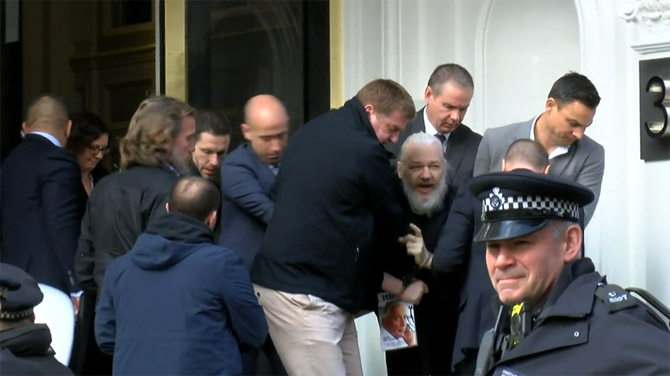
Assange was arrested on April 11 at Ecuador’s Embassy in London, after U.S. prosecutors in the Eastern District of Virginia unsealed a criminal case against him alleging he conspired with Manning to commit computer intrusion.
The Justice Department said Assange was arrested under an extradition treaty between the United States and Britain.
……Manning has tried to fight the grand jury subpoena in the Assange case, citing her First, Fourth and Sixth Amendment rights under the Constitution.
Manning’s lawyer, Moira Meltzer-Cohen, suggested prosecutors were abusing “grand jury power,” and that “the likely purpose of her subpoena is to help the prosecutor preview and undermine her potential testimony as a defense witness for a pending trial.”
Julian Assange: Within Washington’s grasp? | The Listening Post (Full)
Debunking All The Assange Smears, by Caitlin Johnstone , Robert Gore, STRAIGHT LINE LOGIC,21Apr19
This is the definitive and comprehensive source for anyone who wants to defend Julian Assange in an argument and win. From Caitlin Johnstone at theburningplatform.com:
Have you ever noticed how whenever someone inconveniences the dominant western power structure, the entire political/media class rapidly becomes very, very interested in letting us know how evil and disgusting that person is? It’s true of the leader of every nation which refuses to allow itself to be absorbed into the blob of the US-centralized power alliance, it’s true of anti-establishment political candidates, and it’s true of WikiLeaks founder Julian Assange.
Corrupt and unaccountable power uses its political and media influence to smear Assange because, as far as the interests of corrupt and unaccountable power are concerned, killing his reputation is as good as killing him. If everyone can be paced into viewing him with hatred and revulsion, they’ll be far less likely to take WikiLeaks publications seriously, and they’ll be far more likely to consent to Assange’s imprisonment, thereby establishing a precedent for the future prosecution of leak-publishing journalists around the world. Someone can be speaking 100 percent truth to you, but if you’re suspicious of him you won’t believe anything he’s saying. If they can manufacture that suspicion with total or near-total credence, then as far as our rulers are concerned it’s as good as putting a bullet in his head.
Those of us who value truth and light need to fight this smear campaign in order to keep our fellow man from signing off on a major leap in the direction of Orwellian dystopia, and a big part of that means being able to argue against those smears and disinformation wherever they appear. Unfortunately I haven’t been able to find any kind of centralized source of information which comprehensively debunks all the smears in a thorough and engaging way, so with the help of hundreds of tips from my readers and social media followers I’m going to attempt to make one here. What follows is my attempt at creating a tool kit people can use to fight against Assange smears wherever they encounter them, by refuting the disinformation with truth and solid argumentation.
This article is an ongoing project which will be updated regularly where it appears on Medium and caitlinjohnstone.com as new information comes in and new smears spring up in need of refutation.
Here’s a numbered list of each subject I’ll be covering in this article for ease of reference:
0. How to argue against Assange smears.
“He’s not a journalist.”
“He’s a rapist.”
“He was hiding from rape charges in the embassy.”
“He’s a Russian agent.”
“He’s being prosecuted for hacking crimes, not journalism.”
“He should just go to America and face the music. If he’s innocent he’s got nothing to fear.”
“Well he jumped bail! Of course the UK had to arrest him.”
“He’s a narcissist/megalomaniac/jerk.”
“He’s a horrible awful monster for reasons X, Y and Z… but I don’t think he should be extradited.”
“Trump is going to rescue him and they’ll work together to end the Deep State. Relax and wait and see.”
“He put poop on the walls. Poop poop poopie.”
“He’s stinky.”
“He was a bad houseguest.”
“He conspired with Don Jr.”
“He only publishes leaks about America.”
“He’s an antisemite.”
“He’s a fascist.”
“He was a Trump supporter.”
“I used to like him until he ruined the 2016 election” / “I used to hate him until he saved the 2016 election.”
“He’s got blood on his hands.”
“He published the details of millions of Turkish women voters.”
“He supported right-wing political parties in Australia.”
“He endangered the lives of gay Saudis.”
“He’s a CIA agent/limited hangout.”
“He mistreated his cat.”
“He’s a pedophile.”
“He lied about Seth Rich.”
Wow! That’s a lot! Looking at that list you can only see two possibilities:
Julian Assange, who published many inconvenient facts about the powerful and provoked the wrath of opaque and unaccountable government agencies, is literally the worst person in the whole entire world, OR
Julian Assange, who published many inconvenient facts about the powerful and provoked the wrath of opaque and unaccountable government agencies, is the target of a massive, deliberate disinformation campaign designed to kill the public’s trust in him.
As it happens, historian Vijay Prashad noted in a recent interview with Chris Hedgesthat in 2008 a branch of the US Defense Department did indeed set out to “build a campaign to eradicate ‘the feeling of trust of WikiLeaks and their center of gravity’ and to destroy Assange’s reputation.”
Let’s begin.
How to argue against Assange smears:
Before we get into refuting the specific points of disinformation, I’d like to share a few tips which I’ve found useful in my own experience with engaging people online who are circulating smears against Julian Assange.
A — Be clear that your goal is to fight against a disinformation campaign, not to “win” or to change the mind of the person you’re arguing with………
B — Remember that whoever you’re debating probably doesn’t really know much about the claim they’re making …….
C — Remember that they’re only ever running from their own cognitive dissonance……
D — Remember that the burden of proof is on the one making the claim. ………
E — Never let them trick you into expending more energy than they’re expending. ……
F — When attacking disinformation on Twitter, use this tactic:…….
G — Point out at every opportunity that they are advancing a smear……..
H — Make it about Assange’s imprisonment and extradition…….
New reporting highlights how the nation’s nuclear power plants are woefully unprepared to handle the growing impacts of the climate crisis.
Despite that threat, says a watchdog, the industry’s regulatory capture means its interests are set to continue to take precedence over public health and safety.
As Bloomberg‘s Christopher Flavelle and Jeremy C.F. Lin laid out Thursday, in the wake of the 2011 Fukushima disaster the five-member Nuclear Regulatory Commission (NRC) tasked the roughly 60 operating plants in the U.S. with assessing what their flood risks were compared to what flood risks the plants were actually built to withstand.
That was a logical step, given many of the American plants’ proximity to waterways, and the heightened risk of flooding in the face of the climate crisis.
Shortfalls in the assessments were evident.
According to a Bloomberg review of correspondence between the commission and plant owners, 54 of the nuclear plants operating in the U.S. weren’t designed to handle the flood risk they face. Fifty-three weren’t built to withstand their current risk from intense precipitation; 25 didn’t account for current flood projections from streams and rivers; 19 weren’t designed for their expected maximum storm surge. Nineteen face three or more threats that they weren’t designed to handle.
What’s more, those shortfalls may represent a better case scenario, as the NRC allowed the plant operators—not an outside authority—to perform the flood estimates and were not required to assess projected flood risks.
“It’s difficult to come across as an independent regulator and rely on self-assessment” from plants, as Tony Vegel, a Texas-based reactor safety official for the NRC, said previously.
The nuclear industry, as Bloomberg reported, wasn’t interested in facility redesigns to better withstand flood risks. Rather, it wanted
to focus mainly on storing emergency generators, pumps, and other equipment in on-site concrete bunkers, a system they call Flex, for Flexible Mitigation Capability. Not only did the NRC agree with that view, it ruled on Jan. 24 that nuclear plants wouldn’t have to update that equipment to deal with new, higher levels of expected flooding. It also eliminated a requirement that plants run Flex drills.
The three Trump-appointed commissioners did the industry’s bidding and said the existing regulations afforded enough protection. The NRC’s two Democratic commissioners disagreed.
Bloomberg quoted Edwin Lyman, head of the Nuclear Safety Project at the Union of Concerned Scientists, as saying, “The NRC basically did everything the industry wanted.”
Paul Gunter, director of the Reactor Oversight Project at Beyond Nuclear, concurred with that assessment.
Another issue, he told Common Dreams, is that “the commission’s January 2019 voteappears to have violated the federal Administrative Procedures Act by erasing what had been established as mandatory requirements through the agency’s rulemaking process for post-Fukushima flooding preparations at U.S. reactors.”
“The Commission vote,” he said, “inexplicably switched out ‘mandatory’ requirements with ‘voluntary’ initiatives after the public comment period on the final rule was closed. The NRC did not receive a single comment from either the public or the industry to make such a change.”
Gunter also noted that the NRC’s failings didn’t just begin once Trump entered the White House.
For example, he said, “following the Fukushima catastrophe, in 2012 the NRC technical staff unanimously agreed that the agency issue an order to 31 U.S. Fukushima-style GE Mark I and II boiling water reactors requiring operators to install severe accident-capable radiation filters on hardened containment vents.” These vents, he explained, “would allow operators to vent the containment of a severe accident’s extreme heat, pressure, and explosive gases to save the structure while filtering out the release of harmful radiation.”
But in a June 2013 vote, “the commission voted to order the installation of hardened containment vents but without the engineered external radiation filters which industry opposed on cost.” While the NRC “suggested that the filters could be taken up later in a rulemaking process for public comment,” it “abandoned the measure,” said Gunter.
In another sign of the NRC’s capture by the nuclear industry The Associated Pressreported last month:
Annie Caputo, a former nuclear-energy lobbyist now serving as one of four board members appointed or reappointed by President Donald Trump, told an industry meeting this week that she was “open to self-assessments” by nuclear plant operators, who are proposing that self-reporting by operators take the place of some NRC inspections.
The battle lines, said Gunter, are clear.
“The essential step forward must address the regulatory agency’s deepening capture by an aging and financially failing nuclear industry,” he said. “We do not have an independent regulator that is heeding its mandate to protect public health and safety first.”
US preparing more charges against Julian Assange https://www.wsws.org/en/articles/2019/04/19/more-a19.htmlBy Kristina Betinis 19 April 2019On Wednesday, CNN reported US federal prosecutors confirmed there is an “ongoing criminal investigation” of Julian Assange, the 47-year-old founder of WikiLeaks. Prosecutors also indicated “affiliates” of Assange are under investigation, this according to another newly unsealed document. According to the CNN report, at least one document related to this investigation has been withheld from the public due to “ongoing activity.”
The revelation, CNN reported, “confirms CNN and other news outlets’ reporting in recent days that WikiLeaks is connected to at least one probe that could result in more criminal charges.”
The report confirms the warnings made by the WSWS and others that the charges related to computer hacking leveled against Assange are merely a pretext for his extradition to the United States, after which additional charges would be brought against him.
On April 11, Assange was expelled from the Ecuadorian embassy in London and arrested by British officials on the public charge of conspiracy to bypass a password. That charge dated back to events in the 2011 WikiLeaks’ publication of the Iraq and Afghanistan War Logs. Chelsea Manning turned over more than half a million documents exposing US war crimes and corruption to WikiLeaks for publication.
The expulsion and arrest of Assange has been accompanied by an unrestrained campaign of media vilification aimed at transforming Assange into a non-person, undeserving of democratic rights.
But since Assange has been imprisoned in the maximum-security Belmarsh prison, public comments made by leading Democrats and US media officials indicate that charge was not the primary aim of the US investigation.
Democratic Senate Minority Leader Charles Schumer tweeted, “Now that Julian Assange has been arrested, I hope he will soon be held to account for his meddling in our elections on behalf of Putin and the Russian government.” Democratic chairman of the House Foreign Affairs Committee Eliot Engel tweeted that Assange “time after time compromised the national security of the United States and our allies by publicly releasing classified government documents and confidential materials related to our 2016 presidential election.”
US, British and Ecuadorian governments have claimed Assange’s extradition is proper because the US is indicting on a single charge: attempting to help Chelsea Manning bypass a password. But this has now been revealed to be only the pretext. The real reason the US wants custody of the whistleblower was stated by Schumer and Engel.
On April 15, the WSWS wrote that these statements demonstrate the extradition proceedings are being conducted under false pretenses: “The single public charge is a cover. The government is planning to interrogate Assange, compel him to provide testimony and further prosecute him for exposing US war crimes.” (“Stop the extraordinary rendition of Julian Assange!”)
In December 2017, US prosecutors told a federal judge they wanted to keep secret the charges Assange might face because learning of them might have caused him to flee the Ecuadorian embassy. According to CNN, the recently unsealed documents indicate that a grand jury in Virginia indicted Assange in 2018 and prosecutors again demanded the charges be kept secret for the same reason, and added their worries about evidence tampering and witness intimidation.
Cassandra Fairbanks, of the right-wing outlet the Gateway Pundit, visited Assange more than once during his imprisonment in the London embassy offices. She confirmed her visits with Assange have been the subject of the recent investigation.
She told the World Socialist Web Site, “I was informed on Monday that there is a secret grand jury against Julian and two witnesses were questioned about me meeting with him, though they have not subpoenaed or questioned me directly.
“The witnesses told me that they were both asked, separately, if they knew any US persons who had met with Assange. When they didn’t really answer the question, they were asked specifically about me and also a list of other people who have visited Assange.”
Since Assange’s arrest, CIA whistleblower John Kiriakou, who was prosecuted by the Obama administration in 2012 for exposing the torture of detainees, has taken to social media to emphasize that Assange has no chance of a fair trial in the US. “A fair trial in the Eastern District of Virginia, under Judge Leonie Brinkema, is utterly impossible. They don’t call EDVA the ‘Espionage Court’ for nothing,” he wrote.
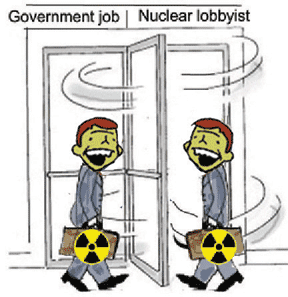
Tomgram: Smithberger and Hartung, The Pentagon’s Revolving Door Spins Faster
Tom Dispatch by William Hartung and Mandy Smithberger , January 29, 2019.Give Donald Trump credit. As a businessman, he’s brought into office some skills that previous presidents lacked. Take, for example, his willingness to plough staggering sums of money into five casinos destined to go bankrupt (and then jump ship, money in hand, leaving others holding the financial bag). Now, he seems to be applying the same principles to the Pentagon. He’s already insisted on establishing a sixth branch of the armed services, a Space Force, which will cost a pretty penny — as much as $13 billion just to set up its new bureaucracy. And lest that seem too financially ambitious, just the other day he unveiled a 2019 Missile Defense Review aimed at creating a modern version of President Ronald Reagan’s extremely expensive (and failed) Strategic Defense Initiative, popularly known as “Star Wars.” Its purpose, as he put it, will be to “ensure that we can detect and destroy any [nuclear] missile launched against the United States anywhere, anytime.” The cost: possibly up to a trillion dollars without such a system being in any meaningful way capable of taking out Russian or Chinese missiles launched at the U.S. As a plan, however, it could hit the Trumpian trifecta: putting high-tech weaponry in space, heating up a new global nuclear arms race, and busting a Pentagon budget that’s already in the stratosphere……….
As Mandy Smithberger from the Project On Government Oversight and TomDispatch regularWilliam Hartung suggest today, the very Pentagon that President Trump is so eager to launch into space is now filled, from its acting secretary of defense on down, with former officials of, or consultants to, America’s largest arms makers, a crew clearly prepared to give out lucrative contracts for space failure to such firms. Sooner or later, in true Trumpian fashion, they, too, will undoubtedly jump ship — or rather step back through that Washington revolving door and exit the premises, money in hand, before the military version of the Titanic hits an iceberg.
The way personnel spin through Washington’s infamous revolving door between the Pentagon and the arms industry is nothing new. That door, however, is moving ever faster with the appointment of Patrick Shanahan, who spent 30 years at Boeing, the Pentagon’s second largest contractor, as the Trump administration’s acting secretary of defense………
Shanahan is unique. No secretary of defense in recent memory has had such a long career in the arms industry and so little experience in government or the military. For most of that career, in fact, his main focus was winning defense contracts for Boeing, not crafting effective defense policies. While the Pentagon should be focused on protecting the country, the arms industry operates in the pursuit of profit, even when that means selling weapons systems to countries working against American national security interests. …….
Shanahan’s new role raises questions about whether what is in the best interest of Boeing — bigger defense budgets and giant contracts for unaffordable and ineffective weaponry or aircraft — is what’s in the best interest of the public……..
He has similarly been the Pentagon’s staunchest advocate when it comes to the development of a new Space Force, something that likely thrills President Trump. He’s advocated, for example, giving the Space Development Agency, the body that will be charged with developing military space assets, authority “on steroids” to shove ever more contracts out the door. As a producer of military satellites, Boeing is a major potential beneficiary of just such a development. ……..
The Revolving Door Spins Both Ways
Shanahan and Faulkner are far from the only former defense executives or lobbyists to populate the Trump administration. Secretary of the Air Force Heather Wilson is a former lobbyist for Lockheed Martin. Ellen Lord, who heads procurement at the Pentagon, worked at Textron, a producer of bombs and military helicopters. Secretary of the Army Mark Esper — rumored as a possible replacement for Shanahan as secretary of defense — was once a top lobbyist at Raytheon. Undersecretary of Defense for Policy John Rood was a senior vice president at Lockheed Martin. And the latest addition to the club is Charles Kupperman, who has been tapped as deputy national security advisor. His career includes stints at both Boeing and Lockheed Martin. (His claim to fame: asserting that the United States could win a nuclear war.)
All of the above, including Patrick Shanahan, spun through that famed revolving door into government posts, but so many former DoD officials and top-level military officers have long spun in the opposite direction ……….
US halts recent practice of disclosing nuclear weapon total, https://www.sfgate.com/news/article/US-halts-recent-practice-of-disclosing-nuclear-13775654.phpRobert Burns, Ap National Security Writer, April 17, 2019 WASHINGTON (AP)— The Trump administration has halted, without explanation, the recent U.S. government practice of disclosing the current size of the nuclear weapons stockpile.
The decision was revealed in a recent Department of Energy letter to the Federation of American Scientists, a private group that studies nuclear weapons issues and advocates for government openness on national security issues.
The Obama administration, in May 2010, had declassified for the first time the full history of the U.S. nuclear weapons stockpile from its beginning in 1945. It revealed that the warhead total stood at 5,113 as of Sept. 30, 2009, approximately the number that private experts had estimated and about 84 percent below the official peak number of 31,255 warheads in 1967.
As recently as last year, the Trump administration had disclosed that the stockpile consisted of 3,822 nuclear warheads as of Sept. 30, 2017, down 196 warheads from the year before. The 2017 figure was made public in response to a request by the scientists group, which asked for a 2018 update last October.
“After careful consideration … it was determined that the requested information cannot be declassified at this time,” the Energy Department wrote in an April 5 letter responding to the federation’s request. The department provided no explanation for the decision, which it said was made by the Formerly Restricted Data Declassification Working Group, consisting of officials from the departments of Defense and Energy.
“Formerly Restricted Data” is a category of classification that pertains to information such as nuclear stockpile quantities, warhead yields and locations.
The Russian government does not disclose its nuclear stockpile total. The Federation of American Scientists estimates Russia has about 4,350.
Nuclear warheads are attached to bombs and missiles, such as those carried by strategic bomber aircraft, ballistic missile submarines and land-based intercontinental ballistic missiles, which form the U.S. nuclear arsenal.
Hans M. Kristensen, director of the federation’s Nuclear Information Project, wrote in an analysis Wednesday that the decision against disclosing the 2018 nuclear stockpile number was “unnecessary and counterproductive.” In his view there is no national security rationale for keeping the number secret.
“The decision walks back nearly a decade of U.S. nuclear weapons transparency policy — in fact, longer if including stockpile transparency initiatives in the late-1990s,” Kristensen wrote.
“With this decision,” he added, “the Trump administration surrenders any pressure on other nuclear-armed states to be more transparent about the size of their nuclear weapon stockpiles. This is curious since the Trump administration had repeatedly complained about secrecy in the Russian and Chinese arsenals. Instead, it now appears to endorse their secrecy.”
The Pentagon did not respond Wednesday to a request for comment.
I’ve been told that Julian Assange is in favour of nuclear power – with the suggestion that we should not support him. Also that his revelations about Hilary Clinton helped to get the abominable Trump elected.
But does this matter? Assange revealed the truth. And what will happen to the next whistlebower, perhaps one that reveals the corruption in the nuclear industry?
Whatever you think of Julian Assange, his extradition to the US must be opposed,Owen Jones, Guardian, 12 Apr 19, States that commit crimes in foreign lands depend on at least passive acquiescence. This is achieved in a number of ways. One is the “othering” of the victims: the stripping away of their humanity, because if you imagined them to be people like your own children or your neighbours, their suffering and deaths would be intolerable. Another approach is to portray opponents of foreign aggression as traitors, or in league with hostile powers. And another strategy is to cover up the consequences of foreign wars, to ensure that the populace is kept intentionally unaware of the acts committed in their name.
It is Manning who is the true hero of this story: last month, she was arrested for refusing to testify to a grand jury investigating WikiLeaks, placed in solitary confinement for four weeks, and now remains imprisoned. We must demand her freedom.
These leaks revealed some of the horrors of the post-9/11 wars. One showed a US aircrew laughing after slaughtering a dozen innocent people, including two Iraqi employees of Reuters, after dishonestly alleging to have encountered a firefight. Other files revealed how US-led forces killedhundreds of civilians in Afghanistan, their deaths otherwise airbrushed out of existence. Another cable, which exposed corruption and scandals in the court of Zine al-Abidine Ben Ali, the western-backed then-dictator of Tunisia, helped fuel protests, which toppled him……..
Assange must answer the allegations of sexual assault in Sweden without the threat of extradition to the US………. That Swedish case must be entirely disentangled from the US extradition attempt. And while opposing Assange’s rightwing libertarian politics is perfectly reasonable, it is utterly irrelevant to the basic issue here of justice……….
Assange’s extradition to the US must be passionately opposed. It is notable that Obama’s administration itself concluded that to prosecute Assange for publishing documents would gravely imperil press freedom. Yes, this is a defence of journalism and media freedom. But it is also about the attempt to intimidate those who expose crimes committed by the world’s last remaining superpower. The US wishes to hide its crimes so it can continue to commit them with impunity: that’s why, last month, Trump signed an executive order to cover up civilian deaths from drones, the use of which has hugely escalated in Afghanistan, Somalia, Yemen and Pakistan.
This prospect prompted the UN Working Group on Arbitrary Detention and 33 EU parliamentarians to issue strongly worded statements to both the UK and Ecuadorian governments in December last year, warning against facilitating the prosecution of a journalist, editor and publisher for “publishing the truth”. The statements demanded Assange’s “immediate release, together with his safe passage to a safe country”, and reminded the UK of its “binding” legal obligations to secure freedom for Assange.
A critical task for propagandists such as those waging a psychological war on Wilkileaks, then, is to feed audiences material that supports official narratives and exclude that which does not. Since its inception, the smear campaign against Julian Assange and Wikileaks has been remarkably concerted and consistent in that regard.
With the new year, however, news broke that the International Monetary Fund (IMF) had offered Ecuador a $10 billion bailout in return for handing Julian Assange over to the United States. This bounty came on top of earlier US pressures and inducements, reportedly including increased oil exports, military co-operation and another $1.1 billion in IMF loans, with the US representative of the IMF instructing Ecuador that it must “resolve” its relationship with Julian Assange in order to receive the IMF money.
Australian Barrister Greg Barns has called it the blackmailing of a nation. News website 21st Century Wirecalled it “one of the biggest international bribery (or extortion) cases in history.”
While there is “not a single shred of evidence that any of [Wikileaks’] disclosures caused anyone harm”, writes journalist and author Nozomi Hayase, what Wikileaks did do in 2010 was expose thousands of previously unreported civilian deaths in Iraq and Afghanistan. These deaths included the nonchalant gunning down of children, journalists and their rescuers, and other “indiscriminate violence… torture, lies [and]bribery”, writes Chris Hedges. According to Pentagon Papers whistleblower Daniel Elsberg, the leaks exposed “a massive cover-up over a number of years by the American authorities”.
Julian in ‘critical danger’, new rules ‘torture’ – Assange mother *AUDIO*
The Psychology Of Getting Julian Assange, Part 2: The Court Of Public Opinion And The Blood-Curdling Untold Story, New Matilda, By Dr Lissa JohnsonFebruary 25, 2019In her ongoing special investigation into the detention of Julian Assange, Dr Lissa Johnson turns to the art of smear, and how to corrupt a judicial system.
On Friday 14th February, the Editor in Chief of news website Consortium News, Joe Lauria, visited Sydney to host a ‘Politics in the Pub’ event: Whistleblowing, Wikileaks and the Future of Democracy. The event took place in anticipation of upcoming rallies to free Assange…….
. It is imperative that we pressure the Australian government to make sure its citizen, Julian Assange, is protected from the lawlessness of the American Empire.” Continue reading →
Whether SNC is allowed to meet and make billions of dollars of new contractual obligations over the next decade will be crucial to the global nuclear industry and Canada’s future development…… (subscribers only)
Quebec court Judge Claude Leblond sentenced Yanai Elbaz today in Montreal in a case that has been described as the greatest corruption fraud in Canadian history.
The judge rejected an argument from the McGill University Health Centre, which claimed it was entitled to compensation as a victim of the fraud. He ruled the question should be dealt with through civil proceedings.
In an agreed statement of facts tied to Elbaz’s plea, the former MUHC manager admitted to giving privileged information to engineering firm SNC-Lavalin to help its submission for the contract to build a massive hospital complex in west-end Montreal.
Elbaz, who has been detained since his Nov. 26 guilty plea, also admitted to denigrating SNC’s competitors in front of the hospital’s selection committee.
Elbaz and Arthur Porter, the ex-CEO of the MUHC who died a fugitive in Panamanian custody in 2015, received a total of $22.5 million to rig the bidding process to favour SNC-Lavalin, the statement of facts said.
an example of the sensitive, clandestine, real-world CIA psychology deployed against ‘terrorists’ and enemies of the state, as Julian Assange and Wikileaks have been branded.
In this case, the adversary in the US crosshairs has been not only Julian Assange and Wikileaks, but the global populations that Wikileaks seeks to inform. It is our own vulnerabilities – the vulnerabilities in the information processing systems of all human beings – that have been leveraged and exploited in order to undermine and discredit Wikileaks.
The fundamental psychological task is to render truth suspicious and deceit reassuring, war criminals virtuous and their critics corrupt, pacifism threatening and violence comforting, abuse of power righteous and resistance reprobate, torture forgivable and whistleblowing a crime, censorship a bastion of democracy and free speech a menace to be overcome. Much as George Orwell foresaw.
In order to justify the psychological war on Wikileaks, US powerbrokers have branded Wikileaks and Assange “anti-American” “terrorists”, a “non-state hostile intelligence service” and “enemy combatants”. Bolstered by these factually indefensible slurs, Julian Assange now faces imminent extradition to the United States to face secret charges, most likely for 2010 scoops exposing US war crimes in Iraq and Afghanistan.
Peace is bad. War is good. Truth is dangerous. Censorship will set you free. These are the positions underpinning the war on Wikileaks.
“…. Assange faces extradition to the United States and secret charges for his publishing activities should he step outside the Ecuadorian Embassy in London. This cross-border, extraterritorial persecution threatens not only Assange’s health, and possibly his life according to a recent UN statement, but poses grave legal risks both to journalism and dissent…..
The Australian rallies join a growing international chorus of organisations and individuals sounding increasingly urgent alarms over Julian Assange’s plight, and its implications for freedom of speech and democratic rights.
Late last year, as secret US charges against Julian Assange surfaced, and the threat of his imminent extradition to the US loomed, the United Nations Working Group on Arbitrary Detention (UNWGAD) issued a strongly worded statement to the UK Government, having previously ruled twice that Assange is being arbitrarily detained in the Ecuadorian Embassy in London.
In its statement, the UNWGAD demanded that the UK abide by its “binding” legal obligations and “immediately” secure freedom for Julian Assange. The UN reminded the UK Government that “human rights treaty law is binding law, it is not discretionary law. It is not some passing fancy”.
The same fears prompted 33 EU parliamentarians to write a similarly strongly worded letter to the British Prime Minister, the Ecuadorian President and the UN Secretary General on December 10th, condemning the “very serious and egregious violations of human rights in the heart of Europe.” They called for Assange’s “immediate release, together with his safe passage to a safe country.”
Two German MPs followed with a visit to the Ecuadorian Embassy on December 20th, at which they denounced the violation of Assange’s “fundamental rights” and expressed their “demand that this case has to be solved: that no publisher, no editor, no journalist is detained because of publishing the truth”.
All of these leading legal and human rights authorities have been making essentially the same fundamental point: that Julian Assange is being persecuted for publishing truth in the public interest, placing public interest journalism itself at risk, along with freedom of speech and other democratic and human rights principles.
It is the same fundamental point made by several speakers at an earlier Australian rally to free Julian Assange, held in Sydney in June last year. John Pilger spoke at that rally also.
Pilger’s important 2018 speech, however, like the rally itself, was subject to a near total, if not total, mainstream media blackout. So if you missed it, that may be why. And if you haven’t followed the US war on Wikileaks from the outset, as I hadn’t when I attended last year’s rally, Pilger’s speech is a powerful way to bring yourself up to speed. Continue reading →
The U.S. government, determined to extradite and try Julian Assange for espionage, must find a way to separate what Assange and WikiLeaks did in publishing classified material leaked to them by Chelsea Manning from what The New York Times and The Washington Post did in publishing the same material. There is no federal law that prohibits the press from publishing government secrets. It is a crime, however, to steal them. The long persecution of Manning, who on March 8 was sent back to jail for refusing to testify before a grand jury, is about this issue.
If Manning, a former Army private, admits she was instructed by WikiLeaks and Assange in how to obtain and pass on the leaked material, which exposed U.S. war crimes in Afghanistan and Iraq, the publisher could be tried for the theft of classified documents. The prosecution of government whistleblowers was accelerated during the Obama administration, which under the Espionage Act charged eight people with leaking to the media—Thomas Drake, Shamai Leibowitz, Stephen Kim, Manning, Donald Sachtleben, Jeffrey Sterling, John Kiriakou and Edward Snowden. By the time Donald Trump took office, the vital connection between investigative reporters and sources inside the government had been severed.
Manning, who worked as an Army intelligence analyst in Iraq in 2009, provided WikiLeaks with over 500,000 documents copied from military and government archives, including the “Collateral Murder” video footage of an Army helicopter gunning down a group of unarmed civilians that included two Reuters journalists. She was arrested in 2010 and found guilty in 2013.
The campaign to criminalize whistleblowing has, by default, left the exposure of government lies, fraud and crimes to those who have the skills or access, as Manning and Edward Snowden did, needed to hack into or otherwise obtain government electronic documents. This is why hackers, and those who publish their material such as Assange and WikiLeaks, are being relentlessly persecuted. The goal of the corporate state is to shroud in total secrecy the inner workings of power, especially those activities that violate the law. Movement toward this goal is very far advanced. The failure of news organizations such as The New York Times and The Washington Post to vigorously defend Manning and Assange will soon come back to haunt them. The corporate state hardly intends to stop with Manning and Assange. The target is the press itself………
Manning has always insisted her leak of the classified documents and videos was prompted solely by her own conscience. She has refused to implicate Assange and WikiLeaks. Earlier this month, although President Barack Obama in 2010 commuted her 35-year sentence after she served seven years, she was jailed again for refusing to answer questions before a secret grand jury investigating Assange and WikiLeaks ……
The New York Times, Britain’s The Guardian, Spain’s El País, France’s Le Monde and Germany’s Der Spiegel all published the WikiLeaks files provided by Manning. How could they not? WikiLeaks had shamed them into doing their jobs. But once they took the incendiary material from Manning and Assange, these organizations callously abandoned them. No doubt they assume that by joining the lynch mob organized against the two they will be spared. They must not read history. What is taking place is a series of incremental steps designed to strangle the press and cement into place an American version of China’s totalitarian capitalism……….
“The internet, our greatest tool of emancipation,” Assange writes, “has been transformed into the most dangerous facilitator of totalitarianism we have ever seen.”
Former Brazilian President Michel Temer was indicted on Tuesday on corruption charges brought by prosecutors who said he took part in a bribery scheme related to the Angra 3 nuclear power plant complex on the coast near Rio de Janeiro.
The case is part of Operation Car Wash, Brazil’s largest corruption investigation, which has put dozens of businessmen and politicians in jail since 2014.
Federal Judge Marcelo Bretas accepted charges of corruption and money laundering against Temer, his former energy minister, Wellington Moreira Franco, and six other close aides.
Temer, who left the presidency just three months ago, was arrested with the others on March 21 and released four days later. They all deny any wrongdoing.
Prosecutors said the graft at Angra was one action of a “criminal organization” that Temer had run during his four decades in public life, which they alleged received or arranged upward of 1.8 billion reais ($462.5 million) in bribes.
The investigation into kickbacks on the nuclear plant’s construction contract involves the Brazilian subsidiary of Swedish consulting firm AF Poyry, along with Brazilian engineering firms Engevix and Argeplan.