Big Oil is cheating the public on “recycling” of plastic
These commercials carried a distinct message: Plastic is special, and the consumer should recycle it.
It may have sounded like an environmentalist’s message, but the ads were paid for by the plastics industry, made up of companies like Exxon, Chevron, Dow, DuPont and their lobbying and trade organizations in Washington.
The oil industry makes more than $400 billion a year making plastic, and as demand for oil for cars and trucks declines, the industry is telling shareholders that future profits will increasinglycome from plastic.
an industry that didn’t want recycling to work. Because if the job is to sell as much oil as you possibly can, any amount of recycled plastic is competition.
Analysts now expect plastic production to triple by 2050.
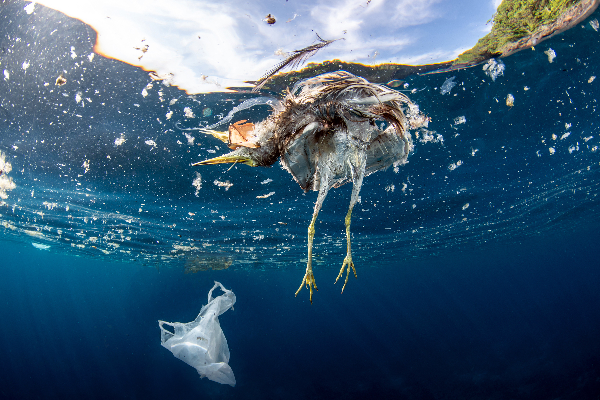 How Big Oil Misled The Public Into Believing Plastic Would Be Recycled, NPR, LAURA SULLIVAN,– 11 Sept 20 Laura Leebrick, a manager at Rogue Disposal & Recycling in southern Oregon, is standing on the end of its landfill watching an avalanche of plastic trash pour out of a semitrailer: containers, bags, packaging, strawberry containers, yogurt cups.
None of this plastic will be turned into new plastic things. All of it is buried.
“To me that felt like it was a betrayal of the public trust,” she said. “I had been lying to people … unwittingly.”
Rogue, like most recycling companies, had been sending plastic trash to China, but when China shut its doors two years ago, Leebrick scoured the U.S. for buyers. She could find only someone who wanted white milk jugs. She sends the soda bottles to the state.
But when Leebrick tried to tell people the truth about burying all the other plastic, she says people didn’t want to hear it.
“I remember the first meeting where I actually told a city council that it was costing more to recycle than it was to dispose of the same material as garbage,” she says, “and it was like heresy had been spoken in the room: You’re lying. This is gold. We take the time to clean it, take the labels off, separate it and put it here. It’s gold. This is valuable.”
But it’s not valuable, and it never has been. And what’s more, the makers of plastic — the nation’s largest oil and gas companies — have known this all along, even as they spent millions of dollars telling the American public the opposite.
“If the public thinks that recycling is working, then they are not going to be as concerned about the environment,” Larry Thomas, former president of the Society of the Plastics Industry, known today as the Plastics Industry Association and one of the industry’s most powerful trade groups in Washington, D.C., told NPR………. Continue reading
Professor Paul Rogers – a witness explaining how Julian Assange is to be extradited for POLITICAL REASONS
 Julian Assange clearly political, says extradition trial witness, https://www.theaustralian.com.au/world/julian-assange-clearly-political-says-extradition-trial-witness/news-story/735ef7d40551d52f4f7f12d9d6c318d7 JACQUELIN MAGNAY, FOREIGN CORRESPONDENT@jacquelinmagnay, THE TIMES, SEPTEMBER 10, 2020
Julian Assange’s nomination for the Senate during the 2013 federal election campaign and the establishment of the WikiLeaks political party the year before “clearly shows’’ the WikiLeaks founder has a political view and a libertarian standpoint, a witness has told the Old Bailey.
Professor Paul Rogers, the emeritus professor of peace studies at Bradford University, was called as a witness by Assange’s team to persuade the judge that Assange is being targeted for political means, and thus an extradition to the US should not be permitted under the Anglo-US extradition treaty.
In day three of the court hearing where Assange, 49, is objecting to extradition to the US, Professor Rogers said in written testimony that Assange’s expressed views, opinions and activities demonstrate very clearly “political opinions”. He cited how Assange had formed the political party to contest the Australian general election and “central of this is his view to put far greater attention to human rights’’.
He added: “The clash of those opinions with those of successive US administrations, but in particular the present administration which has moved to prosecute him for publications made almost a decade ago, suggest that he is regarded primarily as a political opponent who must experience the full wrath of government, even with suggestions of punishment by death made by senior officials including the current President.’’
But US prosecutor James Lewis QC said: “Assistant US Attorney Gordon D. Kromberg explicitly refutes that this is a political prosecution but rather an evidence-based prosecution.’’
In documents to the court, the prosecution says the investigation into Assange had been ongoing before the Trump administration came into office.
“Assange’s arguments are contradicted by judicial findings, made in the US District Court of the District of Columbia, that the investigation into the unauthorised disclosure of classified information on the WikiLeaks website remained ongoing when the present administration came into office,” the prosecution says.
Mr Lewis added: “If this was a political prosecution, wouldn’t you expect him to be prosecuted for publishing the collateral murder video?’’https://www.theaustralian.com.au/world/julian-assange-clearly-political-says-extradition-trial-witness/news-story/735ef7d40551d52f4f7f12d9d6c318d7
He said Assange was being extradited to face charges relating to complicity in illegal acts to obtain or receive voluminous databases of classified information, his agreement and attempt to obtain classified information through computer hacking; and publishing certain classified documents that contained the unredacted names of innocent people who risked their safety and freedom to provide information to the United States and its allies, including local Afghans and Iraqis, journalists, religious leaders, human rights advocates, and political dissidents from repressive regimes.
Professor Rogers told the court the motivation of Assange and WikiLeaks was to achieve greater transparency and was political. The trial continues.
Julian Assange’s extradition hearing in London. What can we expect?
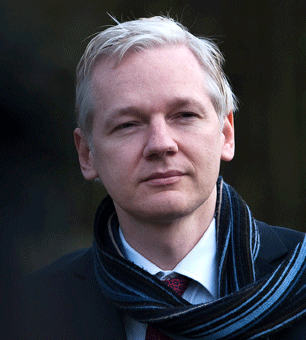 What’s at stake at Julian Assange’s long-awaited extradition hearing?, ABC 8 Sept 20, Julian Assange is fighting an attempt by the United States to extradite him to face charges on what it says was “one of the largest compromises of classified information in the history of the United States”.
It marks the culmination of a nearly decade-long pursuit by US authorities of the Australian-born WikiLeaks founder over the publication of secret documents and files in 2010 and 2011.
Assange’s extradition hearing had initially begun in February but was delayed for several months, and the coronavirus pandemic added additional delays, meaning Assange has been kept on remand in Belmarsh prison in south-east London since last September.
As reported by Background Briefing, Assange’s defence team will attempt to persuade the court he is unfit to travel to the US to face trial, and that the attempt to send him there is essentially an abuse of process.
How did he get to this point?
WikiLeaks made international headlines in April 2010 when it published a classified US military video showing an Apache attack helicopter gunning down 11 civilians, including two Reuters journalists, on a street in Baghdad in 2007.
Later that year, WikiLeaks released hundreds of thousands of US military messages and cables, a leak that saw former US Army intelligence analyst Chelsea Manning jailed……..
Assange, 49, has always denied the allegations, saying they were part of a US plot to discredit him and eventually extradite him to the US, and the investigation was eventually dropped in 2017.
He remained holed up in the embassy for seven years until April 2019, when the Ecuadorian government withdrew his asylum and Metropolitan Police officers arrested him for failing to surrender to the court over an arrest warrant issued in 2012……..
In May 2019, Assange was sentenced to 50 weeks in jail for breaching bail conditions, and during that time the US Justice Department brought 18 charges against him.
What is Assange accused of?
Assange is facing 17 charges relating to obtaining and disclosing classified information, and one charge concerning an alleged conspiracy to crack passwords on government servers.
The US alleges he conspired with Chelsea Manning to hack into US military computers to acquire the classified information published by WikiLeaks.
What can we expect from this hearing?
The court must examine a series of factors before any extradition can be granted, such as if the alleged crimes have equivalent offences in the UK and could lead to trial.
“It’s what’s called double criminality, in other words, whether the offences for which Assange is being sought in under US law are broadly being recognised under UK law,” Professor Don Rothwell, from the Australian National University, told Background Briefing.
Prosecutors have argued there is no doubt his actions would amount to offences under the UK’s Official Secrets Act.
If the court agrees, it must then consider how extradition would affect Assange’s health.
Previous court appearances this year have been delayed due to health issues, and his lawyers say his efforts to protect himself from US extradition and being stuck inside the Ecuadorian embassy for seven years had taken its toll.
If the court accepted it would be detrimental to his health, it could open up the possibility of protecting Assange in the UK under European human rights law.
The magistrate may also take issue with how the prosecutors are seeking to impose American law on what Mr Assange is alleged to have done outside of US territory.
“In this matter, US law is seeking to extend all the way, not only from the United States, but into the United Kingdom and into parts of Europe and basically impact upon the activities that Assange has undertaken associated with WikiLeaks over 10 years ago,” Professor Rothwell said…….
Assange’s legal team contends the US is seeking to prosecute Assange for political offences and that he is thereby exempt from extradition under the terms of the UK-US extradition treaty…….
What happens next?
The hearing is expected to last between three and four weeks, with any decision made likely to be appealed and go to a higher court, meaning the legal battle would likely drag into next year and possibly beyond that.
If Assange is eventually extradited to the United States and found guilty, he faces a maximum 175 years imprisonment for the 18 offences listed in the indictment. https://www.abc.net.au/news/2020-09-09/julian-assange-what-does-extradition-hearing-mean/12642972
Australian government’s cowardly double standards: saves its citizens from Chines oppression, but not Assange from American oppression

DOUBLE STANDARDS! What a glaring example of kowtowing to USA!
The Australian government has just deftly extricated two journalists from probably gaol in China. But what about Australian citizen Julian Assange. As usual, Australia kowtows to the mighty USA.
Julian Assange is not getting fair treatment at the Old Bailey (London) hearing about whether or not he should be extradited to the USA, to face 175 years of gaol, on “espionage” charges. Independent journalists, people from Amnesty, or anyone else likely to give Assange’s side of the story, in reporting this bizarre hearing, is excluded from the courtroom. That’s despite the Old Bailey’s tradition of an open courtroom.
As far as I can ascertain, they’re now charging Julian with publicising the names of USA agents. But in fact, Assange gave the documents to newspapers, I think it was the Guardian and the New York Times, with an express request to NOT publish those names. And the papers went ahead and published them. Julian didn’t. I also understand that, even then no harm came to any of those agents.
It’s all a trumped up thing. Julian being oppressed because he revealed evidence of USA military atrocities. So, like Wilfred Burchett, decades ago, he must be punished by almighty America, and Australia must dutifully follow suit.
INJUSTICE in the court? The extradition trial of Julian Assange
UK: Assange extradition hearing will be a key test for UK and US justice https://www.amnesty.org/en/latest/news/2020/09/uk-assange-extradition-hearing-will-be-a-key-test-for-uk-and-us-justice/?fbclid=IwAR2HY0lPIxV4m0h3u7ikxEmtaJ0m5YxUITtTgqmVViX03L6qsd40vHEwq2Y 4 September 2020,
US authorities must drop all charges against Julian Assange relating to his publishing activities, and UK authorities must reject the related US extradition request, said Amnesty International ahead of Julian Assange’s extradition hearing which resumes on Monday and is expected to last several weeks.
The hearing will decide on the Trump administration’s request for Julian Assange’s extradition to the US, where he faces a sentence of up to 175 years for publishing materials that document possible war crimes committed by the US military.
“This hearing is the latest worrying salvo in a full-scale assault on the right to freedom of expression. If Julian Assange is prosecuted it could have a chilling effect on media freedom, leading publishers and journalists to self-censor in fear of retaliation,” said Amnesty International’s Europe Director, Nils Muižnieks.
“If Julian Assange is extradited it will have far reaching human rights implications, setting a chilling precedent for the protection of those who publish classified information in the public interest.”
The US extradition request is based on charges that stem directly from the publication of classified documents as part of Assange’s journalistic work with Wikileaks. Publishing such information is a cornerstone of media freedom and the public’s right to access public interest information, and must be protected rather than criminalized.
n the US, Julian Assange could face trial on 18 charges, 17 of them under the Espionage Act; and one under the Computer Fraud and Abuse Act. He would also face a real risk of serious human rights violations including detention conditions that could amount to torture or other ill-treatment, including prolonged solitary confinement. Julian Assange is the first publisher to face charges under the Espionage Act.
The fact that Assange was the target of a negative public campaign by US officials at the highest levels undermines his right to be presumed innocent and puts him at risk of an unfair trial.
“The UK must abide by its obligations under international human rights law, which forbid the transfer of individuals to another country where they would face serious human rights violations,” said Nils Muižnieks.
The case will begin at the Old Bailey, London, on the morning (9.30am UK time) of 7 September. Stefan Simanowitz will be outside the court with an Amnesty International spokesperson. Follow @StefSimanowitz for updates and analysis
Amnesty will have trial observers monitoring remotely the entire series of hearings. During the first week, Sebastian Elgueta (@sebelgueta), a UK based barrister, will be monitoring.
Background:
Amnesty International also has concerns with regard to Julian Assange’s physical and mental well-being, particularly with the spread of COVID-19.
Conditions in UK prisons and detention centres are substandard. It is imperative that health and safety protocols are put in place to reduce the risk of COVID-19 infection, while ensuring that prisoners’ and detainees’ rights are protected. Bail or release should be considered for any detainee or prisoner who has serious underlying health conditions and is particularly at risk of infection.
See Amnesty International’s statement on prison conditions for Assange here
More reports of drones flying near Paolo Verde nuclear power plant, and others, and over spent nuclear fuel storage sites
 Dozens More Mystery Drone Incursions Over U.S. Nuclear Power Plants Revealed, Forbes, David Hambling– 7 Sept 20, Forbes recently described how a swarm of drones flew in a restricted area at Palo Verde Nuclear Power Plant on two successive nights last September. A new cache of documents obtained under the Freedom of Information Act (FoIA) reveals how 24 nuclear sites suffered at least 57 drone incursions from 2015 to 2019 – and Palo Verde itself was overflown again in December, despite new security measures.
A 2003 report noted how vulnerable such pools were to terrorist action, simply by making a hole in the pool to drain out the cooling water and causing the stored fuel to overheat: “We warned that U.S. spent fuel pools were vulnerable to acts of terror. The drainage of a pool might cause a catastrophic radiation fire, which could render an area uninhabitable much greater than that created by the Chernobyl accident.”
EDF’s Economic Statement on impact of Sizewell nuclear project – gives unproven, misleading evidence
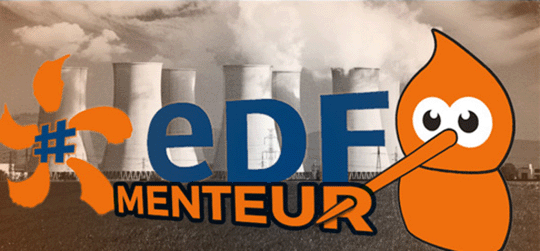 Stop Sizewell C 3rd Sept 2020, An independent review of EDF’s Economic Statement, assessing the impacts of Sizewell C to Suffolk’s local economy, has concluded that the project threatens “profitability and, in some cases, viability” of some local businesses, while others will be “at an immediate disadvantage when bidding for contracts”.
The report, Sizewell Economic Statement – Response, by highly-regarded independent research and analysis consultancy Development Economics, reveals multiple areas where EDF’s claimed benefits are over-optimistic, unproven or misleading, frequently omitting
evidence to support its figures or relying on “erroneous analysis”.
It concludes, critically, that EDF’s Economic Statement “fails to meet the minimum requirements of the legislation”, with no serious attempt to measure the deterrent effect on tourists and their expenditure, traffic congestion or competition for skills and labour.
The National Policy Statement EN-6 requires that applicants for major nuclear energy projects take into account ‘potential pressures on local and regional resources, demographic change and economic benefit’.
Iran claims it’s identified saboteurs behind blast at nuclear site
this year and knows their motives for attacking the facility, an Iranian official said on Sunday.Atomic Energy Organization of Iran spokesman Behrouz Kamalvandi said during a television interview that the July incident at the Natanz facility was “an act of sabotage” and the investigation is still ongoing.
“As far as we know, they have identified the culprits and know their incentives and methods and actually, they have full knowledge over the issue,” Kamalvandi said, according to an English-language report on his remarks by the semi-official Fars News Agency. ……
Under the nuclear accord officially known as the Joint Comprehensive Plan of Action, Iran committed to limiting its nuclear program in exchange for sanctions relief.
But the JCPOA has been on life-support since the US withdrew from it and reimposed unilateral sanctions in 2018.
Iran has since taken small but escalatory steps away from compliance with the agreement, as it presses for the sanctions relief it was promised. Some of those steps are believed to have been at the Natanz nuclear site.
The US is currently engaged in a likely doomed bid to renew international sanctions against Iran at the UN, despite Trump’s withdrawal from the accord.https://www.timesofisrael.com/iran-claims-its-identified-saboteurs-behind-blast-at-nuclear-site/
U.S. Court fins that mass surveillance program exposed by Snowden was illegal
 U.S. court: Mass surveillance program exposed by Snowden was illegal, Raphael Satter, (Reuters) 4 Sept 20, – Seven years after former National Security Agency contractor Edward Snowden blew the whistle on the mass surveillance of Americans’ telephone records, an appeals court has found the program was unlawful – and that the U.S. intelligence leaders who publicly defended it were not telling the truth.In a ruling handed down on Wednesday, the U.S. Court of Appeals for the Ninth Circuit said the warrantless telephone dragnet that secretly collected millions of Americans’ telephone records violated the Foreign Intelligence Surveillance Act and may well have been unconstitutional.
Snowden, who fled to Russia in the aftermath of the 2013 disclosures and still faces U.S. espionage charges, said on Twitter that the ruling was a vindication of his decision to go public with evidence of the National Security Agency’s domestic eavesdropping operation. …….
“Today’s ruling is a victory for our privacy rights,” the ACLU said in a statement, saying it “makes plain that the NSA’s bulk collection of Americans’ phone records violated the Constitution.”
Reporting by Raphael Satter; Editing by Tom Brown https://www.reuters.com/article/us-usa-nsa-spying-idUSKBN25T3CK?fbclid=IwAR3sRR-njWN8HPgtFcejytlwQP7TV5Ca0HqxOYy-PhSL-AnnEE5fL3krU5w
Ohio lawmakers wrangle over how to repeal crooked nuclear bailout law
 Meanwhile, Ohio Has Its Own Nuclear Debate, Inside Clean Energy: BY DAN GEARINO – 4 Sept 20, Ohio lawmakers talked this week about whether—and how—to repeal a 2019 nuclear bailout law whose main backers are now the subject of a federal bribery probe.

On a superficial level, the discussions in Ohio and Illinois have a lot in common with talk about the role of nuclear power in the energy system, and lots of intrigue from federal prosecutors. For more details, see my story from July.
But the tone in Ohio is different, largely because the state government is controlled by Republicans who place little value on making a smooth transition to clean energy.
“I’ve never known this state or this General Assembly to be overly concerned with the environment,” said Thomas Suddes, who teaches at Ohio University and writes about state politics for The Plain Dealer in Cleveland.
He said both parties tend to value retaining jobs for constituents and helping party allies, and that this usually takes precedence over ideology.
Closing the nuclear plants would cost thousands of jobs, and a bill repealing the subsidies could be used in arguments ahead of the November election to portray lawmakers as insensitive to local concerns in the areas that host the plants.
So, even with the bribery scandal, there is a natural reluctance to repeal the bill, which makes Suddes doubtful that any substantial action will happen in the next few months.
“The cautious thing to do for a lot of incumbents would be to leave it alone,” he said.
Gov. Mike DeWine and some legislators have said they want to repeal and replace the 2019 law. But the governor and many others say they still support many of the law’s provisions, including subsidies for the state’s two nuclear power plants, owned by Energy Harbor, the company formerly known as FirstEnergy Solutions.
For now, there is nothing approaching consensus on what a replacement should look like.
House Speaker Robert Cupp has said he favored repealing and replacing the law, although he has given no specifics about a replacement. He said this week that he will appoint a special committee to study the issue, which is likely to mean there will not be quick action on a repeal…………
Randi Leppla, the lead energy attorney for the Ohio Environmental Council Action Fund, said the situation with the repeal effort seems to change “hour by hour.”
“It’s very, very clear that what we need to be doing is ripping this off the books and starting over from scratch,” she said. “This bill is corrupt from the bottom up, and it’s really just bad policy for Ohio.”
In addition to the nuclear bailout, the Ohio law subsidizes two coal-fired power plants and eliminates state requirements that utilities meet annual benchmarks for renewable energy and energy conservation.
The combination of policies harmful to the environment have made the Ohio law an example of a nuclear bailout that has little public benefit, according to the Union of Concerned Scientists and many others.
At least for now, Ohio leaders are doing little to erase this dubious distinction. https://insideclimatenews.org/news/02092020/inside-clean-energy-nuclear-illinois-ohio
Small nuclear reactor NuScam’s parent company Fluor sued over allegations of insider trading and deception
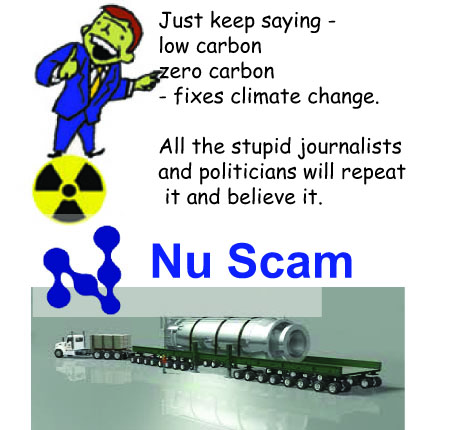 Fluor Board Sued Over Insider Trading, Accounting Allegations, Mike Leonard, Legal Reporter, Aug. 14, 2020, COURT: Del. Ch., TRACK DOCKET: No. 2020-0655 (Bloomberg Law Subscription, JUDGE: J. Travis Laster (Bloomberg Law Subscription), COMPANY INFO: Fluor Corp. (Bloomberg Law Subscripti
The board of Fluor Corp., a leading engineering and construction conglomerate that does significant business with the federal government, has been hit with a Delaware lawsuit claiming several of its members sold stock at inflated prices while conspiring to mask the company’s deteriorating finances.
“At the same time,” Fluor’s board and top executives “engaged in a pattern” of having the company “repurchase its own shares at over-inflated prices,” the 98-page Chancery Court complaint says. “This repurchase of inflated stock cost the company over $1.6 billion.”
The heavily redacted derivative suit, made public Wednesday, comes about three months after Fluor……….(subscribers only) https://news.bloomberglaw.com/mergers-and-antitrust/fluor-board-sued-over-insider-trading-accounting-allegations
Nuclear corruption in Ohio: HB 6 was never about jobs and communities by keeping nuclear plants open
HB 6 was never about jobs and communities by keeping nuclear plants open. In fact, First Energy Solutions refused to show legislators there was a need for the bailout. Yet, their own numbers posted on the company’s website show subsidies were never needed and, with the subsidy secure, they paid shareholders $800 million! That’s not done by a company in dire straits. Electricity customers should never have been forced to pay for this – especially now when hospitals, households, small businesses, schools and communities are struggling. ...
|
Ohioans should take notice when they hear the word “subsidy” because it refers to your money. That’s why most Ohioans have opposed House Bill 6 – the bailout of power plants owned by First Energy Solutions (now Energy Harbor) that will be tacked onto your electricity bill – from the beginning. And you really have no choice because we all need electricity. HB 6 should have never happened. But because of greed, it was secretly conceived through alleged corruption via the Ohio legislature rather than what should have been settled through a private bankruptcy process. An intimidating monopoly and indicted politician stand accused of perverting the legislative process with some $60 million spent to shift the billion-dollar subsidy from shareholders to Ohioans. That’s why Vistra has vigorously fought against this tainted legislation from the start. First, when HB 6 was before lawmakers and the corruption not yet alleged, we were a member of Ohioans Against Nuke Bailouts. Then, after the legislature passed HB 6 and the governor signed it, we pressed on as a member of Ohioans Against Corporate Bailouts, advocating to let Ohioans vote, as allowed by the state constitution, on whether they’d like their money used to bailout select companies. With the corruption that fueled HB 6 now exposed in a criminal indictment, we continue to fight, demanding the immediate and complete repeal of HB 6 as members of the Coalition to Restore Public Trust. We now know, through the substantial and mounting evidence amassed in the FBI’s investigation, that the real winners of HB 6 were a politician and his cronies, charged with racketeering and bribery, and the Wall Street owners of First Energy and First Energy Solutions. The losers are Ohioans still on the hook today to pay more than a billion dollars – unless Ohio legislators act to immediately repeal HB 6 in its entirety. HB 6 was never about jobs and communities by keeping nuclear plants open. In fact, First Energy Solutions refused to show legislators there was a need for the bailout. Yet, their own numbers posted on the company’s website show subsidies were never needed and, with the subsidy secure, they paid shareholders $800 million! That’s not done by a company in dire straits. Electricity customers should never have been forced to pay for this – especially now when hospitals, households, small businesses, schools and communities are struggling. …….. https://www.cincinnati.com/story/opinion/2020/09/01/opinion-nuclear-bailout-corruption-kills-public-trust-and-competition/3455443001/ |
|

Nuclear waste – another great injustice to indigenous people, and people of color
|
Add nuclear waste to list of social injustices, https://calmatters.org/commentary/my-turn/2020/08/add-nuclear-waste-to-list-of-social-injustices/, 31 Aug 20, – By Chelsi Sparti As national attention centers on racial injustices, a report by Rep. Mike Levin of California exposes yet another assault upon Black, Indigenous and people of color: they are especially vulnerable to harm from our handling and storage of radioactive waste. Across the country, as waste from aging nuclear power plants piles up by the ton, investor-owned utilities and their contractors continue to eye Indigenous lands as dumping sites. To reach these sites, the deadly material would travel unannounced on railways through hundreds of socioeconomically-disadvantaged neighborhoods. From the initial extraction of raw uranium to the eventual, millennia-long storage of spent nuclear fuel, the nuclear industry relies upon the exploitation of rural, Indigenous lands, states the June report by Levin, a Democrat from San Juan Capistrano. The “Report of the San Onofre Nuclear Generating Station Task Force” urges Congress to approve a siting process that aligns with recommendations of the Blue Ribbon Commission on America’s Nuclear Future, which calls for tribal leaders and local governments to have a “meaningful consultative role in important decisions” on nuclear waste storage. Those decisions will determine the permanent disposition of nuclear waste from 65 low-quality storage sites in 33 states. Drafted by scientists and policymakers over 18 months, the task force report contains new scientific discoveries and 30 policy recommendations. Action is expected on eight of them this year. Across the nation, Americans of all income levels are surrounded by radioactive material that remains deadly for more than 200,000 years and is impossible to clean up. In California, spent fuel stockpiles have accumulated at the Humboldt Bay, Diablo Canyon, Rancho Seco and San Onofre reactor sites. At San Onofre alone, 3.6 million pounds of radioactive waste is lodged in temporary storage about 100 feet from the rising ocean. Radioactive waste is an issue made worse by decades of inaction. Clearly, the nuclear industry is determined to unload its waste at the doorsteps of working-class, BIPOC communities. Even today, as the federal government deploys forces to U.S. cities to impose its will upon protesters for racial justice, the next generation of nuclear energy – in the form of “advanced reactors” – is poised to move closer to urban centers, according to an NRC memo. Black, Indigenous and people of color communities have a lot to be angry about. Their outrage should include demands to protect people of color from exposure to hazardous waste for the sake of nuclear industry profits.
|
|
|
A string of USA nuclear scandals: bribes, corrupt politics and lies, in effort to keep the industry alive

|
Nuclear Industry Politics: Bribes, Corruption and Lies https://www.ewg.org/energy/23289/nuclear-industry-politics-bribes-corruption-and-lies?utm_campaign=EWG+Content&utm_content=1598472836&utm_medium=Social&utm_source=facebook&fbclid=IwAR1paLNGDeZaXdPj0OfluAkJC31n5WWzJdlOTUamCB5IA5The U.S. nuclear industry knows it can’t compete fairly on the open market with safe, clean, cost-effective renewable energy sources like solar, wind and storage batteries, so it’s turning to illegal and unsavory tactics. This year, a string of scandals has exposed how some utilities are willing to use bribes, corrupt politics and lies to keep aging reactors online and planned new plants alive.
|
|
Big oil looks to solve its problems by flooding Africa and Asia with plastic
Big Oil Is in Trouble. Its Plan: Flood Africa With Plastic. https://www.nytimes.com/2020/08/30/climate/oil-kenya-africa-plastics-trade.html
Faced with plunging profits and a climate crisis that threatens fossil fuels, the industry is demanding a trade deal that weakens Kenya’s rules on plastics and on imports of American trash. NYT, By Hiroko Tabuchi, Michael Corkery and Carlos Mureithi, Aug. 30, 2020
Confronting a climate crisis that threatens the fossil fuel industry, oil companies are racing to make more plastic. But they face two problems: Many markets are already awash with plastic, and few countries are willing to be dumping grounds for the world’s plastic waste……..
Last year, Kenya was one of many countries around the world that signed on to a global agreement to stop importing plastic waste — a pact strongly opposed by the chemical industry. Emails reviewed by The Times showed industry representatives, many of them former trade officials, working with U.S. negotiators last year to try to stall those rules.
The industry thinks it has found a solution to both problems in Africa.
According to documents reviewed by The New York Times, an industry group representing the world’s largest chemical makers and fossil fuel companies is lobbying to influence United States trade negotiations with Kenya, one of Africa’s biggest economies, to reverse its strict limits on plastics — including a tough plastic-bag ban. It is also pressing for Kenya to continue importing foreign plastic garbage, a practice it has pledged to limit.
Plastics makers are looking well beyond Kenya’s borders. “We anticipate that Kenya could serve in the future as a hub for supplying U.S.-made chemicals and plastics to other markets in Africa through this trade agreement,” Ed Brzytwa, the director of international trade for the American Chemistry Council, wrote in an April 28 letter to the Office of the United States Trade Representative.
The United States and Kenya are in the midst of trade negotiations and the Kenyan president, Uhuru Kenyatta, has made clear he is eager to strike a deal. But the behind-the-scenes lobbying by the petroleum companies has spread concern among environmental groups in Kenya and beyond that have been working to reduce both plastic use and waste.
Kenya, like many countries, has wrestled with the proliferation of plastic. It passed a stringent law against plastic bags in 2017, and last year was one of many nations around the world that signed on to a global agreement to stop importing plastic waste — a pact strongly opposed by the chemical industry.
The chemistry council’s plastics proposals would “inevitably mean more plastic and chemicals in the environment,” said Griffins Ochieng, executive director for the Centre for Environmental Justice and Development, a nonprofit group based in Nairobi that works on the problem of plastic waste in Kenya. “It’s shocking.”
The plastics proposal reflects an oil industry contemplating its inevitable decline as the world fights climate change. Profits are plunging amid the coronavirus pandemic, and the industry is fearful that climate change will force the world to retreat from burning fossil fuels. Producers are scrambling to find new uses for
an oversupply of oil and gas. Wind and solar power are becoming increasingly affordable, and governments are weighing new policies to fight climate change by reducing the burning of fossil fuels.
Pivoting to plastics, the industry has spent more than $200 billion on chemical and manufacturing plants in the United States over the past decade. But the United States already consumes as much as 16 times more plastic than many poor nations, and a backlash against single-use plastics has made it tougher to sell more at home……….
The Kenya proposal “really sets off alarm bells,” said Sharon Treat, a senior lawyer at the nonpartisan Institute for Agriculture and Trade Policy who has worked for more than a decade advising trade talks in both the Trump and Obama administrations. Corporate lobbyists “frequently offer up very specific proposals, which the government then takes up,” she said. ………..
The plastics industry’s proposals could also make it tougher for to regulate plastics in the United States, since a trade deal would apply to both sides.
The records, obtained through Freedom of Information Act requests by Unearthed, a London-based affiliate of the environmental group Greenpeace, paint a picture of close ties between the trade representatives, administration officials and industry representatives. …………..
Kenya isn’t the only country taking measures to curb plastics. A recent report by the United Nations counted 127 countries with policies on the books to regulate or limit use.
In response, the industry has tried to address the plastics issue. The Alliance to End Plastic Waste — formed by oil giants like Exxon Mobil and Chevron, as well as chemical companies like Dow — last year pledged $1.5 billion to fight plastic pollution. That figure, critics point out, is a small fraction of what the industry has invested in plastic infrastructure.
Manufacturers “say they will address plastic waste, but we say plastic itself is the problem,” Mr. Ochieng said. “An exponential growth in plastics production is just not something we can handle.”………….
Despite the industry opposition, last year more than 180 countries agreed to the restrictions. Starting next year, the new rules are expected to greatly reduce the ability of rich nations to send unwanted trash to poorer countries. The United States, which has not yet ratified the Basel Convention, won’t be able send waste to Basel member nations at all……
That setback has re-energized industry to seek deals with individual countries to boost the market for plastics, and find new destinations for plastic waste, analysts say.
In Nairobi, local groups are worried. “My concern is that Kenya will become a dumping ground for plastics,” said Dorothy Otieno of the Centre for Environmental Justice and Development. “And not just for Kenya, but all of Africa.” https://www.nytimes.com/2020/08/30/climate/oil-kenya-africa-plastics-trade.html
1 This Month
Watch the 2026 Doomsday Clock unveiling live here on January 27 at 10 a.m. EST

To see nuclear-related stories in greater depth and intensity – go to https://nuclearinformation.wordpress.com/

29 Jan. Thursday 7-8 p.m. Webinar – World’s Largest Nuclear Station in Port Hope, ON?


31st January – Challenging the War Machine – a DECLASSIFIED UK SUMMIT


Website of the Week
Now until to February 10, 2026 Radioactive waste storage in France: the debate is finally open! How to participate?
-
Archives
- January 2026 (277)
- December 2025 (358)
- November 2025 (359)
- October 2025 (376)
- September 2025 (258)
- August 2025 (319)
- July 2025 (230)
- June 2025 (348)
- May 2025 (261)
- April 2025 (305)
- March 2025 (319)
- February 2025 (234)
-
Categories
- 1
- 1 NUCLEAR ISSUES
- business and costs
- climate change
- culture and arts
- ENERGY
- environment
- health
- history
- indigenous issues
- Legal
- marketing of nuclear
- media
- opposition to nuclear
- PERSONAL STORIES
- politics
- politics international
- Religion and ethics
- safety
- secrets,lies and civil liberties
- spinbuster
- technology
- Uranium
- wastes
- weapons and war
- Women
- 2 WORLD
- ACTION
- AFRICA
- Atrocities
- AUSTRALIA
- Christina's notes
- Christina's themes
- culture and arts
- Events
- Fuk 2022
- Fuk 2023
- Fukushima 2017
- Fukushima 2018
- fukushima 2019
- Fukushima 2020
- Fukushima 2021
- general
- global warming
- Humour (God we need it)
- Nuclear
- RARE EARTHS
- Reference
- resources – print
- Resources -audiovicual
- Weekly Newsletter
- World
- World Nuclear
- YouTube
-
RSS
Entries RSS
Comments RSS
 nuclear-news