Georgia Power knew for years about nuclear contractor’s flaws that doomed S.C. project
 Georgia Power knew for years about nuclear contractor’s flaws that doomed S.C. project http://www.postandcourier.com/business/georgia-power-knew-for-years-about-nuclear-contractor-s-flaws/article_550d04cc-c302-11e7-9332-3fa0cc0bdb47.html, By Andrew Brown abrown@postandcourier.com
Allegation of R20 million bribe to Eskom manager
 Eskom manager received R20 million for Kusile tender – Report https://mybroadband.co.za/news/energy/236254-eskom-manager-received-r20-million-for-kusile-tender-report.html
According to the report, the money has been in the account of Hlakudi Translation and Interpretation CC since 2015.
France Hlakudi, an Eskom contract manager for the Medupi and Kusile projects, is the only member of the closed corporation. He denies there are any irregularities.
The report alleges that large sums of money were withdrawn from the account over the same period, suggesting it may have been used for money laundering.
These revelations were brought to light as a result of the disciplinary hearing of Matshela Koko, the suspended Eskom CEO.
Koko said Hlakudi must be removed from the Kusile project in February.
Koko allegedly did so without following the correct procedures, but he maintained he acted within his authority and he will testify about why he removed Hlakudi.
Rapport stated that a letter from a whistleblower to interim Eskom chair Zethembe Khosa also provides details about the R20-million payment.
Hlakudi is still the contract manager of Medupi and Kusile. The two projects have cost at least R160 billion to build – initial budgets were set at R118 billion.
The news comes alongside a report that Energy Minister David Mahlobo is forcing his nuclear energy plan into action.
Chaotic situation at Los Alamos National Laboratory -secrecy about plutonium danger
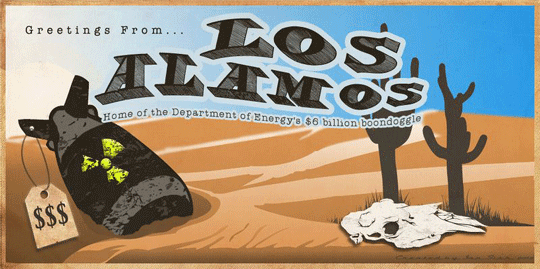 Birthplace of the atomic bomb in chaos as National Nuclear Security Administration calls for help http://www.news.com.au/world/north-america/birthplace-of-the-atomic-bomb-in-chaos-as-national-nuclear-security-administration-calls-for-help/news-story/c47b70e5ac22e27891d8d9f52daca324
IT’S known as the birthplace of the atomic bomb. But a letter written to the bomb’s laboratory has us all extremely concerned. Matt Young@MattYoung, IN 2011 something alarming happened at a United States nuclear weapons laboratory that was deliberately kept quiet.
According to The Centre for Public Integrity, a pair of workers with “cavalier attitudes” at the Los Alamos National Laboratory stuffed “so much plutonium into a small space that they came close to triggering an accidental nuclear chain reaction, all to get some photos”.
Their actions “nearly doomed a room full of colleagues”, according to a CPI report.
“Plutonium is the unstable, radioactive, man-made fuel of a nuclear explosion, and it isn’t amenable to showboating,” it said. “When too much is put in one place, it becomes ‘critical’ and begins to fission uncontrollably, spontaneously sparking a nuclear chain reaction, which releases energy and generates a deadly burst of radiation.”
And it gets much, much worse.
Los Alamos National Laboratory in Santa Fe, New Mexico — responsible for the design of nuclear warheads — was a top secret facility during World War II and the birthplace of the atomic bomb.
But it is in a state of chaos — in fact, it has been for years.
A damning letter by the Defense Nuclear Facilities Safety Board, released this week and seen by news.com.au, said it had found “numerous weaknesses” in the lab’s safety standards dating back to 2014.
It had also failed recent safety tests indicating how it would respond to an emergency including radioactive leaks or earthquakes.
Referred as Project Y after it was established in 1943, the laboratory was one of a series of top secret labs in the United States given codewords to maintain secrecy at the time.
It was known as the “heart” of the nuclear project and was primarily responsible for the Manhattan Project, which developed the first ever nuclear weapons. The scientists within its labs were responsible for the creation of several atomic bombs, including the Fat Man, which was detonated in the Japanese city of Nagasaki in August, 1945.
It is also responsible for the hydrogen bomb.
Since the end of WWII, the lab continued its focus on bomb designs. It is still open today and is one of the largest science and technology institutions in the world with a focus on national security, space exploration and nuclear fusion, among other “non-war” technology.
“Though the world is rapidly changing, this essential responsibility (nuclear) remains the core mission,” it states on its website.
It is also “responsible for the safety, security, and effectiveness of the nuclear explosive packages in the stockpile”.
But over the years, more and more mistakes have begun to leak from its labs, with critical, radioactive material breached, dumped and mishandled.
Last week, the US Department of Energy, which is responsible overseeing the United States’ nuclear arsenal, put out a final request for proposals to manage the site.
Currently, the lab is operated by a private consortium known as Los Alamos Security LLC but the National Nuclear Security Administration announced it would not renew the more than $2 billion annual contract in 2015, citing “subpar performance and safety and security reviews under the group’s leadership”.
USA Government Scientist Blocked from Talking About Climate and Wildfires
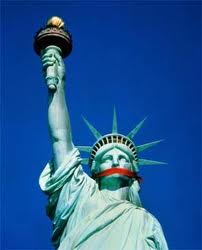 Government Scientist Blocked from Talking About Climate and Wildfires
Critics are accusing the Trump administration of stifling the dissemination of taxpayer-funded science, Scientific American , By Brittany Patterson, ClimateWire on October 31, 2017
A U.S. Forest Service scientist who was scheduled to talk about the role that climate change plays in wildfire conditions was denied approval to attend the conference featuring fire experts from around the country.
William Jolly, a research ecologist with the agency’s Rocky Mountain Research Station in Missoula, Mont., was supposed to give a 30-minute presentation titled “Climate-Induced Variations in Global Severe Fire Weather Conditions” at the International Fire Congress in Orlando, Fla., next month. The event is hosted by the Association for Fire Ecology (AFE).
The travel denial follows reports last week that U.S. EPA blocked three scientists from making presentations at a conference in Rhode Island featuring climate change. Critics accused the Trump administration of stifling the dissemination of taxpayer-funded science……..
Jolly’s presentation was slated to be part of a special session exploring the connection between wildfire and climate change. It focuses on what scientists can learn about fire behavior in a warming future by looking at clues from the past, according to Anthony Westerling, a professor at the University of California who is moderating the session.
“It’s kind of weird that they would make it hard for a government scientist to take part in this because managing wildfire is a huge challenge logistically and financially on a vast array of federal lands,” he said. “These scientists, by participating in these kinds of society meetings, share their thoughts and hear other people’s thoughts, which is important because their work is supposed to form how these lands are managed and how we prepare for and adapt under climate change.”
Jolly is not the only scientist whose request was denied. No travel authorizations were given to researchers from the Rocky Mountain Research Station’s Human Dimensions Science Program, according to AFE. That includes Karin Riley, a research ecologist who studies the relationship between climate and wildfire. Riley is vice president of AFE’s board of directors.
Three U.S. Geological Survey researchers who are scheduled to give presentations at the wildfire conference next month have been in limbo for months while their travel request is reviewed. All three scientists are slated to speak about climate change…….
The science shared at the Fire Congress draws on real world catastrophes. The United States is experiencing its most expensive fire season in history, with more than 8.8 million acres burned, according to the National Interagency Fire Center.
Massive fires have rained chaos on communities in Montana and California, in part due to climate change increasing the number of fires and making them more severe. A 2015 report by the Forest Service found that modern fire seasons are 78 days longer and burn twice as many acres as they did in 1970. The agency predicted that the number of acres burned could double again by 2050 (Climatewire, Aug. 6, 2015)……. https://www.scientificamerican.com/article/government-scientist-blocked-from-talking-about-climate-and-wildfires/
Puerto Rico Cancels $300 Million Trump Crony Electrical Grid Rebuild Contract
Swamp Tales: Puerto Rico Cancels $300 Million Trump Crony Electrical Grid Rebuild Contract, The Progressive, by Harvey Wasserman October 30, 2017, The swampish saga would be hard to invent. In early October, Puerto Rico’s Energy Power Authority awarded a $300 million tax-funded contract to reconstruct the island’s hurricane devastated power grid to a two-person, two-year-old firm based in the small Montana hometown of Trump Interior Secretary Ryan Zinke. The company is financially backed by a major donor to Donald Trump’s 2016 presidential campaign.
About eighty percent of Puerto Rico is still without power. Many hospitals are still dark. Local citizens needing medical treatments such as surgeries or dialysis have been forced to flee to places where electric power is available.
Puerto Rico’s power grid centers on antiquated oil, gas, and coal generators, the median age of which is forty-four years. Just two percent Puerto Rico’s juice came from wind and solar. One wind farm, on the south side of the island, survived Hurricane Maria largely intact, as did at least one small commercial solar array.
For Puerto Rico’s 3.4 million residents, restoring power is a matter of life and death. But the $300 million dollar contract was handed, with no public hearings, legislative discussion or long-term planning, to Whitefish, an obscure company from rural Montana.
At least one Zinke relative—his son—has worked on part-time contract for Whitefish. Zinke claims he had nothing to do with the deal.
Anti-Trump sentiment is rampant throughout the island, fed by a lack of concern expressed by the President for Puerto Ricans’ dire situation, and capped by a recent visit in which he pitched paper towels to a crowd of bewildered local residents. When San Juan mayor Carmen Yulin Cruz questioned the contract with Whitefish, the company threatened to stop work, then apologized.
The Puerto Rican power company’s contract astoundingly exempted Whitefish from official audits, stating, “In no event shall [governmental bodies] have the right to audit or review the cost and profit elements.” It also waived “any claim against Contractor related to delayed completion of the work,” meaning Whitefish was empowered to pretty much take as long as it wanted to complete the job……..
the uproar should also focus on the growing demand that the electric power systems in Puerto Rico and the rest of the Caribbean be reconstructed around renewables and microgrids, rather than fossil-fired central distribution networks.
Most likely those systems will not be built by Trump cronies flown in at huge expense, who then must dodge rocks and bottles being thrown by angry locals.
Long-time Progressive contributor Harvey Wasserman is a safe energy activist and radio talk host based in Los Angeles. His Solartopia! Our Green-Powered Earth is at www.solartopia.org. http://progressive.org/dispatches/swamp-tales-puerto-rico-cancels-300-million-trump-crony-elec/#.WfeMOwoqpXw.email
South Carolina’s crony capitalist government-run utility: SCANA’s failed nuclear gambit
#NukeGate: SCANA’s Failed Gambit https://www.fitsnews.com/2017/10/31/nukegate-scanas-failed-gambit/ Crony capitalist utility screws up the one card it had to play October 31, 2017. By South Carolina’s crony capitalist government-run utility, used to dictating terms to its bought-and-paid for politicians, got dealt a measure of its own medicine this week when state lawmakers – themselves badly exposed by the Palmetto State’s ongoing #NukeGate debacle – refused to play ball with the company.
Evidence that Britain’s nuclear power industry subsidises nuclear weapons
channelling revenues ultimately funded by electricity consumers towards a joint civil-military national nuclear industry base
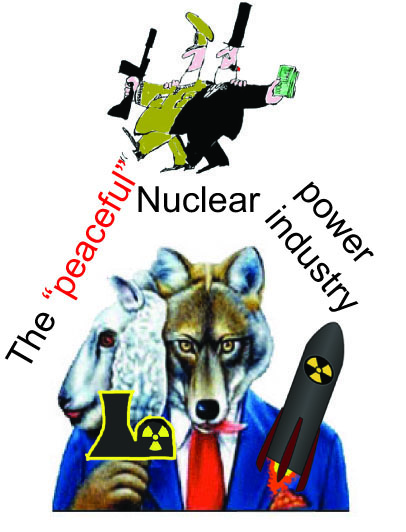
Evidence from Andy Stirling and Philip Johnstone: As the early part of the process of the BEIS Committee Brexit Inquiry has unfolded, the salience of this civil/military link is being further underscored in statements in which a number of relevant senior civil servants and ministers are confirming that the priority attached to UK military submarine capabilities is deeply entangled in strategic commitments to civil nuclear industry strategy 6 . Several possibly serious implications therefore arise in relation to the particular circumstances of Brexit.
 Parliament 27th Oct 2017 http://data.parliament.uk/writtenevidence/committeeevidence.svc/evidencedocument/business-energy-and-industrial-strategy-committee/leaving-the-eu-implications-for-the-nuclear-industry/written/71514.pdf
Written evidence from the University of Sussex, Science Policy Research Unit (BRN0015)
- We submit this evidence to the inquiry on Brexit and the Implications for UK Business.s. The content draws on a detailed submission by the same authors to the Public Accounts Committee (PAC), discussed at the PAC witness session on Monday 9 th October 2017, which informed illuminating exchanges with senior civil service witnesses to that Committee and was subsequently published by PAC 1 . A number of potentially important implications arise in relation to issues under discussion around Brexit.
2: This earlier evidence to PAC addressed the otherwise difficult-to-explain intensity of Government commitments to civil nuclear power in the face of growing recognition of the relative competitiveness of alternative UK low carbon energy investments. Multiple grounds were found for inferring that this persistent Government attachment is due, at least in part (and with no public discussion), to perceived needs to engineer a cross-subsidy from electricity consumers to help cover costs of a national nuclear industrial base that is deemed to be essential for maintaining UK military nuclear infrastructures 2 .
3: The issues that arise are central to the general remit of the BEIS Committee. For instance, this recent evidence to the PAC documents significant statements by the National Audit Office, which suggest that UK military nuclear infrastructures are being bolstered by revenue flows to UK industry strategy in other sectors 3 . Many statements in support of this interpretation are cited from defence policy discussions, acknowledging incentives to “mask” costs of military industrial strategy behind civil energy programmes 4 . As a result, it is evident that Government-negotiated, high-price, guaranteed long-term contracts for civil nuclear power, are channelling revenues ultimately funded by electricity consumers towards a joint civil-military national nuclear industry base, whose full costs probably could not otherwise feasibly be covered by defence budgets alone. Resulting implications for wider industry strategy and energy policy have received effectively zero Parliamentary or other policy scrutiny.
4: Much other evidence was presented in submission to PAC, concerning this evidently significant-buthidden influence on civil industry policy by military nuclear considerations 5 . As a result, it seems that undetermined but likely large cross-subsidies are being engineered from UK electricity consumers, in order to cover otherwise insupportable costs of military nuclear industry strategies. In the present evidence we outline key implications for the BEIS Committee inquiry on nuclear implications of Brexit
5: As the early part of the process of the BEIS Committee Brexit Inquiry has unfolded, the salience of this civil/military link is being further underscored in statements in which a number of relevant senior civil servants and ministers are confirming that the priority attached to UK military submarine capabilities is deeply entangled in strategic commitments to civil nuclear industry strategy 6 . Several possibly serious implications therefore arise in relation to the particular circumstances of Brexit.
6: First, there are well-documented general concerns that Brexit-related pressures on the UK industrial base are likely to have a particular impact on large infrastructure projects, specifically including new nuclear build. If these developments unfold, then pressures are likely to intensify around the interlinkages between UK civil and military nuclear infrastructures. With foregone opportunities for industry strategy in other sectors (like offshore wind), the these Brexit-related implications for UK industrial strategy are central issues for the BEIS Committee, which remain unexplored elsewhere 7 .
7: Second, there are concerns that the economic effects of Brexit may include current and possible continuing future depreciation of Sterling. If these effects transpire as variously predicted, then economic pressures will likely intensify to find ways to cross-subsidise growing military nuclear costs in some fashion that mitigates the impact on public spending. Brexit may thus exacerbate incentives to ‘mask’ otherwise-unbearable wider industrial costs of military nuclear submarine infrastructures behind strategic support for civil nuclear supply chains ultimately funded by electricity consumers 8 .
8: Third, there are prospects that demand for UK access to overseas specialist nuclear skills may be aggravated by Brexit-related constraints on labour movement. If this occurs, then competition can be expected to accentuate between recruitment needs for national civil and military nuclear industries. Since key military nuclear skills in particular must for obvious reasons be disproportionately UKbased, so Brexit may reinforce upward pressures on costs of military nuclear infrastructures and so help further increase the pressures for cross-subsidy documented in the earlier PAC evidence 9
9: Fourth, there is the likely effect of Brexit in reinforcing pressures towards Scottish independence. If this transpires, then strong opposition in Scotland to continued associations with the current UK nuclear weapons infrastructure, mean that Brexit will make it more probable that a move will be required of key military nuclear facilities away from Scotland. The result will be a very large Brexitrelated increase in military nuclear costs, further exacerbating pressures for cross-subsidies 10 . 10: We hope it is useful to draw these emerging issues to the attention of the BEIS Committee – both in relation to the above specific repercussions around Brexit and to their wider implications for UK energy strategies, industrial policy and more general qualities of national democratic accountability 11 . October 2017
Extensive references are given on the original document .
The lies and distortions of “nuclear environmentalist” Michael SHILLenberger
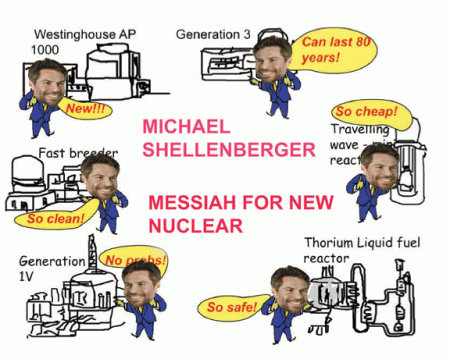
The nuclear power industry is having one of its worst ever years. Environmental Progress is warning about nuclear power’s “rapidly accelerating crisis” and other pro-nuclear lobbyists have noted that “the industry is on life support in the United States and other developed economies“.
Is there a future for ‘pro-nuclear environmentalism’? Jim Green, 30 Oct 2017, http://reneweconomy.com.au/is-there-a-future-for-pro-nuclear-environmentalism-94038/
Michael Shellenberger is visiting Australia this week. He has been a prominent environmentalist (of sorts) since he co- authored the 2004 essay, The Death of Environmentalism. These days, as the President of the California-based ‘Environmental Progress’ lobby group, he is stridently pro-nuclear, hostile towards renewable energy and hostile towards the environment movement.
Shellenberger is visiting to speak at the International Mining and Resources Conference in Melbourne. His visit was promoted by Graham Lloyd in The Australian in September. Shellenberger is “one of the world’s leading new-generation environmental thinkers” according to The Australian, and if the newspaper is any guide he is here to promote his message that wind and solar have failed, that they are doubling the cost of electricity, and that “all existing renewable technologies do is make the electricity system chaotic and provide greenwash for fossil fuels.”
Trawling through Environmental Progress literature, one of their recurring themes is the falsehood that “every time nuclear plants close they are replaced almost entirely by fossil fuels”. South Korea, for example, plans to reduce reliance on coal and nuclear under recently-elected President Moon Jae-in, and to boost reliance on gas and renewables. But Shellenberger and Environmental Progress ignore those plans and concoct their own scare-story in which coal and gas replace nuclear power, electricity prices soar, thousands die from increased air pollution, and greenhouse emissions increase.
Fake scientists and radiation quackery
Environmental Progress’ UK director John Lindberg is described as an “expert on radiation” on the lobby group’s website. In fact, he has no scientific qualifications. Likewise, a South Korean article falsely claims that Shellenberger is a scientist and that article is reposted, without correction, on the Environmental Progress website.
Shellenberger says that at a recent talk in Berlin: “Many Germans simply could not believe how few people died and will die from the Chernobyl accident (under 200) and that nobody died or will die from the meltdowns at Fukushima. How could it be that everything we were told is not only wrong, but often the opposite of the truth?”
There’s a simple reason that Germans didn’t believe Shellenberger’s claims about Chernobyl and Fukushima ‒ they are false. Shellenberger claims that “under 200” people have died and will die from the Chernobyl disaster, but in fact the lowest of the estimates of the Chernobyl cancer death toll is the World Health Organization’s estimate of “up to 9,000 excess cancer deaths” in the most contaminated parts of the former Soviet Union. And of course there are higher estimates for the death toll across Europe.
Shellenberger claims that the Fukushima meltdowns “killed precisely no one” and that “nobody died or will die from the meltdowns at Fukushima”. An Environmental Progress report has this to say about Fukushima: “[T]he science is unequivocal: nobody has gotten sick much less died from the radiation that escaped from three meltdowns followed by three hydrogen gas explosions. And there will be no increase in cancer rates.”
In support of those assertions, Environmental Progress cites a World Health Organization report that directly contradicts the lobby group’s claims. The WHO report concluded that for people in the most contaminated areas in Fukushima Prefecture, the estimated increased risk for all solid cancers will be around 4% in females exposed as infants; a 6% increased risk of breast cancer for females exposed as infants; a 7% increased risk of leukaemia for males exposed as infants; and for thyroid cancer among females exposed as infants, an increased risk of up to 70% (from a 0.75% lifetime risk up to 1.25%).
Applying a linear-no threshold (LNT) risk factor to the estimated collective radiation dose from Fukushima fallout gives an estimated long-term cancer death toll of around 5,000 people. Nuclear lobbyists are quick to point out that LNT may overestimate risks from low dose and low dose-rate exposure ‒ but LNT may also underestimate the risks according to expert bodies such as the US National Academy of Sciences’ Committee on the Biological Effects of Ionizing Radiation.
Attacking environment groups Continue reading
False data on nuclear equipment from Kobe Steel – sent to Japanese company
 Kobe Steel sent products with tampered data to nuclear companies, Cars, trains, planes … and nuclear facilities. REUTERS, Oct 27th 2017 TOKYO — Kobe Steel supplied parts with false specifications for nuclear equipment owned by Japan Nuclear Fuel Ltd, JNFL said on Friday, adding that the products were not used.
Drumming up a bogus conspiracy about Hillary Clinton and Uranium One
 How Steve Bannon and Sean Hannity ginned up the Hillary Clinton uranium story, Pro-Trump conservatives want to talk about their own Russia narrative. The only problem is that it’s nonsense, Salon.com, MATT GERTZ, MEDIA MATTERS, 10.26.2017 This article originally appeared on Media Matters.
President Donald Trump has spent much of his presidency engulfed by congressional and criminal investigations into Russian efforts to help him win the 2016 presidential election. But today, Rep. Devin Nunes, R-Calif., the chairman of the House Intelligence Committee, announced he was joining a new congressional probe — one that appears to revolve around the purported Russian ties of Trump’s opponent in that race, former Secretary of State Hillary Clinton.
This is no accident. Like the work of the House Select Committee on Benghazi before it, this is a partisan investigation with a political purpose, with its roots in the conspiratorial muck of the right-wing media. But while the Benghazi probe — as Republican leaders eventually acknowledged — was an offensive push to damage Clinton’s political standing in the lead-up to the 2016 election, the new one is a defensive move aimed at protecting Trump by diverting attention to his former opponent. The effort’s loudest champion is Sean Hannity, the Trump propagandist and sometime adviser who has claimed for months that the “real collusion” with Russia revolves around a bogus conspiracy theory linking Clinton to the 2010 sale of the uranium mining company Uranium One to the Russian government.
The story begins with Breitbart.com head Stephen Bannon. In 2012, long before he became the Trump campaign’s chief executive and joined Trump’s White House as chief strategist, Bannon launched the Government Accountability Institute, a nonprofit conservative investigative research organization. Three years later, GAI’s president, the discredited author Peter Schweizer, authored the bestselling book “Clinton Cash.” The book, built on GAI’s research, alleged that Bill and Hillary Clinton “typically blur the lines between politics, philanthropy, and business.” It was a trainwreck of sloppy research and shoddy reporting but was heavily promoted by mainstream outlets thanks to a cunning media strategy overseen by Bannon and taken up by Trump during the campaign.
One of the book’s bogus allegations was Schweizer’s claim that Hillary Clinton played a “central role” in approving the purchase of Uranium One by the Russian State Atomic Nuclear Agency. Schweizer speculated that she did so because of the money given to the Clinton Foundation and her husband by Russians and people linked to the deal. But this made no sense, and several reporters assessing Schweizer’s claims rejected them. The State Department had one of nine votes on the committee that approved the deal; the State Department rep said Clinton never intervened on the issue; there were critical questions about the timing of the donations Schweizer referenced; and even Schweizer said he had no direct evidence Clinton had intervened.
The false allegations might have been forgotten in the wake of the election. But in January, the U.S. intelligence community announced that Russia interfered with the 2016 presidential election on the orders of Russian President Vladimir Putin, with the aim of harming Clinton’s campaign because “Putin and the Russian Government developed a clear preference for President-elect Trump.” Reporting from a host of news outlets ever since has suggested that Trump’s campaign aides and associates had a series of troubling interactions with Russians, triggering congressional investigations and eventually a criminal probe by special counsel Robert Mueller. With Trump’s presidency hanging in the balance, his allies have searched for a way to rebut the charges.
Hannity eventually settled on the old “Clinton Cash” allegations. Claiming that there is no evidence to support what he terms “black-helicopter, tinfoil-hat conspiracy theories about so-called Trump-Russia collusion,” the Fox host declared that the “real collusion” is between Clinton and Russia, as demonstrated by the Uranium One tale. He pushed that argument over and over again to his audience of 3 million, making it in more than two dozen monologues over the summer.
Then a week ago, Hannity tweeted this: “FBI uncovered Russian bribery plot…”
Hannity was promoting a report by John Solomon, the executive vice president of The Hill, which purported to advance the Uranium One story. According to Solomon’s anonymous sources, “Russian nuclear officials had routed millions of dollars to the U.S. designed to benefit former President Bill Clinton’s charitable foundation during the time Secretary of State Hillary Clinton served on a government body that provided a favorable decision to Moscow.” Solomon provides no evidence that the Clintons were aware this was happening, and of course the underlying conspiracy theory that Clinton pushed the Uranium One deal through still makes no sense. But it’s something the right-wing press can use to try to shift attention away from Trump……
Feeding into the right-wing narratives about efforts by nefarious deep-state actors to tear down the president, Circa’s reporting received glowing reviews from Trump’s most conspiratorial supporters.
But Circa’s biggest fan is Hannity……..
Hannity heavily promoted Solomon’s story on his Fox show, devoting extensive segments to the “explosive” “bombshell” on the night it broke and the next two nights. He’s hosted Solomon, Carter, and Schweizer, harangued the rest of the press for not covering the story and declared Uranium One “one of the biggest scandals this country has ever seen.” And on the night the story broke, he made clear what he thought should happen next:
Hannity heavily promoted Solomon’s story on his Fox show, devoting extensive segments to the “explosive” “bombshell” on the night it broke and the next two nights. He’s hosted Solomon, Carter, and Schweizer, harangued the rest of the press for not covering the story and declared Uranium One “one of the biggest scandals this country has ever seen.” And on the night the story broke, he made clear what he thought should happen next:
And now Nunes — who had to recuse himself from Russia-related investigations earlier this year due to ethics charges that resulted from his effort to do the White House’s bidding and scuttle the Trump-Russia investigations — is taking a hand. At a press conference today, he announced that he would be launching an investigation into the Uranium One allegations. He will be working alongside the House Oversight Committee, helped by the former chairman of the Benghazi Committee, Rep. Trey Gowdy, R-S.C.
When there’s a congressional investigation into a Clinton, Fox knows how to respond:
“Fox programming is now basically 24/7 about Hillary Clinton and Uranium.”
The New York Times yesterday detailed how Republican congressmen, including Nunes and Gowdy, are trying to “wrap up the investigations” into Trump’s Russia ties as quickly as possible. “Congressional investigations unfortunately are usually overtly political investigations, where it is to one side’s advantage to drag things out,” Gowdy told the Times. He knows that from experience. A year into Trump’s presidency, egged on by sycophantic media allies like Hannity, the first congressional investigation into a Clinton has begun. It won’t end anytime soon. https://www.salon.com/2017/10/25/how-steve-bannon-and-sean-hannity-ginned-up-the-hillary-clinton-uranium-story/
America’s Environmental Protection Agency gagging its own scientists on climate change

 E.P.A. Cancels Talk on Climate Change by Agency Scientists https://www.nytimes.com/2017/10/22/climate/epa-scientists.html WASHINGTON — The Environmental Protection Agency has canceled the speaking appearance of three agency scientists who were scheduled to discuss climate change at a conference on Monday in Rhode Island, according to the agency and several people involved.
Anti-corruption groups vigourously monitoring South Africa’s secret nuclear Russian talks
 All eyes on nuclear plan amid claim of secret Russian talks, Business Live,
Opposition and anti-corruption groups vow to remain vigilant as news report alleges energy minister deal 22 OCTOBER 2017 – 19:50 Anticorruption bodies and the opposition are closely monitoring developments with SA’s multibillion-rand nuclear build, which may be pushed through despite a lack of capacity in the fiscus.
The urgency for passing the deal has become apparent after a delegation comprising Russian military, police and intelligence allegedly entered the country via Mozambique to coerce President Jacob Zuma into appointing David Mahlobo as energy minister last week, the Sunday Times reported at the weekend.
Mahlobo’s appointment was made even as Zuma’s associates, the Guptas, had allegedly suggested Public Service and Administration Minister Faith Muthambi for the position.
According to the newspaper Mahlobo is believed to be the “Russians’ eyes and ears in the South African government”.
“It’s something we take very seriously,” David Lewis, executive director of Corruption Watch, told Business Day. “It’s real global espionage of a huge scale. Given that the Russians have been involved in subverting democracies all over the world, it’s not an implausible story. The record of the Russians across a vast range of matters speaks for itself.”……. https://www.businesslive.co.za/bd/national/2017-10-22-all-eyes-on-nuclear-plan-amid-claim-of-secret-russian-talks/
Abolish nuclear safety agency – secret advice from its chair, Sean Sullivan, to President Trump !
 GOP chair of nuclear safety agency secretly urges Trump to abolish it https://www.publicintegrity.org/2017/10/19/21217/gop-chair-nuclear-safety-agency-secretly-urges-trump-abolish-it
Proposal follows radiation mishaps and exposures; Dems oppose the move, By Patrick Malone
 emailR. Jeffrey Smithemail, 20 Oct 17,
Politifact rates Nikki Haley Mostly False on her claim that Congress had no input on Iran nuclear deal

 Haley wrongly says Congress had no input on Iran nuclear deal, Politifact, By Allison Colburn Defending President Donald Trump’s decision to decertify the Iran nuclear deal, United Nations ambassador Nikki Haley said Congress now has a voice on the issue that it didn’t have in the past.
Trump’s decision allows Congress to potentially kill the agreement or tack on new conditions………
Here, we are fact-checking Haley’s claim that Congress was “never allowed” to debate or discuss the agreement.
Much of the responsibility for U.S. foreign policy falls under the authority of the executive branch. Congress does play a significant role, however, in foreign trade and commerce, immigration, foreign aid, the defense budget and any declarations of war. The Senate authorizes treaties and confirms the president’s cabinet nominees.
To avoid needing Senate approval for an agreement with a foreign power, the president can simply avoid calling the agreement a treaty. The Obama administration said the Iran deal was neither a treaty nor an executive agreement. Instead, the State Department said in a letter that the deal “reflects political commitments” between the seven nations involved.
When the president negotiates a deal that is not deemed a treaty, Congress — if it wants a say on the deal — must convince the president to give the legislative branch the power to approve or block the final deal.
That’s exactly what Congress did when it passed the Iran Nuclear Agreement Review Act of 2015, a bill that had bipartisan support and allowed Congress the right to review any agreement reached in the negotiations. Obama initially threatened to veto the bill but did not.
Senators considered a separate, and ultimately unsuccessful, measure that would have given them the the power to block the agreement through a resolution of disapproval. A procedural vote on the resolution fell short of the 60 votes needed to override a Democratic filibuster.
Despite the resolution’s failure, by passing the Iran Nuclear Agreement Review Act, Congress was able to have some authority and say in the final agreement.
Sen. Bob Corker, R-Tenn., who spearheaded the bill, has touted the legislation for taking “power back from the president” and forcing the executive office to be transparent………
Haley said Congress was never allowed to debate or discuss the Iran nuclear agreement while Obama was in office.
Though Congress had to fight for the right to disapprove of the deal, the passage of the Iran Nuclear Agreement Review Act of 2015 allowed Congress to not only vote on the deal but to also hold public hearings and debate. The Senate ultimately did not have the votes to block the deal, but the act included a requirement for the president to frequently monitor Iran’s progress in meeting the agreement’s conditions.
So Congress did have input, even if Obama initially tried to avoid it.
We rate this claim Mostly False. http://www.politifact.com/truth-o-meter/statements/2017/oct/19/nikki-haley/haley-wrongly-says-congress-had-no-input-iran-nucl/
South Africa: KICKBACKS, PROCUREMENT IRREGULARITIES AT ESKOM

 PARLY COMMITTEE HEARS OF KICKBACKS, PROCUREMENT IRREGULARITIES AT ESKOM http://ewn.co.za/2017/10/19/parly-committee-hears-of-kickbacks-procurement-irregularities-at-eskom Former Eskom employee Ted Blom sketched broad details about corruption at the parastatal, claiming there are up to a thousand cases, many of them unreported. Rahima Essop , 19 Oct 17 CAPE TOWN – Parliament’s probe into state capture at Eskom has been told about a culture of kickbacks and large-scale procurement irregularities at the parastatal.
Former Eskom employee and self-proclaimed corruption whistleblower Ted Blom briefed the Public Enterprises committee charged with the probe on Wednesday.
Blom and former Eskom CEO Brian Dames were the latest witnesses to appear before the committee.
Blom, who now heads Outa’s energy division, sketched broad details about corruption at Eskom, claiming that there are up to a thousand cases, many of them unreported.
He took the committee back in time and in an astonishing revelation he claimed to have met with Jacob Zuma at his Forest Town home in 2009 to alert him to the irregularities.
Zuma was president of the African National Congress but not yet the country at the time.
Zuma allegedly told him to meet a team of “fixers”, but Blom told Members of Parliament that the group had a different agenda.
“They introduced themselves and the first question was: Given my vast experience of Eskom, over more than 20-odd years, how could I help them to access some of the gravy train?”
Blom left the meeting furious that he was supposedly being roped into a plan to loot the state-owned company. Parliamentarians asked Blom for the names of the so-called “fixers,” which he promised to provide them with at a later stage.
Earlier, Dames told the committee that Minister Malusi Gigaba’s adviser Siyabonga Mahlangu asked him to meet with “some people,”one of whom he assumed was a Gupta brother.
But Dames claims he can’t recall who it was.
1 This Month
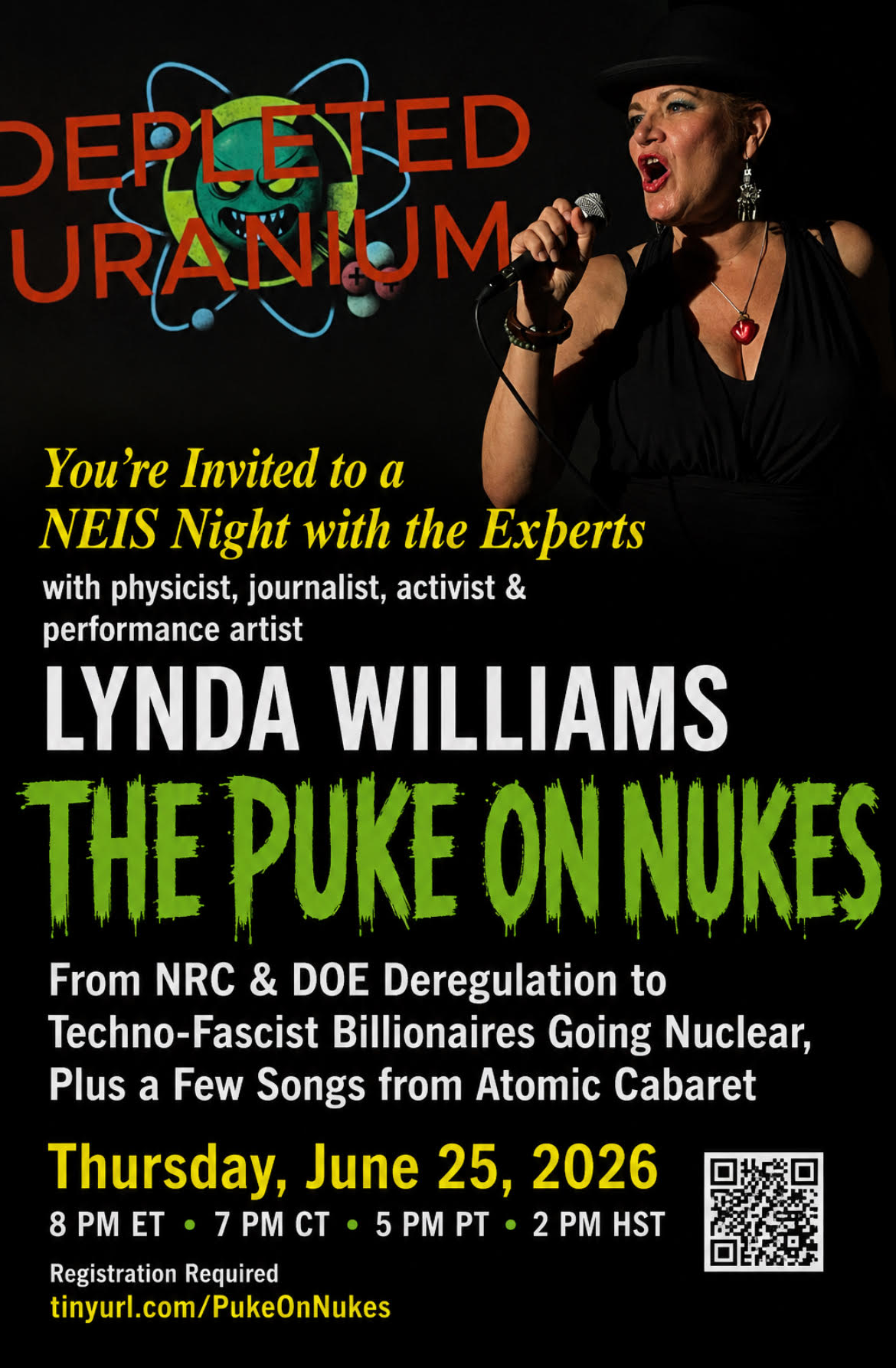
25 June- THE PUKE ON NUKES
Thursday, June 25, 2026
7pm Central Time (8pm ET, 6pm MT, 5pm PT) UTC – 5
From NRC & DOE Deregulation to Techno-Fascist Billionaires Going Nuclear, Plus a Few Songs from Atomic Cabaret REGISTER
26 June – Radiation Trainwreck at the NRC / Join the Protect Better Campaign – https://us02web.zoom.us/meeting/register/4ZlZ5_qLSHGiLSCg8FF6Bg#/registration

1st July – Webinar Waste of Space: The Environmental Harm of Military and Civil Space Activity st July, 7 pm

Report Launch Online: We are seeing an increasing exploitation of space for military and commercial purposes. This must change.

Protect Sazan Island from the Trump family! https://secure.avaaz.org/campaign/en/protect_sazan_island_from_the_trump_family_loc/?bqFCVab&v=174511&cl=22707147157&_checksum=5e9dde668860e8231c33699735e16a1fbf22ab2cb01da50c999fe8732b9775ef&utm_source=email&utm_medium=blast_email&utm_campaign=174511


Cuba Is Not a Failed State – It Is a Besieged State
PETITION: “Global Appeal to Endorse Palestinian Right of Return of Refugees”
To see nuclear-related stories in greater depth and intensity – go to https://nuclearinformation.wordpress.com
-
Archives
- June 2026 (241)
- May 2026 (306)
- April 2026 (356)
- March 2026 (251)
- February 2026 (268)
- January 2026 (308)
- December 2025 (358)
- November 2025 (359)
- October 2025 (376)
- September 2025 (257)
- August 2025 (319)
- July 2025 (230)
-
Categories
- 1
- 1 NUCLEAR ISSUES
- business and costs
- climate change
- culture and arts
- ENERGY
- environment
- health
- history
- indigenous issues
- Legal
- marketing of nuclear
- media
- opposition to nuclear
- PERSONAL STORIES
- politics
- politics international
- Religion and ethics
- safety
- secrets,lies and civil liberties
- spinbuster
- technology
- Uranium
- wastes
- weapons and war
- Women
- 2 WORLD
- ACTION
- AFRICA
- Atrocities
- AUSTRALIA
- Christina's notes
- Christina's themes
- culture and arts
- Events
- Fuk 2022
- Fuk 2023
- Fukushima 2017
- Fukushima 2018
- fukushima 2019
- Fukushima 2020
- Fukushima 2021
- general
- global warming
- Humour (God we need it)
- Nuclear
- RARE EARTHS
- Reference
- resources – print
- Resources -audiovicual
- Weekly Newsletter
- World
- World Nuclear
- YouTube
-
RSS
Entries RSS
Comments RSS
 nuclear-news