Australia’s environmental scientists intimidated, silenced by threats of job loss
 Australia’s environmental scientists intimidated, silenced by threats of job loss, Michael West Media, by Elizabeth Minter | Jan 17, 2021 The silencing of environmental scientists, as revealed in a study late last year, profoundly damages our democracy, wastes taxpayers’ money, takes a huge personal toll, allows fake news to proliferate and short-changes the public. Elizabeth Minter reports.
“I declared the (action) unsafe. I was overruled and … was told to be silent or never have a job again.”
“We are often forbidden (from) talking about the true impacts of, say, a threatening process […] especially if the government is doing little to mitigate the threat.”
“I was directly intimidated by phone and Twitter by (a senior public servant).”
“… governments allow (industry) to treat data collected as commercial in confidence. This means experts most able to comment on the details of big mining and construction projects are hopelessly conflicted and legally gagged from discussing these projects in public.”
“(Government) staff are rewarded or penalized on the basis of complying with opinions of senior staff regardless of evidence.”
“I proposed an article in The Conversation about the impacts of mining […] The uni I worked at didn’t like the idea as they received funding from (the mining company).”
All in a day’s work
All these comments, straight from the mouths of some of Australia’s most esteemed scientists, highlight the threats faced by ecologists, conservation scientists, conservation policy makers and environmental consultants, whether they are working in government, industry or universities.
The scientists were responding to an online survey as part of a study conducted by academics Don Driscoll, Georgia Garrard, Alexander Kusmanoff, Stephen Dovers, Martine Maron, Noel Preece, Robert Pressey and Euan Ritchie. In an ironic twist, one of the research team’s initial members declined to contribute to the project for fear of losing funding and therefore their job.
As the study’s authors note, scientists self-censor information for fear of damaging their careers, losing funding or being misrepresented in the media. In others, senior managers or ministers’ officers prevented researchers from speaking truthfully on scientific matters.
This means important scientific information about environmental threats often does not reach the public or decision-makers, including government ministers. This information blackout, termed “science suppression”, can hide environmentally damaging practices and policies from public scrutiny.
Survey methodology……….
Ministers not receiving full information
Some 75% of the scientists surveyed reported having refrained from contributing to public discussion when given the opportunity – most commonly in traditional or social media. A small number self-censored conference presentations (9%) and peer-reviewed papers (7%).
For scientists working in government, the main reasons they didn’t comment was because of attitudes of senior management (82%), workplace policy (72%), a minister’s office (63%) and middle management (62%).
Fear of what would happen to their career prospects (49%) and concern about media misrepresentation (49%) also discouraged those working in government from speaking publicly.
Almost 60% of scientists working in government and 36% of scientists in industry reported that internal communications were modified…………
Critical conservation issues suppressed
The most common issue on which information was suppressed was threatened species. About half of industry and government scientists, and 28% of academics, said their commentary was constrained.
Scientists working in government also reported not being able to comment on logging and climate change…………..
The system is broken
Of those scientists who had spoken publicly about their research, 42% had been harassed or criticised for doing so. Of those, 83% believed the harassers were motivated by political or economic interests…….
Change is needed
As witnessed by the past four years of Donald Trump’s presidency, it has never been more important to ensure that the public are exposed to facts and information from trusted sources…….
The study was published late last year in Conservation Letters, a journal of the Society for Conversation Biology. https://www.michaelwest.com.au/australias-environmental-scientists-intimidated-silenced-by-threats-of-job-loss/
Profound questions raised by the employment tribunal case; bullying at Sellafield nuclear site?
 Byline Times 15th Jan 2021, An employment tribunal case that has been running for more than two yearshas started to raise profound questions over management at Europe’s
largest nuclear reprocessing plant, the ability of the employment tribunal
system to defend the rights of whistleblowers, ethical conduct by major law firms, and a conflict of interest at the Equality and Human Rights Commission.
The case of McDermott versus Sellafield, the Nuclear
Decommissioning Authority and former Sellafield HR director Heather Roberts
has been brought under the Public Interest Disclosure Act 1998 – also
known as the Whistleblowers’ Act. Alison McDermott, an HR professional
and diversity specialist, claims that the sudden termination of her
freelance contract in October 2018 by Sellafield was linked to her
protected disclosures containing evidence of systemic bullying, and racist
and sexist incidents at the Sellafield site in Cumbria.
Australia’s Prime Minister Scott Morrison could stop the persecution of Australian citizen Julian Assange
|
Rex Patrick, Independent senator, January 5, 2021 A British judge has rejected the US Justice Department’s effort to have Wikileaks publisher Julian Assange extradited to the United States to face espionage charges for obtaining and publishing secret documents that revealed war crimes. The decision of Judge Vanessa Baraitser to deny the extradition request has given Assange an important legal victory in his efforts to avoid extradition for actions many would regard as inherent to media freedom – the right of journalists to obtain and publish information and to protect confidential sources. However, in her ruling Judge Baraitser dismissed the arguments of Assange’s lawyers in relation to these matters, saying she was satisfied that the American authorities made their extradition request in good faith, that the case was not politically driven, and that Assange was not merely acting as a journalist. |
|

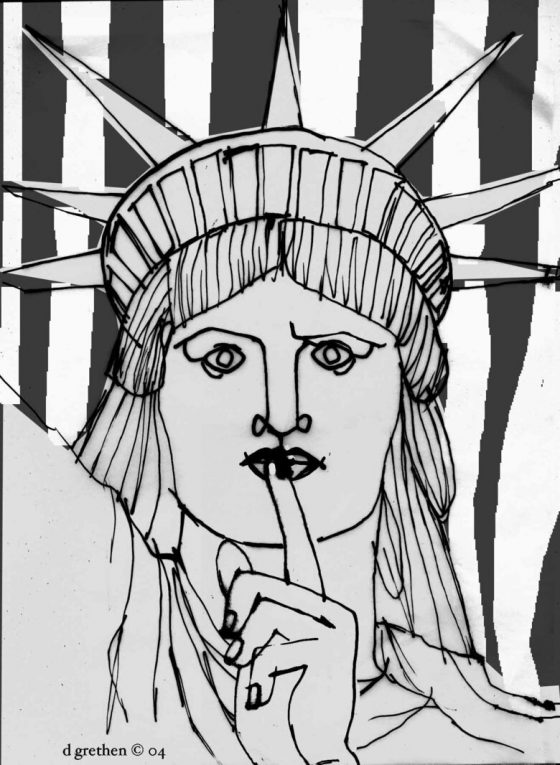
Legal case on extradition of Julian Assange an alarming precedent for freedom of speech
|
Assange hearing outcome could set an “alarming precedent” for free speech https://www.indexoncensorship.org/2020/12/assange-hearing-outcome-could-set-an-alarming-precedent-for-free-speech/Benjamin Lynch, 2 Jan 2021, People need to “forget what they think they know” about WikiLeaks founder Julian Assange and recognise that if he is extradited to the USA, it would set a worrying precedent for media freedom. We speak to his partner about the case. Assange’s partner, Stella Moris, is remaining resolute despite his extradition hearing decision being less than a month away and him being held in a prison that has recently had a Covid-19 outbreak.
Speaking over the phone to Index, Moris discusses the hearing’s details and what it could mean for the future of freedom of expression. And she talks about the deep implications it has had for her and her young family. “Obviously it is very difficult. I speak to Julian on a daily basis unless there is a problem. [But] he is in prison. Soon to be for two years. He has been there for longer than many violent prisoners who are serving sentences. All in all, he has been deprived of his liberty for ten years now,” she told Index. She adds: “The kids speak to their father every day; we try to normalise it as much as we can for them. But of course, this is not a normal situation and our lives are on hold. It is inhumane and shouldn’t be happening in the UK.” The current hearing – which will decide whether there are grounds for Assange to stand trial in the USA – should reach a conclusion on 4 January. A trial in the USA (should the decision go against Assange) will have major ramifications for free speech and whistleblower journalism. The WikiLeaks founder is charged with conspiring with US intelligence analyst Chelsea Manning and hackers from groups such as Anonymous and LulzSec to obtain and publish classified information. Each of the 18 charges laid by US authorities, if Assange is extradited and convicted, carry a maximum penalty of 10 years. The allegations brought forward under the 1917 Espionage Act, alongside one other under the Computer Fraud and Abuse Act, mean Assange could face up to 175 years in prison – effectively a life sentence. Manning was initially sentenced to 35 years, but under the Obama administration her sentence was commuted to less than seven years. It is easy to get sidetracked about the current extradition hearing and get into arguments about whether Assange is a journalist, whether he is guilty of other crimes or whether the publication of the documents brought harm to anyone involved. Instead people’s attentions should focus on the precedent that will be set should the case go to trial in the USA. As it stands the case is unprecedented. No publisher has ever been tried under the Espionage Act, which itself was essentially created for spies imparting official secrets either for profit or otherwise. This is perhaps a direct contradiction of rulings of the courts in the UK. In December 2017, the UK’s information tribunal recognised WikiLeaks as a media organisation, in direct contradiction to the view of the US State Department. Australia’s media union, the Media, Arts and Entertainment Alliance, also presented an honorary member card to Assange’s Melbourne-based lawyer. Amidst the noise of the separate matters around the case, Moris insists people need to “forget what they think they know” and assess the issues involved. “There are a lot of assumptions being made over what this case is really about. There are all these sideshows. It is not about people being harmed because the US has admitted it has no evidence to make this argument. It comes down to the fact that the material published was classified. People who care about free speech and press freedom need to forget what they think they know about this case and look at it afresh and understand Julian is in prison for publishing. This is not something that democracies do.” “Are they saying what he published was not in the public interest? They say that is irrelevant. They can’t deny [what he published] wasn’t in the public interest because he was publishing information and evidence of state crimes, of state abuse, torture, of rendition, blacksites and of illegal killings. What they are arguing is that Julian published information that was secret and therefore he can be prosecuted over it.” ournalists publishing secret information is not new (nor is pressure for them not to publish) and can often be key to upholding democracy and ensuring states act properly. The Watergate revelations relied heavily on news organisations pressing on with publication despite attempts by the USA to stop them, including the threat of jail time. It proved a significant victory for free speech. If Assange is extradited and tried the case will impact journalists and the media “for years to come”, says Rebecca Vincent, director of international campaigns at Reporters Without Borders (RSF). “It feels like many in the media do not see the implications of this case as something that will possibly affect them,” she told Index. “This case will have ramifications on the climates for journalism and press freedom internationally for years to come.” “This is the first time we have seen the US government prosecute anybody for publishing leaked information. If they are successful, they will not stop with Assange and WikiLeaks. This could be applied, in theory, to any media outlet.” It’s common for journalists and publishers to cite a public interest defence for disputed documents. It is a centrepiece of a defence case against libel, for instance. “The information published was certainly in the public interest; it served to inform extensive public interest reporting that exposed war crimes and other illegal actions by states,” said Vincent. “The Espionage Act lacks a public interest defence. He cannot use it if he is sent to the United States and tried.” Essentially, what this means is that Assange is being treated as a spy not a publisher. If Assange is extradited and loses his case against the US government, any time classified information is published by a journalist there will be a precedent set that they can be charged and tried as a spy in the same way. “These sorts of cases are really highlighting the need for more robust legislation that cannot be manipulated to be used against journalists, whistleblowers and other sources. Ultimately, it is the public’s right to access information that is being impacted,” Vincent added. “You can see this for what it is; this very much feels like a political prosecution by states that are not meant to engage in this behaviour. The reason our states can get away with this is because of a lack of public pressure. A lack of public sympathy has resulted in a lack of widespread public pressure to hold our governments to account.” |
|
Julian Assange ‘targeted as a political opponent of Trump administration and threatened with the death penalty’
Julian Assange ‘targeted as a political opponent of Trump administration and threatened with the death penalty’ Evening Standard. By Tristan Kirk. @kirkkorner
Professor Paul Rogers, a lecturer in peace studies at Bradford University and specialist on the ‘War on Terror’, said Assange’s opinions put him “in the crosshairs” of Trump’s top team.
Giving evidence to Assange’s extradition hearing this morning, he said he believes the prosecution case is part of a drive in the United States to target “dissenters”.
“In my opinion Mr Assange’s expressed views, opinions and activities demonstrate very clearly ‘political opinions’”, he told the court.
Professor Rogers, in his witness statement, said Assange’s work involved exposing secrets that the US government wanted to keep hidden, he had been in conflict with the Obama administration, but there was “no question” that Assange had been targeted as a political opponent by Trump’s officials.
“The opinions and views of Mr Assange, demonstrated in his words and actions with the organisation WikiLeaks over many years, can be seen as very clearly placing him in the crosshairs of dispute with the philosophy of the Trump administration”, he said.
Assange’s legal team argue that a decision was taken under President Obama not to prosecute the Wikileaks activist, but that move was overturned under Trump. https://www.standard.co.uk/news/uk/julian-assange-donald-trump-administration-old-bailey-hearing-a4543656.html?fbclid=IwAR3Rj4n0Lzlt5GmE1lXZXoMVDsOS5BdT9sEKgj82SCmMnpNLFQ6ZfEzVUOI
It is not too late for The Guardian to redeem itself, and help Julian Assange
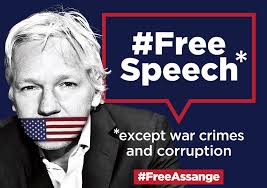 The Guardian’s Silence Let UK Trample on Assange’s Rights in Effective Darkness https://consortiumnews.com/2020/10/21/the-guardians-silence-let-uk-trample-on-assanges-rights-in-effective-darkness/?fbclid=IwAR16w5kNgLGJ3jyFI6QvKZmxJ5tn_LjZcD90a7FOG-ZQ8jaGzUYKlhnRT8M
Jonathan-Cook.net WISE Up, a solidarity group for Julian Assange and whistleblower Chelsea Manning, is due to stage a demonstration outside The Guardian offices on Oct. 22 to protest the paper’s failure to support Assange as the U.S. seeks his extradition in an unprecedented assault on press freedom.
The date chosen for the protest marks the 10th anniversary of The Guardian’s publication of the Iraq war logs, leaked by Manning to Assange and which lie at the heart of the U.S. case to reclassify journalism exposing crimes against humanity as “espionage.”
Here is my full statement, part of which is due to be read out, in support of Assange and castigating The Guardian for its craven failure to speak up in solidarity with its former media partner:
Julian Assange has been hounded out of public life and public view by the U.K. and U.S. governments for the best part of a decade.
Now he languishes in a small, airless cell in Belmarsh high-security prison in London — a victim of arbitrary detention, according to a UN working group, and a victim of psychological torture, according to Nils Melzer, the UN’s expert on torture.
If Judge Vanessa Baraitser, presiding in the Central Criminal Court in London, agrees to extradition, as she gives every appearance of preparing to do, Assange will be the first journalist to face a terrifying new ordeal — a form of extraordinary rendition to the United States for “espionage” — for having the courage to publish documents that exposed U.S. war crimes and crimes against humanity.
The Guardian worked with Assange and WikiLeaks on vitally important documents – now at the heart of the U.S. case against Assange – known as the Afghanistan and Iraq war logs. The latter were published exactly a decade ago today. They were a journalistic coup of global significance, and the paper ought to be profoundly proud of its role in bringing them to public attention.
During Assange’s extradition hearing, however, The Guardian treated the logs and its past association with Assange and WikiLeaks more like a dirty secret it hoped to keep out of sight. Those scoops furnished by Assange and whistleblower Chelsea Manning enriched the paper financially, and bolstered its standing internationally. They also helped to pave its path into the lucrative U.S. market.
Unlike Assange and Manning, The Guardian has suffered no consequences for publishing the logs. Unlike Assange and Manning, the paper has faced no retribution. While it profited, Assange continues to be made an example of — to deter other journalists from contemplating following in his footsteps.
The Guardian owes Assange.
- It owes him a huge debt for allowing it to share in the journalistic glory of WikiLeaks’ revelations.
- It owes him a duty of care as its partner in publishing the logs.
- It owes him its voice loudly denouncing the abuse of a fellow journalist for doing the essence of journalism — holding the powerful to account.
- It owes him and its own staff, and the young journalists who will one day take their place, its muscle in vigorously defending the principle of a strong and free press.
- It owes him, and the rest of us, a clear profession of its outrage as the U.S. conducts an unprecedented assault on free speech, the foundation of a democratic society.
And yet The Guardian has barely raised its voice above a whisper as the noose has tightened around Assange’s — and by extension, our — neck. It has barely bothered to cover the dramatic and deeply disturbing developments of last month’s extradition hearing, or the blatant abuses of legal process overseen by Baraitser.
The Guardian has failed to raise its editorial voice in condemnation either of the patently dishonest U.S. case for extradition or of the undisguised mistreatment of Assange by Britain’s legal and judicial authorities.
The paper’s many columnists ignored the proceedings too, except for those who contributed yet more snide and personal attacks of the kind that have typified The Guardian’s coverage of Assange for many years.
It is not too late for the paper to act in defence of Assange and journalism.
Assange’s rights are being trampled under foot close by The Guardian’s offices in London because the British establishment knows that these abuses are taking place effectively in darkness. It has nothing to fear as long as the media abdicates its responsibility to scrutinize what amounts to the biggest attack on journalism in living memory.
Were The Guardian to shine a light on Assange’s case — as it is morally obligated to do — the pressure would build on other media organizations, not least the BBC, to do their job properly too. The British establishment would finally face a countervailing pressure to the one being exerted so forcefully by the U.S.
The Guardian should have stood up for Assange long ago, when the threats he and investigative journalism faced became unmistakable. It missed that opportunity. But the threats to Assange — and the causes of transparency and accountability he champions — have not gone away. They have only intensified. Assange needs the Guardian’s support more urgently, more desperately than ever before.
Jonathan Cook is a former Guardian journalist (1994-2001) and winner of the Martha Gellhorn Special Prize for Journalism. He is a freelance journalist based in Nazareth. If you appreciate his articles, please consider offering your financial support.
This article is from his blog Jonathan Cook.net.
Nuclear pollution in China – the Uighur people pay the health and environmental price
A third of the PRCs uranium for nuclear energy comes from extortion in the Yili basin of Xinjiang. This is also home to a great population of Uighurs.
Today, China has one of the world’s largest nuclear energy development programmes. During the Cold War era, there did not exist a political or economic motivator for commercialising nuclear energy as coal-fired power stations and hydroelectric energy dominated the system. However, after 2005, China has been able to reinvent this narrative. Notably, what this resurrected was a reassertion of spaces of injustice for their minorities. Their lands were first grounds for nuclear weapons’ testing and now used for energy rather than warfare purposes, thus continuing a historical subjugation to nuclear imperialism. This nuclear imperialism situates itself within an already prevalent cyclic violence against China’s far western frontier region of Xinjiang’s ethnic minorities, the predominantly Muslim Uighurs, ever since the establishment of the People’s Republic of China (PRC) in 1949.
Given the inherent differentiation between the Uighurs and the Chinese dominant ethnicity, the Hans, the former’s identity was always up for scrutiny. The government came down particularly hard on the Uighurs after the events of 9/11 initiated the Global War on Terror (GWOT), as well as the Ürümqi riots on 5 July 2009 which saw clashes between protesting Uighurs, Han people, and China’s People’s Armed Police, leaving nearly 200 people dead in Xinjiang. The Chinese government has attributed security concerns with the certain ‘terrorist’ acts committed by a handful of them. Taking what some might perceive as an opportunist stand, China was able to claim being victim to global terrorism, to justify crackdown on the minority group. What this terrorist narrative in turn ushered in was a transnational territory of uncontrolled spaces where ‘dangerous populations’ need not be afforded legal protections and therefore be made to quarantine; containing their actions that often correspond to security threats. The antagonism was not restricted to the few Uighurs rioters. Instead the entire Uighur community as a single biological group was treated as the Homo Sacer.
………….. The systematic discrimination of the Uighur feeds into a larger understanding of necro-politics of Uighur lives having become too consequential juxtaposed with a system which is ready to dispense with this minority population. The emphasis here is on China’s first nuclear weapons test in Lop Nor, and the legacy it has translated onto the present day context through states sponsored uranium mining in the Yili Basin, underscoring a new kind of imperialism.
Nuclear weapon testing began in the mid-1960s. Soon a kind of nuclear imperialism started to take root in the existing Han colonisation of Uighur spaces. The latter revolved around a combination of contestation over the sovereignty of the Uighur homeland and the resource-rich soils they inhabited. The aftermath of the Sino-Soviet split meant a collapse in PRCs nuclear relationship with China which acted as a driver for hastening and furthering their ambitious nuclear programmes. The PRC became the fifth nation to develop nuclear weapons during the Cold War. They formally established the 10,000 km sq. Lop Nor Nuclear Test base in 1956. It still stands as the largest site of its kind in the world………
Professor Jun Takada conducted a study explaining how peak levels of radioactivity from large yield tests might have had prolonged consequences in the biological makeup of the generations to come observing congenital defects and cancer incidents in some. The cancer incidents in the region were approximately 35% higher than the rest of the state. Uighur traditional medicine could not cope with these cases. In short, a biopolitical regime protected the state from liability, meanwhile for the Uighurs, contestation around state assurance and health risks posed a blurring in the causation between sickness and exposition.
The Uighurs who were affected by the Lop Nor test therefore have been given no compensation or recognition from the state. Many Hans on the other hand were given assurance from the state especially in terms of healthcare on various occasions. This only furthered the resentment and tension between the Hans and the Uighurs of Xinjiang in the years to come.
Following this, peaceful protests sprung up. In November 1985, protests led by students in Beijing against nuclear weapon tests were met with brute state coercion. In 1993, Uighurs gathered at Log Nor and demanded the ban of nuclear testing but were interrupted by PLA forces, some protestors were shot in the process. The Tigers of Lop Nor were an organisation that even managed to send tanks inside nuclear spaces and blew up planes in protest. Moreover, enveloped in this environment, the Uighur identity that already clashed with Han nationalism was simply made starker; the anti-nuclear movement began to echo separatist tendencies.
Today, a third of the PRCs uranium for nuclear energy comes from extortion in the Yili basin of Xinjiang. This is also home to a great population of Uighurs. The PRC has placed a moratorium on the manufacturing of fissile material for deterrence purposes, transforming Xinjiang into the primary hub for the nuclear energy industry. The NINT continues to partake in nuclear research, to the north of the Lop Nor test site. There is no state system in place to ensure the safety of those dwelling the Yili. What this reflects is a revival of a past narrative of nuclear imperialism as uranium energy extraction seems to have overtaken nuclear testing. There appears to be no incentive from the ends of the government; a lacking in enforceable nuclear legislations and regional systems of monitoring and regulating nuclear activity. …….
. China now possesses over 44 nuclear reactors in operation and 18 others under construction and is striving towards ensuring that 1/5th of their energy comes from their power plants by 2030. Activism from the minorities in the region is often counted by officials as acts of Islamism or cultural protests rather than a legacy of activities against the nuclear industry which is another layer of discrimination that has been recognised by the Uighurs.
More anti-nuclear activism seems to be entering the eastern provinces of Shandong, Jiangsu, and Guangdong as a result of general community concerns against an unprotected nuclear policy. Online petitions and active media are slowly entering the scene to influence and mobilise public opinion. However, it is only perhaps a matter of time before the PRC silences them too.
Censorship is often used to subdue this kind of opposition online. What is worse is that the Uighurs of Xinjiang lack the agency to voice their grievances while practitioners in the east who are often familiar with the political systems and often well-educated are able to make negotiations with the state in terms of the relocation of nuclear power plants. ……… https://www.orfonline.org/expert-speak/nuclear-imperialism-china-xinjiang/
Assange extradition case could esrablish a dangerous legal precedent
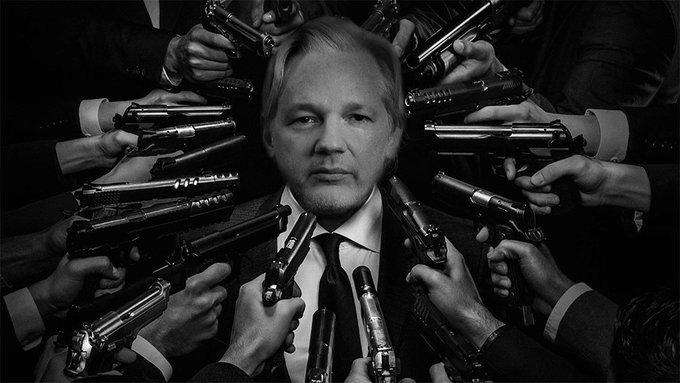 Crumbling Case Against Assange Shows Weakness of “Hacking” Charges Related to Whistleblowing
The charge against Assange is about establishing legal precedent to charge publishers with conspiring with their sources, something that so far the U.S. government has failed to do because of the First Amendment.
Five years later, in 2018, the Trump Administration indicted Assange anyway. But, rather than charging him with espionage for publishing classified information, they charged him with a computer crime, later adding 17 counts of espionage in a superseding May 2019 indictment.
The computer charges claimed that, in 2010, Assange conspired with his source, Chelsea Manning, to crack an account on a Windows computer in her military base, and that the “primary purpose of the conspiracy was to facilitate Manning’s acquisition and transmission of classified information.” The account enabled internet file transfers using a protocol known as FTP.
New testimony from the third week of Assange’s extradition trial makes it increasingly clear that this hacking charge is incredibly flimsy. The alleged hacking not only didn’t happen, according to expert testimony at Manning’s court martial hearing in 2013 and again at Assange’s extradition trial last week, but it also couldn’t have happened.
The new testimony, reported earlier this week by investigative news site Shadowproof, also shows that Manning already had authorized access to, and the ability to exfiltrate, all of the documents that she was accused of leaking — without receiving any technical help from WikiLeaks. …….
the charge is not actually about hacking — it’s about establishing legal precedent to charge publishers with conspiring with their sources, something that so far the U.S. government has failed to do because of the First Amendment………
Whether or not you believe Assange is a journalist is beside the point. The New York Times just published groundbreaking revelations from two decades of Donald Trump’s taxes showing obscene tax avoidance, massive fraud, and hundreds of millions of dollars of debt.
Trump would like nothing more than to charge the New York Times itself, and individual journalists that reported that story, with felonies for conspiring with their source. This is why the precedent in Assange’s case is so important: If Assange loses, the Justice Department will have established new legal tactics with which to go after publishers for conspiring with their sources. https://portside.org/2020-10-10/crumbling-case-against-assange-shows-weakness-hacking-charges-related-whistleblowing
World press freedom endangered, if UK extradites Julian Assange to America
The
|
Assange Faces Extradition for Exposing US War Crimes, BY Marjorie Cohn, Truthout, October 11, 2020 Three weeks of testimony in Julian Assange’s extradition hearing in London underscored WikiLeaks’s extraordinary revelation of U.S. war crimes in Iraq, Afghanistan and Guantánamo Bay. But the Trump administration is seeking to extradite Assange to the United States to stand trial for charges under the Espionage Act that could cause him to spend 175 years in prison. Assange founded WikiLeaks during the Bush administration’s “war on terror,” which was used as a pretext to start two illegal wars and carry out a widespread program of torture and abuse of prisoners at Guantánamo and the CIA black sites. On October 8, 2011, Assange told a Stop the War Coalition rally in London’s Trafalgar Square, “If wars can be started by lies, peace can be started by truth.” In 2010 and 2011, WikiLeaks published classified material that Army intelligence analyst Chelsea Manning had provided to the organization. Manning was prosecuted, convicted and sentenced to 35 years in prison for leaking the documents. As he left office, Barack Obama commuted her sentence to the seven years she had already served. That commutation provoked “tremendous anger” in the Trump administration and drew Trump’s attention to Assange, Eric Lewis testified. Lewis, chairman of the board of Reprieve U.S. and lawyer for Guantánamo and Afghan detainees, called this “a politically motivated prosecution.” The files that WikiLeaks published contained 90,000 reports about the war in Afghanistan, including the Afghan War Logs, which documented a greater number of civilian casualties by coalition forces than the U.S. military had reported. In addition, WikiLeaks published nearly 400,000 field reports about the Iraq War, more than 15,000 unreported deaths of Iraqi civilians, and the systematic murder, torture and rape by the Iraqi army and authorities that were ignored by U.S. forces. WikiLeaks also published the Guantánamo Files, 779 secret reports constituting evidence of the U.S. government’s abuse of approximately 800 men and boys, ages 14 to 89. That abuse violated the Geneva Conventions and the Convention Against Torture and Other Cruel, Inhuman or Degrading Treatment or Punishment. Perhaps the most notorious release by WikiLeaks was the 2007 “Collateral Murder” video, which depicts a U.S. Army Apache helicopter target and fire on unarmed civilians in Baghdad. At least 18 civilians were killed, including two Reuters reporters and a man who came to rescue the wounded. Two children were injured. A U.S. Army tank drove over one of the bodies, cutting it in half. The video contained evidence of three separate war crimes prohibited by the Geneva Conventions and the U.S. Army Field Manual. As they are firing on the civilians, U.S. gunmen can be heard saying, “Look at those dead bastards.” In his written testimony, investigative journalist Nicky Hager drew a parallel between the Collateral Murder video and the television image of George Floyd screaming “I can’t breathe.” Assange Cannot Be Extradited for a Political OffenseThe 2003 U.S.-U.K. Extradition Treaty forbids extradition for a political offense. Although the treaty doesn’t define “political offense,” it generally includes espionage, treason, sedition and crimes against state power. Trump is asking the U.K. to extradite Assange for exposing war crimes. This is a classic political offense. Assange is charged under the Espionage Act and espionage constitutes a political offense as well……….. Assange’s Prosecution Violates Freedom of PressWhile the Obama administration declined to file criminal charges against Assange for fear of setting a dangerous precedent, Team Trump demonstrated no such forbearance. By charging Assange under the Espionage Act, Trump is making him a poster boy for its full court press against the media, which he calls “the enemy of the people.” Assange’s prosecution would send an ominous message to all journalists: report the unvarnished truth at your peril. No media outlet or journalist has ever been prosecuted under the Espionage Act for publishing truthful information, which is protected First Amendment activity. Journalists are permitted to publish material that was illegally obtained by a third person and is a matter of public concern. The U.S. government has never prosecuted a journalist or newspaper for publishing classified information, an essential tool of journalism. Information-gathering, reporting and disclosure fit the classic definition of activity protected by the First Amendment’s guarantee of freedom of the press. There is no distinction between what WikiLeaks did and what The New York Times, Der Spiegel, Le Monde, El País and The Guardian did as well. They all published articles based on documents WikiLeaks released. This is the reason Obama administration — which prosecuted an enormous number of whistleblowers — considered, but refrained from, indicting Assange. ……… WikiLeaks Didn’t Endanger Informants and Saved LivesAlthough the U.S. government claims that Assange endangered informants named in the published documents, John Goetz, an investigative reporter who worked for Germany’s Der Spiegel, testified that Assange took pains to ensure that the names of U.S. informants in Iraq and Afghanistan were redacted to protect their identities. …….. Moreover, WikiLeaks’s revelations actually saved lives. After WikiLeaks published evidence of Iraqi torture centers the U.S. had established, the Iraqi government refused Obama’s request to extend immunity to U.S. soldiers who commit criminal and civil offenses there. As a result, Obama had to withdraw U.S. troops from Iraq. WikiLeaks also revealed evidence of wrongdoing by other countries besides the United States. The organization uncovered Russian surveillance, published exposés of Bashar al-Assad in Syria, and some say WikiLeaks’s exposure of corruption in Tunisia and torture in Egypt helped catalyze the Arab Spring………… Assange’s Prosecution Will Chill JournalismOstensibly to get around allegations that it is prosecuting Assange for conducting journalism, the Trump administration is trying to paint him as a hacker by accusing him of conspiring with Manning to break into a government computer to steal government documents, in violation of the Computer Fraud and Abuse Act. But, as Patrick Eller, a digital forensic expert, testified, the attempted cracking of the password hash was not technologically possible in 2010, when the conversation between Assange and Manning occurred. Even if it were feasible, the purpose would not have been to conceal Manning’s identity and it would not have given Manning any increased access to government databases. The prosecution of Assange would set a disturbing example for journalists and media outlets that publish information critical of the government. Team Trump singled out Assange to deter journalists from publishing material that criticizes U.S. policy. If Assange is extradited to the United States and convicted of the charges against him, it would chill journalists from reporting the facts for fear they could be indicted under the Espionage Act………. When she set the November 16 date for the defense to submit closing arguments, Judge Vanessa Baraitser asked the defense how the U.S. presidential election would affect its case and declared that her decision on extradition would come after that election, stating, “That’s one of the factors going into my decision.” Kristinn Hrafnsson, editor-in-chief of WikiLeaks, said that the judge “acknowledged what has been clear since even before the first indictment against Julian Assange was unsealed — that this is a politically motivated prosecution.” Baraitser, who has granted extradition in 96 percent of the cases that have come before her, plans to issue her ruling on January 4. If she grants extradition, there will be several levels of appeals, including to the European Court of Human Rights. The stakes could not be higher. https://truthout.org/articles/assange-faces-extradition-for-exposing-us-war-crimes/?eType=EmailBlastContent&eId=614ce999-9844-4d61-a600-169db0c99052 |
Julian Assange could face life in America’s most dreaded ‘Supermax’ prison
|
Julian Assange ‘faces a fate worse than death’ in a lifetime of isolation at the ‘Supermax’ prison currently home to America’s most violent terrorists and drug lords if he is extradited, a court has heard. The Wikileaks founder, 49, could live out his years alone at maximum security ADX Colorado jail where he would spend 23 hours in a cell if he is convicted of espionage offences in the US. Assange is wanted in the US for allegedly conspiring with army intelligence analyst Chelsea Manning to expose military secrets between January and May 2010 Prison expert Joel Sickler said the US government had ‘raised the possibility of sending Mr Assange to ADX’. ……… I believe, based on my understanding of the case, that this is a not unlikely proposition.’ He said Supermax was the only prison criticised as inhumane by its own staff, adding: ‘Robert Hood, the Warden says, “this is not built for humanity. I think that being there day by day, it’s worse than death”.’…….. The WikiLeaks founder could be placed on a prison regime called Special Administrative Measures (SAMS). This means he could be deprived of meals, phone calls, visits or interaction with other inmates. Mr Sickler, who advises federal prison defence attorneys, said: ‘Based on decades of experience, over a dozen of my clients committed suicide, it can be done. ‘I think he is only going to go there if he is a SAMS inmate. There is an outside chance he will go there on other grounds. ‘SAMS will seal his fate. If he is given a life sentence he must start at a United State Penitentiary. ‘He is someone our government alleges has knowledge of certain highly qualified information.’……… ‘Officially known as Administrative Maximum-Security United States Penitentiary (“ADX”); it is most known by its shorthand name, “Supermax”,’ Mr Sickler added. ‘This is a facility is the most feared by inmates and is where the most violent offenders in the nation are sent. ‘And this is where the Government, according to its own affidavit, sees as a potential prison placement for Mr Assange. He said it was the solitary nature of the ADX that made it so difficult for its inmates to bear. ‘Should Mr Assange be sent to ADX he will almost certainly spend all his time in ADX in solitary,’ he added……….. https://www.dailymail.co.uk/news/article-8781275/Julian-Assange-faces-fate-worse-death-WikiLeaks-founder-serve-life-isolation.html?fbclid=IwAR21x4PeHIIn2pjMDgqjBSqfqA2pK5YPTZ9Q4q4SOG066tGN_aKkZj91ROE |
|
Medical experts testify to court on Julian Assange’s precarious mental health
Medical evidence was produced in Julian Assange’s extradition hearing yesterday detailing the terrible harm done to the heroic journalist by a decade of state-orchestrated persecution.
The day was given over to the examination of Professor Michael Kopelman who testified to Assange’s mental health. Kopelman is a psychiatrist and Emeritus Professor of Neuropsychiatry at Kings College London. He has given expert evidence in multiple extradition cases on behalf of both the defence and the prosecution. In assessing Assange, he conducted seventeen visits in 2019 and additional visits in 2020, constructed a “full family history” and a “full personal psychiatric history,” and carried out “interviews with his family and lifelong friends.”
His findings constitute a clear bar to Assange’s extradition to the United States. Under Section 91 of the UK Extradition Act (2003), extradition is prohibited if “the physical or mental condition of the person is such that it would be unjust or oppressive to extradite him.”
Under Section 87, extradition is prohibited if it is incompatible with the European Convention on Human Rights (ECHR). Article 3 of the ECHR states, “No one shall be subjected to torture or to inhuman or degrading treatment or punishment.”
Medical evidence speaking to these bars has played a critical role in previous US-UK extradition hearings, for example in the case of Lauri Love. The risk of notoriously poor conditions in US prisons exacerbating mental illness is an important factor.
Assange’s case meets these criteria. The details in today’s WSWS coverage are being reported consistent with the “sensitivity” called for by defence lawyer Edward Fitzgerald QC, on behalf of his client. Nonetheless they make overwhelmingly clear the “unjust and oppressive” treatment to which Assange has already been subjected.
Assange, Kopelman told the court, has experienced periods of serious mental illness in his earlier life. Since being confined to the Ecuadorian Embassy and then Belmarsh maximum security prison, these issues have resurfaced and worsened. Assange has suffered symptoms of severe and recurrent depression. Those symptoms have included “loss of sleep, loss of weight, a sense of pre-occupation and helplessness” and auditory hallucinations which Kopelman summarised as “derogatory and persecutory.”
They have also included “suicidal preoccupations.” Kopelman told the court, “There are… an abundance of known risk factors in Mr Assange’s case” and that Assange has “made various plans and undergone various preparations.” He gave his opinion that there was a “very high risk of suicide.”
These symptoms and risks, Kopelman explained, are exacerbated by an anxiety disorder and Post Traumatic Stress Disorder (PTSD) and by a diagnosis of Asperger’s syndrome. Kopelman cited a paper by world-leading autism expert Dr Simon Baron-Cohen which found that the lifetime experience of suicidal thoughts in those with Asperger’s “was more than nine times higher than in the general population in England.”
Explaining the impact of the US government’s persecution, Kopelman said, “The risk of suicide arises out of the clinical factors of depression and the other diagnoses, but it is the imminence of extradition and/or an actual extradition that will trigger the attempt, in my opinion.”
If Assange were to be incarcerated in the US and segregated from other prisoners, Kopelman gave his opinion that the WikiLeaks founder would “deteriorate substantially” and see an “exacerbation” of his “suicidal ideas.” This would “amount to psychological harm and severe psychological suffering.”
Kopelman’s evidence confirms the warnings made since November 2019 by Doctors for Assange, representing hundreds of medical professionals from around the world, that Assange is suffering “psychological torture” and “could die in prison.” It underlines in distressing detail UN Special Rapporteur on Torture Nils Melzer’s comment regarding Assange’s treatment that “psychological torture is not torture-lite. Psychological torture aims to wreck and destroy the person’s personality and identity… to make them break.”
Assange’s year-and-a-half long incarceration at Belmarsh has been designed to achieve this objective. It has profoundly undermined, in numerous ways, his legal right to prepare his defence against extradition. Kopelman reported yesterday that Assange has repeatedly complained that the medication taken for his mental health has caused him “difficulty in thinking, in memorising [and] in concentration.”
During the morning’s cross examination, Kopelman forcefully rebuffed prosecution lawyer James Lewis QC’s challenge to his credentials. He said solicitors had called him several times in recent years saying that Lewis himself was “keen to have your services” in an extradition case.
In the afternoon, cross-examination continued, with Lewis challenging the veracity of Kopelman’s diagnosis, and claiming that Assange’s appearance was “wholly inconsistent with someone who is severely or moderately-severely depressed and with psychotic symptoms.”
Kopelman replied, “Could we go back a step?” Having seen Assange between May 30 and December [2019], “I thought he was severely depressed, suicidal and was experiencing hallucinations.”………….. https://www.wsws.org/en/articles/2020/09/23/assa-s23.html
Australian government’s cowardly double standards: saves its citizens from Chines oppression, but not Assange from American oppression
DOUBLE STANDARDS! What a glaring example of kowtowing to USA!
The Australian government has just deftly extricated two journalists from probably gaol in China. But what about Australian citizen Julian Assange. As usual, Australia kowtows to the mighty USA.
Julian Assange is not getting fair treatment at the Old Bailey (London) hearing about whether or not he should be extradited to the USA, to face 175 years of gaol, on “espionage” charges. Independent journalists, people from Amnesty, or anyone else likely to give Assange’s side of the story, in reporting this bizarre hearing, is excluded from the courtroom. That’s despite the Old Bailey’s tradition of an open courtroom.
As far as I can ascertain, they’re now charging Julian with publicising the names of USA agents. But in fact, Assange gave the documents to newspapers, I think it was the Guardian and the New York Times, with an express request to NOT publish those names. And the papers went ahead and published them. Julian didn’t. I also understand that, even then no harm came to any of those agents.
It’s all a trumped up thing. Julian being oppressed because he revealed evidence of USA military atrocities. So, like Wilfred Burchett, decades ago, he must be punished by almighty America, and Australia must dutifully follow suit.
U.S. Court fins that mass surveillance program exposed by Snowden was illegal
 U.S. court: Mass surveillance program exposed by Snowden was illegal, Raphael Satter, (Reuters) 4 Sept 20, – Seven years after former National Security Agency contractor Edward Snowden blew the whistle on the mass surveillance of Americans’ telephone records, an appeals court has found the program was unlawful – and that the U.S. intelligence leaders who publicly defended it were not telling the truth.In a ruling handed down on Wednesday, the U.S. Court of Appeals for the Ninth Circuit said the warrantless telephone dragnet that secretly collected millions of Americans’ telephone records violated the Foreign Intelligence Surveillance Act and may well have been unconstitutional.
Snowden, who fled to Russia in the aftermath of the 2013 disclosures and still faces U.S. espionage charges, said on Twitter that the ruling was a vindication of his decision to go public with evidence of the National Security Agency’s domestic eavesdropping operation. …….
“Today’s ruling is a victory for our privacy rights,” the ACLU said in a statement, saying it “makes plain that the NSA’s bulk collection of Americans’ phone records violated the Constitution.”
Reporting by Raphael Satter; Editing by Tom Brown https://www.reuters.com/article/us-usa-nsa-spying-idUSKBN25T3CK?fbclid=IwAR3sRR-njWN8HPgtFcejytlwQP7TV5Ca0HqxOYy-PhSL-AnnEE5fL3krU5w
Nuclear waste – another great injustice to indigenous people, and people of color
|
Add nuclear waste to list of social injustices, https://calmatters.org/commentary/my-turn/2020/08/add-nuclear-waste-to-list-of-social-injustices/, 31 Aug 20, – By Chelsi Sparti As national attention centers on racial injustices, a report by Rep. Mike Levin of California exposes yet another assault upon Black, Indigenous and people of color: they are especially vulnerable to harm from our handling and storage of radioactive waste. Across the country, as waste from aging nuclear power plants piles up by the ton, investor-owned utilities and their contractors continue to eye Indigenous lands as dumping sites. To reach these sites, the deadly material would travel unannounced on railways through hundreds of socioeconomically-disadvantaged neighborhoods. From the initial extraction of raw uranium to the eventual, millennia-long storage of spent nuclear fuel, the nuclear industry relies upon the exploitation of rural, Indigenous lands, states the June report by Levin, a Democrat from San Juan Capistrano. The “Report of the San Onofre Nuclear Generating Station Task Force” urges Congress to approve a siting process that aligns with recommendations of the Blue Ribbon Commission on America’s Nuclear Future, which calls for tribal leaders and local governments to have a “meaningful consultative role in important decisions” on nuclear waste storage. Those decisions will determine the permanent disposition of nuclear waste from 65 low-quality storage sites in 33 states. Drafted by scientists and policymakers over 18 months, the task force report contains new scientific discoveries and 30 policy recommendations. Action is expected on eight of them this year. Across the nation, Americans of all income levels are surrounded by radioactive material that remains deadly for more than 200,000 years and is impossible to clean up. In California, spent fuel stockpiles have accumulated at the Humboldt Bay, Diablo Canyon, Rancho Seco and San Onofre reactor sites. At San Onofre alone, 3.6 million pounds of radioactive waste is lodged in temporary storage about 100 feet from the rising ocean. Radioactive waste is an issue made worse by decades of inaction. Clearly, the nuclear industry is determined to unload its waste at the doorsteps of working-class, BIPOC communities. Even today, as the federal government deploys forces to U.S. cities to impose its will upon protesters for racial justice, the next generation of nuclear energy – in the form of “advanced reactors” – is poised to move closer to urban centers, according to an NRC memo. Black, Indigenous and people of color communities have a lot to be angry about. Their outrage should include demands to protect people of color from exposure to hazardous waste for the sake of nuclear industry profits.
|
|
|
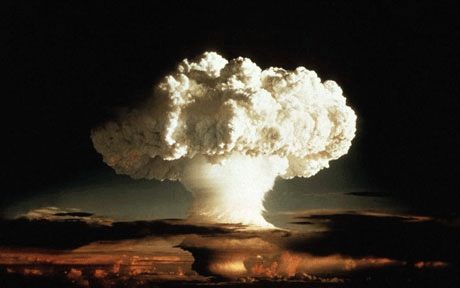
Nuclear bomb testing – the cruellest legacy of environmental injustice and racism
|
Nuclear testing legacy is ‘cruellest’ environmental injustice, warns rights expert,
https://news.un.org/en/story/2020/07/1068481 16 July 2020
Human RightsThe dangerous legacy of nuclear weapons testing continues to affect many communities, a leading rights expert said on Thursday, on the 75th anniversary of testing in the United States, that heralded the nuclear age.
In an appeal to governments worldwide to get rid of weapons of mass destruction, UN Special Rapporteur on toxics, Baskut Tuncak, said that the Trinity tests in New Mexico on 16 July 1945, were the prelude to “two horrific explosions suffered by (the) innocent people of Japan”, during the Second World War.
They were also followed by the detonation of hundreds of nuclear bombs over vulnerable communities in the Pacific, and the disposal of radioactive waste on lands and territories of indigenous peoples. Paradise lostThis had created a legacy of nuclear testing that “is one of the cruellest examples of environmental injustice witnessed” in “what should be a peaceful island paradise”, said Mr Tuncak, who reports to the Human Rights Council in Geneva. From 1946-58, 67 nuclear bombs were detonated on the Marshall Islands, he said, the equivalent of more than 1.5 “Hiroshima-sized explosions every day for 12 years”. Communities “have suffered unimaginably” from radioactive contamination and this continues today “with a legacy of contamination, illness and anguish”, the expert insisted.
Twin environmental disasters made matters worse, he added, referring to climate change-induced sea level rise and nuclear waste concentrated in a radioactive “tomb”. 200 tests in 30 yearsSimilarly, in French Polynesia, over 200 nuclear tests were conducted over a 30-year period from 1966 to 1996, subjecting inhabitants to associated health and environmental damage, the Special Rapporteur said. From Greenland to the indigenous territories of the United States, he warned that people continued to suffer from the nuclear testing era. Waste not“In recent decades, numerous Native American tribes received funding to store unwanted nuclear waste on their lands,” he said. “Those of Point Hope, Alaska, became recipients of radioactive soil and higher cancer rates that are believed to have been the foreseeable result. And the people of Greenland discovered radioactive waste left by the US military, unbeknownst to them as the ice continues to melt in the Arctic.” This discriminatory approach should be addressed by all States as part of the discussion on “systemic racism” and nuclear disarmament, Mr. Tuncak insisted. “Unaddressed, the dangers of radioactive contamination will persist for centuries, and so too will the harmful legacy of racism that surrounds this tragic chapter of humanity,” he added. |
|
1 This Month
Chernobyl: The Lost Tapes – A good documentary on Chernobyl on SBS available On Demand for the next 3 weeks– https://www.sbs.com.au/ondemand/tv-program/chernobyl-the-lost-tapes/2352741955560

of the week–London Campaign for Nuclear Disarmament

Tell the Ukrainian Government to Drop Prosecution of Peace Activist Yurii Sheliazhenko
To see nuclear-related stories in greater depth and intensity – go to https://nuclearinformation.wordpress.com
-
Archives
- April 2026 (139)
- March 2026 (251)
- February 2026 (268)
- January 2026 (308)
- December 2025 (358)
- November 2025 (359)
- October 2025 (376)
- September 2025 (257)
- August 2025 (319)
- July 2025 (230)
- June 2025 (348)
- May 2025 (261)
-
Categories
- 1
- 1 NUCLEAR ISSUES
- business and costs
- climate change
- culture and arts
- ENERGY
- environment
- health
- history
- indigenous issues
- Legal
- marketing of nuclear
- media
- opposition to nuclear
- PERSONAL STORIES
- politics
- politics international
- Religion and ethics
- safety
- secrets,lies and civil liberties
- spinbuster
- technology
- Uranium
- wastes
- weapons and war
- Women
- 2 WORLD
- ACTION
- AFRICA
- Atrocities
- AUSTRALIA
- Christina's notes
- Christina's themes
- culture and arts
- Events
- Fuk 2022
- Fuk 2023
- Fukushima 2017
- Fukushima 2018
- fukushima 2019
- Fukushima 2020
- Fukushima 2021
- general
- global warming
- Humour (God we need it)
- Nuclear
- RARE EARTHS
- Reference
- resources – print
- Resources -audiovicual
- Weekly Newsletter
- World
- World Nuclear
- YouTube
-
RSS
Entries RSS
Comments RSS
 nuclear-news