Radionuclides from the nuclear industry increase wildfires, and greatly increase their danger

Radionuclides in trace amounts, in the environment, increase wild fires, 30 fold by making them hotter, bigger and, much more profuse. Radionuclides Increase the width and breadth of wildfires, like the huge 90,000 acre wildfire at Idaho National laboratory, where the area is saturated with radionuclides.
govt extends nuclear reactor licenses, deregulates their supervision further. The government does not mandate-shutting the old dangerous nuke, monsters down . They are so expensive and dangerous, with no place safe to store, their extinction level-hoards of hi level nuclear wast
Death Maybe Your Santa Claus But, Pyrophoricity is The Burning Deliverance. https://www.opednews.com/articles/30-years-too-late-by-Terra-Lowe-Danger_Fukushima_Nuclear-210301-909.html–By Terra Lowe , 3 Mar 21,
STP failure Texas nuclear plant was just 3 minutes away from going completely off-line during blackout – Raw Story – .rawstory.com PSYCHOTIC IRRATIONALITY AND STUPIDITY What have the massive gulf coast hurricanes Harvey, Maria, and others, taught me? Harvey taught that catastrophes occur in America and that they are not well managed.
There was the monster cold-spell and failure of the grid in Texas, with temps in the teens in Feb. Almost freezing to death. Many almost dying again of starvation, like during the hurricanes. Almost dying of thirst and, bacteria infested water. Texas is the rightwing devil of the south. Texas is where the South Texas Project nuclear reactors, at Bay city, lost backup . So close to melting down again, like they were during Hurricane Harvey. This occurred in the time, during the blackouts in Texas . There was no water in half of Texas. Even hospitals in Austin. Texas is a total failure, with the pandemic still going.
I write this diatribe-invective, appealing to the sense and sanity, of the American people and people in the WORLD. No one is listening 30 years too late. Its all 30 years too late. The nukeape countries are: Pronuke energy. Pronuclear weapons. Generals are attached at the hip, to nuclear power. Attached to the Nuclear military industrial complexes and stock markets. There are minnions of them in all nuke countries. In Nuke countrys like the USA , France, Russia, Canada .
Australias wildfires, are starting to burn again. Like all the huge wildfires, they are from hydrocarbon residue in soils, drought, global climate change, pryophoric radionuclides like uranium waste, in the soil.
There are MEGA recurring Firestorms and wildfires, that occur in areas where nuclear catastrophes occured in the forests around Fukushima and pripyat and other heavily contaminated areas.. The phenomenon is from the inherent pyrophoricity of the multiple radionuclides, deposited there by the nuclear explosions and meltdowns or dumping for the past 5 to 10 years. Unusual biannual Forest wildfires have b een recurring around Chernobyl for 30 years. Radionuclide wildfires have been raging at Fukushima, Chernobyl, Santa Susana , INL
Santa Susana had two meltdowns in the 1960s. The Woolsey wildfires there, are some of the worst wildfires in history. The Idaho National Laboratory had 2 nuclear reactor meltdowns, in 50 years.
The 2018 INL wildfires, burned 90,000 acres in and around the 50 reactor, Idaho National Laboratory site, spreading deadly radionulide death over the United States in the air.
INL is a 30 square mile area, chocked full of Radionuclide waste. The pyrophoricity of all radionuclides, the Uranium, plutonium, cesium 137 cobalt 60 strontium 90 americium, thorium 90 . Radium and Uranium, from fracking, from nuclear , from uranium mining, from oil refining and burning hydrocarbons.
Areas around Mayak and Hanford have perennial wildfires .
Depleted uranium is used in bullets, mortars, bombs, rockets because of it’s inherent pyrophoricty.
Areas around Los Alamos, have had perennial-massive wild fires for years from the plutonium and americium byproducts of nuclear bomb manufacturing, residue there. Wildfires will happen this year at Los Alamos. It is primed for it from the drought in nothern New Mexico. Primed for it, from climate change, drought and radionuclide pyrophoric catalysis. Plutonium burns, when exposed to air, like the rocky flats, plutonium pit factory fires in arvada in the 60s, 70s, and, 80s in Denver.
Plutonium, depleted uranium, uranium, Amerecium dust contamination, from plutonium pit manufacture, at Los Alamoa catalyze wildfires, there. Wildfire areas have grown since older wildfire, AROUND LOS ALAMOS.
WILDFIRES ARE GROWING. Wildfires engulfed half of Australia, half of the USA, a third of the Amazon in the past 3 years. Continue reading
Hinkley Point B nuclear station to close ‘early’ due to aging graphite blocks

 Nuclear Engineering International 3rd March 2021, REPORTS IN THE UK THAT EDF Energy’s Hinkley Point B station would close ‘early’, in 2022, sounded a strange note for nuclear industry veterans. They knew that the venerable advanced gas-cooled reactor (AGR) on the west coast, on its startup in 1979, was originally expected to have a lifetime of around 25 years.
https://www.neimagazine.com/features/featurewhy-close-hinkley-point-b-early-8565897/
France’s Nuclear Safety Authority (ASN) has safety concerns about Flamanville nuclear power plant
Montel News 3rd March 2021, The Nuclear Safety Authority (ASN) is worried about “inadequacies” in EDF’s capacity to manage an extreme crisis at its Flamanville plant (2.6
GW), where an EPR is under construction, it reported Wednesday. On the night of January 11 to 12, ASN carried out an unannounced inspection to test the organization of the crisis by simulating an emergency situation resulting from extreme natural aggression, resulting in congestion on the road network and isolation. partial site, it said in a statement
Concern about the marketing of radioactively contaminated scrap metal
NFLA 4th March 2021, The UK & Ireland Nuclear Free Local Authorities (NFLA) has submitted aArmenia should shut down, not repair, its dangerous nuclear power station
Is there an argument that could work now?
The EU might urge Armenia to consider a closure in light of recent developments. Post-war road, railway, and energy-development plans should increase trade and transportation linkages in the South Caucasus region after the recent conflict between Armenia and Azerbaijan. The new infrastructure and financing provide Armenia with a fresh opportunity to tap newer, safer, and more diverse energy supplies. By closing Metsamor, Armenia would not only contribute to the safety of its own citizens and those in neighboring countries but strengthen peace in the South Caucasus.
Metsamor nuclear power plant. Metsamor is located in a major seismic zone close to Armenia’s capital, Yerevan, and near Armenia’s border with Turkey. The original, Soviet-built plant included two 400 megawatt reactors. Unit 1 began commercial operation in 1977. Both units were closed by the Soviet authorities in 1989, following the Chernobyl accident and the massive Spitak earthquake in Armenia in 1988, which killed over 25,000 people.
In 1995, following Armenia’s independence, Metsamor Unit 2 was restarted at 375 megawatts electrical with Russian funding and technical support. The plant’s original operating license was supposed to end in 2016, but Yerevan extended it to 2021, and late in 2020 announced its intent to extend the plant’s operation even longer. Unit 1 has remained closed.
Metsamor is one of five of the last operating Soviet-era reactors without a containment vessel, which is a requirement of all modern reactors. …………..
In 1995, following Armenia’s independence, Metsamor Unit 2 was restarted at 375 megawatts electrical with Russian funding and technical support. The plant’s original operating license was supposed to end in 2016, but Yerevan extended it to 2021, and late in 2020 announced its intent to extend the plant’s operation even longer. Unit 1 has remained closed……..
Following the Fukushima Daiichi nuclear disaster in Japan, Germany and other key EU states shut down their nuclear power production. Also, the EU has succeeded in closing dangerous Soviet era plants among its new members. However, EU citizens remain in danger when problematic plants in their neighborhood remain operational. The EU now has an opportunity to remove one of these dangers while strengthening regional cooperation, but only if it convinces Armenia to scrap plans to repair Metsamor in favor of shutting it down altogether.
https://thebulletin.org/2021/03/armenias-nuclear-power-plant-is-dangerous-time-to-close-it/
Safety expert recommends shutdown of several of France’s old, dubiously safe, nuclear reactors
Michigan Attorney General wants review of nuclear plant license transfer to Holtec
 an energy company to seek more review before it undertakes a license transfer that could cost Michiganders money and safety.AG Nessel is petitioning the Nuclear Regulatory Commission to look more closely into a case involving a license transfer request for the Palisades Nuclear Plant and Big Rock Point Independent Spent Fuel Storage Installation, which are both currently owned by Entergy Co.
Nessel is requesting a hearing for the transfer of control of the licenses to those facilities from Entergy to Holtec International.
Earlier this month, Entergy and Holtec filed an application asking for the approval of the transfer of control of the licenses. Entergy plans to retire the Palisades Nuclear Plant in 2022.
A trust fund of about $550 million was established with ratepayer funds to decommission the Palisades. Not only does Holtec want to use that fund to decommission the Palisades but also to handle the site restoration and fuel management cost.
Attorney General Nessel filed her petition and request to further review this license transfer application.
In her petition, Nessel said that she supports safe decommissioning, site restoration and fuel management at Palisades, but she’s concerned that Holtec does not have the financial qualifications to complete a risk-intensive project.
The petition demonstrates that Holtec has underestimated the costs for actual decommissioning, thus threatening the health and safety of Michigan residents, according to Michigan AG Dana Nessel. The petition also questions Holtec’s exemption request to use the decommissioning funds for site restoration and nuclear fuel management without providing evidence of other funding sources.
“Protecting the environment, the health and the pocketbooks of Michigan residents are part of my responsibilities as attorney general,” said Nessel in a press release. “My concern is that by seriously underestimating the cost of decommissioning, site restoration and nuclear fuel management, coupled with a lack of appropriate financial assurances, Holtec endangers our environment and health, and potentially leaves our residents to bear the costs of proper clean-up.”
Palisades Nuclear Power Plant is located in Covert Township and the Big Rock Point facility is located in Hayes Township both on the shores of Lake Michigan.
Fukushima nuclear containment system failed. This kind of disaster will happen again

The supposedly failsafe containment system at Fukushima Dai-ichi Unit Three failed and released massive amounts of radioactivity into the local environment and the worldwide atmosphere. Such an enormous human tragedy will happen again at an atomic power reactor somewhere in the world.
Think about that. No nuke in the world can withstand a supersonic shockwave, and here is the evidence on international TV and across the Internet that it occurred in 2011, as Fairewinds said.
Japan’s Fukushima Meltdowns (New Video): Much Still Unknown 10 Years Later, https://www.fairewinds.org/demystify/japans-fukushima-meltdowns-10-years-later-new-video-shows-much-still-unknown February 17, 2021 By The Fairewinds Crew
As we approach the 10th commemoration of Japan’s March 11, 2011, Fukushima Dai-ichi triple meltdowns, organizations around the globe, including environmental groups, nonprofits (like Fairewinds Energy Education), engineering and pronuclear organizations, and media organizations like Japan’s Nippon TV, will release new information.
Some of this information is really new and recently uncovered. Other media events will bring people together to share and discuss what these major meltdowns meant to the people of Japan and communities worldwide. And sometimes, these media events are just a corporation or an agency marketing new nukes by putting their positive spin on nuclear power rather than acknowledging its dangers. For example, nuclear zealots continue to claim that atomic power reactors are safer for workers than working at Toys R Us, and reactors cannot meltdown and certainly will never blow up. The Fukushima disaster proved them wrong, but yet they persist!
As Fukushima Daichi Units One, Two, and Three were melting down, Nippon TV, the largest and flagship station of the Nippon Television Network System, dispatched television film crews to monitor the events as they unfolded. No one in the world has ever captured the core melting down, but Nippon TV captured two meltdown-induced explosions on film.
Now, Nippon TV has just released a new digital copy of the Fukushima Dai-ichi Unit One and Unit Three explosions (see video below ). Fukushima Centralt TV/NipponTv
At Fairewinds, we congratulate Nippon for the excellent work they did to create the original initial explosion footage in 2011 and on this essential remastered copy just completed in 2021. Nippon’s newly released digital footage is important historically and technically.
That said, the new video footage and Nippon’s ensuing interview with Tokyo Electric Company (TEPCO), the atomic power corporation that owns all six Fukushima Dai-ichi nuclear power plants, contain three glaring technical errors.
- First, Fairewinds continues to have significant concerns about TEPCO’s technical interpretations of these explosions’ cause.
- Second, TEPCO is blaming newly uncovered lethal radioactivity sitting at the top of the containment structure on the supersonic shockwave.
- Third, TEPCO does not discuss that there likely was a second explosion that occurred 3 seconds after the first.
Understanding the mechanics behind explosions is critical to understanding what happened at Fukushima and what such a danger means to nuclear power anywhere in the world.
- There are two explosion methods: a deflagration shock wave, which happened at Fukushima Unit One and Three Mile Island in Middletown, Pennsylvania, in the United States. While still destructive, a deflagration shockwave travels at subsonic speeds (less than 760 miles an hour, the speed of sound).
-
- The second type of explosion is called a detonation shockwave. It is much more destructive because it travels at supersonic speeds.
In 2011, with Geoff Sutton’s assistance from the United Kingdom, Fairewinds clearly showed that the Unit Three explosion was the more destructive detonation shockwave while Unit One’s was a deflagration.
Does it matter whether or not an explosion at Fukushima was a detonation or a deflagration? Absolutely! Hydrogen gas at room (atmospheric) pressure cannot create a supersonic shockwave. Fairewinds’s 2011 findings that a detonation shockwave occurred should have changed the scientific and nuclear engineering analyses of such events worldwide.
No nuclear power radioactive release containment system built anywhere in the world will withstand a detonation shockwave!
The fact that a detonation shockwave did occur is something the nuclear industry has ignored since Fairewinds’ Arnie Gundersen and Geoff Sutton identified it did happen at Fukushima Unit Three in 2011.
The nuke industry and its regulatory handlers do not believe that a supersonic shockwave explosion will ever happen in a nuclear power plant. If they admitted that an atomic reactor containment system would fail by detonation, the nuke industry would also have to acknowledge that nuke plants’ containment systems are not failsafe. Nuclear power containment systems will fail when there is a supersonic shockwave explosion.
The supposedly failsafe containment system at Fukushima Dai-ichi Unit Three failed and released massive amounts of radioactivity into the local environment and the worldwide atmosphere. Such an enormous human tragedy will happen again at an atomic power reactor somewhere in the world.
Think about that. No nuke in the world can withstand a supersonic shockwave, and here is the evidence on international TV and across the Internet that it occurred in 2011, as Fairewinds said.
- The second type of explosion is called a detonation shockwave. It is much more destructive because it travels at supersonic speeds.
- Fairewinds second area of concern about TEPCO’s analysis on this latest NIPPON video is the linkage of recently discovered lethal radiation levels at the top of the containment to the supersonic detonation. Ten years ago, immediately following the three meltdowns at Fukushima in 2011, Fairewinds identified superheated highly radioactive gases escaping from this same area that TEPCO suddenly claims it has just uncovered in 2021. The containment was leaking before the explosion and continued to spread radioactivity after the blast. Still, no nuclear engineer or scientist is surprised that significant contamination continues to leak from the damaged containment system. The containment was breached, which allowed this radiation to leak! However, there is no evidence to suggest that the explosion is the cause of that leak since the containment was leaking before the supersonic shockwave.
- Finally, Nippon’s remastered video vividly shows Fairewinds’ third concern. The eye is drawn to the detonation’s sudden flash and the ensuing upward-moving black cloud of rubble. Now, look again. About three seconds after the initial vertical blast, a white cloud suddenly moves horizontally at ground level to the north. (see picture on original -comparing the first and second plumes)
- Community-volunteer citizen-scientists Arnie met while collecting radioactive samples in Fukushima prefecture say they heard more than one explosion. They said it sounded like the snapping of bamboo burning in a fire. This new video shows that there were at least two explosions, one vertically and one horizontally. As more data becomes available, Fairewinds Energy Education will put forward the reasons why, but as of now, the entire explosion sequence at Fukushima Unit Three is something the nuclear industry zealots want to ignore. They continue to hope that history will not repeat itself while they continue to build and operate more lethally radioactive and highly risky atomic reactors.
- Throughout the Nippon video, the announcer reverentially refers to TEPCO and the Japanese Regulators as “the authorities” and “officials”. This kind of public propaganda occurs because TEPCO, the Japanese Government and its regulators, and the International Atomic Energy Agency (IAEA) have successfully captured the Japanese media.
What was called for in 2011 and is still desperately required in 2021 are independent experts. These would be people from outside TEPCO, its captive regulators, or its allies embedded in the nuclear industry. Once again, Fairewinds calls for an independent consortium of experts who would be able to give a frank assessment of the magnitude and extent of the problems that lie ahead for the failed Fukushima cleanup.
Did you know that in 2013, Fairewinds and 16 other international experts coauthored a letter to the United Nations (UN) asking it to establish this independent panel? The UN never had the courtesy even to acknowledge that it received these serious requests and recommendations. Such machinations by TEPCO, the Japanese Government, and the international nuclear industry are indeed a human rights and environmental injustice issue!
Ten years have passed, yet Japan’s citizens still wait for independent oversight of the Fukushima disaster. The people of Japan deserve better than the authorities covering up the truth and lying to them.
France’s nuclear reactors’ lives to be extended beyond 40 years

Le Monde 25th Feb 2021, The oldest nuclear reactors extended by ten years. EDF’s 32 900-megawatt reactors are the oldest in operation in France. They were originally designed to operate for forty years. This is a decision that officially opens the way to extending the life of the oldest reactors in France’s nuclear fleet beyond forty years. In an opinion published Thursday, February 25, the Nuclear Safety Authority (ASN) considers that “all the planned provisions open the prospect” of a continuation of the activity of the 32 French 900 megawatt (MW) reactors for a ten-year period. While French regulations do not provide for a maximum “lifespan” for reactors, an assumption of forty years of operation was adopted during their design.
Fukushima nuclear station seismometers not functioning when latest earthquake happened
Fukushima nuclear plant operator: Seismometers were broken
The operator of the wrecked Fukushima nuclear power plant says two seismometers at one of its three melted reactors have been out of order since last year and did not collect data when a powerful earthquake struck the area earlier this month https://abcnews.go.com/Technology/wireStory/fukushima-nuclear-plant-operator-seismometers-broken-76044179
By MARI YAMAGUCHI Associated Press, 23 February 2021, TOKYO — The operator of the wrecked Fukushima nuclear power plant said Monday that two seismometers at one of its three melted reactors have been out of order since last year and did not collect data when a powerful earthquake struck the area earlier this month.
The acknowledgement raised new questions about whether the company’s risk management has improved since a massive earthquake and tsunami in 2011 destroyed much of the plant.
The malfunctioning seismometers surfaced during a Nuclear Regulation Authority meeting on Monday to discuss new damage at the plant resulting from a magnitude 7.3 quake that struck the region on Feb. 13. Cooling water and pressure levels fell in the Unit 1 and 3 reactors, indicating additional damage to their primary containment chambers.
The operator, Tokyo Electric Power Co., has repeatedly been criticized for coverups and delayed disclosures of problems at the plant.
Regulatory officials asked TEPCO at the meeting why it did not have seismological data from the Unit 3 reactor for Saturday’s quake, and utility officials acknowledged that both of its seismometers had failed — one in July and the other in October — and had never been repaired.
TEPCO also said that seismometers at all but two of the reactor buildings that survived the 2011 disaster were submerged by water from the tsunami and have never been replaced.
During Monday’s meeting, regulatory officials said they were concerned about the declining water levels and pressure in the Unit 1 and 3 primary containment chambers because of the possibility that the quake had expanded the existing damage or opened new leakage paths, and urged the utility to closely check for any increased radiation levels in the ground water surrounding the reactor buildings.
TEPCO said no abnormality has been detected in water samples so far.
New damage could further complicate the plant’s already difficult decommissioning process and add to the large amounts of contaminated water being stored at the plant.
Since the 2011 disaster, cooling water has been escaping constantly from the damaged primary containment vessels into the basements of reactor and turbine buildings, where the volume increases as groundwater seeps in. The water is pumped up and treated, then part of it is reused as cooling water, while the rest is stored in about 1,000 tanks.
TEPCO initially reported there was no abnormality at the plant from Saturday’s earthquake. But on Monday, it said about 20 of the tanks had slid slightly due to the quake, a storage container carrying radioactive waste had tilted, and asphalt pavement at the plant was cracked. AT TOP https://abcnews.go.com/Technology/wireStory/fukushima-nuclear-plant-operator-seismometers-broken-76044179
Significant safety incident at EDF nuclear power plant in Flamanville
La Presse de la Manche 19th Feb 2021, The EDF power plant in Flamanville (Manche) declared, on Friday February 19, 2021, a level 1 event concerning the diesel of production unit n ° 1, still at a standstill. The management of the Flamanville 1-2 nuclear power plant (Manche) declared, on Friday February 19, 2021, a significant safety event at level 1 of the INES scale, with the Nuclear Safety Authority .
Accidents in both USA’s and Russia’s use of nuclear power in space
 Nuclear Rockets to Mars?, BY KARL GROSSMAN– CounterPunch, 16 Feb 21”…………There have been accidents in the history of the U.S.—and also the former Soviet Union and now Russia—using nuclear power in space.
And the NAS report, deep into it, does acknowledge how accidents can happen with its new scheme of using nuclear power on rockets for missions to Mars.
It says: “Safety assurance for nuclear systems is essential to protect operating personnel as well as the general public and Earth’s environment.” Thus under the report’s plan, the rockets with the nuclear reactors onboard would be launched “with fresh [uranium] fuel before they have operated at power to ensure that the amount of radioactivity on board remains as low as practicable.” The plans include “restricting reactor startup and operations in space until spacecraft are in nuclear safe orbits or trajectories that ensure safety of Earth’s population and environment” But, “Additional policies and practices need to be established to prevent unintended system reentry during return to Earth after reactors have been operated for extended periods of time.”
The worst U.S. accident involving the use of nuclear power in space came in 1964 when the U.S. satellite Transit 5BN-3, powered by a SNAP-9A plutonium-fueled radioisotope thermoelectric generator, failed to achieve orbit and fell from the sky, disintegrating as it burned up in the atmosphere, globally spreading plutonium—considering the deadliest of all radioactive substances. That accident was long linked to a spike in global lung cancer rates where the plutonium was spread, by Dr. John Gofman, an M.D. and Ph. D., a professor of medical physics at the University of California at Berkeley. He also had been involved in developing some of the first methods for isolating plutonium for the Manhattan Project.
NASA, after the SNAP-9A (SNAP for Systems Nuclear Auxiliary Power) accident became a pioneer in developing solar photovoltaic power. All U.S. satellites now are energized by solar power, as is the International Space Station.
The worst accident involving nuclear power in space in the Soviet/Russian space program occurred in 1978 when the Cosmos 954 satellite with a nuclear reactor aboard fell from orbit and spread radioactive debris over a 373-mile swath from Great Slave Lake to Baker Lake in Canada. There were 110 pounds of highly-enriched (nearly 90 percent) of uranium fuel on Cosmos 954.
Highly-enriched uranium—90 percent is atomic bomb-grade—would be used in one reactor design proposed in the NAS report. And thus there is a passage about it under “Proliferation and security.” It states that “HEU [highly enriched uranium] fuel, by virtue of the ease with which it could be diverted to the production of nuclear weapons, is a higher value target than HALEU [high assay low enriched uranium], especially during launch and reentry accidents away from the launch site. As a result, HEU is viewed by nonproliferation experts as requiring more security considerations. In addition, if the United States uses HEU for space reactors, it could become more difficult to convince other countries to reduce their use of HEU in civilian applications.”
As for rocket propulsion in the vacuum of space, it doesn’t take much conventional chemical propulsion to move a spacecraft—and fast……..more https://www.counterpunch.org/2021/02/16/nuclear-rockets-to-mars/
Dangerous nuclear waste casks should stay off roads and rails

Radioactive rail wreck, Dangerous nuclear waste casks should stay off roads and rails , rails https://beyondnuclearinternational.org/2020/07/12/radioactive-rail-wreck/, Beyond Nuclear By Laura Watchempino 12 July 20,
If the Nuclear Regulatory Commission’s (NRC) conclusion that it’s safe to move spent nuclear fuel from nuclear power plants across the country to a proposed storage facility in Lea County sounds vanilla-coated, it’s because the draft environmental impact statement for a Consolidated Interim Storage Facility submitted by Holtec International did not address how the casks containing the spent fuel would be transported to New Mexico.
It’s likely the casks would be transported primarily by rail using aging infrastructure in need of constant repair. But our rail systems were not built to support the great weight of these transport casks containing thin-wall fuel storage canisters.
Nor was the potential for cracked or corroded canisters to leak radiation studied because an earlier NRC Generic EIS for the Continued Storage of Spent Nuclear Fuel assumed damaged fuel storage canisters would be detected during an intermediary dry transfer system or a pool.
But Holtec’s proposal only addresses a new destination for the high-level nuclear waste – not the removal and transport of the fuel storage canisters from nuclear power plants to New Mexico.
Even transport casks with canisters that are not damaged will release radiation as they are transported from nuclear power plants to the storage facility, exposing populations along the transport routes in a majority of states and tribal communities in New Mexico to repeated doses of radiation.
Other issues not considered in the draft EIS were the design life of the thin-wall canisters encasing the nuclear fuel rods and faulty installation at reactor sites like San Onofre, or the self-interest of the Eddy-Lea Energy Alliance in using the land it acquired for a consolidated interim storage site.
Thin-wall canisters cannot be inspected for cracks and the fuel rods inside are not retrievable for inspection or monitoring without destroying the canister. NRC does not require continuous monitoring of the storage canisters for pressure changes or radiation leaks. The fuel rods inside the canisters could go critical, or result in an uncontrolled nuclear chain reaction, if water enters the canisters through cracks, admits both Holtec and the NRC. None of us are safe if any canister goes critical.
Yet a site-specific storage application like Holtec’s should have addressed NRC license requirements for leak testing and monitoring, as well as the quantity and type of material that will be stored at the site, such as low burnup nuclear fuel and high burnup fuel.
Irradiated nuclear fuel is safer (but not safe) stored at the reactor site rather than transported thousands of miles to New Mexico. (Image: U.S. Nuclear Regulatory Commission)
With so many deficiencies in the draft EIS, a reasonable alternative is to leave this dangerous radioactive nuclear waste at the nuclear plants that produced it in dry cask storage rather than multiply the risk by transporting thousands of containers that could be damaged across many thousands of miles and decades to southeastern New Mexico, then again to a permanent repository.
Interim storage of spent nuclear fuel at existing nuclear plant sites is already happening – there are 65 sites with operating reactors in the United States and dry cask storage is licensed at 35 of these sites in 24 states. But since the thin-wall canisters storing the fuel rods are at risk for major radioactive releases, they should be replaced with thick-walled containers that can be monitored and maintained. The storage containers should be stored away from coastal waters and flood plains in hardened buildings.
Attempting to remove this stabilized nuclear waste from where it is securely stored across hundreds or thousands of miles through our homelands and backyards to a private storage facility also raises some thorny liability issues, since the United States will then be relieved of overseeing the spent nuclear fuel in perpetuity.
The states and nuclear plants that want to send us their long-lived radioactive waste will also be off the hook, leaving New Mexico holding a dangerously toxic bag without any resources to address the gradual deterioration of man-made materials or worse, a catastrophic event. It’s a win/win, however, for Holtec International and the Eddy-Lea Energy Alliance.
Ironically, just a few years ago, the US Environmental Protection Agency had expressed opposition to mass transportation of another kind of radioactive waste. In a classic example of environmental injustice, the EPA balked at removing uranium mine waste on the Navajo Nation, because, it said, “Off-site disposal, because of the amount of waste in and around these areas, means possibly multiple years of hundreds and hundreds and hundreds of trucks going in and out of the community and driving for miles”.
The agency told the affected communities, during discussion about digging up the uranium mine waste and transporting it to a licensed repository in different states outside the Navajo Nation, that this option, also the Nation’s preference, was the most expensive. But now New Mexico is the destination for precisely the reverse, with hundreds and thousands of transports from different states coming to deposit the country’s nuclear waste site radioactive debris on Native soil.
Laura Watchempino is with the Multicultural Alliance for a Safe Environment/Pueblo of Acoma. A version of this article first appeared in the Albuquerque Journal and is republished with kind permission of the author
USA military leaders were unaware of risks to Pence’s ‘nuclear football’ during Capitol riot

 Military officials were unaware of potential danger to Pence’s ‘nuclear football’ during Capitol riot, By Barbara Starr and Caroline Kelly, CNN, February 12, 2021 Military officials overseeing the authorization process to launch nuclear weapons were unaware on January 6 that then-Vice President Mike Pence’s military aide carrying the “nuclear football” was potentially in danger as rioters got close during the violent Capitol insurrection, according to a defense official.
South Africa’s Koeberg Nuclear Power Station has suffered severe corrosion
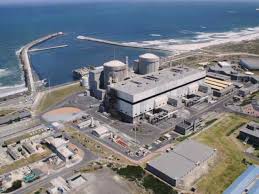
Koeberg has suffered substantial damage, according to Koeberg Alert Alliance. (with audio) https://www.capetalk.co.za/articles/408514/koeberg-nuclear-power-station-radioactivity-containment-building-is-severely-damaged?fbclid=IwAR1HSyt2Tw6lrsbwJxlEQW5m4i4YT18_Hl0MgVzEQV0f24h31btTVN150g4 Eskom says the containment building is ‘leak-tight’.
RELATED: We’ll extend Koeberg lifespan from 40 to 60 years. It’ll be safe – Eskom
Koeberg Nuclear Power Station has suffered substantial damage to its containment building, according to Koeberg Alert Alliance (KAA).
The containment building is designed to contain the escape of radioactive steam or gas in an emergency.
A nuclear accident at Koeberg will have devastating consequences for hundreds of thousands of people who live close nearby.
Eskom says it is aware of “deterioration” and that it is managing the issue by implementing a modification.
Like all other nuclear power plants around the world, we do get deterioration… We’re managing this issue… Recent tests show… It’s leak-tight. The building works…
Riedewaan Bakardien, Chief Nuclear Officer – Eskom
Sea air has severely damaged the concrete structure, highlighting the significant risk the facility poses to nearby residents, according to KAA.
A concerned insider at Koeberg brought the alarming structural problems to the attention of KAA.
The insider informed KAA of a crack so large it goes right around the entire 110-metre circumference of the containment dome.
The community group says it is struggling to access information from Eskom about the damaged containment dome.
KAA claims that a 31-page Eskom report (about the damage), has eleven pages entirely blacked out while various other sections, photos and tables were censored because, claims Eskom, it contained “sensitive technical information”.
Lester Kiewit interviewed Peter Becker, a spokesperson for KAA.
The salt in the sea air… has caused accelerated rust in the rebar in the concrete of the containment structures… which caused cracking… About 10% of the surface of the containment building has delaminated [split into layers] …
Peter Becker, spokesperson – Koeberg Alert Alliance
Eskom blacked out about half of the report before releasing it to us…
Peter Becker, spokesperson – Koeberg Alert Alliance
Eskom is surprised by the speed at which it’s deteriorating… Koeberg was not well constructed, and the effect of sea-air was not well understood.
Peter Becker, spokesperson – Koeberg Alert Alliance
Koeberg is far too close to densely populated areas. If they tried to get approval to build it in that location today, it would be refused…
Peter Becker, spokesperson – Koeberg Alert Alliance
Koeberg was designed to last for 40 years… We get to that in 2024… but Eskom wants to keep it going. It’s a really bad idea…
Peter Becker, spokesperson – Koeberg Alert AllianceThis problem will remain. We’re implementing a modification… which will retard the deterioration.
Riedewaan Bakardien, Chief Nuclear Officer – Eskom
It’s the building around the reactor. Yes, there is corrosion… We’re well aware of it…
Riedewaan Bakardien, Chief Nuclear Officer – Eskom
1 This Month



26 September – International Day for the Total Elimination of Nuclear Weapons


PLEASE OPPOSE HR 8255 AND S.3639 – bills would accelerate satellite deployment, with no environmental review or safeguards – https://ncstd5li.quorum.us/campaign/169331/
To see nuclear-related stories in greater depth and intensity – go to https://nuclearinformation.wordpress.com
-
Archives
- September 2026 (245)
- August 2026 (330)
- July 2026 (355)
- June 2026 (287)
- May 2026 (306)
- April 2026 (356)
- March 2026 (251)
- February 2026 (267)
- January 2026 (308)
- December 2025 (358)
- November 2025 (359)
- October 2025 (375)
-
Categories
- 1
- 1 NUCLEAR ISSUES
- business and costs
- climate change
- culture and arts
- ENERGY
- environment
- health
- history
- indigenous issues
- Legal
- marketing of nuclear
- media
- opposition to nuclear
- PERSONAL STORIES
- politics
- politics international
- Religion and ethics
- safety
- secrets,lies and civil liberties
- spinbuster
- technology
- Uranium
- wastes
- weapons and war
- Women
- 2 WORLD
- ACTION
- AFRICA
- Atrocities
- AUSTRALIA
- Christina's notes
- Christina's themes
- culture and arts
- Events
- Fuk 2022
- Fuk 2023
- Fukushima 2017
- Fukushima 2018
- fukushima 2019
- Fukushima 2020
- Fukushima 2021
- general
- global warming
- Humour (God we need it)
- Nuclear
- RARE EARTHS
- Reference
- resources – print
- Resources -audiovicual
- Weekly Newsletter
- World
- World Nuclear
- YouTube
-
RSS
Entries RSS
Comments RSS
 nuclear-news