The $2.5Billion-a-year effort to stabilise the Hanford reservation’s dangerous nuclear wastes

Nuclear waste structures in Washington state are stabilized, https://apnews.com/article/environment-and-nature-business-government-and-politics-washington-nuclear-waste-14e29e8923c62bf5835f33e1b649000c RICHLAND, Wash. (AP) — The U.S. Department of Energy has confirmed that two underground structures at the decommissioned Hanford nuclear reservation in Washington state have been stabilized after they were deemed at risk of collapsing and spreading radioactive contamination into the air.
“With this work completed, Hanford has ensured the stability of these structures and reduced risks to workers and the environment,” department spokesperson Geoff Tyree said.
The partial collapse of a tunnel storing nuclear waste the nuclear reservation in 2017 prompted a federal study which concluded last year that a large settling tank and two trenches where plutonium-contaminated liquids were poured into the ground for disposal posed a high risk of collapse and contamination, Tri-City Herald reported Tuesday.
The Hanford reservation produced plutonium for nuclear weapons during the Cold War and World War II, leaving 56 million gallons (212 million litres) of radioactive waste in underground tanks. The largest of the three underground structures, which operated from 1955 to 1962, was estimated to be contaminated with 105 pounds (48 kilograms) of plutonium.
Scott Sax, president of Hanford contractor Central Plateau Cleanup Co., told employees that the three underground structures identified in the study were filled with concrete-like grout to prevent them from collapsing.
The work was done by White Shield Inc. of Pasco under a contract originally valued at about $4 million.
Sax also said that at least one of the trenches was buried deep enough to prevent nuclear waste from releasing into the air in the event of a collapse.
“Routine monitoring will continue to ensure all three structures remain stable,” Sax said, at least until further environmental cleanup action is taken.
Final cleanup plans for the structures have not yet been made as the Energy Department focuses on other high-priority projects, including capsules of radioactive waste that are at risk of releasing contamination in the event of a severe earthquake.
About $2.5 billion a year is being spent to stabilize and clean up waste and contamination left at the 580-square-mile (1,500-square-kilometer) site in Richland, Washington about 200 miles (322 kilometers) southeast of Seattle, officials said.
Sri Lanka expels ship carrying nuclear material for China
Sri Lanka expels ship carrying nuclear material for China, Channel News Asia, 22 Apr 21, COLOMBO: Sri Lankan authorities on Wednesday (Apr 21) expelled an Antigua-registered ship that entered the island’s territory without declaring a radioactive cargo bound for China.
The country’s Atomic Energy Regulatory Council said the MV BBC Naples was asked to leave after it was found to be in the Chinese-run port of Hambantota on Tuesday night carrying uranium hexafluoride.
“The ship failed to declare its dangerous cargo – uranium hexafluoride – and we decided to order it to leave our waters immediately,” council director general Anil Ranjith told AFP.
The ship had come from Rotterdam but authorities did not say where in China it was headed.
Ranjith said it was an offence to enter a port without declaring the material, which is used to enrich uranium, the fuel for nuclear power stations and weapons.
Sri Lanka’s opposition leader Sajith Premadasa demanded an investigation into the incident, describing it as a serious safety threat……
The entry of two Chinese submarines into Colombo in 2014 angered neighbouring India, the traditional regional power which is competing with Beijing for influence in the Indian Ocean.
Since then, Sri Lanka has not allowed Chinese submarine visits. https://www.channelnewsasia.com/news/asia/sri-lanka-expels-ship-carrying-nuclear-material-for-china-14666510
Sexual harrassment: reUSA’s National Nuclear Security Administration could improve prevention and response efforts in its nuclear security forces.
Sexual Harassment:NNSA Could Improve Prevention and Response Efforts in Its Nuclear Security Forces, Government Accountability Office GAO-21-307 Apr 19, 2021. Sexual harassment is harmful to employees and negatively affects workplaces. Reports of sexual harassment have been rare in the nuclear security forces at the National Nuclear Security Administration, but research shows those experiencing harassment are unlikely to report it.
NNSA and its security contractors may have limited information on the prevalence of harassment within their forces. The degree to which the agency and its contractors follow recommended practices to prevent and respond to harassment varies.
We made 5 recommendations that include proven approaches for preventing and responding to sexual harassment………… https://www.gao.gov/products/gao-21-307
Iran has named a suspect for the recent attack on its nuclear facility.
Independent 17th April 2021, Iran has named a suspect it alleges is responsible for the attack on the
country’s nuclear facility in Natanz. The incident at the country’s
main uranium enrichment facility last week – which Tehran quickly blamed
on Israel – cast a shadow over vital ongoing talks in Vienna aimed at
salvaging the international deal intended to block Iran’s route to
creating a nuclear arsenal.
Reforms needed at Canadian Nuclear Safety Commission ~ Hill Times letter to the editor — Concerned Citizens of Renfrew County and Area
April 12, 2021 https://www.hilltimes.com/2021/04/12/reforms-needed-at-canadian-nuclear-safety-commission/292381 Canada’s nuclear regulatory agency, the Canadian Nuclear Safety Commission says it’s the “World’s best nuclear regulator” on its website. That “self-image” of the CNSC’s is inconsistent with statements made in recent years by international peer reviewers, high-ranking Canadian officials, international nuclear proponents and others. The International Atomic Energy Agency recently reviewed Canada’s nuclear […]
Reforms needed at Canadian Nuclear Safety Commission ~ Hill Times letter to the editor — Concerned Citizens of Renfrew County and Area
Accident at Iran’s Natanz nuclear station
Guardian 11th April 2021, A spokesman for Iran’s civilian nuclear programme said an “accident”
struck the electrical distribution grid of the Natanz nuclear facility, a
day after the government announced it was starting up new uranium
enrichment centrifuges.
Behrouz Kamalvandi announced the accident on
Sunday, saying there were no injuries and no pollution. A mysterious
explosion in July 2020 damaged Natanz’s advanced centrifuge facility,
with Iran later calling the incident sabotage. Iran had announced on
Saturday that it had started up advanced uranium enrichment centrifuges at
Natanz, in a breach of its undertakings under the 2015 nuclear deal, days
after the start of talks on rescuing the accord.
France24 11th April 2021
Iran says it has begun mechanical tests on its newest advanced nuclear
centrifuges, even as the five world powers that remain in a foundering 2015
nuclear deal with Iran attempt to bring the U.S. back into the agreement.
Independent 10th April 2021
https://www.independent.co.uk/travel/middle-east/iran-nuclear-centrifuge-us-talks-b1829564.html
Pickering Nuclear plant at risk of ‘Fukushima-type accident,
Nuclear plant at risk of ‘Fukushima-type accident,’ Ontario group says, National Observer,
By Charles Mandel | News, Energy | April 8th 2021 Citing the potential for a repeat of the 2011 Fukushima nuclear meltdown, the Ontario Clean Air Alliance wants an interim moratorium on the Pickering Nuclear Generating Station’s (PNGS) operation.
The aging plant is slated for closure in 2024, and the alliance says a moratorium should be imposed until the operators can prove to the public that it poses no risk to public safety. Ontario Power Generation (OPG) operates the plant, which consists of eight CANDU reactors— a type of reactor that uses deuterium oxide, or heavy water, as a moderator and coolant and natural (not enriched) uranium as a fuel. Two of the plant’s reactors have already been permanently shuttered because of their age.
OPG has been lobbying Ontario’s provincial government to keep the plant open until 2025. Currently, it is slated to remain operating until 2024, at which point decommissioning would begin. The OPG gained its last licence renewal for the plant in 2018.
The clean air alliance made its demand March 30 in a letter addressed to Rumina Velshi, president of the Canadian Nuclear Safety Commission (CNSC).
However, Marc Leblanc, CNSC commission secretary, said in a release in early April that an interim moratorium is not under consideration. “The commission sees no basis on which it might reconsider its licensing decision to authorize the operation of the PNGS.”
The CNSC did not return National Observer’s phone calls.
Fears of ‘Fukushima-type accident’
OPG says the plant’s exemplary safety record is proof there is no cause for concern.
However, a number of experts told National Observer the Pickering plant is well past its prime and shouldn’t be allowed to continue operations.
Jack Gibbons, president of the Ontario Clean Air Alliance, cited the plant’s aging pressure tubes as one reason the plant should be shuttered.
“It turns out that OPG does not have the data to show that Pickering’s pressure tubes are still safe for service. If the pressure tubes aren’t fit for service they could potentially rupture or break, and in the worst case scenario there could be a Fukushima-type accident,” Gibbons said.
The clean air alliance notes PNGS has at least twice as many people living within 30 kilometres as any other nuclear station on the continent. A 2018 study the alliance commissioned from Ian Fairlie, an independent consultant on radioactivity in the environment, cites dire consequences should a meltdown occur at PNGS.
It says a Fukushima-level accident at PNGS could cause approximately 26,000 cancers, require the evacuation of more than 150,000 homes and more than 650,000 people, and trigger a $125-billion loss in the value of single-family homes in the Greater Toronto Area.
Aging pressure tubes ‘a prime concern’
The pressure tubes in question are about 10 centimetres in diameter and some six metres long. Each pressure tube in a reactor holds 12 uranium bundles, which are the basis for the nuclear reaction that produces heat and provides the energy. The tubes — there are approximately 400 of them in a reactor — also carry the coolant. But like any aging part, the tubes could fail.
Gordon Edwards, president of the non-profit Canadian Coalition for Nuclear Responsibility, says OPG is “running these plants like no other CANDU reactor in the world.”
He explains that every other CANDU reactor that reaches a certain age is scheduled for refurbishment or re-tubing, which is a replacement of the pressure tubes and feeder pipes that go into the reactor’s core and cool the fuel.
Over their lifespan, the tubes are subjected to great heat, pressure and radiation from the fissioning uranium atoms. Over time, the stress to the tubes can cause them to become brittle and develop blisters that potentially become the site for an elongated crack or a serious rupture.
“Cooling the fuel is essential in nuclear power. If you don’t cool the fuel even after shutdown, you can have a meltdown. That’s what happened at Fukushima. I’m not saying every loss of coolant will lead to a meltdown, but that’s the precipitating cause that could lead to a meltdown. So therefore the integrity of the piping is a prime concern,” Edwards said.
While the Pickering plant must inspect the tubes as a condition of its operating licence, Edwards notes it only tests a fraction of the tubes, fewer than 10 per cent. Nor are the tubes uniform. One might have signs of degradation while the one next to it might be fine. According to Edwards, that makes the sampling less than reassuring.
Frank Greening is a research scientist who worked for OPG for 23 years. During that period, he estimates he spent half the time researching pressure tubes.
Greening says the benchmark for operating performance for CANDU reactors is roughly 30 years at 80 per cent capacity. Pickering reached that benchmark around 2015, but since then the OPG has “kept pushing the envelope, and the limiting factor is the pressure tubes’ fitness for service.”
According to Greening, “every time you turn around, they try and squeeze a little bit more juice out of the lemon. This is a way to keep the nuclear industry gainfully employed, and stretching the lifetime of these reactors as far as they can. I think they’ve gone too far.”……… https://www.nationalobserver.com/2021/04/07/news/ontario-nuclear-plant-risk-fukushima-accident-clean-air-alliance
Climate change probably increasing this problem – nuclear reactors halted because of jellyfish-like sea salps

Jellyfish-like organisms force South Korea to halt its 2 nuclear reactors, https://www.livemint.com/news/world/jellyfishlike-organisms-force-south-korea-to-halt-its-2-nuclear-reactors-11617794802580.htmlSea salps — gelantinous, marine organisms that look like jellyfish — have clogged water systems used to cool nuclear reactors in South Korea, forcing two units offline.
Sea salps — gelantinous, marine organisms that look like jellyfish — have clogged water systems used to cool nuclear reactors in South Korea, forcing two units offline.
It’s the second time in less than three weeks Korea Hydro & Nuclear Power Co. shut the Hanul No. 1 and No. 2 units, after salps clogged water intake valves. The reactors, which each have a capacity of 950-megawatts, resumed operation last week before shutting again Tuesday.
Sea salps can link up into chains several meters in length and have been said to resemble a crystal chandelier drifting through the ocean. The organisms typically increase in number in June but that appears to have happened in March this year due to earlier-than-normal warm currents, said Yu Ok Hwan, a deputy director at Korea Institute of Ocean Science and Technology.
“We can’t say yet if the surge in salps is due to the changing climate or other factors,” said Youn Seok-hyun, a research scientist at National Institute of Fisheries Science. “It should be regarded as a temporary phenomenon unless we see a continuous increase over the next decade.”
The number of sea salps has been gradually rising in recent years, according to Chae Jinho, the head of Marine Environment Research & Information Laboratory. “Given the current trend, there’s a possibility we may see more of these shutdowns at reactors in the coming years,” he said.
South Korea has 24 operable nuclear plants with a combined capacity of more than 23 gigawatts.
The country isn’t the only one to have been forced to halt nuclear generation temporarily after sea life clogged water cooling systems. Electricite de France SA in January had to disconnect all four reactors at its Paluel nuclear plant on France’s north coast after fish got stuck in the filter drums of the pumping station.
Japan halts restart of nuclear plant over poor anti-terror measures
Japan halts restart of nuclear plant over poor anti-terror measures, DAILY SABAH,
BY ASSOCIATED PRESS, TOKYO ASIA PACIFIC APR 07, 2021 Japanese regulators last month fined a nuclear power plant operator over the organization’s inadequate anti-terrorism measures at a plant, and on Wednesday the operator announced that it would accept the penalty, further hurting its plans to restart operations at the facility for at least a year.
Tokyo Electric Power Co. (TEPCO), which was also the operator of the Fukushima nuclear plant that was destroyed in the 2011 disaster, made the announcement in response to a decision by the Nuclear Regulation Authority in late March to ban it from moving any nuclear materials at the No. 7 reactor at the Kashiwazaki-Kariwa nuclear power plant in Niigata prefecture.
The measure will suspend all ongoing steps to restart the plant. Regulators found malfunctioning anti-terrorism equipment and inadequate protection of nuclear materials at multiple locations at the plant from at least 2018………….
he punishment comes as TEPCO was making final preparations to restart the plant after regulators granted safety approvals for its No. 6 and No. 7 reactors in 2017.
Restarting the two reactors is considered crucial for TEPCO to reduce its financial burden in paying for damage caused by the Fukushima disaster. The penalty does not affect the wrecked Fukushima plant, which is being decommissioned.
On Wednesday, Prime Minister Yoshihide Suga said he will make a final decision “within days” on whether to allow the release into the sea of massive amounts of treated but still radioactive water stored at the plant. TEPCO is expected to run out of storage space for the water in the fall of 2022……..
TEPCO and government officials say radionuclides can be filtered to allowable safety levels, but some experts say the impact on marine life from long-term, low-dose exposure is still unknown…….https://www.dailysabah.com/world/asia-pacific/japan-halts-restart-of-nuclear-plant-over-poor-anti-terror-measures
Niigata governor wants Japan’s Nuclear Regulator to reassess Tepco, following security lapses
| Governor asks nuclear regulator to reassess TEPCO, https://www3.nhk.or.jp/nhkworld/en/news/20210405_31/ 5 Apr 21, The prefectural governor of Niigata has asked Japan’s Nuclear Regulation Authority, NRA, to reassess the capability of a local nuclear power plant’s operator after a series of security lapses.Governor Hanazumi Hideyo requested on Monday that the regulator re-examine Tokyo Electric Power Company. His move followed the revelation that multiple sensors at the Kashiwazaki-Kariwa plant had been broken for months and alternative measures were insufficient, leaving the facility vulnerable to intruders. A TEPCO employee also improperly entered the plant’s central control room using another employee’s ID card. Four years ago, the NRA endorsed the operator’s safety measures and gave the green light to restart two of the plant’s reactors. In response to the governor’s request, NRA Secretary-General Ogino Toru said the authority will scrutinize the operator’s ability. The NRA has instructed TEPCO to compile a report on its probe into the security breaches by September. The authority plans to conduct additional inspections after the report is submitted to see whether the company is technically capable of running the plant. As a penalty for the security lapse, the NRA is expected to ban the utility from transferring nuclear fuel, which would make it impossible to restart the plant. |
Japan’s nuclear regulator bans Tepco from restarting Kashiwazaki-Kariwa plant due to safety flaws.
Japan Times 24th March 2021 ,Japan’s nuclear regulatory body decided Wednesday to effectively ban Tokyo
Electric Power Company Holdings Inc. (Tepco) from restarting a nuclear plant on the Sea of Japan coast after the complex was found to have serious safety flaws.
The Nuclear Regulation Authority decided at its meeting to ban Tepco from transporting nuclear fuel to the Kashiwazaki-Kariwa plant in Niigata Prefecture or loading it into the reactors. A final decision will be made after the operator is given an opportunity to provide an explanation. The punitive measure will be effective until Tepco’s response to the incident is “in a situation where self-sustained improvement is expected,” according to the regulator.
Alarming safety lapse at Hunterston nuclear site
|
Concerns over nuclear safety ‘lapse’ at Hunterston, The Ferret , Rob Edwards-March 22, 2021
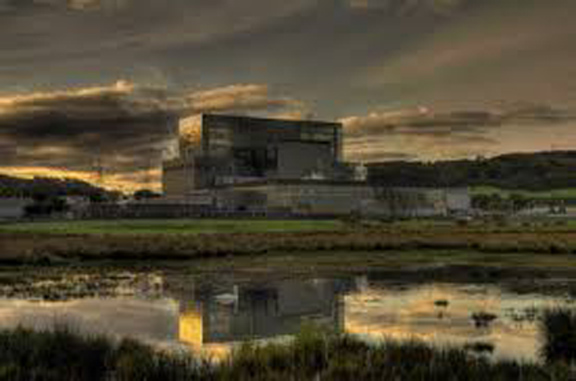
The discovery of a highly radioactive nuclear fuel element at Hunterston in North Ayrshire has sparked concerns about an “alarming safety lapse”. The site’s local stakeholder group says this is “something that should not have happened” and is demanding answers from nuclear safety regulators. Campaigners claim it’s a “dangerous situation”………. The UK Government company that runs the site promises the fuel element is “in a safe and controlled environment”. Its discovery was “completely expected” and more old fuel may be found, it says. A fuel element is a long, thin metallic tube containing pellets of uranium. When burnt — or irradiated – in a reactor, it produces dozens of different radioactive materials, including plutonium, and becomes intensely radioactive. Fuel elements burnt in the now defunct Hunterson A nuclear power station should have been sent to the Sellafield nuclear complex in Cumbria. There, they would have been processed and separated into low-level, medium-level and high-level radioactive waste, as well as plutonium. But on 3 March 2021 workers emptying an old storage vault at Hunterston discovered an entire 64-centimetre fuel element amongst other radioactive waste. The find was reported to the UK Office for Nuclear Regulation, the Scottish Environment Protection Agency, and the local site stakeholder group. Hunterston A was a first generation Magnox nuclear station with two reactors that operated from 1964 to 1990 and is currently being decommissioned. It is on the Firth of Clyde adjacent to the Hunterston B nuclear station, whose two reactors are due to close down by January 2022 after the discovery of hundreds of cracks in their graphite cores. The Hunterston site stakeholders group, which represents local community interests, said it had been informed of the find on 8 March. The fuel element was discovered in the last of five old vaults being emptied of medium-level radioactive waste, it said. “For a complete fuel rod to have found its way there, instead of into the cooling pond and on to Sellafield, is something, that should not have happened,” said a joint statement from the group’s chair, Rita Holmes, and vice-chair, Stuart McGhie. “We have contacted the Office of Nuclear Regulation and asked several questions. They have assured us that they will be in touch by the 13 April. Till then, one can only speculate.”………… The 50-strong group of UK nuclear-free authorities called for a full investigation. “This incident appears to be an alarming safety lapse that has not been resolved in the way it should have been,” said the group Scottish convenor, Glasgow SNP councillor, Feargal Dalton. “Highly radioactive spent fuel, containing the likes of plutonium, should not be dumped in a vault at Hunterston A, but rather be sent to Sellafield where the appropriate waste management processes are in place.” Dalton pointed out that The Ferret reported in 2020 that radioactive waste had been detected in a supposed empty fuel flask sent from Sellafield to the Hunterston B plant. “The Office for Nuclear Regulation needs to fully investigate this concerning safety breach,” he added. The Edinburgh based nuclear consultant and critic, Pete Roche, said: “This dangerous situation illustrates that, when it comes to dealing with nuclear waste, human error is always going to be a potential problem. “Thank goodness successive Scottish governments have decided to eschew building new reactors and make the most of our plentiful renewable resources instead. Dealing with our legacy nuclear waste is going to be difficult enough without creating yet more as the Westminster government is doing.”………… According to the UK Office for Nuclear Regulation (ONR), the fuel element was likely to date back many years and was classed as “higher activity waste”. ONR had also been notified of the find by Magnox……….. https://theferret.scot/concerns-nuclear-safety-lapse-hunterston/ |
|
New science report: advanced nuclear reactors no safer than conventional nuclear plants
Advanced nuclear reactors no safer than conventional nuclear plants, says science group https://www.reuters.com/article/us-usa-nuclearpower/advanced-nuclear-reactors-no-safer-than-conventional-nuclear-plants-says-science-group-idUSKBN2BA0CP, By Timothy Gardner-18 Mar 21,
President Joe Biden, a Democrat, has made curbing climate change a priority and has supported research and development for advanced nuclear technologies.
The reactors are also popular with many Republicans. Last October, the month before Biden was elected, the U.S. Department of Energy, awarded $80 million each to TerraPower LLC and X-energy to build reactors it said would be operational in seven years.
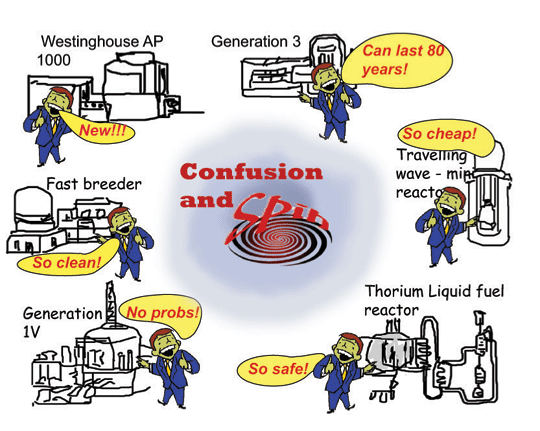
Advanced reactors are generally far smaller than conventional reactors and are cooled with materials such as molten salt instead of with water. Backers say they are safer and some can use nuclear waste as fuel.
“The technologies are certainly different from current reactors, but it is not at all clear they are better,” said Edwin Lyman, director of nuclear power safety at the Union of Concerned Scientists.
“In many cases, they are worse with regard to … safety, and the potential for severe accidents and potential nuclear proliferation,” said Lyman, author of the report UCS released Thursday called “‘Advanced’ Isn’t Always Better”.
Nuclear reactors generate virtually emissions-free power [ if you ignore their total fuel chain] which means conventional ones, at least, will play a role in efforts to decarbonize the economy by 2050, a goal of the Biden administration. But several of the 94 U.S. conventional nuclear plants are shutting due to high safety costs and competition from natural gas and wind and solar energy.
That has helped spark initial funding for a new generation of reactors.
Also, nuclear waste from today’s reactors would have to be reprocessed to make fuel. That technique has not been practiced in the United States for decades because of proliferation and cost concerns. Other advanced reactors emit large amounts of radioactive gases, a potentially problematic waste stream.
Lyman said advanced nuclear development funds would be better spent on bolstering conventional nuclear plants from the risks of earthquakes and climate change, such as flooding. The report recommended that the Department of Energy suspend its advanced reactor demonstration program until the Nuclear Regulatory Commission (NRC) requires prototype testing before reactors can be licensed for commercial use.
The DOE did not immediately respond to a request for comment.
Also, nuclear waste from today’s reactors would have to be reprocessed to make fuel. That technique has not been practiced in the United States for decades because of proliferation and cost concerns. Other advanced reactors emit large amounts of radioactive gases, a potentially problematic waste stream.
Lyman said advanced nuclear development funds would be better spent on bolstering conventional nuclear plants from the risks of earthquakes and climate change, such as flooding. The report recommended that the Department of Energy suspend its advanced reactor demonstration program until the Nuclear Regulatory Commission (NRC) requires prototype testing before reactors can be licensed for commercial use.
The DOE did not immediately respond to a request for comment.
Assessing types of Non-Light-Water Nuclear Reactors
|
Assessing the Safety, Security, and Environmental Impacts of Non-Light-Water Nuclear Reactors, Union of Concerned Scientists, Edwin Lyman, Mar 18, 2021 “Advanced” Isn’t Always Better”………………..Assessments of NLWR TypesUCS has reviewed hundreds of documents in the available literature to assess the comparative risks and benefits of the three major categories of NLWR with respect to the three evaluation criteria (Table 2).
|
|

Unitede Arab Emirates $32 billion Barakah nuclear plant poses environmental, safety, and security problems
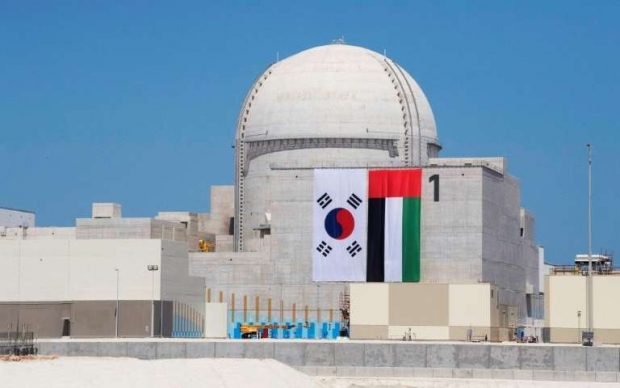
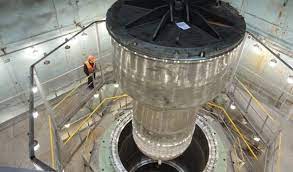
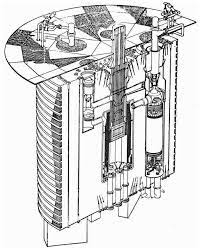
Part of Abu Dhabi’s clean energy push, the $32 billion nuclear power station risks destabilising a volatile region with detrimental consequences for the environment.
The UAE’s Barakah nuclear power plant will begin supplying electricity to the national grid at the end of this month………..
Jointly developed by ENEC and Korea Electric Power Corporation (KEPCO), construction of the $32 billion project began in July 2012 and was completed in May 2018.
Financed through a $16.2 billion direct loan from the Abu Dhabi government and a $2.5 billion loan from the Export-Import Bank of Korea, the plant’s reactors are licensed by the Korea Institute of Nuclear Safety and projected to have a lifespan of 60 years.
The first reactor at the plant started operations last year after being connected to the national grid. Fuel is being loaded into a second reactor, which is planned to begin operating later this year. In total, four reactors will eventually operate at the site.
…………. Is Barakah worth the risk?
While the UAE inaugurates the development of civilian nuclear energy, several concerns have been being raised.
The plant, which lies on the western coast of the country, is in close proximity to Qatar. Doha has called Barakah a “flagrant threat” to regional peace and the environment, warning that a radioactive plume from an accidental discharge at the station could reach the country in five to thirteen hours.
Some have questioned the logic of introducing nuclear power in the UAE, where solar power is clearly abundant. Furthermore, in a region where tensions run high, Barakah could provoke the possibility of nuclear proliferation.
“The tense Gulf strategic geopolitical situation makes new civil nuclear construction in the region even more controversial than elsewhere, as it can mean moves towards nuclear weapon capability, as experience with Iran has shown,” argued Paul Dorfman, founder and chair of the International Nuclear Consulting Group.
Saudi Arabia has already pushed ahead with plans to complete its first nuclear reactor under the auspices of the Saudi National Atomic Energy Project. But as Yemen’s Houthi drone strikes against the kingdom’s oil refineries in 2019 indicate, nuclear energy safety will have to be linked to regional security.
Similarly, the spillover effect from the UAE’s foreign policy could make nuclear plants like Barakah a target for politically motivated actors. That Houthi rebels alleged to have fired a missile at the site in 2017, which the UAE denied, could become instantly catastrophic for the Gulf were a future attack to be successful.
There are also detrimental environmental costs. The Gulf region is among the world’s most water-scarce in the world and heavily dependent on desalination, and any accidental nuclear waste spill would have disastrous maritime consequences.
Not to mention climate change itself could impact Barakah, seeing as coastal nuclear sites will be increasingly vulnerable to rising sea levels………. https://www.trtworld.com/magazine/does-the-uae-s-barakah-nuclear-plant-create-more-problems-than-it-solves-45121
1 This Month



26 September – International Day for the Total Elimination of Nuclear Weapons


PLEASE OPPOSE HR 8255 AND S.3639 – bills would accelerate satellite deployment, with no environmental review or safeguards – https://ncstd5li.quorum.us/campaign/169331/
To see nuclear-related stories in greater depth and intensity – go to https://nuclearinformation.wordpress.com
-
Archives
- September 2026 (245)
- August 2026 (330)
- July 2026 (355)
- June 2026 (287)
- May 2026 (306)
- April 2026 (356)
- March 2026 (251)
- February 2026 (267)
- January 2026 (308)
- December 2025 (358)
- November 2025 (359)
- October 2025 (375)
-
Categories
- 1
- 1 NUCLEAR ISSUES
- business and costs
- climate change
- culture and arts
- ENERGY
- environment
- health
- history
- indigenous issues
- Legal
- marketing of nuclear
- media
- opposition to nuclear
- PERSONAL STORIES
- politics
- politics international
- Religion and ethics
- safety
- secrets,lies and civil liberties
- spinbuster
- technology
- Uranium
- wastes
- weapons and war
- Women
- 2 WORLD
- ACTION
- AFRICA
- Atrocities
- AUSTRALIA
- Christina's notes
- Christina's themes
- culture and arts
- Events
- Fuk 2022
- Fuk 2023
- Fukushima 2017
- Fukushima 2018
- fukushima 2019
- Fukushima 2020
- Fukushima 2021
- general
- global warming
- Humour (God we need it)
- Nuclear
- RARE EARTHS
- Reference
- resources – print
- Resources -audiovicual
- Weekly Newsletter
- World
- World Nuclear
- YouTube
-
RSS
Entries RSS
Comments RSS
 nuclear-news