France, the most nuclearised country in the world, is poorly prepared for nuclear emergencies.
ANCCLI 4th May 2021, People living near nuclear plants in France are not sufficiently aware of what to do to in the event of a nuclear accident, according to an organisation that collects information on the nuclear industry. The ANCCLI,
which aims to inform ordinary citizens about the nuclear industry, wants better simulation exercises and a more efficient distribution of iodine tablets so that those living and working near nuclear sites are better equipped to deal with any such accident.
“In the country that is the most nuclearised in the world in relation to the number of inhabitants, methods of public protection are unsuitable and insufficient,” says the ANCCLI in a report released on Tuesday. France is home to 19 nuclear power stations run by EDF, as well as nuclear reprocessing sites and nuclear plants used for research. The ANCCLI also expressed concern that local people are not availing of supplies of iodine tablets, which can mitigate the effects of radiation by saturating the thyroid with stable iodine so that it rejects radioactive iodine.
ANCCLI’s White Paper 9 – The post-accident: anticipation and preparation,
at the heart of cross-border CLI discussions.
France’s nuclear emergency plans are inadequate
Europe1 4th May 2021, The French not sufficiently prepared in the event of a nuclear accident. The ANCCLI – responsible for informing the population about nuclear risks – warned Tuesday morning of the ineffectiveness of existing prevention campaigns and calls on the government to review the entire nuclear emergency plan.
NRC extends lifespans of nuclear reactors (it’s cheaper than closing them down)
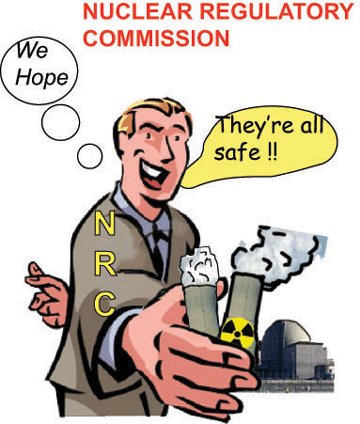
NRC approves 80-year lifespans for Surry nuclear units 1 and 2 Power Engineering By Clarion Energy Content Directors -5.4.2021 The Surry Units 1 and 2 nuclear power reactors will operate into the 2050s unless Dominion Energy pulls the plug for other reasons.
The U.S. Nuclear Regulatory Commission announced Tuesday it was approving the utility’s application on a 20-year renewal of its operating licenses for the Surry nuclear plant in Virginia. The renewed licenses authorize reactor lifetime operation from 60 to 80 years….
Nuclear anxiety in Luxembourg – expanding their emergency evacuation plan
Lorraine Actu 30th April 2021, Luxembourg. Evacuation, prohibited zone … Here is the emergency plan in
the event of a nuclear disaster in Cattenom. In the Grand Duchy, concern about nuclear power is growing. So much so that the Minister of the Interior of Luxembourg had to explain the emergency plan in the event of a nuclear disaster.
Radioactive leakage from nuclear waste containers near Fukushima Daiichi nuclear plant
ECNS 30th April 2021, Tokyo Electric Power Company Holdings Inc. (TEPCO), the operator of the Fukushima Daiichi nuclear plant in Japan’s northeast said last week a container holding radioactive waste at the site of the plant may have leaked, Japan’s Asahi Shimbun reported Friday last week. The TEPCO said some gel-like blocks with large amount of radiation were found last month at the site where the containers were kept, and the situation is under investigation, according to the newspaper. The containers have been stacked in three layers, and the top container has become rusted and corroded, causing liquid accumulation, said the company. The sides of the two lower containers have been contaminated with radioactive materials, and it is believed that the liquid leaking from the top container may have made its way to the ground through the containers below, according to the company. The relevant containers have been moved to an indoor storage facility. The concentration of radioactive materials that emit beta rays in the gel-like blocks was 230,000 becquerels per gram, according to the report. http://www.ecns.cn/m/news/society/2021-04-30/detail-ihakynqm6148318.shtml |
Texas legislators must reject proposal to lower human health and safety measures at nuclear waste dump
Texas legislators must reject proposal to lower human health and safety measures at nuclear waste dump , Record Star, 2 May 21, Texas legislators should reject proposed legislation that aims to remove environmental safeguards currently in place governing the disposal of nuclear waste in the state.
A bill that strips away the human health and safety precautions around the disposal of nuclear waste which have been in place since the state authorized nuclear waste dump sites nearly 20 years ago is headed to a vote in the Texas House of Representatives later this month or next. HB 2692, authored by Odessa Rep. Brooks Landgraf, would remove the provision mandating that all nuclear waste be containerized in steel- reinforced structures prior to being placed in a below-surface waste dump.
“Every environmental organization in the state of Texas has come out against this drastic rollback on protecting the citizens of this state, yet it sailed right out of committee and is headed to the full House and Senate” said Eric Holguin, executive director of Texas Environment First. “Texas is one of only a handful of states that even allows nuclear waste dumps to operate. There is absolutely no rational explanation for why the state should lower its regulatory standards in 2021.”
The Texas facility disposes of Class A, B, and C low level radioactive waste in Andrews, County, which is also home to the Ogallala Aquifer – a vital source of drinking water for much of the state. From the outset of operations, the state has mandated containerized disposal. ,,…… While the proposal purports to seek a ban on high level nuclear waste disposal in Texas, no federal license for high level waste storage or disposal has been issued in Texas.
“All of us are prepared to fight any federal efforts to bring high level nuclear waste to Texas,” Holguin said. “But right now, low level nuclear waste is being disposed of every day at the Andrews facility. De-regulating nuclear waste dumps is a colossally bad idea. The Texas Legislature must reject it.” https://www.recordstar.com/story/news/2021/04/29/texas-legislators-must-reject-proposal-lower-human-health-and-safety-measures-nuclear-waste-dump/7398882002/
Sen. Angus King: Cybersecurity a major concern in U.S. nuclear command-and-control system
Sen. Angus King: Cybersecurity a major concern in U.S. nuclear command-and-control system https://spacenews.com/sen-angus-king-cybersecurity-a-major-concern-in-u-s-nuclear-command-and-control-system/, by Sandra Erwin — May 2, 2021 King: Without an adequate N3C system ‘none of the rest of it works’
WASHINGTON — The U.S. nuclear command, control and communications system that serves as the link between U.S. nuclear forces and presidential authority could be vulnerable to cyber attacks and needs upgrades, Sen. Angus King (I-Maine) told reporters May 1.
King, an independent who caucuses with the Senate’s Democratic majority, is the chairman of the Senate Armed Services Committee’s subcommittee on strategic forces, which oversees the Pentagon’s space, nuclear and strategic deterrence programs.
King and a bipartisan group of senators on Saturday were briefed on U.S. nuclear modernization efforts at Offutt Air Force, Nebraska, where U.S. Strategic Command is headquartered. The senators on Friday also toured U.S. nuclear operations at Minot Air Force Base, North Dakota.
During a call with reporters after the Saturday briefing, King said the nuclear command, control and communications system known as NC3 was a “major point of discussion” and a “significant part of the briefing” senators received at Offutt.
NC3 is a Cold War-era system of interconnected sensors, communications and early warning satellites, aircraft and ground control centers. The Trump administration in 2018 assigned U.S. Strategic Command the responsibility for upgrading the NC3 architecture so it’s compatible with modern technology.
King said nuclear command and control has become “much more complicated” and cybersecurity is a high priority. “All I can tell you is that it’s very much at the forefront” of the Strategic Command’s plan to upgrade the system, he said.
Ongoing discussions about the cost of modernizing the U.S. nuclear triad “tend to focus on missiles and airplanes and submarines, but command and control is essential,” King said. “It really ought to be referred to as the quad, not the triad.”
The U.S. nuclear triad consists of three “legs” — ground-based intercontinental ballistic missiles, aerial bombers and submarines that can deliver nuclear weapons anywhere in the world.
Without an adequate N3C system, “none of the rest of it works,” said King.
The increasing frequency and sophistication of cyber attacks against DoD and other government systems is a cause for concern in the modernization of the NC3, he added. “The next conflict will almost certainly start with a major cyber attack to disable communications networks, and communications between the command authority and the forces, whether it’s an aircraft carrier or a bomber or a missile site.”
“It’s a challenge of assurance of communication, to be sure that you’re not cut off,” King said. “The president has to able to communicate with the forces to be able to issue commands, to consult with advisors.”
Other senators who participated in the briefing included John Hoeven (R-N.D.), Deb Fischer (R-Neb.), Jeanne Shaheen (D-N.H.) and Joni Ernst (R-Iowa).
Most Scots feel unsafe about having nuclear weapons base on the Clyde
The National 1st May 2021, ONLY a quarter of Scots voters have said they feel safer having nuclear
weapons based on the Clyde, according to a new opinion poll. The latest
survey from James Kelly asked people the question: “The UK Government
argues that its nuclear weapons protect the public due to a ‘deterrent’
effect. However, others argue that the presence of nuclear weapons on the
Clyde puts the public in greater danger by making the area a target for
nuclear attacks, and by creating a risk of serious accidents.
https://www.thenational.scot/news/19272880.less-quarter-scots-feel-safer-nuclear-weapons-clyde/
Feds: Underground nuclear waste tank at Hanford Nuclear Reservation may be leaking

Feds: Nuclear waste tank at Hanford Nuclear Reservation may be leaking, Statesman Journal NICHOLAS K. GERANIOS, 30 Apr 21, Associated Press SPOKANE, Wash. (AP) — An underground nuclear waste storage tank in Washington state that dates to World War II appears to be leaking contaminated liquid into the ground, the U.S. Department of Energy said Thursday.
It’s the second tank believed to be leaking waste left from the production of plutonium for nuclear weapons at the Hanford Nuclear Reservation. The first was discovered in 2013. Many more of the 149 single-walled storage tanks at the site are suspected of leaking.
Tank B-109, the latest suspected of leaking, holds 123,000 gallons of radioactive waste. The giant tank was constructed during the Manhattan Project and received waste from Hanford operations between 1946 to 1976.
The Hanford site near Richland in the southeastern part of the state produced about two-thirds of the plutonium for the nation’s nuclear arsenal, including the bomb dropped on Nagasaki, Japan, and now is the most contaminated radioactive waste site in the nation.
A multi-billion dollar environmental cleanup has been underway for decades at the sprawling Hanford site.
The Washington state Department of Ecology and the U.S. Environmental Protection Agency were notified Thursday that the tank was likely leaking…….
The leak from Tank B-109 was first suspected in March 2019, when there appeared to be a small drop in the level of its liquid waste. Monthly checks showed the level stable until July 2020, when another drop was detected, and the DOE launched an investigation. https://www.statesmanjournal.com/story/tech/science/environment/2021/04/29/feds-nuclear-waste-tank-hanford-nuclear-reservation-may-leaking/7401579002/
Ukraine’s nuclear industry in crisis – corrupt, unsafe, with politicised decision-making

Could Ukraine’s nuclear industry face another Chernobyl?
Thirty-five years after the disaster, the nuclear industry is Ukraine’s most reliable economic lifeline. But critics say it faces a perennial crisis caused by corruption, safety problems and politicised decision-making. Aljazeera, By
Mansur Mirovalev, 26 Apr 2021 ”…………………. The nuclear industry remains Ukraine’s most reliable economic lifeline.
But domestic and international critics claim that the industry faces a perennial crisis caused by corruption; safety problems with ageing, worn reactors; disruption of ties with a Russian nuclear monopoly; and a politicised switch to US-made nuclear fuel.
Industry insiders, environmentalists and politicians claim that the construction of a spent fuel storage facility near the capital, Kyiv, and the proximity of Europe’s largest nuclear station in the southern city of Zaporizhzhia to Europe’s hottest armed conflict add to their concerns about the possibility of a nuclear incident, particularly in a nation that went through two popular uprisings since 2005 and lost a chunk of its territory to Russia.
……….. uranium dioxide sealed in zirconium alloy tubes in the rods emits radiation that has to be contained in hermetically sealed reactors. Ukraine’s Soviet-designed rods are hexagonal, resembling bee cells, while Western-made rods are square.
The switch is far from simple – but necessary, because Rosatom, Russia’s nuclear monopoly that charged Ukraine hundreds of millions of dollars a year, is controlled by the Kremlin. And the Kremlin has a well-known proclivity to use energy supplies as a political cudgel.
The switch to Westinghouse fuel is potentially dangerous,” Oskar Njaa, the Russia and Eastern Europe adviser for Bellona, a Norway-based nuclear industry monitor, told Al Jazeera.
In 2012, Westinghouse fuel rods had to be removed from the South Ukrainian power station after protective envelopes in two reactors were damaged.
Ukraine asked Rosatom for fuel and help – prompting Russian President Vladimir Putin to remark gloatingly that Rosatom experts had “to solve complex technical problems, take [the Westinghouse fuel] out and load the Russian fuel back in”.
Ukraine’s losses amounted to $175 million, Mikhail Gashev, Ukraine’s top nuclear safety inspector at the time, claimed – and banned the use of Westinghouse fuel.
Ukrainian experts doubted his assessment, and his decision was overturned after he was fired among hundreds of pro-Russian officials following Ukraine’s second anti-Russian popular uprising, the 2014 Revolution of Dignity.
Former Prime Minister Nikolay Azarov, another pro-Russian political figure who fled Ukraine after the revolt, said in 2017 that the decision was made “in spite of Ukraine’s security interests”.
Westinghouse modified the rods – and no further incidents were reported.
“That might be a sign of a better culture for safety and security in the industry,” Njaa said adding that his group is, however, “worried that incidents might become more severe and greater in numbers due to the ageing equipment at the plants.”………
Apart from the fuel, observers are also concerned about Ukraine’s ageing, worn reactors, 12 of which began operating in the 1980s and were supposed to be shut down in 2020. But Energoatom extended their lifespan spending hundreds of millions on each, thanks largely to loans from the European Union.
This is a common practice worldwide – the average lifespan of almost 100 nuclear reactors in the US is 40 years, and 88 have been approved for another 20 years. But some experts are worried about the safety measures and upgrades.
“What we witness every time a decision [to extend the lifespan] is made, some of the safety upgrades have either not been made or have not been made in full,” Iryna Holovko, the Ukraine coordinator for Bankwatch, a Prague-based environmentalist group, told Al Jazeera.
Bankwatch has for years been urging Ukraine to stop extending the lifespan of its “zombie reactors” without correcting “safety deviations” and detailed assessments of all the environmental risks for the people living around the stations and in neighbouring nations……….
The fuel switch brought about another problem; unlike Rosatom, Westinghouse does not take the spent fuel back for processing or storage.
Until December, Ukraine had two pretty problematic storage facilities – and an unfinished third one. One at the shut-down Chernobyl station is almost full. At the second one, an open-air yard outside the Zaporizhzhia nuclear plant, thousands of spent fuel rods are stored in ventilated concrete containers. In 2014, the plant was about 200 kilometres (125 miles) southwest of the front line of the separatist conflict.
The sight was horrifying to a visiting expert.
“I suddenly stood in front of the utterly unprotected interim storage,” Patricia Lorenz of Friends of the Earth, an environmentalist group that visited the plant on a fact-finding mission in 2014, told Al Jazeera. “It is basically unprotected against war and terrorism, while the front was close by back then.”
In May 2014, the station’s security and police turned away dozens of armed and masked far-right nationalists who tried to enter the plant to “protect” the station from the separatists.
Since then, the front line has moved eastward, and in December, Energoatom opened a third facility a mere 70 kilometres (43 miles) north of Kyiv, in the Chernobyl exclusion zone that is scheduled to receive the first batch of spent fuel in June.
But plans to transport spent fuel via Kyiv, the city of more than two million, drew sharp criticism.
“This will be happening in a country where everything turns upside-down, collides, explodes, and where lawlessness rules,” Kyiv-based environmentalist Vladimir Boreiko told reporters……………. https://www.aljazeera.com/features/2021/4/26/does-ukraines-nuclear-industry-face-another-chernobyl
The dangers of extending the operating lives of old nuclear reactors

INRAG 26th April 2021, Risks of lifetime extension of old nuclear power plants – A look at the age structure of existing nuclear power plants shows the importance of analysing risks of life-time extension and long-term operation.
Some of the world’s oldest plants are located in Europe. Of the 141 reactors in Europe, only one reactor came into operation in the last decade, and more than 80 percent of the reactors have been running for more than 30 years . Nuclear power plants were originally designed to operate for 30 to 40 years. Thus, the operating life-time of many plants are approaching this limit, or has already exceeded it.
https://www.inrag.org/risks-of-lifetime-extension-of-old-nuclear-power-plants-download
Nuclear safeguards changed, new regulations to fit in with Brexit
Reuters Practical Law 26th April 2021 , Nuclear safeguards regulations amended to take into account Amending
Protocol to UK-Japan nuclear agreement: Brexit SI. The Nuclear Safeguards
(Fissionable Material and Relevant International Agreements) (EU Exit)
(Amendment) Regulations 2021 (SI 2021/492) came into force on 22 April
2021.
Chernobyl disaster and the U.N. response – a global matter

‘Disasters know no borders’ says Guterres, 35 years on from Chernobyl nuclear accident, https://news.un.org/en/story/2021/04/1090602In his message for Chernobyl International Remembrance Day on Monday, the UN chief reminded that “disasters know no borders”.
A 20-second shut down of the Chernobyl nuclear power plant on 26 April 1986, created a surge that led to a chemical explosion, which released nearly 520 dangerous radionuclides into the atmosphere. As a result, large parts of the former Soviet Union were contaminated; territory which now lies within the borders of Belarus, Ukraine and Russia, according to the UN.
Marking the 35th anniversary of the accident, Secretary-General António Guterres said that together, “we can work to prevent and contain [disasters]… support all those in need, and build a strong recovery”
Never forget
As one of the most serious nuclear accidents in history, nearly 8.4 million people in the three countries were exposed to radiation, according to the UN.
Some 350,000 were forced to leave their homes in severely contaminated areas, which left a deeply traumatic and lasting impact on their lives: “Their suffering must not be forgotten”, said the top UN official.
He also pointed to the anniversary as an occasion to recognize the recovery efforts led by the three governments as well as the work of “scientists who sifted through the evidence” to provide important analysis that has informed emergency planning and reduced risks.
A legacy of assistance
While the Organization had helped the people in the areas surrounding Chernobyl at the onset, four years after the accident the Soviet Government acknowledged the need for international assistance.
That same year, 1990, the General Assembly adopted a resolution calling for “international cooperation to address and mitigate the consequences at the Chernobyl nuclear power plant”. This began the UN’s participation in the recovery effort.
And in 2019, a new safety casing over the old shelter was completed and given to the Government of Ukraine. It was achieved with €2.2 billion in donations from over 45 nations.
The UN said the milestone one of the largest ever seen projects in terms of international cooperation in the field of nuclear safety.
Working for ‘the common good’
UN country teams – working with civil society, international partners and donors – first supported emergency and humanitarian aid, then recovery and finally social and economic development, Mr. Guterres noted, adding that “our joint efforts have enjoyed some success”.
He cited that the number of small and medium-sized businesses operating in areas directly affected by the disaster has risen from 2,000 in 2002 to 37,000 today.
And thousands of residents, community leaders and doctors have been trained on health risks and promoting healthy lifestyles.
The Chernobyl disaster was contained by governments working with academics, civil society and others, “for the common good”, the UN chief said.
“It holds important lessons for today’s efforts to respond to the COVID-19 pandemic”, he concluded.
The Chernobyl story continues
Chernobyl: The next phase https://www.ebrd.com/news/2021/chernobyl-the-next-phase.html By Axel Reiserer, 23 Apr 2021
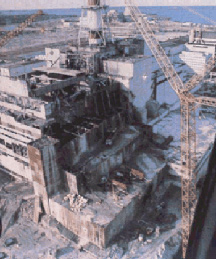
At 01:23:40 on 26 April 1986, the failure of a routine test at the Chernobyl Nuclear Power Plant in Ukraine, then part of the Soviet Union, caused reactor 4 to explode, releasing parts of its radioactive core. It was the worst nuclear accident the world had ever seen, with far-reaching political, economic and ecological consequences. Thirty-five years on, Chernobyl is still as well-known as it was a generation ago.
Fires broke out, causing the main release of radioactivity into the environment. Wind carried contaminated particles over Ukraine, Belarus and Russia, as well as parts of Scandinavia and wider Europe. The 50,000 inhabitants of the adjacent town of Pripyat were evacuated, never to return.
The accident destroyed reactor 4, killing 30 operators and firemen within three months and causing numerous other deaths in weeks and months that followed. To this day, it remains the only accident in the history of the civil use of nuclear power when radiation-related fatalities occurred. The precise number of short- and longer-term victims remains heavily disputed.
By 06:35 on 26 April, all fires at the power plant had been extinguished, apart from the fire inside reactor 4, which continued to burn for many days. Some 5,000 tonnes of boron, dolomite, sand, clay and lead were dropped from helicopters in a bid to extinguish the blaze. When the destroyed reactor was later enclosed in a provisional structure – the so-called sarcophagus – these fuel-containing materials were also walled in.
The sarcophagus was built under extremely hazardous conditions and unprecedented time pressure. By November 1986, a steel and concrete shelter was in place to lock away the radioactive substances inside the ruined reactor building and to act as a radiation shield. It was always intended as a temporary measure, with an estimated lifespan of 20-30 years
The search for a long-term solution started soon after, alongside the massive challenge of cleaning up the accident site. By the end of 1991, the Soviet Union had dissolved and newly independent Ukraine had been left with the Chernobyl legacy. Following a G7 Action Plan to improve nuclear safety in central and eastern Europe, the Nuclear Safety Account was set up at the European Bank for Reconstruction and Development (EBRD) in 1993. Two years later, the scope of the programme was extended to include Chernobyl.
A breakthrough came with the Shelter Implementation Plan in 1997, which provided a road map of how to the tackle the immediate and longer-term tasks. In the same year, the G7 officially invited the EBRD to set up and manage the Chernobyl Shelter Fund, which became the main vehicle for all efforts to ensure that the destroyed reactor 4 remained in an environmentally safe and secure state.
Emergency repairs in 1998 and 1999 prevented the imminent collapse of the sarcophagus, as well as a vent stack that was endangering the adjacent turbine hall over reactor 3, which was still in operation. It was only at the end of 2000 that all nuclear power generation in Chernobyl ceased. The following year saw a landmark decision to build an arch-shaped steel structure, called the New Safe Confinement (NSC), to seal off reactor 4.
In the subsequent years, several tasks were carried out simultaneously. Detailed technical work on the NSC started. The site had to be stabilised and prepared for the construction work. The first project the EBRD managed was the construction of a liquid radioactive waste treatment plant (LRTP) to handle some 35,000 cubic metres of low- and intermediate-level liquid waste at the site. Meanwhile, the safe storage of the spent fuel assemblies from reactors 1, 2 and 3 came into focus.
All this has been achieved. The LRTP has been operational since 2014. A new interim storage facility for the treatment and storage of spent fuel has been built and, after successful hot tests, is currently awaiting a permanent licence from the Ukrainian regulator. The NSC, the most visible Chernobyl project, was slid into position in late 2016 and then handed over to the Ukrainian authorities.
In total, the Bank has managed close to €2 billion in donor funds through the Chernobyl Shelter Fund and Nuclear Safety Account. Of this, the EBRD provided €715 million of its own resources to complete the Interim Storage Facility and New Safe Confinement.
Today, the New Safe Confinement dominates the skyline over Chernobyl, as the sarcophagus once did. The steel structure is 108 metres high and 162 metres long, with a span of 257 metres and a lifetime of at least 100 years. It was assembled in two stages in a cleaned area near the accident site and, despite its size and weight of 36,000 tonnes, was pushed 327 metres into position. It is the largest moveable structure ever built.

This is not where the story ends, however. The fact that the NSC has a lifespan of 100 years means that the next phase of work now has to be planned, agreed and implemented. The estimated 200 tonnes of radioactive nuclear fuel inside reactor 4 are now shielded by the New Safe Confinement. However, parts of the sarcophagus are becoming unstable and will have to be removed at some point. Once this is done, work will come closer to the reactor’s interior.
The EBRD remains a key partner in these efforts. Following a request by Ukraine, in November 2020, the Bank established the new International Chernobyl Co-Operation Account, aimed at creating an integrated plan for the site to serve as the basis for developing and implementing longer-term projects. The new fund will hold it first assembly meeting on Tuesday – fittingly one day after the 35th anniversary. The Chernobyl story continues.
Insider threats targeting nuclear plants have always been a concern. A stressful pandemic exacerbates those existing risks.
Insider Threats and Nuclear Security During a Pandemic
Insider Threats and Nuclear Security During a Pandemic
Insider threats targeting nuclear plants have always been a concern. A stressful pandemic exacerbates those existing risks. The Diplomat, By Rajeswari Pillai Rajagopalan, April 23, 2021 Nuclear security is a challenge in the best of circumstances. Those challenges may increase many times over amid the COVID-19 pandemic because government may not fully grasp the consequences and spillover effects of policies they adopt to deal with the pandemic on seemingly unrelated issues. For example, COVID-19 has undoubtedly resulted in enormous economic and social pressures across many societies and consequently, is likely to lead to greater psychological stresses. There is no doubt this will also directly or indirectly affect personnel in sensitive nuclear facilities, leading to potential insider threats. The Review Conference of the Parties to the Amendment to the Convention on the Physical Protection of Nuclear Material (CPPNM) in Vienna this July is a good opportunity to review the status of Personnel Reliability Programs (PRPs) while locating insider threats as part of broader physical protection measures as well.
In September 2020, the International Atomic Energy Agency (IAEA) held discussions over the impact of the pandemic on nuclear plant operations, safety, and security during operations under COVID-19 circumstances, radiation protection, and emergency preparedness. These discussions occurred in the context of the annual meeting of the International Nuclear Safety Group (INSAG), a group of top experts from around the world who debate and advise on nuclear safety issues. The experts highlighted issues like resilience and information exchange as key during these unprecedented times…………
Insider threats could possibly worsen during extremely stressful conditions like the ongoing pandemic………
Even though insider threats may be rare, the consequences are serious when they do occur. Almost all the recent incidents of nuclear thefts or losses of Highly Enriched Uranium (HEU) and Plutonium (Pu) have occurred with the help of an employee, or even worse, the crime has itself been committed by an employee. This highlights the vulnerabilities and the salience of this growing threat. …………
The fact that such insider threat possibilities in the context of the pandemic have not figured prominently in national or international discussions should be of concern. The July Review Conference of the Parties to the Amendment to the CPPNM is a useful opportunity to highlight the importance of insider threats and take appropriate steps both at the global and national levels. https://thediplomat.com/2021/04/insider-threats-and-nuclear-security-during-a-pandemic/
1 This Month



26 September – International Day for the Total Elimination of Nuclear Weapons


PLEASE OPPOSE HR 8255 AND S.3639 – bills would accelerate satellite deployment, with no environmental review or safeguards – https://ncstd5li.quorum.us/campaign/169331/
To see nuclear-related stories in greater depth and intensity – go to https://nuclearinformation.wordpress.com
-
Archives
- September 2026 (245)
- August 2026 (330)
- July 2026 (355)
- June 2026 (287)
- May 2026 (306)
- April 2026 (356)
- March 2026 (251)
- February 2026 (267)
- January 2026 (308)
- December 2025 (358)
- November 2025 (359)
- October 2025 (375)
-
Categories
- 1
- 1 NUCLEAR ISSUES
- business and costs
- climate change
- culture and arts
- ENERGY
- environment
- health
- history
- indigenous issues
- Legal
- marketing of nuclear
- media
- opposition to nuclear
- PERSONAL STORIES
- politics
- politics international
- Religion and ethics
- safety
- secrets,lies and civil liberties
- spinbuster
- technology
- Uranium
- wastes
- weapons and war
- Women
- 2 WORLD
- ACTION
- AFRICA
- Atrocities
- AUSTRALIA
- Christina's notes
- Christina's themes
- culture and arts
- Events
- Fuk 2022
- Fuk 2023
- Fukushima 2017
- Fukushima 2018
- fukushima 2019
- Fukushima 2020
- Fukushima 2021
- general
- global warming
- Humour (God we need it)
- Nuclear
- RARE EARTHS
- Reference
- resources – print
- Resources -audiovicual
- Weekly Newsletter
- World
- World Nuclear
- YouTube
-
RSS
Entries RSS
Comments RSS
 nuclear-news