Corrosion in the fuel cladding at France’s Chooz and Civaux nuclear stations
An investigation is underway at the Chooz and Civaux nuclear power plants
(6 GW) following the discovery of corrosion on the fuel cladding, in order
to prevent any radioactive leakage, announced EDF and the Nuclear Safety
Authority (ASN).
Montel 25th May 2021
The dark legacy of a nuclear meltdown – The Santa Susana Field Laboratory.
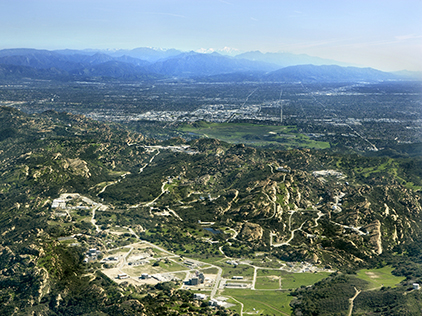
Newsletter: The dark legacy of a nuclear meltdown, and what it means for climate change L.A. Times, By SAMMY ROTH. STAFF WRITER MAY 20, 2021
”………………The Santa Susana Field Laboratory.
Despite growing up in Los Angeles, until recently I knew next to nothing about Santa Susana, which is nestled in the Simi Hills west of the San Fernando Valley. As my L.A. Times colleagues have chronicled, it was a nuclear reactor and rocket engine test facility for decades, and the site of a partial nuclear meltdown in 1959. Today more than 700,000 people live within 10 miles.
Santa Susana is an incredibly toxic site.
And the parties responsible for the long legacy of radioactive waste and other contaminants — namely Boeing, NASA and the federal Department of Energy — have done hardly anything to clean it up.
“That work was supposed to be completed by 2017. Yet much of it has not even started,” columnist Michael Hiltzik wrote last year.
Santa Susana is also the subject of a new documentary, “In the Dark of the Valley,” which is making the rounds on the film festival circuit. It’s a gut-wrenching story about children living near the field lab who have been diagnosed with cancer, and whose mothers have banded together to demand a full cleanup, in hopes that other families won’t suffer like theirs have.
The film focuses on Melissa Bumstead, whose daughter Grace Ellen was diagnosed with a rare and aggressive form of leukemia at age 4. Bumstead started a Change.org petition that has garnered more than 700,000 signatures, calling on politicians including Gov. Gavin Newsom to compel Boeing and the federal agencies to live up to their long-unfulfilled promises.
“I’m not going to stop. So we’ll just have to find out who has more endurance, me or them,” she says in the film’s closing moments. “The thing that’s heartbreaking is that it’s just going to continue. But it’s the kids who have to suffer, and it’s the parents who have to bury them.”
…. there’s been research suggesting that Santa Susana may pose a serious health risk to people nearby.
In 1997, UCLA scientists reported that field lab workers exposed to higher doses of radiation from 1950 through 1993 were more likely to die of cancer. A decade later, University of Michigan researchers found that people living within two miles of the site had been diagnosed with thyroid, bladder and other cancers at a 60% higher rate than people living more than five miles away.
The scope of the contamination far exceeds a single meltdown more than 60 years ago.
Daniel Hirsch — a retired UCLA and UC Santa Cruz lecturer whose students originally uncovered the meltdown, which was hidden from public view for two decades — says there were several accidents at the field lab, worsened by a lack of containment domes for the nuclear reactors. There were shockingly unsafe waste disposal practices too. For years, workers used rifles to shoot barrels of toxic chemicals to make them ignite or explode. Radioactive waste was also routinely burned in open-air pits, Hirsch said.
This was completely illegal. They weren’t supposed to be doing it,” he said
Hirsch runs the anti-nuclear group Committee to Bridge the Gap, and he’s been trying to get Santa Susana cleaned up for more than 40 years. His concerns include the continued presence of cancer-causing chemicals that can seep into groundwater, or be flushed down into the San Fernando and Simi valleys during rainstorms — or become airborne during a wind-driven wildfire.
That was a major worry during the 2018 Woolsey fire, which was ignited by a Southern California Edison electrical line at the field lab. State officials said the wildfire smoke wasn’t any more dangerous to breathe than usual, but Hirsch had a hard time believing that.
“They set up the air monitor two days after the fire,” he said.
……….. Hirsch and many local residents say Boeing and the federal government have repeatedly tried to weasel out of their commitments. And the Department of Toxic Substances Control hasn’t put up much of a fight, critics say. In January, for instance, the agency agreed to confidential talks with Boeing to resolve a dispute over the extent of the cleanup.
Another wrinkle is NASA’s recent decision to nominate the entire field lab for inclusion in the National Register of Historic Places, citing its Native American cave drawings and archaeological relics. Critics fear the historic designation is a thinly veiled attempt by NASA to shirk some of its cleanup obligations, a charge the space agency denies, as my colleague Louis Sahagún reported.
…… I was definitely jarred by Hirsch’s response when I told him I had hiked in the Simi Hills, within a few miles of the Santa Susana Field Lab, and asked whether he would feel safe doing the same. He didn’t hedge. He told me he would not.
“Every area around the site has been found to have contamination,” he said. https://www.latimes.com/environment/newsletter/2021-05-20/long-legacy-nuclear-meltdown-climate-change-boiling-point
Flaws found in anti-terror measures at Fukushima No. 2 nuclear plant
Flaws found in anti-terror measures at Fukushima No. 2 nuclear plant, Japan Times, 19 May 21,
Anti-terrorism measures implemented at Tokyo Electric Power Company Holdings Inc.’s Fukushima No. 2 nuclear power plant, which is set to be decommissioned, have been found to be flawed, it was learned Wednesday.
It was discovered that doors leading to the nuclear materials protection areas at the plant, which are under heavy entry-exit surveillance as part of anti-terrorism measures, were not properly managed.
Some security checks conducted when people leave or enter such areas were also neglected.
The flaws were reported to a meeting of the Nuclear Regulation Authority on the same day.
According to the NRA, the flaws have been fixed and there are no signs of intrusion.
The NRA said that a worker at the nuclear plant found a door with inadequate access control measures to the area at the plant’s No. 4 reactor on March 19.
On the following day, a door with a similar flaw was found at the plant’s No. 1 reactor. Plant operator Tepco reported the flaws to the NRA.
The company also found that necessary checks, such as those involving metal detectors, were skipped at some doors to the nuclear materials protection areas.
While the doors in question at the No. 1 and No. 4 reactors were not used on a day-to-day basis and were locked, Tepco said that it was unaware that the doors were on the boundaries…….. https://www.japantimes.co.jp/news/2021/05/19/national/fukushima-antiterror-flaws/
Early atomic bomb research – the ‘demon core’ that killed physicist Harry Daghlian
The Demon Core: How One Man Intervened With His Bare Hands During A Nuclear Accident https://www.iflscience.com/physics/the-demon-core-accident-how-one-man-stopped-a-nuclear-detonation-with-his-bare-hands/ 17 May 21,

Following the end of World War 2 and the devastating impacts of the Hiroshima and Nagasaki nuclear bombings, the Cold War was looming. The immense destruction and power promised by atomic bombs pushed world superpowers into a nuclear research frenzy, with the USA preparing to drop a third on Japan , and the remaining nations creating their own arsenal as a deterrent or defense.
Enter the ‘demon core’. Sitting at a sizeable 6.2 kilograms (13.7 pounds) and 3.5 inches in diameter, this spherical mass of radioactive plutonium (at the time named ‘Rhufus’) was designed in nuclear research to be a fissile core for early iterations of the atomic bomb. Throughout 1945 and 1946, the demon core was experimented on ……
As expected from its’ ominous title, the demon core was not kind to the nuclear physicists involved. Designed as a bomb core, it had just a tiny margin before it would increase radioactivity and become supercritical (once the fission reaction has begun, it increases in rate). Therefore, any external factors that could increase reactivity, for example, compression of the core (which is how the fission bomb detonates), must be carefully monitored around the demon core.
Despite the danger, researchers used the core as an experimental piece on supercriticality, using neutron reflectors to push it to its’ limits. Neutron reflectors are used to surround the core, and as the nuclear fission reaction occurs, they reflect neutrons back at the nuclear material to increase the amount of fission taking place.
In 1945, alone in his laboratory, physicist Harry Daghlian was performing a neutron reflector experiment on the demon core when he mistakenly dropped a brick of reflective tungsten carbide onto the core, pushing it into supercriticality and releasing a deadly burst of neutron radiation. After a 3-week battle with acute radiation sickness, Daghlian succumbed to his wounds, leading to tighter legislation around nuclear research in the Manhattan Project – although it would not be strict enough.
Despite the danger, researchers used the core as an experimental piece on supercriticality, using neutron reflectors to push it to its’ limits. Neutron reflectors are used to surround the core, and as the nuclear fission reaction occurs, they reflect neutrons back at the nuclear material to increase the amount of fission taking place.
In 1945, alone in his laboratory, physicist Harry Daghlian was performing a neutron reflector experiment on the demon core when he mistakenly dropped a brick of reflective tungsten carbide onto the core, pushing it into supercriticality and releasing a deadly burst of neutron radiation. After a 3-week battle with acute radiation sickness, Daghlian succumbed to his wounds, leading to tighter legislation around nuclear research in the Manhattan Project – although it would not be strict enough.
That burst of radiation would kill Slotin within 9 days of exposure. Stood right beside him during the accident, Alvin Graves would also receive a huge dose of radiation but would survive the ordeal and live for another 20 years before death. Owing to Slotin’s quick thinking and body position, which absorbed most of the radiation, the remaining onlookers were shielded from the blast and survived to tell the tale.
Following the accidents, the core would finally gain its name as the demon core, before being recycled down into other fissile cores.
OVER 440 safety incidents have been recorded at Scotland’s nuclear bases over the last three years,
The National 16th May 2021, Faslane and Coulport** OVER 440 safety incidents have been recorded at Scotland’s nuclear bases over the last three years, with events becoming increasingly more frequent.
More than 80% of the incidents occurred at HM Naval Base Clyde at Faslane,
where most of the UK’s nuclear submarine fleet is located. A number of
safety incidents were also recorded at the Royal Naval Armaments Depot at
Coulport, home to the nuclear warheads. SNP MP Deirdre Brock, who obtained
the figures, told The Scotsman: “This is an appalling safety record and
it just should not be tolerated. Scotland has an arsenal of weapons of mass
destruction sitting just a few miles from our biggest city.
EDF’s Sizewell B nuclear station: steel components wearing out. EDf to close Hinkley Point B in Somerset and Hunterston B in Scotland early.
Times 17th May 2021, Steel components in the heart of Britain’s most modern nuclear power
station are wearing out more quickly than expected, forcing EDF to carry
out lengthy unscheduled repairs.
The French energy giant is having to keep
Sizewell B in Suffolk offline for three months longer than planned to deal
with the safety issues. …
EDF said it had found wear to some of Sizewell’s stainless steel “thermal sleeves”, which form part of
the mechanisms that insert control rods into the reactor core to shut it
down. Experience at a reactor in France has shown that extreme wear could
eventually result in parts of the thermal sleeves coming loose and
obstructing the control rods. EDF is assessing the cause and extent of the
wear at Sizewell and how many components need to be replaced before it
seeks permission to restart the plant. It insisted the damage was
“nowhere near” the stage where it would prevent control rods
functioning, and that in any event the reactor could still be shut down
safely.
EDF has said it will close Hinkley Point B in Somerset and
Hunterston B in Scotland permanently by next year, earlier than planned,
because of cracks in their graphite cores. It is also considering closing
Dungeness B in Kent as soon as this year. The plant was not scheduled to
close until 2028 but has been offline since 2018 because of corrosion.
Human intervention may be required at Chernobyl as radiation levels spike
Unilad 13th May 2021, Scientists monitoring increased radiation levels at Chernobyl Nuclear Power Plant are considering whether human intervention may be required to prevent a further catastrophe.
It was reported last week that sensors in one of the basement rooms containing solidified fuel (FCMs) from the remains of the destroyed nuclear reactor had been picking up increased levels of neutrons over the past four years, signalling the nuclear fission process has restarted. Nuclear scientists monitoring the activity say they aren’t
sure why the reactions are increasing, and they can’t rule out the possibility of an accident should levels continue to rise. Now, authorities are working to figure out a solution.
Safety and security issues at Kashiwazaki-Kariwa nuclear power station
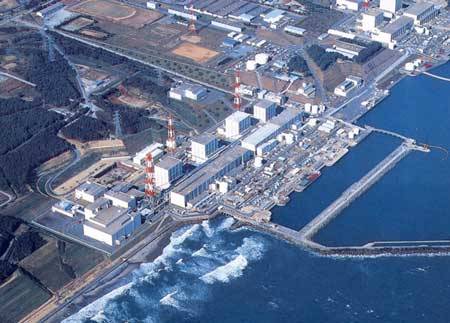
Nuclear Power in Japan: Safety at Kashiwazaki-Kariwa Remains an Issue, Nippon.com Takino Yūsaku 14 May 21
The Fukushima Daiichi accident forced Japan to bolster regulations for its fleet of nuclear reactors. After undergoing significant upgrades, the Kashiwazaki-Kariwa plant in Niigata Prefecture is on track to restart, although recent security issues have come to light that raise new concerns about the safety of nuclear power……..
Over the last several years, utilities looking to restart idled reactors have heavily invested in upgrading facilities to meet rigorous new regulations. So far, though, only a handful of plants have come back online.
Security issues recently uncovered at the Kashiwazaki-Kariwa Nuclear Power Station operated by Tokyo Electric Power Company illustrate the difficulty of passing the Nuclear Regulatory Authority’s stringent safety measures. TEPCO had poured resources into the facility in Niigata Prefecture with the goal of restarting the Unit 6 and 7 reactors at the site, but the NRA has ordered that further improvements be made before authorizing the utility to begin the refueling process. Below I assess the major upgrades made at the Kashiwazaki-Kariwa plant under the new NRA regulations released in July 2013.
Safeguarding Against Tsunami
,,,,,,,,,,,, In the wake of the incident, protecting reactors from tsunami has become a priority. The NRA assessment of the Kashiwazaki-Kariwa plant estimates a tidal wave as high as 6.8 meters could reach the coastline where the facility sits. Learning from Fukushima, TEPCO chose to exceed the regulatory body’s requirement and built a seawall towering 15 meters above the surf. Using existing topography to its advantage, it constructed a 10-meter steel-reinforced concrete barrier for the low-lying Units 1–4 and a 3-meter earth embankment at Units 5–7, which are perched higher above the sea……….
Blackout Response
In an emergency, keeping cooling systems functioning is of utmost importance. To prepare for an event where the seawall and smaller barriers fail or that the power goes out at the Niigata plant, TEPCO installed four sets of mobile gas-fired generators and switchboards on high ground and stationed a fleet of 20 generator cars as backup.
…………… TEPCO faced major challenges in bringing the plant in line with the NRA’s new regulations, considered the strictest in the global nuclear industry. Along with tsunami measures, the utility had to meet stringent antiterrorism guidelines, including developing a response to attackers flying an airplane into the facility. The government completed an inspection of Unit 7 in October 2020 and the bulk of construction was completed in January of this year. TEPCO was confident it had covered all bases, but the discovery that individuals had used an employee ID card to enter the central control room without authorization and that an intruder detection system had not been functioning for an extended period have led the NRA to halt plans for restarting the reactor. The security problems also throw into question whether residents will agree to bringing the plant back online.
Community Considerations
Along with meeting NRA regulations, utilities aiming to restart reactors must win the approval of residents of the towns and cities where plants are located. Debate is often fraught as host communities weigh the economic benefits of nuclear power, including jobs and revenue from government subsidies and local taxes, against safety concerns. Money pouring into construction industries from huge projects to upgrade facilities has only complicated the issue………………..https://www.nippon.com/en/in-depth/d00687/
Nuclear fission reactions are happening at Chernobyl again

Nuclear Fission Reactions Are Happening at Chernobyl Again
Scientists are scrambling to neutralize the threat. Popular Mechanics, BY CAROLINE DELBERT, MAY 10, 2021
- A melted amalgam of nuclear fuel at Chernobyl is beginning to react.
- The issue is rainwater, which has activated materials buried deep within the closed plant.
- The reaction could burn out naturally, but it could also require human intervention.
On April 26, 1986, Reactor No. 4 exploded at the Chernobyl Nuclear Power Plant in Ukraine, causing the worst nuclear accident in history. Now, thirty-five years later, smoldering nuclear “embers” are still buried within Chernobyl site, raising questions about just what might happen there—and what’s at stake.
Ukrainian scientists recently realized that leftover nuclear fission fuel made of uranium has begun reacting again in an “inaccessible room” deep within a damaged area of the shuttered plant. The telltale sign is increased readings of neutron activity—a measurable byproduct of nuclear fission, according to the scientists from Institute for Safety Problems of Nuclear Power Plants (ISPNPP) in Kyiv, Ukraine, who held discussions about dismantling the reactor last month, according to Science magazine.
- Chernobyl Nuclear Power Plant is surrounded by a massive megastructure called Chernobyl New Safe Confinement (NSC). At NSC, there are hundreds of sensors working around the clock to monitor factors like air quality, and the sensors have detected increased neutron activity near the fallen reactor hall where the “embers” are.
- Some zones within the NSC are fully sealed off in their own sarcophagus-like structure called the Shelter—including the reactor hall where scientists have noticed the increasing neutrons. That means tough questions about what the best course of action is.Inside the reactor hall, everything is a dangerous mess.
- Science’s Richard Stone reports:
- “When [the] reactor’s core melted down, uranium fuel rods, their zirconium cladding, graphite control rods, and sand dumped on the core to try to extinguish the fire melted together into a lava. It flowed into the reactor hall’s basement rooms and hardened into formations called fuel-containing materials (FCMs), which are laden with about 170 tons of irradiated uranium—95 [percent] of the original fuel.”
It’s important to note that experts don’t fear a second Chernobyl disaster, as there isn’t enough viable material or surrounding collateral for that kind of threat or damage. But the right kind of small nuclear activity could bring down the Shelter itself, which is 34 years old and “rickety.”
Scientists believe rainwater leakage has caused similar higher neutron readings in the past, and they’ve since installed special chemical sprinklers that can stanch neutrons in most of the interior of the Shelter. But some basement rooms are just out of reach even for the sprinklers………. https://www.popularmechanics.com/science/energy/a36364988/chernobyl-nuclear-reactions/
20 tonne space rocket out of control, but luckily landed in the Indian Ocean, rather than on land.
Out-of-control Chinese rocket finally lands in Indian Ocean near the Maldives, https://www.9news.com.au/world/chinese-rocket-expected-to-crash-into-earth-this-weekend/4b39859c-cfc4-4f3c-b9e2-f294e1bb65f4 By CNNJoe Attanasio May 9, 2021 A large Chinese rocket that was orbiting earth out of control has finally made impact, landing in the Indian Ocean close to the Maldives and drawing sharp criticism from NASA.
According to China Manned Space Engineering Office, the rocket made impact about 12.24pm AEST, roughly two hours earlier than predicted.Most of the remnants of the vessel burned up during re-entry to earth’s atmosphere, officials said, putting to bed week-long fears over the potential damage the rocket could have caused if it struck land.What was left of the spacecraft landed at open sea, at 72.47 degrees east longitude and 2.65 degrees north latitude.The Long March 5B rocket, which was around 30 metres tall and weighed 20 tonnes, entered earth’s low orbit earlier this morning.
It travelled at more than 30,000 kilometres an hour, was more than 10 stories tall, and weighed roughly the same as a full garbage truck, causing many to raise concerns about the impact its landing could have hadThe rocket launched a piece of the new Chinese space station into orbit on April 29 but then was left to hurtle through space uncontrolled until Earth’s gravity began pulling it back to the ground.
That approach is a break with what officials call “best practice” compared with what other space agencies do.
NASA Administrator Bill Nelson criticised China over the re-entry, saying spacefaring nations needed to minimise risk and maximise transparency in such situations.”It is clear that China is failing to meet responsible standards regarding their space debris,” he said, in a statement.”It is critical that China and all spacefaring nations and commercial entities act responsibly and transparently in space to ensure the safety, stability, security, and long-term sustainability of outer space activities.”Despite recent efforts to better regulate and mitigate space debris, Earth’s orbit is littered with hundreds of thousands of pieces of uncontrolled junk, most of which are smaller than 10 centimetres.Objects are constantly falling out of orbit, though most of them burn up in the Earth’s atmosphere before they have a chance to make an impact on the surface.
Nuclear plants a big security risk
Nuclear plants a big security risk, https://www.taipeitimes.com/News/editorials/archives/2021/05/10/2003757127 By Henry Sokolski
As Taiwan’s August referendum on completing its Fourth Nuclear Power Plant approaches, one question that has not yet been fully considered is to what extent this and Taiwan’s other three plants are military liabilities — radioactive targets that China aims to attack. At best, a threatened strike or an intentional near-miss against one plant would likely force the government to shut the other nuclear plants down as a precaution. At worst, a strike could produce Chernobyl-like contamination, forcing the evacuation of millions.
Some partial, temporary defenses are possible and should be pursued, but ultimately, the smart money is on substituting non-nuclear alternatives for these reactors as soon as possible.
As Ian Easton noted last month in these pages, Beijing released a 2013 internal course book on Taiwan’s military geography that spotlighted a potential amphibious landing area at Fulong Beach where Taiwan’s fourth incomplete nuclear plant sits (“Ian Easton On Taiwan: Are Taiwan’s nuclear plants safe from Beijing?” April 12, page 6).The military handbook also highlighted Xialiao Beach, which hosts Taiwan’s Guosheng Nuclear Power Plant in Wanli District (萬里).
In a separate 2014 People’s Liberation Army (PLA) field manual, Easton noted, Taiwan’s reactors were described as high-value targets that should be temporarily knocked out (for subsequent reopening) with precision weapons fired from helicopters. That is the optimistic plan. However, the PLA appeared uncertain about how surgical its attacks might be
Yet another 2015 PLA guidebook, Easton notes, warned PLA troops that they must be prepared to fight through nuclear “contamination,” and they may need to “wash” themselves off as they complete their invasion.Since these military guidebooks were written, the PLA has acquired thousands of additional highly accurate ballistic and cruise missiles and drones, which make highly precise attacks against Taiwan’s reactors much easier.
What might the consequences of such precision attacks be? Bad to catastrophic. The Nonproliferation Policy Education Center, which I run, recently commissioned a radiological analysis of several Chinese strikes against Taiwan’s nuclear plants. In the least destructive case, the Chinese target one of their missiles just near the reactor — perhaps the plant employees’ parking lot. While the Chinese missile might not kill anyone, Taiwan’s government would likely pull all of their reactors off the grid as a precautionary measure.
That is roughly 10 percent of Taiwan’s electrical production. In addition, residents near the reactors would likely hit the road in massive numbers to evade possible follow-on attacks. These attacks might target the reactors’ grid connection or its emergency diesel generators. This, again, would not necessarily lead to a core meltdown (unless both were hit simultaneously), but would definitely put the population on edge.
That is the best case. Much worse would be a missile or drone strike against the reactor’s control room or reactor core. In these cases, a loss of necessary coolant and radiological release are likely. What the consequences might be depends on the prevailing winds. Here are maps of an attack on the Maanshan plant at Kenting in June and in December. The orange and red areas describe irradiated regions the U.S. Environmental Protection Agency would recommend populations be evacuated from.
In either case, the evacuation of many thousands to several million is likely.
Of course, if China hit Taiwan’s spent reactor fuel ponds, the contaminating radiation released would be far greater.
None of this is welcome news. All of it recommends shutting down Taiwan’s nuclear plants as soon as is practical and replacing them with non-nuclear alternatives. At a minimum, completing Taiwan’s fourth reactor should be a nonstarter.
In the interim, Taiwan should remove as much radioactive waste from its spent reactor fuel ponds as possible and place it in hardened, concrete dry storage casks. The US, Euratom nations, and Japan are already doing this; so should Taiwan.
Taiwan should also build emergency spent fuel pond sprinkler and cooling water monitoring systems to reduce the likelihood of spent fuel fires if these pools are hit and water levels become dangerously low. Taiwan also should consider building remote control rooms for its three operating plants, as Japan has done in at least one case.
Finally, it should consider hardening certain structures and actively defending at least against local drone attacks.
As urgent as these steps are, none, however, should be taken with an eye to extending these reactors’ operations. Just the opposite. If Taiwan is serious about its national security, it will replace all of these potential radiological targets with non-nuclear generators as soon as possible.
Henry Sokolski is the executive director of the Nonproliferation Policy Education Center in Arlington, Virginia, and author of Underestimated: Our Not So Peaceful Nuclear Future. He served as deputy for nonproliferation policy in the office of the US secretary of defense during former US president George H.W. Bush’s administration.
Fire breaks out in port city near Iranian nuclear plant
A fire at the same port in 2020 damaged seven ships, . https://www.theweek.in/news/world/2021/05/08/fire-breaks-out-in-port-city-near-iranian-nuclear-plant.htmlBy PTI May 08, 2021 Just four weeks after a blackout hit Iran’s Natanz nuclear facility, which the country attributed to Israel as an act of “nuclear terrorism”, a fire has broken out near the Bushehr Port, just 12km south of the country’s sole functioning nuclear plant.
Visuals of the blaze were shared on social media. According to local reports, it was located on a local naval base.
The fire raged overnight, following which another fire made headlines on the other side of the country, at a chemical plant in Qasvin.
World powers held the fourth round of high-level talks on Friday in Austria aimed at bringing the United States back into the nuclear deal with Iran, with both sides signalling a willingness to work out the major stumbling blocks.
Pakistan expresses deep concern over the seizure of nuclear explosive material in India
Pakistan Expresses Deep Concern Over The Seizure Of Nuclear Explosive Material In India, https://eurasiantimes.com/pakistan-expresses-deep-concern-over-the-seizure-of-nuclear-explosive-material-in-india/ ByEurAsian Times DeskMay 8, 2021
Pakistan has expressed deep concern over the seizure of natural uranium in the Indian state of Maharashtra. Uranium is used in several areas, including nuclear explosives.
A tweet by Pakistan’s Foreign Office read – We have noted with serious concern reports about the seizure of more than 7 Kg natural uranium from unauthorized persons in India. Security of nuclear materials should be the top priority for all countries, and there is a need for a thorough investigation of the matter.
Earlier, Indian authorities seized around seven kilograms of natural uranium and arrested two people in Maharashtra (the capital of India’s financial hub – Mumbai) for “illegally possessing” the highly radioactive substance.
“We had received information that one person identified as Jigar Pandya was going to illegally sell pieces of Uranium substance, a trap was laid and he was arrested,” the Maharashtra police said. “Investigation into the case revealed that another person identified as Abu Tahir gave him these pieces of Uranium.”
The police said a huge quantity of substance was recovered when Tahir was apprehended.
The case was registered after a report from the Bhabha Atomic Research Centre in Mumbai authenticated the seized material is highly radioactive. “A report was received that the substance is natural uranium. It’s highly radioactive and dangerous to human life,” the police said.
It is the second time in India that such a highly radioactive material has been seized by police in recent years. In 2016, police seized around nine kg of depleted uranium in the Thane area of Maharashtra.
A number of cases of unauthorized access have occurred at the Kashiwazaki-Kariwa plant since January 2018
Another security breach at Tepco nuclear plant uncovered, https://www.japantimes.co.jp/news/2021/05/09/national/tepco-nuclear-power-plant-security-breach/ A further case of unauthorized access at a nuclear power plant on the Sea of Japan coast run by Tokyo Electric Power Company Holdings Inc. occurred in 2015, it was revealed Sunday.
The operator of the Kashiwazaki-Kariwa plant has admitted to Kyodo News that a worker mistakenly used the identification card of his father, who was working at the same facility, in the morning of Aug. 21 of that year and was about to enter a protected area near its Nos. 6 and 7 reactors.
The utility, also known as Tepco, called local police after an alarm was set off at the reactor building’s gate, but the operator did not disclose the incident saying it was handled in accordance with nuclear safety rules.
A number of cases of unauthorized access have occurred at the plant since January 2018, with the country’s nuclear regulator last month effectively banning Tepco from restarting the plant until corrective actions are taken.
The cases included an incident in which an employee used a colleague’s ID last September to enter the central control room without authorization.
The 2015 incident indicates that Tepco’s security preparedness at the Kashiwazaki-Kariwa plant was inadequate for many years.
The card used by the worker had a sticker only stating the surname and security checks at one of the gates, where identification is required before approaching the protected area, were insufficient, according to Tepco, also the operator of the crippled Fukushima No. 1 nuclear plant.
U.S. Nuclear Weapons Upgrade Sees Delay on Leaky Silos, Old Tech
U.S. Nuclear Weapons Upgrade Sees Delay on Leaky Silos, Old Tech,
Tony Capaccio, Bloomberg News, (Bloomberg) 7 May 21, — Upgrading America’s nuclear missile arsenal will likely take longer than expected because of the complexities of pulling 1970s-era ICBMs out of aging silos and testing and installing replacement missiles and technology to run the system for decades to come, according to a congressional audit.
The Air Force faces the complicated challenge of removing a total of about 400 Minuteman-III intercontinental ballistic missiles and their command-and-control electronics at the rate of about 50 per year from silos and support buildings in various states of deterioration, some with water damage, the Government Accountability Office said in a report Thursday.
The difficulties — which include extracting the missiles and nuclear payloads from the silos, repairing any structural decay, and installing customized electronics and the new weapon, all while maintaining other nuclear systems on alert — mean the new ICBM won’t likely meet an initial 2029 deadline, the declassified GAO report warned.
“The Air Force is using multiple strategies to ensure on-time fielding, including financial incentives for the contractor to meet milestones,” of the Northrop Grumman Corp. program, according to the report. “Nevertheless, program schedule delays are likely” for reasons such as the complicated replacement process.
Modernizing the nation’s Cold War-era capacity to deliver nuclear weapons by air, land and sea — the so-called nuclear triad — remains a key Pentagon priority under the Biden administration after it was jumpstarted by President Barack Obama and continued by President Donald Trump. The effort is expected to cost as much as $1.2 trillion through 2046 for development, purchase and long-term support, the Congressional Budget Office estimated in 2018.
Read the full GAO report on the nuclear triad here………. https://www.bnnbloomberg.ca/u-s-nuclear-weapons-upgrade-sees-delay-on-leaky-silos-old-tech-1.1600134
1 This Month



26 September – International Day for the Total Elimination of Nuclear Weapons


PLEASE OPPOSE HR 8255 AND S.3639 – bills would accelerate satellite deployment, with no environmental review or safeguards – https://ncstd5li.quorum.us/campaign/169331/
To see nuclear-related stories in greater depth and intensity – go to https://nuclearinformation.wordpress.com
-
Archives
- September 2026 (245)
- August 2026 (330)
- July 2026 (355)
- June 2026 (287)
- May 2026 (306)
- April 2026 (356)
- March 2026 (251)
- February 2026 (267)
- January 2026 (308)
- December 2025 (358)
- November 2025 (359)
- October 2025 (375)
-
Categories
- 1
- 1 NUCLEAR ISSUES
- business and costs
- climate change
- culture and arts
- ENERGY
- environment
- health
- history
- indigenous issues
- Legal
- marketing of nuclear
- media
- opposition to nuclear
- PERSONAL STORIES
- politics
- politics international
- Religion and ethics
- safety
- secrets,lies and civil liberties
- spinbuster
- technology
- Uranium
- wastes
- weapons and war
- Women
- 2 WORLD
- ACTION
- AFRICA
- Atrocities
- AUSTRALIA
- Christina's notes
- Christina's themes
- culture and arts
- Events
- Fuk 2022
- Fuk 2023
- Fukushima 2017
- Fukushima 2018
- fukushima 2019
- Fukushima 2020
- Fukushima 2021
- general
- global warming
- Humour (God we need it)
- Nuclear
- RARE EARTHS
- Reference
- resources – print
- Resources -audiovicual
- Weekly Newsletter
- World
- World Nuclear
- YouTube
-
RSS
Entries RSS
Comments RSS
 nuclear-news