Nuclear authorities dismiss a massive tritium leak from nuclear reactor as unimportant. But should they?
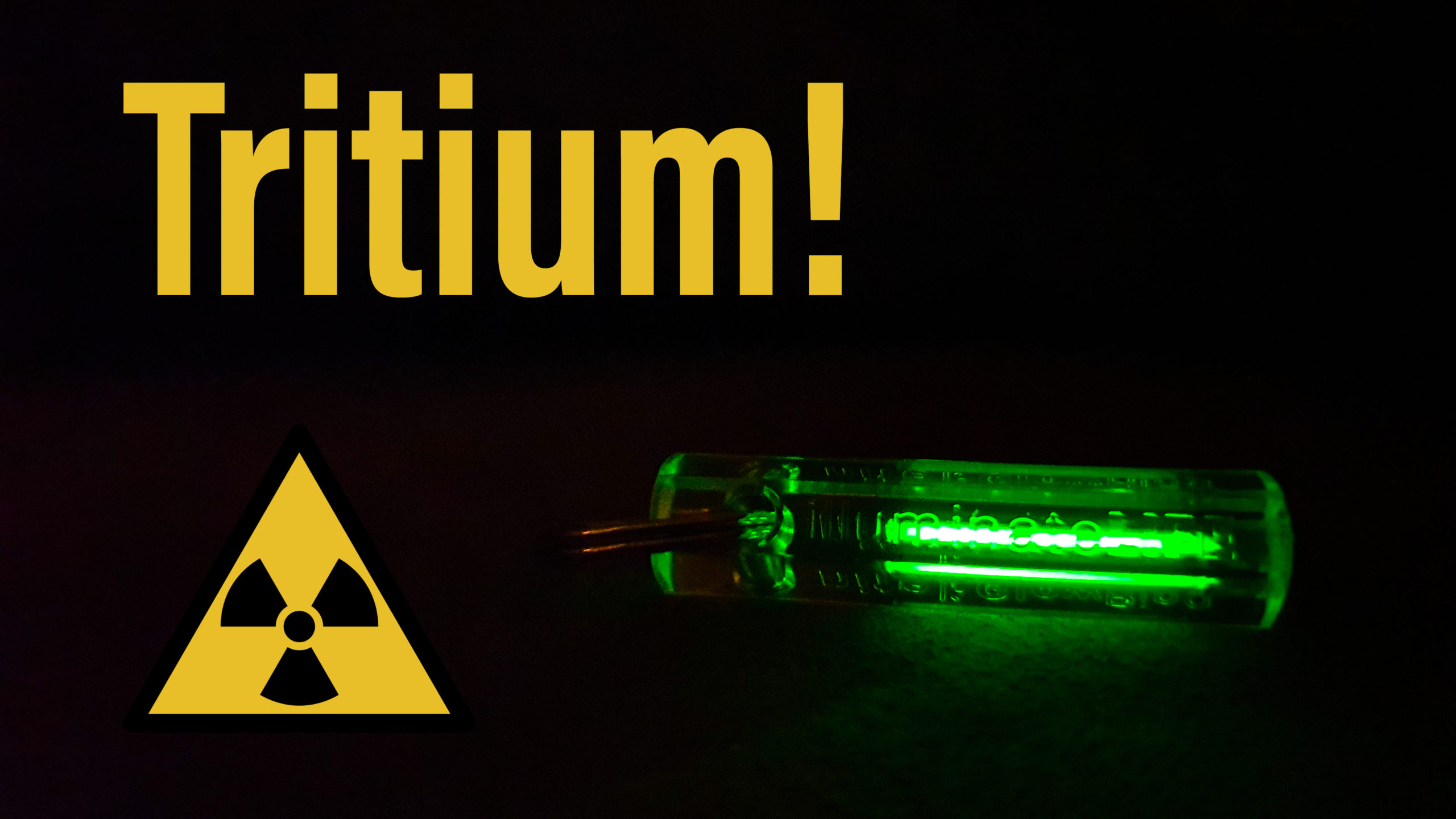
Nuclear: do our power plants release too much tritium? This fission residue is not very radiotoxic. But the discharge standards in waterways are more permissive in France than in Japan. With the holiday season and the covid epidemic, the event has gone almost unnoticed. But it is reported in detail on the site of the Nuclear Safety Authority (ASN). Between November 25 and December 8, 2021, at the Tricastin site, around 900 liters of effluents containing tritium infiltrated the soil, causing “abnormal radiological activity”. More precisely, the measurements carried out on site made it possible to detect a peak in radioactivity of 28,900 Becquerels per liter on December 12. Taking up this information, the Mediapart site mentions a major radioactive leak. After ASN inspection, the event was nevertheless classified at level 0 on the international nuclear events scale. How to explain this difference in perception? L’Express 28th Dec 2021 https://www.lexpress.fr/actualite/sciences/nucleaire-nos-centrales-rejettent-elles-trop-de-tritium_2165111.html |
Increased compensation for those damaged by nuclear accident – OECD
| The protocols to amend two international instruments that bolster the compensation rights of those affected by nuclear energy accidents were formally ratified in Paris on 17 December 2021 at the OECD headquarters by all the Contracting Parties, except for Turkey who has approved the ratification and will be depositing its instrument of ratification soon. The Protocols to amend the Paris Convention on Third Party Liability in the Field of Nuclear Energy and the Brussels Convention Supplementary to the Paris Convention will enter into force on 1 January 2022. These revised conventions combined ensure that those suffering damage resulting from an accident in the nuclear energy sector will be able to seek more compensation – the operator liability will be of at least EUR 700 million under the Paris Convention and the public funds provided under the Brussels Supplementary Convention will complement up to EUR 1.5 billion, a sharp increase from the previous 5 million Special Drawing Rights (SDR) (approximately EUR 6 million as of 13 December 2021) and SDR 125 million (approximately EUR 155 million as of 13 December 2021) respectively. The revised Paris Convention also provides now for a minimum of EUR 70 million and EUR 80 million in case of accidents at low-risk installations and during transport of nuclear substances, respectively. OECD-NEA 17th Dec 2021 https://www.oecd-nea.org/jcms/pl_63006/new-treaties-to-strengthen-rights-of-people-affected-by-nuclear-accidents |
Massive leak of tritium at France’s Tricastin nuclear power plant.

A massive leak of tritium, a radioactive isotope of hydrogen, occurred earlier this month at the Tricastin nuclear power plant, one of the oldest in France, when subsequent radiation levels recorded in groundwater below it reached 28,900 becquerels per litre.
Both the plant’s operator, EDF, and the French nuclear safety watchdog, the ASN, insist that the spill has
been contained. But, as Jade Lindgaard reports, despite that claim it appears inevitable that that the radioactive effluent will pollute the local environment.
Mediapart 28th Dec 2021
Consider the potential risks of having nuclear submarines on Devonport Dockyard
After news broke this year that Devonport Dockyard is getting a £1billion
rebuild to meet the requirements of the Navy’s futuristic
Dreadnought-class ballistic missile subs, you might be left thinking about
the potential risks of an increased nuclear presence in the west of
Plymouth. Although the subs won’t enter service until the 2030s, it’s
better to be safe than sorry. Or maybe you’ve considered the potential risk
associated with the 12 submarines which still have their nuclear cargo
intact on the dock.
Plymouth Live 29th Dec 2021
https://www.plymouthherald.co.uk/news/plymouth-news/what-nuclear-disaster-declared-plymouth-6238969
Kashiwazaki-Kariwa nuclear powerplant out of action for many months due to 74 instances of defective welding
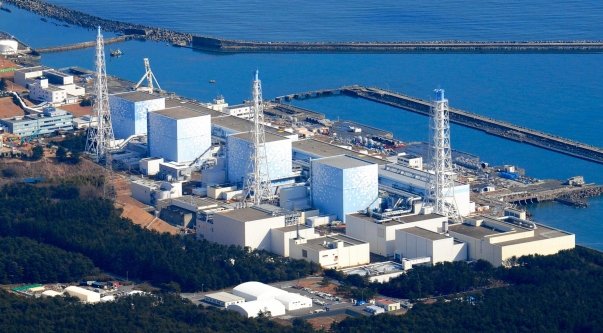
| Shoddy welding maintenance work at the Kashiwazaki-Kariwa nuclear power plant in Niigata Prefecture will push back moves to bring the facility back online by many months, perhaps longer, its operator Tokyo Electric Power Co. acknowledged. The No. 7 reactor has been plagued by problems to do with installing safeguards against terrorist attacks that required further work and a new round of inspections by the Nuclear Regulation Authority, the nation’s nuclear watchdog body. TEPCO announced Dec. 24 that it had uncovered 74 instances of defective welding that is essential to safe operations of the nuclear reactor. The utility said it had been tipped off anonymously on several occasions since March about shoddy welding work done by a subcontractor. In its latest announcement, TEPCO acknowledged the problem and said welding would have to be redone at 1,200 or so sections, a process that will likely take until next summer. Asahi Shimbun 25th Dec 2021 https://www.asahi.com/ajw/articles/14510525 |
Radiation Free Lakeland joins the call against watering down safety regulations for nuclear fusion reactors.
Radiation Free Lakeland add our voice to the call from Nuclear Free Local Authorities that the already inadequate nuclear regulations are not watered down when it comes to dangerous fusion reactors. Fusion experiments require enormous amounts of heat and energy. The nuclear wastes from the fusion experimental reactors already amounts to 3000 cubic metres of nuclear wastes from the Culham experimental reactor alone. Nuclear Free Local Authorities say the following and RaFL agree that: Public safety must come before profit: Nuclear Free Local Authorities call for ‘no watering down’ of nuclear regulation for fusion reactors. Radiation Free Lakeland 23rd Dec 2021 https://mariannewildart.wordpress.com/2021/12/23/fusion-licensed-to-kill/ |
France’s Environmental Authority requires a list of all the problems encountered in building the Flamanville EPR nuclear reactor
An inventory of incidents on the EPR required according to the
Environmental Authority. In its latest opinion, the Environmental Authority
recommends a listing of all the problems encountered during the
construction of the EPR, as well as an update on the various solutions
provided.
France Bleu 23rd Dec 2021
Science & Avenir 23rd Dec 2021
https://www.sciencesetavenir.fr/nature-environnement/nucleaire-l-autorite-environnementale-reclame-plus-d-informations-sur-flamanville_160059
Le Figaro 23rd Dec 2021
The design fault in the Taishan nuclear reactor could affect other EPR reactors, including Finland’s Olkiluoto station.
Finnish Nuclear Safety Authority STUK has given its approval to start the
reaction nuclear and low power tests for the EPR OL3 reactor built with a
lot of difficulties by the Areva Siemens consortium in Olkiluoto.
The start took place on Tuesday 21 December 12 years behind the initial project and
with a budget multiplied by 3. The serious malfunctions that affected the
Taishan 1 EPR reactor in China show that this technology is not developed.
Information transmitted to CRIIRAD by a whistleblower indicate that the
nuclear fuel assemblies for the Taishan 1 reactor were severely damaged
during the second irradiation cycle. This situation is probably related to
a fault in design that is reasonably expected to affect other RPEs.
CRIIRAD 22nd Dec 2021
Inept cover-up of faulty nuclear work – Nuclear Regulatory Commission gives no penalty
 | |||
This one has to be read to be believed. An @NRCgov investigation has found that two former technicians at the Grand Gulf #nuclear plant in #Mississippi installed an incorrectly manufactured gasket on an important valve–and then staged an inept cover-up.
NRC INVESTIGATION REPORT 4-2019-021 – DATED DECEMBER 15, 2021 RidsOpaMail Resource; RidsOgcMailCenter R
Mr. Maurice Omaits [NOTE: HOME ADDRESS DELETED UNDER 10 CFR 2.390] SUBJECT: NOTICE OF VIOLATION, NRC INVESTIGATION REPORT 4-2019-021 Dear Mr. Omaits: This letter refers to the investigation completed on September 14, 2020, by the U.S. Nuclear Regulatory Commission (NRC) Office of Investigations at the Grand Gulf Nuclear Station. The investigation was conducted, in part, to determine whether you, a senior engineering training instructor employed by Entergy Operations, Inc. (licensee) at the Grand Gulf Nuclear Station, willfully compromised an engineering support qualification exam by providing additional information to students in the form of diagrams and verbal cues.A factual summary of the investigation, as it pertains to your actions, was issued as an enclosure to our letter dated February 24, 2021, Agencywide Documents Access and Management System (ADAMS) Accession No. ML21055A000.
In the letter transmitting the factual summary of the Office of Investigations report, we provided you with the opportunity to address the apparent violation identified in the letter by attending a predecisional enforcement conference, participating in an alternative dispute resolution mediation session, or providing a written response before we made our final enforcement decision. Your attorney indicated to an NRC enforcement representative that you do not intend to provide additional information regarding this matter. Since you have not requested a predecisional enforcement conference nor replied in writing, the NRC is proceeding with its enforcement action based on the results of the investigation.
Based on the information developed during the investigation, the NRC concluded that a deliberate violation of NRC requirements occurred. The violation is cited in Enclosure 1, “Notice of Violation” (Notice). The Notice states that you deliberately violated a licensee quality-related procedure when, as an exam proctor, you provided inappropriate assistance to students in the form of verbal and nonverbal cues regarding their selection of exam answers.
Your deliberate actions placed the licensee in violation of Title 10 of the Code of Federal Regulations (10 CFR) 50.120, “Training and qualification of nuclear power plant personnel,” and you in violation of 10 CFR 50.5, “Deliberate misconduct.” Enclosure 2 includes a copy of the letter and Notice issued to the licensee. Given the significance of the underlying issue and the deliberate nature of your actions, your violation has been categorized in accordance with the NRC Enforcement Policy at Severity Level Ill. The NRC Enforcement Policy is included on the NRC’s website at http://www.nrc.gov/about-nrc/regulatory/enforcement/enforce-pol.html. You should be aware that if you are involved in NRC licensed activities in the future, additional deliberate violations could result in more significant enforcement action or referral to the U.S. Department of Justice for potential criminal prosecution……………… Scott A. MorrisRegional Administrator 15 Dec 21
https://www.nrc.gov/docs/ML2134/ML21349B336.pdf
Tricastin nuclear power station: a radioactive leak in groundwater
Tricastin nuclear power station: a radioactive leak in groundwater. EDF
revealed, this Tuesday, December 21, that a tritium leak had been detected
in the Tricastin nuclear power plant.
Le Dauphine 21st Dec 2021
Changes in UK nuclear third party liability
UK nuclear third party liability laws updated from January 2022 https://www.pinsentmasons.com/out-law/news/uk-nuclear-third-party-liability-laws-updated-january-2022, OUT-LAW NEWS | 23 Dec 2021 Eluned Watson, Senior Associate Operators of nuclear sites in the UK, including those responsible for disposing of nuclear matter, should review their insurance and contractual arrangements to ensure they align with a new liability regime that takes effect on 1 January 2022, experts have said.
Michael Freeman and Eluned Watson of Pinsent Masons were commenting after an international protocol was ratified, triggering imminent changes to the nuclear third party liability regime in the UK.Currently, the liability regime for nuclear accidents in the UK is governed by the Nuclear Installations Act 1965. That Act implements the OECD Paris Convention on Third Party Liability in the Field of Nuclear Energy and the supplementary Brussels Convention that followed. The Act makes provision for compensation to be claimed for personal injury or property damage stemming from a nuclear accident.
In 2004, signatories to the two Conventions adopted a protocol to amend the third party liability regime that the Conventions provide for. That protocol has only recently been ratified in enough of the signatory countries to allow the changes to take effect. n the UK, legislation was passed in 2016 to anticipate the protocol coming into force. The Nuclear Installations (Liability for Damage) Order 2016, which amends the 1965 Act, takes effect on 1 January 2022.
Both the protocol and the UK Order substantially increase the value of claims that can be made in the aftermath of nuclear accidents to €700 million in damages, up from €140 million previously. In line with flexibility provided under the protocol, a cap on claims at €80m has been set in respect of damage to the means of transport.
The legislation sets annual caps on liability for operators of nuclear sites in the UK, initially at €700m a year but rising to a total operator liability of €1.2 billion over a period of five years from 2022.Operators of nuclear licensed sites are required to make financial provision for such liability, such as by insurance.
“We have been working closely with clients in the UK nuclear sector to ensure that their existing insurance and financial provision arrangements incorporate the changes necessary to reflect the changes to the liability regime,” said Watson.
The type of claims that can be made have also been expanded under the new regime.
The additional types of claim that can be made are for compensation in respect of the cost of measures of reinstatement related to the impaired environment, loss of income derived from the environment, the cost of preventive measures, and personal injury and property damage caused by such measures. Limitation periods are also amended. The right to claim compensation for personal injury will be extended from 10 to 30 years. The time limit on bringing claims of all other kinds is fixed at 10 years.
“The changes brought about by the 2004 protocol represents the most significant revision of the nuclear third party liability regime since it was first introduced in the 1960s,” said Pinsent Masons’ Freeman.
“Those operating within the nuclear sector should review all relevant contractual and supply chain arrangements, and in particular nuclear third party liability indemnification provisions, in order to ensure that the changes introduced by the 2016 Order are adequately and appropriately reflected,” he said.
EDF HAS DECIDED TO CLOSE TWO NUCLEAR PLANTS AFTER FINDING CRACKS
EDF HAS DECIDED TO CLOSE TWO NUCLEAR PLANTS AFTER FINDING CRACKS
https://democratic-europe.eu/2021/12/20/edf-has-decided-to-close-two-nuclear-plants-after-finding-cracks/?fbclid=IwAR0PQ0CpQFhNptc25vic5vGb1Mo4apstAvB8erHrKAWA56AB8bcGOIV58Mg 20 Dec 21, Électricité de France S.A., comm owned by the state, shuttered two nuclear power plants after routine safety inspections found cracks at one power plant.
EDF wrote in a press release, “preventive maintenance checks on the primary circuit of reactor number 1 of the Civaux Nuclear Power Plant” found cracks due to corrosion on the pipes.
“Checks initiated on the same equipment of reactor number 2 of the Civaux Nuclear Power Plant revealed similar defects,” the French power giant said.
France’s Nuclear Safety Authority (ASN) was informed about cracks detected close to the welds on the reactor’s pipes.
EDF temporarily closed Civaux to “replace the affected parts on the two Civaux reactors, the work being governed by a technical instruction prepared in cooperation with the ASN, which leads to extend the shutdown of the two reactors,” it said.
EDF has also chosen to close two reactors at another nuclear plant at Chooz in the northeastern Ardennes department for inspections. Both power plants use the same reactor technology.
The temporarily closing of Civaux’s reactors and Chooz’s reactors will reduce one terawatt-hour of output and couldn’t come at the worst time as cooler weather sent French power contracts to a record high earlier this week.
A power reduction could suggest strain on the power grid amid cooler weather and higher power prices.
Holtec, owner of closed Oyster Creek nuclear station faces security violation fine.
Owner of closed nuclear plant faces security-violation fine, KPVI, Dec 22, 2021
LACEY TOWNSHIP, N.J. (AP) — The U.S. Nuclear Regulatory Commission said Wednesday it plans to fine the owners of the shuttered Oyster Creek nuclear power plant $150,000 for security violations at the New Jersey site.
The agency would not reveal the nature of the violations, citing security concerns, but said the site’s overall security program “remains effective.”
Holtec Decommissioning International LLC has 30 days to pay the fine or contest it.
The company issued a statement saying that “protecting the security and safety of the public is the number one priority of Holtec International at all our facilities. ……………. The NRC said Holtec has taken steps to address the violations. https://www.kpvi.com/news/national_news/owner-of-closed-nuclear-plant-faces-security-violation-fine/article_4188ac82-323a-505e-90ff-77aabac4ca6b.html
Inspections of Britain’s ageing nuclear weapons facilities
Inspectors have completed their year-long investigation into the ageing
facilities at AWE in Aldermaston and Burghfield. The Office for Nuclear
Regulation (ONR) has conducted ‘themed’ inspections into five British
nuclear facilities over the last year. It has been looking at how the
industry manages ageing plants and facilities to ensure the necessary
standards of safety and security are maintained.
The final inspection
report is now being compiled, and is expected to identify where
improvements are required. In late 2020, ONR selected five licensees for
inspection, as a representative sample of the industry. They are the Atomic
Weapons Establishment (AWE Plc), in Aldermaston and Burghfield, Berkshire,
EDF Energy Nuclear Generation Limited, at Sizewell B Power Station in
Suffolk, Devonport Royal Dockyard Ltd (DRDL) in Plymouth, Magnox Limited,
at Hinkley Point A in Somerset, and Sellafield Ltd, in Cumbria.
Berkshire Live 22nd Dec 2021
Bill Gates’ sodium-cooled ‘Natrium’ nuclear reactor design – strikingly like the disastrous reactors at Santa Susana Field Lab.
Most striking of all is the success of official campaigns asserting that even the most serious accidents have caused little or no harm

Spent Fuel, Harpers, by Andrew Cockburn, 20 Dec 21, The risky resurgence of nuclear power ” …………………………. Gates and other backers extoll the promise of TerraPower’s Natrium reactors, which are cooled not by water, as commercial U.S. nuclear reactors are, but by liquid sodium. This material has a high boiling point, some 1,600 degrees Fahrenheit, which in theory enables the reactor to run at extreme temperatures without the extraordinary pressures that, in turn, require huge, expensive structures……………….

Prosperous and 70 percent white, West Hills, California, is one of the communities that have sprouted near the Santa Susana Field Laboratory in the decades since the 1959 meltdown. Unlike the poor, sick, and embittered residents of Shell Bluff, people living in West Hills had until recently only the barest inkling that nuclear power in the neighborhood might have had unwelcome consequences. “Almost no one knew about the Santa Susanna Field Lab, or they thought it was an urban legend,” Melissa Bumstead, who grew up in nearby Thousand Oaks, told me recently. In 2014, Bumstead’s four-year-old daughter, Grace, was diagnosed with an aggressive form of leukemia. “This has no environmental link,” her pediatric oncologist told her firmly. Childhood cancers were rare, and this was just cruel luck.
Then, while taking Grace to Children’s Hospital Los Angeles, Bumstead ran into a woman who recognized her from the local park where their young daughters played. The woman’s child had neuroblastoma, another rare cancer, as did another from nearby Simi Valley, whom they encountered while the children were getting chemo. Back at home, someone on her street noticed the childhood cancer awareness sticker on Bumstead’s car and mentioned that another neighbor had died of cancer as a teenager.
Bumstead began to draw a map detailing the cluster of cancer deaths in small children just in the previous six years, but stopped working on it in 2017. “I had such severe PTSD when I added children onto it, my therapist told me to stop.” But it is still happening, she said, mentioning the unusual number of bald children she had noticed in local elementary schools in recent years, as well as the far-above-average rate of breast cancer cases recorded in the area. A cleanup of the field lab was due to be completed in 2017, but it has yet to begin.

I called Bumstead because I had been struck by the fact thatTerraPower’s Natrium reactor resembles in its basic features the long-ago Sodium Reactor Experiment at Santa Susana. (Natrium is Latin for sodium.) “That’s exactly what we had!” Bumstead exclaimed when I mentioned that liquid sodium is integral to TerraPower’s project. “The meltdown was in the sodium reactor.” As her comment made clear, such liquid sodium technology is by no means innovative.
Nor, in an extensive history of experiments, has it ever proved popular—not least because liquid sodium explodes when it comes into contact with water, and burns when exposed to air. In addition, it is highly corrosive to metal, which is one reason the technology was rapidly abandoned by the U.S. Navy after a tryout in the Seawolf submarine in 1957.
That system “was leaking before it even left the dock on its first voyage,” recalls Foster Blair, a longtime senior engineer with the Navy’s reactor program. The Navy eventually encased the reactor in steel and dropped it into the sea 130 miles off the coast of Maryland, with the assurance that the container would not corrode while the contents were still radioactive. The main novelty of the Natrium reactor is a tank that stores molten salt, which can drive steam generators to produce extra power when demand surges. “Interesting idea,” Blair commented. “But from an engineering standpoint one that has some real potential problems, namely the corrosion of the high-temperature salt in just about any metal container over any period of time.”
TerraPower’s Jeff Navin assured me in response that Natrium “is designed to be a safe, cost-effective commercial reactor.” He added that Natrium’s use of uranium-based metal fuel would increase the reactor’s safety and performance. Blair told me that such a system had been tried and abandoned in the Fifties because the solid fuel swelled and grew after fissioning.
As the sodium saga indicates, the true history of nuclear energy is largely unknown to all but specialists, which is ironic given that it keeps repeating itself. The story of Santa Susana follows the same path as more famous disasters, most strikingly in the studious indifference of those in charge to signs of impending catastrophe.The operators at Santa Susana shrugged off evidence of problems with the cooling system for weeks prior to the meltdown, and even restarted the reactor after initial trouble. Soviet nuclear authorities covered up at least one accident at Chernobyl before the disaster and ignored warnings that the reactor was dangerously unsafe. The Fukushima plant’s designers didn’t account for the known risk of massive tsunamis, a vulnerability augmented by inadequate safety precautions that were overlooked by regulators. Automatic safety features at Santa Susana did not work. This was also the case at Fukushima, where vital backup generators were destroyed by the tidal wave.
No one knows exactly how much radiation was released by Santa Susana—it exceeded the scale of the monitors. Nor was there any precise accounting of the radioactivity released at Chernobyl. Fukushima emitted far less, yet the prime minister of Japan prepared plans to evacuate fifty million people, which would have meant, as he later recounted, the end of Japan as a functioning state. Another common thread is the attempt by overseers, both corporate and governmental, to conceal information from the public for as long as possible. Santa Susana holds the prize in this regard: its coverup was sustained for twenty years, until students at UCLA found the truth in Atomic Energy Commission documents.
Most striking of all is the success of official campaigns asserting that even the most serious accidents have caused little or no harm……………………
“The right not to know” about the effects of nuclear power is currently embraced far beyond Fukushima. In the face of escalating alarm about climate change, the siren song of “clean and affordable and reliable” power finds an audience eager to overlook a business model that is dependent on state support and often greased with corruption; failed experiments now hailed as “innovative”; a pattern of artful disinformation; and a trail of poison from accidents and leaks (not to mention the 95,000 tons of radioactive waste currently stored at reactor sites with nowhere to go) that will affect generations yet unborn. Arguments by proponents of renewables that wind, solar, and geothermal power can fill the gap on their own have found little traction with policymakers. Ignoring history, we may be condemned to repeat it. Bill Gates has bet a billion dollars on that. https://harpers.org/archive/2022/01/spent-fuel-the-risky-resurgence-of-nuclear-power/
1 This Month



26 September – International Day for the Total Elimination of Nuclear Weapons


PLEASE OPPOSE HR 8255 AND S.3639 – bills would accelerate satellite deployment, with no environmental review or safeguards – https://ncstd5li.quorum.us/campaign/169331/
To see nuclear-related stories in greater depth and intensity – go to https://nuclearinformation.wordpress.com
-
Archives
- September 2026 (233)
- August 2026 (330)
- July 2026 (355)
- June 2026 (287)
- May 2026 (306)
- April 2026 (356)
- March 2026 (251)
- February 2026 (267)
- January 2026 (308)
- December 2025 (358)
- November 2025 (359)
- October 2025 (375)
-
Categories
- 1
- 1 NUCLEAR ISSUES
- business and costs
- climate change
- culture and arts
- ENERGY
- environment
- health
- history
- indigenous issues
- Legal
- marketing of nuclear
- media
- opposition to nuclear
- PERSONAL STORIES
- politics
- politics international
- Religion and ethics
- safety
- secrets,lies and civil liberties
- spinbuster
- technology
- Uranium
- wastes
- weapons and war
- Women
- 2 WORLD
- ACTION
- AFRICA
- Atrocities
- AUSTRALIA
- Christina's notes
- Christina's themes
- culture and arts
- Events
- Fuk 2022
- Fuk 2023
- Fukushima 2017
- Fukushima 2018
- fukushima 2019
- Fukushima 2020
- Fukushima 2021
- general
- global warming
- Humour (God we need it)
- Nuclear
- RARE EARTHS
- Reference
- resources – print
- Resources -audiovicual
- Weekly Newsletter
- World
- World Nuclear
- YouTube
-
RSS
Entries RSS
Comments RSS
 nuclear-news