A nuclear meltdown at Zaporizhzhia would imperil the entire region.
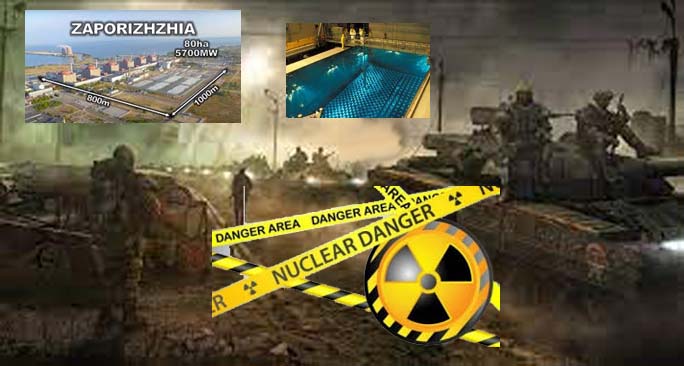
Russia’s nuclear brinkmanship — a reckless gamble that began with its
occupation of Ukraine’s Zaporizhzhia nuclear power plant — has
escalated into a crisis threatening the entire European continent.
In early November, local ceasefires between Ukrainian and Russian forces controlling the ZNPP allowed repair crews to safely restore critical external
electricity lines that had been severed. For a month prior, both the main
and backup external power lines were down, forcing the plant to rely solely
on emergency diesel generators for power vital to reactor cooling and
safety.
The International Atomic Energy Agency has characterised the
ZNPP’s prolonged reliance on diesel generators as “clearly not
sustainable”. But emergency diesel generators were never designed for
extended continuous operation. Industry standards specify preferred mission times of 24 hours.
In the recent outage at ZNPP, generators had been
running for an entire month — far exceeding design specifications — and
the plant recently lost its connection to the main power line again. Each
day of continued operation increases the probability of mechanical failure.
FT 17th Nov 2025,
https://www.ft.com/content/93130cd5-211c-4ba1-9303-0a550ddac93f
Los Alamos National Laboratory Reneges on Active Confinement Ventilation Systems at Plutonium Facility, PF-4.

| Concerned Citizens for Nuclear Safety .14 Nov 25 |
Los Alamos National Laboratory (LANL) continues to neglect its obligations to safely operate its nuclear weapons facilities in a manner required by laws, orders, guidance and common sense.
A recent report from the Defense Nuclear Facilities Safety Board (DNFSB or the Board) details the threats from the release of plutonium contaminated air during a seismic event from the LANL Plutonium Facility, or PF-4. For over 20 years, the Board has recommended that LANL establish active confinement ventilation systems for PF-4, and LANL agreed. https://www.dnfsb.gov/content/review-los-alamos-plutonium-facility-documented-safety-analysis
Active confinement ventilation systems require negative air pressure in rooms and buildings where plutonium is stored, handled and processed. In the event of seismic activity, or other possible catastrophic events, the negative air pressure would keep the contamination inside where it could be held and filtered before being released.
The converse, which is called passive confinement systems, would do nothing. No filtration would occur. Contaminated air would move out of the building and into the air we breathe. Depending on the wind direction, radioactive plutonium particles would be deposited in neighborhoods, on hiking trails, fields, school grounds, and in the Rio Grande.
3 drones reportedly spotted flying over Belgian nuclear power plant
Kyiv Independent, November 10, 2025
Three drones were spotted flying over the Doel Nuclear Power Plant in northern Belgium on the evening of Nov. 9, according to Deutsche Welle.
Operations at the power plant near Antwerp were not impacted by the drone sighting, a spokesperson for local energy company Engie said.
Several unidentified drone sightings have occurred in recent days near Belgian infrastructure. On Nov. 3, the Belgian army issued orders to shoot down unknown drones spotted over the country’s military bases in response to the sightings.
On Nov. 4, Belgium suspended air traffic at Brussels Airport due to a reported drone sighting in the area, according to the Belga News Agency. Some flights were diverted to the country’s Liege Airport, which was later temporarily closed because of another drone sighting.
Meanwhile, suspicious drones were spotted over Belgium’s Kleine Brogel Air Base for three nights in a row between Oct. 31 and Nov. 2, local media reported.
Belgian Defense Minister Theo Francken said that the sightings near military bases appear to be part of an espionage operation, not naming the culprit but linking the incidents to recent Russian airspace violations in Europe.
The drone sightings have caused disruptions in several European countries, including Germany, Denmark, and the Netherlands. As investigations continue, authorities have not ruled out that the drones may be Russian…………………………. https://kyivindependent.com/3-drones-reportedly-spotted-flying-over-belgian-nuclear-power-plant/
Belgium flounders as 5 drones buzz nuclear power plant.

U.K., France and Germany send assistance.
Politico, November 10, 2025 , By Elena Giordano
Five drones were spotted flying over Belgium’s Doel nuclear power plant near the Port of Antwerp on Sunday evening, energy company Engie said.
“Initially we had detected three drones, but then we saw five drones. They were up in the air for about an hour,” Engie spokesperson Hellen Smeets told POLITICO Monday morning.
The first report of the three drones came shortly before 10 p.m. on Sunday, Smeet said, adding that the sightings had no impact on the plant operations. Belgium’s national Crisis Center, which is currently monitoring the situation, confirmed the incident……………
The latest incidents comes amid a surge of drone activity disrupting key infrastructure across Belgium. Airports in Brussels and Liège faced repeated interruptions last week, while drones were also spotted over military bases and the Port of Antwerp…….
While the government has avoided attributing blame, Belgium’s intelligence services suspect foreign hands, with Moscow seen as the most likely source, according to local media. Defense Minister Theo Francken said Saturday that “Russia is clearly a plausible suspect.”
On Sunday, the U.K. announced it will join France and Germany in sending personnel and equipment to help Belgium counter drone incursions around sensitive sites. https://www.politico.eu/article/drones-spotted-belgium-nuclear-plant-doel-airspace-incursions/
Russia deliberately ‘endangering nuclear safety in Europe’ says Kyiv
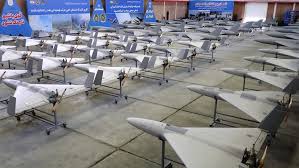
Ukraine says drones are targeting substations that power the Khmelnytskyi and Rivne nuclear plants. What we know on day 1,355
Guardian staff and agencies, 9 Nov 25
- Russia is again targeting substations that power the Khmelnytskyi and Rivne nuclear power plants in Ukraine, the country’s foreign minister Andrii Sybiha said on X on Saturday. Sybiha said drone attacks on the weekend were not accidental but well-planned strikes. “Russia is deliberately endangering nuclear safety in Europe,” he said.
- Russia launched a barrage of drones and missiles at Ukraine over the weekend, killing at least seven people and damaging energy infrastructure in three regions, according to Ukrainian officials. Ukraine’s president, Volodymyr Zelenskyy, said Russia had launched more than 450 drones and 45 missiles, most of which were shot down. Three people were killed and 12 wounded when a drone hit an apartment building in Dnipro, and another person was killed in the Kharkiv region. Three were killed in the south-eastern Zaporizhzhia region, regional officials said. https://www.theguardian.com/world/2025/nov/09/ukraine-war-briefing-russia-deliberately-endangering-nuclear-safety-in-europe-says-kyiv
IAEA chief condemns Trump’s nuclear test plan.
5 Nov, 2025, https://www.rt.com/news/627359-iaea-grossi-us-nuclear/
The US president’s decision undermines international security, Rafael Grossi has said.
US President Donald Trump’s decision to resume nuclear weapon testing is indicative of a deepening global crisis and weakens the international system of security and peace, the director general of the International Atomic Energy Agency (IAEA), Rafael Grossi, has said.
Speaking to France’s LCI TV channel on Tuesday, Grossi described Trump’s announcement as a “manifestation of profound unease, tension, and increasing fragmentation,” adding that it undermines both global peace and the non-proliferation regime.
Last week, Trump ordered the US Department of War to begin preparations for nuclear testing, claiming that the US is “the only country that doesn’t test” and accusing Russia and China of conducting “secret” nuclear explosions. Both Moscow and Beijing have refuted the allegations.
Grossi questioned the veracity of Trump’s claims, emphasizing that any nuclear detonations by other nations would be detected by the international monitoring system established under the Comprehensive Nuclear-Test-Ban Treaty. The IAEA chief noted that the organization responsible for overseeing compliance “can immediately record such phenomena.”
Grossi called for the restoration of the United Nations’ role in maintaining global peace and safeguarding the nuclear non-proliferation system amid rising tensions.
Kremlin spokesman Dmitry Peskov has so far refrained from commenting on Trump’s statements, explaining that Moscow is still waiting for “clarifications from the American side.” He stressed that neither Russia nor China had resumed nuclear testing and both remain committed to their obligations under the Comprehensive Nuclear-Test-Ban Treaty.
Trump’s announcement came after Russia conducted a series of tests, including the launch of its new Burevestnik nuclear-powered cruise missile and the Poseidon underwater drone. However, neither of these trials involved actual nuclear detonations.
Russian President Vladimir Putin has said that Moscow would consider resuming the testing of nuclear weapons only if other nuclear powers officially abandon the moratorium.
Officials launch investigation after hazardous incident at shut-down nuclear plant: ‘Deeply concerning’
A government investigation got underway after radioactive water leaked from Scotland’s Dounreay nuclear site. In June 2024, NRS alerted the Scottish Environment Protection Agency (SEPA) to “a potential leak of radioactively contaminated water from a carbon bed filter on the Dounreay site,” an agency spokesperson described, according to The National, a Scottish paper.
SEPA later confirmed a “small leak” that released different radioactive
substances, including Caesium-137 and alpha-emitting radionuclides. While NRS reported no increase in groundwater radioactivity downstream of the event, SEPA found the company had breached regulations and ordered a full review of its monitoring systems.
The Cool Down 29th Oct 2025, https://www.thecooldown.com/green-business/dounreay-nuclear-site-radioactive-water-leak/
Trump’s Big Nuclear Reactor Push Raises Safety Concerns

1 October 2025, https://english.aawsat.com/features/5203506-trumps-big-nuclear-reactor-push-raises-safety-concerns
A huge nuclear deal announced by the Trump administration earlier this week provides a multi-billion-dollar incentive for the US government to issue permits and approvals for new Westinghouse reactors – an unprecedented structure that critics say poses environmental and safety risks.
Under the agreement with Westinghouse Electric’s owners, Canada-based Cameco and Brookfield Asset Management , the US government will arrange financing and help secure permits and approvals for $80 billion worth of Westinghouse reactors.
In return, the plan offers the US government a path to a 20% share of future profits and a potential 20% stake in the company if its value surpasses $30 billion by 2029.
The deal is one of the most ambitious plans in US atomic energy in decades, underscoring President Donald Trump’s agenda to maximize energy output to feed booming demand for artificial intelligence data centers.
But the financial incentives risk clouding regulatory scrutiny aimed at preventing nuclear accidents, according to safety advocates and regulatory experts. “The things that could go wrong are Three Mile Island, Chernobyl and Fukushima,” said Greg Jaczko, a former chairman of the Nuclear Regulatory Commission, pointing to three of the worst nuclear power accidents on record.
“All have causes tied to insufficient regulatory independence.”
The White House said concerns about safety were unfounded.
“The regulatory regime remains the same and is not compromised. There’s nothing in the deal about regulatory changes,” the White House said in an emailed statement. Westinghouse owner Cameco declined to comment. Brookfield and Westinghouse did not respond to messages requesting comment.
TD Cowen analysts told clients in a research note this week they expect Westinghouse to have 10 new large-scale reactors – enough gigawatts to power several million homes – under construction by 2030 as a result of the deal.
Typically, it takes around a decade for a new nuclear power plant to get built, largely due to the rigorous permitting requirements and enormous costs and complexities associated with construction.
Patrick White, a nuclear regulatory and technology expert at the Clean Air Task Force, said effective regulation did not need to be a slow or extended process and there were benefits to moving more efficiently.
“Ensuring that nuclear regulation is also timely and predictable is in the best interest of both companies and the public,” White said. Todd Allen, a nuclear expert at the University of Michigan, said the design of Westinghouse reactors is well established, but questioned how fast projects could progress.
“With that aggressive timeline, and demand for the reactors around the world, I wonder if there is a big enough workforce to handle all of these projects,” Allen said.
DELAYS TO PREVIOUS US PROJECT
Westinghouse’s last US-based nuclear project, building two nuclear reactors at the Vogtle power plant in Georgia, forced the company into bankruptcy protection in 2017.
The two reactors were about seven years behind schedule and cost about $35 billion, more than double the original estimate of $14 billion.
Patty Durand, director of nonprofit Georgians for Affordable Energy, has spent years analyzing that project and said she fears fast permitting would overlook the risks associated with climate change.
She said severe droughts have forced operators to curtail nuclear power in Europe and the United States to avoid overheating their reactors. Westinghouse also had a slew of problems related to the modular design of its AP1000 reactors, such as some parts’ dimensions being wrong when they arrived on site. The AP1000 would also be used for the new reactors, built from prefabricated parts and assembled on site.
Edwin Lyman, a physicist at the Union of Concerned Scientists, said he fears the Trump administration will exert too much power over the Nuclear Regulatory Commission to get the new reactors permitted.
“If the White House fully takes over the NRC and it is no longer at all independent, then it could be used just as a tool for sweeping deals for which the White House could accelerate licensing on its preferred projects regardless of their actual safety implications, and that’s a dangerous thing,” Lyman said.
Remediation work through £4.6bn Sellafield framework
US engineering and technology firm Amentum and a joint venture of Altrad
Support Services and Atkins Réalis will deliver remediation work at the
Sellafield nuclear power station over the next 15 years. The two bidders
were named for Lot 1 of a £4.6bn Decommissioning and Nuclear Waste
Partnership (DNWP) framework, which covers four lots. Procured by
Sellafield Ltd, the agreement will see chosen contractors support
high-hazard risk reduction programmes at the Cumbrian plant.
Ground Engineering 3rd Nov 2025. https://www.geplus.co.uk/news/pair-bag-remediation-work-through-4-6bn-sellafield-framework-03-11-2025/
How Russia is risking nuclear catastrophe with attempts to syphon power from Ukraine’s biggest plant
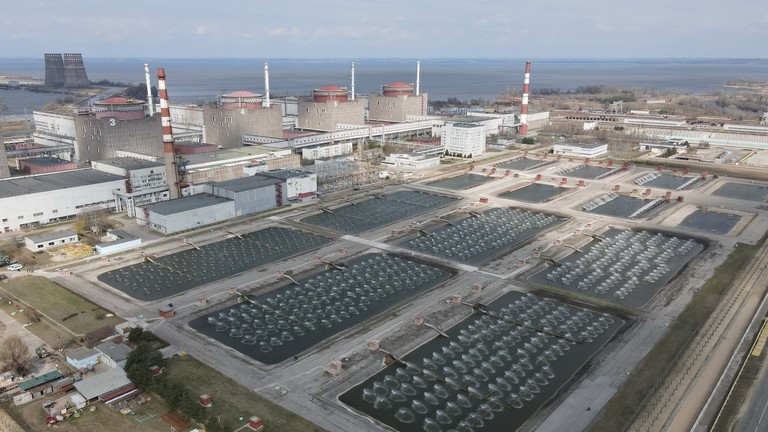
The exiled mayor of Enerhodar, close to Zaporizhzhia, reveals his fear of an ecological catastrophe
Sam Kiley, In Zaporizhzhia, Wednesday 29 October 2025, https://www.independent.co.uk/news/world/europe/zaporizhzhia-nuclear-plant-ukraine-russia-war-b2855001.html
Europe’s biggest nuclear reactor has become a battlefield in Ukraine’s defence against Russian invaders as they risk a catastrophic meltdown in its efforts to connect it to Moscow’s national grid.
The Zaporizhzhia nuclear power plant (ZNPP), which has six reactors, was captured by Russian troops early in the invasion of Ukraine in 2022. It has remained a dangerous potential flashpoint for a nuclear disaster ever since.
Fighting and bombardments by both sides of the complex and the power station itself, which has been entirely occupied by Russian forces who base troops in its buildings, have forced the “cold shutdown” of the reactors.
This means that its nuclear material is not used to generate power but needs to be constantly cooled.
The fighting cut electricity from Ukraine, meaning that the cooling system had to rely entirely on diesel generators and a skeleton staff for a month.
Regular power was only restored in the last week, after the longest period the ZNPP had been disconnected from electricity to drive its cooling systems.
Russia needs to cut the Ukrainian power link in order to install its connection into the Russian network – a long-stated ambition.
“The Russian Federation is putting in its power line, but elements of it have been successfully damaged by Ukraine,” explained Mykhailo Shuster, nuclear expert and former director of procurement at Energoatom – Ukraine’s nuclear power agency.
“Russia is now at a high level of readiness, and to connect it, the power supply from Ukraine must be interrupted.”
It is unclear whether Russia has been able to connect the Ukrainian plant to its own network during the 30-day outage. If it did so, it would then have to install converter stations to synchronise the two grids.
But the power cuts to the cooling systems, combined with the near collapse of the water supplies there after Russia blew up the Kakhova Dam – the main water source for the ZNPP – is causing jitters among local leaders.
The exiled mayor of the now-occupied Enerhodar, the town next to Zaporizhzhia, told The Independent he fears nuclear fallout could melt into the groundwater around the plant, contaminate the Dnipro River and eventually the Black Sea.
“Kakhovka Dam is destroyed; there is nothing to cool it with – even if they miraculously restore the equipment in the future,” he said.
“Worst case scenario: the water will eventually evaporate from the cooling pond, and there will be nothing to cool nuclear fuel.”
“It can melt the concrete and go into the groundwater,” Dmytro Orlov added from his office in Zaporizhzhia. Mayor Orlov runs humanitarian programmes for the thousands of people, mostly nuclear power workers, who fled the advancing Russians from his town to safety here.
The mayor recalled the 1986 Chernobyl disaster, which remains the worst nuclear disaster in history.
“The estimated amount of nuclear fuel there is about 10 times more than in Chernobyl,” he warned.
A small team of inspectors from the International Atomic Energy Authority regularly inspects the power station and has reported military training and explosions in and around the facility.
Russian artillery and mortars have been seen shelling and bombing Ukrainian towns and villages on the opposite bank of the Dnipro.
After power was restored, IAEA director general Mario Grossi said: “What was once virtually unimaginable – a nuclear power plant regularly losing off-site power – has unfortunately become a common occurrence during this devastating war. However, this was the most challenging loss of power event we have experienced so far.
“There is still much work to do to further reduce the risks of a nuclear accident.”
It’s Not a Ballroom. It’s a Bunker.

The billionaires have gone bunkers. …..every action indicates that they’re not just preparing for collapse, they’re betting on it, they’re driving it. They want it to happen. We’re already crossing tipping points, like the loss of the coral reefs. Things we predicted for the 2040s are happening now.

Trump serves as the figurehead of a deeply paranoid technocratic network who sees the world collapsing, because they collapsed it. They plan to wage wars from their cyberbunkers, at home and abroad.
And there’s a reason.
Jessica Wildfire, Sentinel Intelligence, October 27 2025
The Trump administration has torn down the East Wing to build a new ballroom. Despite all the noise, everyone seems to be overlooking a simple fact.
As a piece in The Hill mentions in passing, the east wing hides a bunker. Roosevelt built the bunker during WWII, after Pearl Harbor, and he used the east wing specifically to cover it up. The bunker has served as an emergency operations center ever since. They don’t care what sits on top of it. That’s an afterthought.
Traditionally, the First Lady uses it.
Tiny corners of the internet are whispering that the demolition has nothing to do with a ballroom. It has everything to do with upgrading the bunker. Since they’re hardening the bunker, they might as well build Trump the ballroom of his dreams, the perfect place to run crypto schemes and host corrupt dictators.
Trump’s niece Mary, a vocal critic, has confirmed that the regime is simply using the ballroom as a cover for new bunker plans. Sources have also informed CBS News that the bunker upgrades will definitely happen during the ballroom’s construction. You can read about all of that here.
So, there you go.
If you don’t believe in conspiracies: When Roosevelt’s administration was building the first bunker, they also lied to the public about it. They said they were renovating the east wing to put in a museum. They knew they were fibbing.
The president technically has more than one bunker. There’s the first one built by Roosevelt’s administration, and a second one under the north lawn, and potentially a whole network of subterranean tunnels and command centers throughout D.C., stretching all the way into the Virginia mountains. They run hundreds of feet deep. The second one, under the White House Lawn, contains its own air supply.
It also has a food and water cache.
The media frequently primes the public to salivate over plush bunkers while dismissing the motivations for them as “paranoia.” Meanwhile, actuaries have warned world leaders that current estimates of the climate crisis are deeply misleading. In reality, 3C of global warming will drop the global GDP by 50 percent and kill billions. As a report by The Guardian summarizes: “At 3C or more of heating by 2050, there could be more than 4 billion deaths, significant sociopolitical fragmentation worldwide, failure of states (with resulting rapid, enduring, and significant loss of capital), and extinction events.” That’s right, 3C of warming equals 4 billion deaths. Climate research increasingly points at 3-4C of warming as the new likely scenario. In practical terms, we’ve already crossed the 1.5C threshold, a decade earlier than expected.
We’ll likely breach 2C by the end of the decade, and by then things will look bad enough that life will look and feel like collapse. It won’t be theoretical or hypothetical anymore. It’s going to be a lived experience for many of us.
That’s why they’re building bunkers.
It’s not exactly surprising that someone like Trump would want an upgraded bunker where he plans to spend more time hanging out as the world falls apart. Everyone from Sam Altman to Mark Zuckerberg are doing it. Zuckerberg has reportedly spent $300 million on his bunker, which just happens to match the amount Trump has raised to pay for his bunker, ahem, I mean, his ballroom.
They’re not just making the Spartan bomb shelters of yore.
They’re installing premium sanctuaries. Their demands have spawned an entire industry that builds luxury bunkers. These bunker companies are building their clients everything from underground sports car garages and swimming pools to movie theaters and virtual golf courses. They’re building fabrication workshops. They’re building arsenals. They’re building drone hatches. As one bunker builder puts it, “The scale and complexity of these environments have expanded dramatically, evolving far beyond survivalist shelters into fully integrated, high-comfort retreats.”
Will Trump’s bunker have a virtual golf course?
I wouldn’t doubt it.
The press casts doubt on the Trump regime’s timeline, saying there’s almost no chance they’ll actually finish before he leaves office. Of course, they’re basing that on what’s “normal.” Nothing normal is happening under this administration. As we’ve seen, when the super rich put their minds to it, they can accomplish almost anything with a swiftness that leaves everyone’s jaws on the floor.
For example:
Elon Musk’s AI company partnered with Nvidia to build the Colossus supercomputer near Memphis. It took them about four months, after estimates said it would take years. Experts consider it a superhuman feat. Now look at the speed they’re attacking the “ballroom” with. They’ve already completely torn down the old east wing. They’re not wasting any time on this thing, are they?
Consider who’s paying for it.
From The Guardian:
Donors for the proposed ballroom include a slew of major tech companies, including Apple, Amazon, Meta, Microsoft and Google. Defense contractors and communications companies have also pitched in, including Lockheed Martin, Palantir, T-Mobile and Comcast.
These corporations have accumulated $350 million for construction. The biggest tech companies in the world are paying hundreds of millions for… a ballroom? Defense contractors are chipping in?
No, I don’t think so…
Companies like Palantir don’t dabble in ballrooms. They’re in the business of building mass surveillance software, artificial intelligence suites, and drones. In fact, the U.S. military recently signed a $10 billion contract with Palantir for new toys. They’ve signed contracts with several big tech companies, including Google, Meta, and OpenAI. Even Amazon is quietly starting partnerships with the defense industry.
As we recently noted here, Silicon Valley has taken a hard military turn over the last year. The Trump administration has even created a “technical innovation unit” that’s recruiting CEOs and project managers from the same major tech companies that are funding the east wing construction. Tech investment in military tech has spiked 33 percent. They’re clearly preparing for all kinds of wars, especially urban ones.
Of course, Mary Trump makes the big mistake of dismissing the bunker as yet another sign of a fragile ego, and not a dark omen.
It’s a dark omen.
You don’t spend hundreds of millions on a structure with a bunker underneath it simply because you’re a paranoid loon with a big ego. Big military tech companies certainly don’t foot the bill for it. Don’t get me wrong, Trump is definitely a paranoid loon with a big ego. So is Peter Thiel and Russell Vought. But these aren’t the paranoid loons of ten years ago. They’re the paranoid loons of the 2020s, the ones who understand the depths of the climate crisis, the ones who lived through a pandemic, the ones watching the collapse take shape and all of the civil unrest it’s inspiring.
These bunkers have become their own perverse status symbols, with super rich families trying to top each other in terms of luxury and spectacle. Some families have built bunkers with moats, with underground race tracks for their kids, inside bamboo forests, and I suspect one or two have theme parks and shopping malls. The Kardashians tried to build a bunker with an underground spa.
Trump’s bunker tells us something.
They know.
As we’ve discussed here, the super rich and their political puppets are fully aware of what’s going on with the climate crisis. Big tech companies have largely dropped their climate pledges. So have the big banks and investment firms. They’re all going full steam ahead with coal and gas, and they’re rebooting nuclear plants, too. They’re doing it to power their AI fantasies, because they desperately want to replace people with robots while starving us and unleashing a pandora’s box of diseases. They know what’s in the latest climate reports. They know “there’s no future.” They sell hope to the masses, while quietly preparing for the end of the world. The mainstream media, and the Mary Trumps of the world, write them off as paranoid.
It’s so much worse than that.
The billionaires have gone bunkers. As we document here every week, every action indicates that they’re not just preparing for collapse, they’re betting on it, they’re driving it. They want it to happen. We’re already crossing tipping points, like the loss of the coral reefs. Things we predicted for the 2040s are happening now.
What else?
Consider what’s going on in South America…………………………………….
Trump serves as the figurehead of a deeply paranoid technocratic network who sees the world collapsing, because they collapsed it. They plan to wage wars from their cyberbunkers, at home and abroad.
You may have also seen stories that Trump is contemplating a third term. Yes, we already know it’s unconstitutional. But this Trump, often called “Trump 2.0,” has even less regard for the constitution than he did in 2020.
Everything they’ve done so far indicates that they’re planning to seize control of elections by 2026, and certainly by 2028. By then, it won’t matter what’s constitutional. The Thiels and Voughts will run Trump as long as they can, until he literally keels over dead, either in office or at one of his rallies, and then they’ll replace him with Vance. By then, they’ll have a firm grip on blue cities and polling places. If Trump never gets to enjoy his ballroom bunker, I’m sure Vance will use it.
So, if you were planning to take over the government, invade major cities, preside over a deep recession, nurture new pandemics, start wars with other countries for their resources, and potentially invade Canada, all while the planet’s climate breaks down into a chaotic mix of droughts, dust storms, heat waves, and hurricanes that ultimately collapse the GDP by 50 percent and kill billions of people….
Wouldn’t you want a cool new bunker?
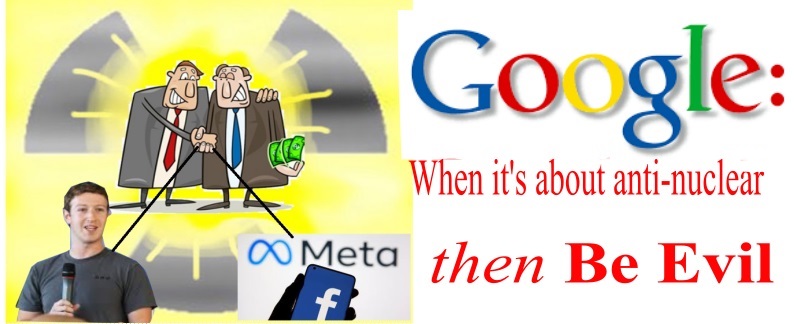
Google joins Microsoft in plans to restart US nuclear plants to power AI infrastructure
ABC News, 28 Oct 25
In short:
Google has unveiled a plan to restart a nuclear facility in the US in order to help power the company’s AI infrastructure.
It comes more than a year after another company announced it was restarting Three Mile Island in Pennsylvania following a power purchase agreement with Microsoft.
What’s next?
Google’s plant, which originally shut in 2020, is scheduled to return to service in 2029.
Google has unveiled a plan to restart a US nuclear facility in Iowa to power the company’s artificial intelligence infrastructure.
It made the announcement to reopen the Duane Arnold Energy Center in collaboration with electric power company NextEra Energy.
The facility, which was shuttered in 2020, would return to service in 2029 “to help power Google’s growing cloud and AI infrastructure in Iowa”, the companies said in a joint statement.
Google signed off on a 25-year agreement to purchase power from the facility once it restarted…………………………………………………………………………………………………………………………………
Google has announced other initiatives to secure additional power capacity, including a venture with Elementl Power to develop three advanced nuclear power plants in the United States. https://www.abc.net.au/news/2025-10-28/google-microsoft-restarting-nuclear-plants-for-ai-power/105941378
US offers nuclear energy companies access to weapons-grade plutonium

US offers nuclear energy companies access to weapons-grade plutonium.
Expert warns commercial use of the radioactive material from cold war-era
warheads carries safety risks.
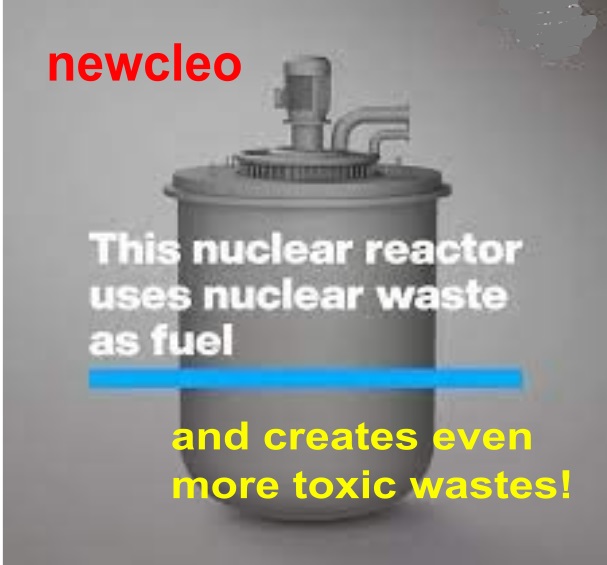
The US has offered energy companies access
to nuclear waste that they can convert into fuel for advanced reactors in
an attempt to break Russia’s stranglehold over uranium supply chains. The
Department of Energy on Tuesday published an application that nuclear
energy groups can use to seek up to 19 metric tonnes of the government’s
weapons-grade plutonium from cold war-era warheads.
In the document seen by
the Financial Times, the energy department said being selected to receive
the plutonium could help companies secure faster approval for a Nuclear
Regulatory Commission license, which is required to operate a nuclear
facility. At least two companies, Oklo, which is backed by OpenAI’s Sam
Altman, and France’s Newcleo, are expected to apply to access the
government’s plutonium stockpile.
FT 21st Oct 2025, https://www.ft.com/content/2fbbc621-405e-4a29-850c-f0079b116216
NRC: Individual fell into ‘reactor cavity’ at Palisades Nuclear Plant
The United States Nuclear Regulatory Commission said the person fell into the reactor cavity, ingested cavity water and was transported off-site.
Steven Bohner, October 22, 2025, https://www.wzzm13.com/article/news/local/nrc-individual-fell-into-reactor-cavity-palisades-nuclear-plant/69-8c68f69f-4b48-4869-b66a-f3b18e8c7bbb
COVERT, Mich. — The United States Nuclear Regulatory Commission (NRC) said an individual fell into a “reactor cavity” at the Palisades Nuclear Plant in Covert, Mich.
The NRC said the incident happened on Oct. 21, around 9:30 a.m., when an individual fell into a reactor cavity at the plant. They said the individual ingested “some amount” of the cavity water, and was decontaminated by radiation protection personnel before being taken off-site to seek medical attention about nine hours later at 4:32 p.m.
The NRC report said the individual had “300 counts per minute detected in their hair,” and categorized the individual as “contaminated.” The report listed the incident as a non-emergency.
The reactor cavity is a space between the reactor vessel and a concrete shield surrounding the reactor, according to the International Atomic Energy Agency.
Holtec International provided 13 ON YOUR SIDE with the following comment:
“While performing work inside the containment building, a Palisades contractor fell into a pool of water located above the reactor. The contractor was wearing all required personal protective equipment, including a life vest, which is standard when working near the pool without a barrier in place. The worker was promptly assisted from the water, evaluated, monitored, and decontaminated for removable contamination in accordance with established industry standards and safety procedures. Radiological assessments are ongoing and are expected to confirm exposure well below regulatory and administrative dose limits. The U.S. Nuclear Regulatory Commission was properly notified, and a review of human performance factors contributing to the incident is underway. The worker sustained minor injuries from their fall and has since returned to work.”
The Palisades Nuclear Plant is in the process of restarting its 800-megawatt reactor. Once restarted, Palisades would become the first nuclear power plant in the United States scheduled to restart its reactor after its fuel had been removed.
In July, the NRC approved a series of licensing and regulatory actions that are essential for the plant to restart, including allowing Holtec to load fuel into the reactor.
At the time of the incident, it is unclear if fuel was present in the reactor.
Foreign hackers breached a US nuclear weapons plant via SharePoint flaws
CSO News Analysis, Oct 20, 2025
A foreign actor infiltrated the National Nuclear Security Administration’s Kansas City National Security Campus through vulnerabilities in Microsoft’s SharePoint browser-based app, raising questions about the need to solidify further federal IT/OT security protections.
A foreign threat actor infiltrated the Kansas City National Security Campus (KCNSC), a key manufacturing site within the National Nuclear Security Administration (NNSA), exploiting unpatched Microsoft SharePoint vulnerabilities, according to a source involved in an August incident response at the facility.
The breach targeted a plant that produces the vast majority of critical non-nuclear components for US nuclear weapons under the NNSA, a semi-autonomous agency within the Department of Energy (DOE) that oversees the design, production, and maintenance of the nation’s nuclear weapons. Honeywell Federal Manufacturing & Technologies (FM&T) manages the Kansas City campus under contract to the NNSA.
The Kansas City campus, Honeywell FM&T, and the Department of Energy did not respond to repeated requests for comment throughout September, well before the current government shutdown. NSA public affairs officer Eddie Bennett did respond, saying, “We have nothing to contribute,” and referred CSO back to the DOE.
Although it is unclear whether the attackers were a Chinese nation-state actor or Russian cybercriminals — the two most likely culprits — experts say the incident drives home the importance of securing systems that protect operational technology from exploits that primarily affect IT systems.
How the breach unfolded
The attackers exploited two recently disclosed Microsoft SharePoint vulnerabilities — CVE-2025-53770, a spoofing flaw, and CVE-2025-49704, a remote code execution (RCE) bug — both affecting on-premises servers. Microsoft issued fixes for the vulnerabilities on July 19.
On July 22, the NNSA confirmed it was one of the organizations hit by attacks enabled by the SharePoint flaws. “On Friday, July 18th, the exploitation of a Microsoft SharePoint zero-day vulnerability began affecting the Department of Energy,” a DOE spokesperson said……………………………………………………………………………………………………………………………….
China or Russia? Conflicting attribution
Microsoft attributed the broader wave of SharePoint exploitations to three Chinese-linked groups: Linen Typhoon, Violet Typhoon, and a third actor it tracks as Storm-2603. The company said the attackers were preparing to deploy Warlock ransomware across affected systems.
However, the source familiar with the Kansas City incident tells CSO that a Russian threat actor, not a Chinese one, was responsible for the intrusion. Cybersecurity company Resecurity, which was monitoring the SharePoint exploitations, tells CSO that its own data pointed primarily to Chinese nation-state groups, but it does not rule out Russian involvement………………………………………………………………………………………………………………….
Could the attack have reached operational systems?
The breach targeted the IT side of the Kansas City campus, but the intrusion raises the question of whether attackers could have moved laterally into the facility’s operational technology (OT) systems, the manufacturing and process control environments that directly support weapons component production.
OT cybersecurity specialists interviewed by CSO say that KCNSC’s production systems are likely air-gapped or otherwise isolated from corporate IT networks, significantly reducing the risk of direct crossover. Nevertheless, they caution against assuming such isolation guarantees safety………………………………………………………………………………………………………
IT/OT convergence and the zero-trust gap
The Kansas City incident highlights a systemic problem across the federal enterprise: the disconnect between IT and OT security practices. While the federal government has advanced its zero-trust roadmap for traditional IT networks, similar frameworks for operational environments have lagged, although recent developments point to progress on that front………………………………………………………………………………………………………..
Even non-classified data theft holds strategic value
If the source’s claim of Russian involvement is accurate, the attackers may have been financially motivated ransomware operators rather than state intelligence services. But even in that scenario, the data they accessed could still carry strategic value……………………………………………………………….. https://www.csoonline.com/article/4074962/foreign-hackers-breached-a-us-nuclear-weapons-plant-via-sharepoint-flaws.html
1 This Month

of the week – Shut Down Drone Warfare!


Tell the Ukrainian Government to Drop Prosecution of Peace Activist Yurii Sheliazhenko

Petition to revoke the licensing of the Near Surface Nuclear Disposal Facility (NSDF) at Chalk River. https://www.ourcommons.ca/petitions/en/Petition/Details?Petition=e-7247
To see nuclear-related stories in greater depth and intensity – go to https://nuclearinformation.wordpress.com
-
Archives
- April 2026 (7)
- March 2026 (251)
- February 2026 (268)
- January 2026 (308)
- December 2025 (358)
- November 2025 (359)
- October 2025 (376)
- September 2025 (257)
- August 2025 (319)
- July 2025 (230)
- June 2025 (348)
- May 2025 (261)
-
Categories
- 1
- 1 NUCLEAR ISSUES
- business and costs
- climate change
- culture and arts
- ENERGY
- environment
- health
- history
- indigenous issues
- Legal
- marketing of nuclear
- media
- opposition to nuclear
- PERSONAL STORIES
- politics
- politics international
- Religion and ethics
- safety
- secrets,lies and civil liberties
- spinbuster
- technology
- Uranium
- wastes
- weapons and war
- Women
- 2 WORLD
- ACTION
- AFRICA
- Atrocities
- AUSTRALIA
- Christina's notes
- Christina's themes
- culture and arts
- Events
- Fuk 2022
- Fuk 2023
- Fukushima 2017
- Fukushima 2018
- fukushima 2019
- Fukushima 2020
- Fukushima 2021
- general
- global warming
- Humour (God we need it)
- Nuclear
- RARE EARTHS
- Reference
- resources – print
- Resources -audiovicual
- Weekly Newsletter
- World
- World Nuclear
- YouTube
-
RSS
Entries RSS
Comments RSS
 nuclear-news