Trump’s rush to build nuclear reactors across the U.S. raises safety worries

NPR, December 17, 2025
In May, President Trump sat in the Oval Office flanked by executives from America’s nuclear power industry.
“It’s a hot industry. It’s a brilliant industry,” the president said from behind the Resolute desk.
It’s also an industry that’s having a moment. Billions of dollars in capital are currently flowing into dozens of companies chasing new kinds of nuclear technologies. These are small modular designs that can potentially be mass produced in the hundreds or even thousands. Their proponents say these advanced designs promise to deliver megawatts of power safely and cheaply.
But there’s a problem, Joseph Dominguez, the CEO of Constellation Energy, told the president.
New nuclear plants keep getting caught up in safety regulations.
“Mr. President, you know this because you’re the best at building things,” Dominguez, whose company runs about a quarter of America’s existing nuclear reactors, said. “Delay in regulations and permitting will absolutely kill you. Because if you can’t get the plant on, you can’t get the revenue.”
Now, a new Trump administration program is sidestepping the regulatory system that’s overseen the nuclear industry for half a century. The program will fast-track construction of new and untested reactor designs built by private firms, with an explicit goal of having at least three nuclear test reactors up and running by the United States’ 250th birthday, July 4, 2026.
If that goal is met, it will be without the direct oversight of America’s primary nuclear regulator. Since the 1970s, safety for commercial reactors has been the purview of the Nuclear Regulatory Commission. But the NRC is only consulting on the new Reactor Pilot Program, which is being run by the Department of Energy’s Office of Nuclear Energy……………………………………………………………………………………………………
Sites across the country will host new reactor designs
The new pilot program may be an unproven regulatory path run by an agency with limited experience in the commercial sector, but supporters say it’s energizing an industry that’s been moribund for decades.
“This is exactly what we need to do,” said Isaiah Taylor, founder and CEO of Valar Atomics, a small nuclear startup headquartered in Hawthorne, Calif. “We need to make nuclear great again.”
Valar and other companies plan to build smaller reactors than those currently used in the nuclear industry, and that makes a Chernobyl or Fukushima-type accident impossible, noted Nick Touran, an independent nuclear consultant. “The overall worst-case scenario is definitely less when you’re a smaller reactor,” he said.
Critics, however, worry that the tight July 4 deadline, political pressure and a lack of transparency are all compromising safety. Even a “small” release of radioactive material could cause damage to people and the environment around the test sites.
“This is not normal, and this is not OK, and this is not going to lead to success,” warned Allison Macfarlane, a professor at the University of British Columbia who served as chairman of the NRC under President Barack Obama. “This is how to have an accident.”
AI’s need for speed
……………………………………………………………………………………………………………. Right from the start it was clear that, unlike the slow and deliberate safety culture that has dominated nuclear power for decades, this new program would be all about speed.
…………officials responsible for overseeing safety would do “whatever we need to ensure that the government is not stopping you from reaching [nuclear] criticality on or before July 4, 2026.”
A new regulator
Before the executive order, the Energy Department did not regulate the safety of commercial nuclear reactors. That job fell to another body: the Nuclear Regulatory Commission.
The commission was set up in 1975 by Congress as an independent safety watchdog, said Allison Macfarlane, the former NRC chair. Part of the reason the NRC was formed was because the predecessor to the DOE, known as the Atomic Energy Commission, oversaw both safety and promotion of nuclear power at the same time.
“This was a very strong conflict of interest,” Macfarlane said.
But in recent years, companies, particularly those trying to build new kinds of reactors, had become frustrated with the NRC, Macfarlane said. “The promoters of these small modular reactors were becoming very vociferous about the NRC being the problem,” she said.

In 2022, the NRC rejected a combined license application for Oklo, a new nuclear startup. Oklo had submitted an application to build and operate its small reactor, called the Aurora powerhouse. But the NRC denied the application because it contained “significant information gaps in its description of Aurora’s potential accidents as well as its classification of safety systems and components.”
Oklo was told it could resubmit its application to the NRC, but it never did.
Then at the May signing of the executive order, Oklo’s CEO Jacob DeWitte appeared behind President Trump applauding the new reactor program at DOE.
“Changing the permitting dynamics is going to help things move faster,” DeWitte said to the president. “It’s never been more exciting.”
Oklo had another connection to the Energy Department — the secretary of energy, Chris Wright, was a member of Oklo’s board of directors until he took the helm at the DOE. Wright stepped down following his confirmation in February.
In August, a little over a month after that initial meeting between industry executives and the DOE, the Office of Nuclear Energy announced the 11 advanced reactor projects had been selected for the Reactor Pilot Program. Three of Oklo’s reactors were part of the new pilot program, including a test version of the reactor design rejected by the NRC…………………………………………………………………………………………………………
Valar’s design looks far different from the reactors that are running today. It will use a special type of fuel together with a high-temperature gas to generate heat and electricity. Taylor said gathering real data will speed development and increase safety over the long-term….
(Valar is also party to a lawsuit against the NRC arguing the commission does not have the authority to regulate small reactors. In his interview, Taylor told NPR the company intends to file for an NRC license “when we’re ready.”)
………………………………………………….. critics question whether the pilot program will really produce safe nuclear reactors.
The July 4, 2026, deadline puts enormous pressure on the program, said Heidy Khlaaf, the chief AI scientist at the AI Now Institute, which recently published a report warning that AI development could undermine nuclear safety.
“I think these manufactured timelines are actually incredibly concerning,” Khlaaf said. “There’s no timeline for assessing a new design and making sure it’s safe, especially something we haven’t seen before.”
Then there’s the question of public transparency. The NRC makes many of the documents around its decisions available publicly. It also frequently allows the public to comment as well, added Edwin Lyman, director of nuclear power safety at the nonprofit Union of Concerned Scientists. The new pilot program is far more opaque and “is really an attempt to subvert the laws and regulations that go around commercial nuclear power,” he said.
While many of the test reactors are small and tout themselves as inherently safer than existing nuclear power plants, they are still capable of leaking radiation in an accident, Lyman noted. “If they are located closer to populated areas, if there aren’t any provisions for offsite radiological emergency planning … then you are potentially putting the public at greater risk, even if the reactors are small,” he said.
Perhaps most worrying, said former NRC Chair Macfarlane, is how the DOE’s safety assessment might be used to build more small reactors across the country, once the pilot reactors are built.
………………………………………..Macfarlane is unconvinced. She said relying on the hasty DOE analysis for the construction of potentially dozens or even hundreds of small reactors around the U.S. is the real risk.
“They can look at what the DOE did, they can take it as a piece of input, but they have to do their own separate analysis,” she warned. “Otherwise, none of us are safe.” https://www.npr.org/2025/12/17/nx-s1-5608371/trump-executive-order-new-nuclear-reactors-safety-concerns
Subject: Rushing to Deregulation – the report of the Nuclear Regulatory Taskforce

NFLA 18th Dec 2025
Introduction:
‘Nuclear plants should be built closer to urban areas and should be allowed to harm the local environment’ so concluded The Times, 24 November 2025 on reporting on the findings of the Nuclear Regulatory Taskforce in its final report to the UK Government. This recommendation made to Ministers
flew in the face of accepted policy, the Semi-Urban Population Density Criteria. that building new nuclear plants near towns and cities should be banned because of the risk posed to large numbers of people in the event of an accident involving radioactive materials.
Many of the other 46 recommendations made by the NRTs were equally disquieting, representing a
manifesto of deregulation – a ‘radical reset’ – in the vain hope that this will spark a renaissance in the nuclear industry, with new nuclear plants thrown up more quickly and more cheaply.
The outcome of the inquiry was effectively predetermined in line with a press release from the Office of the Prime Minister issued 6 February 2025. This appeared to mirror the front pages of vituperative pro-nuclear newspapers, with Prime Minister Starmer speaking of his determination to ‘slash red tape to get Britain building [new nuclear power stations] – as part of his Plan for Change ‘with the government ‘ripping up archaic rules and saying no to the NIMBYS to prioritise growth’.
The press release announced that the Prime Minister was establishing a Nuclear Regulatory Taskforce charged
with making this vision a reality which will ‘report directly to the PM’.
i
Although supposedly independent, three of the five taskforce members had clear links to the nuclear industry (Andrew Sherry is former chief scientist at the National Nuclear Laboratory, Dame Sue Ion has held various posts in UK nuclear industry bodies, and Mark Bassett is a member of the InternationalNuclear Safety Advisory Group), handy for a body charged with identifying the means to sideline Britain’s ‘overly bureaucratic’ nuclear regulations.
Cynics – like this author – might postulate that the findings were largely pre-written at the outset and that the real purpose of the taskforce was to seek to justify them.
In working upon this justification, the taskforce, reinforced by intermittent but consistent statements from Government Ministers, nuclear trades unions, and industry lobbyists, has sought to trash regulators as overzealous, and their regulations as disproportionate, and campaigners and members of the public who oppose nuclear development as NIMBYS and BLOCKERS, with their recourse to legal remedies seen as irksome……………………………………………………………………………………………………………………………………………………https://www.nuclearpolicy.info/wp/wp-content/uploads/2025/12/A445-NB331-Rushing-to-Deregulation-Dec-2025.pdf
Panic as Chernobyl’s $2 billion protective shield cracks open sparking fears of a deadly radiation leak
Daily Mail, By STACY LIBERATORE, US SCIENCE & TECHNOLOGY EDITOR, 18 December 2025
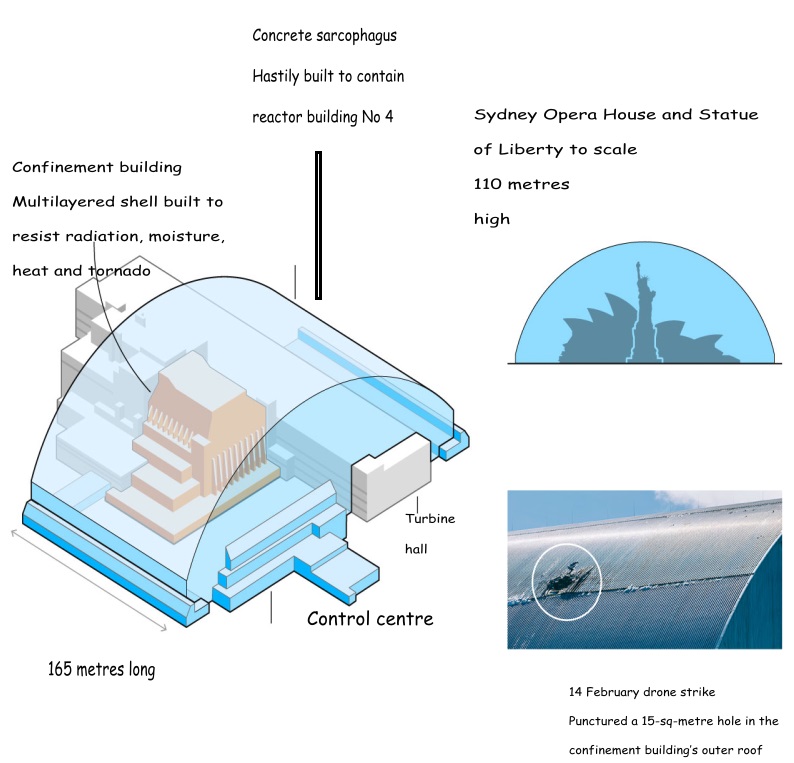
The dome built over the remains of the Chernobyl disaster has been damaged, raising fears it may no longer be able to contain radioactive material.
Officially known as the New Safe Confinement (NSC), the at least $2 billion protective shield was constructed over Reactor 4, which caused the world’s worst nuclear disaster in 1986.
The United Nations‘ International Atomic Energy Agency (IAEA), a nuclear watchdog, revealed this month that the NSC was severely damaged in a Russian drone strike in February.
The IAEA team conducted a safety assessment earlier this month, finding the dome had lost its primary safety functions, including confinement capability.
IAEA director general Rafael Mariano Grossi said: ‘Limited temporary repairs have been carried out on the roof, but timely and comprehensive restoration remains essential to prevent further degradation and ensure long-term nuclear safety.’
The inspection brought some relief, confirming that the dome’s main structure and monitoring systems remain intact.
But beneath the damaged shelter lies massive quantities of radioactive material from the 1986 disaster, making the site a ticking time bomb.
The IAEA has urged urgent repairs and upgrades to Chernobyl’s protective shelter, calling for better humidity control, advanced corrosion monitoring, and a high-tech automatic system to keep the radioactive reactor remains under control.
The damaged dome is the latest of several such expert missions since September last year, when the substations became increasingly affected by the military conflict.
‘These substations are essential for nuclear safety and security. They are absolutely indispensable for providing the electricity all nuclear power plants need for reactor cooling and other safety systems,’ Grossi said
‘They are also needed to distribute the electricity that they produce to households and industry.’
In 2026, with support from the European Bank for Reconstruction and Development (EBRD), the Chornobyl site will undertake additional temporary repairs to support the re-establishment of the NSC’s confinement function, paving the way for full restoration once the conflict ends.
‘The IAEA – which has a team permanently at the site – will continue to do everything it can to support efforts to fully restore nuclear safety and security at the Chornobyl site,’ Grossi said in a statement……………………………………………………………………………………………… https://www.dailymail.co.uk/sciencetech/article-15393121/Chernobyl-protective-shield-radiation-leak.html
Zaporizhzhia nuclear plant running on single power line, Russia says.

By Reuters, December 17, 2025, https://www.reuters.com/business/energy/zaporizhzhia-nuclear-plant-running-single-power-line-russia-says-2025-12-16/
MOSCOW, Dec 16 (Reuters) – The Russian-controlled Zaporizhzhia nuclear power plant in Ukraine is currently receiving electricity through only one of two external power lines, its Russian management said on Tuesday.
The other line was disconnected due to military activity, the management said, adding that radiation levels remain normal. Repair work will begin as soon as possible.
The nuclear plant, Europe’s largest, has been under Russian control since March 2022, when Russian forces overran much of southeastern Ukraine. It is not currently producing electricity but relies on external power to keep the nuclear material cool and avoid a meltdown.
Each side has regularly accused the other of shelling the facility. It experienced a couple of complete power outages earlier this month but was subsequently reconnected.
In September and October the plant was without external power for 30 days, relying on backup diesel generators, until a damaged line was reconnected during a local ceasefire arranged with the help of the U.N. nuclear agency.
Reporting by Reuters Writing by Maxim Rodionov Editing by Mark Trevelyan
Fire at Windscale piles
Does Britain Really Ned Nuclear Power? by Ian Fairlea, beyondnuclearinternational
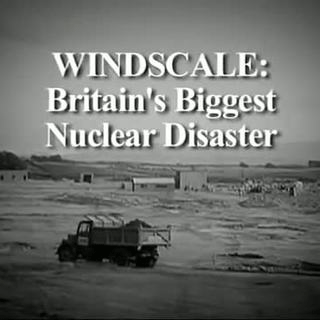
“…………………………………………………………….In 1957, a major fire occurred at Windscale nuclear site (what is now known as Sellafield). The effects of the Windscale fire were hushed up at the time but it is now recognised as one of the world’s worst nuclear accidents. An official statement in 1957 said: ‘There was not a large amount of radiation released. The amount was not hazardous and in fact it was carried out to sea by the wind.’ The truth, kept hidden for over thirty years, was that a large quantity of hazardous radioactivity was blown east and south east, across most of England.
After years of accidents and leaks, several of them serious, and regular cover-up attempts by both the management and government, it was decided to change the plant’s name in 1981 to Sellafield, presumably in the hope that the public would forget about Windscale and the accident.
When, in 1983, Greenpeace divers discovered highly radioactive waste being discharged into the sea through a pipeline at Sellafield and tried to block it, British Nuclear Fuels Ltd (BNFL), who then operated the site, repeatedly took Greenpeace to the High Court to try to stop them and to sequestrate its assets. The first generation of British Magnox nuclear power stations were all secretly designed with the dual purpose of plutonium and electricity production in mind.
Some people think that because plutonium is no longer needed by the UK to make weapons as it already has huge stocks of weapons grade plutonium, there no longer is any connection between nuclear weapons and nuclear energy. This is incorrect: they remain inextricably linked. For example:
- All the processes at the front of the nuclear fuel cycle, i.e. uranium ore mining, uranium ore milling, uranium ore refining, and U-235 enrichment are still used for both power and military purposes.
- The UK factory at Capenhurst that makes nuclear fuel for reactors also makes nuclear fuel for nuclear (Trident and hunter-killer) submarines.
- Nuclear reactors are used to create tritium (the radioactive isotope of hydrogen) necessary for nuclear weapons.
………………………………………………………………………………………………… https://beyondnuclearinternational.org/2025/12/14/does-britain-really-need-nuclear-power/
Ottawa medical manufacturer giving up nuclear licence after defying regulator
Canadian Nuclear Safety Commission ordered Best Theratronics to comply over a year ago.

COMMENT.There are questions about lack of financial guarantee in the case where the plant in Kanata is decommissioned, i.e. cost of cleaning up the radioactive materials at the site. Next step is the CNSC is waiting for the decommissioning preliminary plan. The owner is moving the business to the U.S. and India, he says.
Campbell MacDiarmid · CBC News · Dec 14, 2025, https://www.cbc.ca/news/canada/ottawa/ottawa-medical-manufacturer-giving-up-nuclear-licence-after-defying-regulator-9.7014006
A storied Kanata medical manufacturer is in the process of relinquishing its nuclear licence, more than a year after Canada’s nuclear regulator placed it under orders for violating the terms of that certificate.
On Friday, the Canadian Nuclear Safety Commission (CNSC) confirmed that Best Theratronics is in the process of offloading the nuclear material it used to manufacture cancer treatment devices.
“Best Theratronics Limited has obtained an export licence to ship its Cobalt 60 sealed sources, as well as an export licence to ship its Cesium 137 sealed sources,” said Andrew McAllister, director of the CNSC’s nuclear processing facilities division, during a public meeting.
Best Theratronics was once a Crown agency that created the world’s first cancer treatment machine, but it has struggled in recent years under the private ownership of overseas businessman Krishnan Suthanthiran.
Suthanthiran says he has lost millions of dollars since buying the company from MDS Nordion in 2007. More recently, the company faced a protracted labour dispute that saw workers strike for nearly 10 months to demand better pay.
Last November, the CNSC issued orders against Best Theratronics after noticing that its financial guarantee had lapsed. The industry regulator ordered the company to make $1.8 million available to cover any cleanup costs in the event that its site was decommissioned.
But Suthanthiran never complied, telling CBC in October that the CNSC was in the wrong and that he lacked the funds to restore the guarantee.
Instead, Suthanthiran said he would give up his nuclear licence and shift the company toward activities that don’t involve nuclear materials.
CBC asked Suthanthiran whether staff at Best Theratronics would would be out of work as a result of the company surrendering its nuclear licence.
In an email, he wrote that he was being forced “to relocate to the USA and India” and that would result in “the loss of 200 high-tech jobs.” He also cited the high yearly cost of having the nuclear licence.
The CNSC has required Best Theratronics to submit monthly reports relating to its progress in offloading its nuclear material. But the company missed its December deadline, submitting its report several days later, McAllister said.
Manny Subramanian, a representative of Best Theratronics, told the CNSC the delay was due to Suthanthiran’s absence.
“One particular report, you know, we ended up sending about a day late or two days late because Krish, the president of the company, was travelling. We couldn’t get ahold of him,” Subramanian said.
The next deadline facing Best Theratronics comes Tuesday when it’s due to submit a preliminary plan for decommissioning its plant in Kanata.
Could armed robots be the future of nuclear site security?

experiments to test the military potential of near-identical quadrupeds being carried out by the US armed forces, with Spot’s cousin converted into an armed platform by the addition of an artificial intelligence-enabled gun turret
16th October 2024, https://www.nuclearpolicy.info/news/spot-to-robocop-could-armed-robots-be-the-future-of-nuclear-site-security/
Robots are becoming increasingly employed in decommissioning operations at Sellafield and Dounreay. Whilst the UK/Ireland Nuclear Free Local Authorities welcome their use in hazardous environments which are too radioactive and otherwise contaminated for human operators, we have concerns that in the long-term their use might expand into on-site security.
The Atomic Energy Authority Special Constable Act 1976 first permitted the United Kingdom Atomic Energy Authority to raise an armed private police force. In 2005, the UKAEA Constabulary was replaced by the Civil Nuclear Constabulary. CNC officers are routinely armed with sub machine guns and authorised to use deadly force – in extremis – whilst guarding nuclear facilities, but also whilst engaged in hot pursuit outside.
However last month, seemingly to counter possible threats from sabotage or terrorism and the greater incidence of climate change protests, the Energy Secretary Ed Miliband instructed the CNC to redeploy officers from their traditional duties to protecting coastal gas plants with effect from April 2025[i]. It is likely that this role may further expand to cover oil depots.
In 2021, the NFLAs objected to planned legislation to widen the CNC’s remit to guarding non-nuclear sites. In our response to a consultation, we said that the ‘CNC’s role should continue to be explicitly confined to policing nuclear sites and facilities’ and that ‘protection of critical national infrastructure should be carried out by an adequately funded democratically controlled local police force’ rather than an unaccountable paramilitary police force.
If CNC numbers at nuclear sites are diluted, there could be pressure to employ robots on security duties in their stead, and in the long-term it is not inconceivable that they may even become armed and autonomous.
The ‘poster child’ of the robots is the quadruped first developed by Boston Dynamics in the United States, affectionately known as Spot the Dog. This variant is now routinely used in decommissioning operations in environments that are unsafe for human operators. The robot uses a specialist scanning system to create a 3D moveable image of its environment, allowing engineers to carry out remote inspections in support of clean-up operations[ii].
Spot can though operate entirely autonomously. Last month, it was reported that such a robot had completed a 35-day autonomous operation to inspect the UK Atomic Energy Authority’s Joint European Torus (JET) facility. Tasks successfully completed included ‘mapping the facility, taking sensor readings, avoiding obstacles and personnel involved in the decommissioning process, and collecting essential data on JET’s environment and overall status twice a day. The robot also knew when to dock and undock with its charging station, to ensure it could complete the task without humans having to intervene’.[iii]
So far, so benign, but a disturbing report appeared around the same time about experiments to test the military potential of near-identical quadrupeds being carried out by the US armed forces, with Spot’s cousin converted into an armed platform by the addition of an artificial intelligence-enabled gun turret to participate in exercises in Saudi Arabia. The flexible turret enabled ground fire, but also aerial fire against drones, which are also an increasing threat to civil nuclear facilities. The article in Military.Com records that robot dogs have already been engaged by the US Defence Department in several roles, including ‘boosting perimeter security at sensitive installations’, a task in which they excel as they can ‘patrol’ ‘without need to rest’.[iv]
The NFLAs cannot help thinking that in a dystopian nuclear future, in which the CNC increasingly overstretched and renamed the Civil Infrastructure Constabulary to reflect its ever-expanded role in providing armed protection to a wide range of critical sites, security forces might engage a force of armed Robocops to supplement the dwindling number of armed human officers, each charged with patrolling the perimeters of civil nuclear facilities, and granted autonomous decision-making to engage trespassers, protestors, and drones with deadly force.
The concept of Spot the Dog becoming SWAT the Dog, however unlikely, is truly terrifying.
Concerns about so-called killer robots animated the world community late last year. The Stop Killer Robots campaign, founded in October 2012, continues to work for a new international law to regulate autonomy in weapons systems. The coalition of over 250 civil society organisations in 70 countries successfully lobbied states to adopt the first ever resolution on autonomous weapons at the United Nations on December 22, 2023. 152 countries supported General Assembly Resolution 78/241 which acknowledged the ‘serious challenges and concerns’ raised by ‘new technological applications in the military domain, including those related to artificial intelligence and autonomy in weapons systems.’
Stop Killer Robots was recently awarded Archivio Disarmo’s Golden Dove for Peace Award at a ceremony in Rome on Saturday, 12 October. The award is given to an international figure or organisation which has made ‘a significant contribution to the cause of peace’.
More details of the campaign can be found at https://www.stopkillerrobots.org/
Fire safety failings hit Hinkley Point.
Nuclear Engineering International 10th Dec 2025
Improvements must be in place by June 2026, ahead of bulk installation of mechanical and electrical systems at unit 1.
The UK’s Office for Nuclear Regulation (ONR) has served a fire enforcement notice on Bylor JV (a joint venture of Laing O’Rourke and Bouygues Travaux Publics) after identifying significant fire safety shortfalls at the Hinkley Point C (HPC) nuclear construction site in Somerset.
ONR inspectors identified that Bylor had failed to implement appropriate arrangements for the effective planning, organisation, control, monitoring and review of preventive and protective measures following a focused fire safety intervention.
Bylor is delivering HPC’s main civil engineering works. ONR said many of the Bylor buildings on the site are currently at an advanced stage of construction and these shortfalls resulted in inadequate general fire precautions, including a lack of an adequate emergency lighting system………………….https://www.neimagazine.com/news/fire-safety-failings-hit-hinkley-point/?cf-view
On the road with radioactive waste: Canada’s roads are not safe.

Transporting nuclear waste is inherently dangerous because it involves moving materials that remain hazardous to human health and the environment for centuries to millennia. Even under ideal conditions, risks cannot be fully eliminated — accidents, mechanical failures, weather events, security threats, or human error can all result in the release or exposure of radioactive materials.
Unlike other hazardous goods, radioactive waste cannot simply be cleaned up with standard emergency response measures; contamination can render land unusable, water unsafe, and ecosystems damaged for generations. Every shipment is a high-stakes event, and the impacts of even a single failure could be irreversible for the communities and lands along the transport route.
by Mayara Gonçalves e Lima, December 11, 2025
Canada is decommissioning a nuclear power plant for the first time, marking a new chapter in the country’s nuclear history. The decommissioning of Gentilly-1 in Bécancour, Quebec — on the St. Lawrence River in Wabanaki territory — is a milestone in the country’s reckoning with its radioactive legacy, setting a precedent that will influence how future projects are approached across Canada.
The implications extend far beyond Quebec. How Gentilly-1 is dismantled, how its waste is transported, and how oversight is conducted will set precedents for future decommissioning projects across the country.
For New Brunswick, these decisions will shape the expectations, policies, and protections in place when it comes time to decommission Point Lepreau — a process that will carry even higher stakes for this province.
The threat of radioactive waste on the move
Gentilly-1 recently entered its active dismantling phase, with the removal of remaining radioactive and structural components, including equipment, piping, cabling, and control panels from the service and turbine buildings.
Under the current dismantling plan, the resulting radioactive waste is expected to be transferred to Canadian Nuclear Laboratories at Chalk River, Ontario, for interim storage.
This planned transfer follows an earlier shipment of Gentilly-1 used fuel to Chalk River that occurred without publicity or demonstrated compliance with regulatory requirements.
Transporting nuclear waste is inherently dangerous because it involves moving materials that remain hazardous to human health and the environment for centuries to millennia. Even under ideal conditions, risks cannot be fully eliminated — accidents, mechanical failures, weather events, security threats, or human error can all result in the release or exposure of radioactive materials.
Unlike other hazardous goods, radioactive waste cannot simply be cleaned up with standard emergency response measures; contamination can render land unusable, water unsafe, and ecosystems damaged for generations. Every shipment is a high-stakes event, and the impacts of even a single failure could be irreversible for the communities and lands along the transport route.
These risks are compounded by the fact that current storage solutions for Gentilly-1 nuclear waste are only temporary. Neither Canada nor any country in the world has a permanent solution for radioactive waste — meaning the waste will eventually need to be moved again, effectively doubling both the risks and costs associated with its handling and transportation.
Bloc Québécois urges halt to radioactive waste shipments to Chalk River
On October 17, 2025, amid growing national debate over nuclear waste transport, the Bloc Québécois formally called on Federal Natural Resources Minister Tim Hodgson to immediately halt the transfer of radioactive materials from Gentilly-1 to the Chalk River Laboratories.
To reinforce their position, the Bloc Québécois has launched a petition allowing the public to voice their opposition to the project. It underscores the environmental risks of transporting radioactive waste and storing it so close to a major drinking water source, as well as the lack of meaningful consultation with Indigenous communities.
The Bloc’s petition also highlights a separate proposal for the Chalk River site: the construction of a nuclear waste landfill known as the Near Surface Disposal Facility (NSDF). This project also has become a major source of controversy. The Kebaowek First Nation, along with more than 140 municipalities in Quebec and Ontario, has voiced strong opposition to placing large volumes of radioactive waste near the Kichi Sibi (Ottawa River) and its tributaries.
Whistleblowers raise alarm over secretive transport practices
More than 60 groups, with the Passamaquoddy Nation among them, have endorsed a letter sent to the Prime Minister and key members of Cabinet on December 2, 2025, sounding the alarm about the federal government’s management of radioactive waste transport in Canada.
The signatories state that they are “blowing the whistle” on a practice that has remained largely hidden from public view: the movement of radioactive waste along public roads, bridges, and through First Nations territories without consultation, notification, or parliamentary oversight.
The letter focuses on Canadian Nuclear Laboratories’ decision to consolidate federally-owned radioactive waste at the Chalk River Laboratories site. The signatories emphasize that Chalk River is an unsuitable and inherently vulnerable location due to its proximity to the Ottawa River and its exposure to seismic activity.
In response to these escalating concerns, the signatories call for three concrete actions: an immediate cessation on shipments of radioactive waste to Chalk River; a full ban on the import of radioactive waste; and a strategic assessment under section 95 of the Impact Assessment Act to evaluate the cumulative and long-term risks of transporting radioactive waste on public highways.
Such an assessment, they argue, is essential to ensuring informed, democratic decision-making and to guiding future reviews of nuclear facilities, reactor decommissioning projects, and federal waste policies.
Canada’s radioactive waste crisis demands action
Canada urgently needs to halt the practice of transporting radioactive waste over public roads, through municipalities, across public bridges, and over Indigenous territories without meaningful consultation, public notification, or clear regulatory justification.
These shipments — often occurring quietly and without community awareness — pose risks that are collectively borne by the public while decisions are made by a small number of government and industry actors.
The lack of transparency erodes trust and fails to meet even the basic standards of democratic governance, environmental protection, or respect for Indigenous rights. Communities have the right to know when hazardous materials are moving through their homelands, and they deserve a real voice in determining whether and how such shipments occur.
The Age of Nuclear Waste is only beginning, and Canada is unprepared to manage the growing challenges of transporting, importing, and exporting radioactive materials.
As reactors age, decommissioning accelerates, and new nuclear projects emerge, waste shipments will only increase — but federal oversight remains fragmented, inconsistent, and insufficiently accountable to the public.
Without a coherent national policy grounded in precaution, transparency, and genuine consultation — especially with First Nations whose territories are routinely crossed — Canada risks locking in a legacy of poorly governed radioactive waste movements.
Canada must act now to establish responsible oversight and build a safer, more accountable framework before today’s shortcomings become tomorrow’s crises.
At times like these, we’re reminded that every chapter of Canada’s nuclear history carries lasting responsibilities: our nuclear past has left behind a trail of toxic legacy that no technology, no policy, and no promise can safely contain for the timescales required.
Mayara Gonçalves e Lima works with the Passamaquoddy Recognition Group Inc., focusing on nuclear energy. Their work combines environmental advocacy with efforts to ensure that the voice of the Passamaquoddy Nation is heard and respected in decisions that impact their land, waters, and future.
Japan inspects nuclear sites as seismologists warn of another large quake.
Authorities assessed the damage from Monday’s 7.5-magnitude earthquake, amid warnings of aftershocks and a potentially larger tremblor in the coming days.
Nuclear facilities were inspected in Japan on Tuesday as
authorities assessed the damage from a 7.5-magnitude earthquake, amid
warnings of aftershocks and a potentially larger tremblor in the coming
days. As cleanup operations began, Prime Minister Sanae Takaichi told
reporters that an emergency task force was formed to urgently assess
damage, according to The Associated Press. “We are putting people’s
lives first and doing everything we can,” she said……………………………………………………………..
Japanese officials found “no abnormalities” at Fukushima, the International Atomic Energy Agency said early Tuesday.
But as inspections were carried out on other nuclear sites, the country’s Nuclear Regulation Authority said in a statement that nearly 120 gallons of water spilled from a fuel cooling system at a nuclear fuel processing plant in the city of Aomori near the epicenter of Monday’s earthquake……………………….
NBC News 9th Dec 2025, https://www.nbcnews.com/world/asia/japan-earthquake-nuclear-sites-damage-injuries-emergency-rcna248160
Iran says bombed nuclear sites present radiation risk
Iran International, Dec 8, 2025,
ran’s foreign minister Abbas Araghchi says there is a risk of radiation release at nuclear facilities bombed during the 12-day war in June, contradicting earlier assurances from Tehran.
In an interview with Japan’s Kyodo News on Sunday, Araghchi said strikes on Iran’s nuclear facilities had created serious dangers, including possible radiation exposure and unexploded ordnance.
“We are now facing security threats and safety concerns,” he said.
Following the joint US-Israeli attacks, Iranian authorities refused to evacuate surrounding towns and repeatedly dismissed public fears.
In late June, deputy health minister Alireza Raeisi said enrichment “does not involve nuclear fission” and therefore cannot generate harmful radiation, adding that measurements around Natanz and Fordow showed the areas were completely safe……………………………………………….
………………………………………… Still, Araghchi told Kyodo News that Iran cannot currently allow the resumption of IAEA inspections halted after the war because no protocol or guideline exists for inspectors entering damaged facilities.
IAEA director general Rafael Grossi has said most of Iran’s enriched-uranium stockpile is being kept at sites in Isfahan, Fordow and Natanz where inspectors lack access, and warned in October that monitors had observed activity around storage locations.
US officials under President Trump have demanded zero enrichment, dismantling of proxy forces and limits on Iran’s missile program – terms Tehran calls unacceptable. https://www.iranintl.com/en/202512081602
French navy shoots at 5 drones buzzing nuclear submarine base, AFP reports

The incident follows a string of recent drone incursions in NATO airspace
December 5, 2025 , By Marion Solletty, https://www.politico.eu/article/drones-france-nuclear-submarine-base-reports/
PARIS — The French navy opened fire at drones that were detected over a highly-sensitive military site harboring French nuclear submarines, according to newswire Agence France-Presse.
Five drones were detected Thursday night over the submarine base of Île Longue, in Brittany, western France, a strategic military site home to ballistic missile submarines, the AFP reported, citing the the French gendarmerie, which is part of the military. The submarines harbored at the base carry nuclear weapons and are a key part of France’s nuclear deterrent.
French navy troops in charge of protecting the base opened fire, the report said. It was unclear whether the drones were shot down.
Local authorities told the AFP a legal investigation had been launched and that the base wasn’t affected in its operations.
Drones had already been spotted in the area last month, albeit not directly above the base, per reports in French media. The site had been buzzed by drones long before the invasion of Ukraine.
The incident follows a string of recent drone incursions in NATO airspace, with unmanned aircrafts seen buzzing around sensitive military sites and civil infrastructures in recent months across Europe, including in Belgium, Germany, Denmark and Norway.
In Poland, fighter jets were scrambled in September to shoot down drones of Russian origin, an incident widely seen as an escalation of Russian President Vladimir Putin’s hybrid war on Europe.
French authorities haven’t yet commented on the suspected origin of the drone incident Thursday at the well-known military site.
Bombed Chornobyl shelter no longer blocks radiation and needs major repair – IAEA
Drone attack that Ukraine blamed on Russia blew hole in painstakingly erected €1.5bn shield meant to allow for final clean-up of 1986 meltdown site.
Guardian staff and agencies, 6 Dec 25
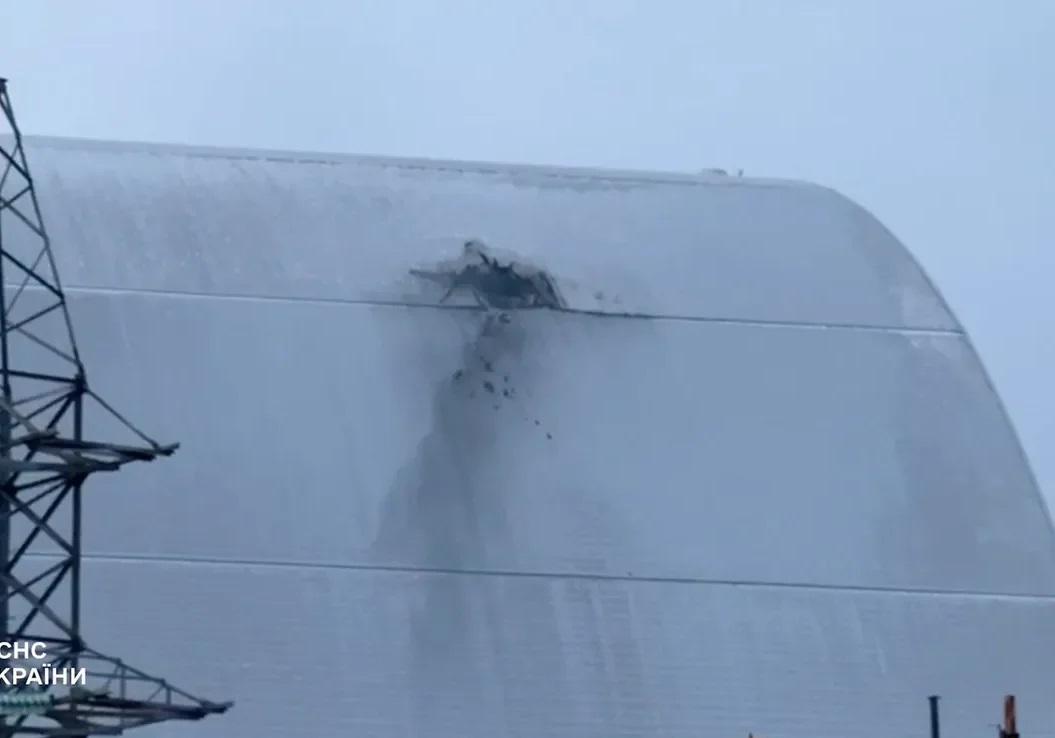
The protective shield over the Chornobyl disaster nuclear reactor in Ukraine, which was hit by a drone in February, can no longer perform its main function of blocking radiation, the International Atomic Energy Agency (IAEA) has announced.
In February a drone strike blew a hole in the “new safe confinement”, which was painstakingly built at a cost of €1.5bn ($1.75bn) next to the destroyed reactor and then hauled into place on tracks, with the work completed in 2019 by a Europe-led initiative. The IAEA said an inspection last week of the steel confinement structure found the drone impact had degraded the structure.
The 1986 Chornobyl explosion – which happened when Ukraine was under Moscow’s rule as part of the Soviet Union – sent radiation across Europe. In the scramble to contain the meltdown, the Soviets built over the reactor a concrete “sarcophagus” with only a 30-year lifespan. The new confinement was built to contain radiation during the decades-long final removal of the sarcophagus, ruined reactor building underneath it and the melted-down nuclear fuel itself.
The IAEA director general, Rafael Grossi, said an inspection mission “confirmed that the [protective structure] had lost its primary safety functions, including the confinement capability, but also found that there was no permanent damage to its load-bearing structures or monitoring systems”.
Grossi said some repairs had been carried out “but comprehensive restoration remains essential to prevent further degradation and ensure long-term nuclear safety”……………………………https://www.theguardian.com/world/2025/dec/06/chornobyl-disaster-shelter-no-longer-blocks-radiation-and-needs-major-repair-iaea
Ukraine’s Zaporizhzhia nuclear plant temporarily lost power overnight, IAEA says.
By Reuters, December 6, 2025, https://www.reuters.com/business/energy/ukraines-zaporizhzhia-nuclear-plant-temporarily-lost-power-overnight-iaea-says-2025-12-06/
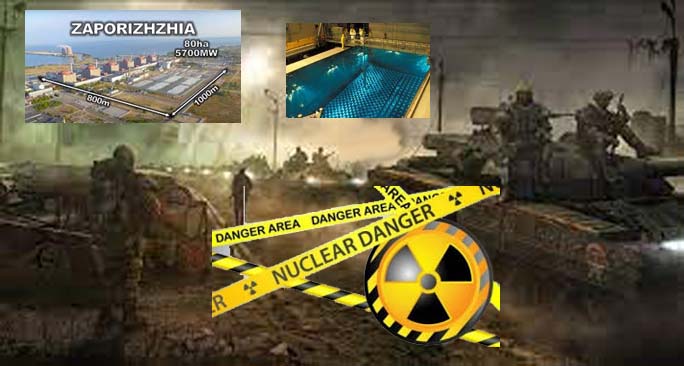
Dec 6 (Reuters) – Ukraine’s Zaporizhzhia nuclear power plant temporarily lost all off-site power overnight, the International Atomic Energy Agency said on Saturday, citing its Director General Rafael Mariano Grossi.
The nuclear plant, Europe’s largest, has been under Russian control since March 2022, when Russian forces overran much of southeastern Ukraine. It is not currently producing electricity but relies on external power to keep the nuclear material cool and avoid a meltdown.
The plant was reconnected to a 330-kilovolt (kV) power line after a half-hour outage, the IAEA said.
A 750 kV line that was also disconnected earlier was back in operation, the Russian-installed management of the plant said later on Saturday, and stable power supply had been restored.
Radiation levels remained normal, the management said.
Widespread military activities overnight affected Ukraine’s electricity grid and prompted operating nuclear power plants (NPPs) to reduce output, the IAEA added.
Reporting by Gnaneshwar Rajan and Yazhini M V in Bengaluru; Editing by Aidan Lewis and Bernadette Baum
Illegal drone shot down at nuclear submarine base
Officials are investigating an illegal drone which flew over the Atlantic coast base
Ap Correspondent, Independent UK, 05 December 2025
French authorities have launched an investigation into an unauthorised drone overflight of the nation’s nuclear-armed submarine base on the Atlantic coast.
The incident, confirmed by officials on Friday, involved multiple drones detected on Thursday night above the highly sensitive Île Longue base in Brittany, western France.
This strategic facility serves as the home port for France’s four nuclear ballistic missile submarines: Le Triomphant, Le Téméraire, Le Vigilant, and Le Terrible.
While French media reported several aerial intruders, military authorities have refrained from disclosing their exact number or type.
Defence Minister Catherine Vautrin confirmed that personnel at the base successfully intercepted the overflight. However, she did not specify whether this involved firing shots, electronic jamming, or other countermeasures. The identity of those responsible for the incursion remains unclear.
Ms Vautrin stated: “Any overflight of a military site is prohibited in our country. I want to commend the interception carried out by our military personnel at the Île Longue base.”
A number of European Union member countries have reported mysterious drone flights in their airspace in recent months. Some led to airport shutdowns, disrupting commercial flights. Others have been detected near or over military facilities………………………….. https://www.independent.co.uk/news/world/europe/drone-france-brittany-nuclear-base-b2879026.html
1 This Month

of the week – Shut Down Drone Warfare!


Tell the Ukrainian Government to Drop Prosecution of Peace Activist Yurii Sheliazhenko

Petition to revoke the licensing of the Near Surface Nuclear Disposal Facility (NSDF) at Chalk River. https://www.ourcommons.ca/petitions/en/Petition/Details?Petition=e-7247
To see nuclear-related stories in greater depth and intensity – go to https://nuclearinformation.wordpress.com
-
Archives
- April 2026 (7)
- March 2026 (251)
- February 2026 (268)
- January 2026 (308)
- December 2025 (358)
- November 2025 (359)
- October 2025 (376)
- September 2025 (257)
- August 2025 (319)
- July 2025 (230)
- June 2025 (348)
- May 2025 (261)
-
Categories
- 1
- 1 NUCLEAR ISSUES
- business and costs
- climate change
- culture and arts
- ENERGY
- environment
- health
- history
- indigenous issues
- Legal
- marketing of nuclear
- media
- opposition to nuclear
- PERSONAL STORIES
- politics
- politics international
- Religion and ethics
- safety
- secrets,lies and civil liberties
- spinbuster
- technology
- Uranium
- wastes
- weapons and war
- Women
- 2 WORLD
- ACTION
- AFRICA
- Atrocities
- AUSTRALIA
- Christina's notes
- Christina's themes
- culture and arts
- Events
- Fuk 2022
- Fuk 2023
- Fukushima 2017
- Fukushima 2018
- fukushima 2019
- Fukushima 2020
- Fukushima 2021
- general
- global warming
- Humour (God we need it)
- Nuclear
- RARE EARTHS
- Reference
- resources – print
- Resources -audiovicual
- Weekly Newsletter
- World
- World Nuclear
- YouTube
-
RSS
Entries RSS
Comments RSS
 nuclear-news