Yet another safety bungle in South Korea’s nuclear power

 Bungling Nuclear Safety – Fire at Kori Nuclear Power Plant Goes Undetected for Over an Hour Employees couldn’t hear audio alarm, couldn’t see visual alarm, Business Korea, 19 NOVEMBER 2014 Jung Yeon-jin
A fire occurred in the nuclear fuel storage facilities of the Kori Nuclear Power Plant located in Kijang County, Busan City, but none of the workers was aware of it for over an hour.
According to the Korea Hydro & Nuclear Power Corporation, the fire occurred at 4:26 p.m., Nov. 11, at Kori Power Plant Unit 4, burning up a waste dryer along with some gloves and towels. It is assumed that the dryer overheated and started the fire while drying wet gloves……….
Power Plant Attempts to Cover Up Reactor Shutdown
But this fire is only the latest incident at the Kori Nuclear Power Station this year.
This past summer was a busy time for Kori Nuclear Power Plant, as Unit 2 was shut off because of heavy rainfall. On Aug. 25, a localized torrential downpour of over 100 mm per hour in Busan City resulted in rainwater infiltrating one of its annexes, and the corporation had to close the facilities.
At that time, the corporation covered up the incident by saying, “We shut down the facilities just in case, and this has nothing to do with the safety of the power station.” However, the Nuclear Safety and Security Commission’s following report read, “The manual shutdown of the reactor was because of the malfunctioning of four of the circulation water pumps, attributable to the heavy rain.”
Danger of nuclear fuel storage at Columbia Generating Station
Groups says fuel storage poses risk at the Northwest’s lone commercial nuclear plant Oregon Live By Ted Sickinger| tsickinger@oregonian.com Email the author | Follow on Twitter November 20, 2014 The growing stockpile of spent nuclear fuel at the Northwest’s lone commercial nuclear plant poses a safety risk to the public in the event of an earthquake, according to a study sponsored by anti-nuclear groups.
The study of spent fuel storage at the Columbia Generating Station is the latest of several commissioned by the Physicians for Social Responsibility and Heart of America Northwest. They collectively suggest that the plant is an expensive and dangerous way for the Northwest to generate electricity, and that it ought to be closed.
The study was authored by nuclear critic Robert Alvarez, senior scholar at the Institute for Policy Studies. Officials at Energy Northwest, the utility consortium that operates the plant, say it is riddled with hyperbole, data errors and fear mongering. They also suggest its backers are extrapolating earthquake risks from recent seismic data that doesn’t apply to the plant site.
The 1,200 megawatt boiling-water reactor is located on the Hanford nuclear reservation near Richland, Wash. It opened in 1984 and has since generated some 368,000 spent fuel rods in 4,588 assemblies.
In the absence of a national repository, about 60 percent of that waste has been transferred to durable, dry-cask storage, a safety measure that Alvarez applauds. But the remaining 40 percent remains in the reactor’s spent fuel pool, a 350,000-gallon tank located at the top of the reactor building, six stories above ground……….http://www.oregonlive.com/business/index.ssf/2014/11/groups_says_fuel_storage_poses.html
Waste Isolation Pilot Plant contains volatile materials – “potential bombs”

 “Patented explosives” reported inside plutonium waste drums at US nuclear facility — TV: So volatile, experts comparing it to ‘bomb’ — Official: I’m appalled we weren’t told about real and present danger — Over 5,000 drums a threat — Invisible reactions may have already occurred (VIDEO) http://enenews.com/investigation-patented-explosives-drums-plutonium-waste-nuclear-facility-tv-volatile-experts-calling-potential-bomb-5000-drums-threat-invisible-reactions-occurred-other-containters-video?utm_source=feedburner&utm_medium=email&utm_campaign=Feed%3A+ENENews+%28Energy+News%29
Sante Fe New Mexican, Nov. 15, 2014 (emphasis added): The combination [of neutralizer and wheat-based organic litter] turned the waste into a potential bomb that one lab chemist later characterized as akin to plastic explosives, according to a six-month investigation by The New Mexican. [Los Alamos National Lab] then shipped [the waste] to the Waste Isolation Pilot Plant… Feb. 14… the drum’s lid cracked open… Temperatures in the underground chamber soared to 1,600 degrees, threatening dozens of nearby drums… Documents and internal emails show… officials downplayed the dangers… and withheld critical information.
Patented Explosives
- LANL chemist Steve Clemmons [found] the drum’s contents match the makeup of patented plastic, water-gel and slurry explosives… “All of the required components included in the patent claims would be present,” Clemmons wrote… “I am appalled that LANL didn’t provide us this information!” [wrote DOE official Dana Bryson]… On May 27, when they learned of the memo about patented explosives… WIPP abandoned plans for the next day to sample the area where the breach occurred, fearing it was too dangerous. “In a phone call withLANL, they indicated that there is a possibility that any sampling of the kitty litter/drum contents could cause another event,” [wrote] David Freeman, Nuclear Waste Partnership’s chief nuclear engineer… “We have a formal letter on LANL letterhead implying there is a real and present danger in the WIPP underground,” Bryson wrote.
Up to 55 more drums of waste ‘destabilized ‘
- The intense underground flare may have destabilized up to 55 more drums of waste [near the one that ruptured], calling into question whether they, too, had become poised to burst. “[The high heat event] may have dried out some of the unreacted oxidizer-organic mixtures increasing their potential for spontaneous reaction,” the report said. “The dehydration of the fuel-oxidizer mixtures… is recognized as a condition known to increase the potential for reaction.”
Over 5,000 more waste drums a threat
- LANL began treating waste with assorted varieties of organic kitty litter as early as Sept. 2012, spawning thousands of drums of waste that hold the same organic threat… [It] may have been mixed in up to 5,565 containers of waste at LANL.
LANL (pg. 21 of pdf): [The team] evaluated the effect of a heat generating event on the adjacent waste containers [that] could have chemically or physically changed the waste and introduced a reaction hazard. Unreacted drums of nitrate salt waste stream… continue to pose a potential reaction hazard… Reactions may have occurred within some of these drums at levels insufficient to lead to detectable visible evidence.
KOB, Nov. 16, 2014: Nuclear waste so volatile, it’s been called a potential bomb by experts… Greg Mello, former nuclear waste inspector for LANL: “The drum in question was basically kind of a time bomb.”… [A WIPP] assessment… estimates over 5,000 drums of waste may contain the volatile organic kitty litter that caused the one drum to split open.
Japan’s utilities want to open new controversial nuclear plant, and prolong life of others

 Nuclear operators push to open new plant, extend life of aging reactors THE ASAHI SHIMBUN, 14 Nov 14 Across Japan, utilities are backing the Abe administration’s support of nuclear power generation by continuing construction of a new facility and seeking to extend the life of reactors that have been operating for about 40 years.
Electric Power Development Co. (J-Power) announced Nov. 13 that it will apply to the Nuclear Regulation Authority for safety screenings to start operations at its Oma nuclear power plant, which is currently under construction.
The announcement came at a town assembly meeting at Oma, Aomori Prefecture, where J-Power President Masayoshi Kitamura said the company will submit the application by the end of the year and plans to have the new facility fully operational in fiscal 2021.
If everything proceeds as scheduled, the Oma plant will be the first instance in which power companies applied for the start of operations at new reactors that are still under construction.
While the No. 1 reactor at Tokyo Electric Power Co.’s Higashidori plant in Aomori Prefecture and Chugoku Electric Power Co.’s Shimane plant No. 3 reactor in Matsue are also currently under construction, the utilities have not submitted applications to start the reactors.
Although the central government’s basic energy plan states that dependency on nuclear power should be reduced as much as possible, it does not clearly mention the construction of new nuclear facilities.
The government does not deem nuclear plants as “new or additional” if their construction started before the March 2011 Great East Japan Earthquake, which set off the nuclear disaster at the Fukushima No. 1 power plant.
Forty percent of the construction of the Oma plant had been completed prior to the disaster.
However, there is no guarantee that the screening process will proceed smoothly because the structure and operation procedures of the Oma facility are different from those of conventional nuclear plants.
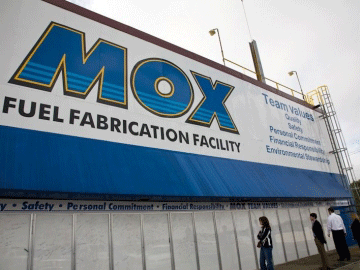 The Oma plant will be the world’s first 100 percent MOX nuclear facility, where only mixed-oxide (MOX) fuel, consisting of plutonium and uranium, is used at reactor cores for the purpose of consuming plutonium produced in processing spent nuclear fuel………
“No full MOX facility has so far gone online around the world,” NRA Chairman Shunichi Tanaka said at a Nov. 12 news conference. “We will examine extremely carefully (if countermeasures are sufficient).”…….
PROLONGING LIFE OF AGED REACTORS
Elsewhere, with the Abe administration supporting the restarts of the nation’s idle reactors after they pass NRA safety screenings, Kansai Electric Power Co. is making efforts to prolong the operating lives of aged reactors……..http://ajw.asahi.com/article/0311disaster/fukushima/AJ201411140068
Russia’s underwater nuclear graveyard- the danger in the Arctic
Sunken Soviet Submarines Threaten Nuclear Catastrophe in Russia’s Arctic, Moscow Times. by Matthew Bodner Nov. 13 2014 While Russia’s nuclear bombers have recently set the West abuzz by probing NATO’s air defenses, a far more certain danger currently lurks beneath the frigid Arctic waters off Russia’s northern coast — a toxic boneyard for Soviet nuclear ships and reactors whose containment systems are gradually wearing out.
Left to decay at the bottom of the ocean, the world is facing a worst case scenario described as “an Arctic underwater Chernobyl, played out in slow motion,” according to Thomas Nilsen, an editor at the Barents Observer newspaper and a member of a Norwegian watchdog group that monitors the situation.

According to a joint Russian-Norwegian report issued in 2012, there are 17,000 containers of nuclear waste, 19 rusting Soviet nuclear ships and 14 nuclear reactors cut out of atomic vessels at the bottom of the Kara Sea.
For extra historical details see: Soviet Nuclear Submarine Wrecks at Bottom of Arctic Ocean (Video) Continue reading
Russia’s nuclear czar, Sergei Kirienko plans wind down of nuclear security co-operation
After Two Decades Of Cooperation, Russia May Pull The Plug On Nuclear Security Contracts With The US, Business Insider 15 Nov 14 PIERRE BIENAIMÉ In the years following the dissolution of the Soviet Union in 1991, Russia’s former American rival has spent billions helping Moscow secure a sprawling network of nuclear infrastructure, in the interest of lowering the odds that weaponised uranium might fall in the hands of extremists or rogue states.

Now Russia may be planning to wind down those joint efforts, the New York Times reported. Sergey V. Kirienko, the head of Russia’s state nuclear company, told US Energy Secretary that no new contracts aimed at nuclear security for 2015 were envisioned “under current circumstances” — a concise reference to the ratcheting tensions between Russia and the West since its annexation of Crimea in March………http://www.businessinsider.com.au/russia-may-stop-cooperating-with-the-us-2014-11/
Wyoming in-situ uranium mining company fined for 2 radioactive spills
$5,000 fine for uranium spills at new Wyoming mine http://www.kulr8.com/story/27356303/5000-fine-for-uranium-spills-at-new-wyoming-mine : Nov 11, 2014 By MEAD GRUVERAssociated Press CHEYENNE, Wyo. (AP) – A company has agreed to pay a $5,000 state penalty for spilling uranium solution at a newly opened uranium mine in Wyoming.
Two spills occurred at the Nichols Ranch in-situ mine between Casper and Gillette last summer. Casper-based Uranerz Energy Corporation started production at the mine in April and announced its first shipment of yellowcake uranium in September.
In-situ mining involves pumping chemicals underground to release uranium into a solution that is pumped to the surface.
Department of Environmental Quality officials say over 20,000 gallons of uranium-bearing liquid spilled from a pipeline July 17. A second pipeline spill of 12,000 gallons occurred Sept. 8.
Department Director Todd Parfitt and Uranerz Vice President Michael Thomas signed the penalty agreement Nov. 3. Thomas didn’t immediately respond to a request for comment Tuesday.
Unidentified attackers kill 5 nuclear engineers near Damascus
 5 nuclear engineers murdered near Damascus: monitor Agence France Presse, Daily Star, Lebanon 9 Nov 14 BEIRUT: Unknown assailants killed five nuclear engineers Sunday while they were on a bus just north of Damascus, near the research center where they worked, a monitor said on Sunday.
The Britain-based Syrian Observatory for Human Rights, which relies on a network of sources on the ground for its reports, was unable however to say how they were killed or supply their nationalities.
“Unidentified attackers murdered five nuclear energy engineers who worked in the scientific research centre near the neighbourhood of Barzeh, northern Damascus,” said Observatory director Rami Abdel Rahman………. http://www.dailystar.com.lb/News/Middle-East/2014/Nov-09/276996-5-nuclear-engineers-murdered-near-damascus-monitor.ashx#ixzz3IhMal9A0
Drone flights still happening over France’s nuclear power plants
 French nuclear power plant drone flights continue, model plane fans freed Golfech nuclear plant on the edge of the Garonne river between Agen and Toulouse Reuters/Regis Duvignau By RFI 8 Nov 14
The mysterious drone flights over French nuclear power stations continued on Thursday night but the authorities were no closer finding who is responsible after the release of two model plane enthusiasts arrested on Wednesday…….
the public prosecutor announced on Friday that they were just modelling enthusiasts who wanted to film a boat they had made on the lake next to the plant.
As many as five flights have taken place on the same night, leading to speculation that they are part of an organised campaign but anti-nuclear groups have denied responsibility and no-one else has confessed.
Officials did not admit publicly the flights were taking place until 24 days after the first on 5 October and are anxious to calm public fears over security. http://www.english.rfi.fr/environment/20141107-french-nuclear-power-plant-drone-flights-continue-model-plane-fans-freed
Nuclear power companies won’t be bankrupted by the next nuclear accident, but the USA might
The chances of radiation disasters will increase further if the Nuclear Regulatory Commission allows US reactors to run for 80 years.
Captured by the industry it’s supposed to govern, the NRC has approved 149 reactor “power uprate” applications and has denied exactly one. Power uprates boost the output of old reactors beyond what their original licenses permit. It’s done by packing reactor cores with extra fuel rods and, feeling lucky, running them harder.
Chillingly, 23 operating US reactors are duplicates of the Fukushima-type General Electric Mark 1
Meanwhile, down at the nuclear power plant, something’s going wrong http://lasvegas.informermg.com/2014/11/02/meanwhile-nuclear-power-plant-somethings-going-wrong/ November 2, 2014 Posted by: PeaceTalk By John LaForge
Weakening radiation standards, a cap on accident liability, reactor propaganda vs improvements, old units running past expiration dates, revving the engines beyond design specs …. You’d think we were itching for a meltdown.
The Environmental Protection Agency has recommended increased radiation exposure limits following major releases. It would save the industry a bundle to permit large human exposures, rather than shut down rickety reactors.
The EPA proposal is a knock-off prompted by Fukushima, because after the triple meltdown started three years ago, Japan increased — by 20 times — the allowable radiation exposures deemed tolerable for humans. Prior to the meltdowns of March 2011, Japan allowed one milliSievert of radiation per year in an individual’s personal space. Now, the limit is 20 milliSieverts per year. This is not safe, it’s just allowable, or, rather, affordable, since the cost of decontaminating 1,000 square miles of Japan to the stricter standard could bust the bank.
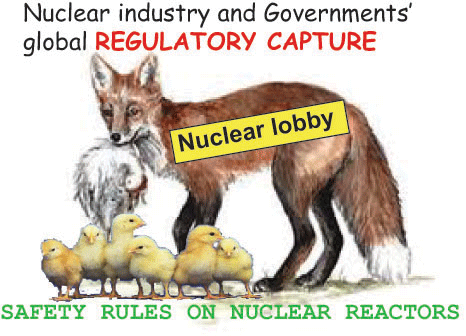
The Price Anderson Act provides US reactor owners with a liability cap and a tax-payer bailout in the event of serious radiation releases. The law relieves utilities of hundreds of $billions in financial risk posed by our ongoing meltdown roulette game. The owners won’t be bankrupted by the next loss-of-coolant disaster, but the US might. Continue reading
Risk of tsunami – a threat to at least 8 countries with nuclear power plants
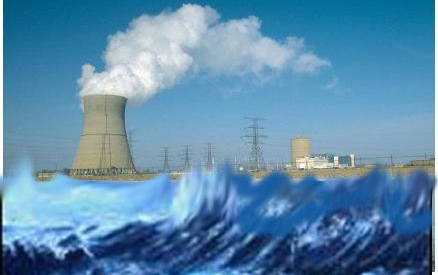 8 Countries With Nuclear Power Plants Most At Risk Of Tsunamis. Oil Price, By Andrew Topf | Tue, 04 November 2014 The tsunami that destroyed a nuclear reactor at Fukushima, Japan, caused a major re-think of nuclear power, which up to the accident in 2011, had been considered a relatively safe, clean form of electricity generation……..
German power companies discreetly trying to sell their holdings in URENCO

 Ticking nuclear time bomb up for grabs URANTRANSPORT.De 3 Nov 14 As discretely as possible, the German power companies EON and RWE are trying to sell their holdings in URENCO, the tri-national company that produces weapons-grade uranium. The prominent German newspaper, Sueddeutsche Zeitung, reported that not only respectable potential buyers are lining up to bid and that intelligence services are on alert.
The German URENCO plant is located at Gronau, a small town only a stone’s throw away from the border with the Netherlands. And not far into that country is another URENCO plant at Almelo.
The newspaper incorrectly describes Gronau as “the last bastion of the nuclear industry in Germany”, which it is not. There is also a nuclear fuel plant at Lingen and centrifuge research and development in Jülich, run jointly by a Urenco/Areva subsidiary.
With a world market share of 31% the German-Dutch-British URENCO, which also operates plants in the UK and the USA, is one of the major suppliers of nuclear fuel. Almost unnoticed by the general public, URENCO keeps Germany a major player in nuclear power, which officially is planned to end in the country in 2023.
As the newspaper points out, “URENCO possesses highly sensitive knowledge: the key to the atom bomb“. The one-third-each owners, which apart from the two power companies include the British and Dutch governments, want to sell the firm to investors.Ten billion euros is one figure being mentioned. Bids to be accepted until the end of December.
It’s a scary scenario: “Up for sale is the simplest path to the atom bomb,” suggests Michael Sailer of the Eco-Institute in Darmstadt, an advisor on nuclear matters to the German government.
Finance circles say the list of potential buyers includes firms and hedge funds around the world, in Canada, Japan, Britain, Hong Kong, India and the Middle East. There’s even talk of questionable billionaires and states.
Experts say in Gronau alone enough highly enriched uranium to make a bomb could be produced in a few weeks.
If the state owners give up their controlling majority, it will get ever harder to protect the technology against unpermitted access, notes Sailer. “I find it irresposnible to leave a technology with such destructive power to the market.“
The Sueddeutsche Zeitung says secret documents from the Netherlands make clear how far plans to sell up are advanced in London and The Hague.
German parliamentarians have been told by the government that intelligence services have been brought in to study potential buyers. The same is said to be happening in Britain and The Netherlands.
“Every transfer of knowledge of uranium enrichment technology also increases the knowledge of atomic weapon technology,“ warns Sylvia Kotting-Uhl of the German Greens, and calls on the German government to veto the sale.
“We demand the immediate closure of the Gronau uranium enrichment plant,“ writes a group of activists in Muenster, which is close to Gronau, as well as centrifuge research and development in Jülich, run jointly by a Urenco/Areva subsidiary, ETC.
The Aktionsbündnis Münsterland gegen Atomanlagen (SOFA) will host an international uranium transportation conference from 28-30. November in Münster.
www.sofa-ms.de, www.urantransport.de, www.kein-castor-nach-ahaus.de
Poor security of South Korea’s nuclear power system
Making a mess of nuclear safety, Korea JoongAng Daily Nov 05,2014The ministry conducted security checks on power stations across the nation following online media reports about the leak in September. It found that staff shared their log-in IDs and passwords for the internal computer system with subcontracted employees of radioactive waste management companies. Night shift staff should have escorted these people from outside during their work, but instead they gave their security codes away simply because they were lazy………
Again, mystery drone aircraft fly over France’s nuclear power plants
France records at least 15 mystery drone flyovers of nuclear power plants, ABC News 3 Nov 2014, A drone has flown over a nuclear plant in central France for the second time in two days, a source close to the case says. The unmanned flying machine went over the plant in Dampierre-en-Burly on Sunday evening, said the source, who wished to remain anonymous.
The power station had already been flown over on Friday evening.
Authorities are scratching their heads over the number of unidentified drones spotted over nuclear plants across France over the past month, and a probe has been launched to try and find out exactly who is piloting the remote-controlled machines.
They have counted at least 15 flyovers, sparking questions over the security of nuclear plants in France, which relies heavily on atomic energy for electricity……..http://www.abc.net.au/news/2014-11-04/french-nuclear-plant-hit-by-another-mystery-drone-flyover/5864836
Newly revealed photos of Sellafield’s decaying nuclear fuel storage ponds
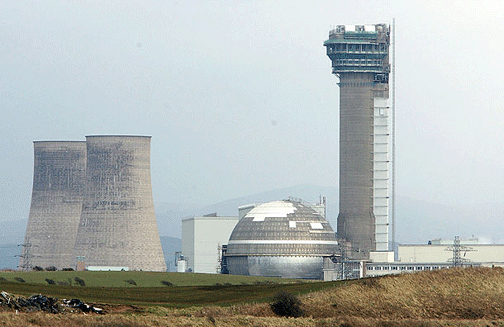 Photographs of Sellafield nuclear plant prompt fears over radioactive risk Nuclear safety expert claims there is ‘significant risk’ due to poor condition of storage ponds containing highly radioactive fuel rods John Vidal and Rob Edwards The Guardian, Thursday 30 October 2014
Previously unseen pictures of two storage ponds containing hundreds of highly radioactive fuel rods at the Sellafield nuclear plant show cracked concrete, seagulls bathing in the water and weeds growing around derelict machinery. But a spokesman for owners Sellafield Ltd said the 60-year-old ponds will not be cleaned up for decades, despite concern that they are in a dangerous state and could cause a large release of radioactive material if they are allowed to deteriorate further.
“The concrete is in dreadful condition, degraded and fractured, and if the ponds drain, the Magnox fuel will ignite and that would lead to a massive release of radioactive material,” nuclear safety expert John Large told the Ecologist magazine. “I am very disturbed at the run-down condition of the structures and support services. In my opinion there is a significant risk that the system could fail.
“It’s like an concrete dock full of water. If you got a breach of the wall by accident or by terrorist attack, the Magnox fuel would burn. I would say there’s many hundreds of tonnes in there. It could give rise to a very big radioactive release. It’s not for me to make comparisons with Chernobyl or Fukushima, but it could certainly cause serious contamination over a wide area and for a very long time.”
Gordon Thompson, executive director of the Institute for Resource and Security Studies in Cambridge, Massachusetts, who is an expert at assessing radiological risk, said: “[Sellafield] contains large inventories of radioactive material that could be released to the environment in a variety of ways. The site’s overall radiological risk has never been properly assessed by the responsible authorities. [The] photos, showing disgracefully degraded open-air ponds at Sellafield, indicate that a thorough assessment of risk is overdue.”
The images, taken over a period seven years and leaked via a local nuclear watchdog group to the Ecologist, are said to show two ponds that were commissioned in 1952 and used until the mid-1970s as short-term storage for spent fuel until it could be reprocessed, producing plutonium for military use. One is open to the elements……..
1 This Month
26 September – International Day for the Total Elimination of Nuclear Weapons





PLEASE OPPOSE HR 8255 AND S.3639 – bills would accelerate satellite deployment, with no environmental review or safeguards – https://ncstd5li.quorum.us/campaign/169331/
To see nuclear-related stories in greater depth and intensity – go to https://nuclearinformation.wordpress.com
-
Archives
- September 2026 (323)
- August 2026 (330)
- July 2026 (355)
- June 2026 (287)
- May 2026 (306)
- April 2026 (356)
- March 2026 (251)
- February 2026 (267)
- January 2026 (308)
- December 2025 (358)
- November 2025 (359)
- October 2025 (375)
-
Categories
- 1
- 1 NUCLEAR ISSUES
- business and costs
- climate change
- culture and arts
- ENERGY
- environment
- health
- history
- indigenous issues
- Legal
- marketing of nuclear
- media
- opposition to nuclear
- PERSONAL STORIES
- politics
- politics international
- Religion and ethics
- safety
- secrets,lies and civil liberties
- spinbuster
- technology
- Uranium
- wastes
- weapons and war
- Women
- 2 WORLD
- ACTION
- AFRICA
- Atrocities
- AUSTRALIA
- Christina's notes
- Christina's themes
- culture and arts
- Events
- Fuk 2022
- Fuk 2023
- Fukushima 2017
- Fukushima 2018
- fukushima 2019
- Fukushima 2020
- Fukushima 2021
- general
- global warming
- Humour (God we need it)
- Nuclear
- RARE EARTHS
- Reference
- resources – print
- Resources -audiovicual
- Weekly Newsletter
- World
- World Nuclear
- YouTube
-
RSS
Entries RSS
Comments RSS

