Massive military convoy carrying ‘nuclear weapons’ passes through Glasgow.
Footage captured on Thursday shows the convoy headed along the M74 motorway towards Kinning Park
Jordan Shepherd Reporter, 20 Feb 2026, https://www.glasgowlive.co.uk/news/glasgow-news/massive-military-convoy-carrying-nuclear-33464341
A massive military convoy believed to be carrying nuclear weapons has been spotted passing through Glasgow..
Footage captured on Thursday shows the convoy headed along the M74 motorway towards Kinning Park. The clip shows MOD police vehicles and Police Scotland escorting the military vehicles through the city.
The convoys usually travel between Atomic Weapons Establishment Burghfield near Reading and RNAD Coulport on Loch Long, right through Glasgow on the M74 and M8, passing within 1.5 miles of George Square in the process.
It is understood that the convoys make the journey around six times per year to refurbish the warheads, then transport them back up again.
The convoys include huge lead-lined lorries carrying the nuclear warheads, along with a fire engine in case a blaze breaks out, a moving workshop, a decontamination unit, tow truck and scores of MOD police vehicles.
Ministry of Defence’s nuclear clean-up project brings new risks.
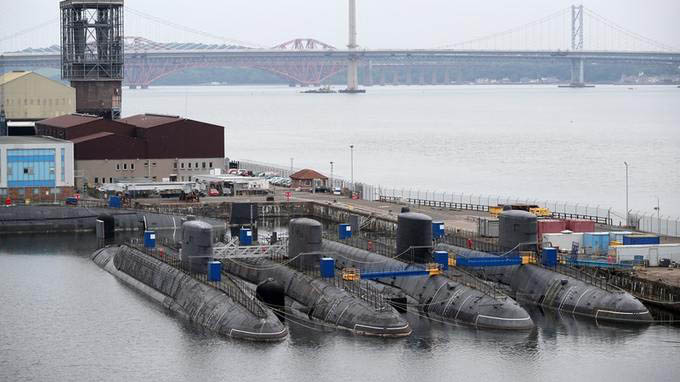
21st February, By Lynn Jamieson, chair, Scottish Campaign Nuclear Disarmament:
ROSYTH dockyard leads in the clean-up of retired nuclear
submarines as part of the Submarine Dismantling Project (SDP). Addressing a
legacy mess affords opportunities for building a skilled workforce.
But please, no more mess. Rosyth may become more deadly if operational
nuclear-armed submarines station there. As a contingency docking station
for the nuclear-weapon system now under construction, radioactive risks
will increase from nuclear reactors and weapons. T
he Ministry of Defence
(MoD) has not ruled out nuclear bombs being onboard a temporarily docked
submarine at Rosyth. In 40 years, newly built reactors become a long-term
legacy of nuclear waste, sitting in another generation of retired
submarines to be decommissioned at enormous cost.
Since the 1980s,
intermediate-level radioactive waste in the form of retired nuclear-powered
submarines – currently seven in total – sit at Rosyth, a hazard costing
money every day. Fifteen more sit in Devonport Royal Dockyard, Plymouth. Of
the 15 vessels at Devonport, 10 retain the highly radioactive fuel rods
that once powered them.
The National 21st Feb 2026,
https://www.thenational.scot/politics/25874840.mods-nuclear-clean-up-project-brings-new-risks/
Russian nuclear agency insists it can run seized Ukrainian atomic power plant
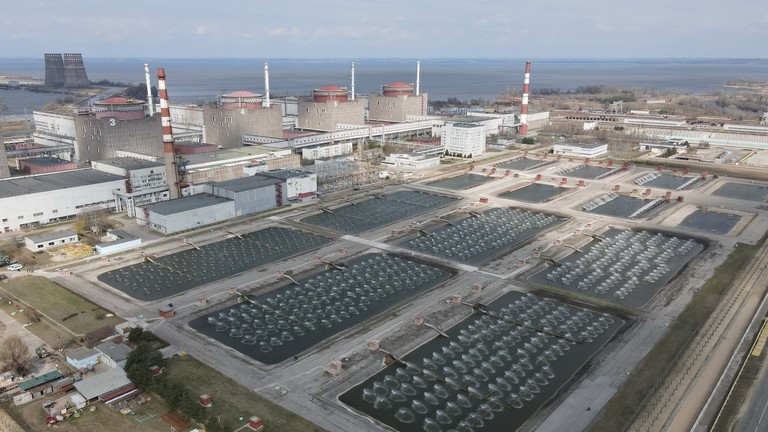
Europe’s largest atomic power station was seized by Russia from Ukraine in 2022
Guy Faulconbridge, Thursday 12 February 2026 , https://www.independent.co.uk/news/world/europe/rosatom-zaporizhzhia-plant-ukraine-russia-b2919153.html
Russia’s state nuclear corporation, Rosatom, has rejected Ukrainian accusations that it lacks the necessary equipment and components to safely operate the Soviet-built Zaporizhzhia nuclear power plant.
The claims were made by Pavlo Kovtoniuk, head of Ukraine’s state nuclear firm Energoatom, who told Reuters in Kyiv that Russia’s alleged deficiencies could lead to a nuclear accident if it attempted to restart the reactors.
Mr Kovtoniuk stated Russia lacked some equipment and spare parts to operate the plant, and risked a nuclear accident if it tried to restart the reactors.
Europe’s largest atomic power station, the facility was seized by Russia from Ukraine in 2022.
All six of its Soviet-designed VVER-1000 pressurised water reactors are currently in a “cold shutdown” state.
The plant’s future remains a critical point of contention in ongoing peace negotiations between Moscow and Kyiv, with both nations vying for control.
“Rosatom categorically rejects claims that Russia lacks the equipment and components required to ensure the safe operation of the Zaporozhskaya Nuclear Power Plant,” Rosatom said in a statement to Reuters in English when asked about the remarks.
“Russia operates one of the world’s largest nuclear fleets, including VVER-1000 units identical to those installed at Zaporozhskaya NPP, and has full capacity to produce equipment, components and nuclear fuel.”
Rosatom, ranked as one of the world’s biggest nuclear corporations in terms of nuclear construction, enrichment services and mining, said that the key issue affecting nuclear safety at the plant was continued shelling in the area.
Ukraine’s Kovtoniuk argued that control equipment and monitoring systems at the plant were Ukrainian, that Russia would have to replace US fuel in the reactors, and that there was not enough water to cool the reactors if restarted.
“Insinuations implying that the plant’s systems are incompatible with Russian fuel are technically unfounded,” Rosatom said, adding that in late 2025, reactor No. 1 received a 10-year operating licence from Russia’s nuclear safety authority, Rostechnadzor.
Rosatom said the plant’s cooling system had never depended exclusively on the Kakhovka reservoir, adding that the cooling pond used a closed-loop system and had sufficient water.
France must start to plan nuclear closures – safety chief
Muriel Boselli, 27 Jan 2026
(Montel) France must plan now for the closure of some nuclear reactors or face investment barriers “that would be impossible to overcome” in replacing them, the head of the ASNR nuclear safety authority said on Tuesday…………………………(registered readers only)…………….. https://montelnews.com/news/4dfe0284-3e2b-4c92-804f-56a79bdfea31/france-must-start-to-plan-nuclear-closures-safety-chief
‘Significant’ fire risks at nuclear plant site
Maisie Lillywhite, West of England, 4 Feb 26, https://www.bbc.com/news/articles/cgqexej138jo
‘Significant’ fire risks have been uncovered at the first nuclear plant to be built in Britain for 30 years, including flammable materials left on emergency exit stairs.
Inspectors from the Office for Nuclear Regulation (ONR) said they found significant fire safety shortfalls at Hinkley Point C, EDF’s twin-reactor nuclear power station in Somerset.
The ONR has served enforcement action notices on five organisations which are overseeing mechanical, electrical and heating (MEH) and ventilation and air conditioning work (HVAC) at the site.
Bosses of the five organisations will need to address the shortfalls ahead of the next inspection.
A spokesperson for Hinkley Point C said they are working closely with contract partners to ensure that the appropriate enhancements are made.
“Safety is our overriding priority, and we are already acting to oversee improvements,” they added.
Mahtab Khan, ONR’s head of regulation, said fire safety is not optional and it is a legal requirement that protects lives.
“We will not hesitate to take enforcement action where safety standards fall short, and we expect all dutyholders to treat fire safety with the urgency it demands.
“Working alongside the principal contractor and MEH alliance, we have made good progress in understanding the root causes of these shortfalls to ensure they are addressed,” Khan added.
The Hinkley Point C contractors given fire enforcement notices are Altrad Babcock, Altrad Services, Balfour Beatty Kilpatrick Ltd, Cavendish Nuclear, and NG Bailey.
The combustible material, found during an inspection in December, was discovered in the staircase and was waste typical of construction activities, the ONR said.
It added although the waste did not block the fire exit, it could have compromised access to the building in the event of a fire.
Inspectors found the construction site did not have an adequate fire risk assessment.
There were also insufficient means of escape exits for the number of people working in the building.
The ONR said the shortfalls had no direct impact on the likelihood of a fire, but that the enforcement means adequate routes should be available to workers in the event of a fire.
It comes after inspectors found there was a “risk of serious injury” due to “inadequate fire controls” being used by civil engineering firm Bylor JV, which is run by both Laing O’Rourke and Bouygues Travaux Publics.
In December, the company was served with a fire safety notice and was told it had until June to implement changes.
The estimated cost of Hinkley Point C has risen to £46bn from the £18bn predicted in 2017, and it is expected to open in 2031.
Trump slashing nuclear reactor safety and security rules
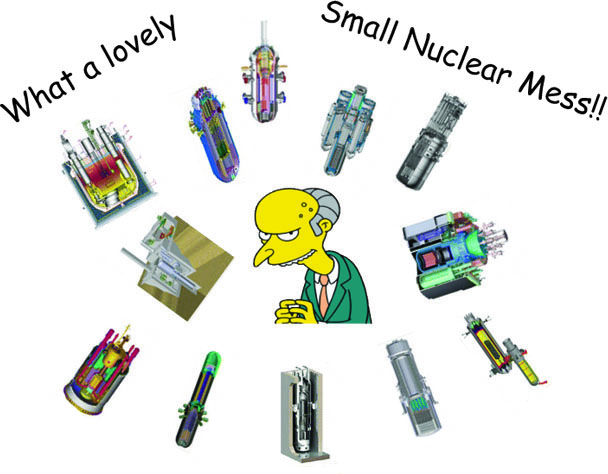
January 29, 2026, https://beyondnuclear.org/trump-slashing-reactor-safety-and-security-rule
Department of Energy executes White House Executive Order
Radical changes to nuclear safety and security at new reactors withheld from public review
In response to White House Executive Order 14301 issued on May 23, 2025, the US Department of Energy (DOE) is deregulating federal reactor safety /security standards and rules in order to expedite at least three experimental designs of eleven new advanced reactors. The DOE cuts are intended to speed up licensing, construction and operational testing phase so as to achieve reactor criticality by July 4, 2026. The expedited approval process will be used to demonstrate proof-of-product for full commercial operation of these designs as ready for mass assembly line production.
National Public Radio (NPR) reported on January 28, 2026, that it had obtained copies of the DOE documents as the basis for their news story headlined “The Trump administration has secretly rewritten nuclear safety rules.” The new rules and standards for reactor safety and security of unproven experimental reactor designs have not yet been publicly released. As NPR reports, the new rules are being rewritten to alter 5o years of duly promulgated regulatory law by the US Nuclear Regulatory Commission (NRC) not to bolster public safety, national security and environmental protection but to hasten the deployment of unproven, untested and still dangerous nuclear power technology.
In an earlier NRC interview on December 17, 2025. Dr. Allison Macfarlane, a former NRC Chairwoman, warned that the federal government cannot both commercially promote nuclear power and independently regulate nuclear safety and security with reasonable assure a very low probability of the next severe nuclear accident or by deliberate malice. On numerous occasions, Dr. Macfarlane, other NRC Commissioners and independent scientists point to an established historical conflict of interest created by federal government and nuclear industry’s simultaneous collaborative promotion and regulatory expansion of nuclear power and nuclear arms race.
That proved to be the downfall of the US Atomic Energy Commission (AEC) principally established for the development of atomic bombs and cogenerate electricity from the waste heat from the weaponization of the atom. The AEC was subsequently abolished by Congress with the passage of the Energy Reorganization Act of 1974 (ERDA) because of gross neglience of nuclear safety. On January 19, 1975, the AEC responsibilities were divided up creating the US Nuclear Regulatory Commission to take over the safety licensing and regulation of commercial nuclear power and the Energy Research and Development Agency (ERDA) to handle energy research, development, and the functions of nuclear weapons production. ERDA was later incorporated into the US Department of Energy in 1977.
The United States has now come full circle with the Trump Administration’s executive orders dismantling 50 years of promulgation of nuclear power safety regulation and regulatory law to return safety to the back seat and nuclear energy promotion as the priority. It is further alarming and no secret that several of the new commercial reactor designs under licensing review by the DOE are in fact “dual purpose” reactors that once operational will have the capability to produce both electrical energy and the basic building blocks for nuclear weapon enhancement and expansion.
The January 28th NPR analysis finds that DOE’s nuclear rules “slash hundreds of pages of requirements for security at the reactors. They also loosen protections for groundwater and the environment and eliminate at least one key safety role. The new orders cut back on requirements for keeping records, and they raise the amount of radiation a worker can be exposed to before an official accident investigation is triggered.”
Where the protection of groundwater from radioactive contamination once was required as a “must,” the new DOE rules and standards need only provide “‘consideration’ to ‘avoiding or minimizing’ radioactive contamination. Radioactive monitoring and documentation are also softened,” NPR observed.
An independent scientist is quoted in the NPR story, “They’re taking a wrecking ball to the system of nuclear safety and security regulation oversight that has kept the U.S. from having another Three Mile Island accident,’ said Edwin Lyman, director of nuclear power safety at the Union of Concerned Scientists. ‘I am absolutely worried about the safety of these reactors.’”
Now here we are, during the 50th anniversary of the US Nuclear Regulatory Commission, the Trump Administration, the DOE and the nuclear industry are poised for “Unleashing American Energy” by deregulatory Executive Orders.
The DOE announced the “Reactor Pilot Program” in June 2025, following the release of Executive Order 14301, which accelerates and expands the federal experimental reactor testing program to streamline commercial reactor licensing and oversight. At the same time, the Trump Administration is deregulating the NRC by slashing its safety and security standards and regulatory law.
The DOE “Pilot Reactor Program” is comprised of eleven projects. The DOE will choose at least three units to be licensed for operational criticality by July 4, 2026:
- Aalo Atomics Inc.—The Austin, Texas-based startup nuclear company has broken ground for its experimental 10 MWe sodium cooled reactor under development at the Idaho National Laboratory near Idaho Falls, Idaho. Five units are intended to make up a 50 MWe “pod” for electrical power production.
- Antares Nuclear Inc.— Headquartered in Los Angeles, California, Antares Nuclear has submitted a construction permit application filed for a four-unit, non-power, light-water-cooled, pool-type Versatile Isotope Production Reactor facility to be located at the Idaho National Laboratory desert site, in Bingham County, Idaho.
- Atomic Alchemy Inc.—Atomic Alchemy Inc. is headquartered in Idaho National Laboratory, Idaho Falls, Idaho. The company operates in the nuclear technology sector, specifically focused on non-power radioisotope production reactors for the defense, industrial and medical sectors using the 15-MWtVersatile Isotope Production Reactor (VIPR).
- Deep Fission, Inc.— The start-up company is headquartered in Berkeley, CA for the development of a 15 MWe pressurized water microreactor that first broke ground in Parsons, Kansas on December 9, 2025. It is proposed as a first-of-a-kind deep geological reactor at the Great Plains Industrial Park in Labette County on the Kansas-Oklahoma border. Deep Fission signed a Memorandum of Understanding (MOU) with its “sister” company Deep Isolation to collocate the power generation facility in a mile deep 30 inch wide borehole in the bedrock. The natural bedrock body and a mile deep column of water overhead are credited for the reactor containment system. The same borehole and bedrock body are credited as a permanent, deep geological high-level radioactive waste disposal facility. After seven years of operation, the reactor vessel is disconnected from the surface turbogenerator and control room and abandoned, capped and sealed in place in-place at the bottom of the borehole. The next fresh fuel loaded reactor unit is lowered down the borehole and connected to the surface to resume operation stacked on top of the now sealed unit nuclear waste unit. And so on.
- Last Energy Inc.—Last Energy Inc. corporate headquarters are in Austin, Texas. The start-up company is proposing to build a fleet of 20-MWe micro-modular reactors near Abilene, Texas targeting data center power needs (specifically the PWR-20, a downsized model of the currently operational commercially sized Point Beach reactor Unit 1 rated at 625 MWe in Wisconsin).
- Oklo Inc. (two projects)— Oklo Inc. is headquartered in Santa Clara, California. Its Aurora Powerhouse is a 75 MWe small modular liquid sodium-cooled fast reactor under development at the Idaho National Laboratory. Oklo is additional developing an estimated $1.7 billion project to build the nation’s first privately funded nuclear fuel recycling facility at the Oak Ridge Heritage Center in Tennessee. This project aims to recycle used nuclear fuel from existing reactors into fuel for fast reactors, with operations targeted for 2030. The proposed fast reactors are identified as a global nuclear weapons proliferation risk to be exported around the world.
- Natura Resources LLC— Natura Resources is headquartered in Abilene, Texas. The company is developing a Generation IV liquid-fueled molten salt reactor (MSR). They are proposing to site their first reactor at the Science and Engineering Research Center (SERC) on the campus of Abilene Christian University in Abilene, Texas.
- Radiant Industries Inc.— Radiant Industries is headquartered in El Segundo, California for modular microreactors. Radiant has announced that it will build its first microreactor factory on a decommissioned Manhattan Project site in Oak Ridge, Tennessee. World Nuclear News reports, “Radiant is developing the 1 MWe Kaleidos high-temperature gas-cooled portable microreactor, which will use a graphite core and TRISO (tri-structural isotropic) fuel. The electric power generator, cooling system, reactor, and shielding are all packaged in a single shipping container, facilitating rapid deployment.”
- Terrestrial Energy Inc.— Terrestrial Energy, Inc. is headquartered in Charlotte, North Carolina. They are developing the Integral Molten Salt Reactor (IMSR) which is a Generation IV small modular reactor (SMR) designed to produce both high-grade industrial heat and electricity. Their pilot project is planned for the Texas A&M University RELLIS Campus in Bryan, Texas.
- Valar Atomics Inc.— Valar Atomics Inc. is headquartered in El Segundo, California. The company is developing the Ward 250, a 100-kWt, helium-cooled, TRISO-fueled high-temperature gas reactor (HTGR) designed for modular, behind-the-meter, or microgrid use. The pilot project is located at the Utah San Rafael Energy Lab (USREL) in Emery County, Utah.
UN watchdog warns Ukraine war remains world’s biggest threat to nuclear safety.

30 January 2026, https://news.un.org/en/story/2026/01/1166863
The war in Ukraine remains the world’s biggest threat to nuclear safety as a fifth year of combat looms, the head of the UN nuclear watchdog warned on Friday, citing continued risks to power supplies at nuclear sites vulnerable to fighting nearby.
Addressing the International Atomic Energy Agency (IAEA) Board of Governors, Director General Rafael Grossi said the agency remains focused on preventing a nuclear accident as fighting continues to endanger critical infrastructure.
“The conflict in Ukraine is about to enter its fifth year,” Mr. Grossi said. “It continues to pose the world’s biggest threat to nuclear safety.”
IAEA teams remain deployed at all nuclear power plants affected by the conflict and publish regular updates on nuclear safety and security conditions.
The Board of Governors is the IAEA’s main decision-making body, bringing together representatives of 35 countries to oversee nuclear safety, security and safeguards, and to guide the work of the UN nuclear watchdog. Its current membership includes, among others Russia, the United States, United Kingdom, and France.
Off-site power a critical safety lifeline
Mr. Grossi stressed that a central safety requirement is reliable off-site power – the electricity a plant receives from the national grid. Without it, nuclear sites must rely on backup systems to run cooling and other essential safety functions.
“There must be secure off-site power supply from the grid for all nuclear sites,” he said, pointing to the IAEA’s “Seven Pillars” guidance for nuclear safety during armed conflict, where off-site power is pillar number four.
He also cited Principle 3 of the IAEA’s Five Principles for protecting the Zaporizhzhya Nuclear Power Plant (ZNPP) that “all efforts should be made to ensure off-site power remains available and secure at all times.”
Mr. Grossi said both sets of guidance have broad international support, including from the parties directly involved, and that he has repeatedly called for adherence to them, including at the UN Security Council.
Progress at Zaporizhzhya amid ongoing risks
He reported recent progress at ZNPP, where Europe’s biggest plant was reconnected on 19 January to its last remaining 330-kilovolt backup power line after repairs were carried out under a temporary ceasefire negotiated with Ukrainian and Russian counterparts.
The line had been damaged and disconnected since 2 January, reportedly due to military activity.
Until the reconnection, ZNPP relied on its last remaining 750-kilovolt main line to provide off-site power for safety systems needed to cool its six shutdown reactors and spent fuel pools. IAEA teams are also monitoring the plant’s ability to manage winter conditions, including keeping water in cooling and sprinkler ponds from freezing.
Beyond the plants themselves, Mr. Grossi warned that Ukraine’s electrical substations are also crucial to nuclear safety. “Damage to them undermines nuclear safety and must be avoided,” he said. An IAEA expert mission is now assessing 10 substations vital to nuclear safety amid ongoing strikes on the country’s power infrastructure.
Other nuclear sites also affected
IAEA teams have also reported military activity near other nuclear facilities, including the Chornobyl site, where damage to a critical substation disrupted multiple power lines and forced temporary reliance on emergency diesel generators. The affected lines have since been reconnected.
Mr. Grossi said the IAEA has shown how international institutions can help reduce risks and provide predictability in a volatile war. But, he added, technical measures have limits.
“The best way to ensure nuclear safety and security,” he said, “is to bring this conflict to an end.”
A High-Stakes Effort to Relax Radiation Limits and Restart Nuclear Growth
Oil Price, By Haley Zaremba – Jan 28, 2026
- The Trump administration wants the NRC to reconsider core radiation safety models to accelerate nuclear development.
- Critics warn that weakening safety standards may erode public trust without meaningfully speeding up new reactor construction………………………..
Next month, the United States Nuclear Regulatory Commission (NRC) is slated to overhaul the level of radiation that Americans can legally be exposed to in response to an executive order issued by Donald Trump in May of 2025. The Trump administration is seeking to loosen regulations related to the nuclear energy industry in the United States in order to jumpstart the struggling sector.
The United States generates more nuclear energy than any other country, but it won’t hold that distinction for long if current domestic and global trends hold true. The domestic nuclear energy sector has been in near-terminal decline for decades now, and the United States is now home to an aging fleet and very few plans for new and expanded nuclear energy projects.
In large part, this is due to the reality that building a new nuclear reactor is extremely expensive and logistically and bureaucratically nightmarish, leading to long and frequently delayed timelines. Plant Vogtle, the only new nuclear energy plant to be brought online in the United States in decades, was enormously over budget and years behind schedule. When its final reactor finally came online in Waynesboro, Georgia, in 2024, the plant had taken $35 billion and 14 years to reach completion.
In order to avoid such issues, the Trump administration is seeking to minimize the prodigious amount of red tape involved in developing a new nuclear power plant. And it’s targeting public safety measures to do so. The May 23 executive order mandates that the NRC “reconsider reliance on the linear no-threshold (LNT) model for radiation exposure and the ‘as low as reasonably achievable’ standard,” among other requirements, in order to “reestablish the United States as the global leader in nuclear energy.”
However, experts contend that loosening or doing away with the NRC’s licensing and review process could have some major downsides for public health and for the Trump administration’s own aims. “The [Trump] administration may be working against its own long-term goals by short-circuiting the public arbitration process moderated by the NRC that is critical to building and maintaining public acceptance and confidence in nuclear energy,” warned a recent column from the Carnegie Endowment for International Peace.
Moreover, the executive order may not even result in an acceleration of nuclear production while unduly and unnecessarily increasing risk factors for Americans, argues a recent op-ed by Katy Huff for Scientific American. “As a nuclear energy advocate and former Department of Energy official,” Huff writes, “I want to see more nuclear energy on the grid soon. But loosening the protections of the linear no-threshold (LNT) model is not supported by current research.”
In the past, such suggestions to the NRC have been tabled because of insufficient evidence to support such a relaxation of radiation protections. Huff argued that, by ignoring these precedents based on rigorous research findings, the executive order is asking the NRC to act politically rather than scientifically. She called for more evidence-gathering on the topic, especially to validate or complicate early findings that raising radiation exposure could pose a particular risk to women and children. …………………………………………………………….https://oilprice.com/Energy/Energy-General/A-High-Stakes-Effort-to-Relax-Radiation-Limits-and-Restart-Nuclear-Growth.html
Since 2021, EDF has detected more than 80 significant cracks on its French nuclear reactors.
Since 2021, EDF has detected more than 80 significant cracks on its French
nuclear reactors, and will likely find more in the future, officials from
the Nuclear Safety and Radiation Protection Authority (ASNR) said on
Tuesday.
Montel 27th Jan 2026, https://montelnews.com/fr/news/a5e4816f-9e51-4039-bfa6-ee32fcafb6b4/edf-a-repare-plus-de-80-fissures-sur-ses-reacteurs-asnr
An alarm sounds and Tepco suspends restart at Kashiwazaki-Kariwa

A September survey asked 12,000 residents if they believed the conditions for restarting operations were already in place — 37% responded positively and 60% negatively.
By Francis Tang, 23 Jan 26, https://www.japantimes.co.jp/news/2026/01/23/japan/science-health/kashiwazaki-kariwa-alarm/
One day after Tokyo Electric Power Company Holdings (Tepco) restarted the world’s largest nuclear power plant, what was meant to mark a turning point in Japan’s long-stalled nuclear revival became an object lesson in just how fragile that effort remains.
At stake is Japan’s decadelong attempt to reduce imported energy dependency, which increased following the 2011 disaster at the Fukushima No. 1 nuclear power plant, and restore trust lost during the meltdown and in the 15 years since.
On Wednesday night, Tepco restarted reactor No. 6 at the Kashiwazaki-Kariwa nuclear power plant — the company’s first restart since all of its reactors were shut down in the aftermath of Fukushima.
Hours later, an alarm sounded for one rod inside the reactor, and the removal of control rods was suspended. About 16 hours later, Tepco announced that it would carry out a “planned temporary shutdown,” taking the reactor back offline to allow a full probe into the cause of the alarm to proceed.
“We are not assuming that the investigation and related work will be wrapped up in one day or two, but at this point, we cannot say at all how many days it will take,” plant manager Takeyuki Inagaki told a news conference on Thursday night.
Control rod insertion began at 11:56 p.m. on Thursday, and the reactor was formally shut down early Friday morning, according to the company.
“For now, our priority is to move forward with the cause investigation,” Inagaki said.
The company said that the alarm came from a control panel for a motor that drives the control rod, indicating a problem in the control panel. A separate alarm indicated a problem with an inverter.
Tepco added that the alarms indicate with light and sound.
Control rods regulate the nuclear reaction inside a nuclear power reactor. They are pulled out to start fission and reinserted to slow and stop it.
Located 120 kilometers northwest of Tokyo, Kashiwazaki-Kariwa is the world’s largest nuclear power plant, with seven reactors. It is one of the three nuclear power plants owned by Tepco, with the other two located in Fukushima.
After the March 2011 earthquake and subsequent tsunami triggered triple meltdowns at the Fukushima No. 1 plant, all nuclear plants in Japan were shut down. While some owned by other operators have since resumed operation after meeting stricter safety standards, Tepco has not been able to restart any of its reactors until this week.
Two prerequisites come into play when the government greenlights the restart of a nuclear plant: that it meets the post-Fukushima regulation standards set by the Nuclear Regulation Authority, and that it gains the “understanding” of local communities.
The local community in Niigata Prefecture, where Kashiwazaki-Kariwa is located, has mixed views on the plant’s restart. A September survey asked 12,000 residents if they believed the conditions for restarting operations were already in place — 37% responded positively and 60% negatively.
In 2017, Kashiwazaki-Kariwa units No. 6 and No. 7 passed Nuclear Regulation Authority reviews required for restart, but the subsequent discovery of inadequate antiterrorism measures in 2021 led to an effective withdrawal of approval through 2023.
Tepco was initially set to restart the reactor on Tuesday, but postponed the restart after a problem — which was separate from Thursday’s — was identified in one of the control rod alarms during testing.
An alarm that was designed to notify of unintended control rod removals did not go off when one of the rods was pulled out, the company said on Saturday. The process to address this delayed the restart by a day.
The government has positioned its restart as central to Japan’s energy strategy, which includes a goal of achieving 30% to 40% energy self-sufficiency by fiscal 2040, and having nuclear power generating roughly 20% of the country’s power, up from 8.5% in fiscal 2023
Prime Minister Sanae Takaichi is also keen on energy security.
During her campaign for the ruling Liberal Democratic Party’s presidency last year, she vowed to achieve “100% self-sufficiency” in energy, and said in her first policy speech as prime minister that her government would aim for the quick implementation of next-generation reactors and fusion power.
In the aftermath of the Fukushima disaster, Japan’s rate of self-sufficiency on energy dropped from 20.2% in fiscal 2010 to 6.5% in fiscal 2012. While it rebounded to above 10% in recent years, data center and semiconductor needs are expected to lead to a surge in electricity demand.
Kashiwazaki-Kariwa’s restart is “extremely important” in resolving vulnerabilities in eastern Japan’s power supply, containing electricity prices and developing decarbonized power sources, Economy, Trade and Industry Minister Ryosei Akazawa said on Friday, calling the restart a “highly significant step.”
“Under guidance of the Nuclear Regulation Authority, Tepco should continue to respond with the highest priority placed on safety and with a strong sense of vigilance. It should first and foremost work to identify the cause and resolve the issue, and provide careful and easy-to-understand explanations to local communities and the public,” he added.
Today in History – January 24: Pure luck stops two nuclear bombs destroying US city

By Nick Pearson, Jan 24, 2026, https://www.9news.com.au/world/today-in-history-january-24-what-happened-on-this-day/67dc0e76-b5a5-4799-8fd0-ef2c401b7812
Two concurrent nuclear explosions over a US town were narrowly averted on January 24, 1961.
A B-52 bomber flying over Goldsboro, North Carolina, started to break up in mid-air after a fuel leak.
The centrifugal forces set off a trigger in the cockpit which would be used to drop the payload in the back of the plane.
That payload was two hydrogen bombs, which dropped out of the plane as it broke up in the sky.
Five of the eight crew were able to bail out safely, but three were killed.
Meanwhile, the two hydrogen bombs fell to the ground.
By pure luck, neither of the weapons exploded.
The first weapon had landed in a field on a farm, landing reasonably softly because of its deployed parachute.
With one of the 24-megaton warheads, there were six interlocking safety mechanisms which needed to be triggered for the bomb to explode.
“When Air Force experts rushed to the North Carolina farm to examine the weapon after the accident, they found that five of the six interlocks had been set off by the fall,” nuclear safety supervisor Parker F. Jones wrote in a 1969 report.
“Only a single switch prevented the 24-megaton bomb from detonating and spreading fire and destruction over a wide area.”
The second bomb landed in a muddy field, leaving a 1.5m hole in the ground.
When it was recovered after a three-day operation, they found the safety switch had been turned to “Armed”.
It created a mystery as to why this bomb did not detonate.
The conclusion from investigators was that the impact from hitting the earth shifted the switch to “Armed”, but that same impact had broken the circuits that would have set the bomb off.
After breaking up on impact and sinking into deep mud, some major components of the bomb have still not been recovered.
If either bomb had detonated, it would have likely wiped out a city of about 30,000 people.
The farmer was paid $100 by the US government for a 61m-radius section of the farm.
They are still allowed to use the land for agricultural purposes but forbidden from digging more than five feet down.
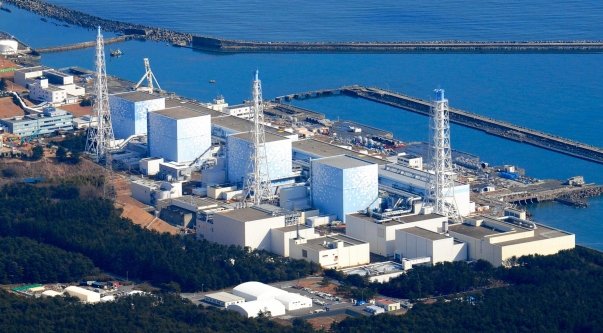
Nuclear reactor owned by Fukushima plant operator TEPCO to shut down again hours after restart.
By ASSOCIATED PRESS, 22 January 2026 https://www.dailymail.co.uk/wires/ap/article-15487139/Nuclear-reactor-owned-Fukushima-plant-operator-TEPCO-suspends-hours-old-restart.html
TOKYO (AP) – A reactor at the world’s largest nuclear power plant that restarted for the first time since the 2011 Fukushima nuclear disaster is now being shut down again Thursday due to a glitch that occurred hours after the unit’s resumption, its operator said.
The No. 6 reactor at the Kashiwazaki-Kariwa plant in north-central Japan reactivated Wednesday night for the first time in 14 years, as plant workers started removing neutron-absorbing control rods from the core to start stable nuclear fission.
But the process had to be suspended hours later due to a malfunction related to control rods, which are essential to safely starting up and shutting down reactors, the Tokyo Electric Power Company Holdings said.
TEPCO, which also manages the wrecked Fukushima plant, said there was no safety issue from the glitch.
Kashiwazak-Kariwa plant chief Takeyuki Inagaki told a news conference that he has decided to shut down the reactor to ensure safety. The operation had to stop when an alarm went off after 52 of the 205 control rods were removed from the core, he said. Inagaki said he hoped to start putting them back in later Thursday to bring the No. 6 reactor to a shutdown.
“The equipment is essential to safe operation, and we will examine it inside out,” he said, adding that the reactor will not be restarted until the cause is found and measures are taken.
“I don’t think this is going to be resolved in a couple of days,” Inagaki said.
The restart at the Kashiwazaki-Kariwa plant was being watched closely since TEPCO also runs the Fukushima Daiichi plant that was ruined in the 2011 quake and tsunami. Resource-poor Japan is accelerating atomic power use to meet soaring electricity needs.
All seven reactors at Kashiwazaki-Kariwa have been dormant since a year after the meltdowns of reactors at the Fukushima plant contaminated the surrounding land with radioactive fallout so severe that some areas are still uninhabitable.
TEPCO is working on the cleanup at the Fukushima site that´s estimated to cost 22 trillion yen ($139 billion). It’s also trying to recover from the damage to its reputation after government and independent investigations blamed the Fukushima disaster on TEPCO´s bad safety culture and criticized it for collusion with safety authorities.
Fourteen other nuclear reactors have restarted across Japan since 2011, but the Kashiwazaki-Kariwa plant, about 220 kilometers (135 miles) northwest of Tokyo, is the first TEPCO-run unit to resume production.
A restart of the No. 6 reactor could generate an additional 1.35 million kilowatts of electricity, enough to power more than 1 million households in the capital region.
The Kashiwazaki-Kariwa plant´s combined output capacity of 8 million kilowatts makes it the world´s largest, though TEPCO plans to resume only two of the seven reactors in coming years.
Chernobyl power plant LOSES external power supply after Russian attacks on Ukraine’s energy infrastructure, IAEA warns.
However, last month, Russia was thrown into complete darkness due to a power outage after Ukraine launched a series of drone strikes on Moscow.
Daily Mail By TARYN KAUR PEDLER, FOREIGN NEWS REPORTER, 21 January 2026
The Chernobyl power plant has lost its external power supply after a series of Russian attacks on Ukraine‘s energy infrastructure, the IAEA has warned.
The International Atomic Energy Agency Director General, Rafael Grossi, reported this morning that several Ukrainian power substations had been affected by large-scale military activity.
One of these was the Chernobyl Nuclear Power Plant, which lost all external power supply, as well as several other power lines to other nuclear plants.
‘The IAEA is actively monitoring developments to assess the impact on nuclear safety,’ added Director General Grossi.
It comes just a day after military intelligence officers in Ukraine warned that Russian missile strikes against the country’s power grid could lead to a ‘second Chernobyl’.
Ukrainian experts say that Vladimir Putin‘s ongoing bombardment of Ukraine’s power grid, cutting electricity and heating in freezing temperatures, could trigger a major disaster.
Serhiy Beskrestnov, a Ukrainian expert in electronic warfare, said that the missiles being launched at energy infrastructure are landing in close proximity to nuclear reactors – some just 300 metres away.
If a Russian strike against sucha substation were to miss, it could trigger a disaster, he warned.
He compared the impact of such an attack to the 1986 Chernobyl disaster, when a catastrophic explosion at the Chernobyl Nuclear Power Plant unleashed huge amounts of radiation, forcing hundreds of thousands of evacuations.
Taking to his Telegram channel on Monday, he said: ‘A miss by an Iskander or a Kinzhal could turn into a second Chernobyl’.
He added that the combination of a Russian strike against such substations, in an attempt to cause a nationwide blackout, as well as their track record for missing targets, made for a very dangerous situation……………………………………….
Ukrainian officials have introduced emergency measures, including temporarily easing curfew restrictions, allowing people to go to public heating centres set up by the authorities, Shmyhal said.
However, last month, Russia was thrown into complete darkness due to a power outage after Ukraine launched a series of drone strikes on Moscow.
Footage emerged from the Russian capital, showing entire tower blocks without light and dead street lamps due to the widespread blackout.
According to the Russian power company PAO Rosseti, over 100,000 residents of Ramensky, Zhukovsky, and Lytkarino were left without electricity in the dead of winter.
Russia claimed the power outage occurred due to an automatic shutdown at a high-voltage electricity substation, though it was unclear whether this was the cause or if it resulted from a Ukrainian drone strike.
Ukrainian President Volodymyr Zelensky’s former press secretary, Iuliia Mendel, said at the time: ‘Total blackout hits Moscow region is reported on social media.
‘Over 600,000 people plunged into darkness for more than four hours — no electricity, no mobile signal, total isolation. Drone threat declared across the oblast right now.’
The strike came in the dead of winter, with images revealing a thick layer of snow covering the frigid Moscow streets.
The reported attacks came just a day after Russia accused Ukraine, without providing evidence, of trying to attack President Vladimir Putin’s residence……. https://www.dailymail.co.uk/news/article-15480223/Chernobyl-power-plant-LOSES-external-power-supply-Russian-attacks-Ukraines-energy-infrastructure-IAEA-warns.html
Britain to extend life of ageing nuclear plants to keep the lights on
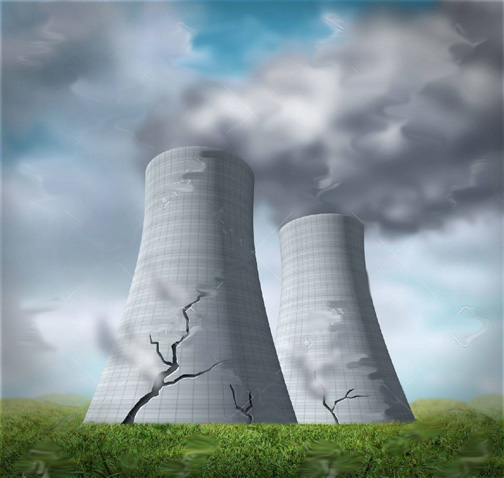
Hartlepool and Heysham 1 licenses prolonged to 2030 due to ‘dangerous gap’ in power supplies.
Jonathan Leake, Energy Editor, 21 January 2026
Two of Britain’s oldest nuclear power plants
could be kept running for an extra two years because of an acute
electricity shortage in the UK. Hartlepool and Heysham 1, owned by EDF,
were due to shut down in 2028, but ministers want to extend the operating
licences to at least 2030 because the UK faces “a dangerous gap” in
power supplies if they shut.
Both have already been operating for 42 years
despite being scheduled to close for safety reasons in 2008. EDF,
France’s state-owned power utility, which operates all five UK nuclear
stations, said it was working to keep the stations operational without
compromising safety. Mark Hartley, from EDF, said: “In November, the UK
Government said that the retirement of these Advanced Gas-Cooled Reactors
(AGRs) risks leaving a dangerous gap in Britain’s low-carbon energy
supply. “It is our ambition to generate from the remaining AGR stations
for as long as it is safe and commercially viable to do so, and we will
keep their lifetimes under review to assess whether further life extensions
can be achieved.”
Sizewell B, the UK’s largest nuclear plant, is
already due to operate until 2035, and EDF hopes to extend this to 2055.
Two other stations, Torness and Heysham 2, were originally scheduled to
close in 2023 and have been cleared to generate until March 2030 after EDF
invested £8.6bn in the fleet.
The fate of Heysham 1 and Hartlepool is less
certain and will depend on the results of safety assessments. AGR reactors
contain radioactive uranium fuel pellets surrounded by massive graphite
blocks that absorb the high-energy neutrons emitted by the fuel, thereby
controlling the nuclear reaction.
However, over time, these blocks tend to
crack due to the intense radiation and heat to which they are exposed. Such
cracks have already forced the closure of several other UK power stations.
EDF’s safety assessment will need to be ratified by the Office for
Nuclear Regulation, which will need to approve the extensions as safe.
Telegraph 21st Jan 2026, https://www.telegraph.co.uk/business/2026/01/21/britain-extend-life-ageing-nuclear-plants-keep-lights-on/
Chernobyl cooling systems have lost power but meltdown risk is low
An electrical outage at Chernobyl nuclear power plant risks dangerous fuel overheating, but experts say that the chances are extremely slim due to the age of the reactors, which were shut down over two decades ago
New Scientist, By Matthew Sparkes, 20 January 2026
An electrical outage at Ukraine’s Chernobyl Nuclear Power Plant has taken spent fuel cooling systems offline, leading to a potential risk of overheating and the release of dangerous levels of radiation – but due to the age of the fuel, it should be safe until power is restored.
The International Atomic Energy Agency (IAEA) reports that several Ukrainian electrical substations have been hit by Russian military strikes, causing power outages at Chernobyl. “The IAEA is actively following developments in order to assess impact on nuclear safety,” wrote IAEA director general Rafael Grossi in a post on X.
Spent nuclear fuel from reactors continues to emit radiation for years, creating heat that must be shed, or else the fuel can melt and emit a spike of dangerous radiation. The fuel from Chernobyl’s former reactors is stored in a large cooling pond that is constantly replenished with fresh, cold water to keep its temperature down.
But without an electricity supply – which the IAEA says the site now lacks – this cooling has stopped, which will allow the water temperature to rise and increase the rate of evaporation.
“When the fuel comes out of a reactor, it will be hot for a while, because there will be fission products and there will be radioactive and giving off gammas and betas and alphas – just emitting energy, which needs to be removed, otherwise it will eventually melt,” says Paul Cosgrove at the University of Cambridge.
Working in Chernobyl’s favour, however, is that its stored fuel is older and therefore has already had time to emit much of its radioactive energy and cool down. The risk now is lower than the risk was in 2022, for example, when New Scientist reported on similar power outages at Chernobyl.
“It is always a worry when a nuclear site loses power, but worry about nuclear risks is often several orders of magnitude above the risks associated with other events with similar consequences,” says Ian Farnan, also at Cambridge.
Chernobyl’s reactor 4 exploded in 1986, but reactor 2 was shut down in 1991, reactor 1 ceased generating power in 1996 and reactor 3 – the final one at the site – was decommissioned in 2000.
The exact specifications of the storage pools that contain the fuel left over from those reactors at Chernobyl are kept classified, says Cosgrove. But he is aware of an inspection by regulators in 2022, which found that the risk of spent fuel overheating in the case of a power outage was low. “This fuel has been sat in there for 20 years, so it will have decayed. More and more of that energy will be gone,” he says………………. https://www.newscientist.com/article/2512468-chernobyl-cooling-systems-have-lost-power-but-meltdown-risk-is-low/
1 This Month

of the week – Shut Down Drone Warfare!


Tell the Ukrainian Government to Drop Prosecution of Peace Activist Yurii Sheliazhenko

Petition to revoke the licensing of the Near Surface Nuclear Disposal Facility (NSDF) at Chalk River. https://www.ourcommons.ca/petitions/en/Petition/Details?Petition=e-7247
To see nuclear-related stories in greater depth and intensity – go to https://nuclearinformation.wordpress.com
-
Archives
- April 2026 (7)
- March 2026 (251)
- February 2026 (268)
- January 2026 (308)
- December 2025 (358)
- November 2025 (359)
- October 2025 (376)
- September 2025 (257)
- August 2025 (319)
- July 2025 (230)
- June 2025 (348)
- May 2025 (261)
-
Categories
- 1
- 1 NUCLEAR ISSUES
- business and costs
- climate change
- culture and arts
- ENERGY
- environment
- health
- history
- indigenous issues
- Legal
- marketing of nuclear
- media
- opposition to nuclear
- PERSONAL STORIES
- politics
- politics international
- Religion and ethics
- safety
- secrets,lies and civil liberties
- spinbuster
- technology
- Uranium
- wastes
- weapons and war
- Women
- 2 WORLD
- ACTION
- AFRICA
- Atrocities
- AUSTRALIA
- Christina's notes
- Christina's themes
- culture and arts
- Events
- Fuk 2022
- Fuk 2023
- Fukushima 2017
- Fukushima 2018
- fukushima 2019
- Fukushima 2020
- Fukushima 2021
- general
- global warming
- Humour (God we need it)
- Nuclear
- RARE EARTHS
- Reference
- resources – print
- Resources -audiovicual
- Weekly Newsletter
- World
- World Nuclear
- YouTube
-
RSS
Entries RSS
Comments RSS
 nuclear-news
