America’s Nuclear Battle Plan if Russia Went to War: Massive Bunkers Under U.S. Cities, National Interest,
A cold war story.by Steve Weintz 9 Dec 18, The history of civil defense in America is one of long neglect and avoidance since the Cuban Missile Crisis. “[P]eople just didn’t want to think about it . . . [I]f bomb shelters reduced casualties from, say, 100 million to 50 million, that still means tens of millions of dead,” says Mark, the author of Atomic Skies. Other than rusting yellow-and-black “Fallout Shelter” signs on public buildings, almost nothing remains of American civil defense efforts.
The special terror in nuclear deterrence reveals itself during natural rather than human-made disasters. Despite early warnings, extensive transport networks, government preparations and lots of money, thousands still suffer in the aftermath of great storms and fires. Nuclear-tipped ICBMs arrive with the surprise and speed of earthquakes, leaving whole populations sitting like ducks before the fury………
the RAND Corporation think tank in Santa Monica, California. A man working withHerman Kahn ,a large, big-idea thinker about nuclear war, suggested that if escape horizontally from the cities weren’t possible, then the cities should escape vertically—deep underground.
The superb blog Atomic Skieslays out the plan in detail , and what a plan it was. Robert Panero, the likely source of the concept, oversaw a Ford Foundation-funded study in 1957–58 that looked into digging vast bunker complexes under every major American city. Shelters for hundreds of thousands of people would be excavated eight hundred feet below the cities, deep enough to avoid even multi-megaton city-busting H-bombs. Shelter entrances as large as shopping-mall gates and as ubiquitous as subway stairs would connect to giant rampways able to move thousands to shelter within minutes.
Safe within their cavern-towns, the citizens would submit to wartime regimentation, sleeping in huge dormitories and eating in vast cafeterias under the supervision of cadres, exercising and bathing in groups. Americans then and now seem unlikely candidates for such stiff social structure.
The proposed project was stupendous—about half the U.S. GDP in 1957—but the goal was the preservation of 86 percent of the American people from a global thermonuclear war. Kahn & Panero’s proposal was vast, comprehensive and detailed. It also nearly killed civil defense.
Spurgeon Keeney, a member of the Gaither Committee, wrote of the social consequences of shelter regimentation:
“We became increasingly convinced that the distortion of society [by this] would be such [that] no one would tolerate it. . . There was no longer any question but that in a nuclear war you would lose the whole society, even though you could save lives with fallout shelters. The whole experience was extremely disturbing to me and many of the other participants. Was this really a way to solve the problem? The proposed solution seemed to lead to a garrison state.”
In 1959, something more congenial to the American way of life was envisioned by the students at the Cornell College of Architecture. In Professor Frederick Edmondson’s classes they worked out a detailed plan fora post–apocalyptic company town .
The nine thousand inhabitants of the proposed Schoharie Valley Township in upstate New York could enter their communal bomb shelters via the elementary schools and downtown buildings, survive a twenty-megaton strike ten miles away, and keep the factory running and the kids in school until the fallout died down.
The shelters and connecting tunnels would spend most of their days as community resources—meeting halls, shopping malls and additional transit corridors. But like many college projects, the potentially-workable Schoharie Valley Township project vanished despite its impressive list of corporate and government backers.
By framing the true scale of the problem, the RAND men may have frightened workable solutions away. President Eisenhower’s response to the Gaither Committe’s findings was grim as only a soldier’s can be: “You can’t have this kind of war. There just aren’t enough bulldozers to scrape the bodies off the streets.”
The history of civil defense in America is one of long neglect and avoidance since the Cuban Missile Crisis. “[P]eople just didn’t want to think about it . . . [I]f bomb shelters reduced casualties from, say, 100 million to 50 million, that still means tens of millions of dead,” says Mark, the author of Atomic Skies. Other than rusting yellow-and-black “Fallout Shelter” signs on public buildings, almost nothing remains of American civil defense efforts.And it need not have been, nor need it be. Switzerland, for example began a most but thorough program of shelter construction decades ago, by legally requiring all new construction to incorporate shelters. By the 1980s over 80 percent of the Swiss population had immediate access to hardened protection. As Herman Kahn argued, nuclear deterrence only works if your opponent believes you’ll risk Los Angeles for Moscow or Beijing. Serious civil defense makes such a threat credible; vacuous civilities about defense endanger everyone.
Nuclear safety groups criticize DOE order https://www.abqjournal.com/author/mhayden, BY MADDY HAYDEN / JOURNAL STAFF WRITER, , December 8th, 2018 SANTA FE, N.M. — Nuclear safety watchdog groups around the country are calling on the Department of Energy to rescind an order they fear will limit the board tasked with overseeing operations at some of the nation’s nuclear facilities and ultimately negatively affect safety at such facilities.
The Defense Nuclear Facilities Safety Board (DNFSB) has itself raised concerns over Order 140.1, “Interface with the Defense Nuclear Facilities Safety Board,” put into place by the DOE in April.
The board held a second public hearing on the order in Washington, D.C., on Nov. 28.
The DNFSB was created by Congress in 1988 to provide oversight and provide information to the public on safety issues at some DOE nuclear facilities.
“We are deeply concerned that Order 140.1 constrains crucial oversight activities of the DNFSB and thereby endangers public health and worker safety,” said Kathy Crandall Robinson of the Alliance for Nuclear Accountability during the late-November hearing.
Chief among the concerns with the order, which the DOE says is aimed at “clarifying” the roles of the department and DNFSB, is language that limits formal DNFSB oversight to issues of public safety as those beyond facility boundaries.
The order, Robinson said, “threatens to send us on a glide path back to a careless era as if this were a time when safety concerns and dangers at nuclear weapons facilities are shrinking.”
“They are not,” she added, citing plans to ramp up plutonium pit production at Los Alamos National Laboratory.
Lydia Dennett of the non-partisan Project on Government Oversight expressed concerns over the reasoning behind the order’s implementation, namely that the decision was possibly driven by government contractors.
“This policy makes it easier for contractors to hide any information they don’t want to come to light,” she said.
The order stipulates the DNFSB may not talk to contractor employees without getting authorization from management and DOE, according to the Alliance for Nuclear Accountability.
The Alliance for Nuclear Accountability represents more than 30 organizations located near DOE and National Nuclear Security Administration sites around the country, including the Albuquerque-based Southwest Research Information Center.
Don Hancock of the Southwest Research and Information Center pointed out in a news release sent by the alliance a 2011 DNFSB report that identified fire hazards at the Waste Isolation Pilot Plant in southeast New Mexico.
Three years later, an underground fire caused the temporary closure of the facility.
December 2018 Global Defense Security army news industryPOSTED, 08 DECEMBER 2018 A battery of Tor-M2 SAM (Surface-To-Air defense missile system) produced by Concern Almaz-Antey will enter in service with the 1146th Guards surface-to-air missile regiment deployed near a Belarusian nuclear power plant, which is under construction, Major General Igor Golub, the commander of the Air and Air Defense Forces of the Belarusian Armed Forces, said.
“Russia will supply another battery of Tor-M2 surface-to-air missile systems soon. They will come in service with the 1146th Guards surface-to-air missile regiment,” the commander quoted by the Belorusskaya Voennaya Gazeta military newspaper said.
Previous reports said that Concern Almaz-Antey had handed over a shipment of Tor-M2 surface-to-air missiles to the Belarusian Defense Ministry ahead of time. They had been assembled a month ahead of schedule. Belarus has received the fifth SAM shipment.
The 1146th surface-to-air regiment was revived in Belarus in 2017. The four-battery regiment is armed with Tor-M2 surface-to-air missiles. It protects the Belarusian airspace in the northwest covering the Belarusian nuclear power station.
The Tor-M2 is an upgraded version of the Tor-M1 short-range air defense missile system. The TOR-M2/M2E is designed by the Russian Defense Company Almaz-Antey. The TOR-M2 / M2E is designed to destroy aircraft, helicopters, aerodynamic UAVs, guided missiles and other components of high precision weapons flying at medium, low and extremely low altitudes in adverse air and jamming environment. The Tor-M2 missile system can be mounted on wheeled or tracked chassis.
The Tor-M2 can simultaneously engage up to 48 processed targets and ten tracked targets.The TOR-M2 can engage a target at the range from 1,000 to 12,000 m and to an altitude from 10 to 10,000 m.
David Lowry’s Blog 1st Dec 2018 Imagine the British Foreign Office response if North Korea and Iran said they would comply with their nuclear safeguards and verification inspection obligations, but would conduct the inspections themselves!
Ardrossan Herald 28th Nov 2018 THE chairman of Hunterston site stakeholders group has called upon the\ power station’s Reactor 3 to remain closed as a result of the increased number of cracks found in graphite bricks. It has been revealed that over 350 cracks have now been found, with concerns being raised as to the future operation of the plant.
However, owners EDF Energy closed reactor 3 earlier this year to carry out a more in-depth investigation, and have given
assurances that the cracks are ‘much narrower’ than set out than the safety parameters set which considerably lessens any danger.
Rita Holmes, chair of the Hunterston Site Stakeholder Group, said “If safety were indeed EDF’s number one priority, then reactor three would remain shut down. “As it is EDF is seeking permission to restart an aged reactor, which despite huge efforts and high cost, failed to back up its current safety case. The Hunterston keyway root cracking was not predicted to be so progressed. “There’s a lot at stake if the experts are wrong again.”
An EDF Energy spokesperson said: “The cracking only poses a potential challenge to the entry of the control rod in an extreme and highly unlikely (1 in 10,000 year) earthquake scenario and even then we have back-up systems which include super articulated control rods (designed to bypass distortions) and nitrogen plant which could be injected within
seconds to shut-down the unit.
During the most recent inspection of Reactor 3 we examined around a quarter of the core. As expected we identified a
number of new cracks. This number exceeded the operational limit of the existing safety case but was significantly mitigated by the cracks being much narrower than modelled in the safety case; something which was reported to the local site stakeholder group in June of this year. We have also carried out similar inspections on Reactor 4 and the case for return to service for that unit is currently with the ONR for review.” The return to service dates for the units which are cur rently on the REMIT website: Reactor 3 – 21 Feb 2019 and Reactor 4 – 14 Jan 2019. https://www.ardrossanherald.com/news/17261490.350-cracks-found-in-hunterston-reactor/
ACRO 15th Nov 2018 In the event of a serious nuclear accident, France is not ready. This is
the conclusion of a study of ACRO carried out for the ANCCLI (National
Association of Committees and Local Information Commissions). Indeed, the
lessons of the Chernobyl disaster were ignored, because it was an accident
described as “Soviet”, so impossible in France. Those of the Fukushima
disaster are slow to be taken into account. https://www.acro.eu.org/plans-durgence-nucleaire-en-france-forces-et-faiblesses/
The NRC states Edison must stop loading canisters until this issue is resolved. However, there is no method to inspect or repair cracking canisters and the NRC knows this.
Instead, the NRC should admit the Holtec system is a lemon — a significant defective engineering design — and revoke both San Onofre and Holtec dry storage system licenses.
The NRC should require all San Onofre thin-wall canisters be replaced with thick-wall transportable storage casks. These are the only proven dry storage systems that can be inspected, maintained, repaired and monitored in a manner to prevent major radiological releases and explosions.
California state agencies should revoke San Onofre permits and withhold Decommissioning Trust Funds until these issues are resolved.
The Navy should consider revoking the San Onofre Camp Pendleton lease until Edison agrees to replace thin-wall canisters with proven thick-wall transportable storage casks. This is a national security issue. If the NRC cannot do their job, maybe it’s time to bring in the Marines. The Navy has nuclear experts.
Watchdog groups call for Congress to protect nuclear weapons communities, Huntington News, Wednesday, November 28, 2018Watchdog groups from across the country are insisting the Department of Energy withdraw DOE Order 140.1, a controversial order that would compromise safety at dozens of facilities in the US nuclear weapons complex, and are asking key Congressional committees to annul the revised order and preserve the critically important prerogatives of the Defense Nuclear Facilities Safety Board (DNFSB).
The order, first announced by DOE in April, 2018, has drawn scrutiny from members of Congressional committees with oversight over the Energy Department. DOE Order 140.1 seeks to limit access to information and personnel by the Safety Board .
Kathy Crandall Robinson will speak at a November 28 hearing in Washington, DC, at which DNFSB is soliciting comments from Department officials and members of the public. “Order 140.1, with its degradation of DNFSB’s role and authority, threatens to send us on a glide path back to a careless era as if this were a time when safety concerns and dangers at nuclear weapons facilities are shrinking.
They are not,” Robinson says. “Instead, there are aging facilities, facilities operating where serious safety concerns have been raised, and some facilities where plans for increased production of nuclear weapons components could lead to novel dangers.
For example, the President’s Nuclear Posture Review calls for production of 80 plutonium pits per year by 2030 and plans are being laid for increased pit production at Los Alamos as well as new capabilities at Savannah River Site.”
Members of the Alliance for Nuclear Accountability, a national network of organizations that addresses nuclear weapons production and waste cleanup issues, hail the work of the DNFSB as a critical guard against DOE and National Nuclear Security Administration efforts to cut corners on safety. “The Safety Board works outside of the media spotlight,” said Tom Clements, Director of Savannah River Site Watch in Columbia, South Carolina. “Its value to the public is immeasurable. DNFSB frequently provides information about SRS operations which DOE fails to communicate.
The role of the Safety Board should be expanded, not curtailed.” Marylia Kelley, Executive Director of Tri-Valley CAREs in Livermore, California, said, “The DNFSB is absolutely vital to worker and public safety. I have spent 35 years monitoring Livermore Lab. I can tell you that workers and community members rely on the Safety Board to do its job every day!”
There has been great concern about extensive and extremely toxic and radioactive waste at the SSFL for years.
According to Daniel Hirsch, who recently retired as director of the Program on Environmental and Nuclear Policy at the University of California, Santa Cruz, SSFL is “one of the most contaminated sites in the country
There are multiple human health impacts that have been known to stem from the site well before the Woolsey Fire began.
A study prepared by Professor Hal Morgenstern for the federal Agency for Toxic Substances and Disease Registry studied the community surrounding SSFL and found a greater than 60 percent increase in incidence of key cancers associated with proximity to the site.
“DTSC is a classically captured regulatory agency, captured by the polluters it is supposed to regulate,”
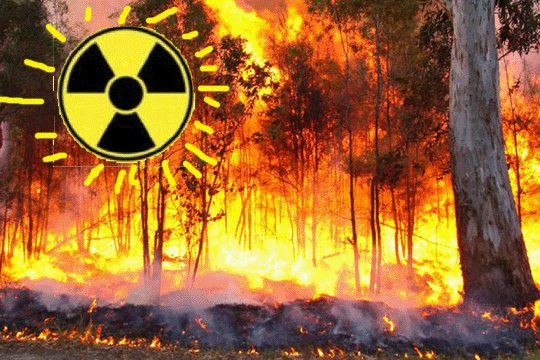
The fire may also have released large amounts of radiation and toxins into the air after burning through a former rocket engine testing site where a partial nuclear meltdown took place nearly six decades ago.
“The Woolsey Fire has most likely released and spread both radiological and chemical contamination that was in the Santa Susana Field Laboratory’s soil and vegetation via smoke and ash,” Dr. Bob Dodge, president of Physicians for Social Responsibility-Los Angeles (PSR-LA), told Truthout.
The fire has been widely reported to have started “near” the Santa Susana Field Laboratory site (SSFL), but according to PSR-LA, it appears to have started at the site itself.
The contaminated site — a 2,849-acre former rocket engine test site and nuclear research facility — is located just 30 miles northwest of downtown Los Angeles.
Measuring 5.0 on the Richter scale, the quake, which hit the Japanese city at about 11.30pm local time on Friday is not believed to have caused major damage.
One Twitter user said it could be felt as far away as the country’s capital 150 miles to the south-west: ‘It was an earthquake? I felt that too! I’m staying in Tokyo and I just felt my whole Airbnb shake!’
Another said he felt a ‘long rattling in Yokohama’ – which is even further away from the Fukushima region. Despite the earthquake, no tsunami warning had been issued last night.
More than 100,000 people were displaced from the city in 2011 after a 15-metre tsunami sparked by a major earthquake led to a massive explosion in a nuclear plant.
About 18,000 people were killed by the tsunami while the explosion was said to have been the worst nuclear disaster since Chernobyl in 1986.
Low-level radioactive waste stored at Tokai research facility near Tokyo may leak, agency says, Japan Times, KYODO, 23 Nov 18 The Japan Atomic Energy Agency said Wednesday that some of the low-level radioactive waste stored underground at a facility near Tokyo may leak from its containers due to inadequate disposal procedures.
The government-backed agency keeps 53,000 drums of low-level radioactive waste, or about 10,600 kiloliters, in a concrete pit in the basement of a building of the Nuclear Research and Science Institute in the village of Tokai, Ibaraki Prefecture.
Some of the waste did not undergo the proper water removal process when placed in the pit, and leakage and corroded containers in the pit were found during inspections between 1987 and 1991, according to the agency.
THEY OCCURRED IN 1959, 1964, 1969, Doug Carrol 19 Nov 18
“Until 2006, the site was operated by private corporations for federal agencies — chiefly NASA. The problems there began in 1959, when a nuclear reactor partially melted down, contaminating portions of the hilltop facility and spewing radioactive gases into the atmosphere. That incident wasn’t publicly disclosed until 1979. By then, more mishaps had followed, including reactor accidents in 1964 and 1969. The worst contamination is thought to be in a parcel known as Area IV, where the meltdown occurred”
20 years of the worst radioactive shit in the universe accumulated in simi valley, where the horrendous fire occured this past week. The place has not been cleaned up. The fires, that englufed Ventura county and Malibu. 3 nuclear meltdowns occured at Santa susana in a 10 year period. Multiple ignitions of shitty nuclear reactor engines, that just spewed radioactive shit into the valley, everytime they fired it off. The recent fires in ventura county, picked up that cesium 137, plutonium yada yada yada, and suspended it in the air all over so cal. Everyone there is breathing it.
I knew a Doctor raised south of Santa Susana. His one and only child, was born deaf and blind with deformities. His three siblings died of cancer, at relatively young ages.
Frank Zappa was from lancaster, and went to High School close to there. His father was affiliated with government research close to santa susana. FRANK may not have been in Lancaster when the first meltdown occured, but there was nuclear research there in the early 50s.
Watch for a massive uptick in the incidence of Reactive airway disease, intractable respiratory infections in children this winter. Watch for a large spike cancer, in the next few years in socal.
Pediatric Cancers Near the Santa Susana Field Laboratory
Frank Zappa died of the most hideous, fast growing metastatic-prostate cancer possible. That was at age 53. Continue reading →
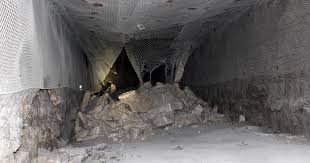
Nuke dump managers: There was waste near ceiling collapse ,By SUSAN MONTOYA BRYAN November 17, 2018 ALBUQUERQUE, N.M. (AP)— Operations at the federal government’s nuclear waste repository in southern New Mexico resumed Friday as managers acknowledged there was radioactive waste in the area where a portion of the underground facility’s ceiling collapsed earlier this week.The acknowledgement came a day after the U.S. Energy Department announced there had been a rock fall at the Waste Isolation Pilot Plant. The agency’s office in Carlsbad initially said there was no waste in the area, but watchdogs voiced concerns.
The radioactive waste included two canisters that were encapsulated in holes bored into the salt formation that makes up the walls and ceilings of the repository and its underground disposal rooms. There also were pieces of equipment in the room where the collapse happened that were contaminated by a 2014 radiation release.
Watchdogs pointed to agency documents and testimony during a recent hearing, saying officials knew what was in the room.
“For them to say there’s no waste, that’s just worse than false,” said Don Hancock with the Southwest Research and Information Center, an Albuquerque-based watchdog group. “Documents available to the public show 320,000 pounds of contaminated equipment in the room. That is waste. They know that.”
Hancock said the equipment contains fuel and other fluids that have never been drained, since crews have been kept out of the area for more than two years due to safety concerns.
Wednesday’s collapse prompted an evacuation. Workers heard a loud thud while doing inspections underground, so they left the area and all work was stopped………..
Access in the underground disposal area has been limited in the wake of the 2014 radiation release, which was caused by an inappropriately packed drum of waste that had come from Los Alamos National Laboratory. That release contaminated part of the area, forcing the closure of the repository for nearly three years and resulting in a costly recovery. https://apnews.com/b5902544d58f4b10bd352f15f0651a5d
Ticking time bomb giant stockpile of nuclear waste endangers USA
A Fukushima waiting to happen? Huge stockpile of nuclear waste on California fault line threatens US https://www.rt.com/usa/444089-california-nuclear-san-onofre/16 Nov, 2018 Millions of pounds of toxic waste are being buried under the site of a privately owned former nuclear power plant in California. The only problem? Experts warn that it sits on a major fault line — and in a tsunami zone.
The San Onofre nuclear plant, located just 108 feet from a popular beach, was shut down in 2015 after a leak was discovered. Now, the Southern California Edison energy company is burying the nuclear waste at the failed site — a move which has been approved by federal regulator
Charles Langley, the executive director of Public Watchdogs, told RT that the situation at San Onofre is of “grave concern” because spent nuclear fuel and water “don’t mix.”
Langley claimed that research carried out by experts which highlighted the extreme risks of storing the waste at the facility was “suppressed” by the very government agency responsible for protecting public health and safety.
“There are actually fault lines that run underneath the facility. We’ve documented this in geological reports that were suppressed by the Nuclear Regulatory Commission. It’s in a Tsunami zone and it’s also extremely vulnerable to terrorist attacks.”
So far, 29 of 73 canisters of waste are below the surface of the ground. Langley warns, however, that the canisters are unequipped to store the toxic nuclear waste. The warranty for the containment system is only for 10 years “and the canisters themselves are only guaranteed to last 25 years,” he said.
Nina Babiarz, a board member at Public Watchdogs, told RT that “there should have been a requirement for an underground monitoring system before one can even went in the ground.”
Babiarz believes the San Onofre plant is a ticking time bomb.
“It’s still very prevalent to me that this not only could happen, but it has happened at Three Mile Island, of course it has happened at Chernobyl, it’s happened at Fukushima — and lest we forget, it could happen at San Onofre,” she said.
Edison refused to answer any of RT’s questions. On its website, however, the company says they are “being proactive in seeking out options for the relocation of the fuel, including an off-site facility.”
But San Onofre is not the only nuclear site causing concern to scientists and environmentalists in California.
The Santa Susana Field Laboratory — a highly classified former nuclear testing site, which was the location of the worst nuclear meltdown in nuclear history — was scorched in the California wildfires. During the 1959 disaster, 459 times more radiation was leaked there than during the infamous 1979 Three Mile Island meltdown in Pennsylvania.
Physicians for Social Responsibility say that the toxic materials in the soil and vegetation could become airborne in smoke and ash. More than half a million people live within 10 miles of the area.
Investigative journalist Paul DeRienzo told RT that given the site’s classified status, it’s no surprise that Americans don’t know much about the place.
“It was a tremendous accident [in 1959] that gave off more radiation than Three Mile Island did — and other than that, very little is known. It’s a highly classified site and whatever we learn about it, we learn in dribs and drabs over a long period of time,” DeRienzo said.
Asked whether government assurances that the site is safe could be believed, DeRienzo warned against trusting official guarantees.
“You can’t, because it’s classified, because a lot of the things that happened at Santa Susana were classified and therefore there are things that they’re just never going to tell you and only accidentally does it come out,” he said.