Nuclear theft and sabotage threats remain high, report warns
Social unrest contributes to the US’s lack of improvement in the biennial ranking of how well countries protect against theft of weapons-usable materials. Physics Today, David Kramer, 14 Sept 18,Nations must drastically improve cybersecurity protection to guard against thefts of nuclear materials or acts of nuclear sabotage, according to an exhaustive global analysis released 5 September by the nonprofit Nuclear Threat Initiative (NTI). One-third of the 44 countries and Taiwan that possess weapons-usable nuclear materials or have reactors, reprocessing plants, and other nuclear facilities lack even the most basic cyberprotections, the NTI reports in its Nuclear Security Index. And although the US received a high grade for its cyberdefenses, it still needs to improve its overall level of protection.
The pace of cyberattacks on nuclear facilities has accelerated in recent years, according to the report. The authors cite multiple incidents that were publicly reported in 2016, including viruses discovered in computer systems at the Gundremmingen Nuclear Power Plant in Germany and the theft of tritium research from the University of Toyama’s Hydrogen Isotope Research Center in Japan. In addition, a former US Department of Energy and Nuclear Regulatory Commission employee pleaded guilty to charges stemming from an attempt via spear-phishing emails to fraudulently gain confidential information from dozens of DOE employee accounts.
Taiwan and 12 countries, including the US, received the highest grade from the NTI for their defenses against cyberthreats. But many other countries have not upgraded their cyberdefenses since 2016, the last time the NTI conducted its review. The report notes that nations with the largest number of sites are more likely to have cyber-nuclear regulations in place. The NTI recommends that those nations share their expertise and information on threats and vulnerabilities with less advanced countries. It also calls for countries to impose cybersecurity requirements at their nuclear facilities and to increase the number and quality of cyber-nuclear experts at sites.
Among the 22 nations that possess at least 1 kilogram of separated plutonium or highly enriched uranium, the US and Russia came in 12th and 17th, respectively, for their overall level of protections from thefts. The two nations hold the vast majority of weapons-usable materials. Factors considered in the report card besides cyberdefenses include quantities of materials and the number of sites where they are located, security and control measures, and adherence to international norms and agreements.
The US is down one place on the list from 2016 due to “heightened social unrest, resignations and vacancies from key government departments, and the increasingly deep polarization of political party politics.” Changes in regulatory policies require effective governance and bipartisan support, explains Hilary Steiner, a report coauthor from the consulting firm Economist Intelligence Unit. She cites large-scale demonstrations over the past two years, including the violent 2017 rally in Charlottesville, Virginia, as examples of social unrest that could adversely affect US nuclear regulatory policy……..
Besides the US and Russia, the declared nuclear weapons states ranked 11th (France), 12th (the UK, tied with the US), and 14th (China). Undeclared weapons states Israel, India, and Pakistan were near the bottom of the list, at 18th, 19th, and 20th, respectively. The states judged to be most vulnerable to nuclear theft were Iran and North Korea.
U.S. needs a safer way to store nuclear waste, As Hurricane Florence bears down on the Carolinas, the country is confronting a reality it normally ignores. Newsday, The Editorial Board, September 13, 2018
As Hurricane Florence bears down on the Carolinas, the United States is confronting a reality it normally ignores. This nation has no permanent, safe disposal site for the 90,000 metric tons of nuclear waste it has created in power and weapons plants. This waste is largely stored where it was generated, often in vulnerable above-ground tanks — at 80 sites in 35 states, including New York.
Nine of those sites, from northern Georgia to North Carolina, are in the potential path of Florence. Several were built with the same technology as the Fukushima power plant in Japan, whose reactors and waste storage were tragically compromised by a tsunami in 2011……..
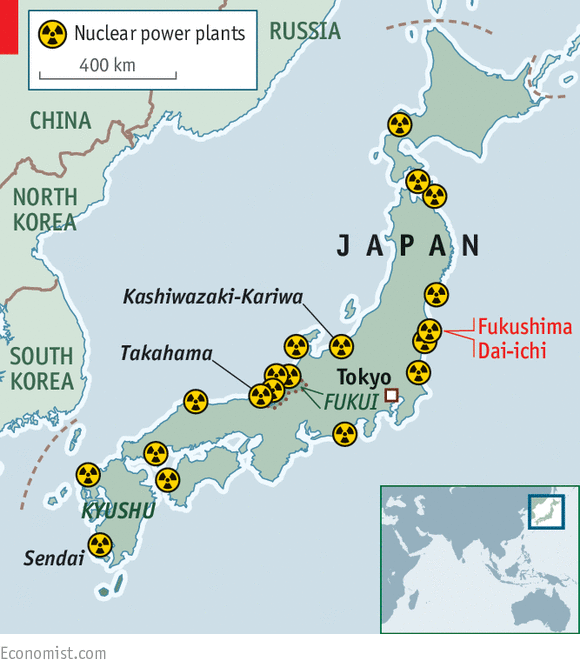
A NUCLEAR PLANT BRACES FOR IMPACT WITH HURRICANE FLORENCE, Wired, MEGAN MOLTENIMEGAN MOLTENI 13 Sept 18 I N MARCH 11, 2011, a one-two, earthquake-tsunami punch knocked out the safety systems at the Fukushima Dai-ichi nuclear power plant, triggering an explosion of hydrogen gas and meltdowns in three of its six reactors—the world’s worst nuclear disaster since Chernobyl. Fukushima’s facility was built with 1960s technology, designed at a time when engineers underestimated plant vulnerabilities during natural disasters. In the US, 20 plants with similar designs are currently operating.
One of them is slated for a head-on collision with Hurricane Florence. Duke Energy Corp’s dual-reactor, 1,870-megawatt Brunswick plant sits four miles inland from Cape Fear, a pointy headland jutting out into the Atlantic Ocean just south of the city of Wilmington, North Carolina. Brunswick has survived decades of run-ins with hurricanes, but Florence could be its biggest test yet. The plant perches near the banks of the Cape Fear River, which drains 9,000 square miles of the state’s most densely populated regions. Like Hurricane Harvey in 2017, Florence is predicted to stall out for days, pounding the Carolinas with unrelenting amounts of water, leading to life-threatening storm surges and catastrophic flooding. NOAA’s National Hurricane Center is projecting 110 mile-per-hour winds, waves as high as 13 feet, and in some places, up to 40 inches of rain.
Duke Energy Corp’s dual-reactor, 1,870-megawatt Brunswick plant sits four miles inland from Cape Fear, a pointy headland jutting out into the Atlantic Ocean just south of the city of Wilmington, North Carolina. Brunswick has survived decades of run-ins with hurricanes, but Florence could be its biggest test yet. The plant perches near the banks of the Cape Fear River, which drains 9,000 square miles of the state’s most densely populated regions. Like Hurricane Harvey in 2017, Florence is predicted to stall out for days, pounding the Carolinas with unrelenting amounts of water, leading to life-threatening storm surges and catastrophic flooding. NOAA’s National Hurricane Center is projecting 110 mile-per-hour winds, waves as high as 13 feet, and in some places, up to 40 inches of rain.
They’re part of a sweep of changes nuclear plants around the US have adopted post-Fukushima……….
Duke predicted a maximum storm surge of 7 feet at the plant’s safety-related buildings. But the plant was originally designed to cope with only 3.6 feet of expected surge, according to the NRC’s 2017 summary assessment of Duke’s hazard reevaluation report, which has not been made public.
In a letter earlier this year, the NRC reminded Duke that the plant’s current design falls short of the reevaluated flood risks. According to Burnell, Duke has since submitted an assessment of how it will cope—including the use of those steel door reinforcements—which the NRC is still evaluating. “The review is not complete but there’s nothing in there to this point that causes us any concern,” says Burnell………….
Storms can be unpredictable, however. Dave Lochbaum, who directs a nuclear safety watchdog group at the Union of Concerned Scientists, has spent a lifetime studying nuclear failures. Brunswick troubles him because in 2012, Duke found hundreds of missing or damaged flood protections at the plant, such as cracked seals and corroded pipes. According to the group, none of the NRC’s subsequent reports have mentioned repairs. “Hopefully they’ve been fixed,” says Lochbaum. “But we’ve not been able to confirm that with the available documentation.”………
In its 2012 post-Fukushima review, Florida Power & Light told the NRC that flood protections at its St. Lucie plant on South Hutchinson Island were adequate, despite failing to discover six electrical conduits with missing seals in one of the emergency core cooling systems. Two years later, a freak storm inundated Florida’s central coast with record rainfall, flooding one of the plant’s reactors with 50,000 gallons of stormwater. The deluge submerged core cooling pumps, rendering them useless. Had the reactor faltered during the storm, the plant would not have been able to maintain a safe and stable status beyond 24 hours, according to an NRC notice of violation issued to FPL after the incident………https://www.wired.com/story/a-nuclear-plant-braces-for-impact-with-hurricane-florence/
Officials prep toxic waste sites, nuclear power plants ahead of Hurricane Florence’s arrival, By Amanda Schmidt, AccuWeather staff writer, September 12, 2018, Hurricane Florence could cause an environmental and public health disaster, as heavy rains may overwhelm pits holding toxic waste from power plants, industrial sites or animal-manure lagoons. This toxic waste could wash into homes and threaten drinking water supplies………
Hurricane Florence could cause an environmental and public health disaster, as heavy rains may overwhelm pits holding toxic waste from power plants, industrial sites or animal-manure lagoons. This toxic waste could wash into homes and threaten drinking water supplies. …….
Steve DaleNuclear Fuel Cycle Watch South Australia, 14 Sept 18 This report on North Carolina reactors by the Union of Concerned Scientists –
“Today more than 3,400 metric tons of spent fuel is stored in North Carolina. Over 85% of that spent fuel is stored in large pools of water called spent fuel pools, which are equipped with systems to cool the water that surrounds the hot fuel rods.”
“While concerns about nuclear power safety often focus on the fuel in the reactor core, spent fuel stored in pools also can be a major source of radioactivity during an accident. If water drains from the pool for even a few hours or the cooling system is interrupted for several days, the spent fuel could overheat and its cladding could break open, releasing radioactive material. And because the pools are located outside the thick, concrete containment walls, it is more likely that this radioactive material would reach the environment”
This is good news for the nuclear reactors in its path. However, as torrential rain is predicted, it surely still remains a threat to reactors close to the sea in low-lying areas.
Hurricane Florence weakened to Category 2 by ‘tremendous’ wind shear By Chelsea Prince Zachary Hansen, The Atlanta Journal-Constitution Sept 13, 2018Hurricane Florence has weakened to a Category 2 storm in the Atlantic Ocean, according to the 11 p.m. projection by the National Hurricane Center.
Of course, the nuclear propagandists hasten to tell us that there’s “no problem” . James Conca writes in Forbes, Hurricane Florence No Problem For Nuclear Power Plants, (Forbes, 12/09/18) “…….. The United States Nuclear Regulatory Commission (NRC) is watching carefully. But no one is really worried that much will happen, contrary to lots of antinuclear fearmongering.”
At least twelve operating nuclear reactors are in the predicted path of Hurricane Florence, which has been upgraded to a category 4 storm as it surges toward the U.S. East Coast. According to the U.S. Nuclear Regulatory Commission, which offers an interactive map of active nuclear reactors, two plants are vulnerable to both heavy rainfall and the expected storm surge which could bring a surge of up to 20 feet of ocean water pouring into coastal areas.
Those two reactors, located NE of Myrtle Beach, North Carolina, are known as “Brunswick Steam Electric Plant, Unit 1” and “Brunswick Steam Electric Plant, Unit 1.”
Each unit produces nearly 1,000 MWe of electricity, and they are both built on the General Electric “Type 4” power plant design, which is almost identical to the GE nuclear power plant design used in the Fukushima-Daiichi reactors in Japan. All of these reactors are designed and constructed as “boiling-water reactors” or BWRs. The designs are decades old, and they are subject to catastrophic failures and even core meltdowns that release radioactive isotopes directly into the atmosphere and surrounding areas……… https://www.naturalnews.com/2018-09-1
at left – Dr Pangloss who famously proclaimed “Everything for the best, in the best of all possible worlds”
Six nuclear power plants are in Hurricane Florence’s path, officials say, CNN, By Ellie Kaufman, Gregory Wallace and Rene Marsh, CNN September 13, 2018 “……..The six nuclear power plants in North and South Carolina sit directly in the storm’s projected path, according to Mary Catherine Green, spokeswoman for Duke Energy, which owns all six.
Duke’s Brunswick Nuclear Plant and its Shearon Harris Nuclear Plant near Raleigh, both in North Carolina, are the closest to where the hurricane is forecast to make landfall, Green said.
In a press briefing, Jeff Byard, associate administrator for the FEMA Office of Response and Recovery, said the agency was not concerned about the power plants in the storm’s path “at this time.”……
However, The Union of Concerned Scientists, a science-oriented public policy organization, is concerned about the Brunswick plant’s ability to withstand the storm, because of what the group says is a lack of publicly available information about the plant’s readiness. According to the group, the Nuclear Regulatory Commission has not released public information validating that the plant has been properly updated to protect against flooding.
In 2012, Duke Energy reported to the NRC that there were hundreds of “missing or degraded flood barriers” at the plant. The follow-up report sent to the NRC by Duke Energy in 2015 was not made publicly available, according to The Union of Concerned Scientists.
With 1.5 million residents now under orders toevacuate their homes in preparation for Hurricane Florence’s landfall in Virginia, North Carolina, and South Carolina, the region faces the possibility of catastrophe should the storm damage one or more of the nuclear power plants which lie in its potential path.
As the Associated Pressreported on Monday, “The storm’s potential path also includes half a dozen nuclear power plants, pits holding coal-ash and other industrial waste, and numerous eastern hog farms that store animal waste in massive open-air lagoons.”
The plants thought to lie in the path of the hurricane, which is expected to make landfall on the Southeastern U.S. coast on Thursday, include North Carolina’s Brunswick Nuclear Power Plant in Southport, Duke Energy Sutton Steam Plant in Wilmington, and South Carolina’s V.C. Summer Nuclear Station in Jenkinsville.
“Florence will approach the Carolina coast Thursday night into Friday with winds in excess of 100mph along with flooding rains. This system will approach the Brunswick Nuclear Plant as well as the Duke-Sutton Steam Plant,” Ed Vallee, a North Carolina-based meteorologist, toldZero Hedge. “Dangerous wind gusts and flooding will be the largest threats to these operations with inland plants being susceptible to inland flooding.”
In 2015, the Huffington Post and Weather.comidentified Brunswick as one of the East Coast’s most at-risk nuclear power plants in the event of rising sea levels and the storm surges that come with them.
As of Tuesday afternoon, Hurricane Florence was thought to have the potential to cause “massive damage to our country” according to Jeff Byard, associate administrator of the Federal Emergency Management Agency (FEMA).
The storm was labeled a Category 4 tropical storm with the potential to become a Category 5 as it nears the coast, with 130 mile-per-hour winds blowing about 900 miles off the coast of Cape Fear, North Carolina.
Meteorologists warned of hurricane-force winds in the region by mid-day Thursday, with storm surges reaching up to 12 feet or higher.
NRC To Inspect San Onofre Nuclear Plant After Waste Canister Incident, NPR, 10 Sep 18, The transfer of nuclear waste to storage canisters at the San Onofre nuclear power plant in southern California has been put on hold, after a near accident last month. The plant closed in 2013.
RACHEL MARTIN HOST: The San Onofre nuclear power plant in Southern California was officially shut down back in 2013. But a plan to transfer the spent fuel into storage canisters on the site has run into problems. The efforts to store the waste have been put on hold after a near accident last month. The Nuclear Regulatory Commission is sending an inspection team there this week to review what happened. Alison St. John of member station KPBS has the story.
SOUNDBITE OF WAVES CRASHING)
ALISON ST JOHN, BYLINE: The waves break against aseawall here at San Onofre State Beach. Behind me, surfers skim the water. This is one of the top five most popular state parks in California with 2.5 million visitors a year. To my left, just on the other side of the seawall, lie rows and rows of concrete bunkers. Many of them are already full of high-level nuclear waste from the nuclear power plant that’s been decommissioned.
MIKE AGUIRRE: It’s a ticking time bomb. It’s a sword of Damocles, and it’s hanging over our head.
ST JOHN: In 2015, attorney Mike Aguirre filed suit against the California Coastal Commission for granting a permit to store the waste on-site right next to the Pacific Ocean.
AGUIRRE: There will be a major problem – incident – at San Onofre sometime. It may be in the short term. It may be in the long term.
ST JOHN: The nuclear power plant shut down six years ago after its operator, Southern California Edison, discovered a radioactive leak in new steam generators. With no permanent storage site for the nation’s nuclear waste, Edison decided to store the highly radioactive spent fuel rods on-site in partiallyburied canisters embedded in concrete about 100 feet from the high-tide line.
AGUIRRE: San Onofre is a national problem if there’s a major incident there because it will affect the economy of this whole region.
ST JOHN: Concern was heightened when this happened. At a recent community meeting, David Fritch, a safety inspector, stood up to speak.
(SOUNDBITE OF ARCHIVED RECORDING)
DAVID FRITCH: I may not have a job tomorrow for what I’m about to say, but that’s fine ’cause I made a promise to my daughter that if no one else talked about what happened, I would.
ST JOHN: Fritch described a near accident when a canister of radioactive spent fuel being transferred from a cooling pond got hung up as it was being lowered into a concrete vault………….
GREG JACZKO: Realistically, they’re not going to move them out.
ST JOHN: Jaczko headed the Nuclear Regulatory Commission in 2012 when San Onofre was shut down.
JACZKO: So those permits will be extended, the operational period will be extended repeatedly, and you will have a de facto burial site there.
ST JOHN: Jaczko is one of a growing number of voices raising the alarm about the decision to bury the spent fuel near the beach. An estimated 8 million people live within 50 miles of San Onofre. And of course there’s earthquakes and the possibility that sea level rise could eventually reach the bottom of the canisters before they’re moved. The Nuclear Regulatory Commission will evaluate Edison’s handling of the near miss accident and decide when the company can resume transferring the waste from cooling pools into the bunkers by the sea. For NPR News, I’m Alison St. John in San Diego.(SOUNDBITE OF ARCHIVED RECORDING) https://www.npr.org/2018/09/10/646213870/nrc-to-inspect-san-onofre-nuclear-plant-after-waste-canister-incident
Tomari nuclear plant using emergency generators, Japan’s nuclear regulatory body says the Tomari nuclear power plant in Hokkaido is using emergency generators to cool fuel after the region was hit by a powerful earthquake.
The plant’s operator Hokkaido Electric Power Company says all 3 channels from outside power sources were cut off about 20 minutes after the quake struck early Thursday.
The plant’s 3 reactors are all currently offline, with a total of 1,527 fuel assemblies in its storage pools.
Following the quake, 6 emergency diesel-powered generators automatically switched on to cool the nuclear fuel. No changes in storage pool water levels or temperature have been reported. The Nuclear Regulation Authority and Hokkaido Electric say it is not yet clear when outside power sources will be restored, with all thermal power plants in Hokkaido currently shut down.
The emergency generators will be able to keep the Tomari plant running for at least 7 days, based on diesel fuel supplies stored on its premises.
They added that the earthquake did not seem to cause any irregularities in key plant facilities and radiation monitoring posts have shown no change.
Why is the danger to nuclear power plants not mentioned?
In previous years, and especially since the Fukushima nuclear catastrophe, journalists have outlined the risks that typhoons pose to nuclear power plants,
But this year, despite Japan’s accumulating radioactive wastes and continuing Fukushima nuclear mess – mainstream media does not mention the nuclear risk. All part of the propaganda buildup for the 2020Olympic Games, including the lie that the Fukushima nuclear wreck is now safe.
By North Asia correspondent Mark Willacy16 Sep 2013
Is Fukushima capable of withstanding a super typhoon? , DW 2015 “….. Apart from physical damages to construction equipment, we could expect radioactive isotopes from contaminated surfaces being washed away and transported into the groundwater or the sea. Over the past days, the concentration of radioactive substances in the groundwater has increased significantly at some of the plant’s measuring points and, according to TEPCO, this was caused by the recent heavy rains.
TYPHOON Jebi will make landfall in southern Japan on Tuesday as damaging winds, flooding and mudslides are expected to hit the country. But where is the typhoon now and will it hit the capital Tokyo?
Typhoon Jebi smashed into Japan on Tuesday, barreling across the mainland at speed in a northeasterly track.
Japan issued evacuation advisories for more than 1 million people and cancelled hundreds of flights in the face of extremely strong winds and heavy rain hammered the country.
AccuWeather senior meteorologist Adam Douty said: “Damaging winds and coastal flooding may be the most significant impacts with this storm.
Where is Typhoon Jebi now?
Typhoon Jebi is currently located just north of Kyoto, traveling back out into the sea in a northeasterly direction.
The storm avoided a direct hit with capital Tokyo, but the city is still expected to bear the brunt of winds of more than 60mph.
Osaka and Kobe also took a hammering from the storm when they were struck earlier on Tuesday, after Jebi moved in from Honshu. The storm made landfall on Shikoku, the smallest main island, around noon.
Jebi then raked across the western part of the largest main island, Honshu, near the city of Kobe, several hours later, heading rapidly north.
Wind gusts of up to 208 km/h (129 mph) were recorded in one part of Shikoku, with forecasts for gusts as high as 216 km/h (135 mph).
Around 100 mm (3.9 inches) of rain drenched one part of the tourist city of Kyoto in an hour, with as much as 500 mm (20 inches) set to fall in some areas in the 24 hours to noon on Wednesday. The Meteorological Agency advised the public to be on the lookout for even more flooding and mudslides, as well as high tides.
Prime Minister Shinzo Abe told a meeting of the government and ruling parties: “We have seen typhoons and torrential rains.
“The government will do its utmost to prevent disaster.
Jebi – whose name means “swallow” in Korean – was briefly a super typhoon and is the latest harsh weather to hit Japan this summer.
Japan has been hit by extreme weather since the beginning of July and western parts of the country have been left devastated by flooding and landslides, leaving more than 220 people dead.
typhoon Jebi’s course has brought it close to parts of western Japan hit by rains and flooding but the storm was set to speed up after making landfall, minimising the amount of rain that will fall in one place.
The country has experienced record-breaking heat as well as floods and landslides.
Tropical Storm Gordon Warning For US Gulf Coast: Reminder Of The Dangers Of Mixing Severe Weather With Nuclear Power; Another Tropical Storm In Atlantic , Mining Awareness, 4 Sept 18
It’s that time again. Time for tropical storms and hurricanes, and time to remember the increased dangers of nuclear power stations (orange skulls on map) during severe weather, which can lead to power outages and power surges, as well as storm surges, flooding and more.
Nuclear power stations are dangerous and unreliable electricity sources in extreme weather. One of the most dangerous, and often ignored, things about nuclear energy is that nuclear power stations always have need for backup energy supplies for cooling of the nuclear reactors, and spent fuel pools, as dramatically demonstrated by the never-ending Fukushima Daiichi nuclear disaster. If they lose offsite power, then they are dependent upon backup generators, which can fail to start, fail once started or run out of fuel. In Louisiana, a thunderstorm led to a scram at River Bend Nuclear Power Station due to a power surge, followed by a loss of cooling, supposedly the next day. Loss of cooling can lead to a nuclear meltdown, if not corrected quickly enough.
More leaks discovered at troubled SC nuclear fuel factory; feds investigating, The State.com BY SAMMY FRETWELL, sfretwell@thestate.com August 31, 2018 HOPKINS
The U.S. Nuclear Regulatory Commission will take a closer look at a troubled nuclear fuel factory on Bluff Road as information surfaces about leaks that date back at least a decade, federal officials said.
NRC officials said they have learned about leaks from 2008 that were not reported to the agency by Westinghouse, the owner and operator of the 49-year-old atomic fuel assembly plant. The NRC said it should have been told about the pollution leaks, even though notice was not always legally required.
To learn more, the NRC will reopen an environmental study of whether the Westinghouse facility poses a danger to Richland County if the company receives a new operating license, agency officials said at a community meeting Thursday night in Hopkins.
Westinghouse is seeking a 40-year license, but the NRC must satisfy federal concerns before the agency can make a decision on the Westinghouse request. The NRC completed an environmental study in June that said the plant does not pose a major hazard to the surrounding environment, even though the facility has had past problems.
“We are going to be asking for additional information from Westinghouse on the various leaks,’’ said Brian Smith, a deputy director for safety and environment at the NRC’s Maryland headquarters.
After the meeting, Smith told The State the decision to reopen the environmental study “was based on new information,’’ including leaks tied to a 2011 uranium spill beneath the plant. The NRC has said it did not know about the 2011 uranium spill until the fall of 2017.
Now, it has learned of pipe breaks in the same area beneath the plant that occurred in 2008, said Smith and Tom Vukovinsky, a senior fuel facility inspector with the NRC in Atlanta. Westinghouse disclosed this information to the NRC amid growing questions about the 2011 leak, officials said.
“They identified a couple of previous leaks,’’ Smith said. “Westinghouse, in responding to all the recent events, has started going back through their records and made us aware of this.’’
The 2008 pollution leaks are the third to surface publicly this summer. In July, the NRC learned that uranium drained through a hole in the floor of the plant building. The NRC’s environmental report in June mentioned the 2011 uranium leak that had not been reported. In examining the circumstances surrounding the 2011 spill, leaks from 2008 were discovered, according to the NRC.
A consultant’s letter, obtained Friday by The State, indicates that a broken pipe spilled radioactive material into the soil in 2008. The letter said Westinghouse found “elevated radionuclide concentration’’ in both process wastewater from the plant and the soil. The company then fixed the pipe, the letter said. Three years later, contamination was found in the soil after Westinghouse discovered pipes were “highly corroded,’’ according to the May 31 letter from consultant AECOM to DHEC.
Uranium is a radioactive material used in the production of nuclear fuel. People exposed to significant amounts of uranium can suffer kidney damage or other ailments. A key unanswered question about all the spills is how much leaked into the ground.
The NRC’s decision to reopen the environmental study is significant because it delays an agency decision on whether to grant the new license, which would keep the plant operating another 40 years. Depending on what the agency learns about leaks, the NRC could shorten the time the license is good for or take enforcement action against Westinghouse.
Thursday’s announcement was welcome news to many in the crowd gathered at a county building adjacent to Lower Richland High School………..
The plant, however, has had plenty of troubles through the years. It has had dozens of run-ins with the NRC over nuclear safety issues and has polluted groundwater on the site. Some of the groundwater pollution has existed since the 1980s. Efforts to clean up groundwater have not succeeded in ridding the site of contamination. …….
Citizens have since formed their own committee to monitor Westinghouse. The area near the site is composed of a mixture of modest homes and exclusive hunt clubs. The site is on Bluff Road between Congaree National Park and Interstate 77, just outside Columbia. https://www.thestate.com/latest-news/article217622890.html












 nuclear-news