 Edinburgh Live 8th March 2019
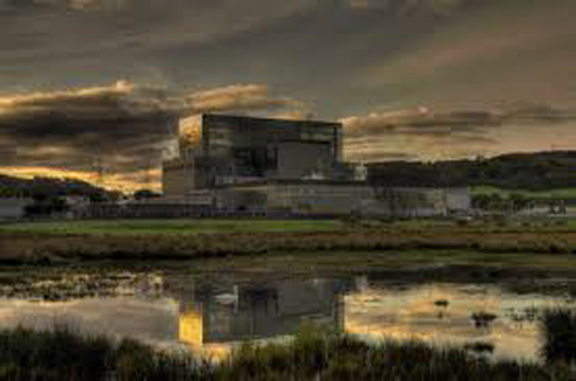
 The two reactors at Hunterston B nuclear power plant near Ardrossan are 43 years old – the oldest in Europe. They’re already well beyond their operating lifetimes, which have twice been extended by EDF Energy, and they’re scheduled to close down for good in 2023.
However, there’s a serious safety fault in the reactors. The fault is known as keyway root-cracking: where the graphite moderator cores in the reactors develop cracks leading to instabilities that could lead to a major nuclear accident: which would lead to a large swathe of Scotland’s central belt having to be evacuated.
The reactors have been closed since October 2018 as a result, but owners EDF Energy are currently making a case for turning them back on, with help from trade union GMB. Although the probability of a meltdown is still low, the consequences could be incredibly severe. In such an event, both Glasgow and Edinburgh would need to be entirely evacuated due to radioactive contamination. According to Dr Ian Fairlie, an independent consultant on radioactivity in the environment, and Dr David Toke, Reader in Energy Policy at the University of Aberdeen, the two reactors definitely should not be restarted.
Speaking about the cracks in the barrels, they say: “This is a serious matter because if an untoward incident were to occur – for example an earth tremor, gas excursion, steam surge, sudden outage, or sudden depressurisation, the barrels could
become dislodged and/or misaligned. “These events could in turn lead to large emissions of radioactive gases. Further, if hot spots were to occur and if nuclear fuel were to react with the graphite moderator they could lead to explosions inside the reactor core. “In the very worst case the hot graphite core could become exposed to air and ignite leading to radioactive contamination of large areas of central Scotland, including the metropolitan areas of Glasgow and Edinburgh.”
https://www.edinburghlive.co.uk/news/edinburgh-news/cracks-found-nuclear-reactor-could-15944122
March 10, 2019
Posted by Christina Macpherson |
safety, UK |
Leave a comment
Activists challenge license extension for Peach Bottom nuclear plant, Lindsay C. VanAsdalan, York Dispatch, 5 Mar 19, An anti-nuclear watchdog aims to challenge Exelon Generation’s bid to extend the operating license at its Peach Bottom Atomic Power Station through 2054.
The group’s request for a hearing will not be approved unless the U.S. Atomic Safety and Licensing Board deems its arguments admissible at a preliminary hearing March 27.
Exelon’s application to extend its 60-year operating license an additional 20 years is among the first in the country, according to Nuclear Regulatory Commission spokesman Neil Sheehan.
The anti-nuclear group Beyond Nuclear contends that Exelon did not meet NRC standards for renewal because it did not provide evidence of studying its aging equipment.
“Exelon could be gathering evidence from closed stations to harvest materials to look at things like how weld material has fared under 49 years of similar operation,” said Paul Gunter, director of the reactor oversight project at Beyond Nuclear.
If approved, Exelon’s proposal could extend the life of Peach Bottom’s Unit 3 through 2053 and Unit 4 through 2054.
The proposed extension at Peach Bottom comes as Exelon bids for support in the General Assembly for legislation that would benefit its nuclear facilities in Pennsylvania, including Dauphin County facility Three Mile Island, which the firm has said it will close without state support.
Opponents of the legislation — which has yet to roll out in Harrisburg — have already labeled it a “bailout.”
It’s unknown how aging equipment at Peach Bottom would fare with such a long service life, Gunter said.
Most nuclear plants in the U.S. have received initial renewals extending their licenses from 40 to 60 years, said Sheehan, but a request for a second renewal is rare.
Only three plants — including Peach Bottom — are seeking their second license extension, this time from 60 years to 80. …… The group is looking for Exelon’s application to demonstrate it has “sufficient” knowledge — not just a little — on the issues that could affect aging equipment.
Exelon’s decommissioned Oyster Creek plant has the same boiling-water reactor as Peach Bottom, so there are opportunities to do extensive destructive analysis on larger equipment that wouldn’t be possible at Peach Bottom, Gunter said.
“A little bit of knowledge can be dangerous, particularly when talking about an inherently dangerous technology,” Gunter said…….ttps://www.yorkdispatch.com/story/news/2019/03/05/activists-challenge-license-extension-peach-bottom-nuclear-plant/3060252002/
March 7, 2019
Posted by Christina Macpherson |
safety, USA |
1 Comment
 Sortir du Nucleaire 5th March 2019 , As part of ASN’s duties concerning the control of basic nuclear
installations (BNIs), an unannounced inspection was carried out on 6 March
2018 on the W and TU5 installations (BNI No. 155), operated by Orano Cycle
on the nuclear site Tricastin, on the theme “waste management”. As this
inspection revealed numerous infringements, the “Quit Nuclear” Network
filed a direct summons against Orano.
https://www.sortirdunucleaire.org/Tricastin-dechets-Orano
March 7, 2019
Posted by Christina Macpherson |
France, safety |
Leave a comment

 What Deadly Disaster Is the Criminal, Bankrupt PG&E So Desperately Hiding at Its Diablo Canyon Nukes, https://readersupportednews.org/opinion2/277-75/55293-rsn-what-deadly-disaster-is-the-criminal-bankrupt-pgae-so-desperately-hiding-at-its-diablo-canyon-nukes
By Harvey Wasserman, Reader Supported News, 3 Mar 19,  s the bankrupt federal felon Pacific Gas & Electric desperately hiding something very deadly at its Diablo Canyon Power Plant? Will we know by March 7, when the company wants to restart Unit One, which is currently shut for refueling? Will YOU sign our petition asking Governor Gavin Newsom and other officials to inspect that reactor before it can restart?
In 2010, PG&E blew up a neighborhood in San Bruno, killing eight people.
In 2018, it helped burn down much of northern California, killing more than eighty people. The company has now admitted its culpability in starting that infamous Camp Fire and has questioned its own ability to continue to operate.
On February 6, it incinerated five buildings in San Francisco.
The company is bankrupt. It has been convicted of numerous federal felonies. It actually has a probation officer.
But the real terror comes at its Diablo Canyon nuclear reactors, nine miles west of San Luis Obispo on the central California coast.
The reactors are embrittled. They may be cracked. As with the gas pipes in San Bruno and the power poles in northern California, PG&E’s maintenance at these huge reactors has been systematically neglected.
But the company does NOT want the public to inspect them. WHY?
Right now, Diablo Unit One is shut for refueling. Critical inspections for embrittlement, cracking and deferred maintenance could be easily and cheaply done. Public discussions could also be held on vulnerability to earthquakes, waste management, and corporate competence.
The public does not need Diablo’s power, which often overloads the grid, forcing the shutdown of cleaner, safer wind and solar capacity. Reopening a cracked reactor would turn the fuel assemblies on-site into high-level radioactive waste, converting a multi-million-dollar asset into a huge fiscal liability.
Diablo Unit One is in particular danger because it was designed in the 1960s. Its original blueprints did not account for the dozen earthquake faults since discovered nearby. Copper used in key welds is now known to be inferior. Older reactors like those at Diablo are susceptible to embrittlement and cracking, which could be catastrophic.
In 1991 the Yankee Rowe Reactor in Massachusetts was forced to shut because of embrittlement. It was younger then than Diablo One is now.
Because PG&E is in bankruptcy and on federal probation, the state has extraordinary power right now. Normally such issues are pre-empted by the feds.
But at this time the governor, state agencies, the California Public Utilities Commission, and the courts have the right to demand these inspections. Certainly the public has a legitimate expectation to be protected.
The downwind consequences of a major accident are beyond comprehension. Diablo is less than 200 miles upwind from Los Angeles. A radioactive cloud from a likely disaster would threaten the lives of millions. Damage to property and the natural ecology, including some of the world’s most productive farmland, would be essentially impossible to calculate.
US Representative Salud Carbajal (D-San Luis Obispo) has already questioned PG&E’s competence to run these two huge reactors. A number of Hollywood stars, along with State Senator Ben Allen (D-Santa Monica), San Luis Obispo Mayor Heidi Harmon, and numerous towns and party organizations, have already joined with more than a thousand grassroots activists to ask the governor to require these critical tests and to subject the findings to public scrutiny.
Given PG&E’s bankruptcy and criminal convictions, and the extreme vulnerability of reactors as old as those at Diablo Canyon, we must seriously wonder why the company would now ask to be exempt from a simple set of inspections.
To protect the health, safety, economy and ecology of our state, the governor, regulatory agencies, CPUC, and the courts must step in to demand these aged reactors be immediately subjected to painstaking public scrutiny.
There is no good reason not to do this, and no excuse for PG&E to be asking for an exemption from a simple, long-overdue inspection.
The last thing California can afford is a radioactive replay of what has happened with that pipeline explosion in San Bruno or those catastrophic fires in what’s left of the northern forests.
Next month marks the 40th anniversary of the accident at Three Mile Island, and the release of The China Syndrome, which told a terrifying tale we also do not want to see repeated.
You can sign our petition asking Governor Newsom and our public officials to step in at Diablo Canyon NOW, before it is once again too late.
March 5, 2019
Posted by Christina Macpherson |
safety, USA |
Leave a comment
 Daily Record 3rd March 2019 More than 500 “significant” health and safety incidents were recorded at the Faslane nuclear submarine base last year, the Sunday Mail can reveal. Documents released to the SNP under Freedom of Information for the Royal Navy facility near Helensburgh, in Dunbartonshire, show the figure has almost quadrupled since 2014.
Last year, there were 481 health and safety incidents at the high security base compared to 123 in 2015, 377 in 2016 and 501 in 2017. A statement confirmed that under Naval command, only those deemed as “significant” were now recorded on central systems.
https://www.dailyrecord.co.uk/news/politics/faslane-nuclear-fears-after-500-14079043
March 4, 2019
Posted by Christina Macpherson |
incidents, UK |
Leave a comment
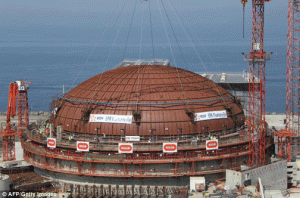 France Info 1st March 2019 Machine Translation] Cracks, failed welds … How the site of the EPR Flamanville has turned into a fiasco to nearly 11 billion euros.
The third generation nuclear reactor, which was to take office in 2012, will finally be operational only in 2020 after the discovery of new defects. Back on those days when the yard slipped. It was to be the flagship of the French nuclear industry, the EPR of Flamanville (Manche) is today its ball.
The construction site of the European Pressurized Reactor (EPR) experienced numerous delays, the last of which occurred on July 25, 2018, after the discovery of poorly made welds. Originally scheduled for 2012, its entry into service is (for the moment) postponed to 2020. And nothing says that the yard will be spared by new counter-time. The Nuclear Safety Authority (ASN) thus pinned EDF on Wednesday (February 27th) for a lack of “traceability” of certain equipment qualification operations on the EPR.
https://www.francetvinfo.fr/societe/nucleaire/fissures-soudures-ratees-comment-le-chantier-de-l-epr-de-flamanville-s-est-transforme-en-un-fiasco-a-pres-de-11-milliards-d-euros_2874077.amp
March 4, 2019
Posted by Christina Macpherson |
business and costs, France, politics, safety |
Leave a comment
Peach Bottom, other U.S. nuclear power plants could be running until 2054. Is it safe? The Inquirer, by Andrew Maykuth, February 28, 2019 …….. The Peach Bottom plant, 60 miles west of Philadelphia near the Maryland border, is operating under a 20-year extension from its original 40-year license, like many of America’s aging fleet of nuclear reactors. Last year it became one of the first plants to apply for what the Nuclear Regulatory Commission calls a “Subsequent License Renewal” — that would permit the reactors to run through 2053 and 2054, when they turn 80 years old.
As the construction of new nuclear power plants fell off after the Three Mile Island accident in 1979 — the average age of a U.S. reactor is nearly 40 years old — older units like Peach Bottom are being pressed into longer service, and some worry that safety will suffer. …….
skeptics say that nuclear plant owners, ever alert to degradation from a harsh operating environment, will be challenged to keep geriatric power plants operating into their seventh and eighth decades. Market forces, driven by competition from inexpensive natural gas plants and renewable power, are not working in nuclear energy’s favor.
“There is this rush of license-renewal applications for the 60-to-80-year period that are pushing beyond our knowledge of the impact of aging,” said Paul Gunter, director of the reactor oversight project for Beyond Nuclear, an antinuclear group that has challenged Peach Bottom’s license extension.
Edwin Lyman, senior scientist with the Union of Concerned Scientists, which is wary of nuclear power, said reactor owners will be required to conduct more frequent inspections, maintenance, and repairs of aging reactors while facing increasing pressure to keep costs low. “It’s not clear to me that can be done at the same time compatibly,” he said………
Critics say they’re particularly worried about cracking, embrittlement, and corrosion of critical plant components in place for 60 years that can’t be inspected, such as hidden electric cables, structural concrete, and the reactor vessel itself, which contains the uranium fuel that creates heat that is converted into electricity.
The NRC rejected a suggestion that it should order a closer post-mortem of older nuclear power plants that are being decommissioned to measure the effect of prolonged operations, said Gunter of Beyond Nuclear. He suggested that Exelon should be forced to conduct an “autopsy” on the decommissioned reactor vessel at Oyster Creek, which is the same make and design as the Peach Bottom units.
“It would behoove the public health and safety for the cost of doing the autopsy to be borne by the operator that wants to extend the operation of a plant with the same design,” Gunter said. “We’re questioning the licensing process as if it’s some kind of crystal ball that they can manage aging.” …….
The NRC will also not consider changes in conditions since the plants were originally licensed, such as an increase in population density, or the effects of climate change, said Lyman of the Union of Concerned Scientists.
“All you can look at is whether there is an appropriate aging management program for those components that can’t be replaced, and you have to justify why they aren’t going to fall apart by the end of the extended period,” he said.
March 4, 2019
Posted by Christina Macpherson |
safety, USA |
Leave a comment
 **Flamanville* Tendance Ouest 1st March 2019 EDF announced that “500 people will intervene to take over twenty welds” non-compliant on the site of the nuclear reactor. A team that will add to
the current workforce of the site, already 3800 people. The operation
should take place in the fall, “after our hot tests , ” said Bertrand
Michoud, director of facilities at the EPR Flamanville.
https://www.tendanceouest.com/actualite-313403-epr-de-flamanville-500-personnes-pour-reprendre-20-soudures-sur-le-chantier.html
March 4, 2019
Posted by Christina Macpherson |
France, safety |
Leave a comment
RA eyes seabed watch of caldera near Kagoshima nuclear plant, Asahi Shimbun, By CHIKAKO KAWAHARA/ Staff Writer March 3, 2019 The nightmare scenario of a volcanic crater erupting and spewing a pyroclastic flow that engulfs a nuclear plant, causing catastrophic levels of radiation to leak into the atmosphere, doesn’t appear on the horizon … just yet.But the nation’s nuclear watchdog is taking no chances. It plans to install seabed sensors to monitor potential crustal deformations on the Aira Caldera, located just 40 kilometers from the Sendai nuclear power plant in Kagoshima Prefecture.
Little is known of processes that lead to giant eruptions of calderas, or ground depressions formed by volcanic activity, due to a lack of observation data. Such eruptions are extremely rare and occurs every 10,000 years in Japan.
The Aira Caldera, in Kagoshima Bay, was the site of a giant eruption around 30,000 years ago.
The Nuclear Regulation Authority has so far relied on land-based seismic and other sensors to indirectly monitor magma activity and other changes beneath the seabed.
Starting in the new fiscal year from April, the NRA will set up seismic sensors and water-pressure gauges on the seafloor for additional monitoring……..
Huge calderas exist within a 160-km radius of other nuclear plants in Japan, including Kyushu Electric’s Genkai plant in Saga Prefecture, Shikoku Electric Power Co.’s Ikata plant in Ehime Prefecture and Hokkaido Electric Power Co.’s Tomari plant. The NRA intends to conduct studies in those areas, too………http://www.asahi.com/ajw/articles/AJ201903030001.html
March 4, 2019
Posted by Christina Macpherson |
Japan, safety |
1 Comment
Japan earthquake risk: MAGNITUDE 8 earthquake predicted to strike RING OF FIRE near Japan
A MAGNITUDE 8 or 7 earthquake will likely hit Japan along the so-called Ring of Fire in the next 30 years, Japanese geologists have warned. By SEBASTIAN KETTLEY, Express UK , Wed, Feb 27, 2019 A Japanese Government panel said on Tuesday, February 26, the risk of a major earthquake in the near future is high. A magnitude 7 or 8 quake is expected to strike the Japan Trench just off the northeast coast of Japan. The oceanic trench forms part of the Pacific Ring of Fire – a hotspot of volcanic activity and earthquakes along the basin of the Pacific Ocean. Japan’s Earthquake Research Committee said there is at least a 50 percent chance of magnitude 7 to 7.5 earthquake in the Fukushima Prefecture……..
Chances of another earthquake in the region are now up by 10 percent on the last Earthquake forecast released in March 2011. ……
What is the Ring of Fire?The Ring of Fire is a major hotbed of seismic and volcanic activity stretching along the horseshoe-like basin of the Pacific Ocean.
Approximately 90 percent of the world’s earthquakes strike along the Ring of Fire.
And about 75 percent of the world’s active and dormant volcanoes are found in this part of the world.
The incredible activity in Ring of Fire is the result of tectonic plate movements deep beneath the waves of the Pacific Ocean.https://www.express.co.uk/news/science/1093212/Japan-earthquake-magnitude-8-earthquake-ring-of-fire-japan-trench
February 28, 2019
Posted by Christina Macpherson |
Japan, safety |
Leave a comment
Nuclear safety board still wary of DOE changes, BY MARK OSWALD / JOURNAL STAFF WRITER February 23rd, 2019 Albuquerque Journal
SANTA FE – At the end of a hourslong meeting in Albuquerque on Thursday night, officials from U.S. Department of Energy agencies had failed to persuade an independent nuclear safety board and a contingent of interested New Mexicans that a DOE rules change won’t restrict efforts to keep the state’s national laboratory sites safe.
Bruce Hamilton, a Republican who chairs the presidentially appointed Defense Nuclear Facilities Safety Board, said DOE officials had continued to downplay the impact of DOE Order 140.1, which last May placed new limits on the board’s 30-year-old oversight role.
“We have repeatedly heard from DOE representatives that they really don’t mean what they wrote (in the rule) or at least that they really don’t intend to follow what they wrote,” said Hamilton. He said this is a “particularly bizarre argument coming out of the nuclear culture that has set the standard for following the written rules to the letter.”
The new rule says the private contractors that manage facilities like the Los Alamos and Sandia national labs can’t respond to DNFSB information requests without notifying or the approval of a DOE liaison and that the weapons facilities can refuse to provide information that is “pre-decisional” or that the DOE determines on its own is not needed by DNFSB inspectors to do their jobs.
Also, the rule excludes more than 70 percent of weapons complex facilities from DNFSB’s formal safety recommendations that require a response from the DOE.
The definition of “public health and safety” under DNFSB oversight was changed to exclude the safety of workers at nuclear facilities. The safety board’s regular reports posted on the web often focus on whether protocols to protect employees, and not just the public in general, are being followed.
The Waste Isolation Pilot Plant near Carlsbad could be one of the sites most affected, as the underground nuclear waste storage facility’s “hazard category” would fall outside formal DNFSB jurisdiction.
Coincidentally, at Thursday’s meeting at the Albuquerque Convention Center, Don Hancock, of the watchdog Southwest Research and Information Center, broke some news about WIPP. The DOE’s own safety and security assessment wing will investigate WIPP contractor Nuclear Waste Partnership LLC over “industrial hygiene” issues.
DOE’s Office of Enterprise Assessments says on its website that it will probe incidents at WIPP that took place from July through October last year including “multiple overexposures to hazardous chemicals, including carbon tetrachloride, nitrogen dioxide, and sulfur dioxide, as well as a series of heat-stress incidents.”……
Board members said they believed the DOE representatives present were sincere and had good intentions. But they said the issues about the DNFSB’s role under the new rule can’t be left to “personalities.”
Board member Joyce L. Connery said the comments by the NNSA folks at the meeting don’t match up with “the literal words” of the DOE order and that the rule should be suspended and revised. Board members also said the language of the rule isn’t consistent with federal law, including the Atomic Energy Act.
During a long public comment period, Jay Coghlan of Nuclear Watch New Mexico went the board members one better and said the rule is “flat-out illegal.” He said that as the Los Alamos lab ramps up the production of plutonium “pits,” the cores of nuclear weapons, and safety lapses are reported by the DNFSB, the Department of Energy wants to “shoot the messenger.” …….. https://www.abqjournal.com/1284667/nuclear-safety-board-still-wary-of-doe-changesnew-order-says-contractors-that-manage-labs-cant-respond-to-information-requests-without-notifying-or-the-approval-of-a-doe.html
February 25, 2019
Posted by Christina Macpherson |
safety, USA |
Leave a comment
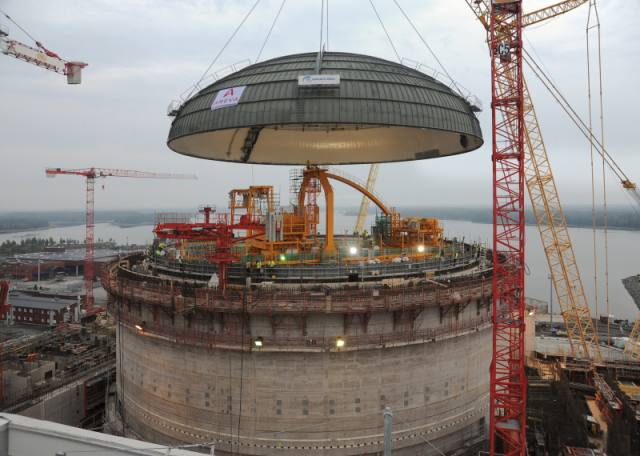
WSAU 22nd Feb 2019 Safety problem found at Areva’s Finnish reactor before start-up –
regulator. Finland’s nuclear regulator has identified a safety issue at
Olkiluoto 3, a 1.6-gigawatt reactor built by France’s Areva, now renamed
Orano, and the problem needs to be fixed before the unit can receive a
permit to operate, the regulator told Reuters. The reactor is due to start
producing electricity in January next year after a decade-long delay. Part
of the pressuriser, a primary circuit component of the reactor, is
vibrating at levels that exceed safety limits, said Pekka Valikangas, the
regulator’s section head for nuclear reactor regulation, ahead of an
important assessment which is due to be published on Monday. “The test
results show that these vibrations are not approved,” Valikangas said in an
interview.
https://wsau.com/news/articles/2019/feb/22/exclusive-safety-problem-found-at-arevas-finnish-reactor-before-start-up-regulator/
February 25, 2019
Posted by Christina Macpherson |
Finland, safety |
Leave a comment
Contact: Mimi Kennedy (315) 246-7333; Harvey Wasserman (614) 738-3646 – solartopia@gmail.com; Myla Reson (310) 663-7660 – myla.reson@gmail.com
Dear Gov. Newsom,
We join hundreds of other Californians, including Sen. Ben Allen and San Luis Obispo Mayor Heidi Harmon, who are calling, writing, faxing and e-mailing, asking that you take action at Diablo Canyon to protect our safety and economic future. Under PG&E’s current bankruptcy and criminal proceedings, your position gives you wide ranging powers to act.
Diablo Unit One is now shut for refueling. We feel that given the evidence of embrittlement, it is very important to halt the loading of new fuel into the reactor until the public resolution of seven critical issues:
- Diablo One was last tested for EMBRITTLEMENT in 2003; it can now be easily tested while Unit One is shut.
- Diablo One’s key components must be tested for CRACKING, easily done now with ultra-sound.
- PG&E has DEFERRED ITS MAINTENANCE at Diablo since at least 2010.
- Nuclear Regulatory Commission site inspector Michael Peck, among many others, has doubts that Diablo can withstand a credible earthquake.
- Serious questions remain about how PG&E intends to handle Diablo’s RADIOACTIVE WASTES.
- US Rep. Salud Carbajal has joined many others in questioning the COMPETENCE of the bankrupt, criminally-convicted PG&E to manage these two very large reactors in his home district.
- Studies show Diablo’s POWER IS NOT NEEDED, and in fact impedes the use of renewables here in California.
We ask that BEFORE DIABLO ONE REFUELS you subject these and other critical issues to open public scrutiny. The decision on Diablo’s future must be made by you in conjunction with the Legislature, the CPUC, state agencies, the courts and the public.
We thank you very much for giving this your serious consideration. We feel this is an exciting and crucial opportunity for you to continue your groundbreaking leadership in bringing more safety, responsibility, and wise energy policy to all Californians. Let us keep showing the way to a safer (and more sustainable) energy future.
Signatories (partial list):………
Separate petitions, resolutions & other supporting letters & documents are from: ……. http://solartopia.org/hollywood-stars-grassroots-activists-state-senator-mayor-major-organizations-ask-gov-newsom-to-fully-inspect-aged-diablo-canyon-nuclear-unit-one-before-it-re-fuels/
February 19, 2019
Posted by Christina Macpherson |
safety, USA |
Leave a comment
 TEPCO sat by idly on reports of fires, glitches at nuclear plants, By YUSUKE OGAWA/ Staff Writer, Asahi Shimbun 14th Feb 2019 , Tokyo Electric Power Co. ignored reports on fires and other problems from its nuclear power plants and didn’t even bother to share the information in-house or consider precautionary measures, the nuclear watchdog revealed.
The Nuclear Regulation Authority decided Feb. 13 it will investigate the failure by TEPCO’s headquarters to tackle the problems reported by its three facilities: the Kashiwazaki-Kariwa nuclear plant in Niigata Prefecture and the Fukushima No. 1 and No. 2 nuclear plants, both in Fukushima Prefecture.
A TEPCO official said that the company put off tackling the problems because the deadline for dealing with such matters “was not clearly stated.” TEPCO’s safety regulations stipulate that blazes, glitches in air-conditioning and other problems at nuclear plants must be dealt with by the main office of the operator.
ttp://www.asahi.com/ajw/articles/AJ201902140054.html
February 18, 2019
Posted by Christina Macpherson |
incidents, Japan |
Leave a comment