Renewed concerns about safety as dig starts for new shaft at New Mexico’s nuclear Waste Isolatio Pilot Plant
 Groups Raise Concerns About New Shaft at US NuclearDump, By Associated Press, Wire Service Content Sept. 4, 2020
Crews at the U.S. government’s underground nuclear waste repository in New Mexico are starting a new phase of a contentious project to dig a utility shaft. https://www.usnews.com/news/best-states/new-mexico/articles/2020-09-04/groups-raise-concerns-about-new-shaft-at-us-nuclear-dump
ALBUQUERQUE, N.M. (AP) — Crews working at the U.S. government’s underground nuclear waste repository in New Mexico are starting a new phase of a contentious project to dig a utility shaft that officials say will increase ventilation at the site where workers entomb the radioactive remnants of decades of bomb-making.
Officials at the Waste Isolation Pilot Plant said this week that the $75 million project is a top priority and that work will be done round the clock five days a week, with an additional shift on Saturdays. The shaft will eventually span more than four-tenths of a mile and connect to an underground system of passageways.
After reaching a depth of about 60 feet (18 meters), workers now will be drilling small holes and using explosive charges to clear more rock.
Adequate ventilation at the repository has been a big issue since 2014, when a radiation release forced a temporary closure and contamination limited air flow underground where workers dispose of nuclear waste. That prompted the need for a new ventilation system so full-scale operations could someday resume.
The repository is at the center of a multibillion-dollar effort to clean up waste from decades of U.S. nuclear research and bomb-making. Over more than 20 years, tons of waste have been stashed deep in the salt caverns at the southern New Mexico site.
Watchdog groups are raising red flags, saying the work is being done before state environmental officials finish a process allowing the public weigh in and before they have issued a final permit. The New Mexico Environment Department in April granted federal officials temporary approval to start the work as part of a larger request to dig the shaft and passageways.
The Southwest Research and Information Center is among those opposing the project. The group filed legal challenges, saying environmental officials ignored existing regulations, past agency practices and case law when giving temporary approval for contractors to begin working.
The Environment Department has defended its decision, saying the temporary approval was limited to digging the shaft, not using it.
Don Hancock with the Southwest Research and Information Center said state officials essentially foreordained the permit request by allowing work to begin. He also said the state has not provided any technical basis for its decisions and that it reduced the amount of time the public had to comment on the project by delaying the release of a draft permit.
The group has suggested that the shaft, given its size and location, could be used to expand the repository. It says that creates potential for the government to send high-level and commercial waste to the site, along with new radioactive waste that will be generated by manufacturing plutonium cores for the nation’s nuclear arsenal.
Despite congressional limits on the amount and type of waste that can be shipped to the repository, Hancock and other critics said the state’s actions have favored the federal government while limiting the public’s ability to give their input.
The repository’s hazardous waste permit also is up for renewal this year, and more legal wrangling is expected.
Despite the undoubted danger of USA’s gigantic new plutoniu pit production, USA safety officials won’t bother with a new environment study
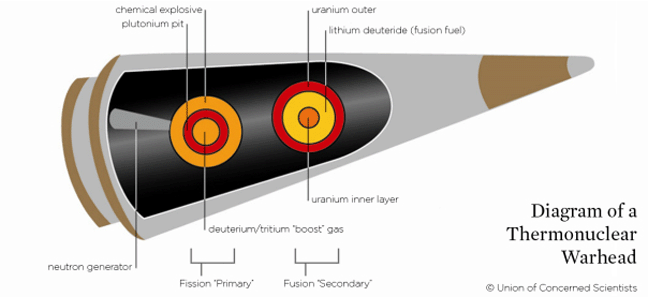
 Officials Dismiss New Environmental Study for Nuclear Lab https://www.mbtmag.com/home/news/21173922/officials-dismiss-new-environmental-study-for-nuclear-lab
Watchdog groups say the plutonium pit production work will amount to a vast expansion of the lab’s mission. Manufacturing Business Technology , Sep 3rd, 2020 ALBUQUERQUE, N.M. (AP) — The National Nuclear Security Administration says it doesn’t need to do an additional environmental review for Los Alamos National Laboratory before it begins producing key components for the nation’s nuclear arsenal because it has enough information.
Watchdog groups are concerned about Tuesday’s announcement, saying the plutonium pit production work will amount to a vast expansion of the lab’s nuclear mission and that more analysis should be done.
Los Alamos is preparing to resume and ramp up production of the plutonium cores used to trigger nuclear weapons. It’s facing a 2026 deadline to begin producing at least 30 cores a year — a mission that has support from the most senior Democratic members of New Mexico’s congressional delegation. The work is expected to bring jobs and billions of federal dollars to update buildings or construct new factories.
The work will be shared by the Savannah River Site in South Carolina, which has been tasked with producing at least 50 plutonium cores a year.
The National Nuclear Security Administration on Tuesday released its final supplemental analysis of a site-wide environmental impact statement done for the lab more than a decade ago. The agency concluded that no further analysis is required.
Critics have pushed for a new environmental impact statement, saying the previous 2008 analysis didn’t consider a number of effects related to increased production, such as the pressure it puts on infrastructure, roads and the housing market.
“The notion that comprehensive environmental analysis is not needed for this gigantic program is a staggering insult to New Mexicans and an affront to any notion of environmental law and science,” Greg Mello of the Los Alamos Study Group said in a statement.
Lab officials last year detailed plans for $13 billion worth of construction projects over the next decade at the northern New Mexico complex as it prepares for plutonium pit production. About $3 billion of that would be spent on improvements to existing plutonium facilities for the pit work, the Albuquerque Journal reported. AT TOP Lab officials last year detailed plans for $13 billion worth of construction projects over the next decade at the northern New Mexico complex as it prepares for plutonium pit production. About $3 billion of that would be spent on improvements to existing plutonium facilities for the pit work, the Albuquerque Journal reported.
Top official at USA nuclear safety agency resigns
|
Top official at nuclear safety agency resigns, Santa Fe New Mexican By Scott Wyland swyland@sfnewmexican.co, Sep 3, 2020
The chairman of the agency that oversees workplace safety at nuclear facilities has resigned, a move that officials say shouldn’t affect oversight of Los Alamos National Laboratory. Bruce Hamilton, who has chaired the Defense Nuclear Facilities Safety Board for two years, will leave Sept. 12. Hamilton gave no reason for his decision when he submitted his resignation……. The agency has come under fire during the Trump administration, which has sought to limit its oversight. In 2018, the U.S. Energy Department issued an order limiting the board’s access to sensitive information it needed for safety inspections. It also required Energy Department employees to “speak with one voice” to the board, discouraging individual workers from reporting safety violations. Critics say the constraints run counter to the board’s statutory mission of working independently to assess accidents, missteps or unsafe conditions at nuclear weapons facilities to protect workers and the public. In March, Hamilton wrote a letter to Congress describing how reduced access to information has hampered the board. “During 2019, the Board experienced challenges and delays in accessing information necessary to perform its responsibilities,” he wrote. He thanked Congress for stating in the proposed 2021 defense budget that the board’s full authority should be recognized……… https://www.santafenewmexican.com/news/local_news/top-official-at-nuclear-safety-agency-resigns/article_2e9d333c-ed31-11ea-ba57-1fb63def0647.html |
|
IAEA inspectors gain access to one of two Iran nuclear sites
“Iran provided Agency inspectors access to the location to take environmental samples,” an International Atomic Energy Agency (IAEA) report seen by AFP said.
“The samples will be analysed by laboratories that are part of the Agency’s network,” it added.
An inspection at the second site will take place “later in September 2020,” the report said.
Iran had denied the agency access earlier this year, prompting the IAEA’s board of governors to pass a resolution in June urging Tehran to comply with its requests.
Tehran announced last week it would allow the IAEA access to the two sites, following a visit by IAEA Director General Rafael Grossi…….
The UN’s nuclear watchdog said Friday that Iran had granted its inspectors access to one of two sites where undeclared nuclear activity may have taken place in the early 2000s.
“Iran provided Agency inspectors access to the location to take environmental samples,” an International Atomic Energy Agency (IAEA) report seen by AFP said.
“The samples will be analysed by laboratories that are part of the Agency’s network,” it added.
An inspection at the second site will take place “later in September 2020,” the report said.
Iran had denied the agency access earlier this year, prompting the IAEA’s board of governors to pass a resolution in June urging Tehran to comply with its requests.
Tehran announced last week it would allow the IAEA access to the two sites, following a visit by IAEA Director General Rafael Grossi. https://today.rtl.lu/news/world/a/1575108.html
Arctic tragedy: the loss of Russian sailors in nuclear submarine accidents
Russia’s ‘slow-motion Chernobyl’ at sea, FUTURE PLANET | OCEANS By Alec Luhn, 2nd September 2020 By tradition, Russians
 always bring an odd number of flowers to a living person and an even number to a grave or memorial. But every other day, 83-year-old Raisa Lappa places three roses or gladiolas by the plaque to her son Sergei in their hometown Rubtsovsk, as if he hadn’t gone down with his submarine during an ill-fated towing operation in the Arctic Ocean in 2003.“I have episodes where I’m not normal, I go crazy, and it seems that he’s alive, so I bring an odd number,” she says. “They should raise the boat, so we mothers could put our sons’ remains in the ground, and I could maybe have a little more peace.”
After 17 years of unfulfilled promises, she may finally get her wish, though not out of any concern for the bones of Captain Sergei Lappa and six of his crew. With a draft decree published in March, President Vladimir Putin set in motion an initiative to lift two Soviet nuclear submarines and four reactor compartments from the silty bottom, reducing the amount of radioactive material in the Arctic Ocean by 90%. First on the list is Lappa’s K-159. ……………..
‘Cursed August’
Sergei Lappa was born in 1962 in Rubtsovsk, a small city in the Altai Mountains near the border with Kazakhstan. Though it was thousands of miles to the nearest ocean, he cultivated an interest in seafaring at a local model shipbuilding club, and after school he was accepted into the higher naval engineering academy in Sevastopol, Crimea. Tall, athletic and a good student, he was assigned to the navy’s most prestigious service: the Northern Submarine Fleet.
With the reactors off, Lappa and his skeleton crew of nine engineers operated the boat by flashlight. As the submarine was towed near Kildin Island at half past midnight, the cables to the bow pontoons broke in heavy seas, and a half-hour later water was discovered trickling into the eighth compartment. But as headquarters struggled with the decision to launch an expensive rescue helicopter, the crew kept trying to keep the submarine afloat. At 02:45am Mikhail Gurov sent one last radio transmission: “We’re flooding, do something!” By the time rescue boats from the tug arrived, the K-159 was on the bottom near Kildin Island. Of the three sailors who made it out, the only survivor was senior lieutenant Maxim Tsibulsky, whose leather jacket had filled with air and kept him afloat.
Yet another nuclear submarine had sunk during the “cursed” month of August, Russian newspapers wrote, but the incident caused little furore compared to the Kursk. The navy promised relatives it would raise the K-159 the next year, then repeatedly delayed the project.
Even after 17 years of scavenging and corrosion, at least the bones of the crew likely remain in the submarine, according to Lynne Bell, a forensic anthropologist at Simon Fraser University. But the families have long since lost hope of recovering them.
“For all the relatives it would bring some relief if their fathers and husbands were buried, not just lying on the bottom in a steel hulk,” Gurov’s son Dmitry says. “It’s just that no one believes this will happen.”
The situation has now changed, however, as Russia’s interest revives in the Arctic and its crumbling Soviet ports and military towns. Since 2013, seven Arctic military bases and two tanker terminals have been built as part of the Northern Sea Route, a shorter route to China that Putin has promised will see 80 million tonnes of traffic by 2025. The K-159 is lying underneath the eastern end of the route………….https://www.bbc.com/future/article/20200901-the-radioactive-risk-of-sunken-nuclear-soviet-submarines
Cracks in UK’s Hunterston and other very old nuclear reactors
Radio Scotland (From 1:41:33) 29th Aug 2020, Rob Edwards speaking about Hunterston. The lifetime of Hunterston has been extended 3 times. The problem is these very old reactors have developed all
these cracks.
Reactor 3 has an estimated 377 cracks. Reactor 4 has 209.
Those are only estimates based on looking at a part of the core. They have
underestimated the number of cracks that would appear in the past. If you
have too many cracks you get bits of debris breaking off so the graphite
core of these reactors start to crumble and that in some scenarios could
cause the core to overheat.
They are balancing how much money they can make
out of the plants against a leak. Climate change has been used by the
industry to try to make themselves look better. Hunterston has been closed
for most of the last two years.
The corrosion of radioactive waste disposal canisters based on in situ tests
 The corrosion of radioactive waste disposal canisters based on in situ tests https://www.sciencedirect.com/science/article/pii/B978012823719900010X, 30 Aug 20,
Abstract
The safe disposal of high-level waste and spent fuel requires the development of disposal canisters with lifetimes of several thousand years. Since iron and copper alloys are the primary canister materials under consideration, corrosion is the main time-dependent degradation mechanism leading to canister failure. In situ corrosion experiments conducted in various underground research laboratories during the past 30–40 years have highlighted the importance of the experimental design, as relatively small differences in design can lead to unexpected phenomena. For example, the importance of confinement in order to decrease microbial activity and achieve low corrosion rates has been shown repeatedly. Furthermore, in situ corrosion experiments have provided insight to repository design and optimization that would not have been possible if the tests were not done in the actual host rock. On the other hand, in order to maximize the usefulness of the obtained results, corrosion-specific experiments with well-defined exposure conditions are needed
A series of safety problems bring EDF’s decision on early shut down of Scotland’s Hunterston nuclear station
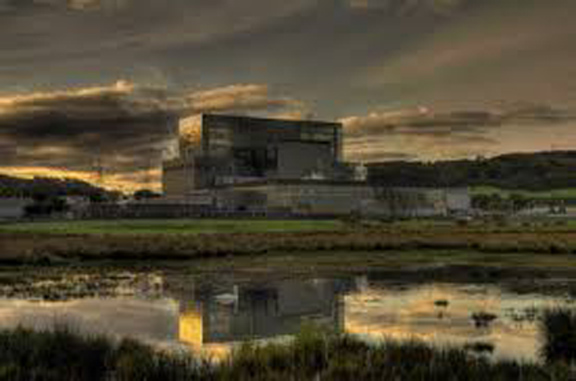
Scottish nuclear power station to shut down early after reactor problems
EDF Energy to close Hunterston next year after spending £200m on repairs, Guardian, Severin Carrell and Jillian Ambrose, Fri 28 Aug 2020 Hunterston nuclear power station, one of the UK’s oldest remaining nuclear plants, is to close down next year, earlier than expected, after encountering a series of safety-critical problems in its reactors.
Industry sources told the Guardian that EDF Energy, the state-owned French operator of Hunterston, decided at a board meeting on Thursday afternoon that the plant would stop generating electricity in late 2021, at least two years earlier than planned.
The energy company had hoped to keep generating electricity from the 44-year-old nuclear plant on the Firth of Clyde until 2023, after ploughing more than £200m into repairing the reactor.
Hunterston, which first began generating electricity in 1976, has been offline since 2018 after inspectors discovered 350 microscopic cracks in the reactor’s graphite core.
In October last year the Ferret, an investigative website, reported that at least 58 fragments and pieces of debris had fallen off the graphite blocks as the cracks worsened. It quoted the Office for Nuclear Regulation (ONR) as saying this had created “significant uncertainty” about the risks of debris blocking channels for cooling the reactor and causing fuel cladding to melt.
After a two-year investigation, the ONR said on Thursday that reactor 3 at Hunterston would be allowed to restart as planned, but it would only be allowed to generate electricity for approximately six months.
EDF then plans to apply next spring to extend its life for one final six-month run. EDF said it would begin the process of decommissioning Hunterston no later than the first week of 2022…….
Richard Dixon, the director of Friends of the Earth Scotland, said: “In terms of energy security, clearly there’s no problem. Its reactors haven’t been running and the lights haven’t gone out. What’s more urgent now is to build up renewables and energy efficiency, to make sure the gap left by Hunterston is filled by zero-carbon electricity or energy saving.” ……… https://www.theguardian.com/uk-news/2020/aug/27/hunterston-scottish-nuclear-power-station-to-shut-down-early-after-reactor-problems
EDF’s Hunterston ageing nuclear power station kept going in effort to prolong all EDF’s old reactors
The Ferret 27th Aug 2020, The energy company, EDF, is planning to operate a cracked and ageingnuclear power station at Hunterston in North Ayrshire for another year before closing it down for good. The company is hoping to restart the two 44-year-old reactors at the site for two last six-month periods and then
begin decommissioning them “no later than 7 January 2022”.
being put at risk. They are calling for the plant to be permanently closed down now. The 50-strong group of Nuclear-Free Local Authorities in the UK demanded that both reactors never re-open. “The safest thing to do is to
close Hunterston B and start accelerated decommissioning of its reactors,” said the group’s Scottish convener, Glasgow SNP councillor Feargal Dalton. “We totally disagree with EDF that decommissioning should start in 2022. It should happen now for the sake of public safety.” He added: “The fact it has taken two years and much resource from EDF to provide sufficient information to the ONR to allow a restart to take place is indicative of the level of risk over the structural integrity of these reactors.”
been in such a financial pickle long before the virus hit,” he added.https://theferret.scot/hunterston-cracked-nuclear-reactors-another-year/
Expansion of nuclear power in the troubled Middle East – not a good idea
Will the UAE’s Barakah project launch new era of peaceful nuclear power in the Middle East? Al-Monitor
Ali Ahmad @Ali_Ahmad_Not 28 Aug 20, “……. Despite the UAE’s commitment and thorough planning, arguably supported by the best experts and consultants, Barakah’s first unit took more than eight years in construction and testing. It is, therefore, safe to assume that other countries in the region will need at least that much time to bring their own projects to completion. Considering such a long time frame, and the emerging energy revolution in the region that is powered by cheap renewables and natural gas, it would be very hard to sell a nuclear project anywhere in the region based on economic rationales………….
Of course, financing was never an issue for the UAE. One of the most daunting challenges for Middle Eastern countries — or indeed any country — with nuclear aspirations has been the substantial financing needed for nuclear power projects. In contrast to the UAE, an oil-rich country with readily available financial resources and a high credit rating of AA2, based on latest data by Moody’s, many other countries in the region are struggling with strained economies and mounting public debt.
The coronavirus pandemic further weakened regional economies, including oil-rich states such as Saudi Arabia, which also suffered from the collapse of oil prices. Meanwhile, the majority of the UAE’s nuclear investments were made well before the pandemic as the project started in 2012……
…..the expansion of nuclear power in the Middle East introduces more challenges than opportunities in a region swept by conflicts, fragility and economic hardship. https://www.al-monitor.com/pulse/originals/2020/08/uae-power-plant-middle-east-nuclear-race.html#ixzz6WSB4zMqe
Safety of Belarus nuclear power station in question after IAEA report
Deficiencies discovered during IAEA INIR mission in Belarus may cause negative impact on safety of Belarusian NPP, Vates, 08/27/2020 International Atomic Energy Agency (IAEA) conducted the Integrated Nuclear Infrastructure Review (INIR) Phase 3 mission from 24 February to 4 March 2020 in the Republic of Belarus and recently published the report with 7 recommendations and 6 suggestions.
The mission evaluated the development status in the areas linked to Belarus nuclear infrastructure such as regulatory framework, nuclear safety, radioactive waste management, financial and human resources, nuclear security in order to commission and operate the first nuclear power plant (hereinafter – NPP).
The report emphasizes, that Belarus needs to further develop its legal and regulatory framework of nuclear energy, to assure regulatory body independence in cooperation with technical support organizations, to ensure sufficient funds for decommissioning and radioactive waste management, to allocate responsibility for establishing the radioactive waste management organization, to ensure reliable restart of the grid system in the event of total collapse once the NPP is in operation, to finalize all necessary programmes for starting operation, to ensure long term arrangements for maintenance of Belarusian NPP and to ensure capacity and competence of operating organisation.
Recommendations and suggestions concerning improvement of nuclear energy infrastructure are related to:
– deficiencies in legal and regulatory framework of nuclear safety;
– assurance of independence of regulatory body;
– deficiencies in implementing Integrated Management Systems of regulatory body and operating organization;
– ensuring readiness to restart of the grid system in the event of total collapse once the NPP is in operation;
– assurance of Belarussian NPP maintenance after the warranty period;
– deficiencies in the readiness of the physical security system in the operating organization;
– deficiencies in establishing responsibilities in the area of the radioactive waste management;
– international obligations (Belarus has not yet joined the Amendment to the Convention of Physical Protection of Nuclear Material and not ratified Protocol Additional to IAEA for the Application of Safeguards).
In VATESI experts’ opinion, not implementation of recommendations and suggestions, indicated in the report, may cause negative impact on safety of the Belarusian NPP during its commissioning and consequent operation…… http://www.vatesi.lt/index.php?id=551&L=1&tx_news_pi1[news]=882&tx_news_pi1[controller]=News&tx_news_pi1[action]=detail&cHash=e3cdcce90fb55e6650c0eb887e2cce12
Dangers in world’s biggest stockpile of nuclear explosives -Sellafield, UK

defunct) – issued a Panglossian press briefing that he entitled “Cleaning up our nuclear past: faster, safer and sooner”
http://drdavidlowry.blogspot.com/2020/08/danger-threat-of-sellafield-going-bang.html?m=1
NuScam’s not so small nuclear reactors need $1.4 billion subsidy, and might not be so safe
 Smaller, cheaper [?] reactor aims to revive nuclear industry, but design problems raise safety concerns, Science, By Adrian Cho, Aug. 18, 2020 Engineers at NuScale Power believe they can revive the moribund U.S. nuclear industry by thinking small. Spun out of Oregon State University in 2007, the company is striving to win approval from the U.S. Nuclear Regulatory Commission (NRC) for the design of a new factory-built, modular fission reactor meant to be smaller, safer, and cheaper than the gigawatt behemoths operating today. But even as that 4-year process culminates, reviewers have unearthed design problems, including one that critics say undermines NuScale’s claim that in an emergency, its small modular reactor (SMR) would shut itself down without operator intervention.The issues are typical of the snags new reactor designs run into on the road to approval, says Michael Corradini, a nuclear engineer at the University of Wisconsin, Madison. “I don’t think these things are show-stoppers.” However, M. V. Ramana, a physicist who studies public policy at the University of British Columbia, Vancouver, and has been critical of NuScale, says the problems show the company has oversold the claim that its SMRs are “walk-away safe.” “They have given you the standard by which to evaluate them and they’re failing,” Ramana says.
Passive safety?
Normally, convection circulates water—laced with boron to tune the nuclear reaction—through the core of NuScale’s reactor (left). If the reactor overheats, it shuts down and valves release steam into the containment vessel, where it conducts heat to a surrounding pool and condenses (center). The water flows back into the core, keeping it safely submerged (right). But the condensed water can be low in boron, and reviewers worried it could cause the reactor to spring back to life………..
NuScale’s likely first customer, Utah Associated Municipal Power Systems (UAMPS), has delayed plans to build a NuScale plant, which would include a dozen of the reactors, at the Department of Energy’s (DOE’s) Idaho National Laboratory. The $6.1 billion plant would now be completed by 2030, 3 years later than previously planned, says UAMPS spokesperson LaVarr Webb. ……… The delay will give UAMPS more time to develop its application for an NRC license to build and operate the plant, Webb says. The deal depends on DOE contributing $1.4 billion to the cost of the plant, he adds.
……… A NuScale reactor—which would be less than 25 meters high, hold about one-eighth as much fuel as a large power reactor, and generate less than one-tenth as much electric power—would rely on natural convection to circulate the water
……….. In March, however, a panel of independent experts found a potential flaw in that scheme. To help control the chain reaction, the reactor’s cooling water contains boron, which, unlike water, absorbs neutrons. But the steam leaves the boron behind, so the element will be missing from the water condensing in the reactor and containment vessel, the NRC’s Advisory Committee on Reactor Safeguards (ACRS) noted. When the boron-poor water re-enters the core, it could conceivably revive the chain reaction and possibly melt the core, ACRS concluded in a report on its 5–6 March meeting.https://www.sciencemag.org/news/2020/08/smaller-cheaper-reactor-aims-revive-nuclear-industry-design-problems-raise-safety
Britain’s Nuclear Free Local Authorities (NFLA) demand closing of ageing dangerous nuclear reactors
 Climate News Network 13th Aug 2020, Four of the UK’s ageing nuclear power reactors, currently closed for
repairs, should not be allowed to restart, in order to protect public health, says a consortium of 40 local authorities in Britain and Ireland.
The Nuclear Free Local Authorities (NFLA), the local government voice on nuclear issues in the United Kingdom, then wants all the rest of the country’s 14 ageing advanced gas-cooled reactors (AGRs) shut down as soon as possible, with the power they produce replaced by renewables and a programme of energy efficiency.
The four reactors they want closed immediately are two at Hunterston in Scotland and two at Hinkley Point B in
Somerset in the West of England. Of the other five power stations (each with two reactors) which the NFLA wants shut down as soon as possible, one is at Torness, also in Scotland. Three more are in the North of England –
one at Hartlepool in County Durham and two at Heysham in Lancashire – and one at Dungeness in south-east England.
To protect the jobs of those involved, the NFLA calls in its report on the future of the AGRs for a “Just Transition”: retraining for skilled workers, but also an accelerated decommissioning of the plants to use the nuclear skills of the
existing workforce.
The report details the dangers that the reactors, some more than 40 years old, pose to the public. Graphite blocks, which are vital for closing down the reactor in an emergency, are disintegrating because of constant radiation, and other plants are so corroded that pipework is judged dangerous. If the two Hunterston reactors were restarted
and the graphite blocks failed, a worst-case accident would mean both Edinburgh and Glasgow would have to be evacuated, the report says.
https://climatenewsnetwork.net/calling-time-on-uks-ageing-nuclear-power-plants/
UK: Nuclear site evacuated after chemical found
|
UK: Nuclear site evacuated after chemical found Bomb disposal squad deployed after chemical found in small amounts at site, AA Karim El-Bar |14.08.2020 LONDONA nuclear power site in Britain has been evacuated and a bomb squad deployed after a chemical was found needing removal, local media reported on Friday.
The chemical is organic peroxide and was found in small amounts on the site, which underwent a controlled evacuation as a precautionary measure. The incident took place at the Magnox Reprocessing Plant, which is part of the Sellafield site. The plant was non-operational and will remain so until the chemical is disposed of. The plant is also segregated from the nuclear section, and as such as the incident was declared a conventional safety risk rather than a nuclear safety risk……….. Sellafield is Europe’s largest nuclear site, with over 200 nuclear facilities and 1,000 buildings covering an area of two square miles. https://www.aa.com.tr/en/europe/uk-nuclear-site-evacuated-after-chemical-found/1942144 |
|
1 This Month



26 September – International Day for the Total Elimination of Nuclear Weapons


PLEASE OPPOSE HR 8255 AND S.3639 – bills would accelerate satellite deployment, with no environmental review or safeguards – https://ncstd5li.quorum.us/campaign/169331/
To see nuclear-related stories in greater depth and intensity – go to https://nuclearinformation.wordpress.com
-
Archives
- September 2026 (245)
- August 2026 (330)
- July 2026 (355)
- June 2026 (287)
- May 2026 (306)
- April 2026 (356)
- March 2026 (251)
- February 2026 (267)
- January 2026 (308)
- December 2025 (358)
- November 2025 (359)
- October 2025 (375)
-
Categories
- 1
- 1 NUCLEAR ISSUES
- business and costs
- climate change
- culture and arts
- ENERGY
- environment
- health
- history
- indigenous issues
- Legal
- marketing of nuclear
- media
- opposition to nuclear
- PERSONAL STORIES
- politics
- politics international
- Religion and ethics
- safety
- secrets,lies and civil liberties
- spinbuster
- technology
- Uranium
- wastes
- weapons and war
- Women
- 2 WORLD
- ACTION
- AFRICA
- Atrocities
- AUSTRALIA
- Christina's notes
- Christina's themes
- culture and arts
- Events
- Fuk 2022
- Fuk 2023
- Fukushima 2017
- Fukushima 2018
- fukushima 2019
- Fukushima 2020
- Fukushima 2021
- general
- global warming
- Humour (God we need it)
- Nuclear
- RARE EARTHS
- Reference
- resources – print
- Resources -audiovicual
- Weekly Newsletter
- World
- World Nuclear
- YouTube
-
RSS
Entries RSS
Comments RSS
 nuclear-news