The nuclear accidents we don’t hear about – The Goiânia Accident
|
5 Unknown Nuclear Disasters: Chernobyl Is Far from the Only One, Chernobyl is not the world’s only nuclear disaster, there are plenty of others to keep you up at night., Interesting Engineering, By Marcia Wendorf, 2 Aug 19 The Goiânia AccidentIn the 1980s, the Instituto Goiano de Radioterapia (IGR) was a private radiotherapy hospital in Goiânia, Brazil. When it moved to a new facility in 1985, a caesium-137-based therapy unit was left behind. The caesium-137 was encased in a shielding canister made of lead and steel. Legal wrangling prevented the canister from being removed from the facility, and the court posted a security guard to protect the equipment. Unfortunately, that guard was nowhere to be found on September 13, 1987, when two men, Roberto dos Santos Alves and Wagner Mota Pereira, entered the facility and made off with the equipment, placing it in a wheelbarrow and taking it to Alves’s house. There, they began dismantling the equipment, and both immediately began to vomit. The next day, Pereira noticed a burn on his hand that required the amputation of several fingers. Alves soldiered on, piercing the canister with a screwdriver. He noticed the blue light of Cherenkov radiation. Alves’s arm ulcerated and had to be amputated, but before that, he sold the items to a scrapyard owned by Devair Alves Ferreira. Fascinated by the blue glow being emitted, Ferreira carried the items into his house, and over the next three days, he invited his friends and family in to observe the blue glow. Ferreira’s brother brought some of the caesium to his house where he sprinkled it onto a floor. There, his six-year-old daughter, Leide das Neves Ferreira, sat down and ate a sandwich. Eventually, Ferreira’s wife took the caesium to a hospital, and news of the radioactive leak was broadcast on local media. 250 people were found to be contaminated by radiation, with 129 people having internal contamination. Four people would die of radiation sickness including six-year-old Leide, Ferreira’s wife Gabriela, 37, and two employees of Ferreira, Israel Baptista dos Santos, 22, and Admilson Alves de Souza, 18. The Goiânia accident spread significant radioactive contamination throughout the Aeroporto, Central, and Ferroviários districts of Goiânia. Contaminated areas included Alves’s house, Devair Ferreira’s scrapyard which had extremely high levels of radiation, and his brother Ivo’s house. The “NATO Science for Peace and Security Series” bizarrely found radioactive contamination on: The Goiânia accident ranks as a number 5 on the International Nuclear and Radiological Event Scale. A 1990 film about the disaster won several awards at the 1990 Festival de Brasília film festival, and a 1994 episode of the TV series “Star Trek: The Next Generation,” “Thine Own Self,” was inspired by the Goiânia accident. …. https://interestingengineering.com/5-unknown-nuclear-disasters-chernobyl-is-far-from-the-only-one |
|
The nuclear accidents we don’t hear about – Chalk River Ontario
5 Unknown Nuclear Disasters: Chernobyl Is Far from the Only One, Chernobyl is not the world’s only nuclear disaster, there are plenty of others to keep you up at night., Interesting Engineering, By Marcia Wendorf, 2 Aug 19
Chalk River Ontario, Canada Incident
On December 12, 1952, there was a power excursion and partial loss of coolant in the NRX reactor at the Chalk River nuclear laboratories. Because of mechanical problems, the control rods couldn’t be lowered into the core, and the fuel rods overheated, resulting in a meltdown of the core.
Just like at Chernobyl, hydrogen gas caused an explosion that blew off the multi-ton reactor vessel seal. Also like at Chernobyl, 4,500 tons of radioactive water was found in the basement of the Chalk River reactor building. During the accident, 10,000 curies or 370 TBq of radioactive material was released into the atmosphere.
Future U.S. president Jimmy Carter, then a U.S. Navy officer, led a team of 13 U.S. Navy volunteers who helped in the cleanup of this disaster.
On the International Nuclear Event Scale, Chalk River is a 5, along with Goiânia, Three Mile Island, and Windscale. https://interestingengineering.com/5-unknown-nuclear-disasters-chernobyl-is-far-from-the-only-one
New research: 2017 radioactive cloud traced to an unacknowledged nuclear accident in southern Russia

Mysterious Radiation Cloud Over Europe Traced to Secret Russian Nuclear Accident https://www.livescience.com/66050-radiation-cloud-secret-russian-nuclear-accident.html By | July 29, 2019 A vast cloud of nuclear radiation that spreadover continental Europe in 2017 has been traced to an unacknowledged nuclear accident in southern Russia, according to an international team of scientists.
The experts say the cloud of radiation detected over Europe in late September 2017 could only have been caused by a nuclear fuel-reprocessing accident at the Mayak Production Association, a nuclear facility in the Chelyabinsk region of the Ural Mountains in Russia, sometime between noon on Sept. 26 and noon on Sept. 27.
Russia confirmed that a cloud of nuclear radiation was detected over the Urals at the time, but the country never acknowledged any responsibility for a radiation leak, nor has it ever admitted that a nuclear accident took place at Mayak in 2017. [Top 10 Greatest Explosions Ever]
The lead author of the new research, nuclear chemist Georg Steinhauser of Leibniz University in Hanover, Germany, said that more than 1,300 atmospheric measurements from around the world showed that between 250 and 400 terabecquerels of radioactive ruthenium-106 had been released during that time.
Ruthenium-106 is a radioactive isotope of ruthenium, meaning that it has a different number of neutrons in its nucleus than the naturally occurring element has. The isotope can be produced as a byproduct during nuclear fission of uranium-235 atoms.
Although the resulting cloud of nuclear radiation was diluted enough that it caused no harm to people beneath it, the total radioactivity was between 30 and 100 times the level of radiation released after the Fukushima accident in Japan in 2011, Steinhauser told Live Science.
The research was published today (July 29) in the journal Proceedings of the National Academy of Sciences.
Ruthenium release
The cloud of radiation in September 2017 was detected in central and eastern Europe, Asia, the Arabian Peninsula and even the Caribbean.
Only radioactive ruthenium-106 — a byproduct of nuclear fission, with a half-life of 374 days — was detected in the cloud — Steinhauser said.
During the reprocessing of nuclear fuel — when radioactive plutonium and uranium are separated from spent nuclear fuel from nuclear power reactors — ruthenium-106 is typically separated out and placed into long-term storage with other radioactive waste byproducts, he said.
That meant that any massive release of ruthenium could only come from an accident during nuclear fuel reprocessing; and the Mayak facility was one of only a few places in the world that carries out that sort of reprocessing, he said.
Advanced meteorological studies made as part of this new research showed that the radiation cloud could only have come from the Mayak facility in Russia. “They have done a very thorough analysis and they have pinned down Mayak — there is no doubt about it,” he said.
The accident came a little more than 60 years since a nuclear accident at Mayak in 1957 caused one of the largest releases of radiation in the region’s history, second only to the 1986 explosion and fire at the Chernobyl nuclear power plant, which is now in the Ukraine. [Chernobyl Nuclear Disaster 25 Years Later (Infographic)]
In the 1957 accident, known as the Kyshtym disaster after a nearby town, a tank of liquid nuclear waste at the Mayak facility exploded, spreading radioactive particles over the site and causing a radioactive plume of smoke that stretched for hundreds of miles.
Nuclear accident
The study showed that the 2017 accident at Mayak was unlikely to have been caused by a relatively simple release of radioactive gas, Steinhauser said. Rather, a fire, or even an explosion, might have exposed workers at the plant to harmful levels of radiation, he added.
Russia has not acknowledged that any accident occurred at the Mayak facility, maybe because plutonium is made there for thermonuclear weapons. However, Russia had established a commission to investigate the radioactive cloud, Steinhauser said.
The Russian commission ruled that there was not enough evidence to determine if a nuclear accident was responsible for the cloud. But Steinhauser and his team hope it may look again at this decision in the light of the new research.
“They came to the conclusion that they need more data,” he said. “And so we feel like, okay, now you can have all of our data — but we would like to see yours as well.”
Any information from Russia about an accident at the Mayak facility would help scientists refine their research, instead of having to rely only on measurements of radioactivity from around the world, Steinhauser said.
The international team of scientists involved are keenly interested in learning more about its causes. “When everybody else is concerned, we are almost cheering for joy, because we have something to measure,” he said. “But it is our responsibility to learn from this accident. This is not about blaming Russia, but it is about learning our lessons,” he said.
The often forgotten nuclear disaster in Russia’s Ural Mountains
River of radiation: Life in the area of the world’s 3rd-worst nuclear disaster Rt.com 28 Jul, 2019 Before Fukushima and Chernobyl, the worst-ever nuclear disaster was a massive leak from a plant in the eastern Urals. RT went to see how people live in areas affected by the fallout from the USSR’s risky rush to the nuclear bomb.
Chernobyl and Fukushima are the two names that are most likely to come to mind when one thinks about nuclear disaster, and rightfully so. People in the US will likely recall the Three Mile Island accident, while Britons may say the “Windscale fire.”
The name “Kyshtym” will probably mean nothing to the wider public, despite it belonging to the third-worst nuclear accident in history. An RT Russian correspondent traveled to the area to speak with locals, some of whom personally witnessed the 1957 disaster, to find out what living in such a place feels like.
Bomb at any cost
Kyshtym is the name of a small town in what is now Chelyabinsk Region in Russia, located in an area dotted by dozens of small lakes. A 15-minute car ride east will bring you to another town called Ozyorsk. Six decades ago, you wouldn’t find it on any publicly available map because it hosted a crucial element of the Soviet Union’s nascent nuclear weapons program, the Mayak plant.
The Soviet leadership considered building up a stockpile of weapons-grade plutonium to be a high priority, while environmental and safety concerns came as an afterthought. Some of the less-dangerous radioactive waste from Mayak was simply dumped into the Techa River, while the more-dangerous materials were stored in massive underground tanks.
The sealed steel containers, reinforced with meter-thick concrete outer walls, were considered strong enough to withstand pretty much anything. In September 1957 this assumption was proven wrong, when one of the tanks exploded with an estimated power of 70-100 tons of TNT. This happened due to an unrepaired cooling system, which allowed radioactive waste to build heat and partially dry up, forming a layer of explosives, an investigation later found. An accidental spark was then enough to blow off the 160-ton lid of the tank, damage nearby waste storages, and shatter every window pane within a 3km radius.
A plume of radioactive waste was ejected high into the air. Some 90 percent of the material fell right back, contaminating the area and adding to the pollution in the Techa River, but some was atomized and traveled northeast with the wind. A 300km long, 10km wide stretch of land running through three Russian regions is what’s left by the fallout. The worst-affected part of it was designated a natural reserve a few years after the disaster.
Cover up
The disaster was covered up in the Soviet media, which reported that the strange lights in the night sky – actually a glow caused by ionization from radioactive waste – was a rare event related to the aurora. The locals knew something was wrong, of course, due to the evacuation of two dozen nearby villages and the large-scale decontamination work that was to be carried out over the next several years.
Later, the military came to get radiation readings in it. Afterwards, soldiers demolished the banya and took away not only the house but even the layer of soil on which it was built.
Officially, the scale of the disaster remained a state secret until the late 1980s.
Poisoned river
The Techa River remains contaminated now, long after Mayak stopped dumping waste in it. The radiation is relatively low, however: standing next to it is no worse than traveling on an airplane. Thousands of people cross it every day via a bridge road that connects Chelyabinsk and Ekaterinburg – the two nearest provincial capitals.
The only inhabited village down the river is called Brodokalmak and is about 85km downstream from Ozyorsk, and 50km away from the bridge crossing …….
Ghost village
Halfway between the bridge and Brodokalmak is another village, Muslyumovo. It was inhabited until about a decade ago, when Rostatom, the Russian nuclear monopoly, offered to relocate its 2,500 residents. Now it’s a ghost village………
Triple exposure
Another place that had a close brush with Mayak’s waste is Metlino, a town about 25 minutes east from Ozyorsk. Some residents were unfortunate enough to have been exposed to radiation three times in their lives, according to Lyudmila Krestinina, who heads a lab at a local radiation research medical center.
First, they lived on the Techa River when it was used to dump waste. Then the disaster happened, and the cloud went past, close enough for some fallout but not close enough for it to become a major risk. The third time happened in 1967.
“There was drought and the Karachay bog, where waste was dumped from the Mayak, caught fire. The wind brought radioactive smoke over Metlino,” she said. “Now the contamination level has decreased several times, but it’s still higher than background radiation.”
The bog used to be a lake in the early days of Mayak, which started to dry up in the 1960s. The 1967 incident prompted major landscaping work to cover its shallow parts with earth and provide greater water supply. This solution was ultimately deemed unfeasible, so the rest of the lake was covered as well. The work ended just four years ago. ……. https://www.rt.com/russia/465243-kyshtym-nuclear-disaster-mayak/
Waste drum at Westinghouse nuclear fuel factory exploded, caught fire
Waste drum at Westinghouse nuclear fuel factory exploded, caught fire https://www.postandcourier.com/business/waste-drum-at-westinghouse-nuclear-fuel-factory-exploded-caught-fire/article_a0052bf8-a726-11e9-8bc5-b3f9366e8ad3.html, By Andrew Brown abrown@postandcourier.co, Jul 15, 2019
A waste drum at a nuclear fuel factory near Columbia caught fire and exploded last week, according to a federal safety report.
The workplace accident occurred at a Westinghouse facility in Hopkins, just off of Bluff Road. The plant makes pellets for nuclear power plants.
In a report filed with the Nuclear Regulatory Commission, Westinghouse said the drum exploded around 2 a.m. Friday after workers at the plant filled it with uranium-contaminated filters, rags, mops and some paper. The container held just over 70 grams of uranium, which is used in nuclear power plants to create a chain reaction that generates electricity.
Westinhouse said a chemical reaction caused the material to heat up, building pressure in the drum. The container blew off its lid, paper inside caught fire, and some of the contaminated material showered the surrounding area, according to the report.
A spokesman for the Nuclear Regulatory Commission said the fire essentially put itself out.
No workers at the plant were injured during the accident and testing confirmed that radiation levels didn’t exceed federal safety limits, according to the company. Westinghouse employees also checked the other drums at the facility to ensure they wouldn’t overheat and explode.
“Air samples taken within the area confirmed no impact to plant personnel, the public or the environment,” Westinghouse spokeswoman Courtney Boone.
Boone said Westinghouse was studying what caused the drum to explode. The company plans to set new rules to keep the wrong materials from mixing, and it will let containers of nuclear material vent to keep pressure from building inside. The Hopkins plant isn’t packaging waste in the meantime
NRC spokesman Joey Ledford said federal inspectors would address the explosion when they make a routine inspection later this month.
It’s not the first time the factory has caught the attention of regulators. The NRC reported last year that uranium at the factory leaked out a small hole and into the ground, according to a story in The State newspaper.
Thad Moore contributed to this report.
Fukushima – a nuclear catastrophe that continues
Expert says 2020 Tokyo Olympics unsafe due to Fukushima | 60 Minutes
Safety breaches at Sellafield nuclear waste plant
SECURITY scares at Sellafield raise fears of a disaster “worse than Chernobyl”, campaigners warn.
The Sun on Sunday can reveal there have been 25 safety breaches logged at the massive nuclear waste plant in the past two years. The 6km razor-wired compound stores a 140 tonne plutonium stockpile and handles radioactive waste generated by the UK’s working reactors.
The clean-up site in Cumbria has been dubbed the most hazardous place in Europe. Nuclear bosses insist safety is an “overriding priority”.
Other alerts were triggered when potentially harmful uranium powder was spilled and acid was discovered leaking from a bust pipe
Janine Smith, from the campaign group Cumbrians Opposed to a Radioactive Environment, said locals lived in fear of a serious incident.
‘COULD BE WORSE THAN CHERNOBYL’She said: “One safety breach is one too many. There just shouldn’t be any. Just one error could be catastrophic.
“We just keep our fingers crossed, and everything else, that we don’t ever have to witness a nuclear disaster in this country. It could be worse than Chernobyl”.
According to the logs, the bomb squad was called in October 2017 when potentially unstable chemicals sparked an emergency scare.
A month later, in a separate incident, a worker was found to have been exposed to a low level of radiation……
‘ONE ERROR COULD BE CATASTROPHIC’The Environment Agency has taken enforcement action against Sellafield ten times since September over compliance breaches.
A spokesman said: “Nuclear facility operators must adhere to the highest waste control standards.
“Where Sellafield has fallen short of these standards, the impact has generally been extremely small and we have taken firm and appropriate action.”
The Office for Nuclear Regulation (ONR) also hit Sellafield with an improvement notice this year after a high-voltage cable was sliced, causing a power loss……….https://www.thesun.co.uk/news/9502371/security-fears-chernobyl-sellafield/
Planetary catastrophe – was not likely from the Russian nuclear submarine accident
Russian Navy Claims Sailors Prevented ‘Planetary Catastrophe’
Was the damaged submarine’s reactor in danger of causing a nuclear accident? https://www.popularmechanics.com/military/navy-ships/a28340271/submarine-nuclear-reactor-accident/ By Kyle Mizokami, Jul 10, 2019 A senior Russian Navy official said that accident on the nuclear-powered submarine Losharik was nearly a “planetary catastrophe,” were it not for the fourteen sailors killed in the incident. The submarine, widely believed to be a spy sub capable of operating on the deep ocean floor, was damaged in an accident on July 1st. The Kremlin denied there was risk of such a “catastrophe.”
An aid to the head of the Russian Navy, Sergei Pavlov, stated at a funeral for the sailors lost in the accident, “With their lives, they saved the lives of their colleagues, saved the vessel and prevented a planetary catastrophe.” Pavlov reportedly did not elaborate.
The Kremlin denied that the reactor had been at risk, stating that it had been “totally sealed off” and there were no problems with it. Radiation monitoring stations in Norway relatively near where the incident took place have not reported any spikes in radioactivity.
The accident, according to Russian Defense Minister Sergei Shoigu, started in the sub’s battery compartment and spread. This suggests a fire that was the result of a buildup of hydrogen gasses inside the ship. Submarines, even nuclear ones, carry banks of batteries to provide a temporary source of power, and hydrogen is produced as a byproduct of the battery charging process. If the gas reaches a critical level of concentration, a spark onboard the ship could set off a fire.
According to Shoigu, the crew battled the fire for an hour and a half. Although the automatic fire extinguishers kicked in, they proved insufficient. The surviving crew managed to initiate an emergency blow procedure and the ship surfaced off the coast of the Kola Peninsula, where the remaining crew members were rescued.
Losharik, named after a cartoon horse made of interconnected juggling balls, got its name because the interior of the ship is made of seven interconnected steel or titanium spheres. The spheres give the ship its deep diving capability, with the sub reportedly capable of reaching depths of at least 1,000 meters (3,280 feet).
It is not clear where Losharik’s 5 megawatt nuclear reactor resides, but the ship is only 230 feet long with all personnel, propulsion systems, and mission equipment inside the seven spheres. The fire could not have been far from the reactor, but if the reactor and batteries resided in different spheres they could have been closed off from one another. Shoigu seems to be stating that was the case.
Even if the fire did reach the reactor it seems unlikely that the ejection of radioactive materials could cause a “planetary catastrophe” on the scale of the 1986 Chernobyl accident. Losharik’s reactor generated just five megawatts, the RBMK reactor at Chernobyl was much more powerful and used much more nuclear material to generate up to 3,200 megawatts.
Intruders jump fence at U.S. nuclear reactor that uses bomb-grade fuel
Intruders jump fence at U.S. nuclear reactor that uses bomb-grade fuel Timothy Gardner WASHINGTON (Reuters) 12 July 19,- Two people jumped a security fence at a GE Hitachi research reactor near San Francisco, the U.S. nuclear power regulator said on Thursday, raising concerns over a plant that is one of the few in the country that uses highly enriched uranium, a material that could be used to make an atomic bomb.
The intruders jumped a security perimeter fence at the Vallecitos reactor in Alameda County on Wednesday afternoon, a 1,600-acre (647.5-hectare) site about 40 miles (64 km) east of San Francisco, the U.S. Nuclear Regulatory Commission said on its website in a security threat notice.
They escaped security at the plant after being detected, but shortly afterwards suspects were detained outside the facility, the NRC said.
The Alameda County Sheriff’s Office did not immediately respond to a request for comment.
The NRC notice did not mention that the plant is one of the few in the country to use highly enriched uranium, or HEU. Such plants have been under pressure from non-proliferation interests to convert to low-enriched uranium, or LEU, a material that cannot be used to make a bomb…….https://www.reuters.com/article/us-usa-nuclearpower-security/intruders-jump-fence-at-us-nuclear-reactor-that-uses-bomb-grade-fuel-idUSKCN1U624G
Was Russian nuclear submarine accident close to a planetary catastrophe?
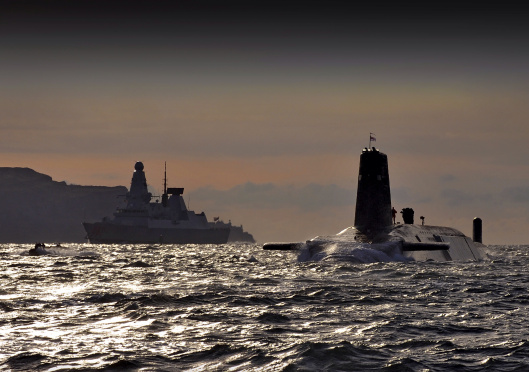 Russian servicemen ‘averted planetary catastrophe’ during nuclear submarine accident, military official claims at funeral https://www.independent.co.uk/news/world/europe/russia-submarine-accident-fire-nuclear-reactor-catastrophe-sailors-dead-a8991531.html
Kremlin refuses to reveal mission of vessel, citing state secrets Tom Embury-Dennis 8 July 19, Families of the 14 Russian servicemen who were killed after a fire broke out on a nuclear submarine have reportedly been told that their relatives averted a “planetary catastrophe” before they died.
Arrests in Turkey for theft of nuclear weapons material
Nuclear weapon material worth $72mn seized in a car in Turkey https://www.rt.com/news/463556-turkey-radioactive-material-bust/ : 7 Jul, 2019 Turkish police have taken five people into custody over the smuggling of a highly-radioactive substance used to build nuclear weapons and power nuclear reactors. The 18.1-gram haul was found in a car.
Police discovered a vial of the material after they pulled over a car in the northwestern Bolu province. The substance, believed to be californium, was found stashed under the gear stick wrapped in a bag. Officers had to cut the upholstery to get to the parcel, which is estimated to be worth US$72 million.
Five suspects were detained in the raid, and the mixture was taken to the Turkish Atomic Energy Agency (TAEK) for a detailed analysis.
Californium is named after the place where it was synthesized back in 1950 – a laboratory at the University of California. Apart from being used to manufacture nukes and nuclear-powered reactors, the element also has a range of rather innocuous civilian applications. It can be used as part of metal detectors and is used in cancer treatment as well as oil, silver, and gold mining operations. Still, the substance is highly dangerous and its production, distribution, and transportation is restricted. Currently, only the US and Russia synthesize the isotope.
It is not the first time Turkish police have reported a major bust involving californium.
In a scare in March of last year, police in Ankara said they had seized a whopping 1.4kg of the same substance in a car following a tip-off. It turned out to be false alarm, as the haul was later found to have no trace of nuclear or radioactive material, and was, in fact, organic matter.
Fire on Russian nuclear submarine: heroic crew prevented nuclear catastrophe.
Russia’s nuclear submarine disaster will test President Vladimir Putin and his navy. ABC News, By Alexey Muraviev 4 July 19, Russia’s Ministry of Defence has officially acknowledged an incident this week with one of its deep-submergence vehicles (DSV) within Russian territorial waters.
The incident seems to point to one of Russia’s most closely guarded naval assets — the Project 10831 AS-31 (AS-12) Kalitka (Norsub-5), more commonly known as Losharik.
It is named after a popular Soviet cartoon character because of its design specifications — a series of titanium spheres under the hull designed to withstand extreme water pressure.
A secret assignment According to the latest reports, all those killed onboard were assigned to a secret naval unit stationed in St Petersburg, which is responsible for operations of Project 18510 Nel’ma (X-Ray) “autonomous deep-sea stations” — Russia’s official description of the DSV-type platforms — the AS-21 and the AS-35.
However, the declared number of casualties and the seniority of the deceased personnel is unclear. It is assumed the tragedy occurred onboard the AS-12, which has an estimated crew of some 25 officers.
All these special-purpose submarines are assigned to the 29th “deep water” Submarine Division based at the Gadzhievo submarine base on the Kola peninsula.
Formally assigned to the Russian Northern Fleet, the “deep-water” submarine division is under the direct control of the Russian Ministry of Defence’s GUGI Directorate, which oversees covert marine and naval activities ranging from deep-sea oceanographic research to covert testing of advanced sea-based combat systems, to undersea special operations.
Covert trials of a nuclear-armed torpedo? While official word suggests the submarine was undertaking scanning of the seabed in one sector of the Barents Sea, the actual mission being undertaken may be different.It is possible the submarine was taking part in the covert sea trials of the Poseidon sub-sea strategic combat system (a large calibre nuclear torpedo) .
The tragedy would be the first reported large-scale fatality sustained by GUGI’s secret force.
But it cannot be compared with previous disasters involving Russian nuclear-powered submarines such as the RFS Kursk Oscar II class catastrophe back in 2000 or the incident onboard RFS Nerpa Akula IIclass back in 2008.
This disaster has happened within a unit designed specifically to operate in extreme physical environments where the safety and professionalism of the crew is a key to survival and success.
The crew comprises only middle-to-senior rank officers…….
Was a nuclear disaster averted?
It is understood that the fire onboard led to the fatal intoxication of more than half of the crew — about 14 out of some 25 onboard — and serious injuries of another four or five onboard.
Any submariner would concur that a fire onboard a submarine on deployment poses a serious risk. Fire onboard a nuclear-powered submarine is even worse.
While it is unknown what triggered that fatal fire, a mechanical failure or a human error, the fact is clear: the crew, at the cost of their lives, prevented a potentially major environmental disaster if the DSV had sunk to the bottom of the ocean, or exploded…… https://www.abc.net.au/news/2019-07-03/russias-nuclear-submarine-disaster-test-vladimir-putin-navy/11274964
Local fishermen saw the Russian nuclear submarine accident
Fishermen witnessed nuclear submarine drama, The sub quickly surfaced and there were subsequent signs of panic on the deck, the local fishermen say. The accident might have been caused by a gas explosion. Barents Observer, By Atle Staalesen,July 03, 2019
They were out doing illegal fishing and do not want to reveal their names. But the men who late Monday evening were onboard a small local fishing boat off the coast of the Kola Peninsula told news agency SeverPost that they witnessed what appeared as a state of emergency.
Eye witnesses
It happened around 9.30 pm near the Ura Bay, one of the witnesses says.
«We were heading towards Kildin, and then, about half past nine in the evening, a submarine surfaces. Suddenly and completely surfaces. I have never seen anything like it in my life. On the deck, people were running around and making fuss,» he told SeverPost.
The fishermen hid in nearby bay from where they saw that a navy vessel and two tugs quickly arrived on site. Around 11 pm, the vessels accompanied the submarine away from the area. There was no sign of smoke, they say.
Other locals later reported that they saw bodies being taken out of the submarine and to an approaching ship.
A source in the Russian Navy later told SeverPost that the submarine seen by the local fishermen was most likely the «Podmoskovie», the mother vessel of the special purpose submarine «Losharik» (AS-31). The «Podmoskovie» is a rebuilt Delta-IV class submarine designed to carry the much smaller «Losharik».
Sources in the Navy on Tuesday told Russian media that the accident had happened in the «Losharik». …… https://thebarentsobserver.com/en/security/2019/07/fishermen-witnessed-nuclear-submarine-drama
Russia’s nuclear submarine fire: what is known so far
What We Know About Russia’s Deadly Nuclear Sub Fire So Far https://www.themoscowtimes.com/2019/07/03/what-we-know-about-russias-deadly-nuclear-sub-fire-so-far-a66264 3 July 19 Fourteen sailors were killed in a fire on board a Russian Defense Ministry research vessel while carrying out a survey of the sea floor off Russia’s Arctic coast.
President Vladimir Putin has dispatched Defense Minister Sergei Shoigu to Severomorsk, the Russian naval base on the Barents Sea where the submarine is now located, to find out what caused the incident and report back to him.
Here’s what we know so far:
— The incident took place on Monday — nearly a day before the news was released — in Russian territorial waters in the Barents Sea, Shoigu reported to Putin.
— The 14 sailors died of smoke inhalation, Shoigu told Putin late on Tuesday.
— He said the crew extinguished the fire “through their decisive action.”
— A Navy commission has been tasked with investigating the cause of the tragedy and a military branch of Russia’s Investigative Committee has openedan inquiry into the deaths.
— The Defense Ministry had informed Putin of the accident on the day it occurred, Kremlin spokesman Dmitry Peskov said on Wednesday.
The submarine
— Russian officials have not commented on the type of vessel involved in the deadly fire.
— An unnamed source in the security forces told the RBC news website the incident took place on the AS-31, a secretive deep-sea nuclear submarine.
— Launched in 2003, the submarine nicknamed Losharik was designed for research, rescue and special military operations, and can hold up to 25 crew members. — It is made from a series of interconnected spheres, making it stronger than conventional submarine designs and allowing it to resist water pressure at great depths.
— Analysts believe the vessel is a key asset of GUGI, the Defense Ministry’s Main Directorate of Deep-Sea Research, and not part of the Russian Navy. St. Petersburg’s fontanka.ru news website and the Kommersant business daily reported that Losharik’s crew members allegedly belong to a military unit that reports to GUGI.
Casualties
— The Defense Ministry has not released the names of those on board the vessel.
— Putin noted that of the 14 casualties, seven held the rank of captain 1st rank and two had held the Hero of Russia award, the highest military honor issued in the post-Soviet period. — Shoigu confirmed that there were survivors, but did not specify how many. Anonymously sourced reports suggested four to five crew members survived the fire.
— RBC, citing social media, listed four names of possible casualties. They include the son of the military unit leader; a submarine commander who holds captain 1st rank and Hero of Russia; and a second captain 1st rank.
— An Orthodox cathedral in Murmansk, a city north of Severodvinsk, has listed 14 names in its announcement of a service “for the fallen seamen-submariners” on Wednesday evening.
Reactions
— Putin called the incident “a great loss for the [Northern] Fleet, and indeed for the Army.”
— Acting governor of St. Petersburg Alexander Beglov and Murmansk region governor Andrey Chibis expressed their condolences to the victims. — “The Losharik incident will likely have a deep operational impact on [GUGI], given how advanced and relatively few these submarines are,” a former U.S. National Security Council staffer told the Radio Free Europe/Radio Liberty news outlet.
— The United States has allegedly not received requests for assistance from the Russian government, a U.S. 6th Fleet spokesperson told the U.S. Naval Institute’s USNI News website.— Norwegian officials said they had been in touch with their Russian counterparts and were monitoring, but had not detected abnormally high levels of radiation.
— Colleagues around the world, including the U.S., will mourn the loss of 14 Russian sailors because of a “special bond between all submariners,” wroteWashington Examiner columnist Tom Rogan.
Past accidents
— This is the largest accident to take place on a Defense Ministry submarine since 2008, when a freon gas leak on the nuclear-powered submarine Nerpa killed 20 and injured 21.
— In August 2000, the Russian nuclear-powered submarine Kursk sank to the floor of the Barents Sea after two explosions in its bow, killing all 118 men aboard. That accident, soon after Putin took office, focused official attention on the state of the military and its hardware, which had been underfunded and neglected after the collapse of the Soviet Union.
14 Russian Sailors Killed in Fire on Nuclear Sub
14 Russian Sailors Killed in Fire on Nuclear Sub https://www.themoscowtimes.com/2019/07/02/14-russian-sailors-killed-in-fire-on-nuclear-sub-reports-a66257 3 July 19 Fourteen submariners on board a Russian Defense Ministry research vessel were killed in a fire while carrying out a survey of the sea floor off Russia’s Arctic coast, the ministry was quoted as saying by Russian news agencies.
The incident took place on the AS-31 deep-sea nuclear submarine nicknamed Losharik, an unnamed source in the security forces told the RBC news website. Launched in 2003, Losharik was designed for research, rescue and special military operations and can hold up to 25 crew members.
The fire broke out at 8:30 p.m. on Monday, RBC cited its source as saying, nearly a day before the ministry released the news. “On July 1 in Russian territorial waters a fire broke out on board a deep-water scientific research vessel that was studying the marine environment of the world ocean on behalf of the Russian navy,” Interfax cited a ministry statement as saying.
“Fourteen submariners died as the result of smoke inhalation … Work is underway to establish the cause of the incident. The investigation is being conducted by the commander-in-chief of the navy.”
The fire has been extinguished and the submarine is now at the Russian Northern Fleet’s base in Severomorsk on the Barents Sea, Interfax quoted the ministry as saying. The statement as cited by the agencies did not identify the type or model of the underwater vessel.
This is the largest accident to take place on a Defense Ministry submersible since 2008, when a freon gas leak on the nuclear-powered submarine Nerpa killed 20 and injured 21.
In August 2000, the Russian nuclear-powered submarine Kursk sank to the floor of Barents Sea after two explosions in its bow, killing all 118 men aboard.That accident, soon after President Vladimir Putin took office, focused official attention on the state of the military and its hardware, which had been subject to underfunding and neglect after the collapse of the Soviet Union.
Since then, Putin has overseen a massive increase in military funding that has allowed the armed forces to renew their equipment and improve training and morale.
However, accidents have continued to happen as the military, used by the Kremlin to project its growing international muscle, has ramped up its activities and extended into new theatres of operation.
In December 2016, a Russian military plane carrying 92 people, including dozens of Red Army Choir singers, crashed into the Black Sea en route to Syria where Russian forces are deployed. Everyone on board was killed.
1 This Month

of the week – Shut Down Drone Warfare!


Tell the Ukrainian Government to Drop Prosecution of Peace Activist Yurii Sheliazhenko

Petition to revoke the licensing of the Near Surface Nuclear Disposal Facility (NSDF) at Chalk River. https://www.ourcommons.ca/petitions/en/Petition/Details?Petition=e-7247
To see nuclear-related stories in greater depth and intensity – go to https://nuclearinformation.wordpress.com
-
Archives
- April 2026 (79)
- March 2026 (251)
- February 2026 (268)
- January 2026 (308)
- December 2025 (358)
- November 2025 (359)
- October 2025 (376)
- September 2025 (257)
- August 2025 (319)
- July 2025 (230)
- June 2025 (348)
- May 2025 (261)
-
Categories
- 1
- 1 NUCLEAR ISSUES
- business and costs
- climate change
- culture and arts
- ENERGY
- environment
- health
- history
- indigenous issues
- Legal
- marketing of nuclear
- media
- opposition to nuclear
- PERSONAL STORIES
- politics
- politics international
- Religion and ethics
- safety
- secrets,lies and civil liberties
- spinbuster
- technology
- Uranium
- wastes
- weapons and war
- Women
- 2 WORLD
- ACTION
- AFRICA
- Atrocities
- AUSTRALIA
- Christina's notes
- Christina's themes
- culture and arts
- Events
- Fuk 2022
- Fuk 2023
- Fukushima 2017
- Fukushima 2018
- fukushima 2019
- Fukushima 2020
- Fukushima 2021
- general
- global warming
- Humour (God we need it)
- Nuclear
- RARE EARTHS
- Reference
- resources – print
- Resources -audiovicual
- Weekly Newsletter
- World
- World Nuclear
- YouTube
-
RSS
Entries RSS
Comments RSS
 nuclear-news