Radioactive water spills over after quakes hit Japan
By JIANG XUEQING in Tokyo | China Daily 3 Jan 24
Radioactive water from the fuel pools of two reactors at the Kashiwazaki-Kariwa Nuclear Power Plant in Japan’s Niigata prefecture spilled over after a magnitude 7.6 earthquake and multiple aftershocks rocked the country on New Year’s Day.
However, Tokyo Electric Power Company, which owns and operates the plant, said the reactors were offline before the quake hit and no abnormalities in operation had been detected……………………………………………………………………………………………
TEPCO said that about 10 liters of water containing radioactive materials spilled from the fuel pool of the No 2 reactor and about 4 liters from the fuel pool of the No 7 reactor at around 6:45 pm on Monday.
After the 2011 earthquake triggered a triple meltdown at the Fukushima Daiichi plant, Japan introduced a maximum operating life of 60 years for its nuclear reactors. However, the limit was scrapped in May as the nation shifted its policy to promote nuclear energy, aiming for an early restart of nuclear power plants, The Yomiuri Shimbun reported. https://www.chinadaily.com.cn/a/202401/03/WS65949a3ba3105f21a507a34e.html
Hackers use LinkedIn to target UK nuclear waste firm

ITPRO, By Emma Woollacott, 2 Jan 24
Radioactive Waste Management said attackers have leveraged LinkedIn in a spear phishing campaign
Radioactive Waste Management (RWM), which is planning a huge underground nuclear waste store in the north of England, has been targeted by cyber criminals via LinkedIn, according to The Guardian.
Accounts for RWM filed at Companies House show that the organization has been targeted by cyber criminals using various methods, including the use of popular social network platforms to dupe staff.
RWM, which is part of Nuclear Waste Services (NWS), revealed that attacks have escalated in recent months, raising concerns over the risk of hackers gaining access to highly sensitive materials.
NWS chief executive, Corhyn Parr, said the government-backed organization has experienced “instances of potential exploitation of ownership change through specific attack vectors, predominantly LinkedIn targeting”…………………………………………………………………………..
The incident highlights a growing problem. Last month, for example, the UK’s National Cyber Security Centre (NCSC) and international partners warned that Russia-based hacking group Star Blizzard was using spear phishing techniques via email and social media to target defense and governmental organizations.
LinkedIn has been the method of choice in previous attacks on industry and infrastructure, according to Adam Pilton, cyber security consultant at CyberSmart.
Used by millions of professionals globally, the popular social network has become a key hunting ground for targets in recent years……………………………………………. more https://www.itpro.com/security/hackers-use-linkedin-to-target-uk-nuclear-waste-firm
Water Containing Radioactive Materials Spills Over at Kashiwazaki-Kariwa Nuclear Power Plant Due to Earthquakes
The Yomiuri Shimbun, 21:24 JST, January 1, 2024
Water from the fuel pools at the top floors of the No. 7 and No. 2 reactors at the Kashiwazaki-Kariwa nuclear power plant in Niigata Prefecture spilled over due to strong earthquakes, Tokyo Electric Power Company Holdings, Inc. announced Monday. No damage or leaks were confirmed.
According to TEPCO, when the company checked the fuel pools of reactors No. 1 through No. 7 at around 6:45 p.m., it found that water containing radioactive materials spilled from the pools. About 10 liters spilled from the No. 2 reactor and about 4 liters from the No. 7 reactor. TEPCO is measuring the radiation levels.
A nuclear-powered ship in Murmansk started to burn. Only few locals got to know about the serious incident
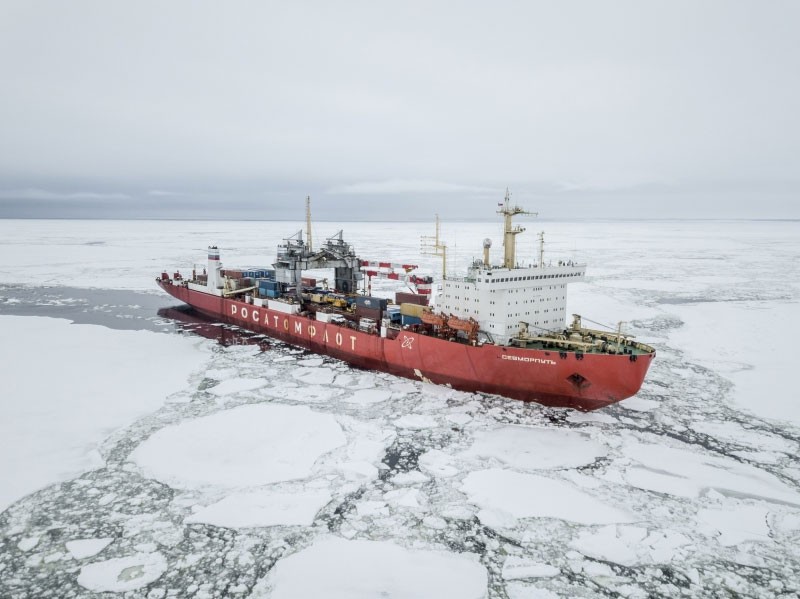
The fire brigade in Murmansk quickly extinguished the blaze that broke out on the 24th of December in a cabin onboard nuclear-powered container ship Sevmorput. State shipowner Rosatom never issued any information about the dramatic situation.
By Atle Staalesen, 28 Dec 23
Little information is available about the fire that broke out in Atomflot, the base for nuclear-powered vessels in Murmansk.
Only two short announcements were in the evening of the 24th of December posted on messenger service Telegram by the local Ministry of Emergency Situations (Emercom).
The first message posted at 21.17 pm informed about a fire on the territory of Atomflot and about the fire brigades that were on the way.
About 1,5 hour later, Emercom informed about its successful fire fighting……………
According to the emergency service, the fire covered an area of about 30 square meters in a cabin onboard the Sevmorput.
The Telegram messages were read by about ten thousand people. A few of them commented on the posts.
Where should we flee?” one of the readers asked.
Rosatom, the state nuclear power company that operates the Sevmorput, has apparently not issued any information about the fire. Neither has any of the company’s subsidiaries, such as the Atomflot or the Rosatomflot.
There is no information about the incident on the companies’ websites or their social media.
The fire could potentially have created a dramatic situation in the big Russian Arctic city. The Atomflot base is located only few kilometres from downtown Murmansk and a major fire on the nuclear-powered ship would have posed a serious threat to the about 270,000 population.
The Sevmorput is the world’s only nuclear-powered merchant container ship.
It is 260 meter long and was built in 1988. For many years, the ship lay idle in Murmansk and Russian authorities ultimately decided to scrap it. However, in 2013 it was instead decided to undertake a major renovation, and in autumn 2015, the ship was again test-sailing the Barents Sea. The following year, Sevmorput was back in regular service and has in the lastest years delivered cargo to military installations in the Russian Arctic, as well as to the petroleum development along the Siberian coast. The ship can carry 74 lighters or 1324 containers.
After the 2015 upgrade and safety evaluation, the reactor’s service life was prolonged with 150,000 hours aimed at keeping the vessel in operation until 2024.
It now looks increasingly likely that the ship will exit service and ultimately be scrapped. In a recent conference on the Arctic, Head of Atomflot Leonid Irlitsa said that his company plans to replace the ship with alternative non-nuclear vessels in 2024…………. https://thebarentsobserver.com/en/nuclear-safety/2023/12/nuclear-powered-ship-murmansk-started-burn-only-few-locals-got-know-about
Mystery fire breaks out on Russia’s only nuclear-powered icebreaker vessel as it was docked at Arctic port
- The Sevmorput, built in 1988, underwent extensive upgrades a decade ago
- Its owner stressed there was no threat to the ship’s nuclear reactor plant
By JAMES REYNOLDS and WILL STEWART, 25 December 2023
A mystery blaze aboard Russia‘s only nuclear-powered icebreaker cargo ship triggered panic in the Arctic port of Murmansk.
A fire broke out on Sunday in one of the cabins of the Soviet-made Sevmorput, currently docked in the northern Russian region bordering Finland and Norway.
The inferno spread some 323 square feet (30 sq metres) on the 830-ft ship (230m) before firefighters were able to put it out without casualties, Russia’s emergency ministry said.
‘The fire was quickly liquidated,’ Atomflot, which owns the vessel, said in a statement. ‘There were no injuries. There was no threat to crucial support systems or to the reactor plant.’
The ship, which entered service in 1988 and went through an extensive upgrade a decade ago, is Russia’s only nuclear-powered icebreaking transport ship, according to Rosatom. ………………………………………………..more https://www.dailymail.co.uk/news/article-12899379/Inferno-nuclear-russia-icebreaker-panic-murmansk-arctic.html
 | |||
| |||
(no subject)
Inbox
Search for all messages with label Inbox
Remove label Inbox from this conversation

Christina Macpherson <christinamacpherson@gmail.com>
7:49 AM (0 minutes ago)
to me
Canadians should be afraid of radiation: Frank Greening.

Dr. Frank Greening, Hamilton, Ont. 4Dec 23
Re: “We can manage predictable radiation: Canadian Nuclear Society,” (The Hill Times, Nov. 15, 2023, letter to the editor. The gist of this CNS letter to The Hill Times appears to be: we should not be afraid of radiation because it’s predictable and we can manage it.
I have to say that when it comes to radiation exposures at nuclear power stations, the Canadian nuclear industry has proven time and again that radiation exposures to workers have often been quite unpredictable and totally mismanaged. As proof of this assertion consider what happened at Pickering Nuclear Generating Station (NGS) in March 1985 and at Bruce NGS in January 2010.
In the case of the Pickering NGS 1985 event, workers involved in the refurbishment of Units 1 and 2 were exposed to airborne beta-active particulate.
Most unfortunately for the CNSC, there is ample evidence that the Bruce alpha exposure event was not unforeseen. Indeed, in November 2009, the CNSC reported that a routine survey during refurbishment operations at the Bruce Nuclear Generating Station detected the presence of radioactive alpha contamination in the Unit 1 reactor vault. Nevertheless, both Bruce Power and the CNSC proceeded with the Unit 1 refurbishment.
I would say that Canadians should be afraid of radiation when our very own nuclear industry and the regulatory body, responsible for the safety of nuclear facilities, appear to be incapable of protecting nuclear workers from needless radiation exposures during reactor refurbishments.
K-219: Russia’s Worst Submarine Ever (And a Nuclear Disaster)?

This article is all about the sinking of a ballistic missile submarine, carrying 6 nuclear missiles.
But – not a word about the radioactive pollution that must still be emanating from the undersea wreck nearly 30 years later.
The K-219 was clearly faulty and the crew did not react well to the emergency. It should be considered one of the worst submarines of all time because it carried nuclear missiles and there was a fire on board.
National Interest, Brent M. Eastwood 26 Nov 23
-219: The Worst or Most Dangerous Submarine of All Time? When it comes to figuring out what is the worst submarine of all time, it is difficult to blame the sub itself or the bad actions of the crew. Such is the case with the sinking of the Soviet submarine K-219. K-219 was a Yankee-class boomer, or ballistic missile submarine, that carried nuclear weapons.
On October 3, 1986, the K-219, with 16 R-27 nuclear missiles, sunk within 700 miles off the coast of Bermuda.
One of the missile tubes sprung a leak and seawater rushed in and blended with the missile fuel. This volatile combination made for a deadly mix that created dangerous levels of heat and gas. This is where the crew reacted slowly without the sailors exhibiting teamwork and conducting damage control.
Only one crew member moved to do something by venting the tube. A short circuit cropped up in the main power line that created a spark. Then a blast in the silo occurred that sent the missile and the warheads into the water. That’s when the sailors finally sprang into action. They battled the fire on board, eventually putting it out.
They had to shut down the nuclear reactors by hand because the control mechanisms were damaged. Three sailors died.
A Soviet ship tried to rescue the sub by pulling it to safety. But that did not work because the tow cord broke. The captain of the sub, Igor Britanov, decided to abandon ship. The sub sunk to the bottom of the ocean and the missiles were lost. The whole encounter lasted three days.
The Reagan administration even offered to help the Soviets and American officials appreciated that the Soviets informed them of the tragedy the day it happened. Fortunately, no radioactivity or nuclear explosion happened. The surviving sailors made it out and Captain Britanov was the last to leave the sub alive, in accordance with naval customs………………………………………………………………………………….
The K-219 was clearly faulty and the crew did not react well to the emergency. It should be considered one of the worst submarines of all time because it carried nuclear missiles and there was a fire on board. This made it one of the most dangerous submarines to ever float. Gorbachev feared the worst and he was correct to blame the crew. They reacted slowly to the original leak and did not check the power system before engaging the water pump.
They should have known that gas was present and that employing electrical power would be dangerous. This was one of the most hazardous maritime situations in the Cold War. The Soviets and the Americans were lucky it was not worse. https://nationalinterest.org/blog/buzz/k-219-why-russias-worst-submarine-ever-and-nuclear-disaster-207495
Hacktivists breach U.S. nuclear research lab, steal employee data.
Bleeping Computer, By Bill Toulas, 21 Nov 23
The Idaho National Laboratory (INL) confirms they suffered a cyberattack after ‘SiegedSec’ hacktivists leaked stolen human resources data online.
INL is a nuclear research center run by the U.S. Department of Energy that employs 5,700 specialists in atomic energy, integrated energy, and national security.
The INL complex extends over an 890-square-mile (2,310 km2) area, encompassing 50 experimental nuclear reactors, including the first ones in history to produce usable amounts of electricity and the first power plant designed for nuclear submarines.
Currently, INL is occupied with research on next-gen nuclear plants, light water reactors, control systems cybersecurity, advanced vehicle testing, bioenergy, robotics, nuclear waste processing, and other studies.
Hacktivists claim attack on INL
On Monday, SiegedSec announced it had gained access to INL data, including details on “hundreds of thousands” of employees, system users, and citizens.
As the group has done in previous breaches on NATO and Atlassian, they openly leaked stolen data on hacker forums and a Telegram channel run by the group, not caring to negotiate with the victim or demand ransoms.
The data leaked by SiegedSec includes:
- Full names
- Dates of birth
- Email addresses
- Phone numbers
- Social Security Numbers (SSN)
- Physical addresses
- Employment information
As the group has done in previous breaches on NATO and Atlassian, they openly leaked stolen data on hacker forums and a Telegram channel run by the group, not caring to negotiate with the victim or demand ransoms.
The data leaked by SiegedSec includes
As the group has done in previous breaches on NATO and Atlassian, they openly leaked stolen data on hacker forums and a Telegram channel run by the group, not caring to negotiate with the victim or demand ransoms.
The data leaked by SiegedSec includes:
- Full names
- Dates of birth
- Email addresses
- Phone numbers
- Social Security Numbers (SSN)
- Physical addresses
- Employment information
On Telegram, SiegedSec also posted alleged proof of the breach by sharing screenshots of tools used internally by INL for document access and announcement creation.
The attackers also showed the creation of a custom announcement on INL’s system to let everyone in the complex know about the breach………………………………….
Although SiegedSec has neither accessed nor disclosed any data on nuclear research, the incident will inevitably intensify law enforcement scrutiny of the hacktivist group, as INL is considered a vital part of U.S. critical infrastructure. https://www.bleepingcomputer.com/news/security/hacktivists-breach-us-nuclear-research-lab-steal-employee-data/
Major malfunction on Royal navy nuclear submarine plunges warship into ‘danger zone’

The sub was preparing to go on patrol when dials indicating its depth stopped working, leaving commanders to think it was level when it was still diving.
Jerome Starkey – The Sun, November 20, 202
A Royal navy nuclear sub sinking towards its crush depth was saved moments from disaster.
A depth gauge failed on the decades-old Vanguard class vessel, carrying 140 crew and Trident 2 doomsday missiles in the Atlantic.
Such a catastrophe would also have triggered a nightmare salvage mission to recover the top-secret vessel and its nuclear reactor before the Russians got to the scene, The Sun reports.
The sub was preparing to go on patrol when dials indicating its depth stopped working, leaving commanders to think it was level when it was still diving.
It was entering the “danger zone” when engineers at the back of the 490ft Vanguard-class vessel spotted a second gauge and raised the alarm………………………………………. more https://www.news.com.au/travel/travel-updates/incidents/major-malfunction-on-royal-navy-nuclear-submarine-plunges-warship-into-danger-zone/news-story/6267e0293fd0b47979b907f1912d5058
Nuclear submarine scare for 140 British crew due to ‘faulty’ gauge
George Sandeman, Monday November 20 2023, The Times

A Royal Navy nuclear submarine travelled to dangerous oceanic depths because of a failed gauge, it was reported last night.
The Vanguard-class vessel, which was carrying 140 crew and equipped with Trident missiles, was operating in the Atlantic at the time of the incident. It was preparing to go on patrol when the depth gauge stopped working, according to The Sun, leading commanders to believe that the submarine was level when it was still diving
Its descent was only halted once engineers working at the rear of the vessel noticed the actual depth on a second gauge, which was working correctly, and raised the alarm…………………………………..https://www.thetimes.co.uk/article/nuclear-submarine-scare-for-140-british-crew-due-to-faulty-gauge-5nlv2bgqc
Top 9 Worst Nuclear Disasters of All Time
KnownInsiders Rosemary November 11, 2023
Ukraine was devastated by Chernobyl, the world’s worst nuclear accident. There have been numerous nuclear disasters that have caused havoc throughout world history.
How are nuclear accidents measured?
9 Worst Nuclear Disasters In the World History
2. Mihama Nuclear Power Plant – Fukushima Prefecture, Japan (Level 7)
3. Windscale on October 10, 1957 (Level 6)
4. Kyshtym, Russia in 1957 (Level 6)
5. Three Mile Island, Pennsylvania in 1979 (Level 5)
6. Goiania Accident, Brazil in 1987 (Level 5)
7. Reactor Accidents at Chalk River (Level 5)
8. Tokaimura, Japan 1999 (Level 4)
9. Saint Laurent Nuclear Accidents on March 19, 2017 (Level 4)
more https://knowinsiders.com/top-9-worst-nuclear-disasters-of-all-time-35950.html
Loud Explosion Heard In Pakistan’s Dera Ghazi Khan City With Nuclear Facility; Officials Say ‘Sonic Boom’
The loud thud in the vicinity of Dera Ghazi Khan town in southern Punjab caused panic and soon it started trending on social media.
BQ Prime 6 Oct 23
Pakistan authorities on Friday said that the sound of a loud explosion in Punjab province could be due to a sonic boom as there was no information of a bombing incident or an act of sabotage. The loud thud in the vicinity of Dera Ghazi Khan town in southern Punjab caused panic and soon it started trending on social media. Videos circulating on X showed people vacating the area even as rescue teams and police personnel were moving around.
Pakistan’s nuclear research site is in the neighbourhood…………………….
A Chinese nuclear-powered submarine has sunk with the loss of 55 sailors
#nuclear #anti-nuclear #nuclear-free #NoNukes The nuclear submarine sank after it was caught in a trap intended for American and British vessels, leaked intelligence reports disclose. China has six Type 093 attack
submarines, which have a displacement of 6,096 tonnes and are armed with
553mm torpedoes. The nuclear-powered submarines, designed to be quieter
than previous models, entered service in the past 15 years.
Times 4th Sept 2023
Almost forgotten? the Church Rock nuclear tragedy
On July 16, 1979, the worst accidental release of radioactive waste in U.S.
history happened at the Church Rock uranium mine and mill site. While the
Three Mile Island accident (that same year) is well known, the enormous
radioactive spill in New Mexico has been kept quiet. It is the U.S. nuclear
accident that almost no one knows about. Just 14 weeks after the Three Mile
Island reactor accident, and 34 years to the day after the Trinity atomic
test, the small community of Church Rock, New Mexico became the scene of
another nuclear tragedy.
Beyond Nuclear 16th July 2023
Novouralsk Nuclear Plant Blast—What We Know, as Russians Rushed to Hospital
More than 100 people have been hospitalized and one person was killed
after an explosion at a uranium enrichment plant in Russia’s Urals
region—the largest of its kind in the world—according to local media
reports.
Russia’s state nuclear corporation, Rosatom, which owns the Ural
Electrochemical Combine in Novouralsk, said a cylinder with depleted
uranium hexafluoride was “depressurized” at around 9 a.m. local time.
Russian media outlets often use euphemisms such as “loud bang” or
“depressurized” instead of “blast” or “explosion,” allegedly to avoid
sowing panic and maintain a favorable information landscape.
Newsweek 14th July 2023
https://www.newsweek.com/novouralsk-nuclear-plant-blast-uranium-russia-hospital-latest-1813022
1 This Month
Chernobyl: The Lost Tapes – A good documentary on Chernobyl on SBS available On Demand for the next 3 weeks– https://www.sbs.com.au/ondemand/tv-program/chernobyl-the-lost-tapes/2352741955560

of the week–London Campaign for Nuclear Disarmament

Tell the Ukrainian Government to Drop Prosecution of Peace Activist Yurii Sheliazhenko
To see nuclear-related stories in greater depth and intensity – go to https://nuclearinformation.wordpress.com
-
Archives
- April 2026 (139)
- March 2026 (251)
- February 2026 (268)
- January 2026 (308)
- December 2025 (358)
- November 2025 (359)
- October 2025 (376)
- September 2025 (257)
- August 2025 (319)
- July 2025 (230)
- June 2025 (348)
- May 2025 (261)
-
Categories
- 1
- 1 NUCLEAR ISSUES
- business and costs
- climate change
- culture and arts
- ENERGY
- environment
- health
- history
- indigenous issues
- Legal
- marketing of nuclear
- media
- opposition to nuclear
- PERSONAL STORIES
- politics
- politics international
- Religion and ethics
- safety
- secrets,lies and civil liberties
- spinbuster
- technology
- Uranium
- wastes
- weapons and war
- Women
- 2 WORLD
- ACTION
- AFRICA
- Atrocities
- AUSTRALIA
- Christina's notes
- Christina's themes
- culture and arts
- Events
- Fuk 2022
- Fuk 2023
- Fukushima 2017
- Fukushima 2018
- fukushima 2019
- Fukushima 2020
- Fukushima 2021
- general
- global warming
- Humour (God we need it)
- Nuclear
- RARE EARTHS
- Reference
- resources – print
- Resources -audiovicual
- Weekly Newsletter
- World
- World Nuclear
- YouTube
-
RSS
Entries RSS
Comments RSS
 nuclear-news