Attacks on Ukrainian nuclear facilities ‘must cease immediately’: UN atomic watchdog

United Nations, 8 April 2024, Peace and Security 8 Apr 24
The head of the UN nuclear watchdog agency reiterated that attacks against nuclear power plants in Ukraine are “an absolute no go”, following direct military action targeting the Zaporizhzhya Nuclear Power Plant (ZNPP) on Sunday.
Rafael Grossi, Director General of the International Atomic Energy Agency (IAEA), said the targeting marked a “major escalation” in the level of danger facing the power plant.
It was the first time since Russia’s full-scale invasion of Ukraine in February 2022 that the ZNPP – Europe’s largest nuclear power plant – has been directly targeted. It has been occupied by Russian forces since the early weeks of the fighting.
As of Sunday, while there were “no indications” of damage to critical nuclear safety or security systems, the strikes were “another stark reminder” of the threats to the power plant and other nuclear facilities during the ongoing war, IAEA said.
“Although the damage at unit 6 has not compromised nuclear safety, this was a serious incident that had the potential to undermine the integrity of the reactor’s containment system,” Director General Grossi said.
‘A major escalation’
“This is a major escalation of the nuclear safety and security dangers facing the Zaporizhzhya Nuclear Power Plant. Such reckless attacks significantly increase the risk of a major nuclear accident and must cease immediately,” Mr. Grossi said.
Reiterating that no one can “conceivably benefit” or get any military or political advantage from attacks against nuclear facilities, he stressed such attacks are “an absolute no go”.
“I firmly appeal to military decision makers to abstain from any action violating the basic principles that protect nuclear facilities.”
At least one casualty
According to IAEA, after receiving information from the ZNPP about the drone attacks, its experts stationed at the site went to three affected locations.
They were able to confirm the physical impact of the drone detonations, including at one of the site’s six reactor buildings where surveillance and communication equipment appeared to have been the target.
While they were at the roof of the reactor, Russian troops engaged what appeared to be an approaching drone, the agency said, adding that this was followed by an explosion near the reactor building.
“The IAEA team reported that they observed remnants of drones at this and two other impact locations at the site. At one of them, outside a laboratory, they saw blood stains next to a damaged military logistics vehicle, indicating at least one casualty,” it said.
IAEA experts further reported hearing explosions and rifle fire on the site throughout the day. The team also heard several rounds of outgoing artillery fire from near the plant………………………… https://news.un.org/en/story/2024/04/1148346—
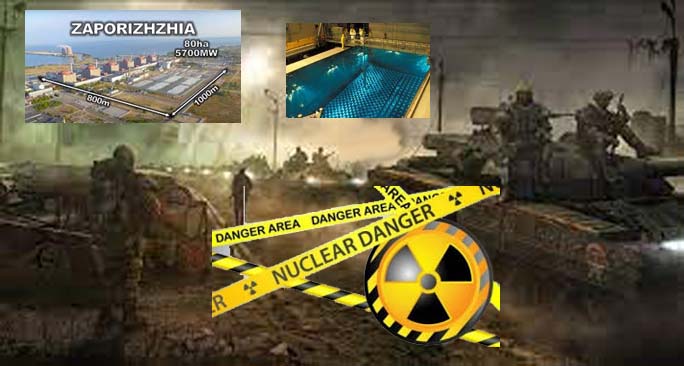
What are the risks at Zaporizhzhia nuclear power plant after drone attack?
By Guy Faulconbridge and Francois Murphy, April 8, 2024, https://www.reuters.com/world/europe/nuclear-power-plant-eye-ukraine-war-2024-04-08/
MOSCOW/VIENNA, – Russia said Ukraine struck the Zaporizhzhia nuclear power station controlled by Russian forces three times on Sunday and demanded the West respond, though Kyiv said it had nothing to do with the attacks.
The International Atomic Energy Agency (IAEA) has long warned of the risks of a disaster at Zaporizhzhia, Europe’s largest nuclear plant, and urged an end to fighting in the area.
The plant is just 500 km (300 miles) from the site of the world’s worst nuclear accident, the 1986 Chornobyl disaster.
What nuclear material is at the Zaporizhzhia plant, what are the risks and why are Russia and Ukraine fighting over it?
WHAT IS IT AND WHAT WAS ITS CAPACITY?
The Zaporizhzhia nuclear power plant has six Soviet-designed VVER-1000 V-320 water-cooled and water-moderated reactors containing Uranium 235. They were all built in the 1980s, though the sixth only came online in the mid-1990s after the collapse of the Soviet Union.
All but one of the reactors are in cold shutdown. Reactor unit 4 is in “hot shutdown”, mainly for heating purposes.
IAEA Director General Rafael Grossi says that fighting a war around a nuclear plant has put nuclear safety and security in “constant jeopardy”.
WHAT HAPPENED ON APRIL 7?
Russia’s state nuclear corporation, Rosatom, said Ukraine attacked the plant three times on Sunday with drones, first injuring three near a canteen, then attacking a cargo area and then the dome above reactor No. 6.
IAEA experts at the site went to the three locations of the attacks and confirmed there had been an attack.
“Russian troops engaged what appeared to be an approaching drone,” the IAEA said. “This was followed by an explosion near the reactor building.”
“While the team so far has not observed any structural damage to systems, structures, and components important to nuclear safety or security of the plant, they reported observing minor superficial scorching to the top of the reactor dome roof of Unit 6 and scoring of a concrete slab supporting the primary make-up water storage tanks,” the IAEA said.
The IAEA did not say directly who was to blame for the attacks.
A Ukrainian intelligence official said Kyiv had nothing to do with any strikes on the station and suggested they were the work of Russians themselves.
WHAT ARE THE RISKS?
Russian forces took control of the plant in early March 2022, weeks after invading Ukraine. Special Russian military units guard the facility and a unit of Russia’s state nuclear company, Rosatom, runs the plant.
Nuclear reactors’ containment structures like Zaporizhzhia’s are made of steel-lined reinforced concrete designed to withstand the impact of a small plane crash so there is little immediate risk from a minor attack on those structures.
A 1989 study by the U.S. Department of Energy found that the model of containment structure used in Zaporizhzia “exhibits vulnerabilities to the effects of an aircraft crash” and a fighter jet crashing downwards into the dome, where the structure is thinner, could penetrate it, causing concrete chunks and aircraft engine parts to fall inside.
External power lines essential to cooling nuclear fuel in the reactors are a softer potential target. Cooling fuel even in reactors in cold shutdown is necessary to prevent a nuclear meltdown.
Since the war began the plant has lost all external power eight times, most recently in December last year, forcing it to rely on emergency diesel generators for power. Water is also needed to cool fuel.
Pressurised water is used to transfer heat away from the reactors even when they are shut down, and pumped water is also used to cool down removed spent nuclear fuel from the reactors.
Without enough water, or power to pump the water, the fuel could melt down and the zirconium cladding could release hydrogen, which can explode.
WHAT ABOUT THE SPENT FUEL?

Besides the reactors, there is also a dry spent fuel storage facility at the site for used nuclear fuel assemblies, and spent fuel pools at each reactor site that are used to cool down the used nuclear fuel.
Without water supply to the pools, the water evaporates and the temperatures increase, risking a fire that could release a number of radioactive isotopes.
An emission of hydrogen from a spent fuel pool caused an explosion at reactor 4 in Japan’s Fukushima nuclear disaster in 2011.
WHAT HAPPENS IN A MELTDOWN?
A meltdown of the fuel could trigger a fire or explosion that could release a plume of radionuclides into the air which could then spread over a large area.
The Chornobyl accident spread Iodine-131, Caesium-134, Strontium-90 and Caesium-137 across parts of northern Ukraine, Belarus, Russia, northern and central Europe.
Nearly 8.4 million people in Belarus, Russia and Ukraine were exposed to radiation, according to the United Nations. Around 50 deaths are directly attributed to the disaster itself.
But 600,000 “liquidators”, involved in fire-fighting and clean-up operations, were exposed to high doses of radiation. Hundreds of thousands were resettled.
There is mounting evidence that the health impact of the Chornobyl disaster was much more serious than initially presented at the time and in the years following the accident.
Incidence of thyroid cancer in children across swathes of Belarus, Russia and Ukraine increased after the accident. There was a much higher incidence of endocrine disorders, anaemia and respiratory diseases among children in contaminated areas.
Reports: 2 mishaps in LANL’s plutonium facility in one day
In two separate incidents on the same day last month, Los Alamos National Laboratory workers accidentally set off decontamination showers, causing flooding in the lab’s plutonium facility, and a technician stuffed radioactive wipes into a vest pocket and took them home, a government watchdog says. Reports: 2 mishaps in LANL’s plutonium facility in one day
Zaporizhzhia nuclear plant reports shelling by Ukraine army
Reuters, March 14, 2024, https://www.reuters.com/world/europe/russia-controlled-zaporizhzhia-nuclear-plant-says-was-shelled-by-ukraine-2024-03-14/
MOSCOW, March 14 (Reuters) – The Russian-controlled management of the Zaporizhzhia nuclear power plant, the largest in Europe, said on Thursday that the Ukrainian army had shelled a critical infrastructure facility at the plant.
An explosive device was dropped near a fence where diesel fuel tanks are located, the plant reported.
“Such attacks are unacceptable,” it said.
It was not immediately clear when the attack had taken place. Reuters was unable to immediately verify battlefield reports from either side.
International Atomic Energy Agency Director General Rafael Grossi has repeatedly warned of the danger of attacks on the plant.
Russia and Ukraine, at war for more than two years, have blamed each other for past shelling that has downed power lines and endangered generators.
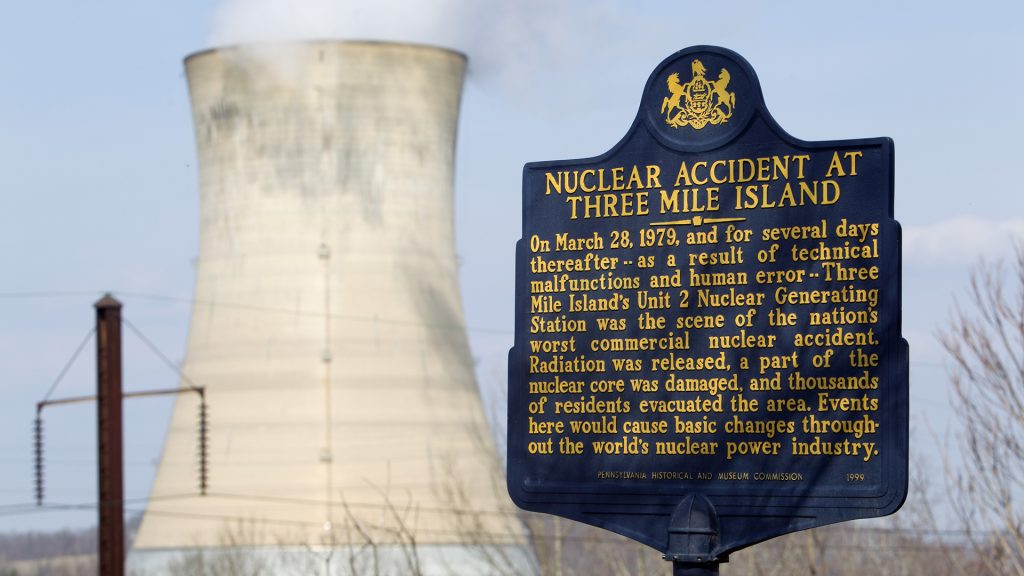
Observing the 45th Anniversary of the Worst U.S. Commercial Nuclear Power Plant Accident.
March 13th, 2024, https://nuclearactive.org/
Thursday, March 28th marks the 45th anniversary of the Three Mile Island nuclear power plant accident in Pennsylvania. A new documentary, “RADIOACTIVE: The Women of Three Mile Island,” tells the harrowing story of the 1979 accident involving the release of radioactive and toxic materials into the air, soils, water and into bodies young and old. As official evacuation orders were delayed, people received much larger radioactive doses than if the evacuation orders were issued immediately.
Forty-five years later four women continue to challenge what the company and government say about the accident.
One review explained how the documentary “uncovers the never-before-told stories of four intrepid homemakers who take their local community’s case against the plant operator all the way to the [U.S.] Supreme Court –- and a young female journalist who’s caught in the radioactive crossfire.”
It also breaks the story of a “radical new health study that may finally expose the truth of the meltdown. For over forty years, the nuclear industry has done everything in their power to cover up their criminal actions, claiming, as they always do, ‘No one was harmed and nothing significant happened.’”
The director of the outstanding documentary is Heidi Hutner. She is a professor of Literature, Sustainability, Women’s and Gender Studies at Stony Brook University New York, and a scholar of nuclear and environmental history, literature, film, and ecofeminism. Hutner chaired the Sustainability Studies Program for six years.
Beginning on March 12th, the documentary is being streamed on Apple + and Amazon Prime for $3.99. Search for The Women of Three Mile Island.
After you watch the film, be sure to register for the historic webinar coming up on Thursday, March 28th at 6 pm Mountain Time with the director Heidi Hutner and her team: Anna Rondon, who is Diné and founder of the New Mexico Social Justice and Equity Institute; Krystal Curley, who is Diné and director of Indigenous Life Ways; Mary Olson, founder of the Gender and Radiation Impact Project; and Professor Mark Jacobson, Stanford University. Cindy Folkers, of Beyond Nuclear, will moderate. The Sierra Club and Beyond Nuclear host the webinar.
In March and April, seven in-person screenings will be held in the U.S. and Canada. CCNS saw the film last weekend at the International Uranium Film Festival in Window Rock, Arizona. It received the Best Investigation Documentary award. We highly recommend watching this story about how the nuclear industry operates and covers up the truth.
EVENTS:……………………………………………….
Oppenheimer feared nuclear annihilation – and only a chance pause by a Soviet submariner kept it from happening in 1962
on October 27, 1962, a nuclear war was averted not because President Kennedy and Premier Khrushchev were doing their best to avoid war (they were), but because Capt. Vasily Arkhipov had been randomly assigned to submarine B-59.”
This is but one of countless examples where global and military history has been dramatically altered by chance and luck. On Oct. 27, 1962, the world was extremely lucky. The question that Robert Oppenheimer would surely ask is, will we be so lucky the next time?
March 7, 2024, https://theconversation.com/oppenheimer-feared-nuclear-annihilation-and-only-a-chance-pause-by-a-soviet-submariner-kept-it-from-happening-in-1962-223148 Mark Robert Rank, Professor of Social Welfare, Arts & Sciences at Washington University in St. Louis
History has often been shaped by chance and luck.
One of the blockbuster films of the past year, “Oppenheimer,” tells the dramatic story of the development of the atomic bomb and the physicist who headed those efforts, J. Robert Oppenheimer. But despite the Manhattan Project’s success depicted in the film, in his latter years, Oppenheimer became increasingly worried about a nuclear holocaust resulting from the proliferation of these weapons.
Over the past 80 years, the threat of such nuclear annihilation was perhaps never greater than during the Cuban missile crisis of 1962.
President John F. Kennedy’s secretary of state, Dean Acheson, said that nuclear war was averted during that crisis by “just plain dumb luck.” As I detail in my forthcoming book, “The Random Factor,” nowhere was the influence of chance and luck more evident than on Oct. 27, 1962.
Russian missiles next door
To set the stage, a cold war of hostilities between the U.S. and the communist Soviet Union began almost immediately following World War II, resulting in a nuclear arms race between the two during the 1950s and continuing through the 1980s.
As a part of the Cold War, the U.S. was extremely concerned about countries falling under the Soviet communist influence and umbrella. That fear was magnified in the case of Cuba.
Tensions between the U.S. and Cuba had dramatically escalated following the failed 1961 U.S. attempt to overthrow revolutionary leader Fidel Castro and his communist ruling party. Known as the Bay of Pigs invasion, its failure proved to be a major embarrassment for the Kennedy administration and a warning to the Castro regime.
In May 1962, Castro and Soviet leader Nikita Khrushchev agreed to secretly deploy strategic nuclear missiles in Cuba, with the intention of providing a strong deterrent to any potential U.S. invasion in the future. The Russian missiles and equipment would be disassembled and shipped aboard freighters bound for Havana, then be reassembled on-site.
On Oct. 14, a high-flying U.S. U-2 spy plane photographed the construction of a missile launch site in western Cuba. This marked the beginning of the 13 days in October known as the Cuban missile crisis.
After heated deliberations with his cabinet and advisers, Kennedy decided on a naval blockade surrounding Cuba to prevent further Soviet ships from passing through. In addition, Kennedy demanded removal of all missiles and equipment already in Cuba.
This began a standoff between the U.S. and Russia. Ultimately, the missiles were disassembled and removed from Cuba. In exchange, the U.S. removed its Jupiter ballistic missiles from bases in Turkey and Italy.
But one utterly random – and utterly crucial – aspect of this resolution was not known until years later through the memoirs of, and interviews with, Soviet sailors.
Continue readingFrance’s EDF shuts down two nuclear reactors after fire at Chinon plant

Reuters, February 11, 2024, https://www.reuters.com/business/energy/frances-edf-shuts-down-two-nuclear-reactors-after-fire-chinon-plant-2024-02-10/
—
Nuclear energy operator EDF has shut down two reactors at Chinon in western France after a fire in a non-nuclear sector of the plant in the early hours of Saturday, the company said.
The fire has been extinguished, it said.
“Production unit number 3 at the Chinon nuclear power plant has shut down automatically, in accordance with the reactor’s safety and protection systems,” EDF said in a statement, adding it also shut down reactor number 4, which is coupled to number 3.
France’s nuclear safety watchdog said in a separate statement the fire had led to an electricity cut at the plant that triggered the automatic shutdown.
Chinon is one of France’s oldest nuclear plants.
Reporting by Tassilo Hummel; editing by Barbara L
5.5 tons of radioactive water leaked from Fukushima nuclear plant: media
China Daily, Xinhua 2024-02-07
TOKYO — Approximately 5.5 tons of water containing radioactive materials have leaked from an equipment at Japan’s Fukushima Daiichi nuclear power plant, local media reported Wednesday.
At about 8:53 am local time on Wednesday, workers discovered water leaking from the outlet of a device used to purify nuclear-contaminated water during the inspection of the equipment, Fukushima Central Television reported, citing the plant’s operator Tokyo Electric Power Company (TEPCO).
TEPCO estimates that the amount of water that leaked was approximately 5.5 tons, which may contain 22 billion becquerels of radioactive materials such as cesium and strontium, the report said.
Most of the leaked water appeared to have seeped into the soil, but monitoring of a nearby drainage channel did not show any significant radiation level changes, it added.
TEPCO has made the area where the water was leaked a no-go area……………………………. more https://www.chinadaily.com.cn/a/202402/07/WS65c35af9a3104efcbdaea423.html
Japan Earthquake: Water Levels Rose At Shika Nuclear Plant After Monday’s Tsunami, Says Report

Earlier, it was said that there was no significant change in water levels while monitoring the gauge at Shika nuclear plant.
The water levels rose at Japan nuclear plant— Shika after Monday’s tsunami.
The broadcaster NHK quoting the operator of the nuclear power plant in quake-hit Ishikawa Prefecture said water levels rose by about three meters at the site following tsunami triggered by the magnitude 7.6 earthquake in central Japan.
The plant is located in the prefecture’s Noto region, the report mentioned.
A major tsunami warning was temporarily issued for the area following the quake, which struck around 4:10 p.m. on Monday, the report mentioned.
It also stated the waves later reached multiple locations along the Sea of Japan coast.
Staff at Hokuriku Electric Power Company checked a water level gauge near a seawater intake. They found out the level had been three meters higher than usual between 5:45 p.m. and 6 p.m. on Monday,” it said.
Earlier, it was said that there was no significant change in water levels while monitoring the gauge at the plant.
It was also said a four-meter high seawall installed to protect the No.1 reactor was tilting by several centimeters when its workers took a second look at the plant premises, the report mentioned.
The report mentioned some systems at the plant are not functioning after pipes of transformers used to supply outside electricity to the reactors sustained damage in the earthquake. The rupture led to oil leaks, it said.
The operator says the plant is using other means to supply power to critical equipment, the report said.
The report said the recovery work started on Tuesday and is proceeding quickly. That work includes retrieving the leaked oil, it said.
Both the No.1 and No.2 reactors at the plant were taken offline long before the earthquake, the report said.
Radioactive water spills over after quakes hit Japan
By JIANG XUEQING in Tokyo | China Daily 3 Jan 24
Radioactive water from the fuel pools of two reactors at the Kashiwazaki-Kariwa Nuclear Power Plant in Japan’s Niigata prefecture spilled over after a magnitude 7.6 earthquake and multiple aftershocks rocked the country on New Year’s Day.
However, Tokyo Electric Power Company, which owns and operates the plant, said the reactors were offline before the quake hit and no abnormalities in operation had been detected……………………………………………………………………………………………
TEPCO said that about 10 liters of water containing radioactive materials spilled from the fuel pool of the No 2 reactor and about 4 liters from the fuel pool of the No 7 reactor at around 6:45 pm on Monday.
After the 2011 earthquake triggered a triple meltdown at the Fukushima Daiichi plant, Japan introduced a maximum operating life of 60 years for its nuclear reactors. However, the limit was scrapped in May as the nation shifted its policy to promote nuclear energy, aiming for an early restart of nuclear power plants, The Yomiuri Shimbun reported. https://www.chinadaily.com.cn/a/202401/03/WS65949a3ba3105f21a507a34e.html
Hackers use LinkedIn to target UK nuclear waste firm

ITPRO, By Emma Woollacott, 2 Jan 24
Radioactive Waste Management said attackers have leveraged LinkedIn in a spear phishing campaign
Radioactive Waste Management (RWM), which is planning a huge underground nuclear waste store in the north of England, has been targeted by cyber criminals via LinkedIn, according to The Guardian.
Accounts for RWM filed at Companies House show that the organization has been targeted by cyber criminals using various methods, including the use of popular social network platforms to dupe staff.
RWM, which is part of Nuclear Waste Services (NWS), revealed that attacks have escalated in recent months, raising concerns over the risk of hackers gaining access to highly sensitive materials.
NWS chief executive, Corhyn Parr, said the government-backed organization has experienced “instances of potential exploitation of ownership change through specific attack vectors, predominantly LinkedIn targeting”…………………………………………………………………………..
The incident highlights a growing problem. Last month, for example, the UK’s National Cyber Security Centre (NCSC) and international partners warned that Russia-based hacking group Star Blizzard was using spear phishing techniques via email and social media to target defense and governmental organizations.
LinkedIn has been the method of choice in previous attacks on industry and infrastructure, according to Adam Pilton, cyber security consultant at CyberSmart.
Used by millions of professionals globally, the popular social network has become a key hunting ground for targets in recent years……………………………………………. more https://www.itpro.com/security/hackers-use-linkedin-to-target-uk-nuclear-waste-firm
Water Containing Radioactive Materials Spills Over at Kashiwazaki-Kariwa Nuclear Power Plant Due to Earthquakes
The Yomiuri Shimbun, 21:24 JST, January 1, 2024
Water from the fuel pools at the top floors of the No. 7 and No. 2 reactors at the Kashiwazaki-Kariwa nuclear power plant in Niigata Prefecture spilled over due to strong earthquakes, Tokyo Electric Power Company Holdings, Inc. announced Monday. No damage or leaks were confirmed.
According to TEPCO, when the company checked the fuel pools of reactors No. 1 through No. 7 at around 6:45 p.m., it found that water containing radioactive materials spilled from the pools. About 10 liters spilled from the No. 2 reactor and about 4 liters from the No. 7 reactor. TEPCO is measuring the radiation levels.
A nuclear-powered ship in Murmansk started to burn. Only few locals got to know about the serious incident
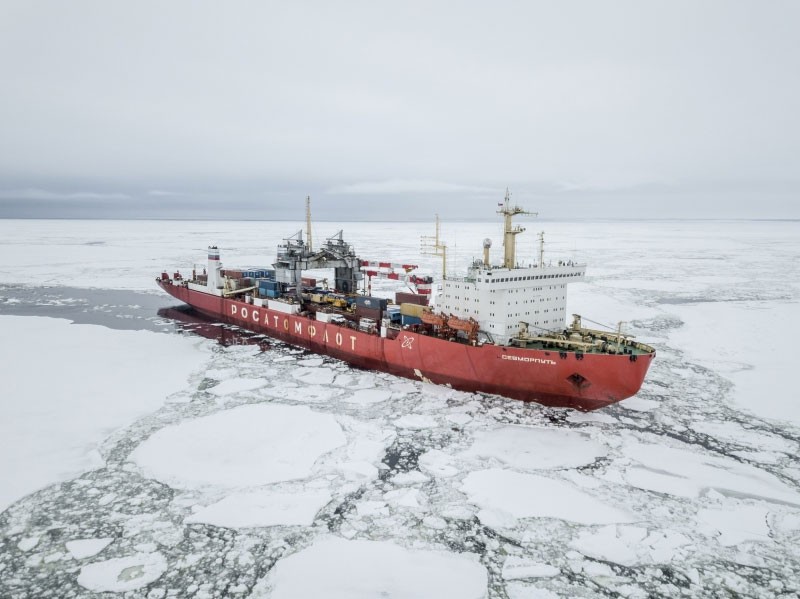
The fire brigade in Murmansk quickly extinguished the blaze that broke out on the 24th of December in a cabin onboard nuclear-powered container ship Sevmorput. State shipowner Rosatom never issued any information about the dramatic situation.
By Atle Staalesen, 28 Dec 23
Little information is available about the fire that broke out in Atomflot, the base for nuclear-powered vessels in Murmansk.
Only two short announcements were in the evening of the 24th of December posted on messenger service Telegram by the local Ministry of Emergency Situations (Emercom).
The first message posted at 21.17 pm informed about a fire on the territory of Atomflot and about the fire brigades that were on the way.
About 1,5 hour later, Emercom informed about its successful fire fighting……………
According to the emergency service, the fire covered an area of about 30 square meters in a cabin onboard the Sevmorput.
The Telegram messages were read by about ten thousand people. A few of them commented on the posts.
Where should we flee?” one of the readers asked.
Rosatom, the state nuclear power company that operates the Sevmorput, has apparently not issued any information about the fire. Neither has any of the company’s subsidiaries, such as the Atomflot or the Rosatomflot.
There is no information about the incident on the companies’ websites or their social media.
The fire could potentially have created a dramatic situation in the big Russian Arctic city. The Atomflot base is located only few kilometres from downtown Murmansk and a major fire on the nuclear-powered ship would have posed a serious threat to the about 270,000 population.
The Sevmorput is the world’s only nuclear-powered merchant container ship.
It is 260 meter long and was built in 1988. For many years, the ship lay idle in Murmansk and Russian authorities ultimately decided to scrap it. However, in 2013 it was instead decided to undertake a major renovation, and in autumn 2015, the ship was again test-sailing the Barents Sea. The following year, Sevmorput was back in regular service and has in the lastest years delivered cargo to military installations in the Russian Arctic, as well as to the petroleum development along the Siberian coast. The ship can carry 74 lighters or 1324 containers.
After the 2015 upgrade and safety evaluation, the reactor’s service life was prolonged with 150,000 hours aimed at keeping the vessel in operation until 2024.
It now looks increasingly likely that the ship will exit service and ultimately be scrapped. In a recent conference on the Arctic, Head of Atomflot Leonid Irlitsa said that his company plans to replace the ship with alternative non-nuclear vessels in 2024…………. https://thebarentsobserver.com/en/nuclear-safety/2023/12/nuclear-powered-ship-murmansk-started-burn-only-few-locals-got-know-about
Mystery fire breaks out on Russia’s only nuclear-powered icebreaker vessel as it was docked at Arctic port
- The Sevmorput, built in 1988, underwent extensive upgrades a decade ago
- Its owner stressed there was no threat to the ship’s nuclear reactor plant
By JAMES REYNOLDS and WILL STEWART, 25 December 2023
A mystery blaze aboard Russia‘s only nuclear-powered icebreaker cargo ship triggered panic in the Arctic port of Murmansk.
A fire broke out on Sunday in one of the cabins of the Soviet-made Sevmorput, currently docked in the northern Russian region bordering Finland and Norway.
The inferno spread some 323 square feet (30 sq metres) on the 830-ft ship (230m) before firefighters were able to put it out without casualties, Russia’s emergency ministry said.
‘The fire was quickly liquidated,’ Atomflot, which owns the vessel, said in a statement. ‘There were no injuries. There was no threat to crucial support systems or to the reactor plant.’
The ship, which entered service in 1988 and went through an extensive upgrade a decade ago, is Russia’s only nuclear-powered icebreaking transport ship, according to Rosatom. ………………………………………………..more https://www.dailymail.co.uk/news/article-12899379/Inferno-nuclear-russia-icebreaker-panic-murmansk-arctic.html
 | |||
| |||
(no subject)
Inbox
Search for all messages with label Inbox
Remove label Inbox from this conversation

Christina Macpherson <christinamacpherson@gmail.com>
7:49 AM (0 minutes ago)
to me
Canadians should be afraid of radiation: Frank Greening.

Dr. Frank Greening, Hamilton, Ont. 4Dec 23
Re: “We can manage predictable radiation: Canadian Nuclear Society,” (The Hill Times, Nov. 15, 2023, letter to the editor. The gist of this CNS letter to The Hill Times appears to be: we should not be afraid of radiation because it’s predictable and we can manage it.
I have to say that when it comes to radiation exposures at nuclear power stations, the Canadian nuclear industry has proven time and again that radiation exposures to workers have often been quite unpredictable and totally mismanaged. As proof of this assertion consider what happened at Pickering Nuclear Generating Station (NGS) in March 1985 and at Bruce NGS in January 2010.
In the case of the Pickering NGS 1985 event, workers involved in the refurbishment of Units 1 and 2 were exposed to airborne beta-active particulate.
Most unfortunately for the CNSC, there is ample evidence that the Bruce alpha exposure event was not unforeseen. Indeed, in November 2009, the CNSC reported that a routine survey during refurbishment operations at the Bruce Nuclear Generating Station detected the presence of radioactive alpha contamination in the Unit 1 reactor vault. Nevertheless, both Bruce Power and the CNSC proceeded with the Unit 1 refurbishment.
I would say that Canadians should be afraid of radiation when our very own nuclear industry and the regulatory body, responsible for the safety of nuclear facilities, appear to be incapable of protecting nuclear workers from needless radiation exposures during reactor refurbishments.
1 This Month





PLEASE OPPOSE HR 8255 AND S.3639 – bills would accelerate satellite deployment, with no environmental review or safeguards – https://ncstd5li.quorum.us/campaign/169331/
To see nuclear-related stories in greater depth and intensity – go to https://nuclearinformation.wordpress.com
-
Archives
- October 2026 (42)
- September 2026 (339)
- August 2026 (330)
- July 2026 (355)
- June 2026 (287)
- May 2026 (306)
- April 2026 (356)
- March 2026 (251)
- February 2026 (267)
- January 2026 (308)
- December 2025 (358)
- November 2025 (359)
-
Categories
- 1
- 1 NUCLEAR ISSUES
- business and costs
- climate change
- culture and arts
- ENERGY
- environment
- health
- history
- indigenous issues
- Legal
- marketing of nuclear
- media
- opposition to nuclear
- PERSONAL STORIES
- politics
- politics international
- Religion and ethics
- safety
- secrets,lies and civil liberties
- spinbuster
- technology
- Uranium
- wastes
- weapons and war
- Women
- 2 WORLD
- ACTION
- AFRICA
- Atrocities
- AUSTRALIA
- Christina's notes
- Christina's themes
- culture and arts
- Events
- Fuk 2022
- Fuk 2023
- Fukushima 2017
- Fukushima 2018
- fukushima 2019
- Fukushima 2020
- Fukushima 2021
- general
- global warming
- Humour (God we need it)
- Nuclear
- RARE EARTHS
- Reference
- resources – print
- Resources -audiovicual
- Weekly Newsletter
- World
- World Nuclear
- YouTube
-
RSS
Entries RSS
Comments RSS

