Radioactive leaks and other problems at Westinghouse nuclear fuel factory near Columbia
|
Inspectors at the Westinghouse nuclear fuel factory near Columbia recently found 13 small leaks in a protective liner that is supposed to keep pollution from dripping into soil and groundwater below the plant.
Now, the company plans to check a concrete floor beneath the liner, as well as soil below the plant, for signs of contamination that could have resulted from the tears, which were characterized in a federal inspection report as ‘’pinhole leaks.’’ The pinhole leaks, discovered by Westinghouse late in 2019, may have formed after company employees walked across the liner and weakened it, according to the U.S. Nuclear Regulatory Commission. If that’s true, it would mark the second time in two years that Westinghouse has run into trouble over employees walking across protective liners. Foot traffic weakened a liner in another part of the plant that contributed to a 2018 leak of uranium solution through the plant’s floor, according to the NRC. The 2018 leak, which occurred near a spiking station that mixes solutions, contaminated soil, prompting an outcry from community residents about operating practices at Westinghouse. Since the leak of uranium solution, state and federal agencies have revealed the existence of previously unreported leaks at the plant. Troubles at the plant have sparked public meetings in eastern Richland County, where many neighbors have criticized Westinghouse for not keeping them informed. The Westinghouse plant converts uranium hexafluoride into uranium dioxide to make nuclear fuel assemblies for atomic power plants. Chemicals used in the process can be hazardous if people are exposed to substantial amounts. Among the threats are kidney and liver damage. Uranium is a radioactive material that also can increase a person’s risks of cancer. …… The NRC inspection report, completed in January, said Westinghouse was supposed to ensure that walking pads were across the liner to prevent problems, but “this proved to be ineffective.’’ The report said “13 pinhole leaks were found in the liner, indicating that the liner had been walked on.’’ The problems, discovered Dec. 9, occurred in a section of the plant with a second spiking station, similar to the spiking station where the leak was found in 2018……. Established in 1969 between Columbia and what today is Congaree National Park, the factory makes fuel rods for the nation’s atomic power plants. The company has a decades long history of groundwater contamination. ……. Concerns have risen recently upon the revelation of previously unknown leaks at the plant in 2008 and 2011. Westinghouse knew about the leaks but did not inform regulators for years. Westinghouse also has had multiple problems in the past five years complying with federal nuclear standards. In addition to the 2018 uranium leak, the company also had troubles in 2016 when inspectors found that uranium had built up in an air pollution control device, creating a potentially dangerous situation for workers. Last year, the company dealt with a small fire in a bin containing nuclear plant refuse, as well as uranium-tainted water leaking from a rusty shipping container. https://www.thestate.com/news/local/environment/article240309966.html |
|

189 nuclear and radioactive material incidents in 2019
 IAEA reports 189 nuclear and radioactive material incidents in 2019, https://www.power-technology.com/news/iaea-reports-189-nuclear-and-radioactive-material-incidents-in-2019/ By Ilaria Grasso Macola,
The International Atomic Energy Agency (IAEA) reported 189 incidents involving nuclear and radioactive material falling out of regulatory control in 2019, highlighting the nuclear sector’s need to improve its security measures.
According to data submitted to the IAEA Incident and Trafficking Database (ITDB), out of 189 incidents – reported by 36 countries on a voluntary basis – six involved trafficking, following a downward trend since a peak registered in 2006. Of the remaining 183, there was insufficient information to determine a connection with illegal activities.
“These cases highlight the international character of the issue of illicit trafficking and the need for cooperative efforts, such as the ITDB, to counter these threats and challenges we face globally.”Since 1993, a total of 3,686 incidents have been reported to the ITDB, of which 290 involved trafficking and malicious intent; 12 incidents included enriched uranium and two plutonium.
On Monday ministers of 140 countries signed a declaration to enhance global nuclear security and counter the threat of terrorism.
Romanian foreign minister and co-president of the conference Bogdan Aurescu said: “The adoption of a declaration at ministerial level is indicative of the continuous commitment to nuclear security of IAEA member states. It is a concise, politically driven and forward-looking document, adding value to the efforts of strengthening nuclear security worldwide.”
Plutonium-affected U.S. airmen, cancers, deaths, and a new legal ruling
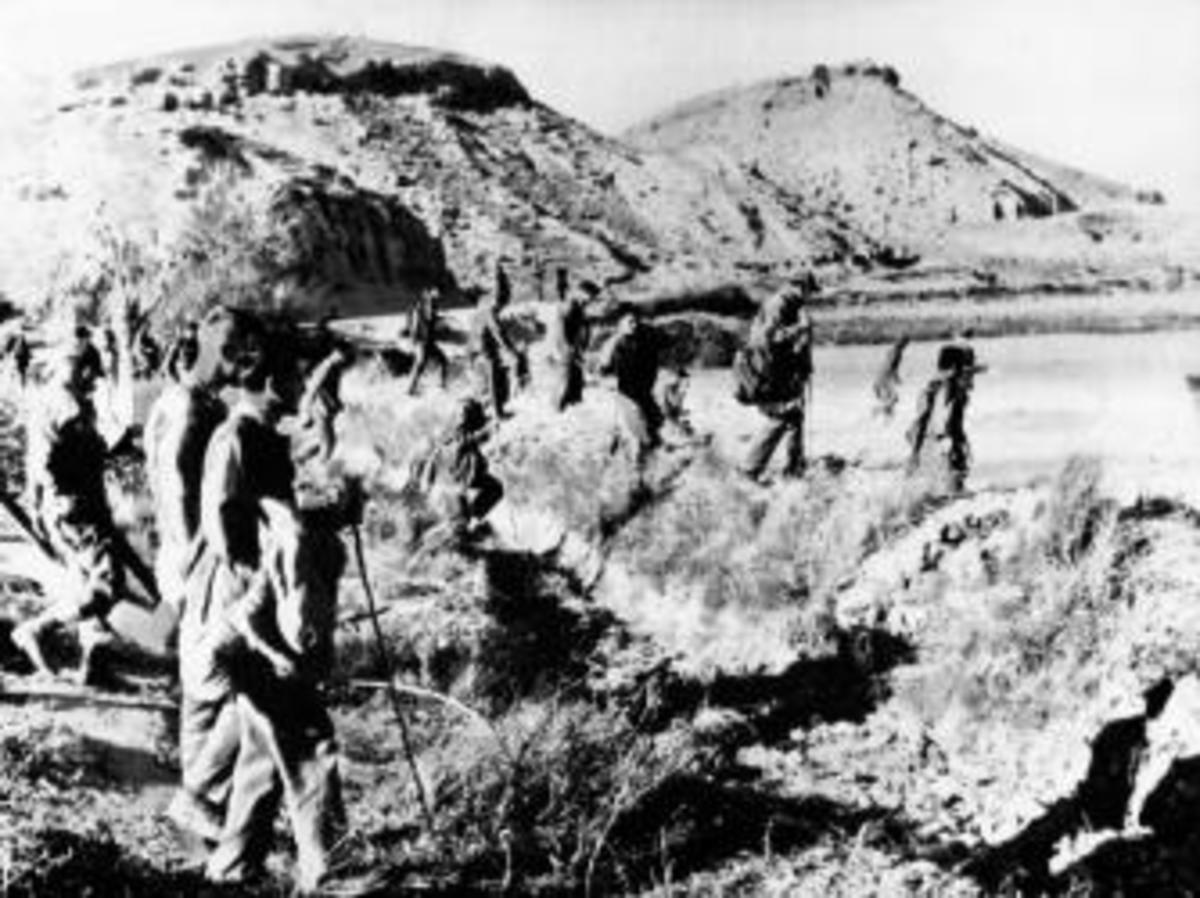
The Palomares disaster occurred on Jan. 17, 1966, when an American B-52 bomber on a Cold War patrol exploded during a midair refueling accident, sending four hydrogen bombs hurtling toward the ground. They were not armed, so there was no nuclear detonation, but the conventional explosives in two of the bombs blew up on impact, scattering pulverized plutonium over a patchwork of farm fields and stucco houses.
Plutonium is extremely toxic, but it often acts slowly. The alpha-particle radiation it gives off travels only a few inches and would not penetrate skin. But inhaled plutonium dust can lodge in the lungs and steadily irradiate surrounding tissue, gradually inflicting damage that can cause cancer and other ailments, sometimes decades later. A single microgram absorbed in the body is enough to be harmful; according to declassified Atomic Energy Commission reports, the bombs that blew apart at Palomares contained more than 3 billion micrograms.
|
For Many Who Cleaned Up a Nuclear Mess, a Key Ruling Comes Too Late
Air Force veterans who dealt with a Cold War-era atomic accident in Spain won the right to sue collectively for health benefits — but not before many had lost battles with cancer. https://www.nytimes.com/2020/02/11/us/palomares-air-force-nuclear.html By Dave Philipps SPRINGFIELD, Mo. — On Christmas Eve, Victor Skaar mailed a stack of letters to Air Force veterans he had served with in Palomares, Spain, scrawling a simple headline at the top of each one: “Great News!” Mr. Skaar, a retired chief master sergeant, was one of 1,600 troops scrambled by the Air Force in 1966 to clean up a classified nuclear disaster by collecting debris and shoveling up plutonium-laced soil. Many were later stricken with cancer and other ailments, and tried without success to get the federal government to take responsibility and pay for their medical care. He wanted to spread the word about an encouraging development: A lawsuit he had filed against the Department of Veterans Affairs had been certified as a class action, meaning that there was finally a chance to set the plutonium case straight, not just for him but for everyone who was there. But his letters soon began trickling back to him: Undeliverable. No forwarding address. One brought a reply from a widow. Each one in his mailbox made his heart sink. “For many of them, it’s too late,” he said of his comrades. “They’re gone.” As one of the first cases ever granted class-action status by the Court of Appeals for Veterans Claims, the Skaar lawsuit represents a major step forward for veterans with long-term health issues linked to toxic exposure in the service.
|
5.2-magnitude earthquake near Fukushima
 Japan is rattled by 5.2-magnitude earthquake near Fukushima, Daily Mail UK
- The earthquake struck around 20 miles off the coast of Fukushima province
- Witnesses said they had felt a 10-second long shake during the tremor today
- No tsunami warning has been put in place by Japan’s meteorological agency
By TIM STICKINGS , 12 February 2020 Japan was rattled by a 5.2-magnitude earthquake off the coast of Fukushima province today.
The quake struck just over 50 miles from the city of Fukushima where the nuclear disaster occurred in 2011.
Witnesses said they had felt a 10-second long shake during the tremor at around 7.30pm local time.
No tsunami warning has been put in place by Japan’s meteorological agency.
The US Geological Survey said today’s earthquake had struck at a depth of around 50 miles under the sea.
One witness told earthquake monitoring service EMSC that the quake produced a ‘weak but long shake’ lasting about 10 seconds.
Another said their heater had moved around on its four wheels while making a sound.
Officials in Fukushima prefecture warned residents that there could be aftershocks and directed them to official public safety advice. Energy company TEPCO, which runs four nuclear power plants in the prefecture, said it was awaiting further information about the earthquake’s impact. …..https://www.dailymail.co.uk/news/article-7995301/Japan-rattled-5-2-magnitude-earthquake-near-Fukushima.html
Over 32,000 potassium iodide pills ordered in 2 days after Pickering nuclear power plant alert error
|
Typically, between 100 and 200 orders are placed per month, CBC News · January 15 Tens of thousands of people have placed orders for free potassium iodide pills in the days following a false alert from the province about an incident at a nuclear plant in Pickering, Ont. Sunday’s alert, which was sent to mobile phones across Ontario, shocked those within a 10-kilometre radius of the Durham Region plant and even those living farther away. About an hour after the 7:24 a.m. ET alert, Ontario Power Generation (OPG), the plant’s operator, tweeted without explanation that the warning “was sent in error.” The Ontario government also later acknowledged the mistake, blaming human error, and issued an apology. Although the mistake left some people fuming, others stepped up their planning for a real emergency. Between Sunday morning and Monday afternoon, 32,388 orders were placed for potassium iodide tablets through Durham Region’s Prepare To Be Safe website, which is jointly managed by the City of Toronto and OPG. Typically, OPG says, between 100 and 200 orders are placed per month. ……https://www.cbc.ca/news/canada/toronto/potassium-iodide-pills-nuclear-power-plant-pickering-1.5426044 |
|
USA’s Hanford nuclear site could suffer the same fate as Russia’s Mayak – or worse

Comment from Dtlt 21 Dec 19, TRUMP IS CUTTING THE BUDGET TO MONITOR AND TRY TO CLEAN THE HANFORD MESS IN HALF
Massive Nuclear Explosion similar to Kyrshtym by Mayak Can Happen at Hanford if the site is not Monitored and tanks not taken care of.
A Ten Thousand Gallon Tank at Mayak Exploded from Heat Decay. The Heat Deacy was from Strontium 90, Cesium 137, Cobalt 60 and Plutonium Stored in the Underground Tank. The explosion was equivalent to 100 tons of TNT. There are 55 million gallons of the same Radionuclide Mix stored at Hanford, in UnderGround Tanks. They used nitic acid to extract radionuclides at hanford as they did at Kyahym, by Mayak. The nitrates mixed with heat decaying rand hydrogen gas generating radionuclides are very much like the explosive brew that went off in Kyshtym in 1957 and there are 55 million gallons of the explosive brew at Hanford. The heat decay, heat emitting Radionuclides and Hydrogen gas generating explosive mix and the nitrates in the brew are very much at risk for a massive catastrophic chemical-radionuclide explosion . The Kyshtym disaster was a radioactive contamination accident that occurred on 29 September 1957 at Mayak, a plutonium production site in Russia for nuclear weapons and nuclear fuel reprocessing plant of the Soviet Union.

If the exlplosive stew becomes too concentrated and hot, the same thing will Happen there, contaminating a Great Portion of the Pacific NW USA and southe western Canada.
Medvedev, Zhores A. (4 November 1976). “Two Decades of Dissidence”. New Scientist.
Medvedev, Zhores A. (1980). Nuclear disaster in the Urals translated by George Saunders. 1st Vintage Books ed. New York: Vintage Books. ISBN 978-0-394-74445-2. (c1979)
In 1957 the cooling system in one of the tanks containing about 70–80 tons of liquid radioactive waste failed and was not repaired. The temperature in it started to rise, resulting in evaporation and a chemical explosion of the dried waste, consisting mainly of ammonium nitrate and acetates (see ammonium nitrate/fuel oil bomb). The explosion, on 29 September 1957, estimated to have a force of about 70–100 tons of TNT,[10] threw the 160-ton concrete lid into the air.[8] There were no immediate casualties as a result of the explosion, but it released an estimated 20 MCi (800 PBq) of radioactivity. Most of this contamination settled out near the site of the accident and contributed to the pollution of the Techa River, but a plume containing 2 MCi (80 PBq) of radionuclides spread out over hundreds of kilometers. Previously contaminated areas within the affected area include the Techa river, which had previously received 2.75 MCi (100 PBq) of deliberately dumped waste, and Lake Karachay, which had received 120 MCi (4,000 PBq).
In the next 10 to 11 hours, the radioactive cloud moved towards the north-east, reaching 300–350 km (190–220 mi) from the accident. The fallout of the cloud resulted in a long-term contamination of an area of more than 800 to 20,000 km2 (310 to 7,720 sq mi), depending on what contamination level is considered significant, primarily with caesium-137 and strontium-90. This area is usually referred to as the East-Ural Radioactive Trace EURT
Scientists track down the source of radioactive plume, – Russian cover-up of a nuclear accident

|
Russia appears to have kept a major nuclear accident secret. But scientists called the ‘Ring of 5’ tracked the plume of radiation to its source. https://www.businessinsider.com.au/russia-nuclear-accident-radiation-timeline-2017-2019-12?r=US&IR=T, ARIA BENDIX DEC 21, 2019
A group of scientists called the “Ring of Five” noticed something unusual in the atmosphere in late 2017: Air across Europe showed “unprecedented” levels of the radioactive isotope ruthenium-106.
The isotope is often made when reprocessing nuclear fuel. “We were stunned,” Georg Steinhauser, a professor at the University of Hanover in Germany who is part of the group, told Business Insider in August. “We did not have any anticipation that there might be some radioactivity in the air. We were just measuring air filters as we do on a weekly basis, 52 times a year, and suddenly there was an unexpected result.” The Ring of Five, which had been monitoring Europe’s atmosphere for elevated levels of radiation since the mid ’80s, spent the next two years looking for the cause of the spike.
The culprit, according to a study released in July, was an undisclosed nuclear accident at the Mayak nuclear facility in Russia, which was once the centre of the Soviet nuclear-weapons program. Mayak was also the site of the 1957 Kyshtym explosion, the world’s third-worst nuclear accident. More than 10,000 nearby residents were forced to evacuate at the time. Russia has never acknowledged that any nuclear accident happened at the Mayak facility in 2017, and has not responded to any findings from the Ring of Five. But now, the scientists have unravelled the mystery even further.A second study published last month offers even more evidence that an accident occurred at Mayak in 2017. It even pinpoints a timeline: Most of the ruthenium was emitted on September 26, 2017.
Tracing a radioactive plume across EuropeThe Ring of Five is so named because the group was originally made up of scientists from five nations – Sweden, Germany, Finland, Norway, and Denmark – but it now includes researchers from 22 countries. Their monitoring work takes takes place 24 hours a day, 365 days a year. The new study suggests that the Mayak facility likely released 250 terabecquerels (a measurement of radioactivity) of ruthenium into the atmosphere. The Kyshtym explosion, by comparison, released around 2,700 terabecquerels of ruthenium. The world’s worst nuclear accident, Chernobyl, released around 5.3 million terabecquerels of radioactive material, according to a 2013 analysis.
To find out where the 2017 radioactive plume came from, scientists traced the path of the wind at the time using more than 1,100 measurements from the fall of that year. That required studying the wind’s altitude and direction, as well as weather conditions that may have changed its course.
The scientists determined that the plume started out in the Southern Urals, where the Mayak facility is located, then was driven towards southwest Russia. It arrived in Romania on September 29, then split in two. The main part of the plume spread toward Central Europe, where it encountered rain in Bulgaria. Plant and soil samples taken in the country showed elevated levels of ruthenium at the time. After that, the plume moved north to Scandinavia before arriving in Italy on October 2, 2017. That day, Italian scientists sent an alert to the Ring of Five about elevated levels of ruthenium in Milan. Steinhauser called this the “single greatest release from nuclear-fuel reprocessing that has ever happened.” Russia has not responded to the Ring of Five’s findingsAt the time of the alleged accident in 2017, Russian officials said the Mayak facility wasn’t the source of the release, even though the nation showed elevated levels of ruthenium. Instead, officials in Russia attributed the radiation to a satellite that burned up in the atmosphere. Russia still hasn’t issued a response to either of the studies the Ring of Five published this year. “We should not forget that Mayak is a military facility – and, of course, the Russian Federation is very reluctant when it comes to talking about military facilities,” Steinhauser said. “I presume this would not be much different for other superpower nations.” The scientists don’t consider the levels of radiation they detected to be an immediate threat to people’s health. Last year, France’s Institute for Radiological Protection and Nuclear Safety determined that the levels of ruthenium-106 in the atmosphere do not pose danger to human health or the environment. But the long-term consequences are unknown. Another unanswered question, Steinhauser said, is whether the population near the Mayak facility breathed any radiation into their lungs. He added that there could be reason to monitor food safety if radiation leaked into the soil and water. “We would like to get some more in-depth information on what actually happened,” he said. “There’s a good chance that we’ll catch every single accident – but, in the present case, surprise was on our side.” |
|
How India’s Kudankulam Nuclear Power Plant (KNPP) got hacked
 How a nuclear plant got hacked, Plugging nuclear plants into the internet makes them vulnerable targets for nation-state attack. By J.M. Porup, Senior Writer, CSO December 9, 2019 If you think attacking civilian infrastructure is a war crime, you’d be right, but spies from countries around the world are fighting a silent, dirty war to pre-position themselves on civilian infrastructure — like energy-producing civilian nuclear plants — to be able to commit sabotage during a moment of geopolitical tension.
What follows is an explanation of how India’s Kudankulam Nuclear Power Plant (KNPP) got hacked — and how it could have been easily avoided.
The KNPP hack The news came to light, as it so often does these days, on Twitter. Pukhraj Singh (@RungRage), a “noted cyber intelligence specialist” who was “instrumental in setting up of the cyber-warfare operations centre of the National Technical Research Organisation (NTRO),” according to The New Indian Express, tweeted: “So, it’s public now. Domain controller-level access Kudankulam Nuclear Power Plant. The government was notified way back. Extremely mission-critical targets were hit,” noting in a quote tweet that he was aware of the attack as early as September 7, 2019, calling it a “causus belli” (an attack sufficiently grave to provoke a war).
In a later tweet, Singh clarified that he did not discover the malware himself. A third party “contacted me & I notified National Cyber Security Coordinator on Sep 4 (date is crucial). The 3rd party then shared the IoCs with the NCSC’s office over the proceeding days. Kaspersky reported it later, called it DTrack.”
At first the Nuclear Power Plant Corporation of India (NPCI) denied it. In a press release they decried “false information” on social media and insisted the KNPP nuclear power plant is “stand alone and not connected to outside cyber network and internet” and that “any cyber attack on the Nuclear
Power Plant Control System is not possible.”
Then they backtracked. On October 30, the NPCI confirmed that malware was in fact discovered on their systems, and that CERT-India first noticed the attack on September 4, 2019. In their statement, they claimed the infected PC was connected to the administrative network, which they say is “isolated from the critical internal network.”
“Investigation also confirms that the plant systems are not affected,” their statement concludes.
Power Plant Control System is not possible.”
Then they backtracked. On October 30, the NPCI confirmed that malware was in fact discovered on their systems, and that CERT-India first noticed the attack on September 4, 2019. In their statement, they claimed the infected PC was connected to the administrative network, which they say is “isolated from the critical internal network.”
“Investigation also confirms that the plant systems are not affected,” their statement concludes.
A targeted attack
Contrary to some initial reporting, the malware appears to have been targeted specifically at the KNPP facility, according to researchers at CyberBit. Reverse-engineering of the malware sample revealed hard-coded administrator credentials for KNPP’s networks (username: /user:KKNPP\\administrator password: su.controller5kk) as well as RFC 1918 IP addresses (172.22.22.156, 10.2.114.1, 172.22.22.5, 10.2.4.1, 10.38.1.35), which are by definition not internet-routable.
That means it is highly likely the attacker previously broke into KNPP networks, scanned for NAT’ed devices, stole admin credentials, and then incorporated those details into this new malware, a second-stage payload designed for deeper and more thorough reconnaissance of KNPP’s networks.
“This was a very targeted attack on just this plant,” Hod Gavriel, a malware analyst at CyberBit, tells CSO. “Probably this was the second stage of an attack.”
The malware discovered, however, did not include Stuxnet-like functionality to destroy any of KNPP’s systems. “This phase was only for collection of information, it wasn’t sabotageware,” Gavriel says. ….. https://www.csoonline.com/article/3488816/how-a-nuclear-plant-got-hacked.html
Release of radioactive dust at Dounreay contravened regulations
|
RADIOACTIVE DUST ACCIDENTALLY RELEASED AT NUCLEAR SITE CONTRAVENED MULTIPLE REGULATIONS, INVESTIGATION FINDS, Newsweek
BY ARISTOS GEORGIOU ON 12/13/19 Environmental authorities in Scotland have said that an accidental release of radioactive dust from a nuclear site “contravened multiple” regulatory conditions, according to reports.
The contaminated dust vented out of a uranium recovery plant at Dounreay—a nuclear research center which is in the process of being decommissioned—earlier this year after a valve failed during a system test in February, the BBC reported. This caused a “disturbance” of contaminated dust in the ventilation system and a subsequent discharge into the facility itself and the atmosphere…… https://www.newsweek.com/radioactive-dust-nuclear-site-multiple-regulatory-conditions-investigation-1477168 |
|
Los Alamos National Laboratory lost 250 barrels of nuke waste
The contractor that’s been in charge of Los Alamos National Laboratory’s operations for the past year lost track of 250 barrels of waste, while the company heading the legacy cleanup mislabeled and improperly stored waste containers and took months to remedy some infractions, according to the state’s yearly report on hazardous waste permit violations.
Triad National Security LLC, a consortium of nonprofits that runs the lab’s daily operations, had 19 violations of its permit from the New Mexico Environment Department. Newport News Nuclear BWXT Los Alamos, also known as N3B, which is managing a 10-year cleanup of waste generated at the lab, was cited 29 times.
Triad’s most notable violation was shipping 250 barrels of mostly mixed waste to the Waste Isolation Pilot Plant in Carlsbad without tracking them. Mixed waste contains low-level radioactive waste and other hazardous materials. Inspectors found records still listed the waste at the national lab. …..
A disastrous “kitty litter” incident happened under Los Alamos National Security, in which a waste barrel was packaged in error with a volatile blend of organic cat litter and nitrate salts, causing the container to burst and leak radiation at the Southern New Mexico storage site. WIPP closed for almost three years, and the cleanup cost about $2 billion.
The National Nuclear Security Administration, a division of the U.S. Department of Energy that oversees the lab, declined to renew LANS’ contract in 2015. Triad took over operations in November 2018. Among Triad’s duties is to dispose of waste at the lab generated from 1999 to the present.
N3B won a $1.4 billion contract in December 2017 to clean up waste produced at the lab before 1999.
The company was cited for a slew of mislabeled waste containers during the year. Inspectors also found some waste barrels, which are stored under tent-like domes, coated with snow or rainwater.
N3B also failed to remedy within 24 hours the flaws that inspectors found in equipment or structures that could present an environmental or human-health hazard, the report said. Inspectors discovered N3B took as long as 18 months to fix cracks in concrete and asphalt surfaces…….. https://www.santafenewmexican.com/news/local_news/state-report-lanl-lost-track-of-barrels-of-nuke-waste/article_e9de8348-17cc-11ea-bae3-c71a1aadd222.html
Cyber attack targets UK’s nuclear industry
Telegraph UK, Wil Crisp, 30 NOVEMBER 2019 GCHQ cyber experts have been called in after a digital attack on a major player in Britain’s nuclear power industry triggered a security crisis.
The National Cyber Security Centre (NCSC), an arm of GCHQ, has been secretly providing assistance to a nuclear power company in the UK that has struggled to recover after being hit by a cyber attack, The Telegraph can reveal.
A Nuclear Decommissioning Authority (NDA) report, obtained using freedom of information legislation, said officials are “aware that an important business in the Nuclear Power Generating Sector has been negatively impacted by a cyber attack and has had to rely on expertise from the NCSC to help them with recovery”.
The document,... (subscribers only) https://www.telegraph.co.uk/business/2019/11/30/cyber-attack-targets-uks-nuclear-industry/
For the 8th time this year, a Hanford worker exposed to nuclear radiation
The 324 Building sits over a leak of radioactive cesium and strontium into the soil beneath it at the site about one mile north of Richland and about 300 yards west of the Columbia River.
“Although individually the contamination levels (on workers) have been low and no dose has been assigned to workers, collectively the number of personnel contamination events indicate a negative trend in contamination control that corrective actions taken to date have been inadequate to address,” the Department of Energy wrote in a Nov. 14 letter to its contractor on the project, CH2M Hill Plateau Remediation Co.
Earlier the same day that DOE sent the letter, CH2M had stopped work at the Hanford nuclear reservation’s 324 Building — one of several temporary halts to at least some of the work there this year.
Joe Franco, the DOE deputy manager at the DOE Richland Operations Office, told CH2M in the letter that he would not allow work to resume in the highly contaminated areas of the 324 Building until the company had developed a plan of correction and DOE had agreed on the path forward……. https://www.tri-cityherald.com/news/local/hanford/article237601614.html?fbclid=IwAR2PEXSoItPKGXYQxV0lOc3NJ2-KFlstPIvbdexqiIgP_i23UgMl9bBqGg4
Russian Watchdog Detects ‘Radiation Incident’ in South China Sea
|
Russian Watchdog Detects ‘Radiation Incident’ in South China Sea https://www.themoscowtimes.com/2019/11/22/russian-watchdog-detects-radiation-incident-in-south-china-sea-a68287
A Rospotrebnadzor statement said radiation levels are not high enough to threaten the Russian population. The Russian government’s consumer protection watchdog Rospotrebnadzor said Friday it has detected a “radiation incident” in the South China Sea.“Based on data received from the Global Environmental Monitoring System, there’s an increase in background radiation in the South China Sea in connection with a radiation incident,” Rospotrebnadzor said in an online statement. It added that the radiation levels did not “currently threaten the Russian population” and that it “has increased its radiation monitoring in the adjacent border areas.” A website run by far-right U.S. talk show radio host Hal Turner claimed Wednesday that unidentified military sources had allegedly detected an underwater nuclear explosion in the area that caused powerful shockwaves. The U.S. tech news website Gizmodo cited two scientists who dismissed the report as fake. Gizmodo reported that uRADMonitor Global Environmental Monitoring Network data used in the initial report registered “negligible” radiation and noted that two other agencies in the region showed normal radiation readings. Military analysts reported Saturday that an 11,000-ton Chinese nuclear missile submarine had surfaced among Vietnamese fishing boats in the South China Sea in September. |
|
|
Leak shuts down V.C. Summer nuclear plant
|
Leak shuts down V.C. Summer nuclear plant, The State , BY SAMMY FRETWELL, NOVEMBER 09, 2019 Dominion Energy has shut down the V.C. Summer nuclear reactor in Fairfield County after the utility found a “small leak’’ in the atomic power plant’s coolant system, a spokeswoman said Saturday afternoon.
Leaking material has not escaped into the environment, the company said. Dominion didn’t have to shut down the reactor, but it chose to do so while it addresses the leak, spokeswoman Rhonda O’Banion said in an email. O’Banion said there is no danger to the public. The utility said plant operators had been monitoring a small leak for several weeks, before finally deciding to shutter the plant so the leak could be fixed. The company declined to say how long the power plant might be shut down, noting that when the unit will “return to service is market sensitive information.’’……https://www.thestate.com/news/local/environment/article237204218.html |
|
French activists broke into nuclear plant, demonstrating the risk of terrorism
 Greenpeace 28th Oct 2019, In the early hours of 12 October 2017, eight people sneaked inside the grounds of the Cattenom nuclear plant in northern France. Without much difficulty, they reached the foot of a spent fuel pool – where the still highly radioactive fuel rods are stored after use.
It was a scenario Greenpeace France had been warning about since 2001 through numerous reports, letters and speeches. France’s aging fleet of reactors is poorly protected, and not designed to withstand big impacts, such as an explosion set off by terrorists.
A loss of water from the spent fuel pools – protected by walls only 30cm thick – could lead to a massive release of radioactivity. Fortunately, the eight intruders turned out to be peaceful activists from Greenpeace France; they set off some fireworks to demonstrate their presence and then allowed themselves to be led away.
The ease with which they had penetrated alarmed the government of Luxembourg, which lies just north of Cattenom. It also finally spurred the French authorities into action; a parliamentary investigation into nuclear safety
was announced the following month. It’s a textbook example of the role of
non-violent direct action (NVDA) in a democracy, much like the recent
climate strikes.
When the authorities are sleeping at the wheel, and not
responding to polite arguments, citizen action is needed to wake them up.
In this case, it did. A happy end? Unfortunately not.
In a classic case of shooting the messenger, prosecutors have pressed for stiff penalties. In February 2018, a court in Thionville sentenced the ‘Cattenom nine’ – the eight activists and a Greenpeace France employee. It imposed a 2-month jail sentence on two of the individuals, and suspended sentences on the
rest. It also ordered Greenpeace France to pay €50,000 to the power
company, EDF as ‘moral damages’.
1 This Month





PLEASE OPPOSE HR 8255 AND S.3639 – bills would accelerate satellite deployment, with no environmental review or safeguards – https://ncstd5li.quorum.us/campaign/169331/
To see nuclear-related stories in greater depth and intensity – go to https://nuclearinformation.wordpress.com
-
Archives
- October 2026 (49)
- September 2026 (339)
- August 2026 (330)
- July 2026 (355)
- June 2026 (287)
- May 2026 (306)
- April 2026 (356)
- March 2026 (251)
- February 2026 (267)
- January 2026 (308)
- December 2025 (358)
- November 2025 (359)
-
Categories
- 1
- 1 NUCLEAR ISSUES
- business and costs
- climate change
- culture and arts
- ENERGY
- environment
- health
- history
- indigenous issues
- Legal
- marketing of nuclear
- media
- opposition to nuclear
- PERSONAL STORIES
- politics
- politics international
- Religion and ethics
- safety
- secrets,lies and civil liberties
- spinbuster
- technology
- Uranium
- wastes
- weapons and war
- Women
- 2 WORLD
- ACTION
- AFRICA
- Atrocities
- AUSTRALIA
- Christina's notes
- Christina's themes
- culture and arts
- Events
- Fuk 2022
- Fuk 2023
- Fukushima 2017
- Fukushima 2018
- fukushima 2019
- Fukushima 2020
- Fukushima 2021
- general
- global warming
- Humour (God we need it)
- Nuclear
- RARE EARTHS
- Reference
- resources – print
- Resources -audiovicual
- Weekly Newsletter
- World
- World Nuclear
- YouTube
-
RSS
Entries RSS
Comments RSS

