NATO Is a Warfare Alliance, Not a Force for Global Peace or Stability
Instead of seeking a negotiated solution to Russia’s criminal invasion, NATO has shunned peace talks that might address key issues such as neutrality for Ukraine, referendums on the future of the Donbas and Crimea, a demilitarized zone along the border between Ukraine and Russia, and nuclear disarmament agreements that would remove Russia’s short-range nuclear weapons from Belarus in exchange for removal of U.S. anti-ballistic missiles in Romania.
By Medea Benjamin and Marcy Winograd / CounterPunch 18 Jul 23
At his speech during the NATO Summit in Lithuania, President Biden called the U.S. and Europe “anchors for global security” when in reality there are no anchors during this increasingly dangerous and polarized time of never-ending war in Europe. Our NATO allies are not, as Biden would suggest, anchors in a turbulent sea of demons but rather catalysts stirring the cauldron of war on behalf of U.S. empire.
The instability of the NATO alliance was evident in the controversy over the key issue of Ukraine membership. Biden and his administration tried to work both sides of the street. On the one hand, Biden insisted that “Ukraine’s future lies at NATO.” But then the U.S. teamed up with Germany to make sure the summit made only a vague statement about Ukraine joining when allies agree and “conditions are met,” incurring the wrath of a fuming President Zelensky. Biden’s national security advisor Jake Sullivan told CNN that everyone “needs to look squarely at the fact” that allowing Ukraine to join NATO at this point “means war with Russia.”
But this does not mean that Biden, or NATO, are ready to endorse peace talks. On the contrary…………………………….
Instead of seeking a negotiated solution to Russia’s criminal invasion, NATO has shunned peace talks that might address key issues such as neutrality for Ukraine, referendums on the future of the Donbas and Crimea, a demilitarized zone along the border between Ukraine and Russia, and nuclear disarmament agreements that would remove Russia’s short-range nuclear weapons from Belarus in exchange for removal of U.S. anti-ballistic missiles in Romania………………… more https://scheerpost.com/2023/07/18/nato-is-a-warfare-alliance-not-a-force-for-global-peace-or-stability/
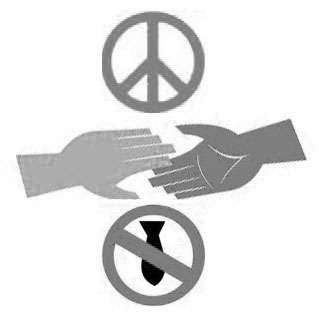
Only neutral countries can bring peace to Ukraine – Brazil
https://www.rt.com/news/579835-brazilian-fm-weapons-deliveries-ukraine/ 18 Jul 23
Foreign Minister Mauro Vieira told RIA Novosti that several countries are willing to join his nation’s peace efforts
Brazil is against weapons deliveries to either party in the Ukraine-Russia conflict, Foreign Minister Mauro Vieira has said. The diplomat also predicted that peace would eventually be achieved with the help of nations which have not taken sides, such as Brazil and African countries.
In an interview with Russia’s RIA Novosti published on Monday, Vieira stressed that Brasilia has consistently voiced its opposition to arms shipments to Kiev and Moscow.
According to the diplomat, “several countries are ready to join” Brazilian President Luiz Inacio Lula da Silva’s peace efforts. The minister cited the initiatives recently put forward by a group of African nations.
“This will take time, but it’s precisely this that will lead to peace which we are striving for,” Vieira insisted.
While on an official visit to Rome last month, President Lula argued that Russia and Ukraine both need to compromise to end the conflict.
“The two parties both need to get something. Only the Russians and the Ukrainians know what they need to reach peace,” he said at the time.
The Brazilian head of state also called into question the EU’s capacity for mediation, arguing that the bloc is effectively involved in the conflict. Lula went on to name India, Mexico, and African nations as potential neutral peace brokers.
Moscow has blamed Kiev for the lack of peace negotiations, pointing out that last year Ukrainian President Vladimir Zelensky signed a decree that rules out talks for as long as his Russian counterpart, Vladimir Putin, remains in power.
The Ukrainian government insists it will only negotiate after driving Russian forces out from all territories within its 1991 borders. Zelensky has proposed a peace plan of his own, which calls for a Russian withdrawal, reparations, and a tribunal for alleged war criminals.
Moscow has rejected the idea, describing it as detached from reality.
Why EU sanctions don’t include Russian nuclear industry
DW, Ashutosh Pandey 19 Jul 23
While the EU is on course to wean itself off Russian fossil fuels, it’s struggling to kick its nuclear habit. That’s because Russia’s nuclear industry still wields huge clout.
Less than a week after the first Russian tanks rolled into Ukraine, an Ilyushin Il-76 cargo aircraft, belonging to Russian cargo airline Volga-Dnepr, flew across Belarus and Poland before landing in Slovakia.
The mysterious jet taking off from Russia took flight trackers by surprise as only a day ago the European Union had closed its airspace to Russian airlines and private jets in response to Moscow’s invasion of Ukraine.
Soon, it became clear that the plane was exempted from the ban as it was shipping critical nuclear fuel for Slovakia’s four Russian-designed nuclear reactors.
About a month later, a Russian aircraft of the same make flew even further into neighboring Hungary again to deliver nuclear fuel. Much like Slovakia, Hungary is fully dependent on atomic fuel from Russia to power its nuclear power plants.
The twin flights were yet another symptom of Europe’s decadeslong binge on Russian energy. Nuclear fuel sourced from Russia’s state-owned nuclear agency Rosatom and its units helps generate nearly half the total electricity produced in Slovakia and Hungary and more than a third in the Czech Republic and Bulgaria.
While the EU is on course to wean itself off Russian fossil fuels, it’s struggling to kick its Russian nuclear habit. As a result, hundreds of millions of euros continue to flow into Moscow’s coffers.
The bloc has found it politically unpalatable to impose sanctions on the Russian civil nuclear industry……………………….
The Rosatom leverage
The EU’s foot-dragging stems from the outsized influence the Russian nuclear industry enjoys globally. Russia accounts for more than 45% of the world’s uranium enrichment capacity, delivering atomic fuel to nuclear power plants in several countries, including in the US, which despite its harsh sanctions regime against Moscow continues to pay $1 billion (€912 million) a year to source fuel from Rosatom.
Almost 20% of raw uranium imported by the EU comes from Russia, Euratom Supply Agency data shows, with another 23% coming from Kazakhstan, where Rosatom is a major player. Russia also supplies a large proportion of the fuel rods for European nuclear power plants.
“Rosatom is one of the few companies in the world that has mastered the entire nuclear fuel cycle, i.e. enrichment, fuel production and also reprocessing,” said Sonja Schmid, professor of science and technology studies at Virginia Tech University and the author of “Producing Power: The Pre-Chernobyl History of the Soviet Nuclear Industry.”
Central and Eastern European countries are particularly reliant on Russian fuel. There are a total of 18 Russian-designed nuclear reactors — in Slovakia, Bulgaria, Hungary, the Czech Republic and Finland — that currently run exclusively on Russian fuel and rely on Russian technologies.
Additionally, Rosatom has had a long association with French utility EDF with the two signing a “long-term cooperation agreement” in 2021 to further boost ties……………………………………………………………… more https://www.dw.com/en/why-eu-sanctions-dont-include-russian-nuclear-industry/a-66275352
Disunity in NATO?
Why the Ukraine Conflict Will Unravel NATO and Biden
July 19, 2023 SCHEERPOST, By Radhika Desai / CounterPunch
The proxy war on Russia is the centre piece of Biden’s foreign policy of uniting the world’s ‘democracies’ against ‘autocracies’, particularly China and Russia. He boasts repeatedly of uniting US allies, most in NATO, as never before. Though the real unity is spotty at best, until recently, the rhetoric seemed to work. No longer. At its recent Vilnius Summit, NATO’s disunity bubbled over, though not for the reasons most discussed in the press. The real reasons are rooted in developments that threaten to unravel not only Biden’s strategy, but also NATO.
Discordant strains were amply discussed in the run up to the summit. Members could not decide on any successor for Jens Stoltenberg. …………………..President Macron led (a not inconsiderable) opposition to establishing a permanent NATO presence in the East Asian region with an office in Tokyo. Though Finish membership was approved, President Erdoğan opposed Sweden’s membership until Biden offered him not only F-16s but also an IMF loan from aboard Air Force One.
Most spectacularly, while members once again promised to increase defence expenditure and production, and while the alliance made various commitments to supporting Ukraine in its war with Russia, not only did the clamour to induct Ukraine into NATO fail, but NATO proved unwilling even to commit to a timetable for entry. President Zelensky called this ‘absurd’ and the US administration called him ungrateful in return.
………………………………………… Always a work-in-progress, NATO unity has got more difficult as US power has declined. In recent decades, its chief glue has been US military power………….. https://scheerpost.com/2023/07/19/why-the-ukraine-conflict-will-unravel-nato-and-biden/
TODAY. Nuclear trash on indigenous land ?- a court decision puts Australia in a very difficult spot
Nuclear waste on Aboriginal land ?- and the Voice to Parliament?
The Australian government is in the process of holding a referendum that would give the indigenous people a Voice to Parliament. Imposing nuclear waste on Aboriginal land is not a good look, is it?

This morning, I heard Professor Ian Lowe, talking to a English journalist, about yesterday’s court decision, which supported the Barngarla people’s opposition to nuclear waste dumping on their land.
Prof Lowe eloquently summarised the importance of this legal decision:
-the Aboriginal people were not consulted when the Morrison Liberal Coalition decided to make a nuclear waste dump on their traditional land.
– this raises problems for the Australian government in selecting any land in this country for nuclear waste dumping
-this has international implications – about any country where the rulers want to impose a nuclear waste dump on indigenous land
-this has implications for the ill-advised (corrupt firm PWC was the advisor) AUKUS decision by the Albanese government to buy U.S nuclear submarines at $369billion. That decision included Australia taking responsibility for the high level radioactive trash from the nuclear submarines. Where to dump that trash?
Of course, the Australian government does have the power to impose the nuclear waste dump anyway, against indigenous wishes, even against South Australian State government wishes,
The Australian government is in the process of holding a referendum that would give the indigenous people a Voice to Parliament. Imposing nuclear waste on Aboriginal land is not a good look, is it?

Kenya has restated its commitment to ensuring nuclear energy and nuclear weapons are not used in the continent.

Kenya reiterates stand on nuclear weapons during exhibition
Ogola noted that Kenya recently enacted the Nuclear Regulatory Act 29 of 2019.
Star 16 July 23
In Summary
- The Treaty of Pelindaba is the international agreement that establishes Africa as a zone free of nuclear weapons.
- Hence contributing to peace and security in Africa.
Kenya has restated its commitment to ensuring nuclear energy and nuclear weapons are not used in the continent.
This was when stakeholders in the Energy sector convened on Saturday to commemorate the 14th Anniversary of the African Nuclear Weapon Free Zone treaty.
The treaty is called the Treaty of Pelindaba.
The Treaty of Pelindaba is the international agreement that establishes Africa as a zone free of nuclear weapons, hence contributing to peace and security in Africa.
The event took place at the Trademark Hotel in Nairobi under the auspices of the Kenyan government.
Former Prisons Commissioner Wycliffe Ogola, while speaking on behalf of Energy CS Davis Chirchir, reiterated Kenya’s stand against possession of nuclear weapons adding that Kenya recognises the pivotal role the treaty plays in protecting civilians against nuclear weapons.
Ogola noted that Kenya recently enacted the Nuclear Regulatory Act 29 of 2019.
“The Act has committed the country to exclusively exclude uses of nuclear technology, recognising the need to meet Kenya’s obligation under various international considerations and criminalised access to nuclear material and radiation sources,” Ogola said.
He called for more forums to allow for the exchange of ideas on how to ensure nuclear weapons and technology are not used in Africa. ………………………. more https://www.the-star.co.ke/news/realtime/2023-07-16-kenya-reiterates-stand-on-nuclear-weapons-during-exhibition/
Cracks in NATO’s Ukraine Project

Years of successfully pulling the wool over people’s eyes and Western fawning over him since February 2022 led Zelenskiy to overestimate the power of his personality and his communication skills. There was never any chance that the NATO summit in Vilnius would offer Ukraine membership, a membership action plan (MAP), or a shortcut to membership no matter how charismatic Zelenskiy imagines himself to be.
we are left with the unavoidable conclusion that Washington and Brussels pushed Ukraine into the claws of the aggressive, angry bear they themselves riled and aggravated. No matter. United together, ‘we will not waver’: Ukraine will fight ‘as long as it takes’ to defeat the bear on behalf of the United States and its subservient allies.
Russian and Eurasian politics , by GORDONHAHN, July 13, 2023
Cracks are emerging in NATO’s anti-Russian alliance centered on Ukraine. NATO’s Vilnius summit exposed growing tensions between NATO members and between them and their Ukrainian client state as a result of growing risks of defeat in their proxy war. These tensions are destined to grow as Kiev’s position on the front continues to deteriorate. In Kiev, signs of panic and the likelihood of rising civil-military tensions pose the grave threat to the West’s plans to deal Russia a strategic defeat and to prompt Putin’s removal. Western and Ukrainian hopes and expectations have been unrealistic all the way around from the start.
The Failing Ukrainian Counteroffensive
With Ukrainian forces failing in the long-planned and much-touted counteroffensive, the stakes already are much higher half a year later, even putting aside for the moment the issue of the crucial NATO summit in Vilnius.[1] Western and Ukrainian expectations and claims regarding the potential of the counteroffensive are exposing the hideously phantasmagorical expectations of most in Washington, Brussels, and Kiev.
After six weeks of Ukraine’s highly costly counteroffensive, instead of territorial gains Kiev’s forces are being routed, experiencing enormous casualties, losses of territory on the Oskol river, an operational encirclement of Avdiivka, and successful Russian advances on the Kupyansk-Liman front lines.
Russian Defense Minister Sergei Shoigu claimed on July 11th that the Ukrainians have suffered 26,000 casualties and lost 3,000 units of equipment, including 1,244 tanks and fighting vehicles as well as APCs, artillery pieces, and mortars, since June 4th when the counteroffensive began.[2]
To put this into the perspective of Ukrainian weapons requests and NATO capacity and willingness (or unwillingness) to meet them, in December 2022 last year Zalyuzhniy told The Economist that he needed “300 tanks, 600-700 IFVs, 500 Howitzers.” In such case, he thought it “completely realistic to get to the lines of February 23rd.” But the Ukrainians never received anything like this, and the West nevertheless pressed Zelenskiy to underataken the ill-considered idea of a broad counter-offensive against the revived Russian army.
The Ukrainians have lost more equipment in just six weeks of the counteroffensive than Zalyuzhniy had requested; this without even reaching the first line of the Russian forces’ three well dug-in defense lines in the south and making even less progress in the east. Ukrainian forces have not been able to take and hold even one small settlement along the entire line of contact extending from Kherson to Kharkov. They take territory at great loss of life and equipment only to relinquish the same territory a few days layer with more losses. Not surprisingly, cracks are appearing in the Ukrainian ranks.[3]
On this background it is hardly surprising that tensions between Kiev and its Western patrons are running high, with each side blaming the other for the military farce………………………………….
Summit of the Deluded, Dismayed and Defeated
Zelenskiy entertained and publicly promoted the most unfeasible, inflated expectations. He regards too highly his ability to charm, cajole, and convince people to do and succeed in doing what he wants, whether it is accepting Ukraine into NATO here and now, receiving ever increasing arms supplies from NATO members’ whose stocks are depleted and defense industries have been wound down, or pushing through three reinforced lines of defense 35 miles deep with a few tanks and a hodgepodge of trained soldiers and a larger coteries of poorly trained soldiers recently scraped off the streets of Kiev, Lvov, and Sumy………………………
At any rate, the effect of the counteroffensive in failure is to ensure that NATO would do what it was going to do and has been doing anyway: hanging Ukraine out to die on the altar of NATO expansion ‘as long as it takes’ in the hope of provoking a color revolution in Russia. Hundreds of thousands of Ukrainian casualties, destroyed cities and towns, millions of refugees, and tens of millions of ruined lives have and will not cause NATO to throw out the playbook. They just will edit it a little: a security guarantee with loopholes, a NATO-Ukrainian Committee, dispensing with a ‘membership action plan’ for a Ukraine that may not exist ‘after victory.’
Years of successfully pulling the wool over people’s eyes and Western fawning over him since February 2022 led Zelenskiy to overestimate the power of his personality and his communication skills. There was never any chance that the NATO summit in Vilnius would offer Ukraine membership, a membership action plan (MAP), or a shortcut to membership no matter how charismatic Zelenskiy imagines himself to be.
These hopes were as delusional as were the repeated Ukrainian decisions not to forego NATO membership before and after Maidan, before and after Minsk, before and after Putin’s proposals on a new European security architecture and his massing of troops on Ukraine’s borders, before and after his February 2022 invasion, and before and after the March 2022 agreement to end the war by Kiev renouncing the goal of NATO membership and returning to the Minsk format.
……………………………………………………. we are left with the unavoidable conclusion that Washington and Brussels pushed Ukraine into the claws of the aggressive, angry bear they themselves riled and aggravated. No matter. United together, ‘we will not waver’: Ukraine will fight ‘as long as it takes’ to defeat the bear on behalf of the United States and its subservient allies.
……………………………………………………………… Zelenskiy attended the Vilnius summit. Reports from the show Vilnius revealed a desparate Zelenskiy resorting to frantic backroom cajoling in order to beg for concessions on NATO membership. This would bring the alliance closer to entering the war and more of its arms at a sufficient level to defeat an increasingly powerful Russian force, or it might provoke the Kremlin into actions that would inspire NATO to finally take Kiev’s neck out of the noose into which NATO itself put it.[5]
……………………………………… Zelenskiy’s desperate, ultimately failed attempt to get Ukraine moving more rapidly to NATO membership ended up alienating his ‘allies. In a social media post Zelenskiy essentially accused US President Joe Biden and other NATO leaders of showing disrespect for Ukraine by not admitting her for membership now—a measure that would require NATO to enter the war.
…………………………………….. Entering a war NATO itself fomented is not in NATO’s plans. Washington and Brussels prefer that Kiev fight a far superior military power ‘for as long as it takes’ to do what is in the West’s interests—that is, weaken Russia. Despite the weapons, training, intelligence, and pats on Zelenskiy’s back, it can be said not just of Moscow but of Washington and Brussels as well: “They wept for Ukraine, but they destroyed it.”[8]
Rising Tensions in Ukrainian Civil-Military Relations………………………………………………………………………………………………………………………………………………
It is very likely that Zalyuznyi and Zelenskiy will be at odds again if they are not already. One Ukrainian source in the Office of the President claims that the Biden administration has given up on any progress in the counteroffensive and that “a complete collapse” of Zelenskiy’s foreign policy regarding Western support, which is now expected to decline sharply…………………………………………………………………………………………
CONCLUSION
The tensions between Zelenskiy and his Western backers, on the one hand, and Zelenskiy and Ukraine’s military high command will untenable for continued stability in the NATO-Ukraine war effort should failure on the front persist, let alone should a Russian counteroffensive produce more territorial gains for Moscow in Odessa, Kharkov and/or left bank Kiev.
Zelenskiy must either cease the offensive to please the latter and thereby displease the former, or he can push forward with the offensive to satisfy his backers and to keep the military equipment flowing and thereby alienate the Ukrainian military.
One way out of this conundrum is victory on the battlefield, and that seems most improbable.
The other exit path is NATO’s abandonment of expansion to Ukraine and the opening of peace talks with the Kremlin, and that seems equally as implausible.
In months, crunch time may be coming in Kiev. …………….more https://gordonhahn.com/2023/07/13/cracks-in-natos-ukraine-project/
Nato isn’t defending Ukraine. It’s stabbing it in the back
So far, Ukraine’s much-vaunted “spring counter-offensive” has turned into a damp squib, despite western media spin about “slow progress”. Moscow is holding on to the Ukrainian territories it annexed.
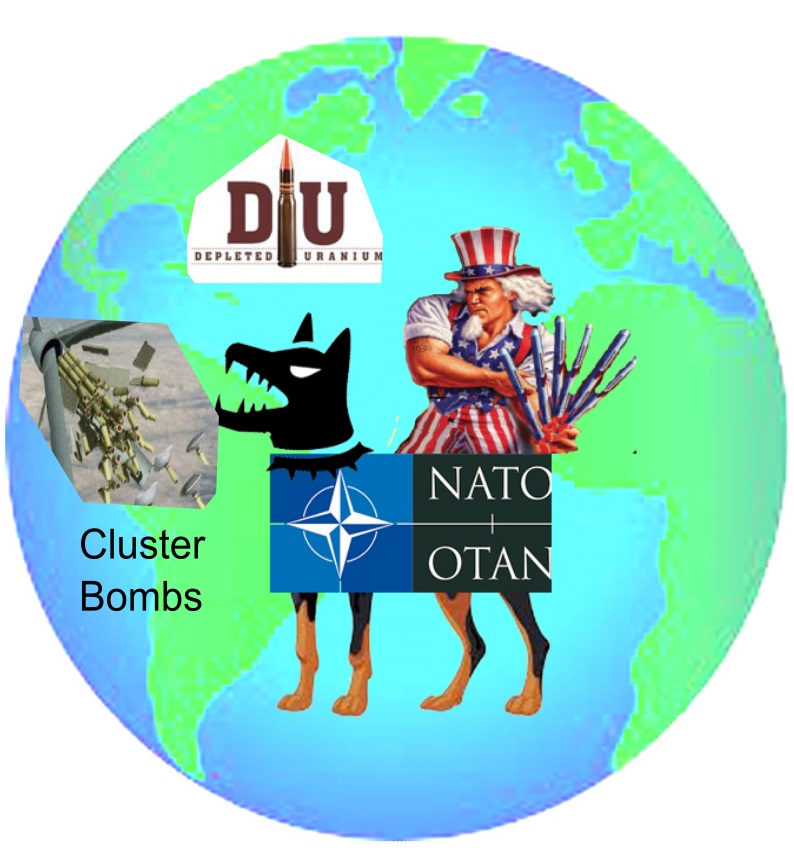
More than 110 states – not including the US, of course – have ratified a 2008 international convention outlawing cluster munitions. Many are in Nato.
Middle East Eye, Jonathan Cook. 14 July 2023
The US and its allies are sustaining the very war they now cite as grounds for disqualifying Kyiv from Nato membership .
he Nato summit in Lithuania this week served only to underscore the utter hypocrisy of western leaders in pursuing their proxy war in Ukraine to “weaken” Russia and oust its president, Vladimir Putin.
Both the US and Germany had made clear before the summit that they would block Ukraine’s admission to Nato while it was in the midst of a war with Russia. That message was formally announced by Nato Secretary General Jens Stoltenberg on Tuesday.
Ukrainian President Volodymyr Zelensky fumed that Nato had reached an “absurd” decision and was demonstrating “weakness”. British Defence Secretary Ben Wallace lost no time in rebuking him for a lack of “gratitude”.
The concern is that, if Kyiv joins the military alliance at this stage, Nato members will be required to leap to Ukraine’s defence and fight Russia directly. Most western states balk at the notion of a face-to-face confrontation with a nuclear-armed Russia – rather than the current proxy one, paid for exclusively in Ukrainian blood.
But there is a more duplicitous subtext being obscured: the fact that Nato is responsible for sustaining the war it now cites as grounds for disqualifying Ukraine from joining the military alliance. Nato got Kyiv into its current, bloody mess – but isn’t ready to help it find a way out.
It was Nato, after all, that chose to flirt openly with Ukraine from 2008 onwards, promising it eventual membership – with the undisguised hope that one day, the alliance would be able to flex its military muscles menacingly on Russia’s doorstep.
It was the UK that intervened weeks after Russia’s invasion in February 2022, and presumably on Washington’s orders, to scupper negotiations between Kyiv and Moscow – talks that could have ended the war at an early stage, before Russia began seizing territories in eastern Ukraine.
A deal then would have been much simpler than one now. Most likely, it would have required Kyiv to commit to neutrality, rather than pursuing covert integration into Nato. Moscow would have demanded, too, an end to the Ukrainian government’s political, legal and military attacks on its Russian-speaking populations in the east.
Now the chief sticking point to an agreement will be persuading the Kremlin to trust the West and reverse its annexation of eastern Ukraine, assuming Nato ever allows Kyiv to re-engage in talks with Russia.
And finally, it is Nato members, especially the US, that have been shipping out vast quantities of military hardware to prolong the fighting in Ukraine – keeping the death toll mounting on both sides.
Damp squib
In short, Nato is now using the very war it has done everything to fuel as a pretext to stop Ukraine from joining the alliance.
Seen another way, the message Nato has sent Moscow is that Russia made exactly the right decision to invade – if the goal, as Putin has always maintained, is to ensure Kyiv remains neutral.
It is the war that has prevented Ukraine from being completely enfolded in the western military alliance. It is the war that has stopped Ukraine’s transformation into a Nato forward base, one where the West could station nuclear-tipped missiles minutes from Moscow.
Had Russia not invaded, Kyiv would have been free to accelerate what it was already doing secretly: integrating into Nato. So what is Zelensky supposed to conclude from his exclusion from Nato, after he committed his country to an ongoing war rather than negotiations and neutrality?
So far, Ukraine’s much-vaunted “spring counter-offensive” has turned into a damp squib, despite western media spin about “slow progress”. Moscow is holding on to the Ukrainian territories it annexed.
So long as Kyiv can’t “win the war” – and it seems it can’t, unless Nato is willing to fight Russia directly and risk a nuclear confrontation – it will be precluded from the military alliance. Catch-22.
Do not expect this conundrum to be highlighted by a western establishment media that seems incapable of doing anything other than regurgitating Nato press releases and cheering on bigger profits for the West’s war industries.
War crimes
Another such conundrum is the Biden administration’s decision last week to supply Ukraine with cluster munitions – small bomblets that, when they fail to explode, lie concealed like mini-landmines, killing and maiming civilians for decades. In some cases, as many as a third are “duds”, detonating weeks, months or years later.
Washington’s move follows Britain recently supplying Ukraine with depleted uranium shells, which contaminate surrounding areas with a radioactive dust during and after fighting. Evidence from areas such as Iraq, where the US and Britain fired large numbers of these shells, suggests the fallout can include a decades-long spike in cancer and birth defects.
The White House was all too ready to denounce the use of cluster bombs as a war crime last year – when it was Russia that stood accused of using them. Now it is Washington enabling Kyiv to commit those very same war crimes.
More than 110 states – not including the US, of course – have ratified a 2008 international convention outlawing cluster munitions. Many are in Nato.
Given the high “dud” rate of US cluster bombs, President Joe Biden appears to be breaking US law in shipping stocks to Ukraine. The White House can invoke an exemption only if exporting such weapons satisfies a “vital US national security interest”. Apparently, Biden believes “weakening” Russia – and turning parts of Ukraine into a death zone for civilians for decades to come – qualifies as just such a vital interest.
Desperate stop gap
While the official story is that this latest escalatory move by the US will help Kyiv “win the war”, the truth is rather different. Biden has not shied away from admitting that Ukraine – and Nato – are running out of conventional arms to fight Russia. This is a desperate stop-gap measure. ……………………………………………………………………………………………………………………………..
…………………………….. Tragically, Nato’s malevolence, deceit and betrayal means that the only alternative to Armageddon may be Ukraine’s downfall – and with it, the crushing of Washington’s nefarious ambitions to advance full-spectrum global dominance. https://www.middleeasteye.net/opinion/nato-ukraine-not-defending-stabbing-back?utm_source=substack&utm_medium=email
“War Effort In Shambles As Hawks Turn On Each Other” At NATO Summit
Zeo Hedge, BY TYLER DURDEN, THURSDAY, JUL 13, 2023
Bloomberg is just out with a devastating behind-the-scenes account of a hot-headed Zelensky at the NATO summit in Vilnius, and the growing Western backlash in the face of his obvious frustration and what’s being seen as ingratitude for the steady flow of billions of dollars in arms to Kiev.
Apparently even the mainstream media agrees with our own assessment of the Ukrainian leader having thrown a “tantrum” as he complained about the “weak” and “absurd” NATO stance on Ukraine’s membership. The blistering tweet he issued in English while en route to Lithuania exposed cracks in the alliance, as Bloomberg highlights in the opening of its very revealing Wednesday piece:
Volodymyr Zelenskiy was running hot ahead of his sit-down with NATO leaders on Tuesday evening. The Ukrainian president had been angered earlier in the day by what he said was an “absurd” reluctance to give his country a clear timeline on membership.
That outburst in turn riled the partners who have funneled billions of dollars of weaponry and aid into Ukraine’s defense against the Russian invasion — the US had been given no warning before Zelenskiy unleashed his attack on social media.
As Bloomberg writes: “Over dinner in Vilnius, with US President Joe Biden back at his hotel, the other leaders delivered a clear message to Zelenskiy, according to one person who was present. You have to cool down and look at the full package, Zelenskiy was told.”
While it’s not quite yet a full on ‘hero to zero’ story… things are certainly sliding in that direction, given it’s unprecedented that the Ukrainian president who previously enjoyed rockstar status in Western capitals since the start of the invasion could be told to basically ‘cool it’!.
Bloomberg continues in reference to Zelensky: “He had, after all, been given a renewed commitment to eventual membership and new security guarantees from the Group of Seven nations. By the next day, the message appeared to be sinking in.” The publication was privy to some key Western leaders’ exact words, presenting the rare dressing down as follows [emphasis ZH]:
Whether we like it or not, people want to see gratitude,” UK Defense Secretary Ben Wallace told reporters the following morning. “You’re persuading countries to give up their stock” of weapons and ammunition, he added.
This account of the behind-the-scenes wrangling is based on interviews with more than a dozen diplomats and officials involved in the summit who asked not to be named discussing private conversations. NATO leaders were trying to thread a needle on Ukraine’s membership bid when they arrived in Vilnius: They were seeking language that looked like progress and that Ukraine could sell as progress but fundamentally didn’t leave them any closer to getting dragged into a war with nuclear-armed Russia.
Ultimately the hawks (mainly among the Baltic and Eastern Europe states) have lost at Vilnius. Ukrainian Foreign Minister Dmytro Kuleba has admitted “There was a lack of political will.” Thus it appears that Zelensky’s angry, desperate tweet lashing out at Western partners was a last ditch effort at shaming NATO into conceding to its demands of being immediately fast-tracked to membership.
Bloomberg reveals further, that “Crucially, it was the US and Germany that insisted on dialing back the commitment to Ukraine joining the alliance. Earlier drafts of the communique offered a clearer pathway to Ukraine eventually joining, but Biden and Chancellor Olaf Scholz were wary of going too far.”
“Their teams demanded changes in the final days before the summit, upsetting lots of the other European nations, as well as the Ukrainians.” Indeed Biden in a CNN interview at the start of the week confessed the obvious: that Ukraine’s admission into NATO with the war still going would automatically unleash war between nuclear-armed powers – a WW3 doomsday scenario. Hence the West is now telling Kiev: just stop.
In Zelensky’s next big NATO summit appearance Wednesday following a no doubt awkward evening, things were different as he belatedly “got the message”…
………………………………. The New York Times’ summation of precisely what fell short in the NATO communique explains: “NATO declared on Tuesday that Ukraine would be invited to join the alliance, but did not say how or when, disappointing its president but reflecting the resolve by President Biden and other leaders not to be drawn directly into Ukraine’s war with Russia.”
Indeed it’s being widely called more vague–and with greater possible restrictions, or “conditions”–than even what came out of the 2008 Bucharest summit.
Below is the offending part of the official Vilnius Summit Communiqué:
Issued by NATO Heads of State and Government participating in the meeting of the North Atlantic Council in Vilnius 11 July 2023:
“…………………………………………… We will be in a position to extend an invitation to Ukraine to join the Alliance when Allies agree and conditions are met.
But Zelensky is still holding out hope that one day– “After the war, Ukraine will be in NATO.”
However, President Biden has remained unmoved, and responded by explaining before reporters that Ukraine “will not be in NATO for a while”.
The geopolitical analysis news site Moon of Alabama observes correctly…
“Well. The little comedian seems disappointed. As if the whole play had not been obvious from the very beginning. Since 2008 the Ukraine was to be used as a tool to nag Russia. It is otherwise of little value. It will end up as a discarded rag while NATO will, in the end, again recognize the Russian Federation as the super power that that it is. NATO will have to relearn to listen to and negotiate with it.”
MofA then highlights the inevitable negative impact (to say the least) on Ukrainian morale: “Now lets wait and see what NATO’s climb down will do to the morale and motivations of the Ukrainian army and people.”
Update(1740): David Sacks agrees that for the hawks of NATO-land, the way things are going for the Ukrainian war effort and the West’s prior optimism and muscular support in general have reached a low-point.
Sacks writes below [emphasis ZH’s]…
Despite Biden’s best efforts to put a happy face on it, Vilnius will be remembered as the NATO Summit where tensions boiled over. Zelensky denounced the Alliance’s admission policy as “absurd” and disrespectful.
UK Secretary of Defense Ben Wallace chastised Zelensky for ingratitude. Lindsey Graham attacked the Biden administration for weakness. Ben Hodges criticized Jake Sullivan for lack of “strategic bravery.” Even NAFO mascot Adam Kinzinger no longer appears to be a “fella.”
The optics were even harsher than the words, with the NATO elites turning their backs on a frustrated Zelensky. Biden’s assurance that Zelensky is “stuck” with the U.S. may come as cold comfort to both nations now that the Ukrainian counteroffensive has failed to meet expectations, huge amounts of expensive Western armor lay in ruins smoldering on the battlefield, Ukrainian casualties are horrific, and the U.S. has run out of 155mm artillery shells to give, forcing America to debase itself by sending cluster bombs.
The war effort is increasingly a shambles and the War Party is starting to turn on each other. https://www.zerohedge.com/geopolitical/nato-leaders-tell-zelensky-cool-it-rare-dressing-down-summit
Taiwan solution is diplomacy rather than nuclear hell
Pearls and Irritations, By Bob CarrJul 15, 2023
I have yet to meet an Australian voter willing to go to war over Taiwan. Further, I haven’t heard of any Australian military leader with a clear idea of Australia’s role in a showdown between China and the US.
Earlier this year, NASA’s survey satellite discovered an Earth-sized world within the habitable zone of a distant star. If it hosts life, its creatures may be listening to our conversations. They are likely amazed that earthlings seem to be sleepwalking towards their first war between nuclear powers.
At the heart of the conflict is the political system that prevails on an island of 23.5 million people because of sovereignty issues left over from two Sino-Japanese wars. These far-off observers might be even more curious if they knew about the availability of a tested formula that for 50 years kept peace in one part of the small blue planet.
I have yet to meet an Australian voter willing to go to war over Taiwan. Further, I haven’t heard of any Australian military leader with a clear idea of Australia’s role in a showdown between China and the US. On the contrary, I’m told their consensus is that our naval assets would be unprotected against ocean-hugging hypersonic missiles.
One former Defence Department official told me if we sent submarines, “we’d better make sure that our submariners had their wills made out”. I’m told one now-deceased former general was fond of saying about our role in the Taiwan Strait: “We’d last three minutes.”
……………………………..The loose war talk over Taiwan led the former US secretary of state , Henry Kissinger to make a solemn warning back in May that we are facing great-power conflict like that which preceded World War I. He used the noun “catastrophe”.
Kissinger had negotiated the 1972 Shanghai Communique, which offers the diplomatic formula that preserved the peace and can go on preserving it until overtaken by any new political and economic reality 100 years off. The communique allows the world to “acknowledge” the Chinese claim that Taiwan is its province without “endorsing” the Chinese claim. And, quickly following, is the principle that “reunification” would not involve an act of war.
For its part, Taiwan steers away from a declaration of independence. Only 13 of the world’s nations see Taiwan as independent. But it has enjoyed self-government with a contestable political system and a prosperous economy. This strategic ambiguity has served us.
A Taiwan that resembles Hong Kong is not desirable. I said in my recent interview with Mark Bouris, it would be preferable to a nuclear war…………………………………….
Any hard-nosed assessment of our national interest would have us redouble – then redouble again – our commitment to guardrails and off-ramps to stop the descent into conflict. There are subtle suggestions that both the US and China have pulled back to earlier red lines, and with the support of the Taiwanese leadership. In that spirit, House Speaker Kevin McCarthy in April met the President of Taiwan, Tsai Ing-wen, on American soil and not in Taipei. The Chinese response was comparatively subdued.
In this month’s Australian Foreign Affairs, Sam Roggeveen of the Lowy Institute delicately etched how recent Canberra decisions had rendered Australian sites more likely nuclear targets. It includes having B52s fly out of RAAF Tindall near Darwin, assumedly with the mission of striking China’s nuclear infrastructure. It may include Submarine Rotational Force-West in the planned nuclear submarine base at HMAS Stirling, and Port Kembla on the east coast.
Roggeveen concludes that in a future crisis, Australia’s profile is going to be much higher in the eyes of Chinese military planners.
……… Without any retreat from deterrence or our values, more spirited diplomacy in our interests, the region’s and Earth’s might be the order of the day. https://johnmenadue.com/taiwan-solution-is-diplomacy-rather-than-nuclear-hell/
The Biden doctrine: “As long as it takes,” or “No matter how many die”
WSWS Andre Damon, David North, 14 July 23
On Wednesday, US President Joe Biden addressed a raucous mob of xenophobic Lithuanian nationalists in Vilnius following the conclusion of a NATO summit that pledged to massively expand military spending in preparation for global war.
Biden’s diatribe addressed the same themes as a speech he delivered last year in Warsaw, Poland, in which he pledged to “fight” for “years and decades to come.” Back in 2022, his unscripted rant compelled White House officials to publicly walk back the president’s remarks. But now his advisers no longer see the need to reinterpret and modify Biden’s bellicose statements. What he says about US war aims are not dementia-induced errors but actual declarations of the policies of his administration.
Speaking in Vilnius, Biden declared, “Our commitment to Ukraine will not weaken. We will stand for liberty and freedom today, tomorrow, and for as long as it takes.”
The length of a war is invariably related to the toll in human life. The longer a war continues, the greater the number of casualties and deaths, of both soldiers and civilians.
Therefore, when Biden proclaims once again that his administration and NATO will supply money and arms “as long as it takes” to bring about the defeat of Russia, what he is really saying is that the war will continue regardless of the cost in human lives.
This is the barbaric essence of what can be called the Biden Doctrine: “No matter how long it takes or how many die.”…………………………………………………………….
Just last week, Biden announced that he would send cluster munitions to Ukraine, which are banned by over 100 countries because they kill and maim civilians for decades after conflicts end.
Biden made a garbled reference to Lithuania’s myth-based narrative of struggle against tyranny, and he boasted of the United States’ commitment to its freedom. But what Biden left out of his rambling history lecture was the intense collaboration of Lithuanian nationalists with Nazi Germany and direct participation in the mass murder of virtually the entire Jewish population of the country.
During the three-year Nazi occupation of Lithuania, 95 percent of the country’s Jewish population was exterminated—195,000 men, women and children were systematically killed.
This reality gave an ominous tone to Biden’s declaration that “the bonds between Lithuanian and the American people have never faltered,” praising Lithuanian exiles who traveled to the United States.
What Biden did not mention, however, is that two of the Lithuanian immigrants welcomed by the United States happened to be the individuals most responsible for the Holocaust in that country.
Aleksandras Lileikis, the chief of the Lithuanian Security Police in Vilnius during the Nazi occupation of Lithuania and a perpetrator of the Holocaust, was given safe passage to the United States and was employed by the Central Intelligence Agency. His deputy, Kazys Gimžauskas, also emigrated to the United States, as well as three of his subordinates.
Neither of the two men saw a day of jail time for their participation in the Holocaust.
…………… In voting for the expansion of NATO in 1998, Biden proclaimed “the beginning of another 50 years of peace.” In reality, the United States was deliberately setting the stage for the type of fratricidal war that has erupted in Ukraine, with the aim of drawing Russia into wars on its borders and bleeding it white…………. https://www.wsws.org/en/articles/2023/07/14/pers-j14.html
Security concerns for Britain as China might be controlling its nuclear power stations
Britain faces ‘nightmare scenario’ of China controlling its nuclear power
stations, universities and technology, warn MPs. The report, compiled with
the assistance of MI5 and MI6, suggested that a desperation to acquire
Chinese investment had led to security concerns being dismissed. Its
authors warned:
‘Without swift action, we are on a trajectory for the
nightmare scenario where China steals blueprints, sets standards and builds
products, exerting political and economic influence at every step. This has
the potential to pose an existential threat to democratic systems.’ They
added: ‘China has been seeking to control or influence the UK’s industry
and energy sectors.
Chinese money was readily accepted with few questions
asked. ‘It is unacceptable for the Government to still be considering
Chinese involvement in critical national infrastructure.’ In 2021, it was
reported China owns £143billion in UK assets, from nuclear power to
schools. Nearly 200 UK companies are controlled by groups or individuals
based in China or count them as minority shareholders.
Daily Mail 14th July 2023
NATO to keep Ukraine at arm’s length
https://www.rt.com/news/579554-nato-summit-communique/ 12 July 23
NATO Secretary General Jens Stoltenberg further elaborated on the matter at a press conference, stating that the bloc must first ensure that Ukraine achieves a “victory” in its ongoing conflict with Russia. Should Kiev not succeed, its NATO membership will be out of the question, he warned.
Kiev will be permitted to join the US-led bloc “when allies agree and conditions are met”
NATO has reaffirmed its readiness to grant Ukraine membership at some point in the future. A joint statement released during the annual summit of the US-led bloc said Kiev would be invited to join only “when allies agree and conditions are met,” but it will be allowed to bypass the so-called Membership Action Plan that is usually required for candidate members.
We reaffirm the commitment we made at the 2008 summit in Bucharest that Ukraine will become a member of NATO, and today we recognize that Ukraine’s path to full Euro-Atlantic integration has moved beyond the need for the Membership Action Plan,” the statement read.
Ukraine has become “increasingly interoperable and politically integrated with the US-led bloc,” it stated. It also outlined the need for “additional democratic and security sector reforms” in the country.
The alliance will support Ukraine in making these reforms on its path towards future membership. We will be in a position to extend an invitation to Ukraine to join the alliance when allies agree and conditions are met,” the statement concluded.
NATO Secretary General Jens Stoltenberg further elaborated on the matter at a press conference, stating that the bloc must first ensure that Ukraine achieves a “victory” in its ongoing conflict with Russia. Should Kiev not succeed, its NATO membership will be out of the question, he warned.
The pledge falls short of calls by top Ukrainian officials, who have repeatedly urged the US-led alliance to accept the country right away or at least produce an official “invitation” for it at the summit. Ukrainian President Vladimir Zelensky made an apparent last-ditch attempt to influence the bloc’s joint statement hours before it was released, taking to social media to criticize NATO and demand “respect” for Ukraine from the alliance.
“It’s unprecedented and absurd when [a] time frame is not set neither for the invitation nor for Ukraine’s membership. While at the same time vague wording about ‘conditions’ is added even for inviting Ukraine,” Zelensky wrote, referring to a draft of the document that was partially leaked to the media.
The Dissolution of NATO May Be the Only Way to Prevent WWIII
10 reasons why NATO ought to be disbanded
DENNIS KUCINICH, JUL 12, 2023 https://denniskucinich.substack.com/p/the-dissolution-of-nato-may-be-the?utm_source=post-email-title&publication_id=1441588&post_id=134486026&isFreemail=true&utm_medium=email
The proxy war of the US vs. Russia in Ukraine could easily develop into World War III. The litany of dangerous weaponry presaging a direct, full-scale war between the U.S. and Russia is instructive: The most advanced tanks, F-16s, depleted uranium munitions, cluster bombs, and even discussion of “tactical” nuclear weapons are thrown into an already toxic admixture, always open to further miscalculation.
This is not to absolve Russia of the invasion. One cannot ignore the dialectic of conflict, which left unchecked, will lead to a greater disaster than has already befallen the people of Ukraine.
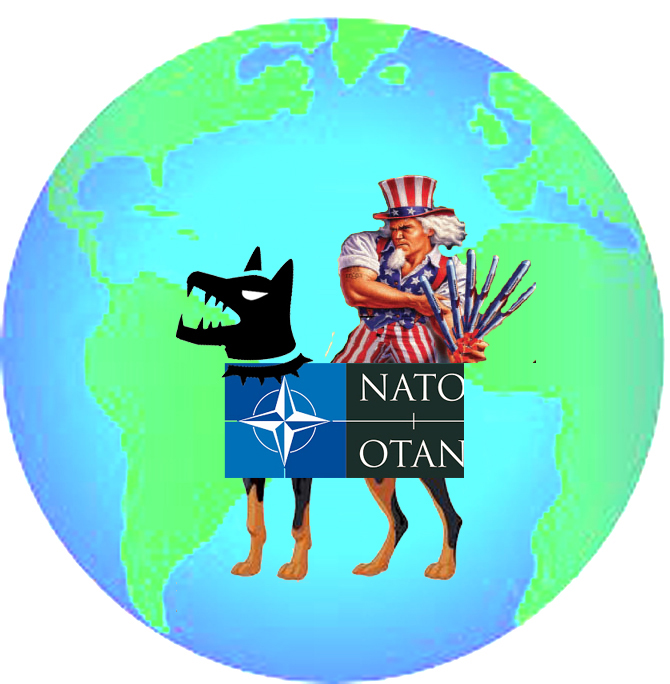
Key to this miasma is NATO, the North Atlantic Treaty Organization, whose principal European members are committed to a total war with Russia, but on the U.S.’ tab.
NATO military strategies have lacked cohesion and coherence and have led to stasis on the battlefield. Victory over Russia has occurred in the western media, but not on the battlefield. There will be no ceasefire because trickery is no longer an option.
NATO officials will look to escalate the war. The U.S. knows it cannot. Clearly Europe needs a new security architecture which includes Russia with security guarantees for all member states. How can this be achieved with NATO resistance to an end to the war?
As the North Atlantic Treaty Organization (NATO) gathers to deliberate in Vilnius, Lithuania, one item that should be on the agenda is the sunsetting of the treaty which established NATO.
The dissolution of NATO itself may be the only way to prevent wider war and to stop the United States and the world from being plunged into the abyss of a wider, cataclysmic war.
Here are (at least) 10 reasons why NATO ought to be disbanded:
1. NATO, formally known as the North Atlantic Treaty Organization, (headquartered in Brussels, Belgium) was formed April 4, 1949, to protect Europe against the Soviet Union. The Soviet Union ended on December 25, 1991. NATO fulfilled its founding purpose thirty-two years ago.
2. NATO, has far exceeded the geographical boundaries of the North Atlantic. It has expanded its membership to include nations in the Baltic Sea, the Mediterranean Sea, the Adriatic Sea, the Aegean Sea and the Black Sea.
3. As an expansionist military organization, NATO has extended its military activities far beyond the North Atlantic to Afghanistan, the Gulf of Aden, Iraq, Libya, Darfur, Sudan, and off the Horn of Africa. It has even flown airborne early warning and control systems (AWACS) over United States air space.
4. The founding purpose of NATO was as a defensive alliance. Article One from the North Atlantic Treaty, which established NATO, reads as follows: “The Parties undertake, as set forth in the Charter of the United Nations, to settle any international dispute in which they may be involved by peaceful means in such a manner that international peace and security and justice are not endangered, and to refrain in their international relations from the threat or use of force in any manner inconsistent with the purposes of the United Nations.”
5. NATO is an instrument of war, contravening the founding purpose of the 193-member United Nations, formed in 1948 “to save succeeding generations from the scourge of war.”
6. NATO operates under the color of international authority, while threatening to bring “the scourge of war” to the world. It has aggressively asserted itself, in reliance on the assets of the United States of America, without which it would be a nullity. NATO’s rejection of diplomacy, its unbridled commitment to regime change, its support for ongoing escalation, is a threat to the peace of the region.
7. NATO’S global pretensions are on full display. On July 10, 2023, it presumed to deliver a warning to China.NATO’s Secretary General Jen Stoltenberg, said “The Chinese government’s increasingly coercive behavior abroad and repressive policies at home challenge NATO’s security, values and interests.”
8. NATO is not an independent body. More than 50% of NATO’s budget is paid for by the U.S., yet NATO’s Brussels leadership presumes to implicate the U.S. in wider war, a matter of Constitutional concern to the U.S. Congress.
9. NATO members are required to pay 2% of their GNP for NATO membership. This has turned NATO into an arms bazaar, at the expense of the social and economic needs of the people of its member states, leading to the militarization of Europe.
10. NATO is helpless to protest policies which are antithetical to European social and economic concerns. The destruction of the Nordstream Pipeline, has enabled US interests to price-gouge Europeans for energy. US sanctions policies have cut off European access to markets, further crippling economic growth.
SCOTT RITTER: NATO Summit, a Theater of the Absurd
The scope and scale of the Ukrainian military defeat is such that the focus of many NATO members appears to be shifting from the unrealistic goal of strategically defeating Russia to a more realistic objective of bringing about a cessation to the conflict that preserves Ukraine as a viable nation state.
Ukrainian President Volodymyr Zelensky will attend the NATO summit. However, his demands for NATO membership will not be met.
Normalizing failure might best describe the best that NATO can accomplish in Vilnius.
By Scott Ritter, Consortium News, July 10, 2023
The unfulfilled goals and objectives from last year’s meeting in Madrid loom over the Atlantic military alliance. When the membership meets in Vilnius this week, normalizing failure might best describe the most that can be accomplished.
The leaders of NATO’s 31 constituent member states have begun to assemble in Vilnius, the capital of Lithuania, for the alliance’s 33rd summit, an event that has come to symbolize the military organization’s increasingly difficult task of transforming political will into tangible reality.
Since the Wales Summit of 2014, when NATO made Russia a top priority in the aftermath of the Russian annexation of Crimea, and the Warsaw Summit of 2016, when NATO agreed to deploy “battlegroups” on the soil of four NATO members (Latvia, Estonia, Lithuania and Poland) in response to perceived Russian “aggression” in the region, Russia has dominated the NATO agenda and, by extension, its identity.
The Vilnius summit promises to be no different in this regard.
One of the major issues confronting the NATO leadership is that the Vilnius summit operates under the shadow of last year’s Madrid summit, convened in late June in the aftermath of Russia’s initiation of military operations against Ukraine.
The Madrid summit came on the heels of Boris Johnson’s deliberate sabotage of a Ukrainian-Russian peace agreement that was supposed to be signed on April 1, 2023, in Istanbul, and the decision by the United States in May 2023 to extend to Ukraine military assistance exceeding $45 billion as part of a new “lend lease” agreement.
In short, NATO had opted out of a peaceful resolution to the Russia-Ukraine conflict and instead chose to wage war by proxy — with Ukrainian manpower being married with NATO equipment — designed to achieve what U.S. Ambassador to NATO Julianne Smith, in May 2022, called the “strategic defeat” of Russia in Ukraine.
The Madrid summit generated an official NATO statement which declared that “Russia must immediately stop this war and withdraw from Ukraine,” adding that “Belarus must end its complicity in this war.”
When it came to Ukraine, the Madrid statement was equally firm. “We stand in full solidarity with the government and the people of Ukraine in the heroic defense of their country,” it read………………
Confidently Seeking a ‘Strategic Defeat’
NATO, it seemed, was supremely confident in its ability to achieve the outcome it so very much wanted — the strategic defeat of Russia.
What a difference a year makes.
NATO assistance to Ukraine resulted in a successful counteroffensive which compelled Russia to withdraw from territory around the city of Kharkov, as well as abandon portions of the Kherson Oblast located on the right bank of the Dnieper River. Once the Russian defenses solidified and the Ukrainian attack stalled, NATO and Russia both began preparing for the next phase of the conflict……………………………….
NATO had placed high hopes on the Ukrainian army being able to carry out a counteroffensive against Russia which would achieve discernable results both in terms of territory re-captured and casualties inflicted on the Russian army. The results, however, have been dismal to date — tens of thousands of Ukrainian casualties and thousands of destroyed vehicles while failing to breach even the first line of the Russian defenses.
One of the challenges NATO will face in Vilnius is the question of how to recover from this setback. Many NATO countries are starting to exhibit “Ukraine fatigue” as they see their armories stripped bare and their coffers emptied in what, by every measurement, appears to be a losing cause.
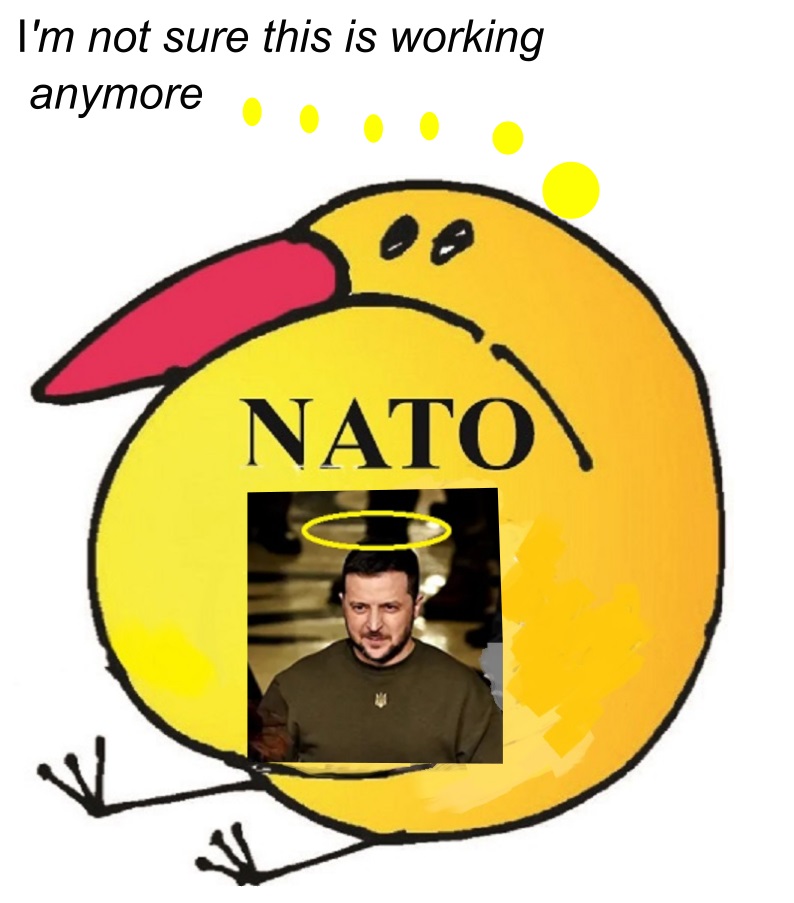
The scope and scale of the Ukrainian military defeat is such that the focus of many NATO members appears to be shifting from the unrealistic goal of strategically defeating Russia to a more realistic objective of bringing about a cessation to the conflict that preserves Ukraine as a viable nation state.
Ukrainian President Volodymyr Zelensky will attend the NATO summit. However, his demands for NATO membership will not be met — U.S. President Joe Biden himself has weighed in on the matter, saying this would not be possible while Ukraine is at war with Russia.
Face-Saving Gestures
There will be face-saving gestures from NATO, such as the creation of a NATO-Ukraine Council and talk of eventual post-conflict security guarantees. But the reality is Zelensky’s presence will do Ukraine more harm than good, since it will only accentuate the internal disagreement within NATO on the issue of Ukrainian membership and highlight NATO’s impotence when it comes to doing anything that can meaningfully alter the current trajectory on the battlefield, which is heading toward a strategic defeat for both Ukraine and NATO.
…………………………………………………………………. One can expect a plethora of rhetorical spin and posturing by the NATO membership, but the fact is the real mission of the Vilnius summit is how best to achieve a soft landing from the unfulfilled goals and objectives laid out last year in Madrid.
Normalizing failure might best describe the best that NATO can accomplish in Vilnius.
Any failure to try to stop the accumulation of debacles that represent the current NATO policy toward Ukraine will result in further collapse of the military situation in Ukraine, and the political situation in Europe, which, in their totality, push NATO closer to the moment of its ultimate demise.
This prospect does not bode well for those whose task it is to put as positive a spin as possible on reality. But NATO has long ago stopped dealing with a fact-based world, allowing itself to devolve into a theater of the absurd where actors fool themselves into believing the tale they are spinning, while the audience stares in dismay. https://consortiumnews.com/2023/07/10/scott-ritter-nato-summit-a-theater-of-the-absurd/—
1 This Month



26 September – International Day for the Total Elimination of Nuclear Weapons


PLEASE OPPOSE HR 8255 AND S.3639 – bills would accelerate satellite deployment, with no environmental review or safeguards – https://ncstd5li.quorum.us/campaign/169331/
To see nuclear-related stories in greater depth and intensity – go to https://nuclearinformation.wordpress.com
-
Archives
- September 2026 (245)
- August 2026 (330)
- July 2026 (355)
- June 2026 (287)
- May 2026 (306)
- April 2026 (356)
- March 2026 (251)
- February 2026 (267)
- January 2026 (308)
- December 2025 (358)
- November 2025 (359)
- October 2025 (375)
-
Categories
- 1
- 1 NUCLEAR ISSUES
- business and costs
- climate change
- culture and arts
- ENERGY
- environment
- health
- history
- indigenous issues
- Legal
- marketing of nuclear
- media
- opposition to nuclear
- PERSONAL STORIES
- politics
- politics international
- Religion and ethics
- safety
- secrets,lies and civil liberties
- spinbuster
- technology
- Uranium
- wastes
- weapons and war
- Women
- 2 WORLD
- ACTION
- AFRICA
- Atrocities
- AUSTRALIA
- Christina's notes
- Christina's themes
- culture and arts
- Events
- Fuk 2022
- Fuk 2023
- Fukushima 2017
- Fukushima 2018
- fukushima 2019
- Fukushima 2020
- Fukushima 2021
- general
- global warming
- Humour (God we need it)
- Nuclear
- RARE EARTHS
- Reference
- resources – print
- Resources -audiovicual
- Weekly Newsletter
- World
- World Nuclear
- YouTube
-
RSS
Entries RSS
Comments RSS
 nuclear-news