Fukushima water release poses test for Japan-South Korea unity
TOKYO/SEOUL – Japan Times , BY TIM KELLY, SAKURA MURAKAMI AND HYONHEE SHIN
REUTERS 18 Aug 23
U.S. President Joe Biden wants to lock in friendly ties between Japan and South Korea at a summit on Friday, but their readiness to shelve grievances will be tested when Tokyo begins pumping water from its wrecked Fukushima nuclear plant into the sea.
Japan already delayed the release to avoid stirring up political opposition in South Korea before President Yoon Suk-yeol joins Prime Minister Fumio Kishida for a meeting with Biden at the Camp David retreat on Friday, four officials in Japan and South Korea said.
The dumping of radioactive water may happen days after the summit, which the United States is billing as a “historical” trilateral meeting that will deliver a “bold counter” to regional rival China.
That puts less domestic political pressure on Yoon, said one of the officials, who asked not to be identified because of the sensitivity of the issue.
Washington needs its Asian allies to work together because they see the military power balance in East Asia, including around Taiwan, shifting in China’s favor.
…………………….. Even if Fukushima fades as an issue, the risk of bad blood remains real. As relations soured in 2019, for example, Moon nearly scrapped a critical intelligence-sharing deal with Japan, reversing the decision at the last minute under U.S. pressure.
By accepting an International Atomic Energy Agency (IAEA) report last month that greenlit Japan’s Fukushima water release, Yoon could encourage fresh dissent that China will try to amplify, analysts say.
“There is certainly some possibility that Yoon will come under pressure over this, particularly if there is data that shows that the water is more dangerous than we otherwise thought,” said Christopher Johnstone, a former East Asia director of Biden’s National Security Council who is now with the Center for Strategic and International Studies.
Japan says it will remove most radioactive elements from the water except for tritium, a hydrogen isotope that must be diluted because it is difficult to filter.

U.S. Secretary of State Antony Blinken on Tuesday expressed satisfaction with Japan’s plans.
………………….a Gallup poll in late June showed that 78% of South Koreans worry about potential contamination of the ocean and seafood…………………………
more https://www.japantimes.co.jp/news/2023/08/18/japan/politics/south-korea-fukushima-radioactive-water/
US tightens export controls of nuclear power items to China
By Timothy Gardner, August 19, 2023
WASHINGTON, (Reuters) – The Biden administration has tightened controls on the export of materials and components for nuclear power plants to China, saying it would ensure the items were used only for peaceful purposes and not the proliferation of atomic weapons.
The steps are among the latest signs of strained relations between Washington and Beijing, which have clashed over spying allegations, human rights, China’s industrial policies, and U.S. export bans on advanced technologies.
The Bureau of Industry and Security (BIS), an arm of the Commerce Department, now requires exporters to get specific licenses to export certain generators, containers and software intended for use in nuclear plants in China.
The Nuclear Regulatory Commission (NRC), the federal agency responsible for nuclear energy safety, also requires exporters to get specific licenses to export special nuclear material and source material.
That includes different types of uranium as well as deuterium, a hydrogen isotope that, in large amounts, could be used in reactors to make tritium, a nuclear weapons component.
The Biden administration sees the action as “necessary to further the national security interests of the United States and to enhance the common defense and security” the NRC said.
A U.S. official said the changes, made on Monday, were prompted by general policy toward China…………………….
Non-proliferation analyst Edwin Lyman of the Union of Concerned Scientists non-profit group said the changes were “more symbolic than substantive” and doubted China’s nuclear weapons program would be meaningfully impacted.
…………………………….U.S. company Westinghouse has four AP1000 reactors in China. In 2018 Donald Trump’s administration issued restrictions on exports of nuclear reactor technology newer than the AP1000 due to proliferation concerns. Westinghouse did not immediately respond to a request for comment about the U.S. requirements.
Reporting by Timothy Gardner; additional reporting by Michael Martina; editing by Barbara Lewis https://www.reuters.com/world/us/us-tightens-export-controls-nuclear-power-items-china-2023-08-18/
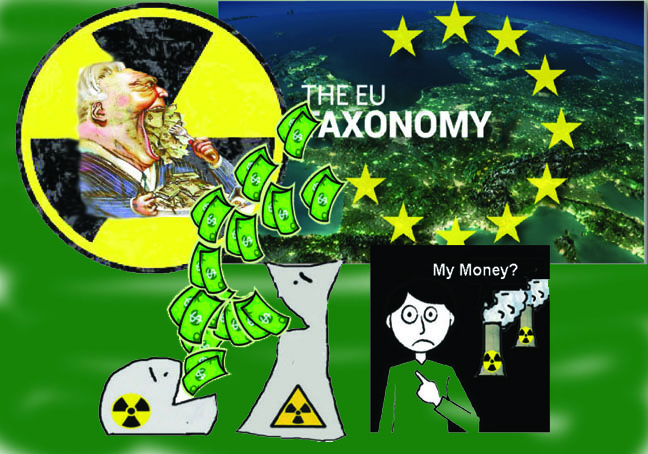
Tussle in Europe as France succeeds in getting nuclear energy accepted as a ‘”transitional” technology for EU’s green taxonomy .
This article is part of our special report EU’s final stretch before June 2024.
Nuclear power is making a comeback on the EU energy scene after an eventful 2022-2023 year, which according to Paris, reflects an “excellent diplomatic record” for France in defending atomic energy. EURACTIV looks at the bigger picture.
After three years of intense negotiations, nuclear energy officially joined the list of “transitional” energies in the EU’s green taxonomy on 1 January 2023.
Following the vote confirming the European Parliament’s position on the issue in July 2022, the co-chair of the United Left group, Manon Aubry, warned that this decision is “fraught with meaning […] for future deadlines and votes on climate issues”………………….
In France and eastern EU countries in particular, nuclear power is increasingly being viewed as a viable solution for achieving carbon neutrality by 2050.
Renewables at EU level
Yet, the development of renewable energies remains the top priority at the EU level.
On 18 May 2022, three months after Russia’s invasion of Ukraine, the European Commission proposed raising the EU’s renewable energy target to 45% by 2030, a target later endorsed by the European Parliament in September of that year.
In the Council, France adopted a rather unusual stance, backing the 45% target but only if countries with low-carbon electricity mixes – code for nuclear – are awarded a lower target.
The idea was rejected, and the target was consequently lowered to 42.5% in a political agreement reached with the European Parliament on the third revision of the Renewable Energy Directive (RED III).
While none are particularly happy with the solution, the discussions showcased the newfound influence of pro-nuclear countries on institutional negotiations at the EU level.
Nuclear-derived hydrogen
This newfound influence of pro-nuclear countries was also reflected in discussions about low-carbon hydrogen, which took an unexpected political dimension.
Since September 2022, French Energy Minister Agnès Pannier-Runacher appeared on the offensive.
In a letter revealed by EURACTIV France, Pannier-Runacher urged the European Commission to recognise the contribution of nuclear-derived hydrogen in the targets set out in RED III. For Paris, the aim was to prevent renewable hydrogen targets from jeopardising low-carbon hydrogen production from nuclear sources.
At the end of March 2023, after months of battles between EU countries and within the European Parliament, the political agreement on RED III recognised the principle of non-cannibalisation between renewable and low-carbon hydrogen.
But while this seemed like a victory for France, the conditions imposed for nuclear-derived hydrogen to contribute to achieving the EU’s objectives were so strict that they were practically unattainable.
……………………………………. On 16 June, France finally obtained an official declaration from the European Commission recognising the role of nuclear energy in achieving the objectives of decarbonising the EU economy – fruits of an intense year of lobbying, aided by France’s setup of a pro-nuclear alliance of 14 EU countries and (possibly) counting.
The “nuclear alliance”
On the fringes of an informal EU Energy Council in Stockholm at the end of February, France rallied 10 other EU countries around a new concept: a meeting to defend the interests of nuclear power in the EU.
The same group met in Brussels at the end of March, joined by Belgium and Italy as observers.
Though the meeting triggered countries advocating against nuclear power, forming a rival group called the “Friends of Renewables”, this did not stop France’s mission – Pannier-Runacher reconvened the group in Paris in mid-May, joined by three other EU states and the UK. Together, they agreed to build “30 to 45 new large reactors” and small modular reactors known as SMRs.
EU Energy Commissioner Kadri Simson, who attended the meeting, was asked to support the development of “joint initiatives” to bring these projects to fruition.
The group met again in Valladolid in mid-July. The meeting resulted in a new declaration, calling on the European Commission to treat nuclear and renewables equally when presenting future climate law proposals.
Net-Zero Industry Act
However, in the meantime, two other fronts have opened up in Brussels.
The first concerns the proposal for a Net-Zero Industry Act (NZIA), which was presented by the Commission in mid-March, setting out a list of preferred technologies for developing a low-carbon industry across the bloc.
At first, nuclear was not included in the list of so-called “strategic” technologies like wind, solar, or electrolysers, that are eligible for regulatory perks under the NZIA, including a 40% for manufacturing on European soil.
In mid-July, following lobbying by many MEPs from across the political spectrum (socialists, centrists and conservatives), the rapporteur on the NZIA regulation in the European Parliament offered nuclear power equal treatment as other technologies.
For now, the report by German conservative lawmaker Christian Ehler (EPP) has not yet been voted on, and EU countries have not yet given their opinion. Some countries may oppose Ehler’s conclusions, such as Germany, which is reluctant to accept the financing of nuclear power from EU funds.
EU electricity market reform
The second text under negotiation concerns the reform of the EU electricity market, on which an agreement is expected before the end of the year.
With no apparent problems, the financing of future nuclear capacity could benefit from financing mechanisms currently being negotiated under the reformed electricity market rules.
But France also wants this mechanism to cover existing assets, a move resited by many other countries, including some in the “nuclear alliance”, who are opposed to the idea, saying it would infringe EU competition rules.
For the EDF management, the solution is not optimal. The leading energy and nuclear company in Europe must be able to invest in funds generated by its sales, said its CEO………….
What to expect for 2024
…………. while the current European Commission has acknowledged the contribution of nuclear to decarbonisation, the 2024 EU elections could reshuffle the cards in Brussels.
By that time, perhaps the Energy Commissioner’s tasks will no longer refer to “further nuclear decommissioning”, as is still the case.
At the same time, “some ‘nuclear-friendly’ member states have become ‘nuclear believers’. In the Netherlands, there is now a consensus on nuclear power, while Sweden, which was neutral in the first half of 2023, is openly defending the revival of nuclear power”, a French official close to the dossier has said.
This is why “the assessment for 2022-2023 is excellent”, Pannier-Runacher’s office told EURACTIV. https://www.euractiv.com/section/energy-environment/news/is-nuclear-power-set-for-a-european-renaissance/
NATO Official Suggests Ukraine Could Cede Territory to Russia to Join Alliance
The comments were made by Stian Jenssen, chief of staff for NATO Secretary-General Jens Stoltenberg.
By Dave DeCamp / Antiwar.com, https://scheerpost.com/2023/08/16/nato-official-suggests-ukraine-could-cede-territory-to-russia-to-join-alliance/
ANATO official has suggested Ukraine could cede some territory to Russia in exchange for joining the Western military alliance.
The comments were made on Tuesday by Stian Jenssen, chief of staff for NATO Secretary-General Jens Stoltenberg, and reported by the Norwegian newspaper VG. “I think that a solution could be for Ukraine to give up territory, and get NATO membership in return,” he said, adding that it should be up to Ukraine when and on what terms to negotiate.
Jenssen said the issue of Ukraine’s status after the war is being discussed within the alliance and that some countries have raised the possibility of Kyiv ceding some territory. The comments come as the Ukrainian counteroffensive is stalling, and Western officials are admitting it’s very unlikely to succeed.
The comments mark the first time that a high-level NATO official suggested Ukraine might have to cede territory to Russia. The US and NATO have backed Ukraine’s demands for peace, which include Russia withdrawing from all the territory it has captured since invading, as well as giving up Crimea, which has been Russian-controlled since 2014.
Jenssen’s suggestion drew a sharp rebuke from Ukraine. “Trading territory for a NATO umbrella? It is ridiculous,” Mykhailo Podolyak, an aide to Ukrainian President Volodymyr Zelensky, wrote on X. “That means deliberately choosing the defeat of democracy, encouraging a global criminal, preserving the Russian regime, destroying international law, and passing the war on to other generations.”
Podolyak said the war could only end if Russian President Vladimir Putin is defeated. “Obviously, if Putin does not suffer a crushing defeat, the political regime in Russia does not change, and war criminals are not punished, the war will definitely return with Russia’s appetite for more,” he said.
Russia would likely not go for any post-war settlement that involves Ukraine joining NATO as long as it can keep fueling the war since one of its main motives for invading was Kyiv’s alignment with NATO.
The BRICS Revolt: How Ukraine War Eroded U.S. Authority
SCHEERPOST, by Glenn GreenwaldAugust 13, 2023 he proxy war in Ukraine has presented a grand opportunity for competitors of the U.S. — a chance to exploit longstanding resentments of American empire throughout the international community, and present these nations with compelling economic alternatives to the U.S.
1
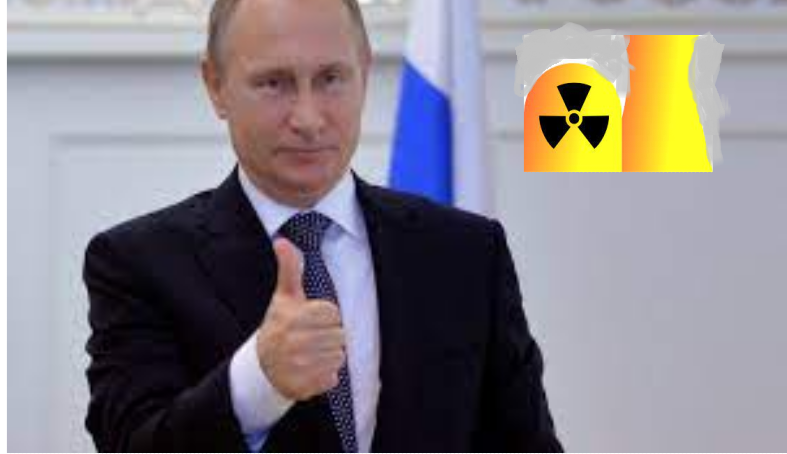
Putin profits from US and European reliance on Russian nuclear fuel
MARTHA MENDOZA and DASHA LITVINOVA, Yahoo News, 10 August 2023
WASHINGTON (AP) — The U.S. and its European allies are importing vast amounts of nuclear fuel and compounds from Russia, providing Moscow with hundreds of millions of dollars in badly needed revenue as it wages war on Ukraine.
The sales, which are legal and unsanctioned, have raised alarms from nonproliferation experts and elected officials who say the imports are helping to bankroll the development of Moscow’s nuclear arsenal and are complicating efforts to curtail Russia’s war-making abilities. The dependence on Russian nuclear products — used mostly to fuel civilian reactors — leaves the U.S. and its allies open to energy shortages if Russian President Vladimir Putin were to cut off supplies……
“We have to give money to the people who make weapons? That’s absurd,” said Henry Sokolski, executive director of the Washington-based Nonproliferation Policy Education Center. “If there isn’t a clear rule that prevents nuclear power providers from importing fuel from Russia — and it’s cheaper to get it from there — why wouldn’t they do it?”
Russia sold about $1.7 billion in nuclear products to firms in the U.S. and Europe, according to trade data and experts. The purchases occurred as the West has leveled stiff sanctions on Moscow over its 2022 invasion of Ukraine, blocking imports of such Russian staples as oil, gas, vodka and caviar.
The West has been reluctant to target Russia’s nuclear exports, however, because they play key roles in keeping reactors humming. Russia supplied the U.S. nuclear industry with about 12% of its uranium last year, according to the U.S. Energy Information Administration. Europe reported getting about 17% of its uranium in 2022 from Russia.
………………………………………. Many of the 30 countries generating nuclear energy in some 440 plants are importing radioactive materials from Russia’s state-owned energy corporation Rosatom and its subsidiaries. Rosatom leads the world in uranium enrichment, and is ranked third in uranium production and fuel fabrication, according to its 2022 annual report.
……………………………Rosatom’s CEO Alexei Likhachyov told the Russian newspaper Izvestia the company’s foreign business should total $200 billion over the next decade. That lucrative civilian business provides critical funds for Rosatom’s other major responsibility: designing and producing Russia’s atomic arsenal, experts say.
…………………………………. The value of Russian nuclear fuel and products sent to the U.S. hit $871 million last year, up from $689 million in 2021 and $610 million in 2020, according to the U.S. Census Bureau. In terms of weight, U.S. imports of uranium products from Russia nearly doubled from 6.3 tons in 2020 to 12.5 tons in 2022, according to trade data from ImportGenius.
……………………………………………………………………………….Europe is in a bind largely because it has 19 Russian-designed reactors in five countries that are fully dependent on Russian nuclear fuel. France also has a long history of relying on Russian-enriched uranium. In a report published in March, Greenpeace, citing the United Nations’ Comtrade database, showed that French imports of enriched uranium from Russia increased from 110 tons in 2021 to 312 tons in 2022.
Europe spent nearly $828 million (almost €750 million) last year on Russian nuclear industry products — including fuel elements, nuclear reactors, and machinery — according to Eurostat, the EU’s statistics office………………………………………more https://uk.news.yahoo.com/putin-profits-off-global-reliance-040103115.html?guccounter=1
Biden to ask congress for an additional $13 billion for Ukraine – total aid given would soar to $113 billion
Lisa Mascaro Associated Press 11 Aug 2023
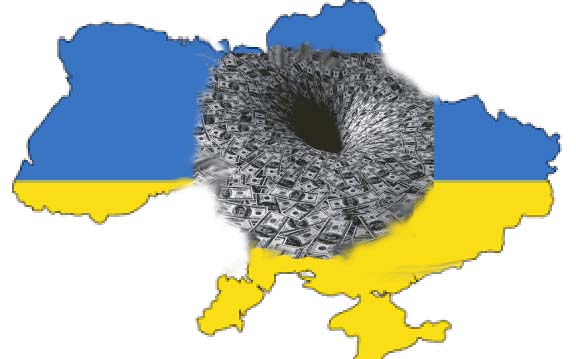
WASHINGTON (AP) — The Biden administration has asked Congress to provide more than $13 billion in emergency defense aid to Ukraine and an additional $8 billion for humanitarian support through the end of the year, another massive infusion of cash as the Russian invasion wears on and Ukraine pushes a counteroffensive against the Kremlin’s deeply entrenched forces…………………………
While the last such supplemental spending request from the White House for Ukraine funding was easily approved in 2022 despite reservations from Republicans, there’s a different dynamic this time.
A political divide on the issue has steadily grown, with the Republican-led House facing enormous pressure to demonstrate support for the party’s leader, Donald Trump, who has been very skeptical of the war. And American support for the effort has been slowly softening………………………………..
the price tag of $40 billion may be too much for Republicans who are fighting to slash, not raise, federal outlays. As a supplemental request, the package the White House is sending to Congress falls outside the budget caps both parties agreed to as part of the debt ceiling showdown earlier this year………………………………………………….
President Joe Biden and his senior national security team have repeatedly said the United States will help Ukraine “as long as it takes” to oust Russia from its borders. Privately, administration officials have warned Ukrainian officials that there is a limit to the patience of a narrowly divided Congress — and American public — for the costs of a war with no clear end. https://apnews.com/article/ukraine-russia-invasion-biden-congress-funding-d392f9b1adbb9c44249dce1cccdc2d1e—
US/France Threaten Intervention in Resource-Rich Niger: Fears of War in West Africa
SCHEERPOST, August 8, 2023, By Ben Norton / Geopolitical Economy Report
The US and France have threatened foreign intervention to re-install a pro-Western regime in Niger.
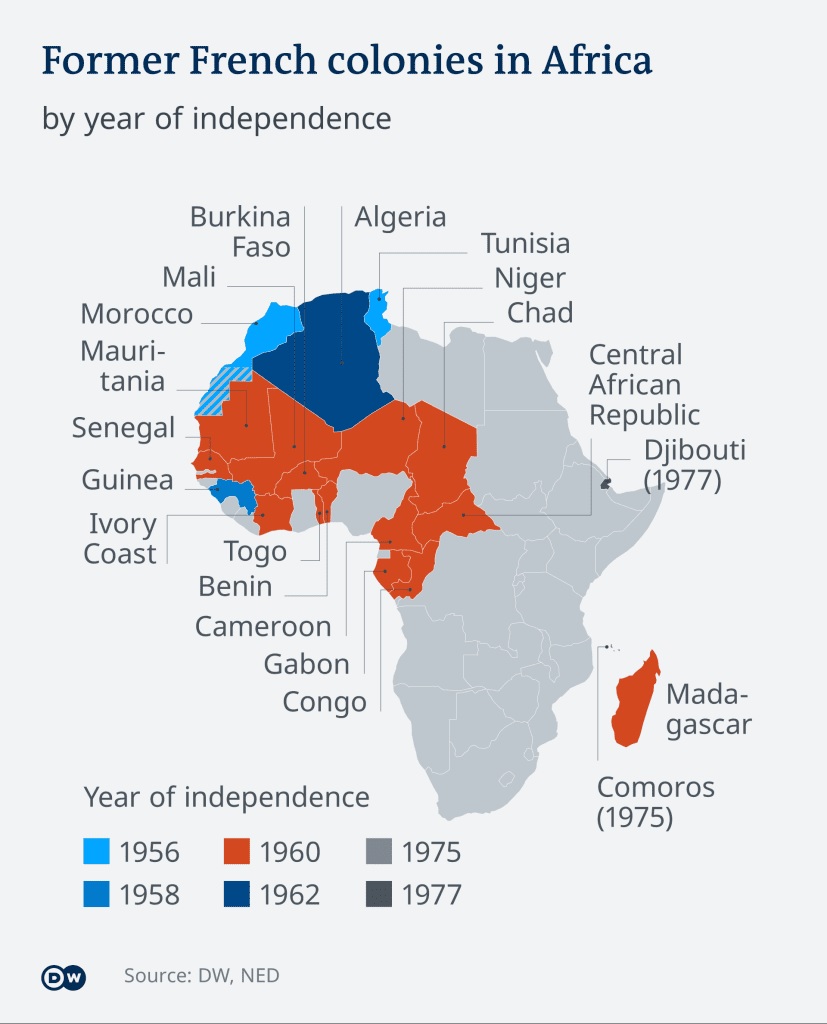
The US and France have threatened intervention to re-install a pro-Western regime in Niger, which produces uranium needed for nuclear energy, has untapped oil reserves, and hosts strategic US drone bases and French troops. This follows coups led by nationalist, anti-colonial military officers in West Africa.
Niger is a major producer of gold and uranium, the latter of which is needed for European nuclear energy. The country has significant oil reserves to which foreign corporations have wanted access. It also hosts large US drone bases.
These Western threats follow coups led by nationalist, anti-colonial military officers in neighboring Burkina Faso and Mali, whose governments have warned that intervention would be considered an act of war, and could thus set off a regional conflict.
West Africa is rich in natural resources. It is also very strategic for the United States and France.
Almost all of West Africa was colonized by France, which committed brutal atrocities in the region.
Still today, France maintains neocolonial policies, effectively controlling West African economies by forcing them to use the CFA franc as their national currency.
Senegalese development economist Ndongo Samba Sylla described the CFA franc as “a colonial currency, born of France’s need to foster economic integration among the colonies under its administration, and thus control their resources, economic structures and political systems”.
Paris dictates the monetary policies and even holds much of the foreign exchange reserves of numerous West African nations, including Niger, Burkina Faso, and Mali.
The CFA franc is a “a barrier to industrialisation and structural transformation” in these countries, explained Sylla, who characterized it as a “neocolonial device that continues to destroy any prospect of economic development in user nations”.
The United States has one of its largest and most important drone bases in Niger: the Air Base 201, which cost $110 million to build, and an additional $20-30 million per year to maintain – in one of the poorest countries on Earth.
Niger is geostrategically important for the Pentagon’s Africa strategy. It is located in the middle of the Sahel, a region with a lot of US and French military activity, where thousands of troops are stationed on a regular basis.
Washington uses its drone bases in Niger, in the heart of the Sahel, to project military dominance in North and West Africa, in coordination with the forces that US Africa Command, or AFRICOM, has deployed across the continent.
If Washington loses its ally in Niger, the new nationalist military government may try to close the foreign military bases and kick out the roughly 1000 US soldiers in the country.
Niger’s historically subordinate relationship with the Western powers has not brought the Nigerien people any prosperity.
The country is a major producer of gold, but more than 40% of Nigeriens live in extreme poverty.
Niger is also one of the world’s largest producers of uranium. This radioactive material is crucial for nuclear energy in Europe, especially in France, where roughly one-third of electricity comes from nuclear power.
Less known is that Niger also has sizeable oil reserves………………………………………………………………………………………………………………………………………….
Soon after the coup in Niger, there were similar reports that the nationalist military government decided to block exports of uranium and gold to the West.
The prospect of a foreign military intervention in Niger and potentially other West African nations is truly on the table. It is by no means an empty threat…………………………………………………………………………………………………..
Anti-colonial nationalists rise to power in West Africa
Some of the nationalist military leaders who have taken power in West Africa are invoking the historical legacy of anti-colonial movements………………………………………………………………………………………………….
Threats of intervention in West Africa
The leaders of the new government in Niger publicly warned that France is plotting military intervention.
Paris is looking “for ways and means to intervene militarily in Niger”, the authorities said, stating that French officials met with the chief of staff of Niger’s national guard “to obtain the necessary political and military authorisation”, The Guardian reported.
The British newspaper described Niger’s toppled president, Bazoum, as “an ally of western powers”.
Along with Paris, the US State Department is actively coordinating with Bazoum and plotting to put its ally back in power.
To give supposed “multilateral” cover to their plans for intervention, the US and France have been working closely with the Economic Community of West African States (ECOWAS).
Reuters reported that ECOWAS and “West African defence chiefs have drawn up a plan for military action if Niger’s coup is not overturned”.
The UK-based news outlet emphasized, “Given its uranium and oil riches and pivotal role in the war with Islamist rebels in the Sahel region, Niger has strategic significance for the United States, China, Europe and Russia”.
ECOWAS imposed sanctions on Niger, and the country’s southern neighbor Nigeria has begun establishing a de facto blockade……………………………………………………………………………………………………………………………………….
Niger is a leading producer of uranium, needed for European nuclear energy
One of the principal economic interests that Western powers have in Niger is its uranium.
The anti-poverty organization Oxfam published a report in 2013 detailing how France was making a killing profiting off of the uranium in Niger, which is one of the poorest countries in the world.
The people of Niger, who are known as Nigeriens (not to be confused with Nigerians from Nigeria), have seen almost no benefits from this uranium extraction.
Oxfam cited a Nigerien activist who noted, “In France, one out of every three light bulbs is lit thanks to Nigerien uranium. In Niger, nearly 90% of the population has no access to electricity. This situation cannot continue”.
“It is incomprehensible that Niger, the world’s fourth-largest uranium producer and a strategic supplier for Areva and France, is not taking advantage of the revenue from this extraction and remains one of the poorest countries on the planet”, an Oxfam researcher added.
……………………………………………………………………………………. Since the coup in Niger, both France and EU leadership have insisted they will not be affected, stating that they have enough uranium in their reserves to last a few years.
But if the nationalist government remains in power in Niger and abides by its alleged pledge to cut off uranium exports, Europe could face economic consequences.
This also comes at a complicated moment for Europe, which has pledged to boycott Russian oil exports and reduce imports of Russian gas………………………………………………………………………………………………..
Niger hosts strategic US military bases
In addition to foreign economic designs on West Africa, the US military has a massive footprint on the region – particularly in Niger, where it operates multiple bases.
A 2019 report in PBS noted an increasing US military presence in Africa, revealing that the Pentagon had nearly 800 personnel stationed in Niger. (That figure later rose to roughly 1000.)………………………………………………………………..
General Thomas Waldhauser, the commander of US military forces in Africa, described Niger’s pro-Western government as “a good partner in a very, very bad neighborhood”.
PBS indicated that the US military was creating a base in Agadez, Niger, which “will be the largest installation Air Force personnel have ever built”.
“The U.S. has been operating drone missions out of another base in Niger’s capital since 2013”, the media outlet wrote, adding, “The CIA is also believed to be using another drone base in Northeastern Niger”.
Investigative journalist Nick Turse, reporting in 2023, described this US facility in Niger, Air Base 201, as “the linchpin of the U.S. military’s archipelago of bases in North and West Africa and a key part of America’s wide-ranging intelligence, surveillance, and security efforts in the region”……………………………
What is striking is the neocolonial symbolism of the United States maintaining these high-tech military facilities worth hundreds of millions of dollars in Niger, one of the poorest countries on Earth, where the majority of the population doesn’t even have access to electricity.
Before the July 2023 coup, Washington saw the Nigerien government as a key ally in its attempt to isolate China and Russia.
Antony Blinken took a historic trip to Niger in March, in the first-ever visit by a US secretary of state………………………………………………………………………………………………………………… Washington sees the continent as highly strategic in its new cold war against China and Russia.
…………………………………………………………………………………………………………………..The nationalist governments in Niger, Burkina Faso, and Mali are very unstable, and the threat of Western-sponsored military intervention could destabilize the countries, fueling more coups, and potentially setting off a regional war.
The transparent goal of the United States and France is to re-impose political control over the region, to exploit its plentiful natural resources and geostrategic location…………. more https://scheerpost.com/2023/08/08/us-france-threaten-intervention-in-resource-rich-niger-fears-of-war-in-west-africa/
Ukraine biggest recipient of US aid since WWII – Washington Post
7 Aug, 2023 https://www.rt.com/news/580960-us-ukraine-military-aid/
Washington has contributed more than $60 billion to Kiev since the beginning of its conflict with Russia, estimates suggest
The United States has committed in excess of $60 billion in aid to Ukraine since the beginning of Moscow’s military operation last year, according to the Washington Post.
A recent analysis has shown that various US aid packages to Kiev have included $43 billion in direct military aid, making it the US’ biggest investment in a country since World War II, according to the paper.
“These are off-the-charts numbers,” Michael O’Hanlon of the think tank Brookings Institution told the WP
He added that Washington’s financial assistance to Ukraine could only be historically compared to the Marshall Plan – a US foreign aid package issued to Western Europe after the end of World War II. Adjusted for inflation, that initiative funded war recovery efforts to the tune of around $150 billion over three years.
The paper notes that Washington’s aid to Ukraine vastly surpasses the financial support issued to some of the US’ more traditional foreign partners, such as Israel, which was sent $8.6 billion in 2022 and 2023, and the $6.2 billion that was sent to Egypt and Jordan combined during the same period. It also significantly eclipses US financial support for Taiwan.
The US Department of Defense has an annual budget of $1.77 trillion, according to government data.
Some signs have shown that public support in the US for continued military assistance is weakening as the conflict enters its 18th month. Research in June found that 44% of Republicans or right-leaning independents believed that Joe Biden’s administration was spending too much on Ukraine aid.
However, O’Hanlon pointed out that the US could continue to fund Ukraine indefinitely. “We could do it forever,” he said. “It’s not economically unsustainable. But it’s probably politically unsustainable.”
Moscow has frequently cited Western support for Ukraine as a primary factor in prolonging the conflict. Anatoly Antonov, Russia’s ambassador to the US, responded to a renewed military package from the US to Ukraine last month by saying it is “beyond morality and common sense.” He claimed that while Washington seeks to portray itself as Kiev’s “selfless benefactor,” in practice it only strives for “more human suffering and deaths.”
Russian officials have repeatedly warned that shipments of heavy weapons and other military aid to Ukraine make NATO members de facto direct participants in Moscow’s conflict with Kiev. Moscow also insisted that Western support would not change the course of the outcome.
At Nagasaki Memorial, Guterres Cautions of Nuclear Disaster Risk
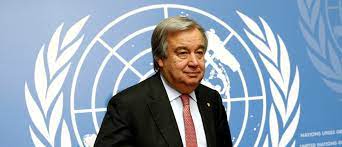
https://www.miragenews.com/guterres-cautions-of-nuclear-disaster-risk-at-1062602/ 09 Aug 23
UN Secretary-General António Guterres called for countries to recommit to eliminating nuclear weapons in his message to mark the 78th anniversary of the atomic bombing of the Japanese city of Nagasaki, observed on Wednesday.
“We mourn those killed, whose memory will never fade. We remember the terrible destruction wrought upon this city and Hiroshima. We honour the unrelenting strength and resilience of the people of Nagasaki to rebuild,” he said.
New arms race
Yet despite the terrible lessons of 1945, humanity is now facing a new arms race as nuclear weapons are being used as tools of coercion, he noted.
He said weapons systems are being upgraded, and placed at the centre of national security strategies, making these devices of death faster, more accurate, and stealthier at a time of division and mistrust among countries and regions.
“The risk of nuclear catastrophe is now at its highest level since the Cold War,” he warned.
“In the face of these threats, the global community must speak as one. Any use of nuclear weapons is unacceptable. We will not sit idly by as nuclear-armed States race to create even more dangerous weapons.”
Strengthening disarmament efforts
Mr. Guterres stressed that disarmament is at the heart of his Policy Brief on a New Agenda for Peace, launched last month. It calls on Member States to urgently recommit to pursuing a world free of nuclear weapons, and to reinforce the global norms against their use and proliferation.
“Pending their total elimination, States possessing nuclear weapons must commit to never use them. The only way to eliminate the nuclear risk is to eliminate nuclear weapons,” he said.
The Secretary-General added that the UN will continue working with world leaders to strengthen the global efforts towards disarmament and non-proliferation, including through the Treaty on Non-Proliferation of Nuclear Weapons (NPT) and the Treaty on the Prohibition of Nuclear Weapons.
NPT talks have been taking place at the UN in Vienna this month and will conclude on Friday. The treaty entered into force in 1970 and aims to prevent the spread of nuclear weapons and further the goal of nuclear disarmament.
Tribute to survivors
Mr. Guterres also paid tribute to the survivors of the atomic bombings, known as hibakusha. He said their powerful and harrowing testimonies will forever serve as a reminder of the need to achieve a world free of nuclear weapons.
“I have pledged to do everything in my power to ensure that the voices and testimonies of the hibakusha continue to be heard,” he said.
He called on young people – the world’s future leaders and decision makers – “to carry their torch forward”, saying “we can never forget what happened here. We must lift the shadow of nuclear annihilation, once and for all.”
As Threat Remerges, Global Community Must Speak as One, Commit to Nuclear-Free World, Secretary-General Says on Anniversary of Hiroshima Bombing

7 Aug 23 https://press.un.org/en/2023/sgsm21898.doc.htm
Following is UN Secretary-General António Guterres’ message, delivered by Under-Secretary-General and High Representative for Disarmament Affairs Izumi Nakamitsu, at the seventy-eighth anniversary of the atomic bombing of Hiroshima, in Hiroshima, Japan, today:
Nearly eight decades ago, a nuclear weapon incinerated Hiroshima. Yet as anyone who has visited knows, the memories never fade. The A-Bomb Dome, the Cenotaph and the dauntless hibakusha are constant reminders of the catastrophic consequences of nuclear weapons.
For 78 years, the city of Hiroshima and the hibakusha have worked tirelessly to ensure that nuclear weapons are never used again. During my visits to Hiroshima, my meetings with the brave hibakusha — the human face of nuclear cataclysm — have never failed to move and inspire me. They are a potent symbol of forgiveness, hope and resilience. They have transcended tragedy.
I pledge to support them as they continue sharing their accounts — the terror, the pain, the incalculable loss, and above all, the lesson of what happened here on 6 August 1945. World leaders have visited this city, seen its monuments, spoken with its brave survivors and emerged emboldened to take up the cause of nuclear disarmament.
More should do so, because the drums of nuclear war are beating once again. Mistrust and division are on the rise. The nuclear shadow that loomed over the cold war has re-emerged. And some countries are recklessly rattling the nuclear sabre once again, threatening to use these tools of annihilation.
In the face of these threats, the global community must speak as one. Any use of nuclear weapons is unacceptable. We will not sit idly by as nuclear-armed States race to create even more dangerous weapons. That’s why disarmament is at the heart of the recently launched policy brief on a New Agenda for Peace.
The Agenda calls on Member States to urgently recommit to pursuing a world free of nuclear weapons and to reinforce the global norms against their use and proliferation. Pending their total elimination, States possessing nuclear weapons must commit to never use them. The only way to eliminate the nuclear risk is to eliminate nuclear weapons.
The United Nations will continue working with global leaders to strengthen the global disarmament and non-proliferation regime, including through the Treaty on Non-Proliferation of Nuclear Weapons and the Treaty on the Prohibition of Nuclear Weapons.
Eliminating nuclear weapons remains the United Nations highest disarmament priority. We will not rest until the nuclear shadow has been lifted once and for all. No more Hiroshimas. No more Nagasakis.
Disarmament is not some utopian dream. Disarmament is the only pathway to a safer and more secure world for all. The United Nations is proud to stand with the people of Hiroshima and the hibakusha to keep alive the memory of what happened here and the lessons humanity must learn if we are to secure a more peaceful tomorrow. We look forward to working with the people of Japan in this essential effort.
Pacific anti-nuclear groups condemn Fiji’s Prime Minister Sitiveni Rabuka for backing Fukushima wastewater stance
Kelvin Anthony, RNZ 4 Aug 23
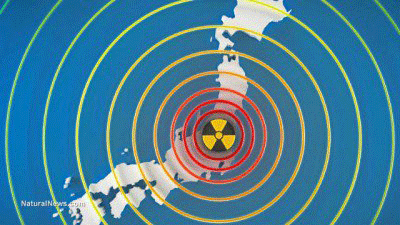
Pacific anti-nuclear advocacy groups and campaigners have condemned the Fijian Prime Minister Sitiveni Rabuka’s backing of Japan’s plans release over one million tonnes of treated nuclear wastewater into the Pacific Ocean.
On Thursday, Rabuka announced he was “satisfied” with Japan’s efforts to demonstrate that the release will be safe………………………………..
the Alliance for Future Generation Fiji [https://www.afgfiji.org/post/afg-condemns-fijipm-support-for-fukushima-wastewater said it was “deeply concerned” and “condemned” Rabuka’s stance.
The group is urging Rabuka to reconsider “and take a stronger position” on the issue.
AFG Fiji said releasing treated nuclear wastewater into the Pacific Ocean would have “far-reaching consequences for the entire Pacific region and beyond”.
“This action has the potential to inflict lasting damage to marine ecosystems, threatening the livelihoods of countless communities that depend on the ocean for sustenance and economic well-being. Our concerns regarding this matter are deeply rooted in the Pacific Ocean as a source of identity for all Pacific communities,” it said.
“We urge the Fiji Prime Minister and by extension, his government, to reconsider its stance and take a stronger position in advocating for the implementation of alternative, safe, and sustainable solutions for the Fukushima nuclear wastewater.
“We also urge Pacific leaders to trust the independent panel of scientific experts, appointed by the Pacific Islands Forum to review the data and information provided by Japan. As members of the global community, it is our collective responsibility to uphold principles of environmental stewardship and to prioritize the health and safety of our oceans and the lives they sustain,” the NGO said.
The campaigners are also calling on the international community to show solidarity and “demand that Japan seeks alternative solutions to handle its nuclear waste responsibly”. https://www.rnz.co.nz/international/pacific-news/495162/anti-nuclear-group-condemns-sitiveni-rabuka-s-fukushima-wastewater-stance
The Day Australian Sovereignty Died

Australian Independent Media, August 2, 2023, by: Dr Binoy Kampmark
If a date might be found when Australian sovereignty was extinguished by the emissaries of the US imperium, July 29, 2023 will be as good as any. Not that they aren’t other candidates, foremost among them being the announcement of the AUKUS agreement between Australia, UK and the US in September 2021. They all point to a surrender, a handing over, of a territory to another’s military and intelligence community, an abject, oily capitulation that would normally qualify as treasonous.
The treason becomes all the more indigestible for its inevitable result: Australian territory is being shaped, readied, and purposed for war under the auspices of closer defence ties with an old ally. The security rentiers, the servitors, the paid-up pundits all see this as a splendid thing. War, or at least its preparations, can offer wonderful returns.
The US Secretary of Defense, Lloyd Austin III, was particularly delighted, though watchful of his hosts. His remit was clear: detect any wobbliness, call out any indecision. But there was nothing to be worried about. His Australian hosts, for instance, proved accommodating and crawling.
Australian Defence Minister Richard Marles, for instance, standing alongside Austin, US Secretary of State Antony Blinken and Australian Foreign Minister, Penny Wong, declared that there was “a commitment to increase American force posture in respect of our northern bases, in respect to our maritime patrols and our reconnaissance aircraft; further force posture initiatives involving US Army watercraft; and in respect of logistics and stores, which have been very central to Exercise Talisman Sabre.” To the untutored eye, Marles might have simply been another Pentagon spokesman of middle-rank…………….
Australian real estate would be given over to greater “space cooperation”, alongside creating “a guided weapons and explosive ordnance enterprise in this country, and doing so in a way where we hope to see manufacturing of missiles commence in Australia in two years’ time as part of a collective industrial base between the two countries.” Chillingly, Marles went on to reiterate what has become something of a favourite in his middle-management lexicon. The efforts to fiddle the export-defense export control legislation by the Biden administration would create “a more seamless defence industrial base between our countries.” Seamless, here, is the thick nail in the coffin of sovereignty.
Moves are also underway to engage in redevelopment of bases in northern Australia, in anticipation of the increased, ongoing US military presence. The RAAF Base Tindal, located 320km south-east of Darwin in the Northern Territory, is the subject of considerable investment “to address functional deficiencies and capacity constraints in existing facilities and infrastructure.” The AUSMIN talks further revealed that scoping upgrades would take place at two new locations: RAAF Bases Scherger and RAAF Curtin.
Australia’s Defence Intelligence Organisation will also be colonised by what is being termed a “Combined Intelligence Centre – Australia” by 2024. This is purportedly intended to “enhance long-standing intelligence cooperation” while essentially subordinating Australian intelligence operations to their US overlords. Marles saw the arrangement as part of a drive towards “seamless” (that hideous word again) intelligence ties between Canberra and Washington. “This is a unit which is going to produce intelligence for both of our defence forces … and I think that’s important.”
……….. Under the Albanese government we have reverted completely to our worst selves on defence. We’re going to do almost nothing consequential over the next 10 years other than get the Americans to do more on our land.” ……… Australia might be at war with China under US-direction before a decade is up, vassalized warriors eager to kill and be killed. https://theaimn.com/the-day-australian-sovereignty-died/
Mexican president urges end to ‘irrational’ Ukraine war, wants Russia at peace talks
Reuters, August 1, 2023 https://www.reuters.com/world/americas/mexican-president-urges-end-irrational-ukraine-war-wants-russia-peace-talks-2023-07-31/
MEXICO CITY, July 31 (Reuters) – Mexican President Andres Manuel Lopez Obrador on Monday called for an end to the “irrational” war in Ukraine, urging upcoming peace talks in the Middle East to include representation from both Ukraine and Russia.
Lopez Obrador said Mexico would only take part in the talks in Saudi Arabia, reportedly scheduled to be held over the coming weekend, if both sides were present.
“If there’s acceptance from both Ukraine and Russia to look for solutions to achieve peace, we’ll participate,” the president told reporters at a regular press conference.
“We don’t want the Russia-Ukraine war to continue, it’s very irrational,” Lopez Obrador added, noting that the conflict has caused massive human suffering. “The only thing that benefits from it is the war industry.”
Senior officials from up to 30 countries are expected to participate in the talks Aug. 5-6 in Jeddah, the Wall Street Journal reported on Saturday. Russia has not been invited, the outlet reported, citing diplomats involved in the planning.
On Monday, the Kremlin said it would “follow” the meeting but did not currently see conditions for peace talks with Kyiv.
Lopez Obrador has sought to keep Mexico neutral in the war, though his government has backed some major U.N. resolutions criticizing Russia’s role in the conflict. Mexico has refused to send arms to Ukraine and has not imposed sanctions on Russia.
In April, Ukraine President Volodymyr Zelenskiy urged Mexican lawmakers to back his plan to end the war, which would include Russia withdrawing its troops from Ukrainian territory.
Lopez Obrador had outlined a separate peace plan last year, which Ukraine opposed, arguing it would have benefited Russia.
Reporting by Kylie Madry and Raul Cortes; Editing by Bill Berkrot
United Nations wants to resurrect a global disarmament mechanism last used in the 1980s
The Conversation, August 2, 2023
In the wake of the Russian invasion and war in Ukraine, the United Nations (UN) appears to be preparing to resurrect a global disarmament process which was discontinued more than 30 years ago.
On July 18, the UN secretariat released its long-awaited “New Agenda for Peace”. This policy brief included recommendations by secretary general, António Guterres, on strategies to respond to current and future challenges facing humanity, such as poverty, climate change, pandemics, armed conflicts and threats against international peace and security.
To a warm response from the community of peacebuilders worldwide, the agenda contains practical advice on advancing a process of disarmament, by suggesting the reactivation of special sessions devoted to disarmament at the UN general assembly (SSOD).
UN special sessions on disarmament were held in 1978, 1982, and 1988, but a fourth never occurred. Since 2021, the activation of a fourth Special Session on Disarmament (SSOD-IV) at the UN general assembly has been the focus of the Strategic Concept for the Removal of Arms and Proliferation (Scrap Weapons), a disarmament project housed at SOAS University of London.
Scrap Weapons has also been supporting Brazil’s call for the same, made at the 2022 UN general assembly’s First Committee, which focuses on disarmament matters.
Disarmament machinery
For the disarmament agenda to progress, its machinery needs to be revisited. Current efforts at the Conference on Disarmament (CD) – the UN body tasked with negotiating treaties on weapons control – have stalled for almost 30 years because of a lack of consensus. This has been further conflated by an absence of political will and marred by geopolitical tensions and rivalries among member states.
In addition, unlike the Conference on Disarmament, a special session would be able to use the authority of the general assembly to create new mandates on a global zero option on missiles. It could also organise negotiations towards a general and complete disarmament (GCD) agenda, as per Scrap Weapons’ work on transparency mechanisms and a draft framework for a treaty on general and complete disarmament………………………………………………………. more https://theconversation.com/united-nations-wants-to-resurrect-a-global-disarmament-mechanism-last-used-in-the-1980s-210325
1 This Month



26 September – International Day for the Total Elimination of Nuclear Weapons


PLEASE OPPOSE HR 8255 AND S.3639 – bills would accelerate satellite deployment, with no environmental review or safeguards – https://ncstd5li.quorum.us/campaign/169331/
To see nuclear-related stories in greater depth and intensity – go to https://nuclearinformation.wordpress.com
-
Archives
- September 2026 (233)
- August 2026 (330)
- July 2026 (355)
- June 2026 (287)
- May 2026 (306)
- April 2026 (356)
- March 2026 (251)
- February 2026 (267)
- January 2026 (308)
- December 2025 (358)
- November 2025 (359)
- October 2025 (375)
-
Categories
- 1
- 1 NUCLEAR ISSUES
- business and costs
- climate change
- culture and arts
- ENERGY
- environment
- health
- history
- indigenous issues
- Legal
- marketing of nuclear
- media
- opposition to nuclear
- PERSONAL STORIES
- politics
- politics international
- Religion and ethics
- safety
- secrets,lies and civil liberties
- spinbuster
- technology
- Uranium
- wastes
- weapons and war
- Women
- 2 WORLD
- ACTION
- AFRICA
- Atrocities
- AUSTRALIA
- Christina's notes
- Christina's themes
- culture and arts
- Events
- Fuk 2022
- Fuk 2023
- Fukushima 2017
- Fukushima 2018
- fukushima 2019
- Fukushima 2020
- Fukushima 2021
- general
- global warming
- Humour (God we need it)
- Nuclear
- RARE EARTHS
- Reference
- resources – print
- Resources -audiovicual
- Weekly Newsletter
- World
- World Nuclear
- YouTube
-
RSS
Entries RSS
Comments RSS
 nuclear-news