Congress should seek ‘poison pills’ for any US-Saudi nuclear agreement
Federal Times, By Eric Gomez, Jon Hoffman and Jordan Cohen, 13 Sept 23,
Swirling reports of a U.S.-Saudi Arabia deal that would trade normalization with Israel for U.S. security guarantees are raising questions about what Washington will put on the table.
A U.S.-Saudi civil nuclear agreement—also known as a “123 agreement” after the Atomic Energy Act’s section that governs such cooperation — could be part of the broader arrangement, per reports that Saudi Arabia is demanding such cooperation as part of this “grand bargain.”
Any other country that possessed Saudi Arabia’s mix of gross human rights abuses, authoritarian government, malign activities abroad and stated intentions to build a nuclear weapon if Iran gets the bomb would be rightly isolated by the U.S., and not be a serious contender for a 123 agreement.
The U.S. ought to be drawing down its Middle East presence to focus limited resources on more pressing interests in other regions of the world. Nonetheless, if President Joe Biden proceeds, Congress should take steps to make the agreement as stringent and difficult as possible for Saudi Arabia……………………..
The Saudi government claims that it only wants to produce low-enriched uranium, which is suitable for nuclear energy but not weapons. However, a complete nuclear fuel cycle would make it much easier to either covertly manufacture fissile material for a nuclear weapon over time or quickly “sprint” to a weapon on short notice. Past statements by Saudi Arabia’s political leadership that Riyad will develop a nuclear weapon if Iran does should raise alarm bells about the proliferation risks of a Saudi civil nuclear program.
These risks mean that Congress should do everything in its power to introduce so-called poison pills provisions that would make the process of finalizing an agreement as difficult as possible. The legislative body can prevent a 123 agreement from taking effect though a joint resolution of disapproval, but such a resolution can be easily overturned by presidential veto. Regardless, Congress still has tools at its disposal.
The U.S.-India and U.S.-United Arab Emirates 123 agreements provide examples of ways to make a potential U.S.-Saudi nuclear deal more stringent…………………………………….
The U.S. should similarly link any Saudi nuclear deal to end-use monitoring of all weapons transferred to Riyad. Since Saudi Arabia started its war in Yemen, the country has used U.S. weapons to commit vast human rights abuses and endanger U.S. troops. Making a 123 agreement contingent on U.S. end-use monitoring of all weapons sent to Saudi Arabia would improve American security.
Put simply, helping one of Washington’s most problematic allies build a civil nuclear program is non-sensical. The Biden administration should not go ahead with such an agreement in the first place, but if it does Congress should implement poison pills to make the deal as unpalatable as possible for Saudi Arabia. https://www.federaltimes.com/opinions/2023/09/13/congress-should-seek-poison-pills-for-any-us-saudi-nuclear-agreement/
US incapable of negotiating – Russian diplomat
Rt.com 12 Sept 23
Strategic dialogue with Washington has done nothing for Moscow’s national security, Aleksandr Kramarenko claims
No amount of negotiating with the US has been able to bring about meaningful results, as Washington has repeatedly broken the trust of its partners and refused to respect agreements, acting solely in its own interests, Russian diplomat Aleksandr Kramarenko has said.
In an article for International Affairs published last week, Kramarenko, the director of the Russian Foreign Ministry Institute of Current International Problems, said that despite decades of trying to maintain strategic dialogue with the US, Russia has ultimately been unable to achieve any results in ensuring its national security, and neither has China.
He added that trust between Moscow and Washington was undermined long ago. In 2011, Russia allowed the passing of what seemed to be a humanitarian UN resolution on Libya, which was then used by the West to lay ruin the country.
In 2015, Russia was deceived by the Minsk agreements, which were meant to resolve the internal conflict in Ukraine, but instead were used to buy time to build up Kiev’s army with the goal of inflicting a military or strategic defeat on Russia.
“What kind of trust can we talk about here? Where is the principle of pacta sunt servanda [contracts must be respected]? And what then is the meaning of contracts when everything happens regardless and in spite of any contracts? Apparently, it turns out that Washington is simply unable to negotiate,” Kramarenko wrote, noting that Russia is not the only country to come to this conclusion.

Commenting on the conflict in Ukraine, he recalled the words of US National Security Advisor Jake Sullivan (above)at the recent Aspen Security Forum, who said that the US and its allies are willing to “take risks” with their arms supplies to Kiev. What Sullivan meant, according to Kramarenko, was that Washington is willing to risk nuclear escalation, and that it is willing to do so because the principle of nuclear deterrence does not work for Russia.
“This means we need to think about how to restore trust in it.”
Kramarenko went on to suggest that all the arms control systems that have been destroyed by the US in attempts to maintain strict control over other nations while remaining ambiguous with regards to its own nuclear potential, could soon be replaced by a new process based on a multipolar world. ………. https://www.rt.com/russia/582797-us-incapable-of-negotiating/
Crooked Canadian company Lavalin trying to sell ?zombie nuclear technology to China and UK

 Canada now dominates World Bank corruption list, thanks to SNC-Lavalin, Financial Post Armina Ligaya | September 18, 2013 Canada’s corporate image isn’t looking so squeaky-clean in the World Bank’s books — all thanks to SNC-Lavalin.Corruption’s double standard: It’s time to punish countries whose officials accept bribes
Out of the more than 250 companies year to date on the World Bank’s running list of firms blacklisted from bidding on its global projects under its fraud and corruption policy, 117 are from Canada — with SNC-Lavalin and its affiliates representing 115 of those entries, the World Bank said.
“As it stands today, the World Bank debarment list includes a high number of Canadian companies, the majority of which are affiliates to SNC Lavalin Inc.,” said the bank’s manager of investigations, James David Fielder.
“This is the outcome of a World Bank investigation relating the Padma Bridge project in Bangladesh where World Bank investigators closely cooperated with the Royal Canadian Mounted Police in an effort to promote collective action against corruption.”
As a result of the misconduct found during the probe, the Montreal-based engineering and construction firm, and its affiliates as per World Bank policy, were debarred in April 2013 for 10 years, as part of a settlement with SNC-Lavalin. And in one fell swoop, 115 Canadian firms were blacklisted by the World Bank, making Canada seemingly look like the worst offending country.
It’s quite the jump from 2012, when no Canadian companies were barred……..http://business.financialpost.com/2013/09/18/canada-now-dominates-world-bank-corruption-list-thanks-to-snc-lavalin/

Lavalin looks to expand nuclear enterprise in China http://www.theglobeandmail.com/report-on-business/industry-news/energy-and-resources/lavalin-looks-to-grow-in-china/article17950935/ SHAWN MCCARTHY – GLOBAL ENERGY REPORTER OTTAWA — The Globe and Mail, Apr. 13 2014, SNC-Lavalin Inc. is hoping to revitalize its international nuclear business through an effort with its Chinese partners to burn reprocessed fuel in a Candu reactor as a way to reduce radioactive waste.
Officials from Candu Energy Inc. are leading a Canadian nuclear industry mission to China this week, which will include a visit Monday to the Qinshan nuclear power station south of Shanghai where two heavy-water Candu 6 reactors are in operation. Candu Energy is the former Atomic Energy of Canada Ltd., and is now wholly owned by SNC-Lavalin
The Mississauga-based nuclear vendor has been working with the Chinese operator of the Qinshan plants to fashion reprocessed fuel from the waste products of competing light-water reactors. The Candu could, in effect, become the blue box of the nuclear industry, company executives said in an interview.
“We’re very excited that this advances the discussion we can have about introducing more Candus into China,” Jerry Hopwood, the company’s vice-president of marketing and product development, said.
Candu reactors use heavy water, which includes a hydrogen isotope called deuterium, both for coolant and to moderate atomic reactions. Light-water reactors use ordinary water for both purposes.
Each approach offers different benefits, but the world market is dominated by light-water reactors, which require enriched uranium as fuel. In contrast, the heavy-water Candus can burn natural uranium as well as reprocessed fuel.
Mr. Hopwood said China now has 21 light-water reactors that produce two streams of energy-rich waste: spent fuel from the reactor itself and depleted uranium from the enrichment process. China plans to more than double its number of light-water reactors to meet the demands of its growing economy.
“Those reactors are going to produce a lot of waste fuel and China has a plan to recycle all the waste fuel from its reactor,” Mr. Hopwood said. “We believe there is a very strong opportunity to sell a significant number of Candu units in China.”
He said the partners have completed all the development and licensing work, and the Chinese operators expect to begin running reprocessed fuel in the two Candu reactors at an industrial level by the end of the year.
The company is also working with Chinese partners to modify the existing Enhanced Candu model so it will more efficiently burn the recycled fuel but also run on thorium, an abundant alternative to uranium that produces less highly radioactive waste. China has vast reserves of thorium but must import uranium, and develop a thorium-fired reactor.
As well, Candu Energy is one of two finalists in the United Kingdom’s competition to select a reactor design that will eliminate a stockpile of plutonium. “We think this work in China is paving the way for other options where Candu’s fuel-cycle ability is a benefit, notably in the U.K.,” Mr. Hopwood said.
The trade delegation will include Ontario’s Minister of Research and Innovation, Reza Moridi, who is a nuclear physicist, and several business leaders from the Organization of Canadian Nuclear Industries, an Ontario-based suppliers’ group that is eager to land export and service business in the world’s fast growing reactor market.
Critics contend the Candu 6 is an outdated design that lacks safety features included in newer reactors, and that it is a technology that the international marketplace has largely rejected since the 1990s.
“So yeah, the industry is trying to say Candu isn’t dead. Never say die,” said Shawn-Patrick Stensil, a nuclear campaigner at Greenpeace Canada. “If Candu isn’t dead, it’s a zombie.”
Ukraine war: Kyiv denounces G20 declaration as UN warns of potential nuclear safety threat
By Euronews with AFPPublished on 09/09/2023
G20 declaration on Ukraine: “nothing to be proud of” – Kyiv
Kyiv has criticised the G20 leaders’ statement on the war in Ukraine, in which they denounced the use of force, but neglected to mention Russia…………………………..
The text adopted by the G20 does not explicitly mention Russian “aggression” in Ukraine, a term used in 2022 during the previous G20 summit in Bali…………………. https://www.euronews.com/2023/09/09/ukraine-war-ukrainian-armed-forces-advance-as-zelenskyy-renews-calls-for-foreign-aid
Ukraine’s defeat could mean the end of NATO in its current form
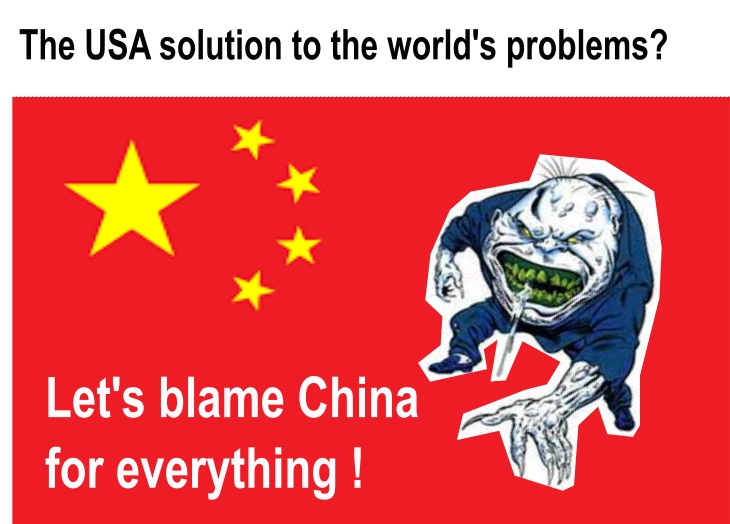
The ‘shift focus to another enemy’ narrative is the simplest and most obvious – that will be China. NATO is already trying to expand its influence in Asia, including via a planned ‘liaison office’ in Japan. The ‘China is the real threat’ narrative is bubbling steadily to the surface in Western media.
The bloc has too much riding on Kiev’s highly-unlikely success, and that’s why it’s doing all it can to prolong the conflict
By Chay Bowes, journalist and geopolitical analyst, MA in Strategic Studies, RT correspondent
As the West’s proxy war in Ukraine slips inexorably towards utter failure, the neocons behind the debacle are faced with dwindling avenues of retreat.
Early confidence that Russia, in its current form, would collapse under the pressure of the harshest sanctions regime in history failed to materialize. Early Russian miscalculations on the battlefield were not followed by a military meltdown, but by a pragmatic display of strategic adaptability, which is begrudgingly admired in the military war rooms of the West. The Russian army, far from falling apart, has steeled itself into making bold decisions to retreat when prudent and advance when required, both of which have proven devastating for their Ukrainian opponents. It follows that, as the Western political elites that cultivated this conflict peer into another winter of political, military, and potentially economic discontent, it is now that we potentially face the most dangerous period in Europe since the outbreak of WWII.
The catalyst for a wider war in Europe isn’t, in fact, a limited conflict in Ukraine in itself, one that started in 2014 and, notably, had been largely ignored by Western powers for almost a decade. The real issue is that NATO, which is currently engaged in a proxy War with Russia, is facing a ‘damned if you do and damned if you don’t’ scenario regarding its growing military involvement in Ukraine. If the US-led bloc escalates further as defeat looms, it could likely lead to direct confrontation with Russia. If it doesn’t, its proxy will collapse and leave Russia victorious, a fate once utterly unthinkable in Brussels, Washington, and London, but now becoming a nightmarish reality.
Such a defeat would be devastating and potentially terminal for the prestige and reputation of the whole NATO brand. After all, despite the Soviet Union having long ceased to exist, the bloc still markets itself as an indispensable bulwark against imagined Russian expansionism. In the event of an increasingly likely Ukrainian defeat, that ‘essential partner’ in ‘countering Russia’ will have been proven utterly impotent and largely irrelevant. More cynically, the vast US arms industry would also be denied a huge and lucrative market. So, how does a multi billion-dollar machine that has prophesied absolute victory against Russia even begin to contemplate defeat? And how do senior EU bureaucrats like Ursula Von der Leyen climb down from their quasi-religious devotion to the ‘cause’ of utterly defeating Russia, which she has shamelessly evangelized for over a year and a half? Lastly, how does the American administration, which has gone politically, morally, and economically ‘all in’ against Russia in Ukraine, contemplate what amounts to an increasingly inevitable European version of Afghanistan 2.0?
They will need to do two things: Firstly, find someone to blame for their defeat and secondly, find a new enemy to deflect public opinion onto. The ‘someone to blame’ will be quite easy to identify – the narrative will be flush with attacks on states like Hungary, China, and to some extent India, who will be accused of “undermining the unified effort needed to isolate and defeat Russia.”
Blaming Ukraine itself will also be central to this narrative. Western media will insure it’s singled out as incapable of ‘taking the medicine’ proffered by NATO and therefore suffering the consequences, not listening to Western military advice, failing to utilize Western aid correctly and, of course – given that little has been done by Zelensky to tackle the endemic corruption in Ukraine – this fact will be easily weaponized against him and used to lubricate a slick narrative of ‘we tried to help them, but they simply couldn’t be saved from themselves’.
The ‘shift focus to another enemy’ narrative is the simplest and most obvious – that will be China. NATO is already trying to expand its influence in Asia, including via a planned ‘liaison office’ in Japan. The ‘China is the real threat’ narrative is bubbling steadily to the surface in Western media.
And, most worryingly, should Western powers fail to make their case for ‘plausible deniability’ around the culpability for this war, there is always the option of further escalating it. Such an escalation could rapidly lead to direct confrontation between NATO and Russia, an outcome no lucid observer on either side of the debate could or should be contemplating. The problem is, rational assessment and negotiation seem to have become so rare in Washington and Kiev that a devastating escalation could, quite remarkably, be considered an option by the deluded neocon think-tank advisers wielding disproportionate influence over an increasingly desperate political class in Washington and Brussels. In the event that NATO does indeed sanction a direct intervention into Ukraine, it will, of course, be justified as a ‘peacekeeping’ or humanitarian intervention by Polish or Romanian troops, but the categorization of the ‘mission’ will become gloriously irrelevant when the first clashes with Russian forces occur, followed by a potentially rapid spiral into all-out war between Russia and NATO.
It could be argued that the process to disassociate from Ukraine has already started, beginning with the embarrassment Zelensky faced at the recent NATO summit and progressing with the open spats between Western ‘partners’ over whether to give Ukraine ever deadlier weapons to essentially insure its self-destruction.
From here on out one thing is abundantly clear, nothing will happen by accident when it comes to the EU and NATO’s interaction with the Zelensky regime. Whatever comes next may need to be spun both ways, to either pull out or to escalate. A case in point is the blame game being openly acted out around the obvious failure of Ukraine’s counteroffensive, with open finger-pointing in the Western media by Ukrainian officials like the ambassador to Germany, Aleksey Makeev. Kiev’s top man in Germany recently blamed the West for the bloody failure of the ill-fated project, suggesting it was solely due to European and American delays in shipping weapons and cash to Kiev. According to the ambassador, it was this Western failure that apparently allowed the Russians to build their defenses in eastern Ukraine, where tens of thousands of unfortunate Ukrainian conscripts have met their fate in the past three months.
In the real world, the counteroffensive, which has now become a slow-motion calamity, had been telegraphed to the Russians and the wider world for almost a year and will surely be recalled as one of the greatest military misadventures in history. The fact that the Ukrainian regime openly advertised its intentions, even loudly pointing out the avenue of assault and strategic goals, is conveniently ignored by the likes of Makeev. It now seems apparent that Kiev believed that its overt saber-rattling would stimulate faster and larger weapons shipments from its increasingly concerned partners – it didn’t, and by the time those very same sponsors’ patience ran out with Kiev’s lack of progress on the battlefield, it was glaringly obvious any offensive against long-prepared Russian defenses was doomed to fail. Yet, because of Kiev’s PR need and demands from Western political elites, the counteroffensive began, wiping out entire battalions of Ukrainian troops and burning through a huge portion of the Western heavy weapons previously provided.
The situation evokes a kind of tragic romantic folly, with Ukraine desperate to woo NATO and the EU to the point of suicide, NATO and the EU playing the aloof lover; never having really considered marriage but willing to allow its admirer to throw itself onto the spears of the real object of their attention – Russia. Of course, the real concern now preoccupying the EU-NATO cabal is how to survive this tawdry affair and move on. While the hapless Jens Stoltenberg would have us believe NATO has never been stronger, the reality is far less rosy for the ‘defensive alliance’ that has bombed its way across Europe and the Middle East, and now seeks to expand to the Pacific. The reality is that the Ukraine conflict could destroy NATO. It has become something of a modern day League of Nations, adept at admonishing small fish, but utterly incapable of standing toe to toe with any peer adversary, a failed political institution, posing as a military alliance, that in reality would collapse in the face of a direct challenge from either Russia or China. Of course, it seems that NATO has also willfully fallen under the spell of its own propaganda.
The big question now is whether the bloc would in reality contemplate a direct confrontation with Russia in Ukraine? Or will the Western political elites who built the scaffold the Ukrainian conflict is now blazing on choose to reverse through blame or escalate through desperation?
One thing is indisputable: The fate of NATO and its credibility as a ‘defensive alliance’ is irrevocably intertwined with the outcome of the Ukrainian conflict, yet because NATO is, in reality, a political rather than military institution, these crucial issues will never be debated openly, as the answers would be akin to a priest announcing the nonexistence of God from the pulpit.
Why Swiss Neutrality is essential for American national security
SCOTT RITTER, SEP 9, 2023
Thirty years ago, a gathering of like-minded teachers, social workers, and medical professionals took place in a village some 40 miles outside of the northern Swiss city of Zurich. Their goal was to create a discussion group dedicated to the idea of the courageous pursuit of ethical living—“Mut zur Ethik,” in Swiss-German.
Over the course of three days—September 1-3—this group, by this time veterans of three decades of commitment to their cause, convened their 30th meeting in a conference center in the quaint Swiss town of Sirnach. The conference featured speakers from around the world—Peru, the Congo, and Afghanistan stand out—as well as Europe and North America. The noted journalist Patrick Lawrence, together with his wonderful wife, Kara, were in attendance. I joined them as the only other American present in a crowd that numbered well over 200, with many more participating via video conference.
Numerous topics were discussed, ranging from American exceptionalism to Lithium mining, and almost everything in between. But the one that stood out to me was the issue of Swiss neutrality………………….The main takeaway for me from the Mut zur Ethik conference was the absolute necessity of Switzerland remaining viably neutral, and how important this was from the perspective of American national security………………………………………..
Switzerland continues to honor its current laws prohibiting the direct delivery of weapons to any nation engaged in war. Moreover, the re-export of Swiss-made weapons by third countries requires permission from the Swiss government. In the current conflict between Russia and Ukraine, several European governments whose military possess stocks of Swiss-made ammunition have made such requests, but to date, no permission has been granted, something that has drawn the ire of the United States.
Enter Scott Miller, the US Ambassador to Switzerland. Miller has strongly urged Switzerland to allow the re-exportation of munition, declaring that the ban “benefits the aggressor [Russia], who violates all principles of international law.”……………………………………………
Many Swiss are concerned about what they view as the blatant interference in Swiss neutrality on the part of the US and its European allies. Last year, Pro Schweiz, an association affiliated with the conservative Swiss People’s Party, launched a campaign calling for a referendum designed to protect Switzerland’s neutrality by prohibiting it from participating in future sanctions and defense alliances. This would be accomplished through changes in the Swiss Constitution that would prevent Switzerland from joining a defense alliance unless it first came under direct attack, and ban “non-military coercive measures” such as sanctions……………………………………………………………………………………………………………………
There will be a critical need for a neutral party who can provide a haven for the talks and negotiations that will be essential for the preservation of world peace and security. Switzerland is ideally positioned to be that neutral party, but only if it can regain the stature it enjoyed prior to the Russia-Ukraine conflict. This can only happen if the United States stops pressuring Switzerland to give up on its neutrality in pursuit of shortsighted policies that will do little to change the outcome of the war in Ukraine. Swiss neutrality is not just good for Switzerland. It is also essential for US national security and should be supported at all costs. https://www.scottritterextra.com/p/why-swiss-neutrality-is-essential?utm_source=post-email-title&publication_id=6892&post_id=136867957&utm_campaign=email-post-title&isFreemail=true&r=ln98x&utm_medium=email
Biden’s horse-trading on nuclear technology and fuels is an unprecedented proliferation risk
he is funding not just prudent nuclear research, but also their boondoggles to expand use of plutonium and HEU fuel. To ensure US military support for the trilateral Australia-United Kingdom-United States (AUKUS) deal, he is acquiescing to Navy insistence on using weapons-grade uranium reactor fuel, even in exported submarines. However, recent spikes in demand for nuclear weapons, among friends and foes alike, suggests this is a dangerously short-sighted approach.
Bulletin, By Alan J. Kuperman | September 6, 2023
News media in the United States rarely report on nuclear proliferation until it reaches the crisis stage—as in North Korea and Iran. By then, however, it is typically too late to stop the spread of nuclear weapons. Effective nonproliferation must begin much earlier, not only by suppressing demand for nuclear weapons but also by restricting supplies of the fissionable materials necessary to build them in the first place. Sadly, the Biden administration is bungling this latter responsibility.
To acquire the bomb, nuclear aspirants must first obtain its key ingredient: plutonium or highly enriched uranium (HEU). So, as demand for nuclear weapons grows in Asia, the Middle East, and Europe, one would expect the US government to do everything it can to clamp down on supply. Instead, President Joe Biden is actually doing just the opposite, by promoting commerce in weapon-usable nuclear materials as a bargaining chip for other issues. Unless the president reverses course, one of his greatest foreign policy legacies could wind up being global nuclear proliferation.
The spike in demand for nuclear weapons has been driven by several key events over the past two decades………………………………………………………………………………………………………….
Considering this growing demand for nuclear weapons, an essential policy to avert proliferation is to block the supply of the necessary fissionable materials. Regrettably, the Biden administration instead has taken four steps that would foster proliferation of both plutonium and weapons-grade uranium.
First, President Biden is funding US companies like Oklo that want to reprocess used reactor fuel—how plutonium is obtained in the first place, by separating it from nuclear waste—and then deploy its fuel recycling technology “on a global scale.” This would reverse nearly half a century of bipartisan US policy opposing such activity at home and abroad, which has succeeded at restricting commercial reprocessing to only two countries, France and Russia, both of which already have nuclear weapons.
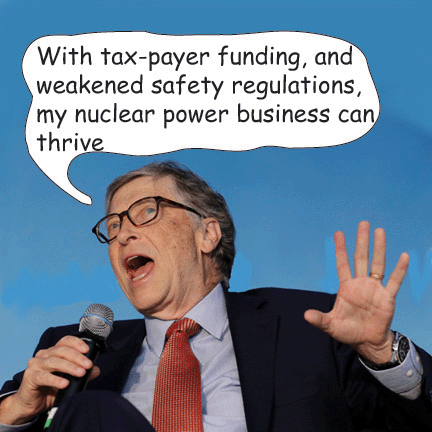
Second, the Biden administration is providing a $2 billion subsidy to Bill Gates (currently the fifth richest person in the world) to develop exotic “fast” nuclear reactors, which originally were designed explicitly to increase supplies of plutonium. Gates’s nuclear energy startup Terrapower promises not to use them this way, but the reactors are so expensive that countries importing them could cite economics to justify turning them into plutonium factories.

Third, the president is pursuing construction of a civilian US research reactor using weapons-grade HEU fuel for the first time since the 1960s, thereby threatening to undermine decades of progress in delegitimizing this dangerous fuel globally.

Fourth, the White House has agreed to export tons of weapons-grade uranium—an amount sufficient for hundreds of nuclear bombs—to fuel Australia’s forthcoming SSN-AUKUS nuclear-powered submarines. This announcement already has prompted at least one other country, Iran, to suggest that it too may produce HEU for naval fuel—a well-known back door to nuclear weapons. The good news is that Australia’s submarines likely could be redesigned to use low-enriched uranium that is unsuitable for nuclear weapons. Unfortunately, the Biden administration recently canceled funding for the eight-year-old program to develop such proliferation-resistant naval fuel.
Why is President Biden doing all this? The US president seems to think he can prevent proliferation solely by quashing demand—using carrots and sticks to persuade countries not to seek the bomb—despite evidence to the contrary. So, he feels free to relax supply restrictions in political horse-trades. For example, to persuade legislators to support solar and wind power, he is funding not just prudent nuclear research, but also their boondoggles to expand use of plutonium and HEU fuel. To ensure US military support for the trilateral Australia-United Kingdom-United States (AUKUS) deal, he is acquiescing to Navy insistence on using weapons-grade uranium reactor fuel, even in exported submarines. However, recent spikes in demand for nuclear weapons, among friends and foes alike, suggests this is a dangerously short-sighted approach.
Of course, the United States should continue trying to reduce demand for proliferation, including by avoiding attacking any more countries that have halted their nuclear weapons programs like Iraq and Libya. But if President Biden imagines that demand-suppression is a silver bullet that gives him license to expand civilian commerce in nuclear weapons-usable materials, he is deeply mistaken. Unless Biden changes course, his promotion of such dangerous nuclear technologies will enable supply to meet demand—in the market of mass destruction. https://thebulletin.org/2023/09/bidens-horse-trading-on-nuclear-technology-and-fuels-is-an-unprecedented-proliferation-risk/
Educating the US Imperium: Australia’s Mission for Assange

Then there is the issue of whether the delegation’s urgings will have any purchase beyond being a performing flea act. US State Department officials remain glacial in their dismissal of Canberra’s “enough is enough” concerns and defer matters to the US Department of Justice. The unimpressive ambassador Kennedy has been the perfect barometer of this sentiment: host Australian MPs for lunch, keep up appearances, listen politely and ignore their views. Such is the relationship between lord and vassal.
September 6, 2023 Dr Binoy Kampmark https://theaimn.com/educating-the-us-imperium-australias-mission-for-assange/
An odder political bunch you could not find, at least when it comes to pursuing a single goal. Given that the goal is the release of WikiLeaks publisher Julian Assange makes it all the more striking. Six Australian parliamentarians of various stripes will be heading to Washington ahead of Prime Minister Anthony Albanese’s October visit to test the ground of empire, maybe even plant a few seeds of doubt, about why the indictment against their countryman should be dropped.
That indictment, an outrageous, piffling shambles of a document comprising 18 charges, 17 based on that nasty, brutish statute, the Espionage Act of 1917, risks earning Assange a prison sentence in the order of 175 years. But in any instrumental sense, his incarceration remains ongoing, with the United Kingdom currently acting as prison warden and custodian.
In the politics of his homeland, the icy polarisation that came with Assange’s initial publishing exploits (former Australian Prime Minister Julia Gillard was convinced Cablegate was a crime) has shifted to something almost amounting to a consensus. The cynic will say that votes are in the offing, if not at risk if nothing is done; the principled will argue that enlightenment has finally dawned.
The Australian Prime Minister Anthony Albanese and the Opposition leader, Peter Dutton, agree on almost nothing else but the fact that Assange has suffered enough. In Parliament, the tireless work of the independent MP from Tasmania, Andrew Wilkie, has bloomed into the garrulous Bring Julian Assange Home Parliamentary Group.
The Washington mission, which will arrive in the US on September 20, comprises former deputy prime minister Barnaby Joyce, the scattergun former Nationals leader, Labor MP Tony Zappia, Greens Senators David Shoebridge and Peter Whish-Wilson, Liberal Senator Alex Antic and the competent independent member for Kooyong, Dr. Monique Ryan.
What will be said will hardly be pleasing to the ears of the Washington establishment. Senator Shoebridge, for instance, promises to make the case that Assange was merely telling the truth about US war crimes, hardly music for guardians from Freedom’s Land. Sounding like an impassioned pastor, he will tell his unsuspecting flock “the truth about this prosecution.”
Joyce, however, tried to pour some oil over troubled waters by insisting on ABC News that the delegates were not there “to pick a fight”. He did not necessarily want to give the impression that his views aligned with WikiLeaks. The principles, soundly, were that Assange had not committed any of the alleged offences as a US national, let alone in the United States itself. The material Assange had published had not been appropriated by himself. He had received it from Chelsea Manning, a US military source, “who is now walking the streets as a free person.”
To pursue the indictment to its logical conclusion would mean that Assange, or any journalist for that matter, could be extradited to the US from, say, Australia, for the activities in question. This extraterritorial eccentricity set a “very, very bad precedent”, and it was a “duty” to defend his status as an Australian citizen.
The Nationals MP also noted, rather saliently, that Beijing was currently interested in pursuing four Chinese nationals on Australian soil for a number of alleged offences that did not, necessarily, have a nexus to Chinese territory. Should Australia now extradite them as a matter of course? (The same observation has been made by an adviser to the Assange campaign, Greg Barns SC: “You’ve got China using the Assange case as a sort of moral equivalence argument.”)
Broadly speaking, the delegation is hoping to draw attention to the nature of publishing itself and the risks posed to free speech and the journalistic craft by the indictment. But there is another catch. In Shoebridge’s words, the delegates will also remind US lawmakers “that one of their closest allies sees the treatment of Julian Assange as a key indicator on the health of the bilateral relationship.”
Ryan expressed much the same view. “Australia is an excellent friend of the US and it’s not unreasonable to request to ask the US to cease this extradition attempt on Mr Assange.” The WikiLeaks founder was “a “journalist; he should not be prosecuted for crimes against journalism.”
While these efforts are laudable, they are also revealing. The first is that the clout of the Albanese government in Washington, on this point, has been minimal. Meekly, the government awaits the legal process in the UK to exhaust itself, possibly leading to a plea deal with all its attendant dangers to Assange. (The recent floating of that idea, based on remarks made by US ambassador to Australia Caroline Kennedy, was scotched by former British diplomat and Assange confidante Craig Murray in an interview with WBAI radio last week.) Best, then, to leave it to a diverse set of politicians representative of the “Australian voice” to convey the message across the pond.
Then there is the issue of whether the delegation’s urgings will have any purchase beyond being a performing flea act. US State Department officials remain glacial in their dismissal of Canberra’s “enough is enough” concerns and defer matters to the US Department of Justice. The unimpressive ambassador Kennedy has been the perfect barometer of this sentiment: host Australian MPs for lunch, keep up appearances, listen politely and ignore their views. Such is the relationship between lord and vassal.
In Washington, the perspective remains ossified, retributive and wrongheaded. Assange is myth and monster, the hacker who pilfered state secrets and compromised US national security; the man who revealed confidential sources and endangered informants; a propagandist who harmed the sweet sombre warriors of freedom by encouraging a new army of whistleblowers and transparency advocates.
Whatever the outcome from this trip, some stirring of hope is at least possible. The recent political movement down under shows that Assange is increasingly being seen less in the narrow context of personality than high principle. Forget whether you know the man, his habits, his inclinations. Remember him as the principle, or even a set of principles: the publisher who, with audacity, exposed the crimes and misdeeds of power; that, in doing so, he is now being hounded and persecuted in a way that will chill global efforts to do something similar.
Fyodor Lukyanov: Why the ‘world majority’ sees the Ukraine conflict as an example of declining European and North American power
Most believe ethnic Europeans are colonialists and hope to end their stranglehold on power
By Fyodor Lukyanov, the editor-in-chief of Russia in Global Affairs, chairman of the Presidium of the Council on Foreign and Defense Policy, and research director of the Valdai International Discussion Club.
It’s now the fall of 2023, and the Ukraine conflict has become an integral part of the international political and economic landscape. A cessation of hostilities is not expected.Meanwhile, neither a decisive victory for one side nor a compromise peace agreement seems likely in the foreseeable future.
The situation remains the most important factor influencing the global balance of power.
When the fighting started, it was immediately clear that relations between Russia and the West were entering an acute phase. But the severity and persistence of the conflict have exceeded expectations. In February 2022, few could have imagined the current level of NATO’s military-technical support of Ukraine and such a thorough dismantling of all ties between Russia and the Western countries.
The predictions of the first phase did not work out for anyone. Moscow misjudged the military-political and public mood in Ukraine and the willingness of the United States and its allies to go so far in supporting Kiev. The West made the mistake of assuming that the Russian economic system could not withstand an external blockade, but that the global economy could do without Moscow relatively painlessly. Both parties’ perception of their own ability to force their adversaries to change course and make concessions did not match reality.
The mistakes made in the early stages were the result of stereotypes formed earlier. If we strip away the nuances, the opponents exaggerated each other’s vulnerability and mistook their rivals as “paper tigers.” This is still partly an element, but more as a figure of speech in propaganda. The game has turned into a protracted process in which each side tries to mobilize its advantages and accumulate decisive superiority in order to escape the stalemate. The intensity of the confrontation between Russia and the West is increasing, but not its quality.
The most significant changes have taken place in the part of the world that is not involved in the conflict, although it is affected by it. The currently fashionable Russian notion of a “world majority,” which applies to the non-Western part of humanity, is somewhat confusing because it suggests a consolidated community. However, the essence of this majority is its heterogeneity – in contrast to the universal cohesion of values that the West offers. However, the term does outline the contours – a set of countries that are unwilling to be drawn into processes that follow the tradition of Western politics. The Ukraine crisis is a product of Western political culture, to which all the immediate participants belong. Russia, which has adopted an extremely anti-Western stance, is also acting (or let’s say is forced to act) within the Western military-political paradigm.
There is a growing opinion among the world’s majority that the influence of those who have long dictated the rules in the international arena is waning. ………………………………………………………………………….more https://www.rt.com/russia/582455-declining-europe-america-power/
Germany, Italy highlight growing European nuclear divide
By Federica Pascale and Julia Dahm | EURACTIV.com and EURACTIV.it
Germany’s place as the leader of Europe’s anti-nuclear lobby has been further solidified as Chancellor Olaf Sholz doubled down on his view that nuclear has no place in the country’s energy mix, while Italy has vowed to speed up its integration of nuclear energy in a bid to cut costs, save the economy, and power the Green Transition.
Nuclear power is controversial as some countries have embraced it, while others have considered it more of a risk than it is worth. Its inclusion by the European Commission as a green energy source in the Taxonomy Regulation further laid bare divisions across Europe as countries bickered over whether it could truly be considered green and sustainable………………………………………………………..
In an interview with radio station Dlf on Saturday, Scholz stressed using nuclear power in Germany’s energy mix is no longer an option.
“In Germany today, the topic of nuclear power is a dead horse,” the Social Democrat said.
“Whoever would want to build new power plants would take 15 years and would have to spend 15 to 20 billion per unit,” he added.
Scholz’s remarks come after representatives of the FDP, the chancellor’s liberal coalition partner, called to stop the dismantling of reactors that are still usable to reactivate them.
“This is the only way to remain capable of acting in any situation,” Christian Dürr,
https://www.euractiv.com/section/politics/news/germany-italy-highlight-growing-european-nuclear-divide/
Poland begins to extradite to Ukraine men who left it after February 24, 2022
It is reported that after crossing the Polish-Ukrainian border, about 80 thousand Ukrainians might have not been listed.
MOSCOW, September 4. /TASS/. https://tass.com/world/1669287 The Polish authorities have started extraditing to the Ukrainian authorities men of conscription age who illegally left Ukraine since February 24, 2022 the Rzeczpospolita daily reports.
According to the newspaper, based on an agreement with Ukraine, Poland has already extradited citizens of that country who are involved in smuggling illegal migrants to Europe.
According to the Polish Border Guard’s data, after February 24, 2022, about 2.87 million Ukrainians aged 18 to 60 have entered Poland. About 2.8 million returned over the past 18 months.
Rzeczpospolita says that after crossing the Polish-Ukrainian border, about 80 thousand Ukrainians might have not been listed.
“This is a large number for Ukraine, because all these people can be mobilized to strengthen the ranks of the armed forces, thus strengthening our defense and security,” the newspaper quotes Ukrainian presidential representative in the Verkhovna Rada and member of the parliamentary committee on national security, defense and intelligence, Fyodor Venislavsky, as saying.
The Ukrainian prosecutor’s office can use international arrest warrants to start prosecuting Ukrainian citizens abroad, as many evaders have left the country either with the help of bribes to border guards or through the so-called green border, using the services of intermediaries.
“If we detain such a foreigner, for example, during a simple check on the road, our National Police Information System will show that he is wanted by the Ukrainian Prosecutor’s Office, because Interpol data feature there. We detain such a person, inform the prosecutor’s office, and the court decides on the extradition,” Polish police spokesperson Mariusz Czarka explained.
What’s Behind Talk of a Possible Plea Deal for Assange?

Were Assange to give up his legal battle and voluntarily go to the U.S. it would achieve two things for Washington:
1). remove the chance of a European Court of Human Rights injunction stopping his extradition should the High Court in London reject his last appeal; and
2). it would give the U.S. an opportunity to “change its mind” once Assange was in its clutches inside the Virginia federal courthouse.
Top U.S. officials are speaking at cross purposes when it comes to Julian Assange. What is really going on? asks Joe Lauria.
By Joe Lauria, Consortium News https://consortiumnews.com/2023/09/03/whats-behind-talk-of-a-possible-plea-deal-for-assange/
It was a little more than perplexing. U.S. Secretary of State Antony Blinken, on Australian soil, left no doubt about how his government feels about one of Australia’s most prominent citizens.
“I understand the concerns and views of Australians,” Blinken said in Brisbane on July 31 with the Australian foreign minister at his side. “I think it’s very important that our friends here understand our concerns about this matter.” He went on:

“What our Department of Justice has already said repeatedly, publicly, is this: Mr. Assange was charged with very serious criminal conduct in the United States in connection with his alleged role in one of the largest compromises of classified information in the history of our country. So I say that only because just as we understand sensitivities here, it’s important that our friends understand sensitivities in the United States.”
In other words, when it comes to Julian Assange, the U.S. elite cares little for what Australians have to say. There are more impolite ways to describe Blinken’s response. Upwards of 88 percent of Australians and both parties in the Australian government have told Washington to free the man. And Blinken essentially told them to stuff it. The U.S. won’t drop the case.
A few days before Blinken spoke, Caroline Kennedy, the U.S. ambassador to Australia and daughter of slain President John F. Kennedy, was also dismissive of Australians’ concerns, telling Australian Broadcasting Corporation Radio:
“I met with Parliamentary supporters of Julian Assange and I’ve listened to their concerns and I understand that this has been raised at the highest levels of our government, but it is an ongoing legal case, so the Department of Justice is really in charge but I’m sure that for Julian Assange it means a lot that he has this kind of support but we’re just going to have to wait to see what happens.”
Asked why she met with the parliamentarians at all, she said: “Well, it’s an important issue, it has, as I’ve said, been raised at the highest levels and I wanted to hear directly from them about their concerns to make sure that we all understood where each other was coming from and I thought it was a very useful conversation.”
Asked whether her meeting with the MPs had shifted her thinking on the Assange case, Kennedy said bluntly: “Not really.” She added that her “personal thinking isn’t really relevant here.”
Blowback
Australia has too often behaved as a doormat to the United States, to the point where Australia is threatening its own security by going along with an aggressive U.S. policy towards China, which poses no threat to Australia.
But this time, Blinken got an earful. Prime Minister Anthony Albanese reiterated that he wanted the Assange case to be dropped. Certain members of Parliament brusquely gave it back to Blinken.
Assange was “not the villain … and if the US wasn’t obsessed with revenge it would drop the extradition charge as soon as possible,” Independent MP Andrew Wilkie told The Guardian‘s Australian edition.
“Antony Blinken’s allegation that Julian Assange risked very serious harm to US national security is patent nonsense,” said Wilkie said.
“Mr Blinken would be well aware of the inquiries in both the US and Australia which found that the relevant WikiLeaks disclosures did not result in harm to anyone,” the MP said. “The only deadly behaviour was by US forces … exposed by WikiLeaks, like the Apache crew who gunned down Iraqi civilians and Reuters journalists” in the infamous Collateral Murder video.
As was shown conclusively by defense witnesses in his September 2020 extradition hearing in London, Assange worked assiduously to redact names of U.S. informants before WikiLeaks publications on Iraq and Afghanistan in 2010. U.S. Gen. Robert Carr testified at the court martial of WikiLeaks‘ source, Chelsea Manning, that no one was harmed by the material’s publication.
Instead, Assange faces 175 years in a U.S. dungeon on charges of violating the Espionage Act, not for stealing U.S. classified material, but for the First Amendment-protected publication of it.
Labor MP Julian Hill, also part of the Bring Julian Assange Home Parliamentary Group, told The Guardian he had “a fundamentally different view of the substance of the matter than secretary Blinken expressed. But I appreciate that at least his remarks are candid and direct.”
“In the same vein, I would say back to the United States: at the very least, take Julian Assange’s health issues seriously and go into court in the United Kingdom and get him the hell out of a maximum security prison where he’s at risk of dying without medical care if he has another stroke,” Hill said.
Damage Control
The fierce Australian reaction to both Blinken and Kennedy’s remarks appears to have taken Washington by surprise, given how accustomed to Canberra’s supine behavior the U.S. has become. Just two weeks after Blinken’s remarks, Kennedy tried to soften the blow by muddying Blinken’s clear waters.
She told The Sydney Morning Herald in a front-page interview published on Aug. 14 that the United States was now, despite Blinken’s unequivocal words, suddenly open to a plea agreement that could free Assange, allowing him to serve a shortened sentence for a lesser crime in his home country.
The newspaper said there could be a “David Hicks-style plea bargain,” a so-called Alford Plea, in which Assange would continue to state his innocence while accepting a lesser charge that would allow him to serve additional time in Australia. The four years Assange has already served on remand at London’s maximum security Belmarsh Prison could perhaps be taken into account.
Kennedy said a decision on such a plea deal was up to the U.S. Justice Department. “So it’s not really a diplomatic issue, but I think that there absolutely could be a resolution,” she told the newspaper.
Kennedy acknowledged Blinken’s harsh comments. “But there is a way to resolve it,” she said. “You can read the [newspapers] just like I can.” It is not quite clear what in the newspapers she was reading.
Blinken is Kennedy’s boss. There is little chance she had spoken out of turn. Blinken allowed her to put out the story that the U.S. is interested in a plea bargain with Assange. But why?
First, the harsh reaction in Australia to Blinken’s words probably had something to do with it. If it was up to the U.S. Justice Department alone to handle the prosecution of Assange, as Kennedy says, why was the Secretary of State saying anything about it at all? Blinken appears to have spoken out of turn himself and sent Kennedy out to reel it back in.
Given the growing opposition to the AUKUS alliance in Australia, including within the ruling Labor Party, perhaps Blinken and the rest of the U.S. security establishment is not taking Australia’s support for granted anymore. Blinken stepped in it and had Kennedy try to clean up the mess.
Second, as suspected by many Assange supporters on social media, Kennedy’s words may have been intended as a kind of ploy, perhaps to lure Assange to the United States to give up his fight against extradition in exchange for leniency.
In its article based on Kennedy’s interview, The Sydney Morning Herald spoke to only one international law expert, a Don Rothwell, of Australian National University in Canberra, who said Assange would have to go to the United States to negotiate a plea. In a second interview on Australian television, Rothwell said Assange would also have to drop his extradition fight.
Of course, neither is true. “Usually American courts don’t act unless a defendant is inside that district and shows up to the court,” U.S. constitutional lawyer Bruce Afran told Consortium News. “However, there’s nothing strictly prohibiting it either. And in a given instance, a plea could be taken internationally. I don’t think there’s anything wrong with that. It’s not barred by any laws. If all parties consent to it, then the court has jurisdiction.” But would the U.S. consent to it?
Were Assange to give up his legal battle and voluntarily go to the U.S. it would achieve two things for Washington: 1). remove the chance of a European Court of Human Rights injunction stopping his extradition should the High Court in London reject his last appeal; and 2). it would give the U.S. an opportunity to “change its mind” once Assange was in its clutches inside the Virginia federal courthouse.
“The U.S. sometimes finds ways to get around these agreements,” Afran said. “The better approach would be that he pleads while in the U.K., we resolve the sentence by either an additional sentence of seven months, such as David Hicks had or a year to be served in the U.K. or in Australia or time served.”
Assange’s brother, Gabriel Shipton, told the Herald his brother going to the U.S. was a “non-starter.” He said: “Julian cannot go to the US under any circumstances.” Assange’s father, John Shipton, told the same to Glenn Greenwald last week.
So the U.S. won’t be getting Assange on its soil voluntarily, and perhaps not very soon either. And maybe it wants it that way. Gabriel Shipton added: “Caroline Kennedy wouldn’t be saying these things if they didn’t want a way out. The Americans want this off their plate.”
Third, the U.S. may be trying to prolong Assange’s ordeal for at least another 14 months past the November 2024 U.S. presidential election. As Greenwald told John Shipton, the last thing President Joe Biden would want in the thick of his reelection campaign next year would be a high-profile criminal trial in which he was seen trying to put a publisher away for life for printing embarrassing U.S. state secrets.
But rather than a way out, as Gabriel Shipton called it, the U.S. may have in mind something more like a Great Postponement.
The postponement could come with the High Court of England and Wales continuing to take its time to give Assange his last hearing — for all of 30 minutes — before it rendered its final judgement, months after that, on his extradition. This could be stretched over 14 months. As Assange is a U.S. campaign issue, the High Court could justify its inaction by saying it wanted to avoid interference in the election.
According to Craig Murray, a former British diplomat and close Assange associate, the United States has not, despite Kennedy’s words last month, so far offered any sort of plea deal to Assange’s legal team. Murray told WBAI radio in New York:
“There have been noises made by the U.S. ambassador to Australia saying that a plea deal is possible. And that’s what the Australian Government have been pushing for as a way to solve it. What I can tell you is that there have been no official approaches from the American government indicating any willingness to soften or ameliorate their posihttps://www.youtube.com/watch?v=fnNjwQNV4Gction. The position of the Biden administration still seems to be that they wish to persecute and destroy Julian and lock him up for life for publishing the truth about war crimes …
So there’s no evidence of any sincerity on behalf of the U.S. government in these noises we’ve been hearing. It seems to be to placate public opinion in Australia, which is over 80% in favor of dropping the charges and allowing Julian to go home to his native country…
The American ambassador has made comments about, oh well, a plea deal might be possible, but this is just rubbish. This is just talk in the air. There’s been no kind of approach or indication from the Justice Department or anything like that at all. It’s just not true. It’s a false statement, in order to placate public opinion in Australia.”
Afran said a plea deal can be initiated by the Assange side as well. Assange lawyer Jennifer Robinson said in May for the first time on behalf of his legal team that they were open to discussion of a plea deal, though she said she knew of no crime Assange had committed to plead guilty to.
The U.S. would have many ways to keep prolonging talks on an Assange initiative, if one came, beyond the U.S. election. After the vote, the Justice Department could then receive Assange in Virginia courtesy of the British courts, if this the strategy the U.S. is pursuing.
Rush to accept Ukraine into EU could spell ‘disaster’ – Austrian FM
Rt.com 1 Sept 23
Fast-tracking membership for Kiev would imply some candidates are “more equal than others,” Alexander Schallenberg has warned
The EU cannot afford to prioritize Ukraine’s accession to the bloc while neglecting other long-standing candidacies, Austrian Foreign Minister Alexander Schallenberg warned on Friday.
Speaking on Politico’s EU Confidential podcast, Schallenberg said that while he believes Ukraine and neighboring Moldova belong in the “European family,” the EU must carefully consider its enlargement policy.
We can’t have Ukraine on the fast-track and the other countries on the service line. That will be a geostrategic disaster,” the minister claimed. Referencing George Orwell’s dystopian novel ‘Animal Farm’, Schallenberg stressed that the EU should avoid a system in which some countries “are more equal than others.”
The Austrian minister noted that the EU had promised membership to Western Balkan nations around 20 years ago, but had failed to deliver on that pledge. He urged Brussels to “put its money where its mouth is” and drop “binary thinking” about membership, suggesting candidate nations should be allowed some participation in EU deliberations and activities………………………………………… https://www.rt.com/news/582219-ukraine-eu-accension-disaster/—
China Outlines ‘Obstacles’ to Resuming High-Level Military Talks With U.S.
The US has always sold weapons to Taiwan but has never financed the purchases or provided them free of charge until this year. China is opposed to all US arms sales to Taiwan, and the new military aid especially angers Beijing.
A Chinese official mentioned US sanctions on China’s defense minister, US military support for Taiwan, and US patrols in the South China Sea
By Dave DeCamp / Antiwar.com https://scheerpost.com/2023/09/02/china-outlines-obstacles-to-resuming-high-level-military-talks-with-us/
A spokesman for the Chinese Defense Ministry on Thursday outlined “obstacles” that are preventing the resumption of high-level military talks between the US and China.
Secretary of Defense Lloyd Austin and Chinese Defense Minister Li Shangfu both attended the Shangri-La Security Dialogue in Singapore back in June. Beijing declined to hold a meeting between Austin and Li, primarily due to US sanctions that are imposed on the Chinese defense chief.
The US sanctioned Li in 2018, when he was in a lower-level position, and has refused to lift the measures since he became defense minister. Chinese Defense Ministry spokesman Col. Wu Qian outlined other issues impeding high-level military talks, including US support for Taiwan, and US military activity in the South China Sea and the Taiwan Strait.
Wu noted that while there have not been talks at the defense minister level, there are other communications between the US and Chinese militaries. “I want to clarify that military-to-military communication between China and the United States has not stopped,” he said at a press briefing, according to The South China Morning Post.
Wu said that Gen. Xu Qiling, deputy chief of China’s Joint Staff Department of the Central Military Commission, attended a recent US-hosted military conference in Fiji, the 25th annual Indo-Pacific Chiefs of Defense. While at the conference, which took place from August 14-16, Xu met with his American counterparts.
But Wu said that there were a series of “difficulties and obstacles” preventing talks between Austin and Li, including new forms of military aid the US recently approved for Taiwan, which is unprecedented since Washington severed diplomatic relations with Taipei in 1979.
The US has always sold weapons to Taiwan but has never financed the purchases or provided them free of charge until this year. China is opposed to all US arms sales to Taiwan, and the new military aid especially angers Beijing.
Addressing US military activity in the South China Sea and Taiwan Strait, Wu said the US should “mind its own business.”
“China urges the US to stop its military provocations to prevent any extreme events that the world doesn’t want to see happening. We can only have communication and dialogue that is in line with our principles and does not go against our bottom lines,” he said.
Ukraine war: how China can get the world to step back from nuclear Armageddon
China and the US have reached nuclear weapons agreements before. After India and Pakistan launched nuclear tests in 1998, China and the US, in a rare show of solidarity, declared they would not target their nuclear weapons at each other. This led to a joint statement in 2000 from the five nuclear-weapon states of China, the US, Britain, France and Russia that their nuclear weapons would not target each other or any other state.
- Hope lies in getting nuclear powers to agree to a ‘no first use’ policy. If China can persuade the US, then Britain and France are likely to fall in line
- The challenge is getting Moscow on board – which is likely to require Nato to agree to ‘no first use’ against Russia and back down on its eastward expansion
SCMP, Zhou Bo 4 Sept 23
No one knows how long the war in Ukraine will last. But everyone knows what the worst nightmare is: Russia unleashing nuclear weapons. The Russian leadership has repeatedly hinted at this.
Russian scholars such as Sergei Karaganov and Dmitri Trenin have recently joined the chorus, calling for tactical nuclear attacks on a Nato country, say Poland, to break “the West’s will” and convince them that Russia’s nuclear threats are no bluff.
By giving people pause, Russia’s nuclear deterrence seems to be working. But what if Moscow is not bluffing?
With the West nibbling away at its own red lines by sending more sophisticated weapons to Kyiv that were considered taboo at the beginning of the war effort, how can one rest assured that Moscow will not reach for nuclear weapons eventually?
The battle is in a stalemate. Kyiv’s attack drones have reportedly been found in Moscow. Ukrainian President Volodymyr Zelensky recently warned that “war is returning” to Russia. As the threat of an unspeakable horror against humanity looms larger, there is an urgent need to prevent a nuclear fallout.
Perhaps China can persuade the US to agree first to a nuclear weapons policy of “ no first use”, which can then be joined by Britain, France and finally – hopefully – Russia.
China and the US have reached nuclear weapons agreements before. After India and Pakistan launched nuclear tests in 1998, China and the US, in a rare show of solidarity, declared they would not target their nuclear weapons at each other. This led to a joint statement in 2000 from the five nuclear-weapon states of China, the US, Britain, France and Russia that their nuclear weapons would not target each other or any other state.
More recently, in January last year, a month before Russia’s invasion of Ukraine, the five nuclear power powers agreed that “a nuclear war cannot be won and must never be fought”.
So why can’t they pledge a “no first use” policy? Such a stance would neither exclude nuclear retaliation nor neutralise a nuclear power’s ability to deter an attack.
For China, “no first use” has been its ironclad policy since its detonation of a nuclear device in 1964. Relations with Russia will not change China’s time-honoured policy. The Biden administration has declared that it “would only consider the use of nuclear weapons in extreme circumstances to defend the vital interests of the United States or its allies and partners”. This stance is not so far away from that of Beijing……………………………………………………………………………………………………………………… more https://www.scmp.com/comment/opinion/article/3233136/ukraine-war-how-china-can-get-world-step-back-nuclear-armageddon
1 This Month



26 September – International Day for the Total Elimination of Nuclear Weapons


PLEASE OPPOSE HR 8255 AND S.3639 – bills would accelerate satellite deployment, with no environmental review or safeguards – https://ncstd5li.quorum.us/campaign/169331/
To see nuclear-related stories in greater depth and intensity – go to https://nuclearinformation.wordpress.com
-
Archives
- September 2026 (233)
- August 2026 (330)
- July 2026 (355)
- June 2026 (287)
- May 2026 (306)
- April 2026 (356)
- March 2026 (251)
- February 2026 (267)
- January 2026 (308)
- December 2025 (358)
- November 2025 (359)
- October 2025 (375)
-
Categories
- 1
- 1 NUCLEAR ISSUES
- business and costs
- climate change
- culture and arts
- ENERGY
- environment
- health
- history
- indigenous issues
- Legal
- marketing of nuclear
- media
- opposition to nuclear
- PERSONAL STORIES
- politics
- politics international
- Religion and ethics
- safety
- secrets,lies and civil liberties
- spinbuster
- technology
- Uranium
- wastes
- weapons and war
- Women
- 2 WORLD
- ACTION
- AFRICA
- Atrocities
- AUSTRALIA
- Christina's notes
- Christina's themes
- culture and arts
- Events
- Fuk 2022
- Fuk 2023
- Fukushima 2017
- Fukushima 2018
- fukushima 2019
- Fukushima 2020
- Fukushima 2021
- general
- global warming
- Humour (God we need it)
- Nuclear
- RARE EARTHS
- Reference
- resources – print
- Resources -audiovicual
- Weekly Newsletter
- World
- World Nuclear
- YouTube
-
RSS
Entries RSS
Comments RSS
 nuclear-news