Antony Blinken wary on Iran, doesn’t criticise Saudi Arabia

Blinken Says Iran’s Nuclear Program ‘Profoundly Destabilizing’, Saturday, 09/23/2023 Author: Iran International Newsroom
US Secretary of State Antony Blinken has refrained from criticizing the Saudi Crown Prince for suggesting his country will get nuclear weapons if Iran does so first.
Crown Prince Mohammed bin Salam speaking to Fox News this week referred to the danger of Iran producing nuclear weapons and said, “If they get one, we have to get one, for security reasons and the balance of power in the Middle East. But we don’t want to see that.”
Asked during the press conference if this kind of Saudi desire is not destabilizing, Blinken replied, “I think the comments that you alluded to point to the fact that Iran’s own activities in pursuing a nuclear program are a profoundly destabilizing element and one that risks the security of countries not only in the region but well beyond it…” He went on to say, “And so the problem is very clear, and the problem is Iran. That is the destabilizing element.”
Top nuclear experts urge Biden to not allow Saudi uranium enrichment in mega-deal

“even if the enrichment facility in Saudi Arabia is operated by Americans, it will pose “an unacceptable proliferation risk, particularly given Crown Prince Mohammed bin Salman’s public comments on nuclear weapons”.
Barak Ravid 22 Sept 23 https://www.axios.com/2023/09/21/saudi-nuclear-power-uranium-mbs-biden-megadeal-israel
A bipartisan group of more than two dozen nuclear and Middle East experts sent a letter to President Biden on Thursday urging him not to allow Saudi Arabia to have a uranium enrichment program on its soil, according to the letter first shared with Axios.
Why it matters: The Saudi demand for a civilian nuclear program that includes uranium enrichment is the most complicated and sensitive part of the mega-deal the White House is negotiating with the kingdom and Israel.
- It is one of Saudi Arabia’s main demands in the Biden administration’s efforts to secure a peace deal between the kingdom and Israel.
- But it not only faces opposition from the experts who sent Thursday’s letter but also from Israel’s opposition, as well as many members of Congress who are critical of the Saudi government over its human rights record.
What they’re saying: The 27 experts who signed the letter say they support normalization but think the kingdom doesn’t need uranium enrichment to produce peaceful nuclear energy.
- “We urge you to reject the Kingdom of Saudi Arabia’s request for uranium enrichment as part of or separate from a normalization agreement between Saudi Arabia and Israel,” they wrote.
- The experts stressed that uranium enrichment on Saudi soil could bring Saudi Arabia to the brink of acquiring nuclear arms — a reality U.S. policy should keep from happening.
Signatories to the letter include several former U.S. officials who served under both Republican and Democratic administrations and worked on nuclear or Middle East issues.
- They also include David Albright, one of the leading nuclear experts in the world, Olli Heinonen and Pierre Goldschmidt, both former deputy director generals of the International Atomic Energy Agency, and Israeli Prime Minister Benjamin Netanyahu’s former national security adviser, Jacob Nagel.
- The letter was co-organized by the Nonproliferation Policy Education Center and the Foundation for the Defense of Democracies (FDD), a Washington think tank that holds pro-Israeli views.
State of play: The Biden administration is still negotiating with the Saudi officials the conditions for a possible civilian nuclear program.
Separate negotiations on the issue are being held between the Biden administration and the Israeli government.- Unlike the signatories of the letter, Netanyahu doesn’t object to Saudi Arabia having a civilian nuclear program and his government is negotiating with the U.S. the red lines and the guardrails for a program that would include uranium enrichment.
- A senior U.S. official told reporters on Wednesday that there is total alignment between the Israeli government and the Biden administration when it comes to the red lines.
- The White House did not immediately respond to Axios’ request for comment.
The big picture: In the letter, the experts also said that even if the enrichment facility in Saudi Arabia is operated by Americans, it will pose “an unacceptable proliferation risk, particularly given Crown Prince Mohammed bin Salman’s public comments on nuclear weapons”.
- MBS told Fox News in an interview that was aired on Wednesday that if Iran obtains a nuclear weapon, Saudi Arabia would “have to get one, for security reasons, for balancing power.”
- The experts also wrote that Saudi threats to go to China for nuclear technology are not a reason for the U.S. to change its policy on nuclear enrichment, a step that will be “a sign of weakness” and could encourage similar efforts by other countries.
The experts added that allowing Saudi Arabia to have uranium enrichment capability like Iran could trigger a regional nuclear arms race.- “Any nuclear cooperation agreement with Saudi Arabia must meet the highest non-proliferation standards and enhanced inspection and transparency measures through a strong Additional Protocol with the International Atomic Energy Agency,” they wrote.
Why Japan should stop its Fukushima nuclear wastewater ocean release

Bulletin, By Tatsujiro Suzuki | September 22, 2023
On August 24, 2023, Japanese electric utility holding company Tokyo Electric Power Co. (TEPCO) announced that it has started discharging so-called “treated” and “diluted” water from the damaged Fukushima Daiichi nuclear power plant into the Pacific Ocean. This is not the end of controversy over the release of “treated water.” Rather, it may be the beginning of what might be a long-lasting struggle where science meets politics and lack of public trust, both inside and outside of Japan.
To understand TEPCO’s decision and why this operation caused such a big controversy, one must explain what this “treated water” being released is, the scientific debates over this operation, and the underlying social and political issues.
“Treated” or “contaminated” water? When underground water, including rainfall, passes through the damaged Fukushima Daiichi reactor site and is used to cool the melted fuel debris inside the reactors, it becomes contaminated with oil as well as many harmful radioactive nuclides, including cesium and strontium………………………………..
Part of the radioactive substances that contaminate the water is now being removed by multi-nuclide removal equipment called “advanced liquid processing systems” (ALPS)—an unfortunate name given that the Alps mountain range in Europe is home to some of the cleanest freshwater in the world. After the removal of most radioactive substances—except for tritium, which cannot be removed by the Alps system—treated water is then stored in tanks (see Figure 2 on original). The Alps process is supposed to reduce the concentration of radionuclides, except tritium, to levels below regulatory standards. However, according to TEPCO’s data, as of March 31, 2023, of the total of about 1.3 million m3 of treated water, only about a third satisfied regulatory standards and the other two-thirds needed to be re-purified.
It can’t be denied that “treated water” is not as pure as “tritiated water” because treated water may still contain other radioactive nuclides, albeit in small proportions. But the comparison of Fukushima’s “treated water” with other “tritiated water” released during the normal operation of other nuclear power plants can be misleading because the latter is not contaminated with other radioactive nuclides.
TEPCO says it re-purifies the “treated water” to make sure the water satisfies regulatory standards before it is released to the sea. To do that, the company’s plan is to dilute “treated water” with large amounts of sea water to reach a concentration of tritium of 190 Becquerel (Bq) per liter, which is much lower than the allowed concentration of 1,500 Bq per liter.
The first discharge happened over a period of 17 days and involved a total of 7,800 tons of treated water being released to the sea. TEPCO plans to discharge treated water three more times in 2023, and the total tritium discharge by the end of March 2024 is expected to reach about 5 trillion Bq. This is much lower than the annual discharge target of 22 trillion Bq set before the Fukushima accident………………..
Scientific debate. The Japanese government and TEPCO argue that the whole operation satisfies both Japanese regulatory standards and international safety standards. Besides, the Japanese government officially asked the International Atomic Energy Agency (IAEA) to conduct an independent review of the safety of the ALPS treated water release. On July 4, 2023, the IAEA published its “comprehensive report,” which concluded that the ALPS process is “consistent with relevant international safety standards” and that “the discharge of the treated water [into the sea], as currently planned by Tepco, will have a negligible radiological impact on people and the environment.”
But there are scientific arguments against TEPCO’s release plan.
The Pacific Island Forum expressed its concern in a statement in January 2023 about whether current international standards are adequate to handle the unprecedented case of the Fukushima Daiichi tritiated water release. Based on a report from an independent expert panel established by the forum, TEPCO’s guideline compliance plan does not appear to include the transboundary implications of IAEA’s guidance in its General Safety Guide No. 8 (GSG-8), which requires that the benefits of a given process outweigh the harms for individuals and societies.
The experts also recommended the alternative method of using the treated water to manufacture concrete for the construction industry instead of releasing it to the sea. By immobilizing the radionuclides in a material, this alternative would imply a lower potential for human contact and would avoid transboundary impacts. Quoted in a National Geographic article, one of the panel members, Robert Richmond, director of the Kewalo Marine Laboratory of the University of Hawaii, summarizes well the uncertainty surrounding the impacts of TEPCO’s water release plan on the ocean environment: “It is a trans-boundary and trans-generational event” and that he does not believe “the release would irreparably destroy the Pacific Ocean but it does not mean we should not be concerned.”
Lack of public trust. In addition to scientific debate, TEPCO’s ALPS treated water issue has become more of a social and political controversy. The origin of this debate was the speech given by then-Prime Minister Shinzo Abe before the International Olympic Committee on September 7, 2013, in which he referred to the city where the 2020 Summer Olympics were to be held by saying: “Some may have concerns about Fukushima. Let me assure you, the situation is under control. It has never done and will never do any damage to Tokyo.” After Abe’s speech, the government took over the responsibility for the management of the contaminated water, while TEPCO is still responsible for all decommissioning operations at the Fukushima Daiichi nuclear power plant. Since then, all policy decisions about the treated water have been made by the Japanese government, with TEPCO simply following the government, which has complicated the decision-making process.
In August 2015, the Japanese government and TEPCO promised to the local fishermen that they “will not implement any disposal without understanding of interested parties.” The government even established a committee consisting of experts from a local university to discuss technical options and held meetings with local citizens for several years to build trust with the local communities. So, when the decision was made by former Prime Minister Yoshihide Suga in August 2021 to release the “treated water” to the sea, this felt like a treachery for the local fishermen and many other interested parties. In a June 2023 statement opposing the planned discharge of treated water, the head of Japan’s national fisheries cooperatives Masanobu Sakamoto said: “We cannot support the government’s stance that an ocean release is the only solution. … Whether to release the water into the sea or not is a government decision, and in that case we want the government to fully take responsibility.”
The subsequent lack of public trust in TEPCO and Japan’s Ministry of Economy, Trade and Industry has been one of the major reasons for this continued controversy. In August 2018, a news investigation revealed that the “tritiated water” still contained other radioactive nuclides after treatment, which were above regulatory standards—a result that was not consistent with the explanation given by TEPCO. ………………………………………………………………………………………
both fishermen and consumers in South Korea are worried about the impacts of water release from the Fukushima nuclear plant, which led the largest fisheries market to start monitoring the fish’s radioactivity to allay those concerns…………………………………………………………………In August, China decided to ban imports of all seafood products from Japan shortly after Japan started discharging treated water from Fukushima that month. And there seems to be no prospect of reducing tensions between the two countries over this issue.
How to improve the situation? Several options exist that could help restore public trust in TEPCO’s and the Japanese government’s treated water plan at Fukushima.
First, the Japanese government and TEPCO should realize that the management of radioactive wastewater is not a purely scientific and technical issue…………………TEPCO’s and the Japanese government’s plan also needs a non-scientific approach to the issue and provide additional measures, including an improved decision-making process and a sincere dialogue (not persuasion) with stakeholders.
Second, to restore public trust and confidence, the government should first stop the water release and task an independent oversight organization which can be trusted by stakeholders. The IAEA review of TEPCO’s plan was helpful at best, but it was not enough, as it only verifies the samples provided by TEPCO for the first discharge but does not review the entire plan which could continue for the next 30 years. In fact, IAEA Director General Rafael Mariano Grossi clarified in the foreword of the agency’s “comprehensive report” that the review was “neither a recommendation nor an endorsement of that (government) policy.” Complete transparency over the entire decision-making process and disclosure of supporting data and information are essential conditions to improve public trust.
Third, TEPCO and the Japanese government should designate the current release operations as part of a “demonstration” program and declare that they will make a final decision about the plan after studies confirm that the release has had no significant impacts on the ocean environment and fish. This would imply that the government stops the release of the treated water, and asks the scientific community to conduct such studies. At the same time, the government could also continue to explore technical alternatives to its plan that may be more attractive to both domestic and international stakeholders.
In addition to provide a face-saving opportunity to the Japanese government and TEPCO to justify that they “temporarily” halt the release, it would show that they have sincerely listened to the concerns expressed by the stakeholders.
The Japanese government and TEPCO clearly have the ability to improve public trust in their handling of the treated water at Fukushima, but this requires them to go beyond their “scientific logic” only. https://thebulletin.org/2023/09/why-japan-should-stop-its-fukushima-nuclear-wastewater-ocean-release/
Foundation for the Defense of Democracy and The Nonproliferation Policy Education Center urge Biden against helping Saudi Arabia to enrich uranium
In an effort to get Saudi Arabia to recognize Israel, the Biden
Administration is considering offering Riyadh a U.S. civilian nuclear
cooperative agreement that would allow the Kingdom to enrich uranium, a
process that could bring it within weeks or days of acquiring a nuclear
weapon.
With nuclear fuel making activities, such as uranium enrichment,
there is no way to assure timely warning of possible military diversions:
By the time there is a detection, it’s too late to prevent the last few
steps to making a bomb. This inherent safeguards gap makes any endorsement
of enrichment in the Kingdom dangerous.
Mohammed bin Salman Al Saud is
publicly on record pledging to acquire nuclear weapons if he believes Iran
is acquiring one. Some argue this risk must be taken to keep the Kingdom
from embracing ever tighter relations with China. This is mistaken The
United States is the richest nation in the world. It has other more
powerful and far less dangerous ways to influence the Saudis’ thinking.
NPEC 21st Sept 2023
Netanyahu at UN issues ‘nuclear’ threat to Iran, later retracted
United Nations (United States) (AFP) – Israeli Prime Minister Benjamin Netanyahu on Friday warned Iran at the United Nations of a “nuclear threat” in what his office quickly walked back as a slip of the tongue.
France 24 22/09/2023 –
………………….Netanyahu, who has repeatedly used the UN stage to issue dark warnings about Tehran, briefly gave pause at the General Assembly when he appeared to threaten nuclear attack if Tehran pursues its own atomic bomb.
His office soon afterward said that Netanyahu had misspoken and that his prepared text said “credible military threat” instead of “credible nuclear threat.”………
Israel has a widely known but undeclared nuclear program. As of January, Israel was believed to possess a stockpile of around 90 nuclear warheads, according to the Stockholm International Peace Research Institute.
Tehran denies seeking a nuclear bomb but has breached limits on uranium enrichment set in a US-brokered 2015 deal following former president Donald Trump’s withdrawal from the agreement and reimposition of sweeping sanctions……………………………………………………. more https://www.france24.com/en/live-news/20230922-netanyahu-at-un-issues-nuclear-threat-to-iran-later-retracted
Pakistan’s new nuclear brinkmanship
Recently, Pakistan’s strategic planners have hinted to a shift in Pakistan’s nuclear doctrine, which seems to be quite radical.
Deccan Herald, Abhinav Narayan Jha, 23 September 2023
In July, when India celebrated the 24th Vijay Diwas of the 1999 Kargil War, the nuclear question between the two arch-rivals got refreshed. Both sides are said to have reportedly weighed the nuclear option then.
Pakistan was reported to have moved ballistic missiles toward the border. American officials and security experts had in 2000 claimed that India, too, had prepared nuclear-tipped ballistic missiles. If true, this was the closest India and Pakistan had ever come to a nuclear exchange.
Recently, Pakistan’s strategic planners have hinted to a shift in Pakistan’s nuclear doctrine, which seems to be quite radical. On the 25th anniversary of Pakistan’s nuclear tests, Lt General Khalid Kidwai (retd), adviser to Pakistan’s National Command Authority, sent ripples across the strategic and security community in Asia and the West when he revisited Pakistan’s nuclear strategy. Kidwai, who was the first and longest-serving Director-General of Pakistan’s Strategic Plans Division, touched on two important things: First, he referred to “Full Spectrum Deterrence” (FSD); second, he referred to “Zero meters to 2,750 kilometres”. Both phrases suggest a makeover of Pakistan’s nuclear doctrine.
Read more at: https://www.deccanherald.com/opinion/pakistan-s-new-nuclear-brinkmanship-2697746
South Asian leader slams AUKUS pact

“It is a military alliance moved against one country – China.”
The US-led initiative was created to antagonize Beijing, Sri Lanka’s president has said.
https://www.rt.com/news/583182-sri-lanka-slam-aukus-pact/ 20 Sept 23
Sri Lankan President Ranil Wickremesinghe has condemned the AUKUS pact as an alliance designed to target China, calling it a “strategic misstep,” and insisting it will only divide Asia into rival camps and destabilize the region.
Speaking on the sidelines of the UN General Assembly on Monday, Wickremesing he took aim at AUKUS, which was formed by the US, UK, and Australia in 2021. “I don’t think it was needed,” he said.
“I think it’s a strategic misstep. I think they made a mistake,” the president stated. “It is a military alliance moved against one country – China.”
Wickremesinghe went on to say that Sri Lanka wants no part in the growing tensions between Washington and Beijing, adding that his country would like to maintain good relations with both powers and does not wish to see Asia divided into competing blocs.
“The next round of rivalry is going on. And that’s taking place in Asia. It’s the question of China versus the US, on how they are going to divide their region of influence in Asia,” he said. “Why are we getting pulled into it? It’s difficult for us to understand.”
The president also expressed concern about the stepped-up US military presence in the region in recent years – often labeled ‘freedom of navigation’ missions by American officials. “As far as the Indian Ocean is concerned, we don’t want any military activity,” he continued, saying most neighboring countries “will not want NATO anywhere close by.”
AUKUS was established in 2021 between Washington, Canberra, and London in part to facilitate the transfer of military technology among the three allies. Though officials from each country have maintained that the bloc is not a formal military alliance and is solely focused on technology sharing, Beijing has condemned the project, claiming it will only help to spread nuclear weapons around the globe and kick off an arms race in Asia.
“The three countries have gone further down the wrong and dangerous path for their own geopolitical self-interest, completely ignoring the concerns of the international community,” Chinese Foreign Ministry spokesman Wang Wenbin said earlier this year, adding that the AUKUS pact is based on a “Cold War mentality which will only motivate an arms race, damage the international nuclear nonproliferation regime, and harm regional stability and peace.”
Tensions between Washington and Beijing have steadily escalated in recent years, with former US President Donald Trump kicking off a low-level trade war with China which persists under his successor, Joe Biden.
The Biden administration has also deployed navy warships to waters near China on a near-monthly basis, including the disputed Taiwan Strait, drawing repeated condemnation from Chinese officials
Saudi Arabia Says It Will Get Nuclear Weapon If…
Crown Prince Mohammed bin Salman denied in an interview with Fox News that the Saudis have suspended US-brokered talks with Israel.
World NewsAgence France-Presse September 21, 2023
Israel’s is the region’s only nuclear weapons state, if an undeclared one.
Saudi Arabia’s de facto leader said Wednesday that a historic normalization of relations with Israel is getting “closer,” as he also warned that the kingdom will seek a nuclear weapon if foe Iran gets one first. Crown Prince Mohammed bin Salman denied in an interview with Fox News that the Saudis have suspended US-brokered talks with Israel.
“Every day we get closer,” the prince, who is widely seen as effectively the kingdom’s leader, said……………………..
In the interview, the crown prince, most commonly known by his initials MBS, renewed warnings that Saudi Arabia would seek nuclear weapons if Iran does.
“If they get one, we have to get one,” he said.
Saudi Arabia has been seeking security guarantees, including reportedly a treaty, with the United States in return for normalizing with Israel.
Iran denies seeking a nuclear weapon but has breached agreed limits on uranium enrichment since former president Donald Trump left a 2015 international agreement to put curbs on Tehran’s nuclear program in return for lifting sanctions.
Israel’s is the region’s only nuclear weapons state, if an undeclared one.
President Joe Biden discussed Saudi Arabia during a meeting with Netanyahu on the sidelines of the UN General Assembly.
The Biden administration’s diplomatic plans in the Middle East have been rocked by tense relations with Netanyahu, who is accused at home by opponents of undermining Israeli democracy through far-reaching reforms of the judiciary……………
https://www.ndtv.com/world-news/saudi-arabia-says-it-will-get-nuclear-weapon-if-iran-does-first-4409031
Biden’s Whoppers at UN on Ukraine Burger King worthy.
Walt Zlotow, West Suburban Peace Coalition, Glen Ellyn IL 20 Sept 23
Outside of NATO and a few other countries, most of the world’s attendees at President Biden’s UN speech grew hungrier as he dished up US Whoppers about Russia over Ukraine.
He began by blasting Russia for abandoning longstanding nuclear arms control agreements, citing Russia’s suspension of New Start, the last of 4 such US Russian agreements. He omitted that it was the US that abandoned the other 3 first: Anti-Ballistic Missiles System Treaty in 2002; Intermediate Range Nuclear Forces Treaty in 2019; Open Skies in 2020. Biden’s is simply “having it his way.”
On Ukraine more Whoppers. “Russia alone bears responsibility for this war. Russia alone has the power to end this war immediately. And it is Russia alone that stands in the way of peace.” But even NATO Secretary-General Jens Stoltenberg has acknowledged that Putin invaded to prevent Ukraine from joining NATO after the US and the alliance refused to provide a guarantee that Kyiv would never become a member. On Ukraine provocation, Joe’s dining at Burger King; Jens at McDonalds.
Regarding Russia having sole responsibility to end it, Biden somehow omitted the US sabotaged every effort by not only Russia, but Ukraine itself, to negotiate the war’s end early on and along the way these past 19 months.
Instead of serving up Whoppers on Ukraine ‘his way,’ Biden should understand we peace loving folks around the world ‘deserve a break today’ from US perpetual war, direct and proxy, getting millions killed injured and displaced, with nuclear confrontation more likely every day.
Biden’s perpetual war policies are a tough Whopper to swallow.
U.S. HELPED PAKISTAN GET IMF BAILOUT WITH SECRET ARMS DEAL FOR UKRAINE, LEAKED DOCUMENTS REVEAL
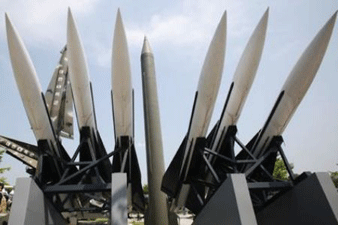
Pakistan’s embattled military regime further dependent on the IMF, the U.S., and the production of munitions for the war in Ukraine to sustain itself through a crisis that shows no sign of resolution.
The U.S.-brokered loan let Pakistan’s military postpone elections, deepen a brutal crackdown, and jail former Prime Minister Imran Khan.
The Intercept, Ryan Grim, Murtaza Hussain, September 17 2023
SECRET PAKISTANI ARMS sales to the U.S. helped to facilitate a controversial bailout from the International Monetary Fund earlier this year, according to two sources with knowledge of the arrangement, with confirmation from internal Pakistani and American government documents. The arms sales were made for the purpose of supplying the Ukrainian military — marking Pakistani involvement in a conflict it had faced U.S. pressure to take sides on.
The revelation is a window into the kind of behind-the-scenes maneuvering between financial and political elites that rarely is exposed to the public, even as the public pays the price. Harsh structural policy reforms demanded by the IMF as terms for its recent bailout kicked off an ongoing round of protests in the country. Major strikes have taken place throughout Pakistan in recent weeks in response to the measures.
The protests are the latest chapter in a year-and-a-half-long political crisis roiling the country. In April 2022, the Pakistani military, with the encouragement of the U.S., helped organize a no-confidence vote to remove Prime Minister Imran Khan. Ahead of the ouster, State Department diplomats privately expressed anger to their Pakistani counterparts over what they called Pakistan’s “aggressively neutral” stance on the Ukraine war under Khan. They warned of dire consequences if Khan remained in power and promised “all would be forgiven” if he were removed.
Since Khan’s ouster, Pakistan has emerged as a useful supporter of the U.S. and its allies in the war, assistance that has now been repaid with an IMF loan. The emergency loan allowed the new Pakistani government to put off a looming economic catastrophe and indefinitely postpone elections — time it used to launch a nationwide crackdown on civil society and jail Khan.
“Pakistani democracy may ultimately be a casualty of Ukraine’s counteroffensive,” Arif Rafiq, a nonresident scholar at the Middle East Institute and specialist on Pakistan, told The Intercept.
Pakistan is known as a production hub for the types of basic munitions needed for grinding warfare. As Ukraine grappled with chronic shortages of munitions and hardware, the presence of Pakistani-produced shells and other ordinances by the Ukrainian military has surfaced in open-source news reports about the conflict, though neither the U.S. nor Pakistan has acknowledged the arrangement.
Records detailing the arms transactions were leaked to The Intercept earlier this year by a source within the Pakistani military. The documents describe munitions sales agreed to between the U.S. and Pakistan from the summer of 2022 to the spring of 2023. Some of the documents were authenticated by matching the signature of an American brigadier general with his signature on publicly available mortgage records in the United States; by matching the Pakistani documents with corresponding American documents; and by reviewing publicly available but previously unreported Pakistani disclosures of arms sales to the U.S. posted by the State Bank of Pakistan.
The weapons deals were brokered, according to the documents, by Global Military Products, a subsidiary of Global Ordnance, a controversial arms dealer whose entanglements with less-than-reputable figures in Ukraine were the subject of a recent New York Times article.
Documents outlining the money trail and talks with U.S. officials include American and Pakistani contracts, licensing, and requisition documents related to U.S.-brokered deals to buy Pakistani military weapons for Ukraine.
The economic capital and political goodwill from the arms sales played a key role in helping secure the bailout from the IMF, with the State Department agreeing to take the IMF into confidence regarding the undisclosed weapons deal, according to sources with knowledge of the arrangement, and confirmed by a related document.
To win the loan, Pakistan had been told by the IMF it had to meet certain financing and refinancing targets related to its debt and foreign investment — targets that the country was struggling to meet. The weapons sales came to the rescue, with the funds garnered from the sale of munitions for Ukraine going a long way to cover the gap.
Securing the loan eased economic pressure, enabling the military government to delay elections — a potential reckoning in the long aftermath of Khan’s removal — and deepen the crackdown against Khan’s supporters and other dissenters. The U.S. remained largely silent about the extraordinary scale of the human rights violations that pushed the future of Pakistan’s embattled democracy into doubt………………………………………..
Bombs for Bailouts
On May 23, 2023, according to The Intercept’s investigation, Pakistani Ambassador to the U.S. Masood Khan sat down with Assistant Secretary of State Donald Lu at the State Department in Washington, D.C., for a meeting about how Pakistani arms sales to Ukraine could shore up its financial position in the eyes of the IMF.
……………………………………………………………………………………………………………………………………………… In an interview with The Intercept at the Capitol on Tuesday, Van Hollen said that his knowledge of the U.S. role in facilitating the IMF loan came directly from the Biden administration………………………………………………………..
Eleventh-Hour IMF Deal
…………………………………………………………………….. The secret arms deal for Ukraine would allow Pakistan to add nearly another billion dollars to its balance sheet ………………………………………………………………………………..
As The Intercept previously reported, Lu, the senior State Department official, said in a meeting with then-Pakistani Ambassador Asad Majeed Khan two weeks after the invasion that it was the belief of the U.S. that Pakistan had taken a neutral position solely at Khan’s direction, adding that “all would be forgiven” if Khan was removed in the no-confidence vote. Since his ouster, Pakistan has firmly taken the side of the U.S. and Ukraine in the war.
……………………………………………………………………………..After orchestrating Khan’s removal, the military embarked on a campaign to eradicate his political party through a wave of killings and mass detentions. Khan himself is currently imprisoned on charges of mishandling a classified document and facing some 150 additional charges — allegations widely viewed as a pretext to stop him from contesting future elections.
………………………………………………………..The absence of other foreign support left Pakistan’s embattled military regime further dependent on the IMF, the U.S., and the production of munitions for the war in Ukraine to sustain itself through a crisis that shows no sign of resolution. https://theintercept.com/2023/09/17/pakistan-ukraine-arms-imf/
Zelensky Implies Ukrainian Refugees in Europe Will Resort to Terrorism If West Curtails Aid

Despite Ukraine’s faltering counteroffensive, the Ukrainian leader said he was preparing for a long war and rejected the idea of diplomacy with Russian President Vladimir Putin.
He told The Economist it would not be a ‘good story’ for Europe if it were to ‘drive these people into a corner’
By Dave DeCamp / Antiwar.com September 16, 2023 https://scheerpost.com/2023/09/16/zelensky-implies-ukrainian-refugees-in-europe-will-resort-to-terrorism-if-west-curtails-aid/
Ukrainian President Volodymyr Zelensky implied in an interview with The Economist that Ukrainian refugees in Europe might resort to terrorism if Western aid to Ukraine is curtailed.
The Economist report reads: “Curtailing aid to Ukraine will only prolong the war, Mr Zelensky argues. And it would create risks for the West in its own backyard. There is no way of predicting how the millions of Ukrainian refugees in European countries would react to their country being abandoned. Ukrainians have generally ‘behaved well’ and are ‘very grateful’ to those who sheltered them. They will not forget that generosity. But it would not be a ‘good story’ for Europe if it were to ‘drive these people into a corner.’”
Zelensky also said in the interview, published on September 10, that anyone who is not supporting Ukraine is with Russia. “If you are not with Ukraine, you are with Russia, and if you are not with Russia, you are with Ukraine. And if partners do not help us, it means they will help Russia to win. That is it,” he said.
Despite Ukraine’s faltering counteroffensive, the Ukrainian leader said he was preparing for a long war and rejected the idea of diplomacy with Russian President Vladimir Putin. The report reads: “Tapping loudly on the table, Mr. Zelensky rejects outright the idea of compromise with Vladimir Putin. War will continue for ‘as long as Russia remains on Ukrainian territory,’ he says.”
While worried about sustaining support from the West for the long-term, Zelensky said he does not expect to lose US backing if former President Trump is elected in 2024. He said Trump would “never” support Putin. “That isn’t what strong Americans do,” he added.
The Biden administration seems happy to support an open-ended conflict and is looking to tie the hands of a future president by negotiating a deal with Ukraine for long-term military support. The US and other G7 nations vowed at the recent NATO summit in Vilnius to negotiate their own bilateral security deals with Ukraine.
Germany’s Scholz: Fresh nuclear disarmament talks should include China
Reuters, September 12, 2023 https://www.reuters.com/world/germanys-scholz-fresh-nuclear-disarmament-talks-should-include-china-2023-09-12/
BERLIN, Sept 12 (Reuters) – German Chancellor Olaf Scholz called for new international negotiations on nuclear disarmament on Tuesday, saying that not only Russia and the United States but also China should be involved.
“Getting a fresh start on arms control would be very important,” he said at a religious event in Berlin, adding that several other countries had also built up a nuclear arsenal.
Preventing Iran from producing uranium that could contribute to nuclear weapon production “remains an important task,” he said.
Scholz said nuclear weapons posed an existential threat to humanity, which is why there is an “immediate obligation” to do everything possible to ensure they are never used.
According to the Stockholm International Peace Research Institute (SIPRI), the number of operational nuclear weapons rose slightly in 2022 as countries implemented long-term force modernisation and expansion plans.
Reporting by Andreas Rinke, Writing by Friederike Heine, Editing by Miranda Murray
Zelensky Issues Veiled Threat To Destabilize Europe If Weapons Flow Curtailed
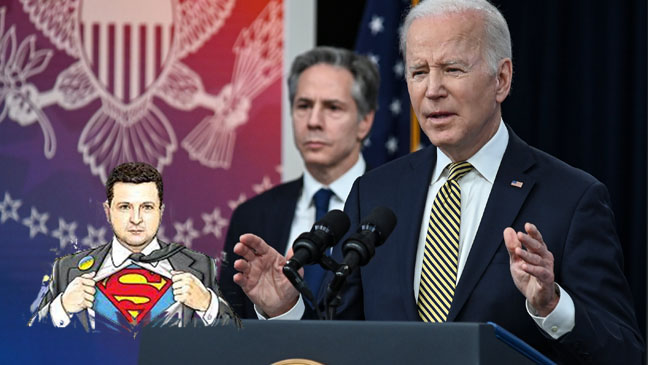
Zero Hedge, TYLER DURDEN, WEDNESDAY, SEP 13, 2023 –
As predicted by a number of independent geopolitical commentators, including ourselves, the emerging official narrative on why Ukraine’s counteroffensive ended in failure will be to falsely claim the West didn’t provide “enough” weapons in a timely fashion. Despite the literally tens of billions of US taxpayer dollars sunk into Kiev’s war effort at record-breaking pace and scale, it will be the “fault” of the United States and its allies—or at least this will be solidified as the Ukrainian government’s perspective and narrative (and then will be parroted among Zelensky’s most diehard hawkish supporters).
Ukrainian President Volodymyr Zelensky has this week been busy advancing this as a key talking point, first telling CNN’s Fareed Zakaria on Sunday his country “waited too long” to start counteroffensive. The reason? He blames the West for forcing his military leaders to wait so long for the necessary weaponry and equipment.
“We — look, we waited too long. It’s true. No, I’m thankful to partners, to the United States, EU, other partners,” Zelensky said. “I’m thankful very much to President Biden and to Congress, but we have to understand: We waited too long, they put mines.”
“Then when we been ready from the point of view of our partners because the decision to give us, for example, Bradley [Fighting Vehicles] and other kind of weapons, the decision, it doesn’t mean the result.” And The Hill underscores of his remarks, “Zelensky noted that Ukraine does not get the weapons promised to it immediately after they are announced by allies.” This is not the first time Zelensky has blamed slowness in supplies and training from his Western sponsors. But behind the scenes, his Western patrons have criticized him for being “ungrateful”.
In late March, Zelensky when asked about why the counteroffensive was being delayed said that he can’t “start yet” as he’s unable to “send our brave soldiers to the front line without tanks, artillery and long-range rockets.” And then in May he reasserted that “We can advance with what we’ve got and I think we can be successful but we will lose a lot of people, I think that is unacceptable.” He had added at the time, “We need to wait, we need a bit more time.” The offensive later belatedly kicked off in full force in June.
In another interview freshly published this week with US media, Zelensky took this theme of “blame the West” even further. In remarks to the Economist, he issued a thinly veiled threat to those countries thinking about curtailing aid in any way, warning that “millions of Ukrainian refugees in European countries” are capable of destabilizing the West.
Here’s what Zelensky said as captured by the Economist interview published this week:
Curtailing aid to Ukraine will only prolong the war, Mr Zelensky argues. And it would create risks for the West in its own backyard. There is no way of predicting how the millions of Ukrainian refugees in European countries would react to their country being abandoned.
Ukrainians have generally “behaved well” and are “very grateful” to those who sheltered them. They will not forget that generosity. But it would not be a “good story” for Europe if it were to “drive these people into a corner”.
A number of online commentators took note of his surprisingly open and aggressively accusatory rhetoric, saying he seems to be threatening Europe with terrorism if Ukraine doesn’t get its way.
“Am I misreading this or is Zelenskyy actually threatening European countries with terrorism if they don’t send the weapons he wants to Ukraine?” Arnaud Bertrand reacted. And Max Abrahms, a counterterrorism expert and professor of international relations had this to say…
Zelensky is now threatening that Ukrainian refugees will attack Europe if it doesn’t keep the gravy train running.
In the same interview Zelensky tripled down on prior repeat vows to never negotiate with Putin or to contemplate ceding territory. …………………………………………………..
When will US, UK, and European leaders begin to say “enough is enough” when it comes to Zelensky’s chastising, humiliating and threatening them?https://www.zerohedge.com/geopolitical/zelensky-issues-veiled-threat-destabilize-europe-if-weapons-flow-curtailed
Ukraine joining NATO ‘would not promote peace’ – ex-French president
https://www.rt.com/news/582921-france-sarkozy-ukraine-nato-eu/ 12 Sept 23
Kiev must adopt a neutral stance between Russia and the West, Nicolas Sarkozy has said
Former French President Nicolas Sarkozy has warned that Ukrainian membership of NATO and the EU “would not promote peace” and would be perceived as a “provocation” by Russia.
Speaking to French news station BFMTV on Wednesday, Sarkozy argued it is in Kiev’s best interests to remain “neutral” regarding Western blocs. The former leader also insisted that diplomacy with Moscow remains the most prudent option for Ukraine to end the current conflict.
“Bringing Ukraine into NATO would not promote peace,” said Sarkozy, who served as French president between 2007 and 2012.
NATO leaders declared at a summit in Lithuania in July that the bloc would only invite Ukraine to become a member “when allies agree and conditions are met.” NATO had already denied Kiev’s calls for a “fast-track” to full membership in September of 2022.
Moscow has frequently expressed its opposition to NATO’s eastward expansion. President Vladimir Putin cited the bloc’s involvement in Ukraine as among the key reasons when Moscow began its military operation against Kiev last year.
Ukraine has also pursued EU membership and was granted formal candidate status in 2022. In June, sources within the bloc told Reuters that Kiev currently meets two of the seven conditions required to be considered for full membership.
Rather than chasing closer ties with the West, Sarkozy told BFMTV there are “two solutions” available to Ukraine and its allies to bring an end to the hostilities. The first, he claimed, is the “annihilation” of Russia – before explaining that this is unrealistic because “we are not going to wipe out the second nuclear power in the world, or the world risks falling into total war.”
According to Sarkozy, a more achievable scenario is “diplomatic discussion.” The former president stated that his experience had given him a clear view of what can be achieved over the negotiating table. “They tell me Putin has changed and [that] we cannot have discussions with him,” Sarkozy said. “Those who say that are generally those who have never met him.”
Sarkozy reiterated to BFMTV his stance that Ukraine should pursue firm neutrality in its relationships with Russia and the West, arguing: “When you wave the muleta under the bull’s nose, you shouldn’t be surprised if he attacks.”
Sarkozy’s comments follow the backlash he received for an interview with French publication Le Figaro last month, in which he said Kiev should disregard joining NATO or the EU in favor of “an international agreement providing it with extremely strong security assurances to protect it against any risk.”
” The future of nuclear as an alternative energy source relies on the success of the Fukushima release” – Rafael Grossi.

“more broadly, the future of nuclear as an alternative energy source relies on the success of the Fukushima release,” he said. Though there has been heightened public alarm toward nuclear plants recently – for instance, regarding the Russian-occupied Zaporizhzhia plant in Ukraine – “the problem there is war, the problem is not nuclear energy,” Grossi said.
AEA chief ‘completely convinced’ it’s safe to release treated Fukushima nuclear wastewater .
By Jessie Yeung, Marc Stewart and Emiko Jozuka, Tokyo CNN, 7 July 23
Japan’s plan to release treated radioactive water into the ocean is safe and there is no better option to deal with the massive buildup of wastewater collected since the 2011 Fukushima nuclear disaster, the head of the United Nations’ nuclear watchdog told CNN.
Japan will release the wastewater sometime this summer, a controversial move 12 years after the Fukushima nuclear plant meltdown. Japanese authorities and the IAEA have insisted the plan follows international safety standards – the water will first be treated to remove the most harmful pollutants, and be released gradually over many years in highly diluted quantities.
But public anxiety remains high, including in nearby countries like South Korea, China and the Pacific Islands, which have voiced concern about potential harm to the environment or people’s health. On Friday, Chinese customs officials announced they would maintain a ban on food imports from 10 Japanese prefectures including Fukushima, and strengthen inspections to monitor for “radioactive substances, to ensure the safety of Japanese food imports to China.”……………………..
On Tuesday, Grossi formally presented the IAEA’s safety review to Japanese Prime Minister Fumio Kishida. The report found the wastewater release plan will have a “negligible” impact on people and the environment, adding that it was an “independent and transparent review,” not a recommendation or endorsement……………………….
The 2011 disaster caused the plant’s reactor cores to overheat and contaminate water within the facility with highly radioactive material. Since then, new water has been pumped in to cool fuel debris in the reactors. At the same time, ground and rainwater have leaked in, creating more radioactive wastewater that now needs to be stored and treated.
That wastewater now measures 1.32 million metric tons – enough to fill more than 500 Olympic-sized swimming pools.
Japan has previously said there were “no other options” as space runs out – a sentiment Grossi echoed on Friday. When asked whether there were better alternatives to dispose of the wastewater, the IAEA chief answered succinctly: “No.”
It’s not that there are no other methods, he added – Japan had considered five total options, including hydrogen release, underground burial and vapor release, which would have seen wastewater boiled and released into the atmosphere………………………………………
International skepticism
But some critics have cast doubt on the IAEA’s findings, with China recently arguing that the group’s assessment “is not proof of the legality and legitimacy” of the wastewater release.
Many countries have openly opposed the plan; Chinese officials have warned that it could cause “unpredictable harm,” and accused Japan of treating the ocean as a “sewer.” The Secretary General of the Pacific Islands Forum, an inter-governmental group of Pacific island nations that includes Australia and New Zealand, also published an op-ed in January voicing “grave concerns,” saying more data was needed.
And in South Korea, residents have taken to the streets to protest the plan. Many shoppers have stockpiled salt and seafood for fear these products will be contaminated once the wastewater is released – even though Seoul has already banned imports of seafood and food items from the Fukushima region.
International scientists have also expressed concern to CNN that there is insufficient evidence of long-term safety, arguing that the release could cause tritium – a radioactive hydrogen isotope that cannot be removed from the wastewater – to gradually build up in marine ecosystems and food chains, a process called bioaccumulation…………………………………
more broadly, the future of nuclear as an alternative energy source relies on the success of the Fukushima release, he said. Though there has been heightened public alarm toward nuclear plants recently – for instance, regarding the Russian-occupied Zaporizhzhia plant in Ukraine – “the problem there is war, the problem is not nuclear energy,” Grossi said……….. https://edition.cnn.com/2023/07/06/asia/japan-fukushima-water-iaea-chief-interview-intl-hnk/index.html
1 This Month



26 September – International Day for the Total Elimination of Nuclear Weapons


PLEASE OPPOSE HR 8255 AND S.3639 – bills would accelerate satellite deployment, with no environmental review or safeguards – https://ncstd5li.quorum.us/campaign/169331/
To see nuclear-related stories in greater depth and intensity – go to https://nuclearinformation.wordpress.com
-
Archives
- September 2026 (233)
- August 2026 (330)
- July 2026 (355)
- June 2026 (287)
- May 2026 (306)
- April 2026 (356)
- March 2026 (251)
- February 2026 (267)
- January 2026 (308)
- December 2025 (358)
- November 2025 (359)
- October 2025 (375)
-
Categories
- 1
- 1 NUCLEAR ISSUES
- business and costs
- climate change
- culture and arts
- ENERGY
- environment
- health
- history
- indigenous issues
- Legal
- marketing of nuclear
- media
- opposition to nuclear
- PERSONAL STORIES
- politics
- politics international
- Religion and ethics
- safety
- secrets,lies and civil liberties
- spinbuster
- technology
- Uranium
- wastes
- weapons and war
- Women
- 2 WORLD
- ACTION
- AFRICA
- Atrocities
- AUSTRALIA
- Christina's notes
- Christina's themes
- culture and arts
- Events
- Fuk 2022
- Fuk 2023
- Fukushima 2017
- Fukushima 2018
- fukushima 2019
- Fukushima 2020
- Fukushima 2021
- general
- global warming
- Humour (God we need it)
- Nuclear
- RARE EARTHS
- Reference
- resources – print
- Resources -audiovicual
- Weekly Newsletter
- World
- World Nuclear
- YouTube
-
RSS
Entries RSS
Comments RSS
 nuclear-news