Pacific island States support the Treaty on Prohibition of Nuclear Weapons – a problem for Australia in joining AUKUS nuclear military alliance
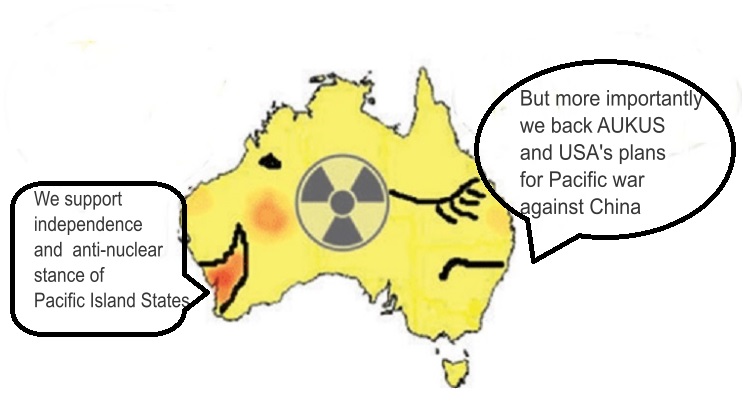
French criticism of nuclear ban treaty highlights Canberra’s dilemma
The Interpreter, NIC MACLELLAN, 2 Oct 23
Can Australia rebuild a strategic military partnership with France at
the same time as independence movements claim Pacific support?
On 28 September, the Assembly of French Polynesia unanimously passed a resolution endorsing the Treaty on the Prohibition of Nuclear Weapons (TPNW), the nuclear ban treaty that entered into force in 2021. Even though France refuses to sign the treaty, and still controls the defence and foreign policy of French Polynesia, the local legislature in Tahiti with its new pro-independence government sees TPNW as setting a new norm in international law. The resolution encourages “the participation of France as an observer state at the next TPNW Meeting of the States Parties”, to be held in New York in late November. It also calls on the French government to “work towards France’s adherence to this new international norm.”
A key reason for this pointed message to Paris are the TPNW provisions that call for assistance to nuclear survivors and clean-up of contaminated nuclear test sites. The Ma’ohi people are still seeking compensation for the health and environmental effects of 193 French nuclear tests at Moruroa and Fangataufa.
Beyond this, French Polynesia’s critique of nuclear weapons echoes the views of the majority of members of the Pacific Islands Forum. Unlike Australia, nine independent Pacific Island countries and Aotearoa-New Zealand have already signed and ratified the TPNW.
At the recent Australian Labor Party (ALP) National Conference in Brisbane, the party re-confirmed its support for signing the TPNW – under restrictive conditions – and agreed to send an observer to the next Meeting of State Parties. However key ALP leaders are opposed to signing, and nuclear weapons states such as the United States and France, having long derided the treaty, are now ramping up their opposition to it.
A front-page story in The Australian on 2 October cited an unnamed French diplomat who criticised Australia over its tentative moves towards signing TPNW, though the story fails to mention last week’s resolution from the Assembly of French Polynesia…………………………………………….
the Australian government has held a series of meetings with key French ministers to rebuild relations disrupted by AUKUS, including a summit between Defence Minister Richard Marles and French counterpart Sebastien Lecornu in September 2022, and a 2+2 meeting of defence and foreign ministers in January. Marles and Lecornu are organising the South Pacific Defence Ministers meeting in Noumea in December, to the dismay of the FLNKS independence movement, which is in the midst of talks with the French state over a new political status for New Caledonia.
Last year, Marles congratulated Emmanuel Macron on his re-election to the French presidency, proclaiming “France is our neighbour. France is a Pacific country. And as such, France deeply matters to Australia.”
But France is a European colonial power, not a Pacific country. It is recognised by the United Nations as the administering power of non-self-governing territories. It has responsibilities for decolonisation under international law. Australian governments may be reluctant to talk publicly about this, but the issue of self-determination is firmly on the regional agenda, posing difficult choices for all Forum member countries (as shown by recent debates over West Papua, Bougainville, Guam, etc).
Another problem is that, in both Australia and France, the perspectives of leaders from Francophone island communities are usually missing from the public debate about France’s role in Indo-Pacific security. It’s rare to see the media or think tanks cite President Louis Mapou of New Caledonia or newly elected President Moetai Brotherson of French Polynesia. Both will be attending the next Pacific Islands Forum summit in Rarotonga as it discusses regional security – for the first time, leaders from both French territories in the Forum are supporters of independence and sharp anti-nuclear critics.
So, can Australia rebuild a strategic military partnership with France at the same time as its Pacific neighbours are seeking an independent and sovereign state?
As Penny Wong travelled to Noumea last April, becoming the first Australian Foreign Minister to address the Congress of New Caledonia, Mapou was eager to strengthen ties with Canberra around trade, investment and people-to-people engagement. He also diplomatically highlighted key differences around Australia’s close alignment with the United States under the AUKUS partnership:
The independence movement of New Caledonia – of which I’m a member – is in favour of non-alignment. We regularly attend the summits of the Non-Aligned Movement. From the earliest days, we have supported a nuclear free Pacific – that’s even set out in the preamble of the draft Constitution of Kanaky that we submitted to the United Nations in 1986. When Australia decides to align itself with the United States in the framework of AUKUS to acquire nuclear submarines, it raises the question: if it starts here, where will it end? How does this impact the Treaty of Rarotonga and the Boe Declaration on security?
The Albanese government has proclaimed its support for a world without nuclear weapons. But talk is easy. It’s getting harder for the ALP government to balance tensions between its role as an AUKUS partner, a strategic partner with France and the “security partner of choice” for the island nations of the Pacific, which are deeply opposed to nuclear weapons. Why should Australia side with a European colonial power against its closest neighbours? https://www.lowyinstitute.org/the-interpreter/french-criticism-nuclear-ban-treaty-highlights-canberra-s-dilemma
A “New Cold War” on an Ever-Hotter Planet

The Slow-Motion Equivalent of a Nuclear War?
Tom Dispatch BY TOM ENGELHARDT, 1 Oct 23
Tell me, what planet are we actually on? All these decades later, are we really involved in a “second” or “new” Cold War? It’s certainly true that, as late as the 1980s, the superpowers (or so they then liked to think of themselves), the United States and the Soviet Union, were still engaged in just such a Cold War, something that might have seemed almost positive at the time. After all, a “hot” one could have involved the use of the planet’s two great nuclear arsenals and the potential obliteration of just about everything.
But today? In case you haven’t noticed, the phrase “new Cold War” or “second Cold War” has indeed crept into our media vocabulary. ………………………………………
let’s stop and think about just what planet we’re actually on. In the wake of August 6 and August 9, 1945, when two atomic bombs destroyed the Japanese cities of Hiroshima and Nagasaki, there was little doubt about how “hot” a war between future nuclear-armed powers might get. And today, of course, we know that, if such a word can even be used in this context, a relatively modest nuclear conflict between, say, India and Pakistan might actually obliterate billions of us, in part by creating a — yes, brrr — “nuclear winter,” that would give the very phrase “cold” war a distinctly new meaning.
These days, despite an all too “hot” war in Ukraine in which the U.S. has, at least indirectly, faced off against the crew that replaced those Soviet cold warriors of yore, the new Cold War references are largely aimed at this country’s increasingly tense, ever more militarized relationship with China.
Its focus is both the island of Taiwan and much of the rest of Asia. Worse yet, both countries seem driven to intensify that struggle.
In case you hadn’t noticed, Joe Biden made a symbolic and much-publicized stop in Vietnam (yes, Vietnam!) while returning from the September G20 summit meeting in India. There, he insisted that he didn’t “want to contain China” or halt its rise. He also demanded that it play by “the rules of the game” (and you know just whose rules and game that was). In the process, he functionally publicized his administration’s ongoing attempt to create an anti-China coalition extending from Japan and South Korea (only recently absorbed into a far deeper military relationship with this country), all the way to, yes, India itself.
And (yes, as well!) the Biden administration has upped military aid to Japan, Taiwan (including $85 million previously meant for Egypt), Australia (including a promise to supply it with its own nuclear attack submarines), and beyond. In the process, it’s also been reinforcing the American military position in the Pacific from Okinawa, Guam, and the Philippines to — yes again — Australia. Meanwhile, one four-star American general has even quite publicly predicted that a war between the U.S. and China is likely to break out by 2025, while urging his commanders to prepare for “the China fight”! Similarly, Director of National Intelligence Avril Haines has called China the “leading and most consequential threat to U.S. national security” and the Biden foreign policy team has been hard at work encircling — the Cold War phrase would have been “containing” — China, both diplomatically and militarily.
On the Chinese side, that country’s military has been similarly ramping up its air and naval activities around and ever closer to the island of Taiwan in an ominous fashion, even as it increases its military presence in places like the South China Sea (as has the U.S.). Oh, and just in case you hadn’t noticed, with a helping hand from Russia, Beijing is also putting more money and effort into expanding its already sizable nuclear arsenal.
Yes, this latest version of a Cold War is (to my mind at least) already a little too hot to handle. And yet, despite that reality, it couldn’t be more inappropriate to use the term “new Cold War” right now on a globe where a previously unimagined version of a hot war is staring us all, including most distinctly the United States and China, in the face.
As a start, keep in mind that the two great powers facing off so ominously against each other have long faced off no less ominously against the planet itself. After all, the United States remains the historically greatest greenhouse gas emitter of all time, while China is the greatest of the present moment (with the U.S. still in second place and Americans individually responsible for significantly more emissions than their Chinese counterparts). The results have been telling in both countries.
In 2023, the United States has already experienced a record 23 billion-dollar weather disasters from Hawaii to Florida with the year still months from ending. Meanwhile, China has been clobbered by staggering heat waves and stunning flooding, the heaviest rains in 1,000 years, displacing 1.2 million people in areas around its capital, Beijing. Given the past summer, this planet and all its inhabitants are no longer in anything that could pass for a cold war state.
The Freedom to Fuel?
As it happens, industrializing countries first began to, in essence, make war on our world in the late eighteenth century, but had no idea they were doing so until deep into the twentieth century. These days, however, it should be anything but a secret that humanity is all too knowingly at war — and there’s nothing “cold” about it — with and on our very own world. ……………………………………………………………….
In 2022, those major G20 nations that met in India recently poured a record $1.4 trillion (yes, that is not a misprint!) into subsidizing fossil fuels in various ways, more than double the figure for 2019………………………………………………………
The results of such a — yes, warlike — approach to the planet have been painfully obvious this year. After all, the northern hemisphere just broiled through its hottest summer in recorded history and the southern hemisphere the hottest winter. Each summer month — June, July, and August — also broke its own previous global record for heat and 2023 is almost guaranteed to be the hottest year ever recorded.
In addition, in the last five months, the world’s ocean waters also broke temperature records, heating up if not literally to the boiling point, then at least to stunning levels……………………………………………………………………………….
it hardly matters where you look. Even Australia just experienced its hottest winter ever and already potentially “catastrophic” spring fire conditions are developing there. Evidence also suggests that, whatever the extremes of the present moment, the future holds far worse in store.
In that context, think about the fact that the planet’s two greatest carbon emitters, China and the United States, now fully knowledgeable about what they’re doing, can’t seem to imagine working together in any fashion to deal with a catastrophe that may prove, in the decades to come, the slow-motion equivalent of a nuclear war.
The New Hot War
So, a new Cold War? Don’t count on it. I mean honestly, how can anyone anywhere talk about a new cold war with a straight face on a planet where nature’s increasingly hot war is the order of the day — and where far too little is being done. Meanwhile, as of this moment, the distinctly hot war in Ukraine is only worsening, as the Russian and Ukrainian militaries emit ever more carbon, which, it turns out, is what militaries do. After all, the U.S. military is the largest institutional greenhouse emitter on the planet, larger than some countries.
………………………………………………………………………. On a planet burning up ahead of schedule — and where, no matter how you look at it, humanity is reaching beyond some of the boundaries set for life itself — isn’t it time to refocus in a major way on the new Hot War (and not the one in Ukraine) that has this planet in its grip? Isn’t it time for the American and Chinese leaderships to cut the war-like posturing and together face a world in desperate danger, for the sake, if nothing else, of all our children and grandchildren who don’t deserve the planet we’re heating up for them in such a devastatingly rapid fashion? https://tomdispatch.com/the-slow-motion-equivalent-of-a-nuclear-war/
American Meddling Failed To Prevent Robert Fico’s Victory In The Latest Slovak Elections
ANDREW KORYBKO, OCT 2, 2023, https://korybko.substack.com/p/american-meddling-failed-to-prevent?utm_source=post-email-title&publication_id=835783&post_id=137585191&utm_campaign=email-post-title&isFreemail=true&r=ln98x&utm_medium=email
The reason why America meddled in this election is because it fears both the substance and symbolism of a hitherto stalwart NATO vassal defecting from the bloc’s anti-Russian proxy war coalition.
The “Direction-Social Democracy” (SMER) party of former Prime Minister Robert Fico emerged victorious after Slovakia’s latest elections on Saturday in spite of Russia’s Foreign Intelligence Service (SVR) warning before the vote that the US will go to any lengths to prevent that outcome. Nobody should have been surprised by that since CNN’s reporting made it obvious that Washington wanted him to lose. Here are three of their articles fearmongering about his democratically driven return to office:
* “A NATO country could soon have a pro-Russian leader”
* “With Kremlin apologist leading the polls, Slovakia vote threatens country’s support for Ukraine”
* “Pro-Russian politician wins Slovakia’s parliamentary election”
The reason why America meddled in this election is because it fears both the substance and symbolism of a hitherto stalwart NATO vassal defecting from the bloc’s anti-Russian proxy war coalition. Fico previously condemned the West’s role in provoking and perpetuating this conflict exactly as neighboring Hungarian leader Viktor Orban has done since the get-go. Just like him, Fico is also against arming Ukraine and could prevent others’ weapons from transiting across his country as well.
He’ll still need to form a governing coalition in order to make good on his promises, but few doubt that he’ll be able to. Assuming that’ll happen, then Slovakia will join Hungary in creating a center of anti-war gravity in the heart of both the EU and NATO, which complements Poland’s newly cautious stance towards this proxy conflict brought about by its dispute with Ukraine. These three could then form an influential force if the latter’s ruling “Law & Justice” (PiS) party wins re-election on 15 October.
Poland remains much more committed to this conflict than Hungary and post-election Slovakia, but there’s also no denying that the Polish people are incredibly offended at Ukraine’s ungratefulness. A critical mass of them might therefore vote for the anti-establishment Confederation party to protest PiS’ prior appeasement of Kiev up until recently despite that regime’s glorification of those who genocided Poles. If enough do so, then PiS might be compelled to form a coalition government with Confederation.
In that case, Poland might move closer towards Hungary and Slovakia’s position, which could inspire average Europeans to follow these countries’ lead during their own upcoming elections. The demonstration effect that was set into motion by Slovakia and which might soon manifest itself in Poland is therefore regarded by the US as a strategic challenge for good reason. That doesn’t justify its failed meddling in the latest Slovak elections, but simply places its motives into the appropriate context.
The fact that the CIA still failed to prevent Fico’s re-election dispels three popular myths, first and foremost that agency’s omnipotence. The second is foreign voters’ alleged inability to defy the American government’s will, the false perception of which has been exploited to suppress anti-establishment turnout. And finally, the Ukrainian Conflict is truly unpopular in some countries despite the media’s claims to the contrary and its crazed efforts to artificially manufacture support for this proxy war there.
With these symbolic outcomes in mind as well as the substantive changes to Slovak policy that are likely to follow its latest election, not to mention their possible impact on Poland in the coming future and the rest of Europe after that, the failure of America’s meddling campaign is a major development. It’s premature to describe it as a game-changer, but it still suggests a potentially impending inflection point in the Ukrainian Conflict, provided of course that the CIA doesn’t successfully sabotage related trends
North Korea slams #nuclear watchdog as ‘paid trumpeter’ for USA
AA 2 Oct 23 #anti-nuclear #nuclear-free #NoNukes
North Korea on Monday criticized the UN nuclear watchdog, calling it a “paid trumpeter” for the US.
Accusing International Atomic Energy Agency (IAEA) chief Rafael Grossi of “taking lead in creating the atmosphere of pressurizing” Pyongyang, North Korea’s Ministry of Nuclear Power Industry said he was “spreading a false story about imminent 7th nuclear test” by North Korea.
Pyongyang was responding to a resolution adopted on Sept. 29 at the IAEA general conference that calls on North Korea to curb its nuclear programs.
“If the IAEA wants to avoid international criticism as a paid trumpeter of the US, it would be well advised to devote itself to tackling the difficulties facing the international community such as the US nuclear proliferation through ‘AUKUS’, Japan’s discharge of nuclear-polluted water and the US expansion of nuclear test ground,” a ministry statement said.
…………………..“We vehemently denounce and reject the abnormal behavior of the IAEA which has been completely reduced to a reptile organization that serves the US away from its elementary mission as an international organization to maintain impartiality,” the statement added.
………………….“We clarify once again our principled stand to the director-general (of IAEA) who behaves like a US State Department official, forgetful of his duty as director of an international organization.
“As long as tyrannical nuclear weapons of the US and imperialist aggression forces exist on this land, the DPRK’s position as a nuclear weapons state will remain unchanged and the DPRK will never tolerate the hostile forces’ acts of infringing upon its sovereignty,” the statement said. https://www.aa.com.tr/en/asia-pacific/north-korea-slams-nuclear-watchdog-as-paid-trumpeter-for-us/3005744
Flagging Support: Zelenskyy Loses Favour in Washington

“With no end in sight, it looks increasingly likely that Ukraine will be yet another endless quagmire funded by the American taxpayer.”
In August, the Biden administration had requested a $24 billion package for Ukraine but was met with a significantly skimmed total of $6.1 billion. Of that amount $1.5 billion is earmarked for the Ukrainian Security Assistance Initiative, a measure that continues to delight US arms manufacturers by enabling the Pentagon to place contracts on their behalf to build weapons for Kyiv.
October 1, 2023, by: Dr Binoy Kampmark, https://theaimn.com/flagging-support-zelenskyy-loses-favour-in-washington/
Things did not go so well this time around. When the worn Ukrainian President Volodymyr Zelenskyy turned up banging on the doors of Washington’s powerful on September 21, he found fewer open hearts and an increasingly large number of closed wallets. The old ogre of national self-interest seemed to be presiding and was in no mood to look upon the desperate leader with sweet acceptance.
Last December, Zelensky and Ukrainian officials did not have to go far in hearing endorsements and encouragement in their efforts battling Moscow’s armies. The visit of the Ukrainian president, as White House Press Secretary Karine Jean-Pierre stated at the time, “will underscore the United States’ steadfast commitment to supporting Ukraine for as long as it takes, including through provision of economic, humanitarian and military assistance.”
Republican Senator from Utah, Mitt Romney, was bubbly with enthusiasm for the Ukrainian leader. “He’s a national and global hero – I’m delighted to be able to hear from him.” Media pack members such as the Associated Press scrambled for stretched parallels in history’s record, noting another mendicant who had previously appeared in Washington to seek backing. “The moment was Dec. 22, 1941, as British Prime Minister Winston Churchill landed near Washington to meet President Franklin D. Roosevelt just weeks after the attack on Pearl Harbor.”
Then House Speaker, the California Democrat Nancy Pelosi, also drew on the Churchillian theme with a fetishist’s relish. “Eighty-one years later this week, it is particularly poignant for me to be present when another heroic leader addresses the Congress in time of war – and with Democracy itself on the line,” she wrote colleagues in a letter.
Zelenskyy, not wishing to state the obvious, suggested a different approach to the question of aiding Ukraine. While not necessarily an attentive student of US history, any briefings given to him should have been mindful of a strand in US politics sympathetic to isolationism and suspicious of foreign leaders demanding largesse and aid in fighting wars.
How, then, to get around this problem? Focus on clumsy, if clear metaphors of free enterprise. “Your money is not charity,” he stated at the time, cleverly using the sort of corporate language that would find an audience among military-minded shareholders. “It’s an investment in global security and democracy that we handle in the most responsible way.” Certainly, Ukrainian aid has been a mighty boon for the US military-industrial complex, whose puppeteering strings continue to work their black magic on the Hill.
Despite such a show, the number of those believing in the wisdom of such an investment is shrinking. “In a US capital that has undergone an ideological shift since he was last here just before Christmas 2022,” remarked Stephen Collinson of CNN, “it now takes more than quoting President Franklin Roosevelt and drawing allusions to 9/11, to woo lawmakers.”
Among the investors, Republicans are shrinking more rapidly than the Democrats. An August CNN poll found a majority in the country – 55% – firmly against further funding for Ukraine. Along party lines, 71% of Republicans are steadfastly opposed, while 62% of Democrats would be satisfied with additional funding.
Kentucky Republican and Senate Minority leader Mitch McConnell continues to claim that funding Ukraine is a sensibly bloody strategy that preserves American lives while harming Russian interests. “Helping Ukraine retake its territory means weakening – weakening – one of America’s biggest strategic adversaries without firing a shot.”
The same cannot be said about the likes of Kentucky’s Republican Senator Rand Paul. While Zelenskyy was trying to make a good impression on the Hill, the senator was having none of it. “I will oppose any effort to hold the federal government hostage for Ukraine funding. I will not consent to expedited passage of any spending measure that provides any more US aid to Ukraine.”
In The American Conservative, Paul warned that, “With no end in sight, it looks increasingly likely that Ukraine will be yet another endless quagmire funded by the American taxpayer.” President Joe Biden’s administration had “failed to articulate a clear strategy or objective in this war, and Ukraine’s long-awaited counter-offensive has failed to make meaningful gains in the east.”
Such a quagmire was also proving jittering in its dangers. There was the prospect of miscalculation and bungling that could pit US forces directly against the Russian army. There were also no “effective oversight mechanisms” regarding the funding that has found its way into Kyiv’s pockets. “Unfortunately, corruption runs deep in Ukraine, and there’s plenty of evidence that it has run rampant since Russia’s invasion.” The Zelenskyy government, he also noted in a separate post, had “banned the political parties, they’ve invaded churches, they’ve arrested priests, so no, it isn’t a democracy, it’s a corrupt regime.”
Republicans such as Missouri Senator Josh Hawley are of the view that the US should be slaying different monsters of a more threatening variety. (Every imperium needs its formidable adversaries.) The administration, he argued, should “take the lead on China” and reassure its “European allies” that Washington would be providing “the nuclear umbrella in Europe.”
On September 30, with yet another government shutdown looming in Washington, the US House approved a bill for funding till mid-November by a 335-91 vote. But the measure did not include additional military or humanitarian aid to Ukraine. In August, the Biden administration had requested a $24 billion package for Ukraine but was met with a significantly skimmed total of $6.1 billion. Of that amount $1.5 billion is earmarked for the Ukrainian Security Assistance Initiative, a measure that continues to delight US arms manufacturers by enabling the Pentagon to place contracts on their behalf to build weapons for Kyiv.
The limited funding measure proved a source of extreme agitation to the clarion callers who have linked battering the Russian bear, if only through a flawed surrogate, with the cause of US freedom. “I am deeply disappointed that this continuing resolution did not include further aid for our ally, Ukraine,” huffed Maryland Democrat Rep. Steny Hoyer. “In September, the House held seven votes to approve that vital funding to Ukraine. Each time, more than 300 House Members voted in favor. This ought to be a nonpartisan issue and ought to have been addressed in the continuing resolution today.”
As Hoyer and those on his pro-war wing of politics are starting to realise, Ukraine, as an issue, is becoming problematically partisan and ripe. The filling in Zelenskyy’s cap is inexorably thinning and lightening.
US Pacific Security Deal With Marshall Islands at Risk Over #Nuclear Payments Description
VOA News, 1 Oct 23, #antinuclear #nuclear-free #NoNukes
The United States struck security agreements this week with Pacific Island nations seen as a key part of U.S. plans to counter China’s territorial expansion. But after three years of negotiations, one of those Pacific nations — the Marshall Islands — still has not reached a deal with Washington.
A member of the U.S. negotiating team blames the State Department’s legal team for the holdup, saying they object to how the agreement describes money for compensation from U.S. nuclear testing in the Marshall Islands some 60 years ago.
The agreement — known as the Compacts of Free Association — gives Washington exclusive access to large parts of the Pacific Ocean surrounding Micronesia, Palau and the Marshall Islands. Funding runs out on September 30.
“You would have to say that there was mission failure,” said Howard Hills in an exclusive interview with VOA.
Hills negotiated those compacts alongside presidential envoy Ambassador Joseph Yun but left his position September 7. Deals with Micronesia and Palau have been reached, while talks with the Marshall Islands have stalled.
In a speech before the United Nations General Assembly on September 20, President David Kabua laid out the Republic of the Marshall Island’s remaining demand.
“What the United States must realize is that Marshallese people require that the nuclear issue be addressed.”
Kabua was referring to the environmental and health impacts of the 67 atomic bomb tests conducted in the Marshall Islands between 1946 and 1958.
But Hills says the State Department won’t let Yun officially designate the funds as compensation for the effects of American nuclear tests in the Marshalls………………………………………………………………………………………. more https://www.voanews.com/a/7290553.html
 | |||
| |||
Nuclear Arms Control: U.S. May Face Challenges in Verifying Future Treaty Goals
GAO-23-105698P Sep 28, 2023. https://www.gao.gov/products/gao-23-105698 #nuclear #antinuclear #nuclear-free #NoNukes
Fast Facts. The U.S. has set goals for a new strategic U.S.-Russian nuclear arms control treaty when the current one expires in 2026.
The goals are to ensure that a new treaty addresses all nuclear weapons—including those in storage and shorter-range weapons—and certain weapon delivery vehicles. For the next treaty, officials largely expect to use current methods to verify that each country complies, such as on-site inspections and satellite imagery.
Beyond the next treaty, future treaties could include more extensive nuclear weapon limits. Verifying such treaties may require more advanced technology, which the U.S. is researching and developing.
What GAO Found
New START, a treaty that limits U.S. and Russian strategic nuclear forces, will expire in 2026. The U.S. has established three goals for a nuclear arms control treaty with Russia to follow New START:
- Retain limits on systems capable of delivering nuclear weapons at intercontinental ranges, or “strategic delivery vehicles”;
- Address all nuclear weapons, including nonstrategic nuclear weapons and weapons in storage; and
- Address new and novel Russian delivery vehicles, such as a nuclear-powered and nuclear-armed cruise missile.
According to U.S. officials, the measures for verifying compliance with a New START successor are likely to be similar to those employed for New START, including exchanges of data about deployed strategic delivery vehicles, inspections at relevant bases, and use of satellites. In the long term, the U.S. has aspirational goals—such as nuclear weapons reductions—that may require more extensive verification using more intrusive technologies.
The National Nuclear Security Administration (NNSA) has a plan for developing verification technologies that would support an array of possible treaty scenarios. NNSA’s plan groups these technologies into three “approaches” based on increasing levels of intrusiveness and confidence in compliance. Officials stated that technologies in the first, “baseline” approach are largely proven or already used under New START and are ready to support a potential successor treaty. More intrusive technologies—such as devices to measure weapons’ radiation signatures—would provide increased confidence in compliance and support longer-term treaty goals but may require 5 to 10 more years of development.
Stakeholders GAO interviewed and studies GAO reviewed noted likely challenges to verifying Russian compliance with future treaties that address U.S. nuclear arms control goals. For example, nuclear weapons are smaller than strategic delivery vehicles and would thus be harder to monitor using satellites. Verifying Russian compliance with limits on nonstrategic nuclear weapons may also be challenging, in part because many Russian nonstrategic delivery vehicles can carry nuclear or conventional weapons, making visual differentiation difficult.
Why GAO Did This Study
New START limits the number of U.S. and Russian strategic delivery vehicles—such as intercontinental ballistic missiles (ICBM)—and the total number of nuclear weapons that each party is allowed to deploy on those vehicles. New START also details a collection of verification measures—such as inspections and the use of satellites—intended to provide confidence that parties are complying with treaty limits. The U.S. has sought to negotiate a New START successor with Russia and aspires to pursue future arms control with China.
The Senate report accompanying a bill for the National Defense Authorization Act for Fiscal Year 2022 includes a provision for GAO to review technologies that could support verification of future nuclear arms control treaties. This report describes (1) U.S. goals and likely verification measures for future nuclear arms control treaties, including a successor to New START; (2) the extent NNSA has planned for or developed verification technologies to support future arms control goals; and (3) challenges stakeholders have identified to implementing verification measures to support future treaties.
GAO reviewed U.S. government plans and reports pertaining to nuclear arms control treaty verification, as well as relevant studies. GAO also interviewed 43 stakeholders, including U.S. government officials, representatives from the Department of Energy’s national laboratories, and nuclear arms control experts.
For more information, contact Allison Bawden at (202) 512-3841 or bawdena@gao.gov.
North Korea slams UN nuclear agency as US mouthpiece
The spokesman described the resolution as a ‘result of conspiracy’ by the United States and its allies, saying North Korea’s status as a nuclear weapons state has already become ‘irreversible.’
The spokesman described the resolution as a ‘result of conspiracy’ by the United States and its allies, saying North Korea’s status as a nuclear weapons state has already become ‘irreversible.’
Reuters 02 October 2023,
Read more at: https://www.deccanherald.com/world/north-korea-slams-un-nuclear-agency-as-us-mouthpiece-2708775
North Korea on Monday denounced the UN atomic watchdog for joining a US-led pressure campaign and “cooking up” a resolution over its nuclear programmes, calling the agency a “paid trumpeter” for Washington.
The spokesman also accused IAEA chief Rafael Grossi of “taking the lead in creating the atmosphere of pressurising the DPRK” by “spreading a false story” about an imminent nuclear test. Grossi warned last year that the reclusive country could resume…
Read more at: https://www.deccanherald.com/world/north-korea-slams-un-nuclear-agency-as-us-mouthpiece-2708775
Read more at: https://www.deccanherald.com/world/north-korea-slams-un-nuclear-agency-as-us-mouthpiece-2708775
Qatar calls for Israeli nuclear facilities to be subjected to IAEA safeguards
Friday, 29 September 2023 https://www.presstv.ir/Detail/2023/09/29/711758/Qatar-Israel-nuclear-IAEA-NPT
Qatar has called for the Israeli regime’s nuclear facilities to be subjected to the International Atomic Energy Agency’s safeguards amid Tel Aviv’s ongoing snub of international nuclear regulations.
The demand was put forward by the Chairman of Qatar’s National Committee for the Prohibition of Weapons, Abdulaziz Salmeen al-Jabri at the annual general conference of the IAEA, which is currently underway in Vienna, the official Qatar News Agency (QNA) reported on Friday.
Jabri further called for Israel to join the Nuclear Non-Proliferation Treaty (NPT).
The Qatari official explained that these were legitimate demands that had been confirmed by “international legitimacy resolutions [that were passed] half a century ago,” the QNA report noted.
He named some of those resolutions as “resolutions of the UN General Assembly [that have been passed] since 1974, [United Nations] Security Council Resolutions 487 of 1981 and 687 of 1991, numerous IAEA resolutions, and the resolution of the Review Conference of the Middle East Non-Proliferation Treaty in 1995.”
The official reminded that Israel’s subjecting all of its nuclear facilities to the IAEA’s comprehensive safeguards regime and its accession to the NPT “is a prerequisite for establishing a nuclear-weapon-free zone in the Middle East.”
He “stressed that confronting nuclear proliferation in the Middle East is at the core of the tasks assigned to the IAEA…”
Israel, which pursues a policy of deliberate ambiguity about its nuclear weapons, is estimated to harbor 200 to 400 nuclear warheads in its arsenal, making it the sole possessor of non-conventional arms in West Asia.
The regime has, nevertheless, refused to either allow inspections of its military nuclear facilities or sign the NPT.
| |||
| |||
France pushes pro-nuclear momentum to host global talks at OECD, to get tax-payer funding for the nuclear industry
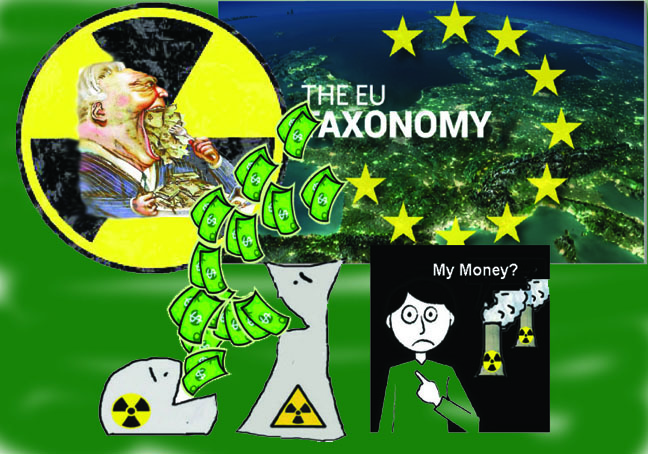
At the event, participants called on international financial institutions, regional development banks and organisations, including the EU, to finance nuclear power.
The joint statement calls on financial institutions to “classify nuclear energy with all other zero- or low-emission energy sources in financial taxonomies”.
By Paul Messad | EURACTIV France | translated by Daniel Eck 29 Sept 23 https://www.euractiv.com/section/energy-environment/news/france-builds-on-eus-pro-nuclear-momentum-to-host-global-talks/
France sought to build on the “momentum” behind nuclear energy in Europe by hosting world leaders on 28-29 September to accelerate nuclear financing and discuss long-term international cooperation that excludes Russia from the game.
The conference was attended by 21 countries, including 15 from Europe – Bulgaria, Romania, the Netherlands, Poland, Croatia, the Czech Republic, Estonia, Finland, France, Hungary, Slovakia, Slovenia, Sweden, Ukraine and the UK – as well as Turkey, South Korea, Japan, Ghana and the US.
“This is the first time in 13 years that so many ministers have come together for a Nuclear Energy Agency (NEA) event,” said French Energy Minister Agnès Pannier-Runacher, who co-chaired the event with William D. Magwood, director-general of the OECD’s Nuclear Energy Agency.
The timing is right, added Pannier-Runacher about the shift in attitude among EU member states like the Netherlands and Italy, who were until recently historically opposed to nuclear power.
Some 30 industry leaders also participated in the debates, with several signing a joint press release on Friday calling for redeveloping nuclear power.
On the agenda of the Paris event were topics like financing, supply chain and fuel issues, and coordination between governments and industry.
International financing
At the event, participants called on international financial institutions, regional development banks and organisations, including the EU, to finance nuclear power.
“We intend to explore innovative financing approaches, including public-private partnerships, to facilitate access to capital for refurbishment, long-term operation, spent fuel and waste long-term storage & disposal, and new nuclear build projects internationally while mitigating the economic costs of risk through public support mechanisms,” says a joint communiqué.
This means that the EU is also called upon to join the movement.
In this sense, Pannier-Runacher “welcomed” the statement made on Tuesday (26 September) by the President of the European Commission, Ursula von der Leyen, who, for the first time, envisaged EU subsidies for nuclear power.
“Nuclear energy needs public support in three areas: financing [including from the European Investment Bank], skills development and innovation,” the EU’s internal market Commissioner Thierry Breton said at the event’s start.
Asked about the possible reluctance of EU countries such as Germany to allow EU funds to be used for nuclear power, Pannier-Runacher said that “the problem lies in the different treatment of two energies that contribute to the same [decarbonisation] goals”, namely nuclear power and renewables, which are all low-carbon.
The joint statement calls on financial institutions to “classify nuclear energy with all other zero- or low-emission energy sources in financial taxonomies”.
The countries that signed the joint declaration have another powerful argument: nuclear capacity is set to triple worldwide by 2050 according to OECD scenarios, although a less optimistic IEA predicts that it will double.
Sharing the same values
The meeting was an opportunity for nuclear proponents to get together, but only from “democratic countries that share the same values”, Pannier-Runacher’s entourage explained on Wednesday.
While the talks did not directly address the dependence of some participating countries on Russia’s nuclear industry, “there is an implicit commitment by all OECD countries to condemn the Russian invasion,” Pannier-Runacher’s office said.
While Russia has been suspended from the OECD’s Nuclear Energy Agency, the Eastern European countries that attended the event are also members of the “Nuclear Alliance”, which is committed to “building partnerships to move away from this dependence [on Russia]”, the minister’s entourage added.
Their presence allowed EU countries present in Paris to hold informal talks on the ongoing reform of the EU electricity market, for which France advocates an approach favouring existing nuclear plants.
While the topic was not up for discussion, Pannier-Runacher’s office said ahead of the conference that “bilateral meetings with some of them [members of the nuclear alliance] will indeed take place”.
On the morning of the event, Pannier-Runacher was due to meet her Italian counterpart Gilberto Pichetto Fratin “to discuss cooperation on nuclear issues and the future of the European electricity market,” she said on X (formerly Twitter).
Italy did not take part in the OECD debates or sign the joint communiqué but was present as an observer.
Polish minister calls for extradition of Ukrainian Nazi honored in Canada
https://www.rt.com/news/583631-poland-extradition-canada-ukraine-nazi/ 29 Sept 23
Przemyslaw Czarnek wants a probe into Yaroslav Hunka’s possible war crimes
Polish Minister of Education Przemyslaw Czarnek has signaled that he intends to seek the extradition of a Ukrainian Nazi SS veteran who was cheered in the Canadian Parliament last week.
Czarnek was reacting to the controversy surrounding Yaroslav Hunka, a 98-year-old Ukrainian-Canadian who fought for the 14th Waffen Grenadier Division of the SS, also known as the 1st Galician Division, formed by Nazi Germany from mostly Western Ukrainians, that took part in atrocities against Russian, Polish, and Jewish civilians during WWII.
Hunka received a standing ovation during the ceremony in the House of Commons after being introduced by now-former House Speaker Anthony Rota as “a hero… who fought for Ukrainian independence against the Russians.” Prime Minister Justin Trudeau and Ukrainian President Vladimir Zelensky also attended the ceremony.
Writing on X (formerly Twitter) on Tuesday, Minister Czarnek said that “in view of the scandalous events in the Canadian Parliament,” he “has taken steps towards the possible extradition” of the SS veteran to Poland. The minister also appealed to Poland’s Institute of National Remembrance to “urgently examine the documents whether Yaroslav Hunka is wanted for crimes against the Polish nation and Poles of Jewish origin.”
Commenting on a potential extradition request from Poland, however, Canadian Attorney General Arif Virani said he had not seen one. “What I would say to you is that an extradition process is a sensitive matter,” he told Politico. He refused to elaborate on the issue until the document was produced for him, arguing that this “would jeopardize the investigation.”
The controversy sparked fierce international backlash, especially from the Jewish community. The Friends of Simon Wiesenthal Center said it was “appalled” by the celebration. At the same time, The Center for Israel and Jewish Affairs said it “can’t stay silent when crimes committed by Ukrainians during the Holocaust are whitewashed.”
The Russian and Polish foreign ministries also joined the condemnation. The Foreign Ministry in Moscow blasted Ottawa for abusing the memory of victims of the Nazisms as well as “unbridled Russophobia.” Meanwhile, in addition to calls for charges against Hunka, Deputy Foreign Minister Arkadiusz Mularczyk urged then-Speaker Rota to step down over a lack of diligence and historical knowledge.
For his part, Rota issued a public apology and later announced his resignation, while Trudeau admitted that the latest scandal was “deeply embarrassing” for Ottawa.
Alarmed by Risk of Nuclear Escalation among Major Powers, Speakers in General Assembly Warn Growing Distrust, Divisions Are Driving Multilateral System towards Dysfunction
MEETINGS COVERAGE, GENERAL ASSEMBLY, PLENARY SEVENTY-EIGHTH SESSION, 12TH & 13TH MEETINGS (AM & PM) GA/12538, 23 SEPTEMBER 2023
Powerful countries are pushing the world closer to the brink of nuclear conflict as mounting distrust and divisions corrode the bedrock of international cooperation, driving the multilateral system towards gridlock and dysfunction, world leaders warned today, as the General Assembly high-level debate concluded its fifth day of discussions.
Several Heads of State and Government, as well as ministers, voiced their concerns about the world’s current trajectory as it emerges from the most significant health emergency in a century amidst deepening conflicts and increasing instability. A fractured global political economy, skyrocketing food and fuel prices, looming climate crisis and heightened arms races have collectively led to widespread feelings of disillusionment, indifference, and cynicism among millions of people.
Nanaia Mahuta, Minister for Foreign Affairs of New Zealand, said that for the first time in several generations, the world faces the very real possibility of conflict between major Powers. “The stakes for all of us are simply too high,” she warned. The international rule of law and the United Nations Charter must mean something to a growing generation that is becoming more sceptical. The Russian Federation’s illegal invasion of Ukraine last year was a direct attack on the sovereignty and territorial integrity of a UN Member State. The war has also highlighted geostrategic tensions and heightened nuclear risks. “Playing politics with innocent lives is cruel and immoral,” she stressed.
Enrique A. Manalo, Secretary for Foreign Affairs of the Philippines, said that humanity remains in danger from too many destructive and disruptive weapons in existence. Thousands of nuclear warheads, which are still present, and now new ways of warfare have transformed the strategic landscape in the twenty-first century. “The rule of law must reign all the more,” he stressed, echoing the calls of many for a stronger UN to help bring back sense to the global community.
Sergey V. Lavrov, Minister for Foreign Affairs of the Russian Federation, said that in 2021, Moscow’s proposals to conclude treaties on mutual security guarantees in Europe without changing the non-bloc status of Ukraine were “rudely rejected”. The United States and its subordinate “Western collective” continue to generate conflicts that artificially divide humanity into hostile blocs. Describing a series of recent joint exercises between the United States and European North Atlantic Treaty Organization (NATO) allies, he also reported that they included testing scenarios for the use of nuclear weapons in the Russian Federation.
From a related angle, Osman Saleh Mohammed, Minister for Foreign Affairs of Eritrea, stressed that the futile attempts to impose a unipolar world order over the last 30 years are increasingly pushing the international community towards a much more perilous catastrophe. The African continent remains marginalized, compelled to shoulder the brunt of these destructive policies — and in this context, the resistance movements unfolding there are the continuation of the struggle against colonialism. They are defiant reactions to “modern slavery”, unremitting plunder and domination.
Mahamoud Ali Youssouf, Minister for Foreign Affairs and International Cooperation of Djibouti, observed that instead of fostering an integrated multilateralism there is a tendency to “group together into clubs”. This “minilateralism” results in implacable resistance to change in international institutions, compounded by fossilizing inequality and worsening geopolitical competition. While this is not irreversible, it requires massive investment to create a multilateral system that would account for current geopolitical realities.
Leaders repeatedly echoed calls for solidarity in the international community, emphasizing that the pandemic spotlighted glaring inequalities that must that be dealt with before another global crisis hits. Many small island developing States reiterated their calls on industrialized countries to abide by their obligations and commitments to developing nations for financing adaptation and mitigation measures.
Fiamē Naomi Mata’afa, Prime Minister of Samoa, said the first half of 2023 was characterized by worldwide record temperatures, intense water temperatures in various ocean basins, droughts in parts of Africa, Europe and Asia, severe flooding and cyclones, and devastating wildfires in Greece, north-eastern Canada and Hawaii. “We will continually face these ever-worsening disasters if we continue to deny addressing their root causes,” she stressed. Scientists have warned of imminent, more frequent and extreme weather events. Reducing global emissions, moving towards green resilient economies, tackling deforestation, reducing the reliance on fossil fuels and protecting nature must be a priority.
Terrance Micheal Drew, Prime Minister of Saint Kitts and Nevis, said that developing countries are groaning under the weight of burgeoning challenges not of their own making, some of which have been inherited as a result of colonization and the transatlantic slave trade. “It is past time for reparatory justice,” he said, echoing the sentiment of several speakers. Industrial countries and companies push small island developing States to the front lines of climate change, he added, pointing out that they accept little responsibility.
Delegates also accented the importance of respect for human rights, both as a cornerstone of decency and in building stability and prosperity — with some lamenting that this central principle of the United Nations is being eroded in countries around the world.
Anne Beathe Tvinnereim, Minister for International Development of Norway, affirmed that her Government engages the de facto authorities in Afghanistan as if this can help to address the dire human rights situation, “especially for women and girls, who are being deprived of education and a future — it is worth the attempt”. Human rights are at the core of the UN, and “societies prosper when women and girls participate on an equal footing”. The international community should “be concerned that standards are slipping in many places”, she affirmed: “This has to stop.”
Eamon Courtenay, Minister for Foreign Affairs, Foreign Trade and Immigration of Belize, noted that despite calls by the Global North for the respect of human rights, it remains outside the Convention on the Rights of Migrant Workers, resulting in “deaths and inhumane treatment of migrants at the southern borders of the Western world” continuing with impunity. With only 12 per cent of the SDGs on track for attainment, the global human development index has, for the first time, experienced a two-year consecutive downward trend, with poverty and insecurity on the rise.
Statements………………………………………………………………….
NATO Chief Admits NATO Expansion Was Key to Russian Invasion of Ukraine
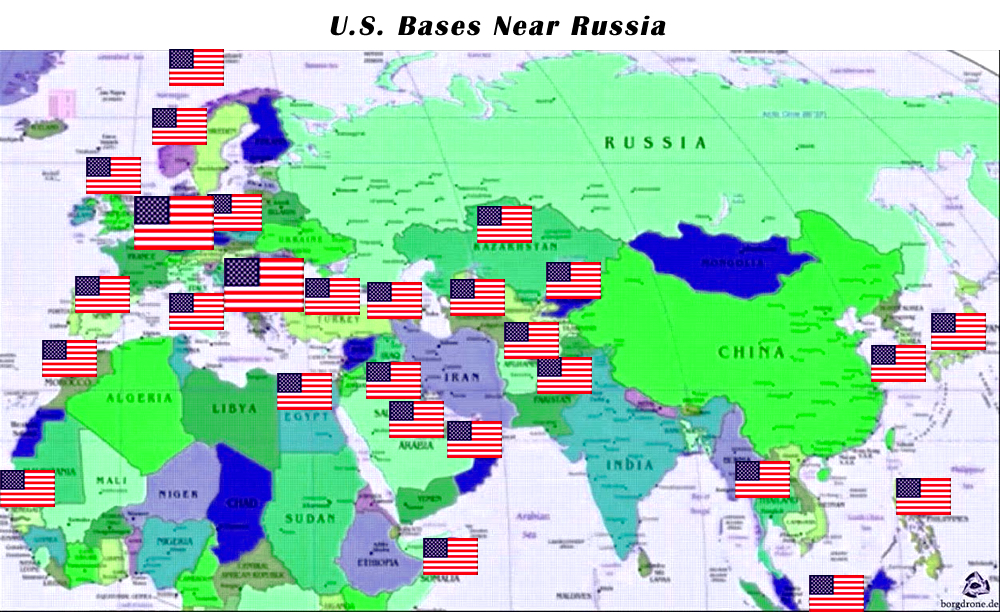
The continuing U.S. obsession with NATO enlargement is profoundly irresponsible and hypocritical. And now Ukrainians are paying a terrible price.
JEFFREY D. SACHS, Sep 20, 2023, Common Dreams
“…………………………….. According to the U.S. government and the ever-obsequious New York Times, the Ukraine war was “unprovoked,” the Times’ favorite adjective to describe the war. Putin, allegedly mistaking himself for Peter the Great, invaded Ukraine to recreate the Russian Empire. Yet last week, NATO Secretary-General Jens Stoltenberg committed a Washington gaffe, meaning that he accidently blurted out the truth.
In testimony to the European Union Parliament, Stoltenberg made clear that it was America’s relentless push to enlarge NATO to Ukraine that was the real cause of the war and why it continues today. Here are Stoltenberg’s revealing words:
“The background was that President Putin declared in the autumn of 2021, and actually sent a draft treaty that they wanted NATO to sign, to promise no more NATO enlargement. That was what he sent us. And was a pre-condition to not invade Ukraine. Of course, we didn’t sign that.
The opposite happened. He wanted us to sign that promise, never to enlarge NATO. He wanted us to remove our military infrastructure in all Allies that have joined NATO since 1997, meaning half of NATO, all the Central and Eastern Europe, we should remove NATO from that part of our Alliance, introducing some kind of B, or second-class membership. We rejected that.
So, he went to war to prevent NATO, more NATO, close to his borders. He has got the exact opposite.”
To repeat, he [Putin] went to war to prevent NATO, more NATO, close to his borders.
When Prof. John Mearsheimer, I, and others have said the same, we’ve been attacked as Putin apologists. The same critics also choose to hide or flatly ignore the dire warnings against NATO enlargement to Ukraine long articulated by many of America’s leading diplomats, including the great scholar-statesman George Kennan, and the former US Ambassadors to Russia Jack Matlock and William Burns.
Burns, now CIA Director, was US Ambassador to Russia in 2008, and author of a memo entitled “Nyet means Nyet.” In that memo, Burns explained to Secretary of State Condoleezza Rice that the entire Russian political class, not just Putin, was dead-set against NATO enlargement. We know about the memo only because it was leaked. Otherwise, we’d be in the dark about it.
Why does Russia oppose NATO enlargement? For the simple reason that Russia does not accept the U.S. military on its 2,300 km border with Ukraine in the Black Sea region. Russia does not appreciate the U.S. placement of Aegis missiles in Poland and Romania after the U.S. unilaterally abandoned the Anti-Ballistic Missile (ABM) Treaty………………………………….
Even Zelensky’s team knew that the quest for NATO enlargement meant imminent war with Russia. Oleksiy Arestovych, former Advisor to the Office of the President of Ukraine under Zelensky, declared that “with a 99.9% probability, our price for joining NATO is a big war with Russia.”……………………………………………
Putin made one last attempt at diplomacy at the end of 2021, tabling a draft U.S.-NATO Security Agreement to forestall war. The core of the draft agreement was an end of NATO enlargement and removal of U.S. missiles near Russia. Russia’s security concerns were valid and the basis for negotiations. Yet Biden flatly rejected negotiations out of a combination of arrogance, hawkishness, and profound miscalculation. NATO maintained its position that NATO would not negotiate with Russia regarding NATO enlargement, that in effect, NATO enlargement was none of Russia’s business.
The continuing U.S. obsession with NATO enlargement is profoundly irresponsible and hypocritical. The U.S. would object—by means of war, if needed—to being encircled by Russian or Chinese military bases in the Western Hemisphere, a point the U.S. has made since the Monroe Doctrine of 1823. Yet the U.S. is blind and deaf to the legitimate security concerns of other countries.
So, yes, Putin went to war to prevent NATO, more NATO, close to Russia’s border. Ukraine is being destroyed by U.S. arrogance, proving again Henry Kissinger’s adage that to be America’s enemy is dangerous, while to be its friend is fatal. The Ukraine War will end when the U.S. acknowledges a simple truth: NATO enlargement to Ukraine means perpetual war and Ukraine’s destruction. Ukraine’s neutrality could have avoided the war, and remains the key to peace. The deeper truth is that European security depends on collective security as called for by the Organization for Security and Co-operation in Europe (OSCE), not one-sided NATO demands. https://www.commondreams.org/opinion/nato-chief-admits-expansion-behind-russian-invasionb
Mission to Free Assange: Australian Parliamentarians in Washington

Australia remains the prized forward base of US ambitions in the Indo-Pacific, the spear pointed against China and any other rival who dares challenge its stubborn hegemony. The AUKUS pact, featuring the futile, decorative nuclear submarines …………also makes that point all too clear.
September 24, 2023, Dr Binoy Kampmark, https://theaimn.com/mission-to-free-assange-australian-parliamentarians-in-washington/
It was a short stint, involving a six-member delegation of Australian parliamentarians lobbying members of the US Congress and various relevant officials on one issue: the release of Julian Assange. If extradited to the US from the United Kingdom to face 18 charges, 17 framed with reference to the oppressive, extinguishing Espionage Act of 1917, the Australian founder of WikiLeaks risks a 175-year prison term.
Nationals MP Barnaby Joyce, Labor MP Tony Zappia, Greens Senators David Shoebridge and Peter Whish-Wilson, Liberal Senator Alex Antic and the independent member for Kooyong, Dr. Monique Ryan, are to be viewed with respect, their pluckiness admired. They came cresting on the wave of a letter published on page 9 of the Washington Post, expressing the views of over 60 Australian parliamentarians. “As Australian Parliamentarians, we are resolutely of the view that the prosecution and incarceration of the Australian citizen Julian Assange must end.”
This is a good if presumptuous start. Australia remains the prized forward base of US ambitions in the Indo-Pacific, the spear pointed against China and any other rival who dares challenge its stubborn hegemony. The AUKUS pact, featuring the futile, decorative nuclear submarines that will be rich scrapping for the Royal Australian Navy whenever they arrive, also makes that point all too clear. For the US strategist, Australia is fiefdom, property, real estate, terrain, its citizenry best treated as docile subjects represented by even more docile governments. Assange, and his publishing agenda, act as savage critiques of such assumptions.
The following views in Washington DC have been expressed by the delegates in what might be described as a mission to educate. From Senator Shoebridge, the continued detention of Assange proved to be “an ongoing irritant in the bilateral relationship” between Canberra and Washington. “If this matter is not resolved and Julian is not brought home, it will be damaging to the bilateral relationship.”
Senator Whish-Wilson focused on the activities of Assange himself. “The extradition of Julian Assange as a foreign journalist conducting activities on foreign soil is unprecedented.” To create such a “dangerous precedent” laid “a very slippery slope for any democracy to go down.”
Liberal Senator Alex Antic emphasised the spike in concern in the Australian population about wishing for Assange’s return to Australia (some nine out of 10 wishing for such an outcome). “We’ve seen 67 members of the Australian parliament share that message in a joint letter, which we’ve delivered across the spectrum.” An impressed Antic remarked that this had “never happened before. I think we’re seeing an incredible groundswell, and we want to see Julian at home as soon as possible.”
On September 20, in front of the Department of Justice, Zappia told reporters that, “we’ve had several meetings and we’re not going to go into details of those meetings. But I can say that they’ve all been useful meetings.” Not much to go on, though the Labor MP went on to state that the delegation, as representatives of the Australian people had “put our case very clearly about the fact that Julian Assange pursuit and detention and charges should be dropped and should come to an end.”
A point where the delegates feel that a rich quarry can be mined and trundled away for political consumption is the value of the US-Australian alliance. As Ryan reasoned, “This side of the AUKUS partnership feels really strongly about this and so what we expect the prime minister [Anthony Albanese] to do is that he will carry the same message to President Biden when he comes to Washington.”
The publisher’s brother, Gabriel Shipton, also suggests that the indictment is “a wedge in the Australia-US relationship, which is a very important relationship at the moment, particularly with everything that’s going on with the US and China and the sort of strategic pivot that is happening.” Assange, for his part, is bound to find this excruciatingly ironic, given his lengthy battles against the US imperium and the numbing servility of its client states.
Various members of Congress have granted an audience to the six parliamentarians. Enthusiasm was in abundance from two Kentucky Congressmen: Republican Senator Rand Paul and Republican House Representative Thomas Massie. After meeting the Australian delegation, Massie declared that it was his “strong belief [Assange] should be free to return home.”
Georgian Republican House member Marjorie Taylor Greene expressed her sense of honour at having met the delegates “to discuss the inhumane detention” of Assange “for the crime of committing journalism,” insisting that the charges be dropped and a pardon granted. “America should be a beacon of free speech and shouldn’t be following in an authoritarian regime’s footsteps.” Greene has shown herself to be a conspiracy devotee of the most pungent type, but there was little to fault her regarding these sentiments.
Minnesota Democrat Congresswoman Ilhan Omar also met the parliamentarians, discussing, according to a press release from her office, “the Assange prosecution and its significance as an issue in the bilateral relationship between the United States and Australia, as well as the implications for freedom of the press both at home and abroad.” She also reiterated her view, one expressed in an April 2023 letter to the Department of Justice co-signed with six other members of Congress, that the charges against Assange be dropped.
These opinions, consistent and venerably solid, have rarely swayed the mad hatters at the Justice Department who continue to operate within the same church consensus regarding Assange as an aberration and threat to US security. And they can rely, ultimately, on the calculus of attrition that assumes allies of Washington will eventually belt up, even if they grumble. There will always be those who pretend to question, such as the passive, meek Australian Foreign Minister, Penny Wong. “We have raised this many times,” Wong responded to a query while in New York to attend the United Nations General Assembly. “Secretary [of State Antony] Blinken and I both spoke about the fact that we had a discussion about the views that the United States has and the views that Australia has.”

Not that this mattered a jot. In July, Blinken stomped on Wong’s views in a disingenuous, libellous assessment about Assange, reminding his counterpart that the publisher had been “charged with very serious criminal conduct in the United States in connection with his alleged role in one of the largest compromises of classified information in the history of our country.” The libel duly followed, with the claim that Assange “risked very serious harm to our national security, to the benefit of our adversaries, and put named sources at grave risk – grave risk – of physical harm, and grave risk of detention.” That gross falsification of history went unaddressed by Wong.
Thus far, Blinken has waived away the concerns of the Albanese government on Assange’s fate as passing irritants at a spring garden party. However small their purchase, six Australian parliamentarians have chosen to press the issue further. At the very least, they have gone to the centre of the imperium to add a bit of ballast to the effort.
A Powerful minority makes the nuclear decisions, in a strategy of concealment
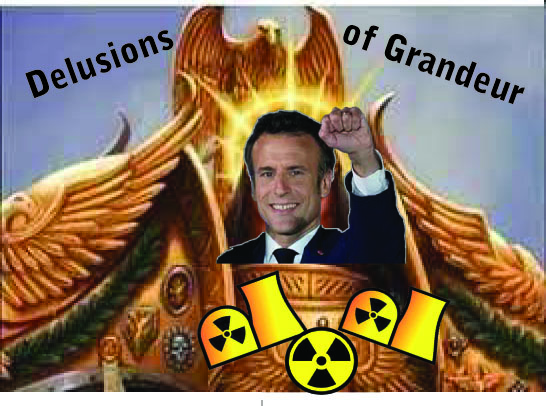
“Without civilian nuclear energy there is no military use of this technology – and without military use there is no civilian nuclear energy,” Macron said during a visit to Framatome’s Le Creusot facility in December 2020.
The French nuclear mullahs are at the heart of this international lobby. In particular, they are engaged in a communication strategy that consists of underestimating, trivializing or denying the effects of radiation, and insisting that it is possible to live with radiation in contaminated areas. In other words, a strategy of concealment.
By Kolin Kobayashi, https://beyondnuclearinternational.org/2023/09/24/a-strategy-of-concealment/—
This year marks the 13th year since the Fukushima accident began, yet the path to a conclusion is by no means clear. The declaration of a state of emergency still cannot be lifted because of the various dangers and difficulties that have arisen. Despite this, Prime Minister Kishida’s government is doing more than ever to promote nuclear power as a basic energy source. This approach is similar to that of the French administration, which is also trying to promote nuclear energy as a dual-use nuclear weapon.
The international nuclear lobby, which represents only a minority, has the influence and money to dominate the world’s population with immense power and has now united the world’s minority nuclear community into one big galaxy. Many of the citizens who have experienced the world’s three most serious civil nuclear accidents have clearly realized that nuclear energy is too dangerous. These citizens are so divided and conflicted that they feel like a helpless minority.
The current situation with the Fukushima accident
Let’s start with the total amount of radiation that the Fukushima-Daiichi nuclear power plant still contains today. The spent fuel at the site contains 85 times more cesium-137 than Chornobyl and 50,000 to 100,000 times more than the Hiroshima bomb.
The fuel is still stored in pools on the top floor of the reactor buildings (30 metres above ground), with the exception of Unit 3, the removal of which was completed in 2019.
Now, although 12 years have passed, the precise program for future decommissioning is unclear. While the approximate overall radiation levels are known, the buildings and reactors themselves, where the decommissioning and dismantling work will take place, are highly radioactive and cannot be easily penetrated by workers.
The true extent of the accident is not known, nor is the exact state of dispersion of the corium (the molten magma from the nuclear fuel rods in the reactor core). In Unit 1, for example, it is clear from the images taken by a robot that many parts of the circular concrete foundation supporting the pressure vessel have been damaged by the high heat of the corium. There is a significant risk of collapse in the event of a strong earthquake, and if the 440-tonne vessel collapses, it could hit the storage pool next to it. If this pool is damaged, even partially, another major disaster could occur.
Release of contaminated water

The amount of contaminated water is increasing all the time, as water continues to flow to cool the corium. Currently, around 90 tonnes of contaminated water are being added to the tanks every day. There are currently more than 1,000 tanks, and TEPCO says they will be full by February next year.
TEPCO had promised not to release water without the consent of local communities and fishermen, but this promise was not kept. The International Atomic Energy Agency (IAEA) dispatched a team of experts to investigate whether the radioactivity levels of the contaminated water treated by TEPCO met the international safety standards set by the IAEA, and the final report was submitted to the government on July 4. On the basis of this report, the Japanese government decided to release the water and began discharging water into the Pacific Ocean on August 24, releasing 7,800 tons in 17 days.
However, the IAEA does not have the scientific authority to make reference to the ecological impact of this water discharge, nor has it carried out such a long-term assessment. It is more of a political decision than a scientific one.
TEPCO and the Japanese government have said that releasing contaminated water is essential for decommissioning work, but there are still places to build storage facilities. There are also methods other than releasing the water into the ocean, such as solidifying it in mortar and storing it on the surface.
However, the regulatory committee and study group said they had considered five solutions: geological injection, hydrogen release, underground burial, steam release and ocean release. In the end, they chose the cheapest method.
What is the international nuclear lobby?
Today, the nuclear issue is globally interwoven. The raw material needed — uranium — as well as nuclear technology and radiation protection standards, cannot be managed by a single country.
First of all, nuclear energy is the dark side of the atomic bomb. Nuclear reactors designed to produce electricity were originally machines designed to produce plutonium for the manufacture of atomic bombs. So it was only natural that French president, Emanuel Macron, should advocate the complementary nature of civil nuclear energy and nuclear weapons. “Without civilian nuclear energy there is no military use of this technology – and without military use there is no civilian nuclear energy,” Macron said during a visit to Framatome’s Le Creusot facility in December 2020.
The realpolitik of the atomic bomb led to the creation of the IAEA in 1948. The five nuclear-weapon states on the UN Security Council promoted nuclear energy for peace and encouraged its development in order to monopolize nuclear weapons, and they made the IAEA a nuclear supervisory agency to ensure that no other country produced atomic bombs. The UN Member States were deceived by Eisenhower’s fine-sounding words “Atoms for Peace” to the UN General Assembly on 8 December 1953.
The IAEA controls nuclear energy throughout the world. But this international organization is neither objective nor impartial, nor does it conform absolutely to scientific truth. It is a highly political institution.
Ordinary citizens trust international organizations simply because they hear about them in UN reports. But the IAEA is constantly working to promote nuclear energy. The effects of radiation are trivialized or denied, as if they were not a problem, merely a manageable danger for nuclear power plants.
The effects of radiation are grossly underestimated. The data base on which the IAEA relies is that of Hiroshima and Nagasaki, collected by the Atomic Bomb Casualty Commission. These data are totally incomplete. They do not take into account people who were exposed to radiation more than 2 km from the hypocenters, people who entered the cities after the bombs were dropped, and people who were exposed to radiation from black rain in distant areas. In other words, low-dose radiation exposure is completely ignored.
The French nuclear mullahs are at the heart of this international lobby. In particular, they are engaged in a communication strategy that consists of underestimating, trivializing or denying the effects of radiation, and insisting that it is possible to live with radiation in contaminated areas. In other words, a strategy of concealment.
The famous Ethos project, which ran in Belarus from 1996 to 2001, ten years after the Chornobyl accident, seemed to be helping the population, but in fact it was consolidating the theory of acceptance of radiation. Jacques Lochard, former director of the CEPN (Centre d’étude sur l’Evaluation de la protection dans le domaine Nucléaire) in France, who carried out this project, quickly showed up in Fukushima in November 2011 and implemented the same strategy in a different form.
Lochard is the perfect example of the constantly revolving door among individuals from organizations that promote nuclear power and those involved in radiation protection. These circumstances are totally unknown to ordinary citizens.
The CEPN is an association with only four members: the CEA (Commissariat à l’énergie atomique et aux énergies alternatives), EDF (Électricité de France), Areva/Orano and the IRSN (Institut de radioprotection et de sûreté nucléaire). In other words, it is the embodiment of the French nuclear lobby and manages the French nuclear lobby’s communication on radiation protection.
The Chornobyl Ethos project and the CORE and SAGE projects that followed it, were organized and carried out by Lochard, now retired but appointed as a visiting professor at the Institute of Atomic Bomb Disease at Nagasaki University, and his right-hand man, Thierry Schneider. They have become respectable points of reference for the European Commission as a means of dealing with a nuclear accident.
The methods initiated by this minority of promoters will be imposed, with authority and money, on those who are victims of a future serious nuclear accident in Europe. According to this philosophy, there is no need to evacuate. We can live happily with radiation, even in contaminated areas.
In this way, the French nuclear lobby, in cooperation with the International Commission on Radiological Protection, the IAEA-UNSCEAR (United Nations Scientific Committee on the Effects of Atomic Radiation) and others, can assure us that we can overcome a serious nuclear accident, by simply adapting to radiation exposure. The phrase “let’s hope people have the strength to bounce back” is repeated. The word “resilience” has become a key word in this milieu.
But in Belarus and Ukraine, 37years after the Chornobyl nuclear disaster, 60% to 80% of children are still ill from the radiation resulting from Chornobyl. In Fukushima too, there are those 300 or more cases of thyroid cancer. The Japanese authorities still insist that in the case of Fukushima, the causal relationship between cancer and radiation is not yet known. This is despite the fact that this was admitted in the case of Chornobyl. It can therefore be said that at Chornobyl, as at Fukushima, the reality of the effects of radiation caused by the accidents is still not officially recognized.
France has clearly stated that nuclear weapons and nuclear power are the two wheels of the car, and President Macron has insisted that a total of 15 nuclear power plants will be built by 2050. Japan has also declared that it will continue to develop nuclear power plants in collaboration with France.
However, it is clear from the outset that if we continue to develop nuclear power plants, nuclear waste will continue to accumulate. At present, the storage pools at every nuclear power plant site — whether in Japan or France — are approaching the limit of their full capacity. However, no reliable method for the final disposal of high-level nuclear waste has yet been established.
In this way, the lessons of Chornobyl and Fukushima are not being applied at all, but rather, the actual health hazards are being covered up. Any so-called cleanup projects are being carried out for the sake of immediate interests only. In the end, they are forcing the victims to endure radiation exposure and ultimately abandoning them. This is because of the cover-up strategy of the international nuclear lobby in the background.
Kolin Kobayashi is a Tokyo-born France-based anti-nuclear activist and retired freelance journalist. He is president of the non-profit organization, Echo-Echanges.
1 This Month



26 September – International Day for the Total Elimination of Nuclear Weapons


PLEASE OPPOSE HR 8255 AND S.3639 – bills would accelerate satellite deployment, with no environmental review or safeguards – https://ncstd5li.quorum.us/campaign/169331/
To see nuclear-related stories in greater depth and intensity – go to https://nuclearinformation.wordpress.com
-
Archives
- September 2026 (233)
- August 2026 (330)
- July 2026 (355)
- June 2026 (287)
- May 2026 (306)
- April 2026 (356)
- March 2026 (251)
- February 2026 (267)
- January 2026 (308)
- December 2025 (358)
- November 2025 (359)
- October 2025 (375)
-
Categories
- 1
- 1 NUCLEAR ISSUES
- business and costs
- climate change
- culture and arts
- ENERGY
- environment
- health
- history
- indigenous issues
- Legal
- marketing of nuclear
- media
- opposition to nuclear
- PERSONAL STORIES
- politics
- politics international
- Religion and ethics
- safety
- secrets,lies and civil liberties
- spinbuster
- technology
- Uranium
- wastes
- weapons and war
- Women
- 2 WORLD
- ACTION
- AFRICA
- Atrocities
- AUSTRALIA
- Christina's notes
- Christina's themes
- culture and arts
- Events
- Fuk 2022
- Fuk 2023
- Fukushima 2017
- Fukushima 2018
- fukushima 2019
- Fukushima 2020
- Fukushima 2021
- general
- global warming
- Humour (God we need it)
- Nuclear
- RARE EARTHS
- Reference
- resources – print
- Resources -audiovicual
- Weekly Newsletter
- World
- World Nuclear
- YouTube
-
RSS
Entries RSS
Comments RSS
 nuclear-news