The nuclear dispute driving a wedge between France and Germany
The two nations have opposing ideas about atomic energy, threatening the EU’s transition
away from fossil fuels. France and Germany’s split over nuclear power is a
tale of diverging mindsets fashioned over decades, including since the
Chernobyl disaster in USSR-era Ukraine.
But it has now become a major
faultline in a touchy relationship between Europe’s two biggest economies.
Their stand-off over how to treat nuclear in a series of EU reforms has
consequences for how Europe plans to advance towards cleaner energy. It
will also affect how the bloc secures power supplies as the region weans
itself off Russian gas, and how it provides its industry with affordable
energy to compete with the US and China.
France, which produces two-thirds
of its power from nuclear plants and has plans for more reactors, is
fighting for nuclear technology to be factored into its targets for
reducing emissions and for leeway to use state subsidies to fund the
sector.
For Germany, which closed its last nuclear plants this year and has
been particularly shaken by its former reliance on Russian gas, there’s
concern that a nuclear drive will detract from renewable energy advances.
Berlin is wary that Paris would benefit more than its neighbours if it ends
up being able to guarantee low power prices from its large nuclear output
as a result of new EU rules on electricity markets, people close to talks
between the two countries say.
FT 15th Oct 2023
https://www.ft.com/content/b1dbd7b4-d8b9-45eb-bd18-4976f7c9af5e #nuclear #antinuclear #NuclearFree #NoNukes #NuclearPlants
Time to implement UN decisions on Palestine – Lavrov
Rt.com 16 Oct 23
When the current Israel-Palestine hostilities end, progress should be made towards a two-state solution, the Russian foreign minister as said.
The escalation of violence in the Middle East should provide an impetus for implementing a two-state solution to the Israeli-Palestinian conflict, Russian Foreign Minister Sergey Lavrov has said.
Speaking to journalists on Thursday, the top diplomat reiterated a call for a swift resolution of the crisis. After that, hopefully “everyone would take responsibility for implementing the decisions of the UN Security Council on the creation of a Palestinian state under the principles that the UN has approved.”
Lavrov spoke to the media in Bishkek, Kyrgyzstan, after meeting his counterparts from the Commonwealth of Independent States (CIS), a regional intergovernmental organization composed of former parts of the Soviet Union.
“All of us had the same opinion… that this confrontation must be stopped immediately, that parties should respect international humanitarian law, prevent any terrorist actions and indiscriminate use of force,” Lavrov said.
He stressed that civilians from both sides were suffering en masse and that the failure to create a viable Palestinian state was the root of continued tensions in the region……………………………………………… more https://www.rt.com/russia/584744-lavrov-state-palestine-un/ #Israel #Palestine
US bails on Ukraine…but doesn’t tell Zelensky.
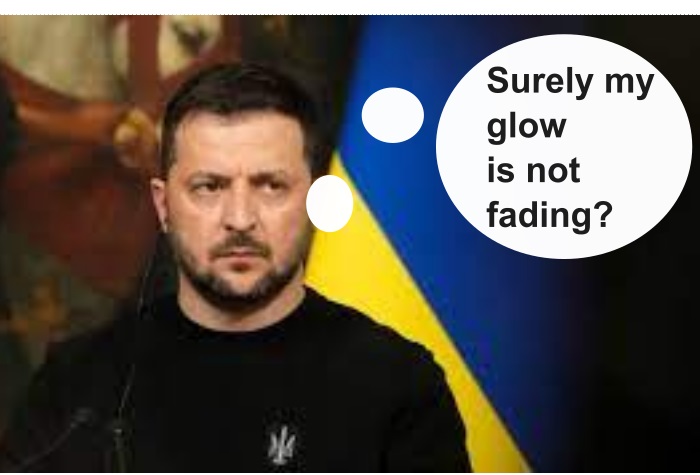
Walt Zlotow, West Suburban Peace Coalition, Glen Ellyn IL 13 Oct 23
In an astonishing statement at a press briefing Wednesday, National Security Department spokesperson John Kirby admitted the US is running out of interest in weaponizing Ukraine for the long term. Since Ukraine is on US life support to continue fighting their lost cause to recapture Crimea, Donbas and join NATO, it’s clear ‘game over’ for Ukraine looms.
“I think in the immediate term, right now, we can continue to support Ukraine – with the authorities in the appropriations we have. But, you know, we’re … certainly running out of runway.”
Kirby then shifted from the runway metaphor to one even starker. “The US administration had the means to support Ukraine in the near term. But you don’t want to be trying to bake in long-term support when you’re at the end of the rope,” And on the Ukraine funding, we’re coming near to the end of the rope. I mean, today we announced $200 million, and we’ll keep that aid going as long as we can, but it’s not going to be indefinite”
Is Ukraine President Zelensky listening to Kirby’s ominous warning? If he had an iota of understanding of Ukraine’s rapidly deteriorating plight, he’d immediately partner with responsible countries such as Turkey to initiate negotiations with Russia to end the war. He did that 18 months ago, Marcy 31-April 1, 2022, inking a tentative deal with Russia to end the war without losing any territory in Donbas, albeit giving Donbas regional autonomy under Ukraine sovereignty. The agreement would also have ended Ukraine’s self-destructive NATO aspirations.
To sum up: The US provoked the war by championing Ukraine NATO membership and weaponizing their civil war that killed thousands in Donbas. When Russia invaded to prevent both, the US sabotaged every effort to end the war quickly and peaceably, prolonging it with $113 billion in weapons and other aid. Result? Hundreds of thousands of dead Ukrainians with no chance of victory.
It’s not just the US that is “certainly running out of runway” and “coming near to the end of the rope.” The US is moving on to enabling and supplying the ongoing destruction of Gaza. No more runway and no more rope are much more appropriate to the former comedian staring in ‘Tragedy in Ukraine.’ #Ukraine #nuclear #antinuclear #NuclearFree #NoNukes #NuclearPlants
Fascism in the West to Enable Genocide in Palestine
Craig Murray, https://www.craigmurray.org.uk/archives/2023/10/fascism-in-the-west-to-enable-genocide-in-palestine/
The UK and the US are both sending military assistance to Israel to commit a calculated and deliberate act of genocide, which is already underway.
Over 500 children have been killed in Gaza in the last week and over 2,000 maimed, many with life changing injuries. Nobody can claim they do not know what is already happening or what is about to unfold. The cutting off of food and water to Gaza is a major international crime, which the western proponents of the “rules based order” universally refuse to condemn.
In both the UK and the US there can be no more stark illustration of the lack of any kind of meaningful democracy, than the fact that there is no major political party that opposes the genocide – despite massive public opposition.
The bought and paid for media and political class in the west are extremely nervous, throughout the western world. Now they have come to the final genocide for which zionism has always aimed, they face a good deal of popular resistance.
Throughout Europe there is a massive gap between the zionist unanimity of the politicians and the much greater understanding of the Palestinian situation among the general public. Tellingly the response by the zionist political class has been a wave of outright fascist suppression.
In France, Macron has made all pro-Palestinian demonstrations illegal, but as so often the French people are not standing for that kind of authoritarianism.
In the UK, the police have adopted the cowardly tactic of arresting a couple of individuals, one in Brighton and one in Manchester, for pro-Palestinian demonstration. Under Tony Blair’s notorious draconian “anti-terror” legislation, they could face up to 14 years in prison.
The young man in Manchester was arrested on the precise site of the famous “Peterloo massacre”, which generations of British people were taught at school was a terrible crime in breach of the rights to freedom of speech and assembly. Let the irony of that set in.
You can go out in the streets of the UK with an Israeli flag and yell that you want every Palestinian to be cleansed from Gaza. That is not illegal. If you say the Palestinians have a right to resist their genocide, that is illegal.
That appears to be a genuine analysis of the law in the UK, France and many other western countries.
That is intended to terrify all of us. It will not work.
The European Commission has been ferociously zionist and gung-ho for this Palestinian genocide. It displayed the Israeli flag on its Berlaymont headquarters. It has taken a side in the most ferocious way.
It is therefore deeply sinister that the European Commission is actively working to shut down pro-Palestinian information and comment on social media. The European Commission has written to all major social media organisations and is able to threaten them with massive fines if they do not remove information of which the European Union disapproves.
The notion is plainly nonsense that through the fog of war the European Commission – which is 100% parti pris – is qualified to say what information is true and what information is false, and what comment is legitimate.
Thierry Breton, the European Commissioner in charge of this operation, is a former chief executive of electronic companies – and defence contractors – Atos and Thomson. He has no genuine interest in freedom of speech, and is engaged in a process of silencing dissent for military aims, which is quite simply fascist.
We are witnessing almost all western governments deliberately facilitating massacre, ethnic cleansing and genocide. We are witnessing almost all western governments turning on their own people to crush dissent at that complicity in genocide.
This feels not so much like the week that western democracy died, as the week it was impossible any longer to deny that western democracy died some time ago. #Israel
Israel’s vengeance will not make for a better world
Pearls and Irritations, By Richard Hill, Oct 14, 2023
The depressing, crushing spectacle of extreme violence and mayhem unleashed across Israel and Palestine over recent days is a reminder of the depths to which humanity can sink.
To see complex historical, cultural and geopolitical questions – let alone humanity and decency – reduced to a ceaseless cycle of hatred, death and destruction is hard to stomach. We gaze at our TV screens aghast, we hear the threats, counter-threats, and the endless justifications and commentary. Meanwhile, the bloodletting goes on – and on. Western politicians, weighed down with simple binaries, take sides and in so doing obliterate any sense of context or complexity that might help us understand how this mess occurred in the first place.
Projecting the colours of the Israeli flag across the Sydney Opera House, declaring unflagging support for a state that for decades has thumbed its nose at UN resolutions and violently oppressed a besieged and impoverished population, is morally abhorrent.
The attempt to erase such concerns over recent days has been startling. At this point, to call for some acknowledgment of the origins of the conflict is to court accusations of siding with terrorists. And yet, as US Secretary of State, Antony Blinken, arrives in Israel to demonstrate the US’s unwavering support, Israel is imposing an illegal blockade on Gaza (cutting of life-saving electricity and preventing passage of urgently needed medicines, food and other supplies) as bombs rein down with impunity on a narrow, congested strip of land occupied by 2.3 million people.
How can this be? Why has nuance been shed and historical memory so conveniently erased? Such abstractionism is of course continuing the egregious practice of labelling anyone who dares criticise Israel as antisemitic. This is absurd and ludicrous, and entirely misleading. In the meantime, we have the leader of the most extreme right-wing government in Israel’s history banging his fists together on TV urging extreme violence upon the people of Gaza. He urges them to flee to a checkpoint on the Egyptian border, knowing full well that it’s closed. So, in effect, the people in Gaza are trapped in a hellhole that day-by-day is being reduced to rubble. All this under the watch of the US, Britain and Australia.
Hamas’s attacks were horrific and utterly unacceptable; there’s no denying that. Many innocent people lost their lives, and the human suffering is unimaginable. But to then offer unwavering support to Israel, minus any mention of current and past wrongdoing, borders on the insane. It demonstrates a cruel, collective indifference. And Australia is complicit in this by implicitly endorsing the long-term suffering of Palestinians as Israeli government priority.
There are so many other ways western and other political leaders (including those in Israel) could have responded to a violent attack on innocent people. ……………………………………………..
It is worth remembering the words of former Norwegian Prime Minister, and new NATO Secretary General, Jens Stoltenberg who in the wake of the 2011 mass murder of 70 young people by right-wing gunman Anders Breivik said: “We are still shocked by what has happened, but will never give up our values…Our response is more democracy, more openness, and more humanity.” He vowed his country would not seek vengeance; “we will answer hatred with love”. In a later news conference, Stoltenberg added: “The message to whoever attacked us, the message from all of Norway is that you will not destroy us, you will not destroy our democracy and our ideals for a better world.” This better world does not include blind rage and vengeance, or continuing oppression and violence………………more https://johnmenadue.com/israels-vengeance-will-not-make-for-a-better-world/— #Israel
France seeks European subsidies for its nuclear industry – fears “discrimination against nuclear”
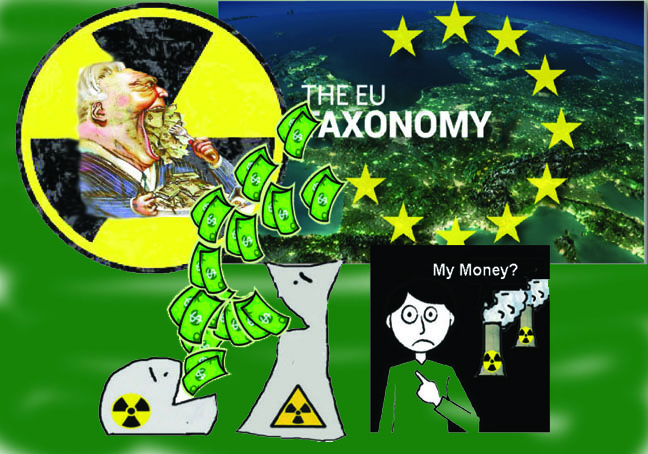
France urges swift deal on EU power reform to counter US subsidies Energy minister says bloc will lose out to Biden’s IRA if Paris and Berlin fail to resolve differences over nuclear power.
The US will be the main winner if a Franco-German divide over nuclear power prevents a long-awaited reform of Europe’s electricity market being finalised, France’s energy minister has warned. Agnès Pannier-Runacher said in an interview with the Financial Times that the sweeping overhaul of EU rules was needed as soon as possible to give businesses visibility on power prices, at a time when the US was luring industry with President Joe Biden’s clean energy subsidy programme under the Inflation Reduction Act……………….
The call comes ahead of a bilateral conference in Hamburg, starting on Monday, between French president Emmanuel Macron and German chancellor Olaf Scholz, accompanied by their cabinet ministers. Energy issues will be high on the agenda because Paris and Berlin have been arguing for months over the EU electricity market reform, specifically over how nuclear energy will be priced and the extent to which it can be subsidised……………
Behind the scenes in recent days, Paris and Berlin have been exchanging duelling policy papers and rewritten clauses for the draft law, while marshalling support from other EU member states.
On this reform and others, France has mounted a pro-nuclear campaign now joined by other countries that use the technology, including Poland and Hungary, in an effort to ensure the sector will be treated favourably.
But its drive has hit roadblocks, particularly in Germany, over concerns France will end up riding roughshod over state aid rules and benefit from lower prices for consumers and industry that other countries cannot match………………………………………………………..
Whether France and Germany will be able to square their differences in time for the next meeting of EU energy ministers on October 17 is unclear. The risk is that the reform will not be done by the end of the year and only become harder as EU parliament elections approach……………………..
The main thing still to be ironed out in the reform is the use of a mechanism known as “contracts for difference” (CFDs) which guarantee a minimum price for energy produced, and whether they should be applied to existing nuclear plants or just new ones. The CFDs have typically been used to incentivise renewable energy projects by guaranteeing revenues for producers, and Berlin has argued they should only apply to new investments.
France’s Energy Minister Pannier-Runacher said French reactors built decades ago required billions of euros in new investments for maintenance and to extend their lifespan and therefore should not be penalised with heavy restrictions around the application of CFDs.
As well as a minimum price, the CFD mechanism allows governments to recover excess revenues if prices jump past a set threshold, raising more questions about how governments then use those funds, especially if they were to be directed at providing further energy subsidies.
France had been happy with an original proposal on market reform put forward by the European Commission in March. But subsequent amendments with more restrictions on the uses of CFDs in a version presented by the European parliament have sparked the pushback. “At a certain stage it amounts to a discrimination against nuclear. We would not be allowed to do in the French system what other countries can [with their energy assets],” Pannier-Runacher said.
Senators worry about Saudi nuclear arms plans
Beyond Nuclear #nuclear #antinuclear #nuclear-free #NoNukes
US should reconsider helping Saudi Arabia develop domestic nuclear power, they wrote
Editor’s introduction: Brett Wilkins with Common Dreams has reported on an important step taken by a handful of US Senators who pushed back last week on selling commercial nuclear technology to Saudi Arabia. We republish the article below. (As always, any views expressed in the article are the writer’s own and do not necessarily reflect those of Beyond Nuclear.) But while the Senators’ letter to President Joe Biden voices concern that the Saudis could use a domestic reactor program to transition to nuclear weapons, it fails to recognize that this is an inevitable outcome of nuclear power technology no matter whose hands it is in.
By Brett Wilkins, Common Dreams
Amid reports that Saudi Arabia is seeking United States support for its nuclear energy program—whose capacities critics fear could be utilized to develop nuclear weapons—a group of 20 U.S. senators on Wednesday urged President Joe Biden to “seriously consider” whether such a move is in the national interest as the administration brokers a possible normalization deal between the kingdom and Israel.
In addition to concerns over the fundamentalist monarchy’s desire for a U.S. security guarantee as a condition for normalizing relations with apartheid Israel, as well as the future of a two-state solution in illegally occupied Palestine, the senators note in a letter to Biden that “the Saudi government is also reportedly seeking U.S. support to develop a civilian nuclear program, and to purchase more advanced U.S. weaponry.”
“While we should seriously consider whether it is in U.S. interests to help Saudi Arabia develop a domestic nuclear program, we should always maintain the high bar of the ‘gold standard’ 123 Agreement and insist on adherence to the Additional Protocol,” the senators wrote, referring to a provision of the Atomic Energy Act of 1954 requiring a country seeking a nuclear cooperation deal with the United States to commit to a set of nine nonproliferation criteria and expanded International Atomic Energy Agency (IAEA) inspections. The U.S. has entered into such agreements with more than two dozen countries, Taiwan, and the IAEA…………………………
The lawmakers’ letter was led by Democratic Sens. Chris Murphy (Conn.), Chris Van Hollen (Md.), Dick Durbin (Ill.), and Peter Welch (Vt.). Signatories include Sens. Bernie Sanders (I-Vt.), Elizabeth Warren (D-Mass.), John Fetterman (D-Pa.), Jeff Merkley (D-Ore.), Patty Murray (D-Wash.), and Ed Markey (D-Mass.)……………………………………………………………………………. more https://beyondnuclearinternational.org/2023/10/08/senators-worry-about-saudi-nuclear-arms-plans/
Depleted Ukrainium: What Comes After Failure?

public support for the war—and here and here official support—ever more visibly wobbles and wanes……… And those running the war in Ukraine are slowly but surely losing on this side of the conflict.
October 5, 2023, By Patrick Lawrence / Original to ScheerPost #Ukraine
ou cannot name the last time you read anything about a parliamentary election in Slovakia, so I won’t bother asking. But you are reading about one this week, assuming you still follow mainstream media—if only to understand what you are supposed to think about one or another event, as against what has actually occurred.
In results announced in Bratislava Sunday, a leftist party whose primary platform plank is opposition to the war in Ukraine won 23 percent of the vote. On Monday the Slovakian president, Zuzana Čaputová, formally asked Robert Fico, who leads the SMER party, to form a government. It looks like he will do so in a coalition with either Voice, a social-democratic party that took 15 percent of the vote, or with Progressive Slovakia, a liberal-centrist party that finished with 18 percent of the vote.
Fico is an interesting figure. He has served as prime minister twice over the course of a decade, during which time he proved sufficiently European to bring Slovakia into the euro. To one or another extent, his likely coalition partners favor keeping Slovakia as a card-carrying member of the Western coalition supporting Ukraine. But they did not win the election: Fico did.
And Fico is all business in his opposition to Slovakia’s support for the U.S. proxy war tearing Ukraine and its people to pieces.
SMER’s platform assigns the West and Ukraine equal responsibility for the war—a purposeful rip into the “unprovoked” charade—and promises an immediate end to all Slovakian arms shipments to the war effort. Speaking after the election results were announced, Fico pointedly pledged to press Kiev and its backers to begin peace talks with Moscow. “More killing is not going to help anyone,” he declared.
There are two things to say about Robert Fico’s return to the top of Slovakian politics. One, we find once again that the U.S. is a victim of its old, Manichean habit of dividing the whole of humanity into good guys and bad guys. The headline on CNN’s report on the elections reads, “Pro–Russian politician wins Slovakia’s parliamentary election.” The New York Times head is, “Unease in the West as Slovakia Appears Set to Join the Putin Sympathizers.”
Tell me, which of these is more pathetic? “Pro–Russian?” “Putin sympathizers?” This is infantile—apart from being false, I mean. Fico simply articulates an independent, perfectly sound position on the war. CNN and The Times are infantilizing their viewers and readers as they reduce this position to the simplistic binary of a Saturday-morning cartoon. The insidious thing here, and let us be ever vigilant on this point, is that these media are inserting into our brains the thought that any deviation from the Russophobic orthodoxy amounts to support for the Kremlin’s demonized occupant.
Two, “unease” is too mild a word for the reigning sentiment among the war-mongering elites in Washington and the European capitals. An incipient panic is closer to the reality as public support for the war—and here and here official support—ever more visibly wobbles and wanes. The first front in any war is the home front, where it is imperative the battle is won. And those running the war in Ukraine are slowly but surely losing on this side of the conflict.
They are losing it on the ground in Ukraine, too, it is now more or less obvious. Our question becomes: Where will the powers that instigated this war and invested heavily in it turn next? As I argued soon after the Russian intervention began in February 2022, this conflict was probably conceived as the Washington neoconservatives’ shoot-the-moon moment, its all-out play to take down the Russian Federation. What happens now, as the neocons lose this round of Hearts and the game as they have played it is over?
To my great relief, the blue-and-yellow flags that disfigured the American landscape in the early months of the war are now mostly gone. More than half of Americans polled agree with Robert Fico: No more military aid and weapons to Ukraine. This percentage is headed in only one direction from here on out.
Volodymyr Zelensky’s swing through North America beginning with his attendance at this year’s General Assembly last month, went pretty badly. At the GA, he did not make any headway persuading the global majority opposed to the war to come over to his side. His reception in Washington was… what is the best word?… muted? House Republicans, many of whom oppose more military aid, refused to meet him. When, over the weekend, Speaker Kevin McCarthy finally pushed through a bill to keep the government funded, he had to strip out a provision authorizing another tranche of weapons funding.
The mood elsewhere appears to be no brighter. That astonishing debacle in the Canadian Parliament—presenting an old SS man as a hero because he fought the Soviets?—cannot have done Zelensky’s constituency in Canada any good. Across the pond there are signs of impatience as roughly eight million Ukrainian refugees settle in Europe, displaying little interest—and who can blame them?—in going home when the war is over. War or no, solidarity or no, the Poles have blocked imports of cheap Ukrainian wheat. There are signs of buyer’s remorse among the Finns a matter of months after their impulsive decision to join NATO. And now the Slovakians and their new leader’s alarming display of political and intellectual independence.
However these matters may stand as you read this commentary, the trends here outlined are destined to accelerate in coming months. The Ukrainians’ long-touted counteroffensive, a major prop in the campaign to maintain public support for the war, is touted no more. It is well on the way to taking its place next to the 2007 “surge” in Iraq. Remember that? Of course you don’t. And you won’t remember the counteroffensive any more distinctly in, I would say, a year’s time.
Not even The New York Times pretends any longer that the front line in eastern Ukraine has budged more than a matter of meters the whole of this year. And this is before the harsh winter weather begins. At that point, stasis will be the best the Ukrainians can hope for. All this autumn and all winter, the Russians are likely to continue their rolling volleys of rockets, missiles, and artillery shells to the point most of Ukraine east of Kiev resembles Ypres or the Somme in 1918.
Let us look ahead to next spring, then. The Ukrainian front will have sustained another winter’s deterioration, and popular discontent among Europeans is likely to have sharpened. It will be considerably harder to pretend that the Kiev regime can win the war or, indeed, that it makes any sense to continue it. And Joe Biden will be looking at an election in seven or so months.
At that point, what? ………………………………………………………………………………………………………………………………. more https://scheerpost.com/2023/10/05/patrick-lawrence-depleted-ukrainium/
Saudi nukes: A desire for energy, weapons, or just leverage?
Riyadh’s pursuit of civilian nuclear energy is fast becoming regarded as a geopolitical strategy to influence the US, exert leverage over Iran and Israel, and explore potential partnerships with Russia and China.
Stasa Salacanin, OCT 3, 2023, The Cradle, #nuclear #antinuclear #nuclear-free #NoNukes
Saudi Arabia’s pursuit of a civilian nuclear energy program has recently taken a controversial turn, fueled by alternative offers from Russia and China to develop the Persian Gulf state’s nuclear facilities.
Earlier this year, Saudi Energy Minister Prince Abdulaziz bin Salman drew global attention to his country’s nuclear intentions by announcing that Riyadh intends to enrich domestically sourced uranium to bolster its renewable energy industry.
While this may appear to be a purely energy-focused endeavor on the surface, it is increasingly being viewed as a geopolitical maneuver by the kingdom to extract a defense security pact from Washington in return for the normalization of Saudi relations with Israel.
Aware of its increased leverage gained from improved ties with the Russians and Chinese, Riyadh is using the momentum to extract as many benefits as possible, reportedly seeking access to the most advanced US military technology, including a military alliance with Washington and US approval for the enrichment of uranium for civilian purposes.
However, the Americans have been adamant about imposing restrictions on the kingdom’s uranium enrichment activities, in great part due to deep Israeli reservations about Riyadh’s nuclear aspirations.
Nuclear ambitions, geopolitical concerns
So far, Saudi Arabia has favored nuclear cooperation with the US over bids from other countries – this, despite stricter US conditions and a myriad disagreements with the Biden administration…………………………………
According to Dr. Paul Dorfman, Chair at Nuclear Consulting Group and Visiting Fellow at the University of Sussex’s Science Policy Research Unit, nuclear energy is an even more controversial issue in West Asia than anywhere else because Persian Gulf states are concerned that neighbors might use their civilian nuclear programs for military ends. He tells The Cradle:
“And they have a point. Unless uranium enrichment and reprocessing technologies are tightly regulated against diversion of civil materials for military purposes, the fact is that new nuclear power plants provide the cover to develop and make nuclear weapons.”
Dr. Dorfman further adds:
“Saudi officials have made it clear on more than one occasion that there is another reason for their interest in nuclear energy technology which was not captured by the royal decree on the Saudi nuclear program – the relationship of the civil program to nuclear weapon production.“
…………………………………………………………………………………………………… Riyadh has options. If the US and Saudi Arabia fail to reach a consensus, the latter could turn to other potential partners such as China and Russia, whose influence in the kingdom has spiked in the past year………………………………………………………………………………………………………….
West Asian nuclear arms race
The implications of Riyadh’s nuclear program – particularly its intent to enrich uranium – extend to its neighbors, most notably to rogue regional nuclear state Israel, and has the potential to jeopardize Tel Aviv’s relentless normalization efforts with Saudi Arabia.
For this reason, while some Israeli circles express strong disagreement and concerns about Saudi nuclear ambitions, the Israeli political establishment itself has remained relatively muted on the subject.
……………………………………………………………………………………………. Between managing its traditional alliance with the US, its pivot towards Eurasian powers Russia and China, efforts to foster regional stability with Iran, and the highly sensitive issue of normalization with Israel, Saudi Arabia’s ever-nuclear move will be the subject of international scrutiny and censure. https://new.thecradle.co/articles/saudi-nukes-a-desire-for-energy-weapons-or-just-leverage
Mexican president criticizes US aid to #Ukraine and sanctions on Latin American nations in high-level meeting
López Obrador called for US program aimed at removing blockades, ceasing harassment of independent and sovereign nations
Fox News, September 29, 2023
Mexico’s president on Friday slammed U.S. aid for Ukraine and economic sanctions on Venezuela, Cuba and other nations as the first of two high-level U.S.-Mexico meetings got underway in Washington.
President Andrés Manuel López Obrador issued a broad criticism of U.S. foreign policy, saying U.S. economic sanctions were forcing people to emigrate from Cuba, Venezuela and Nicaragua.
The harsh comments came as U.S. Secretary of State Antony Blinken, Commerce Secretary Gina and Trade Representative Katherine Tai were meeting their Mexican counterparts at the State Department……………………… more https://www.foxnews.com/world/mexican-president-criticizes-us-aid-ukraine-sanctions-latin-american-nations-high-level-meeting
Jeffrey Sachs: Beyond the Neocon Debacle in #Ukraine
October 4, 2023 https://consortiumnews.com/2023/10/04/jeffrey-sachs-beyond-the-neocon-debacle-in-ukraine/
Four events have shattered NATO’s drive for enlargement eastward. Now, decisions by the U.S. and Russia will matter enormously for the entire world’s peace, security and wellbeing.
By Jeffrey D. Sachs, Common Dreams
We are entering the end stage of the 30-year U.S. neoconservative debacle in Ukraine. The neocon plan to surround Russia in the Black Sea region by NATO has failed. Decisions now by the U.S. and Russia will matter enormously for peace, security, and wellbeing for the entire world.
Four events have shattered the neocon hopes for NATO enlargement eastward, to Ukraine, Georgia, and onward.
The first is straightforward. Ukraine has been devastated on the battlefield, with tragic and appalling losses. Russia is winning the war of attrition, an outcome that was predictable from the start but which the neocons and mainstream media continue to deny.
The second is the collapsing support in Europe for the U.S. neocon strategy. Poland no longer speaks with Ukraine. Hungary has long opposed the neocons. Slovakia has elected an anti-neocon government. E.U. leaders — including French President Emmanuel Macron, Italian Prime Minister Giorgia Meloni, Spain’s Acting Prime Minister Pedro Sanchez, German Chancellor Olaf Scholz, U.K. Prime Minister Rishi Sunak, and others — have disapproval ratings far higher than approvals.
The third is the cut in U.S. financial support for Ukraine. The grassroots of the Republican Party, several GOP presidential candidates and a growing number of Republican members of Congress oppose more spending on Ukraine. In the stop-gap bill to keep the government running, Republicans stripped away new financial support for Ukraine. The White House has called for new aid legislation, but this will be an uphill fight.
The fourth, and most urgent from Ukraine’s point of view, is the likelihood of a Russian offensive. Ukraine’s casualties are in the hundreds of thousands, and Ukraine has burned through its artillery, air defenses, tanks and other heavy weapons. Russia is likely to follow with a massive offensive.
The neocons have created utter disasters in Afghanistan, Iraq, Syria, Libya and now Ukraine. The U.S. political system has not yet held the neocons to account, since foreign policy is carried out with little public or congressional scrutiny to date. Mainstream media have sided with the slogans of the neocons.
Ukraine is at risk of economic, demographic and military collapse. What should the U.S. government do to face this potential disaster?
Urgently, it should change course. Britain advises the U.S. to escalate, as Britain is stuck with 19th-century imperial reveries. U.S. neocons are stuck with imperial bravado. Cooler heads urgently need to prevail.
President Joe Biden should immediately inform President Vladimir Putin that the U.S. will end NATO enlargement eastward if the U.S. and Russia reach a new agreement on security arrangements. By ending NATO expansion, the U.S. can still save Ukraine from the policy debacles of the past 30 years.
Biden should agree to negotiate a security arrangement of the kind, though not precise details, of Putin’s proposals of Dec. 17, 2021. Biden foolishly refused to negotiate with Putin in December 2021. It’s time to negotiate now.
There are four keys to an agreement. First, as part of an overall deal, Biden should agree that NATO will not enlarge eastward, but not reverse the past NATO enlargement. NATO would of course not tolerate Russian encroachments in existing NATO states. Both Russia and the U.S. would pledge to avoid provocations near Russia’s borders, including provocative missile placement, military exercises and the like.
Second, the new U.S.-Russia security agreement should cover nuclear weapons. The U.S. unilateral withdrawal from the Anti-Ballistic Missile Treaty in 2002, followed by the placement of Aegis missiles in Poland and Romania, gravely inflamed tensions, which were further exacerbated by the U.S. withdrawal from the Intermediate Nuclear Force Agreement in 2019 and Russia’s suspension of the New Start Treaty in 2023.
Russian leaders have repeatedly pointed to U.S. missiles near Russia, unconstrained by the abandoned ABM Treaty, as a dire threat to Russia’s national security.
Third, Russia and Ukraine would agree on new borders, in which the overwhelmingly ethnic Russian Crimea and heavily ethnic Russian districts of eastern Ukraine would remain part of Russia. The border changes would be accompanied by security guarantees for Ukraine backed unanimously by the U.N. Security Council and other states such as Germany, Turkey and India.
Fourth, as part of a settlement, the U.S., Russia, and the E.U. would re-establish trade, finance, cultural exchange and tourist relations. It’s certainly time once again to hear Rachmaninoff and Tchaikovsky in U.S. and European concert halls.
Border changes are a last resort and should be made under the auspices of the U.N. Security Council. They must never be an invitation to further territorial demands, such as by Russia regarding ethnic Russians in other countries. Yet borders change, and the U.S. has recently backed two border changes.
NATO bombed Serbia for 47 days until it relinquished the Albanian-majority region of Kosovo. In 2008, the U.S. recognized Kosovo as a sovereign nation. The U.S. government similarly backed South Sudan’s insurgency to break away from Sudan.
If Russia, Ukraine, or the U.S. subsequently violated the new agreement, they would be challenging the rest of the world. As President John F. Kennedy once observed, “even the most hostile nations can be relied upon to accept and keep those treaty obligations, and only those treaty obligations, which are in their own interest.”
The U.S. neocons carry much blame for undermining Ukraine’s 1991 borders. Russia did not claim Crimea until after the U.S.-backed overthrow of Ukraine’s President Viktor Yanukovych in 2014. Nor did Russia annex the Donbass after 2014, instead calling on Ukraine to honor the U.N.-backed Minsk II agreement, based on autonomy for the Donbass. The neocons preferred to arm Ukraine to retake the Donbass by force rather than grant the Donbass autonomy.
The long-term key to peace in Europe is collective security as called for by the Organization for Security and Co-operation in Europe (OSCE).
According to OSCE agreements, OSCE member states “will not strengthen their security at the expense of the security of other States.”
Neocon unilateralism undermined Europe’s collective security by pushing NATO enlargement without regard to third parties, notably Russia. Europe — including the E.U., Russia and Ukraine — needs more OSCE and less neocon unilateralism as key to lasting peace in Europe.
Jeffrey D. Sachs is a university professor and director of the Center for Sustainable Development at Columbia University, where he directed The Earth Institute from 2002 until 2016. He is also president of the U.N. Sustainable Development Solutions Network and a commissioner of the U.N. Broadband Commission for Development. He has been adviser to three United Nations secretaries-general, and currently serves as an SDG Advocate under Secretary-General Antonio Guterres. Sachs is the author, most recently, of A New Foreign Policy: Beyond American Exceptionalism (2020). Other books include: Building the New American Economy: Smart, Fair, and Sustainable (2017) and The Age of Sustainable Development, (2015) with Ban Ki-moon.
Russia says Japan did not inform it fully about radioactive Fukushima water
#nuclear #anti-nuclear #nuclear-free #NoNukes
MOSCOW, Oct 4 (Reuters) – Russia said on Wednesday that Japan had failed to provide full information on the radioactive water being discharged from the wrecked Fukushima nuclear power plant, despite repeated requests from both Moscow and Beijing.
Japan started releasing treated radioactive water from Fukushima into the Pacific Ocean in August, and was heavily criticised by China, which immediately banned all seafood imports from Japan.
“We and China have repeatedly urged the Japanese side to show transparency and provide all interested states with full access to all information about the discharge of water from the Fukushima-1 nuclear power plant,” Russian Foreign Ministry spokeswoman Maria Zakharova said.
“Japan has not done this,” Zakharova said. “Japan has failed to properly respond to these issues and to guarantee the absence of a threat, including a long-term one.”………………….. https://www.reuters.com/world/russia-says-japan-failed-provide-full-information-about-water-fukushima-nuclear-2023-10-04/
France attempts to pressure Australia to stop engaging with UN nuclear weapons ban treaty

https://www.icanw.org/france_pressures_australia_to_stop_engaging_with_un_nuclear_weapons_ban_treaty 2 Oct 23 #nuclear #anti-nuclear #Nuclear-Free #NoNukes
Recent statements by a French diplomat to “the Australian” newspaper criticizing Australia’s decision to observe the UN Treaty on the Prohibition of Nuclear Weapons (TPNW) reveal the panicked efforts by nuclear-armed states to undermine the treaty as support for the ban continues to grow. It also shows a European state with a dark colonial legacy continuing to exert pressure on the Pacific – an area heavily impacted by French nuclear testing – instead of respecting national sovereignty.
On 2 October an article in “the Australian” newspaper cited an unnamed French diplomat claiming that Australia’s support for the Treaty on the Prohibition of Nuclear Weapons “undermines the primacy of the Nuclear Non-Proliferation Treaty (NPT)” and “is contradictory with Australia’s ambition to reinforce its partnership with NATO.”
Both of these statements are not only hamfisted attempts at pressuring the Australian government away from the TPNW, they are also factually incorrect: The TPNW was carefully crafted to reinforce, complement, and build on the NPT, which obligates its parties – including France – to negotiate further legal measures to achieve nuclear disarmament under Article VI, and NATO members face no legal barrier to joining the treaty, so long as they commit not to engage in or support any nuclear-weapon-related activities. Moreover, several NATO partners are already TPNW parties (Austria, Ireland, Kazakhstan, Malta, Mongolia, New Zealand) or signatories (Algeria, Colombia).
These declarations show France’s mounting concern over the growing support for the TPNW. The statements themselves are no surprise, as France has stridently protested the TPNW ever since it was adopted at the UN in 2017 with the backing of 122 states. France insists it has a legitimate right under the NPT to possess nuclear weapons, while ignoring its commitments to pursue negotiations in good faith for nuclear disarmament under the same treaty. What is new is the fact that this pressure is being exerted publicly, and on a state that is largely seen as an ally on security issues. Previously, France has limited this kind of pressure for formerly colonised states, particularly in Africa.
Australia’s growing support for the TPNW
The Australian Labor Party, which has been in power since May 2022, adopted a resolution in 2018 committing it to sign and ratify the TPNW in government. This was moved by Anthony Albanese, who now serves as prime minister and has been a vocal supporter of the TPNW. He said at the time: “Our commitment to sign and ratify the nuclear weapon ban treaty in government is Labor at its best.” Labor reaffirmed this position in 2021 and most recently on 18 August 2023. The government also has confirmed its intention to observe the treaty’s upcoming meeting of states parties in New York (2MSP) and is evaluating whether to sign and ratify the treaty.
This is an encouraging step, but ICAN’s Executive Director, former Labor MP Melissa Parke, has criticised the government’s delay in ratifying the treaty: “It’s not enough to keep promising to sign the treaty without acting. We want to see the Prime Minister put pen to paper, without delay. Labor’s commitment on nuclear disarmament and non-proliferation will be hollow if Australia fails to do so.”
Speaking to the revelation that French diplomats are exerting pressure on Australia to consider, she said: “Our two countries have never seen eye to eye on nuclear weapons. France shouldn’t be lecturing Australia on nuclear policy. We can make our own decisions, in our own interests – and for the global common good.”
France’s unresolved nuclear legacy in the Pacific
From 1966 to 1996, France tested 193 nuclear weapons in Maohi Nui/French Polynesia, a Self Governing Territory of France in the Pacific. In 1974, Australia famously took France to the International Court of Justice in a bid to force an end to its atmospheric nuclear testing in the Pacific, as the impacts of nuclear weapons are not contained by national borders. Yet France only ended its Pacific nuclear test explosions once it was confident it had developed non-explosive testing methods sufficiently for new weapons development, and it refuses to acknowledge and address the catastrophic legacy of its nuclear tests to this day.This legacy is also a subject of hot debate at the national level in France. On 28 September, only days before France’s criticisms of Australia, the assembly of French Polynesia unanimously adopted a resolution supporting the TPNW, highlighting the region’s history as the site of numerous French nuclear tests. The resolution underscores the TPNW as a humanitarian disarmament treaty and emphasises the deep concerns of the French Polynesian population regarding this issue. While French Polynesia cannot currently access the assistance and rehabilitation outlined in Articles 6 and 7 of the TPNW due to France’s non-ratification, it sends a resounding message in favour of the treaty to Paris.
Nuclear renaissance in Europe? Really?
#nuclear #antinuclear #nuclear-free #NoNukes
As countries including France, the UK and Sweden look to pivot back to
nuclear power to help them meet net-zero targets, questions remain over
safety, radioactive waste and where they’ll find the vast amounts of
money and expertise needed to build and manage new reactors.
FT 2nd Oct 2023
1 This Month



26 September – International Day for the Total Elimination of Nuclear Weapons


PLEASE OPPOSE HR 8255 AND S.3639 – bills would accelerate satellite deployment, with no environmental review or safeguards – https://ncstd5li.quorum.us/campaign/169331/
To see nuclear-related stories in greater depth and intensity – go to https://nuclearinformation.wordpress.com
-
Archives
- September 2026 (233)
- August 2026 (330)
- July 2026 (355)
- June 2026 (287)
- May 2026 (306)
- April 2026 (356)
- March 2026 (251)
- February 2026 (267)
- January 2026 (308)
- December 2025 (358)
- November 2025 (359)
- October 2025 (375)
-
Categories
- 1
- 1 NUCLEAR ISSUES
- business and costs
- climate change
- culture and arts
- ENERGY
- environment
- health
- history
- indigenous issues
- Legal
- marketing of nuclear
- media
- opposition to nuclear
- PERSONAL STORIES
- politics
- politics international
- Religion and ethics
- safety
- secrets,lies and civil liberties
- spinbuster
- technology
- Uranium
- wastes
- weapons and war
- Women
- 2 WORLD
- ACTION
- AFRICA
- Atrocities
- AUSTRALIA
- Christina's notes
- Christina's themes
- culture and arts
- Events
- Fuk 2022
- Fuk 2023
- Fukushima 2017
- Fukushima 2018
- fukushima 2019
- Fukushima 2020
- Fukushima 2021
- general
- global warming
- Humour (God we need it)
- Nuclear
- RARE EARTHS
- Reference
- resources – print
- Resources -audiovicual
- Weekly Newsletter
- World
- World Nuclear
- YouTube
-
RSS
Entries RSS
Comments RSS
 nuclear-news