States defunding UNRWA may be violating genocide convention: expert
https://www.newarab.com/news/gaza-defunding-unrwa-may-be-violating-genocide-convention 31 Jan 24
A number of countries – including Australia, Britain, Finland, Germany and Italy – on Saturday followed the lead of the United States in pausing UNRWA funding.
A UN expert warned Sunday that countries defunding the UN agency for Palestinian refugees were breaching a court order to provide effective aid inGazaand could be violating the international genocide convention.
A number of donor countries – including Australia, Britain, Finland, Germany and Italy – on Saturday followed the lead of the United Statesinsuspending additional funding toUNRWA (UN Relief & Works Agency).
That came after Israel alleged that several of the UN agency’s staff members were involved in Hamas’s 7 October attack. The Israeli allegations were based on confessions obtained in interrogations and have not been independently investigated. Israel has killed more than 150 UNRWA staff in Gaza since the start of its latest offensive on Gaza.
Francesca Albanese, the UN special rapporteur for the occupied Palestinian territories, warned that the decision topause funding to UNRWA “overtly defies” the order by the International Court of Justice to allow effective humanitarian assistance” to reach Gazans.
“This will entail legal responsibilities – or the demise of the (international) legal system,” she wrote on X, formerly Twitter.
UNRWA reacted to the allegations by firing several staff and promising a thorough investigation into the unspecified claims, but Israel has nonetheless vowed to stop the agency’s work in Gaza after the war.
The row between Israel and UNRWA follows the UN’s International Court of Justice ruling on Friday that Israel must prevent possible acts of genocide in the conflict and allow more aid into Gaza.
Albanese, who is an independent expert appointed by the UN Human Rights Council, but who does not speak on behalf of the United Nations, highlighted the timing of the defunding decisions in a separate post on X:
“The day after ICJ concluded that Israel is plausibly committing genocide in Gaza, some states decided to defund UNRWA. By doing so, countries are collectively punishing millions of Palestinians at the most critical time, and most likely violating their obligations under the Genocide Convention.”
Hamas’s 7 October attack on Israel resulted in about 1,140 deaths, according to an AFP tally of official figures. Emerging evidence indicates that both Palestinian militants and Israel were responsible for civilian deaths.
Militants also seized about 250 hostages and Israel says around 132 of them remain in Gaza, including the bodies of at least 28 dead captives.
Israel’s ensuing military offensive has killed at least 26,422 people, most of them women and children, in Gaza, according to the health ministry in the coastal enclave.
A Radically Different World Since Assange’s Indictment
Biden would have hell to pay from the DNC and the C.I.A. if he dropped the case.
Still, he’s probably not so foolish to want a shackled journalist showing up on U.S. shores to stand trial in the midst of his re-election campaign.
Leniency towards Assange would win back some respect the United States has lost, which would mean it couldn’t suffer another blow and had finally woken to the new world it inhabits. Crushing him would be yet another step towards its demise.
The Assange case is a centerpiece of an emerging, global challenge to U.S. dominance that did not exist in 2010 when the U.S. began its legal pursuit of the publisher, says Joe Lauria.
By Joe Lauria, Consortium News, 29 Jan 24
The world has changed dramatically since the United States began its legal pursuit of WikiLeaks publisher Julian Assange, bringing new risks to the U.S. if it persists in pursuing him to the end.
The geo-strategic situation and the state of the media are today nearly unrecognizable from 2010, when the U.S. empaneled a grand jury to indict Assange. Conditions have changed significantly since even 2019, when he was dragged from the embassy and the indictment was unveiled.
The United States is in the midst of suffering its third major, strategic defeat since the process against Assange began, bringing potentially significant consequences for the U.S., the world and possibly Assange.
In just the past three years, the United States has experienced humiliating defeats in Afghanistan, Ukraine, and now Gaza.
Afghanistan hurt Americans’ sensitivities about their precious “prestige,” which American elites care so much about. The rest of the world takes it into its geo-strategic calculations.
The U.S. instigation of war in Ukraine, intended to weaken Russia and bring down its government, has instead turned into a debacle for the United States and Europe of world historical proportions.
A new commercial, financial and diplomatic system has emerged in opposition to the U.S.-dominated West. This had been slowly developing but was accelerated by Washington’s provocation in Ukraine. It is a way more serious problem for the United States than the mere loss of “prestige.”
Add to this the worldwide disapproval and condemnation the U.S. is facing for its blatant complicity in Israel’s ongoing genocide in Gaza during a war the U.S. and Israel are not winning. The result is U.S. legitimacy has significantly weakened around the world. And at home.
Is this the moment to bring a journalist to the United States in chains to stand trial for publishing truthful material that exposed earlier crimes by the United States?
The risks of doing so at this moment — a very different moment from 2010 — are serious for the U.S, at home and abroad. Domestically the Bill of Rights is at risk. Internationally the bully is losing credibility.
This is seen in the forthrightness of some world leaders, particularly in Latin America, who in the spirit of this new, non-U.S. world, have confronted the United States on its treatment of Assange and have demanded his release.
The established media, which by definition runs cover for the U.S. to commit crimes and abuses wherever its interests are challenged, is suffering its own precipitous loss of legitimacy. The spectacular growth of both social and independent media’s influence since 2010 has helped create a worldwide movement in defense of Assange and the basic principle of a free press.
The question is how aware is the Biden administration of this new world and how will it react?
At a certain point U.S. hubris and intransigence would seem to be headed for collapse. But until then, Washington will no doubt double down in denial and in vengeance. It’s not giving up in Ukraine nor in Gaza — the neocon grip on power in Washington over the realists remains. Will the extremists remain ascendant on Assange too?
In December 2010, Vice President Joe Biden told the television news show Meet the Press that the Obama administration could only indict Assange if they caught him red-handed stealing government secrets and not receiving them passively as a journalist. The Obama administration concluded he was acting as a journalist, even if they refused to call him one, and didn’t indict him.
So what changed for Biden? Why does he persist in this prosecution begun by his mortal enemy Donald Trump and Trump’s C.I.A. director, Mike Pompeo?
The indictment until today still only deals with events in 2010. Nothing has changed legally. But everything changed politically for President Biden, the head of the Democratic Party, with the 2016 DNC leaks, and the C.I.A. Vault 7 releases the following year.
Biden would have hell to pay from the DNC and the C.I.A. if he dropped the case.
Still, he’s probably not so foolish to want a shackled journalist showing up on U.S. shores to stand trial in the midst of his re-election campaign. The High Court here in London has been good at dragging things out and could easily do so until after November.
The Assange case is a centerpiece of this global challenge to U.S. dominance that did not exist in 2010.
To the extent that U.S. leaders are aware of what is happening to U.S. standing in the world, their propensity is to lash out with the only argument they have left – lethal force. In Assange’s case it is legal force, with lethal consequences.
Leniency towards Assange would win back some respect the United States has lost, which would mean it couldn’t suffer another blow and had finally woken to the new world it inhabits. Crushing him would be yet another step towards its demise.
The U.S. does not really need him. It has enough blood on its hands.
This is the text of an address Joe Lauria made by video on Monday to a conference in Sydney, Australia.
Joe Lauria is editor-in-chief of Consortium News and a former U.N. correspondent for The Wall Street Journal, Boston Globe, and other newspapers, including The Montreal Gazette, the London Daily Mail and The Star of Johannesburg. He was an investigative reporter for the Sunday Times of London, a financial reporter for Bloomberg News and began his professional work as a 19-year old stringer for The New York Times. He is the author of two books, A Political Odyssey, with Sen. Mike Gravel, foreword by Daniel Ellsberg; and How I Lost By Hillary Clinton, foreword by Julian Assange. He can be reached at joelauria@consortiumnews.com and followed on Twitter @unjoe
What Happens Now That the ICJ Has Ordered Israel Not to Engage in Genocide?

The ICJ ruling was a victory for Palestinians and for international law. Here are possible avenues for enforcement.
By Marjorie Cohn , TRUTHOUT, January 29, 2024
What comes next, now that the International Court of Justice (ICJ), also known as the World Court, has handed down its near unanimous ruling that South Africa presented a “plausible” case that Israel was violating the Genocide Convention?
The January 26 provisional ruling – which was a landmark victory for the Palestinian people, and indeed, for international law itself — now goes to the United Nations Security Council for enforcement. It would be within the Security Council’s purview to order economic or trade sanctions, arms embargoes, travel bans or even military force.
But in the likely event that the United States vetoes enforcement measures from the Security Council, the UN General Assembly can still act independently in materially significant ways.
The ICJ’s final decision in this case could take several years. But given the urgency of the mass death and humanitarian crisis currently unfolding, the court has in the meantime ordered six “provisional measures” to protect the Palestinians in Gaza from genocidal acts while the court finishes considering the merits of the case.
In its ruling, the court said it is “acutely aware of the extent of the human tragedy that is unfolding in the region and is deeply concerned about the continuing loss of life and human suffering.” It described the civilian population in Gaza as “extremely vulnerable,” noting “tens of thousands of deaths and injuries and the destruction of homes, schools, medical facilities and other vital infrastructure, as well as displacement on a massive scale.” The court added that the “operation is ongoing” and that Israeli Prime Minister Benjamin Netanyahu had stated it “will take many more long months.” The court noted, “At present, many Palestinians in the Gaza Strip have no access to the most basic foodstuffs, potable water, electricity, essential medicines or heating.”
Provisional Measures the ICJ Has Ordered Israel to Immediately Implement
The ICJ ordered Israel not to commit genocidal acts against Palestinians in Gaza immediately, even as the ICJ continues its slow process of officially considering the merits of the genocide case.
The court concluded that “the catastrophic humanitarian situation” in Gaza “is at serious risk of deteriorating further before the Court renders its final judgment.” Moreover, the court said that the right of the Palestinians to be protected against genocidal acts and South Africa’s right (as a party to the Genocide Convention) to ensure Israel’s compliance with the convention could be safeguarded by provisional measures.
The ICJ found “a real and imminent risk that irreparable prejudice will be caused to the rights found by the Court to be plausible.” The court wrote, “It is therefore necessary, pending its final decision, for the Court to indicate certain measures in order to protect the rights claimed by South Africa that the Court has found to be plausible.” They are:
- Israel shall take all measures within its power to prevent the commission of all genocidal acts, particularly (a) killing members of the group; (b) causing serious bodily or mental harm to members of the group; (c) deliberately inflicting on the group conditions of life calculated to bring about its physical destruction in whole or in part; and (d) imposing measures intended to prevent births within the group.
- Israel shall ensure with immediate effect that its military does not commit any acts described in point 1 above.
- Israel shall take all measures within its power to prevent and punish the direct and public incitement to commit genocide.
- Israel shall take immediate and effective measures to enable the provision of urgently needed basic services and humanitarian assistance to address the adverse conditions of life faced by Palestinians in Gaza.
- Israel shall take effective measures to prevent the destruction and ensure the preservation of evidence.
- Israel shall submit a report to the Court on all measures taken to give effect to this Order within one month from the date of this Order.
The court affirmed that “all parties to the conflict in the Gaza Strip are bound by international humanitarian law.” It said it is “gravely concerned about the fate of the hostages abducted during the attack in Israel on 7 October 2023 and held since then by Hamas and other armed groups” and called for “their immediate and unconditional release.”
Votes on the provisional measures were 15-2 or 16-1. Ugandan Judge Julia Sebutinde dissented from all of them. Israeli ad hoc Judge Aharon Barak dissented from all except the measures requiring Israel to prevent and punish incitement to commit genocide and to allow humanitarian aid into Gaza.
Now that the ICJ has ordered provisional measures, how will its order be enforced?
Actions the UN General Assembly Can Take If US Vetoes Enforcement by Security Council
If the U.S. vetoes enforcement actions via the Security Council, the General Assembly can convene under Uniting for Peace, a resolution passed by the General Assembly to bypass the Soviet Union’s veto during the Korean War. The General Assembly can recommend that its member states impose arms and trade embargoes on Israel and organize a military force to intervene in Gaza. The General Assembly could also suspend Israel from its ranks. These decisions would require a vote of two-thirds of the 193 member states of the General Assembly…………………………………………………………………………………………………………………………………more https://truthout.org/articles/what-happens-now-that-the-icj-has-ordered-israel-not-to-engage-in-genocide/#:~:text=The%20General%20Assembly%20can%20recommend,states%20of%20the%20General%20Assembly.
How France left the British taxpayer on the hook as Hinkley costs go nuclear
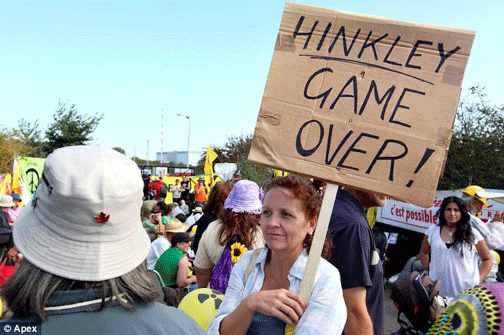
the Government will have to
put more taxpayer cash in and guarantee the debt.
Sizewell C was also likely to be put on ice unless British ministers came up with a big extra dollop of taxpayers’ money.
A series of cost overruns and delays are undermining the UK’s nuclear power revival
Jonathan Leake, 28 January 2024
For the future of Britain’s energy security it was a crucial decision,
and one that lay in the hands of France’s biggest power supplier.
However, not a single minister or civil servant was present when the
directors of EDF decided the fate of the UK’s two biggest nuclear
projects in their Paris boardroom on Tuesday. The finances of Hinkley Point
C and Sizewell C, the nuclear power stations which might one day supply
14pc of Britain’s electricity were top of the agenda. Shortly after the
meeting ended, Luc Remont, EDF’s managing director, and his colleagues
summoned their media managers to organise a briefing for analysts and
journalists.
Hinkley Point C, they were told, stood no chance of firing up
in 2027, as once promised. Its first reactor would come online around 2031
while the second has no date promised at all. Costs have surged again to
£46bn, a far cry from the £9bn EDF suggested when pushing the idea to
politicians around 2007 or the £24bn proposed when contracts were signed
in 2016.
Sizewell C was also likely to be put on ice unless British
ministers came up with a big extra dollop of taxpayers’ money.
Meanwhile, as EDF’s directors and French civil servants decided Britain’s nuclear
future in Paris, Andrew Bowie, the minister responsible for new nuclear
projects, was on his feet in parliament, talking up the UK’s prospects.
For Claire Coutinho, the Energy Secretary, the news was infuriating. Not
only had a decision vital to the UK been taken in Paris but it came just
days after she unveiled the Government’s long-awaited Nuclear Roadmap. A
statement rushed out that evening made clear that Coutinho blamed the
French for Hinkley’s extra costs and delays. “Hinkley Point C is not a
government project and so any additional costs or schedule overruns are the
responsibility of EDF and its partners and will in no way fall on
taxpayers,” a spokesman for her department said.
The comments irritated the French enough to hold a second round of media briefings, this time involving EDF’s owners, the French government. The UK, it was made clear,
would have to offer up billions of pounds more in taxpayers’ money if
Sizewell C was ever to be built. Coutinho subsequently pledged an extra
£1.8bn of taxpayers’ money for the project.
Meanwhile, EDF has refused
to up its stake from 20pc and Bowie has admitted he now needs to raise
£20bn of private finance, most likely meaning the Government will have to
put more taxpayer cash in and guarantee the debt.
Simon Taylor, professor of finance at Cambridge University, who specialises in the economics of nuclear energy, believes EDF’s reactor designs have some fundamental
flaws. “The EPR or European Pressurised Reactor were designed to be
incredibly safe, and to reassure people, after the Chernobyl disaster of
1986 but have turned out to be just much more difficult to build than
anyone had expected,” he says.
Amid a blame game between France and the
UK, the biggest loser remains the British taxpayer. They now face several
more years of reduced energy security and the prospect of power bills hikes
to raise the £20bn-plus bill for Sizewell C.
Telegraph 28th Jan 2024
https://www.telegraph.co.uk/business/2024/01/28/edf-hinkley-point-c-costs-go-nuclear-uk-taxpayer/
Are the French going cold on UK nuclear?

‘It would be madness to give Sizewell C the final go-ahead while the questions of whether Hinkley C can be finished, and who pays, are not resolved. Sizewell C is bound to take longer and cost more, but this time it would be we consumers who would bear the risk and pay the price through the “nuclear tax” on our energy bills.’.
The French government, which was previously relaxed about EDF’s forays into UK nuclear, now wants its energy company to work on projects back home in France.
So far, Britain has put £2.5billion into the project in total and taxpayers are the biggest shareholders. Campaigners who vehemently oppose the project are alarmed by the recent comments from Paris, pointing out that if the French back off from Sizewell, taxpayers could be on the hook for huge extra amounts of cash via their bills.
By FRANCESCA WASHTELL , 28 January 2024, https://www.thisismoney.co.uk/money/markets/article-13015713/Are-French-going-cold-UK-nuclear.html
Our nuclear industry is reawakening,’ energy secretary Claire Coutinho
declared in a Government strategy document published earlier this month. In
between invoking Winston Churchill’s enthusiasm for nuclear power and its
ability to help the UK reach net zero, Coutinho added that setting up new
plants would ensure our energy security ‘so we’re never dependent on the
likes of [Vladimir] Putin again’. Fighting talk. But in the space of a
fortnight, Coutinho’s gung-ho attitude has already been dented as a
diplomatic row brews over who should pay for the controversial power
stations.
French state-owned energy company EDF last week lit the blue
touchpaper with the revelation the UK’s flagship Hinkley Point C nuclear
plant in Somerset would be delayed until 2029 at the earliest. The cost, it
added, could spiral to as much as £46billion, from initial estimates of
£18billion.
Few in the industry will have been surprised, particularly as EDF has experienced delays on similar projects in Finland and France. But what was a shock were some incendiary remarks from the French government.
The Elysee Palace began pressing the UK to help plug a funding gap at Hinkley and for good measure cast doubt over its commitment to Sizewell C, the next nuclear power station in the pipeline.
A French Treasury official suggested the Government was trying to leave EDF in the lurch on Hinkley.
The official added that it cannot, at the same time, abandon the French firm to ‘figure it out alone’ on Hinkley and also expect it to plough money into Sizewell. It is, the official said, ‘a Franco- British matter,’ and not one for the French to resolve single-handedly.
This is a bad moment for two critical new nuclear plants – and our broader energy security – to be dragged into a cross-Channel tussle.
The French government, which was previously relaxed about EDF’s forays into UK nuclear, now wants its energy company to work on projects back home in France.
Well-placed UK sources deny the French claims that EDF has been left to shoulder the financing burden alone at Hinkley, or that it has been jettisoned by the British state.
They point to the fact EDF has all along had contractual obligations to shoulder the costs at this stage of the project. The early stages of developing Hinkley were undertaken by EDF along with China General Nuclear.
The Chinese firm has fulfilled its part of the bargain, leaving the onus on the French. ‘It’s all down to the French state,’ a senior industry source told The Mail on Sunday. ‘It’s tough, but they’ve not managed it at all well.’
A Department for Energy Security and Net Zero spokesman said: ‘The Government plays no part in the financing or operation of Hinkley Point C. The financing of the project is a matter for EDF and its shareholders.’
As well as backing Hinkley, EDF several years ago began serious talks with the Government over Sizewell C in Suffolk. Each could power an estimated 6 million homes for 60 years, meaning the two projects are linchpins for meeting future energy demand.
The French group is due to take a 20 per cent stake in Sizewell. The Government has previously indicated it will take 20 per cent. It was hoped the rest would be funded through money from the private sector, such as pension funds and sovereign wealth funds.
So far, Britain has put £2.5billion into the project in total and taxpayers are the biggest shareholders. Campaigners who vehemently oppose the project are alarmed by the recent comments from Paris, pointing out that if the French back off from Sizewell, taxpayers could be on the hook for huge extra amounts of cash via their bills.
The new type of funding structure for Sizewell C means consumers will already face an added tax to help pay for the plant.
Alison Downes of the Stop Sizewell C campaign group said: ‘It would be madness to give Sizewell C the final go-ahead while the questions of whether Hinkley C can be finished, and who pays, are not resolved. Sizewell C is bound to take longer and cost more, but this time it would be we consumers who would bear the risk and pay the price through the “nuclear tax” on our energy bills.’
And another area of the industry is watching the fracas with mounting frustration.
Companies vying to build ‘mini’ stations known as small modular reactors (SMRs) hope this prompts the Government to commit instead to their projects, which are quicker to build and cheaper [?]
The firms include Rolls-Royce SMR, which has already received significant funding from the Government. New nuclear plants of whatever size will almost certainly be part of the UK’s energy mix in the years to come.
The sector had already been championed by Boris Johnson before soaring oil and gas prices in the wake of Russia’s invasion of Ukraine highlighted Britain’s dependence on overseas energy.
Any fisticuffs with France over Hinkley and Sizewell would strain the sector and could fatally damage the level of public. Industry figures are urging ministers to resist stumping up cash the French had agreed to pay.
One senior source said: ‘I hope the Government doesn’t lose its nerve, though there’s no sign of that at the moment. It would be a terrible precedent.’
.
Hinkley Point C woes threaten to break UK and France’s nuclear fusion

Two former EDF executives told the Guardian the odds were stacked against Hinkley from the start. “I would have bet at the time that we would see the costs we have today. And I think they’ll climb higher too,” said one.
Cross-Channel dream is turning sour as EDF’s costs mount and Britain faces a long wait for the power to come on
Jillian Ambrose, 27 Jan 24, https://www.theguardian.com/uk-news/2024/jan/27/hinkley-point-c-woes-threaten-break-uk-france-nuclear-fusion
rench trade unions wield significant political clout. But in the summer of 2016 there was little they could do to stop the French government from investing in what would soon become the most expensive power station in the world.
All six trade union representatives on the board of Électricité de France (EDF) voted against a deal to build a nuclear power station in the UK. It was just weeks after its finance chief, Thomas Piquemal, resigned from the company over fears that Hinkley Point C in Somerset was too great a risk. The project was approved by 10 in favour and seven against.
In the last seven years these fears have proved well founded. EDF revealed this week the latest delay to Hinkley, which may not now open until 2031, well beyond its original decade-long schedule. Its costs have climbed to £35bn in 2015 prices, almost double the original forecast of £18bn in 2016. In today’s money Britain’s first new nuclear plant in 30 years could cost £46bn. The spiralling costs were blamed on inflation, Covid and Brexit.
Hinkley was meant to represent a nuclear renaissance on both sides of the Channel, and further the nuclear ambitions of China. It was an opportunity for EDF, once the world’s leading nuclear developer, to secure a future for its reactor designs in a low-carbon world.
For the UK, the first new nuclear power plant in a generation marked the start of the government’s campaign to replace its ageing fleet of reactors. And China saw it as a way to showcase its nuclear expertise, furthering its ultimate aim of building its homegrown HPR1000 nuclear reactors at Bradwell in Essex.
The deal was struck in 2016 just weeks after the Brexit vote, making Hinkley an opportunity to forge fresh ties between old friends – and create opportunities for new economic alliances too. China General Nuclear Power Group (CGN), a state-run energy company, agreed to take on a third of the project as the first step in a plan to roll out a string of nuclear plants in the UK built with its own reactor design.
The chancellor at the time, George Osborne, argued that Britain should “run towards China” to help boost the UK economy. Within months of the Hinkley deal the French president, Emmanuel Macron, and his Chinese counterpart, Xi Jinping, began talks on strengthening ties between the two nations. These led to trade deals worth about $15bn (£11.8bn) and an order from Beijing for 300 aircraft from Airbus worth tens of billions of euros.
But the rationale for all three nations now looks precarious. Hinkley’s costs have climbed as diplomatic relations between China and the west have soured. By the time the former UK prime minister Boris Johnson vowed to purge China’s Huawei from the UK’s telecoms network over security fears, the notion of Chinese-built nuclear reactors powering British homes had become politically unthinkable. CGN has ruled out any further investment in Hinkley – leaving French taxpayers to pick up the tab.
Two former EDF executives told the Guardian the odds were stacked against Hinkley from the start. “I would have bet at the time that we would see the costs we have today. And I think they’ll climb higher too,” said one.
Philippe Huet, a former head of EDF’s internal auditing in Paris, said the deal was based on political strategy rather than a commercial rationale. The British government offered EDF a contract that would guarantee payment of £92.50 for every megawatt hour of electricity generated by the nuclear plant. It was criticised for being both eye-wateringly expensive for UK bill payers but not nearly enough to cover the risks of constructing the project.
“At the time that it was agreed it was already known that EDF’s estimates understated the cost and schedule of the project. Key decision-makers chose to ignore this because it was too important strategically. As they would say, if a project cannot be profitable it must at least be strategic,” Huet said.
Hinkley is one of many costs facing the French taxpayer after the government renationalised EDF last year. The company’s future investments – in maintaining its existing fleet of nuclear reactors, building new ones, and investing in renewable energy – could exceed €20bn (£17bn) a year, according to Agnès Pannier-Runacher, the country’s energy transition minister.
The French government is reportedly calling on the UK government to provide financial help for both Hinkley and the next planned plant, Sizewell in Suffolk, to keep the struggling nuclear revival afloat. The UK government has been quick to quash any suggestion that Hinkley’s financial fallout will be borne by UK taxpayers. A spokesperson said the government “plays no part in the financing or operation of Hinkley Point C”, which was a matter for EDF and its shareholders.
Huet has predicted that EDF may even try to renegotiate its contract with the government. He estimates it could seek to raise how much it charges per megawatt hour of electricity produced by about 15% to make Hinkley a worthwhile venture.
International Coalition to Stop Genocide in Palestine Welcomes World Court’s Order
By the International Coalition To Stop Genocide In Palestine, Popular Resistance., January 26, 2024 https://popularresistance.org/international-coalition-to-stop-genocide-in-palestine-welcomes-todays-icj-order/—
Demands Its Implementation.
The ICGSP encourages governments and global social movements to demand that provisional measures are enforced immediately.
In its provisional ruling issued today on the South African Genocide Convention case against Israel, the International Court of Justice (ICJ—also known as the World Court) demanded Israel stop killing civilians and destroying civilian infrastructure and medical facilities; prevent and punish incitement to genocide by its top officials; and permit the delivery of humanitarian aid to Gaza. The International Coalition to Stop Genocide in Palestine (ICSGP) applauds the Court’s Order as a crucial first step toward forcing Israel and its primary sponsor and strongest political ally—the United States—to end the months-long brutal assault on Gaza, and the decades-long denial to Palestinians of their rights to self-determination and return.
However, the ICSGP also recognizes that Israeli and U.S. government officials have made repeated official declarations in the past week making clear their plan to ignore the ICJ’s legally binding ruling and rejecting the Court’s process as illegitimate, and that the U.S. has been threatening world governments with sanctions and war—a promise it is making good on already by bombing Yemen—for opposing the ongoing genocide. The ICSGP also recognizes that numerous powerful state allies of the U.S. and Israel, including Germany and Canada, have already made clear their intent to back Israel against an ICJ finding of genocide. The dangerous rejection by the United States, Israel and their allies of this process—which was set up through the United Nations precisely to prevent genocide—undermines the legitimacy of that institution and in particular the U.N. Security Council, where the U.S. has long used its veto power as a tool to promote war and genocide. The ICSGP calls upon social movements to demand that world governments uphold international law and protect the integrity of the United Nations by ensuring that the ICJ’s provisional measures are immediately enforced, and to hold Israeli war criminals and their powerful U.S. accomplices accountable for genocide.
The ICSGP stands in full solidarity with its Palestinian coalition members, who have emphasized in their own statements today the need for governments and social movements around the world to double down in their efforts to bring the ongoing genocide in Gaza to an end. Dr. Luqa AbuFarah, North America Coordinator for the Palestinian Boycott, Divestment and Sanctions National Committee (BNC), an ICSGP member organization, states:
“It’s clear we have a moral obligation to take action and end our government’s complicity with Israel’s Gaza genocide. We must have the courage to speak out and take action to advance the struggle for justice. We must end US military funding to Israel which at $3.8 billion USD a year could instead provide more than 450,000 households with public housing for a year or pay for 41,490 elementary school teachers. I also hope that every person outraged with the blatant disregard for Palestinian life will join and escalate our BDS Campaigns and make sure companies know that complicity with Israeli apartheid and genocide is unacceptable. We must take action now more than ever!
ICSGP, together with numerous legal and human rights organizations including coalition members The PAL Commission on War Crimes and The Global Legal Alliance for Palestine, held press conferences in New York and Chicago following the Court’s Order on the request for the indication of provisional measures this morning, expressing gratitude to South Africa for its steadfast support, and calling on all organizations and countries to support South Africa’s legal actions against the Israeli military campaign.”
Lamis Deek, cofounder the PAL Commission on War Crimes and convener of the Global Legal Alliance for Palestine, states:
“This historic decision changes international and domestic approaches—military, legal, and political—to stopping the genocide in Palestine. This verdict profoundly reshapes the geopolitical and legal topography, regardless of whether Israel complies or not. Following the Court’s decision we must issue calls on state parties to the ICJ and the Genocide Convention as regards their compliance obligations, and address our legal colleagues and our communities regarding the next steps we think will be most critical on the heels of this decision.
The brutal Israeli genocide and torture in Gaza, alongside the targeted assassinations, destruction of civilian infrastructure including all of Gaza’s hospitals and universities, blocking of aid, and use of starvation and spread of disease as a war tactic, constitute a grotesque series of the highest war crimes. We commend the Court’s positive decision. The question now is how to deal with the anticipated US-Israeli obstruction of that decision.”
Britain, Italy and Finland ‘pause’ funding for UN refugee agency in Gaza, day after ICJ Gaza genocide ruling against Israel
Middle East Monitor, Sat, 27 Jan 2024, https://www.sott.net/article/488289-Britain-Italy-and-Finland-pause-funding-for-UN-refugee-agency-in-Gaza-day-after-ICJ-Gaza-genocide-ruling-against-Israel
Britain, Italy and Finland on Saturday became the latest countries to pause funding for the United Nations’ refugee agency for Palestinians (UNRWA), following allegations its staff were involved in the Oct. 7 Hamas attacks on Israel, Reuters reports.
Comment: It’s just a coincidence that it comes a day following the UN ICJ ruling on Israel’s genocide in Gaza?
Set up to help refugees of the 1948 war at Israel’s founding, UNRWA provides education, health and aid services to Palestinians in Gaza, the West Bank, Jordan, Syria, and Lebanon. It helps about two thirds of Gaza’s 2.3 million population and has played a pivotal aid role during the current war.
The United States, Australia and Canada had already paused funding to the aid agency after Israel said 12 UNRWA employees were involved in the cross-border attack. The agency has opened an investigation into several employees severed ties with them.
Comment: Israel’s own media have acknowledged that not only was the IDF given a stand down order, but that its own forces are responsible for the death of a significant number of those killed on Oct 7.
The Palestinian foreign ministry criticised what it described as an Israeli campaign against UNRWA, and the Hamas militant group condemned the termination of employee contracts “based on information derived from the Zionist enemy.”
The UK Foreign Office said it was temporarily pausing funding for UNRWA while the accusations were reviewed and noted London had condemned the Oct. 7 attacks as “heinous” terrorism.
“The Italian government has suspended financing of the UNRWA after the atrocious attack on Israel on October 7,” Foreign Minister Antonio Tajani said on social media platform X.
Finland also said it suspended funding.
Comment: Norway and Ireland have not, with Norway’s rep stating: “The situation in Gaza is catastrophic, and UNRWA is the most important humanitarian organization there…Norway continues our support for the Palestinian people through UNRWA.”
And, as some analysts state, the cessation of aid may in fact constitute a crime in itself:
Francis Boyle states that with States (including US and UK govs) cutting off funding to UNRWA, it is “no longer the case of these States aiding and abetting Israeli Genocide against the Palestinians in violation of Genocide Convention article 3 (e) criminalizing ‘complicity’ in genocide. These States are now also directly violating Genocide Convention article 2(c) by themselves: ‘Deliberately inflicting on the group conditions of life calculated to bring about its physical destruction in whole or in part…'”
Hussein al-Sheikh, head of the Palestinians’ umbrella political body the Palestine Liberation Organization (PLO), said cutting support brought major political and relief risks.
“We call on countries that announced the cessation of their support for UNRWA to immediately reverse their decision,” he said on X.
Comment: One can only hope that the virtuous nations in the multipolar world, like Russia and China, will take up the responsibility to help the Palestinians, exposing the sinister and petty Western establishment for what it is.
Note that Israel is blocking aid deliveries to Gaza, and because so little aid is getting through starvation and disease in Gaza are soaring: Israeli tanks open fire on hundreds of Gazans waiting for aid; Egypt’s President exposes IDF blocking critical deliveries
Sky News commentary on the aid ‘pause’:
Freezing Aid to Gaza: Israel’s International War against the United Nations Relief and Works Agency (UNRWA)
January 29, 2024, Dr Binoy Kampmark, https://theaimn.com/freezing-aid-to-gaza-israels-international-war-against-the-unrwa/
Imperilled, tormented Palestinians in Gaza had little time to celebrate the January 26 order of the International Court of Justice. In a case brought by South Africa intended to facilitate a ceasefire and ease the suffering of the Gaza populace, Israel received the unwanted news that it had to, among other obligations, ensure compliance with the UN Genocide Convention, including by its military; prevent and punish “the direct and public incitement to genocide” against the Palestinian populace in Gaza and permit basic services and humanitarian assistance to the Gaza Strip.
Within hours, Israel, bruised and outraged by a body its officials have decried as antisemitic and favourably disposed to Palestinian propaganda, found an excuse to flaunt the ruling. 12 employees of the United Nations Relief and Works Agency for Palestinian Refugees (UNRWA), the agency responsible for distributing aid in Gaza, were accused (not found) by Israel’s intelligence agency Shin Bet, of involvement in the Hamas attacks of October 7.
The response from UNRWA was swift. Contracts were terminated, an investigation was launched, including a full inquiry into allegations made against the organisation. The agency’s commissioner general, Philippe Lazzarini promised, on January 27, that, “Any UNRWA employee who was involved in acts of terror will be held accountable, including through criminal prosecution.”
Not content with this, Israel stormily took to the campaign trail hoping to rid Gaza of the UN agency it has despised for years. UNRWA, after all, is a salutary reminder of Palestinian suffering, dispossession and desperation, its existence a direct result of Israeli foreign policy. Foreign Minister Israel Katz was severe in laying his country’s loathing for UNRWA bare. “We have been warning for years: UNRWA perpetuates the refugee issue, obstructs peace, and serves as a civilian arm of Hamas in Gaza,” he stated on Shabbat. “UNRWA is not the solution – many of its employees are Hamas affiliates with murderous ideologies, aiding in terror activities and preserving its authority.” Deviously and fiendishly, Katz was dismissing the entire enterprise of aid through a UN outlet as a terroristic extension, rather than the ghastly product of Israel’s own ruthless, generational war against Palestinians. Leave it to us to oversee matters of aid: we know best.
Powers, many with military ties with Israel and sluggish about holding the Jewish State to account in its Gaza campaign, were relieved by the distraction. Rather than assessing their own export regime, the grant of licenses in the arms market in gross violation of human rights and the facilitation of crimes against humanity, an excuse to continue, and prolong the weapons transfers and assistance to Israel, had presented itself.
Within hours, nine states had added their names to the list suspending allocated aid. Australia, along with the United States and Canada, rushed to the podium to condemn UNRWA and freeze funding. The United Kingdom, Germany, Italy, the Netherlands, Switzerland, and Finland followed.
The measure of rage could now be adjusted and retargeted. A spokesperson for the UK government was “appalled by allegations that UNRWA staff were involved in the 7 October attack against Israel, a heinous act of terrorism that the UK government has repeatedly condemned.” The US State Department was “extremely troubled” and had “temporarily paused additional funding. Canada was also “deeply troubled by the allegations relating to some UNRWA employees.”
Australia’s foreign minister, Penny Wong, despite accepting that UNRWA’s role in conducting “vital, life saving work”, “providing essential services in Gaza directly to those who need it, with more than 1.4 million Palestinians currently sheltering in its own facilities” felt a suspension of funding was wholly sensible. This, from a minister who never tires about praising international law and its profoundly sacred qualities.
The assessment by Lazzarini was one of dismay and bafflement by the speed at which the funding had been halted. “These decisions threaten our ongoing humanitarian work across the region including and especially in the Gaza Strip.”
The measure could almost be regarded as hysterical, given that a mere 12 individuals had been tarnished from a pool of some 30,000 members. Johann Soufi, a lawyer and former director of the agency’s legal office in Gaza, gave this assessment to Agence-France Presse: “Sanctioning UNRWA, which is barely keeping the entire population of Gaza alive, for the alleged responsibility of a few employees, is tantamount to collectively punishing the Gazan population, which is living in catastrophic conditions.”
Australian Greens Senator and defence spokesman, Senator David Shoebridge, also picked up on the grotesque twist the latest stifling of aid to the beleaguered residents of Gaza entailed. “The one temporary pause [Senator Wong] has been able to achieve is not the bombing or killing, or even weapons exports, it’s providing aid to [Palestinians].”
International Court of Justice Rules That Israel Must Stop Killing Palestinians
By David Swanson, World BEYOND War, January 26, 2024
The International Court of Justice has ruled that Israel must cease its warmaking in Gaza — cease committing and inciting genocidal acts — and that the case charging Israel with genocide must proceed.
DETAILS OF THE RULING:
- By 15-2: Israel shall take all measures within its power to prevent all acts within the scope of Genocide Convention article 2
- 15-2: Israel must immediately ensure that its military does not commit acts within the scope of GC.2
- 16-1: Direct and punish all members of the public who engage in the incitement of genocide against Palestinians
- 16-1: Ensure provision of urgently needed basic services, humanitarian aid
- 15-2: Prevent the destruction of and ensure the preservation of evidence to allegation of acts of GC.2
- 15-2: Israel will submit report as to how they’re adhering to these orders to the ICJ within 1 month
This is Article 2 of the Genocide Convention:
In the present Convention, genocide means any of the following acts committed with intent to destroy, in whole or in part, a national, ethnical, racial or religious group, as such:
(a) Killing members of the group;
(b) Causing serious bodily or mental harm to members of the group;
(c) Deliberately inflicting on the group conditions of life calculated to bring about its physical destruction in whole or in part;
(d) Imposing measures intended to prevent births within the group;
(e) Forcibly transferring children of the group to another group.
Therefore, Israel must cease killing Palestinians.
This was a make or break moment for international law, or rather a break or make-a-first-step moment. There is hope for the idea and reality of international law, but this is only a beginning.
The president of the International Court of Justice, who read the ruling, is Judge Joan Donoghue, former top legal advisor under Hillary Clinton at the U.S. State Department during the Obama Administration. She previously was the lawyer for the United States in its unsuccessful defense before the ICJ against charges by Nicaragua of minining its harbor.
The court voted for portions of this decision by 15-2 and 16-1. The “No” votes came from Judge Julia Sebutinde of Uganda and Ad Hoc Judge Aharon Barak of Israel.
The case presented by South Africa was overwhelming (read it or watch a key part of it), and Israel’s defense paper-thin. And the case just grew more overwhelming during the bizarre delay (yes, courts are slow, but this genocide is swift).
People all over the world built the pressure to move South Africa to act and other nations to add their support. Over 1,500 organizations signed a statement. Individuals signed a petition by CODEPINK, and sent almost 500,000 emails to key governments’ United Nations consulates through World BEYOND War and RootsAction.org. Click those links because more emails are needed now. While several nations have made public statements in support of South Africa’s case, we need them to file papers officially with the International Court of Justice. To reach out to additional national governments, go here.
Governments that have made statement in support of the case against genocide include Malaysia, Turkey, Jordan, Bolivia, the 57 nations of the Organization of Islamic Countries, Nicaragua, Venezuela, Maldives, Namibia, and Pakistan, Colombia, Brazil, and Cuba.
Germany has backed Israel’s defense against the charge of genocide, which has been denounced by Namibia, victimn of a German genocide. Prominent Jews have denounced Germany’s shameful action.
Mass demonstrations in the streets of the world have continued in support of peace and justice, and to a far greater extent than major media outlets have reported.
Here’s a discussion of this campaign for justice with Sam Husseini on Talk World Radio.
Prior to today’s ruling from the International Court of Justice, the U.S. government pointedly refused to say whether it would comply with ruling, despite insisting that other nations comply with rulings by the ICJ.
Hamas said that it would cease fire if Israel does, and release all prisoners if Israel does
Germany, to its credit, reportedly said that it would comply……………………………………………………………………………………………………………………………….. https://worldbeyondwar.org/international-court-of-justice-rules-that-israel-must-cease-fire/
Don’t be surprised if the UK tax-payer, not France, ends up paying the astronomic costs of Hinkley C nuclear power station .
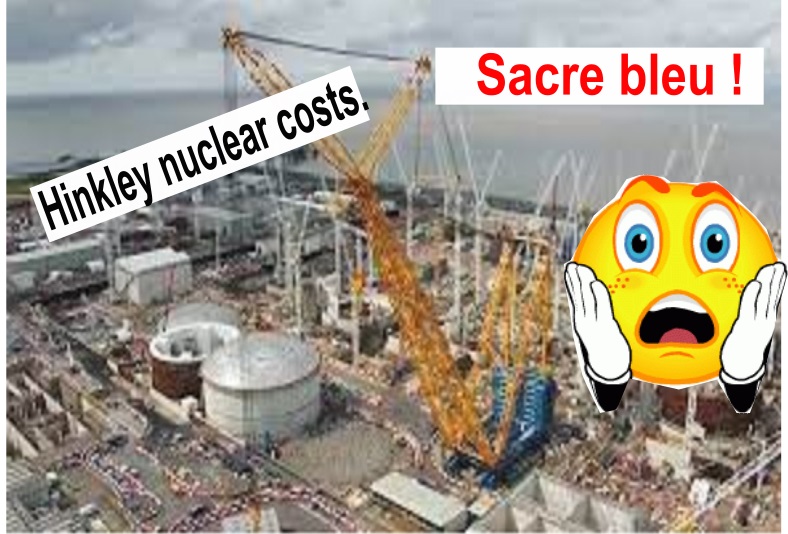
Should we be bothered that Hinkley C nuclear power station has run even further over
budget (the latest estimate is £35 billion, nearly twice that quoted when
the project was given the go-ahead in 2016) and that its completion date
has been put back yet further, to 2031?
After all, the whole point of offering French energy giant EDF a guaranteed ‘strike price’ at the then juicy rate of £92.50 per megawatt-hour (at 2013 prices, rising with
inflation) was supposed to be to transfer financial risk to EDF and its
financial backers. ‘It is important to say that British consumers won’t
pay a penny, with the increased costs met entirely by shareholders,’ EDF’s
managing director of the Hinkley project state this morning.
I wouldn’t be so confident. Yet more delays to Hinkley C punch a huge hole in the
government’s net zero plans, which include the full decarbonisation of the
national grid by 2035 (Labour says it will do it by 2030). By 2028, all but
one of the UK’s existing five nuclear power stations are due to close – and
the other one, Sizewell B, is due to be gone by 2035. From generating
nearly a third of the UK’s power at its peak in 1998 the nuclear industry
could be down to virtually nothing by the time Hinkley C eventually opens.
No-one should be surprised if, before we get to 2031, EDF goes cap in hand
to the government, and the government offers it some kind of deal which
transfers risk back onto the taxpayer.
Spectator 24th Jan 2024
https://www.spectator.co.uk/article/hinkley-c-and-the-rising-cost-of-net-zero/
Brexit blamed for delays to nuclear power project
EDF’s former CEO had pledged christmas turkeys would be cooked by the plant by 20172
i By Ben Gartside, 24 Jan 24
The UK’s premier nuclear power project could be delayed by another four years as costs continue to balloon, with Brexit cited as a major factor………………According to EDF, the French firm in charge of developing the site, issues on the project had been caused by Brexit, the Pandemic and inflation…………………………………………………….
How has Brexit affected construction costs?
Developers have been hit hard by both the Covid pandemic and soaring energy prices. Tim Heatley, co-founder of Manchester-based Capital&Centricm, said Brexit had also been a “major factor”.
He previously told i: “On the surface there doesn’t seem as much jeopardy in construction as car manufacturing – you can’t outsource building new homes to Asia.
“But, I’d argue, we’re facing even bigger economic consequences if we don’t get things under control.”
“Both construction material and labour costs have rocketed here way more than EU countries, so Brexit must be a major factor.”
A report published in 2023 found that between 2015 and 2022 the cost of construction materials including cement, timber and steel increased by 60 per cent in the UK compared to 35 per cent in the EU…………………….. https://inews.co.uk/news/brexit-blamed-delays-nuclear-power-lower-energy-bills-2871548—
The ICJ’s Provisional Orders: The Genocide Convention Applies to Gaza
January 27, 2024, Dr Binoy Kampmark, https://theaimn.com/the-icjs-provisional-orders-the-genocide-convention-applies-to-gaza/—
On January 26, legal experts, policy wonks, activists and the plain curious waited for the order of the International Court of Justice, sitting in The Hague. The topic was that gravest of crimes, considered most reprehensible in the canon of international law: genocide. The main participants: the accused party, the State of Israel, and the accuser, the Republic of South Africa.
Filed on December 29 last year, the South African case focused on its obligations arising under the Convention on the Prevention and Punishment of the Crime of Genocide and those of Israel. Pretoria, in its case, wished that the ICJ adjudicate and declare that Israel had breached its obligations under the Convention, and “cease forthwith any acts and measures in breach of those obligations, including such acts or measures which would be capable of killing or continuing to kill Palestinians, or causing or continuing to cause serious bodily or mental harm to Palestinians or deliberately inflicting on their group, or continuing to inflict on their group, conditions of life calculated to bring out its physical destruction in whole or in part, and fully respect its obligations under the Genocide Convention.”
The latter words derive from Article II of the Convention, which stipulate four genocidal actions: the killing of the group’s members; the causing of serious bodily or mental harm to those group’s members; the deliberate infliction of conditions calculated to bring about the physical destruction, in whole or in part, of that group and imposing measures to prevent births within the group.
The sheer extent of devastation being wrought by Israeli Defence Forces in Gaza, justified by the Netanyahu government as necessary self-defence in the aftermath of the Hamas attacks of October 7, led the South African team to also seek immediate provisional measures under Article 41 of the Court’s statute. (The review on the case’s merits promises to take much longer.) They included the immediate suspension of the IDF’s military operations in and against Gaza, the taking of all reasonable measures to prevent genocide, and desisting from committing acts within Article II of the Convention. The expulsion and forced displacement of Palestinians should also stop, likewise the deprivation of adequate food, water and access to humanitarian assistance and medical supplies and “the destruction of Palestinian life in Gaza.”
By 15-2, the court accepted that “the catastrophic humanitarian situation in the Gaza Strip is at serious risk of deteriorating further before the Court renders its final judgment.” (Over 26,000 Palestinians have been killed, extensive tracts of land in Gaza pummelled into oblivion, and 85% of its 2.3 million residents expelled from their homes.) Measures were therefore required to prevent “real and imminent risk that irreparable prejudice will be caused to the rights found by the Court to be plausible, before it gives its final decision.”
The grant of provisional measures was, however, more conservative than that sought by Pretoria. Conspicuously missing was any explicit demand that Israel pause its military operations. That said, the judgment did little to afford Israel’s leaders and the IDF comfort from the obligatory reach of the Genocide Convention, an instrument they had argued was irrelevant and inapplicable to the conduct of “innovative” military operations.
To that end, Israel was obligated to take all possible measures to prevent the commission of acts under Article II of the Genocide Convention, including by its military; prevent and punish “the direct and public incitement to genocide” against the Palestinian populace in Gaza; permit basic services and humanitarian assistance to the Gaza Strip; ensure the preservation of, and prevent destruction of, evidence related to acts committed against Gaza’s Palestinians within Articles II and III of the Convention; and submit a report to the ICJ on how Israel was abiding by such provisional measures within one month.
As is very much the form, the justice from the country in the dock, in this case, Israel’s Aharon Barak, could see nothing inferentially genocidal in his country’s campaign. South Africa, he insisted, had intentionally ignored the role played by Hamas in its October 7 attacks, and “wrongly sought to impute the crime of Cain to Abel.”
-ADVERTISEMENT-
Inevitably, the singular experience of the Holocaust survivor, the sui generis Jewish view of trauma, used as solid armour against any possibility that Israel might ever commit genocide, became a point of contention. Genocide “is the gravest possible accusation and is deeply intertwined with my personal life experience.” Israel had a firm commitment to the rule of law, and to accept that it was committing genocide “is very hard for me personally”. Tellingly, he suggested that Israel’s campaign in Gaza be examined, not from the viewpoint of the Genocide Convention but international humanitarian law.
With classic casuistry, Barak did vote for the measure requiring Israel to do everything “within its power to prevent and punish the direct and public incitement to commit genocide in relation to members of the Palestinian group in the Gaza strip.” But having identified nothing in the way of such intent, the issue became a moot one. With some relief, Barak could state that certain measures sought by South Africa, including an immediate suspension of military operations, were rejected by the ICJ, which preferred “a significantly narrower scope”.
From the other side of the legal aisle, the South African foreign minister, Naledi Pandor, wished that the ICJ had grasped the nettle to order a halt in military operations. But, with some deft reasoning, she was satisfied that the only way Israel could implement the provisional measures would be through a ceasefire. Much the same view was expressed by the Associated Press: “The court’s half-dozen orders will be difficult to achieve without some sort of cease-fire or pause in the fighting.” That logic is clear enough, but the actions, given the various statements from Prime Minister Benjamin Netanyahu and his officials alleging slander and a blood libel against their country, are unlikely to follow.
Nuclear hype in meltdown

The latest nuclear power ‘renaissance’ is going in reverse.
Dr Jim Green , 23rd January 2024, https://theecologist.org/2024/jan/23/nuclear-hype-meltdown
Nuclear power went backwards last year and shrunk to below 10 percent of global electricity generation despite all the hype about a new nuclear ‘renaissance’. Meanwhile, renewables enjoyed record growth for the 22nd consecutive year and now accounts for more than 30 percent.
The nuclear renaissance of the late-2000s was a bust due to the Fukushima disaster and catastrophic cost overruns with reactor projects. The latest renaissance is heading the same way – nowhere.
There were five reactor start-ups and five permanent closures in 2023 with a net loss of 1.7 gigawatts (GW) of capacity. There were just six reactor construction starts in 2023, five of them in China.
Hype

Due to the ageing of the reactor fleet, the International Atomic Energy Agency (IAEA) anticipates the closure of 10 reactors (10 GW) per year from 2018 to 2050.
Therefore the industry needs an annual average of 10 reactor construction starts, and 10 reactor startups (grid connections), just to maintain its current output. Over the past decade (2014-23), construction starts have averaged 6.1 per year and reactor startups have averaged 6.7.
The number of operable power reactors is 407 to 413 depending on the definition of operability, well down from the 2002 peak of 438.
Nuclear power’s share of global electricity generation has fallen to 9.2 percent, its lowest share in four decades and little more than half of its peak of 17.5 percent in 1996.
Over the two decades 2004-2023, there were 102 power reactor startups and 104 closures worldwide: 49 startups in China with no closures; and a net decline of 51 reactors in the rest of the world.
In China, there were five reactor construction starts in 2023 and just one reactor startup. Put another way, there was just one reactor construction start outside China in 2023. One. So much for the hype about a new nuclear ‘renaissance’.
Deployment
Small modular reactors (SMRs) are the subject of endless hype but there were no SMR construction starts or startups last year.
Indeed, the biggest SMR news in 2023 was NuScale Power’s decision to abandon its flagship project in Idaho despite securing astronomical subsidies amounting to around US$4 billion from the US Government. The company is far more likely to go bankrupt than to break ground on its first reactor.
The pro-nuclear Breakthrough Institute noted in a November 2023 article that efforts to commercialise a new generation of ‘advanced’ nuclear reactors “are simply not on track” and it warned nuclear advocates not to “whistle past this graveyard”.
The Institute said: “The NuScale announcement follows several other setbacks for advanced reactors. Last month, X-Energy, another promising SMR company, announced that it was canceling plans to go public. This week, it was forced to lay off about 100 staff.
“In early 2022, Oklo’s first license application was summarily rejected by the Nuclear Regulatory Commission before the agency had even commenced a technical review of Oklo’s Aurora reactor.
“Meanwhile, forthcoming new cost estimates from TerraPower and XEnergy as part of the Department of Energy’s Advanced Reactor Deployment Program are likely to reveal substantially higher cost estimates for the deployment of those new reactor technologies as well.”
Installed
The International Energy Agency (IEA) has just released its ‘Renewables 2023’ report and it makes for a striking contrast with the nuclear industry’s malaise.
Nuclear power suffered a net loss of 1.7 GW capacity in 2023, whereas renewable capacity additions amounted to a record 507 GW, almost 50 percent higher than 2022. This is the 22nd year in a row that renewable capacity additions set a new record, the IEA states.
Nuclear power accounts for a declining share of global electricity generation (currently 9.2 percent) whereas renewables have grown to 30.2 percent.
The IEA expects renewables to reach 42 percent by 2028 thanks to a projected 3,700 GW of new capacity over the next five years in the IEA’s ‘main case’.
The IEA states that the world is on course to add more renewable capacity in the next five years than has been installed since the first commercial renewable energy power plant was built more than 100 years ago.
Milestones
Solar and wind combined have already surpassed nuclear power generation and the IEA notes that several other milestones are in sight:
‒ In 2025, renewables surpass coal-fired electricity generation to become the largest source of electricity generation
‒ In 2025, wind surpasses nuclear electricity generation
‒ In 2026, solar PV surpasses nuclear electricity generation
‒ In 2028, renewable energy sources account for over 42 percent of global electricity generation, with the share of wind and solar PV doubling to 25 percent.
An estimated 96 percent of newly installed, utility-scale solar PV and onshore wind capacity had lower generation costs than new coal and natural gas plants in 2023, the IEA states.
Tripling
The IEA states in its ‘Renewables 2023’ report that: “Prior to the COP28 climate change conference in Dubai, the International Energy Agency (IEA) urged governments to support five pillars for action by 2030, among them the goal of tripling global renewable power capacity.
“Several of the IEA priorities were reflected in the Global Stocktake text agreed by the 198 governments at COP28, including the goals of tripling renewables and doubling the annual rate of energy efficiency improvements every year to 2030.
“Tripling global renewable capacity in the power sector from 2022 levels by 2030 would take it above 11 000 GW, in line with IEA’s Net Zero Emissions by 2050 (NZE) Scenario.”
It adds: “Under existing policies and market conditions, global renewable capacity is forecast to reach 7300 GW by 2028. This growth trajectory would see global capacity increase to 2.5 times its current level by 2030, falling short of the tripling goal.”
In the IEA’s ‘accelerated case’, 4,500 GW of new renewable capacity will be added over the next five years (compared to 3,700 GW in the ‘main case’), nearing the tripling goal. The goal of tripling renewables by 2030 is a stretch but it is not impossible. Conversely, the ‘pledge’ signed by just 22 nations at COP28 to triple nuclear power by 2050 is absurd.
Military-strategic
China’s nuclear program added only 1.2 GW capacity in 2023 while wind and solar combined added 278 GW. Michael Barnard noted in CleanTechnica that allowing for capacity factors, the nuclear additions amount to about seven terrawatt-hours (TWh) of new low carbon generation per year, while wind and solar between them will contribute about 427 TWh annually, over 60 times more than nuclear.
Barnard commented: “One of the things that western nuclear proponents claim is that governments have over-regulated nuclear compared to wind and solar, and China’s regulatory regime for nuclear is clearly not the USA’s or the UK’s.
“They claim that fears of radiation have created massive and unfair headwinds, and China has a very different balancing act on public health and public health perceptions than the west. They claim that environmentalists have stopped nuclear development in the west, and while there are vastly more protests in China than most westerners realise, governmental strategic programs are much less susceptible to public hostility.
“And finally, western nuclear proponents complain that NIMBYs block nuclear expansion, and public sentiment and NIMBYism is much less powerful in China with its Confucian, much more top down governance system.
“China’s central government has a 30-year track record of building massive infrastructure programs, so it’s not like it is missing any skills there. China has a nuclear weapons programme, so the alignment of commercial nuclear generation with military strategic aims is in hand too. China has a strong willingness to finance strategic infrastructure with long-running state debt, so there are no headwinds there either.
“Yet China can’t scale its nuclear program at all. It peaked in 2018 with seven reactors with a capacity of 8.2 GW. For the five years since then then it’s been averaging 2.3 GW of new nuclear capacity, and last year only added 1.2 GW…”
This Author
Dr Jim Green is the national nuclear campaigner with Friends of the Earth Australia and a member of the Nuclear Consulting Group.
France presses UK to help fill multibillion-pound hole in nuclear projects

Call comes day after EDF flagged more delays of construction of power plant at Hinkley Point
Sarah White in Paris and Jim Pickard and Rachel Millard in London, 25 Jan 24, https://www.ft.com/content/3320c06e-7ce3-4a6b-ab22-4b8201a4cfca
The French government is pressing the UK to help plug a multibillion-pound hole in the budget of nuclear power projects being built in Britain by France’s electricity operator EDF. The call for a contribution from the UK is likely to cause tensions between Paris and London, a day after state-owned EDF admitted its construction of a new nuclear power station at Hinkley Point in Somerset would suffer further costly delays, taking the bill to as much as £46bn. The UK has said it will not put cash into the project, which counts EDF as a majority shareholder, and is already backed by a government guarantee on its revenues once it is up and running.
But Paris is pushing for a “global solution” that would also encompass funding issues at another planned UK plant, Sizewell C, said a French economy ministry official and another person close to the talks. “It’s a Franco-British matter,” the French economy ministry official said. “The British government cannot at the same time say EDF has to figure it out alone on Hinkley Point and at the same time ask EDF to put money into Sizewell. We’re determined to find a global solution to see these projects through.”
Sizewell in Suffolk has a different financial set-up to Hinkley. The UK this week said it would inject another £800mn of state funds, bringing its total contribution to £2.5bn at the £20bn plant, where it is the top shareholder. Its partner EDF has no obligation to put more money in. French officials said discussions on various options had begun several months ago with British counterparts, although they acknowledged London had flagged budgetary constraints that would have to be taken into account. In the UK, a government official played down the talks, adding that on Hinkley Point: “Costs will be the responsibility of EDF.”
An EDF executive told the BBC on Wednesday that the French company picks up “the tab for the cost overruns”. EDF on Tuesday warned Hinkley Point would not now be completed until 2029 at the earliest, four years later than its original start date, while the two reactors could cost up to £46bn to build at today’s prices, compared with a £18bn budget in 2016.
Other factors might play into the discussions, however. Under Prime Minister Rishi Sunak, Britain took the political initiative to eject Chinese group CGN as an investor in Sizewell — leaving that project in need of fresh private capital, but also prompting CGN to pull back from Hinkley, where it is a 33.5 per cent shareholder. The Chinese group has fulfilled its contracted payments on Hinkley but has no obligation to fund over-costs and stopped doing so a few months ago.
“The French don’t have many levers here but the CGN issue is a very real one,” a third person close to the talks said. Finding private investors to make up the Hinkley shortfall may be tough, several people close to the group said, although formulas such as state guarantees could be discussed. EDF is only just coming out of a period of financial turmoil, and has big investments to make at home, too, in the coming decades. It was fully renationalised last year
“Our goal here . . . is for what’s happening at Hinkley Point, with the delays and the issue with the Chinese partner’s decision, not to impact EDF’s financial trajectory excessively,” the French economy ministry official said. However, one UK nuclear industry figure said that EDF’s plight at Hinkley was the consequence of signing up to a deal with the UK government a decade ago, which at the time was criticised for being too generous to the French group. Under a so-called contract for difference signed with the state, construction costs are not covered but future electricity production is backed up by subsidies in case power prices fall below a certain threshold.
1 This Month



26 September – International Day for the Total Elimination of Nuclear Weapons


PLEASE OPPOSE HR 8255 AND S.3639 – bills would accelerate satellite deployment, with no environmental review or safeguards – https://ncstd5li.quorum.us/campaign/169331/
To see nuclear-related stories in greater depth and intensity – go to https://nuclearinformation.wordpress.com
-
Archives
- September 2026 (233)
- August 2026 (330)
- July 2026 (355)
- June 2026 (287)
- May 2026 (306)
- April 2026 (356)
- March 2026 (251)
- February 2026 (267)
- January 2026 (308)
- December 2025 (358)
- November 2025 (359)
- October 2025 (375)
-
Categories
- 1
- 1 NUCLEAR ISSUES
- business and costs
- climate change
- culture and arts
- ENERGY
- environment
- health
- history
- indigenous issues
- Legal
- marketing of nuclear
- media
- opposition to nuclear
- PERSONAL STORIES
- politics
- politics international
- Religion and ethics
- safety
- secrets,lies and civil liberties
- spinbuster
- technology
- Uranium
- wastes
- weapons and war
- Women
- 2 WORLD
- ACTION
- AFRICA
- Atrocities
- AUSTRALIA
- Christina's notes
- Christina's themes
- culture and arts
- Events
- Fuk 2022
- Fuk 2023
- Fukushima 2017
- Fukushima 2018
- fukushima 2019
- Fukushima 2020
- Fukushima 2021
- general
- global warming
- Humour (God we need it)
- Nuclear
- RARE EARTHS
- Reference
- resources – print
- Resources -audiovicual
- Weekly Newsletter
- World
- World Nuclear
- YouTube
-
RSS
Entries RSS
Comments RSS
 nuclear-news