Chris Huhne Letter: Taxpayers shouldn’t be footing bill for EDF failings

I was astonished and saddened by your report that both Bruno Le
Maire, the French finance minister, and Luc Rémont, chief executive of
EDF, are pressing the UK government to help with the cost overrun at
Hinkley Point C, the EDF nuclear plant under construction in the UK.
I regret EDF’s €12.9bn write down, but it is the French company’s
responsibility (Report, February 17). I will save French blushes by not
quoting all the promises that were made by the company about the low cost
of its nuclear energy (a fraction even of what was ultimately agreed). What
is wholly unacceptable, however, is the notion that the UK taxpayer should
in any way be on the hook for cost overruns when it was always made utterly
explicit — by me and my successor — that this would never happen.
A clear condition of the Hinkley project was that EDF would be entirely and
solely responsible for the construction costs and risks, and the UK
government would merely guarantee a price (subsidy-free, taking account of
carbon costs) for the electricity output once the plant started. Nothing
could be more unambiguous either legally, politically or morally.
Neither I nor my immediate successors would ever have agreed any contract — a
contract for difference — on any other basis. Any British minister who
now goes back on that arrangement would be betraying their responsibility
to the exchequer, and would be a legitimate target for the public accounts
committee.
FT 28th Feb 2024
https://www.ft.com/content/175d212b-0a93-48f5-b68c-2a58bd098796
Biden administration restores Trump-rescinded policy on illegitimacy of Israeli settlements
BY MATTHEW LEE, February 24, 2024
WASHINGTON (AP) — The Biden administration on Friday restored a U.S. legal finding dating back nearly 50 years that Israeli settlements in the occupied Palestinian territories are “illegitimate” under international law.
Secretary of State Antony Blinken said the U.S. believes settlements are inconsistent with Israel’s obligations, reversing a determination made by his predecessor, Mike Pompeo, in the Biden administration’s latest shift away from the pro-Israel policies pursued by former President Donald Trump.
Blinken’s comments came in response to a reporter’s question about an announcement that Israel would build more than 3,300 new homes in West Bank settlements as a riposte to a fatal Palestinian shooting attack.
It wasn’t clear why Blinken chose this moment, more than three years into his tenure, to reverse Pompeo’s decision. But it came at a time of growing U.S.-Israeli tensions over the war in Gaza, with the latest settlement announcement only adding to the strain. It also came as the United Nations’ highest court, the International Court of Justice, is holding hearings into the legality of the Israeli occupation.
Biden administration officials did not cast Blinken’s comments as a reversal — but only because they claim Pompeo’s determination was never issued formally. Biden administration lawyers concluded Pompeo’s determination was merely his opinion and not legally binding, according to two administration officials who spoke on condition of anonymity to discuss private discussions.
But formally issued or not, Pompeo’s announcement in November 2019 was widely accepted as U.S. policy and had not been publicly repudiated until Blinken spoke on Friday.
Speaking in the Argentine capital of Buenos Aires, Blinken said the U.S. was “disappointed” to learn of the new settlement plan announced by Israel’s far-right firebrand finance minister, Bezalel Smotrich, after three Palestinian gunmen opened fire on cars near the Maale Adumim settlement, killing one Israeli and wounding five.
Blinken condemned the attack but said the U.S. is opposed to settlement expansion and made clear that Washington would once again abide by the Carter administration-era legal finding that determined settlements were not consistent with international law.
“It’s been longstanding U.S. policy under Republican and Democratic administrations alike that new settlements are counter-productive to reaching an enduring peace,” he said in his news conference with Argentine Foreign Minister Diana Mondino.
“They’re also inconsistent with international law. Our administration maintains a firm opposition to settlement expansion and in our judgment this only weakens, it doesn’t strengthen, Israel’s security,” Blinken said……………………………….. more https://apnews.com/article/israel-settlements-illegitimate-palestine-biden-rescind-law-0bed7cf5d6f98012193e9f5075eb719a
China is ‘unlikely’ to lift import ban on Japanese seafood as dumping continues
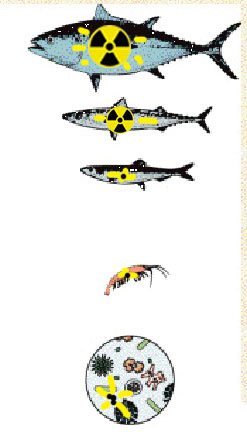
predatory species higher up in the food chain have a greater chance of experiencing bioaccumulation and biomagnification of radioactive substances. As time goes on and more nuclear-contaminated water is discharged, the negative effects will only increase
By GT staff Feb 25, 2024 , https://www.globaltimes.cn/page/202402/1307658.shtml
Half a year after Japan opened Pandora’s box by dumping nuclear-contaminated wastewater from the crippled Fukushima Daiichi nuclear power plant into the ocean, Japanese media are discussing the possibility of bilateral talks for getting China to revoke its import ban on Japanese marine products, in an apparent attempt to test the waters.
In response, Chinese experts told the Global Times on Sunday that, in the short term, it is unlikely that China will revoke the ban as there are currently no conditions for a withdrawal.
Meanwhile, a Kyodo News survey on Friday showed that most Japanese fishery groups have been affected by the discharge, with many feeling the impact through China’s import ban on Japanese seafood.
The survey found that 29 out of 36 respondents among the members of the National Federation of Fisheries Cooperative Associations said they “had felt” or “had somewhat felt” negative effects, including financial damage due to the contaminated water dumping, overwhelmingly due to the subsequent import ban by China.
Chinese Foreign Ministry spokesperson Mao Ning said at a regular press conference that the precautionary measures taken by China and some other countries in response to Japan’s move are aimed at protecting food safety and people’s health.
“These measures are entirely legitimate, reasonable and necessary,” Mao said.
Chang Yen-chiang, director of the Yellow Sea and Bohai Sea Research Institute of Dalian Maritime University, revealed several main factors why China is less likely to revoke the ban in the short run.
There is no halt in the ocean discharge, that is, the Japanese side has not withdrawn from their erroneous actions, he said.
Currently, half a year has passed since the dumping began, meaning that under the influence of ocean currents, the impact of Japan’s nuclear-contaminated water discharge on East Asia may just be starting, and further impacts need to be assessed, Chang said.
In addition, predatory species higher up in the food chain have a greater chance of experiencing bioaccumulation and biomagnification of radioactive substances. As time goes on and more nuclear-contaminated water is discharged, the negative effects will only increase, Chang said. “Under these circumstances, how could the ban be lifted?” the expert asked.
TEPCO – operator of the Daiichi plant – plans to release a total of about 54,600 tons of nuclear-contaminated water on seven occasions in the 2024 fiscal year, more than double the amount of 2023, according to media reports.
Chang called on Japan to consider solving the Fukushima nuclear power plant issue on a fundamental level, such as focusing on research on how to handle the burnt-out nuclear reactors. Otherwise, radioactive substances will continue to be produced endlessly, and the discharge of nuclear contamination could last for over 100 years, making the situation increasingly worse.
Japanese media have reported on a series of scandals concerning leaks occurring during the contaminated water discharge process, which led to soil contamination around the nuclear power plant.
Most recently, 1.5 metric tons of highly radioactive water escaped in early February during valve checks at a treatment machine designed to remove cesium and strontium from the contaminated water, according to TEPCO.
According to Japanese experts studying the soil, the radiation levels in Fukushima soil are much higher compared to other areas.
“We should be more vigilant toward crops and plants grown in this contaminated soil. China should increase radioactive testing of Japanese agricultural products and cosmetics imports,” Chang stated.

China is ‘unlikely’ to lift import ban on Japanese seafood as dumping continues
By GT staff reportersPublished: Feb 25, 2024 09:50 PM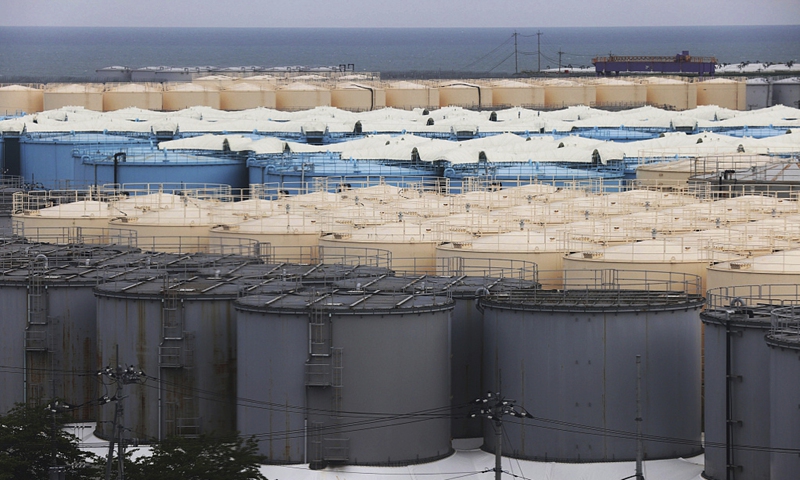
Water tanks near Fukushima Daiichi nuclear power plant in Okuma town of Fukushima prefecture on May 26, 2023 Photo: VCG
Half a year after Japan opened Pandora’s box by dumping nuclear-contaminated wastewater from the crippled Fukushima Daiichi nuclear power plant into the ocean, Japanese media are discussing the possibility of bilateral talks for getting China to revoke its import ban on Japanese marine products, in an apparent attempt to test the waters.
In response, Chinese experts told the Global Times on Sunday that, in the short term, it is unlikely that China will revoke the ban as there are currently no conditions for a withdrawal.
Meanwhile, a Kyodo News survey on Friday showed that most Japanese fishery groups have been affected by the discharge, with many feeling the impact through China’s import ban on Japanese seafood.
The survey found that 29 out of 36 respondents among the members of the National Federation of Fisheries Cooperative Associations said they “had felt” or “had somewhat felt” negative effects, including financial damage due to the contaminated water dumping, overwhelmingly due to the subsequent import ban by China.
Chinese Foreign Ministry spokesperson Mao Ning said at a regular press conference that the precautionary measures taken by China and some other countries in response to Japan’s move are aimed at protecting food safety and people’s health.
“These measures are entirely legitimate, reasonable and necessary,” Mao said.
Chang Yen-chiang, director of the Yellow Sea and Bohai Sea Research Institute of Dalian Maritime University, revealed several main factors why China is less likely to revoke the ban in the short run.
There is no halt in the ocean discharge, that is, the Japanese side has not withdrawn from their erroneous actions, he said.
Currently, half a year has passed since the dumping began, meaning that under the influence of ocean currents, the impact of Japan’s nuclear-contaminated water discharge on East Asia may just be starting, and further impacts need to be assessed, Chang said.
In addition, predatory species higher up in the food chain have a greater chance of experiencing bioaccumulation and biomagnification of radioactive substances. As time goes on and more nuclear-contaminated water is discharged, the negative effects will only increase, Chang said. “Under these circumstances, how could the ban be lifted?” the expert asked.
TEPCO – operator of the Daiichi plant – plans to release a total of about 54,600 tons of nuclear-contaminated water on seven occasions in the 2024 fiscal year, more than double the amount of 2023, according to media reports.
Chang called on Japan to consider solving the Fukushima nuclear power plant issue on a fundamental level, such as focusing on research on how to handle the burnt-out nuclear reactors. Otherwise, radioactive substances will continue to be produced endlessly, and the discharge of nuclear contamination could last for over 100 years, making the situation increasingly worse.
Japanese media have reported on a series of scandals concerning leaks occurring during the contaminated water discharge process, which led to soil contamination around the nuclear power plant.
Most recently, 1.5 metric tons of highly radioactive water escaped in early February during valve checks at a treatment machine designed to remove cesium and strontium from the contaminated water, according to TEPCO.
According to Japanese experts studying the soil, the radiation levels in Fukushima soil are much higher compared to other areas.
“We should be more vigilant toward crops and plants grown in this contaminated soil. China should increase radioactive testing of Japanese agricultural products and cosmetics imports,” Chang stated.
As Japanese industries, including fisheries and cosmetics, have been affected, Japanese media continues to report news about bilateral talks aimed at getting China to revoke its import ban on Japanese marine products, trying to test the reaction from China.
The Asahi Shimbun revealed Friday that nuclear experts from Japan and China started talks in January regarding contaminated water. The report noted that the Chinese side has still shown no signs of ending its import ban.
The Kyodo News reported on Thursday that when Chinese Ambassador to Japan Wu Jianghao met with the leader of the Social Democratic Party, Mizuho Fukushima, in January, China’s import suspension was also discussed, but there were no conditions for lifting the ban at present.
Biden Casts 3rd UN Veto Allowing Israeli Genocide in Gaza To Continue
by Walt Zlotow , https://www.antiwar.com/blog/2024/02/21/biden-casts-3rd-un-veto-allowing-israeli-genocide-in-gaza-to-continue/
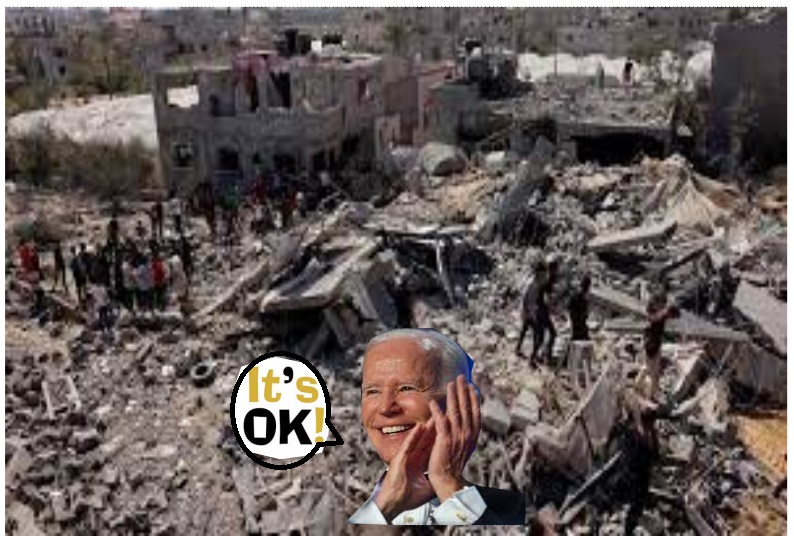
No surprise President Biden cast his third veto in the UN Security Council to prevent a full, permanent ceasefire in Gaza. Biden’s depraved support of Israeli genocide in Gaza has no limits. Over 25,000 tons of US weapons have contributed to over 100,000 deaths and injuries, displacement of nearly 2,000,000 Palestinians and destruction of nearly all medical, educational and cultural institutions. The appropriate word for all that? Genocide.
President Biden ludicrously claims his veto was cast because it interfered with the US ceasefire plan and efforts to get aid to beleaguered Palestinians. Biden’s first reason is ghoulish. His plan calls for a temporary ceasefire to get all the hostages out, after which Israeli ethnic cleansing, with unlimited US aid, can resume till complete. His second reason is preposterous The UN accurately states Israel blocks virtually all aid from reaching sick, starving and wounded Palestinians.
President Biden may not be in mental and physical decline severe enough to prevent his functioning as president. But his enabling of Israel’s genocidal ethnic cleansing of Gaza for 5 months now, makes Biden’s moral decline a disqualifier for further serving as president.
Walt Zlotow became involved in antiwar activities upon entering University of Chicago in 1963. He is current president of the West Suburban Peace Coalition based in the Chicago western suburbs. He blogs daily on antiwar and other issues at www.heartlandprogressive.blogspot.com.
UK could contribute to nuclear shield if Trump wins, suggests German minister
Comments draw Britain into debate about European security without US providing bulk of Nato’s nuclear deterrent
Patrick Wintour, Guardian, 19 Feb 24,
The UK could contribute to a new European nuclear shield if Donald Trump becomes US president again, a senior German minister has suggested, drawing British politicians into the debate about how Europe’s security could be bolstered in the event of the Republican frontrunner winning in November.
Questions over a European nuclear deterrence have intensified after Trump’s remarks on Saturday that he would not defend any Nato member that failed to spend 2% of its gross domestic product on defence – and would even encourage Russia to continue attacking.
European leaders have interpreted the comments as a warning that the alliance’s largely US nuclear shield can no longer be taken for granted if Trump returns to the White House. On Tuesday, Christian Lindner, the German finance minister and the leader of the Free Democratic party, called on politicians to consider an alternative model that could include British and French nuclear weapons……………………………………………………………..
The central issue in the nuclear debate is less whether Britain or France would put their nuclear weapons at the disposal of the EU, but whether the two countries could agree to put them at the service of a deterrence strategy for Nato’s European alliance area.
Although France keeps its nuclear deterrent outside the Nato command structure, Macron has offered to cooperate with Europe on nuclear defence. In 2020, he called for a “strategic dialogue” on “the role of France’s nuclear deterrent in [Europe’s] collective security”. Germany never took up that offer……………………………………………………………………………………..
The UK has said its nuclear weapons would be available for use at the request of Nato’s supreme allied commander Europe, the alliance’s most senior uniformed officer, and that they would only be used “in extreme circumstances of self-defence including the defence of our Nato allies”.
This offer, however, was made in the context of a US nuclear presence in Europe.
The Labour party has promised to intensify defence cooperation with Europe, including a commitment by the shadow defence secretary, John Healey, to reach an agreement with Germany within the first six months of taking office. But this modest pledge had nothing to do with the sharing of Britain’s nuclear deterrent. https://www.theguardian.com/world/2024/feb/15/uk-europe-nuclear-shield-donald-trump-germany-nato-deterrent
For Biden, ending Israel’s mass murder in Gaza is a ‘non-starter’
As Palestinians face mass starvation and new ethnic cleansing in Rafah, the White House rejects even token humanitarian gestures.
AARON MATÉ, FEB 20, 2024
At the White House last week, President Biden claimed to have concerns about Israeli plans for a ground invasion of Rafah, the southern Gaza area where more than one million Palestinians have fled. In the process, he committed a gaffe that revealed his actual stance.
“Our military operation in Rafah,” Biden began, before correcting himself. “Their — the major military operation in Rafah should not proceed without a credible plan… for ensuring the safety and support of more than one million people sheltering there. They need to be protected.”
Although unintentional, Biden was accurate to refer to an Israeli military operation in Gaza in the possessive form. Every Israeli atrocity in Gaza is committed with US support. Accordingly, within 24 hours, the White House made clear that despite Biden’s words of caution, only Israel’s mass murder campaign will remain protected.
According to three US officials, the Biden administration “is not planning to punish Israel if it launches a military campaign in Rafah without ensuring civilian safety,” Politico reports. Therefore, “no reprimand plans are in the works, meaning Israeli forces could enter the city and harm civilians without facing American consequences.” In another likely sign that Biden supports an Israeli assault, its allied regime in Egypt – a US client state — is now building an 8-square-mile walled enclosure that would cage fleeing refugees on its side of the Rafah border.
Biden’s spokespeople have also relayed that Israel has his green light to harm Rafah’s civilians.
“We’re going to continue to support Israel,” John Kirby said at the White House. “And we’re going to continue to make sure they have the tools and the capabilities to do that.” Asked directly if the US would punish Israel if it attacked Rafah without the Biden-demanded “credible plan” for civilian safety, Kirby responded: “I’m not going to get into a hypothetical game.”
To supply Israel with the proper “tools,” the US is rushing a new shipment of at least 1,000 bombs and related munitions. According to US intelligence officials, Israel has used about half the 21,000 bombs supplied by the US since the Oct. 7th attack. Israel’s remaining stockpile would be enough for 19 more weeks — but just days if war breaks out with Hezbollah on the northern border.
Israel’s dependence on US weaponry gives the White House instrumental leverage to impose conditions on its conduct – including demanding an end to the Gaza assault. But instead of using that influence, this latest transfer is part of “a broader effort by the Biden administration to speed the flow of weapons to Israel,” the Wall Street Journal observes…………………………………………………………………………………………….. more https://www.aaronmate.net/p/for-biden-ending-israels-mass-murder?utm_source=post-email-title&publication_id=100118&post_id=141822384&utm_campaign=email-post-title&isFreemail=true&r=ln98x&utm_medium=email
US Threatens to Veto New Gaza Ceasefire Resolution at UN Security Council
The US has vetoed two similar resolutions
by Dave DeCamp February 18, 2024, https://news.antiwar.com/2024/02/18/us-threatens-to-veto-new-gaza-ceasefire-resolution-at-un-security-council/
—
The US is threatening to veto a resolution calling for a ceasefire in Gaza at the UN Security Council as the US continues to provide political cover for the Israeli massacre of Palestinians.
US Ambassador to the UN Linda Thomas-Greenfield said in a statement that if the resolution, which is being drafted by Algeria, was brought to a vote, it would not be adopted.
Thomas-Greenfield justified US opposition to a ceasefire by pointing to US efforts to push for a new hostage deal between Israel and Hamas. However, Israeli Prime Minister Benjamin Netanyahu vetoed hostage talks last week, and Qatar, the mediator of the negotiations, said Saturday that things were not looking “promising.”
Thomas-Greenfield said Algeria’s resolution would “run counter” to US efforts on the hostage deal. “We have communicated this concern repeatedly to our colleagues on the Council. For that reason, the United States does not support action on this draft resolution. Should it come up for a vote as drafted, it will not be adopted,” she said.
The US has already used its veto power on the Security Council to veto two resolutions calling for an end to the onslaught. The Biden administration has also dismissed the International Court of Justice’s ruling that it’s “plausible” Israel is committing genocide and continues to provide unconditional military support for the slaughter.
Thomas-Greenfield said the resolution would get in the way of US “diplomacy” related to pushing for a hostage deal. “It is critical that other parties give this process the best odds of succeeding, rather than push measures that put it — and the opportunity for an enduring resolution of hostilities — in jeopardy,” she said.
Macron and Zelensky sign military deal
18 Feb 2024 , https://www.sott.net/article/489024-Sell-out-Macron-and-Zelensky-sign-military-deal
The ten-year pact mirrors defense agreements Kiev recently signed with Berlin and London
France and Ukraine signed a bilateral security pact on Friday during President Vladimir Zelensky’s visit to Paris. While President Emmanuel Macron did not offer Kiev any ironclad military commitments, he promised another €3 billion in aid over the rest of 2024, as well as “cooperation” in the area of artillery.
The agreement states that France views the prospect of Ukraine’s accession to NATO positively, as “a useful contribution to peace and stability in Europe.” The largely symbolic deal is designed to help “pave the way towards Ukraine’s future integration into the EU and NATO,” French media noted, citing officials.
The pact follows a similar agreement struck with Germany earlier in the day, and another signed with the UK last month. All three are set to last ten years.
Last month, Macron announced that France would supply Kiev with 40 more SCALP-EG long-range cruise missiles and “hundreds of bombs,” promising to finalize the bilateral security agreement on an upcoming trip to Kiev. The trip, which was to run from February 13-14, was called off by the French side due to security concerns, according to French media.
Zelensky is set to ask Western sponsors for more financing at the Munich Security Conference on Saturday, while the situation on the front lines of the Ukraine-Russia conflict is escalating, with Kiev facing severe personnel and ammo shortages.
Moscow has condemned Western deliveries of long-range weaponry such as French SCALP-EG cruise missiles, which Kiev has used to strike Russian infrastructure in Donbass, causing numerous civilian deaths. Russia maintains that further military aid to Kiev will only delay the end of the conflict without changing the final outcome, and lead to unnecessary deaths.
Comment: The ‘leaders’ of Europe are selling out Europe and the welfare of their countries while submitting to a globalist anti-human agenda.
See also:
Ukraine can’t join NATO while in conflict – Netherlands
16 Feb 24, https://www.rt.com/news/592609-ukraine-cant-join-nato-netherlands/
Accession to the US-led bloc is a “sensitive process” that may require intermediate steps, Dutch caretaker PM Mark Rutte has said
The Netherlands’ caretaker prime minister, Mark Rutte, has refused to say whether he would support Ukraine’s membership of NATO at an upcoming bloc leaders’ meeting, insisting that admitting Ukraine to NATO is not feasible while the conflict with Russia is ongoing. Rutte has been described in the media as a frontrunner to become the next secretary-general of the US-led bloc.
The politician made the comments at the Munich Security Conference on Saturday in response to a question about whether EU prime ministers would “personally support” Ukraine’s membership bid at the next NATO summit in Washington in July.
The bad news is – as long as the war is raging, Ukraine cannot become a member of NATO,” Rutte has said. “The good news is that we can learn from the European Union,” he added referring to the EU approach of implementing “intermediate steps” that countries take on “the way to accession” as opposed to NATO’s process that goes “from nothing to full membership.”
Rutte admitted that the last time the question of Ukraine’s membership arose, Kiev was left “dissatisfied.” As a result, there is a need to “work carefully” to see “what next step is possible” so as not to “overpromise.”
Ukraine applied to integrate with the NATO Membership Action Plan in 2008 and a decade later enshrined in its constitution membership in the US-led bloc as a strategic foreign policy goal.
At last year’s NATO summit in Vilnius, the bloc’s leaders said that Ukraine’s “rightful place is in NATO,” but failed to provide clear commitments or describe a timeline.
While the question of Ukraine’s membership is likely to be discussed at the next NATO summit in July, some Western politicians have warned against expecting a “big leap forward on that.”
Russia views NATO expansion towards its border as a major security threat. President Vladimir Putin has argued that Western powers have used Ukraine to antagonize Russia after the fall of the Soviet Union. In a recent interview with Tucker Carlson, Putin called the West’s approach to Ukraine a colossal political mistake, pointing to NATO’s 2008 promise to accept the country into the bloc, as well as the Western-supported coup in Kiev in 2014.
Germany and Ukraine sign ‘long term’ security deal
Zelensky said that the details of the agreement “are very specific and involve long-term support,” and that the pact proves that one day “Ukraine will be in NATO.”
https://www.rt.com/news/592570-germany-ukraine-security-deal/ 17 Feb 24
Ukrainian President Vladimir Zelensky has said the agreement proves his country will join NATO
German Chancellor Olaf Scholz and Ukrainian President Vladimir Zelensky have signed a security pact under which Berlin will supply Kiev with military and economic aid for another ten years.
Inked on Friday, the agreement commits Germany to providing “unwavering support for Ukraine for as long as it takes in order to help Ukraine defend itself” and restore its 1991 borders. In addition to retaking the regions of Donetsk, Lugansk, Kherson, and Zaporozhye, this feat would also involve the seizure of Crimea from Russia, which some American officials and Kiev’s former military chief view as next to impossible.
On top of military aid, the plan binds Germany to training Ukrainian police officers, transferring weapons manufacturing technology, paying for green energy projects, and a range of other efforts to help the Ukrainian government “continue providing services to its people”
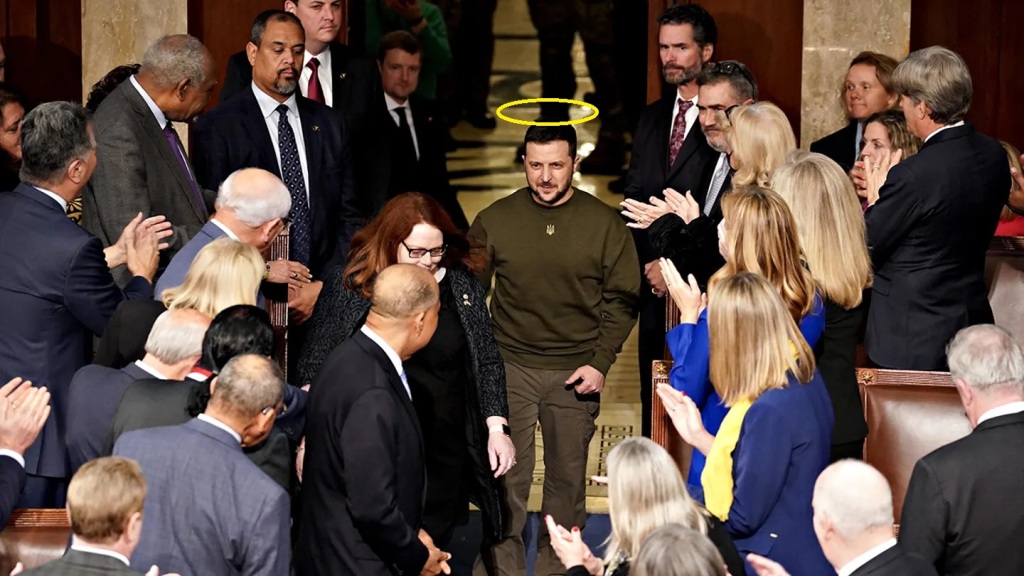
Speaking at a ceremony in Berlin, Zelensky said that the details of the agreement “are very specific and involve long-term support,” and that the pact proves that one day “Ukraine will be in NATO.”
Germany is Ukraine’s second-largest Western backer, behind only the US. To date, Berlin has given Kiev €22 billion ($23.7 billion) in assistance, including €17.7 billion in military aid, according to figures compiled by the Kiel Institute for the World Economy. When aid transferred via the EU is included, Germany has handed over a total of €28 billion to Ukraine, Scholz said on Friday.
In addition to signing the decade-long pledge to Ukraine, Scholz announced a new package of military aid worth €1.1 billion. It will include 36 self-propelled howitzers, 120,000 artillery shells, and additional ammunition for Ukraine’s German-provided Iris-T air defense systems.
Germany’s outlay has hurt its own military readiness, with the New York Times reporting in November that training exercises are routinely canceled due to ammunition shortages, while German soldiers have yet to fire their latest howitzers, all of which have been sent to Ukraine.
Scholz’s decision to sanction Russian energy imports has also hammered the German economy, with industrial output falling by 2% last year, while the entire economy shrank by 0.3% in the same time period, according to the country’s Federal Statistical Office. One in three German manufacturers is currently considering moving abroad, Federation of German Industries (BDI) chief Siegfried Russwurm told Bild on Saturday, citing persistent inflation and high energy costs.
Biden disparages Netanyahu in private but hasn’t significantly changed U.S. policy toward Israel and Gaza
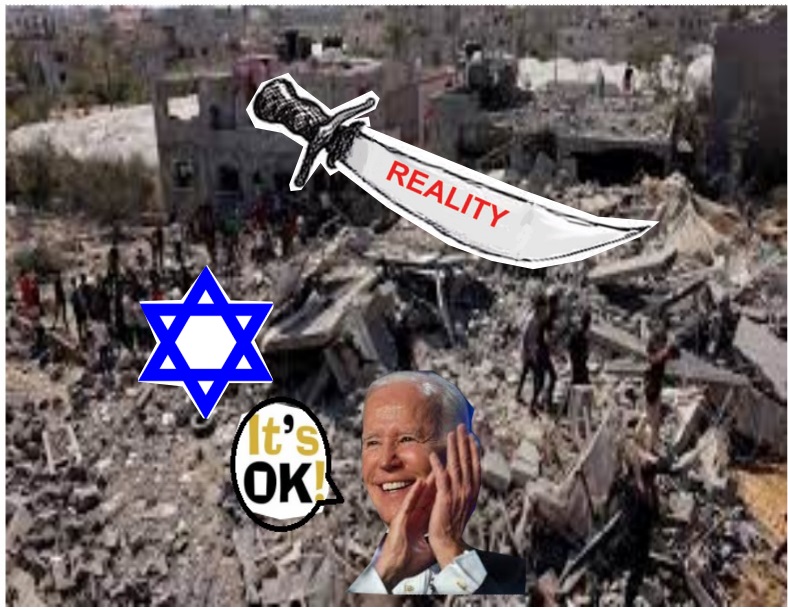
As the reported Palestinian death toll in the Gaza Strip reaches 28,000, the president continues to believe that unequivocally supporting Israel is the right policy.
Yet, even as Biden has escalated his rhetoric, he is not yet prepared to make significant policy changes, officials said. He and his aides continue to believe his approach of unequivocally supporting Israel is the right one.
As the reported Palestinian death toll in the Gaza Strip reaches 28,000, the president continues to believe that unequivocally supporting Israel is the right policy.
NBC News, Feb. 12, 2024, By Carol E. Lee, Jonathan Allen, Peter Nicholas and Courtney Kube
WASHINGTON — President Joe Biden has been venting his frustration in recent private conversations, some of them with campaign donors, over his inability to persuade Israel to change its military tactics in the Gaza Strip, and he has named Prime Minister Benjamin Netanyahu as the primary obstacle, according to five people directly familiar with his comments.
Biden has said he is trying to get Israel to agree to a cease-fire, but Netanyahu is “giving him hell” and is impossible to deal with, said the people familiar with Biden’s comments, who all asked not to be named.
“He just feels like this is enough,” one of the people said of the views expressed by Biden. “It has to stop.”
Biden has in recent weeks spoken privately about Netanyahu, a leader he has known for decades, with a candor that has surprised some of those on the receiving end of his comments, people familiar with them said. His descriptions of his dealings with Netanyahu are peppered with contemptuous references to Netanyahu as “this guy,” these people said. And in at least three recent instances, Biden has called Netanyahu an “asshole,” according to three of the people directly familiar with his comments……………………………………………………………………………………………………………………….
Yet, people familiar with Biden’s private comments said he has told them he believes it would be counterproductive for him to be too harsh on Netanyahu publicly.
Biden’s frustrations with Netanyahu have also not led to a major policy shift, but his administration has begun to consider such options. Two weeks ago, officials told NBC News that the administration was discussing delaying or slowing U.S. weapons sales to Israel as leverage to get Netanyahu to dial down Israeli military operations in Gaza and do more to protect civilians………………….
Yet, even as Biden has escalated his rhetoric, he is not yet prepared to make significant policy changes, officials said. He and his aides continue to believe his approach of unequivocally supporting Israel is the right one…………………………
“I’m a Zionist,” Biden said, reiterating his views that Hamas must be destroyed and that Israel must be protected, according to the supporter……………………………………………….. https://www.nbcnews.com/news/investigations/biden-disparages-netanyahu-private-hasnt-changed-us-policy-israel-rcna138282
US Gives Israel the Green Light to Kill Civilians in Rafah
US officials told POLITICO that there would be no consequences for Israel if it invades Rafah, by Dave DeCamp February 13, 2024, https://news.antiwar.com/2024/02/13/us-gives-israel-the-green-light-to-kill-civilians-in-rafah/
The US has given Israel the green light to kill civilians in Rafah despite public comments from US officials calling for Israel to come up with a plan to protect civilians in the city, which is packed with an estimated 1.5 million Palestinians.
US officials told POLITICO that the Biden administration was not planning any consequences for Israel if it went ahead with a major assault on Rafah, which would inevitably kill a huge number of civilians. “No reprimand plans are in the works, meaning Israeli forces could enter the city and harm civilians without facing American consequences,” the report reads.
White House National Security Council spokesman John Kirby made clear at a press conference on Monday that the US wasn’t thinking about cutting off Israel from military aid if it went ahead with the assault. When asked if the US has threatened to withhold aid, Kirby said, “We’re going to continue to support Israel … And we’re going to continue to make sure they have the tools and the capabilities to do that.”
President Biden is also not reconsidering his full-throated support for the Israeli slaughter in Gaza despite reports of him disparaging Israeli Prime Minister Benjamin Netanyahu in private conversations.
Congress is also on board with continuing to support the mass killing of Palestinians as the Senate voted to pass a $95 billion foreign military aid bill that includes $14 billion for Israel. Only 20 Republicans voted for the bill, but the opposition is due to the lack of a border deal, as virtually all Republicans are in favor of unconditional support for Israel, even more so than Democrats in Congress.
Rafah’s pre-war population was 275,000, meaning Palestinians displaced from other areas of the Strip increased the population fivefold. The majority of the Palestinians in the city are sheltering in tents in the streets, leaving them especially vulnerable to an Israeli attack. Israeli airstrikes on Rafah on Sunday night into Monday morning killed 27 children and 22 women.
The Complexity of Nuclear Submarine Safeguards Impacts the Current Landscape

By Leonam dos Santos Guimarâes*
RIO DE JANEIRO | 14 February 2024 (IDN) — The topic of applying safeguards to nuclear submarine fuel, with a focus on ensuring security and proliferation resistance, involves a complex interplay of international regulations, agreements, and technical considerations.
A pivotal aspect of this discussion centers on the application of International Atomic Energy Agency (IAEA) safeguards, particularly in the context of military-to-military transfer of nuclear material for submarine programs. It has been argued that there should be no automatic exclusion from safeguards for nuclear material simply because it is used in military activities.
The emphasis is on ensuring that the non-application of safeguards is as limited as possible, encompassing all processes outside the actual use of relevant nuclear material in the submarine, such as enrichment, fuel fabrication, storage, transportation, reprocessing, and disposal.
AUKUS
The application of safeguards to the AUKUS (Australia, United Kingdom, and United States) Nuclear Submarine program is a complex and highly technical subject, requiring a nuanced understanding of international nuclear non-proliferation norms, the specific details of the AUKUS agreement, and the technical aspects of nuclear submarine technology. The AUKUS pact, a security agreement between Australia, the United Kingdom, and the United States, announced in September 2021, involves the provision of nuclear-powered submarines to Australia. This arrangement has significant implications for nuclear non-proliferation and safeguards. The following points are pertinent AUKUS agreement:
Nature of Nuclear Technology in Submarines: The nuclear reactors used in submarines are designed for propulsion and not for the production of nuclear weapons. However, they do use weapon degree HEU, which can be weaponized. This necessitates strict safeguards to ensure that the HEU is not diverted for non-peaceful purposes.
Australia’s Nuclear Non-Proliferation Commitments: Australia is a non-nuclear weapon state (NNWS) party to the Treaty on the Non-Proliferation of Nuclear Weapons (NPT). As such, Australia is obliged to maintain a civilian nuclear program exclusively for peaceful purposes and under international safeguards. The acquisition of nuclear-powered submarines places Australia in a unique position, as it will have to demonstrate that its new capabilities are not being used for prohibited military purposes, like nuclear weapons development.
International Safeguards and Oversight: The IAEA plays a crucial role in the implementation of safeguards. Australia, along with the UK and the US, must work closely with the IAEA to develop a framework that ensures the submarine program adheres to Australia’s non-proliferation commitments. This could involve regular inspections, monitoring, and verification mechanisms.
Regional and Global Implications: The deployment of nuclear-powered submarines by Australia could have significant implications for regional security dynamics, particularly in the Indo-Pacific region. There is a need for transparency and dialogue to address any concerns raised by neighboring countries and to prevent any escalation of regional arms races.
Technological and Operational Safeguards: Apart from international oversight, there are also technical and operational safeguards that are integral to the program. These include secure handling and accounting of nuclear materials, physical protection measures, and safety protocols to prevent accidents or unauthorized use.
Legal and Policy Frameworks: The AUKUS partners will need to develop robust legal and policy frameworks that align with international norms and bilateral agreements. This includes legislative and regulatory measures that govern the use, transfer, and disposal of nuclear materials and technology.
The application of safeguards
The application of safeguards to the AUKUS Nuclear Submarine program is a critical aspect of its implementation. It requires a balanced approach that addresses the non-proliferation concerns while allowing Australia to enhance its defense capabilities. Ensuring the program’s compliance with international nuclear non-proliferation norms and maintaining transparency will be essential in mitigating any regional tensions and in bolstering global nuclear security………………………………………………………………………………………………………….. more https://indepthnews.net/the-complexity-of-nuclear-submarine-safeguards-impacts-the-current-landscape/
EU nuclear weapons ‘unrealistic,’ says German defense committee chair
Some German politicians have suggested the EU needs its own nukes rather than relying on the U.S., France and the U.K.
Politico, FEBRUARY 14, 2024 , BY SEJLA AHMATOVIC
The EU should prioritize other areas over developing an independent nuclear deterrent, which is an unrealistic proposal, a top German defense policymaker said Wednesday.
A debate on the potential need for EU nuclear weapons has opened up in Germany following U.S. presidential candidate Donald Trump’s recent remarks on NATO members that don’t meet the target of spending 2 percent of their GDP on defense…………………………………………………….
The debate about nuclear weapons has triggered various responses. Former Foreign Minister Sigmar Gabriel, for instance, called for the expansion of nuclear deterrence on Wednesday.
All EU members are signatories to the Treaty on the Non-Proliferation of Nuclear Weapons (NPT), which is supposed to prevent the spread of nuclear weapons and facilitate cooperation between nuclear and non-nuclear countries.
Some 191 states have signed the agreement. India, Israel, Pakistan and South Sudan have never signed the treaty, while North Korea announced its retreat in 2003. According to its official website, the EU is “firmly committed to uphold and to strengthen the integrity” of the Treaty………………………………………………………..
While France is the only EU country with its own nuclear weapons, several host U.S. nuclear weapons, including Germany. https://www.politico.eu/article/germany-defense-committee-marie-agnes-strack-zimmermann-european-nuclear-weapons/
Britain must pay more for Hinkley, says France
Push for funding comes weeks after Hinkley Point C costs were revised up to £46bn
Jonathan Leake, 13 February 2024
British taxpayers have been asked to stump up cash to fund nuclear power
plants being built in the UK by the French energy giant EDF. Bruno Le
Maire, France’s finance minister, said on Tuesday he would be asking
Jeremy Hunt for “an equitable sharing of costs” for the power stations
which include Hinkley Point C, in Somerset, and Sizewell C, in Suffolk.
It comes after it emerged that the costs at Hinkley Point C had surged to
£46bn, significantly more than the £18bn proposed when contracts were
signed in 2016. Speaking at an International Energy Agency ministerial
meeting in Paris, Mr Le Maire said he had raised the subject with Claire
Coutinho, the Energy Secretary, and planned to have “discussions” with
Mr Hunt, the Chancellor, about it.
The UK has so far refused to consider
paying more for Hinkley, pointing out that it is not a government project.
Last month a government spokesman said: “Any additional costs or schedule
overruns are the responsibility of EDF and its partners and will in no way
fall on taxpayers.”
There is growing concern in France over the plight of
state-owned EDF which is on the hook for most of the extra costs. If EDF
were to pull out of Sizewell it would cause huge delays and a likely end UK
hopes of building 24 gigawatts of new nuclear capacity by 2050, equating to
about seven new nuclear power stations. These would supply up to a quarter
of the country’s projected electricity demand.
Telegraph 13th Feb 2024
1 This Month



26 September – International Day for the Total Elimination of Nuclear Weapons


PLEASE OPPOSE HR 8255 AND S.3639 – bills would accelerate satellite deployment, with no environmental review or safeguards – https://ncstd5li.quorum.us/campaign/169331/
To see nuclear-related stories in greater depth and intensity – go to https://nuclearinformation.wordpress.com
-
Archives
- September 2026 (233)
- August 2026 (330)
- July 2026 (355)
- June 2026 (287)
- May 2026 (306)
- April 2026 (356)
- March 2026 (251)
- February 2026 (267)
- January 2026 (308)
- December 2025 (358)
- November 2025 (359)
- October 2025 (375)
-
Categories
- 1
- 1 NUCLEAR ISSUES
- business and costs
- climate change
- culture and arts
- ENERGY
- environment
- health
- history
- indigenous issues
- Legal
- marketing of nuclear
- media
- opposition to nuclear
- PERSONAL STORIES
- politics
- politics international
- Religion and ethics
- safety
- secrets,lies and civil liberties
- spinbuster
- technology
- Uranium
- wastes
- weapons and war
- Women
- 2 WORLD
- ACTION
- AFRICA
- Atrocities
- AUSTRALIA
- Christina's notes
- Christina's themes
- culture and arts
- Events
- Fuk 2022
- Fuk 2023
- Fukushima 2017
- Fukushima 2018
- fukushima 2019
- Fukushima 2020
- Fukushima 2021
- general
- global warming
- Humour (God we need it)
- Nuclear
- RARE EARTHS
- Reference
- resources – print
- Resources -audiovicual
- Weekly Newsletter
- World
- World Nuclear
- YouTube
-
RSS
Entries RSS
Comments RSS
 nuclear-news