Australia risks being ‘world’s nuclear waste dump’ unless Aukus laws changed, critics say

Labor-chaired inquiry calls for legislation to rule out accepting high-level nuclear waste from US and UK submarines among other recommendations
Daniel Hurst Foreign affairs and defence correspondent, https://www.theguardian.com/world/article/2024/may/13/australia-aukus-deal-submarines-critics-nuclear-waste
Australia risks becoming the “world’s nuclear waste dump” unless the Albanese government moves to rewrite its proposed Aukus laws, critics say.
A Labor-chaired inquiry has called for the legislative safeguard to specifically rule out accepting high-level nuclear waste from the US and the UK. One of the members of a Senate committee that reviewed the draft laws, independent senator Lidia Thorpe, said the legislation “should be setting off alarm bells” because “it could mean that Australia becomes the world’s nuclear waste dump”.
The government’s bill for regulating nuclear safety talks about “managing, storing or disposing of radioactive waste from an Aukus submarine”, which it defines broadly as Australia, UK or US submarines.
In a report published on Monday, the Senate’s foreign affairs, defence and trade legislation committee said this wording did not reflect the government’s promise not to accept high-level nuclear waste.
It recommended that the government consider “amending the bill so that a distinction is made between Australia’s acceptance of low-level nuclear waste from Aukus partners, but non-acceptance of high-level nuclear waste”.
The government has left the door open to accepting low-level waste from US and UK nuclear-powered submarines when they conduct rotational visits to Western Australia in the first phase of the Aukus plan. Low-level waste contains small amounts of radioactivity and include items such as personal protective equipment, gloves and wipes.
“According to the Australian Submarine Agency, nuclear-powered submarines only generate around a ‘small skip bin’ of low-level naval nuclear waste per submarine per year and that intermediate- and high-level waste will not become a concern until the first naval nuclear reactor requires disposal in the mid-2050s,” the Senate committee report said.
The government has yet to decide on the location for the disposal of radioactive waste from the submarines.
But infrastructure works proposed for HMAS Stirling – the naval base in Western Australia – to support the increased rotational visits are expected to include an operational waste storage facility for low-level radioactive waste.
The Department of Defence has argued any changes to the definitions should not prevent “regulatory control of the management of low-level radioactive waste from UK or US submarines” as part of those rotational visits.
Thorpe, an independent senator, said the call to prohibit high-level nuclear waste from being stored in Australia was “backed by experts in the field and was one of the major concerns raised during the inquiry into the bill”.
“The government claims it has no intention to take Aukus nuclear waste beyond that of Australian submarines, so they should have no reason not to close this loophole,” Thorpe said.
“They also need to stop future governments from deciding otherwise. We can’t risk our future generations with this.”
The government’s proposed legislation would set up an Australian naval nuclear power safety regulator to oversee the safety of the nuclear-powered submarines.
The committee made eight recommendations, including setting “a suitable minimum period of separation” to prevent a revolving door from the Australian Defence Force or Department of Defence to the new regulator.
The main committee report acknowledged concerns in the community that Australia might become a “dumping ground” for the Aukus countries, but it said the term was “not helpful in discussing the very serious question of national responsibility for nuclear waste”.
It also said the bill should be amended to ensure the regulator was transparent about “any accidents or incidents” with the soon-to-be-established parliamentary oversight committee on defence.
The Labor chair of the committee, Raff Ciccone, said the recommendations would “further strengthen the bill” and help “ensure Australia maintains the highest standards of nuclear safety”.
In a dissenting report, the Greens senator David Shoebridge said the legislation was “deeply flawed”, including because the regulator would report to the defence minister.
“The proposed regulator lacks genuine independence, the process for dealing with nuclear waste is recklessly indifferent to community or First Nations interests and the level of secrecy is a threat to both the environment and the public interest,” Shoebridge said.
The defence minister, Richard Marles, was contacted for comment.
US Says It Won’t Let Iran Build Nuclear Bomb

Iran International Newsroom, 14 May 24 https://www.iranintl.com/en/202405131207
The US will not allow Iran to build a nuclear bomb, the State Department said on Monday, one day after a senior Iranian official said Tehran would have no option but to change its nuclear doctrine in the face of Israel’s threats.
“[President] Biden and [US Secretary of State Antony] Blinken will not allow Iran to have a nuclear weapon,” State Department deputy spokesperson Vedant Patel said in a press briefing.
He made the remarks in reaction to Sunday comments by Kamal Kharrazi, a senior advisor to Iran’s ruler Ali Khamenei, that the Islamic Republic would be left with no option but to alter its nuclear doctrine if Israel threatened its nuclear facilities or its existence.
“We continue to assess, though, that Iran is not taking any key activities that would be necessary to produce a testable nuclear device,” Patel told Iran International correspondent Samira Gharaei.
Kharazi said on Sunday that Iran does “not possess nuclear weapons, and there is a fatwa from the leader regarding this matter. But what should you do if the enemy threatens you? You will inevitably have to make changes to your doctrine.”
Asked if these comments were a concern for the United States, Patel said, “We don’t believe that the Supreme Leader has yet made a decision to resume the (nuclear) weaponization program that we judge Iran suspended or stopped at the end of 2003.”
“We continue to assess, though, that Iran is not taking any key activities that would be necessary to produce a testable nuclear device,” Patel told Iran International correspondent Samira Gharaei.
Kharazi said on Sunday that Iran does “not possess nuclear weapons, and there is a fatwa from the leader regarding this matter. But what should you do if the enemy threatens you? You will inevitably have to make changes to your doctrine.”
Asked if these comments were a concern for the United States, Patel said, “We don’t believe that the Supreme Leader has yet made a decision to resume the (nuclear) weaponization program that we judge Iran suspended or stopped at the end of 2003.”
When asked about the Biden administration’s strategy toward a “nuclear threshold state” like Iran in the absence of ongoing negotiations, Patel told Iran International, “We have ways of communicating with Iran when it’s in our interest, I’m not going to comment on that.”
In a Monday press conference in Tehran, Iran’s foreign ministry spokesman suggested that Kharrazi’s remarks were not the official position of the Islamic Republic, and that Tehran’s nuclear doctrine has not changed.
“Iran’s official position on Weapons of Mass Destruction has been repeatedly declared by high-ranking Iranian officials, and there has been no change in Iran’s nuclear doctrine,” Nasser Kanaani told reporters in a briefing held on the sidelines of Tehran International Book Fair, citing a fatwa by Ali Khamenei on the prohibition of the production and use of nuclear weapons as the basis for Iran’s position.
However, the fatwa Iranian officials refer to is not an irrevocable principle. Islamic fatwas can change or be reversed at a moment’s notice, experts have pointed out. Also, the alleged Khamenei fatwa is not actually a religious order, it is part of a statement he submitted to an international conference more than a decade ago.
Khamenei may invoke the principle of expediency to overrule his “anti-Nuclear” fatwa. The principle of expediency, as decreed by the founder of the Islamic Republic Ayatollah Khomeini in January 1988, stipulates that the Supreme Leader may even violate the fundamental tenets of the Islamic faith in order to preserve “the Islamic Regime” as the preservation of the Islamic Regime supersedes all else.
Kharrazi on Sunday also raised the issue of Israel’s alleged nuclear arsenal and called for the Jewish state’s nuclear disarmament. “If Israel threatens other counties, they cannot remain silent,” he retorted.
Last week, Kharrazi had stated, “If they dare to strike Iran’s nuclear facilities, our level of deterrence will change. We have experienced deterrence at the conventional level so far. If they intend to strike Iran’s nuclear capabilities, naturally, it could lead to a change in Iran’s nuclear doctrine.”
In recent weeks, Iran has evoked the option of using the nuclear option as a deterrent against the possibility of an Israeli strike against its atomic facilities, amid a new reality in the Middle East after the October 7 Hamas attack.
On Friday, Iranian lawmaker Ahmad Bakhshayesh Ardestani claimed Iran might already possess a nuclear weapon.
He conveyed to the Rouydad 24 website his belief that Iran’s decision to risk attacking Israel in April stemmed from its possession of nuclear weapons.
Ali-Akbar Salehi, who was foreign minister more than a decade ago and is still a key foreign policy voice in the Iranian government, also said last month that Iran has everything it needed to build a nuclear bomb, as tensions rose with Israel amid the Gaza war.
In a televised interview in April, Salehi, was asked if Iran has achieved the capability of developing a nuclear bomb. Avoiding a direct answer he stated, “We have [crossed] all the thresholds of nuclear science and technology.”
Salehi’s statement was preceded by a declaration from a Revolutionary Guard general. In the midst of tensions between the Islamic Republic and Israel, Ahmad Haghtalab, the IRGC commander of the Guard for the Protection and Security of Nuclear Facilities, announced on April 19 that if Israel intends to “use the threat of attacking our nuclear facilities as a tool to pressure Iran, a revision of the nuclear doctrine and policies of the Islamic Republic of Iran and a shift from previously stated considerations is conceivable and likely.”
Since early 2021, when the Biden administration opted for negotiations to restore the Obama-era JCPOA agreement, Iran has vastly expanded its uranium enrichment efforts and is now believed to have amassed enough fissile material for 3-5 nuclear warheads.
‘Insanity’— John Mearsheimer on the US role in Gaza and Ukraine
By Katie Halper and Aaron Maté / Useful Idiots May 13, 2024 https://scheerpost.com/2024/05/13/insanity-john-mearsheimer-on-the-us-role-in-gaza-and-ukraine/
Professor John Mearsheimer, whose political analysis predicted today’s horrors in Ukraine and Palestine, joins Useful Idiots to give his take on what’s next in the world’s biggest wars.
And since he’s been largely excluded from corporate media for his dissenting views, it’s more important than ever to get his word out.
“What you have here is a real disjuncture between what the elites think and what the publics think,” he says of the two conflicts, in what is already a clear affront to the narratives of elitist western media. “There are recent polls produced by the European Council on Foreign Relations and the Quincy Institute that show that only 10% of Europeans and 12% of Americans think that Ukraine can win the war.”
And when it comes to Israel, Mearsheimer explains that US policy is even further from what the people want. It’s not the voters who have a say, and even Congress (as pro-Israel as they are) isn’t in control: “I believe that 90% of it is accounted for by the [Israel] lobby.”
Professor Mearsheimer deep dives into each war: he explains why the US tanked Ukraine’s peace talks to further instigate Russia and what he would do now if he was in Biden’s or Putin’s position. He also delves into the influence of the Israel lobby and how Biden has given impunity to Israel’s killing Gaza killing spree.
Biden’s Shifting ‘Red Line’ Lets Israel Get Away With Murder

Biden threatened Israel with pulling military aid if it invades Rafah, but Israel is attacking anyway. It won’t face consequences so long as Biden remains vague on what amounts to sufficient grounds for suspending military aid.

with Biden and Secretary of State Antony Blinken driving the process, the prospects for real pressure were dubious.
the report made excuses and found that, while Israeli soldiers and officers engaged in human rights abuses, they did not amount to sufficient grounds to suspend military aid.
MITCHELL PLITNICK 11 May 24 https://scheerpost.com/2024/05/12/bidens-shifting-red-line-lets-israel-get-away-with-murder/
Over the seven months of Israel’s genocidal campaign in Gaza, the United States has worked vigorously to offer maximum support for Israel while trying to give the impression that it is concerned about the massive loss of Palestinian life. The performance has been difficult to maintain, as virtually every American action contradicts the occasional words of concern for the devastation being fully abetted and enabled by American policy.
In recent weeks, political pressures have forced President Joe Biden to try to take more concrete steps to deter what he considers “excessive” Israeli actions. Such Israeli actions — which apparently do not include killing over 34,000 people, wounding over 78,000 more, completely destroying the health, education, and civic infrastructure in Gaza, and a daily flow of war crimes — raise concerns in the White House that Israel’s image around the world is becoming one of a genocidal regime and that image is reflecting on its American patron.
Rafah has become the focal point of this concern. Biden was prepared to support the horrors of the past seven months, but with some 1.4 million people stuffed into Rafah (an area that was crowded when it was home to 275,000 people before Israel’s onslaught), he realizes that a full-scale ground invasion of the kind that we witnessed in most of Gaza will cause a horror show that even Americans and Europeans — most of them, anyway — will not be able to abide.
So Biden made a statement. “Civilians have been killed in Gaza as a consequence of those bombs and other ways in which they go after population centers,” Biden told CNN’s Erin Burnett. “I made it clear that if they go into Rafah — they haven’t gone in Rafah yet — if they go into Rafah, I’m not supplying the weapons that have been used historically to deal with Rafah, to deal with the cities — that deal with that problem.”
Those words, in typical Biden fashion, were as clear as a muddy lake and left massive amounts of wiggle room for the White House to continue to arm Israel’s genocidal war on Gaza. They also provided a roadmap for Israeli Prime Minister Benjamin Netanyahu to follow if he wishes to continue his genocidal campaign and not risk harming the one aspect of Israel’s relationship with the U.S. that Netanyahu cares about: the inexhaustible supply of arms.
Biden’s words are the latest in a series of statements and actions meant less to deter Netanyahu than to deter protesters and the voters who have been abandoning him in large numbers over his genocidal policy in Gaza. As we have seen over the past seven months, these words have, at best, pressed Israel to slow its genocidal attacks just a little and occasionally relent in some small, largely symbolic way, in its staunch efforts to block humanitarian aid from reaching the people in Gaza.
Problematically, those results may give the impression that Biden is trying to rein Israel in, at least in a limited way, but actually, they help support Israel’s genocidal program. By occasionally allowing a small amount of aid in for a brief period, Israel has a tool with which to fend off half-hearted Western criticism. And, by proceeding more slowly, Israel continues to move inexorably toward its genocidal goal, but because moving slower means slightly less horrific images, or at least fewer of them, Israel again keeps a debate going over its actions rather than making defending it completely impossible.
False promises, but consistent policy from Biden
Months ago, the pressure was already starting to build. Democratic thinkers and pundits were wringing their hands over the “divisions” in the party. In the Senate, as many as 18 Democratic senators were pushing a bill that would have required all counties receiving U.S. military aid to abide by American and international law and included a regular reporting requirement.
The bill was specifically aimed at Israel, though it applied to all aid recipients, and Biden desperately wanted to avoid a vote that would show stark divisions among Democrats, even though the bill had no chance of passing into law. The man who had sold himself in 2020 as a “unifier” did not want such damning evidence of his inability to even keep his own party unified.
So, Biden issued a directive that required written assurances from recipients of U.S. military aid that they would only use the weapons in accordance with U.S. and international humanitarian law, and also included a reporting requirement. The key difference is that the White House would control this process.
We’re seeing the result of that key difference right now.
The memorandum Biden issued — National Security Memorandum 20, or NSM-20 — was greeted with some cautious optimism and a good deal of skepticism. It did nothing to actually change U.S. law regarding the use of American military aid, but the specific reporting requirement might be hoped to bring the sort of scrutiny on how that aid was used that Israel has always avoided.
But with Biden and Secretary of State Antony Blinken driving the process, the prospects for real pressure were dubious. Israel fulfilled the first part of the memo, which was to submit written assurances about how it would use the aid. No need to tell the truth there. The proof would, ostensibly, be in its report two months later. That would be the test both for what could be done with the report politically by Israel’s critics and, more importantly, whether the White House was going to abide by its own laws regarding aid to Israel. Hopes for the latter were not high.
The report on Israel’s compliance was due to be presented to Congress on May 8. That day came and went with no report. State Department Spokesperson Matthew Miller said, when asked about it, “It will not be transmitted today. We continue to work to finalize the report. We expect to deliver it in the very near future, in the coming days.”
The vague timing of the report is noteworthy, considering the State Department knew from the day Biden issued NSM-20 when it would be due and they’ve been able to make definitive statements about Israeli behavior pretty consistently ever since, including some minor criticism and objections.
The delay was even more notable as the due date was the very same day that Biden decided to talk to CNN and announce that he intended to withhold certain offensive weapons if Israel launched a “full-scale” invasion of Rafah.
Finally, the report saw the light of day just after five o’clock on Friday. This is what government agencies do when they need to release something publicly but want the least possible attention drawn to it. Unsurprisingly, according to initial reports, Israel was found to have “likely” violated international law and, therefore, U.S. law in its use of American-supplied weapons; Israel was also found to have been less than forthcoming with the required information; but Israel wouldn’t be punished since “Israel does have a number of ongoing, active criminal investigations pending and there are hundreds of cases under administrative review.”
Israel routinely opens investigations but, with exceedingly rare exceptions, those cases either remain unresolved or, more usually, they are simply closed with no action taken.
Performative reports while Rafah starves
The affair feels very choreographed. Last week, Biden held up a shipment of heavy bombs of the type that Israel has routinely been using to annihilate civilian sites in Gaza. After Hamas accepted a ceasefire and hostage exchange proposal, Israeli Prime Minister Benjamin Netanyahu stepped up both his threats toward Rafah and his ongoing attacks there, both in the air and on the ground.
That context tends to be missing from reports about Biden threatening Israel if it should invade Rafah. Israel has already begun its invasion of Rafah, but it has not yet stepped up that invasion to the horrific levels that have been seen in other cities in Gaza. It would seem that this level of firepower, killing “only” dozens every day rather than hundreds is perfectly tolerable for Biden.
Israel has seized the Gaza side of the Rafah crossing and shut it down, cutting the area off from its leading source of aid. It also seals in critically ill and injured patients, who can only seek the medical care that is now unavailable in Gaza by going to Egypt. Rafah is the main access point for fuel supplies and most aid for the south, where the vast majority of Gazans are packed in. In other words, Israel is escalating its killing by other means, a tactic which also has the side effect of killing people who don’t get counted in the death toll statistics.
None of this rises to the point of stopping the flow of weapons to Israel, in the estimation of the United States government. When the State Department finally revealed its report on Israeli human rights abuses, it could not avoid being damning without completely fabricating Israeli behavior, something which isn’t possible given how many State Department staff members are already furious about Biden’s policy and the administration’s refusal to listen to anyone with actual knowledge of the region.
But the Secretary and President cannot be totally ignored, and thus the report made excuses and found that, while Israeli soldiers and officers engaged in human rights abuses, they did not amount to sufficient grounds to suspend military aid.
Biden has laid out the framework, and it will work out just fine for Netanyahu. Israel’s closing of the Rafah crossing; its assault that has forced over 100,000 Palestinians, who had already been displaced, many multiple times, to flee once again; and its devastation of an already devastated area does not meet the American standard of a “major ground operation,” according to White House mouthpiece John Kirby.
That means Israel can continue these actions indefinitely as far as Biden and Blinken are concerned. This allows Netanyahu to wage a prolonged war, and, crucially, to massively increase the already considerable number of fatalities among Palestinians from curable disease, malnutrition, starvation, lack of access to medical care for chronic conditions, and other causes that are not included in death tolls.
This also illustrates the danger of the credulity of too many in the foreign policy community who were so quick to applaud Biden for changing his policy. It’s true the public pressure is having an effect, but it has not yet forced Biden to change his policy in a material way that would affect Israel’s behavior. His statement this week did not represent that shift, though it was at least an indication that sufficient pressure and enough Israeli obnoxiousness could bring it about eventually. The pressure must continue and increase, a fact that, while it may be lost on some in the DC foreign policy bubble, has not escaped those brave students and other protesters.
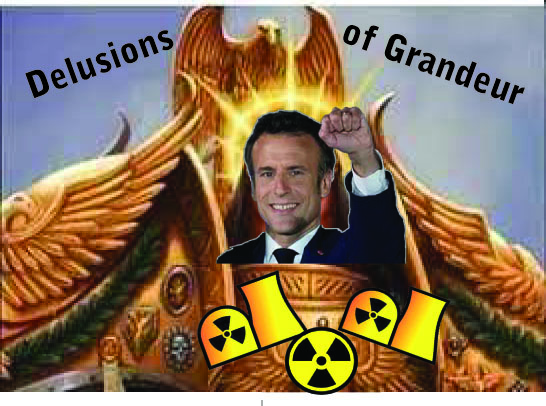
France wants to extend its nuclear umbrella to Europe. But is Macron ready to trade Paris for Helsinki?
Bulletin By Carine Guerout, Jason Moyer | May 10, 2024
Europe’s reliance on US nuclear weapons has been at the heart of the transatlantic security relationship, and so has been the protection that the old continent gets from being part of the NATO alliance and its powerful Article 5. Now, the debate about nuclear deterrence for the European Union is back at the forefront, in part due to the prospects of a reticent United States under a possible second Trump presidency and a resurgent Russia increasingly threatening to use nuclear weapons.
NATO, as a nuclear alliance, relies heavily on US nuclear warheads stationed in Europe for its deterrence. The United Kingdom and France are Europe’s only nuclear powers: Although part of NATO, they maintain independent control over their own nuclear arsenals. In the past, the European Union has been reluctant—or incapable—of providing nuclear deterrence. But the uncertain security environment in Europe has recently led the Union to strengthen its previously neglected security pillar—and, with it, caused some political leaders to become more vocal about nuclear weapons.
In recent weeks, France’s President Emmanuel Macron, in his classic disrupting style, has openly called for debate in Europe over using his country’s nuclear capabilities to defend the continent. In Macron’s view the uncertainty over future US engagement in Europe is forcing the European Union to decide whether it needs a nuclear deterrent of its own—and suggests France may help with this. But it is not clear whether France would be willing—and capable—of extending its nuclear umbrella to the rest of the Union. For this to happen, France would need to address multiple issues, starting with explaining whether it would retain full decision-making over its arsenal, exploring the limitations of its current stockpile of nuclear weapons, and weighing the impact such a decision would have on NATO and its relations with the United States and its fellow EU member states.
Macron’s insistence. Since the United Kingdom’s withdrawal from the European Union in 2020‚—popularly known as “Brexit”—France has become the Union’s only country with nuclear weapons. France possesses approximately 290 nuclear weapons (the world’s fourth arsenal in terms of stockpiles warheads behind Russia, the United States, and China). Ever since French President Charles de Gaulle’s famous questioning of US nuclear assurances in 1961— which led France to develop its own nuclear deterrence force—France has historically seen itself as an independent force counterbalancing that of the United States in Europe. This spirit persists today: France still does not participate in NATO’s Nuclear Planning Group and remains one of the Western allies most in favor of nuclear deterrence. France’s independent deterrence strengthens NATO overall because it complicates the calculus of adversaries. Although nuclear deterrence has been a cornerstone of NATO’s deterrence posture, the same cannot be said of the European Union: Many member states remain uncertain about the role of nuclear weapons in defense planning.
The debate over the nuclear readiness of the EU is not new. Traditionally, the holdout to developing a so-called “Eurobomb” has been Germany. In recent years, a growing number of German policy makers have asked the previously unthinkable question of whether it should possess its own nuclear weapons. The German public remains unconvinced, however: Even after the Russian invasion of Ukraine, 90 percent of Germans still reject the idea of their country developing a nuclear weapons program and it seems unlikely the German public will dramatically pivot toward a Eurobomb. Traditionally neutral EU countries such as Ireland, Malta, and Austria are not likely to be willing to support the bomb either: All three are signatories to the Treaty on the Prohibition of Nuclear Weapons (TPNW), also known as the ban treaty, and would likely block any attempt to extend France’s nuclear arsenal to Europe…………………………………………………………………………………………..
Easier said than done. To move forward with his proposal, President Macron will need to answer at least three critical questions about the politics and logistics of a European-level nuclear weapon sharing arrangement. First, France will need to clarify whether it wants to retain full decision-making power over its nuclear arsenal. ……………………………………..
Second, it is not clear how France could realistically provide nuclear deterrence to the entire Union. French nuclear forces have limited capabilities, with a much smaller and less diversified arsenal than that of other major nuclear powers, and its nuclear deterrence has been developed for a strictly defensive purpose. France partially disarmed its nuclear arsenal in the 1990s after the Cold War, reducing its nuclear stockpiles from 600 warheads to just under 300……………………………………………………………
In practice, the idea of a French nuclear umbrella for Europe also raises a third question for Macron: How to embed the French nuclear armament into existing European structures and how this shift would complement NATO’s capabilities in Europe……………………………………………………………………. https://thebulletin.org/2024/05/france-wants-to-extend-its-nuclear-umbrella-to-europe-but-is-macron-ready-to-trade-paris-for-helsinki/
Nuclear Energy: The New Geopolitical Battleground
Oil Price, By Haley Zaremba – May 10, 2024,
- Russia’s nuclear energy sector continues to generate significant revenue despite sanctions on its fossil fuels.
- Western nations are increasingly turning to China for nuclear energy supply chains, strengthening China’s economic and geopolitical power.
- This transition is part of a broader trend of China’s growing influence in the global energy landscape.
While the west has had a considerable amount of success imposing energy sanctions on Russia in response to the ongoing war in Ukraine, Russian nuclear sector exports have proven harder to kick. But now, as more western nations get serious about cutting Russia out of their nuclear energy supply chains, they are pushing more and more economic and geopolitical power into the hands of China. …………………………………………………………………………………………………………………
This is not the first time that nuclear energy has been a ‘geopolitical flashpoint’ between Russia and China. The two economic giants have also been facing off for nuclear dominance in emerging economies, and particularly in sub-Saharan Africa…………………………………………………………………
This potential transition of nuclear energy power and profit toward China is part of a much bigger trend in the global energy landscape…………… https://oilprice.com/Alternative-Energy/Nuclear-Power/Nuclear-Energy-The-New-Geopolitical-Battleground.html
Kremlin says nuclear weapon drills are Russia’s response to West’s statements

MOSCOW, May 6 (Reuters) https://www.reuters.com/world/europe/kremlin-says-nuclear-weapon-drills-are-russias-response-wests-statements-2024-05-06/ –
Russia’s tactical nuclear weapon drills are a response to statements from the West about sending troops to Ukraine, the Kremlin said on Monday.
Kremlin spokesman Dmitry Peskov cited comments by the French President Emmanuel Macron on possibly sending soldiers to Ukraine, as well as statements from the British and US Senate representatives.
Military and other special services are verifying reports about deployment of France’s foreign legion in Ukraine, Peskov added.
Coming soon: Get the latest news and expert analysis about the state of the global economy with Reuters Econ World. Sign up here.
Reporting by Reuters Editing by Bernadette Baum
Forces of Impunity: The US Threatens the International Criminal Court

May 7, 2024, by: Dr Binoy Kampmark, https://theaimn.com/forces-of-impunity-the-us-threatens-the-international-criminal-court/
The International Criminal Court is a dusty jewel, a creation of heat, tension and manufacture in the international community. Various elements have gone into its creation. As with any international institution which draws its legitimacy from nation states and the like, its detractors are many, the invective against it frequent. Some 124 countries have signed the Rome Charter of 1998 that gives the body its authority and jurisdictional force, but no one is foolish enough to think that its reach can ever be anything but tempered by political consideration and self-interest.
Be it issuing a problematic arrest warrant for Russian President Vladimir Putin, attempting to investigate alleged US war crimes in Afghanistan, or busying itself with some nasty examples of African despotism, the scope of the body is potentially extensive. At present, ICC prosecutor Karim Khan is sniffing out the prospect of issuing arrest warrants against senior Israeli officials in the context of the war in Gaza. The sniff, however, has come with a rebuking blast from Israel, joined by various politicians in the United States champing at the bit to take a swipe at the body.
Such attacks have only been emboldened by the American Service-Members’ Protection Act, an instrument from 2002 that prohibits federal, state and local governments from furnishing the ICC with assistance in any way while authorising the US president “to use all means necessary and appropriate to bring about the release” of any “US person” or “allied persons” detained or imprisoned by, on behalf of, or at the request,” of the ICC.
In what is expedient and legally anomalous, Washington has chosen not only to avoid signing the Rome Statute but reject ICC jurisdiction over the Palestinian territories. The ICC begs to differ, noting the acceptance of the court’s jurisdiction on the part of “the Government of Palestine” and its accession to the Rome Statute in January 2015.
In late October 2023, Israel announced that it would not be permitting Khan to enter Israel, signalling its intention to frustrate, as far as possible, his investigative functions. In April this year, Axios revealed that Israeli Prime Minister Benjamin Netanyahu had requested US President Joe Biden to prevent the ICC from issuing arrest warrants against senior Israeli officials. A broader lobbying effort of the US Congress by the Netanyahu government is also taking place.
On May 1, a bipartisan group of US senators held a virtual meeting with members of seniority from the ICC, worried about the prospect that arrest warrants for top Israel might issue from the prosecutorial pipeline. In a threatening letter to Khan from a dozen Republican senators led by Tom Cotton, the promise for retaliation was unequivocal: “Target Israel, and we will target you.” Issuing such warrants would be “illegitimate and lack legal basis, and, if carried out, will result in severe actions against you and your institution.” They would “not only be a threat to Israel’s sovereignty but to the sovereignty of the United States.”
This was hardly novel and was unlikely to have phased Khan or his staff. In June 2020, President Donald Trump implemented an executive order directed at the ICC. The order authorised the blocking of assets and imposed family entry bans into the US in response to the court’s efforts to investigate the alleged commission of war crimes in Afghanistan by US personnel. In September that year, pursuant to the executive order, targeted sanctions were imposed on then ICC prosecutor Fatou Bensouda and senior prosecution official Phakiso Mochochoko.
Since 2021, the ICC has been vested in examining alleged war crimes committed by both the Israeli Defense Forces and Palestinian militants stretching back to the 2014 Israel-Hamas war. “Upon the commencement of my mandate in June 2021,” Khan states, “I put in place for the first time a dedicated team to advance the investigation in relation to the Situation in the State of Palestine.” Its mission is to collect, preserve and analyse “information and communications from key stakeholders in relation to relevant incidents.”
-ADVERTISEMENT-
In November 2023, the office of the prosecutor received a referral from South Africa, Bangladesh, Bolivia, Comoros and Djibouti to investigate “the Situation in the State of Palestine.” The referral requests the prosecutor “to vigorously investigate crimes under the jurisdiction of the Court allegedly committed” on various grounds, including, among others, the unlawful appropriation and destruction of private and public properties, the forcible transfer of Palestinians, the unlawful transfer of Israel’s population into Occupied Palestinian Territory and a discriminatory system amounting to apartheid.
The spectacularly brutal Israeli campaign in Gaza following the October 7 attacks by Hamas also enlivened interest in using the ICC’s jurisdiction to investigate allegations of genocide, crimes against humanity and relevant war crimes. But the notable catch, and bound to be threatening to its intended targets, was the request that culprits be found, and perpetrators be outed and held accountable. South Africa, more specifically, requested that the prosecutor “investigate the Situation for the purpose of determining whether one or more specific persons should be charged with the commission of such crimes.”
On May 3, officials from the ICC openly reproached efforts to tamper and modify any opinions on the part of the body regarding its activities. The ICC welcomed, according to Khan, “open communication” with government officials and non-governmental entities, and would only engage in discussions so long as they were “consistent with its mandate under the Rome Statute to act independently and impartially.”
As he continued to explain in his statement, Khan argued “That independence and impartiality are undermined … when individuals threaten to retaliate … should the office, in fulfilment of its mandate, make decisions about investigations or cases falling within its jurisdiction.” He demanded that “all attempts to impede, intimidate or improperly influence its officials cease immediately.”
Netanyahu had previously promised that, under his leadership, “Israel will never accept any attempt by the ICC to undermine its inherent right of self-defense.” He regarded any “threat to seize the soldiers and officials of the Middle East’s only democracy and the world’s only Jewish state” as “outrageous.” Going heavy on the forces of light battling those of darkness – a favourite theme of his – the Israeli PM went on to claim that such actions “would set a dangerous precedent that threatens the soldiers and officials of all democracies fighting savage terrorism and wanton aggression.”
Far from threatening democracies of whatever flavour, the actions of the ICC can serve the opposite purpose, holding individuals in high office accountable for egregious crimes in international law. In doing so, it can contribute, in no small part, to efforts in defeating impunity and rebutting brutal and often callous assertions of self-defence.
The Israel-US game plan for Gaza is staring us in the face
The western media is pretending the West’s efforts to secure a ceasefire are serious. But a different script has clearly been written in advance
JONATHAN COOK, APR 30, 2024, https://jonathancook.substack.com/p/the-israel-us-game-plan-for-gaza
One does not need to be a fortune-teller to understand that the Israel-US game plan for Gaza runs something like this:
1. In public, Biden appears “tough” on Netanyahu, urging him not to “invade” Rafah and pressuring him to allow more “humanitarian aid” into Gaza.
2. But already the White House is preparing the ground to subvert its own messaging. It insists that Israel has offered an “extraordinarily generous” deal to Hamas – one that, Washington suggests, amounts to a ceasefire. It doesn’t. According to reports, the best Israel has offered is an undefined “period of sustained calm”. Even that promise can’t be trusted.
3. If Hamas accepts the “deal” and agrees to return some of the hostages, the bombing eases for a short while but the famine intensifies, justified by Israel’s determination for “total victory” against Hamas – something that is impossible to achieve. This will simply delay, for a matter of days or weeks, Israel’s move to step 5 below.
4. If, as seems more likely, Hamas rejects the “deal”, it will be painted as the intransigent party and blamed for seeking to continue the “war”. (Note: This was never a war. Only the West pretends either that you can be at war with a territory you’ve been occupying for decades, or that Hamas “started the war” with its October 7 attack when Israel has been blockading the enclave, creating despair and incremental malnutrition there, for 17 years.)
Last night US Secretary of State Anthony Blinken moved this script on by stating Hamas was “the only thing standing between the people of Gaza and a ceasefire… They have to decide and they have to decide quickly”.
5. The US will announce that Israel has devised a humanitarian plan that satisfies the conditions Biden laid down for an attack on Rafah to begin.
6. This will give the US, Europe and the region the pretext to stand back as Israel launches the long-awaited assault – an attack Biden has previously asserted would be a “red line”, leading to mass civilian casualties. All that will be forgotten.
7. As Middle East Eye reports, Israel is building a ring of checkpoints around Rafah. Netanyahu will suggest, falsely, that these guarantee its attack meets the conditions laid down in international humanitarian law. Women and children will be allowed out – if they can reach a checkpoint before Israel’s carpet bombing kills them along the way.
8. All men in Rafah, and any women and children who remain, will be treated as armed combatants. If they are not killed by the bombing or falling rubble, they will be either summarily executed or dragged off to Israel’s torture chambers. No one will mention that any Hamas fighters who were in Rafah were able to leave through the tunnels.
9. Rafah will be destroyed, leaving the entire strip in ruins, and the Israeli-induced famine will worsen. The West will throw up its hands, say Hamas brought this on Gaza, agonise over what to do, and press third countries – especially Arab countries – for a “humanitarian plan” that relocates the survivors out of Gaza.
10. The western media will continue describing Israel’s genocide in Gaza in purely humanitarian terms, as though this “disaster” was an act of God.
11. Under US pressure, the International Court of Justice, or World Court, will be in no hurry to issue a definitive ruling on whether South Africa’s case that Israel is committing a genocide – which it has already found “plausible” – is proved.
12. Whatever the World Court eventually decides, and it is almost impossible to imagine it won’t determine that Israel carried out a genocide, it will be too late. The western political and media class will have moved on, leaving it to the historians to decide what it all meant.
13. Meanwhile, Israel is already using the precedents it has created in Gaza, and its erosion of the long-established principles of international law, as the blueprint for the West Bank. Saying Hamas has not been completely routed in Gaza but is using this other Palestinian enclave as its base, Israel will gradually intensify the pressures on the West Bank with another blockade. Rinse and repeat.
That’s the likely plan. Our job is to do everything in our power to stop them making it a reality.
Zelensky wants ten more years of US funding
https://www.rt.com/news/596736-ukraine-us-aid-decade/ 29 Apr 24
The Ukrainian leader has said he is working on getting a long-term assistance package from Washington.
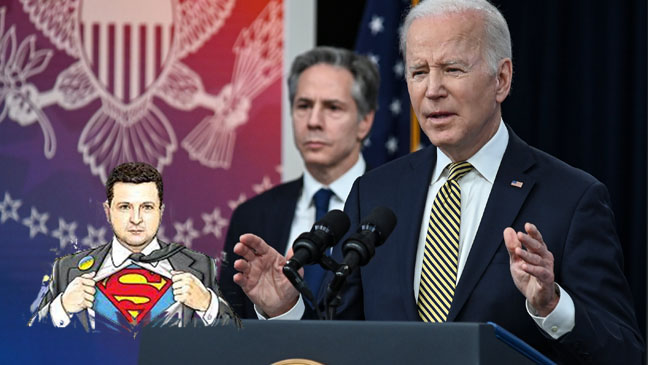
The latest US aid package for Kiev, which was only approved by Congress after more than six months of partisan feuding, might be small potatoes compared to what Ukrainian President Vladimir Zelensky has in mind for his biggest benefactor.
Kiev is negotiating with the administration of US President Joe Biden on a long-term agreement that would put Washington on the hook to provide Ukraine with military, economic, and political support for the next decade, Zelensky said on Sunday in his daily video address. Such commitments are needed to ensure Ukraine has the “efficiency in assistance” it needs to stem recent battlefield advances by Russian forces and gain the upper hand, he said.
“We are working to commit to paper concrete levels of support for this year and for the next ten years,” Zelensky said. “It will include military, financial, and political support, as well as what concerns joint production of weapons.”
Ukraine has already signed bilateral security agreements with several NATO members, including the UK, Germany, and France. Zelensky said he wants the long-term deal under negotiation with Washington to be the strongest pact yet.
However, Ukraine’s bilateral agreements with Western countries so far have stopped short of mutual-defense commitments. The deals merely pledge long-term aid, including support in the event of a future attack, and they are not legally binding. The agreement with Berlin, for instance, can be terminated with six months’ notice.
Zelensky said he wants Ukraine’s bilateral pact with Washington to include specific levels of aid. “The agreement should be truly exemplary and reflect the strength of American leadership,” he said.
US lawmakers approved $61 billion in additional aid for Ukraine earlier this month, after House Speaker Mike Johnson (R-Louisiana) overrode opposition in his own party to pass the bill with unanimous Democrat support. The Biden administration ran out of funding for Ukraine aid earlier this year, after using up $113 billion in previously approved assistance packages.
Republican lawmakers have argued that Biden is merely prolonging the bloodshed in Ukraine without offering a clear strategy for victory or a peace deal with Russia. A poll released in February showed that nearly 70% of Americans want Biden to push for a negotiated settlement with Moscow, involving compromises on both sides, rather than continuing to fund the conflict.
US vs China, Israel vs Iran, India vs Pakistan: Asia plays with fire as nuclear war safety net frays
- From the Korean peninsula to the Middle East, a string of nuclear flashpoints has emerged with the unravelling of the global post-Cold War detente
- Amid arms races, sky-high tensions – and the removal of guardrails to avert danger – proliferation ‘threatens to destabilise everywhere’, experts warn
A high-stakes game of geopolitical brinkmanship is playing out across the Middle East and Asia, with Israel and Iran trading missile strikes; India and Pakistan locked in a multi-headed rocket arms race; and power struggles on the Korean peninsula and in the South China Sea combining to create a perilous chain of potential nuclear-conflict zones.
In the past couple of weeks alone, Iran and Israel’s tit-for-tat exchanges amid the war in Gaza have highlighted their ability to target each other’s uranium-enrichment facilities, while the US has deployed mid-range ballistic missiles to the Philippines for the first time since the Cold War…………………………………………………. https://www.scmp.com/week-asia/politics/article/3260551/us-vs-china-israel-vs-iran-india-vs-pakistan-asia-plays-fire-nuclear-war-safety-net-frays?campaign=3260551&module=perpetual_scroll_0&pgtype=article
Why Iran may accelerate its nuclear program, and Israel may be tempted to attack it
Bulletin, By Darya Dolzikova, Matthew Savill | April 26, 2024
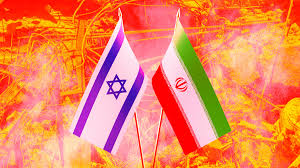
On April 19, Israel carried out a strike deep inside Iranian territory, near the city of Isfahan. The attack was apparently in retaliation for a major Iranian drone and missile attack on Israel a few days earlier. This exchange between the two countries—which have historically avoided directly targeting each other’s territories—has raised fears of a potentially serious military escalation in the region.
Israel’s strike was carried out against an Iranian military site located in close proximity to the Isfahan Nuclear Technology Center, which hosts nuclear research reactors, a uranium conversion plant, and a fuel production plant, among other facilities. Although the attack did not target Iran’s nuclear facilities directly, earlier reports suggested that Israel was considering such attacks. The Iranian leadership has, in turn, threatened to reconsider its nuclear policy and to advance its program should nuclear sites be attacked.
These events highlight the threat from regional escalation dynamics posed by Iran’s near-threshold nuclear capability, which grants Iran the perception of a certain degree of deterrence—at least against direct US retaliation—while also serving as an understandably tempting target for Israeli attack. As tensions between Israel and Iran have moved away from their traditional proxy nature and manifested as direct strikes against each other’s territories, the urgency of finding a timely and non-military solution to the Iranian nuclear issue has increased.
A tempting target. While the current assessment is that Iran does not possess nuclear weapons, the Islamic Republic maintains a very advanced nuclear program, allowing it to develop a nuclear weapons capability relatively rapidly, should it decide to do so. Iran’s “near-threshold” capability did not deter Israel from undertaking its recent attack. But Iran’s nuclear program is a tempting target for an attack that could have potentially destabilizing ramification: The program is advanced enough to pose a credible risk of rapid weaponization and at a stage when it could still be significantly degraded, albeit at an extremely high cost.
Iran views its nuclear program as a deterrent against direct US strikes on or invasion of its territory, acting as an insurance policy of sorts against invasion following erroneous Western accusations over its nuclear program, ala Iraq in 2003. That’s to say, during an attempted invasion, Iran could quickly produce nuclear weapons……………………………
Israel sees the Iranian nuclear program as an existential threat and has long sought its elimination. For this reason, reports that Israel might have been preparing to target Iranian nuclear sites as retaliation for Iran’s strikes against its territory came as little surprise……………………………………………………………………….
A range of bad options. The possibility of Iranian weaponization and Israeli attacks on Iran’s nuclear sites could lead to a serious escalation spiral and, potentially, a wider military conflict in the region……………………………………………………………
Following past instances of Israeli sabotage against the Iranian nuclear program, Tehran has doubled down—rebuilding damaged sites, hardening facilities, and ramping up its nuclear activity. The same is likely to be true should Iranian facilities be targeted directly this time, only to a greater degree. The shift from a proxy conflict between Iran and Israel to a direct engagement will only increase the value Iran places on its nuclear program as a deterrent against further direct attack on its territory and US military intervention. Should Iran assess that its regional proxies and its missile and drone capabilities have been insufficient to deter Israel from conducting direct strikes against its strategically significant nuclear program, Tehran may see the actual weaponization of its nuclear program as the only option left that can guarantee the security of the Iranian regime……………………………………………………………………………………………………………. more https://thebulletin.org/2024/04/why-iran-may-accelerate-its-nuclear-program-and-israel-may-be-tempted-to-attack-it/?utm_source=Newsletter&utm_medium=Email&utm_campaign=MondayNewsletter04292024&utm_content=NuclearRisk_IranNuclearProgramIsrael_04262024
Biden’s pledge to aid Palestinians is a big, murderous lie
Walt Zlotow, West Suburban Peace Coalition, Glen Ellyn IL 29 Apr 24
President Biden claims to be supporting food, water and medical aid to Palestinians now dying in Gaza from disease, starvation as well as being blown to bits by Biden’s 2000 lb. bombs.
But he knows full well Israel is violation his February 8th directive requiring assurances from Israel that it’s not using U.S. military aid to violate human rights law. Israel’s ongoing genocide of 2,300,000 Palestinians there puts Israel about as far from required compliance with Biden’s edict as the two sides of the Grand Canyon.
Biden’s February 8th directive states that Israel “will facilitate and not arbitrarily deny, restrict, or otherwise impede, directly or indirectly, the transport or delivery of United States humanitarian assistance.”
But Israel is not only blocking most aid from alleviating starvation and disease in Gaza, It’s using Biden’s bombs to attack Palestinian and foreign humanitarian workers from delivering that aid. When it comes to impeding, Israel know what works. Its already killed one American aid worker.
Biden knows this but maintains the fantasy, sadly swallowed whole by many of his reelection supporters, that he’s doing ‘everything he can to aid the staving, disease ridden Palestinians.’
’ Truth is he’s doing everything he can to enable Israel’s grotesque removal of the Palestinians from their Gaza land coveted by Israel.
He’s even conspiring with Israeli Prime Minister Netanyahu to derail the impending indictment of Netanyahu by the International Criminal Court. The indictment is expected this week unless the Netanyahu-Biden genocide tag team can prevent it.
President Biden has bigger problems that losing tens of millions of his 2020 voters, sealing his reelection defeat, by his enabling of Israeli genocide. He may end up a fellow indicted war criminal with Benjamin Netanyahu in the dock at The Hague.
Biden Wanted To Sanction An Israeli Battalion But He Didn’t Because Israel Said No
CAITLIN JOHNSTONE, APR 27, 2024
The Biden administration has reportedly canned its plans to issue sanctions on an extremist IDF unit for human rights violations in the occupied West Bank, following backlash from Israel and its high-powered supporters within the US government.
The State Department has put on hold its intention to impose sanctions on the Israel Defense Forces “Netzah Yehuda” battalion for human rights violations in the occupied West Bank and is reviewing the issue in light of information Israel provided in recent days, U.S. sources familiar with the issue said.
Why it matters: The review is part of a consultation process outlined in an agreement between the U.S. and Israel. But Secretary of State Antony Blinken has also been under extensive pressure from the Israeli government, members of Congress and some senior Biden administration officials to reconsider the possible sanctions.
The big picture: The Biden administration had intended to withhold U.S. military aid and training from the Netzah Yehuda battalion — an unprecedented move in the history of relations between the countries.

As Dr Assal Rad has highlighted on Twitter, this decision follows a sequence of events in which ProPublica revealed that Secretary of State Antony Blinken was ignoring his own State Department’s recommendation to sanction Israeli military units that have been credibly accused of human rights abuses like rape and torture, after which Blinken announced that he was preparing to issue sanctions after all. This announcement was met with outrage from Israel and its apologists, with Israeli Prime Minister Benjamin Netanyahu penning a furious screed calling the planned sanctions “the height of absurdity and a moral low”. Those planned sanctions are now canceled.
Or to put it more simply, the Biden administration had planned to sanction an IDF battalion, but it didn’t because Israel said no………………………………………………………………………………… more https://www.caitlinjohnst.one/p/biden-wanted-to-sanction-an-idf-unit?utm_source=post-email-title&publication_id=82124&post_id=144069670&utm_campaign=email-post-title&isFreemail=true&r=1ise1&triedRedirect=true&utm_medium=email
Patrick Lawrence: The Impotence of Antony Blinken

“Impotence” ! That is too kind.
I cannot at this moment find the statements that Blinken has made in support of Zionism. And they seem to have disappeared from the Internet.
The thing that stands out now is Blinken’s repeated moans about the need for compassion , humanitarian treatment of Gazans – while he continues to support the attack on Gaza.
His slimy hypocrisy is a masterpiece of deception – making sure to prolong wars, while appearing sweet and peace-loving. These quotations from January 2024, – but he’s persistently now made “peaceful” statements and promoted war. Not impotence – but cunning ruthlessness..
“Inside the State Department, Blinken has fielded multiple internal dissent cables decrying U.S. support for Israel.”
“He has made four trips to Ukraine and more than a dozen to visit European allies, reinvigorating the NATO alliance and helping to coordinate more than $110 billion in support of Kyiv.” https://time.com/collection/davos-2024-ideas-of-the-year/6551990/antony-blinken-israel-gaza-us-power/
Antony Blinken goes to Beijing he does not talk to the Chinese: He talks at them
By Patrick Lawrence / ScheerPost https://scheerpost.com/2024/04/28/patrick-lawrence-the-impotence-of-antony-blinken/
Antony Blinken is now in China for his second such journey as secretary of state and his third encounter with senior Chinese officials: This is our news as April marches toward May. I have to say, it is a stranger state of affairs than I can figure when the State Department and the media that clerk for it tell us in advance that America’s top diplomat is going to fail to get anything done as he sets out for the People’s Republic.
“I want to make clear that we are realistic and clear-eyed about the prospects of breakthroughs on any of these issues,” an unnamed State Department official said when briefing reporters last week on Blinken’s agenda. This is how State warns in advance that the secretary will be wasting his time and our money during his encounters in Shanghai and Beijing.
What is this if not an admission of our secretary of state’s diplomatic impotence? Or do I mean incompetence? Or both? This is the man, after all, who arrived in Israel five days after the events of last Oct. 7 to announce, “I come before you as a Jew.” Does this guy understand diplomacy or what?
The media followed the State Department’ lead, naturally, in advising us of the pointlessness of Blinken’s sojourn in China—this at both ends of the Pacific. CNBC: “Washington is realistic about its expectations on Blinken’s visit in resolving key issues.” Japan Times: “While crucial for keeping lines of communication open, the visit is unlikely to yield major breakthroughs.”
Matt Lee, the very able diplomatic correspondent at The Associated Press, got it righter than anyone in his April 22 report: The point of Blinken’s three days of talks with top Chinese officials, he reported, is to have three days of talks with top Chinese officials. “The mere fact that Blinken is making the trip might be seen by some as encouraging,” Lee wrote, “but ties between Washington and Beijing are tense and the rifts are growing wider.”
This is our Tony. As the record makes pitifully clear, there’s no mileage in predicting success when Blinken boards a plane for the great “out there.” This is unequivocally so in his dealings with the western end of the Pacific.
There is a long list of the topics Blinken was set to raise with Chinese officials, notable among these Foreign Minister Wang Yi. Taiwan and the South China Sea, military-to-military contacts, artificial intelligence applications, illicit drug traffic, human rights, trade: These are standards on the American menu when a U.S. official addresses Chinese counterparts. The last is especially contentious just now, given the Biden regime’s disgraceful determination to subvert those Chinese industries with which the U.S. cannot compete. With plans to block imports of Chinese-made electric vehicles already afoot, last week President Biden announced new tariffs on imports of Chinese steel. And it is now “investigating” China’s shipping and shipbuilding industries, which sounds to me like prelude to yet more measures to undermine China’s admirable economic advances.
But the premier question Blinken was to address has to do with Sino–Russian relations. As he made clear before departing, the secretary of state will more or less insist that the Chinese stop selling various industrial goods to Russia because the U.S. considers them “dual use,” meaning the Russians could use such things as semiconductors in their defense industries—so implicating China in Russia’s military intervention in Ukraine.
Before going any further, let’s try one of those “imagine if” exercises. Imagine if Beijing sent Foreign Minister Wang to Washington to tell the Biden regime to stop supplying weapons to Ukraine as this implicates the U.S. in Ukraine’s war with Russia and this is not on because China and Russia are friends.
It is not even fun, this “imagine if,” so nonsensical is it. Any such exercise would turn Wang, an acutely skilled diplomat, into another Antony Blinken—the thought of which is nonsensical times 10.
But never mind sense and nonsense. Blinken and those who speak for him at State boldly previewed the secretary’s presentation in the days before his departure. Here is Blinken speaking to reporters last Friday:
We see China sharing machine tools, semiconductors, other dual-use items that have helped Russia rebuild the defense industrial base that sanctions and export controls had done so much to degrade. Now, if China purports on the one hand to want good relations with Europe and other countries, it can’t on the other hand be fueling what is the biggest threat to European security since the end of the Cold War.
A day later the unnamed State Department official elaborated with this:
We’re prepared to take steps when we believe necessary against firms that … severely undermine security in both Ukraine and Europe. We’ve demonstrated our willingness to do so regarding firms from a number of countries, not just China. We will express our intent to have China curtail that support.
As tough diplomatic talk goes, it does not get much tougher. And as dumb diplomacy goes, it does not get much dumber.
For one thing, the Biden regime is demanding that China act against what we can count Beijing’s closest partner—this as leading non–Western nations are coalescing behind a joint project to create a new, let’s call it post–Western world order. I am reminded of a brilliant tweet someone wrote just after Russia began its Ukraine operation two years ago and the Biden regime sought to recruit Beijing against “Putin’s Russia,” as people such as Blinken insist on referring to the Russian Federation. “Please help us defeat Russia,” the tweet read, “so we can turn our aggression on you when we’re done.”
But precisely.
For another, the Chinese Foreign Ministry made its response to Blinken’s preposterous intentions clear even before the secretary boarded his plane (and just prior to the passage in the House last week of $60.1 billion in new aid for the Kiev regime). “It is extremely hypocritical and irresponsible for the U.S. to introduce a large-scale aid bill for Ukraine,” a ministry spokesperson said last week, “while making groundless accusations against normal economic and trade exchanges between China and Russia.”
I cannot think of a handier way of shutting down Antony Blinken.
One other thing while we are on this topic. Among the principles on which a post–Western global order will rest are respect for the sovereignty of all nations and noninterference into the internal affairs of others. These are two elements of civilized statecraft, as it is destined to be in the 21st century and of which the secretary of state has absolutely no clue.
Why did Secretary Blinken bother to raise this question of Sino–Russian trade when he must have known the response as well as you and I know it. I see two immediate explanations.
One, the crooks in Kiev have already lost Washington’s proxy war with Russia—and goodness knows how much of the just-approved aid they will steal—and Blinken’s presentation in Beijing reflects mounting desperation among the policy cliques who got the U.S. into this hopeless-from-the-start conflict.
Two, and closely related to the above, when Antony Blinken goes to Beijing he does not talk to the Chinese: He talks at them and is not especially concerned about their responses. He is talking only to the American public and the China hawks on Capitol Hill, who have the White House stretching to out-hawk them at every turn.
If you need support for this latter thought, there is Blinken’s assertion Monday, when introducing the State Department’s annual human rights report, that China is guilty of “genocide and crimes against humanity” against the Uighur population in Xinjiang Province. This charge has been highly suspect since Mike Pompeo, Blinken’s fanatically Sinophobic predecessor at State, conjured it before leaving office in 2021. And given no charge of genocide has ever been supported with evidence, what in hell was Blinken doing raising this question (1) on the eve of a diplomatic visit to Beijing during which he purported to want other things out of the Chinese, and (2) given his government’s open sponsorship of what we must now call the Israeli–U.S. genocide in Gaza?
My mind goes back to March 2021 when I read these things. It was then, in an Anchorage hotel (named the Captain Cook) that Blinken and Jake Sullivan, Biden’s new national security adviser, made an utter disaster out of their first encounter with senior Chinese officials, Wang Yi among them. It was then and there that Blinken and Sullivan, all by themselves, tipped over Sino–U.S. relations with just the sort of shockingly ignorant display of late-imperial presumption Blinken is trying on yet again in Beijing this week.
Sino–American ties have never recovered from the encounter in Anchorage. And Blinken has learned nothing from the mess he made.
1 This Month



26 September – International Day for the Total Elimination of Nuclear Weapons


PLEASE OPPOSE HR 8255 AND S.3639 – bills would accelerate satellite deployment, with no environmental review or safeguards – https://ncstd5li.quorum.us/campaign/169331/
To see nuclear-related stories in greater depth and intensity – go to https://nuclearinformation.wordpress.com
-
Archives
- September 2026 (219)
- August 2026 (330)
- July 2026 (355)
- June 2026 (287)
- May 2026 (306)
- April 2026 (356)
- March 2026 (251)
- February 2026 (267)
- January 2026 (308)
- December 2025 (358)
- November 2025 (359)
- October 2025 (375)
-
Categories
- 1
- 1 NUCLEAR ISSUES
- business and costs
- climate change
- culture and arts
- ENERGY
- environment
- health
- history
- indigenous issues
- Legal
- marketing of nuclear
- media
- opposition to nuclear
- PERSONAL STORIES
- politics
- politics international
- Religion and ethics
- safety
- secrets,lies and civil liberties
- spinbuster
- technology
- Uranium
- wastes
- weapons and war
- Women
- 2 WORLD
- ACTION
- AFRICA
- Atrocities
- AUSTRALIA
- Christina's notes
- Christina's themes
- culture and arts
- Events
- Fuk 2022
- Fuk 2023
- Fukushima 2017
- Fukushima 2018
- fukushima 2019
- Fukushima 2020
- Fukushima 2021
- general
- global warming
- Humour (God we need it)
- Nuclear
- RARE EARTHS
- Reference
- resources – print
- Resources -audiovicual
- Weekly Newsletter
- World
- World Nuclear
- YouTube
-
RSS
Entries RSS
Comments RSS
 nuclear-news