Presidents Who Gamble With Nuclear Armageddon
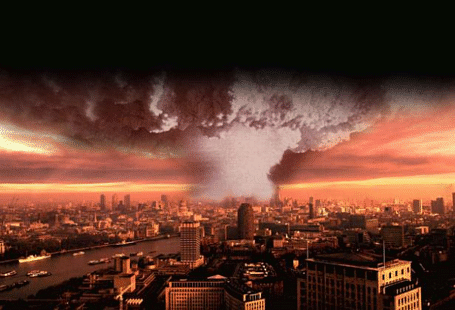
Each of the last five presidents, both Democrats and Republicans, have brought us closer to the brink. We desperately need leaders with a knack for peace who can steer the nation, and the world, toward a more secure and less dangerous future.
JEFFREY D. SACHS, May 29, 2024, https://www.commondreams.org/opinion/nuclear-armageddon
The overriding job of any U.S. president is to keep the nation safe. In the nuclear age, that mainly means avoiding nuclear Armageddon. Joe Biden’s reckless and incompetent foreign policy is pushing us closer to annihilation. He joins a long and undistinguished list of presidents who have gambled with Armageddon, including his immediate predecessor and rival, Donald Trump.
Talk of nuclear war is currently everywhere. Leaders of NATO countries call for Russia’s defeat and even dismemberment, while telling us not to worry about Russia’s 6,000 nuclear warheads. Ukraine uses NATO-supplied missiles to knock out parts of Russia’s nuclear-attack early-warning system inside Russia. Russia, in the meantime, engages in nuclear drills near its border with Ukraine. U.S. Secretary of State Antony Blinken and NATO Secretary-General Jens Stoltenberg give the green light to Ukraine to use NATO weapons to hit Russian territory as an increasingly desperate and extremist Ukrainian regime sees fit.
These leaders neglect at our greatest peril the most basic lesson of the nuclear confrontation between the U.S. and Soviet Union in the Cuban Missile Crisis, as told by President John F. Kennedy, one of the few American presidents in the nuclear age to take our survival seriously. In the aftermath of the crisis, Kennedy told us, and his successors:
Above all, while defending our own vital interests, nuclear powers must avert those confrontations which bring an adversary to a choice of either a humiliating retreat or a nuclear war. To adopt that kind of course in the nuclear age would be evidence only of the bankruptcy of our policy—or of a collective death-wish for the world.
Yet this is exactly what Biden is doing today, carrying out a bankrupt and reckless policy.
Nuclear war can easily arise from an escalation of non-nuclear war, or by a hothead leader with access to nuclear arms deciding on a surprise first strike, or by a gross miscalculation. The last of these nearly occurred even after Kennedy and his Soviet counterpart Nikita Khrushchev had negotiated an end to the Cuban Missile Crisis, when a disabled Soviet submarine came within a hair’s breadth of launching a nuclear-tipped torpedo.
The Doomsday Clock was at 17 minutes to midnight when Clinton came to office, but just 9 minutes when he left it. Bush pushed the clock to just 5 minutes, Obama to 3 minutes, and Trump to a mere 100 seconds. Now Biden has taken the clock to 90 seconds.
Most presidents, and most Americans, have little idea how close to the abyss we are. The Bulletin of Atomic Scientists, which was founded in 1947 in part to help the world avoid nuclear annihilation, established the Doomsday Clock to help the public understand the gravity of the risks we face. National security experts adjust the clock depending how far or how close we are to “midnight,” meaning extinction. They put the clock today at just 90 seconds to midnight, the closest that it’s ever been in the nuclear age.
The clock is a useful measure of which presidents have “gotten it” and which have not. The sad fact is that most presidents have recklessly gambled with our survival in the name of national honor, or to prove their personal toughness, or to avoid political attacks from the warmongers, or as the result of sheer incompetence. By a simple and straightforward count, five presidents have gotten it right, moving the clock away from midnight, while nine have moved us closer to Armageddon, including the most recent five.
Truman was president when the Doomsday Clock was unveiled in 1947, at 7 minutes to midnight. Truman stoked the nuclear arms race and left office with the clock at just 3 minutes to midnight. Eisenhower continued the nuclear arms race but also entered into the first-ever negotiations with the Soviet Union regarding nuclear disarmament. By the time he left office, the clock was put back to 7 minutes to midnight.
Kennedy saved the world by coolly reasoning his way through the Cuban Missile Crisis, rather than following the advice of hothead advisors who called for war (for a detailed account, see Martin Sherwin’s magisterial Gambling with Armageddon, 2020). He then negotiated the Partial Nuclear Test Ban Treaty with Khrushchev in 1963. By the time of his death, which may well have been a government coup resulting from Kennedy’s peace initiative, JFK had pushed the clock back to 12 minutes to midnight, a magnificent and historic achievement.
It was not to last. Lyndon Johnson soon escalated in Vietnam and pushed the clock back again to just 7 minutes to midnight. Richard Nixon eased tensions with both the Soviet Union and China, and concluded the Strategic Arms Limitation Treaty (SALT I), pushing the clock again to 12 minutes from midnight. Yet Gerald Ford and Jimmy Carter failed to secure SALT II, and Carter fatefully and unwisely gave a green light to the CIA in 1979 to destabilize Afghanistan. By the time Ronald Reagan took office, the clock was at just 4 minutes to midnight.
The next 12 years marked the end of the Cold War. Much of the credit is due to Mikhail Gorbachev, who aimed to reform the Soviet Union politically and economically, and to end the confrontation with the West. Yet credit is also due to Reagan and his successor George Bush, Sr., who successfully worked with Gorbachev to end the Cold War, which in turn was followed by the end of the Soviet Union itself in December 1991. By the time Bush left office, the Doomsday clock was at 17 minutes to midnight, the safest since the start of the nuclear age.
Sadly, the U.S. security establishment could not take “Yes” for an answer when Russia said an emphatic yes to peaceful and cooperative relations. The U.S. needed to “win” the Cold War, not just end it. It needed to declare itself and prove itself to be the sole superpower of the world, the one that would unilaterally write the rules of a new U.S.-led “rules-based order.” The post-1992 U.S. therefore launched wars and expanded its vast network of military bases as it saw fit, steadfastly and ostentatiously ignoring the red lines of other nations, indeed aiming to drive nuclear adversaries into humiliating retreats.
Since 1992, every president has left the U.S. and the world closer to nuclear annihilation than his predecessor. The Doomsday Clock was at 17 minutes to midnight when Clinton came to office, but just 9 minutes when he left it. Bush pushed the clock to just 5 minutes, Obama to 3 minutes, and Trump to a mere 100 seconds. Now Biden has taken the clock to 90 seconds.
Biden has led the U.S. into three fulminant crises, any one of which could end up in Armageddon. By insisting on NATO enlargement to Ukraine, against Russia’s bright red line, Biden has repeatedly pushed for Russia’s humiliating retreat. By siding with a genocidal Israel, he has stoked a new Middle East arms race and a dangerously expanding Middle East conflict. By taunting China over Taiwan, which the U.S. ostensibly recognizes as part of one China, he is inviting a war with China.
Trump similarly stirred the nuclear pot on several fronts, most flagrantly with China and Iran.Washington seems of a single mind these days: more funding for wars in Ukraine and Gaza, more armaments for Taiwan. We slouch ever closer to Armageddon. Polls show the American people overwhelmingly disapprove of U.S. foreign policy, but their opinion counts for very little. We need to shout for peace from every hilltop. The survival of our children and grandchildren depends on it.
The ghost of Concorde stalks the Franco-British nuclear renaissance
Critics fear history is repeating itself as Flamanville opens late and vastly over budget
AMBROSE EVANS-PRITCHARD, 29 May 2024
Critics fear history is repeating itself as Flamanville opens late and
vastly over budget. France’s first nuclear plant for a quarter century is
finally going ahead at Flamanville on the coast of Normandy, 12 years late
and six times over budget.
EDF has loaded the fuel of the giant European
Pressurised Reactor or EPR1. The first nuclear reaction will take place
within weeks, reaching full power of 1.65 gigawatts (GW) by year’s end.
It will be the most powerful reactor on the planet, to be joined eventually
by two sister reactors at Hinkley Point, and another at Sizewell C if
anybody can find the money.
To fans, Flamanville is an ultra-safe feat of
advanced engineering, with three layers of protective barriers. It can
withstand an earthquake, a tsunami, a head-on crash by an Airbus A380, or
even (arguably) a meltdown of the core. It is built to last 60 years,
perhaps a century.
To critics, it is a ruinous misadventure, the ultimate
over-refinement of obsolete fission technology that can never compete on a
commercial basis.
Delays have left France dependent on old reactors that
are literally falling apart. EDF has racked up debts of €54bn (£46bn)
and had to be renationalised in 2022. To those of us in the middle –
friendly to nuclear, if cheap enough – it is striking that Korea seems
able to roll out workhorse reactors relatively quickly at half the cost.
Korea Hydro & Nuclear Power’s modified APR1000 reactor was certified in
Europe last year. All is forgiven, apparently, even though a parallel EPR1
plant at Olkiluoto in Finland – opened last year – had similar delays
and cost overruns, and even though the Taishan I variant in China had to
shut down for a year due to damaged fuel rods.
Emmanuel Macron began his
presidency by closing a working reactor near the German border in order to
please Angela Merkel. He had a Damascene conversion after Putin’s
invasion of Ukraine. Mr Macron now wants to build 14 modified EPR2 reactors
– supposedly cheaper – in a repeat of France’s “dash for nuclear”
under premier Pierre Messmer in 1974.
It is a heroic undertaking for a
country with a structural budget deficit of 5pc of GDP and a debt ratio
stuck at 112pc, with rating agencies on the prowl. Much the same can be
said about Britain’s nuclear renaissance, targeting 24 GW by mid-century.
The bet is that the average cost per EPR will fall by 30pc as the series
rolls out a scale. That would cut the putative bill for Sizewell C to £85
MWh in today’s money, or lower if you treat it as a 60-year venture in
accounting terms. Reste à voir, as the French say.
Telegraph 29th May 2024
China and Russia Issue Nuclear Warnings
CEPA. By Michael Sheridan, May 28, 2024
The leaders of Russia and China have jointly shifted their stance on nuclear weapons, signaling a move away from decades of cautious Chinese thinking.
The Chinese-Russian accord is significant because it was accompanied by a joint challenge to the West’s buildup of its alliances and military presence in the Asia-Pacific region.
While the nuclear element of the joint communique following the May 16 summit of Xi Jinping and Vladimir Putin was not trumpeted and received little media attention, the two countries spelled out points of agreement on issues of significance.
The backdrop is China’s accelerated expansion of its nuclear forces and new fields of missile silos, leading the Pentagon to predict it may more than triple its capability to 1,500 weapons by 2035.
While Beijing is believed to adhere to a historical pledge that it would not be the first to use nuclear weapons, its actual doctrine remains obscure, there is a worrying absence of military dialogue with its rivals and recent purges at the top of its nuclear forces add to the uncertainties.
Nonetheless, it is clear that President Xi sees nuclear weapons as pieces on the global chessboard in a way that no previous leader of the People’s Republic thought necessary or desirable. Mao Zedong himself dismissed the atomic bomb as “a paper tiger.”…………………………………………………………………………….
Xi and Putin expressed “serious concern” that the US “under the pretext of conducting joint exercises with its allies that are clearly aimed at China and Russia” was acting to deploy land-based intermediate-range missile systems in the Asia-Pacific region (possibly a reference to plans to sell 400 Tomahawk cruise missiles to Japan and defend the so-called first island chain that rings China’s coasts.)
They did not specify the systems referred to but warned the US and NATO against providing “extended deterrence” to individual allies. They also singled out the AUKUS pact tightening defense cooperation between the US, Britain, and Australia.
In unusually specific language, the two leaders warned against “building infrastructure in Australia, a signatory to the South Pacific Nuclear Free Zone Treaty, that could be used for US and British nuclear forces to conduct operations and to carry out US-UK-Australian nuclear submarine co-operation.”………………………………….. https://cepa.org/article/china-and-russia-issue-nuclear-warnings/
Russian think tank proposes ‘demonstrative’ nuclear blast to deter Western support for Ukraine
Livemint , Written By Shivangini 30 May 2024 https://www.livemint.com/news/world/russian-think-tank-proposes-demonstrative-nuclear-blast-to-deter-western-support-for-ukraine-11717034780694.html
A senior member of a Russian think tank, whose ideas often influence government policy, has proposed a ‘demonstrative’ nuclear explosion to deter the West from allowing Ukraine to use its arms against targets inside Russia, Reuters reported on Thursday, May 30.
Dmitry Suslov, a member of the Moscow-based Council for Foreign and Defence Policy, made the proposal shortly after President Vladimir Putin warned that NATO members in Europe were “playing with fire” by proposing to let Kyiv use Western weapons to strike deep inside Russia. As quoted by Reuters, Putin indicated that such actions could trigger a global conflict.
Ukraine’s leadership argues that it needs the capability to strike Russian forces and military targets inside Russia with long-range Western missiles to defend itself and prevent air, missile, and drone attacks. The report added that this view has garnered some support among Western countries, though not from Washington.
Russia, which has the world’s largest nuclear arsenal, has warned that allowing Ukraine to strike inside Russia would be a grave escalation, potentially drawing NATO and involved countries into direct conflict with Moscow and increasing the risk of nuclear war.
Suslov, whose think tank has been praised by Putin and whose ideas sometimes influence government policy, suggested that Russia must act decisively to deter the West from crossing a red line.
“To confirm the seriousness of Russia’s intentions and to convince our opponents of Moscow’s readiness to escalate, it is worth considering a demonstrative (i.e., non-combat) nuclear explosion,” Suslov wrote in the business magazine Profil. “The political and psychological effect of a nuclear mushroom cloud, which will be shown live on all TV channels around the world, will hopefully remind Western politicians of the one thing that has prevented wars between the great powers since 1945 and that they have now largely lost – fear of nuclear war,” Suslov wrote according to Reuters.
Suslov’s proposal is the latest in a series of similar suggestions by Russian security experts and lawmakers. It has raised concerns among Western security experts that Russia might be inching towards such a test, which could usher in a new era of major power nuclear testing.
There was no immediate comment on Suslov’s proposal from the Kremlin, which has stated that Russia’s nuclear policy remains unchanged. However, the Kremlin signalled its displeasure with increasingly aggressive Western rhetoric on arming Kyiv earlier this month by ordering tactical nuclear weapons drills.
Suslov also suggested that Russia initiate strategic nuclear exercises, warn any country whose weapons are used by Kyiv to attack Russia that Moscow reserves the right to strike that country’s targets anywhere in the world, and caution that it could use nuclear weapons if that country retaliates conventionally.
In November, Putin signed a law withdrawing Russia’s ratification of the global treaty banning nuclear weapons tests, a move intended to align Russia with the United States, which signed but never ratified the treaty. Russian diplomats have said that Russia, which has not conducted a nuclear test since the Soviet era, would not resume testing unless Washington does.
The Soviet Union last conducted a nuclear test in 1990, and the United States last did so in 1992. North Korea is the only country to have conducted a nuclear test this century.
Earlier this month, Russia warned Britain that it could strike British military installations and equipment both inside Ukraine and elsewhere if British weapons were used by Ukraine to strike Russian territory. This warning followed British Foreign Secretary David Cameron’s statement that Kyiv had the right to use UK-supplied weapons to strike targets inside Russia.
Rare spat shows China and North Korea still at odds on nuclear weapons
Japan Times, BY JOSH SMITH, SEOUL, May 29, 2024
North Korea’s rare swipe at China this week underscored how Beijing and Pyongyang do not entirely see eye-to-eye on the latter’s illicit nuclear weapons arsenal, despite warming ties in other areas, analysts and officials in South Korea said.
The North condemned China, Japan and South Korea on Monday for discussing denuclearization of the peninsula, calling their joint declaration after a summit in Seoul a “grave political provocation” that violates its sovereignty.
Even though Beijing helped tone down the statement by advocating mention of the peninsula rather than the North specifically, that was enough to raise its neighbor’s hackles, one analyst said.
“It is notable that North Korea criticized a joint statement that China had signed onto, even after Beijing helped water down the statement,” added Patricia Kim, of the Brookings Institution in the United States.
In their remarks, the three nations “reiterated positions on regional peace and stability, denuclearization of the Korean Peninsula” but unlike the last such statements in 2019 and earlier, did not commit to pursue denuclearization.
Since international talks with the United States and other countries stalled in 2019, North Korea has moved to reject the concept of ever giving up its nuclear weapons.
“This is about North Korea emphasizing its stance that any diplomatic rhetoric suggesting Pyongyang should eventually denuclearize is unacceptable,” said Tong Zhao, a nuclear expert at the Carnegie Endowment for International Peace.
“After enshrining its nuclear status in the constitution and reprimanding anyone who questions it, North Korea is raising demands for formal international recognition as a nuclear-armed country.”……………………………………… more https://www.japantimes.co.jp/news/2024/05/29/asia-pacific/politics/china-north-korea-nuclear-weapons/—
Why US Opposes Efforts to Keep Space Weapons-Free
https://sputnikglobe.com/20240521/why-us-opposes-efforts-to-keep-space-weapons-free-1118569943.html
The United Nations Security Council failed to adopt a resolution drafted by Russia on prevention of weapon deployment in space this week, with seven countries – including the United States and Britain – voting against it.
The United States and Britain’s move to block a Russian draft resolution in the UN Security Council aimed at preventing an arms race in space stem from the US’ unwillingness to let Russian and Chinese initiatives to ban space weapons succeed, Dmitry Stefanovich from the Moscow-based Institute of World Economy and International Relations at the Russian Academy of Sciences says.
While Russia and China, as well as a number of other countries, insist on adopting a legally binding document that would ban the very concept of stationing weapon systems in space, Western powers such as the US want the situation where anyone can deploy anything they want in space as long as their behavior is deemed correct, he explains.
Therefore, the West is promoting the concept of restricting what spacecraft can do in space whereas the Russo-Chinese approach is to prohibit sending weapons into space, Stefanovich surmises.
Regarding speculation about the possible deployment of nuclear weapons in Earth’s orbit, Stefanovich points out that the United States currently enjoys a distinct advantage in the “dual-use space infrastructure,” i.e. spacecraft and satellites that can be used for both commercial/scientific and military purposes.
Since destroying large satellite constellations through conventional means, one by one, would seem a daunting task, it begets concerns that nuclear weapons might be used to accomplish such tasks, he explains.
Stefanovich also lamentas that any progress in resolving concerns about weapon deployment in space that was made in the past few years was essentially undone amid the ongoing conflict between the West and Russia, as well as the confrontation between the United States and China.
“Currently, everyone is looking for a way to weaken their adversary rather than for some kind of mutually acceptable solution,” he says.
North Korea vows to boost nuclear posture after US subcritical nuke test
DPRK slams US for destabilizing global security through no-expolosion experiment, though expert downplays threat
NK News Jeongmin Kim , May 20, 2024
North Korea has condemned the U.S. for conducting a no-explosion nuclear experiment that it claims destabilizes global security, vowing to recalibrate its own nuclear deterrence measures in response.
The U.S. Energy Department’s National Nuclear Security Administration (NNSA) announced last week that it conducted a “subcritical experiment at an underground facility in Nevada on May 14 to collect information about the reliability and effectiveness of American nuclear warheads.
“This is a dangerous act that renders the extremely worsening global security environment more unstable, having seriously negative impact on the strategic balance among major nuclear powers,” an unnamed spokesperson of North Korea’s foreign ministry said in a statement on Monday.
Both the externally facing Korean Central News Agency and the domestic party daily Rodong Sinmun carried the statement.
The spokesperson called the U.S. the “world’s biggest nuclear weapons state” with a “strategic goal to militarily control other countries,” disqualifying it from discussing the threat of nuclear war.
It is “nothing but rhetoric,” the statement continues before referencing the strategic assets that visited South Korea in the past couple of years, the U.S.-ROK Nuclear Consultative Group on discussing joint nuclear planning and the joint tabletop exercise slated for August on North Korean nuclear use scenarios.
The latest test in Nevada has “added new tension to the military showdown among nuclear weapons states, fomenting the international nuclear arms race,” the statement reads, vowing to improve its nuclear defense posture against this threat.
However, Shin Seung-ki, a senior analyst at the Korea Institute for Defense Analyses (KIDA), told NK News that the U.S. test is not as threatening or new as North Korea described it. ………………………………………….
South Korean and U.S. authorities have said North Korea completed preparations for a seventh nuclear test around two years ago, but Pyongyang has not conducted one so far. https://www.nknews.org/2024/05/north-korea-vows-to-boost-nuclear-posture-after-us-subcritical-nuke-test/
US-Saudi officials meet for security and nuclear deal

the Biden administration is offering a strategic deal on nuclear deal to the Saudis to assist a Saudi civilian nuclear program, as Iran has reached the weapons threshold under President Joe Biden’s watch.
May 20, 2024 , https://www.middleeastmonitor.com/20240520-us-saudi-officials-meet-for-security-and-nuclear-deal/
US National Security Adviser, Jake Sullivan, and Saudi Crown Prince, Mohammed Bin Salman, met in Dhahran to discuss a range of issues, including normalisation of ties with Israel, Reuters reports.
According to the report, a Saudi statement on Sunday also said, “the semi-final version of the draft strategic agreements between the two countries, which are almost being finalised”, were discussed.
The report added that the Biden administration is offering a strategic deal on nuclear deal to the Saudis to assist a Saudi civilian nuclear program, as Iran has reached the weapons threshold under President Joe Biden’s watch.
The meeting also covered “what is being worked on between the two sides on the Palestinian issue to find a credible path towards a two-state solution”, as well as attempts to stop the war in Gaza and facilitate the distribution of humanitarian aid there.
Iran’s new leaders stand at a nuclear precipice
The world’s atomic watchdog fears a terrifying regional arms race
The Economist 20 May 24
On may 6th Rafael Grossi, the director-general of the International Atomic Energy Agency (iaea), travelled to Tehran and met Hossein Amirabdollahian, Iran’s foreign minister. Less than two weeks later, on May 19th, Mr Amirabdollahian was dead, killed in a helicopter crash that also took the life of Ebrahim Raisi, Iran’s president, among others.
Their deaths throw Iran’s sclerotic theocracy into a moment of confusion and uncertainty, one with far-reaching implications for the country’s nuclear programme. Mr Grossi, fresh from his trip to Iran, recently spoke to The Economist about the Iranian nuclear file, as well as the other items on his forbidding to-do list, from the Russian-occupied Zaporizhia nuclear-power plant in Ukraine to the “growing attraction” of nuclear weapons worldwide……………………(Subscribers only) https://www.economist.com/international/2024/05/20/irans-new-leaders-stand-at-a-nuclear-precipice
—
Moscow to ‘mirror’ West, NATO approaches, including nuclear weapons: Russia
Deputy Foreign Minister Ryabkov rejects West claims about Moscow’s next target in NATO state after Ukraine war, calling them ‘completely absurd’
Elena Teslova 17.05.2024, MOSCOW, https://www.aa.com.tr/en/asia-pacific/moscow-to-mirror-west-nato-approaches-including-nuclear-weapons-russia/3222601
Russian Deputy Foreign Minister Sergey Ryabkov said on Friday that Moscow will “mirror” the West and NATO approaches, including on nuclear weapons issues.
In an interview with the Russian state news agency TASS, Ryabkov mocked the Washington administration, saying “punks” have come to power in the US, who are flagrantly violating Russia’s red lines to show off.
The diplomat emphasized that Russia refrains from responding with full force and exercises “exceptional restraint” to avoid further escalation, acting strictly within the framework chalked out by the country’s leadership and defined in terms of the goals and objectives of the “special military operation.”
“There are also these fashionistas in the Western group, alongside punks, who introduce ideas they deem fresh into discussions of what is going on,” he said.
“For example, at the behest of Washington, the fashion of the spring-summer season of 2024 is the claim that Russian President Vladimir Putin would not stop in Ukraine but would definitely attack other NATO countries,” he said, calling such claims “completely absurd.”
Ryabkov emphasized that such statements are more than just disinformation to distort the essence of Russian foreign policy.
“There is also another trend. This is the claim that strategic uncertainty and ambiguity should be shown concerning Russia so that Moscow does not know how NATO will act in a given situation.
“However, this uncertainty has always been characteristic of the doctrinal approaches of the Western group, including those related to nuclear weapons,” the deputy foreign minister said, vowing, “We will mirror them in this issue.”
When asked about the possibility of lowering the level of diplomatic ties, he said given the current crisis in relations, nothing can be ruled out, though it is not Russia’s choice.
“Those in power in the US and other key Western states have recently gathered quite a lot of figures who are, by and large, provocateurs and have made the meaning of their existence a test of Moscow’s strength,” he said.
Ryabkov also responded to a question about US Secretary of State Antony Blinken’s visit to Ukraine by saying, “Shortly before the departure of this group to Kyiv, we received the relevant information.”
Regarding the exchange of prisoners, he noted that the frequency of contacts on this issue depends on the American side, which focuses on high-profile cases followed by long pauses.
In response to allegations that Russia intends to interfere in the 2024 US Presidential election, Ryabkov said there has been no Russian interference in past elections and that there will be none, as Moscow fundamentally does not interfere in election campaigns in any country, with the US being no exception.
As for the November election outcome is concerned, he said, Moscow is monitoring the situation but sees no prospects for improving relations between the two countries, regardless of who wins, due to “the fundamentally anti-Russian consensus among American elites.”
Xi outlines solution to Ukraine conflict
https://www.sott.net/article/491542-Xi-outlines-solution-to-Ukraine-conflict 19 May 24
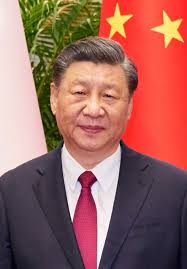
Chinese President Xi Jinping has stressed that peace negotiations recognized by both Russia and Ukraine are the best way to end the ongoing conflict between the two nations.
Speaking during a meeting with Russian President Vladimir Putin on Thursday at the Chinese leader’s residential compound at Zhongnanhai, Xi argued that the entire global security architecture must be amended in order to end the fighting and avoid similar hostilities in the future, according to the Xinhua news outlet.
Putin is on his first state visit to China since he took office for the fifth time earlier this month.
Xi was cited as saying:
“China supports the timely convening of an international peace conference recognized by both Russia and Ukraine, with equal participation by all parties, and fair discussion of all options. Beijing is willing to aid in brokering the peace talks.”
“Global powers must address both the symptoms and the root cause [of the conflict], and we must consider both the present and the long term.
“The fundamental solution to the Ukraine crisis is to promote the construction of a balanced, effective, and sustainable new security architecture.”
Beijing has repeatedly rejected Western pressure to join in the condemnation of Russia over the Ukraine conflict. Since last year, China has been promoting a peace formula consisting of 12 points, including the cessation of hostilities and unilateral sanctions, mutual respect for national security concerns and the sovereignty of nations, and the rejection of a ‘Cold War’ mentality.
Kiev has rejected the formula as unrealizable because it does not demand a retreat of Russian forces from territories Kiev claims as its own. Ukraine has long insisted that a peace settlement can only be achieved on its terms, which include a return of all former Ukrainian territories, the withdrawal of Russian troops, and an international tribunal for Russian leaders.
Kiev’s Western backers plan to hold a summit on the Ukraine conflict in Switzerland next month, to which Russia has not been invited. Beijing has yet to officially confirm whether it will send a delegation.
Russia has welcomed China’s proposed peace formula from the start, having repeatedly stressed that it remains open to a political solution to the conflict. In an interview with Xinhua ahead of his visit to China, Putin said Beijing’s initiative showed “the genuine desire… to help stabilize the situation” in the region. He added that he would endorse the formula as it calls for a dialogue based on mutual consideration of the interests of all sides involved in the conflict, including Russia.
China and Russia Disagree on North Korea’s Nuclear Weapons
Beijing and Moscow have different perspectives on – and different appetites for – Pyongyang’s nuclear program.
The Diplomat, By Wooyeal Paik, May 15, 2024
China has been ambivalent about North Korea and its strategic behaviors for the last few decades, leading scholars in China to describe North Korea as both “strategic asset” and “strategic liability.” North Korea, China’s sole military ally with an official treaty, the Sino-North Korean Treaty of Friendship, Cooperation, and Mutual Assistance, signed in 1961, has proved tough to handle, if not outright volatile, for its security and economic patron.
Nonetheless, North Korea’s geopolitical importance to China as a buffer state against the United States and its East Asian allies (South Korea and Japan) has not lessened. Even in the era of high-tech weapons such as missiles, military satellites, nuclear submarines, and fifth-generation fighter jets, all of which serve to reduce the strategic value of physical buffer zones, it is still effective and valuable for China not to confront the mighty hostile power, the United States, on its immediate land border. Ground forces are still the ultimate military presence, and sharing a border with a U.S. allied, unified Korea would also come at a psychological cost for China.
Beyond its role as a buffer state, North Korea’s value as leverage or a bargaining chip for China in Beijing’s relations with South Korea and the United States has been well recognized. In 2024, however, China may consider adding another layer to this leverage by supporting North Korea’s nuclear program, as Russia has done.
North Korea is a de facto nuclear state with a set of viable delivery mechanisms including intercontinental ballistic missiles (ICBMs) and submarine-launched ballistic missiles (SLBMs).
This nuclear element of the Kim regime has been regarded as the quintessential reason for an ever-growing regional security instability in Northeast Asia and beyond.
For China, North Korea – and particularly its nuclear program – is a strategic liability. China prioritizes stability in its neighborhood, but North Korea purposefully pursues instability right next to China. This conflict of interests between the treaty allies exacerbates Chinese national security concerns, particularly regarding the United States and its hub-and-spoke system in the Indo-Pacific area.
In response to North Korea’s rapid nuclear and missile developments, the United States has significantly ramped up its military presence on and around the Korean Peninsula, in consultation with its ally, South Korea. That includes the regular deployment of strategic (i.e., nuclear-capable) U.S. assets to the region, something China is not comfortable with.
Russia, however, takes a different view. Over the past year, Moscow has shifted its strategic approach to the North Korea’s nuclear capability and provocations, from viewing them as a nuisance that disrupts the Non-Proliferation Treaty (NPT) regime to a tactical countermeasure against the United States. From Russia’s perspective, distracting the U.S. – the primary military and economic presence as the NATO leader – is a goal unto itself, as Washington is a major obstacle to Russia’s desire to conquer Ukraine and influence the post-Soviet Central and Eastern Europe.
Russia has been importing North Korean weapons – 152 mm artillery ammunition,122 mm multiple rocket launcher ammunition, and other conventional weapons – for use against Ukraine. In return, it’s widely believed that North Korea receives Russia’s technical assistance for the research and development of advanced space and weapons technologies: nuclear-powered submarines, cruise and ballistic missiles, military reconnaissance satellites. North Korea also receives food and energy in addition to rare international support for its pariah regime.
Russia actively endorses North Korea as a nuclear state and supports its “legitimate” use of nuclear weapons for its self-defense and beyond. As Kim Jong Un embraces a lower nuclear threshold, Russian President Vladimir Putin and his ruling elites have also expressed their willingness to employ low-yield tactical nuclear weapons against Ukraine and European NATO countries.
Thus, North Korea has evolved into a double-layered tool for Russia, acting as both a buffer state and a nuclear threat against the United States in Northeast Asia and Europe. This accelerates the convergence of security between Indo-Pacific and Euro-Atlantic regions.
Despite Russia’s high-profile advances with North Korea, China is still thought to be the only nation with significant influence over Pyongyang. ……………………………………………………….. more https://thediplomat.com/2024/05/china-and-russia-disagree-on-north-koreas-nuclear-weapons/
Iran open to ‘serious dialogue’, says UN nuclear chief
Fraught relations with Tehran, which faces sanctions over its atomic programme, appear to be easing
Andrew England in London, Ft.com 15 May 24
Iran has shown a willingness to engage in “serious dialogue” with the UN’s nuclear watchdog for the first time in more than a year, according to the agency’s head, in a sign Tehran is seeking to ease tensions with the US. Rafael Grossi, director-general of the International Atomic Energy Agency, told the Financial Times that Tehran and the watchdog, which have endured fraught relations for months, could be entering a “different phase” after he held talks in Iran. Tehran appears willing to discuss “concrete” issues, he said. The apparent shift in tone was prompted by an invitation from Iran’s nuclear chief Mohammad Eslami for Grossi to attend talks in the Islamic republic. The call came in mid-April at a time of heightened tensions between Iran, Israel and the US.
Around that time, Iranian officials issued veiled threats that Tehran could change policy and seek to weaponise its expansive nuclear programme. But after meeting Eslami and other senior officials last week on his first trip to Iran since March 2023, Grossi said he sensed an opportunity to resolve some points of contention, including improving the IAEA’s ability to monitor the republic’s nuclear activities. “I see in them a recognition that it is better to have some engagement than to continue on a completely divergent course, leading to more escalation and perhaps even more danger, including war,” Grossi said. “It’s very important because we reconnected after many months of talking past each other.
He added that Washington and Tehran also continued to keep open a “bilateral channel”. The FT revealed that senior US and Iranian officials held secret indirect talks in Oman in January as both sides sought to prevent the Israel-Hamas war from exploding into a full-blown regional conflict………………………
Grossi said Iran had not altered the scale or pace of its nuclear activity since Hamas’s October 7 attack and Israel’s retaliatory offensive in Gaza sparked hostilities across the Middle East. He added that there was “no evidence to suggest that Iran has moved, or is moving, or is planning to move, to a weapons programme”. Iran has been enriching uranium up to 60 per cent purity, close to weapons grade, for more than two years. It is part of Tehran’s response to former US President Donald Trump’s decision to unilaterally abandon the 2015 nuclear accord Tehran signed with world powers………………………………………………. more https://www.ft.com/content/d5e07404-2fed-4f60-ba11-59e6734665c2
Australian Greens’ dissenting report on The Australian Naval Nuclear Power Safety Bill

1.1The Australian Naval Nuclear Power Safety Bill 2023 (the Bill or ANNPS) is deeply flawed legislation that is only being progressed because of the deeply flawed trilateral agreement that is AUKUS.
1.2The Bill proposes a seriously flawed regulatory model for the dangers of naval nuclear reactors and associated waste.
1.3 The proposed regulator lacks genuine independence, the process for dealing with nuclear waste is recklessly indifferent to community or First Nations interests and the level of secrecy is a threat to both the environment and the public interest.
1.4 Any amendments proposed to improve the many deficiencies of this legislation should not be interpreted as support for the Bill itself or for the AUKUS deal.
1.5 This Bill establishes a new defence naval nuclear regulator that will oversee all aspects of the nuclear production and waste cycle associated with Australian nuclear-powered submarines (and with regard to waste but not the operational activities of UK and US submarines) that operate, are constructed or decommissioned in Australia and Australian territorial waters.
1.6 This regulator will be entirely separate from the existing and long-standing nuclear regulation framework in Australia, which currently sits under the Australian Radiation Protection and Nuclear Safety Act 1998 (ARPANS Act).
Independence
1.7This Bill fails to meet the fundamental international principles of regulatory independence for safely addressing the inherent risks of nuclear power and nuclear waste.
1.8In this Bill, the proposed Australian Naval Nuclear Power Safety Regulator reports directly to the Minister of Defence. The Defence Minister is also responsible, through the Australian Defence Force, for the operation of those same nuclear submarines.
1.9 This is widely out of step with international standards of legal and functional independence for nuclear safety and is contrary to current practice on civil nuclear regulation in Australia.
1.10This is also in direct opposition to the International Atomic Energy Agency in its Fundamental Safety Principles that state: An effective legal and governmental framework for safety, including an independent regulatory body, must be established and sustained.[1]
1.11It is also not in line with the current regulation of nuclear waste in Australia. The regulator, called the Australian Radiation Protection and Nuclear Safety Agency (ARPANSA) sits in the Ministry of Health whereas the Australian Nuclear Science and Technology Organisation (ANSTO) (which operates the Lucas Heights reactor) sits in the Ministry of Industry and Science. This is to ensure the regulator is independent of the industry it oversees.
1.12As the majority report notes in some detail, the proposed model under this Bill is distinct from either the UK or US naval nuclear regulators.
1.13 In the UK, while the main naval nuclear regulator does report through the Ministry of Defence, there is a significant ongoing role for the independent civilian Office for Nuclear Regulation (ONR) in overseeing defence nuclear activities. This is formalised in the General Agreement between the Ministry of Defence and the Office for Nuclear Regulation. This agreement clearly delineates the relationship between the Ministry of Defence and the ONR in discharging their respective roles and responsibilities for the UK’s defence nuclear operations. There is no equivalent role for ARPANSA in this Bill.
In the US, the regulator is known as the Naval Nuclear Propulsion Program (NNPP). This is not run solely by Defense but rather is jointly managed and self-regulated by the civilian National Nuclear Security Administration (NNSA) that reports to the Department of Energy, and the Department of the Navy. By contrast, under this Bill the regulator will be entirely within the Department of Defence and the Defence Minister will have sole ministerial responsibility.
1.15The importance of regulatory independence was outlined in a letter to the CEO of ARPANSA from the Radiation Health and Safety Advisory Council in October 2022 that stated:
Independence of the regulator is a critical part of its effectiveness. The regulator should be independent of the operators and departments overseeing any aspect of purchase, manufacture, maintenance, and operation of the program. It is noted that some of the more significant global nuclear and radiation incidents have arisen from inadequate separation of responsibilities from regulatory capture. More than functional separation, it is important that the independent regulator can operate without influence, and with a strong voice. If a regulatory body cannot provide information on safety and incidents at licensed facilities without the approval of another organisation, issues of independence and transparency will arise. Reporting arrangements should therefore enable the regulatory body to be able to provide safety related information to the Government and the public with the maximum amount of transparency.[2]
1.16During a committee hearing, these concerns were put to the Royal Institution of Naval Architects (RINA), concerning the importance of independence in ‘social licence’:
Senator SHOEBRIDGE: We have good examples, though, of independence. ANSTO is an operator. The regulator of ANSTO reports to a different minister, and that is part of how ANSTO gets social licence. That’s a good example, isn’t it, of structural independence?……………………………………………………
ARPANSA also acknowledged that the key to their social licences was independence through reporting to a minister not associated with the industry they are regulating
1.18In further questioning concerning how this independence can be achieved with the Defence Minister having both the regulator and the body it’s regulating reporting to them, ARPANSA stated:
Senator SHOEBRIDGE: Do you agree it’s a weakness in this bill to have the operator and the regulator both report to the same minister? Or if you don’t want to adopt my phrase, tell me how you would respond to the fact that the regulator and the operator both report to the same minister, given the fundamental importance of independence?
Dr Hirth: I think it’s important to go back to the IAEA, and I think the comments made by RINA in your questions to them this morning around undue influence. Establishing reporting arrangements in order that there isn’t undue influence of interested parties does present a challenge for the Minister for Defence…………………………….
1.19Furthermore, there were concerns raised about the development of a new regulatory body, with all the concerns of independence with the ANNPS Bill, which may also lack the expertise needed……………..
The ability of the Minister through proposed section 105 to issue directions to the regulator further blurs the independence of the new regulator. This was a concern for the Australian Shipbuilding Federation of Unions (ASFU),……………………………………………
1.21Another aspect of the lack of independence concerns the staffing and leadership of the new regulator. It is true that neither the Director-General nor Deputy Director-General can be an active member of the ADF (Australian Defence Force) as specified in proposed section 109.
1.22 However, there is nothing stopping someone from immediately stepping out of the ADF and the next day becoming the Director-General or Deputy Director-General, as this exchange with Defence made clear:……………………………………………………..
1.23 Furthermore, there are no such restrictions on the staff of the regulator, which may all be drawn from active ADF personnel.
1.24 This means the supposed independent regulator of Defence can be run by someone who, the day before was in the Defence, staffed by the Defence and report to the Minister of Defence.
Recommendation 1
1.25 It is recommended that the Bill be amended to ensure a genuinely independent regulator and that the regulator reports to the Minister of Health rather than the Minister of Defence.
1.26 Alternatively, that the regulator more closely reflects the arrangements in the United States and jointly reports to both the Minister of Health and the Minister for Defence, with these Ministers jointly holding Ministerial responsibility under the Bill.
Recommendation 2
1.27 It is recommended that for transparency any direction issued under section 105 be tabled in Parliament within three days where the direction may, or will, negatively impact public health or safety.
Recommendation 3
1.28 It is recommended that section 109 be amended to:
prohibit the Director General from being a current or former member of the ADF or Department of Defence, and;
that the Deputy Director General not be a current member of the ADF or Department of Defence or have been a member of the ADF or Department of Defence for at least two years prior to any appointment.
No public or First Nations consultation
1.29This Bill allows the Minister of Defence to establish ‘designated zones’ for the storage, management and disposal of low, medium and high-level nuclear waste in any part of Australia the Minister chooses by regulation.
1.30This Bill establishes an initial two zones, one at HMAS Stirling at Garden Island in Western Australia and another at the Osborne Naval Shipyard in South Australia. Both zones are close to major metropolitan centres.
1.31Concerning future nuclear waste dumps, the Minister for Defence has indicated that they will only be on Defence land, however, that includes large parcels of land within every major population centre in the country. The Minister also said this can include ‘future’ Defence land.[9]
1.32However, the Bill does not provide even this limitation on where nuclear waste can be located. In fact, the Bill says in bold terms the waste can be on defence land or ‘any other area in Australia’ identified in the regulations. This means, with the flick of the Minister’s pen, any location in Australia can be made into a high-level nuclear waste dump.
1.33This completely excludes any consultation with the local impacted community or with First Nations people whose land and water will be targeted by Defence. With this Bill, neighbours to large defence sites like Holsworthy in Sydney or Greenbank in Brisbane are right to be concerned that they may wake up one morning, with no notice, to find they back onto a high-level nuclear waste dump.
1.34 We have seen from decades of failed attempts to set up nuclear waste sites across the country, most recently at Kimba, that Federal governments have routinely sought to override First Nations people’s claims to the land on this issue. The United Nations Declaration on the Rights of Indigenous Peoples (UNDRIP) specifies the importance of free, prior and informed consent before any such action is taken. This Bill does not even pretend to engage with these principles.
1.35 As the submission from Friends of the Earth stated:
First Nations communities have repeatedly defeated thuggish, racist governments in relation to radioactive waste facilities but that has come at a huge cost in terms of physical and mental health.[10]
1.36The few protections that the law currently gives to First Nations people over their land are removed by this Bill. The Independent and Peaceful Australia Network raised this during a hearing, stating:
There doesn’t seem to have been any notice taken of the United Nations Declaration on the Rights of Indigenous Peoples. They should have the right to prior informed consent on this issue and have full consultation before any designations are made for nuclear waste.[11]
1.37Multiple submissions also raised the comments by Dr Marcos Orellana, UN Special Rapporteur on Toxics and Human Rights, in 2023 on this issue, saying:
It is instructive that all siting initiatives by the Government for a radioactive waste repository have failed, leaving a legacy of division and acrimony in the communities. The loss of lives and songlines resulting from exposure of Indigenous peoples to hazardous pesticides in the Kimberley region, from asbestos exposure in Wittenoom in Western Australia, and from the radioactive contamination following nuclear weapons testing in South Australia, are all open wounds. Alignment of regulations with the UN Declaration on the Rights of Indigenous Peoples is a critical step in the path towards healing open wounds of past environmental injustices.[12]
1.38Concerning the proposed nuclear ‘designated zone’ in Perth, Nuclear Free WA and Stop AUKUS WA noted the importance of the areas around HMAS Stirling, stating in their submission:
Cockburn Sound and Garden Island have significant cultural value for First Nations Peoples … The ecological values of Garden Island, the proximity to Cockburn Sound make radioactive waste disposal here incompatible.[13]
1.39 It is remarkable that on an issue so vital to communities, the potential location of a nuclear waste dump, there is zero public consultation required under this Bill. Compare this to existing laws such as the National Radioactive Waste Management Act 2012, where a site must be voluntarily nominated, evaluated against technical, economic, social and environmental criteria, and offered for public consultation.
1.40 This, together with the express inclusion of the UNDRIP principles, is the minimum standard that should be expected under this Bill for public and First Nations consultation.
Recommendation 4
1.41 It is recommended that the Bill must ensure that there is free, prior and informed consent from First Nations people and the communities impacted before any designated zone is established for low, medium or high-level naval nuclear waste.
Recommendation 5
1.42 It is recommended that the Bill should expressly include reference to, and compliance with, Australia’s international obligations including the United Nations Declaration on the Rights of Indigenous Peoples.
Recommendation 6
1.43 It is recommended that the Bill should adopt the requirements for public consultation and site identification for designated nuclear zones found in the National Radioactive Waste Management Act 2012.
Transparency and collaboration
1.44 The ARPANS Act has key elements to ensure the management of nuclear waste is done in collaboration with other experts and bodies, as well as openly with the public. This Bill fails on both of these fronts……………………………………………………………………………………………
1.47 By creating a legally and functionally separate naval nuclear regulator this Bill ignores decades of experience in both the UK and the US where there is a co-regulatory civil and defence regime. This not only ignores international experience, it also ignores the decades of experience held in Australia’s civilian nuclear regulators and advisers. This is a reckless proposal that will leave Defence to be both the nuclear operator and the nuclear regulator without having ongoing advice from an independent body.
Recommendation 7
1.48 It is recommended that the Bill should require close co-operation and consultation between the proposed naval nuclear regulator and the civilian regulator ARPANSA.
Recommendation 8
1.49 It is recommended that the Bill should be amended to ensure that the Director General receives advice from the relevant nuclear safety advisory groups including the Radiation Health and Safety Advisory Council, Radiation Health Committee and the Nuclear Safety Committee.
UK and US nuclear waste dumping ground
1.50 As noted above the Bill is drafted to allow the UK and US to dump nuclear waste, including high-level nuclear waste, from their existing and decommissioned nuclear submarines in Australia.
1.51 Despite Minister Marles rejecting this as ‘fear-mongering’ when first raised, this fact was admitted by multiple witnesses, including Defence officials and BAE Systems Australia. It also flows from any even moderately close reading of the Bill.[16]
1.52 It turned out to be significantly more than this with numerous organisations confirming that this Bill indeed does allow for the dumpling of nuclear waste in Australia from UK and US submarines.
1.53 Mr Peter Quinlivian, Senior Legal Counsel, BAE Systems Australia admitted the law would permit the dumping of nuclear waste from UK nuclear submarines in the following exchange:…………………………………………………………………………………………………………………….
1.54 Mr Adam Beeson, General Counsel, Australian Conservation Foundation, further corroborated this information said:………………………………………………………………………….
1.55 Mr Kim Moy, Assistant Director-General of the Domestic Nuclear Policy Branch, Department of Defence also admitted that this Bill would allow for the dumping of foreign nuclear waste:……………………………………………………
1.56 Question on Notice 1 from Defence during this hearing also made clear that the current definition is not just limited to low-level nuclear waste, but high-level nuclear waste too.[20]
1.57 This is particularly disturbing given the UK currently has no plan to dispose of the nuclear waste from their nuclear submarines. In the UK there are now six decades of decommissioned rusting nuclear submarines that are filled with high and medium-level nuclear waste for which they have no solution.
1.58 To be clear, under this Bill, there is a real and present danger that either this government or a future government will allow UK nuclear waste to be brought to Australia. This is an extraordinary proposal and is so clearly not in Australia’s interests, let alone the interests of communities and First Nations peoples on whose land this toxic waste will be dumped.
1,59 Mr Dave Sweeny, Nuclear Policy Analyst, Australian Conservation Foundation addressed these concerns ………………………………………………………..
1.60If the AUKUS nuclear submarine deal is to splutter on, then it must not be allowed to become a back door entry for the world’s most toxic nuclear waste.
Recommendation 9
1.61 The Bill must be amended to ensure that no UK or US nuclear waste can be stored or disposed of in Australia.
Overrides other laws
1.62 This Bill also seeks to override or disregard other laws and international obligations.
1.63 For example, the Bill allows for the Minister to override State and Territory laws that might limit where the Federal Government proposes nuclear waste will be stored through proposed section 135 which reads:
If a law of a State or Territory, or one or more provisions of such a law, is prescribed by the regulations, that law or provision does not apply in relation to a regulated activity.
1.64 This issue has been noted by local communities and environmental groups including David J Noonan who stated in his submission:
The Bill is undemocratic and disrespectful to the people of SA in a proposed power under Section 135 “Operation of State and Territory laws” to over-ride any SA Laws or provisions of our Laws effectively by decree, a fiat of unaccountable federal agents to annul our Laws by naming then in Regulations.[22]
Recommendation 10
1.68 It is recommended that section 135 of the Bill should be removed to retain existing State and Territory protections for the safe treatment of nuclear materials.
Recommendation 11
1.69 It is recommended, to ensure the Bill meets the existing requirements for Australia’s nuclear safety regime to be consistent with international standards, that section 136 be amended to require functions performed to be in accordance with, rather than simply to have regard to, prescribed international agreements.
1.70 Each of the above amendments are intended to strengthen a dangerously undercooked bill. Taken together they would significantly strengthen the proposed regulatory regime to make it more independent and to ensure the public interest, public consultation and First Nations’ rights are respected.
1 .71 However, even if all were adopted, the Bill’s express purpose is to facilitate Australia spending some $368 billion to obtain a handful of nuclear submarines. This entire project comes at an eye-watering cost that strips vital public resources from addressing the climate challenge, the housing crisis and rising economic inequality in our country.
1.72 For all these reasons the Bill should be rejected by the Parliament in its entirety.
Recommendation 12
1.73 It is recommended that the Bill be rejected in full.
Senator David Shoebridge, Substitute member, Greens Senator for New South Wales
Footnotes ………………………………………………………………………………………………………………………….. https://www.aph.gov.au/Parliamentary_Business/Committees/Senate/Foreign_Affairs_Defence_and_Trade/ANNPSBills23/Report/Australian_Greens_dissenting_report?fbclid=IwZXh0bgNhZW0CMTAAAR05CTHduGYDKKcA97g2CvxUE5GZijeBqCITeyjzP0E6YtRmwA_t1EDhwE0_aem_AfsyqQjkM1ez6NUjpa-gSqQ_S_XuhvR6d41rhpWq5VIanWmfHvNRjs3Fqrq_uzaOhVymvSX39Jdbj-LRRbQGamPl
EU rebuffs UK attempt to continue collaborating on nuclear fusion experiment.
EU rebuffs UK attempt to continue collaborating on nuclear fusion
experiment. Bloc tells London it will be locked out of Iter project in
France within months unless it rejoins civil atomic programme. Brussels has
told London it will be locked out of the Iter project, based in France,
within months unless it affiliates to Euratom, which it quit when it left
the bloc, according to people familiar with the matter.
The UK has asked to continue with Iter as an outside partner, an arrangement granted to
Australia. But the EU has said it must also join a Euratom research scheme,
the people said. Australia has a co-operation agreement with Euratom.
London left Euratom because it did not believe the programme provided value
for money, and stayed out when it rejoined other EU research schemes last
year. Iter is an international project to build the world’s biggest
tokamak — the reaction vessel for nuclear fusion.
After four decades of experiments the technology is still years away from proving it can generate commercially viable power, but supporters hope it will prove a viable
source of plentiful low-carbon energy.
FT 15th May 2024
https://www.ft.com/content/12cf843a-184d-4e50-8818-a57e12464276
1 This Month



26 September – International Day for the Total Elimination of Nuclear Weapons


PLEASE OPPOSE HR 8255 AND S.3639 – bills would accelerate satellite deployment, with no environmental review or safeguards – https://ncstd5li.quorum.us/campaign/169331/
To see nuclear-related stories in greater depth and intensity – go to https://nuclearinformation.wordpress.com
-
Archives
- September 2026 (219)
- August 2026 (330)
- July 2026 (355)
- June 2026 (287)
- May 2026 (306)
- April 2026 (356)
- March 2026 (251)
- February 2026 (267)
- January 2026 (308)
- December 2025 (358)
- November 2025 (359)
- October 2025 (375)
-
Categories
- 1
- 1 NUCLEAR ISSUES
- business and costs
- climate change
- culture and arts
- ENERGY
- environment
- health
- history
- indigenous issues
- Legal
- marketing of nuclear
- media
- opposition to nuclear
- PERSONAL STORIES
- politics
- politics international
- Religion and ethics
- safety
- secrets,lies and civil liberties
- spinbuster
- technology
- Uranium
- wastes
- weapons and war
- Women
- 2 WORLD
- ACTION
- AFRICA
- Atrocities
- AUSTRALIA
- Christina's notes
- Christina's themes
- culture and arts
- Events
- Fuk 2022
- Fuk 2023
- Fukushima 2017
- Fukushima 2018
- fukushima 2019
- Fukushima 2020
- Fukushima 2021
- general
- global warming
- Humour (God we need it)
- Nuclear
- RARE EARTHS
- Reference
- resources – print
- Resources -audiovicual
- Weekly Newsletter
- World
- World Nuclear
- YouTube
-
RSS
Entries RSS
Comments RSS
 nuclear-news