Blinken made secret weapons promise to Israel – Netanyahu

https://www.sott.net/article/492412-Blinken-made-secret-weapons-promise-to-Israel-Netanyahu 18 June 24
The Secretary of State said the White House “is working day and night” to resume all arms shipments, according to the PM.
Israeli Prime Minister Benjamin Netanyahu has claimed to have pressured the United States over arms supplies that his country needs in its war with the Palestinian militant group Hamas.
The US paused delivery of weapons to Israel in early May amid calls for it to scale back its assault on the densely-populated city of Rafah in southern Gaza. The shipment reportedly included 3,500 bombs for fighter jets. The Jewish state’s offensive on Rafah has left thousands of Palestinians dead and injured, according to the local Hamas-run authorities.
In a video posted on X (formerly Twitter) on Tuesday, Netanyahu said in English that US Secretary of State Antony Blinken has assured him the White House“is working day and night to remove these bottlenecks,” referring to arms supplies.
The statement confirms the latest media reports that during a meeting with Blinken last week in Jerusalem, Netanyahu had demanded the removal of barriers to the flow of munitions.
Netanyahu stated:
“When Secretary Blinken was recently here in Israel, we had a candid conversation. I said I deeply appreciated the support the US has given Israel from the beginning of the war. But I also said something else, I said it’s inconceivable that in the past few months, the administration has been withholding weapons and ammunitions to Israel.”
The Israeli leader stressed that an increased flow of US weapons would help bring the end to the struggle with Hamas.
“During World War II, [Winston] Churchill told the United States, ‘Give us the tools, we’ll do the job.’ And I say, give us the tools and we’ll finish the job a lot faster.”
Comment: When Israel demands, US complies.
Netanyahu has reportedly told Defense Minister Yoav Gallant and other high-ranking officials to make sure that arms transfers are fully resumed during upcoming meetings with American counterparts in Washington this week.
US President Joe Biden has repeatedly warned Israel he would halt arms shipments over the situation in Rafah, but despite those warnings his administration had reportedly kept weapons and ammunition flowing. According to a Wall Street Journal report, the US proceeded with a transfer of $1 billion worth of ammunition and vehicles for Israel in May, the same month it stopped the delivery of bombs.
On Monday, the Washington Post reported that the White House had successfully pressured Democrats in Congress to support a major arms sale to Israel that includes 50 F-15 fighter jets worth more than $18 billion.
Israel declared war on Hamas after militants killed around 1,200 people and took more than 200 hostage in a surprise attack on October 7. More than 37,000 Palestinians have been killed in the months of fighting that have followed, according to the latest figures from Gaza’s health ministry.
Comment: Regarding his recent reticence, Biden is roleplaying for the masses in an election year. He supports only one outcome: fulfilled, unimpeded.
Iran’s Nuclear Point Man : We Won’t Bow to Pressure

Friday, 06/14/2024, https://www.iranintl.com/en/202406149313—
Ali Shamkhani, advisor to the Supreme Leader and apparent nuclear negotiator, stated on Friday that Iran “won’t bow to pressure” amidst US warnings regarding its uranium enrichment activities.
“Iran’s nuclear program relies on national will and development strategy,” Shamkhani wrote on X. “The US and some Western countries would dismantle Iran’s nuclear industry if they could.”
The US issued a warning to Iran, stating they will “respond accordingly” if Iran continues to accelerate its nuclear program. This came shortly after the UN nuclear watchdog, the International Atomic Energy Agency (IAEA), highlighted Tehran’s expanding uranium enrichment.
The IAEA’s report revealed Iran’s response to a censure resolution, indicating expanded uranium enrichment at two underground sites. Iran rapidly installed more uranium-enriching centrifuges at its Fordow site and began work on additional ones at its Natanz facility, the report said.
A week ago, The IAEA’s Board passed a resolution urging Iran to cooperate and reverse its decision to bar inspector visits, with the US stressing the need for Iran’s compliance. Britain, France, and Germany tabled the resolution, which the US reportedly opposed but later endorsed. Only Russia and China voted against the measure.
Shamkhani, an old-guard military figure who served as the secretary of Iran’s Supreme National Security Council until last year, had previously warned of a “serious and effective response” if European nations pursued the resolution.
According to an IAEA assessment, Iran is enriching uranium to 60% purity, approaching the 90% threshold typical of weapons-grade material. Additionally, it has accumulated enough material for additional enrichment, potentially resulting in three nuclear warheads.
World leaders to gather in Swiss resort in attempt to forge Ukraine peace plan
More than 100 leaders at two-day conference to discuss Kyiv’s proposals to end war – but Russia and China absent
Comment: Two thumbs down. Without Russia and China, the rest is back patting and re-convincing the pre-convinced.
Lisa O’Carroll, The Guardian, Sat, 15 Jun 2024, https://www.theguardian.com/world/article/2024/jun/15/world-leaders-to-gather-in-swiss-resort-in-attempt-to-forge-ukraine-peace-plan
More than 100 leaders, including the US vice-president, Kamala Harris, and the presidents or heads of the EU, South American, Middle East and Asian countries, will gather in Switzerland on Saturday for one of the most ambitious attempts yet to forge a peace plan for Ukraine.
The summit comes as G7 leaders gathering in Italy clinch a new deal for a €50bn loan for Ukraine, securitised through use of the windfall profits from the interest on Russian central bank assets frozen by the EU and other western nations after the 2022 invasion of Ukraine.
The two-day peace conference, which will take place at the luxury Bürgenstock resort outside Lucerne, will discuss Kyiv’s proposed 10-point plan to end the war along with three other themes: the nuclear threat, food security and humanitarian needs in Ukraine.
It follows the Russian president, Vladimir Putin, on Friday demanding that Kyiv cede more land, withdraw troops deeper inside its own country and drop its Nato bid in order for him to end his war in Ukraine – proposals that were rejected by Ukraine, the US and Nato.
A joint communique on Sunday is expected to centre on the importance of the UN principles on maintaining and respecting “sovereignty and territorial integrity”.
While this is not seen as advancing peace in itself, it is designed to “reduce the space for any unhelpful initiatives”, say those with knowledge of the conference.
This will be seen as a success for Volodymyr Zelenskiy who is aiming to build international support for his peace plan that includes a full withdrawal of Russian troops from Ukraine and return to its 1991 post-Soviet borders.
Organisers of the peace summit played down China’s decision not to attend, a move that prompted Zelenskiy to accuse Beijing of helping Moscow undermine the meeting, which China’s foreign ministry denied.
Kyiv had been pushing hard for a Chinese delegation to attend the summit to give the conference further legitimacy and drive a wedge between Moscow and Beijing.
There were also hopes that Saudi Arabia may attend after what Zelenskiy described as “productive and energetic” talks with the Saudi crown prince Mohammed bin Salman on Wednesday.
Moscow has dismissed the meeting as futile.
China, which has close ties to Russia, said it would not attend because the conference did not meet its requirements, including the participation of Russia.
That dozens of leaders will be in Switzerland at a time when Ukraine is on the back foot militarily, and with talk of war fatigue growing, is an impressive feat, senior US figures said.
“It’s rather remarkable that there’s 100 countries showing up to a peace summit at which the main instigator of that conflict is not participating,” said Max Bergmann, a former US state department official.
“It’s a diplomatic masterstroke,” said Bergmann, who now heads the Europe, Russia and Eurasia Program at the Center for Strategic and International Studies.
William Courtney, a former US diplomat, called the Swiss outreach a “huge success”.
The summit follows several previous gatherings, including one in Saudi Arabia attended by 40 countries including China, which has been trying to enlist support for its own six-point peace plan.
As the summit approaches, China has intensified its outreach through meetings with visiting foreign dignitaries, phone calls and messages to foreign missions on China’s WeChat platform, diplomats told Reuters reporters.
But sources said organisers were not concerned, as there had been “no concretisation” of any Chinese diplomatic manoeuvres, with many global south countries, including Colombia, Chile, Argentina and Ecuador, attending on Saturday.
Others attending include Thailand, Singapore, the Philippines and Japan, while Malaysia and Cambodia, which have close ties to China, are not thought to be going.
The West has a 15-month opportunity for a new nuclear deal with Iran that precludes an Iranian Bomb
Bulletin, By Seyed Hossein Mousavian | June 11, 2024
The Board of Governors of the International Atomic Energy Agency (IAEA) voted last week to censure Iran for failing to cooperate fully in the inspection regime set up under the 2015 nuclear deal to make Iran’s program more transparent and to set limits that would prevent redirection of nuclear material to make weapons. But the deal has failed for many reasons, not just Iran’s interference with IAEA inspectors.
Censure resolutions by the IAEA board are not legally binding but send a strong political and diplomatic message. The representative of Iran’s mission to the United Nations stated, “The decision of the Western countries was hasty and unwise, and it will undoubtedly have a detrimental impact on the process of diplomatic engagement and constructive cooperation.” Today, Iran may be only weeks away from having material for several nuclear weapons. The new President and cabinet of Iran will be determined within the next two months.
The United States and Europe should try to negotiate a new nuclear deal with Iran’s new administration.
At the IAEA board meeting, China, Iran, and Russia issued a joint statement blaming the US for its “unlawful and unilateral withdrawal” from the 2015 Iran nuclear deal (official known as the Joint Comprehensive Plan of Action, or JCPOA) and the imposition of “unilateral and illegal sanctions” against Iran. The three countries wrote that “[s]hould the full implementation of the JCPOA be in place today, it would have alleviated the overwhelming majority of existing questions regarding Iran’s peaceful nuclear program on a mutually accepted basis. The IAEA Secretariat too would have had broader verification and monitoring means.”
The three countries confirmed their readiness to restore the agreement based on the text of a draft agreement initially circulated in August 2022 by European Union foreign policy chief Josep Borrell and blamed the United States and the European signatories to the 2015 deal for blocking the draft for “the sake of their own political considerations”.
The nuclear crisis with Iran began in 2003 when the world became aware that Iran was building a uranium enrichment plant. But the divergence between Iran and the West on nuclear issues started after the 1979 revolution in Iran. Now, 45 years later, a last chance is still open for a positive resolution……………………………………………………………………………………………………………………………………………………..
The global powers still have an opportunity to engage Iran in a “New Nuclear Deal”: lifting nuclear sanctions in exchange for Iran’s full and permanent commitment to implementing comprehensive transparency measures in the JCPOA, which would grant the agency full visibility into Iran’s nuclear activities. It is the best option for staving off the Iranian Bomb. https://thebulletin.org/2024/06/the-west-has-a-15-month-opportunity-for-a-new-nuclear-deal-with-iran-that-precludes-an-iranian-bomb/
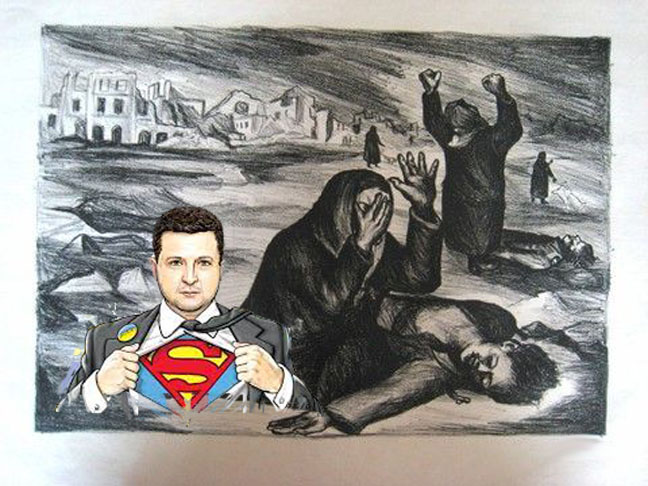
Putin Offers Reasonable Peace Terms to Ukraine; Zelenskiy Instantly Rejects Them; West Prepares for War.
OLIVER BOYD-BARRETT, JUN 14, 2024, https://oliverboydbarrett.substack.com/p/putin-offers-reasonable-peace-terms?utm_source=post-email-title&publication_id=305689&post_id=145649348&utm_campaign=email-post-title&isFreemail=true&r=cqey&triedRedirect=true&utm_medium=email
Putin’s Conditions for Peace
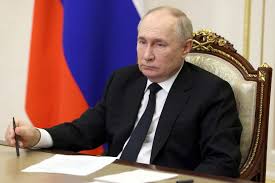
At a meeting yesterday, June 13th, with the board of the Russian Foreign Ministry, Putin has laid out Russia’s condition for peace in the Ukraine conflict. Although Ukraine’s foreign minister has already rejected these conditions as “absurd,” they are clearly very significant. Ukraine’s rejection comes from the representative of a government whose legislative record includes a prohibition of any kind of negotiation with the current Russian government and whose only recently stated terms of settlement are a complete Russian withdrawal from all the territories that Russia has occupied, payment of reparations and punishment for alleged war crimes.
Putin’s terms, on the other hand, build on the Istanbul peace agreement of March 2022, drafts of which were endorsed by both Russian and Ukrainian signatories, but which were then undermined by Washington through the agency of former British Prime Minister, Boris Johnson who told Ukraine that NATO could not support the terms of the agreement, that Ukraine should fight on, and that NATO would supply all the weapons that Ukraine would need to win the war.
Well, here we are, over two years later. Ukraine has clearly not won the war. NATO weapons have not been sufficient for it to win the war. The Ukrainian army is showing some indications of collapse, as is the nation of Ukraine itself, still under the charge of a President whose legitimate (and, indeed, constitutionally permitted) term of office has now expired and who has refused to call elections that would almost certainly have replaced him.

Why? Because Ukraine has become a mere vassal to Washington, with very little agency over how to fight the war and no agency whatsover in how to fund it; it has lost well over half a million men, dead and wounded, on the battlefields; millions have fled; Ukraine’s recent mobilization is highly unpopular; the country is subject, on a very regular basis, to missile and drone attacks across the entire territory of Ukraine that are highly damaging in their consequences for what remains of Ukrainian industry and commerce; the country has lost 20% of its territory and a good deal more of its wealth; the regime has suppressed political parties it does not like, and any free speech it does not like, even worship it does not like.
If that was not enough let us not forget that Zelinskiy, considered by Scott Ritter to be an agent of Western intelligence, came to power on the back of financial support from a Ukrainian oligarch, promising a peaceful settlement of the conflict with Russia.
Putin is saying to Ukraine that it could achieve an immediate ceasefire if it withdraws all its troops from the four former oblasts of Ukraine that Russia currently occupies and which Russia has integrated into the Russian Federation, and publicly abandons its quest to join NATO. It is clear that Russia would expect to retain Crimea, whose governing body in 2014 sought integration into the Russian Federation for protection from a virulently anti-Russian coup regime in Kiev. All these territories are either predominantly Russian-speaking or have substantial populations of Russian-speakers and whose cultures (including, formerly, Russian language mass media) are significantly associated with that of Russia. There is very little evidence of resistance from the populations of these territories to Russian control and numerous surveys have confirmed that the people of Crimea are content with their 2014 choice.
Long ago, Ukraine rejected the possibility of a far more peaceful outcome to the conflict which had started out, primarily, as a conflict between two antagonistic peoples who had been cobbled together first, by the Soviet Union and then, by Kiev. That peaceful outcome would have been a de-concentration of central power in Kiev – a form of federalization if you will – that would have allowed what were then the People’s Republics of Luhansk and Dontetsk (formed in the immediate aftermath of the illegal, US-supported, US-funded, violent and anti-democratic coup d’etat of 2014) greater autonomy within the umbrella of Ukraine.
An arrangement along these lines was agreed by Ukraine, Russia and, through OSCE (The Organization for Security and Co-operation in Europe), the European powers (notably Germany) in the so-called Minsk accords of 2014 and 2015, following defeat of Kiev by militia of the People’s Republics. These were never implemented. Both Ukrainian and European leaders are on record as saying that they never intended that Minsk should be implemented; that the intention of Kiev and Europe was to sign the Minsk accords simply to buy more time for Ukraine, with Western assistance, to rebuild its armed forces and to retake the People’s Republics. Indeed, the threat of imminent attack by Ukraine on the People’s Republics was one factor that compelled Putin to launch the Special Military Operation in February, 2022. Other factors included the rejection by the US to honor a commitment given Putin by Biden that the US would not establish nuclear weapons in Ukraine, and to enter into dialog about other such threats to Russian national security interests in Poland and Romania.
If Ukraine today withdraws from what it regards as Russian occupied territories and promises to forego efforts for membership of NATO, then an immediate ceasefire will come into effect. This would not be a “frozen conflict,” Putin has explained. It would be the start of a period of negotiations and in these negotiations Russia would still advance its other demands namely demilitarization of Ukraine, and its de-nazification, all this within a broader compass that would involve not just European but also other nations in discussions about the construction of, and guarantees for, a new European security architecture. On considering the outcome of the GT meeting (see below), I wonder whether Russian interests might actually be better served in the context of a complete victory, given that this would obviate, in the “dictation of terms” all questions of reparations and war crimes, and include the unfreezing and return of Russian assets in Europe and the US.
G7 Meeting
There have been at least two important outcomes of the G7 meeting that occurred in Apulia, Southern Italy, still in progress, from June 13 to June 15th. Significantly, Putin delivered his address (see above) to the Russian Foreign Ministry on June 13th. The meeting comes shortly before the so-called Swiss Peace Conference in Bürgenstock on June 15th and 16th, and ahead of the NATO Summit in Washington from July 9th to July 11th. It is relevant to note that the next meeting of the BRICS will be in October, in Kazan at which the agenda will include considerations of the admission of BRICS of over 30 countries that are interested in joining (which include Turkey, which would have to give up its membership of NATO were it to join), and the construction of an international financial order in which countries could trade freely outside the petrodollar zone (which BRICS member Saudi Arabia has just abandoned).
$50 Billion Loan for Ukraine
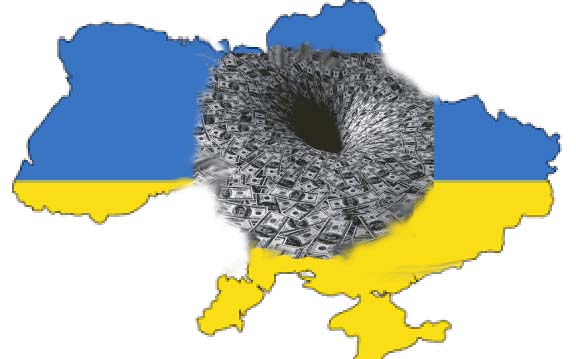
The New York Times report of July 14 specifies that the United States, the EU and other G7 countries plan to give Ukraine a $50 billion loan to help it buy weapons and begin to rebuild damaged infrastructure. The money will be repaid over time with the profits earned from Russian assets, some $300 billion, about two-thirds of which are in Europe. Interest on matured bonds is already creating a return of return, depending on the interest rate, of $3 billion to $4 billion a year. Rather than just providing Ukraine that relatively small yearly sum, the G7 countries have adopted the concept of loan. This could be provided to Ukraine by the end of this year. Ukraine’s current financial and military needs are estimated at about $100 billion a year.
The G7 countries have agreed to put up the money for the loan. At the moment, it seems that the European Union is prepared to put up half, about $25 billion to $30 billion, with the Americans and others putting up the rest. Since most of the assets are in Europe, the Europeans want to ensure that, as the proceeds are spent, European companies get a fair share, especially European arms manufacturers. Ukraine therefore will be the beneficiary of the profits from the Russian assets, but will not be responsible for repaying the loan.
Liability is expected to be shared among the countries that issue it. In effect, therefore, the collective West will use interest on Russian assets for the purposes of fighting and weaponizing the war, to pay off the country’s budgetary deficit (which might include, therefore, payments due on aid that Ukraine has so far received in the form of other loans from Western countries) and to pay for post-war reconstruction. This money would be lent to Ukraine but Ukraine would not be expected to pay it back because those countries through whom the loan is distributed will also guarantee it – in other words, would take responsibility of paying off the loan. My guess is that the ultimate intent is to pay it back, once again, by drawing on interest or on the frozen assets themselves.
The loan will go to Ukraine by the end of the year and will be used to support Ukraine militarily, including helping it establish arms factories on its territory; cover the country’s budgetary deficit; and in reconstruction of infrastructure. Disbursement is supposed to depend in part on Ukraine’s ability to use the money to good effect. We don’t yet know through which agencies the money will be disbursed and whether Ukraine would decide for itself how to use the money (surely not). Whether the legality of this procedure can be supported in countries whose financial industries are not held captive by Western politicians is questionable, as well as the willingness of third-party nations to park any assets of any kind in the countries or the financial institutions of the collective West.
Bilateral Security Agreement between US and Ukraine
US President Joe Biden and Ukrainian President Volodymyr Zelenskyy signed a 10-year bilateral security agreement on 13 June aimed at strengthening Kyiv’s defence capabilities. The United States is the 16th country with which Ukraine has signed a bilateral security agreement. The agreement has been promoted as a step towards “Ukraine’s eventual membership in the NATO alliance” (something which some representatives of NATO members have said would take up to thirty years) and as reaffirmation of US support for Kyiv. More specifically the agreement is intended to sustain significant military force and capabilities. It also states that the:
United States intends to provide long-term materiel, training, and advisory, technical, intelligence, security, defence-industrial, institutional, and other assistance to “develop Ukrainian security and defence forces that are capable of defending a sovereign, independent, democratic Ukraine and deterring future aggression.”
… in the event of an armed attack on Ukraine or the threat of such an attack, American and Ukrainian authorities will meet within 24 hours to consult and determine what extra defence necessities Ukraine has.
This latter is somewhat loose and probably meaningless language. The agreement falls well short of membership of NATO. It is time-limited and, even so, recognises that a future US president can withdraw from a security agreement with Ukraine since it does not provide for ratification by Congress.
Question about NATO membership
From before and during this conflict, the US and NATO, at least from 2008, have encouraged Ukraine to think that it can become a member of Ukraine or even be considered eligible for entry into a membership action plan (until recently a required step prior to membership). Yet this has been consistently refused. Membership of NATO was heavily promoted by Zelenskiy even though until 2014 majority opinion in Ukraine was firmly against this. Not only was the measure unpopular then and for many is still, but conditions of membership precluded Ukraine from joining, given that it is a country that is currently in a conflict. Many NATO members, wiser than the US, Germany, France and the UK, are reluctant to anger Russia over something – i.e. violation of Ukraine’s neutrality – that Russia has consistently argued is a Red Line for Russia.
But all NATO decisions are consensual. At NATO’s Bucharest summit later in 2008, member countries did not reach a consensus on Ukraine’s request.
In July 2023 NATO agreed to a new multi-year assistance programme to “facilitate the transition of the Ukrainian armed forces from Soviet-era to NATO standards and help rebuild Ukraine’s security and defence sector, covering critical needs like fuel, demining equipment, and medical supplies…and agreed to establish the new NATO-Ukraine Council. Allies also reaffirmed that Ukraine will become a member of NATO, and agreed to remove the requirement for a Membership Action Plan. This process in the past has effectively opened the door to membership. Yet membership has to be something on which all existing members must agree.
For a few years starting in 2010, Ukraine adopted a non-aligned status that was codified into law with Yanukovych as president, meaning it could not join military alliances. After the 2014 coup that ousted Yanukovych Ukraine scrapped the non-aligned status. Ukraine has since amended its constitution to explicitly spell out its desire to join NATO, and joining NATO remains the official policy of Ukraine.
Swiss Peace Conference: What is Victory
Ukraine
For Zelenskiy – and this is the position he has taken in advance of the Swiss co-called Peace Conference – the only acceptable peace terms are a complete Russian withdrawl to 1991 borders, payment of reparations, and punishment for what he says are Russian war crimes. We should note in passing that it seems that Zelenskiy’s own office has been at least as influential in determining the framework of this meeting as has the Swiss government, and that its most important objective has probably to do with providing a stage for the collective West and other world leaders’ endorsement of Zelenskiy as a legitimate leader of Ukraine.
160 countries were invited, 90 will attend. Those that will not attend include the US President (who is sending Vice President Kamala Harris and national security adviser Jake Sullivan), Russia (which was not invited; although there was talk of presenting Russia with the conclusions of the conference), China, Brazil nor I believe, India’s Prime Minister Modi. Of the 10 points in the Ukrainian government’s peace plan only three will be formally discussed: nuclear safety, food security (i.e. Ukraine’s ability to export its food by sea) and the return of Ukrainian children transferred to Russia. Zelenskiy’s other demands for complete Russian military withdrawal, war crimes trials, reparations for war damages, and security guarantees have all been omitted from the agenda.
In an article today in Responsible Statecraft, Anatol Lieven (Lieven) notes that a previous Western attempt to rally support in the Global South for Ukraine’s “peace plan” at a confidential meeting in Riyadh in December 2023 was snubbed by most invitees.
Lieven argues that “for Ukraine to recover any significant portion of the land it has lost to Russia now looks highly unlikely given the balance of military and economic strength between the two sides, and the complete failure of last year’s Ukrainian offensive”.
Ukraine’s demand for war crime trials (not to be discussed at the Swiss conference) now has to be set against the contributions of the US and EU to Israeli crimes in Gaza, including genocide, charges of which have now been endorsed, or on the path towards being endorsed, by (1) a United National investigative committee headed by the UN head of human rights (see article today by Andre Damon (Damon) – UN commission finds Israel guilty of “extermination,” “crimes against humanity,” killing Palestinians and Israeli hostages, (2) the International Criminal Court, and (3) the International Court of Justice. U.S. rejection of the right of the International Criminal Court to investigate and judge these crimes, and U.S. previous rejection of the jurisdiction of the ICC over American citizens has long subverted Washington’s moral authority or credibility in this area.
Russia
Putin has just told us what Russian strategy is. Ukraine can settle now by conceding what was always the obvious solution – the integration of the four oblasts of Luhansk, Donetsk, Zapporizhzhia and Kherson into the Russian Federation, and acceptance of Crimea (whose people specifically asked to be integrated into the Federation) as Russian. Long ago, Ukraine missed its chance, under Poroshenko and the threats to Poroshenko from Ukrainian Nazi militia such as Azov, simply to allow Luhansk and Donetsk greater autonomy within Ukraine. Ukraine has always been at least two nations – one looking towards the West, the other looking eastwards – governed by an over-centralized State.
Ukraine is nowhere near accepting Russian conditions. Zelenskiy has even legislated against the possibility that there could ever be negotiations with the current Putin-led Russian government. Putin has also indicated that Zelenskiy is an unacceptable interlocuter for Russia as he is illegitimate. Meantime, even as there are indications that the collective West is getting tired of Zelenskiy, of his erratic behavior and his ever strident demands, Zelenskiy is ever more dependent on the collective West for his own domestic security and perceived legitimacy. He is, in fact, an illegimate and unelected President, whose regime suppresses political parties, free speech and religious affiliation.
Assuming that neither that Zelenskiy nor the West show serious interest in Putin’s most recent statement of peace conditions, then I propose we should take Putin at his word, namely, that Russia will continue to fight and to move westwards until Ukraine is defeated and forced to accept terms. At this point it is not even certain that there would still be a Ukraine.
Why bet on a loser? Australia’s dangerous gamble on the USA
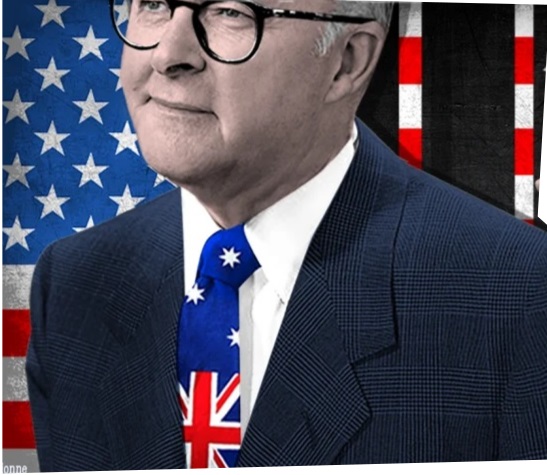
June 15, 2024, by: The AIM Network, By Michael Williss, https://theaimn.com/why-bet-on-a-loser-australias-dangerous-gamble-on-the-us/
A fresh warning that the US will lose a war with China has just been made by a US data analytics and military software company with US Department of Defense contracts.
It seems no-one is prepared to back the US to win a war with China, so why is Australia going all-out to align itself with provocative moves and hostility from the US directed at China?
Govini released its latest study of US capacity to fight China in June. Its annual reports measure the performance of the US federal government, looking at 12 top critical national security technologies through the lens of acquisition, procurement, supply chain, foreign influence and adversarial capital and science and technology.
It concluded that it is nearly impossible for the US to win a war against the PLA if a conflict were to break out between the two global superpowers.
The report also found that China has more patents than the US in 13 of 15 critical technology areas, further demonstrating how the US is falling behind in AI development.
“This year’s report also highlighted another reason a US conflict with China could be unwinnable: the very real possibility of parts scarcity.”
It identified serious risks within seven major DoD programs, including the cornerstone of AUKUS, namely the Virginia-class submarines. Not that this will worry the cargo-culters in Canberra who keep throwing billions at the fraught arrangement.
Another factor was China’s lead in the global supply chains.
-ADVERTISEMENT-
Govini CEO Tara Murphy Dougherty said:
”China still has a dangerously high presence in US government supply chains. The Departments of the Navy and Army showed a decreasing reliance on Chinese suppliers over the past year, however, the Department of the Air Force showed a 68.8 percent increase in the usage of Chinese suppliers.”
Govini’s report adds to a number of similar scenarios in recent years, starting with the headlined warning by The Times on May 16, 2020 “US ‘would lose any war’ fought in the Pacific with China.”
In the New Atlanticist, Lieutenant Colonel Brian Kerg, an active-duty US Marine Corps operational planner, critiqued biases in modern US war games, in which military planners command opposing armed forces in simulated warfare. He writes that instead of a short, sharp war over Taiwan with a win for the US, as predicted by war games, the greater likelihood is one of a years-long war with China with uncertain outcomes. One of those, too terrible to contemplate, must be the likelihood of Chinese retaliation against Australia for joining the US, for being fully interoperable with its military, and the consequent rubbleisation of Australian cities and attacks on US military bases here.
Retired US Army Colonel Dr John Mauk agrees that any conflict over Taiwan will almost certainly be a prolonged war, and he says that it would be one that favours China. He writes:
“U.S. military forces are too small, their supply lines are too vulnerable, and America’s defense industrial capacity is far too eroded to keep up with the materiel demands of a high-intensity conflict. Another critical factor undermining U.S. capacity to sustain a war is that Americans lack the resilience to fight a sustained, brutal conflict.”
By contrast, China is well-postured to sustain a protracted high intensity war of attrition.
He says that the current political divide in the US impedes its ability to respond to national security crises, and that:
“Americans in general are unprepared for, unwilling, or incapable to perform military service. Short of reinstituting a draft, U.S. military services cannot attract or retain enough manpower quickly enough to sustain a fight with China.”
Former US assistant secretary of state for Europe and Eurasia, A. Wess Mitchell, believes that “United States is a heartbeat away from a world war that it could lose.” He writes that:
“… today’s U.S. military is not designed to fight wars against two major rivals simultaneously. In the event of a Chinese attack on Taiwan, the United States would be hard-pressed to rebuff the attack while keeping up the flow of support to Ukraine and Israel.”
Comparing US and Chinese naval growths, Mitchell says that the US is no longer able to “outproduce its opponents”. With US debt already in excess of 100% of GDP, he says that the debt loads incurred through war with China would risk catastrophic consequences for the U.S. economy and financial system.
He raises the possibility of a Chinese fire-sale of US debt:
“China is a major holder of U.S. debt, and a sustained sell-off by Beijing could drive up yields in U.S. bonds and place further strains on the economy.”
Hillary Clinton raised this quandary facing the US with then PM Kevin Rudd in 2010 when she asked him “How do you deal toughly with your banker?” It is a question that the US has yet to find an answer to.
And questions there are. Harlan Ullman, a senior adviser at the Atlantic Council, opens a January 2024 article with the observation that:
“Since World War II ended, America has lost every war it started. Yes, America has lost every war it started – Vietnam, Afghanistan and the second Iraq War.”
He sounds a warning:
UN Security Council Adopts Gaza Ceasefire Resolution
The US claims Israel has accepted the proposal, but Netanyahu continues to reject the idea of a permanent ceasefire
by Dave DeCamp June 10, 2024, https://news.antiwar.com/2024/06/10/un-security-council-adopts-gaza-ceasefire-resolution/
On Monday, the UN Security Council adopted a US-drafted ceasefire resolution for Gaza based on a proposal recently outlined by President Biden. Fourteen members of the 15-member body voted in favor, and Russia abstained.
The US claims Israel has accepted the proposal, but Israeli Prime Minister Benjamin Netanyahu has publicly rejected it and continues to rule out the idea of a permanent ceasefire. Russia said it couldn’t support the resolution because it wasn’t clear what Israel had agreed on and that the language was too “vague.”
While Hamas hasn’t formally responded to President Biden’s proposal, it welcomed the ceasefire resolution and released a statement showing strong support. The Palestinian group said it was ready to “enter into indirect negotiations on the implementation of these principles.”
The resolution outlines a three-phase deal. The first phase includes an “immediate, full, and complete ceasefire with the release of hostages including women, the elderly, and the wounded, the return of the remains of some hostages who have been killed, and the exchange of Palestinian prisoners.”
The first phase would also involve an Israeli withdrawal from densely populated areas of Gaza, the return of displaced Palestinians, and a significant increase in humanitarian aid.
The two sides are supposed to negotiate a permanent ceasefire during the first phase, and the second phase would see a permanent end to hostilities “in exchange for the release of all other hostages still in Gaza, and a full withdrawal of Israeli forces from Gaza.” The third phase would start “a major multi-year reconstruction plan for Gaza, and the remains of any Israelis in Gaza would be returned to Israel.
The resolution calls on Israel and Hamas to implement the deal “without delay and without condition.” US officials are claiming Hamas is the only thing standing in the way of a deal despite Netanyahu reaffirming his opposition to a permanent ceasefire.
“My message to governments throughout the region, to people throughout the region, is – if you want a ceasefire, press Hamas to say ‘yes,’” Secretary of State Antony Blinken told reporters during a visit in Cairo.
US officials told NBC News that the Israeli operation in Nuseirat that killed over 200 Palestinians and freed four Israeli hostages makes a ceasefire deal less likely since it has emboldened Netanyahu. While claiming it has been pushing for a ceasefire, the US supported the massacre by providing intelligence.
Top civil servant joins EDF after running department that struck nuclear deal
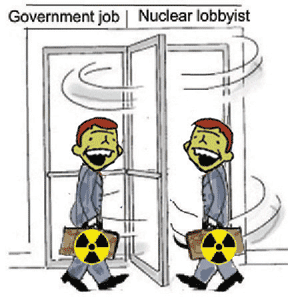
Alex Chisholm, who led business office during Hinkley Point C negotiations, appointed UK chair of energy firm
Rowena Mason Guardian, Whitehall editor, Wed 12 Jun 2024
One of the UK’s most senior civil servants, Alex Chisholm, has been revealed as the new UK chair of the energy company EDF, after having previously run the department that struck a deal for it to build a new nuclear power station.
Chisholm was permanent secretary at the Cabinet Office, and before that led the business department, which worked on the government deal for EDF to go ahead with the Hinkley Point C nuclear plant in Somerset. The agreement was struck in 2016 with UK bill payers bearing the cost of the construction over a 35-year period.
The long-delayed project’s costs have soared from an estimated £18bn to at least £31bn and it is due to be completed in 2031 – about 14 years after EDF thought it would be up and running.
The French state-owned company is a specialist in nuclear power, and one of the “big six” energy providers that have been criticised for huge profits during the energy crisis sparked by the war in Ukraine.
Chisholm’s departure is one of a number of high-profile exits from the civil service before a likely change of governing party. Alex Aiken, a former longstanding head of government communications, recently left Whitehall for a job as an adviser on communications to the government of the United Arab Emirates.
There is also speculation about the future of Simon Case, the cabinet secretary and former royal aide installed by Boris Johnson, given incoming prime ministers often want their own preferred candidate in the job.
Chisholm’s EDF role was approved by the watchdog on post-government jobs, known as the Advisory Committee on Business Appointments. But the watchdog said he must wait three months after departing government to take up the job and observe a ban on lobbying the government or involvement in negotiating government contracts for two years after leaving office.
The watchdog said: “In 2016, his department was responsible for the decision on finalising the first contract for difference [a pricing mechanism], with respect to EDF and the construction of Hinkley Point C. However, this was ultimately a decision for the secretary of state and followed the 2014 approval from the European Commission and was based on terms agreed then, 10 years ago.
“Significantly, due to the period of time that has elapsed, the committee did not consider Sir Alex could reasonably be seen to have influenced this decision in anticipation of an offer of work a decade later.”
Chisholm said his appointment came “at a time of great change and opportunity in the energy sector”……….https://www.theguardian.com/politics/article/2024/jun/11/top-civil-servant-edf-department-nuclear-deal-alex-chisholm
Ukraine is a ‘gold mine’ – US senator
https://swentr.site/news/599068-ukraine-gold-mine-us/ 10 June 24
Allowing a Russian victory in the conflict would deprive America of access to vast mineral resources, Lindsey Graham says.
Washington “cannot afford” to allow Russia to achieve victory in the Ukraine conflict as this would mean losing direct access to vast mineral assets, US Senator Lindsey Graham (R-South Carolina) has said.
In an interview with ‘Face the Nation’ on CBS on Sunday, Graham accused Russian President Vladimir Putin of being a “megalomaniac” who is attempting to “re-create the Russian Empire by force of arms,” starting with Ukraine. He further claimed that if Moscow wins the current conflict, it will then take over Ukraine’s wealth and share it with China. Graham described that prospect as “ridiculous,” suggesting it would be better if this “gold mine” were available to the US instead.
They’re sitting on 10 to $12 trillion of critical minerals in Ukraine. They could be the richest country in all of Europe… If we help Ukraine now, they can become the best business partner we ever dreamed of, that $10 to $12 trillion of critical mineral assets could be used by Ukraine and the West, not given to Putin and China,” Graham stated.
Graham, a longtime Russia hawk and one of the staunchest supporters of Ukraine in the US Senate, also called on the West to speed up the seizure of $300 billion in frozen Russian sovereign assets. He reiterated his demands for Russia to be designated “a state sponsor of terrorism” under US law, a suggestion which earlier this year landed the senator on Moscow’s list of extremists and terrorists.
One day prior to Graham’s remarks, Hungarian Prime Minister Viktor Orban argued that the West wants Kiev to win the conflict with Russia so that it can control Ukraine’s wealth. In an interview with Hir TV, Orban accused the US and its allies of seeing Ukraine as a potentially huge source of revenue which they will be able to control, provided Russia is defeated. He also said the conflict is a major boost for Western “arms suppliers, creditors, and speculators,” arguing that this is the reason it has dragged on for so long.
Moscow has repeatedly stated throughout the conflict that its goals are to protect the largely Russian-speaking population of Donbass against persecution by Kiev, and to ensure Russia’s own security in light of NATO expansion toward its borders. Moscow has never spoken of any intention to take over Ukraine’s resources, but has repeatedly stressed that the former Ukrainian regions which have chosen to join Russia, including Crimea, must remain under its control.
Why a substantive and verifiable no-first-use treaty for nuclear weapons is possible
a no-first-use treaty could prohibit verbal threats of first use of nuclear weapons by the governments and militaries of states parties. Threatening to use nuclear weapons first is a means of sending a coercive signal. Such threats can be a major cause of escalation of nuclear confrontation and constitute a dangerous nuclear risk that must be reduced. A no-first-use treaty can consider any verbal threat of first use of nuclear weapons as a violation that is not only harmful but also detectable. A clause prohibiting the threat of first use of nuclear weapons, if included in the treaty, is verifiable. With a no-first-use treaty in place, if a state party intends to threaten to use nuclear weapons first would mean it can only withdraw from the treaty or violate its no-first-use commitment, raising the cost of signaling a nuclear threat. In this way, a no-first-use treaty could play a significant role in nuclear risk reduction
By Li Bin | June 4, 2024 https://www.hindustantimes.com/world-news/us-news/us-issues-major-nuclear-weapons-alert-amid-fears-of-all-out-war-if-that-day-comes-101717854501474.html
Since conducting its first nuclear detonation in 1964, China has pledged to never be the first to use nuclear weapons and has urged other nuclear weapon states to make the same commitment by proposing that they negotiate a no-first-use treaty.
In the United States, there have also been domestic policy initiatives, including in 2017 when US Vice-President Joe Biden commented that “deterring—and if necessary, retaliating against—a nuclear attack should be the sole purpose of the US nuclear arsenal.” However, successive US administrations have failed to formally adopt a “sole-purpose” policy, nor have they responded positively to China’s no-first-use proposals. And there is little hope that President Biden will move forward with this policy before the US presidential election in November.
But silence is consent: Both presidential candidates, Biden and Donald Trump, need now to explain to their domestic and international audiences why the United States should not adopt the “sole-purpose” policy and why they refused as presidents to negotiate a no-first-use treaty with China.
Criticism. The “sole purpose” and “no-first-use” policies may differ in some details, but in general they are very similar (and I don’t distinguish between the two here). There are two sets of reasons for criticizing the idea of no-first-use. First, for some, a no-first-use policy is not considered credible or verifiable. Others argue that the United States must retain the option of first use of nuclear weapons and that a no-first-use policy is not in the United States’ interest. This second argument, however, should be judged and debated by US experts and lawmakers.
Continue readingNuclear watchdog votes to censure Iran for non-cooperation with inspectors
Clash between Iran and west over nuclear programme looms as US drops objections and joins European states condemning Tehran
Patrick Wintour, 6 June 24, https://www.theguardian.com/world/article/2024/jun/05/iaea-un-nuclear-watchdog-iran-vote
A fresh confrontation between Tehran and the west is looming over Iran’s nuclear programme after the board of the UN nuclear watchdog voted heavily to censure the country for its repeated failure to cooperate with UN nuclear inspectors.
The vote by the IAEA (International Atomic Energy Agency) members was passed with 20 represented countries in favour, two against, and 12 abstentions. The two countries to vote against were Russia and China.
It came after the US dropped its objections to the censure and joined the European countries condemning Iran’s failure to cooperate for years. The Biden administration had been reluctant to take the step, wishing not to open up another conflict with Iran in the Middle East, but the Europeans insisted the integrity of the nuclear non-proliferation treaty was at stake.
In backing the motion, the US called for a longer-term strategy to be developed towards Iran’s nuclear programme, especially since many of the restrictions placed on Iran in the original 2015 nuclear deal will be lifted next year. The last censure motion against Iran 19 months ago led to Iran announcing that it was going to enrich uranium to 60% purity – close to weapons grade – at its Fordow fuel enrichment plant.
Iran signed a nuclear deal in 2015, the joint comprehensive plan of action (JCPoA) that saw western economic sanctions lifted in return for strong controls over its civil nuclear programme. But the country has gradually reduced inspectors’ access to its nuclear sites and also vastly increased its stock of highly enriched uranium in breach of the limits set. It says it did so in response to Donald Trump unilaterally pulling the US out of the agreement in 2018, a move that is widely seen to have undercut advocates of western engagement inside Iran.
Iran says a fatwa (Islamic edict or legal decree) forbids possession of nuclear weapons, and in recent days it has disowned remarks made by some senior politicians arguing Iran should develop a bomb.
In a joint statement to the IAEA board, the UK, France and Germany – the three European signatories to the agreement – said: “Iran now possesses 30 times the JCPoA limit of enriched uranium and its stockpile of high enriched uranium up to 60% has continued to grow significantly. Iran now has the approximate amount of nuclear material from which the possibility of manufacturing a nuclear explosive device cannot be excluded.”
It added that the IAEA had “lost continuity of knowledge in relation to the production and inventory of centrifuges, rotors and bellows, heavy water and uranium ore concentrate”.
The IAEA director general, Rafael Grossi, had visited Iran before the quarterly board meeting in a bid to negotiate improved access, but the death of the Iranian president, Ebrahim Raisi, led to the discussions freezing.
In a joint statement issued before the vote, China, Iran and Russia called for fresh talks to revive the nuclear deal, saying it “was time for the western countries to show their political will, to refrain from the endless cycle of escalation that has been going on for almost the last two years. Passing of the resolution was a mistake that will only lead to confrontation.”
The Israeli foreign minister, Israel Katz, hailed the IAEA decision, saying: “This is the first resolution in 19 months on Iranian violations, paving the way for further actions against Iran’s nuclear activities … The free world must stop Iran now – before it’s too late.”
Iran’s specific countermeasures may be delayed by the country’s presidential election on 28 June, since candidates have different views on the wisdom of signing the deal in the first place.
In a joint statement after the passage of the resolution, France, Germany and the UK said: “The IAEA board will not sit idly by when Iran challenges the foundations of the non-proliferation system and undermines the credibility of the international safeguards regime.
“Iran must cooperate with the agency and provide technically credible explanations which satisfy the agency’s questions.
“This resolution supports the agency to pursue its dialogue with Iran to clarify all outstanding safeguards issues, while setting the stage for further steps to hold Iran to account if it fails to make concrete progress.”
They added it was still open to Iran to cooperate.
Putin warns West over Ukraine armaments, nuclear arsenal in news conference
Russia’s president reiterated that attacking NATO countries was a ‘crazy’ idea but warned against Ukraine interference.
Russian President Vladimir Putin has warned that his country would not rule out using nuclear weapons if its sovereignty or territory were threatened.
On Wednesday, Putin met in person with leaders from international news agencies, including Reuters and The Associated Press, for the first time since Russia launched its full-scale invasion of Ukraine in 2022.
He answered questions ranging from the threat of nuclear war to possible repercussions for countries that support Ukraine’s efforts to launch attacks within Russian territory.
When asked about the prospect of using Russia’s nuclear arsenal, Putin said it was not out of the question.
“For some reason, the West believes that Russia will never use it,” Putin responded, pointing towards the country’s 2020 nuclear doctrine
It authorises the Russian government to consider nuclear options if a weapon of mass destruction is used against the country or if “the very existence of the state is put under threat”.
“We have a nuclear doctrine. Look what it says. If someone’s actions threaten our sovereignty and territorial integrity, we consider it possible for us to use all means at our disposal. This should not be taken lightly, superficially.”
“You should not make Russia out to be the enemy. You’re only hurting yourself with this, you know?” Putin said at the news conference.
Article 5 of the treaty establishes that an attack against one country in the organisation is considered an attack against all members.
Putin has repeatedly dismissed the idea of launching an attack on NATO, despite tensions with its member states.
But Ukrainian President Volodymyr Zelenskyy told CBS News earlier this year that Putin’s “aggression” could reach Europe, prompting a NATO response. And in April, Germany’s top military leader said “an attack against NATO soil could be possible” in five to eight years.
Still, Putin reiterated his stance on Wednesday. “They thought that Russia wanted to attack NATO,” he said. “Have you gone completely crazy? That is as thick as this table. Who came up with this? It is just complete nonsense, you know? Total rubbish.”
Putin issues warning over Russia strikes
However, Putin also hinted at the possibility of heightened tensions – and even “asymmetrical” military steps – if Western countries like Germany and the United States were to supply Ukraine with weapons used on Russian soil.
He explained that the use of certain weapons, including the use of advanced missile technology, would be tantamount to participation in Russia’s war with Ukraine.
“That would mark their direct involvement in the war against the Russian Federation, and we reserve the right to act the same way,” he said.
“If they consider it possible to deliver such weapons to the combat zone to launch strikes on our territory and create problems for us, why don’t we have the right to supply weapons of the same type to some regions of the world where they can be used to launch strikes on sensitive facilities of the countries that do it to Russia?”
His remarks came after Germany decided in January to supply Leopard 2A6 battle tanks to Ukraine. And last month, both Germany and the US agreed to allow Ukraine to use certain missiles to hit targets inside Russia.
The Associated Press reported earlier on Wednesday that Ukraine has indeed used US weapons to strike within Russia, though Washington restricts which arms can be used.
Advanced weapons like the Army Tactical Missile System (ATACMS) and other long-range missiles remain off-limits.
Asked about the prospect of a wider range of Western missiles being approved for Ukraine’s use in Russia, Putin was defiant: “We will improve our air defence systems and destroy them.”
Peace talks without Russia ‘laughable’ – John Mearsheimer
https://www.rt.com/russia/598638-mearsheimer-zelensky-peace-talks/ 3 June 24
Vladimir Zelensky’s Swiss ‘peace conference’ will achieve nothing without Moscow’s involvement, the professor argues.
Vladimir Zelensky’s so-called ‘peace conference’ in Switzerland is “not serious” – only face-to-face talks between Moscow and Kiev will settle the Ukraine conflict, American political scientist John Mearsheimer has said.
The Ukrainian leader’s summit is scheduled to take place on June 15-16 at the Burgenstock Resort near Lucerne. Russia has not been invited to the conference, China has declined to attend and US President Joe Biden is reportedly skipping the event to attend a fundraising gala with George Clooney in Hollywood.
“This is not serious,” Mearsheimer told American podcast host Daniel Davis this week. “If you’re going to have a meaningful set of peace negotiations where you’re going to try and settle this war, it’s going to have to involve the Ukrainians directly negotiating with the Russians.”
Since the conflict began in 2022, Mearsheimer noted that only two peace initiatives have made “substantial progress” – Turkish-brokered talks in Istanbul that March, and separate back-channel negotiations mediated by then-Israeli Prime Minister Naftali Bennett.
Under preliminary terms agreed in Istanbul, Ukraine would have become a neutral state with a restricted military in exchange for international security guarantees. However, then-British Prime Minister Boris Johnson convinced Kiev to withdraw from the talks, according to multiple media reports and an admission by David Arakhamia, who headed the Ukrainian delegation.
Bennett has also claimed that any chance at peace in 2022 was torpedoed by the US and its allies, which ordered Ukraine to “keep striking [Russian President Vladimir] Putin” and “blocked” the Istanbul agreement.
Zelensky will likely use this month’s conference to promote his proposed roadmap for ending the conflict with Russia. The ten-point document demands a complete withdrawal of Russian forces from all territories Ukraine considers its own, for Moscow to pay reparations, and for Russian officials to present themselves to war crimes tribunals.
Russia has dismissed the plan as “detached from reality.” Speaking to journalists last month, President Vladimir Putin stated that while Moscow is ready for serious talks, Kiev plans to “gather as many nations as possible, convince everyone that the best proposal is the terms of the Ukrainian side, and then send it to us in the form of an ultimatum.”
“This conference is completely without prospects… because getting together and seriously discussing the Ukraine conflict without [Russia’s] participation is absurd,” Kremlin spokesman Dmitry Peskov told RT on Tuesday.
“The Ukrainians and the Russians have to be face to face talking about what will be an acceptable deal to both sides,” Mearsheimer told Davis. “The idea that you can have peace negotiations in Switzerland without the Russians is laughable.”
A professor of political science at the University of Chicago, Mearsheimer has drawn intense criticism in the West for arguing that NATO’s post-Cold War expansion was the primary cause of the Ukraine conflict. Mearsheimer has argued since 2014 that “encouraging the Ukrainians to play tough with the Russians” would end in their country getting “wrecked.”
Senior U.S. Diplomats, Journalists, Academics and Secretaries of Defense Say: the U.S. Provoked Russia in Ukraine
Progressive Memes, by Donald A. Smith, PhD 3 June 24
It took some years for Americans to realize they’d been lied to about the war in Vietnam. Thanks to the publication of the Pentagon Papers, and thanks to the antiwar movement, Americans eventually learned about the injustices and failures of that war.
Likewise, it took several years after the starts of the wars in Iraq and Afghanistan for Americans to realize they’d been lied to about those wars as well.
Americans are just now starting to realize that they’ve been lied to about the war in Ukraine. (The propaganda effort has been quite effective, with the New York Times, in particular, acting as a mouthpiece for the government’s position.) More and more mainstream publications are exposing the lies, and a majority of Americans now oppose further arming of Ukraine.
This essay is a summary of what the U.S. government has been hiding about the war in Ukraine, with links to sources for further information.
According to Brown University’s Costs of War project, U.S. military actions since 9/11 directly killed over 900,000 people, with an additional 3.5 million people dying from indirect effects. The wars cost Americans at least $8 trillion and displaced over 38 million people from their homes. The U.S. spends over a trillion dollars a year on its military, if you count all expenditures.
If we go back to the 1960s, the number killed by U.S. wars includes the several million killed in the Vietnam war, the approximately 1 million killed by U.S. support for Indonesian military’s attacks on left wing groups, and the hundreds of thousands, at least, killed in proxy wars and government overthrows in Latin America.
The wars, overthrows, and associated sanctions caused mass migrations worldwide — particularly in Europe and at the southern U.S. border — and destabilized politics. Yet almost nobody (except for whistleblowers) was held accountable for these disasters; indeed, many of the same people are in Congress or work for the government or the weapons industry.
Moreover, the U.S. government lied about almost all the wars — in particular, about the wars in Vietnam, Iraq, and Afghanistan, but also about the war in Yugoslovia, as documented in Harper’s Magazine and here. (In short, the Kosovo Liberation Army that the U.S. supported was, basically, a terrorist organization funded by the CIA, and U.S. propaganda greatly overstated the nobility of the U.S. intervention.)
So, it should come as no surprise that our government is lying now about the war in Ukraine. Specifically, claims by President Biden and others that the Russian invasion was “unprovoked” are greatly exaggerated.
Read what these diplomats, secretaries of Defense, journalists, academics, and politicians have to say:
Former U.S. Ambassador to the USSR Jack Matlock says in Ukraine: Tragedy of a Nation Divided:
“Interference by the United States and its NATO allies in Ukraine’s civil struggle has exacerbated the crisis within Ukraine, undermined the possibility of bringing the two easternmost provinces back under Kyiv’s control, and raised the specter of possible conflict between nuclear-armed powers. Furthermore, in denying that Russia has a ‘right’ to oppose extension of a hostile military alliance to its national borders, the United States ignores its own history of declaring and enforcing for two centuries a sphere of influence in the Western hemisphere.”
Diplomat and historian George Kennan, quoted in Thomas Friedman’s This Is Putin’s War. But America and NATO Aren’t Innocent Bystanders, discussing NATO expansion:
“I think it is the beginning of a new cold war. I think the Russians will gradually react quite adversely and it will affect their policies. I think it is a tragic mistake. There was no reason for this whatsoever. No one was threatening anybody else. This expansion would make the founding fathers of this country turn over in their graves.”
William J. Perry, Secretary of Defense under President Bill Clinton, wrote How the US Lost Russia – and How We Can Restore Relations in Sept. of 2022:
“Many have pointed to the expansion of NATO in the mid-1990s as a critical provocation. At the time, I opposed that expansion, in part for fear of the effect on Russian-U.S. relations….Still, the first step in finding a solution [to the war in Ukraine] is acknowledging the problem and recognizing that our actions have contributed to that hostility.”
Robert Gates, Secretary of Defense under George W. Bush, in We Always Knew the Dangers of NATO Expansion:
“[T]rying to bring Georgia and Ukraine into NATO was truly overreaching, … recklessly ignoring what the Russians considered their own vital national interests.”
Ambassador Michael Gfoeller and David H. Rundell: in Newsweek‘s Lessons From the US Civil War Show Why Ukraine Can’t Win:
“Before the war, far right Ukrainian nationalist groups like the Azov Brigade were soundly condemned by the US Congress. Kiev’s determined campaign against the Russian language is analogous to the Canadian government trying to ban French in Quebec. Ukrainian shells have killed hundreds of civilians in the Donbas and there are emerging reports of Ukrainian war crimes. The truly moral course of action would be to end this war with negotiations rather than prolong the suffering of the Ukrainian people in a conflict they are unlikely to win without risking American lives.”
Christopher Caldwell: in the New York Times‘ The War in Ukraine May Be Impossible to Stop. And the US Deserves Much of the Blame:
“In 2014 the United States backed an uprising – in its final stages a violent uprising – against the legitimately elected Ukrainian government of Viktor Yanukovych, which was pro-Russian.”
Chas W. Freeman, former U.S. Ambassador to Saudi Arabia and a Lifetime Director of the Atlantic Council, says in The Many Lessons of the War in Ukraine: “Less than a day after the US-engineered coup that installed an anti-Russian regime in Kyiv in 2014, Washington formally recognized the new regime… The United States and NATO began a multi-billion-dollar effort to reorganize, retrain, and re-equip Kyiv’s armed forces. The avowed purpose was to enable Kyiv to reconquer the Donbas and eventually Crimea…. Crimea was Russian-speaking and had several times voted not to be part of Ukraine.” And: “From 2014 to 2022, the civil war in Donbas took nearly 15,000 lives.” Freeman says that the U.S. undermined several possible peace deals. “Ukraine is being eviscerated on the altar of Russophobia” but Russia has not, after all, been weakened. See this.
William J. Burns, then Ambassador to Russia, current director of the CIA, wrote in a 2008 cable, as revealed by Wikileaks:
Foreign Minister Lavrov and other senior officials have reiterated strong opposition, stressing that Russia would view further eastward expansion as a potential military threat. NATO enlargement, particularly to Ukraine, remains “an emotional and neuralgic” issue for Russia, but strategic policy considerations also underlie strong opposition to NATO membership for Ukraine and Georgia. In Ukraine, these include fears that the issue could potentially split the country in two, leading to violence or even, some claim, civil war, which would force Russia to decide whether to intervene.
MFA: NATO Enlargement “Potential Military Threat to Russia”
Thomas Friedman: in the New York Times‘ This Is Putin’s War. But America and NATO Aren’t Innocent Bystanders:
“The mystery was why the US – which throughout the Cold War dreamed that Russia might one day have a democratic revolution and a leader who, however haltingly, would try to make Russia into a democracy and join the West – would choose to quickly push NATO into Russia’s face when it was weak. A very small group of officials and policy wonks at that time, myself included, asked that same question, but we were drowned out.”America and NATO Aren’t Innocent Bystanders [from the title]
U.S. Senator Chris Murphy said in an interview in 2014:
“With respect to Ukraine, we have not sat on the sidelines. We have been very much involved. Members of the Senate have been there, members of the State Department who have been on the square …. I really think that the clear position of the United States has been in part what has helped lead to this change in regime…. I think it was our role, including sanctions and threats of sanctions, that forced, in part, Yanukovich from office.”
Henry Kissinger in an interview with The Wall Street Journal:
“We are at the edge of war with Russia and China on issues which we partly created, without any concept of how this is going to end or what it’s supposed to lead to.”
Neoconservative Robert Kagan writes in an otherwise hawkish Foreign Affairs essay from May, 2022, The Price of Hegemony: Can America Learn to Use its Power?:
“Although it is obscene to blame the United States for Putin’ inhumane attack on Ukraine, to insist that the invasion was entirely unprovoked is misleading. …. the invasion of Ukraine is taking place in a historical and geopolitical context in which the United States has played and still plays the principal role, and Americans must grapple with this fact.”
Fiona Hill, former official at the U.S. National Security Council during the administration of George W. Bush, in the New York Times’ Putin has the U.S. right where he wants it:
“At the time, I was the national intelligence officer for Russia and Eurasia, part of a team briefing Mr. Bush. We warned him that Mr. Putin would view steps to bring Ukraine and Georgia closer to NATO as a provocative move that would likely provoke pre-emptive Russian military action. But ultimately, our warnings weren’t heeded.”
Pope Francis in Yahoo News’ Pope Francis Says NATO Started War in Ukraine by “Barking at Putin’s Door”:
The real “scandal” of Putin’s war is NATO “barking at Putin’s door.”
James W. Carden, journalist and former adviser to the US-Russia Bilateral Presidential Commission at the U.S. Department of State, in Simone Weil Center’s America’ Crisis of Reality and Realism: A Symposium (Part I):
“The de facto alliance of Ukrainian westernizing liberals and the fascist Ukrainian far-Right which together drove the so-called Revolution of Dignity in 2013-14 ignored their obligation to respect the democratic process.”
John J. Mearsheimer, University of Chicago
“The West is leading Ukraine down the primrose path, and the end result is that Ukraine is going to be wrecked.” (2015)
Former Ambassador Thomas Graham, who served under six U.S. presidents and is a member of the Council on Foreign Relations, wrote in Was the Collapse of US-Russia Relations Inevitable?: “US hubris and Russian paranoia undermined partnership.” After the collapse of the Soviet Union, a weakened Russia sought closer ties to the West and even helped George W. Bush fight the war on terror. But instead of helping Russia fight Chechen rebels, which Russia considered to be terrorists, the U.S. lent support to those rebels. The U.S. pressed its advantage, aggressively expanding NATO, instigating regime change operations in countries friendly to Russia, and undermining Russian energy exports.
Finally, in light of the growing problems with Russia in the former Soviet bloc, the US push in 2008 to bring Georgia and Ukraine into NATO was ill-advised at best. It tied together the two strands of the Bush administration’s hedging policy—NATO expansion and Eurasian geopolitical pluralism—in a way guaranteed to provoke a powerful Russian backlash. Key allies, notably France and Germany, were adamantly opposed. Bush’s own ambassador in Moscow warned that extending an invitation to Ukraine would cross the “brightest of red lines” and elicit sharp condemnation across the political spectrum.
NATO Secretary Jens Stoltenberg, in Opening remarks at the joint meeting of the European Parliament’s Committee on Foreign Affairs (AFET) and the Subcommittee on Security and Defence (SEDE):
Putin “went to war to prevent NATO, more NATO, close to his borders.”
Stephen M. Walt, professor at Harvard University’s Kennedy School, in an essay in Foreign Policy:
“This war would have been far less likely if the United States had adopted a strategy of foreign-policy restraint…. The Biden Administration and its predecessors are far from blameless.”
Michael Brenner, professor at University of Pittsburgh, in How to Think about the Ukraine War after 18 Months:
“[T]he provocations as you enumerated them were very great. And whether there was any alternative for Russia other than this recourse to a military solution, is a difficult question.”
Richard Sakwa, Professor at Univ. of Kent and author of multiple books on Russia and Ukraine in Book Talk: The Lost Peace:
“The argument that the invasion was unprovoked is completely false.”
“The global north, once again, it’s got this obsession, obsessive tendency to fall into war, endlessly. So the global north clearly is shooting itself in the foot. Blowback is going to be massive.”
Ted Galen Carpenter of the Cato Institute in The US and NATO Helped Trigger the Ukraine War. It’s Not ‘Siding With Putin’ to Admit It:
“One can readily imagine how Americans would react if Russia, China, India, or another peer competitor admitted countries from Central America and the Caribbean to a security alliance that it led – and then sought to add Canada as an official or de facto military ally. It is highly probable that the United States would have responded by going to war years ago. Yet even though Ukraine has an importance to Russia comparable to Canada’s importance to the United States, our leaders expected Moscow to respond passively to the growing encroachment.They have been proven disastrously wrong, and thanks to their ineptitude, the world is now a far more dangerous place.”
Alfred de Zayas, a former senior lawyer with the Office of the UN High Commissioner for Human Rights, says in The Ukraine War in the Light of the UN Charter:
“The war in Ukraine did not start on 24 February 2022, but already in February 2014. The civilian population of the Donbas has endured continued shelling from Ukrainian forces since 2014, notwithstanding the Minsk Agreements. These attacks on Lugansk and Donetsk significantly increased in January-February 2022, as reported by the OSCE Special Monitoring Mission to Ukraine.”
George Beebe, former director of the CIA’s Russia analysis group and former advisor to Dick Cheney, writes in When does NATO actually promote US interests?:
“NATO’s eastward expansion exacerbated the threat of Russian aggression that the alliance was originally intended to prevent. …. While not the sole cause of Medvedev’s invasion of Georgia in 2008 and Putin’s invasion of Ukraine in 2022, the desire to block a Western military presence in these key states was a fundamental Kremlin motivation.”
Beebe said that NATO was unwilling to “respect Russia’s concerns.”……………………………………………………………………………………………………………………………………………..
………………………………………………………….For copious detail about U.S. provocations see How the U.S. provoked Russia in Ukraine: A Compendium.
The propagandists who continue to push for arming Ukraine say that the people of Ukraine were eager to join the West and that the Maidan Revolution was a grassroots expression of pro-Western sentiment. Instead, there is evidence that the revolution was largely the creation of U.S. regime change meddling, aided by the so-called National Endowment for Democracy (a CIA offshoot); see the Compendium above for documentation. Certainly, most of the people in Eastern Ukraine and Crimea did not want closer ties with the West. (Carnegie Endowment for Peace and Foreign Affairs documented that a majority of the people of Crimea welcomed Russia’s annexation of their territory in 2014: Denis Volkov and Andrei Kolesnikov’s My Country, Right or Wrong: Russian Public Opinion on Ukraine (Carnegie Endowment for International Peace, September 7, 2022); John O’Loughlin, Gerad Toal and Kristin M. Bakke’s To Russia With Love: A Majority of Crimeans are Still Glad for Their Annexation (Foreign Affairs, April 3, 2020).) Likewise, in Afghanistan, Yugoslavia, Syria, Libya, Chechnya and elsewhere, the U.S. instigated military and interference operations to bring down pro-Russian governments.
So, the U.S. intervened to aid “liberation” movements against Russian allies in Afghanistan, Yugoslavia, Libya, and Syria — allying with Muslim extremists to do so — but the U.S. condemns Russia for intervening to aid Russian-speaking people along Russia’s own borders, in a conflict against Nazi militias supported by the U.S. and driven by aggressive NATO expansion.
Moreover, the U.S. occupies one third of the sovereign nation of Syria, with help from its proxy army, the Syrian Defense Forces. In fact, the U.S. allied with al Qaeda and other extremist groups in Syria, as reported here, here and here.
Likewise, U.S. troops remain in Iraq, despite the opposition of the Iraqi government. So, it’s quite hypocritical for the U.S. to reject a ceasefire which allows Russia to occupy Russian-speaking areas of Ukraine which voted overwhelmingly for closer ties with Russia.
These facts and opinions do not justify Russia’s brutal invasion, but they certainly give the lie to statements by President Biden and others that the invasion was “unprovoked.” Even the Russian occupation of Crimea in 2014 was provoked: it occurred after, and partially in response to, the U.S.-backed overthrow of the pro-Russian government of Ukraine.
And the facts expose amazing hyprocrisy. The U.S. launched numerous unjustified wars and proxy wars; surrounded Russia and China with pro-US allies and military bases (about 800 worldwide); exited multiple arms treaties; and increased military spending to about $1 trillion a year despite $34 trillion in debt and dire domestic needs. Yet we accuse Russia and China of being the aggressors.
Both sides can be at fault in a conflict. The U.S. too has blood on its hands.
Finally, the facts are strong reasons why the U.S. should not be arming Ukraine to the teeth, pushing it to fight to the last Ukrainian and risking a nuclear war. Instead, it should push for a negotiated end to the war.
https://progressivememes.org/senior-US-diplomats-academics-journalists-and-secretaries-of-defense-say-the-US-provoked-Russia-in-Ukraine.html
US doubtful it could help Korea on nuclear-powered subs
Korea Times 3 June 24
The United States is unlikely to help Korea build nuclear-powered submarines at the moment, as it is stretched by AUKUS commitments to Australia, U.S. Defense Secretary Lloyd Austin said at the Shangri-La security dialogue in Singapore.
In 2021 the United States signed the AUKUS pact with Britain and Australia to share nuclear-powered submarine technology and to sell at least three Virginia-class boats to Australia in the 2030s.
Several other allies, including Korea, have expressed interest in involvement.
Asked on Saturday at the security summit how he would respond to a direct Korean request for help obtaining nuclear submarines, Austin said it would be “very, very difficult” for Washington to accommodate that “on top of what we do right now.”
“(AUKUS) is no small endeavour,” he said. “We just started down this path with Australia. (It’s) highly doubtful that we could take on another initiative of this type anytime in the near future.”…………………….. https://www.koreatimes.co.kr/www/nation/2024/06/113_375778.html
1 This Month



26 September – International Day for the Total Elimination of Nuclear Weapons


PLEASE OPPOSE HR 8255 AND S.3639 – bills would accelerate satellite deployment, with no environmental review or safeguards – https://ncstd5li.quorum.us/campaign/169331/
To see nuclear-related stories in greater depth and intensity – go to https://nuclearinformation.wordpress.com
-
Archives
- September 2026 (219)
- August 2026 (330)
- July 2026 (355)
- June 2026 (287)
- May 2026 (306)
- April 2026 (356)
- March 2026 (251)
- February 2026 (267)
- January 2026 (308)
- December 2025 (358)
- November 2025 (359)
- October 2025 (375)
-
Categories
- 1
- 1 NUCLEAR ISSUES
- business and costs
- climate change
- culture and arts
- ENERGY
- environment
- health
- history
- indigenous issues
- Legal
- marketing of nuclear
- media
- opposition to nuclear
- PERSONAL STORIES
- politics
- politics international
- Religion and ethics
- safety
- secrets,lies and civil liberties
- spinbuster
- technology
- Uranium
- wastes
- weapons and war
- Women
- 2 WORLD
- ACTION
- AFRICA
- Atrocities
- AUSTRALIA
- Christina's notes
- Christina's themes
- culture and arts
- Events
- Fuk 2022
- Fuk 2023
- Fukushima 2017
- Fukushima 2018
- fukushima 2019
- Fukushima 2020
- Fukushima 2021
- general
- global warming
- Humour (God we need it)
- Nuclear
- RARE EARTHS
- Reference
- resources – print
- Resources -audiovicual
- Weekly Newsletter
- World
- World Nuclear
- YouTube
-
RSS
Entries RSS
Comments RSS
 nuclear-news