Israeli Prime Minister Benjamin Netanyahu on Wednesday delivered an address to a joint session of Congress on Wednesday and spent a good portion of his speech attacking Americans who have been protesting Israel’s genocidal campaign in Gaza.
Netanyahu accused the pro-Palestine protesters, which include many Jewish Americans, of being pro-Hamas and “standing with evil” and said they should be “ashamed of themselves.” The majority of the lawmakers in the chamber responded with a standing ovation.
He also repeated unsubstantiated claims that Iran was funding the protests in the US. “They want to disrupt America,” Netanyahu said, referring to Iran. “For all we know, Iran is funding the anti-Israel protests that are going on right now outside this building … well, I have a message for these protesters. When the tyrants of Tehran, who hang gays from cranes and murder women for not covering their hair, are praising, promoting, and funding you, you have officially become Iran’s useful idiots.”…………………………
Former House Speaker Nancy Pelosi (D-CA) didn’t attend and slammed Netanyahu after the address, calling his speech “the worst presentation of any foreign dignitary invited and honored with the privilege of addressing the Congress of the United States.”………………….
Overall, however, Netanyahu received strong support, and Congress gave him a big public relations victory by frequently standing up and applauding him. The address and its reception also demonstrated the strong US support for Israel’s slaughter of Palestinians in Gaza.
In the address, Netanyahu asked for the US to provide even more military aid than it has and called for a new anti-Iran alliance in the Middle East. “I have a name for this new alliance. I think we should call it the Abraham Alliance,” he said.
The Israeli prime minister has proposed an alliance aimed against Iran
Israeli Prime Minister Benjamin Netanyahu has proposed the creation of a new military bloc modeled after NATO and called the “Abraham Alliance,” aimed against Iran.
Netanyahu spoke before the joint session of the US Congress on Wednesday. It was his fourth address to American lawmakers, beating Winston Churchill’s record, although about 70 House and Senate members declined to attend for one reason or another.
“America forged a security alliance in Europe to counter the growing Soviet threat,” Netanyahu said at one point. “Likewise, America and Israel today can forge a security alliance in the Middle East to counter the growing Iranian threat.”
He said a “glimpse” of that alliance could be seen on April 14, when Iran launched a missile and drone attack against Israel and the US and the UK helped shoot some of them down.
Netanyahu thanked US President Joe Biden “for bringing that alliance together,” as well as his predecessor Donald Trump for brokering the ‘Abraham Accords’ between Israel and several Arab countries during his term.
“I think we should call it the Abraham Alliance,” he said of the proposed NATO-like bloc.
According to the Israeli prime minister, countries at peace with West Jerusalem or that intend to do so ought to join the bloc, as Iran is a threat to them all.
“When we fight Iran, we are fighting the most radical and murderous enemy of the United States,” Netanyahu said. When Israel fights and works to prevent a nuclear Iran, “we are not only protecting ourselves, we are protecting you,” he argued.
“Our enemies are your enemies, our fight is your fight, our victories will be your victories,” Netanyahu told US lawmakers. “I know that America has our back.”
The US has given military aid to Israel throughout the nine-month war with Hamas that Netanyahu declared following the Palestinian armed group’s raid out of Gaza. Pressed by Palestinian and Arab Americans in Biden’s party, his government has proposed a three-stage ceasefire plan for the enclave, but West Jerusalem has been reluctant to accept it.
Israel will not stop until it has destroyed the military capabilities of Hamas, ended its rule in Gaza, and recovered all the captives taken in the October 7 attack, Netanyahu said, adding, “That’s what total victory means. And we will settle for nothing less.”
U.S. support for Israel’s genocide against Palestine is rooted not only in campaign financing but other factors, including a rigid ideology stuck in the shadow of World War II, writes Joe Lauria.
America as ‘Savior,’ Israel as ‘Victim’
Updated to include quote from Jared Kushner and mention of U.S. defense contractors.
The world-historical crisis in Gaza might in the long-term bring about radical change in both the U.S. and Israel, but in the interim the greatest crimes the two nations have jointly taken part in has stiffened their defenses against unprecedented criticism.
The fear of blasting Israel has been breached. The taboo broken. Tel Aviv and Washington have never faced this before. As both are settler nations, having wiped out natives across the land, they are circling their wagons on a new frontier. They can only respond with the most profound denial and viciousness.
Israeli Prime Minister Benjamin Netanyahu, who addressed a joint-session of Congress on Wednesday as the subject of a requested arrest warrant at the International Criminal Court, has demanded the United States shield Israel from criticism while continuing to arm and support its genocide — and the U.S. has answered his call.
When the Biden administration withheld a symbolic shipment of weapons to Israel, Netanyahu counted on Congress to draft a law that would withhold funding for the State Dept. and the Pentagon if President Joe Biden did not give Netanyahu the weapons he needs to “finish the job” in Gaza.
Biden’s withholding of the shipment was designed to fool U.S. voters critical of his Gaza policy. But the assault on Rafah — despite Biden’s supposed red line — continues, and so will unconditional U.S. support for Israel. The question is why.
Why will U.S. politicians risk losing elections to continue supporting the most unimaginable crimes? The answer lies beyond elections and individual politicians.
Continued support for Israel in the midst of genocide threatens the very legitimacy of U.S. post-war rule as the world turns increasingly against the U.S. and Israel.
Despite this, what makes U.S. leaders so enthralled to a foreign nation and leader who has angered several U.S. presidents?
For instance, why did U.S. leaders, essentially on the say-so of that foreign leader, turn against their own university students on U.S. soil peacefully protesting both Israel’s genocide and Washington’s complicity in it?
In a video address to America delivered April 24 in his American-accented English, Netanyahu ordered that anti-genocide protests on U.S. campuses be stopped. And they have been. It is worth quoting his entire remarks. He said:
“What’s happening on American college campuses is horrific. Anti-semitic mobs have taken over leading universities. They call for the annihilation of Israel. They attack Jewish students. They attack Jewish faculty.
This is reminiscent of what happened in German universities in the 1930s. It is unconscionable. It has to be stopped. It has to be condemned and condemned unequivocally.
But that’s not what happened. The response of several university presidents was shameful. Now fortunately, state, local, federal officials, many of them have responded differently but there has to be more. More has to be done.
It has to be done not only because they attack Israel, that’s bad enough. Not only because they want to kill Jews wherever they are. That’s bad enough. It’s also, when you listen to them, it’s also because they say, not only death to Israel, death to the Jews, but death to America.
And this tells us that there is an anti-semitic surge here that has terrible consequences. We see this exponential rise of anti-semitism throughout America and throughout Western societies as Israel tries to defend itself against genocidal terrorists who hide behind civilians.
Yet it is Israel that is falsely accused of genocide. Israel that is falsely accused of starvation and all sundry war crimes. It’s all one big libel. But that’s not new.
We have seen in history that anti-Semitic attacks were always preceded by vilification and slander. Lies that were cast against the Jewish people that are unbelievable, yet people believe them.
And what is important now, is for all of us, all of us who are interested and cherish our values and our civilization to stand up together and to say: enough is enough.
We have to stop anti-Semitism because anti-Semitism is the canary in the coal mine. It always precedes larger conflagrations that engulf the entire world.
So I ask all of you, Jews and non-Jews alike, who concerned with our common future and our common values, to do one thing: Stand up, speak up, be counted. Stop anti-Semitism now.”
Brazen
Netanyahu uttered a dozen lies in that 339-word message, which got 18.4 million views on X. There are five lies in the first five sentences alone:
1). the students are not “anti-semitic mobs” but protestors, many Jews, against genocide; 2.) they are calling for a free and independent Palestine, not the “annihilation” of Israel; 3.) they are not attacking Jewish students, but Israel’s war; 4). they are not attacking Jewish faculty, unless calling out Israel’s crimes is considered an attack on Jews; and 5). Jews were banned from German universities in the 1930s, making such a comparison to the U.S. today a ludicrous lie.
And what exactly does Netanyahu mean by the “annihilation” of Israel, a phrase he repeatedly utters?
If Israel granted full citizenship rights to Palestinians in Israel, Gaza and the West Bank, would that mean the “annihilation” of Israel, or the annihilation of apartheid in Israel? The real annihilation going on is that of Gaza by Israel.
More outrageous was Netanyahu’s lie that American student protestors “want to kill Jews wherever they are” and want “death” to Israel and America. He lies about a “surge” of anti-Semitism. In a clinical case of projection, Netanyahu said Israel is “falsely accused of genocide” of “starvation” and of “all sundry war crimes.”
In Lock-Step
Instead of outrage at this litany of obvious falsehoods, U.S. officials and media echoed Netanyahu’s words. The White House, Congress, newspapers, universities and police responded in lock-step, criminalizing students in their own their country for opposing an active genocide.
At the Capitol for Holocaust Remembrance Day on May 7, Biden framed the Oct. 7 attack as purely motivated by hatred of Jews, whitewashing the entire 80-year history of ethnic cleansing and occupation of Palestinians by Israel. ………………………………………………………………
……………………………………………….Obedient Media
The U.S. media has long told the story almost exclusively from Israel’s point of view. That has conditioned the U.S. public, and its political leaders, to give unconditional support for Israel and expect ostracization for criticizing it.
CNN’s chief political correspondent, Dana Bash, for instance, editorialized on a news show a week after Netanyahu spoke about U.S. campus protests that the students had “lost the plot.” …………………………………………………..
as Chicago University professor John Mearsheimer asks, was there an anti-Semitism problem on American campuses before Israel’s attack on Gaza?
Could Have Stopped It
Biden could have stopped the genocide immediately by withholding all weapons, military aid and diplomatic cover — which any decent man with such power would have done. Instead Biden engaged in public relations while the Gazan public was decimated, pretending to oppose Netanyahu and caring for Palestinian civilians.
Likewise Biden’s State Department tried to play it both ways: feinting to the American public that it was ready to criticize Israel for its mistreatment of civilians, while taking no action. The State Department even said it had evidence Israel may have broken international humanitarian law, but not enough to cut off arms shipments.
“The Biden administration believes that Israel has most likely violated international standards in failing to protect civilians in Gaza but has not found specific instances that would justify the withholding of military aid, the State Department told Congress … the report — which seemed at odds with itself in places — said the U.S. had no hard proof of Israeli violations.”
For Netanyahu’s and members of his cabinet who have expressed genocidal intent, this is the chance they have been waiting for, to fulfill Israeli Founding Father David Ben Gurion’s promise of a Greater Israel. The war to wipe out Hamas is a cover for wiping out the Palestinians from Gaza.
Whatever Biden or the State Department says, Israel will continue with its genocidal urban renewal plan in Gaza by bombing buildings with people still living in them with a view to replacing them with Israeli and Western-owned beachfront property (with an Israeli gas pipeline through it). It is evidently a plan Biden and Blinken, and presumably Kamala Harris and Donald Trump, agree with. (Trump’s son-in-law, Jared Kushner, whose family are close Netanyahu friends, said, ““Gaza’s waterfront property could be very valuable … It’s a little bit of an unfortunate situation there, but from Israel’s perspective I would do my best to move the people out and then clean it up.”)
According to the Jewish News Syndicate:
“Israeli National Security Minister Itamar Ben-Gvir declared at the event [on May 14] that the government should encourage voluntary emigration of Palestinians from the Strip.
‘Two things must be done: One, return to Gaza now, return home, return to our holy land. And two: encouraging emigration. To encourage the voluntary departure of the residents of Gaza. It’s moral, it’s rational, it’s right, it’s the truth. This is the Torah and this is the only way—yes, it is also humanitarian,’ the minister told attendees.”
In response to Biden’s “pause” in shipments, Netanyahu said Israel would fight with its “fingernails” if it needed to in Rafah.
Angered US Presidents
Several American presidents have in rare instances stood up to Israel. President Dwight D. Eisenhower threatened sanctions against Israel over the 1956 Suez Crisis to get Tel Aviv, Paris and London to end its military operation against Egypt and for Israel to withdraw from the Sinai Peninsula.
Ronald Reagan in 1983 withheld F16s to Israel until it withdrew from Lebanon. “While these forces are in the position of occupying another country that now has asked them to leave, we are forbidden by law to release those planes,’ he said.
And in 1992, George H.W. Bush threatened to withhold a $10 billion loan guarantee if Israel continued building settlements in the occupied West Bank and Gaza, according to The Washington Post. And yet Israel always seems to get its way.
In his review of Netanyahu’s memoir Bibi: My Story, As’ad AbuKhalil wrote last year in Consortium News:
“Netanyahu’s analysis of U.S.-Israeli relations is simple: no matter what Israel does, and no matter how many wars and invasions it launches, the ‘alliance with the U.S. will take care of itself.’ He correctly believes that U.S. presidents will stand by Israel no matter what … ” (p. 84).
Despite this, we learn from the book that a succession of U.S. presidents disliked Netanyahu but would not stand up to him as previous presidents had to earlier prime ministers………………………………………………………….
‘America Can Be Easily Moved’
Ultimate obedience to Netanyahu in the U.S. brings to mind a video of him speaking to an Israeli settler family in Hebrew in 2001 about how easy it is to manipulate the Americans.
He says, “With the U.S., I know how they are. America is a thing you can easily maneuver and move in the right direction. Even if they say something, so what? Eighty percent of Americans support us.”
About the Palestinians, Netanyahu says: “The main thing is, first of all, to strike them, not once but several times, so painfully, that the price they pay will be unbearable. So far the price-tag is not unbearable.”……………………………..
Why?
Why then do American politicians, universities and media slavishly follow whatever Israel demands? There is more than one answer:
1. Money: AIPAC’s campaign financing and defense contracts;
2. Lingering guilt over the holocaust and fear of being labeled an anti-semite;
3. A natural, historical connection between settler, colonial nations founded on ethnic cleansing and genocide;
4. Power-sharing in the Middle East with overlapping regional and international empires;
5. Israeli intelligence possessing kompromat on U.S. politicians.
6. Keeping a World War II ideology alive to justify global and local supremacy.
Money
The answer most often given to the question is campaign contributions for politicians, who want to avoid being “primaried” by Israel Lobby money. The American–Israel Public Affairs Committee (AIPAC) raises more than $100 million a year, which it spends on lobbying and campaign contributions to U.S. political candidates.
Universities are also dependent on wealthy donors, many who demand total loyalty to Israel, which goes a long way to explaining why U.S. universities asked police to break up peaceful, anti-genocide protests on their campus.
And of course American defense contractors stand to gain mightily by continued Israeli bombardment of Gaza.
But it isn’t only about money.
Holocaust
Western governments retain inherited guilt for their deplorable behavior during the Second World War regarding the Holocaust. Germany, naturally, is at the top of the list of the still guilty parties, and is the second largest arms supplier to Israel after the United States.
This residual guilt has created a condition in which the descendants of the victims are still immune to criticism 80 years later in an almost inexhaustible supply of sympathy that Israeli leaders clearly exploit. ……………………………………………………………………..
There is deep ignorance in America about the foundation of Israel, exploded by some Israeli historians, especially by Ilan Pappé, whose book, The Ethnic Cleansing of Palestine, documented the intent of Israel’s founders to drive more than 700,000 of the indigenous population off their land into neighboring countries, and killing hundreds of thousands more in an unbroken process now playing out in Gaza. ………………………………………..
“As early as 1937, Ben-Gurion wrote that the ‘boundaries of the Zionist aspirations are the concern of the Jewish people and no external factor will be able to limit them.’
Ben-Gurion also hoped for the expansion of ‘Zionist aspirations’ to Israel’s ‘biblical borders’ (which stretch all the way to Iraq). There is no mention of or reference to the Indigenous population in this vision.”………………………………………….
The launch of Israel and the Greater Israel project coincided with the beginning of the post-war U.S. global empire, which overlapped in the Middle East with Israel’s burgeoning regional empire. Israel and its regional ambitions became a natural footprint for U.S. dominance in the region: namely the subjugation of Arab peoples and rulers.
Thus for the continuance of U.S. empire and all the benefits it accrues to U.S. rulers in the face of growing worldwide opposition, it is natural for Washington to continue supporting Israeli expansionism — no matter the horrendous human cost.
Blackmail
One cannot easily dismiss talk of Israeli intelligence gathering blackmail dirt on American politicians to keep them in line beyond campaign bribes. According to Ari Ben-Menashe, a former Israeli military intelligence official, such blackmail is a part of Israeli tactics. For instance, he told Consortium News‘ CN Live! in 2020 that the child sex trafficker Jeffrey Epstein was collecting such kompromat on powerful Americans.
Mired in WWII
Part of the ideology driving the America-Israel dominance regionally and globally is mired in the shadow of the Second World War: the delusion that the U.S. is still the world’s savior and that Jews are still active victims of history. It’s as if 80 years have not passed.
Jews were certainly among the war’s greatest victims, but America was not the sole or even the chief savior, given the outsized role of the Soviet Union in destroying the Nazis.
After the war, the United States was left with troops around the globe, in areas of great natural resources in a devastated world, whose devastation didn’t touch the American mainland.
A worldwide empire was the result. U.S. leaders have been dedicated to expanding and maintaining it ever since by installing and propping up governments that serve U.S. economic and strategic interests and removing those that don’t. This is done through electoral interference, coups and invasions that have killed millions of innocent lives in Southeast Asia, the Middle East, Latin America and elsewhere.
To maintain a kind of moral veneer to justify America’s global marauding as “spreading democracy” a connection to the moral war against fascism needs to be maintained. So World War II is invoked constantly by American leaders when embarking on new overseas adventures. ……………………………………………
How cynical is it for descendants of survivors of the Second World War genocide to invoke the Holocaust to perpetrate a genocide of their own?
This confusion still clearly pervades Germany today. In their guilt over their genocide of the Jews and their determination never to let it happen again they are stuck in the World War II past and cannot accept that Israel can possibly be the perpetrators of genocide 80 years later.
So protests against Israeli actions in Germany are seen as protests against Jews and have to be stopped, as the police did in May at Humboldt University in Berlin in the very plaza where Josef Goebbels led the Nazi burning of books.
German police shut down an academic conference about Gaza that month in Berlin. In their misguided fervor to stop another genocide the Germans are supporting one, sending more arms to perpetrate the massacres in Gaza than any nation but the United States. …………………………………….. more https://consortiumnews.com/2024/07/24/netanyahu-commands-us-obeys/
The following is a statement to be delivered on July 23 at the 2024 Nuclear Non-Proliferation Treaty Preparatory Committee event in Geneva by Jemila Rushton, Acting Director, International Campaign to Abolish Nuclear Weapons, Australia. It was endorsed by a number of groups, including Beyond Nuclear. It has been adapted slightly for style as a written piece rather than oral delivery.
We gather in uncertain and dangerous times. All nine nuclear armed states are investing in modernizing their arsenals, none are winding back policies for their use. The number of available deployed nuclear weapons is increasing. We do not have the luxuries of time or inaction.
Against this background where the proliferation of nuclear weapons is an ongoing concern, Australia, the United Kingdom and the United States of America continue to further develop AUKUS, an expanded trilateral security partnership between these three governments.
AUKUS has two pillars. Pillar One was first announced in September 2021 and relates to information, training and technologies being shared by the US and UK to Australia to deliver eight nuclear powered submarines to Australia. Vessels which, if they eventuate, will utilize significant quantities of highly enriched uranium (HEU). It also allows Australia to purchase existing US nuclear submarines. Currently, Australia is committing billions of dollars to both US and UK submarine industry facilities as part of the AUKUS agreement, potentially enabling the further development of nuclear armed capability in these programs.
Two years ago, during the 2022 NPT Review Conference, many governments expressed concern that the AUKUS nuclear submarine deal would undermine the NPT, increase regional tensions, lead to proliferation, and threaten nuclear accidents in the ocean. There remains an urgent need to critique the nuclear proliferation risks posed by AUKUS.
The Australian decision to enter into agreements around nuclear powered submarines was made on the assumption that it would be permitted to divert nuclear material for a non-prescribed military purpose, by utilizing Paragraph 14 of the International Atomic Agency’s (IAEA) Comprehensive Safeguards Agreement (CSA). The ‘loophole’ of Paragraph 14 potentially allows non-nuclear armed states to acquire nuclear material, which would be removed from IAEA safeguards.
Australia’s proposed acquisition of large quantities of HEU outside of usual IAEA safeguards and scrutiny jeopardizes nonproliferation efforts and fissile material security. This conference has the mandate to prepare recommendations for the upcoming Review Conference to strengthen rather than weaken the global nonproliferation regime by moving to close the Paragraph 14 loophole. States represented here should negotiate the closure of the Paragraph 14 loophole in the NPT, as it permits Australia and other non-nuclear armed states to obtain nuclear-powered submarines and potentially weapons-grade HEU.
To eliminate the risk of non nuclear weapons states acquiring nuclear weapons grade HEU, all states, including AUKUS members, should refrain from sharing the technology and materials that will be transferred if Australia and others acquire nuclear-powered submarines. The paragraph 14 loophole undermines the NPT and needs to be closed.
Pillar Two of AUKUS plans to enhance the joint capabilities and interoperability between the partners, and may draw in other countries to AUKUS. This move is vastly out of step with a strong sense of Pacific regionalism and the long-standing commitment to a Nuclear Free Pacific. The South Pacific Nuclear Free Zone Treaty (Treaty of Rarotonga) is being put under strain in this agreement. It is of grave concern that currently Japan, Canada and Aotearoa/New Zealand are actively considering their engagement with AUKUS Pillar 2.
We are concerned that the AUKUS trilateral partnership, and any further expansions will exacerbate regional tensions, fuel an arms race and increase risks of war in the Asia-Pacific region, particularly involving China and the United States, and will increase the danger of nuclear escalation in any such conflict.
Within Australia, First Nations communities have expressed deep concern about the imposition of new military and radioactive waste facilities on their lands. First Nations and broader communities across Australia and throughout the Pacific have noted that AUKUS is part of a rapid militarization of the region, and raises the ever-present threat of nuclear conflict. Recognizing the disproportionate impacts of previous nuclear activities on First Nations or Indigenous Peoples, and the on-going legacies of nuclear weapons testing and activities in the region, there is deep concern for what AUKUS will mean for sovereignty of Small Island States and its impacts on Indigenous lands and Peoples.
The fuel for HEU naval propulsion reactors is weapons-grade, and the spent fuel is weapons-usable. HEU is the most suitable material for ready and rapid conversion into a nuclear bomb. While removing HEU from a submarine would not be an easy process, the possibility of diverting such material for weapons purposes cannot be ruled out. Meaningful safeguards are extremely limited when the material is on a stealth platform that can disappear for six months at a time.
With the entry into force of the UN Treaty on the Prohibition of Nuclear Weapons (TPNW), there is a mandate to strengthen existing non-proliferation mechanisms. By joining the TPNW, governments can legally confirm that they will not acquire or host nuclear weapons, nor assist with their use or threat of use. We affirm that AUKUS members should make firm their commitments to nuclear non-proliferation and disarmament by joining the TPNW as a matter of urgency.
The US is now surrounding China with new bases recently established in the Pacific and forming AUKUS, a new military alliance with Australia, the UK and the US. The US has been breaking its agreement made with China in 1972 as we now are arming Taiwan despite promises made by Nixon and Kissinger to recognize China and remain neutral on the question of the future of Taiwan, to where the anti-communist forces retreated after the Chinese Revolution.
By Alice Slater, NEW YORK, Jul 22 2024 (IPS) –https://www.ipsnews.net/2024/07/new-military-alliances-forming-pacific/ On the heels of a new alliance announced this summer by Russia and North Korea for a pact pledging mutual defense, with the support of China, it is now shockingly being suggested in South Korea that it review its security policy with the US and end its reliance on the US guarantee, to employ on South Koreas’ behalf, US nuclear weapons as part of its “nuclear umbrella”.
The “umbrella” is offered to all NATO states as well as the Pacific states of Japan, Australia, and South Korea. Such questioning is evidence of the growing havoc faced in the world by the failure of the United States to make good on its legal obligation under the Non-Proliferation Treaty (NPT) for good faith efforts for nuclear disarmament.
The nuclear umbrella, to the extent that it includes the stationing of nuclear weapons in five NATO states (Germany, Italy, Netherlands, Belgium, Turkey) is in itself an illegal violation of the 1968 Non-Proliferation Treaty in which five nuclear weapons states, the US, Russia, UK, France, and China, promised to make “good faith efforts” for nuclear disarmament while all the other countries of the world agreed not to get nuclear weapons.
Everyone, including South Korea signed the NPT except for Israel, Pakistan and India who developed their own nuclear arsenals. The NPT had a Faustian bargain that if a country promised not to get nuclear weapons, they would have an “inalienable right” to so-called “peaceful” nuclear power.
Since every “peaceful” nuclear power plant produced the material needed to make nuclear weapons the NPT gives those nations the keys to the bomb factory, North Korea walked out of the NPT and used its nuclear power to produce a nuclear arsenal. Iran has been enriching its nuclear materials but has not yet made a bomb.
The fact that Russia is allying with North Korea and China at this time is a result of the failure of US diplomacy and the drive by the US military-industrial-congressional-media-academic-think tank complex (MICIMATT) to expand the US empire beyond its 800 US military bases in 87 nations.
The US is now surrounding China with new bases recently established in the Pacific and forming AUKUS, a new military alliance with Australia, the UK and the US. The US has been breaking its agreement made with China in 1972 as we now are arming Taiwan despite promises made by Nixon and Kissinger to recognize China and remain neutral on the question of the future of Taiwan, to where the anti-communist forces retreated after the Chinese Revolution.
The US, after the end of the Cold War in 1989 with Russia walked out of the Anti-Ballistic Missile Treaty in 1992 and put missile bases in Poland and Romania, walked out of the 1987 Intermediate Missile Forces Treaty negotiated by Reagan and Gorbachev in 1972, expanded NATO up to Russia’s border despite promises to Gorbachev that we wouldn’t expand NATO “one inch” eastward beyond a unified Germany.
Indeed, horrified by the NATO expansion, Putin at one point asked Clinton if Russia could be invited to join NATO which was refused, and announced often and pointedly in the years leading up to the Ukrainian War, that taking Ukraine into NATO was a “red line” for Russia!
The Empire was indifferent and kept expanding until we reached this sorry and perilous moment we are experiencing now. In retaliation, Putin just put Russian nuclear weapons in Belarus—a first incidence of Russian nuclear sharing!
Ironically, the underlying rationale for Nixon and Kissinger making peace with China was to prevent a more powerful alliance between Russia and China.
The US will be reaping the whirlwind if it doesn’t comply with its nuclear disarmament obligations and take the path to peace. More nuclear armed countries such as South Korea may proliferate. Saudi Arabia is currently seeking “peaceful” nuclear power without safeguards on its use.
With either nuclear annihilation or cataclysmic climate collapse facing our beleaguered planet, it’s time to cooperate with other countries—make peace not war!!
Alice Slater serves on the boards of World BEYOND War and the Global Network Against Weapons and Nuclear Power in Space, and is a UN NGO Representative for the Nuclear Age Peace Foundation.
the NATO summit faces us with the bitter reality that Joe Biden has become, above all, dangerous.
I was struck last week by the sparsity of the coverage American media dedicated to the summit.
NATO has just committed the West’s post-democracies to an era of institutionalized war, global violence, and disorder—this with, by design, no plan to end it.
By Patrick Lawrence / ScheerPost, 17 July 24
It is now five years since Emmanuel Macron, in one of those blunt outbursts for which he is known, told The Economist, in a reference to the collective West, “What we are currently experiencing is the brain death of NATO.” The French president thereupon shocked officials across the Continent. “That is not my point of view,” Angela Merkel responded augustly. “I don’t think that such sweeping judgments are necessary.” Heiko Maas, the German chancellor’s foreign minister, added imaginatively, “I do not believe NATO is brain dead.”
The North Atlantic Treaty Organization celebrated its 75th anniversary last week, 32 presidents and prime ministers assembling in the same Washington auditorium where earlier leaders, 12 of them then, signed its founding treaty on April 4, 1949. Joe Biden presided over the anniversary proceedings, of course. And with this in mind, let us credit the French leader for his prescience in diagnosing the condition of NATO’s cerebral matter. As Joe Lauria put it in a Consortium News commentary at the summit’s conclusion last Thursday, this is an organization whose members are collectively losing their minds.
It is important to understand what Macron did and did not mean with this remark. He was not, as might be easily misinterpreted, declaring the North Atlantic Treaty Organization purposeless or obsolete: That was Donald Trump’s line, and Trump was then three years into his presidency. Macron, indeed, was reacting to Trump’s complaints about the alliance as a budgetary sinkhole and his, Trump’s, consequent failure to point the other members in the imperium’s desired direction, as all American presidents had since NATO’s launch as the Atlantic world’s premier Cold War military institution. ……………………………….
Macron’s “brain dead” remark was not the thought of any kind of peacenik, then. The man who now advocates sending French troops into Ukraine is a committed militarist. ………………………
This is the kind of thing—the self-doubt, the smoldering resentments, the fraying unity—that prompted President Biden to make revitalizing NATO a priority when he took office three and some years ago. “Who’s going to be able to hold NATO together like me?” was prominent among his boasts in his July 5 interview with ABC News’s George Stephanopoulos. “You’re going to have now the NATO conference here in the United States next week. Come listen. See what they say.”
The anniversary summit has come and gone. And two realities are now upon us. The other alliance leaders in attendance didn’t say anything of consequence—not a single statement of note. It was boilerplate and pabulum, start to finish. Two, the North Atlantic Treaty Organization is nicely reunited—“Together Again,” as the old Buck Owens song goes—but there can be no doubting now that it is brain dead. ………………………………….
We need to think about what it means when NATO members meet and what is on their minds are not the various crises into which they have led the world over the past many years but whether the man whose authority lies effectively beyond question will manage to deliver an address coherently. We can laugh at President Biden’s public displays of ineptitude, and there were some of these, per usual, as he addressed the summit and then gave a press conference afterward. But I didn’t say funny: I said frightening. And this is what NATO has become during Biden’s three and a half years as the alliance’s de facto commander-in-chief.
…………………………… the NATO summit faces us with the bitter reality that Joe Biden has become, above all, dangerous. Is there another way to think about a man listing into senility while directing an inordinately powerful military alliance whose members know how to defer and follow but do not know how to think?
I was struck last week by the sparsity of the coverage American media dedicated to the summit. Some stories on Biden making it to the end of his presentations—the summit address, the presser that followed—without blowing it too badly. Markedly fewer given to the substance of the gathering. It seemed to me a tacit suggestion that nothing new was said or determined during the July 9–11 sessions. It was simply more of the same, and more of the same does not make good copy in the news biz.
Let us consider what the same comes to, and then what it means that more of the same is on the way. To preview my conclusions, NATO has just committed the West’s post-democracies to an era of institutionalized war, global violence, and disorder—this with, by design, no plan to end it. The same threat of annihilation familiar to those who recall the Cold War will prevail once again. Spending on armaments will take automatic priority over the well-being of the societies paying for this profligacy. Russia and China will be normalized as permanent enemies. The West’s estrangement from the non–West will be an established fact of life. The Deep State, an entrenched trans–Atlantic phenomenon now, will ally with liberal authoritarian elites to enforce this regime and suppress all those who question or challenge it. ……………………………………..
After praising the “remarkable progress” of European members that are spending ever more on weaponry—what a terrific thing—Biden went straight into the proxy war the alliance wages in Ukraine against the Russian Federation. . Among his various assertions: “Ukraine can and will stop Putin,” “Make no mistake, Russia is failing in this war,” “We’ve built a global coalition to stand with Ukraine.” “An overwhelming bipartisan majority of Americans understand that NATO makes us all safer.” And then one of my favorites, a recurring theme and a real Bidenism: “And Putin wants nothing less—nothing less than Ukraine’s total subjugation. And we know Putin will not stop at Ukraine.”
The high officials listening greeted all of these statements with enthusiasm. None of them bears even a remote relationship with the truth. ………………………………
This is the trans–Atlantic alliance as it has become. It operates on the basis of fantastic conjurings, and no member questions them. You have read absolutely no mainstream media challenging these silly fabrications and none analyzing NATO’s purpose or policies with any seriousness. This is what I mean by frightening. This is what makes NATO as it is now dangerous. Its stated purpose makes no sense and its unstated purpose is as noted above.
And here is the diabolic truth it is important not to miss: Biden and everyone in his summit audience knows Ukraine is losing its war, knows Moscow has no designs on Europe, knows there is no “global coalition” standing with the alliance. These are simple facts beyond dispute, matters of record. But Biden’s speech was not meant for the other leaders present and the other leaders present did not applaud for Biden: Biden’s true audience was the public in the trans–Atlantic post-democracies, and the applause he received amounted to their instructions in the necessity to approve.
NATO summits as performance, as exercises in mass propaganda conducted entirely in the open: I confess I cannot fully register the implications of an organization as powerful as the Atlantic alliance operating this emptily and cynically. NATO has a purpose all right, but its political figureheads, generals, and bureaucrats must make one up for public consumption, its actual purpose—global dominance at whatever cost—being too objectionable to profess.
As to more of the same, the anniversary summit appears to mark a turn in the eastern alliance toward complete abandonment of the pretense of NATO as a defensive organization in favor of increasingly aggressive, provocative postures. Antony Blinken, speaking in the course of the proceedings, termed the thought of Ukraine’s membership in the alliance “inevitable and irreversible,” awaiting the Kiev regime across “a well-lit bridge.” I read this two ways. One, Biden and his policy cliques are doing what they can, which is limited, to reassure Ukraine in anticipation of a possible Trump victory in November.
Two and closer to the ground, as Kiev continues to lose on the battlefield, NATO now intends to signal that settlement talks are out of the question and the alliance will plunge deeper into the morass however deep the morass eventually proves. To wit: John Helmer, a long-serving and highly reliable Moscow correspondent who now publishes Dances with Bears, reported last week,
“American, British, and Canadian troops in NATO’s forward bases in Poland, Latvia, and Lithuania are being told to prepare for deployment to the Ukraine next year. They are also being warned to expect to fight under heavy Russian artillery, missile, guided bomb, and drone strikes.“
Note the nations from which these troops will be dispatched to the Ukrainian front. They are all former Soviet satellites nursing quite understandable but lethally unbalanced cases of anti–Russian paranoia. This is how aggression is sometimes engendered in the long-term war against Russia. Ukraine relies on the same visceral anti–Russian animus by way of the neo–Nazi units that lead its military.
…………………….NATO intends to expand its purview to East Asia, so following the U.S. in its gradually escalating confrontation with China.
As if on cue, Jens Stoltenberg, NATO’s outgoing sec-gen, subsequently launched into an utterly inappropriate attack on China for “oppressing its own people,” for “crushing democratic voices,” for “more assertive behavior in the South China Sea,” for “threatening neighbors, threatening Taiwan,” and so on down the list of complaints Blinken and the Biden regime’s policy cliques favor when addressing the Chinese.
NATO in Asia is now to be taken with the utmost seriousness. It is NATO now and the NATO to come—brain dead NATO, NATO everywhere with no legitimate business anywhere. Shortly after Stoltenberg delivered himself of his preposterous tirade, Biden hung the Presidential Medal of Freedom around his neck. https://scheerpost.com/2024/07/17/patrick-lawrence-brain-dead-and-dangerous-nato-proceeds/
Nuclear-weapon states (NWS) are disregarding political commitments accepted under the nuclear Non-Proliferation Treaty (NPT) to “further diminish the role and significance of nuclear weapons in all military and security concepts, doctrines and policies” and increasing nuclear risks by boosting the salience of nuclear weapons.
The NPT is inclusive, nearly universal, and connects the disarmament and non-proliferation dimensions of the global nuclear order. These factors make it a good place to address nuclear weapons salience. In a polarised international environment, the NPT can also link up other contexts where nuclear weapons are discussed. The ambition of efforts to reduce the salience of nuclear weapons will depend on the overall trajectory of international politics. But the growing role and significance of nuclear weapons is both the result and a driver of rivalry between the NWS.
“I got a call from the Saudis — they want to fully recognize Israel,” Biden says in an interview on “360 with Speedy.”
Riyadh has not publicly gone this far, and its officials have reiterated that their country will not normalize relations with Israel unless Jerusalem agrees to establish a pathway to a future Palestinian state — a condition Prime Minister Benjamin Netanyahu has flatly rejected.
Biden doesn’t mention the Palestinian condition, and instead asserts that what Saudi Arabia wants in exchange for normalizing relations with Israel is a guarantee that the US will provide them weapons “if they’re attacked by other Arab nations — one just around the corner.” He appears to be referring to Riyadh’s Mideast rival Iran, which is not an Arab country.
The US president says Washington would also establish a civilian nuclear facility in Saudi Arabia, which the US army would operate “so they can move away from fossil fuels.”
This appears to be the most detail any US official has publicly given regarding the terms of the defense guarantees sought by Saudi Arabia, particularly the nuclear component.
“That’s a big game changer in the whole region,” Biden says.
A Democratic lawmaker and a senior Republican Senate aide told The Times of Israel last week, though, that the window has closed for the Biden administration to broker a normalization deal before the November presidential election, because there is not enough time left for the Senate to hold the hearings necessary to approve the defense guarantees for Saudi Arabia.
Most recently, NATO has performed its familiar war-mongering role in Ukraine, where it has trained Ukrainian troops, including members of the neo-Nazi-led Azov Battalion.
The latter began attacking the people of eastern Ukraine after the 2014 U.S.-backed coup that triggered the devastating ongoing conflict.
This conflict was provoked in part by U.S. efforts to extend NATO membership to Ukraine, which CIA Director William Burns had warned was a red line that should not be crossed.[14]
In late March 2022, thanks to peace talks mediated by Turkey, Russia was ready to withdraw from all the territory it had captured if Ukraine agreed to give up any commitment to join NATO or allow NATO military bases or missiles to be stationed on its territory.
The deal was scuttled when British Prime Minister Boris Johnson flew to Kyiv to tell Ukrainian Prime Minister Volodymyr Zelensky that the “collective West” would not support it.
Will a formidable peace movement ever emerge that can succeed in stopping it?
This past week, the North Atlantic Treaty Organization (NATO) celebrated its 75th anniversary by hosting a summit in Washington, D.C., where its founding treaty was signed.
A declaration issued at the summit made clear NATO’s intent to continuously confront Russia in Ukraine, and to further expand its operations in Southeast Asia and the Middle East.[1]
The Biden administration announced that: a) they are going to start stationing long-range nuclear and other missiles (including hypersonic missiles, that the U.S. doesn’t even have yet) in Germany, within easy striking-distance of Moscow; b) nuclear-capable F-16 fighter jets will be arriving in Ukraine any day now, and will go into service “during the summer”; and that c) Ukraine is on an “irreversible path” to join NATO.
A commemorative documentary featured now on NATO’s website celebrates NATO’s role in facilitating the Western victory in the Cold War and in allegedly ending ethnic cleansing and genocide in the Balkans in the 1990s, curtailing terrorism from Afghanistan after 9/11, and helping to protect the world from Russian aggression.
NATO’s formation in April 1949 is depicted as being vital in preventing the U.S. from having fallen into dreaded isolationism as it had after World War I, and in protecting European security in the face of the Soviet threat.
Colonel Richard Williams, Deputy Director of NATO’s Defense Investment Division, 1997-2011, states that “NATO is the only organization that offers hope that peace can become a real possibility.”
George Orwell would surely be proud of these latter comments in light of NATO’s long record of war-making. The true, venal history is exposed in a short book by peace activists Medea Benjamin and David Swanson, NATO: What You Need to Know, whose publication was timed to encourage protests at the 75th NATO anniversary summit.
Danger to World Peace
In the preface, Columbia University Professor Jeffrey Sachs wrote that “NATO is a clear and present danger to world peace, a war machine run amok that operates beyond the democratic control of the citizenry of the NATO countries.” Sachs continued: “The war machine lines the pockets of the arms contractors at the core of NATO, U.S. companies like Lockheed Martin and Northrop Grumman and Europe’s arms manufacturers…NATO also sucks one nation after another into the vortex of war, instability, displacement, and poverty. During the past 30 years, NATO has fomented a vast arc of violence stretching from Libya to Afghanistan and with many victims in between.”[2]
Benjamin and Swanson emphasize in their introduction that NATO has repeatedly violated the UN Charter outlawing military aggression and the UN’s 1970 Treaty on the Non-Proliferation of Nuclear Weapons and the Treaty on the Prohibition of Nuclear Weapons because of the placement of U.S. nuclear weapons in five European NATO nations.
NATO’s formation in 1949 as a military defense alliance against the Soviet Union was predicated on rampant propaganda that grossly exaggerated the Soviet threat, and on the ouster of peace-oriented politicians such as Henry Wallace, Franklin Roosevelt’s Vice President.
Wallace had proposed a continuation of Roosevelt’s policy of cooperation with the Soviets and was consequently removed in a coup d’état at the Democratic Party convention in Chicago in 1944 and then fired by Harry S. Truman as Commerce Secretary.
Under the direction of Truman’s advisers, including Joe Biden’s political mentor W. Averell Harriman, NATO established private clandestine armies among fascist elements throughout Western Europe who carried out black-flag terrorist activities as part of a strategy to inculcate fear in local populations and to discredit the political left.
In Italy, NATO operatives bombed a Bologna rail station and then planted evidence in the home of a left-wing journalist to make it look like he was the culprit.[3]
Rather than supporting democracy in Western Europe, NATO has a record of empowering reactionary forces. After World War II, it helped destroy popular movements of the left that had led the fight against fascism and were intent on redistributing wealth.
Greece was accepted as a NATO member only after its “ruthless Western-backed government killed or jailed the last of the partisans who had liberated it from the Nazis.”[4]
Turkey’s membership in NATO gave NATO military control of the Bosporus Strait—the only navigational waterway between the Mediterranean and Black Seas and a choke point for the Soviet ports of Odessa and Sevastapol.[5]
Within a decade of joining the Alliance, both Turkey and Greece were toppled in right-wing coups, which did not affect NATO membership. NATO further accepted Portugal as a member when it was ruled by a fascist dictator, Antonio Salazar, who provided the U.S. with a military base in the Azores.
NATO backed Portugal’s brutal suppression of anti-colonial movements in its African colonies (i.e., Angola and Mozambique), supported France’s colonial war in Algeria and the U.S. aggression in Korea, which resulted in the killing of 20% of North Korea’s population.
At an Asian-African conference in Bandung in 1955, Indian Prime Minister Jawaharlal Nehru called NATO “the most powerful protector of colonialism” and said that Morocco, Algeria and Tunisia “would probably have been independent if it had not been for NATO.”[6]
Upholding Unipolar U.S. Power
The U.S. has long been a driving force behind NATO because NATO “provides a vehicle for imposing U.S. leadership over Western nations,” according to Benjamin and Swanson. It has “tied Europe to U.S. military, geopolitical, and economic interests, made Europeans dependent on U.S. military power, and helped fortify U.S. global economic interests.”[7]
After the end of the Cold War, U.S. weapons companies helped lobby for NATO’s expansion. A lobby group called U.S. Committee to Expand NATO was run by the Vice President of Lockheed Martin.[8]
The father of the Cold War containment strategy, George F. Kennan, warned that NATO expansion in the 1990s would be a disastrous folly that would antagonize the Russians and trigger a new Cold War, but to no avail.
Beholden in part to the Polish-American and other Eastern European lobbies alongside the weapons lobbyists, the Clinton administration expanded NATO to three Eastern European countries (Poland, Hungary and Czech Republic)—in violation of a pledge made by the George H.W. Bush administration to the Russians that NATO would not be expanded “one inch to the East.”
George W. Bush followed Clinton by expanding NATO to seven additional countries—Bulgaria, Estonia, Latvia, Lithuania, Romania, Slovakia and Slovenia. Later, NATO was expanded to Montenegro and to Sweden and Finland.
Sowing Methodical Devastation
In 1994, NATO launched its first-ever combat operations in Bosnia, conducting hundreds of air strikes, which contributed to the dismemberment of the former Yugoslavia and transformed Bosnia into what Swanson and Benjamin call a “dysfunctional ward of NATO and the West.”[9]
In 1999, NATO carried out an illegal bombing campaign that dropped 23,000 bombs on Serbia, which killed thousands of civilians. This was followed by the U.S.-NATO invasion and occupation of the Serbian province of Kosovo, resulting in the empowerment of the terrorist Kosovo Liberation Army (KLA), which established Kosovo as a mafia state.
As a spoil of victory, the U.S. acquired the 955-acre Camp Bondsteel in southeastern Kosovo, which became a secret CIA black site for illegal detention and torture. (Europe’s Human Rights Commissioner Álvaro Gil-Robles called Camp Bondsteel a “smaller version of Guantanamo.”[10])
NATO caused more mayhem and bloodshed in the catastrophic 20-year military occupation of Afghanistan. During that time, U.S. and NATO forces dropped 85,000 bombs and missiles and conducted tens of thousands of “kill or capture” night raids, largely targeting innocent civilians, in a futile attempt to destroy the Taliban.
In Iraq, NATO soldiers from Canada, Hungary, Italy, Norway and the Netherlands trained senior military officers who carried out massive human rights crimes in sustaining the illegal U.S. military occupation.[11]
NATO played a further instrumental role in the 2011 regime-change operation targeting Libyan ruler Muammar Gaddafi who had given Libya the fifth-highest GDP per capita in Africa and the highest human development rating there.
Before the start of bombing operations, NATO secretly deployed CIA officers and British, French, Canadian and Qatari Special Forces to organize and lead Libyan jihadist forces intent on toppling the secular nationalist Qaddafi.[12]
NATO took full command of all aspects of the Libyan air war, with warships from 12 NATO countries sent to enforce a critical naval blockade.
Benjamin and Swanson wrote that, “after taking the capital, Tripoli, NATO and its allies cut off food, water, and electricity to the people of Sirte and Bani Walid as they bombarded them for weeks. The combination of aerial, naval, and artillery bombardment, starvation and rebel atrocities on these civilian populations made a final, savage mockery of the UN Security Council’s mandate to protect civilians.”[13]
Ukraine Breathes New Life into NATO
Most recently, NATO has performed its familiar war-mongering role in Ukraine, where it has trained Ukrainian troops, including members of the neo-Nazi-led Azov Battalion.
The latter began attacking the people of eastern Ukraine after the 2014 U.S.-backed coup that triggered the devastating ongoing conflict.
This conflict was provoked in part by U.S. efforts to extend NATO membership to Ukraine, which CIA Director William Burns had warned was a red line that should not be crossed.[14]
In late March 2022, thanks to peace talks mediated by Turkey, Russia was ready to withdraw from all the territory it had captured if Ukraine agreed to give up any commitment to join NATO or allow NATO military bases or missiles to be stationed on its territory. The deal was scuttled when British Prime Minister Boris Johnson flew to Kyiv to tell Ukrainian Prime Minister Volodymyr Zelensky that the “collective West” would not support it.
This ensured that the war would go on—at the cost of the flower of Ukraine’s youth who have been sacrificed in another unwinnable war.
Hope for the Future?
NATO’s dubious role in triggering the ongoing bloodbath in Ukraine is sadly characteristic of a 75-year history of provoking warfare and terrorizing civilians—in the service of U.S. and Western global hegemony.
At the end of their book, Swanson and Benjamin note that people around the world increasingly see the U.S. as the greatest threat to world peace.
Americans themselves remain divided about NATO: 47% want to see the U.S. keep its current commitment, and 28% want to either decrease it or withdraw entirely.
In a reflection of the rising hawkishness of the Democratic Party base and its susceptibility to government propaganda, only 14% of Democrats want no or less participation in NATO compared to 42% of Republicans.[15]
These data, while potentially discouraging, do reflect the fact that a significant percentage of Americans—including many living in the conservative heartland—are weary of foreign military intervention and NATO and represent a significant potential organizing base.
Given the high percentage of support for NATO among liberal Democrats, an urgent task should be for peace activists to embark on a vigorous campaign of public education targeting liberals that focuses on NATO’s horrifying history.
Benjamin and Swanson’s book is a perfect resource for that campaign and should be widely distributed to better inform the U.S. public about the evil ways their tax dollars are being spent.
NATO officially became obsolete December 26, 1991 when the Soviet Union officially dissolved. In response to that dissolution and allowing Germany to reunify, the US promised not to expand NATO eastward toward Russia. But in among the worst and duplicitous foreign policy mistakes in American history, the US reneged, doubling NATO from 16 at the USSR collapse, to 32 today.
Walt Zlotow, West Suburban Peace Coalition, Glen Ellyn IL, 14 July 24
President Biden basked in glory hosting the NATO Summit in D.C on its 75th anniversary last week.
He boasted that America is the world’s only indispensable nation leading the strong bulwark of NATO to preserve democracy, freedom and security around the world.
The opposite is true. NATO represents the greatest threat to peace in the 21st century. Its unhinged 17 yearlong effort to bring Ukraine into NATO would allow NATO nukes on Russia’s border to keep Russia out of the European political economy.
But instead of negotiating a ceasefire that will protect the security interests of both countries, NATO’ s 75th brought more determination to make the war a zero sum game of NATO wins, Russia loses. That requires flinging hundreds of billions in military and economic aid to Kyiv, including long range US missiles and F-16 fighters that could make this local war spin out of control and go nuclear.
Not satisfied with provoking Russia, NATO continued its 4 yearlong pivot to Asia, ramping up its relations with US allies there to counter China. NATO blasted China for expanding its military and other assistance to Russia to help its war in Ukraine. Apparently, what’s good for the goose NATO, is not good for the gander China.
NATO officially became obsolete December 26, 1991 when the Soviet Union officially dissolved. In response to that dissolution and allowing Germany to reunify, the US promised not to expand NATO eastward toward Russia. But in among the worst and duplicitous foreign policy mistakes in American history, the US reneged, doubling NATO from 16 at the USSR collapse, to 32 today.
The Russian Bear, in waiting 31 years to push back against US/NATO duplicity, exercised infinitely greater patience to an existential threat to its national security than Uncle Sam ever would.
And Cold Warrior Biden, who recklessly keeps the nuclear pot boiling with NATO‘s proxy war against Russia in Ukraine and threatening behavior toward China, remains clueless of the danger NATO poses to peoplekind.
While we should all hope NATO never sees another birthday, let’s further hope it’s not because NATO triggered nuclear Armageddon.
Just reading through this Declaration, it appears to me that NATO is preparing for war against the Russian Federation in the immediate future.
Professor Francis A. Boyle, 13 July 24
The NATO Declaration reminds me of Barbara Tuchman’s book The March of Folly describing the European Geopolitical Machinations leading up to the First World War. Its comments about Ukraine are delusional—detached from reality.
Maybe NATO itself will not becoming involved in hostilities against Russia in Ukraine, but this Statement is paving the way for NATO States to get involved in hostilities against Russia in Ukraine. Ultimately this will prove to be a distinction without a difference.
When implemented this Statement will make Ukraine a de facto NATO Member State with all the existentially dangerous consequences that would ensue from there. Its talking about Ukraine’s “irreversible path” to de jure NATO Membership is deliberately designed to rule out negotiations with Russia since Ukraine’s neutrality from NATO has always been the bottom line of Russia’s position, which is most reasonable.
Its comments about Russia are paranoid and delusional and existentially dangerous and irresponsible. Since the USA IS NATO, the Biden administration did the first draft of this Statement for the other NATO States to sign on to with some minor tweaks and emendations by them.
But still this Statement represents how paranoid, delusional, irresponsible, reckless and existentially dangerous the Biden administration is not only against Russia but also against North Korea, Iran and China, among others.
As this Statement admits the European Union has finally come out of the closet to reveal itself as the Political and Economic Arms of the NATO Military Alliance.
NATO is now moving into the Pacific where it is trying to replace and replicate the failed SEATO Pact. NATO is also moving into the Middle East where it is trying to replace and replicate the failed CENTO Pact. Its Pledge of Long-Term Security Assistance for Ukraine makes it perfectly clear that the United States, NATO, and the NATO States have no interest in a negotiated resolution to the situation in Ukraine with Russia despite the recent overtures by President Putin that he was prepared to negotiate. Although Putin’s demands were maximalist, they can serve as a basis for opening peace negotiations among Russia, the United States, and Ukraine. This Statement definitively rejects those overtures.
– Official text: Washington Summit Declaration issued by the Heads of State and Government participating in the meeting of the North Atlantic Council in Washington, D.C. 10 July 2024, 10-Jul.-2024 https://www.nato.int/cps/en/natohq/official_texts_227678.htm
The bloc will reportedly pledge more money for Kiev and support for EU integration instead
NATO will once again stop short of inviting Ukraine to become a member, but will acknowledge the country’s desire to eventually join the US-led military bloc, according to Norwegian Prime Minister Jonas Gahr Store.
Speaking to reporters at the NATO summit in Washington, in Washington, Store addressed speculation about the contents of a final communique.
“I don’t think there will be any invitation as a result of this year’s summit, but everything else will speak of such a future,” he said.
A leaked draft of the communique speaks of Ukraine’s “irreversible path” to NATO membership and demands that China stop supporting Russia, Reuters reported on Wednesday.
NATO also intends to give Kiev at least €40 billion ($43.3 billion) over the next year, set up a mechanism to coordinate deliveries of military aid and training of Ukrainian troops, and support Ukraine on its path to “full Euro-Atlantic integration.”
An invitation to join the bloc will be extended “when allies agree and conditions are met,” according to the draft seen by Reuters.
The exact same language was used at last year’s summit in Vilnius. Back then, the government in Kiev was furious at the lack of a formal invitation, with Vladimir Zelensky firing off a series of angry social media posts accusing NATO of weakness and cowardice.
Store also confirmed reports that Norway will donate six F-16 fighter jets to Ukraine, suggesting they would arrive sometime this year. He had first promised the jets last August, but had not specified the number or a delivery schedule.
Russia has repeatedly warned the US-led bloc that its financial and military support for Ukraine will only prolong the conflict but not change its outcome, while risking a direct confrontation. NATO has insisted that its military, political, and economic support of Kiev does not make it a party to the hostilitie
Russia’s boldest red line is Ukraine joining NATO. As former C.I.A. analyst Ray McGovern wrote last week in a piece for Consortium News, Ukrainian negotiators understood this when they reached the outlines of a settlement of the war in April 2022, just weeks after it started. It was scuttled by the U.S. to keep the war going. Despite this, the NATO communicate vows to make Ukraine a member.
That is like challenging Moscow to a nuclear duel.
Soon after Russia entered Ukraine, the Pentagon corrected Antony Blinken for saying Kiev would get NATO fighter jets. Blinken was applauded at the NATO summit yesterday for saying F-16s would soon arrive in Ukraine. What changed? asks Joe Lauria.
On March 7, 2022, two weeks after Moscow entered the civil war in Ukraine, U.S. Secretary of State Antony Blinken told CBS News from Moldova that the U.S. would give NATO-member Poland a “green light” to send Mig-29 fighter jets to Ukraine.
Within days the Pentagon shot down the idea. Then U.S. House Speaker Nancy Pelosi and Senate Majority Leader Chuck Schumer also supported the Polish planes scheme, but the Pentagon rejected it because it “could result in significant Russian reaction that might increase the prospects of a military escalation with NATO,” according to then Pentagon spokesman John Kirby.
But yesterday Blinken was applauded when he told a public policy forum at the NATO summit in Washington: “As we speak the transfer of F-16 jets is underway coming from Denmark, coming from the Netherlands and those jets will be flying in the skies of Ukraine this summer to make sure that Ukraine can continue to effectively defend itself against the Russian aggression.”
It is not quite NATO declaring a no-fly zone over Ukraine, which was dismissed by President Joe Biden in March 2022 because “that’s called World War III, okay? Let’s get it straight here, guys. We will not fight the third world war in Ukraine.”
“President Biden’s been clear that … if you establish a no-fly zone, certainly in order to enforce that no-fly zone, you’ll have to engage Russian aircraft. And again, that would put us at war with Russia,” added Defense Secretary Lloyd Austin at the time.
Though not declaring a no-fly zone, these are still NATO fighter jets leaving from NATO countries to operate with Ukrainian pilots against Russian aircraft in Ukrainian airspace. More dangerously, NATO is permitting Ukraine to fly the F-16s to attack inside Russian territory.
Russia says it reserves the right to hit the airfield from which the planes take off, even if it’s in a NATO country, which risks escalation to direct conflict.
So what changed since March 2022 to allow the U.S. and NATO to risk, in the previous words of Biden, “World War III?”
What’s changed is that back then the White House and the Pentagon still thought the strategy of economic and information warfare plus a proxy ground war would defeat Russia in Ukraine, and ultimately bring down Vladimir Putin in Moscow.
But for more than a year now it’s been evident that the U.S. — and NATO — have lost the economic and information war, as well as the proxy fighting on the ground in Ukraine. One year into the war, French President Emmanuel Macron and German Chancellor Olaf Scholz told Ukrainian President Volodymyr Zelensky at a dinner in February 2023 that he had to face facts: Ukraine would lose the war and should negotiate a settlement with Moscow.
The Wall Street Journal quoted Macron as telling Zelensky that “even mortal enemies like France and Germany had to make peace after World War II.” Macron told Zelensky “he had been a great war leader, but that he would eventually have to shift into political statesmanship and make difficult decisions,” the newspaper reported.
U.S.-led NATO could not launch its economic, information and proxy war against Russia without cause. That cause would be Russia invading Ukraine to defend ethnic Russians in a civil war that had raged since 2014, sparked when the U.S. helped to overthrow the democratically-elected government that year.
The economic war, intended to spur Russians to overthrow their government, has failed spectacularly. The ruble did not collapse despite sanctions on the Russian central bank. Nor has the economy.
Instead an alternative economic, commercial and financial system that excludes the West has arisen with China, India and Russia in the lead, and most of Asia, Africa and Latin America taking part in what appears to be the final chapter of Western colonialism. The sanctions instead backfired on the West, especially in Europe.
The information war has failed across the world. Only the United States and Europe, which consider itself “the world,” believe their own “information.”
The proxy war is being lost on the ground, though more than $100 billion in U.S. aid to Ukraine has created a bloodbath. There will either be a negotiated settlement in which Ukraine loses territory; a total Russian victory; or potentially the final war.
The U.S. pushed Russia to the brink to provoke its intervention. It began with a 30-year NATO expansion eastward with NATO exercises on Russia’s borders while calling for Ukraine to become a member, a call reiterated at the summit yesterday.
In December 2021 the West rejected Russian treaty proposals to roll back NATO troop deployments and missile installations in Eastern Europe, creating a new security architecture in Europe.
NATO’s aim is to regain control of Russian resources and finances as the West enjoyed in the 1990s, when it asset-stripped formerly state-owned industries, enriching themselves and a new class of oligarchs while impoverishing the Russian people. Putin is now standing in their way.
Realizing it is losing, NATO has permitted Ukraine to attack Russian territory with its long-range missiles, which it had previously refused to do, and is now delivering the F-16s, which the Netherlands recklessly will allow Ukraine to fly inside Russia to strike targets there.
Accompanying these dangerous moves, putting the entire world at risk, NATO is ramping up the fantasy that Putin, like Hitler before him, is bent on conquering all of Europe, a continuation of the decades-long exaggerated Soviet threat that justified NATO’s existence to begin with.
Still desperate for direct NATO intervention, Zelensky’s hallucination at the summit was that the line of defense against Russia attacking the West lies in Ukraine. Macron has changed his tune from his dinner with Zelensky, now advocating sending French troops to the battlefield. And Biden, striving to appear lucid, made it a central theme of his address.
Faking Defense for Offense
In his speech to the summit, Biden on Tuesday couched NATO’s aggressive designs as defensive moves to counter a non-existent Russian threat to the rest of Europe. It’s similar to dressing up Israel’s genocide as “self-defence.” He said:
“In Europe, Putin’s war of aggression against Ukraine continues. And Putin wants nothing less — nothing less than Ukraine’s total subjugation; to end Ukraine’s democracy; to destroy Uraine’s cul- — Uraine — Ukraine’s culture; and to wipe Ukraine off the map.
And we know Putin won’t stop at Ukraine. But make no mistake, Ukraine can and will stop Putin — (applause) — especially with our full, collective support. And they have our full support.
Even before Russian bombs were falling on Ukraine, the Alliance acted. Or- — I ordered the U.S. reinforcements at NATO’s eastern flank — more troops, more aircraft, more capabilities. And now the United States has more than 100,000 troops on the continent of Europe.
NATO moved swiftly as well, not only reinforcing the four existing battle groups of the east but also adding four more in Bulgaria, Hungary, Romania, and Slovakia, essentially doubling NATO’s strength on the eastern flank.”
Biden ridiculed Putin recently, saying he couldn’t even take the Ukrainian province of Kharkiv and now we are supposed to believe Putin has the absurd desire and capability to take Paris and beyond.
Somebody Tell Washington the WWII Era Is Over
Until the U.S. and its Western allies accept that the World War II era is ended they will continue to lead the world towards a Third World War.
At the end of the second one, the U.S. was the only major combatant undamaged at home and left with military bases flung around the world. The U.S. stood astride a devastated globe. It was faced with a choice: make good on its rhetoric of international social progress, or fortify those bases into the nodes of a global military and economic empire. Over the decades since, the U.S. has sought to control world resources by installing the governments they need, through electoral interference, coups or invasions.
World War II was the last just American war. That is why Washington brings it up every time the U.S. is gearing for a fight. It whitewashes its true intent — which is not to spread democracy.
Before the 1989 war on Panama, Gen. Manuel Noriega was called Hitler; before the 1999 attack on Serbia, Slobodan Milosevic was compared to Hitler; as was Saddam Hussein before the 2003 invasion of Iraq. As tensions rose with Russia during her presidential campaign, Hillary Clinton called Putin Hitler, leaving the impression she too was itching for war.
World War II imagery and rhetoric has been so crucial to American imperial leaders since 1945 that they can’t let go. They have little else to sell themselves with.
They have also ritually inflated the role the U.S. played in defeating Nazi Germany. The Soviet Union’s outsized contribution to destroying the Nazis has been airbrushed out of history and U.S. allies are relegated to a supporting cast, fitting for the vassals they’ve since 1945 become.
But that era is ending. The U.S. can no longer use the Second World War to justify its aggression and demonize its enemies. Until the U.S. acknowledges it is no longer the preeminent power of the world and instead becomes a responsible international player, it will risk nuclear devastation to preserve its hubris.
NATO’s Dangerous Declaration
The joint communique of the 32 NATO members reads:
“We stand in unity and solidarity in the face of a brutal war of aggression on the European continent and at a critical time for our security. We reaffirm the enduring transatlantic bond between our nations. NATO remains the unique, essential, and indispensable transatlantic forum to consult, coordinate, and act on all matters related to our individual and collective security. NATO is a defensive Alliance. […]
The People’s Republic of China’s (PRC) stated ambitions and coercive policies continue to challenge our interests, security and values. The deepening strategic partnership between Russia and the PRC and their mutually reinforcing attempts to undercut and reshape the rules-based international order, are a cause for profound concern. We are confronted by hybrid, cyber, space, and other threats and malicious activities from state and non-state actors.
Russia’s boldest red line is Ukraine joining NATO. As former C.I.A. analyst Ray McGovern wrote last week in a piece for Consortium News, Ukrainian negotiators understood this when they reached the outlines of a settlement of the war in April 2022, just weeks after it started. It was scuttled by the U.S. to keep the war going. Despite this, the NATO communicate vows to make Ukraine a member.
That is like challenging Moscow to a nuclear duel.
We fully support Ukraine’s right to choose its own security arrangements and decide its own future, free from outside interference. Ukraine’s future is in NATO. Ukraine has become increasingly interoperable and politically integrated with the Alliance. We welcome the concrete progress Ukraine has made since the Vilnius Summit on its required democratic, economic, and security reforms.
As Ukraine continues this vital work, we will continue to support it on its irreversible path to full Euro-Atlantic integration, including NATO membership. We reaffirm that we will be in a position to extend an invitation to Ukraine to join the Alliance when Allies agree and conditions are met. The Summit decisions by NATO and the NATO-Ukraine Council, combined with Allies’ ongoing work, constitute a bridge to Ukraine’s membership in NATO.”
The Mad Path to Annihilation
All this adds up to a collective madness. After innumerable wars since history began, the world is being led to perhaps its final confrontation.
At the core is NATO’s apparent belief that Putin is bluffing about using nuclear weapons to defend Russia’s sovereignty. It is simply a bluff that cannot be tested.
The only solution is the two treaties Russia offered in December 2021 and a neutral Ukraine as it was under President Viktor Yanukovych, whom the U.S. helped overthrow in 2014 in part because of it.
NATO leaders haven’t demonstrated a willingness to give up any of their collective or individual power, which is devolving rapidly into collective and individual madness.
They don’t want to lose their role in Biden “running the world.” Even if realists in Washington prevailed over the neocons in arguing that Ukraine can’t win this war, NATO leaders proclaim they can’t afford to lose it. Not because Putin will be at the Eiffel Tower by Christmas, but because so many political careers in the West would be ruined.
From Keir Starmer to Olaf Scholz, to Giorgia Meloni, Emmanuel Macron and Joe Biden, a defeat in Ukraine would signify that they gambled their personal ambition — as well as their nations’ treasure and the lives of hundreds of thousands of Ukrainian men — and lost it all.
Instead of settling, they’re willing to drag us all into the existential crisis that could end it all.
BELGRADE — Driven by a need to diversify its energy sector and pivot away from cheap Russian gas, Serbia is moving to end the country’s decades-old policy banning the construction of nuclear power plants on its territory.
Several Serbian ministries announced on July 10 that the country is weighing whether to end the 35-year-old, Yugoslav-era ban on nuclear reactors and said public debate was being opened on the shake-up of Belgrade’s long-standing energy policy.
If successful, the Serbian government could also find itself on a new geopolitical fault line involving nuclear energy in Eastern Europe as countries look to move away from relying on Russia — which has dominated the nuclear energy sector — and consider alternative partnerships with countries like China, France, the United Kingdom, and the United States.
Serbian President Aleksandar Vucic is looking to navigate the new realities created by Russia’s full-scale invasion of Ukraine and deploy the same hedging strategy for the country’s nuclear future that’s been used by Belgrade to play the United States and the European Union against Russia and China on a host of security and foreign policy issues.
“Even though Serbia has not been hard on Russia like the European Union has, it’s looking to preserve a balancing act with the West,” Stefan Vladisavljev, program director at Foundation BFPE, a Belgrade-based think tank, told RFE/RL. “That means distancing away from Russia for big strategic projects, but where exactly that leads Belgrade remains to be seen.”……………………………………………………………………………………………………………………………………………………………
China and Russia are racing to pull ahead in the SMR field, but a collection of American and European firms are also making advances in the market.
Serbia’s presidential administration and the Chinese Embassy in Belgrade did not respond to RFE/RL’s request for comment about Beijing’s potential role.
One major obstacle for an SMR deal could be the cost.
In his March comments, Vucic said the price for four SMRs could total 7.5 billion euros ($8.1 billion) and that external funding would be required because he “doesn’t know how it would be financed.”………………………………………………………..
erbia balancing the technical and financial dimensions to any offer, as well as the strategic ones, as it pushes ahead in its pursuit for nuclear energy.
This morning I went through the huge security perimeter around the NATO Summit meeting place, without any problem, to get to a “conversation” with Defense Ministers from Estonia, Latvia, and Lithuania organized by the POLITICO organization.
The entire time was focused on emphasizing the importance of opposing Russia, including bombing Russia, with nonstop demonization of the Russian government and Putin. There was no mention that the NATO expansionism and other threats and attacks on Russia risks a World War IIII, a possibly nuclear war.
There was maybe a minute of expression of support for Israel and the actions they are taking.
The ministers said their governments would work with whoever is elected in the U.S. One emphasized that the U.S. goveernment is an indispensible partner.
No questions were allowed.
The NATO delegates are obviously worried about opposition. The ministers had body guards, including one in military uniform.
After the program, on my way back down the street, past the entrance for delegates and the convention center, I was interviewed by Channel 4 of Washington. They seemed surprised that I came from Chicago to oppose the NATO Summit, and wanted to know why. I explained that NATO is a war mongering organization using our tax money to risk a possible World War III.
Now to cool off a bit after doing a good amount of walking from and to the Metro station in the 95 degree heat. All the counter NATO protests in the heat we have had on the weekend have been worth it to put the heat on NATO. As one person remarked to me, without our emphasis on NATO, she would not have been aware of it and what it does. Onward with the struggle against the capitalist U.S. ruling class and its NATO seeking to ensure power and profits for their banks and big corporations


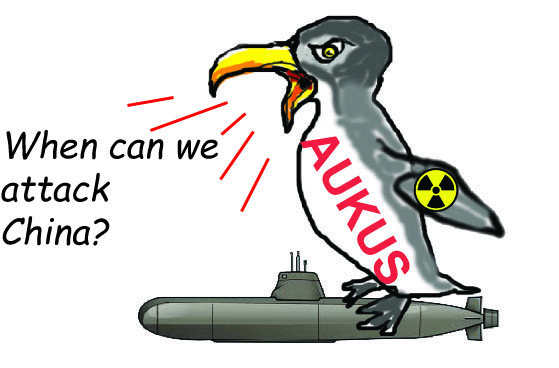
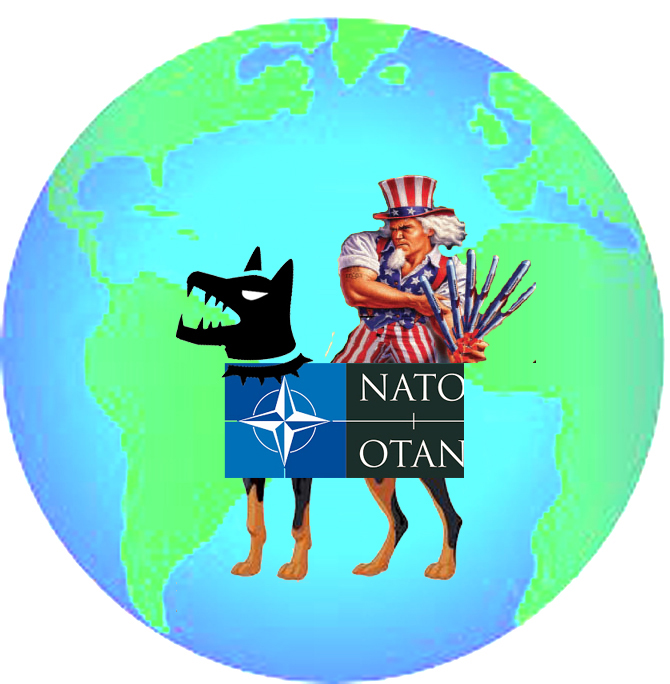
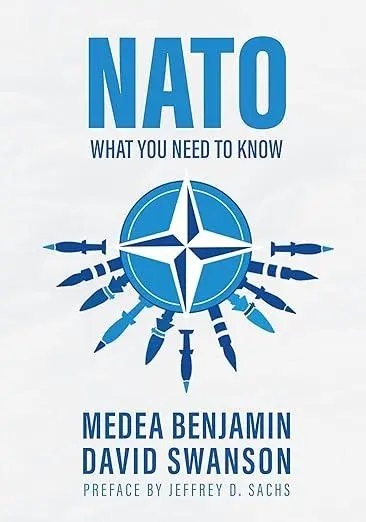







 nuclear-news