US envoy calls for Iran to ‘eliminate’ nuclear programme
US envoy Steve Witkoff said on Tuesday that Iran “must stop and
eliminate” its nuclear enrichment programme to secure a deal with Donald
Trump after previously hinting that Washington might be willing to soften
its stance. “A deal with Iran will only be completed if it is a Trump
deal,” Witkoff said on social media platform X as he appeared to
backtrack on his previous comments. “It is imperative for the world that
we create a tough, fair deal that will endure.”
FT 15th April 2025, https://www.ft.com/content/5fa3707d-7952-464f-a67c-37ddfc061ed5
Donald Trump flounders about on the Ukraine situation
17 Apr 25 https://theaimn.net/donald-trump-flounders-about-on-the-ukraine-situation/
Trump’s previous presidency resulted in huge job losses, a massive increase in the national debt, and global uncertainty about economics. Still, the stock market went up, and the very wealthy got wealthier. His purpose then was perhaps to enrich himself and his rich mates. Apart from that, it all looked like incompetence. If the job of President is to preserve the security and well-being of the nation, his administration was floundering about.
So – no real surprise that this is now happening again.
And what better example of the flounder is there than Trump’s dithering about over the Ukraine war?
As far as the Ukraine war goes, Trump’s big advantage over his predecessor Joe Biden, is that he is willing to negotiate at all. But Donald Trump’s concept of “negotiation”really needs to be examined. He is inordinately and mistakenly proud of his “art of the deal”. But when we observe his actual behaviour, it’s more like a form of childish bullying, than any real method of negotiation.
Major tenets of negotiation, as explained by Herb Chen, to achieve a win-win situation, are to prepare well with information on the situation, seek out and understand the other side’s needs, respect the other side and establish trust.
To start with. Donald Trump aims to win, i.e to defeat the other side. Is Donald Trump even capable of going for a win-win situation? He is quoted as saying “My whole life is about winning” – though I could not find the source. https://www.youtube.com/shorts/YPg9sBtuMJw
So already it appears that Trump’s goal in negotiating is to get what he wants, in a bulldozing manner. And what he wants now is for USA business interests to win in Ukraine, rather than an acceptable peace agreement between Ukraine and Russia.
As to “preparing well with information on the situation”, Trump seems to have understood some of the critical facts – for example, that Putin will not tolerate Ukraine becoming a member of NATO, that Zelensky depends on USA military backing. But the more complex picture concerning the national borders, and the industries in the region seems to be beyond him. And this starts to matter when questions arise about the ownership of rare earths resources. This is a complicated story, but industry experts and economists warn that for the USA to gain control of Ukraine’s mineral resources is not likely to be a success, either commercially or geopolitically.
But Trump’s focus in the negotiations is on American business taking over Ukraine’s minerals. https://www.youtube.com/watch?v=Ya9WKaveRXU
The “deal” that Trump is pursuing also involves that very thorny question – which nation will own and control the Zaporizhzhia nuclear station. I have previously written about this. But suffice to say that the ownership of this particular NPP is a very fraught matter. All three nations, Ukraine, Russia, and USA, seem to want to take on this huge responsibility – massive out-of-action nuclear reactors, all very dangerous and lacking a dependable supply of cooling water.
So, squabbles over industrial resources, and nuclear facilities would be predictable to anyone who bothered to prepare for negotiations on ending the war in Ukraine.
Seeking out and understanding the other side’s needs? Has Donald Trump any concept of this? He might appreciate strongman Putin’s need to look tough and insistent on tough conditions – but Trump does not take account of Russia’s need for to have sanctions on it ended, nor to have Ukrainian troops gone from Russia’s Kursk region, nor to prrevent a pause that enables Ukraine to build up weapons. Trump doesn’t take any interest in the complex needs of the Ukrainian side either, – with many in the Donbass area especially desperate for the war to end.
Respecting the other side and establishing trust? Trump’s manner shows that he doesn’t even respect his own side – as evidenced by his recent rudeness to Ukraine’s President Zelensky. About the other side – he’s said that he’s “pissed off” with Putin, and has threatened to impose secondary tariffs on countries that buy from Russia. He has broadcast his anger with Putin, – but added that “the anger dissipates quickly … if [Putin] does the right thing”.
So much for Trump’s promise about quickly ending the carnage in Ukraine. Almost three months after he took office, Trump has achieved nothing. Thousands of soldiers and civilians continue to be injured or die each month.
Without going into the nightmare of the Trump tariffs situation, the economic effect of the current Trump administration is starting to look very like the economic effect of his previous one. Unless the purpose of it is solely the enrichment of Trump and billionaires, the whole operation looks like being massively incompetent. And, sadly, the Ukrainian people are prime victims of this incompetence.
On Ukraine war and Israeli Gaza genocide, Trump playing Dr. Jekyll Mr. Hyde.
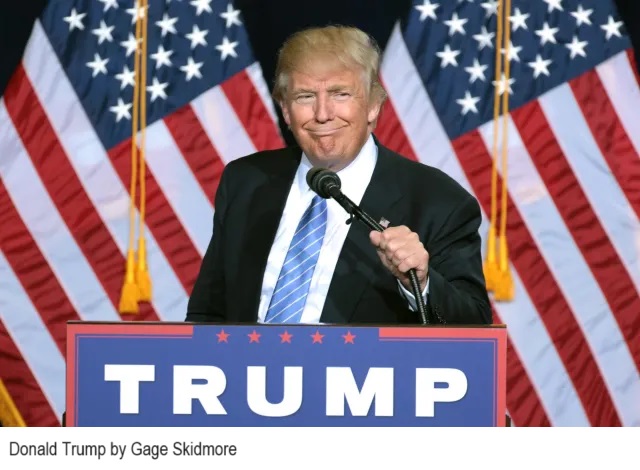
Walt Zlotow, West Suburban Peace Coalition, Glen Ellyn IL, 16April 25
We in the peace community welcome any leader who seeks peaceful resolution to ongoing wars. That is why we welcomed Trump’s break with predecessor Biden’s senseless war with Russia in Ukraine.
Trump wisely campaigned to end the war and swiftly started negotiations to do that upon returning to power. Astonishing as Biden not only prosecuted the war endlessly for his last 29 months, he refused to even recognize the existence of Russian leaders much less communicate with them.
Trump quickly sidelined Biden’s war puppet Zelensky who stupidly believed the BS Biden fed him that Ukraine could prevail with endless US weapons but not one drop of US blood.
Negotiating peace will be daunting since Trump has no cards to play in achieving any semblance of Biden’s unrealistic war objectives. But he can shift the onslaught of blame that will erupt from the US war party where it rightly belongs…on Joe Biden.
Concerning Ukraine, Trump is channeling the wise and kindly Dr. Jekyll. But when it comes to Israel’s genocidal ethnic cleansing of Palestinians in Gaza, Trump’s ingesting some bad medicine which turns him into the murderous Mr. Hyde.
He’s ecstatic over the prospect of a colossal Trump real estate development to expand Greater Israel into Gaza after 2,300,000 Palestinians (less the hundred thousand already expired) are dead and gone. To that end he’s keeping the genocide weapons train rolling along, winking ‘A OK’ to Israel’s cutting off of all food, water, medicine, and electricity prodding Palestinians to leave ‘voluntarily’.
Then, instead of arresting indicted war criminal Netanyahu when he visited the Oval Office, Trump bragged about how they’re working furiously in tandem to find nearby countries to absorb the displaced Palestinians so the Trump Gaza project can commence.
All things considered, we in the peace community prefer Trump’s Ukraine Dr. Jekyll to his Israeli genocide Mr. Hyde.
Trump envoy demands Iran eliminate nuclear programme in apparent U-turn
Steve Witkoff’s switch from saying low-level production could continue seen as example of chaotic US foreign policy
Guardian, Patrick Wintour, 16 Apr 25
Donald Trump’s special envoy, Steve Witkoff, has announced Iran must totally eliminate its nuclear programme, seeming to reverse the policy he had articulated on Fox News only 12 hours earlier that would have allowed Iran to enrich uranium at a low level for civilian use.
The switch to a more hardline policy is likely to make it much harder for the US to reach a negotiated agreement with Tehran, bringing back the threat of an attack on Iran’s nuclear sites.
In a further switch, it was agreed that the next round of indirect US-Iran talks, due to start on Saturday, will continue to be in Oman and the venue would not switch to Italy as proposed by the US.
In a statement posted to social media on Tuesday Witkoff said: “A deal with Iran will only be completed if it is a Trump deal. Any final arrangement must set in place a framework for peace, stability and prosperity in the Middle East – meaning that Iran must stop and eliminate its nuclear enrichment and weaponisation program. It is imperative for the world that we create a tough fair deal that will endure, and that is what President Trump has asked me to do.”……………………………….
Witkoff’s two positions are hard to reconcile – unless he is trying to distinguish between an interim deal that reduces Iranian uranium enrichment to civilian levels and a final agreement that eliminates its nuclear programme entirely.
It also possible Trump has faced a backlash from Iran hawks who warned that Witkoff’s negotiating stance was largely re-establishing the nuclear deal Barack Obama had agreed with Iran in 2015, from which Trump withdrew the US in 2018 saying it was unenforceable.
Witkoff’s apparent volte face may also be seen as another example of chaotic foreign policymaking, in which the administration battles behind the president’s back and he either does not focus on the policy details or does not understand the choices he is allowing to be made on his behalf.
Witkoff, a man with no diplomatic experience and charged with producing diplomatic breakthroughs in Gaza, Ukraine and Iran, has never tried to portray himself as anything than Trump’s messenger. He would have thought the proposals he aired in the weekend talks in Oman and on Fox News were those of the president.
Iran has repeatedly demanded the right to maintain a civil nuclear programme, meaning the latest iteration of US thinking will cause consternation in Tehran and could strengthen hardliners, who maintain the US cannot be trusted.
A rare consensus had broken out in Tehran that the talks between Witkoff and the Iranian foreign minister, Abbas Araghchi, could result in some US sanctions being lifted as part of the most positive development in relations between Iran and the US in a decade.
The head of the UN nuclear inspectorate, Rafael Grossi, is due to visit Iran this week to see if progress can be made on improving his inspectors’ access to Iran’s nuclear sites. https://www.theguardian.com/world/2025/apr/15/trump-envoy-steve-witkoff-demands-iran-eliminate-nuclear-programme
Chinese firm ‘will not bid’ to run Essex nuclear plant,
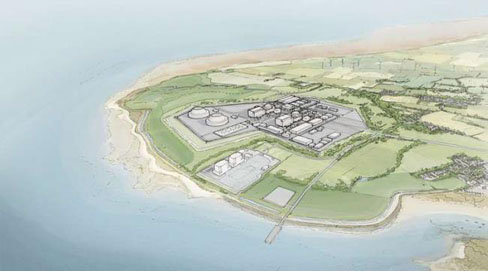
Sources no longer expect planning applications to be submitted by China General Nuclear Power Group for Bradwell B
Ollie Cole, Times Radio |Geraldine Scott, Senior Political Correspondent. April 15 2025, The Times
Plans for China’s state-run nuclear company to develop and operate a proposed nuclear site in Essex will no longer go ahead, The Times can reveal amid renewed focus on Chinese involvement in Britain’s critical infrastructure.
Bradwell B, the proposed nuclear power station, was earmarked for investment by China General Nuclear Power Group (CGN) in 2015. CGN is the majority investor in the proposed development alongside French energy company EDF.
But government and industry sources told The Times and Times Radio they no longer expected planning applications to be submitted by CGN for the site, and EDF will look to take back the lease from the Chinese firm at the earliest opportunity.
The development comes as Jonathan Reynolds, the business and trade secretary, said Chinese firms
But government and industry sources told The
Times and Times Radio they no longer expected planning applications to be
submitted by CGN for the site, and EDF will look to take back the lease
from the Chinese firm at the earliest opportunity.
The development comes as
Jonathan Reynolds, the business and trade secretary, said Chinese firms
would be looked at in “a different way” should they bid for involvement
in British Steel.
CGN holds a 66.5 per cent majority share in the Bradwell
project and the site was said to be of key strategic importance to Beijing
as it would use the Chinese-developed and designed Hualong One reactor —
the first time it would be used in a developed country outside of China.
The company, which has been sanctioned by the United States and was charged
by the US Department of Justice with stealing nuclear secrets, was
initially involved in three major nuclear projects in Britain — Sizewell
C in Suffolk, Hinkley Point C in Somerset and Bradwell. But as
relationships with Beijing soured, the government paid about £100 million
to buy the firm out of Sizewell in 2022, and CGN halted its funding of
Hinkley in 2023 and therefore its stake has been receding.
In Bradwell CGN was due to operate as well as fund and develop the site, but government
sources now say they do not expect the developers to submit a planning
application. Warnings were raised by parliament’s security and
intelligence committee in 2023 when a report on China’s influence and
strategic aims in the UK characterised the plans for Bradwell B as
“opening a direct channel from the UK nuclear enterprise to the Chinese
state”.
It is understood that while EDF owns the site, it leases it to
CGN, but it expects to take the site back once an exit clause becomes
available. It is not clear when that would be. Industry sources said the
site was more likely to be used in the future to house small modular
reactors (SMRs). The Times previously revealed that Sir Keir Starmer wanted
a fleet of SMRs to be built across Britain alongside large power plants.
Times 15th April 2025 https://www.thetimes.com/uk/politics/article/chinese-firm-will-not-bid-to-run-essex-nuclear-plant-d0sd2ssvd
Trump’s Iran talks can succeed if the administration embraces reality rather than myth

What is routinely absent from the conversation is that one of the people who agrees, at least for the moment, that Iran must not have a nuclear weapon is Ayatollah Ali Khamenei. The fatwa (ruling under Islamic law) he issued dates back to at least 2003 and as much as a decade before that.
The talks between Iran and the U.S. set to begin today have a chance to succeed if the Trump administration grounds its policy in the realities of Iran’s nuclear program, not fearmongering promoted by Israel and its allies.
By Mitchell Plitnick April 12, 2025, Mitchell Plitnick, https://mondoweiss.net/2025/04/trumps-iran-talks-can-succeed-if-the-administration-embraces-reality-rather-than-myth/
Mitchell Plitnick is the president of ReThinking Foreign Policy. He is the co-author, with Marc Lamont Hill, of Except for Palestine: The Limits of Progressive Politics. Mitchell’s previous positions include vice president at the Foundation for Middle East Peace, Director of the US Office of B’Tselem, and Co-Director of Jewish Voice for Peace. You can find him on Twitter @MJPlitnick.
Iran and the United States are set to meet indirectly on today in Oman, in the hopes of finding a way to resolve their confrontations over Iran’s nuclear program without a resort to an “Israeli-led” attack on Iran.
There are a lot of details to parse if these discussions are to bear fruit. It will be important to see whether each side—though most of the concern here really lays with the American side—is willing, at least in the context of these talks, to deal with realities over propaganda and pragmatism over sloganeering.
These talks are different from earlier ones. High-level officials from Donald Trump’s administration are leading these talks. Trump’s schizophrenic approach to policy makes negotiations volatile but also leaves open possibilities for breakthroughs.
Netanyahu sidelined
Israeli Prime Minister Benjamin Netanyahu’s visit to Washington earlier this week clearly indicated the potential here.
Netanyahu came with the proper fealty to Trump, kissing the proverbial ring. He desperately needed a boost from Trump as protests and scandals swirled around him in Israel. He also needed Trump to back his aggressive stance against Iran, a crucial point in ensuring the perpetual state of active war that Netanyahu needs to forestall elections next year and to continue to delay his trials in court and investigations of his administration’s failures.
He got none of it. Only hours before Netanyahu was to meet with Trump, he was told that Trump was going to hold talks with Iran to avert war. The large press conference that was scheduled for the two leaders was quickly reduced to a small group of hand-picked “journalists.”
At that mini-conference, Netanyahu was clearly discomfited by Trump’s mention of negotiations with Iran. It got worse for him as Trump mildly rebuked Netanyahu on his reluctance to engage with Türkiye over both countries (illegal) presences in Syria. It’s worth noting how quickly Israel and Türkiye started productive talks after that.
There was a clear message that Trump was sending, although he didn’t use the same kind of language that got one of his negotiators into trouble a few weeks ago: Israel is not going to drive this process. The United States is.
More precisely, Netanyahu is not going to drive the process; Trump is. Trump later clarified Israel’s role. After saying that the U.S. will use a military option against Iran if necessary, Trump said, “Israel will obviously be very much involved in that — it’ll be the leader of that. But nobody leads us. We do what we want to do.”
Trump will allow the Israeli military to take the lead, and the risks, while he expects that the U.S. will be a full partner in the planning and strategizing of an attack, and offer the needed support while not risking backlash from Trump’s own base should American military personnel be injured or killed in another “foreign war.”
So Netanyahu is now reduced to trying to sabotage a diplomatic process that is out of his hands in the hope of provoking a military confrontation that he will not be able to drive but merely partner in. After four years of Joe Biden needlessly acquiescing to every Israeli desire, this is an unwelcome change for Netanyahu.
It is ironic that the Democratic administration, which claimed to defend the “rules-based order,” and claimed to respect established political traditions domestically, routinely broke U.S. law and quite possibly delivered the death blow to both the “rules-based” post-Cold War order and to the international legal system; while Trump’s Republican administration, which has openly defied the rule of law, has moved quickly and decisively into brutal authoritarianism and blatant racism, is restraining Israels’ relentless push for a regional war, at least for the moment.
A fictional crisis
Yet, on the whole, and in their effects on the ground, Trump’s policies have not been much different materially in Gaza, or even with Iran, from Biden’s. And one of those similarities is the ongoing denial of the fictional basis of the Iranian “nuclear threat.”
That “Iran must not be allowed to obtain a nuclear weapon” is a mantra we hear every day, and also a point that most people agree with, even if, for some of us, it is not so much about “allowing” Iran a nuke, as it is that no one should have these awful weapons and the last thing we need is another country, friend or foe, possessing them.
What is routinely absent from the conversation is that one of the people who agrees, at least for the moment, that Iran must not have a nuclear weapon is Ayatollah Ali Khamenei. The fatwa (ruling under Islamic law) he issued dates back to at least 2003 and as much as a decade before that.
There are, of course, those who think the fatwa is just words and others who believe it to be deception. So, if further proof is needed, the United States has provided it.
The United States intelligence services confirmed in 2007 that Iran had formally abandoned the pursuit of nuclear weapons technology in 2003.
That intelligence assessment has been repeatedly confirmed ever since, most recently by Trump’s own Director of National Intelligence Tulsi Gabbard in testimony before Congress. “The IC (Intelligence Community) continues to assess that Iran is not building a nuclear weapon and Supreme Leader Khamenei has not authorized the nuclear weapons program he suspended in 2003,” she said.
It can’t be any clearer. Gabbard is here representing eighteen different American intelligence agencies. There has been no pushback from that entire community on her statement.
Of course, there is no shortage of bad faith actors who will say that all of this doesn’t matter because Iran is evil and so every bad thing anyone thinks about them must be true.
Those forces feed off the fact that Iran has enriched uranium to near-weapons grade and always, without fail, decline to mention that they have only done that because the United States abrogated the 2015 Iran nuclear deal (called the JCPOA) and reinstated crippling sanctions and that Iran’s only way to retaliate at all was to also take the steps that were denied it by the JCPOA.3
Again, we need to recall that it was Donald Trump who, for no reason other than his wish to reverse any positive step by his then-immediate predecessor Barack Obama, tore up the JCPOA. He did this despite the statement by his own top aides, such as then-Defense Secretary Jim Mattis, who told a House of Representatives hearing, “I believe that they fundamentally are (in compliance). There have been certainly some areas where they were not temporarily in that regard, but overall our intelligence community believes that they have been compliant, and the IAEA also says so.”
Six months later, Mattis said it again, even while Trump was getting ready to scrap the deal. He told a Senate Armed Services Committee hearing, “I’ve read (the JCPOA) now three times … and I will say that it is written almost with an assumption that Iran would try to cheat…So the verification, what is in there, is actually pretty robust as far as our intrusive ability” to inspect and supervise the Iranian nuclear facilities and program.
This isn’t just about getting history right. This is the perspective that Iran is bringing to the talks, one that is confirmed by Trump’s own people when they are forced to speak the truth rather than just say whatever their boss wants them to say.
This perspective was never brought to the Biden administration’s dealings with Iran, despite Biden having been fully immersed in the JCPOA talks as Obama’s vice president.
If Trump wants to avoid the military conflict that he has already primed American military forces in the region for, his negotiators need to appreciate the reality that the only steps Iran has taken toward a nuclear weapon since 2003 are entirely due to the U.S.’ refusal to live up to the deal it pushed for and got in 2015.
Netanyahu’s Libya option
Another reality Trump needs to recognize is the message that has been sent to countries that surrender their nuclear deterrent.
Ukraine is an obvious current example. Of the many ways the West betrayed Ukraine’s trust after the collapse of the Soviet Union, a big one is the neglect of Ukrainian security, particularly between 1995 and 2014, that was promised to Kyiv in exchange for their agreement to give up the Soviet nuclear weapons they possessed.
That didn’t work out well for Gaddafi or Libya, and the state itself remains divided and unstable to this day.
This explains some of what Gabbard was talking about when, later in her recent testimony, she said, “In the past year, we have seen an erosion of a decades-long taboo in Iran on discussing nuclear weapons in public, likely emboldening nuclear weapons advocates within Iran’s decision-making apparatus.”
If Iran should agree, as it did in 2015, to surrender its entire nuclear weapons program, does the same fate await it as those of Libya and Ukraine? Given that its enemies, the U.S. and Israel, both have nuclear arsenals as well as massive stores of both conventional weapons and WMDs and have wreaked unimaginable destruction around the world and in the Middle East specifically, it is a real concern, and one that the country, both in the public and governmental discourses, would be irresponsible not to discuss and consider.
This must inform the American approach to the talks in Oman. Benjamin Netanyahu is one person who knows that.
To save face, and to give the impression that what he says is going to matter to Trump, Netanyahu spoke to the issue of U.S.-Iran talks after he left Washington. He said, “Iran will not have nuclear weapons. This can be done by agreement, but only if the agreement is a Libya-style agreement (where international and American agencies) go in, blow up the facilities, dismantle all the equipment, under American supervision with American execution. That is good.”
Netanyahu wants Iran’s entire nuclear program destroyed, including the civilian aspect. That’s a non-starter for Iran. While nuclear power accounts for only a small portion of Iran’s electricity use, it is expected to grow in coming years as even more of its oil will be exported in an attempt to rebuild its shattered economy.
Anti-Iran hawks are going to push the “Libya option.” Iran, for its part, will need to find the space to agree to the sort of intrusive inspections it allowed in 2015, at least, and probably some other concessions for Trump to show off. They very likely know that. And if the U.S. wants that agreement, it will need to commit to ending sanctions more reliably than it did in 2015.
That path is reasonable, it is a win for Iran, and Trump can sell it as a triumph. It’s there for the taking, but only if Trump does something well outside of both his and, for the most part, the U.S.’s comfort zone: act in good faith and grounded in reality rather than myth.
Saudi Arabia, US on ‘pathway’ to civil nuclear agreement, US Energy Secretary says

The United States and Saudi Arabia will sign a preliminary agreement to cooperate over the kingdom’s ambitions to develop a civil nuclear industry, U.S. Energy Secretary Chris Wright told reporters in the Saudi capital
Riyadh on Sunday.
Wright, who had met with Saudi Energy Minister Prince
Abdulaziz bin Salman earlier on Sunday, said Riyadh and Washington were on a “a pathway” to reaching an agreement to work together to develop a Saudi
civil nuclear programme.
Reuters 13th April 2025 https://www.reuters.com/world/saudi-arabia-us-pathway-civil-nuclear-agreement-us-energy-secretary-says-2025-04-13/
Iran says ‘indirect talks’ have taken place with US over nuclear programme – with more to follow
The talks come after US President Donald Trump warned Iran it would be in “great danger” if a deal wasn’t reached between the two countries.
Sky News 1 13 April 2025
The discussions on Saturday took place in Muscat, Oman, with the host nation’s officials mediating between representatives of Iran and the US, who were seated in separate rooms, according to Esmail Baghaei, a spokesperson for Iran’s foreign ministry.
After the meeting, Oman’s foreign minister Sayyid Badr Albusaidi thanked Iran’s foreign minister Abbas Araghchi and US Middle East envoy Steve Witkoff for joining the negotiations aimed at “global peace, security and stability”, in an X post.
“We will continue to work together and put further efforts to assist in arriving at this goal,” he added.
‘Very positive’ and ‘constructive’
Iranian state media claimed the US and Iranian officials “briefly spoke in the presence of the Omani foreign minister” at the end of the talks – a claim Mr Araghchi echoed in a statement on Telegram.
He said the talks took place in a “constructive atmosphere based on mutual respect” and that they would continue next week.
Speaking on board Air Force One on Saturday US President Donald Trump said the “talks are going okay”……………………………………………………..
Reuters news agency said an Omani source told it the talks were focused on de-escalating regional tensions, prisoner exchanges and limited agreements to ease sanctions in exchange for controlling Iran’s nuclear programme.
‘Great danger’ if talks fail
Donald Trump has insisted Tehran cannot get nuclear weapons.
He said on Monday the talks would be direct, but Tehran officials insisted it would be conducted through an intermediary.
Mr Trump also warned Iran would be in “great danger” if negotiations fail…………….
He added Iran “cannot have a nuclear weapon, and if the talks aren’t successful, I actually think it will be a very bad day for Iran”.
The comments came after Mr Trump’s previous warnings of possible military action against Iran if there is no deal over its nuclear programme. https://news.sky.com/story/iran-says-indirect-talks-taking-place-with-us-over-nuclear-programme-13347051
Trump declares he would ‘absolutely’ bomb Iran if it refuses to give up its bid for nuclear weapons
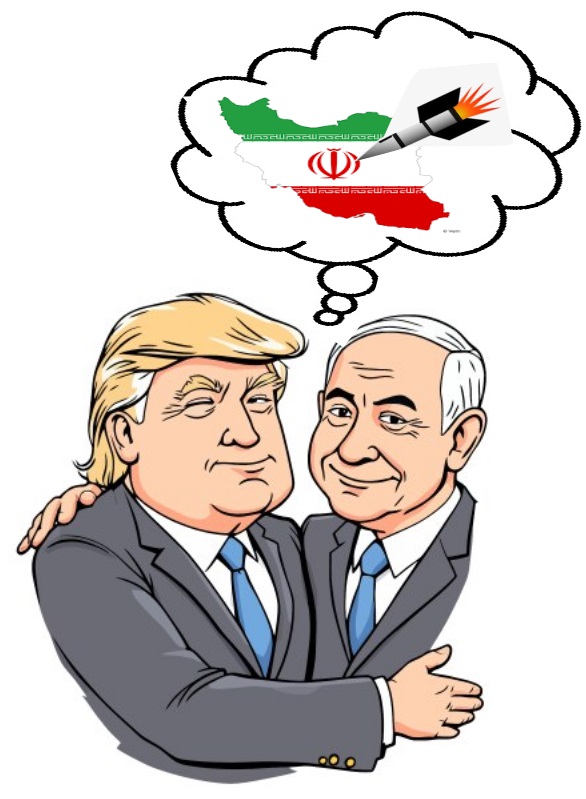
The Iran nuclear deal, which Trump scuttled after it was put in place under Barack Obama, was negotiated through multi-party talks.
On Tuesday Trump ridiculed fears of climate change, then pivoted to the Iran threat, which he called much more grave
Says Israel would be ‘very much involved’
By GEOFF EARLE, DEPUTY U.S. POLITICAL EDITOR, 10 April 25 https://www.dailymail.co.uk/news/article-14589765/donald-trump-bomb-iran-nuclear-weapons.html
President Donald Trump openly discussed military action against Iran just days before talks are set to begin on its nuclear program.
He upped his threats a day after he used colorful language to warn against ‘nuclear heat’ while saying Iran must relinquish nuclear ambitions.
A reporter asked Trump to specify his comment Tuesday that it would be ‘very dangerous’ for Iran if nuclear talks are unsuccessful.
Well they can’t have a nuclear weapon,’ Trump said. Pressed on if he meant military action, Trump responded: ‘Oh if necessary? Absolutely, yeah.’
Asked if he had a deadline with Iran, Trump responded, ‘Yeah, I do,’ but declined to say what it was.
But he said this weekend – with talks set to commence in Oman Saturday – was not the deadline. ‘We have a little time, but we don’t have much time,’ the president said.
‘Because we’re not going to let them have a nuclear weapon, can’t let them have a nuclear – and we’re gonna let them thrive. I want them to thrive. I want Iran to be great. The only thing they can’t have is a nuclear weapon.
‘I’m not asking for much. I just … they can’t have a nuclear weapon,’ Trump said.
‘But with Iran, yeah, if we, if it requires military, we’re gonna have military. Israel will obviously be very much involved in that. He’ll be the leader of that. But nobody leads us. We do what we want to do.
In his final cryptic comment, he added: ‘When you start talks, you know they’re going along well or not. And I would say the conclusion would be when I think they’re not going along well. So that’s just a feeling.’
Trump has pledged it is ‘not after a nuclear bomb’ and even expressed interest to direct U.S. investment.
Trump’s comments came on a day he did a sudden U-turn and imposed a 90-day pause on his ‘reciprocal’ tariffs, while maintaining a 10 percent across the board tariff and hiking the tariff on China to 125 percent.
The episode revealed both Trump’s willingness to throw the global system into turmoil to achieve his goals, and his willingness to backtrack amid fears of a recession and trillions worth of market losses. He also signed orders directing the Justice Department to investigate Miles Taylor, who wrote a critical book under the pen name ‘Anonymous’ during his first term, and former cyber security official Chris Krebs, who vouched for the security of the 2020 elections during the COVID pandemic.
Satellite images have revealed the deployment of six nuclear-capable B-2 bombers on Diego Garcia, a British-owned naval base that has been critical during U.S. military campaigns.
Trump on Monday said the U.S. would hold top level ‘direct’ talks with Iran – while brandishing new threats and repeating demands that Iran could not be allowed to have a nuclear weapon.
‘We’re having direct talks with Iran. And they’ve started,’ Trump told reporters while seated in the Oval Office next to Israeli PM Benjamin Netanyahu, himself a top Iran hawk.
The talks are set to take place in Oman, but Iran’s foreign minister, Abbas Araqchi, said the talks would be ‘indirect,’ amid longstanding tensions between the two nations.
The U.S. has avoided such direct talks for years. The Iran nuclear deal, which Trump scuttled after it was put in place under Barack Obama, was negotiated through multi-party talks.
‘I think everybody agrees that doing a deal would be preferable to doing the obvious. And the obvious is not something that I want to be involved with, or frankly, that Israel wants to be involved with, if they can avoid it,’ he added. ‘So we are going to see if we can avoid it, but it’s getting to be very dangerous territory, and hopefully those talks will be successful.’
‘And I think it would be in Iran’s best interests if they are successful.’
On Tuesday Trump ridiculed fears of climate change, then pivoted to the Iran threat, which he called much more grave
‘We were going to be gone, we’re all going to be gone – the environment. No, what they have to worry about is the nuclear – nuclear heat. They don’t have to worry about environmental heat. They have to worry about nuclear heat,’ Trump said on an event where he called for deregulating the coal industry.
‘And if we’re smart, we’re working on that right now with others, having to do with Iran and some other countries,’ Trump said.
‘But that’s the that’s the heat you’re gonna have to worry about. You don’t have to worry about the air is getting warmer. The ocean will rise … within the next 500 to 600 years, giving you a little bit more waterfront property. They say this is going to these guys can handle that. The nuclear we have a bigger problem with, right?’ Trump said.
Iran claims its nuclear program is peaceful, but U.S. intelligence has long warned it was close to being capable of producing nuclear weapons.
Trump has threatened Iran over an ultimatum that likely cannot be met

Trump’s ultimatum to Iran appears to be moving the U.S. down a path to where war is the only outcome, as occurred in 1914 – an outcome which ultimately triggered WW1.
Strategic Culture Foundation, Alastair Crooke, April 7, 2025
What is understood now is that ‘we’re no longer playing chess’. There are no rules anymore.
Trump’s ultimatum to Iran? Colonel Doug Macgregor compares the Trump ultimatum to Iran to that which Austria-Hungary delivered to Serbia in 1914: An offer, in short, that ‘could not be refused’. Serbia accepted nine out of the ten demands. But it refused one – and Austria-Hungary immediately declared war.
On 4 February, shortly after his Inauguration, President Trump signed a National Security Presidential Memorandum (NSPM); that is to say, a legally binding directive requiring government agencies to carry out the specified actions precisely.
The demands are that Iran should be denied a nuclear weapon; denied inter-continental missiles, and denied too other asymmetric and conventional weapons capabilities. All these demands go beyond the NPT and the existing JCPOA. To this end, the NSPM directs maximum economic pressure be imposed; that the U.S. Treasury act to drive Iran’s oil exports to zero; that the U.S. work to trigger JCPOA Snapback of sanctions; and that Iran’s “malign influence abroad” – its “proxies” – be neutralised.
The UN sanctions snapback expires in October, so time is short to fulfil the procedural requirements to Snapback. All this suggests why Trump and Israeli officials give Spring as the deadline to a negotiated agreement.
Trump’s ultimatum to Iran appears to be moving the U.S. down a path to where war is the only outcome, as occurred in 1914 – an outcome which ultimately triggered WW1.
Might this just be Trump bluster? Possibly, but it does sound as if Trump is issuing legally binding demands such that he must expect cannot be met. Acceptance of Trump’s demands would leave Iran neutered and stripped of its sovereignty, at the very least. There is an implicit ‘tone’ to these demands too, that is one of threatening and expecting regime change in Iran as its outcome.
It may be Trump bluster, but the President has ‘form’ (past convictions) on this issue. He has unabashedly hewed to the Netanyahu line on Iran that the JCPOA (or any deal with Iran) was ‘bad’. In May 2014, Trump withdrew the U.S. from the JCPOA at Netanyahu’s behest and instead issued a new set of 12 demands to Iran – including permanently and verifiably abandoning its nuclear programme in perpetuity and ceasing all uranium enrichment.
What is the difference between those earlier Trump demands and those of this February? Essentially they are the same, except today he says: If Iran “doesn’t make a deal, there will be bombing. It will be bombing the likes of which they have never seen before”.
Thus, there is both history, and the fact that Trump is surrounded – on this issue at least – by a hostile cabal of Israeli Firsters and Super Hawks. Witkoff is there, but is poorly grounded on the issues. Trump too, has shown himself virtually totalitarian in terms of any and all criticism of Israel in American Academia. And in Gaza, Lebanon and Syria, he is fully supportive of Netanyahu’s far-right provocative and expansionist agenda.
These present demands regarding Iran also run counter to the 25 March 2025 latest annual U.S. Intelligence Threat Assessment that Iran is NOT building a nuclear weapon. This Intelligence Assessment is effectively disregarded. A few days before its release, Trump’s National Security Adviser, Mike Waltz clearly stated that the Trump Administration is seeking the “full dismantlement” of Iran's nuclear energy program: “Iran has to give up its program in a way that the entire world can see”, Waltz said. “It is time for Iran to walk away completely from its desire to have a nuclear weapon”.
On the one hand, it seems that behind these ultimata stands a President made “pissed off and angry” at his inability to end the Ukraine war almost immediately – as he first mooted – together with pressures from a bitterly fractured Israel and a volatile Netanyahu to compress the timeline for the speedy ‘finishing off’ of the Iranian ‘regime’ (which, it is claimed, has never been weaker). All so that Israel can normalise with Lebanon –and even Syria. And with Iran supposedly ‘disabled’, pursue implementation of the Greater Israel project to be normalised across the Middle East.
Which, on the other hand, will enable Trump to pursue the ‘long-overdue’ grand pivot to China. (And China is energy-vulnerable – regime change in Tehran would be a calamity, from the Chinese perspective).
To be plain, Trump’s China strategy needs to be in place too, in order to advance Trump’s financial system re-balancing plans. …………………………………………………………………………………….. https://strategic-culture.su/news/2025/04/07/break-leg-that-old-mafia-warning-trump-has-threatened-iran-over-ultimatum-that-likely-cannot-be-met/
A Iran and US to enter high-stakes nuclear negotiations – hampered by a lack of trust
April 10, 2025. The Conversation, Ali Bilgic, Professor of International Relations and Middle East Politics, Loughborough University
The announcement of planned talks between the US and Iran in Oman signifies a crucial development – especially given the history of distrust and animosity that has characterised their interactions.
There remains a degree of confusion as to whether the negotiations over Iran’s development of a nuclear capacity will be direct or indirect. The US has said that its Middle East envoy, Steve Witkoff, will meet Iran’s foreign minister, Abbas Araghchi. Donald Trump has publicly stated that Iran will be in “great danger” if the negotiations fail.
Iran meanwhile has said that talks will be conducted through an intermediary. Araghchi commented that: “It is as much an opportunity as it is a test. The ball is in America’s court.”
This seeming clash in messaging before the talks have even begun is not the greatest omen for their success, even with the threat of US or Israeli military action hovering over Iran. Representatives from Iran, China and Russia are reported to have met in Moscow on April 8.
China’s foreign ministry released a statement reminding the world that it was the US “which unilaterally withdrew from the JCPOA [the 2015 nuclear deal or joint comprehensive plan of action] and caused the current situation”. It stressed the need for Washington to “show political sincerity, act in the spirit of mutual respect, engage in dialogue and consultation, and stop the threat of force and maximum pressure”.
This followed messaging from Washington which very much focused on the possibility of force and maximum pressure. Speaking to the press after meeting the Israeli prime minister Benjamin Netanyahu, Trump struck a very aggressive note, saying: “Iran cannot have a nuclear weapon and if the talks aren’t successful, I actually think it will be a very bad day for Iran if that’s the case…………………………………………………
Rocky road ahead
A major issue affecting the talks is the low level of trust between the two parties. The US’s involvement in the Gaza conflict – including Trump’s controversial proposal to clear Gaza of Palestinians to make way for possible redevelopment – has further strained relations. So has the recent US campaign against the Tehran-backed Houthi rebels in Yemen.
Further threats of this kind are likely to be seen by Iran as aggressive and coercive – and Trump’s latest rhetoric won’t have helped. This will inevitably undermine the prospects for trust between the parties.
Iran’s scepticism is rooted in past experiences where promises of economic relief were not fulfilled. Trump’s withdrawal of the US from the 2015 nuclear deal in 2018 is a case in point. This perceived breach of trust has made Iran cautious about entering into new agreements without concrete assurances.
The regional context adds another layer of complexity to the talks. American support for Israel’s actions in Gaza is likely to complicate matters. The populations of most Gulf states are fully supportive of Palestinian self-determination and are scandalised at the way the US president has seemingly given the green light to Israel’s breach of the ceasefire and resumption of hostilities.
Iran’s internal politics are also likely to play an important role in shaping its approach to the negotiations. The country is experiencing significant political polarisation between the “hardliners”, spearheaded by the supreme leader Ali Khamenei, and the “reformists”, who are relatively more conciliatory towards the US and Europe. ………………………..https://theconversation.com/iran-and-us-to-enter-high-stakes-nuclear-negotiations-hampered-by-a-lack-of-trust-254106
Russia pledges to help resolve Iran-US nuclear tensions
April 7 2025 –https://www.canberratimes.com.au/story/8936749/russia-pledges-to-help-resolve-iran-us-nuclear-tensions/
Russia is ready to do all it could to help resolve tensions between the United States and Iran around Tehran’s nuclear program, the Kremlin says.
Moscow has repeatedly offered to mediate between the two sides after warnings of military action against Iran by US President Donald Trump have rattled nerves across the region.
“We are in constant consultations with our Iranian partners, including on the topic of the nuclear deal,” Kremlin spokesman Dmitry Peskov told reporters on Monday.
“This process will continue, including in the near future. And, of course, Russia is ready to make every effort, to do everything possible to contribute to this problem’s resolution by political and diplomatic means.”
During his first term, Trump withdrew the US from a 2015 deal between Iran and world powers that placed strict limits on Tehran’s disputed nuclear activities in exchange for sanctions relief. Iran says it needs nuclear energy for peaceful purposes and denies it is seeking to acquire nuclear weapons.
Tehran has pushed back against Trump’s demands for direct talks, with a senior Iranian official issuing a warning over the weekend to neighbours that host US bases that they could be in the firing line.
Russian Deputy Foreign Minister Sergei Ryabkov said last week that Trump’s comments about bombing Iran only served to “complicate the situation” and cautioned that strikes could be “catastrophic” for the wider region.
Russia has for the most part refrained from such sharp criticism of Trump.
President Vladimir Putin has moved quickly since Trump took office to repair relations with the US in a rapprochement viewed with concern by Ukraine and its European allies.
Moscow has also deepened ties with Tehran since the start of the full-scale conflict in Ukraine with the two signing a strategic partnership treaty in January.
Trump claims US held direct nuclear talks with Iran
Aljazeera, 7 April 25
The US president makes the claim in a media conference with Israeli Prime Minister Netanyahu, while also threatening Tehran.
President Donald Trump has announced that the United States has begun direct negotiations with Iran over its nuclear programme, after Tehran had earlier dismissed Washington’s calls for the talks.
“We’re having direct talks with Iran, and they’ve started. It’ll go on Saturday. We have a very big meeting, and we’ll see what can happen,” Trump told reporters at the White House on Monday, alongside Israeli Prime Minister Benjamin Netanyahu.
“And I think everybody agrees that doing a deal would be preferable,” he added, without providing further details.
Trump also warned that Iran would be in “great danger” if diplomatic efforts to curb its nuclear ambitions failed, adding that Tehran “can’t have nuclear weapons”.
Earlier this month, Trump told NBC News: “If they [Iran] don’t make a deal, there will be bombing”. He added that the bombing would be “the likes of which they have never seen before.”
Trump’s announcement of direct talks with Tehran would not be to Netanyahu’s “liking”, as the Israeli leader has long wanted to simply bomb Iran, said Marwan Bishara, Al Jazeera’s senior political analyst.
“Trump has wanted a deal for a long time,” Bishara said. However, “Netanyahu certainly thinks Iran’s defences have been weakened by last year’s Israeli air strikes on Iran. And he sees this as a great opportunity, with US support, for Israel to finish off Iran.”
“In reality, Trump doesn’t want to enter a war with Iran while he is in the midst of trade wars with the rest of the world,” Bishara added.
‘Meaningless talks’
Over the weekend Iranian Minister of Foreign Affairs Abbas Araghchi described the prospect of direct negotiations with the US on Tehran’s nuclear programme as “meaningless”.
Araghchi’s remarks came after Trump said last month in a letter to Iran’s Supreme Leader Ayatollah Ali Khamenei that he hoped there would be a negotiation between the countries.
Tehran, which maintains that it is not seeking a nuclear weapon, has so far rejected Washington’s overtures, but has said it is open to indirect diplomacy – a stance repeated by Araghchi in Sunday’s statement.
In 2018, during his first presidency, Trump withdrew the US from the 2015 nuclear agreement between Iran and world powers, which had placed strict curbs on Tehran’s nuclear activities in exchange for sanctions relief.
Iran says its nuclear activities are solely for civilian purposes. Israel, the US’s top ally in the region, is widely believed to have an undeclared nuclear arsenal.
Netanyahu calls for Palestinians to leave Gaza
Speaking next to Netanyahu, who has been issued an arrest warrant by the International Criminal Court (ICC) for alleged war crimes in Gaza, Trump suggested that the war in Gaza could soon come to an end……………………………………………………………………………………………………….. https://www.aljazeera.com/news/2025/4/7/trump-claims-direct-us-talks-with-iran-on-nuclear-deal-have-begun
Iran rejects ‘meaningless’ direct talks with US
As war of words over nuclear weapons deal escalates, FM Araghchi says he wants talks on ‘equal footing’.
6 Apr 2025, https://www.aljazeera.com/news/2025/4/6/iran-foreign-minister-rejects-direct-talks-with-us
Iranian Foreign Minister Abbas Araghchi has described the prospect of direct negotiations on its nuclear programme with the United States as “meaningless” amid mounting tensions between the two countries.
Araghchi’s remarks came in a statement on Sunday, after Trump said last month in a letter sent to Iran’s Supreme Leader Ayatollah Ali Khamenei that he hoped there would be a negotiation between their countries aimed at preventing Tehran from acquiring nuclear weapons.
Trump upped the ante last week, saying: “If they don’t make a deal, there will be bombing.”
Araghchi questioned Washington’s sincerity in calling for negotiations, saying on Sunday, “If you want negotiations, then what is the point of threatening?”
Tehran, which maintains that it is not seeking a nuclear weapon, has so far rejected Washington’s overtures, but has said it is open to indirect diplomacy – a stance repeated by Araghchi in Sunday’s statement.
Araghchi said Iran wanted to negotiate on an “equal footing” with the US, describing it as “a party that constantly threatens to resort to force in violation of the UN Charter and that expresses contradictory positions from its various officials”.
In 2018, during his first term as president, Trump nixed the Joint Comprehensive Plan of Action, a deal between Iran and the permanent members of the United Nations Security Council that gave Iran sanctions relief in exchange for curbs on its nuclear programme.
Iran has since rolled back on its commitments under the agreement, amassing enough fissile material for multiple bombs, according to the International Atomic Energy Agency, which carries out inspections of Iranian nuclear sites.
Responding to Trump’s threat of war, Hossein Salami, the head of the Islamic Revolutionary Guard Corps, said on Saturday that the country was “ready” for war.
“We are not worried about war at all. We will not be the initiators of war, but we are ready for any war,” the official IRNA news agency quoted Salami as saying.
But Tehran’s position in the region appears to have weakened amid the ongoing war in Gaza and beyond, with Israel’s decimation of Hezbollah’s leadership in Lebanon, and the toppling of another key partner, Syrian President Bashar al-Assad, last year.
Iran says its nuclear activities are solely for civilian purposes. Israel, the top US ally in the region, is widely believed to have an undeclared nuclear arsenal.
With US bombers at the ready, can Trump cut a deal with Iran and avoid a war?
The United States and Iran are once again on a collision course over the
Iranian nuclear program. In a letter dated early March, US President Donald
Trump urged Iranian Supreme Leader Ayatollah Ali Khamenei to negotiate a
new deal.
The new deal would replace the defunct nuclear agreement
negotiated in 2015 between the United States, Iran and five other global
powers. Trump withdrew from that agreement, called the Joint Comprehensive
Plan of Action (JCPOA), during his first term.
Trump gave the Iranians a
two-month deadline to reach a new nuclear deal. If they don’t, the US will
bomb the country. In recent days, American B-2 bombers and warships have
been deployed to the region in a show of force. In response, Tehran has
agreed only to indirect negotiations. It has ruled out any direct talks
while under a US policy of “maximum pressure”.
Khamenei and his
generals have promised a “harsh response” to any military venture. Iran
has vowed to target all American bases in the region. France, one of key
negotiators in the 2015 deal, said this week a failure to secure a new deal
would make a military confrontation “almost inevitable”. In a positive
sign, however, Washington is reportedly “seriously considering” Iran’s
offer for indirect negotiations. And Trump is now suggesting Iran may
actually be open to direct talks.
The Conversation 5th April 2025 https://theconversation.com/with-us-bombers-at-the-ready-can-trump-cut-a-deal-with-iran-and-avoid-a-war-253828
1 This Month

26 September – International Day for the Total Elimination of Nuclear Weapons


PLEASE OPPOSE HR 8255 AND S.3639 – bills would accelerate satellite deployment, with no environmental review or safeguards – https://ncstd5li.quorum.us/campaign/169331/
To see nuclear-related stories in greater depth and intensity – go to https://nuclearinformation.wordpress.com
-
Archives
- September 2026 (206)
- August 2026 (330)
- July 2026 (355)
- June 2026 (287)
- May 2026 (306)
- April 2026 (356)
- March 2026 (251)
- February 2026 (267)
- January 2026 (308)
- December 2025 (358)
- November 2025 (359)
- October 2025 (375)
-
Categories
- 1
- 1 NUCLEAR ISSUES
- business and costs
- climate change
- culture and arts
- ENERGY
- environment
- health
- history
- indigenous issues
- Legal
- marketing of nuclear
- media
- opposition to nuclear
- PERSONAL STORIES
- politics
- politics international
- Religion and ethics
- safety
- secrets,lies and civil liberties
- spinbuster
- technology
- Uranium
- wastes
- weapons and war
- Women
- 2 WORLD
- ACTION
- AFRICA
- Atrocities
- AUSTRALIA
- Christina's notes
- Christina's themes
- culture and arts
- Events
- Fuk 2022
- Fuk 2023
- Fukushima 2017
- Fukushima 2018
- fukushima 2019
- Fukushima 2020
- Fukushima 2021
- general
- global warming
- Humour (God we need it)
- Nuclear
- RARE EARTHS
- Reference
- resources – print
- Resources -audiovicual
- Weekly Newsletter
- World
- World Nuclear
- YouTube
-
RSS
Entries RSS
Comments RSS
 nuclear-news