Iran says IAEA new report on nuclear activities politically motivated, based on Israel’s fake documents
By IFP Editorial Staff, June 1, 2025, https://ifpnews.com/iran-iaea-new-report-nuclear-activities-politically-motivated-israels-fake-documents/
The Foreign Ministry and the Atomic Energy Organization of Iran (AEOI) have issued a joint statement in response to the latest report by the International Atomic Energy Agency (IAEA), regarding Iran’s nuclear program, denouncing it as “political” and based on forged documents provided by the Israeli regime.
Iran stressed on Saturday that the accusation from the IAEA was “politically motivated and repeats baseless allegation”.
“The repetition of baseless allegations that cannot lend credibility to these claims, coupled with voicing too much concern in this regard, serves merely as a pretext for political propaganda against the Islamic Republic of Iran,” the statement said.
“This is while the fake Israeli regime, without being a signatory to the NPT, possesses a nuclear arsenal and simultaneously threatens the peaceful nuclear facilities of an NPT member nation. Unfortunately, despite his legal duties and repeated requests from the Islamic Republic of Iran to condemn these threats, the IAEA director general has taken no action,” it added.
Iran expressed “deep regret about the director general’s lack of impartiality and his disregard for professional conduct under political pressures in the preparation and publication of the report”.
“Unfortunately, despite such broad cooperation on part of Iran, the comprehensive report prepared, although acknowledging Iran’s cooperation, does not reflect the actual level of such cooperation,” the statement read.
“In the report, the director general, by relying extensively on forged documents provided by the Zionist regime, has reiterated previous biased and unfounded accusations. The allegations leveled in the current report are based on a few claims about undeclared activities and locations from past decades. This is while Iran has repeatedly declared that it has had no undeclared nuclear sites or activities.”
In its latest report, the IAEA claimed that Iran has sharply increased its stockpile of uranium enriched to up to 60 percent, close to the roughly 90 percent level needed for atomic weapons.
In its quarterly report, the agency said that as of May 17, Iran possesses an estimated 408.6 kilograms of uranium enriched up to 60 percent, marking an increase of 133.8 kilograms since the previous report in February.
According to the report, Iran’s total amount of enriched uranium now exceeds 45 times the limit authorized by the 2015 agreement – formally known as the Joint Comprehensive Plan of Action — and is estimated at 9,247.6 kilograms.
Iran rejects IAEA report alleging increased enriched uranium stockpile

Aljazeera, 31 May 2025
The UN nuclear watchdog warns Tehran could be close to weapons-grade enriched uranium, as negotiations with the US continue.
Iran has rejected a report from the United Nations nuclear watchdog that alleges Tehran has increased its stockpile of highly enriched, near weapons-grade uranium by 50 percent in the last three months.
Iran said on Saturday that the accusation from the International Atomic Energy Agency (IAEA) was “politically motivated and repeates baseless accusations”.
It all comes as nuclear deal negotiations are under way between the United States and Iran, with the Iranian Foreign Minister Abbas Araghchi saying that his country would respond to “elements of a US proposal” his Omani counterpart, Badr Al-Busaidi, had presented during a short visit to Tehran on Saturday.
Araghchi said that the proposal would be “responded to in line with the principles, national interests and rights of the people of Iran”.
Tehran insists that its nuclear programme is for peaceful purposes only.
The IAEA said that as of May 17, Iran had amassed 408.6kg (900.8 pounds) of uranium enriched up to 60 percent – the only non-nuclear weapon state to do so, according to the UN agency – and had increased its stockpile by almost 50 percent to 133.8kg since its last report in February.
The wide-ranging, confidential report seen by several news agencies said Iran carried out secret nuclear activities with material not declared to the IAEA at three locations that have long been under investigation, calling it a “serious concern” and warning Tehran to change its course.
The Iranian Foreign Ministry slammed the report, saying the agency had used “forged documents provided by the Zionist regime [Israel]” and reiterated “previous biased and baseless accusations”.
Iran refutes allegations of undeclared nuclear sites or activities, stressing that it has instead cooperated with the agency in providing all necessary access to the alleged sites, it said.
“The Islamic Republic of Iran, while expressing regret over the publication of this report, which was prepared for political purposes through pressure on the agency, expresses its clear objection to its content,” the statement added.
Araghchi reaffirmed the country’s longstanding position, saying Tehran deems nuclear weapons “unacceptable”.
“If the issue is nuclear weapons, yes, we too consider this type of weapon unacceptable,” Araghchi, Iran’s lead negotiator in the nuclear talks with the US, said in a televised speech. “We agree with them on this issue.”
‘Both sides building leverage’
But the report, which was requested by the IAEA’s 35-nation board of governors in November, will allow for a push by the US, Britain, France and Germany to declare Iran in violation of its non-proliferation obligations.
On Friday, US President Donald Trump said Iran “cannot have a nuclear weapon”………………………………………………………… https://www.aljazeera.com/news/2025/5/31/iran-increases-stockpile-of-enriched-uranium-by-50-percent-iaea-says
Putin’s demands for peace include an end to NATO enlargement, sources say.
By Guy Faulconbridge, https://www.reuters.com/world/europe/putin-ukraine-peace-wants-pledge-halt-nato-enlargement-sources-say-2025-05-28/
President Vladimir Putin’s conditions for ending the war in Ukraine include a demand that Western leaders pledge in writing to stop enlarging NATO eastwards and lift a chunk of sanctions on Russia, according to three Russian sources with knowledge of the negotiations. U.S. President Donald Trump has repeatedly said he wants to end the deadliest European conflict since World War Two and has shown increasing frustration with Putin in recent days, warning on Tuesday the Russian leader was “playing with fire” by refusing to engage in ceasefire talks with Kyiv as his forces made gains on the battlefield.
After speaking to Trump for more than two hours last week, Putin said that he had agreed to work with Ukraine on a memorandum that would establish the contours of a peace accord, including the timing of a ceasefire. Russia says it is currently drafting its version of the memorandum and cannot estimate how long that will take. Kyiv and European governments have accused Moscow of stalling while its troops advance in eastern Ukraine.
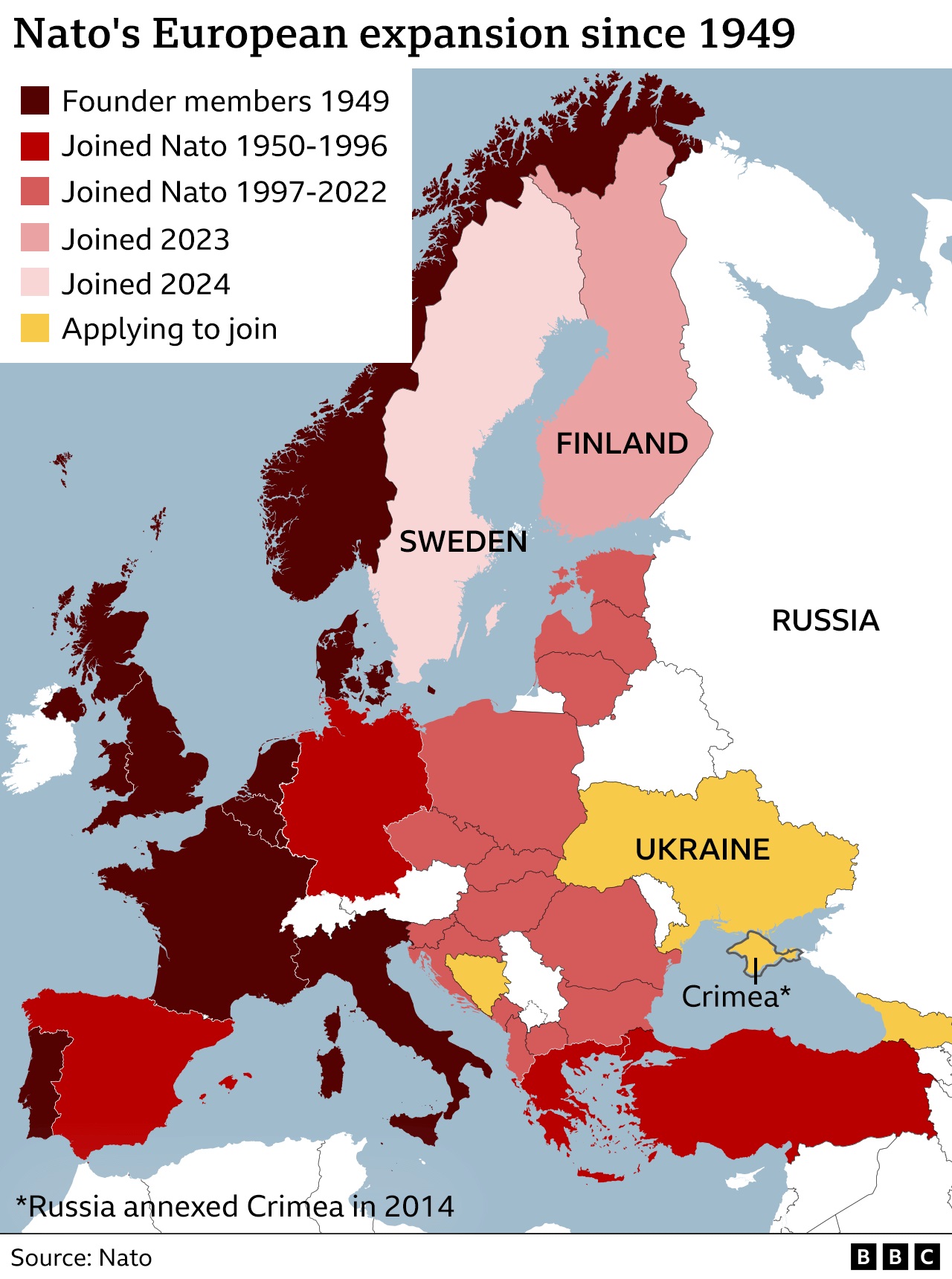
“Putin is ready to make peace but not at any price,” said one senior Russian source with knowledge of top-level Kremlin thinking, who spoke on condition of anonymity. The three Russian sources said Putin wants a “written” pledge by major Western powers not to enlarge the U.S.-led NATO alliance eastwards – shorthand for formally ruling out membership to Ukraine, Georgia and Moldova and other former Soviet republics.
Russia also wants Ukraine to be neutral, some Western sanctions lifted, a resolution of the issue of frozen Russian sovereign assets in the West, and protection for Russian speakers in Ukraine, the three sources said. The first source said that, if Putin realizes he is unable to reach a peace deal on his own terms, he will seek to show the Ukrainians and the Europeans by military victories that “peace tomorrow will be even more painful”. The Kremlin did not respond to a request for comment on Reuters’ reporting.
Putin and Russian officials have repeatedly said any peace deal must address the “root causes” of the conflict – Russian shorthand for the issue of NATO enlargement and Western support for Ukraine. Kyiv has repeatedly said that Russia should not be granted veto power over its aspirations to join the NATO alliance. Ukraine says it needs the West to give it a strong security guarantee with teeth to deter any future Russian attack.
President Volodymyr Zelenskiy’s administration did not respond to a request for comment. NATO has also in the past said that it will not change its “open door” policy just because Moscow demands it. A spokesperson for the 32-member alliance did not respond to Reuters’ questions. Putin ordered tens of thousands of troops into Ukraine in February 2022 after eight years of fighting in eastern Ukraine between Russian-backed separatists and Ukrainian troops. Russia currently controls just under one fifth of the country. Though Russian advances have accelerated over the past year, the war is costing both Russia and Ukraine dearly in terms of casualties and military spending. Reuters reported in January that Putin was growing concerned by the economic distortions in Russia’s wartime economy, amid labour shortages and high interest rates imposed to curb inflation. The price of oil, the bedrock of Russia’s economy, has declined steadily this year.
Trump, who prides himself on having friendly relations with Putin and has expressed his belief the Russian leader wants peace, has warned that Washington could impose further sanctions if Moscow delays efforts to find a settlement. Trump suggesting on social media on Sunday that Putin had “gone absolutely CRAZY” by unleashing a massive aerial attack on Ukraine last week. The first source said that if Putin saw a tactical opportunity on the battlefield, he would push further into Ukraine – and that the Kremlin believed Russia could fight on for years no matter what sanctions and economic pain were imposed by the West.
A second source said that Putin was now less inclined to compromise on territory and was sticking to his public stance that he wanted the entirety of four regions in eastern Ukraine claimed by Russia.
“Putin has toughened his position,” the second source said of the question of territory.
NATO ENLARGEMENT
As Trump and Putin joust in public over the outlook for peace in Ukraine, Reuters could not determine whether the intensification of the war and the toughening of positions heralds determination to reach a deal or the collapse of talks. In June last year, Putin set out his opening terms for an immediate end to the war: Ukraine must drop its NATO ambitions and withdraw all of its troops from the entirety of the territory of four Ukrainian regions claimed and mostly controlled by Russia.
In addition to Crimea, which it annexed in 2014, Russia currently controls almost all of Luhansk, more than 70% of Donetsk, Zaporizhzhia and Kherson regions. It also occupies a sliver of the Kharkiv and Sumy regions, and is threatening Dnipropetrovsk.
Former U.S. President Joe Biden, Western European leaders and Ukraine cast the invasion as an imperial-style land grab and have repeatedly vowed to defeat Russian forces. Putin casts the war as a watershed moment in Moscow’s relations with the West which he says humiliated Russia after the Soviet Union fell in 1991 by enlarging NATO and encroaching on what he considers Moscow’s sphere of influence.
At the 2008 Bucharest summit, NATO leaders agreed that Ukraine and Georgia would one day become members. Ukraine in 2019 amended its constitution committing to the path of full membership of NATO and the European Union.
Trump has said that previousU.S. support for Ukraine’s NATO membershipbid was acause of the war, and has indicated that Ukraine will not get membership. The U.S. State Department did not respond to a request for comment for this story.
Putin, who rose to the top Kremlin job in 1999, has repeatedly returned to the issue of NATO enlargement, including in his most detailed remarks about a possible peace in 2024.
In 2021, just two months before the Russian invasion, Moscow proposed a draft agreement, with NATO members that, under Article 6, would bind NATO to “refrain from any further enlargement of NATO, including the accession of Ukraine as well as other States.” U.S. and NATO diplomats said at the time that Russia could not have a veto on expansion of the alliance. Russia wants a pledge on NATO in writing because Putin thinks Moscow was misled by the United States after the 1989 fall of the Berlin Wall when U.S. Secretary of State James Baker assured Soviet leader Mikhail Gorbachev in 1990 that NATO would not expand eastwards, two of the sources said.
There was such a verbal promise, former Central Intelligence Agency Director Director William J. Burns said in his memoires, but it was never formalised – and it was made at a time when the collapse of the Soviet Union had not occurred.
NATO, founded in 1949 to provide security against the Soviet Union, says it poses no challenge to Russia – though its 2022 assessment of peace and security in the Euro-Atlantic area identified Russia as the most “significant and direct threat”.
Russia’s invasion of Ukraine that year prompted Finland to join NATO in 2023, followed by Sweden in 2024.
Western European leaders have repeatedly said that if Russia wins the Ukraine war, it could one day attack NATO itself – a step that would trigger a world war. Russia dismisses such claims as baseless scaremongering, but has also warned the war in Ukraine could escalate into a broader conflict.
Comment: Putin wants a deal, Trump wants a deal, Zelensky…wants.
How Donald Trump Discovers the Art of Political Negotiation
Donald Trump knew nothing about the history of Russia and Ukraine, but he’s learning quickly. He no longer believes the Western delusions that Moscow wants to invade Ukraine, and then the rest of Europe. Nor does he believe the delusions of Kaja Kallas and the Balts, for whom Russia is a “prison of peoples” that must be dismembered.
by Thierry Meyssan, Voltaire Network | Paris (France) | 27 May 2025 https://www.voltairenet.org/article222331.html
We don’t understand the negotiations in Ukraine and the Middle East because we don’t understand the difference between wars and civil conflicts. We approach peacemaking as if it were a matter of dividing up common property during a divorce, after a few years of living together. But wars are of unparalleled intensity and are rooted in long-standing conflicts, often spanning several generations. Generally speaking, material conditions, suffering, and violence are of secondary importance compared to injustices.
Furthermore, the negotiating method of this business leader turned head of state, like Donald Trump, is dizzying. He strives to evoke incoherent positions and maintain none, simply to shake up his partners in the hope of getting their assets out of their pockets. This method, which has nothing diplomatic about it, ignores the underlying causes of conflicts. It only acknowledges what each side complains about. Ultimately, it can lead to agreements that some signatories might accept at the moment, but later regret.
In any case, we must act quickly. The wars in Ukraine and the Middle East, even though they have diminished in intensity, continue to kill and destroy. The sensational announcements that this or that war could have been resolved in a few days have already run up against harsh realities.
True diplomats and true warriors don’t aim to win over others, but to live with them. They can’t get along with business leaders who want to be the best, but they can solve problems with the help of those who intend to produce what can be useful to others. Donald Trump is of this ilk.
However, the current problems are not Russian, but primarily American. This could also be the case with Palestine and Iran. Making progress on the Ukrainian conflict requires, first and foremost, not changing the Russian point of view, but addressing the unconditional support of some Westerners for the “integral nationalists,” historical allies of the Nazis. It quickly became clear to the Trump team that the Russian claim to “denazify” Ukraine was not a war propaganda invention [1]. There are several hundred monuments to the glory of Reich collaborators in Ukraine, not to mention buildings and avenues bearing their names [2]. Reading the works of Dmytro Dontsov, particularly his book Націоналізм (Nationalism), is now mandatory in the Ukrainian armed forces; a work equivalent to Adolf Hitler’s Mein Kampf (My Struggle) [3]. The most important church in Ukraine was banned because it recognizes the authority of the Patriarch of Moscow.
Several million books were burned because they were written in Russian, that evil language, or because they were written by Russian authors, such as Alexander Pushkin (1799-1837) or Leo Tolstoy (1828-1910). All opposition political parties have been banned, and the current president, Volodymyr Zelensky, has banned new elections by extending the martial law that prohibits them every three months.
To address this issue, Donald Trump must give the Ukrainians something in return. He chose to question the savagery Russia displays when it is certain it is right, which it is. The Western press chose to focus only on the passage where the US president wonders if Vladimir Putin has gone mad. But in the same post, he also denounced Volodymyr Zelensky’s speech. He thus equated the Russian president’s cruelty with the Ukrainian leader’s bad faith. It is important to realize that while emotionally he gives the Ukrainians the upper hand, politically he gives it to the Russians.
It turns out that we belong to a civilization where emotion has replaced reason. We mourn with the fundamental nationalists, believing we share the suffering of the Ukrainians. However, in time, we will recognize the facts and turn against the fundamental nationalists we support today, or even against Ukrainians in general, because we will be ashamed of our current positions. This is the way of history: we always return to positions we can be proud of.
Vladimir Putin has already anticipated our reversal. According to him, the European Union’s unilateral coercive measures will not last. We will eventually return to our former loves, when we celebrated Franco-Russian friendship. This is why he is holding back his army, whose military superiority would have allowed him to capture Odessa long ago and thus complete the reconstruction of the old Russia.
This is what’s at stake now. Territorial boundaries matter little compared to relationships between people. Material issues are always secondary to individual freedom. The people living in Ukraine will have no trouble accepting the partition of their country once they are freed from the pressure exerted on them by the fascists who massacred their great-grandparents.
Donald Trump knew nothing about the history of Russia and Ukraine, but he’s learning quickly. He no longer believes the Western delusions that Moscow wants to invade Ukraine, and then the rest of Europe. Nor does he believe the delusions of Kaja Kallas and the Balts, for whom Russia is a “prison of peoples” that must be dismembered.
Similarly, Donald Trump knew nothing about the history of Israel and Iran, but he learned that the revisionist Zionists of Yitzak Shamir organized SAVAK, the political police of the Shah, Reza Pahlevi, and his Prime Minister, the Nazi General Fazlollah Zahedi, who had just left British jails after the overthrow of Mohammad Mossadegh [4]. It is difficult to admit, but yes, the terrible SAVAK was organized by Israeli Jews, “revisionist Zionists,” in the service of a Nazi general [5], just as it is difficult to admit that the Ukrainian integral nationalists killed many more of their compatriots than foreign enemies. Donald Trump and his negotiator, Steve Witkoff, have understood that what is at stake in the Middle East is not military nuclear power (even if it is Israel and not Iran that has the bomb), but the second round of crimes committed by the Shah’s regime with the discreet support of certain Israelis.
Does Tehran want the bomb?
by beyondnuclearinternational, Linda Pentz Gunter
https://beyondnuclearinternational.org/2025/05/25/does-tehran-want-the-bomb/
Is Iran’s nuclear power program a tactical threat or purely commercial, asks Linda Pentz Gunter
“As a party to the Non-Proliferation Treaty (NPT), the Islamic Republic of Iran, based on its religious and ethical principles, has never sought nuclear weapons and remains committed to the principle of non-production and non-use of weapons of mass destruction.”
That was the reassurance given by Iran’s foreign minister, Seyyed Abbas Araghchi, during the Tehran Dialogue Forum hosted earlier this month by the Center for Political and International Studies of Iran’s Foreign Ministry.
It’s a familiar refrain. Iran has consistently argued that it is exercising its “inalienable right” as a signatory to the NPT “to develop research, production and use of nuclear energy for peaceful purposes” as allowed under Article IV of the treaty.
But is it?
Iran has freely admitted that it has enriched uranium-235 up to 60% — considered at least “weapons usable” (higher than 90% is considered weapons-grade.) Why would it choose to — or need to — do this if it has no intention of seeking nuclear weapons production, as Araghchi and others before him have claimed?
The answer to that question seems obvious and one we have repeated ad infinitum when exposing the flaw in the NPT which, in granting the development of civilian nuclear programs to signatories, ensures the pathway to the bomb is left permanently clear.
Even should Iran never actually develop nuclear weapons, it can use its civil program as a threat to do so. It is no idle threat. The possession of a civilian nuclear program affords Iran the materials, equipment, personnel and know-how to transition to nuclear weapons should it so choose.
What might push Iran to make that choice depends a lot on how the current talks go. Keeping Israel at bay — which wanted to start bombing Iran’s nuclear installations immediately — was one of the few sensible decisions the Trump administration has made.
However, in the view of Mohsen Milani, Executive Director of the Center for Strategic & Diplomatic Studies and Professor of Politics at the University of South Florida, developing nuclear weapons has always been on Iran’s agenda. Milani was speaking during a May 20 webinar on the Iran nuclear talks hosted by the Quincy Institute. You can watch the full webinar below.
“I have always believed and I continue to believe that Iran’s nuclear program was based on turning Iran into a potential nuclear power,” Milani said. “That is a power that has the infrastructure, the expertise, to develop a bomb should they decide to develop a bomb.”
How close Iran might be to that achievement is also much debated. In July 2024, then Secretary of State, Antony Blinken, suggested Iran “is now probably one or two weeks” away from producing enough weapons grade material to make a nuclear weapon. Milani thinks Iran “is much closer than it has ever been,” but doubts the timeline is one or two weeks.
But the key is that “Iran’s nuclear program has never been the central part of Iran’s defense posture, nor has the axis of resistance,” Milani said, referring to the informal coalition of Iranian-supported organizations across the region united to counter the influence of Israel and the US. What Iran is doing is ensuring it can keep the nuclear option, “should there be a need for it,” Milani said. The Trump administration’s approach in these negotiations, in Milani’s view, “is they want to make sure that Iran is incapable of doing what it has tried to do for the past twenty years.”
The whole issue of Iran’s nuclear aspirations is squarely in the news again as the Trump administration continues talks with Tehran about its nuclear program. Confusion and uncertainty has been created by the US side, principally Trump’s Special Envoy to the Middle East, real estate developer Steve Witkoff, who has told Iran it can enrich uranium to commercial grade (below 5%), then changed his tune and insisted Iran can have no nuclear program at all.
After four rounds of largely fruitless talks, the Iranians began to lose patience, laying down their red line. “To say that ‘we will not allow Iran to enrich uranium’ is a huge mistake,” warned Ayatollah Khamenei of the American threat. “No one is waiting for permission from anyone. The Islamic Republic has its own policies, its own methods, and it pursues its own agenda,” he added.
Pushing Iran around on this might lead to another negative outcome. Iran could leave the NPT. “As a founding advocate for a nuclear-weapons-free zone in West Asia and a long-time NPT member, Iran has shown good faith by engaging in indirect talks with the United States,” Araghchi said at the conference. “But the Iranian nation cannot forfeit its legitimate right to peaceful nuclear technology, including enrichment, which is enshrined in the NPT.”
The speakers on the Quincy webinar agreed that this public back-and-forth by both sides was a mistake and that Iran should deal directly with the United States instead of through an intermediary, and behind closed doors.
By last Wednesday, the Iranian parliament had also made its views known, declaring it would not be held to any uranium enrichments level caps.
By Friday, a fifth round of talks had taken place, again with the Omanis as intermediaries at least some of the time. It was unclear what, if any, progress had been made, with both sides sounding cautiously optimistic. However, a red line for Iran remains the prospect of shipping its entire stockpile of enriched uranium to Russia, as the Americans have suggested. Iran still insists it is happy to renounce any future nuclear weapons production, but not uranium enrichment. Further talks are planned.
But at the end of the day a larger question looms, which is whether nuclear nations like the US, which claims might and influence due to the possession of its nuclear weapons, has a right to tell another country it cannot have them?
Rather than perpetually wrestling with the nuclear hydra, the US could lead by a very different example and show the world that all of these extreme threats would be eliminated by disarming from nuclear weapons altogether. And given the template of flaws that Iran has laid out for us regarding our current disarmament treaties, that means abolishing nuclear power as well.
Linda Pentz Gunter is the international specialist at Beyond Nuclear and writes for and edits Beyond Nuclear International. Opinions are her own.
Trump warns Netanyahu off Iran strike as nuclear talks continue
28 May,2025 https://www.aljazeera.com/news/2025/5/28/trump-warns-netanyahu-off-iran-strike-as-nuclear-talks-continue
US president says an Israeli strike ‘would be inappropriate to do right now because we’re very close to a solution.’
United States President Donald Trump has said that he told Israeli Prime Minister Benjamin Netanyahu to hold off on any strike against Iran to give his administration more time to push for a new nuclear deal with Tehran, as several rounds of talks have been held in Oman and Italy.
Trump told reporters on Wednesday at the White House that he relayed to Netanyahu a strike “would be inappropriate to do right now because we’re very close to a solution”
The Israeli leader has been threatening a bombardment of Iranian nuclear facilities. Iran has said it would respond with severity if any such attack were launched.
In the meantime, Iran may pause uranium enrichment if the US releases frozen Iranian funds and recognises its right to refine uranium for civilian use under a “political deal” that could lead to a broader nuclear accord, two Iranian official sources told the Reuters news agency.
The sources, close to the negotiating team, said on Wednesday that a “political understanding with the United States could be reached soon” if Washington accepted Tehran’s conditions. The sources told Reuters that under this arrangement, Tehran would halt uranium enrichment for a year.
The latest developments came as the head of the UN’s atomic watchdog group said that “the jury is still out” on negotiations between Iran and the US over Tehran’s rapidly advancing nuclear programme. But Rafael Mariano Grossi described the ongoing negotiations as a good sign.
“I think that is an indication of a willingness to come to an agreement. And I think that… is something possible.”
The 2015 nuclear deal, formally known as the Joint Comprehensive Plan of Action (JCPOA), placed limits on Iran’s nuclear programme in exchange for sanctions relief.
It collapsed after Trump unilaterally withdrew the US from the agreement in 2018, leading to a sharp escalation in tensions and a breakdown in diplomatic relations.
The key sticking point
US officials have repeatedly said that any new deal must include a firm commitment from Iran to halt uranium enrichment, which they view as a potential pathway to building nuclear weapons.
However, Iran has consistently denied seeking nuclear arms, insisting its programme is solely for civilian purposes. It has rejected Washington’s demand to eliminate enrichment capabilities, calling it an infringement on national sovereignty.
It remains the critical sticking point after negotiators for Tehran and Washington met for a fifth round of Oman-mediated talks in Rome.
Instead, Iran has reportedly proposed that the US publicly recognise Tehran’s right to enrich uranium under the Nuclear Non-Proliferation Treaty (NPT), and approve the release of Iranian oil revenues frozen under US sanctions.
Trump’s role in provoking Russia’s destruction of Ukraine should not be ignored

May 28, 2025 AIMN Editorial By Walt Zlotow, , West Suburban Peace Coalition, Glen Ellyn IL , https://theaimn.net/trumps-role-in-provoking-russias-destruction-of-ukraine-should-not-be-ignored/
Russia invaded Ukraine under President Biden’s presidency, beginning its destruction as a viable state. Biden directly provoked the invasion in several ways.
He refused to promote implementing the Minsk II Accords which would have given the Russian cultured Ukrainians in Donbas independence and security from Kyiv nationalists killing them since 2014. He kept pushing for Ukraine to join NATO, a red line guaranteeing eventual Russian intervention. Seasoned US diplomates were apoplectic about that to no avail. He kept arming the Kyiv neofascists to complete victory over the Donbas separatists and further isolate Russia from Western Europe.
Worst of all Biden essentially told Russia to ‘piss off’ when they begged him to consider Russia’s valid security concerns over NATO expansion and sabotaging Minsk II. For Biden, Russia’s security concerns were simply “not subject for discussion.”
Trump campaigned for re-election charging the Russian invasion was solely Biden’s fault.
Big lie.
Trump spent his entire term keeping alive eventual Ukraine NATO membership. Worse, Trump set the stage for Biden’s duplicity by revering predecessor Obama’s prohibition on arming the Kyiv regime to both destroy the Donbas separatist movement and prepare for possible war with Russia. Trump didn’t interfere with Germany, France and UK using the promise of Minsk II independence to stall for time allowing Ukraine to build up its military capability mainly provided by Trump.
Trump now finds himself bollixed up from his stupid promise to end the war in one day. On day 127 he’s completely outmaneuvered by Russia which holds all the cards for completing their takeover of the eastern fifth of Ukraine, administering a crushing defeat to US plans to weaken/destroy the Russian regime while bringing Ukraine into NATO.
Historians will assign Biden’s unhinged Ukraine policy promoting Ukraine NATO membership, arming Ukraine to finish off Donbas separatists and dismissal of Russia’s security concerns as the primary causes of America’s failed proxy war against Russia in Ukraine.
But they should include Trump’s reckless, duplicitous Ukraine policy preceding Biden’s igniting the invasion in their history of this totally senseless, unnecessary war.
Why the US Won’t Be Able to Help Build Taiwan’s Nuclear Future
Washington itself hasn’t solved the problems that fed into Taiwan’s nuclear phase-out: waste storage and high costs.
By Benjamin Yang and M.V. Ramana, May 26, 2025, https://thediplomat.com/2025/05/why-the-us-wont-be-able-to-help-build-taiwans-nuclear-future/
When the 40-year operating license of Taiwan’s last remaining commercial nuclear reactor expired on May 17, the country realized its nuclear phase-out policy after decades of politicized debates.
If anything, though, the imminent decommissioning of the Maanshan Nuclear Power Plant’s second reactor has only fueled another round of heated discussions on the potential role of nuclear power in Taiwan’s energy future.
On May 13, the Legislative Yuan – Taiwan’s national legislature, where opposition parties currently hold a majority – passed amendments to the Nuclear Reactor Facilities Regulation Act, allowing nuclear power plant operators to apply for a 20-year license renewal beyond the original 40-year cap and easing restrictions on their restarts. In the meantime, it also passed a proposal from the Taiwan People’s Party (TPP) for a referendum on restarting the Maanshan plant, which is now set to take place in August.
Such renewed interest in nuclear energy is a result of a few compounding factors: power shortage concerns amid grid-induced blackouts over the past few years and growing power demands from the semiconductor and AI industries; rising electricity prices that pro-nuclear groups have framed as a result of phasing out nuclear; stalled momentum in renewable energy development; and national security threats of a naval blockade from China.
At the same time, there are several reasons why nuclear power may not really address these questions, most notably the high costs and long construction times of building nuclear plants. Meanwhile, proponents of the nuclear phase-out point to the risks of accidents associated with nuclear reactors and the lack of a demonstrated solution to managing radioactive wastes of different kinds produced by the nuclear fuel chain.
Amid this domestic debate in Taiwan over nuclear power, Director Raymond Greene of the American Institute in Taiwan, the de facto U.S. embassy, added a new twist. In a recent interview, he announced that the United States stands ready to introduce “existing and new technologies such as SMRs (small modular reactors) and to help Taiwan address its nuclear waste storage challenges.” Can U.S. support on SMRs and nuclear waste storage help with the challenges that led Taiwan to phase out nuclear power?
The problem with nuclear waste is two-fold: a shortage of short-term storage capacity at some sites, and the complete absence of a long-term option. Currently, Taiwan has over 21,500 spent fuel rods from almost five decades of operation; all but 112 of these are stored on-site, either in their respective reactor cores or spent fuel pools. Only a portion from the Chinshan Nuclear Power Plant has been moved to a dry storage facility. In July 2021, Taiwan Power Company, the state-owned utility that owns and operates all of Taiwan’s nuclear power plants, had to take unit 1 of the Kuosheng Nuclear Power Plant offline five months before the expiry of its operating license due to the lack of used fuel storage capacity. These are just the problems with short-term storage. In the long term, there is just no plan: the government has yet to create regulations governing the disposal of high-level waste.
With local government concerns over wastewater runoff pollution hampering progress on constructing dry storage facilities and a final disposal repository nowhere in sight, creating more nuclear waste through extensions, restarts, or even building new SMRs will only aggravate this unsolved issue.
The United States has no long-term plan for its nuclear waste, either. Yucca Mountain, the site selected back in 1987 under the 1982 Nuclear Waste Policy Act, proved to be technically problematic, because it had an oxidizing environment and, despite being advertised as a very dry site, proved to allow seepage of lots of water. No alternative site has been seriously considered since Yucca Mountain was picked, although high level committees like the Blue Ribbon Commission set up by President Barack Obama have recommended setting up a process to find a new site. In short, the United States has no successful experience to point to if it intends to help Taiwan with its nuclear waste.
The story is similar with SMRs, the other part of the offer from Greene. Despite much media attention and hype, the United States has so far not constructed a single small modular reactor. In terms of planning, the most advanced SMR project was proposed by the Utah Associated Municipal Power System. Announced in 2015, the UAMPS project was initially expected to start operations “around 2023” at an “overnight cost” of $3 billion. The estimated costs of the project subsequently rose to $6.1 billion, and finally $9.3 billion in 2023. That last figure was for a mere 462 megawatts of electricity capacity. Later that year, the project was canceled because of a lack of demand.
When viewed in terms of the cost per unit of power capacity (i.e., dollars per megawatt), the cost of the UAMPS project was higher than even the most expensive nuclear power plant built in the United States, the Vogle project in Georgia, which cost $36.8 billion. This is to be expected. Small modular nuclear reactors, which produce less than 300 megawatts of power as compared to the roughly 1,000 megawatts for the typical reactors that have been constructed in recent decades, are more expensive per unit of power capacity due to diseconomies of scale.
The underlying reason is that the cost of constructing or operating a nuclear reactor is not directly proportional to the amount of power it is designed to generate. SMRs, therefore, start off with an economic disadvantage and will further undermine the financial viability of nuclear plants.
In the United States, nuclear plants are the most expensive way to supply electricity and building SMRs will make nuclear power even less competitive, especially in comparison to solar and wind energy, with or without electricity storage. No wonder renewables constitute the vast majority of new electricity installations in the United States. Also growing rapidly are energy storage technology, geothermal technologies, and grid resilience innovations such as virtual power plants. If the U.S. is serious about addressing Taiwan’s energy situation, maybe these are the technologies it should be offering.
In the end, the decommissioning of Taiwan’s final nuclear reactor marks a critical crossroads in its energy transition. Every choice Taiwan makes at this juncture would need to tackle the multitude of challenges that come with balancing rising demands, economic development, national security, climate action, and public safety. With the storage solutions for existing nuclear waste yet to appear and the costliness of constructing SMRs both in terms of time and capital, nuclear is unable to serve as a safe, cost-effective, and timely climate solution – even with U.S. support.
Is Trump negotiating the U.S. into war with Iran?

May 26, 2025 AIMN Editorial, By Walt Zlotow , https://theaimn.net/is-trump-negotiating-the-u-s-into-war-with-iran/
Trump administration negotiations with Iran over their imaginary nuclear weapons program are disjointed beyond imagination. Trump swings back and forth between threatening massive bombing if no deal is reached, to claiming a deal can easily be reached. He hints Iran might be able to continue nuclear enrichment for peaceful purposes, then demands zero enrichment because their massive oil resources make enrichment unnecessary and unacceptable.
Iranian diplomats seeking end to US sanctions and recognition Iran is not building nuclear weapons are discombobulated by Trump’s unhinged negotiating style. They are stuck in negotiations with the guy who blew up Obama’s top foreign policy achievement, the 2015 Iran nuclear agreement which had potential to end America’s delusional obsession with Iran’s nonexistent nuclear weapons program.
Iran has good reason to distrust Trump’s negotiating tactics. His team negotiated Hamas’ release of an American Israeli hostage in return for resumption of food, water, medicine aid. Upon release Trump reneged on that promise to keep the genocidal ethnic cleansing on track to speed up his planed Gaza mega real estate project.
Complicating the negotiations is Israel’s decades’ long lust to destroy the Iranian regime and render Iran powerless to oppose Israeli hegemony in the region. Rumours are flying that Israel is prepared to attack Iran if a deal comes close to allowing any Iranian uranium enrichment whatever.
Regarding Iran, Trump has rewritten the rulebook on delicate foreign policy negotiations.
- Start by publicly threatening annihilation
- Claim success is at hand
- Promise nothing in return for everything
- Have negotiators offer contradictory views and statements on the negotiations
- Display duplicity in negotiating promises
- Allow a small country committing genocide to dictate negotiating terms
- Blame inevitable failure on one’s predecessors or the other side
Is Trump negotiating the U.S. into war with Iran? It’s beginning to look like it.
Trump’s Break with Israel: Genuine Shift or Political Theater?
May 19th, 2025, Kit Klarenberg, https://www.mintpressnews.com/trump-breaks-with-israel/289818/
When Donald Trump was re-elected president in November 2024, expectations were widespread that Israel’s assault on Gaza would intensify, and that the incoming administration would take a much more active role in neutralizing Tel Aviv’s regional adversaries. The affinity between Benjamin Netanyahu, many Israelis, and Trump is well-established. As Foreign Policy noted in October 2024, “Israel is Trump country, and Trump’s No. 1 supporter is its prime minister,” the magazine wrote. Trump’s victory was widely celebrated in Israel, both publicly and at the state level.
Just days later, former CIA Director and Defense Secretary Leon Panetta predicted the president would give Netanyahu a “blank check” to cause havoc across the Middle East, up to all-out war with Iran. After taking office in January, the president did little to dispel such forecasts—quite the opposite. In February, Trump outlined plans for “Gaza Lago”—a total displacement and forced resettlement of Gaza’s Palestinian population and the creation of a so-called “Riviera of the Middle East” in its place.
In March, Trump renewed hostilities against Yemen’s Ansar Allah, after the group reinstated its Red Sea blockade in response to Israel’s flagrant breaches of its cease-fire agreement with Hamas. Battering Yemen far harder than Biden ever had, U.S. officials boasted that the air and naval effort against Ansar Allah would continue “indefinitely.” Trump also claimed that Washington’s “relentless strikes” would leave the resistance decimated.
In early May, however, Trump declared the mission over after agreeing to a cease-fire under which Ansar Allah would stop targeting U.S. ships in return for free rein in its war against Israel. Tel Aviv was reportedly kept out of the loop, learning of the deal via news reports. Mike Huckabee, the U.S. ambassador to Israel, responded to backlash over the deal by stating that the U.S. “isn’t required to get permission from Israel” to make deals.
Huckabee, an ultraconservative evangelical and outspoken Zionist who vowed upon his nomination to refer to Israel in biblical terms such as the “Promised Land,” and who has frequently claimed that Jews hold a “rightful deed” to Palestinian land, surprised observers with the statement. Yet it seemed to mark the beginning of a dramatic shift in direction by the Trump administration, which, as MintPress News has previously documented, is stacked with pro-Israel hawks.
Since then, Trump has embarked on a tour of the Middle East, with Israel conspicuously absent from his itinerary. Instead, he has traveled to states in the Gulf Cooperation Council. Meanwhile, the president negotiated the release of the last living U.S. hostage held by Hamas and convened direct peace talks with the resistance group—in both cases without Tel Aviv’s involvement. There are rumors that Hamas may end hostilities in return for U.S. recognition of a Palestinian state, an offer Trump is reportedly open to.
Washington went on to sign a slew of deals with Riyadh across various sectors, including the largest-ever defense agreement between the two countries, valued at nearly $142 billion. In sum, a string of seismic developments strongly suggests that Trump’s administration is breaking with the previously unshakable U.S. policy of lockstep support for Israel and serving its interests in nearly every regard—an arrangement in place since the country’s founding in 1948. But is this previously unthinkable rupture real, or just for show?
From the United States to Europe, Criticizing Israel Is Becoming a Crime
After October 7, governments across the West are moving to criminalize criticism of Israel — placing free speech under growing global threat.
MintPress News·Kit Klarenberg·Apr 30
Trump Snubs Israel in Middle East Pivot
Purported rifts in the U.S.-Israel relationship are nothing new. Throughout Barack Obama’s presidency, multiple mainstream reports suggested the relationship was “strained,” especially due to sharp personal differences between the then-president and Netanyahu. Similarly, from the start of the Gaza genocide, major news outlets intermittently reported that Joe Biden was “privately” angry with Netanyahu’s behavior. Meanwhile, White House spokespeople and prominent Democrats, including Alexandria Ocasio-Cortez, publicly insisted that the administration was committed to securing a cease-fire.
In both cases, though, the U.S. financial and military aid that is fundamental to Israel’s continued existence and erasure of the Palestinian people continued unabated, if not increased. In late April, Israel’s ambassador to Washington, Michael Herzog, who served from 2021 to 2025, proudly declared that “the [Biden] administration never came to us and said, ‘Cease-fire now.’ It never did.” As such, skepticism about the sincerity and substance of the Trump administration’s abrupt break from its traditionally pro-Israel trajectory is well-founded.
Giorgio Cafiero, CEO of Gulf State Analytics, tells MintPress News that there may be a real shift underway in U.S. foreign policy, driven in large part by Trump’s determination to counter China’s rising global influence, particularly in the Middle East. It is this agenda that, for now, is pushing Washington to conduct “a foreign policy increasingly friendly to deep-pocketed states on the Arabian Peninsula, at the expense of the historic U.S.-Israel alignment.” As Cafiero put it:
Trump wants to pull Saudi Arabia, Qatar and the UAE et al closer to U.S. geopolitical and geo-economic influence, while pulling them away from China to some extent. He likely won’t have much success in slowing down the momentum of Arab-Chinese relations in energy, investment, trade, logistics, commerce, AI, digitization, and so on. But in terms of defense and security, the U.S. will continue to dominate, and Trump will make clear these are uncrossable ‘red lines’ in terms of the Gulf’s relationship with China from Washington’s perspective.”
Trump’s large trade and investment deals with Gulf states play heavily into his “Make America Great Again” agenda and self-mythologizing as a dealmaker at home and abroad. The Gulf states are “ripe for lucrative deals” for U.S. companies, Cafiero says, adding that these agreements will create jobs and generate “good optics” for the administration at home.
Geopolitical risk analyst Firas Modad agrees that economic factors are central to Trump’s current course shift, and are alienating Tel Aviv. “Trump needs to sell F-35s. The U.S. defense industry needs the funds. The sale of F-35s to Turkey and perhaps to Saudi Arabia… a new deal with Iran, a Saudi civilian nuclear program — these will all be big bones of contention with Israel,” Modad said.
If nuclear negotiations succeed, Trump will likely seek to open Iranian markets to U.S. firms too. Israel doesn’t want this either. Trump is showing Netanyahu how much Israel needs the U.S., not the other way around.”
The Battle for the ‘Woke Right’: How Israel Is Dividing MAGA
A growing rift within MAGA sees right-wing influencers clashing over Israel and the ‘woke right.’
MintPress News·Robert Inlakesh·May 15
Gulf States Rise as Israel Loses Clout
Seyed Mohammad Marandi, a Tehran-based political analyst and professor at the University of Tehran, tells MintPress News that a “rift” between the U.S. and Israel does indeed exist, but that it is “difficult to say how significant or deep it truly is.”
Marandi believes the broader U.S. power structure recognizes that its support for what he calls the “Gaza Holocaust” since October 2023—“a 24/7 televised genocide”—has seriously damaged the West’s international image and soft power, telling MintPress News that “By default, this has greatly enhanced the soft power of China, Iran and Russia. The Global South looks to them, not the U.S. or its European vassals, for leadership, direction and partnership.”
Modad agrees, noting that in March 2023, Saudi Arabia unexpectedly reconciled with Iran “under Chinese auspices, without meaningful consultation with Washington.” Now that Arab and Muslim states view China and Russia as viable economic and military partners, the prospect of political scientist Samuel P. Huntington’s “Sino-Islamic alliance” becoming a reality is increasingly likely.
“The Americans will do whatever it takes to avoid resource-rich or militarily capable Muslim countries falling into Beijing’s orbit, even if that’s at Israel’s expense,” Modad tells MintPress News.
Marandi sees potential for shifts in U.S. relations with the region, saying “the space is there for progress”—though such progress remains “limited in scope and purely prospective for now.” He believes the current divide between Washington and Tel Aviv is largely tied to Netanyahu’s leadership.
“There’s a chance he’ll be sacrificed to preserve and rehabilitate Israel’s image internationally, with blame for everything since October 7 placed squarely on him,” Marandi says. “It would be like blaming Hitler alone for World War II and the Holocaust, instead of the system he led and everyone who enabled it.”
Marandi doubts a broader U.S.-Israel split will occur, saying the relationship is “so substantial, it’s not going to completely wither and die” over current events. “The Zionist lobby in the U.S. remains very powerful,” Marandi notes, adding that while Israel “has been discredited worldwide and is internationally despised, with people across the West condemning and abhorring the Zionist regime, the lobby still exerts enormous influence over Washington’s domestic and foreign policy.”
Modad is likewise under no illusions about the Israeli lobby’s clout in Washington. He expects its affiliated groups—and the many lawmakers they generously fund—to aggressively push back against Trump’s shift. He also suggests the administration could respond to the pressure by forcing the American Israel Public Affairs Committee (AIPAC) to register as a foreign agent. Given AIPAC’s political clout, such a move would be unprecedented.
U.S. political scientist John Mearsheimer has described AIPAC as “a de facto agent for a foreign government” with “a stranglehold on Congress.” Indeed, the powerful lobbying organization has a disturbing success rate in helping to elect hardcore proponents of Israel to Congress and the Senate, and aggressively works to unseat anyone on Capitol Hill who expresses solidarity with Palestinians. This effort has only intensified since October 7, and the organization is so confident in its impunity that it openly advertises its activities.
For example, AIPAC publishes an annual report highlighting its “policy and political achievements.” The committee’s 2022 report boasts, among other things, of securing $3.3 billion “for security assistance to Israel, with no added conditions” and funding “pro-Israel candidates” to the tune of $17.5 million—the most of any U.S. PAC. A staggering 98% of those candidates went on to win, defeating 13 pro-Palestinian challengers in the proces
A network of figures like Ben Shaprio, think tanks, and foreign policy advocates helped shift the right from advocating free speech to embracing blacklists.
AIPAC Faces White House Resistance
Trump is not unaware of the Israel lobby’s outsized influence over U.S. domestic and foreign affairs. As Marandi notes, on Jan. 15, Trump shared a video of Professor Jeffrey Sachs in which he blames Benjamin Netanyahu for the 2003 U.S. invasion of Iraq—a war that Trump has long criticized. The crucial role that AIPAC and its allies played in laying the groundwork for that war has largely been forgotten.
That’s likely due in part to the organization’s large-scale online cleanup operations in which evidence of their early cheerleading for a full-scale U.S. invasion of Iraq was quietly erased. In December 2001, AIPAC published a briefing for U.S. lawmakers on the “major threat” it claimed that Saddam Hussein posed in the Middle East, to U.S. interests in the region and to “Israel’s security”—accusing him of producing weapons of mass destruction and harboring terrorist organizations.
Both claims were false, forming the basis of Washington’s case for the invasion. AIPAC later removed the briefing from its website. In 2015, a committee spokesperson told The New York Times that “AIPAC took no position whatsoever on the Iraq War.” Later that year, AIPAC President Robert A. Cohen went even further, claiming that “Leading up to the start of the Iraq War in March 2003, AIPAC took no position whatsoever, nor did we lobby on the issue.”
Today, Israel and its lobbying network are pushing for another major conflict in the Middle East—this time with Iran. In April, The New York Times, citing anonymous briefings, revealed that Tel Aviv had drawn up detailed plans for an attack on the Islamic Republic that would have required U.S. support—plans that were reportedly waved off by Trump. Israeli officials were said to be furious over the leak, with one calling it “one of the most dangerous leaks in Israel’s history.”
While Tel Aviv is purportedly still planning a “limited attack” on Iran, The New York Times report sent an unambiguous message to Netanyahu and his government that the Trump administration would not support any such action under any circumstances. Opposition to belligerence towards Tehran is in itself quite an extraordinary reversal for Trump and his cabinet, given their past rhetoric and stances. Before even taking office, it was reported that the administration was concocting plans to “bankrupt Iran” with “maximum pressure.”
Secretary of State Marco Rubio, who had long called for tightening already devastating sanctions on Tehran, was at the forefront of this push. He was eagerly supported by National Security Adviser Mike Waltz, a Pentagon veteran who previously sat on the House Armed Services Committee. At an event convened by NATO adjunct the Atlantic Council in October 2024, Waltz bragged about how Trump had previously almost destroyed the Islamic Republic’s currency, and looked ahead to doling out even worse punishment following the president’s inauguration.
However, the reportedly positive progress of nuclear negotiations between the U.S. and Iran today suggests Trump and his team have not only jettisoned these ambitions but are determined to avoid war. Cafiero believes this objective is one of the key geopolitical considerations driving the President’s current course in the Middle East. He notes such a conflict would inevitably be “messy, bloody, and costly,” and believes Netanyahu’s determination “to pull the U.S. into war” means Trump now sees Israel as a real liability:
Trump views West Asia as a region the U.S. has historically been sucked into, and he believes Washington shouldn’t be excessively entangled there anymore – no more costly and humiliating quagmires, diverting resources and attention away from other parts of the world, where China is making major economic and geopolitical gains. The Gulf monarchies are sources of regional stability – they’re diplomatic bridges and interlocutors, facilitating dialogue and negotiation, and assisting in winding down local and international conflicts, or at least U.S. involvement in them.”
A costly and humiliating quagmire conflict between the U.S. and Iran would certainly be – and were Israel to dare strike Tehran alone, Washington would likely suffer adverse consequences in any event. A September 2024 report from the powerful and secretive lobby group the Jewish Institute for National Security of America (JINSA) spelled out in forensic detail that it would take “five minutes or less” for Iran’s ballistic and hypersonic missiles to reach most U.S. military bases in the Middle East and obliterate them.
Is US Support for Israel Ending?
Fears of such an eventuality, and the Empire’s repeatedly proven inability to prevail in battling Yemen’s Ansar Allah, surely lie behind Trump’s determined push for peace with Iran. Even if the administration’s current sidelining of Tel Aviv in favor of the Gulf states is temporary and conducted purely for expediency, given current geopolitical contexts, never before in Israel’s history have its leaders’ wishes and wills been so flagrantly and concertedly overlooked or outright contravened in American corridors of power.
Should this rocky period represent a mere transitory blip in the U.S./Israel relationship, the episode at least amply demonstrates that Washington isn’t as beholden to Israel as its leaders and the international Israel lobby like to think. With China’s rising influence and the newly anointed multipolar world going nowhere, U.S. leaders may think twice about being so deferential to Tel Aviv’s demands, its designs of endless territorial expansion, and its perpetual wars against its neighbors in the name of “security”.
US should never have intervened in Ukraine – Trump
19 May 25, https://www.rt.com/news/617888-us-never-intervened-ukraine-trump/
US President Donald Trump has rebuked his predecessor, Joe Biden, for funneling vast amounts of American taxpayer money into a foreign conflict that “should have remained a European situation.”
Speaking to reporters at the White House following a phone call with Russian President Vladimir Putin on Monday, Trump expressed frustration over the “crazy” scale of US involvement in the Ukraine conflict. He reiterated that it is “not our war” and stressed that his administration is working to end it through diplomacy.
This is not our war. This is not my war… I mean, we got ourselves entangled in something that we shouldn’t have been involved in. And we would have been a lot better off – and maybe the whole thing would have been better off – because it can’t be much worse. It’s a real mess,” Trump said.
The president stated that Washington has provided “massive” and “record-setting” levels of military and financial assistance to Kiev – far exceeding what the EU and other NATO countries have contributed.
“We don’t have boots on the ground, we wouldn’t have boots on the ground. But we do have a big stake. The financial amount that was put up is just crazy,” he added.
Again, this was a European situation. It should have remained a European situation. But we got involved – much more than Europe did – because the past administration felt very strongly that we should,” he said. “We gave massive amounts, I think record-setting amounts, both weaponry and money.”
Trump’s conversation with Putin was followed by calls with the leaders of Germany, Italy, and the UK, as well as European Commission President Ursula von der Leyen and Ukraine’s Vladimir Zelensky.
“They have a big problem. It’s a terrible war. The amount of anger, the amount of hate, the amount of death,” Trump said, adding that the conflict has reached a point where “it’s very hard to extradite themselves away from what’s taken place over there.”
Trump said he believes both Putin and Zelensky want peace, but only time will tell if it can be achieved.
Pressed by reporters on whether he has a “red line” that would cause him to walk away from mediating the conflict or potentially escalate US involvement, Trump declined to elaborate. “Yeah, I would say I do have a certain line, but I don’t want to say what that line is because I think it makes the negotiation even more difficult than it is,” he said.
Putin described the conversation with Trump as “substantive and quite candid,” adding that Moscow is prepared to work with Kiev on drafting a memorandum aimed at achieving a future peace agreement.
“In general, Russia’s position is clear. The main thing for us is to eliminate the root causes of this crisis,” the Russian president said.
Britain left out in the cold by Trump on Ukraine peace talks
How Starmer found himself on the road to nowhere
Ian Proud, May 20, 2025
Russia Ukraine peace talks are to restart immediately, but when Trump debriefed European leaders, Starmer was not on the call. Starmer has rendered himself completely irrelevant by sticking to the same tired approaches and blocking efforts at peace in Ukraine.
After Presidents Trump and Putin spoke for two hours today, 19 May, new impetus was injected in Russia-Ukraine negotiations towards a ceasefire. The Russian and Ukrainian delegations are now in contact and will start immediately preparations towards a second round of talks. After Vice President JD Vance’s meeting with Pope Leo, the Vatican is being touted as a possible venue. Clearly, direct engagement by the two Presidents is key to any progress being made to end the war. But when Trump phoned Zelensky and European leaders after the call, Prime Minister Keir Starmer was not included.
That may be because Trump has realised that Starmer has brought nothing new to the Ukraine peace process and, rather, is acting as a major brake on progress.
After a helpful, if tentative, first meeting for three years between Russian and Ukrainian delegations in Istanbul on Friday 16 May, it was clear that neither side was in a hurry to schedule further talks. For his part, Zelensky had spent most of the day on 15 May trying his best to find a way out of sending a delegation to Istanbul and blaming Russia for it. Following the standard script, British and European leaders indulged him, blaming Russia whose bemused delegation waited patiently in Istanbul for someone to show up. It was only after direct intervention from President Erdogan and the USA, that Zelensky finally relented allowing for talks on Friday.
That first Istanbul meeting, however brief, and however accompanied by the normal Ukrainian briefing out that ‘Russia doesn’t want peace’, was nonetheless a vital first step forward. But, and as Vice President JD Vance said today, we had reached an impasse, and Trump appears determined to keep the pressure up to secure an elusive ceasefire.
Trump should not threaten sanctions when he talks to Putin

It is clear to me that further US sanctions on Russia would kill stone dead any chance of a ceasefire in Ukraine at a time when Russia still has the upper hand.
Europe has neither the political capital nor the funds to maintain a losing war in Ukraine at enormous expense without massive domestic political blowback in their own countries.
Russia will keep fighting, Ukraine will lose all of the Donbass and Europe will pay the price
Ian Proud, May 18, 2025, https://thepeacemonger.substack.com/p/trump-should-not-threaten-sanctions?utm_source=post-email-title&publication_id=3221990&post_id=163841246&utm_campaign=email-post-title&isFreemail=true&r=1ise1&triedRedirect=true&utm_medium=email
Trump should not threaten Putin with sanctions during their planned phone call on Monday 19 May. This would only lock in the fighting for the rest of the year and leave Europe on the hook for a massive bill and political disruption that it cannot afford.
In the run up to the Russia-Ukraine bilateral peace talks which finally took place in Istanbul last week, both the EU and the UK imposed new sanctions on Russia. On 9 May, as Russian commemorated victory Day, Britain imposed sanctions on Russia’s shadow fleet and the EU followed suit with its 17th package of Russia sanctions on 14 May, the day before the Istanbul talks were due to start. Both the UK and EU have threatened further sanctions should Russia not agree a full and unconditional ceasefire in Ukraine and, with Zelensky, have actively urged the US to follow suit, which it has not done, so far. However, the Americans have spoken increasingly about the possibility of massive new sanctions against Russia: this would be a huge mistake.
Sanctioning a country before peace talks have already started, or while they are still going on, is already a bad look. Very clearly, the Ukrainians, Europeans and British hope that new sanctions will apply such pressure on Russia that it agrees to terms that are more favourable to the Ukrainian side. I.e. that Ukraine does not have to go back to the Istanbul 1 commitment to adopt permanently neutral status. The western mainstream press has been carpet bombing their intellectually degraded readers with the latest press line that Ukraine should not have to go back to the Istanbul 1 text as a starting point for talks. This is unrealistic.
But, in any case, there’s a problem. For this strategy to be effective, the sanctions have to work.
As I’ve pointed out before, sanctions against Russian have had limited impact, not just since 2022, but since 2014. Nothing about the glidepath of sanctions since February 2014 suggests that new sanctions will work now.
This latest round of UK and EU sanctions aimed to apply more pressure on enforcement of the G7 oil price cap of $60 which was first imposed in December 2022. Since the war started, that policy has failed.
Between 2021 and 2024, total volumes of Russian oil exported fell by just 0.2 million barrels per day, or 2.6%. After a bumper year for tax receipts in 2022 caused by Russian tumbling rouble and skyrocketing energy prices, Russia pulled in current account surpluses of $49.4bn and $62.3bn in 2023 and 2024. This was on the back of still strong goods exports of $425bn and $433bn respectively.
There are several reasons why the oil price cap didn’t work, the biggest being that Russia diverted 3 million barrels per day, around 39.5% of total oil exports to India (1.9 mbd), Türkiye (0.6 mbd) and China (0.5 mbd). Türkiye and India boosted exports of refined fuels to Europe providing a backdoor route for Russian oil to Europe. The second reason the oil price cap didn’t work is the near ten month time lag between war starting and the limit being imposed, which gave Russia space to readjust before punitive measure had been imposed. During this period, oil prices also dropped sharply from the high of $120 in the summer of 2022, to around $80 when the measure was imposed: the G7 missed the boat to impose maximum damage; this reinforces the point I make all the time that coalitions cannot act with speed and decisiveness.
Today, the Russian Urals oil price is below the $60 G7 cap meaning that any registered shipping company can transport it without penalty, which renders the British and European sanctions as pointless in any case.
Let’s be clear, western nations imposing sanctions against Russia that don’t work is not a new phenomena. As I have pointed out many times before, the vast majority (92%) of people that the UK has imposed assets freezes and travel bans upon have never held assets in the UK nor travelled here. For companies, the figure is just 23. The same, I am sure, is true of EU and US sanctions, which cover largely the same cast list of characters and companies, as we all share and compare the same lists of possible designations. Financial sector sanctions prompted a massive readjustment of Russia’s financial sector. Energy and dual use sanctions drove self-sufficiency in technology production, through Rosnet, Gazprom and RosTec: i.e. these companies invested more in R&D on component production while sourcing components from alternative markets, in particular China.
At well over 20,000 sanctions imposed so far, Russia’s economy has proved remarkably robust and its key export sectors still find ways to deliver similar volumes across the world. At some point, I hope policy makers in London, Brussels and Washington will start to ask whether this policy is working. We long ago passed the point of diminishing marginal returns. I fear, however, they have their heads in the sand or, possibly another, darker, place.
So, coming back to Trump’s phone call with Putin on Monday 19 May you might ask yourself, ‘so what if he imposes a few more sanctions if they won’t work anyway?’
Putin would see the imposition of new US sanctions as a complete 180, destroying any emerging trust he had in Trump or any belief in America’s stated intentions to end the war in Ukraine.
It is clear to me that further US sanctions on Russia would kill stone dead any chance of a ceasefire in Ukraine at a time when Russia still has the upper hand. Russia has increased the pace of its advance since the Victory Day ceasefire and seems to be adding new blocks of red to the battle map each day. At the current rate of advance, even without a catastrophic Ukrainian collapse, it seems realistic to expect that Russia would paint out the remaining territory in Donetsk and Luhansk during the remainder of this year. In the process they would need to overcome the heavily fortified towns of Pokrovsk, Kramatorsk and Sloviansk, in what would likely be brutal and attritional battles killing many thousands more on both sides.
Moreover, dragging out the war for longer would simply add to Europe’s contingent liability to fund Ukraine’s war effort at a time when it is only ever going to lose. Ukraine is spending over 26% of GDP on defence in 2025 and 67.5% of its budget expenditure is on defence and security, leaving a budget black hotel of $42bn that has to be filled. America under Trump isn’t going to fill this hole. And, as Ukraine is cut off from international lending markets, that black hole is being filled by Europe.
There is no money for this.
Europe has neither the political capital nor the funds to maintain a losing war in Ukraine at enormous expense without massive domestic political blowback in their own countries.
Notwithstanding the possibly understandable fear among European leaders of failing and being seen to fail in Ukraine, keeping the war going is at best, a gesture in cynical self-preservation, pushing their eventual political demise further down the track.
Unfortunately, we have been here so many times before. Right back to the Minsk II agreement, Ukraine has been pushing for ever more sanctions against Russia that only ever served to ramp up resentment and exacerbate the conflict. European leaders have invested too much in Zelensky and his self-serving demands aimed primarily at staying in power. He is quickly becoming the gun that shoots European elites in the head.
If Trump really wants to be seen as a peacemaker, he should avoid doing what every other western leader before him including Sleepy Joe did and resist the temptation to impose more sanctions. Instead, he should continue to press the President Putin to continue to engage with bilateral peace talks that finally recommences in Istanbul last week. He must also tell the Eurocrats and Zelensky that they must make compromises rather than plugging the same old failed prescriptions.
The Balance of Power in the Russo-Ukraine War- Russia is in the driving seat.
NATO WATCH, By Steven Jermy, 12 May 2025.
Political passion for the cause, never strong in ethnically Russian areas, appears now to be eroding amongst the war weary and the victims of Ukrainian Army press gangs.
On this analysis, the balance-of power – on the battlefield and at the negotiating table – overwhelmingly favours Russia. Despite this, European leaders – with reducing support amongst Americans – appear to believe that the losers should dictate the terms of ceasefire or surrender.
Our continued calls for Russia to accept terms that the West is unable to impose will need to cease. We will need to shift our position on the negotiation fundamentals. Russia too has legitimate security interests. Pushing NATO to Russia’s borders whilst wilfully ignoring their interests was always likely to lead to conflict.
Theodore Roosevelt said: “Speak softly but carry a large stick.” European leaders are doing the opposite yet offended when not invited to Russo-Ukraine negotiations. Instead, and from the side lines, Europeans have been insisting that Russia accepts ceasefire conditions that neither they nor the Americans have the political or the military means to impose. So, it’s no surprise that Russians continue patiently to insist on their own conditions, nor that Americans may be slowly coming round to Russia’s position. Yet European leaders are affronted. Why?
At the most fundamental level, I fear they lack the ability to calculate the balance-of-power, a skill so critical in war. If we Europeans are to play an intelligent part in bringing the Russo-Ukraine war to a close, we must get back to the basics of strategy formulation and calculate the relative balance of power in the Russo-Ukraine War, to in turn allow us to understand the West’s true leverage – or lack of it – over Russia.
An excellent starting point is the work of Professor John Mearsheimer, particularly given his unusual Russo-Ukraine prescience – that stands in stark contrast to the forecasts of conventional Western commentators. Mearsheimer emphasises economic wealth and population size as fundamental determinants of national power. All other things being equal, larger populations are more powerful than smaller populations, richer ones more powerful than poorer ones.But economic wealth is routinely – and lazily – assessed using GDP figures, a particularly poor way to calculate national military power. The service economy counts for little on the battlefield – in military affairs it is industrial capacity, not economic output, that matters.
There is another equally fundamental factor to add to Mearsheimer’s list – energy. Industrial capacity is critically dependent on reliable supplies of cheap, high quality and plentiful energy – as Europeans have found to their self-inflicted cost – as do military operations. Indeed, in war and operations, combat and logistics are both extremely energy intensive.
[Ed note – Here the author explains the importance of energy, and of geography – the distance from home involves not only the relative passion, determination of the people, but also the burden and cost of transporting munitions over long distances.]
………………………………………………………………………………..Foundationally, Ukraine started the war in a weak position. With NATO’s sustained support from 2014, it had formed a large army, but its industrial capacity was constrained, and it depended on external energy supplies, including Russian oil. Its foundational position is now much worse, after Russia’s deliberate targeting of its industrial and energy infrastructures.
The geopolitical utility of Ukraine’s power is also dissipating. Political passion for the cause, never strong in ethnically Russian areas, appears now to be eroding amongst the war weary and the victims of Ukrainian Army press gangs. Ultranationalists will no doubt stay true to their cause, perhaps to an apocalyptic end, but otherwise it’s easy to envisage a failed popular consensus as the Russian Army rolls westward.
A few may say it is self-evident that power’s foundations and utility be framed in this way. But “Clearly not!”: at least to American and European leaders engaged in the Ukraine War, who are demonstrating – with words and actions – not a scintilla of such understanding.
Bellicosity aside, Europe is foundationally weak. To get anywhere near Cold War industrial capacity levels, Europeans will need to double defence spending to higher than 5% of GDP – in 1986, at the culmination of the Cold War, Britain was spending 6% on defence.
Furthermore, as the world’s largest regional hydrocarbon importer, at 12.8 million barrels 3 per day of oil, Europe’s situation is one of acute energy vulnerability. The geopolitical utility of Europe’s limited military power is also questionable. Hungary, Slovakia, Bulgaria and Serbia have always been sceptics, neutral Austria’s position has remained nuanced, but political support amongst others, such as Italy and Spain is weakening. As national resources are redirected, away from constructive capital expenditure or societal goods toward an unwinnable arms race to support a lost war, it’s difficult to imagine matters improving.
Foundationally, the United States is much more powerful than Europe or Ukraine, but this is not a high bar. Industrially, the whole world knows there is a problem – a primary logic for tariffs is reindustrialisation. Energy is a much better, albeit far from perfect, story. Although an exporter of refined hydrocarbons, the United States is a net oil importer, to the tune of nearly 3 million barrels per day.
More immediately pertinent, Ukraine is a long way from the American home, Trump’s electoral base is generally against the war and the prospects of Congressional funding beyond June are uncertain. Inter-administration politics play their part too. Primary responsibility for the United States initial support for the war lies with the Biden administration. But the longer the American hand is kept in the Ukraine mangle, the more likely the Trump administration will take over the blame.
Russia, meanwhile, is demonstrating on the battlefield the analytic value of balance-of power calculation. Industrially mobilised for its ‘special military operation’, Russia’s production of 155mm shells is larger than the US, Europeans and Ukrainians combined. The country is also a hydrocarbons superpower, wholly energy independent and watching on – bemusedly? – as Europeans accelerate their industrial suicide with more boomerang energy sanctions. The geopolitical utility of Russia’s power is also clear. A major land power, it is operating on interior logistics lines that play to its strengths. Politically, Russians believe they are fighting an existential war against an expansionist West. As far back as 2008, Bill Burns’ Nyet means Nyet diplomatic telegram described NATO expansion as a ‘neuralgic’ issue for all Russians, not just Putin. Their cause is Russia’s existence and Putin’s 85% political approval figures reflect the commitment of his people to win.
Implications: Russia is in the driving seat.
So what?
On this analysis, the balance-of power – on the battlefield and at the negotiating table – overwhelmingly favours Russia. Despite this, European leaders – with reducing support amongst Americans – appear to believe that the losers should dictate the terms of ceasefire or surrender. Then protest loudly when neither history nor Putin agree. In war, it is the winners who dictate terms, and this war will largely end on Russia’s terms. Although the spin-doctors will no doubt try, it will be no good trying politically to present this as anything other than a NATO defeat, because that is what it is.
Much better to acknowledge and accept this strategic inevitability, show some European political humility, and begin – finally – to work constructively with Americans and Russians. So that we can, in turn, address the more important immediate question for us all. Whether the war is concluded more slowly, brutally and expensively, on the battlefield? Or more quickly, humanely and cheaply at the negotiating table?
If we recognise the West’s relative lack of power and accept the geopolitical realities on the ground, we Europeans can start to make a positive difference, rather than seeking to cling to our failed political narrative and delay the inevitable.
Our continued calls for Russia to accept terms that the West is unable to impose will need to cease. We will need to shift our position on the negotiation fundamentals. Russia too has legitimate security interests. Pushing NATO to Russia’s borders whilst wilfully ignoring their interests was always likely to lead to conflict. Wars are brought to a close by diplomacy – which means European leaders starting to talk personally to Putin, and foreign ministers Lavrov, and trying better to understand firsthand what they and all Russians want.
This latter question ought not be too difficult – because the Russians have been telling us what they want for at least three years. Fundamentally, they are seeking a security solution that removes the war’s primary cause and leads to long-term peace on the European continent. When there is broad agreement on how this can be achieved, then – and only then – will they be ready to talk about a ceasefire. And start to bring an end to Ukraine’s catastrophic infrastructure destruction, the loss of yet more Russian and Ukrainian lives, and the expenditure of good European monies to follow the bad already squandered.
In 1965, General Andres Beaufre said: ‘In war, the loser deserves to lose because his defeat must be due to failures in thinking either before or during the campaign.’ I agree. It may go against conventional European thinking, but history will soon show that, with Americans, we Europeans bear substantial responsibility for this war and for NATO’s defeat. With competent strategic thinking, we could have avoided the war in the first place. With competent balance-of-power thinking, we could – and should – now help bring it more rapidly to a humane close. https://natowatch.org/default/2025/balance-power-russo-ukraine-war?utm_source=substack&utm_medium=email
The stakes are high for these important Ukraine-Russia-US talks.
Istanbul 2.0: Know when to hold ’em, know when to fold ’em.
Here’s hoping no one walks away — or runs — as the stakes today are high for these important Ukraine-Russia-US talks.
Ian Proud, May 15, 2025, https://responsiblestatecraft.org/ukraine-russia-istanbul-talks/?utm_source=substack&utm_medium=email
The biggest achievement of today’s Istanbul talks is that they are even taking place. U.S. engagement will remain vital to getting a peace deal over the line. Russia’s desire for a reset with Washingtonmay keep them on track.
I have a sense of déjà vu as I contemplate these long-overdue peace talks between Ukraine and Russia in Istanbul. In April 2022, Ukraine and Russia were close to agreeing a peace treaty, less than two months after war started. However, this came crashing down amid claims that western governments, in particular the United States and the United Kingdom encouraged Ukraine to keep fighting.It’s worth recapping very briefly what was close to having been agreed. By far the best summary of negotiations between both sides was produced by the New York Times in June 2024. Those negotiations ran for almost two months. The talks started with Ukrainian officials being spirited over the border into Belarus on February 29, 2022 while the fighting raged around Kyiv, and eventually led to the now famous talks in Istanbul in March and April.
What has changed since then?
Ukraine will enter the Istanbul talks in a weaker position than it held in 2022.
Western support for Ukraine financially and economically is not as sound as it was then. No big ticket economic aid and assistance has been made available since the G7 agreement of a $50 billion package of loans, in June 2024. While European states scratched together new economic aid to Ukraine in April, this cannot make up for the reduction in US support.
In territorial terms, Russia withdrew from Kyiv as a concession to the first Istanbul talks and lost ground in Kharkiv and in Kherson in late 2022. However, Russia has gone on steadily to gain further territory in the Donbas since the end of 2023. So while both sides have scores on the board, Russia now maintains the military upper hand on the battlefield and that seems unlikely to change. These two factors in particular were behind President Trump’s February assertion that Ukraine has no cards to play.
What has stayed the same?
NATO membership is still off the table
The verified documents shared by the New York Times last June confirmed that Ukraine’s neutrality and non-membership of NATO was the central issue agreed upon in 2022. Ukraine was ready to become a “permanently neutral state” that would never join NATO or allow foreign forces to be based on its soil.
There seems no route for Ukraine to resile from that given its currently weakened negotiating position and President Trump’s stated view that NATO membership for Ukraine is not practical. Although Germany’s new foreign Minister, Johann Wadephul recently repeated the line that Ukraine’s path to NATO is irreversible, most have agreed, privately and publicly, that Ukraine’s path to NATO is a fraught if not impossible one.
Right now, just having the talks is a huge breakthrough
The Istanbul talks would not be happening had the Trump administration not pushed for it so hard. We don’t need to rehash the “did they or didn’t they” debate around why Ukraine abandoned the Istanbul agreement in April 2022. What is clear, is that Ukraine became entrenched, not only in not negotiating with Russia, but in excluding Russia from all discussions on peace in Ukraine from then onward.
Having agreed in principle for Ukraine to accept neutral status Zelensky was soon pushing his own ten point peace plan. This included, among other things, Russia withdrawing its troops to the pre-2014 border, i.e. giving up Crimea and the Donbass and creating a Euro-Atlantic Security Architecture, by which he meant Ukraine joining NATO. Peace summits were organized in various countries that explicitly excluded Russia, culminating in the Switzerland event on June 15, 2024.
At this event, President Zelensky was dug in deeper on resisting any engagement with Russia until a full withdrawal of its troops from Ukraine, which was a completely unrealistic proposal. “Russia can start negotiations with us even tomorrow without waiting for anything – if they leave our legal territories,” he said.
Even after President Trump was elected, European leaders clung to the line that “only Ukraine can decide what peace means.”’ I see no circumstances in which a Kamala Harris presidency would have cajoled President Zelensky to enter into negotiations. The talks wouldn’t be happening unless the Trump administration broke a whole load of Ukrainian and European eggshells to get to this point.
The biggest issue now is territory
Even though he was wrongly derided at the time by mainstream media, Steve Witkoff correctly pointed out in his March interview with Tucker Carlson that the territorial issues in Ukraine will be most intractable. Russia’s decision in October 2022 to formally annex the four oblasts of Kherson, Zaporizhzhia, Donetsk, and Luhansk changed the calculus. However, Russia does not have full territorial control of any of those oblasts, which are cut through the middle by a hotly contested front line.
Resolving the line of control when the war ends is, by some margin, the most problematic challenge. This will be a hugely sensitive topic, and European allies will shoot down any major concessions to Russia, as they did when the idea surfaced that the U.S.might de jure recognise Russia’s occupation of Crimea.
The most obvious settlement is a de facto recognition of occupation, a Cyprus-style scenario, that does not stand in the way of Ukraine’s future membership of the European Union. Even that will require detailed agreement on issues around demilitarization of the line of control and enforcing any ceasefire.
Sanctions are probably tricky, but also tractable
As I have said before, there is enormous scope to a plan that allows for the immediate lifting of the bulk of zero-impact measures, phasing out the remainder at points agreed to by both sides. The toughest issue remains the $300 billion in frozen Russian assets, mostly held in Belgium. Russia has shown a willingness to concede this funding to support reconstruction in Ukraine, including those parts that Russia occupies.
But there is texture here. Freeing up those funds for reconstruction would immediately remove the source of interest payments that are meeting Ukraine’s obligations on its $50 billion in debt to the G7, agreed to in June 2024. But the more general policy question arises, how much of the freed up funding would be spent in Ukraine itself and how much in Russian-occupied Ukraine, where most of the war damage has occurred? The U.S. must keep the pressure on to ensure the talks stay on track.
A U.S. presence in Istanbul will be vital, to prevent, in particular, Ukraine from bailing on the talks. That’s why sending Steve Witkoff and Keith Kellogg makes sense. The former is trusted by the Russian side while the latter has built relationships in Ukraine. Their presence serves to keep the process moving forward until a deal can be pushed over the line and the fighting can stop.
Bear in mind that the 2022 talks ran for a month and a half and the circumstances have materially changed as I have indicated above. While there has been speculation that President Trump might drop into Istanbul, I am not sure that this is necessary if President Putin doesn’t himself attend. Knowing the Russians, I assess that Putin will want his own “‘meeting moment” with the U.S. President on terms that the Russian side can better choreograph. Indeed, that may be a prize for Russia’s engagement in the process, given its desire for a more comprehensive reset of relations with the U.S.
1 This Month

26 September – International Day for the Total Elimination of Nuclear Weapons


PLEASE OPPOSE HR 8255 AND S.3639 – bills would accelerate satellite deployment, with no environmental review or safeguards – https://ncstd5li.quorum.us/campaign/169331/
To see nuclear-related stories in greater depth and intensity – go to https://nuclearinformation.wordpress.com
-
Archives
- September 2026 (206)
- August 2026 (330)
- July 2026 (355)
- June 2026 (287)
- May 2026 (306)
- April 2026 (356)
- March 2026 (251)
- February 2026 (267)
- January 2026 (308)
- December 2025 (358)
- November 2025 (359)
- October 2025 (375)
-
Categories
- 1
- 1 NUCLEAR ISSUES
- business and costs
- climate change
- culture and arts
- ENERGY
- environment
- health
- history
- indigenous issues
- Legal
- marketing of nuclear
- media
- opposition to nuclear
- PERSONAL STORIES
- politics
- politics international
- Religion and ethics
- safety
- secrets,lies and civil liberties
- spinbuster
- technology
- Uranium
- wastes
- weapons and war
- Women
- 2 WORLD
- ACTION
- AFRICA
- Atrocities
- AUSTRALIA
- Christina's notes
- Christina's themes
- culture and arts
- Events
- Fuk 2022
- Fuk 2023
- Fukushima 2017
- Fukushima 2018
- fukushima 2019
- Fukushima 2020
- Fukushima 2021
- general
- global warming
- Humour (God we need it)
- Nuclear
- RARE EARTHS
- Reference
- resources – print
- Resources -audiovicual
- Weekly Newsletter
- World
- World Nuclear
- YouTube
-
RSS
Entries RSS
Comments RSS
 nuclear-news