Quiet optimism over deal between Iran and the West
 Iran nuclear talks: Quiet optimism over deal between Islamic State and the West on weapons programme The INdependent 24 April 14 All sides in the effort to resolve the stand-off between the West and Iran over its alleged nuclear weapons ambitions have agreed to hold a new round of expert-level negotiations in New York beginning 5 May amid tentative indications that so far, at
 least, positive progress is being made. Keeping its side of an interim bargain struck last November and implemented in January, the Joint Plan of Action, the White House has this month released $1bn-worth of Iranian assets in two instalments, the last on 15 April. And last week the International Atomic Energy Agency (IAEA) reported that Iran has so far fulfilled its part of what was agreed, dramatically reducing its stockpile of 20 per cent enriched uranium.
While significant hurdles remain before a final and comprehensive deal can be reached ahead of an informal deadline of 20 July, quiet optimism is gathering around the talks. That assessment stands in sharp contrast with almost every other foreign affairs dossier currently on President Barack Obama’s desk, be it concerning Syria, Russia, Ukraine or the faltering Middle East peace process.
The talks in New York, to be held at the UN on the fringes of a Non-Proliferation Treaty meeting, will be followed up by high-level talks between foreign ministers of Iran as well as the so-called P5+1 – China, France, Russia, the UK, and the US, plus Germany – in Vienna on 13 May.
If the negotiations are still on track it is in spite of loud opposition from hard-line critics of the putative deal both in Iran, on Capitol Hill and, as ever, from inside Israel. Yet those at the negotiating table, including the Iranians, have so far seemed determined to ignore those pressures.
“There is the political will to get an answer,” Iran’s Foreign Minister, Mohammad Javad Zarif, remarked during a visit to Abu Dhabi last week. “The domestic audience will be satisfied if we have a good deal. Of course some people will never be satisfied but that is fine because we have a pluralistic society.” He crucially has the support of the Iranian President, Hassan Rouhani, as well as the Supreme Leader Ayatollah Ali Khamenei……..
Meanwhile, in Washington the White House continues to resist calls from some in Congress to stall the release of Iranian assets that had been frozen by sanctions as well as Israeli exhortations to take a stronger line with Tehran. Further encouragement has been drawn by an Iranian concession announced last week radically to reduce the amount of plutonium that could be made at a new heavy-water reactor at Arak. There had been fears that its scientists could switch to plutonium from enriched uranium to build a bomb.
“I’m actually starting to believe that an agreement is possible,” David Petraeus, the former CIA director, told an audience at Harvard University this month. He went on: “It could be that it’s possible before this particular six-month deadline expires,” referring to the target of concluding an agreement by 20 July…….http://www.independent.co.uk/news/world/politics/iran-nuclear-talks-quiet-optimism-over-deal-between-islamic-state-and-the-west-on-weapons-programme-9275504.html
Concern over radiation level in foodstuffs from Japan
 Concerned officials now considering ban on Japan food items — Nuclear scientists previously told gov’t to halt all imports after finding high radiation levels — Never implemented due to fear of hurting bilateral relationship http://enenews.com/concerned-officials-now-consideingr-ban-on-japan-food-items-nuclear-scientists-previously-told-govt-to-halt-all-imports-after-finding-high-radiation-levels-never-implemented-due-to-fear-of-hur?utm_source=feedburner&utm_medium=email&utm_campaign=Feed%3A+ENENews+
The Nation,Apr. 18, 2014: Pakistan may ban Japan edible items […] in case if traces of radioactive material are found on them. Federal Minister of Commerce Khurum Dastgeer Khan told the Senate on Thursday, currently the Ministry of National Food Security and Research is tasked to conduct thorough research to determine either the edible items from Japan were infected by radioactive rays or not. […] Senator Suriya Amiruddin who was interested to know whether there is any proposal under consideration of the Government to impose ban on import of edible items from Japan to avoid negative effect of radiation in those items. […] in April 2011, Pakistan Nuclear Regulatory Authority had directed authorities dealing with Cargo arriving directly or indirectly from Japan to screen all types of consignments including edible/non-edible, for radiation. […] The directives were issued from the country’s well-reputed institution Pakistan Nuclear Regulatory Authority […] The PNRA made clearance mandatory for every consignment being imported from Japan. It is worthy of mentioning here that country’s nuclear scientists had advised the federal government three years back to halt all types of goods from Japan to minimize the threat of radiation following the Fukushima Nuclear Crisis in Japan. The scientists had advised the government after they detected high level of Iodine from the consignments imported from Japan. […] in view that the move to ban imports from Japan may hurt bilateral relationship between the two friendly countries, the Pakistani government never imposed ban on import of goods from Japan.
Khurum Dastgeer Khan, Federal Minister of Commerce: “Concerned officials have been advised to investigate the matter relating to import of edible items from Japan following the incident of radioactivity in Japan. It is up to Ministry of Food Security and Research to advise Ministry of Commerce to continue import of edible items from Japan or impose ban on it.”See also: Award-winning project finds seafood sold in Canada with high radiation levels — Many samples well over contamination limit — “Incredible discovery; Something unexpected may be lurking in Canadian waters” — Believes dangerous Fukushima pollution carried across ocean — “I hope people will open their eyes”
Iran reduces capacity at Arak nuclear recator
Arak nuclear reactor resolved says Iran http://www.skynews.com.au/world/article.aspx?id=969168 April 20, 2014 Iran and six world powers have resolved their differences over the country’s plutonium-producing Arak reactor, Iranian nuclear chief Ali Akbar Salehi says.
The reactor, which has yet to be completed, has been a main point of contention at the ongoing talks aimed at ending the stand-off over Tehran’s nuclear program.
The governments of Britain, China, France, Russia, the United States and Germany – the so-called P5+1 – have expressed concern that Iran could use the plutonium produced at the facility in the western city of Arak to build nuclear weapons.
‘We have suggested that we will produce only one-fifth of the originally planned plutonium, and this was welcomed by the P5+1,’ said Salehi.
The world powers have called for Arak’s closure or for technical changes so that it no longer turns out plutonium.
Salehi said Arak would not be shuttered because Iran needs it to produce medical isotopes for civilian use, but that reducing its plutonium production capacity alleviates negotiators’ concerns.
The heavy water reactor uses natural uranium as its fuel and will generate plutonium as a by-product.
Iran and the sextet agreed in an interim deal in November on a limited suspension of sanctions in return for some nuclear concessions from Tehran, including suspending construction of the Arak reactor and scaling back uranium enrichment.
Under the broader agreement that both sides are aiming to conclude by July, Iran is expected to accept additional nuclear curbs while the world powers have promised to permanently lift all sanctions and to help Iran build new reactors.
Tehran insists that it has no plans to build nuclear weapons.
Iran and the P5+1 will hold expert-level nuclear talks May 5-9 in New York, said Iran’s Deputy Foreign Minister Abbas Araqchi, according to Press TV.
Vital to carry through with diplomacy between Iran and the West
Why we must give Iran nuclear deal a chance, Global Public SquareBy Tyler Cullis and Jamal Abdi, Special to CNN 18 April 14 Editor’s note: Tyler Cullis is a policy associate at the National Iranian American Council. Jamal Abdi is policy director at NIAC. The views expressed are the authors’ own.
The United States could be on the verge of securing a historic agreement over Iran’s nuclear program, one that verifiably limits it and opens the door to further cooperation between the two countries. Yet with a diplomatic victory on the horizon, the rhetoric of those who have long opposed any diplomatic resolution is reaching dizzying heights of disingenuousness.
During a recent Senate hearing, Senate Foreign Relations Committee Chairman Robert Menendez (D-NJ) hit out at reports that negotiations with Iran may produce a deal that “only” extends Iran’s nuclear breakout timeline to 6 to 12 months.
“I don’t think we did everything that we’ve done to only get a six to twelve month lead time,” Menendez lamented as he grilled Secretary of State John Kerry over the progress of the talks………
The Israeli government appears to believe that threatening possible military strikes on Iran’s nuclear facilities is the solution. But here’s the kicker: some estimates suggest that an Israeli strike on Iran would delay Iran’s breakout timeline by…six to twelve months – the same as the negotiated approach. The problem, of course, is that unlike a diplomatic solution, which would trade sanctions relief for verifiable limits on Iran’s nuclear program, an Israeli (or U.S.) military strike would have the opposite effect, and could prompt Iran to kick out inspectors and make a dash for a nuclear deterrent.
All this suggests an understanding of the potential timelines under these scenarios points to one conclusion – the White House is taking the best approach, one that extends the breakout timeline and has the best potential for securing an intrusive inspections regime to ensure Iranian compliance.
Opponents of diplomacy would do well to reflect on the reality that as the United States has tried to leverage sanctions against Iran, Tehran has responded by ramping up the production of centrifuges. As a result, the U.S. has long been in need of a new direction in its policy toward Iran.
Tentatively, but unmistakably, the Obama Administration has pursued a new approach – one that has brought us the first freeze on Iran’s nuclear program in a decade and which reports suggests have led to significant concessions on Iran’s Arak reactor.
If such a deal is not good enough for some in Congress or Israel’s government, then they must be prepared to speak up and offer viable alternatives. In the meantime, they should avoid undermining one of the most promising prospects for limiting Iran’s nuclear program in years. http://globalpublicsquare.blogs.cnn.com/2014/04/18/why-we-must-give-iran-nuclear-deal-a-chance/
IAEA says Iran has made drastic cuts in its stock of highly enriched uranium
Iran slashes nuclear stock, says UN http://www.skynews.com.au/world/article.aspx?id=968784 April 18, 2014 Iran has cut its stock of highly-enriched uranium by 75 per cent, a new report by the UN’s nuclear watchdog has revealed.
The monthly update by the International Atomic Energy Agency (IAEA) showed Tehran remained in compliance with a November interim deal made with world powers, drawn up as part of efforts to find a lasting solution to Iran’s controversial nuclear drive.
Under the agreement, Iran pledged to ‘dilute’ half of its highly-enriched uranium by mid-April, with the rest to be converted by mid-July.
The IAEA report also said that progress on a plant in Tehran that will be used for the conversion of low-enriched uranium had been delayed, but that Iran had said this will not prevent it from fulfilling its part of the deal by the July 20 deadline.
Diplomats who saw the document told AFP everything was in order.
The international community was ‘keeping an eye’ on progress at the conversion plant in Tehran, one of the diplomats added.
Under the November deal, Iran agreed to freeze parts of its nuclear activities, including limiting enrichment. Enriching uranium can be part of a peaceful atomic drive but can also produce weapons-grade material for a bomb.
Tehran has consistently said its nuclear program is for civilian purposes only, while the West believes it has a military dimension.
Iran and six world powers – the US, Russia, China, Britain, France and Germany — will next meet on May 13 in a bid to draw up a lasting accord and end the decade-old standoff over Iran’s nuclear program.
China’s motives in developing renewable energy
China is serious in its pursuit of renewables, because it seems to believe that its future prosperity depends on building the industries that produce power – complementing its activities in searching for fossil fuels supplies all around the world. There is a lesson here for all other developing countries, and notably for India and Brazil. And not only developing countries.
 China’s Renewable Energy Revolution Has Global Implications, Clean Technica John Mathews and Hao Tan, 8 April 14, “……The motives Finally, we need to ask what are the motives for China’s dramatic shift to a renewables trajectory? The common assumption is that it is concern over climate change (global warming) that drives the shift. Important as this motive is, we believe it is the least likely of the explanations for China’s shift. We believe the more plausible explanation for China’s new trajectory – and for the determination with which it is being pursued – is energy security and industrial development. Continue reading
Russian nuclear power plant is a worry to Finland
 Finns have concerns over Russian nuclear power plant Helsinki Times, 6 April 14, The current Crimean crisis in Ukraine has resulted in Finns having second thoughts about the construction of a nuclear power plant with Russian technology.
Almost half of Finns are opposed to granting a nuclear power plant permit to Fennovoima, which is planning to order the reactor unit from the Russian energy giant Rosatom.
Growing concerns felt by Finns on the issue came out in a TNS Gallup survey commissioned by Helsingin Sanomat.
Only a third of the respondents said that Fennovoima’s application for permission to build a new nuclear power plant in Pyhäjoki should be accepted.
The respondents were told that Fennovoima has submitted a supplementary application as in the original application Rosatom was not given as the supplier of the reactor.
The survey revealed that Rosatom’s involvement is the factor that sparks negative reactions to the project among Finns……….http://www.helsinkitimes.fi/finland/finland-news/domestic/10080-finns-have-concerns-over-russian-nuclear-power-plant.html
Argentina says that Falkland Islands are a NATO nuclear base
Falklands a NATO nuclear base: Argentina SMH, April 3, 2014 Buenos Aires: Argentine President Cristina Kirchner has claimed that the Falkland Islands serve as a nuclear base for the NATO alliance in the South Atlantic.
West now keen to market nuclear fuel to Ukraine
 Westinghouse, Ukraine Near Deal on Nuclear Fuel for Reactors Extension of Contract Could Also Lessen Reliance of Other Former Communist States on Russia WSJ, By SEAN
 CARNEY April 3, 2014 The United States and Ukraine are on the verge of deepening their ties in nuclear energy while lessening the influence of Russia on the former Soviet state’s economy and geopolitical orientation.
Pennsylvania-based Westinghouse Electric Co. on Thursday said it’s in negotiations to extend its contract with Ukraine’s Energoatom and supply nuclear fuel for three reactors, a deal that would bolster Ukraine’s commitment to long-term cooperation with the West.
“Westinghouse is currently in discussions with Energoatom to agree on an amended fuel supply contract,” Westinghouse spokesman Hans Korteweg said.
Ilona Zayets, spokeswoman for state-owned Energoatom, said the two sides were in final negotiations on the deal and added that Energoatom hopes to sign the contract next week……….
The nuclear contract being negotiated would renew and extend for an unspecified number of years an existing fuel contract between Westinghouse, a unit of Japan’s Toshiba Corp, and Ukraine’s state-owned Energoatom. ……..
A senior Westinghouse official late last year said the fuel deal is worth roughly $100 million for a five-year supply and that a renewal of the Ukraine supply contract was essential for the company in keeping its Swedish fuel processing plant in operation.
The Swedish plant is the sole non-Russian facility globally that produces fuel for use in Russian-designed reactors used in EU countries, and it is a crucial outpost as the West aims to check Russian influence in Europe’s eastern regions.
If the deal goes through as expected, it would also provide the Czech Republic and Bulgaria—which both have Russian VVER 1000-type reactors—with an alternative supplier of nuclear fuel in years to come.
Russia’s state-owned Rosatom and Westinghouse are the only producers of fuel for this reactor type.
Czech utility CEZ AS early in the last decade used Westinghouse fuel but later switched to Russian-made fuel.
Russia’s state-owned Rosatom, which is the primary nuclear fuel supplier to Ukraine as well as most post-communist countries in Europe that use Russian VVER-type reactors, wasn’t immediately available to comment. http://online.wsj.com/news/articles/SB10001424052702303847804579479543798143068?mg=reno64-wsj&url=http%3A%2F%2Fonline.wsj.com%2Farticle%2FSB10001424052702303847804579479543798143068.html
The realities of nuclear diplomacy between Iran and the West
Iran and the Language of Nuclear Diplomacy http://guardianlv.com/2014/03/iran-and-the-language-of-nuclear-diplomacy/ by Christopher Spencer on March 30, 2014. The ongoing negotiations related to Iran and its nuclear program reflect the realities of the diplomacy of nuclear weapons. A current scholar of international relations observed that Iran learned a valuable lesson from the fate of Saddam Hussein in Iraq. That lesson is that a state cannot directly oppose the United States in a violent fashion without possessing nuclear weapons. It was the supposed presence of weapons of mass destruction in Iraq that formed the justification for the U.S. invasion of the country and the subsequent removal of Hussein’s regime. It is important to note that the U.S., as well as many other countries, categorizes weapons of mass destruction to include chemical, biological, and nuclear weapons. In terms of foreign policy or military application, the use of a chemical weapon is the same as a nuclear weapon to the U.S.
The mullahs in Iran were carefully watching the interaction between the U.S. and Iraq. It is true that aspects of the Iranian nuclear program pre-date the 2003 U.S. invasion of Iraq, but it can be argued that this event cemented the desire in the Iranian leadership to pursue a nuclear capacity of their own and to accelerate the process of acquiring it. Iran sees itself as a powerful player in the Middle East and seeks to expand that power further. They claim to represent the Shi’a sect of Islam and stand in opposition to Sunni regimes in states such as Saudi Arabia. The possession of nuclear weapons would offer Iran a valuable “shield” against possible aggression from the U.S.
Nuclear weapons have always been more valuable for the threat of their use rather than their actual deployment. The entire foreign policy of the Cold War confrontations between the U.S. and the Soviet Union was based on the fact that both states possessed a nuclear arsenal capable of destroying civilization several times over. This made direct confrontation between the two super powers almost impossible to fathom, and indeed the one time it did nearly occur during the Cuban Missile Crisis of 1962 is perhaps the closest the world has ever come to annihilation. This is another lesson in the language of nuclear diplomacy that Iran has learned during its pursuit of nuclear weapons.
Another more contemporary example would be that of North Korea. The belligerent state constantly flaunts its nuclear capacity and uses it as a negotiating tool in order to extract concessions from the international community. When they need additional food or energy imports, they will conduct a nuclear test or reopen a closed nuclear facility and then tell the world community to give them more goods in exchange for shutting down or scaling back the program. The fact that the North Korean regime possesses some functional nuclear devices forces more powerful actors like the U.S. to deal with them differently. The U.S. is vastly more powerful than North Korea, but it must acknowledge the North Korean nuclear capacity and the potential possibility of such weapons being used against local allies like South Korea or Japan.
It is this “latitude” that Iran is seeking by pursing a nuclear program of its own. Despite the rhetoric from Iranian leaders regarding the destruction of Israel, it is almost unthinkable that Iran would deploy a nuclear device against Israel, either directly or through the use of a terrorist organization as an intermediary. Such an action would almost assuredly result in retaliation from the world community that would destroy the current Iranian regime, if not the entire country itself. The question must then be asked about the stability of the Iranian regime. Would they essentially commit suicide by deploying a nuclear weapon against Israel, or do they seek the diplomatic and foreign policy protection that a nuclear capability provides?
This is not to say that a nuclear armed Iran would be a positive development for the Middle East or the world. An Iran with more diplomatic latitude would be a danger not only to the region but the rest of the world. Furthermore, other Middle East states like Saudi Arabia and Egypt have stated that if Iran develops a nuclear capability, they will seek nuclear weapons of their own. A nuclear arms race in the Middle East would not benefit the world at all. But this is the language of diplomacy for Iran and its pursuit of nuclear weapons.
North Korea’s hostile response to South Korea
N Korea Assaults South Leader Over Nuclear Remarks Liberty Voice, by Fern  Remedi-Brown on March 29, 2014. South Korea President Park Geun-hye has been on a mission to reunify with North Korea. On March 24 the South Korean leader met at The Hague with U.S. President Barack Obama and Japanese Prime Minister Shinzo Abe. In the meeting, the leaders of the three countries pledged to cooperate vis à vis N Korea’s nuclear and missile programs. In The Hague, Ms. Park gave a speech, warning that the North’s nuclear devices could land in the hands of radical extremists. In response to her remarks, the North’s leader, Kim Jong-un, verbally assaulted her, likening her to a “peasant woman” who was “blabbering.” He also said she was a pawn in the hands of the U.S. and that she must learn to cease such reckless babble………http://guardianlv.com/2014/03/n-korea-assaults-south-leader-over-nuclear-remarks/
South Korea offers aid to North Korea
 South Korea proposes aid for North if it halts nuclear arms programme First Post, Mar 29, 2014 SEOUL (Reuters) – South Korean President Park Geun-hye proposed a broad range of economic aid for impoverished North Korea on Friday if it agrees to give up its nuclear programme. It was not immediately clear how the North would respond to the proposal, made in a speech in Dresden, Germany, but it has repeatedly rejected the idea of abandoning its nuclear programme, which it says is a necessary deterrent against U.S. hostility.
…………. http://www.firstpost.com/world/south-korea-proposes-aid-for-north-if-it-halts-nuclear-arms-programme-1455913.html?utm_source=ref_article
William Magwood ‘a tool of the nuclear industry’ to head OECD’s Nuclear Energy Agency
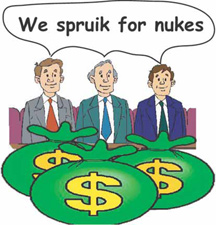 Democrat Magwood Stepping Down From Nuclear Panel abc news, WASHINGTON March 19, 2014 (AP) By MATTHEW DALY Associated Press William Magwood, a member of the Nuclear Regulatory Commission whose criticism helped lead to the ouster of the agency’s former chairman, said Wednesday he soon will be leaving the five-member commission.
Magwood, 52, a Democrat, has served on the NRC since 2010. He was one of four commissioners — two Democrats and two Republicans — who wrote to the White House in 2011, complaining that then-NRC Chairman Gregory Jaczko was a bully responsible for a tense and unsettled work environment, and that women at the NRC felt particularly threatened.
The letter said the four commissioners had “grave concerns” about Jaczko, adding that his bullying style was “causing serious damage” to the agency’s mission to protect health and safety at the nation’s 104 commercial nuclear reactors…….
Magwood is set to start in September as director general of the Paris-based Nuclear Energy Agency, an arm of the Organization for Economic Cooperation and Development, an intergovernmental organization of 31 countries in Europe, North America and Asia……..
it was his public criticism of Jaczko that drew the most attention on Capitol Hill and at the White House…….
Magwood disputed a claim by Senate Majority Leader Harry Reid, D-Nev., that the allegations against Jaczko were politically motivated. Jaczko worked for Reid before taking over as NRC chairman in 2009, and Reid expressed strong support for Jaczko throughout his tenure……
In an interview with the Huffington Post after Jaczko’s resignation, Reid lashed out at Magwood, calling him “a treacherous, miserable liar” who had deceived Reid about opposing Yucca Mountain. “He’s a first-class rat … (and) a tool of the nuclear industry,” Reid said.
Magwood declined to comment Wednesday.
Before joining the NRC, Magwood served in the Clinton administration, where he headed the Energy Department’s Office of Nuclear Energy. He also was a top official at the Edison Electric Institute, a trade association representing the electric industry, and worked at Westinghouse Electric Corp.http://abcnews.go.com/Politics/wireStory/democrat-magwood-stepping-nuclear-panel-22972523
Ukraine crisis could lead to a ‘nuclear impasse’
“It is extraordinarily irresponsible to jump on the bandwagon of this dangerous regional crisis and make Ukrainians feel that they were wrong to rid their newly independent country of nuclear weapons in 1992 and join the NPT as non-nuclear-weapon states,”
US -Russia standoff over Ukraine may trigger nuclear attack UNITED NATIONS: The US-Russian confrontation over Ukraine, which is threatening to undermine current bilateral talks on North Korea, Iran, Syria and Palestine, is also in danger of triggering a nuclear fallout., The International News, 17 MAr 14,
Secretary of State John Kerry told US legislators early this week that if the dispute results in punitive sanctions against Russia, things could “get ugly fast” and go “in multiple directions. ”Perhaps one such direction could lead to a nuclear impasse between the two big powers. Continue reading
Bad timing to let Russia be in control of Britain’s nuclear reactors
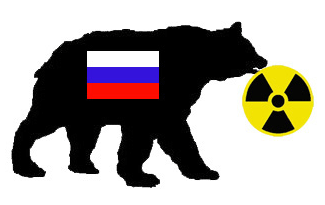 Russian nuclear power in the UK? We might want to think about that Terry Macalister theguardian.com, 13 Mar 14,
We should beware Russia’s politicisation of gas supplies to Ukraine as we contemplate a deal with it to build an atomic plant in Britain
Clearly there is something jarring about the Department of Energy and Climate Change (Decc) boasting about its positive negotiations with the Russians over building a nuclear power station in Britain just as a summit is due to begin in London about what sanctions can be taken against Moscow over its involvement in the Crimea.
If Vladimir Putin is threatening to once again use energy as a political weapon in the Ukraine by cutting off the country’s gas exports, then this is a bad moment to talk about state-owned Rosatom taking a critical stake in UK power infrastructure through the construction of an atomic plant.
Western Europe is already 30% (and in past years 50%) dependent on Russian gas, while London now hosts the headquarters of Gazprom’s global gas trading operation. But surely Britain does not want to open itself up to further dependence on Moscow by allowing its electricity to be generated by Rosatom? Well, few people five years back would have believed state-ownedChinese firms would form key partners in the project to commission the UK’s first new nuclear plant in 27 years at Hinkley Point in Somerset, and yet that is now settled.
So why not the Russians too, the little question of sanctions aside? After all, Rosatom has already signed a memorandum of understanding with the Decc and with nuclear and aerospace-contractor Rolls Royce……..
But the current biggest roadblock to any new nuclear facilities is financial. China and perhaps Russia may be willing to sink billions of pounds into Britain’s nuclear industry as a showcase for exports to the rest of the world, but even they will need help from the UK state like that being offered at Hinkley. The European commission may yet rule that the Decc “strike price” of £89.50 per megawatt hour is an illegal subsidy, which would leave any wider new nuclear programme by the Russians or anyone else dead in the water. http://www.theguardian.com/commentisfree/2014/mar/12/russian-nuclear-power-uk-gas-ukraine-britain
1 This Month



19 November – Webinar – The Reality of Reprocessing
Time: 11:00 AM Pacific Time (US & Canada) / 2:00 PM Eastern / 7:00 PM UK / 8:00 PM CET
Register for the Zoom Event Here



Shut down the radiation-damaged Heysham nuclear reactors now
To see nuclear-related stories in greater depth and intensity – go to https://nuclearinformation.wordpress.com

Say No to NASA’s Reckless Nuclear Reactor on the Moon
Say No to NASA’s Reckless Nuclear Reactor on the Moon
-
Archives
- November 2026 (74)
- October 2026 (302)
- September 2026 (339)
- August 2026 (330)
- July 2026 (355)
- June 2026 (287)
- May 2026 (306)
- April 2026 (356)
- March 2026 (251)
- February 2026 (267)
- January 2026 (308)
- December 2025 (358)
-
Categories
- 1
- 1 NUCLEAR ISSUES
- business and costs
- climate change
- culture and arts
- ENERGY
- environment
- health
- history
- indigenous issues
- Legal
- marketing of nuclear
- media
- opposition to nuclear
- PERSONAL STORIES
- politics
- politics international
- Religion and ethics
- safety
- secrets,lies and civil liberties
- spinbuster
- technology
- Uranium
- wastes
- weapons and war
- Women
- 2 WORLD
- ACTION
- AFRICA
- Atrocities
- AUSTRALIA
- Christina's notes
- Christina's themes
- culture and arts
- Events
- Fuk 2022
- Fuk 2023
- Fukushima 2017
- Fukushima 2018
- fukushima 2019
- Fukushima 2020
- Fukushima 2021
- general
- global warming
- Humour (God we need it)
- Nuclear
- RARE EARTHS
- Reference
- resources – print
- Resources -audiovicual
- Weekly Newsletter
- World
- World Nuclear
- YouTube
-
RSS
Entries RSS
Comments RSS

