Complex nuclear relationship between Pakistan, Saudi Arabia and Iran
Pakistan Has Complicated Nuclear Relationship With Saudi Arabia, Iran VOA, Ayesha Tanzeem April 07, 2015 ISLAMABAD—
Iran’s foreign minister visits Pakistan Wednesday to discuss the conflict in Yemen, which many see as a fight for influence between regional rivals Iran and Saudi Arabia.
Iran also has recently reached a framework nuclear agreement with six world powers to possibly curb the weapons potential of its nuclear program.
Saudi Arabia, in the past, has reportedly sought to form its own nuclear alliances to counter a perceived Iranian threat. A member of the Saudi royal family and the kingdom’s former intelligence chief, Prince Turki al-Faisal, warned a few months ago that the kingdom would seek the same nuclear capabilities that Tehran is allowed to maintain under any deal.
In this regard, Pakistan’s relationship with the kingdom is unusual.
On one hand, it has sold nuclear secrets to Iran in the past through a network run by former chief Pakistani nuclear scientist A.Q. Khan. The network also sold nuclear technology or know-how to Libya and North Korea.
On the other, it has faced allegations of promising Saudi Arabia a nuclear umbrella against Iran.
‘Unacknowledged nuclear partnership’…….http://www.voanews.com/content/pakistan-has-complicated-nuclear-relationship-with-saudi-arabia-iran/2710343.html
Safest option for the world is a nuclear deal with Iran

 A nuclear deal with Iran is the best option By Fareed Zakaria WP April 2 When making up their minds about the nuclear deal with Iran, people are properly focused on its details. But to figure out whether an agreement that limits and inspects Iran’s nuclear program is acceptable, one has to consider seriously the alternatives to it — and there are really only two.
First, a return to sanctions. Let’s say that the U.S. Congress rejects the final agreement reached by all in June. What then? The current sanctions regime against Iran is almost unprecedented in that all the world’s major powers, and Iran’s neighbors, support it. Usually sanctions wear thin over time.
If other countries believe that Iran made a reasonable offer that the United States turned down, they are unlikely to continue to support a tight sanctions regime. Most studies confirm that it is the multilateral aspect of the sanctions against Iran that has made them effective………
Would continued sanctions halt the nuclear program? That’s highly unlikely. Iran has expanded its nuclear program under sanctions for the last two decades. In 2003, Iran had under 200 centrifuges. Today it has 19,000. The restrictions are now tighter — if they last — but Iran’s nuclear establishment is also much larger. Keep in mind that Iran began showing active interest in a nuclear program as early as the 1950s. It now has thousands of nuclear scientists and technicians who work in the field.
That raises option two, a military attack. People speak of a strike on Iranlike Israel’s against an Iraqi reactor in 1981 and a Syrian facility in 2007. But those were single facilities. Iran, by contrast, has a vast nuclear industry, comprising many installations spread across the country, some close to population centers, others in mountainous terrain. The United States would effectively have to go to war with Iran, destroying its air defenses, then attacking its facilities in dozens — perhaps hundreds — of sorties. The bombers would be equipped with highly explosive weapons, demolishing buildings, reactors and laboratories, but also producing considerable collateral damage.
What would be the effect of such an attack? When any country is bombed by foreigners, its people tend to rally around the regime. The Islamic Republic would likely gain domestic support. It would also respond in various ways, through its allies in Afghanistan, Iraq, Lebanon and elsewhere. The attacks might be directed at U.S. troops or allies.
An attack would also mean the splintering of the international coalition against Iran. Russia, China and many other countries would condemn it. Iran would be seen as the victim of an unprovoked invasion. The sanctions would crumble. Its nuclear program would be devastated, but Iran would begin to rebuild it. Even under the current sanctions regime, Iran makes tens of billions of dollars in oil revenues, more than enough to afford to rebuild its facilities.
Finally, once it had been attacked, Tehran would invoke the need for a deterrent against future attacks and would work directly and speedily not on a nuclear program but a nuclear weapon. In his op-ed advocating war with Iran, former U.N. ambassador John Bolton argues that military attacks “should be combined with vigorous American support for Iran’s opposition, aimed at regime change in Tehran.” But bombing and then threatening the Islamic Republic’s existence would likely produce exactly the opposite effect — a government strengthened at home with a clear rationale to acquire a nuclear deterrent. http://www.washingtonpost.com/opinions/a-nuclear-deal-with-iran-is-the-best-option/2015/04/02/bc8292d2-d978-11e4-8103-fa84725dbf9d_story.html
Landmark agreement in nuclear deal between Iran and the West
World powers agree ‘historic’ nuclear deal http://www.skynews.com.au/news/top-stories/2015/04/03/eu–iran-hail-nuclear-talks-breakthrough.html Iran and world powers have agreed on the framework of a potentially historic deal aimed at curbing Tehran’s nuclear drive after marathon talks in Switzerland.t marks a major breakthrough in a 12-year stand-off between Iran and the West, which has long feared Tehran wants to build a nuclear bomb. US President Barack Obama welcomed the ‘historic understanding’ with Iran but cautioned more work needed to be done. ‘If Iran cheats, the world will know it,’ he said in a televised address from the White House on Thursday.
After eight days of talks that sometimes went through the night, Iran agreed to curtail its nuclear program in return for the lifting of punishing sanctions, said EU foreign policy chief Federica Mogherini.
The main outlines agreed at the negotiations in the Swiss city of Lausanne now have to be finalised in a highly complex agreement by June 30.
-US Secretary of State John Kerry hailed a ‘big day’, saying on Twitter that the global powers and Iran ‘now have parameters to resolve major issues on nuclear program. Back to work soon on a final deal’.
Iranian President Hassan Rouhani said the drafting of a full agreement would begin immediately with the aim of completing it by the June 30 deadline. Iranian media said the deal will include Iran slashing by two-thirds, to 6000 from 19,000, the number of centrifuges, which can make fuel for nuclear power but also the core of a nuclear bomb.
Mogherini said the United States and the EU will lift all nuclear-related sanctions on Iran once the UN atomic agency has verified that Tehran has stuck to the ground-breaking deal. Mogherini, in a joint press statement with Iranian Foreign Minister Mohammad Javad Zarif, also said that the design of a new reactor will be changed so that no weapons-grade plutonium can be produced.
The Fordo facility, built deep into a mountain, will remain open but will not be used for enrichment but for research and development.
The so-called P5+1 group – the United States, Britain, China, France and Russia plus Germany – hope that the deal will make it virtually impossible for Iran to make nuclear weapons under the guise of its civilian program. France warned that the sanctions could be reimposed if Tehran does not fully keep its side of the bargain.The office of President Francois Hollande said in a statement that Paris would watch closely to ensure a ‘credible’ and ‘verifiable’ final agreement that prevents Iran from developing a nuclear weapon.
Threats of a nuclear showdown, Russia’s Vladimir Putin tells NATO to back off
Vladimir Putin threatens NUCLEAR showdown over the West’s interference in Ukraine Express UK 2 Apr 15 VLADIMIR Putin has warned Nato to back off from interfering with Crimea or face a NUCLEAR response. By ROB VIRTUE Apr 2, 2015 In a secret meeting with Washington officials, Russia said it was looking at a range of actions over the threat of the West supplying weapons to Ukraine.
They also threatened civil disturbance by Russian nationals in the former Soviet states of Estonia, Latvia and Lithuania, who are feeling increasingly threatened by their powerfulneighbour.
A report of last month’s meeting, seen by The Times newspaper, said attempts by Nato to return the Crimean Peninsula to Ukraine would be met “forcefully including through the use of nuclear force”.
And it said the supply of weapons to Kiev would be seen as “further encroachment by Nato to the Russian border”.
Russia would hope slowly to entice those Russian populations towards Russia without giving Nato a pretext to deploy troops
The report of the meeting
Putin’s generals at the high-level gathering in Germany told the Americans they spoke with the approval of their president……http://www.express.co.uk/news/world/56
Israel’s Binyamin Netanyahu denounces Iran nuclear negotiations
According to the Haaretz news website, the Israeli prime minister claimed there was an “Iran-Lausanne-Yemen” axis, linking the venue for the nuclear talks with Iranian backing for Houthi rebels in Yemen, and said the deal posed a threat to humanity that must be stopped…….
Netanyahu made his remarks as negotiations in Lausanne approached the 31 March deadline for an understanding on the framework for a deal, and took on a new intensity. The UK foreign secretary, Philip Hammond, and his Russian counterpart, Sergei Lavrov, arrived at the Swiss lakeside town on Sunday evening to join the US secretary of state, John Kerry, and foreign ministers from Iran, France, Germany and China, as well as the EU foreign policy chief, Federica Mogherini………
A possible solution is for the foreign ministers to make a joint declaration in Lausanne or in nearby Geneva, to be followed by the publication of an informal “factsheet” of agreed points, that could be officially deniable in Tehran. A former state department official said it could take several days to draft this, so experts could stay behind after the foreign ministers leave, to work on the document before Congress reconvenes in mid-April.
However, a European official at the talks said they were still mired in issues of substance, and had yet to tackle differences over presentation.
“We will remain at the negotiation table for however long it takes to get a good deal,” the Iranian deputy foreign minister, Abbas Araghchi. He added: “All the sides are strongly motivated to reach a compromise.” http://www.theguardian.com/world/2015/mar/29/binyamin-netanyahu-denounces-iran-nuclear-negotiations
Imperative to complete nuclear deal with Iran
The agreement under discussion by the P5+1 with Iran is fundamentally to provide assurances that Iran’s nuclear program has purely civilian, peaceful uses. This is not an arms control treaty because it will not address weapons. While there is evidence to suggest that Iran engaged in nuclear weaponization activities, there is no evidence that Iran now has nuclear weapons. As a non-nuclear-weapon state, party to the Treaty on the Nonproliferation of Nuclear Weapons (NPT), Iran is obligated not to manufacture, acquire, or otherwise obtain nuclear weapons. The agreement under discussion will impose requirements on Iran in addition to those it has as an NPT party. [Iran hopes the deal will be endorsed by a Security Council resolution and not involve the U.S. Congress since the five members of the United Nations Security Council are involved.]
 We Need To Get This Iranian Nuclear Deal Done, Forbes, James Conca, 26 Mar 15 By the sounds of the rhetoric going back and forth in the media, you’d think the Iranian Nuclear Deal we’re trying to put in place is a horrible loss for the United States, and that we’re being taken for a ride by the wily Ayatollahs.
Or that previous deals with Iran hadn’t ever worked.
Nothing could be farther from the truth. Last year, the five members of the United Nations Security Council, the United States, Great Britain, France, China and Russia, plus Germany, called the P5+1 Group, reached an interim deal with Iran to stop their nuclear weapons program while a larger deal could be brokered. Four key provisions were obtained in this deal and all four have occurred:……… Continue reading
Russia’s economic woes delaying the build of nuclear reactors in Turkey
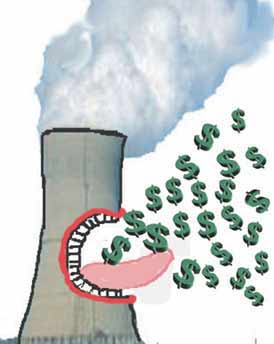 Russian Nuclear Plants in Turkey ‘Not Ready Before 2022’, Moscow Times Reuters Mar. 23 2015 Turkey’s first nuclear power plant is unlikely to be ready before 2022, energy officials said on Monday of the $20-billion project that has been beset by regulatory hurdles and complicated by Russia’s financial woes…..Rosatom initially pledged to have the first of the four reactors in the southern Turkish town of Akkuyu ready by 2019.
A senior Turkish energy official said the project would not be online before at least 2022, given that ground-breaking has yet to happen. “The first reactor can be online at least seven years after the ground-breaking so the 2019-2020 date is impossible,” the official said…..
-
 Economic Worries
Analysts say Russia’s economic troubles because of collapsing oil prices and Western sanctions over Ukraine may also have weighed on Rosatom’s finances.
“The Akkuyu timeline was — and remains — completely unrealistic,” Aaron Stein, associate fellow at British defense and security think-tank the Royal United Services Institute (RUSI), said. “The issue has, in recent months, become far more complicated because of Russia’s economic deterioration.”……http://www.themoscowtimes.com/opinion/business/article/russian-nuclear-plants-in-turkey-not-ready-before-2022/517868.html
Financially in trouble AREVA is nevertheless advising on marketing Small Modular Nuclear Reactors
 NuScale hires an energy giant to help get its nuclear plant certified Feb 17, 2015, Wendy Culverwell
Staff Reporter-Portland Business Journal Portland-based NuScale Power has entered an agreement with AREVA to support testing and design of its nuclear power system as it prepares to submit a Design Certification Application to the U.S. Nuclear Regulatory Agency….The agreement gives NuScale access to AREVA’s fuel technology as well as its nuclear testing capabilities…..
NuScale Power is developing a small, modular nuclear power system that is built under factory conditions and deployed to a client’s site….
It expects to submit the document by late 2016 and to secure approval in time for a 2020 commercial launch…..

Fluor Corp. (NYSE: FLR) is its majority investor.http://www.bizjournals.com/portland/blog/sbo/2015/02/nuscale-hires-an-energy-giant-to-help-get-its.htm
Jordan commits to buying nuclear fuel from Russia for 10 years, in $10 Billion Deal on Nuclear Power Plant
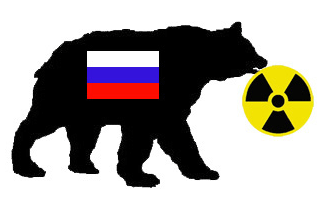 Jordan, Russia Sign $10 Billion Deal on Nuclear Power Plant, abc news AMMAN, Jordan — Mar 24, 2015, By SAM McNEIL Associated Press Jordan signed a $10 billion deal with Russia on Tuesday to build the kingdom’s first nuclear power plant, with two 1,000-megawatt reactors in the country’s north.
The deal, signed in the Jordanian capital, Amman, with Russia’s state-owned Rosatom company caps efforts of the energy-poor kingdom to increase energy sufficiency and reduce imports……
Under the deal, Jordan must buy fuel from Rosatom for the reactors for 10 years, after which it may seek other suppliers. The Jordanian government will have a slight majority ownership, with Rosatom owning 49 pecent of the plant, according to the Jordan Times.
Earlier this year, Rosatom signed an agreement, the details of which are secret, to build two reactors in Hungary. And last month, during Russian President Vladimir Putin’s visit to Egypt, the two countries signed a memorandum of understanding to build Egypt’s first nuclear power plant at an existing nuclear site in Dabaa, on the Mediterranean coast where a research reactor has stood for years. http://abcnews.go.com/International/wireStory/jordan-russia-sign-10-billion-deal-nuclear-reactors-29874766
Iran nuclear talks don’t mention the factor of sabotage
Unstated Factor in Iran Talks: Threat of Nuclear Tampering, NYT, By DAVID E. SANGER and WILLIAM J. BROADMARCH 21, 2015 “………if negotiators succeed in reaching a deal with Iran, does the huge, covert sabotage effort by the United States, Israel and some European allies come to an end? “Probably not,” said one senior official with knowledge of the program. In fact, a number of officials make the case that surveillance of Iran will intensify and covert action may become more important than ever to ensure that Iran does not import the critical materials that would enable it to accelerate the development of advanced centrifuges or pursue a covert path to a bomb.
In the case of the covert effort to purchase the specialty aluminum, the Iranians actually discovered the switch before they installed the tubes, and now say they are racing ahead to develop a next-generation centrifuge that would produce nuclear fuel far faster, a prospect that has become a major sticking point in negotiations.
In public, the Obama administration says economic sanctions on oil exports and financial transactions drove Iran to negotiations — and the prospect of getting those restrictions lifted are the best chance of persuading Iran’s leadership to take a diplomatic deal limiting Iran’s production of nuclear fuel for a decade or more.
In private, officials say sabotage was the other big stick — a persistent effort to slow Iran’s progress, and a signal that the United States had other ways to deal with the nuclear program. On occasion they allude to it, as Stephen J. Hadley, President Bush’s national security adviser, did at a presentation on sanctions last year, when he talked about how the financial penalties were supplemented by “things directed at their program, which we can’t talk about.”
Although American officials remain suspicious of Iran operating a covert nuclear facility, they say they see no solid evidence of a hidden operation today.
It is entirely possible that if an accord is reached, President Obama could call a pause in what has been more than a decade of attacks, the most famous of which was a yearslong effort, code-named Olympic Games, which inserted into Iranian facilities the most sophisticated cyberweapons ever deployed. One of them was the Stuxnet worm that disabled about 1,000 centrifuges, but also spread around the world, revealing the program.
But reaching an accord is quite different than reaching a state of trust. Inside Iran, there will be pressure to keep making slow progress on a nuclear program that is central to the ambitions of the Iranian Revolutionary Guard Corps and thousands of scientists who have labored for years. And in the uneasy alliance among Israel, the United States and Europe there will be continued debate about whether to supplement diplomatic pressure with covert action to keep Iran from getting to the threshold of being able to build a weapon.
For the past decade or so, the covert war to halt Iran’s nuclear program has included high-profile assassinations of their top scientists — widely attributed to Israel — and cyberattacks.
The assassinations suddenly stopped a few years ago, after they were publicly denounced by the United States. The cyberattack efforts may be continuing, probably at a lower level: a recently disclosed document from the National Security Agency, written in 2013, describes “NSA’s planned battle rhythm” to attack Iran’s systems in case of a crisis, and “Iran’s discovery of computer network exploitation tools on their networks in 2012 and 2013.” They make it clear that the N.S.A. has played a crucial role in the negotiations, in “support to policy makers” during negotiation on Iran’s nuclear program.
The ultimate goal of the covert program of industrial sabotage, according to intelligence and weapons specialists, is to produce damage obscure enough to evade easy detection, but extensive enough to result in random failures that seriously impede Iran’s nuclear drive………http://www.nytimes.com/2015/03/22/world/middleeast/unstated-factor-in-iran-talks-threat-of-nuclear-tampering.html?_r=0
Doubts that American nuclear companies will sell reactors to India
IS THE INDIA NUCLEAR AGREEMENT REALLY THE ‘BREAKTHROUGH’ OBAMA PROMISED? Chauthi Duniya, March 20th, 2015 Analysts and experts familiar with the negotiations say that the legal issues remain so complex that private U.S. companies may continue to shy away from new deals in India,….
The Indian Government has already slated sites for nuclear power facilities for Westinghouse Toshiba in the western state of Gujarat and GE Hitachi Nuclear Energy in the state of Andhra Pradesh. “My feeling is that there’s not as much there,” said Daryl Kimball, executive director of the nonprofit Arms Control Association, a non-proliferation watchdog group. “The real test is, will GE or Westinghouse say ‘this is good enough for us’ or not and whether they will sign contracts.”…….
The key issue will be whether the conflict between international law and Indian law can be waved away by a memorandum from India’s Attorney General. The memorandum would have to say that the 2010 liability law “doesn’t mean what it says,” said a Washington lawyer familiar with the issues but who asked for anonymity to protect his professional relationships. Continue reading
Exposing the nuclear lobby’s agenda for Australia
What does the nuclear lobby want, for South Australia?, Online Opinion,
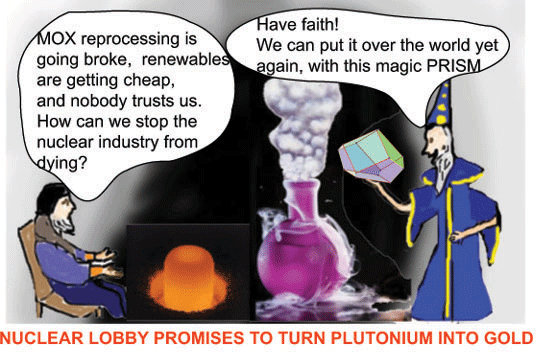
| By Noel Wauchope 19 March 2015 “….It is difficult to work out exactly what is planned in nuclear industry expansion for South Australia. The plans involve some or all of these industries: uranium enrichment, nuclear power, importation and storage of nuclear wastes, 4th Generation nuclear reactors, and expansion of uranium mining. However, we can be grateful to ABC Radio’s Ockham’s Razor programme, as it provided the nuclear lobby with a platform for setting out succinctly their intentions. Oscar Archer, a well -known voice for the nuclear industry, explains…… Australia should get a fleet of PRISM small nuclear reprocessing reactors – Archer’s plan is for “IFS+IFR: Intermediate Fuel Storage and Integral Fast Reactor, namely the commercially offered PRISM breeder reactor from General Electric Hitachi.”What he means here is the Power Reactor Innovative Small Module Archer then sets out the sequence of events that would lead to the establishment of this fleet. In Archer’s words “it goes like this. Australia establishes the world’s first multinational repository for used fuel – what’s often called nuclear waste” However, he notes that “This is established on the ironclad commitment [my emphasis] to develop a fleet of integral fast reactors to demonstrate the recycling of the used nuclear fuel”…… the sting in the tale of his plan is really exactly what he calls the first step – the overturning or weakening of Federal and State laws. The Federal Act protects against nuclear reprocessing and expanded nuclear industries. ARPANSA sets safety standards for exposure to ionising radiation. South Australian State Law would have to be overturned, too – under the Nuclear Waste Storage Facility (Prohibition) Act 2000 The central premise of Oscar Archer’s promotion of this nuclear chain of events is that Australia should go out on a limb – be the first country in the world to import nuclear wastes and to order a mass purchase of PRISM reactors….. The PRISM reactor exists only on paper and its development is decades away from completion. David Biello, in Scientific American comments “Ultimately, however, the core problem may be that such new reactors don’t eliminate the nuclear waste that has piled up so much as transmute it. Even with a fleet of such fast reactors, nations would nonetheless require an ultimate home for radioactive waste, one reason that a 2010 M.I.T. report on spent nuclear fuel dismissed such fast reactors.”
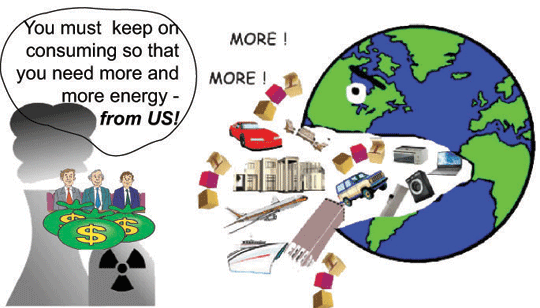
The PRISM can’t melt down in the way that conventional nuclear reactors can. However, its essential use of plutonium entails hazardous transport – vulnerability to terrorism and use as a “dirty” bomb. And – finally the PRISM reactor itself becomes radioactive waste requiring security and burial. There is another, underlying premise here that needs to be examined. This is the premise that it is OK for Australia and the world to continue to consume energy endlessly…….
The plan purports to reduce greenhouse emissions by means of thousands of little reactors, (and big ones) – but their development is so many decades away that it would be too late for climate change action. We are left with a plan that looks suspiciously as if the troubled nuclear industries of USA, Canada and UK have selected Australia as the guinea pig for a plan to reverse their industries’ present decline.
|

US Congress is urged not to sabotage Iran nuclear negotiations
Iran nuclear talks: White House urges Congress to stand down, Guardian, Paul Lewis in Washington and Julian Borger in Lausanne, 16 Mar 15 Obama administration warns Republicans could ‘potentially prevent’ deal that has been years in the making and damage relations with allies across the world. The White House has warned that Republicans in Congress could “potentially prevent” a groundbreaking deal to stop Iran from obtaining a nuclear weapon, scuppering an agreement that has been years in the making and damaging relations with allies across the world.Hours before talks were due to resume in Switzerland on Sunday, White House chief of staff Denis McDonough sent a letter to a senior Republican critic, urging him to shelve legislation that would clip the administration’s wings.
Bob Corker, chairman of the Senate foreign relations committee, is bringing a bill that would require Congress to vote on any deal with Iran and remove the waiver authority that allows President Barack Obama to suspend sanctions imposed by the legislature.
“The legislation would potentially prevent any deal from succeeding by suggesting that Congress must vote to ‘approve’ any deal, and by removing any existing sanctions waver authorities that have already been granted to the president,” McDonough said.
“We believe the legislation would likely have a profoundly negative impact on the ongoing negotiations – emboldening Iranian hardliners.”
Calling on Corker to hold off the bill until a deal is reached, McDonough also warned that if the US was blamed for negotiations falling apart, Washington would be unable to muster the international support needed to ratchet-up sanctions on Tehran.
“Put simply, it would potentially make it impossible to secure international cooperation for additional sanctions, while putting at risk the existing multilateral sanctions regime,” he said…….
A framework agreement between the international powers and Iran is supposed to set out the key element of a deal in which Iran accepts limits of its nuclear activities for a number of years (expected to be at least 10) in return for sanctions relief. The negotiators would then have until the end of June to complete detailed annexes on how the deal would be implemented and verified.
With days to go until the deadline for a framework deal, there are still said to be gaps remaining on the central issues of Iran’s future uranium enrichment capacity and the question of which sanctions will be lifted and when. Diplomats from all sides have voiced readiness to stay in Lausanne through the Persian New Year holiday, Nowruz, which begins next weekend, but western negotiators are reluctant to push the first deadline beyond the end of the month.
“We believe very much that there’s not anything that’s going to change in April or May or June that suggests that at that time a decision you can’t make now will be made then,” Kerry told CBS News before arriving in Lausanne.
“If it’s peaceful, let’s get it done. And my hope is that in the next days that will be possible.” http://www.theguardian.com/world/2015/mar/15/iran-nuclear-talks-white-house-warns-congress-stand-down
Asian and Pacific green Parties unite in aim for nuclear free region
 Green Parties call for a nuclear free region on anniversary of Fukushima, Global Greens 10 March, 2015 “……The Green Parties of the Asia Pacific region offer our sincere condolences for the tragedy suffered, and our solidarity with the people and Green Party of Japan.
We use this anniversary to remind the Governments of the world, that it is the responsibility of all nations to ensure the safety of our planet.
There is no doubt, the suffering for the Japanese people has been immense, especially for those living in and around Fukushima, and it is not yet over. The world has already witnessed suffering following nuclear disasters in Chernobyl (Ukraine), Khystym (Russia), Sellafield (United Kingdom), and Three Mile Island (USA). However, there are currently 71 new nuclear plants under construction around the world, the majority of which are in the Asia Pacific region (China 26, Taiwan 2, India 6, Japan 2, Pakistan 2, South Korea 5). (3)
It is time we fully committed to a nuclear-free world.
 Whether your country is listed as one of these constructing further nuclear plants or not, we are all implicated in the nuclear supply chain – through uranium mining, refining, power generation, radioactive waste, nuclear weapons, or through complicity by not discouraging the practice of our trading partners.
 Green Parties around the globe oppose the expansion of nuclear power and are working to rapidly phase it out. Nuclear energy is not the emissions-free solution that the world needs to address climate change, in fact, it is a net producer of greenhouse gases.(4)
As we have seen with Fukushima, the human and planetary costs are too high, and when examining the nuclear supply chain, it is simply ineffective at reducing emissions.
We need to stay focused on transitioning to clean renewable energy sources – these are not only safer, but offer a more equitable solution. We can achieve economic development with genuine quality of life through a sustainable smart green economy. Examples of this kind of development include community-based, co-operative, renewable energy operations complemented by reduced energy consumption through electricity saving government policies.
At this critical moment, we ask the people Asia Pacific to call on their governments to:
- Commit to a nuclear-free world.
- Move to clean equitable renewable energy solutions for your country
- Provide democratic process in citizens’ referenda on nuclear power.
- Ensure information transparency, participatory democracy, social and environmental justice for residents living near power plants and nuclear waste fields.
- Prioritise in decision-making the wellbeing of our planet and future generations.
Signatories:
The Asia-Pacific Greens Federation (APGF) Coordination Committee
The APGF’s members are:
- Australia: Australian Greens
- India: Uttarakhand Parivartan Party (UKPP)
- Indonesia: Sarekat Hijau (Indonesian Green Union)
- Japan: Greens Japan
- Korea, Republic of: Green Party Korea
- Mongolia: Mongolian Green Party
- Mongolia: Civil Will Green Party of Mongolia
- Nepal: Nepali Greens (Green Civil Society)
- New Zealand: Green Party of Aotearoa New Zealand
- Pakistan: Pakistan Green Party
- Taiwan: Green Party Taiwan http://www.globalgreens.org/news/green-parties-call-nuclear-free-region-anniversary-fukushima
European Commission hampers Hungary’s €12bn nuclear deal with Russia
EU blocks Hungary’s €12bn nuclear deal with Russia, Ft. March 12, 2015 Andrew Byrne in Budapest and Christian Oliver in Brussels The EU has blocked Hungary’s €12bn nuclear deal with Russia, in a decision that is likely to inflame tensions between the Kremlin and Brussels.
The ruling from the European Commission is a setback for Viktor Orban, Hungary’s prime minister, who has courted the Kremlin despite the conflict in Ukraine……..
Arguments have raged for weeks over the technical, financial and fuel provision agreements of the contracts with Rosatom. All nuclear fuel supply contracts signed by EU member states must be approved by Euratom, which imposes financial and technical requirements on fuel suppliers.
In the end, Euratom refused to approve Hungary’s plans to import nuclear fuel exclusively from Russia. Hungary appealed against the decision, but according to three people close to the talks, the European Commission has now thrown its weight behind Euratom’s rejection of the contract.
The decision, details of which were kept secret, came at a meeting in Brussels last week of all 28 EU commissioners, including Hungary’s Tibor Navracsics.
The result is to block the whole Paks II expansion. To revive it, Hungary would need to negotiate a new fuel contract or pursue legal action against the commission.
1 This Month




PLEASE OPPOSE HR 8255 AND S.3639 – bills would accelerate satellite deployment, with no environmental review or safeguards – https://ncstd5li.quorum.us/campaign/169331/
To see nuclear-related stories in greater depth and intensity – go to https://nuclearinformation.wordpress.com
-
Archives
- September 2026 (339)
- August 2026 (330)
- July 2026 (355)
- June 2026 (287)
- May 2026 (306)
- April 2026 (356)
- March 2026 (251)
- February 2026 (267)
- January 2026 (308)
- December 2025 (358)
- November 2025 (359)
- October 2025 (375)
-
Categories
- 1
- 1 NUCLEAR ISSUES
- business and costs
- climate change
- culture and arts
- ENERGY
- environment
- health
- history
- indigenous issues
- Legal
- marketing of nuclear
- media
- opposition to nuclear
- PERSONAL STORIES
- politics
- politics international
- Religion and ethics
- safety
- secrets,lies and civil liberties
- spinbuster
- technology
- Uranium
- wastes
- weapons and war
- Women
- 2 WORLD
- ACTION
- AFRICA
- Atrocities
- AUSTRALIA
- Christina's notes
- Christina's themes
- culture and arts
- Events
- Fuk 2022
- Fuk 2023
- Fukushima 2017
- Fukushima 2018
- fukushima 2019
- Fukushima 2020
- Fukushima 2021
- general
- global warming
- Humour (God we need it)
- Nuclear
- RARE EARTHS
- Reference
- resources – print
- Resources -audiovicual
- Weekly Newsletter
- World
- World Nuclear
- YouTube
-
RSS
Entries RSS
Comments RSS

