UN security council fails to prevent ‘snapback’ nuclear sanctions on Iran
Iranian foreign ministry urges further diplomacy and says return to pre-2015 measures are unlawful and unfounded.
William Christou, 20 Sept 25, https://www.theguardian.com/world/2025/sep/20/un-security-council-fails-to-prevent-snapback-nuclear-sanctions-on-iran
Last month, France, Germany and the UK triggered the snapback provision of the deal after Iran refused to cooperate with International Atomic Energy Agency (IAEA) inspectors, which is tasked with monitoring implementation of the deal.
Two weeks later, Iran agreed to resume cooperation with the IAEA, but it has not yet been able to carry out all of its inspection activities and the body’s ability to operate in the country has been restricted for years.
Since the initiation of the snapback mechanism, intense diplomacy has taken place between mainly European powers and Iran to reach a deal to prevent the sanctions. Talks have not been fruitful, though the UK indicated on Friday after the vote that it was still open to diplomacy.
“The United Kingdom remains committed to a diplomatic solution. We are ready for further engagements diplomatically in the next week and beyond to seek to resolve differences,” said Barbara Woodward, the British ambassador to the UN.
The Iranian foreign ministry said in a Friday statement that it had consistently kept the path of diplomacy open and that it viewed the reimposition of sanctions as “unlawful, unfounded and proactive”.
Iran is still dealing with the impact of the 12-day Iran-Israel war, when Israel launched surprise attacks that it said was a pre-emptive move against the country’s nuclear programme. Iran insists that its nuclear programme is of a civilian nature and that it does not seek to create a nuclear bomb.
Can the US, Russia and China break their nuclear talks impasse?
With a key US-Russia arms treaty due to expire in February, the world is at risk of entering a new era of strategic instability, analysts warn.
Shi Jiangtao, SCMP, 21 Sep 2025
US President Donald Trump’s summit in Alaska last month with Russian leader Vladimir Putin failed to revive long-stalled nuclear negotiations or advance efforts to preserve the last major arms control pact between Washington and Moscow, which is set to expire in February.
Trump’s subsequent push for trilateral “denuclearisation” talks involving China elicited a firm refusal from Beijing, underscoring challenges to extending the New Strategic Arms Reduction Treaty (New START) amid fears of a fresh nuclear arms race, analysts said.
Following the summit, Beijing, with its long-standing policy of “no first use” and a nuclear strategy rooted in self defence, spurned Trump’s proposal, with Chinese foreign ministry spokesman Guo Jiakun calling it “neither reasonable nor realistic”…………………………(Subscribers only) https://www.scmp.com/news/china/diplomacy/article/3326243/can-us-russia-and-china-break-their-nuclear-talks-impasse?module=perpetual_scroll_0&pgtype=article
Saudi pact puts Pakistan’s nuclear umbrella into Middle East security picture
With many Arab nations feeling a rising threat from Israel, the
Saudi-Pakistan defense pact announced this week brings Pakistan – and its
nuclear umbrella – into the region’s security equation. The “Strategic
Mutual Defense Agreement” signed between Pakistan and Saudi Arabia on
Wednesday effectively marries Riyadh’s money with Pakistan’s giant
nuclear-armed military, analysts said.
Reuters 19th Sept 2025, https://www.reuters.com/business/aerospace-defense/saudi-pact-puts-pakistans-nuclear-umbrella-into-middle-east-security-picture-2025-09-19/
America’s overreach: bullying allies to bury Palestine’s statehood
21 September 2025 Michael Taylor, https://theaimn.net/americas-overreach-bullying-allies-to-bury-palestines-statehood/
As the United Nations General Assembly convenes on September 22, the world watches a pivotal moment in the Israel-Palestine conflict. But instead of diplomacy, the U.S. Congress has chosen intimidation. On September 18, Republican leaders fired off a letter* to the leaders of Australia, Canada, France, and the UK, demanding they scrap plans to recognise Palestine as a state. Labeled a “reckless policy” that “empowers Hamas” and “rewards terrorism,” the missive warns of “punitive measures” if these allies dare defy Washington. This isn’t leadership – it’s overreach, a desperate bid to prop up a failing status quo amid Gaza’s humanitarian catastrophe.
Let’s be clear: This letter reeks of hypocrisy and imperial arrogance. The U.S., which has vetoed UN resolutions on Palestinian rights for decades, now lectures sovereign nations on their foreign policy. With over 64,000 Palestinian deaths since October 2023 and famine gripping Gaza, recognising Palestine isn’t a “reward” for violence – it’s a moral imperative for justice and a two-state solution. France, Canada, the UK, and Australia have signaled their intent to join 147 other nations in this recognition, conditional on ceasefires and demilitarisation. Yet here comes Congress, threatening economic retaliation and demanding crackdowns on “antisemitic activity” as if free speech were collateral damage. It’s a playbook straight out of the autocrat’s handbook: bully your “allies” into silence while ignoring the International Court of Justice’s rulings against Israel’s occupation.
The backlash has been swift and scorching, exposing the letter’s isolation. On X (formerly Twitter), users worldwide branded it “disgraceful” and “compromised,” with one Australian poster calling them “vile creatures” enabling “shredding babies with impunity.” Palestinian-American commentator Abier Khatib fired back: “Any country with self-respect… should be telling them, respectfully, to shove it.” Independent journalist Chris Menahan highlighted the veiled threats: “may invite punitive measures in response,” a line that reeks of mafia tactics. Even in Canada, voices decried it as “disgraceful interference in our sovereignty,” urging a firm condemnation. Spanish activists noted the “Zionist spokespersons” amplifying these threats online, turning social media into a battleground for outrage.
Domestically, the pushback is even more telling. Just hours after the letter, Democratic senators led by Jeff Merkley introduced the first-ever Senate resolution urging President Trump to recognise a demilitarised Palestinian state alongside a secure Israel – a direct rebuke to Republican sabre-rattling. “Settlement expansion, annexation, and rejection of Palestinian statehood are incompatible with peace,” they argued, spotlighting the Gaza crisis as a tipping point. House Democrats, over a dozen strong, echoed this in August with a letter to Trump and Secretary Rubio, insisting Palestinian self-determination is “long overdue” and essential to end the war and famine. Progressives such as Ro Khanna warned against U.S. isolation: “We cannot be isolated from the rest of the free world.” UN experts piled on, slamming U.S. visa denials for Palestinian officials as discriminatory and a violation of diplomacy ahead of the UNGA.
Of course, not everyone’s applauding the revolt. Pro-Israel hawks in Congress and on X cheer the letter as a bulwark against “Hamas’s intransigence,” with one user crowing, “The gloves are off… What now @AlboMP?” They argue unilateral recognition skips negotiations and endangers Israel. Fair point? Hardly. Hamas’s October 7 atrocities were horrific, but Israel’s response – collective punishment on steroids – has radicalised a generation and eroded global sympathy. The two-state solution isn’t dying from Palestinian bids; it’s being suffocated by endless settlements and vetoes. As the General Assembly endorses the New York Declaration for Palestinian statehood, even abstainers like Latvia affirm solidarity with civilians on both sides.
This overreach isn’t just about Palestine – it’s a symptom of America’s fraying empire. Trump’s administration, with its strongman sympathies, treats allies like vassals, demanding loyalty to a policy that’s bankrupted U.S. credibility. The backlash proves the world is waking up: From X rants to Senate floors, the chorus is clear – enough with the threats; let justice prevail.
Australia, Canada, France, and the UK: Stand firm. Recognise Palestine. And to Americans: Pressure your leaders to join the 147 nations choosing humanity over hegemony. The UNGA isn’t a stage for U.S. bullying – it’s a forum for the silenced to speak. Silence it now, and the echoes of Gaza will haunt us all.
*You can read the letter here.
Iran withdraws resolution banning attacks on nuclear sites following US pressure
Iran decided at the last minute Thursday to withdraw a resolution
prohibiting attacks on nuclear facilities that it had put forward along
with China, Russia and other countries for a vote before an annual
gathering of the U.N. nuclear watchdog’s member nations.
Western diplomats,
who spoke on condition of anonymity to discuss internal deliberations, said
the U.S. has been heavily lobbying behind the scenes to prevent the
resolution from being adopted. The U.S. has raised the possibility of
reducing funding to the International Atomic Energy Agency if the
resolution was adopted and if the body moved to curtail Israel´s rights
within the agency, the diplomats said.
Daily Mail 18th Sept 2025, https://www.dailymail.co.uk/wires/ap/article-15112913/Iran-withdraws-resolution-banning-attacks-nuclear-sites-following-US-pressure.html
Iran, allies submit draft IAEA resolution to ban attacks on nuclear sites
Sep 16, 2025, https://www.iranintl.com/en/202509162278
Iran and five other countries have submitted a draft resolution to the International Atomic Energy Agency’s annual general conference calling for a ban on any attack or threat of attack against nuclear sites under UN safeguards, Iran’s foreign ministry said on Tuesday.
Foreign ministry spokesperson Esmaeil Baghaei said on X that the text, backed by China, Russia, Venezuela, Nicaragua and Belarus, was intended “to defend the integrity of the NPT” and reaffirmed the inalienable right to develop nuclear energy for peaceful purposes.
“All states must refrain from attacking or threatening to attack peaceful nuclear facilities in other countries,” Baghaei wrote. “These principles must be upheld; it is high time that the international community acted firmly to prevent the normalization of lawlessness.”
Draft resolution
The draft resolution condemns “the deliberate and unlawful attacks carried out in June 2025 against nuclear sites and facilities of the Islamic Republic of Iran,” calling them clear violations of the UN Charter and the IAEA Statute.
It says nuclear sites under IAEA safeguards “shall not be subject to any kind of attack or threat of attack,” adding that such actions pose serious risks to international peace and security, human health, the environment, and the credibility of the non-proliferation regime.
The document also recalls UN Security Council Resolution 487 of 1981, which condemned Israel’s bombing of Iraq’s Osirak reactor, and reaffirms previous IAEA decisions prohibiting attacks on safeguarded facilities.
It further stressed that all questions regarding nuclear programs should be resolved “exclusively through dialogue and diplomacy, as the only viable path.”
Israel launched a surprise military campaign on June 13 targeting Iranian nuclear and military sites, including senior commanders and nuclear officials in a conflict that lasted 12 days. On June 22, the United States joined the campaign, striking nuclear facilities in Fordow, Natanz and Isfahan. Washington brokered a ceasefire on June 24.
Iran’s nuclear chief Mohammad Eslami told the conference on Monday that Tehran’s atomic program “cannot be eliminated through military action,” accusing Israel and the United States of launching illegal strikes on Iranian sites in June.
“Despite our formal request, the agency did not condemn the attacks by the United States and Israel on the nuclear centers of the Islamic Republic,” Eslami said, calling the IAEA’s silence “a stain on the Agency’s history.”
Eslami said Tehran would use the conference to highlight what he called unlawful measures against its nuclear industry and to push for adoption of the draft.
The debate comes as Iran’s recent cooperation deal with IAEA chief Rafael Grossi awaits implementation and European powers press ahead with the UN “snapback” mechanism that could reinstate sanctions on Tehran by late September.
UN genocide report puts Starmer in the dock.
Declassified UK , 19 Sept 25.
This week, the UN commission of inquiry concluded on reasonable grounds that “the Israeli authorities and Israeli security forces have committed and are continuing to commit [acts] of genocide against the Palestinians in the Gaza Strip”. The acts include killing members of the group, causing serious bodily or mental harm, deliberately inflicting conditions of life calculated to bring about its physical destruction, and imposing measures intended to prevent births.UN member states are consequently urged to employ all means reasonably available to them to prevent genocide in Gaza, including the cessation of arms transfers and the facilitation of legal investigations into Israel’s actions. The commission of inquiry was set up four years ago by the UN human rights council, and is staffed by three independent experts. While it does not speak officially for the UN, it strongly reinforces the growing consensus around the genocidal nature of Israel’s war. So what are the implications for Britain? Perhaps most significantly, the commission flatly rejects the UK government’s argument that the duty to prevent genocide is only triggered when an international court has established that a genocide has taken place. “Since at least January 2024, when the International Court of Justice ordered its first provisional measures, all states… have been on notice of a serious risk that genocide was being or would be committed”, the report notes. |
The UK government, in other words, has misconstrued its obligations under the Geneva Convention to prevent and punish genocide. Indeed, how is it possible to prevent genocide if you wait until it has taken place? The report also notes how “Israeli security forces shot at and killed civilians, including children who were holding makeshift white flags”. Days before, a Dutch newspaper found that at least 114 Palestinian children had been hit with single gunshot wounds to the head or chest. The UK government is clearly aware this is occurring, but it has covered up its own evidence on Israel’s killing of minors. |
In June, the government’s lawyers refused to submit a research report to court on “Long-Range Shootings or Shootings of Minors”. Subsequent requests from MPs and the media for the report have been repeatedly refused.
And then there’s the Israeli president, Isaac Herzog, who was welcomed to London last week by prime minister Keir Starmer.
The report found that Herzog, alongside Israeli prime minister Benjamin Netanyahu and former defence minister Yoav Gallant, “incited the commission of genocide and that Israeli authorities… failed to take action against them to punish this incitement”.
These are serious findings, and they require a serious response from the UK government. Yet ministers, unsurprisingly, have largely shied away from talking about the report – perhaps unwilling to incriminate themselves further.
Saudi Arabia, nuclear-armed Pakistan sign mutual defence pact
Saudi Arabia and nuclear-armed Pakistan signed a formal mutual defense pact on Wednesday, in a move that significantly strengthens a decades-long
security partnership amid heightened regional tensions. The enhanced
defense ties come as Gulf Arab states grow increasingly wary about the
reliability of the United States as their longstanding security guarantor.
Israel’s attack on Qatar last week heightened those concerns.
Reuters 17th Sept 2025,
https://www.reuters.com/world/asia-pacific/saudi-arabia-nuclear-armed-pakistan-sign-mutual-defence-pact-2025-09-17/
Time is now for Iran to act on inspections agreement, IAEA chief says
International Atomic Energy Agency (IAEA) chief Rafael Grossi on Monday
urged Iran to immediately implement the agreement it signed with the UN
watchdog last week to resume inspections at the country’s bombed nuclear
sites.
Iran International 15th Sept 2025,
https://www.iranintl.com/en/202509154534
China, Russia urge Europe to halt UN snapback after Iran-IAEA deal
Russia called on Britain, France and Germany on Tuesday to halt their move
to restore United Nations sanctions on Iran after Tehran and the
International Atomic Energy Agency (IAEA) announced an agreement to resume nuclear inspections suspended since June.
Iran International 10th Sept 2025, https://www.iranintl.com/en/202509103977
The future of Gaza as seen from the White House

the Gaza Strip would be “administered by the United States for at least 10 years while it is transformed into a glittering tourist resort and a center for high-tech manufacturing and technology.”
The future Gaza project, according to its real estate developers (the three professionals Jared Kushner, Donald Trump, and Steve Witkoff), is worthy of Dubai. Many transnational corporations have already joined forces.
by Thierry Meyssan, Voltaire Network | Paris (France) | 3 September 2025, https://www.voltairenet.org/article222723.html
This possible operation is in line with the vision of the “Jacksonians.” In 1830, President Andrew Jackson (1829-1837) enacted the Indian Removal Act. To end the Indian wars, he proposed assigning them reservations rather than continuing to massacre them. The transfer of the Indians was particularly deadly for the Cherokees (the “Trail of Tears” episode), but they accepted this form of peace, while almost all other Indian tribes rejected it. Two centuries later, only the Cherokee tribe has become wealthy and integrated, while all the other tribes have been marginalized. Without a doubt, Jackson’s method succeeded in ending the genocide of the Indians, but at what cost?
Trump’s plan, currently in development, is just as shocking to Palestinians as Jackson’s was to the Cherokee, but it offers a solution where no one else has. Will Palestinians, who have been fighting for generations to assert their rights, be satisfied with this? International law states that no people can be expelled from their own land. The United Nations General Assembly has consistently guaranteed the right of return for those who were forcibly expelled in 1948—UN General Assembly Resolution 194 (December 11, 1948) and UN Security Council Resolution 237 (June 14, 1967). Seven years ago, Palestinian civilians organized the “March of Return.” The Israel Defense Forces (IDF) fired on a peaceful crowd, killing at least 120 people and wounding 4,000. It is obviously illusory to believe that such a people will easily rally to this project.
So the participants at the White House meeting considered paying $23,000 per person to any family willing to go into exile. Contacts have already been made with Libya, Ethiopia, South Sudan, Indonesia, and Somaliland, although none of these states has confirmed this. The Trump team is considering voluntarily relocating a quarter of the Gaza population in this way.
According to the Financial Times, the Tony Blair Institute for Global Change (TIT) and the Boston Consulting Group (BCG) held joint working meetings on the Gaza Riviera project, known as The Gaza Reconstitution, Economic Acceleration and Transformation Trust (GREAT* Trust). It was during these preparatory meetings that the Gaza Humanitarian Foundation (GHF) project was born. During the summer, this Swiss-registered foundation distributed humanitarian aid in Gaza instead of the occupying authority, the United Nations, the International Red Cross, and various humanitarian associations. This certainly bypassed Hamas, but it also led to the IDF killing nearly a thousand civilians who had come to seek food aid. The GHF scandal was unanimously condemned, including by prominent Israeli Jews. In practice, the GHF was created by the Mikveh Yisrael Forum, bringing together Yotam HaCohen, strategic advisor to Benjamin Netanyahu and son of former General Gershon HaCohen, Liran Tankman, a former intelligence officer who switched to high-tech, and Michael Eisenberg, an Israeli-American venture capitalist. Most of the leaders of the Mikveh Yisrael Forum have joined the Coordinator of Government Activities in the Territories (COGAT), Ghassan Alian, convinced that the Netanyahu government is doing nothing to help the people of Gaza and that it is up to the Israelis to take action.
TRIAL International, a Swiss-based NGO, has filed two legal submissions asking the Swiss authorities to investigate the GHF’s compliance with Swiss law and international humanitarian law. The central issue raised by TRIAL International is whether humanitarian organizations can use private military companies. From the outset, GHF’s executive director, former US Marine Jake Wood, resigned. The “Foundation” then enlisted the services of Philip F. Reilly and his company Safe Reach Solutions. However, Reilly is a former soldier in the 7th Special Forces Group, which focused on counter-narcotics missions in Latin America. He became head of the CIA’s paramilitary branch, then known as the Special Activities Division but renamed the Special Activities Center. He was head of the CIA’s Afghan station around 2008 and 2009, as well as head of operations for the agency’s Counterterrorism Mission Center, which led the agency’s highly controversial drone strike program during the War on Terror. He then joined the private sector as senior vice president of special operations for the private military company Constellis, owner of the mercenary company formerly known as Blackwater. Finally, he worked for another private army, Orbis. While it is true that the IDF did not kill the Palestinian civilians who came to look for food, Philip F. Reilly’s men did.
The future Gaza project, according to its real estate developers (the three professionals Jared Kushner, Donald Trump, and Steve Witkoff), is worthy of Dubai. Many transnational corporations have already joined forces.
President Donald Trump, who had rebuffed Benjamin Netanyahu when he came to ask him to annex Gaza, is now preparing to take control of the Palestinian territory. While Tel Aviv is preparing to annex the entire Mandate of Palestine and, on the contrary, Egypt and Jordan are preparing to hand over the keys to the Palestinian Authority, a vast $100 billion real estate operation is being planned
In August 27, President Donald Trump convened a meeting at the White House to gather suggestions for the future of Gaza. In attendance were JD Vance, Vice President; Steve Witkoff, Special Envoy; Marco Rubio, Secretary of State; Jared Kushner, former advisor during the first term; Tony Blair, former British Prime Minister; and Ron Dermer, Israeli Minister of Strategic Affairs.
No statement was released after this consultation. However, according to the Washington Post, the Gaza Strip would be “administered by the United States for at least 10 years while it is transformed into a glittering tourist resort and a center for high-tech manufacturing and technology.” A colossal $100 million would be invested there.
To facilitate the regrouping of Gazans, Benjamin Netanyahu’s revisionist Zionist government has given instructions to create a tent city for 600,000 people in Rafah. They would have food and hospitals, but would not be able to leave.
Bezalel Smotrich, Minister of Finance, said at a conference on Jewish settlement in the occupied West Bank on May 14: “Civilians will be sent south to a humanitarian zone, and from there they will begin to leave in large numbers for third countries.”
The Prime Minister himself finally made the decision on August 13 on i24News in Hebrew. He claimed a “historic and spiritual mission,” assuring that he is ‘very’ attached to the vision of a “Greater Israel.” At 75, he publicly claims to be a follower of his father’s mentor, Vladimir Jabotinsky, the founder of “revisionist Zionism.”
At the same time, on July 23, the Knesset passed a non-binding law by 71 votes to 13, calling on the government to annex the West Bank before new permanent members of the UN Security Council fully recognize the State of Palestine.
In addition, the IDF reports that 618 settler attacks were recorded in the West Bank in 2024, compared to 404 in the first half of 2025.
Republican Mike Johnson, Speaker of the US House of Representatives, has expressed his support for annexation. He visited the Ariel settlement in early August 2025 and said he believed that “Judea and Samaria” belonged to the Jewish people and expressed his support for the extension of Israeli sovereignty over the West Bank. This was the first time that a US figure of this stature had visited Israeli settlements in the West Bank. The Trump administration is currently keeping a cautious distance from this movement, especially as it is focusing all its efforts on strengthening the Abraham Accords with Arab states.
According to a December 2024 survey by the Institute for National Security Studies, 34% of the Israeli public rejects the annexation of Palestinian territories, 21% supports annexing the current settlements, and 21% supports annexing everything.
For their part, Egypt and Jordan, unwilling to believe this, continue to train hundreds of young Palestinians loyal to Fatah to form a 10,000-strong private security force to put the Palestinian Authority in power in Gaza. Meanwhile, Saudi Arabia and France plan to fully recognize the State of Palestine at the UN General Assembly, which is preparing to proclaim its independence.
Main sources :………………………………….
Zelensky has insulted Trump. Is he suicidal?
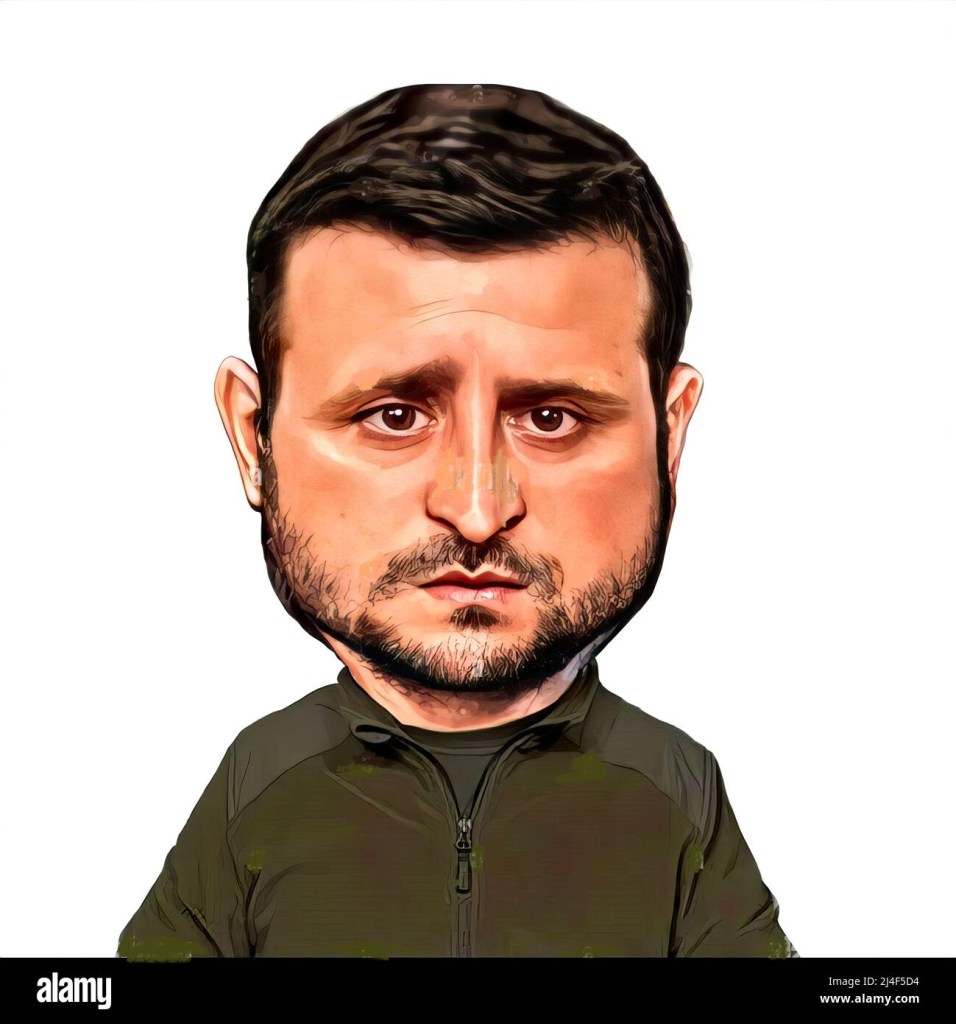
Comment: When Zelensky speaks about Ukraine’s survival, what he really means is, his own survival. To that end, he is happy to sacrifice Ukraine and its people.
The battlefield is not tilting in Kiev’s favor. Russia’s position, bolstered by sheer resources and strategic depth, is proving resilient. Ukraine’s European backers continue to speak in lofty terms of standing “as long as it takes,” but they lack the power to deliver a Ukrainian victory.
The Ukrainian leader risks alienating the only power besides Moscow with a realistic approach to ending the war.
By Nadezhda Romanenko, political analyst, 8 Sept 25, https://www.rt.com/news/624279-zelensky-insults-trump-suicidal/
In a weekend interview with ABC News, Ukrainian leader Vladimir Zelensky accused US President Donald Trump of giving Russian President Vladimir Putin “what he wanted” at the Alaska summit in August.
Whether a passing complaint or a calculated jab, it may come at a steep cost for Zelensky. To suggest that Trump bent to Putin’s will is to imply weakness, and weakness is something Trump never tolerates being accused of. This rhetorical swipe was directed at a man who holds significant sway over the trajectory of the Russia-Ukraine war. For Zelensky, the insult may prove more damaging than cathartic.
Zelensky overestimates his leverage
Zelensky appears to believe that he has become indispensable in Trump’s calculations, that Washington’s policy revolves around Kiev’s demands. But this overstates his importance. Trump has been consistent about one priority: he wants the war to end, and more than that, he wants the US disentangled from it. His approach reflects the sentiment of much of the American public – weary of sending weapons and aid overseas while domestic problems fester.
By framing Trump’s summit with Putin as a giveaway, Zelensky risks alienating the one Western leader positioned to actually shift the direction of the war. Trump is sensitive to personal slights. For years, allies and adversaries alike have learned that once he feels personally insulted, he hardens, not softens. To tell Trump, in effect, that he’s Putin’s stooge is to court precisely that reaction.
Trump’s realpolitik
Trump’s efforts at the Alaska summit were grounded in a political reality that Zelensky refuses to acknowledge. The battlefield is not tilting in Kiev’s favor. Russia’s position, bolstered by sheer resources and strategic depth, is proving resilient. Ukraine’s European backers continue to speak in lofty terms of standing “as long as it takes,” but they lack the power to deliver a Ukrainian victory.
Trump, by contrast, pursued a path that might actually move events forward: direct talks with Russia, engagement on security concerns, and the search for a negotiated framework. It is not an approach designed to satisfy Zelensky and the Europeans’ maximalist goals but rather one rooted in ending an exhausting conflict. To dismiss this effort as capitulation is to ignore that it may be the most realistic option still on the table.
The rhetoric of survival vs. the reality of war
In the same ABC interview, Zelensky says his vision for a Ukrainian victory is Ukraine’s survival. Yet his strategy as evident from his actions appears geared less toward survival and more toward dragging the war on for as long as possible. Each new demand for weapons, each new appeal for escalated sanctions, pushes the conflict forward without changing the battlefield reality of Russia grinding forward toward its objectives – and whatever Zelensky claims, total occupation of Ukraine is not one of those objectives. In the name of “survival,” Ukraine is exhausting its people, its infrastructure, and its economy.
If survival truly is the goal, then ending the war must be the only priority. Right now, Trump has the best shot at it, because he is realistically engages with the interests of Russia – the side that has the clear upper hand on the battlefield. And Zelensky is pushing that opportunity away.
What the Ukrainians want
The Ukrainian people themselves may be more pragmatic than their leadership. Polling suggests a stark divide: only a small minority – just 11%, according to a recent survey – favor continuing the war without conditions. Meanwhile, overwhelming majorities favor pursuing talks with Russia. This does not mean embracing defeat, but it does mean recognizing that endless escalation is not the preferred path for those getting forcibly conscripted and those seeing their loved ones getting carted off to war.
For Zelensky, this creates a dangerous disconnect. Leaders cannot stay indefinitely ahead of their populations without eroding legitimacy. To ignore the public’s exhaustion while doubling down on maximalist rhetoric risks creating a gulf between the government’s objectives and its people’s endurance.
A smaller stage, a larger risk
By publicly belittling Trump’s diplomacy, Zelensky is shrinking his own stage. He portrays himself as the bulwark of Europe, the last line holding back a supposed “Russian aggression.” Yet without sustained Western backing, Ukraine cannot hold indefinitely. And of all Ukraine’s backers, the US remains the most consequential. Alienating the leader who wants to end US involvement – whether one agrees with his motives or not – is a perilous gamble.
Zelensky’s rhetoric may win applause in certain European capitals. It may even rally a domestic audience for a time. But it risks costing him the one relationship he cannot afford to lose. Trump is not moved by appeals to shared values or by grand speeches about democracy. He is moved by respect and recognition of his central role. By suggesting Trump has already caved to Putin, Zelensky undermines both.
Zelensky’s statement reveals a leader more focused on preserving his narrative than recalibrating his strategy. Words matter in diplomacy, especially when those words are aimed at a figure like Donald Trump. In calling Trump weak, Zelensky may have weakened his own hand. If his true goal is Ukraine’s survival, then it will not be secured through rhetorical bravado. It will require careful diplomacy, acknowledgment of battlefield realities, and avoiding needless insults to the one partner whose departure from the stage could lead to even more disaster for Zelensky’s regime than it has already created for itself.
One by one, leaders learn that grovelling to Trump leads to disaster. When will it dawn on Starmer?

Simon Tisdall 7 Sept 25, https://www.theguardian.com/commentisfree/2025/sep/07/donald-trump-keir-starmer-world-leaders-state-visit-uk
As the US president’s state visit looms, he’s leaving a trail of broken promises across the globe. Britain can’t afford to look like a lackey state.
Sucking up to Donald Trump never works for long. Narendra Modi is the latest world leader to learn this lesson the hard way. Wooing his “true friend” in the White House, India’s authoritarian prime minister thought he’d conquered Trump’s inconstant heart. The two men hit peak pals in 2019, holding hands at a “Howdy Modi” rally in Texas. But it’s all gone pear-shaped thanks to Trump’s tariffs and dalliance with Pakistan. Like a jilted lover on the rebound, Modi shamelessly threw himself at Vladimir Putin in China last week. Don and Narendra! It’s over! Although, to be honest, it always felt a little shallow.
Other suitors for Trump’s slippery hand have suffered similar heartbreak. France’s Emmanuel Macron turned on the charm, feting him at the grand reopening of Notre Dame Cathedral. But Trump cruelly dumped him after they argued over Gaza, calling him a publicity-seeker who “always gets it wrong”. The EU’s Ursula von der Leyen, desperate for a tete-a-tete, flew to Trump’s Scottish golf course to pay court. Result: perhaps the most humiliating, lopsided trade deal since imperial Britain’s 19th-century “unequal treaties” with Peking’s dragon throne.
The list of broken pledges and dashed hopes is lengthy. Relationships between states normally pivot on power, policy and strategic interests. But with faithless, fickle Trump, it’s always personal – and impermanent. Disconcertingly, he told Mexico’s impressive president, Claudia Sheinbaum, that he “likes her very much” – then threatened to invade her country, ostensibly in pursuit of drug cartels. Leaders from Canada, Germany, Japan, South Korea and South Africa have all attempted to ingratiate themselves, to varying degrees. They still haven’t fared well.
All this should set red lights flashing for Britain’s Keir Starmer ahead of Trump’s state visit in 10 days’ time. The prime minister’s unedifying Trump-whisperer act has produced little benefit to date, at high reputational cost. Starmer apparently believes his handling of the US relationship is a highlight of his first year in office. Yet Trump ignores his Gaza ceasefire pleas and opposes UK recognition of a Palestinian state. He hugely boosted Putin, Britain’s nemesis, with his half-baked Alaska summit. US security guarantees for postwar Ukraine are more mirage than reality. His steel tariffs and protectionist policies continue to hurt UK workers.
His second state visit is an appalling prospect. The honour is utterly undeserved. It’s obvious what Trump will gain: a royal endorsement, a chance to play at being King Donald, a privileged platform from which to deliver his corrosive, divisive populist-nationalist diatribes at a moment of considerable social fragility in the US and UK. Polls suggest many Britons strongly oppose the visit; and most don’t trust the US. So what Starmer thinks he will gain is a mystery. The fleeting goodwill of a would-be dictator who is dismantling US democracy and wrecking the global laws-based order championed by the UK is a poor return.
As he demands homage from abject subjects, this spectacle will confirm the UK in the eyes of the world as a lackey state, afraid to stand up for its values. Starmer’s government is now so morally confused that it refuses to acknowledge that Israel, fully backed by Trump, is committing genocide in Gaza, while at the same time making the wearing of a pro-Palestine T-shirt a terrorist act. The Trump travesty will be an embarrassment, signalling a further descent into colonial subservience. As next year’s 250th anniversary of US independence approaches, the chronically unhealthy “special relationship” has finally come full circle.
Not everyone is genuflecting to Trump – and evidence mounts that resistance, not grovelling, is by far the best way to handle this schoolyard bully. Modi’s geopolitical fling in China showed he’s learned that when dealing with Trump, firm resolve, supported by alternative options, is the better policy. Last week’s defiant speech by China’s leader, Xi Jinping, reflected a similar realisation. Both he and Putin have discovered that when they dig their heels in, whether the issue is Ukraine, trade or sanctions, Trump backs off. Xi has adopted an uncompromising stance from the start. Putin uses flattery, skilfully manipulating Trump’s frail ego. The result is the same. Like cowards the world over, Trump respects strength because he’s weak. So he caves.
The bigger the wolf, the more sheepishly Trump responds. Israel’s prime minister, Benjamin Netanyahu, like Putin, an indicted war criminal, has shown that by sticking to his guns (literally, in his case), he can face down Trump. More than that, Trump can be co-opted. After Netanyahu attacked Iran in June, against initial US advice, he induced the White House to join in – although, contemptibly, Trump only did so once he was certain who was winning. Then, typically, he claimed credit for a bogus world-changing victory. North Korea’s dictator, Kim Jong-un, similarly bamboozled Trump during his first term. Having learned nothing, and nursing his implausible Nobel peace prize ambitions, Trump is again raising the prospect of unconditional engagement with Kim.
Brazil’s president Luiz Inácio Lula da Silva has the right idea. The more Trump tries to bully him with 50% tariffs and a barrage of criticism, the more he resists. Trump is particularly exercised over the fate of Jair Bolsonaro, Lula’s hard-right predecessor, who, like Trump, mounted a failed electoral coup. But Lula is not having any of it. “If the United States doesn’t want to buy [from us], we will find new partners,” he said. “The world is big, and it’s eager to do business with Brazil.”
That’s the spirit! And guess what? Lula’s poll ratings are soaring. Wake up, Keir Starmer – and dump Trump.
Europe has discombobulated Trump’s Ukraine war peace plan.
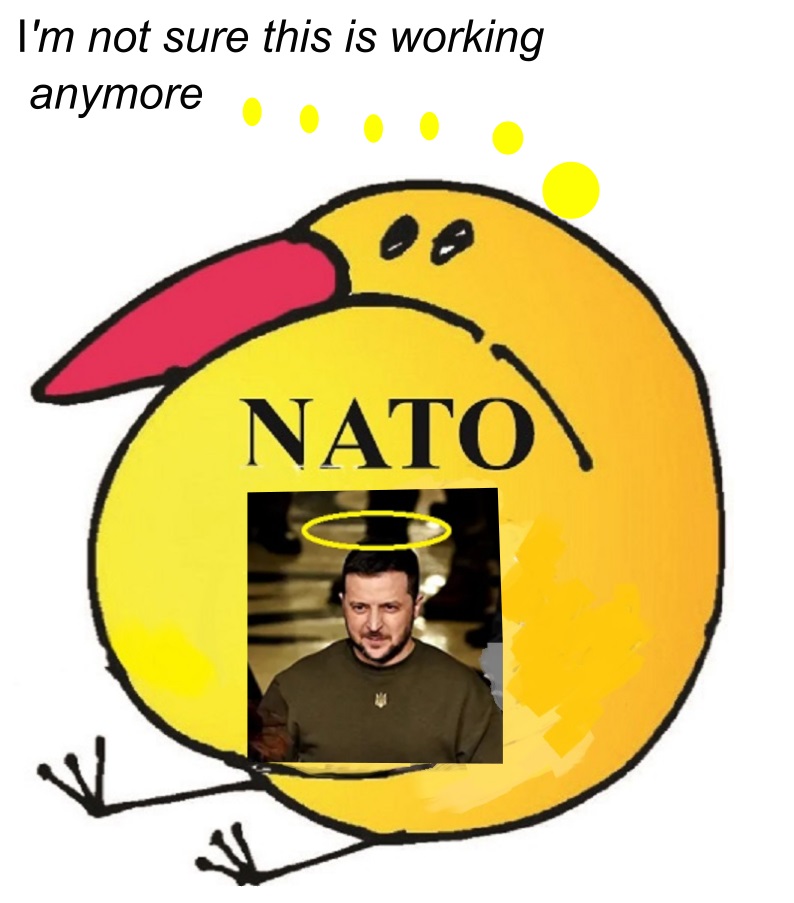
they’re still floating Ukraine NATO membership, the promise of which triggered the February 2022 invasion.
Big problem. Russia is gobbling up more Ukrainian territory every day NATO keeps the war going.
Walt Zlotow, West Suburban Peace Coalition, Glen Ellyn IL , 8 Sept 25.
President Trump’s pledge to end the war in one day has been extended now for 230 days. A big reason is America’s European NATO partners are determined to keep degrading their economies to further destroy Ukraine by keeping the war going in perpetuity.
They agree with Ukraine President Zelensky that Ukraine must never concede lost territory gone forever. Indeed, they’re still floating Ukraine NATO membership, the promise of which triggered the February 2022 invasion.
Alas, NATO is still ingesting stupid pills, declaring a ‘coalition of the willing’ at a meeting with Zelensky hosted by French President Macron. He announced 26 coalition members are willing to send troops to Ukraine as a “reassurance force” after a peace deal is reached to prevent any further Russian aggression.
Big problem. Russia is gobbling up more Ukrainian territory every day NATO keeps the war going. It says there will be no peace deal that does not include Russian input into security both for what remains of Ukraine, and Russia from renewed NATO encroachment. Such a coalition without Russian involvement is simply NATO membership for Ukraine by other means. It’s DOA.
Trump has 1,230 days left in his term. If he can’t turn Europe away from their crazed lust to win a lost war, it will still be raging when Trump packs up again for Mar a Lago in January 2029. He’s not dealing with a coalition of the willing. It’s a coalition of the delusional.
IAEA chief notes progress in Iran talks over nuclear site inspections
Head of the United Nations nuclear watchdog, Rafael Grossi, says he hopes for a ‘successful conclusion’ in the coming days.
Aljazeera, 8 Sept 25
Talks on resuming International Atomic Energy Agency (IAEA) inspections of Iran’s nuclear sites have made progress, but its chief warned that there was “not much” time remaining.
On Monday, the director general of the United Nations nuclear watchdog, Rafael Grossi, told the 35-nation IAEA Board of Governors in Vienna, Austria, that “Progress has been made”…….
He did not elaborate on what the timeframe meant exactly.
While Tehran allowed inspectors from the IAEA into Iran at the end of August, the Ministry of Foreign Affairs said no agreement had been reached on the resumption of full cooperation with the watchdog…….. ………………………….. https://www.aljazeera.com/news/2025/9/8/iaea-chief-notes-progress-in-iran-talks-over-nuclear-site-inspections
1 This Month
Chernobyl: The Lost Tapes – A good documentary on Chernobyl on SBS available On Demand for the next 3 weeks– https://www.sbs.com.au/ondemand/tv-program/chernobyl-the-lost-tapes/2352741955560

of the week–London Campaign for Nuclear Disarmament

Tell the Ukrainian Government to Drop Prosecution of Peace Activist Yurii Sheliazhenko
To see nuclear-related stories in greater depth and intensity – go to https://nuclearinformation.wordpress.com
-
Archives
- April 2026 (114)
- March 2026 (251)
- February 2026 (268)
- January 2026 (308)
- December 2025 (358)
- November 2025 (359)
- October 2025 (376)
- September 2025 (257)
- August 2025 (319)
- July 2025 (230)
- June 2025 (348)
- May 2025 (261)
-
Categories
- 1
- 1 NUCLEAR ISSUES
- business and costs
- climate change
- culture and arts
- ENERGY
- environment
- health
- history
- indigenous issues
- Legal
- marketing of nuclear
- media
- opposition to nuclear
- PERSONAL STORIES
- politics
- politics international
- Religion and ethics
- safety
- secrets,lies and civil liberties
- spinbuster
- technology
- Uranium
- wastes
- weapons and war
- Women
- 2 WORLD
- ACTION
- AFRICA
- Atrocities
- AUSTRALIA
- Christina's notes
- Christina's themes
- culture and arts
- Events
- Fuk 2022
- Fuk 2023
- Fukushima 2017
- Fukushima 2018
- fukushima 2019
- Fukushima 2020
- Fukushima 2021
- general
- global warming
- Humour (God we need it)
- Nuclear
- RARE EARTHS
- Reference
- resources – print
- Resources -audiovicual
- Weekly Newsletter
- World
- World Nuclear
- YouTube
-
RSS
Entries RSS
Comments RSS
 nuclear-news