Coal lobby is prominent at COP24 U.N climate change conference

COP24 President defends participation of coal companies at climate talks, ABC, The World By Erin Handley 7 Dec 18, COP24 President Michal Kurtyka has defended displays of coal soap and jewellery at key climate change talks in Poland, saying “it’s good to have everybody on board”.
Key points:
- The climate talks drew some ridicule for putting coal on display in the foyer
- New Zealand has named climate change as its biggest security threat
- Pacific nations are facing an existential threat, Michal Kurtyka said
Conference attendees were confronted with coal displays in the foyer and greeted by a performance from the Polish Coal Miners Band during the talks designed to bring about global action on climate change.
Polish President Andrzej Duda said using coal was not in conflict with climate protection, and with the climate change talks taking place in the city of Katowice — a coal mining stronghold — some observers said the setting undermined the purpose of the talks.
Mr Kurtyka, who is also a secretary of state in the Ministry of Environment, denied that coal companies “sponsored” the event, which he said was publicly funded by Poland — but said there were several partners, including Ikea and energy companies. …….
Richie Merzian, director of the Australia Institute’s Climate and Energy Program, said the coal-heavy setting left “a sour taste in the mouths of those who are committed to climate action”.
“But at the same time it is symbolic of trying to deal with the vested interests and the long history of reliance on fossil fuels in many of these cities and countries.”
Mr Merzian added that coal companies were not on the same page as delegates seeking an ambitious plan to combat climate change.
“Their core business is directly in contrast to … the goal of the Paris Agreement, which is to transition completely away from reliance on fossil fuels,” he said, adding that the influence of coal companies on governments ran deep.
“Stopping that outright, in-your-face sponsorship would definitely help in terms of optics, but a lot of the influence is just strongly embedded into the positions that the countries bring forward.”………
Yesterday New Zealand released a defence policy statement naming climate change as its biggest security threat and stressing the impact of climate change on the Pacific.
“It identifies climate change as one of the most significant security threats of our time, and one that is already having adverse impacts both at home and in New Zealand’s neighbourhood,” said Defence Minister Ron Mark in an emailed statement to Reuters.
Australia, however, has turned its back on its Pacific neighbours in terms of climate change, Mr Merzian said.
“The Pacific are getting desperate, and instead of their friends helping, they’re hurting,” he said.
“Poland is the Australia of the EU — the largest coal user, the largest coal producer — but unlike Australia that can operate in its own bubble, Poland has to marry up its position with its EU colleagues as a bloc, and that’s why they help drag Poland to be better than what it would otherwise be.” https://www.abc.net.au/news/2018-12-07/coal-company-participation-at-climate-talks-defended/10592146
If USA dumps the Intermediate-Range Nuclear Forces Treaty (INF) – Putin threatens arms race
Putin threatens arms race if US dumps nuclear treaty https://www.theguardian.com/world/2018/dec/05/putin-threatens-arms-race-if-us-dumps-nuclear-treaty – Andrew Roth in Moscow
Russia would also build new medium-range missiles if the US were to do so, says president
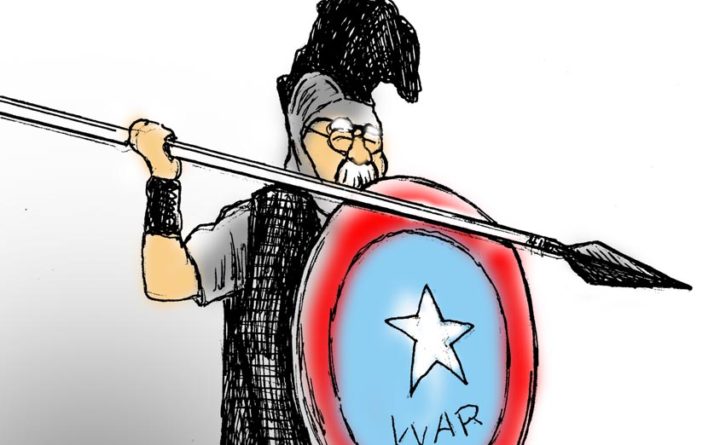
Vladimir Putin has threatened that Russia will develop new missiles banned by the intermediate-range nuclear forces treaty if the US exits the pact and pursues an arms buildup of its own.
The Russian president’s remarks came one day after the US secretary of state, Mike Pompeo, said Moscow was in “material breach” of the cold war-era treaty and issued a 60-day ultimatum for Russia to correct the alleged violations. Otherwise, he said, the US would quit the 1987 accord, considered a milestone in reducing the threat of a nuclear war in Europe.
In Moscow on Wednesday, Putin told journalists the US had provided “no evidence” of Russian violations, and threatened an arms race if the US sought to develop new medium-range missiles after exiting the treaty.
“Apparently, our American partners believe that the situation has changed so drastically that the US should also have such weapons,” Putin said in remarks carried by the Interfax news service. “What response is our side to give? A simple one: then we’ll do the same.”
The arms treaty, signed by Ronald Reagan and Mikhail Gorbachev, banned ground-launched missiles with a range between 500-5,500km. The US and Nato have said that tests of a new Russian cruise missile, designated 9M729, violate the treaty.
 The US effort to exit the treaty was spearheaded by John Bolton, Donald Trump’s hawkish national security adviser.
According to a leaked memo published by the Washington Post, Bolton has ordered the Pentagon to “develop and deploy ground-launched missiles at the earliest possible date”.
While it would take a substantial length of time to develop an entirely new missile, existing medium-range weapons in the US arsenal, such as sea-launched Tomahawk cruise missiles, could be adapted for ground launch more quickly, arms experts said.
However, Nato allies would have to agree unanimously to have any new missile deployed in Europe.
The standoff comes amid a buildup of Russian and Nato forces in Europe, including nuclear forces. Nato claims that Russia has deployed nuclear-capable missiles to Kaliningrad, and on Wednesday the Russian military confirmed it had deployed powerful new anti-ship missiles to Crimea following last month’s maritime clash with Ukraine.
Taiwan Votes to Maintain Import Ban on Fukushima Food Imports
  While Fukushima suffered a blow, trade ties between Japan and Taiwan avoided any major impact. The Diplomat , By Thisanka Siripala, December 03, 2018 On Friday, Japan and Taiwan signed off on five bilateral trade pacts just days after Taiwan voted in a referendum to uphold an import ban on agricultural products from areas surrounding the Fukushima nuclear fallout. While Fukushima suffered a blow, trade ties between Japan and Taiwan avoided any major impact. The Diplomat , By Thisanka Siripala, December 03, 2018 On Friday, Japan and Taiwan signed off on five bilateral trade pacts just days after Taiwan voted in a referendum to uphold an import ban on agricultural products from areas surrounding the Fukushima nuclear fallout.
|
|
Why France must shut down many nuclear reactors
Backstory: Macron To Close Multiple Nuclear Reactors, But Why Now? https://cleantechnica.com/2018/11/30/backstory-macron-to-close-multiple-nuclear-reactors-but-why-now/?fbclid=IwAR0tO9BXT4FaNEuhnwexaC6cf4V6jj6cJLnQeiZPdA91t7SrrmL5n7xtRHg November 30th, 2018 by Michael Barnard
President Emmanuel Macron of France depressed nuclear executives globally in late November 2018, announcing the planned retirement of 14 of 58 reactors by 2035. This was still less than was promised in his election campaign, but represents a major internal political battle, as well as a major change of France’s circumstances.
This has been an emerging story for several years.
 France did a better job than most of building nuclear plants. They picked a single design and built a bunch of them over a relatively concentrated 20 years from about 1978 onward. It was a massive, state-funded, state-managed energy infrastructure initiative at a scale rarely seen. They dodged a bunch of the mistakes of other geographies somewhat by accident. They aren’t subject to earthquakes or tsunamis. They kept the technology highly standard. They developed a skilled workforce for building them and rewarded them well.
But the last nuclear reactor went live almost 20 years ago, the oldest ones are at end-of-life, and the skilled workforce only knows how to maintain and operate existing reactors now, not build new ones. The current President of France, Macron, used to be the Minister of Industry. He’s stated publicly that even he couldn’t find out how much the build-out actually cost, with the clear assertion that a bunch of actual costs were hidden.
“Nobody knows the total cost for nuclear energy,” he said. “I was minister for industry and I could not tell you.”
And France had to build nuclear to be load-following due to its over-reliance on a more usually inflexible form of generation. Nuclear is good for baseload up to 30–40%, but when it has to be turned on and off it gets a lot more expensive very quickly. France has the good fortune to have been able to export a lot of electricity to the rest of the EU for several years, but the energy mix on the continent is strongly favoring more flexible forms of generation.
And now, a few things have changed in the decades since France made its huge bet on nuclear generation in the Messmer Plan in 1974.
Renewables are dirt cheap, with Lazard’s latest figures bringing them in at 3–6 times cheaper than new nuclear. (Amusingly, Lazard still labels wind and solar as ‘alternative energy‘.) Europe is a leading geography for wind and solar, so skilled trades and supply chains all exist. Europe’s grid has strengthened and expanded over the past 30 years, so the need for a country to go it alone has diminished substantially.
The EU was founded in 1993 and France is an integral part of it, and that has two impacts. The first is that France’s energy independence policy that was part of the impetus for a massive nuclear fleet looks archaic in context of modern politics and economics. The second is that EU regulations forbid destabilizingly large governmental subsidies for energy, something which the Hinkley plant in the EU had to fight through. As Macron’s experience shows, it’s actually impossible for anyone to figure out how much any nuclear plant actually cost due to budget fudging. This last is true globally, by the way.
French attempts to build next-generation reactors are failing in multiple locations in France and elsewhere. The cost and budget overruns and construction failures are staggering.
And Chernobyl and Fukushima both happened since the French nuclear build-out began. Public support diminished substantially after those events, one on the same continent and one a world away.
France receives a greater percentage of its electricity from nuclear than any country in the world, at 72% close to 50% more than its nearest ‘competitor’, Slovakia. And it will diminish over the coming decades. Its last-built reactor will reach end-of-life in 2040 or so. It’s unlikely that it will be replaced. And it’s unlikely that more than a fraction of the aging reactors will be refurbished at all.
Wind, solar, a continent-scale grid, and open economic borders all contributed to the death of the French nuclear dream. It’s time for France to wake up and join the future, and it has. It voted in Macron, a politician who promised to reduce France’s nuclear fleet. He fought the entrenched bureaucracy and EDF, and while the new plans are slower than the promised ones, they are the right plans on a pragmatic timeline.
UN Climate Conference faces the daunting need for the world to quit coal
An October report from the United Nations’ scientific panel on global warming found that avoiding the worst devastation would require a radical transformation of the world economy in just a few years.
Central to that transformation: Getting out of coal, and fast………
Vietnam says it is on track to meet its emissions reductions targets under the Paris accord. So, too, China and India, with far bigger carbon footprints. But those targets were set by the countries themselves, and they will not be enough to keep global temperatures from rising to calamitous levels. The United States has said it will exit the Paris climate pact.
Those sobering facts loom over the next round of international climate negotiations, starting Dec. 3 in the heart of Poland’s coal country. The American delegation plans to promote coal at the event, just as it did at last year’s talks in Bonn, Germany. https://www.nytimes.com/2018/11/24/climate/coal-global-warming.html
The danger of nuclear war through irrational decision-making by Donald Trump
 America’s greatest danger: Nuclear war decision-making by Donald Trump https://thehill.com/opinion/white-house/418509-americas-greatest-danger-nuclear-war-decision-making-by-donald-trump America’s greatest danger: Nuclear war decision-making by Donald Trump https://thehill.com/opinion/white-house/418509-americas-greatest-danger-nuclear-war-decision-making-by-donald-trump
BY LOUIS RENÉ BERES, OPINION CONTRIBUTOR — 11/28/18 An inappropriate or irrational nuclear command decision by President Donald Trump is plainly conceivable. Nothing accurate can ever be said about the true probability of such a scenario, but it is not an unfounded worry.
Might this American president become subject to various forms of psychological debility? On 14 March 1976, in response to my specific query, I received a letter from General (USA/ret.) Maxwell Taylor, a former Chairman of the U.S. Joint Chiefs of Staff, concerning nuclear risks of U.S. presidential decisional irrationality. Most noteworthy, in this handwritten response, is the straightforward warning contained in the closing paragraph. Ideally, cautioned Taylor, presidential irrationality is a problem that should be dealt with during an election, and not later on: “As to dangers arising from an irrational American president, the best protection is not to elect one.” There are assorted structural protections built into any presidential order to use nuclear weapons, including substantial redundancy. Nonetheless, virtually all of these reassuring and mutually reinforcing safeguards could become operative only at the lower or sub-presidential nuclear command levels. The safeguards do not apply to the Commander-in-Chief. This means there likely exist no permissible legal grounds to disobey any presidential order to use nuclear weapons. In principle, certain very senior individuals in the designated military chain of command could sometime choose to invoke applicable “Nuremberg Obligations,” but any such last-minute invocation would almost surely need to yield to considerations of U.S. domestic law. Should an American president operating within a bewildering chaos of his own making issue an irrational or seemingly irrational nuclear command, the only way for the Secretary of Defense, the Chairman of the Joint Chiefs, the National Security Adviser, and several possible others to effectively obstruct this order would be illegal “on its face.” Under the very best of circumstances, such informal safeguards might somehow manage to work for a time, but accepting the unrealistic assumption of “best case scenario” is hardly a rational or sensible path to nuclear security. It follows that we Americans ought to ask for more predictable and promising institutional impediments to any debilitated president. The United States is already navigating in uncharted waters. While President Kennedy did engage in personal nuclear brinkmanship with the Soviet Union back in October 1962, he had calculated his own odds of a consequent nuclear war as “between one out of three and even.” This seemingly precise calculation, corroborated both by JFK biographer Theodore Sorensen, and by my own later private conversations with former JCS Chair Admiral Arleigh Burke (my colleague and roommate at the Naval Academy’s Foreign Affairs Conference of 1977) suggests that President Kennedy was either irrational in imposing his Cuban “quarantine” or that he was wittingly acting out certain untested principles of “pretended irrationality.” JFK operated with serious and manifestly capable strategic advisors. The most urgent threat of a mistaken or irrational presidential order to use nuclear weapons flows not from any “bolt-from-the-blue” nuclear attack – whether Russian, North Korean, or American – but from an uncontrollable escalatory process. Back in 1962, Soviet premier Nikita Khrushchev “blinked” early on in the “game,” thereby preventing mutual and irrecoverable nuclear harms. Now, however, any escalatory initiatives undertaken by President Trump could express very unstable decision-making processes. Donald Trump should understand the unprecedented risks of being locked into an escalatory dynamic. Although this president might be well advised to seek escalation dominance in selected crisis negotiations with determined adversaries, he would also need to avoid catastrophic miscalculations. Whether we like it or not, and at one time or another, nuclear strategy is a bewildering game that President Donald Trump will have to play. To best ensure that this easily-distracted president’s strategic moves will be rational, thoughtful, and cumulatively cost-effective, it will first be necessary to enhance the formal decisional authority of his most senior military and defense subordinates. At a minimum, the Secretary of Defense, Chairman of the Joint Chiefs of Staff, the National Security Advisor, and one or two others in appropriate nuclear command positions should immediately prepare to assume more broadly collaborative and secure judgments in extremis atomicum. The only time for clarifying such indispensable preparations is now. Louis René Beres, Ph.D. Princeton, is emeritus professor of international law at Purdue University. He is the author of 12 books and several hundred articles dealing with nuclear strategy and nuclear war. His newest book is “Surviving Amid Chaos: Israel’s Nuclear Strategy” (Rowman & Littlefield, 2016; 2nd ed. 2018) |
|
Political connections in Holtec’s plans for boosting nuclear power in India
Holtec’s Singh plans to build $680 million factory to boost nuclear power in India, The Inquirer, by Joseph N. DiStefano, On a flower-decked table in Mumbai, India, last week, a Holtec International delegation led by Krishna P. Singh, the India native and triple-degree Penn grad, joined with a group headed by Chief Minister Devendra Fadnavis, of Maharashtra, India’s second-most populous state, to sign a memo of understanding allowing Holtec to build a factory the company says will “give India autonomous capability” to make systems and parts for “the country’s planned expansion of nuclear generation.”……….
Belgium re-authorised nuclear power without having an environmental assessment – EU Magistrate critices.
|
Nuclear Machinations Needed Enviro Study, Says EU Magistrate https://www.courthousenews.com/nuclear-machinations-needed-enviro-study-says-eu-magistrate/
In 2015 the Doel 1 nuclear reactor on the Scheldt river, near Antwerp and Belgium’s border with the Netherlands, was set to shutter in mid-February, and the nearby nuclear reactor Doel 2 would follow later that year. Come June 2015, however, the country passed legislation that reauthorized electricity production at Doel 1 until Feb. 15, 2025. The law also postponed the decommissioning of Doel 2 until Dec. 2, 2025. In exchange for keeping the reactors online, plant operator Electrabel agreed to invest approximately 700 million euros in security. Belgium officials did not deem an environmental impact assessment necessary, however, because they determined that the modifications would not cause any negative radiological effects or otherwise change existing radiological environmental effects significantly.
The extensions have spurred a challenge before the Belgian Constitutional Court, but that case is on holding pending input from the European Court of Justice on what EU law requires. In a nonbinding advisory opinion to that Luxembourg-based court, Advocate General Juliane Kokott agreed with the challengers Thursday that the extensions appear to have been granted without the necessary environmental studies. “Faits accomplis weaken the effectiveness of an environmental assessment that is carried out retrospectively,” Kokott wrote. “The main function of the assessment, when used in good time, is to influence the decision concerning the project such that environmental damage is minimised as far as possible. For this reason, it is to be undertaken, under Article 6(4) of the Aarhus Convention and Article 6(4) of the EIA Directive, as early as possible, when all options are open. If it is merely carried out retrospectively, it can perform this function only to a very limited extent because many decisions have already been taken. Modifying those decisions in the light of the retrospective assessment is even less attractive when they have actually already been implemented.” The Belgian government reached a new energy pact earlier this year to phase out atomic power between 2022 and 2025. Compared to the 58 nuclear reactors operated in France, Belgium is in a distant fourth place when it comes to highest share of nuclear power in national energy grids. The country sources about 40 percent of its power from atomic energy, and the Doe and Tihange power plants together provide more than 50 percent of the country’s electricity. Though it supposed to meet a renewable energy target of 13 percent by 2020, recent Eurostat data shows that only 8.7 percent of Belgium’s energy needs are sourced from renewable sources like solar and wind. When Belgium reauthorized the two Doel reactors in 2015, they had been offline for two years so that officials could carry out extensive safety checks on newly emerged micro-cracks. |
|
|
A mistake to expect Kim Jong Un to give a full renunciation of nuclear weapons in advance
Why Insisting on a North Korean Nuclear Declaration Up Front is a Big Mistake, 38 NORTH BY: SIEGFRIED S. HECKER, NOVEMBER 28, 2018, My reply to the frequently asked question if Kim Jong Un will ever give up North Korea’s nuclear weapons is, “I don’t know, and most likely he doesn’t know either. But it is time to find out.” However, insisting that Kim Jong Un give a full declaration of his nuclear program up front will not work. It will breed more suspicion instead of building the trust necessary for the North to denuclearize, a process that will extend beyond the 2020 US presidential election.
However, the time it will take to get to the endpoint should not obscure the progress that has already been made. Since this spring, Kim Jong Un has taken significant steps to reduce the nuclear threat North Korea poses. He has declared an end to nuclear testing and closed the nuclear test tunnels by setting off explosive charges inside the test tunnel complex. He also declared an end to testing intermediate- and long-range missiles including intercontinental ballistic missiles (ICBMs). I consider these as two of the most important steps toward reducing the threat North Korea poses and as significant steps on the path to denuclearization.
Whereas the North still poses a nuclear threat to Japan and South Korea as well as US military forces and citizens in the region, the threat to the United States has been markedly reduced. In my opinion, North Korea needs more nuclear and ICBM tests to be able to reach the United States with a nuclear-tipped missile. Freezing the sophistication of the program is a necessary precursor to rolling it back in a step-by-step process.
At the September 2018 inter-Korean summit in Pyongyang, Kim also told President Moon that he would commit to dismantling the Yongbyon nuclear complex if the US takes commensurate measures—unspecified, at least in public. The Yongbyon complex is the heart of North Korea’s nuclear program. Shutting it down and dismantling it would be a very big deal because it would stop plutonium and tritium production (for hydrogen bombs) and significantly disrupt highly enriched uranium production.
Yet, Kim’s actions have been widely dismissed as insignificant or insincere by both the left and the right of the American political spectrum. In many of these quarters, the sincerity of Kim’s denuclearization promise is judged by whether or not he is willing to provide a full and complete declaration and to agree on adequate verification measures. But Kim’s willingness to provide a full declaration at this early stage tells us little about his willingness to denuclearize. Moreover, I maintain that insisting on this approach is a dead end, certainly as long as Washington continues to apply “maximum pressure” instead of moving to implement the steps on normalizing relations that President Trump agreed to in the June Singapore statement.
A full declaration is a dead end because it is tantamount to surrender, and Kim has not surrendered, nor will he. A complete account of North Korea’s nuclear weapons, materials, and facilities would, in Kim’s view, likely be far too risky in that it would essentially provide a targeting list for US military planners and seal the inevitable end of the nuclear program and possibly his regime.
Furthermore, a declaration must be accompanied by a robust verification protocol. That, in turn, must allow inspections and a full accounting of all past activities such as production and procurement records as well as export activities. And, once all these activities are complete, an inspection protocol must provide assurances that activities that could support a weapons program are not being reconstituted. This would be a contentious and drawn-out affair.
It is inconceivable that the North would declare all of its nuclear weapons, their location, and allow inspections of the weapons or of their disassembly up front. But in addition to the weapons themselves, a nuclear weapon program consists of three interlocking elements: 1) the nuclear bomb fuel, which depending on the type of bomb includes plutonium, highly enriched uranium (HEU), and forms of heavy hydrogen—deuterium and tritium; 2) weaponization—that is, designing, building and testing weapons, and; 3) delivery systems, which in the case of North Korea appear to be missiles, although airplane or ship delivery cannot be ruled out. Each of these elements involves dozens of sites, hundreds of buildings, and several thousand people.
Let me give an example of what is involved just for verification of plutonium inventories and means of production. ………..
It should be apparent that the declaration plus commensurate verification of the amount of plutonium North Korea possesses, which I believe is only between 20 and 40 kilograms, will be an enormous job. I cannot see it being accomplished in the current adversarial environment and certainly not within the timeframe that has been specified by the US government.
A similar sequence of declarations, inspections, and verification measures would have to be developed for the other bomb fuels, namely HEU and the hydrogen isotopes, deuterium and tritium. Verification of HEU inventories and means of production will be particularly contentious because very little is known about the centrifuge facility at the Yongbyon site. As far as we know, my Stanford colleagues and I are the only foreigners to have seen that facility, and then only in a hurried walk-through in 2010. In addition, there exists at least one other covert centrifuge site.
The situation is even more problematic for the second element of the North’s nuclear program, that of weaponization, which includes bomb design, production, and testing because we know nothing about these activities or where they are performed. Although we have some information regarding the nuclear test site at which six nuclear tests were conducted, we do not know if there are other tunnel complexes that have been prepared for testing.
The third element includes all of the North’s missiles and its production, storage and launch sites and complexes. These will also represent a major challenge for complete and correct declarations, inspections and verification.
Once all of the elements have been declared and the dismantling begins, then the focus will have to change to verifying the dismantlement and assessing the potential reversibility of these actions—a challenge that is not only difficult, but one that must be ongoing. ………
At this time, the level of trust between Pyongyang and Washington required for North Korea to agree to a full, verifiable declaration up front does not exist. Hence, my colleagues Robert Carlin and Elliot Serbin and I have suggested a different approach. Negotiations should begin with an agreed end state: North Korea without nuclear weapons or a nuclear weapon program. Civilian nuclear and space programs would remain open for negotiation and possible cooperation. But all facilities and activities that have direct nuclear weapons applicability must eventually be eliminated.
Rather than insisting on a full declaration up front, the two sides should first agree to have the North take significant steps that reduce the nuclear threat it poses in return for commensurate movements toward normalization—the details of which would have to be worked out during negotiations. …………
The Trump team claims progress is being made but insists on maintaining maximum pressure. The North’s Foreign Ministry has pointed outthat the “improvement of relations and sanctions are incompatible.” Also, most US North Korea watchers are either wedded to old think that you can’t negotiate with Pyongyang or they are determined to prove President Trump’s claims on North Korea wrong.
With nuclear tensions on the Korean Peninsula dramatically reduced, it is time to find out if Kim’s drive to improve the economy will eventually lead to denuclearization. He may determine that his nuclear arsenal poses a significant hindrance to economic development that outweighs the putative benefits it confers. Washington and Seoul should work together to encourage rather than inhibit this potential shift. https://www.38north.org/2018/11/shecker112818/
Trump may need Congress approval to withdraw from Intermediate-Range Nuclear Forces (INF) Treaty
|
Can Trump abrogate the INF Treaty without Congress? Bulletin of the Atomic Scientists, By Walter C. Clemens, November 28, 2018 President Donald Trump wants to withdraw the United States from the Intermediate-Range Nuclear Forces (INF) Treaty signed by presidents Ronald Reagan and Mikhail Gorbachev in 1987. But can he do so without Congressional approval?
At first glance, it may appear that Trump has the authority to do so, considering that the president has already used his executive powers to pull the United States from the Paris climate agreement and the Iran nuclear deal. But those were technically not treaties, but accords. (While definitions vary and are a bit fuzzy, a treaty is generally considered to be a formal written contract between sovereign states, and recognized by international law. In contrast, an accord is viewed as a lesser animal, and because it is not a treaty it does not need Congressional approval……….. if the commitment is indeed a full-fledged, bona fide treaty such as the Intermediate-Range Nuclear Forces Treaty, that leaves the question: Does the White House have the right to flout or void treaties—described by Chief Justice John Marshall in 1823 as the “supreme law of the land”—without approval by one or both houses of Congress? Some members of Congress certainly think that their approval is needed to exit a treaty; when the president warned in July 2018 that he might pull the United States from NATO, founded on a multilateral treaty, several senators said he could expect an extensive fight in Congress. The question seems to boil down to this: While the Constitution says that the Senate needs to approve a treaty negotiated by the president, it says nothing about pulling out of a treaty. That leaves us with a conundrum: If it takes two branches of government to make a treaty, can the White House alone terminate it? A problem more difficult than it first looks. The US Constitution provides no clear answers to this question, but the precedents established over more than two centuries suggest that the president may not act alone to abrogate US treaty obligations. ………… The Senate did place explicit restrictions on the president when it approved the INF Treaty in 1988, and the Conventional Forces in Europe Treaty in 1991. In each case, the Senate conditioned its consent on an understanding that the original interpretation of each treaty could not be unilaterally altered by the president. …………https://thebulletin.org/2018/11/can-trump-abrogate-the-inf-treaty-without-congress/?utm_source=Bulletin%20Newsletter&utm_medium=iContact%20email&utm_campaign=AbrogateINF |
|
|
France halts plan with Japan, for developing advanced nuclear reactors
Nikkei Asian Review 30th Nov 2018 The French government has informed Japan it will halt joint development of
advanced nuclear reactors, Nikkei has learned, dealing a blow to the fuel
cycle policy underpinning much of the East Asian country’s energy plans.
https://asia.nikkei.com/Economy/France-halts-joint-nuclear-project-in-blow-to-Japan-s-fuel-cycle
Trump’s international nuclear negotiations will lead to Saudi Arabia getting nuclear weapons
Why Saudi Arabia Will Acquire Nuclear Weapons If the Trump administration continues to turn its nuclear negotiations into a boondoggle, then nothing will prevent Riyadh from building bombs.,National Interest by Paul R. Pillar, 28 Nov 18
The Trump administration’s handling of nuclear negotiations with Saudi Arabia promises to lay bare some realities about security issues and nuclear programs in that part of the world that the administration has refused to acknowledge. A front-page article by David Sanger and William Broad in the New York Timesreviews some of the still-unresolved questions. The Saudi regime insists on producing its own nuclear fuel, which would be different from terms the United States has negotiated with some other states, including the United Arab Emirates, that have sought U.S. assistance in developing their nuclear programs. The Saudis have balked at comprehensive international inspections to detect any work on nuclear weapons. And Saudi Arabia’s Crown Prince Mohammed bin Salman (MbS) has explicitly threatened to develop nuclear weapons, ostensibly in response to any similar development by Iran.
A useful model for approaching this situation involves Iran. The model is the Joint Comprehensive Plan of Action (JCPOA), the multilateral accord commonly known as the Iranian nuclear deal, which Donald Trump has castigated and on which his administration has reneged by imposing new economic sanctions despite continued Iranian compliance with the JCPOA. The JCPOA closed all possible pathways to development of an Iranian nuclear weapon through stringent restrictions on enrichment of uranium, the gutting of reactors that otherwise might be used to produce plutonium, and the prohibition of any reprocessing by Iran of nuclear fuel. The agreement also established a thorough inspection system that involves not only routine monitoring of nuclear facilities but also the ability of international inspectors to inspect any other sites they may have reason to suspect are housing nuclear-related activity, with the other parties to the agreement being able to outvote Iran in the event of disagreement about the relevance of a requested inspection. This is the kind of highly intrusive inspection arrangement that the Saudis reportedly are refusing to apply to themselves.
The principal U.S. negotiator has been Secretary of Energy Rick Perry, for whom this is a learning-on-the-job experience. Perry was initially unaware of the Department of Energy’s nuclear responsibilities and believed his job would consist of promoting the oil industry. (This contrasts with Perry’s predecessor, Ernest Moniz, a nuclear physicist who played a key role in negotiation of the highly detailed JCPOA.)………
Amid all the talk among opponents of the JCPOA about ballistic missiles, it is worth noting that Saudi Arabia has been ahead of its regional neighbors on that count as well. Two decades ago, Saudi Arabia secretly purchased medium-range missiles from China that, although reportedly configured to carry conventional weapons, were of a type originally designed to deliver a nuclear warhead. The Saudis in more recent years have modernized their missile force, again relying on China as the supplier.
Destabilizing regional activity also implies that Saudi Arabia is more of a worry than most states regarding the implications of possible acquisition of nuclear weapons. Saudi Arabia has bombed Yemen into becoming a humanitarian catastrophe, has kidnapped and attempted to coerce into resignation the prime minister of Lebanon, and has used diplomatic facilities in foreign countries to assassinate nonviolent dissidents. The impetuous young prince behind these policies has been moving toward one-man rule, shedding even the restraints of what had been a collective family autocracy.
The murder of Jamal Khashoggi has drawn some recent and welcome attention to this pattern of behavior, although it has not budged Donald Trump from his stance of sticking with MbS no matter what he does. California Rep. Brad Sherman has appropriately observed, “A country that can’t be trusted with a bone saw shouldn’t be trusted with nuclear weapons.”
The administration’s assault on the JCPOA may provide the trigger for Saudi Arabia to try to obtain such weapons. If the U.S. “maximum pressure” campaign succeeds in negating completely the economic relief Iran was supposed to have received under the JCPOA, then Iranian leaders may yet throw up their hands in disgust and pronounce the agreement null and void. This would release Iran from all its nuclear restrictions under the agreement, which in turn might provide the perfect rationale for Riyadh, especially as long as MbS is in charge, to acquire the bomb.
Paul R. Pillar is a contributing editor at the National Interest and the author of Why America Misunderstands the World . https://nationalinterest.org/blog/paul-pillar/why-saudi-arabia-will-acquire-nuclear-weapons-37197
Tensions rise as Russia prepares for USA to deploy nuclear weapons to Europe after ban treaty abandoned
Russia says it’s planning for the US to deploy nuclear weapons to Europe after ban treaty abandoned, Business Insider, Andrew Osborn and Tom Balmforth, Reuters, 26 Nov 18
Donald Trump in convenient denial over Crown Prince Bin Salman’s role in the murder of Khashoggi
| Trump’s Utter Denial About Saudi Arabia and Its Crown Prince, New Yorker, By Robin Wright,November 20, 2018
So much for American justice. In a statement both stunning and coldhearted, President Trump on Tuesday gave Saudi Arabia a pass on the grisly murder and dismemberment of journalist Jamal Khashoggi in the name of U.S. national security. He blithely rejected a U.S. intelligence assessment as well as damning physical evidence provided by Turkey indicating that the kingdom’s de-facto ruler, Crown Prince Mohammed bin Salman, authorized the Saudi dissident’s execution, in Istanbul, on October 2nd. The President of the United States sounded more like a defense attorney—or lobbyist—for the oil-rich kingdom than a protector of American values. “It could very well be that the Crown Prince had knowledge of this tragic event—maybe he did and maybe he didn’t!” Trump said in a two-page statement. He condemned the Khashoggi assassination as an “unacceptable and horrible crime,” but then said Saudi Arabia was too important a purchaser of U.S. weaponry, an exporter of oil, and an ally in “our very important fight against Iran” to take punitive action. “The United States intends to remain a steadfast partner of Saudi Arabia to ensure the interests of our country,” Trump said. “Very simply,” he concluded, “it is called America First!” The President’s statement was riddled with falsehoods and contradictions. He embraced the “vigorous” denials from King Salman and his tempestuous young heir, Prince Mohammed—even though several members of the fifteen-man hit squad that killed Khashoggi worked for the crown prince, who is known by his initials, M.B.S. Trump based his justification on what he claimed was the kingdom’s promise to invest or spend four hundred and fifty billion dollars, including a hundred and ten billion dollars in arms purchases, in the United States. Last month, however, Politifact concluded that Trump’s claim earned a “pants on fire” rating. “Orders on that scale don’t exist” and are only a “mirage,” it said. “There is no data behind the $450 billion, and the $110 billion is a blend of smaller deals in progress, old offers”—from the Obama era—“that have not come through, and speculative discussions that have yet to move forward.” Saudi Arabia, in fact, has only followed through so far on fourteen and a half billion dollars in arms and aircraft, the State Department acknowledged last month. Other deals are merely vague memorandums of understanding that cover the next decade, not this year. On Tuesday, a new report by the Center for International Policy also called Trump’s claims “wildly exaggerated”—and noted that many of the jobs created from the arms sales are in Saudi Arabia, not the United States. Washington is also far from dependent on Riyadh’s oil wealth. Rather, the Center for International Policy’s new report detailed the kingdom’s “extreme dependence” on the United States. With the U.S.-Saudi relationship under scrutiny after Khashoggi’s murder, “it’s important to remember that the United States has substantial leverage over Saudi behavior,” William Hartung, the director of the center’s Arms and Security Project, wrote. “The Saudi military depends on U.S. arms, spare parts and maintenance to carry out its brutal war in Yemen and could not prosecute that war for long without that support.” The President’s comments, which flouted a C.I.A. assessment that M.B.S. likely ordered Khashoggi’s death, provoked scorn, dismay, and outrage from human-rights groups, politicians, and foreign-policy experts. Joseph Cirincione, the president of the Ploughshares Fund, a global-security foundation, told me, “This is, without a doubt, the most uninformed, toady, poorly written, categorically untrue statement I have ever seen a President of the United States make. His statement has provoked such a strong, overwhelmingly negative reaction for good reason: it raises serious questions about the President’s fitness for office.” Sarah Leah Whitson, the executive director of the Middle East division of Human Rights Watch, told me that Trump’s statement “isn’t just immoral, it’s reckless and will come back to haunt and hurt U.S. interests.” She said the crown prince has proved to be “an impulsive, sadistic, unhinged leader” who has destabilized the region, most notably by launching the deadly war in Yemen, in 2015. “This only signals to tyrants around the world that it’s open season on journalists and critics, wherever they are, so long as they’re cozy with Trump.” The former U.N. Ambassador Samantha Power, who won the Pulitzer Prize for her book on efforts to halt genocide and other war crimes, tweeted that the President’s remarks were “an abomination that will define the ignorance, corruption, cruelty and recklessness of this presidency for generations to come.” The former nato Ambassador Nicholas Burns, a career diplomat who is now at Harvard’s Belfer Center, called Trump’s seven-paragraph statement “beyond embarrassing. It is shameful. He cites uncritically the MBS smear that Khashoggi was a traitor. He argues the U.S. can’t afford to alienate Riyadh due to oil+Iran. He is silent on our most important interest—Justice.”……. Trump, apparently, believes that his policies could be endangered if he spurns Prince Mohammed, who has amassed authoritarian powers. The Prince is now gaming his own rehabilitation, which Trump’s statement will help. The Saudi press recently reported that M.B.S. will represent the kingdom at the annual G20 summit of the world’s twenty most important economies, which is next week in Buenos Aires. Trump is |
1 This Month
26 September – International Day for the Total Elimination of Nuclear Weapons





PLEASE OPPOSE HR 8255 AND S.3639 – bills would accelerate satellite deployment, with no environmental review or safeguards – https://ncstd5li.quorum.us/campaign/169331/
To see nuclear-related stories in greater depth and intensity – go to https://nuclearinformation.wordpress.com
-
Archives
- September 2026 (305)
- August 2026 (330)
- July 2026 (355)
- June 2026 (287)
- May 2026 (306)
- April 2026 (356)
- March 2026 (251)
- February 2026 (267)
- January 2026 (308)
- December 2025 (358)
- November 2025 (359)
- October 2025 (375)
-
Categories
- 1
- 1 NUCLEAR ISSUES
- business and costs
- climate change
- culture and arts
- ENERGY
- environment
- health
- history
- indigenous issues
- Legal
- marketing of nuclear
- media
- opposition to nuclear
- PERSONAL STORIES
- politics
- politics international
- Religion and ethics
- safety
- secrets,lies and civil liberties
- spinbuster
- technology
- Uranium
- wastes
- weapons and war
- Women
- 2 WORLD
- ACTION
- AFRICA
- Atrocities
- AUSTRALIA
- Christina's notes
- Christina's themes
- culture and arts
- Events
- Fuk 2022
- Fuk 2023
- Fukushima 2017
- Fukushima 2018
- fukushima 2019
- Fukushima 2020
- Fukushima 2021
- general
- global warming
- Humour (God we need it)
- Nuclear
- RARE EARTHS
- Reference
- resources – print
- Resources -audiovicual
- Weekly Newsletter
- World
- World Nuclear
- YouTube
-
RSS
Entries RSS
Comments RSS

