A headache for Britain – its reliance on China for nuclear technology

 UK’s reliance on China’s nuclear tech poses test for policymakers, Britain risks alienating Beijing if it scraps power deals over security concerns, Ft.com, 15 Feb 19,
The UK has no easy way to block China’s ambitions to export nuclear reactor technology to Britain on security grounds, despite growing public anxiety about Chinese involvement in sensitive infrastructure, according to people familiar with the situation. The government’s willingness to permit the state-owned utility, CGN, to participate in the UK’s nuclear power generation programme has raised eyebrows in recent months as Chinese investment has come under hostile scrutiny, both in Europe and the US.
In October, an assistant US secretary of state, Christopher Ashley Ford, even warned the UK explicitly against partnering with CGN, saying that Washington had evidence that the business was engaged in taking civilian technology and converting it to military uses. More recently, concerns about the Chinese telecoms company Huawei and cyber security have also prompted calls for the government to back away from closer energy ties. But government policies requiring nuclear projects to be “developer-led”, and interlocking commitments given to Chinese investors by David Cameron’s government in 2014, make it awkward for the government to reverse course………..
Is Chinese involvement really a problem? Opposition to the deal ranges from the strategic to the practical. Economist Dieter Helm said he finds it astonishing that an independent nuclear military power should be “complacent about allowing potential enemies into the core of its nuclear technologies”. Some critics also worry about the availability of fuel and spares in what will be a 60-year plant should Britain and China fall out………..
The bigger risk to CGN’s ambitions may be the UK’s waning appetite for more nuclear reactors, and the lack of competitive tension among developers in seeking new deals. A report last summer from the National Infrastructure Commission warned against “rushing” to support more nuclear stations and suggesting only one more be agreed before 2025, preferring to place bigger bets on renewable energy.
The government has been lobbied by EDF to consider a new form of financing for nuclear, known as the regulated asset base model, which would impose a charge on consumers during the construction phase, helping to reduce the project’s cost of capital, and potentially unlocking private sector investment. This could make the highly geared French group less dependent on Chinese capital to proceed with Sizewell C. According to one civil servant, the business department, BEIS, is considering these proposals “very seriously”.
In the meantime, CGN, which declined to comment on its UK operations, continues to invest heavily in the UK. The total is £2.7bn and counting on Hinkley, the design assessment for the Bradwell reactor and 340 megawatts of renewables plant. According to a source close to CGN: “This is an important year and it is important to remember that the company is a utility, not a bank.” “The Chinese see this UK deal as a strategic imperative and seem intent to do what it takes to make it happen,” said the consultant. “If the UK has changed its mind, it is going to be hard to let them down gently.” https://www.ft.com/content/7734e3be-2f6f-11e9-8744-e7016697f225
Comprehensive Nuclear-Test-Ban Treaty ratified by Zimbabwe
What is USA willing to offer to North Korea at Vietnam Summit?
 Central to the meeting in Vietnam is what the U.S. might offer Kim in return for concrete steps to relinquish his nuclear arsenal, WSJ, By Andrew Jeong andTimothy W. Martin, Feb. 8, 2019 SEOUL—The U.S. special envoy for North Korea concluded three days of nuclear-disarmament talks in Pyongyang ahead of the second summit between President Trump and North Korean leader Kim Jong Un, scheduled for this month in Vietnam, expressing confidence that “real progress” was possible if both sides remain committed…….(subscribers only) https://www.wsj.com/articles/u-s-envoy-voices-optimism-ahead-of-north-korea-nuclear-summit-11549684347
Russia is open to considering new proposals for a broader nuclear weapons treaty
|
Russia says open to new nuclear pact https://www.sbs.com.au/news/russia-says-open-to-new-nuclear-pact
Russia is open to considering new proposals for a broader treaty including other countries to replace a suspended Cold War-era nuclear pact with the US. Russia says it would be prepared to consider new proposals from the United States to replace a suspended Cold War-era nuclear pact with a broader treaty that includes more countries.Russia suspended the Intermediate-range Nuclear Forces (INF) treaty at the weekend after Washington announced it would withdraw in six months unless Russia ends what it says are violations of the pact, allegations rejected by Moscow. The 1987 treaty eliminated the medium-range missile arsenals of the world’s two biggest nuclear powers, but leaves other countries free to produce and deploy them. US President Donald Trump last week said he would like to hold talks aimed at creating a new arms control treaty. “We of course saw the reference in president Trump’s statement to the possibility of a new treaty that could be signed in a beautiful room and that this treaty should also include other countries as its participants,” Deputy Foreign Minister Sergei Ryabkov said on Thursday. “We look forward to this proposal being made concrete and put on paper or by other means…” Ryabkov said at a news conference in Moscow. Ryabkov said the US had not sent Moscow any concrete proposals for a new pact. |
|
|
Central American immigration driven by climate change, but this fact is being ignored
Climate change is the overlooked driver of Central American migration, https://www.pri.org/stories/2019-02-06/climate-change-overlooked-driver-central-american-migration, Living on Earth. February 06, 2019 Adam Wernick As people from Guatemala and Honduras continue to seek sanctuary in the US for a variety of reasons, including violence and poverty, another factor driving their migration has gotten much less attention: climate disruption.Many members of the migrant “caravans” that made headlines during the 2018 US midterm elections are fleeing a massive drought that has lasted for five years.
The drought has hit harder in some places than in others, says John Sutter, senior investigative reporter for CNN, who went to rural Honduras to report on climate change and immigration. In the area of Central America known as the “dry corridor,” for example, drought is not uncommon. But, Sutter says, some of the climate scientists he spoke with say they are seeing unprecedented effects.
“In particular, spring rains, which are incredibly important for corn crops — a staple in this region — just haven’t been coming,” Sutter reports. “They’re almost completely missing when you look at the average rainfall by the month. It’s partly that rains have decreased; it’s partly that they’ve shifted and are no longer falling in the seasons when they have been so useful to farmers in the past. But it’s been very troubling and created a lot of hardship.”
Many people who live in the dry corridor of Central America are subsistence farmers, completely reliant on what they grow for their survival. Unlike in the US and parts of Europe, there is no crop insurance or other programs to tide farmers over in bad years. Often, there are no irrigation systems, either. So, if the rains don’t fall, crops simply don’t grow.
“If you have one bad year and the rains don’t fall, that creates a certain stress,” Sutter says. “If you have year after year after year — and, at this point, essentially five years of very bad drought conditions — then that’s when conditions can lead to hunger and starvation.”
The UN Food and Agriculture Organization says 2 million people in the region are at risk for hunger, Sutter points out.
“I think that’s [something] people underestimate about the caravan, or any migration story, really, when you hear about it: It has to be really bad for you to want to flee a problem,” Sutter says. “There’s an incredible attachment to a sense of home and place, especially among people who are farmers, who are attached to the land. It’s a big deal to think about leaving. That gives you a hint at how intense the situation is for many farmers.”
While President Donald Trump claims that caravans of migrants heading from Central America to the US are an “invasion” of “gang members and very bad people,” his own commissioner of the US Customs and Border Protection says that crop failure is one of the main drivers of migration.
“Migration stories are always complex,” Sutter says. “It’s not untrue that violence is driving people out; it’s not untrue that poverty is driving people out. But it is also true that climate change and severe drought are causing people to move from Central America, and from other [regions]. And I think that we have to look at that in a clear-eyed way and think about what that means.”
He adds: “I wish the administration, or really anyone in Washington, would talk about this issue of migration in terms of climate change, because the projections for how many climate migrants or climate refugees there will be in the world are uncertain, and we’re not preparing for that.”
If anything, Sutter says, the United States and some European countries are doing the opposite. They are putting up walls and barriers and trying to slow the movement of people — fully knowing that climate change is going to push people out their homes.
The United States has done more than any other country to cause global warming, while many of the people suffering from the worst effects of this warming have done little, if anything, to cause it, Sutter points out.
“I think it’s a really important moral question we need to ask ourselves: We’re causing this hardship in parts of the world many of us may never travel through or see, but it’s real and it’s causing repercussions, one of which is that people are on the move to try to make ends meet, to try to make a livelihood,” Sutter says. “It doesn’t invalidate the other stories that we’ve heard about the caravan, but it certainly complicates them.”
Many climate experts believe the big, industrialized countries — the US, Europe, China — owe it to these people to tell this part of the story to the world.
This article is based on an interview that aired on PRI’s Living on Earth with Steve Curwood.
Ireland will not be a dumping ground for Britain’s nuclear and chemical waste. -Sinn Féin
Newry Times 6th Feb 2019 Sinn Féin MLA Cathal Boylan has said Ireland will not be a dumping groundfor Britain’s nuclear and chemical waste. The Newry/Armagh MLA said, “I welcome that earlier British government plans to use parts of counties
Armagh and Down as sites to dispose of nuclear waste have now been ruled
out. “Britain cannot use the north as a dumping ground for this hazardous
and toxic material. “Sinn Féin are totally against the use of nuclear
power, the British Government should be looking at ways to phase out their
use of nuclear power, not planning for more.
http://newrytimes.com/2019/02/06/ireland-will-not-be-britains-nuclear-dumping-ground-local-mla/
Countries going into deep nuclear debt to Russia; Hungary the latest victim of this political blackmail
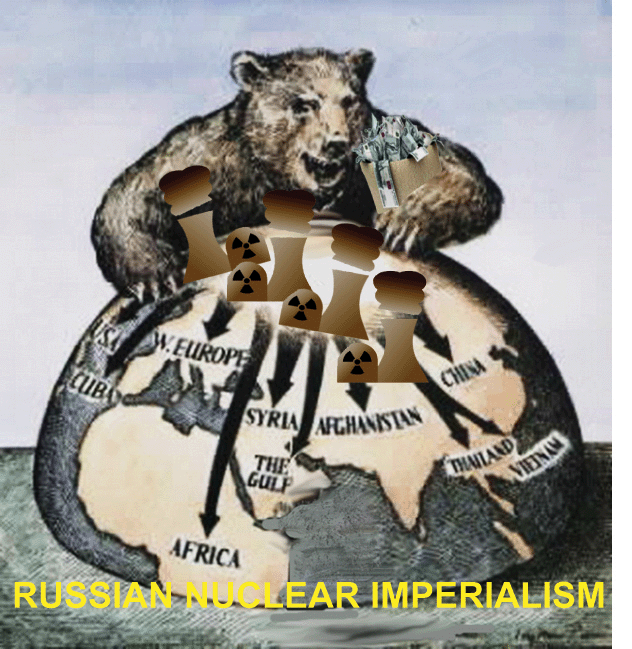
Hungary seeks to postpone loan payback to Russia for Nuclear power plant: What will the final cost be?Bellona February 1, 2019 by Charles Digges Budapest is seeking to modify the terms of a loan it must repay to Russia for building two new VVER-1200 type reactors that will eventually replace Hungary’s Paks nuclear power plant, according to a report from Reuters.
The reactors, which will constitute a plant called Paks II, will be built by Rosatom, Russia’s state nuclear power company, at a cost of 10 billion euro ($12 billion), and will replace the older Soviet-built nuclear plant that supplies half of the country’s electricity.
Rosatom’s construction contract, which includes the loan for Paks II, was the subject of a hotly-debated probe by the EU’s Organization for Economic Co-Operation and Development, which investigated whether the Russian bid violated European competition statutes.
At the time, EU officials and commentators viewed the deal as a Trojan Horse to help cement Moscow’s influence over the right-leaning, rabidly anti-globalist government of Hungarian Prime Minister Viktor Orban.
The EU eventually dropped its investigation in 2017 and granted Hungary permission to build the reactors – partly in an effort to entice Orban, who was insistent about contracting Rosatom, back into the democratic fold. Now Budapest is citing the delay caused by the competition review as reason to renegotiate when it begins paying Rosatom back.
Hungarian financial authorities plan to ask Moscow to postpone collecting on the debt until after the new reactors begin to generate electricity – but it is as yet unclear whether Rosatom will accept new terms. The plant’s construction, meanwhile, is running late. The build was supposed to begin last year………
While the terms of the Paks II loan remain in the shadows, other financing arrangements Moscow has made for building nuclear reactors in other countries suggest that the interest alone could prove to be very expensive for Budapest.
An $11.4 billion, 30-year agreement Rosatom signed with Bangladesh to build the Roopur nuclear plant will net Moscow $8 billion in interest. A $25 billion deal Rosatom is pursuing with Egypt to build that country’s Dabaa plant could, over the 35-year term of that loan, swell to $71 billion.
Another enormous $76 billion deal between Rosatom and South Africa was eventually thwarted by environmentalists when it was revealed the project had been secretly negotiated. Had the deal held it would have siphoned off a quarter of South Africa’s gross domestic product before the reactors even began operation.
Terms like this could spell trouble for Hungary in light of Moscow’s tendency to be a kneecapping creditor when it comes to energy projects – especially when Russia sours on the politics of its debtors.
In 2014, at the height of East-West tensions over Russia’s annexation of Crimea, Kremlin officials threatened to cut nuclear fuel supplies to Ukraine’s Soviet built reactors – which would have interrupted their chain reactions and likely caused a catastrophic accident.
Rosatom eventually walked the threat back. But the lurid message in Moscow’s head-fake toward igniting a second Chernobyl was clear: Russian-built reactors are a useful new tool for political blackmail………..
Many in Europe – Hungary included – subsequently sought to diversify their energy supply in favor of nuclear. Yet, in a devious twist, Rosatom has emerged as the most stable and eager nuclear builder on the international market.
For now, Rosatom can afford to offer risky loans thanks to the enormous state subsidies it receives. These subsidies can be funneled into more loans, and the loans then boost the company’s profits on paper. But for the past several years, it has become clear that these subsidies to the company will likely decrease or dry up altogether in 2020.
As a result, Rosatom is amassing so-called memorandums of understanding from any country vaguely interested in nuclear power. The company says is currently has dozens of these MOUs amounting to more than $130 billion in incoming business.
But that claim should be viewed skeptically, as many of the countries for which Rosatom is promising to build reactors – countries like Jordan, Algeria, Nigeria, the Republic of Congo and Bolivia – won’t have the infrastructure to support nuclear power for decades.
For now, it’s not difficult to imagine Moscow extending the terms of its loan to Hungary for as long as Budapest likes. It will, after all, remain profitable on paper. But in the end, Budapest will be left holding the bag for Rosatom’s over extended balance sheet. But so long as Orban’s government continues it rightward lurch, Moscow is unlikely to call in its marker. http://bellona.org/news/nuclear-issues/2019-02-hungary-seeks-to-postpone-loan-payback-to-russia-for-nuclear-power-plant-what-will-the-final-cost-be
China urges dialogue, as Russia and USA ramp up nuclear weaponry, pull out of weapons treaty
Russia withdraws from Cold War-era nuclear weapons treaty with US https://www.abc.net.au/news/2019-02-02/russia-withdraws-from-cold-war-era-nuclear-weapons-treaty/10774536 Russia has suspended a Cold War-era nuclear weapons treaty, President Vladimir Putin said, after the United States accused Moscow of violations and said it would withdraw from the arms control pact.
 Key points:
- Russia will start work on new missiles, including hypersonic ones

- US and Russia both allege the other has violated the INF treaty
- China urges dialogue amid fears of nuclear arms race

The Intermediate-range Nuclear Forces (INF) Treaty prevents the two superpowers from possessing, producing or test-flying ground-launched nuclear cruise missiles with a range of 500 to 5,500 kilometres.
The United States announced it will withdraw from the INF treaty in six months unless Moscow ends what it says are violations of the pact, but Russia denied violating the treaty.
“The American partners have declared that they suspend their participation in the deal, we suspend it as well,” Mr Putin said during a televised meeting with foreign and defence ministers.
Mr Putin said Russia will start work on creating new missiles, including hypersonic ones, and told ministers not to initiate disarmament talks with Washington, accusing the United States of being slow to respond to such moves.
“We have repeatedly, during a number of years, and constantly raised a question about substantiative talks on the disarmament issue,” Mr Putin said.
“We see that in the past few years the partners have not supported our initiatives.”
The US alleges a new Russian cruise missile violates the important pact, signed by former leaders Ronald Reagan and Mikhail Gorbachev in 1987.
The missile, the Novator 9M729, is known as the SSC-8 by the North Atlantic Treaty Organisation (NATO).
Russia said the missile’s range put it outside the treaty, and accused the US of inventing a false pretext to exit a treaty it wants to leave anyway so it can develop new missiles.
Russia also rejected the demand to destroy the new missile.
During the meeting with Mr Putin, Russian Foreign Minister Sergey Lavrov accused the US of violating the INF and other arms deals, including the non-proliferation treaty.
Mr Putin said Russia would not deploy its weapons in Europe and other regions unless the US did so.
Fears of new arms race
The row over the INF treaty is yet another twist in Russia’s worsening relations with the United States and the West, with tensions over Russia’s annexation of Crimea from Ukraine as well as allegations of it meddling with the presidential election in the US and being behind a nerve agent attack in Britain.
The treaty’s suspension has drawn a strong reaction from Europe and China.
European nations fear the treaty’s collapse could lead to a new arms race with possibly a new generation of US nuclear missiles stationed on the continent.
In a statement, China’s Ministry of Foreign Affairs said the bilateral treaty was important to maintain “global strategic balance and stability”.
“China is opposed to US withdrawal action and urges the United States and Russia to handle their differences properly through constructive dialogue,” the statement said, warning that unilateral withdrawal could trigger “negative consequences”.
Russia also to withdraw from Intermediate-Range Nuclear Forces (INF) treaty, weakening weapons control
Nuclear arms control is increasingly strained as Russia steps back from treaty, Quartz, By John Detrixhe, February 3, 2019 The nuclear arms controls that have been in place since the end of the Cold War appear increasingly strained. The US said yesterday (Feb. 1) that it will withdraw from a landmark treaty for such weapons that it signed with the Soviet Union in 1987. Russia responded today by saying it will also suspend its obligations under the agreement.
The US is pulling back from the treaty with the backing of its NATO allies because officials say Russia has built a cache of missiles and refuses to destroy them. Vladimir Putin, who claims his county is in compliance, has likewise complained that the Americans are potentially in breach of the agreement, which banned the use of short- and medium-range missiles by both countries. The Russian president said his country will begin developing new missiles.
“Our American partners announced that they are suspending their participation in the treaty, and we are suspending it too,” Putin said, according to the BBC.
The breakdown follows several years of failed negotiations. Carl Bildt, co-chair of the European Council on Foreign Relations, said on Twitter that the end of the treaty would allow Russia to deploy cruise missiles from ground launchers that would quickly threaten Europe. He says both sides should commit to not deploying new weapons, then address Russia’s controversial 9M729 missile systems “in detail.”……..
Under the terms of the treaty, it will take six months for the agreement to dissolve. The US has given Russia six months to return to compliance with the treaty, and all parties should make the most of that window to find a resolution….https://qz.com/1541032/russia-withdraws-from-inf-treaty-amid-fears-of-nuclear-arms-race/
IAEA criticises USA’s efforts to sabotage Iran nuclear deal
- IAEA calls pressure on Iran monitoring ‘extremely harmful’
-
Comments follow criticism at Tel Aviv event sponsored by U.S.
“The agency’s independence must not be undermined,” Amano said, according to the IAEA’s website. “If attempts are made to micro-manage or put pressure on the agency in nuclear verification, that is counterproductive and extremely harmful.”
An IAEA official said on Saturday that the U.S. wasn’t Amano’s intended target. He declined to specify which countries prompted the rebuke.
Three years into an agreement that was meant to be a hallmark of the Obama administration, in which Iran agreed to curb its nuclear activities in return for sanctions relief, IAEA inspectors say Tehran is in full compliance.
That hasn’t stopped the Trump administration from backing out of the agreement, piling on new penalties and trying to use the agency to turn the screws with help from Israeli Prime Minister Benjamin Netanyahu.
Iran Abides Nuclear Limits
Enriched uranium has remained below thresholds agreed under deal
President Donald Trump’s hardline stance on Iran has heightened tensions with the other signatories to the agreement: China, France, Germany, Russia and the U.K. It’s also sowed divisions between the White House and America’s spy agencies, with Trump castigating his own intelligence officials this week for being “passive and naive when it comes to the dangers of Iran.”
Netanyahu went to the U.S. Congress to lobby against the agreement before it was signed and has continued to criticize the deal since, arguing that it won’t prevent Iran from attaining nuclear weapons……..
fake newscast in Israel came as Iran’s deputy foreign minister was in Vienna for talks with the IAEA, which is trying to keep the accord from unraveling.
Iran’s leadership has said the country’s ready to re-start its enrichment program using more advanced technology if the agreement fails. The country is considering making the kind of nuclear fuel used in naval propulsion, implying it could enrich uranium closer to the levels needed for weapons.
Meanwhile, the European Union is moving to help countries evade the sanctions that the Trump administration imposed to stop countries from trading with Iran.
On Thursday, the 28-member bloc finalized a new financial mechanism for bypassing the U.S. restrictions. The special purpose vehicle, called the Instrument in Support of Trade Exchanges, will be headquartered in Paris and staffed with German leadership.
The vehicle will have a positive “impact on trade and economic relations with Iran, but most importantly on the lives of Iranian people,” a draft of the joint communique seen by Bloomberg says.
The U.S. mission to the IAEA in Vienna said in an emailed response to questions that the watchdog “can continue to count on the full support of the United States” as it carries out its “important mandate in Iran.” https://www.bloomberg.com/news/articles/2019-02-01/fake-news-goes-nuclear-as-iaea-sees-u-s-israel-meddling-on-iran
Russia’s Plan to Solve the North Korea Nuclear Crisis?
Does Russia Have a Plan to Solve the North Korea Nuclear Crisis? https://nationalinterest.org/blog/buzz/does-russia-have-plan-solve-north-korea-nuclear-crisis-43022 2 Feb 19, Some think so. by Stratfor Worldview
What Happened: The Russian government reportedly made a secret proposal to North Korea in the fall of 2018 to construct a nuclear power plant in the country in exchange for North Korea dismantling its nuclear weapons and ballistic missiles, The Washington Post reported Jan. 29, citing unnamed U.S. officials. The Russian envoy to North Korea, meanwhile, denied the report.
Why It Matters: Russia’s alleged offer would imply attempts to insert itself into the negotiation process over North Korea’s nuclear program. U.S. President Donald Trump is slated to hold a second summit with North Korean leader Kim Jong Un in late February.
Background: Kim placed a significant emphasis on rectifying North Korea’s electricity problems during his New Year’s speech. Meanwhile, Russian Deputy Foreign Minister Igor Morgulov received a delegation from North Korea’s Foreign Ministry in Moscow on Jan. 29.
IAEA urges Japan to slow the Fukushima wastes clean-up – delay release to Pacific till after Olympic Games

IAEA urges Japan to take ample time in Fukushima cleanup https://phys.org/news/2019-01-iaea-urges-japan-ample-fukushima.html January 31, 2019 by Mari Yamaguchi The International Atomic Energy Agency urged Japan on Thursday to spend ample time in developing a decommissioning plan for the tsunami-damaged Fukushima nuclear power plant and to be honest with the public about remaining uncertainties.
The cores of the three reactors melted after a massive 2011 earthquake and tsunami. Utility and government officials plan to start removing the melted fuel in 2021, but still know little about its condition and have not finalized waste management plans.
“The IAEA review team advises that before the commencement of the fuel debris retrieval activities, there should be a clear implementation plan defined to safely manage the retrieved material,” the report said. “TEPCO should ensure that appropriate containers and storage capacity are available before starting the fuel debris retrieval.”
The report also urged the government and TEPCO to carefully consider ways to express “the inherent uncertainties involved” in the project and develop “a credible plan” for the long term. It advised TEPCO to consider adopting contingency plans to “accommodate any schedule delays.”
Dale Klein, a former U.S. Nuclear Regulatory Commission chairman who heads a TEPCO reform committee, said in a recent interview that the decommissioning should not be rushed, even if the government and TEPCO have set a schedule and people want to see it move faster.
“It’s much better to do it right than do it fast,” he said, adding that it’s also good not to rush from a health and safety perspective. “Clearly, the longer you wait, the less the radiation is.”
He said he would be “astounded” if the current schedule ends up unchanged.
In order to make room in the plant compound to safely store the melted fuel and for other needed facilities, about 1 million tons of radioactive waste water currently stored in hundreds of tanks will have to be removed. The IAEA team, headed by Xerri Christoph, an expert on radioactive waste, urged the government and TEPCO to urgently decide how to dispose of it.
Nuclear experts, including officials at the IAEA and Japanese Nuclear Regulation Authority, have said a controlled release of the water into the Pacific Ocean is the only realistic option. A release, however, is unlikely until after the Tokyo 2020 Olympic Games in order to avoid concerns among visitors from overseas.
Donald Trump confirms US withdrawal from INF nuclear treaty
 Guardian, Julian Borger, World affairs editor, Sat 2 Feb 2019
Announcement gives Russia 180 days to destroy violating missiles and launchers to avoid new arms race Donald Trump has confirmed that the US is leaving the Intermediate-range Nuclear Forces (INF) treaty, saying “we will move forward with developing our own military response options” to Russia’s suspect missile.In a written statement, Trump said that the US would be suspending its compliance with the 1987 treaty on Saturday, and would serve formal notice that it would withdraw altogether in six months.
He left the door open to the treaty being salvaged in that 180-day window, but only if Russia destroys all of its violating missiles, launchers and associated equipment. Since 2013, the US has alleged that Russia has developed a new ground-launched cruise missile which violated the INF prohibition of missiles with ranges between 500km and 5,500km.
Russia for several years denied the missile existed but has more recently acknowledged its existence, saying its range does not violate INF limits.
“This is in reality, under international law, Russia’s final chance,” a senior administration official said. “If there is to be an arms race, it is Russia that has undermined the global security architecture.”
In his statement, Trump warned that unless Russia destroyed its missile by August: “We will move forward with developing our own military response options and will work with Nato and our other allies and partners to deny Russia any military advantage from its unlawful conduct.”
Washington’s European allies have been anxious that the death of the INF treaty would lead to a return to the tense days of the 1980s, and an arms race involving short- and medium-range missiles on European soil………
, neither the Trump nor Pompeo gave any indication whether the administration would agree to extend the 2010 New Start treaty, the last remaining arms control agreement constraining the arsenals of the two major nuclear weapons powers.
Both the US and Russia have abided by the New Start limit of 1,550 deployed, strategic nuclear warheads, but the treaty expires in 2021, leaving little time to negotiate a five-year extension.
Alexandra Bell, a former state department arms control official and senior policy director at the Centre for Arms Control and Non-Proliferation, said: “New Start is working, it’s good for American national security and this administration is putting global security at risk by foot-dragging on extension.” https://www.theguardian.com/world/2019/feb/01/inf-donald-trump-confirms-us-withdrawal-nuclear-treaty
India’s Kudankulam nuclear power station means big debt to Russia
Kudankulam: Nuclear power utility struggles to repay Russia for supplies https://indianexpress.com/article/india/kudankulam-nuclear-power-utility-struggles-to-repay-russia-for-supplies-5563744/ The sanctioning of lower than requisite funds comes at a time when NPCIL’s budgetary support requirement has gone up in light of the utility taking up 10 new projects that had been cleared by the government in May 2017. by Anil Sasi |New Delhi February 1, 2019 Inadequate budgetary support to the strategic nuclear energy sector over the last two financial years has squeezed funds earmarked under the investment head for the Nuclear Power Corporation of India Limited (NPCIL), resulting in India’s frontline nuclear utility slipping back on its repayment obligations to the Russians for equipment supplies to the Kudankulam nuclear project.The sanctioning of lower than requisite funds comes at a time when NPCIL’s budgetary support requirement has gone up in light of the utility taking up 10 new projects that had been cleared by the government in May 2017.
The problem of non-payment of Russian credit on account of a reduction in the provision for Russian credit to NPCIL was discussed before a parliamentary panel, responding to which the Department of Expenditure in the Finance Ministry subsequently “conveyed” the concerns to the Budget Division of the Department of Economic Affairs in the same Ministry for “further necessary action”.
Under a credit arrangement between the governments of Russia and India, as soon as equipment leaves Russia for Indian projects such as the nuclear station in Kudankulam, that much money is released by the Russian government to the suppliers, which then becomes a loan on the Government of India. This loan is then supposed to be routed to NPCIL by way of a budgetary provision. Against that, the same money would be given back to the Government of India so that it becomes a loan on NPCIL.
This arrangement has come under strain due to the reduction in budgetary allocation under the ‘investment in PSUs’ head, which has affected the loans payable to NPCIL towards ‘Russian credit utilisation’ that is outstanding in the books of the Controller of Aid Accounts and Audit. The CAAA is the division within the Department of Economic Affairs entrusted with the responsibility for withdrawal of loan and grant proceeds for all official development assistance where India is the recipient.
While the extent of the slip-up in the payment obligation to the Russians could not be ascertained, the trend was seen as serious enough for the Parliamentary Standing Committee on Science and Technology, Environment and Forests to flag this an issue to which the Ministry of Finance responded in the affirmative, a senior government official involved in the exercise confirmed. Queries sent to K N Vyas, Secretary of the Department of Atomic Energy and Chairman of the Atomic Energy Commission, did not elicit a response.
According to official estimates, while budgetary support to NPCIL had gone up from Rs 370 crore in the budget estimate for 2017-18 to Rs 1435 crore in the revised estimate for the year (entailing a total of Rs 685 crore under the investment head and Rs 750 crore as loan), the actual requirement in form of budgetary support submitted by the DAE was thrice that amount — Rs 4305 crore. The higher amount, official said, was primarily on account of a shortfall of earlier years in receipt of equity to the tune of Rs 402 crore and obligations under the Russian Credit of Rs 3,903 crore.
For 2018-19, while the allocation was hiked to Rs 1,665 crore in the budget estimate, it still left a funding gap of around Rs 2,870 crore, according to DAE estimates. The situation was exacerbated by 10 new projects based on the indigenous 700 MWe (mega watt electric) pressurised heavy water reactors (PHWRs) that had been sanctioned in mid-2017, due to which budgetary support requirement had also increased.
NPCIL is currently operating 22 commercial nuclear power reactors with an installed capacity of 6,780 MWe, while it has another eight reactors under various stages of construction totaling 6200 MWe capacity.
Russia and India had, in 2015, agreed to actively work on projects deploying 12 additional Light Water Reactor (LWR) nuclear reactors, for which, the localisation of manufacturing in India under the NDA government’s flagship ‘Make in India’ initiative and the commencement of serial construction of nuclear power plants was flagged as a joint initiative.
In this context, the Programme of Action for localisation between Russian state-owned utility Rosatom and the DAE was finalised during Prime Minister Narendra Modi’s Moscow visit in 2015. At the Kudankulam site, where the two Russian-designed VVER-1000 series reactors have being installed, nearly 100 Russian companies and organisations are involved in documentation, supply of equipment and controlling construction and equipping process. At the same site, four more Russian reactor units are slated to come up in the coming years.
Russia secretly offered North Korea a nuclear power plant: officials
SMH, By John Hudson and Ellen Nakashima, 30 January 2019 Washington: Russian officials made a secret proposal to North Korea last northern fall aimed at resolving deadlocked negotiations with the Trump administration over its nuclear weapons program, said US officials familiar with the discussions.
In exchange for dismantling its nuclear weapons and ballistic missiles, Moscow offered the country a nuclear power plant.
The Russian offer, which intelligence officials became aware of in late 2018, marks a new attempt by Moscow to intervene in the high-stakes nuclear talks as it reasserts itself into a string of geopolitical flash points from the Middle East to South Asia to Latin America. Its latest bid is expected to unsettle Chinese and US officials wary of granting Moscow an economic foothold on the Korean Peninsula.
As a part of the deal, the Russian government would operate the plant and transfer all byproducts and waste back to Russia, reducing the risk that North Korea uses the power plant to build nuclear weapons while providing the impoverished country a new energy source……. https://www.smh.com.au/world/north-america/russia-secretly-offered-north-korea-a-nuclear-power-plant-officials-20190130-p50ufz.html
1 This Month



19 November – Webinar – The Reality of Reprocessing
Time: 11:00 AM Pacific Time (US & Canada) / 2:00 PM Eastern / 7:00 PM UK / 8:00 PM CET
Register for the Zoom Event Here



Shut down the radiation-damaged Heysham nuclear reactors now
To see nuclear-related stories in greater depth and intensity – go to https://nuclearinformation.wordpress.com

Say No to NASA’s Reckless Nuclear Reactor on the Moon
Say No to NASA’s Reckless Nuclear Reactor on the Moon
-
Archives
- November 2026 (64)
- October 2026 (302)
- September 2026 (339)
- August 2026 (330)
- July 2026 (355)
- June 2026 (287)
- May 2026 (306)
- April 2026 (356)
- March 2026 (251)
- February 2026 (267)
- January 2026 (308)
- December 2025 (358)
-
Categories
- 1
- 1 NUCLEAR ISSUES
- business and costs
- climate change
- culture and arts
- ENERGY
- environment
- health
- history
- indigenous issues
- Legal
- marketing of nuclear
- media
- opposition to nuclear
- PERSONAL STORIES
- politics
- politics international
- Religion and ethics
- safety
- secrets,lies and civil liberties
- spinbuster
- technology
- Uranium
- wastes
- weapons and war
- Women
- 2 WORLD
- ACTION
- AFRICA
- Atrocities
- AUSTRALIA
- Christina's notes
- Christina's themes
- culture and arts
- Events
- Fuk 2022
- Fuk 2023
- Fukushima 2017
- Fukushima 2018
- fukushima 2019
- Fukushima 2020
- Fukushima 2021
- general
- global warming
- Humour (God we need it)
- Nuclear
- RARE EARTHS
- Reference
- resources – print
- Resources -audiovicual
- Weekly Newsletter
- World
- World Nuclear
- YouTube
-
RSS
Entries RSS
Comments RSS

