A financial necessity – UK’s nuclear industry to fall into China’s hands
Telegraph 24th Jan 2019, Britain’s nuclear industry is falling inexorably into Chinese hands. At
Hinkley Point in Somerset, after years of debate and delay concrete is now
finally being poured by EDF for the base of Britain’s first nuclear reactor
to be built since Sizewell B.
But plans to build a fleet of new reactors at
other sites where existing plants are due to be retired from service are
tumbling like nine-pins.
Will any more be built? It’s hard to say, but without giant dollops of Chinese cash it looks increasingly improbable.
Amid falling costs for renewable alternatives, Britain’s nuclear dreams are
foundering on the rocks of cold economic reality, just as they did under
Thatcher when a flood of North Sea gas arrived to reshape the nation’s
energy landscape.
EDF, which owns the UK’s existing reactor fleet, and its
Chinese partner CGN remain committed to developing three new nuclear
projects at Hinkley, Sizewell in Suffolk and another at Bradwell in Essex –
a Chinese-led scheme – quite how the £50 billion-odd cost of building them
will be met remains murky. With debts of over 31 billion euros (£27bn),
the French state-owned company is strapped for cash and looks increasingly
reliant on its Beijing-backed partner to get them built.
The dawning reality is that without Chinese money to prop up EDF the industry is a
busted flush. Amid mounting security fears, Britain will have to think hard
about the wisdom of handing over the keys to a large part of its nuclear
fleet to Beijing.
Meanwhile, there are other ways China might seek to boost
its stake in Britain’s nuclear fleet. For starters, CGN has approached the
UK government about developing Moorside, the site adjacent to Sellafield
which has been vacated by Toshiba, using its own technology. It could seek
to do something similar at Wylfa too. Moreover, Centrica is planning to
offload a 20 pc stake it holds in EDF’s existing fleet of UK reactors.
China could be a willing buyer if it is allowed to do so.
Whether or not any of this matters is of course another question, but amid growing
tensions with China over espionage and security, many figures within
Britain’s security establishment view the prospect as alarming.
https://www.telegraph.co.uk/technology/2019/01/24/britains-nuclear-industry-falling-inexorably-chinese-hands/
Advantages of cross-border energy interconnection between UK and Europe
Green Alliance: UK must look to EU interconnection amid ‘crumbling’ nuclear plans, Business Green, Michael Holder, 21 January 2019
“……… New analysis by the environmental think tank highlights myriad benefits for the UK from trade in electricity with European countries, but warns leaving the EU – particularly under a ‘no-deal’ scenario – threatens to undermine opportunities to enhance cross-border interconnection.
Published on Friday, the analysis shows that a mix of increased electricity interconnection with the EU in addition to installing more renewable energy in the UK would help to keep consumer bills down, boost access to and trade in clean power, and also maintain energy security, in the face of on-going struggles to deliver planned new nuclear projects.
It follows Japanese firm Hitachi’s announcement last week that it has halted construction of the £16bn Wylfa nuclear project in Wales after failing to agree a funding support package with the government. Hitachi’s plans for another nuclear plant in Gloucestershire have also been shelved.
Green Alliance said trading power across borders with Europe could help reduce energy sector emissions in the short term without the need to build more capacity, and that interconnection could also help provide instant back up power when needed at peak times.
It also highlights the economic benefits of interconnection, with cross border trading delivering a combined value of £700m to UK markets in 2017, according to Friday’s analysis.
However, leaving the EU without a deal could cost the UK as much as £2.2bn per year at the current level of interconnection, the think tank warned.
Similar research by climate think tank E3G recently argued the merits of the UK maintaining membership of the EU internal energy market in order to fully realise the cost and carbon benefits of electricity interconnection with Europe.
At present, the UK is one of the least interconnected countries in Europe, and it therefore has the most to gain from improving its power connections with the rest of the continent, argued Chaitanya Kumar, senior policy adviser at Green Alliance……….
In the short term, Kumar suggested boosting interconnection could help strengthen the case for scaling up UK renewables capacity, and that negotiating continued participation in the EU’s internal energy market should therefore be a crucial part of the UK’s future relationship with the EU, particularly as the government’s nuclear energy plans “are crumbling”.
“Instead of doubling down on subsidised, expensive nuclear, the government should now be focusing on building cheaper alternatives in more renewables and electricity interconnection with Europe,” he said. “The UK’s climate ambitions are not under any immediate threat from the failed nuclear plans, but that can only be guaranteed if the existing alternatives are scaled up.”
The report follows news last week that plans for a new interconnector between Peterhead and the Norway took a step forward, after securing planning permission from Aberdeenshire Council.
The North Connect transmission link would see a 415-mile cable link Peterhead with the Norwegian Coast, providing up to 1.4GW of power between the two countries from 2023.
A number of similar projects are in the pipeline, but experts fear their prospects are largely dependent on the UK securing a Brexit agreement with the EU that allows for streamlined energy trading – something that is not guaranteed under a ‘no deal’ scenario. https://www.businessgreen.com/bg/news/3069586/green-alliance-uk-must-look-to-eu-interconnection-amid-crumbling-nuclear-plans
Kim Jong Un continuing to play to the vanity of Donald Trump?
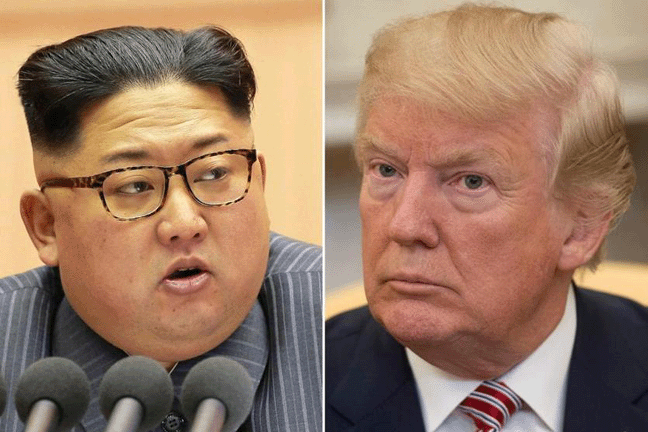 While Kim plays to Trump’s ego, he builds his nuclear arsenal, CNN, By Samantha Vinograd, January 20, 2019 “……..When President Donald Trump met Kim Jong Un in June 2018, they came to a vague agreement that North Korea would work toward the denuclearization of the Korean Peninsula. But, as Vice President Mike Pence stated last week, North Korea has failed to take concrete steps toward giving up its nuclear weapons, and it still represents a serious nuclear threat.
Trump plans North Korea nuclear summit with Kim Jong Un for February
WASHINGTON — President Donald Trump plans to meet face-to-face with North Korean leader Kim Jong Un next month for a second nuclear summit, the White House announced Friday. …..https://www.nbcnews.com/politics/white-house/trump-meets-top-north-korean-official-second-kim-summit-possibility-n960301
The value of informal talks about nuclear security
 Let’s talk about nuclear security — informally, SF Chronicle, By James Goodby and Kenneth Weisbrode Jan. 19, 2019
With the high-profile conclusion of Robert Mueller’s investigation, a U.S. threat to withdraw from a nuclear missile treaty, a worsening political situation in Ukraine, an ongoing conflict in Syria, not to mention recent reports that the FBI began a counterintelligence investigation of President Trump — the citizens of Russia and the United States should worry that their countries are soon reaching a point of no return.
Diplomats will say that few such points exist, and that professionals can and will continue to keep the channels of dialogue open. What’s missing here is not the capacity to talk but a political consensus on both sides to reaffirm why both countries still need to cooperate and how to go about finding it.
Mikhail Gorbachev and George P. Shultz recently called for a “broad strategic dialogue” among Americans and Russians to pull our nations out of their trough, or at least to look beyond it. Gorbachev and Shultz propose an “informal forum,” and that makes sense. The U.S.-Russia Bilateral Presidential Commission, nuclear arms control talks, and other formal arrangements appear to be stalled. The establishment of dialogue at a higher level — similar to efforts in the 1990s to encourage mutual investments and business opportunities — would probably be a nonstarter. What would an informal forum look like?………. https://www.sfchronicle.com/opinion/openforum/article/Let-s-talk-about-nuclear-security-informally-13547680.php
How US and China’s African nuclear mission could provide model for disarming North KoreaSC
- The recent joint operation to remove uranium from Nigeria could provide a template for denuclearisation on the Korean peninsula
- Although the two countries have proved they can still work together, the challenges posed by North Korea are likely to prove far more challenging
This week it emerged that Chinese and American nuclear experts had cooperated on a project to remove highly enriched uranium (HEU) from a reactor in Nigeria to prevent the material falling into the hands of terrorists.
The mission last year, which also involved British and Norwegian experts along with contractors from Russia and the Czech Republic, was completed within a day despite violent clashes in Kaduna province where the reactor was located, according to Defensenews.com.
US and China team up to keep nuclear material from terrorists
The Nigerian operation was not the first time the two countries had worked together to prevent nuclear proliferation in West Africa; a similar operation to remove HEU to China was carried out in Ghana in 2017.
Miles Pomper, a senior fellow at the James Martin centre for non-proliferation studies at the Middlebury Institute of International Studies at Monterey, said: “It is conceivable in the case of denuclearisation that North Korea’s nuclear weapons or material could be taken to China.
“Given the fact that China already has nuclear weapons, the US could likely accept that although the US would likely then push for their disassembly.”
Bruce Bennett, a senior defence researcher at the Rand Corporation, said the two countries would continue to cooperate on dismantling nuclear weapons.
“If instability developed in North Korea, China may well be at greater risk from terrorists or Chinese dissident groups seizing North Korean nuclear weapons and using them against China,” he said……… https://www.scmp.com/news/china/diplomacy/article/2182564/how-us-and-chinas-african-nuclear-mission-could-provide-model
Germany urges Russia to destroy missile to save nuclear treaty
http://www.digitaljournal.com/news/world/germany-urges-russia-to-destroy-missile-to-save-nuclear-treaty/article/541215 German Foreign Minister Heiko Maas on Friday called on Russia to destroy a controversial missile system Washington says breaches a key arms control treaty.
“We believe Russia can save this treaty,” Maas said after talks with Russia’s top diplomat Sergei Lavrov, referring to the Intermediate-Range Nuclear Forces treaty (INF).
“It affects our security interests in a fundamental way.”
Tensions have raged between Russia and the United States over the fate of the INF agreement signed in 1987 by then US president Ronald Reagan and Soviet leader Mikhail Gorbachev.
US President Donald Trump has promised to walk away from the agreement and Russian leader Vladimir Putin threatened a new arms race, saying Europe would be its main victim.
Washington says Moscow’s 9M729 missile system violates the treaty and warned it would withdraw from the agreement if Russia does not get rid of it.
Russia denies the claim, accusing the United States of violating the treaty which forbids ground-launched short- and intermediate-range missiles.
“Like other NATO members, we believe that there is a missile violating this treaty and it should be destroyed in a verifiable manner to get back to the implementation of this agreement,” Germany’s Maas told reporters.
Maas commended Moscow for trying to salvage the agreement and expressed hope that talks between Russian and US negotiators would resume in the near future.
Last month Washington gave Russia a 60-day deadline to dismantle missiles that it claims breach the INF treaty or the US would begin the six-month process of formally withdrawing from the deal.
Lavrov for his part said Washington provided no evidence that Russia’s tests of the missile violated the INF treaty.
He said Washington’s demands to destroy the missiles and have regular access to Russian sites were just “a pretext to exit the treaty.”
“During official contacts on arms control and disarmament issues back in October the United States said the decision is definitive and their announcement of the withdrawal from the INF treaty is not an invitation to dialogue. This is a quote.”
Earlier this week, talks between US and Russian officials in Geneva to salvage the deal led nowhere. Moscow said Washington did not appear to be in the mood for more talks while a US official said Russia was just paying “lip service” to transparency.
Russian officials said US representatives had confirmed Washington’s intention to begin withdrawing from the treaty from February 2.
USA to begin pullout from Intermediate-range Nuclear Forces (INF) treaty, rejecting Russian offer
 US to begin nuclear treaty pullout next month after Russia missile talks fail, Guardian, Julian Borger in Washington, 17 Jan 2019
-
- Officials reject Russian offer to inspect new missile
- US says it will suspend observance of INF treaty on 2 February
The US has rejected Moscow’s offer to inspect a new Russian missile suspected of violating a key cold war-era nuclear weapons treaty, and warned that it would suspend observance of the agreement on 2 February, giving six-months’ notice of a complete withdrawal. The under secretary of state for arms control and international security, Andrea Thompson, confirmed the US intention to withdraw from the treaty after a meeting with a Russian delegation in Geneva, which both sides described as a failure.
Donald Trump took US allies by surprise when he announced his intention to leave the 1987 Intermediate-range Nuclear Forces (INF) treaty in October. The agreement led to the destruction of thousands of US and Soviet weapons, and has kept nuclear missiles out of Europe for three decades.
The Russian foreign minister, Sergei Lavrov, accused the US of intransigence, saying Moscow had offered to allow US experts to inspect the suspect missile, which it insists does not infringe the limits laid down in the treaty.
“However, US representatives arrived with a prepared position that was based on an ultimatum and centred on a demand for us to destroy this rocket, its launchers and all related equipment under US supervision,” Lavrov said.
Thompson noted that the US had been demanding Russian transparency over the missile for more than five years. She confirmed that the offer of inspections was not enough and that the US was demanding the destruction of the missile system, known as the 9M729……..
She said that there were currently no plans for follow-up talks on the INF before the 2 February deadline laid down by the Trump administration, though US and Russian diplomats would be meeting, including at a summit of the Nato-Russian council next week.
Thompson said that if Russia did not show willingness to comply with the treaty by the deadline, the US would suspend its own obligations, meaning that the US defense department could start research and development on missiles with ranges currently banned by the INF, from 500 to 5,500km.
At the same time, she told reporters, the US would formally give notice of its withdrawal from the treaty, which could come into effect on 2 August.
After that, there would be no restrictions on deployment of medium-range missiles in Europe or the Pacific………..
The Trump administration was criticised by former officials and arms control advocates for not pursuing the Russian offer of inspections.
“We’ve spent years trying to get something – anything – out of the Russians on INF. The Russian offer of an exhibition of the 9M729 is not enough, but it is something,” Alexandra Bell, a former senior state department official who is now senior policy director at the Centre for Arms Control and Non-Proliferation.
“Perhaps it is a foundation on which to build. Not trying to take advantage of this opportunity is to leave diplomatic options on the table and that’s just foolish.”
Daryl Kimball, the head of the Arms Control Association said: “If the INF is terminated on 2 August, there will be nothing to prevent Russia from deploying nuclear missiles that threaten Europe and the Trump administration will have no hesitation in pursuing the deployment of INF-prohibited weapons in Europe.” https://www.theguardian.com/world/2019/jan/16/us-russia-inf-treaty-nuclear-missile
Top North Korea envoy meets Trump at White House for nuclear talks
Straits Times, WASHINGTON (REUTERS) 18 Jan 19, – A top North Korean nuclear envoy met President Donald Trump at the White House after holding talks with Secretary of State Mike Pompeo on Friday (Jan 18) in a diplomatic flurry aimed at laying the groundwork for a second US-North Korea summit.
The visit of Kim Yong Chol, Pyongyang’s lead negotiator with the United States and a hardline former spy chief, marked a rare sign of potential movement in a denuclearisation effort that has stalled since a landmark meeting between Trump and North Korean leader Kim Jong Un in Singapore last year.
Kim Yong Chol and Pompeo, with tight smiles, posed together for photographs at a Washington hotel before holding about 45 minutes of talks that could help determine whether the two sides can make headway.
After that meeting, the White House said Trump hosted Kim Yong Chol in the Oval Office to “discuss relations between the two countries and continued progress on North Korea’s final, fully verified denuclearisation.”
There has been no indication of any narrowing of differences over US demands that North Korea abandon a nuclear weapons programme that threatens the United States or over Pyongyang’s demand for a lifting of punishing sanctions.
Hours before Kim Yong Chol’s arrival on Thursday, Trump – who declared after the Singapore summit in June that the nuclear threat posed by North Korea was over – unveiled a revamped US missile defence strategy that singled out the country as an ongoing and “extraordinary threat.”
The State Department said after Friday’s meeting that Pompeo had a “good discussion” with Kim Yong Chol “on efforts to make progress on commitments President Trump and Chairman Kim Jong Un made at their summit in Singapore.”
But it provided no specifics.
The high-level visit could yield an announcement of plans for a second summit. Both Trump and Kim have expressed an interest in arranging but some US-based analysts say it would be premature due to the lack of obvious progress so far………. https://www.straitstimes.com/world/united-states/north-korea-envoy-in-us-for-talks-with-secretary-of-states-mike-pompeo-possibly
The Trump administration’s dangerous strategy of provocation – led by John Bolton
|
To Stop Iran’s Bomb, Bomb Iran,” read the headline of a 2015 New York Times op-ed by now National Security Adviser John Bolton. Writing at the height of nuclear negotiations with Iran, Bolton argued that, “Time is terribly short, but a strike can still succeed.” Almost four years later, all of Iran’s potential pathways to a bomb remain blocked by the very deal Bolton would have traded for war. But like nonbiodegradable plastic adrift at sea, undeterred by the damage left in its wake, Bolton’s views haven’t changed. On January 13, 2019, news broke that the National Security Council, at Bolton’s direction, asked the Pentagon for military strike options against Iran. The request was reportedly in response to a mortar attack launched in September 2018 by an Iraqi Shiite militia aligned with Iran that landed near the US Embassy in Baghdad, hitting an empty lot and causing no injuries or damage. In other words, Bolton asked the Pentagon to draw up plans for airstrikes over Iran that would start a catastrophic war — all in response to a militia attack with no victims. Taken on its own, a thoughtful observer might characterize Bolton’s request as a gross overreaction from an overzealous national security adviser. But in the context of this administration’s policies and statements on Iran, it looks more like part of the plan. Let’s review the lowlights. In the first days of Trump’s presidency, former National Security Adviser Michael Flynn ominously announced that the administration was “putting Iran on notice.” In May 2018, Trump withdrew from the Iran nuclear agreement despite Iran’s verifiable compliance, and reimposed the full suite of US sanctions lifted under the agreement. Last July, Trump authored a late-night tweetthreatening Iran with “consequences the likes of which few throughout history have ever suffered before.” In August, Secretary of State Mike Pompeo formed the Iran Action Group, a special team tasked with coordinating the administration’s policies for countering the “Iranian threat.” Earlier this month, Pompeo started an eight-country tour through the Middle East emphasizing the need to counter “the greatest threat of all the Middle East, the Iranian regime.” Next month, the secretary of state is hosting a summit in Poland focused on “making sure that Iran is not a destabilizing influence.” ………. Picking up on Trump’s general disregard for congressional war powers, Sen. Tom Udall of New Mexico introduced legislation last year prohibiting the use of funds for military action against Iran without congressional approval. Legislation like this may prove crucial in preventing a war with Iran, especially given the ever-expanding interpretations of presidential war powers espoused by this administration. If confirmed, Trump’s nominee for attorney general, William Barr, could help expand those interpretations even further, as he tried to do in the lead-up to the Iraq War when he told President Bush that he had “no doubt” about the president’s authority to invade Iraq without congressional authorization. However Congress moves to stop this march to war, it should move quickly. The administration’s actions suggest a strategy of provocation. Congress would be wise to sound the alarm and demand answers about the administration’s intentions before we find ourselves in another decades-long quagmire in the Middle East with quite imaginable consequences. https://truthout.org/articles/to-stop-boltons-fire-and-fury-fire-bolton/ |
|
|
USA-China co-operation in removing nuclear material from Nigeria
How the US and China collaborated to get nuclear material out of Nigeria — and away from terrorist groups, Defense News, By: Aaron Mehta, 14 Jan 19, “……… Moving the nuclear material out of Nigeria has been a long-sought goal for the United States and nonproliferation advocates. But the goal has taken on increased importance in recent years with the rise of militant groups in the region, particularly Boko Haram, a group the Pentagon calls a major terrorist concern in the region.
It was the mid-1990s when Nigeria, with technical support and backing from China, began work on what would become Nigerian Research Reactor 1, located at Ahmadu Bello University in Kaduna. The location opened in 2004, and is home to roughly 170 Nigerian workers.
The design, however, used highly enriched uranium, or HEU, a type of nuclear substance often referred to by the general public as weapons-grade uranium. This kind of uranium forms the core of any nuclear weapons material, and the Nigerian material was more than 90 percent enriched, making it particularly attractive for anyone looking to use it.
Since NIRR-1 went online, however, improvements in technology meant that experiments involving highly enriched uranium could now be run with a lesser substance. Across the globe, the IAEA and its partners have worked to swap out weapons-grade material with lightly enriched uranium, or LEU, which is enriched at less than 20 percent, and hence unusable for weapons. In all, 33 countries have now become free of HEU, including 11 countries in Africa.
With just over 1 kilogram of HEU, the Nigerian material, if stolen, would not be nearly enough to create a full nuclear warhead. However, a terrorist group would be able to create a dirty bombwith the substance or add the material into a stockpile gathered elsewhere to get close to the amount needed for a large explosion.
They’re small reactors, they’re not power reactors where the fuel is so radioactive it kills you,” he said. “This is very attractive to a proliferation point of view, and they are research reactors, so they are often at universities without high security.”
Replacing HEU with LEU in research reactors naturally requires caution, as anything nuclear-related comes with risks. But the Nigerian mission was particularly difficult because of security concerns, Hanlon said. He noted that Boko Haram, while not in the Kaduna region, has been operating in Nigeria for quite some time.
“All of our partners understood that operational security was paramount,” Schwartz said. “The world is a safer place today as a result of the determined work to remove this weapons useable Uranium from Nigeria.”
China’s role
The removal operation cost roughly $5.5 million, with the United States contributing $4.3 million. The United Kingdom ($900,000) and Norway ($290,000) also chipped in. But while it didn’t contribute money, China’s role in the operation was outsized — and occurred as the war of words from the Trump administration toward Beijing was reaching a fever pitch, one that did not die down in the weeks to come.
As the October operation was just hours from starting, U.S. President Donald Trump took to the press to discuss nuclear material and China.
“Until people come to their senses, we will build [the nuclear arsenal] up,” Trump told reporters just hours before the Nigeria operation was to begin. “It’s a threat to whoever you want. And it includes China, and it includes Russia, and it includes anybody else that wants to play that game. You can’t do that. You can’t play that game on me.”
By the time the Antonov plane — carrying the HEU, along with American inspectors and security — arrived at Shijiazhuang airport in China on Dec. 6, the arrest of a Chinese technology executive in Canada had inflamed fears of a trade conflict between the two countries.
“Even though the national level conversation is really poor because of trade and other issues, the technical collaboration between laboratories, between nuclear engineers, that’s generally gone pretty well,” he said. He added that China has invested heavily in LEU over the last decade, and therefore also has an interest in encouraging others to switch to that technology.
Whether that cooperation continues if relations between the two nations continue to deteriorate will be a true test going forward……… https://www.defensenews.com/news/pentagon-congress/2019/01/14/how-the-us-and-china-collaborated-to-get-nuclear-material-out-of-nigeria-and-away-from-terrorist-groups/
USA govt could live with a Nuclear North Korea, but wouldn’t admit it
Can America Live with a Nuclear North Korea? National Interest, MilitaryTechnologyWorldICBM
Question: Can America live with an atomic North Korea, and could any presidential administration openly admit it can? The answer: Yes it can, and no it couldn’t.
Forcibly disarming Pyongyang could and probably would involve sacrificing thousands of American and Korean lives. Here’s a crude yardstick. The Korean War, a conventional conflict to preserve an independent South Korea, cost the United States some 37,000 military lives. Many more service folk suffered wounds. Thirty-seven thousand. That’s more than fivefold the combined American military death toll from the Afghanistan and Iraq wars since 9/11. And that leaves aside countless more Korean military and civilian lives expended fighting to the current standstill along the inter-Korean border.
It’s hard to see how war could be waged more cheaply than it was in 1950-1953 when the principal combatants, not to mention North Korea’s ally China and neighbor Russia, all boast nuclear weapons to accompany formidable conventional forces. And Washington must not delude itself into thinking air and sea power can do the job alone, any more than aviators and mariners repulsed the North Korean invasion in 1950. It took land forces back then—and today, in all likelihood, ground combat would be required to destroy the dug-in North Korean nuclear complex.
Any military strategy worth the name would demand that U.S. Army and Marine forces again seize and control ground—allowing them the leisure to ferret out underground facilities and armaments.
In short, a new Korean War would not be a come-and-go affair. Such a forecast is solidly grounded in the classics of strategy. For instance, Admiral J. C. Wylie points out that the proper goal of military strategy is to impose control on the foe. Aircraft and missiles flit by overhead while ships remain offshore. Though formidable, their presence is too intermittent to qualify as control. That being the case, he pronounces the soldier slogging through mud the “ultimate determinant” of who emerges the victor. The soldier goes and stays. “He is control,” proclaims Wylie. No control, no strategic success.
Nor is it obvious that winning control is crucial in Northeast Asia………
Chances are, then, Washington will continue to insist on complete disarmament on the Korean Peninsula but will refrain from using force to bring about that happy end. …….https://nationalinterest.org/blog/buzz/can-america-live-nuclear-north-korea-41387
A nuclear cover-up? Britain removes from public access, files on atomic bomb tests in Australia

“To now withdraw previously available documents is extremely unfortunate and hints at an  attempted cover-up.”
“worrying that properly released records can suddenly be removed from public access without notice or explanation.”
Review or ‘cover up’? Mystery as Australia nuclear weapons tests files withdrawn https://edition.cnn.com/2019/01/11/australia/uk-australia-nuclear-archives-intl/index.html, By James Griffiths, CNN
More than 65 years since the UK began conducting secret nuclear weapons testing in the Australian Outback, scores of files about the program have been withdrawn from the country’s National Archives without explanation.
The unannounced move came as a shock to many researchers and historians who rely on the files and have been campaigning to unseal the small number which remain classified.
“Many relevant UK documents have remained secret since the time of the tests, well past the conventional 30 years that government documents are normally withheld,” said expert Elizabeth Tynan, author of “Atomic Thunder: The Maralinga Story”.
“To now withdraw previously available documents is extremely unfortunate and hints at an attempted cover-up.”
Withdrawal of the files was first noted in late December. Access to them has remained closed in the new year.
Dark legacy The UK conducted 12 nuclear weapons tests in Australia in the 1950s and 1960s, mostly in the sparsely populated Outback of South Australia.
Information about the tests remained a tightly held secret for decades. It wasn’t until a Royal Commission was formed in 1984 — in the wake of several damning press reports — that the damage done to indigenous people and the Australian servicemen and women who worked on the testing grounds became widely known.
Indigenous people living nearby had long complained of the effects they suffered, including after a “black mist” settled over one camp near Maralinga in the wake of the Totem I test in October 1953. The mist caused stinging eyes and skin rashes. Others vomited and suffered from diarrhea.
These claims were dismissed and ridiculed by officials for decades — until, in the wake of the Royal Commission report, the UK agreed to pay the Australian government and the traditional owners of the Maralinga lands about AU$46 million ($30 million). The Australian authorities also paid indigenous Maralinga communities a settlement of AU$13.5 million ($9 million).
While the damage done to indigenous communities was acknowledged, much about the Totem I test — and other tests at Maralinga and later at Emu Field — remained secret, even before the recent withdrawal of archive documents.
“The British atomic tests in Australia did considerable harm to indigenous populations, to military and other personnel and to large parts of the country’s territory. This country has every right to know exactly what the tests entailed,” Tynan said. “Mysteries remain about the British nuclear tests in Australia, and these mysteries have become harder to bring to light with the closure of files by the British government.”
Alan Owen, chairman of the British Nuclear Test Veterans Association, which campaigns on behalf of former servicemen, said “the removal of these documents affects not only our campaign, but affects the many academic organizations that rely on this material.”
“We are very concerned that the documents will not be republished and the (Ministry of Defense) will again deny any responsibility for the effects the tests have had on our membership,” Owen told CNN.
Unclear motives Responding to a request for comment from CNN, a spokeswoman for the National Archives said the withdrawal of the Australian nuclear test files was done at the request of the Nuclear Decommissioning Authority (NDA), which has ultimate responsibility over them.
The NDA said that “a collection of records has been temporarily withdrawn from general access via The National Archive at Kew as part of a review process.”
“It is unclear, at this time, how long the review will take, however NDA anticipates that many of the documents will be restored to the public archive in due course,” a spokeswoman said.
Jon Agar, a professor of science and technology at University College London, said the withdrawal “is not just several records but two whole classes of files, many of which had previously been open to researchers at the National Archives.”
“These files are essential to any historian of the UK nuclear projects — which of course included tests in Australia. They have been closed without proper communication or consultation,” he added.
Agar shared correspondence he had with the NDA in which a spokeswoman said some files would be moved to a new archive — Nucleus — in the far north of Scotland. However the Nucleus archives focus on the British civil nuclear industry, and it is unclear why files on military testing would be moved there, or why those files would need to be withdrawn to do so.
Nucleus also does not offer the type of online access to its records as the National Archives does.
“Why not just copy the files if the nuclear industry needs them at Nucleus for administrative reasons? Why take them all out of public view?” Agar wrote on Twitter.
Information freedom In correspondence with both CNN and Agar, the NDA suggested those interested in the files could file freedom of information (FOI) requests for them.
Under the 2000 Freedom of Information Act, British citizens and concerned parties are granted the “right to access recorded information held by public sector organizations.”
FOI requests can be turned down if the government deems the information too sensitive or the request too expensive to process. Under a separate rule, the UK government should also declassify documents between 20 and 30 years after they were created.
According to the BBC, multiple UK government departments — including the Home Office and Cabinet Office — have been repeatedly condemned by auditors for their “poor,” “disappointing” and “unacceptable” treatment of FOI applications.
Commenting on the nuclear documents, Maurice Frankel, director of the Campaign for Freedom of Information, a UK-based NGO, said it was “worrying that properly released records can suddenly be removed from public access without notice or explanation.”
“It suggests that the historical record is fragile and transient and liable to be snatched away at any time, with or without good reason,” he added.
Japan’s Prime Minister Abe in UK to beg for more money for Wylfa nuclear project?
Unearthed 9th Jan 2019 Doug Parr: Japan’s prime minister Shinzo Abe is in London this week, and it seems likely in his meeting with Theresa May that the Japanese-backed
nuclear power plant in Wales will come up. The Wylfa project, to be built
by Hitachi and its subsidiary Horizon, is one of a clutch of planned
nuclear power stations which the UK government has heavily prioritised for
security of power supply, and meeting the country’s climate obligations.
Late last year another of the 6 major projects, the proposed Moorside plant
in Cumbria, was effectively abandoned after Toshiba pulled out. And another
has come under fire as questions are raised about security issues flowing
from the Chinese builders.
These developments effectively illustrate that
UK nuclear power policy is heavily dependent on overseas developers.
What is less understood is that there are significant shifts underway in Japan
which strongly suggest Hitachi’s projects may too be at risk. The most
advanced of Horizon’s nuclear plans is a large power station to be built
at Wylfa on Anglesey, North Wales. In fact, with the collapse of Moorside,
the Wylfa plant is the only nuclear project that could realistically be
built before 2030, in addition to the plant already under construction at
Hinkley Point in Somerset.
Japan, however, is reconsidering its nuclear
export strategy. Because it keeps going wrong. Until recently it had 3
companies interested in building nuclear power stations abroad: Toshiba,
Mitsubishi and Hitachi. These companies have experience building nuclear
stations at home but since the Fukushima disaster in 2011, they have had to
look elsewhere.
Seeking to help these giants of Japanese industry to
maintain their businesses, Prime Minister Abe reportedly wanted to turn
Japan into a “nuclear export superpower”. Hitachi, however, are
reportedly be thinking of scrapping the project as its costs and risks
become unmanageable. Hitachi could be looking at Toshiba’s
near-bankruptcy and thinking ‘let’s not go there’. According to their
chairman the project was in “an extremely severe situation” as it
struggled to attract investors, even though UK government may have promised
as much as two thirds of the build cost.
Despite this already generouslargesse (on behalf of UK taxpayers, not offered to any other energy projects) Hitachi are intending to come back to UK government and ask for
more. It looks like no assessment of the risks by a private funder come
back looking good, and the only way nuclear plants can be built is with
government stepping into very risky projects that require taxpayers to
shoulder the risk.
The aversion from private investors may not only be
because of the rising costs, but also that the operating performance of the
proposed reactor is pretty poor (albeit partly due to earthquakes).
Notably Hitachi continues to be happy to spend many billions of pounds on power
grid investments, but not its own nuclear reactor, which it wants UK
taxpayers to fund. Major Japanese newspapers have opposed their own
taxpayers lending support to the Wylfa project, even though a home-grown
company would be getting the benefits.
And during the Xmas break, Japan’s
third largest newspaper called for the nuclear export strategy to be
abandoned. Another paper attacks the ‘bottomless swamp’ of nuclear
funding in UK and remarks upon how few countries seem to be following the
UK-style nuclear-focused policy. Reportedly Japanese government has asked
its development banks to fund the ‘nuclear export strategy’, and Wylfa
in particular, but they don’t want to. It is quite difficult to see how
Hitachi can manage the risks of this project without some home support, and
support in Japan is ebbing away.
https://unearthed.greenpeace.org/2019/01/09/japan-uk-nuclear-plans-go-awry/
Saudi Arabia keen to get nuclear technology from USA
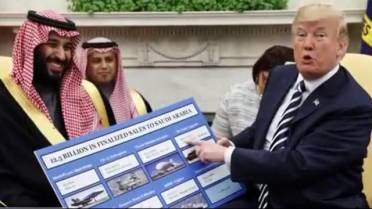 Saudi Arabia to work closely with US on nuclear power plans, https://www.straitstimes.com/world/middle-east/saudi-arabia-to-work-closely-with-us-on-nuclear-power-plans JAN 10, 2019, RIYADH (REUTERS) – Saudi Arabia aims to work closely with the United States on its plans to build nuclear power generation capacity in the oil producing kingdom, the energy minister said on Wednesday (Jan 9).
 Riyadh wants Washington to be “part and parcel” of Saudi Arabia’s nuclear programme, which will be entirely for peaceful purposes, Energy Minister Khalid al-Falih said.
He also said the United States was a key provider for nuclear technology.
1 This Month
26 September – International Day for the Total Elimination of Nuclear Weapons





PLEASE OPPOSE HR 8255 AND S.3639 – bills would accelerate satellite deployment, with no environmental review or safeguards – https://ncstd5li.quorum.us/campaign/169331/
To see nuclear-related stories in greater depth and intensity – go to https://nuclearinformation.wordpress.com
-
Archives
- September 2026 (305)
- August 2026 (330)
- July 2026 (355)
- June 2026 (287)
- May 2026 (306)
- April 2026 (356)
- March 2026 (251)
- February 2026 (267)
- January 2026 (308)
- December 2025 (358)
- November 2025 (359)
- October 2025 (375)
-
Categories
- 1
- 1 NUCLEAR ISSUES
- business and costs
- climate change
- culture and arts
- ENERGY
- environment
- health
- history
- indigenous issues
- Legal
- marketing of nuclear
- media
- opposition to nuclear
- PERSONAL STORIES
- politics
- politics international
- Religion and ethics
- safety
- secrets,lies and civil liberties
- spinbuster
- technology
- Uranium
- wastes
- weapons and war
- Women
- 2 WORLD
- ACTION
- AFRICA
- Atrocities
- AUSTRALIA
- Christina's notes
- Christina's themes
- culture and arts
- Events
- Fuk 2022
- Fuk 2023
- Fukushima 2017
- Fukushima 2018
- fukushima 2019
- Fukushima 2020
- Fukushima 2021
- general
- global warming
- Humour (God we need it)
- Nuclear
- RARE EARTHS
- Reference
- resources – print
- Resources -audiovicual
- Weekly Newsletter
- World
- World Nuclear
- YouTube
-
RSS
Entries RSS
Comments RSS

