European Commission commits to retainng Iran nuclear deal
 European Commission reassures Iran of commitment to nuclear deal https://www.world-nuclear-news.org/Articles/European-Commission-reassures-Iran-of-commitment-t23 October 2020 The lifting of economic sanctions against Iran remains an essential part of the Joint Comprehensive Plan of Action (JCPoA) and its signatories are committed to expanding the special purpose vehicle that enables European businesses to maintain trade with the country, according to the European Commission’s foreign affairs spokesperson Peter Stano.
In an interview with the Tehran Times published on 20 October, Stano referred to remarks Josep Borrell, the EU’s high representative for foreign affairs and security policy, had made to the European Parliament on 7 October. Borrell said Iran had “legitimate expectations that the nuclear deal would result in more concrete economic benefits”.
The E3 – France, Germany and the UK – triggered the JCPoA’s dispute resolution mechanism in January, following Iran’s further steps away from its commitments. In June, the International Atomic Energy Agency (IAEA) adopted a resolution calling on Iran to cooperate fully in implementing its NPT Safeguards Agreement and Additional Protocol.
In August, IAEA Director General Rafael Mariano Grossi held talks with Iranian officials on access for IAEA inspectors to the country’s nuclear sites. His visit to Tehran followed the US Administration’s request to the UN Security Council to initiate the ‘snapback’ mechanism of the Iran nuclear deal. This mechanism allows a party to the agreement to seek the re-imposition against Iran of the multilateral sanctions lifted in 2015 in accordance with resolution 2231. The USA withdrew from the JCPoA in May 2018.
Stano told the Tehran Times that the EU considers the extraterritorial application of unilateral restrictive measures to be contrary to international law.
“The lifting of sanctions is an essential part of the JCPoA agreement,” he said. “In this regard, the EU fulfilled its commitments and lifted all its economic and financial sanctions in connection with the Iranian nuclear programme. Furthermore, the EU member states sitting in the UN Security Council prevented the US efforts to use the so-called ‘snapback’ and re-introduce UN sanctions that were lifted as a result of the JCPoA.”
The EU had taken “a series of concrete actions”, he said, including updating its Blocking Statute in August 2018 and, the following year, setting up INSTEX (Instrument in Support of Trade Exchanges). In addition, the European Commission recently launched two online platforms to support European economic operators “to engage in legitimate trade with Iran”.
“This underscores the continued EU commitment to the full and effective implementation of the JCPoA,” Stano said, adding that the first transactions under INSTEX are being processed. “The number of participants of INSTEX is not shrinking; quite to the contrary, there are more European countries joining, with more to follow.”
Hard to save the Iran nuclear deal, even if Biden wins the U.S. election.
 Even if Biden wins US election, time is running out to save Iran nuclear deal
Events in the US are being watched closely as Iran’s presidential election looms in early 2021, Guardian, Patrick Wintour Diplomatic editor, Wed 21 Oct 2020 Even if Joe Biden triumphs at the polls, Iran’s weakened government may only have a few months to negotiate a revived nuclear deal before facing its own electoral challenge by hardliners who oppose any engagement with the west.
The narrow window has prompted calls for Biden to offer a phased approach to rejoining the Iran nuclear deal abandoned by Donald Trump in 2018, in order to show progress before the Iranian presidential election.
Iran’s reformists and centrists remain severely damaged by the failure of the original agreement to deliver economic benefits to ordinary Iranians.
Once Trump left the deal, he imposed maximum economic pressure on Tehran, blocking Iran’s oil exports, and leaving advocates of engagement with the US struggling to defend their strategy. In a recent interview in Kar Va Kargar the foreign minister Javad Zarif insisted the foreign ministry had not been naive to negotiate with the Americans, but said Trump had “blown up the entire negotiating room”.
Iran’s current president, Hassan Rouhani, was also an advocate of the deal, known as the Joint Comprehensive Plan of Action, but is standing down after two four-year terms. A range of conservatives, including members of the powerful Iranian Revolutionary Guards Corps, are preparing to stand, advocating either closer ties with China or a stronger self-reliant economic policy.
The reformist movement has not yet decided whether to put up a candidate or instead back a technocratic figure such as Ali Larijani, the former Speaker who is currently assisting Rouhani in framing a 25-year strategic partnership with China.
Reformists were trounced in spring parliamentary elections marked by a record low turn-out. The chances of persuading the disillusioned middle class to vote in the presidential election may in part depend on finding a credible candidate who can raise hopes of a resumption of talks with the west.
Biden has so far promised that “if Iran returns to strict compliance with the nuclear deal, the US would rejoin the agreement as a starting point for follow-on negotiations”.
But even if he does win, Biden would not take office until 20 January, leaving only a short time for reformists to convince Iranians that the path of engagement is worth trying again.
Some analysts say a Biden victory could be enough to change the mood in Iran – and certainly the elections are being watched with fascination in Tehran……. https://www.theguardian.com/us-news/2020/oct/21/even-if-biden-wins-us-election-time-is-running-out-to-save-iran-nuclear-deal
Taiwan furthers its departure from nuclear power, with more unused fuel rods sent back to USA
More fuel rods at fourth nuclear power plant sent back to U.S. https://focustaiwan.tw/society/202010210027
Five or six trucks carrying an unknown number of unused fuel rods from the Fourth Nuclear Power Plant arrived at Keelung Port in the early hours and were then loaded into several containers that departed for the U.S. at around noon.
However, the authorities in charge did not disclose whether this is the last batch of fuel rods being sent back to America.
A Legislative Yuan resolution that was passed in 2018 demands that state-run Taiwan Power Co. (Taipower) must send back all 1,744 unused fuel rods from the plant to America by the end of this year.
Taipower has said the task will cost NT$700 million (US$24.1 million).
In July 2018, the first batch of 160 rods was transported back to its U.S. supplier — Global Nuclear Fuel Americas, LLC — which was followed by three more similar operations as of August 2019, the Taipei-based China Times reported on Tuesday.
On Oct. 15, Atomic Energy Council Minister Hsieh Shou-shing (謝曉星) said 240 fuel rods at the power plant were still waiting to be transported to the U.S. — a delay caused by travel restrictions triggered by the COVID-19 pandemic.
According to the Ministry of Economic Affairs, disposing of the 1,744 fuel rods from the plant could save about NT$100 million in maintenance costs per year.
The government has spent NT$283.8 billion on building the plant in New Taipei’s Gongliao District, but it has been mothballed since 2014 due to public concern over the use of nuclear power.
Considering the future of the Iran nuclear deal
 deal alive.
The deal, which imposes limitations on Iran’s civilian nuclear enrichment program, was agreed in July 2015 between the Iranians and the P5+1 group — China, Britain, France, Germany, Russia and the United States — and implemented six months later. The deal was struck when the Obama administration was in the White House following years of negotiations. The JCPOA gave Iran relief from international economic sanctions in return for dismantling major parts of its nuclear program and giving access to its facilities for inspection.
Yet ever since Donald Trump was elected president of the United States in November 2016, the future of the JCPOA has hung in the balance. Trump made it a campaign promise to pull out of the Iran deal. He kept his word and officially withdrew the United States from the JCPOA in May 2018, saying the deal is “defective” and did not address Iran’s ballistic missile program or its interference in the affairs of other countries in the Middle East.
Washington has since reinstated US sanctions on Iran and sought to penalize any nation doing trade with the Iranians, which has led to widespread criticism. In response, Iran has resumed its uranium enrichment at the Fordow nuclear plant, which is banned under the JCPOA.
The events surrounding the Iran deal have seen their ups and downs, but one thing is for sure: The collapse of the JCPOA is in no one’s best interest………….
Considering that US–Iran diplomatic relations are a nonstarter under the Trump administration, the result of the US presidential election on November 3 will be critical. President Trump has promised to reach a new deal with Iran “within four weeks” if he is reelected. If he wins, his administration would have to reshape its approach toward Iran in a constructive way to meet the timeline he has set. On the other hand, if Democratic nominee Joe Biden wins, his administration would likely rejoin the JCPOA, as well as seek additional concessions from Tehran. In a recent op-ed for CNN, Biden stated, “If Iran returns to strict compliance with the nuclear deal, the United States would rejoin the agreement as a starting point for follow-on negotiations.”
Biden served as the vice president under the previous Obama administration, which, together with the P5+1 group, negotiated the JCPOA back in 2015. Therefore, it is safe to say that the future of the nuclear deal might just rest on the outcome of the US election.
A Regional Arms Race
For now, however, the US withdrawal from the JCPOA has weakened the impact of the accord. More importantly, the near-collapse of the deal could have a direct impact on the next Non-Proliferation of Nuclear Weapons Review Conference in 2021, potentially drawing criticism from non-nuclear-weapon states that may wish to pursue civilian programs of their own.
The JCPOA is not only important for global nonproliferation efforts, but also for stability in the Middle East. The complete failure of the deal would have severe implications. ………
Sanctions on Iran
On August 20, France, Germany and the UK issued a joint statement saying they do not support the US request for the UN Security Council to initiate the “snapback mechanism” of the JCPOA, which would reimpose the international sanctions against Iran that were lifted in 2015. As the US is no longer a party to the JCPOA, it has limited influence over its enforcement. Therefore, the Security Council rejected the US move.
The Iranian economy was already fragile before President Trump withdrew from the JCPOA, and US-enforced sanctions are further complicating the situation. High living costs, a deep recession and plummeting oil exports are just the tip of the iceberg………..
Nuclear Nonproliferation
With all of this in mind, it is vital that the remaining parties to the JCPOA continue with constructive dialogue to try to uphold the agreement. Everyone benefits from the deal, and its success depends on each side’s fulfillment of their responsibilities and commitments, particularly Iran’s full compliance.
Most importantly, the Joint Comprehensive Plan of Action is necessary for the future of nuclear nonproliferation. If the deal collapses, then the world enters uncharted territory. https://www.fairobserver.com/region/middle_east_north_africa/elif-beyza-karaalioglu-jcpoa-iran-nuclear-deal-us-sanctions-iranian-news-middle-east-world-news-78178/
USA spends taxpayers’ money on weapons, endless wars, not health – coronavirus chaos is the result
 The US Chose Endless War Over Pandemic Preparedness. Now We See the Effects. C.J. The US Chose Endless War Over Pandemic Preparedness. Now We See the Effects. C.J. 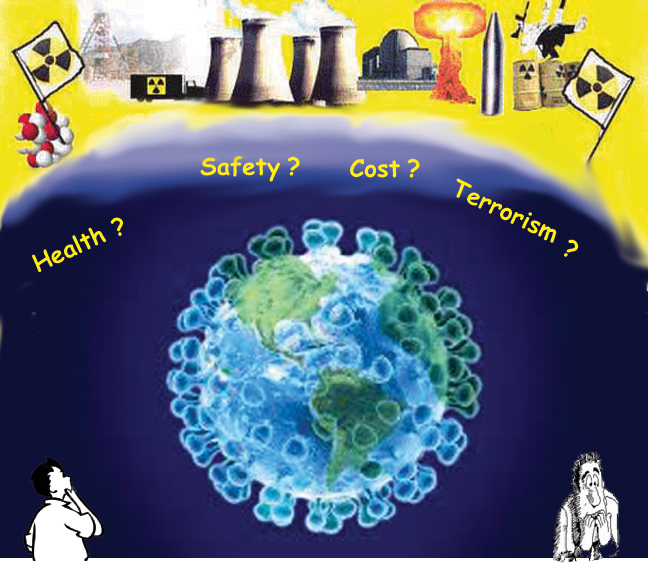 Polychroniou, Truthout, October 18, 2020 Polychroniou, Truthout, October 18, 2020 United States has the longest record of war-fighting in modern history. Why that is the case is not a question that has an easy answer; suffice to say, however, that militarism and violence run like a red thread throughout U.S. political history, with enormous costs both for the domestic economy and the world at large, as a recently published book by David Vine makes plainly clear. In fact, the militarist mentality is strongly reinforced by the Trump administration in spite of the fact that the current president claims to have an aversion to “endless wars.” In this exclusive Truthout interview, Vine, a professor of anthropology at American University in Washington, D.C., addresses critical questions about U.S. war culture and Trump’s own contribution to the violence that has always been foundational to U.S. culture. C.J. Polychroniou: Your latest book, The United States of War: A Global History of America’s Endless Conflicts, from Columbus to the Islamic State, is a detailed survey of the U.S.’s obsession with militarism and war. Have you come to a definite conclusion or explanation as to why the United States has been at war for about 225 of the 243 years since its independence?
David Vine: There is, of course, no simple answer to this incredibly important question. According to my research, the U.S. military has been at war or engaged in other combat in all but 11 years of U.S. history — 95 percent of the years the United States has existed. My book shows how the huge collection of U.S. military bases abroad provides a key — or a kind of lens — to help understand why the United States has been fighting almost without pause since 1776. . Bases abroad, bases beyond U.S. borders show how U.S. political, economic and military leaders — shaped by the forces of history, capitalism, racism, patriarchy, nationalism and religion — have used taxpayer money to build a self-perpetuating system of permanent, imperialist war revolving around an often-expanding collection of extraterritorial military bases. These bases have expanded the boundaries of the United States, while keeping the country locked in a state of nearly continuous war that has largely served the economic and political interests of elites and left tens of millions dead, wounded and displaced. To be clear, my argument is not that U.S. bases abroad are the singular cause of this near-endless fighting. Indeed, my book shows how the answer to why the U.S. government has fought so constantly lies in the capitalist profit-making desires of businesses and elites, in the electoral interests of politicians, and in the forces of racism, militarized masculinity, nationalism and missionary Christianity, among other dynamics. U.S. bases abroad, however, have played a key and long overlooked role in the pattern of near-constant U.S. fighting: that is, since independence, bases that U.S. leaders have built beyond the borders of the United States not only have enabled wars but also have made offensive imperialist wars more likely. While U.S. leaders often portray bases abroad as defensive in nature, the opposite is generally the case: bases built on the territory of other peoples have tended to be offensive in nature, providing a launchpad for yet more wars. This has tended to create a pattern in which bases abroad have led to wars that have led to the construction of new bases abroad that have led to new wars that have led to new bases and so on. Can you offer us a quick assessment of the overall costs of the “global war on terror?” It’s impossible to capture the immensity of the catastrophe that the so-called “global war on terror” has inflicted……….. Alongside the human damage, the financial costs of the so-called war on terror are so large, they’re nearly incomprehensible. As of October 2020, the U.S. government has spent or obligated a minimum of $6.4 trillion on the post-2001 wars, including the costs of future veterans’ benefits and interest payments on the money borrowed to pay for the wars. The actual costs are likely to run hundreds of billions or trillions more, depending on when we force our politicians to bring these seemingly endless wars to an end. While it’s incredibly hard to fathom $6.4 trillion in taxpayer funds vanished, the catastrophe is compounded when we consider how else the U.S. government could have spent such incredible sums of money. What could these trillions have done to provide universal health care, to rebuild public schools, to build affordable housing, to end homelessness and hunger, to rebuild crumbling civilian infrastructure, to prepare for pandemics? In addition to the 3-4 million who have likely died in the wars the U.S. government has fought since 2001, how many more have died because of the investments the U.S. government did not make? These are questions that, I have to say, should make us weep……….. Clearly there is a deep connection between the war machine and the U.S. government’s failure to protect the country against COVID. ………….. President Eisenhower was exactly right when he called this kind of diversion of funds a “theft.” He said, “Every gun that is made, every warship launched, every rocket fired signifies, in the final sense, a theft from those who hunger and are not fed, those who are cold and are not clothed.” Today, every gun that is made signifies a theft from those with COVID, from those who might contract COVID, from all of us……… https://truthout.org/articles/the-us-chose-endless-war-over-pandemic-preparedness-now-we-see-the-effects/?eType=EmailBlastContent&eId=89a28ac1-0d1a-4b33-ab5b-4666e96877f5 |
|
Putin’s proposal for 12 month renewal of NewSTART arms control treaty is rejected by USA
US rejects Putin’s proposal on nuclear disarmament treaty as ‘nonstarter’ American Military News, 18 Oct 20, The United States says Russian President Vladimir Putin’s proposal to extend the New START nuclear disarmament treaty without freezing nuclear warheads is a “nonstarter.”
Putin proposed extending the bilateral treaty for one year without preconditions to keep it from expiring and to allow talks to revive it to continue.
Putin also instructed Foreign Minister Sergei Lavrov at a meeting with permanent members of Russia’s Security Council on October 16 to work out Russia’s position on New START and inform the United States of developments.
The issue of the New START treaty comes less than three weeks before the U.S. presidential election.
Democratic challenger Joe Biden supports extending New START “to use that as a foundation for new arms-control arrangements.” If Biden wins, the treaty will expire just weeks after he is inaugurated.
Biden calls the treaty — which was negotiated when he was vice president under President Barack Obama — an “anchor of strategic stability between the United States and Russia.”……..
On October 13, more than 75 lawmakers across Europe called on the United States to extend New START before its expiration.
U.S. Deputy Sheriff Australia bought a lemon with an obsolete $90 billion submarine


|
In for a penny, in for a pound: $90 billion for an obsolete submarine fleet, Michael West Media, by Brian Toohey | Oct 18, 2020 So much for sovereignty. Australia is locked out of repairing key US components of our submarines’ computer systems, and the government has committed our fleet to the extraordinarily dangerous role of helping the US conduct surveillance in the South China Sea. Brian Toohey reports. It is hard to believe that a government genuinely committed to defending the nation would sign a contract to buy 12 ludicrously expensive submarines that would not be operational for at least 20 years, with the final submarine not ready for nearly 40 years. The fleet will be obsolete before its delivered. But this is what the Turnbull government did when it announced in September 2016 that the majority French government-owned Naval Group would build 12 large submarines in Adelaide. The first sub is unlikely to be operational until the late 2030s and the last one until well after 2050. It is even harder to understand why the government endorsed the extraordinarily dangerous role for Australian submarines of helping the US conduct surveillance and possible combat operations within the increasingly crowded waters of the South China Sea. And while the Morrison government repeatedly claims that Australia’s defence force has a “sovereign” capability, in reality we are locked in “all the way” with the USA.
Ominously, an earlier Coalition government gave Lockheed Martin the contract to integrate these systems into the Attack subs. This is the same company that wasted billions on a dud computerised system for the US made F-35 fighter planes.. Called the Attack class, the conventionally powered submarines to be built in Adelaide by Naval will rely on an unfinished design based partly on France’s Barracuda nuclear submarines. Their official cost has already blown out from an initial $50 billion to $90 billion. It was revealed earlier this week that Defence officials knew in 2015 that the cost of the fleet had already blown out by $30 billion to $80 billion, yet continued to state publicly that the price tag was $50 billion. Life-cycle costs are expected to be around $300 billion…….. Under US commandAustralian subs in the South China Sea will be integrated into US forces and will be relying on them for operational and intelligence data. In an escalating clash, accidental or otherwise, they will be expected to follow orders from US commanders. Again, so much for Australia’s sovereignty. There is no compelling strategic reason why Australian submarines should travel that onerous distance to support the US in the South China Sea. ………… Perhaps the best argument, however, for not wasting $90 billion on the Attack class is that cheap underwater drones will soon have an important military role particularly suited to use from bases in northern Australia. https://www.michaelwest.com.au/in-for-a-penny-in-for-a-pound-90-billion-for-an-obsolete-submarine-fleet/ |
|
Japan’s government ignores U.N. nuclear ban treaty, puts out feeble anti-nuclear weapons resolution
Japan submits anti-nuclear resolution with no mention of ban pact, https://www.japantimes.co.jp/news/2020/10/16/national/japan-un-nuke-resolution-ban-pact/ NEW YORK – Japan submitted an anti-nuclear resolution to a panel at the United Nations on Thursday, but the text made no direct reference to a U.N.-adopted nuclear ban treaty likely to go into effect early next year.
Opting not to mention the Treaty on the Prohibition of Nuclear Weapons, which is expected to cross the needed threshold of ratification soon and take effect 90 days later, apparently reflects Japan’s ties with the United States, its key security ally which opposes the pact and provides security assurances to Japan under its so-called nuclear umbrella.
Tokyo’s stance on the matter appears to have remained unaltered after the first change to the country’s leadership in nearly eight years, with Prime Minister Yoshihide Suga replacing former Prime Minister Shinzo Abe last month.
As the only country in the world to have suffered atomic bombings, Japan has submitted an anti-nuclear resolution to the United Nations every year since 1994. But versions of the annual resolution submitted since the nuclear ban pact was adopted in 2017 make no mention of it.
So far, 47 countries and regions have completed ratification procedures for the nuclear ban treaty, with a total of 50 ratifications needed for it to take effect.
Japan opposed the nuclear ban pact along with the five permanent members of the U.N. Security Council, which are all nuclear powers.
The nation’s latest resolution preserves phrasing from last year about the devastating humanitarian impacts of nuclear weapons, which was worded less strongly than previous versions that until 2018 expressed deep concern on the matter.
Japan’s resolution is likely to pass the U.N. General Assembly’s First Committee on disarmament issues by early November before being adopted at the General Assembly by the end of the year.
Policy of no uranium enrichment, no reprocessing, essential for Middle East to prevent nuclear arms proliferation
 To Prevent Proliferation, Stop Enrichment and Reprocessing in the Middle EastThere is a risk of a nuclear cascade across the region. The United States can stop it by enforcing the gold standard of nonproliferation. Foreign Policy, BY VICTOR GILINSKY, HENRY SOKOLSKI, OCTOBER 15, 2020,
If Washington is serious about blocking the further spread of nuclear weapons in the Middle East, it must apply a firm rule: no spent reactor fuel reprocessing or uranium enrichment—by anyone in the region. Uranium enrichment allows production of bomb-grade uranium, and spent fuel reprocessing extracts plutonium, the other important nuclear explosive.
Washington insiders, including nuclear lobbyists and nuclear enthusiasts within the Trump administration, oppose such a restriction. The nuclear power industry is still dangling deals before receptive Middle Eastern rulers, notably the Saudi crown prince, Mohammed bin Salman, and pressing Congress to allow accommodative “agreements for cooperation” with Middle Eastern countries to make the deals more attractive. Although the United Arab Emirates accepted the gold standard—obligating it to forgo enriching or reprocessing—Saudi Arabia, with more on its mind than the generation of electricity, detests this condition. Middle East experts claim it is offensive to Riyadh’s pride, and Washington should therefore take a softer approach.
Washington will soon face other decisions: U.S. agreements for civilian nuclear cooperation are coming up for renewal with Egypt and Morocco in 2021, and with Turkey in 2023. The nuclear industry will try to keep Congress from imposing strict rules—industry seldom has to worry about the executive branch, as both Democratic and Republican administrations traditionally support U.S. nuclear exports—but it is vital to maintain the of the gold standard for all three.
Ideally, it should be U.S. policy to eliminate fuel facilities that can produce nuclear explosives from Morocco to Iran. This would have to include Israel. It would not affect Israel’s existing nuclear arsenal but would cap it and point the way for its security to depend less on nuclear weapons.
Enforcing the gold standard for the region would signal a serious effort to end the spread of nuclear weapons there as opposed to the standing policy of minimizing proliferation—in effect, acquiescing to it so long as it proceeds at a slow pace. In past Middle East agreements (with the exception of the one with the UAE), the United States controlled reprocessing and enrichment, but only of U.S.-origin nuclear materials. That’s not good enough. Washington must insist on a ban covering nuclear materials from any source……
Westinghouse, which is often put in this category, hasn’t been U.S.-owned for 20 years. Its last two nuclear construction projects drove it into bankruptcy and almost bankrupted its Japanese owners. A Canadian firm, Brookfield Asset Management, bought what remained of it.
In fact, nuclear power is no longer a pathbreaking technology that defines a country’s scientific status, nor is it commercially competitive. For example, large light-water reactors will never be built again in the United States—they’re simply too expensive. Small reactors have some advantages, but they will likely be even more expensive per unit of energy. The Middle East’s energy future lies in investments in renewables, natural gas, and the integration of pipelines and electric grids. That should be part of Washington’s message.
The main U.S. objective, however, should be to make the Middle East’s security consistent with the Nuclear Non-Proliferation Treaty. Earlier this month, Egypt’s Foreign Minister Sameh Shoukry called for a nuclear weapon-free zone in the Middle East to help bolster the treaty.
Our proposal for a no-enrichment and no-reprocessing zone for all countries in the area may be more feasible, and if achieved, have more lasting significance—it would preclude the possibility of non-nuclear states making nuclear weapons and would thereby undercut the argument for any state in the region to possess such weapons to defend itself. https://foreignpolicy.com/2020/10/15/to-prevent-proliferation-stop-enrichment-and-reprocessing-in-the-middle-east/
Putin suggests extending the START nuclear weapons control treaty for another year
Russia’s Vladimir Putin proposes yearlong extension of New START nuclear treaty with U.S. “It would be extremely sad if the treaty ceases to exist without being replaced by another fundamental document of the kind,” Putin said. Oct. 17, 2020, NBC News, By The Associated Press, MOSCOW — Russian President Vladimir Putin on Friday made a strong call to save the last existing nuclear arms control pact between his country and the United States, proposing to extend it at least for one year.Putin’s statement comes amid conflicting signals from Russian and U.S. diplomats about the fate of the New START treaty that is set to expire in February unless Moscow and Washington agree on its extension.
Speaking at a meeting of his Security Council, Putin said that “it would be extremely sad if the treaty ceases to exist without being replaced by another fundamental document of the kind.”
“All those years, the New START has worked, playing its fundamental role of limiting and containing an arms race,” he noted.
The New START treaty was signed in 2010 by U.S. President Barack Obama and Russian President Dmitry Medvedev. The pact limits each country to no more than 1,550 deployed nuclear warheads and 700 deployed missiles and bombers, and envisages sweeping on-site inspections to verify compliance.
After both Moscow and Washington withdrew from the 1987 Intermediate-range Nuclear Forces Treaty last year, New START is the only nuclear arms control deal between the two countries still standing.
Russia previously offered its extension for five years without any conditions, while the U.S. administration pushed for a new arms control agreement that would also include China. Moscow has described that idea as unfeasible, pointing at Beijing’s refusal to negotiate any deal that would reduce its much-smaller nuclear arsenal.
Putin on Friday proposed to “extend the existing treaty without any conditions for at least one year” to allow for “substantive talks,” instructing Russian Foreign Minister Sergey Lavrov to get a quick U.S. answer to the offer. He emphasized that Russia is ready to discuss the new weapons it deployed in future arms talks with the United States.
Earlier this week, Lavrov voiced skepticism about reaching a deal on New START, noting that Russia can’t accept the conditions put forward by the United States for its extension.
Lavrov specified that Russia can’t agree to the U.S. proposal to limit battlefield nuclear weapons alongside nuclear warheads that arm strategic missiles and bombers until the U.S. agrees to withdraw its tactical nuclear weapons from Europe.
He also noted that Moscow wouldn’t accept the U.S. demand to have intrusive verification measures like those that existed in the 1990s when inspectors were positioned at missile factories……… https://www.nbcnews.com/news/world/russia-s-vladimir-putin-proposes-yearlong-extension-new-start-nuclear-n1243741
Politics in the age of pandemics, global heating, and nuclear danger – theme for November 20
For November, we’ve been focussed on international politics – because of these massive threats, and because of the importance to the world of the American election.
With the win of Joe Biden as President -elect, the nuclear lobby has been revitalised, and already their propaganda war is swinging into action. But this renewed nuclear threat is being either ignored or encouraged by the mainstream media. Everyone seems to be getting informed about the pandemic and the climate, but not about the equally grave nuclear threats. Which is why, from now on, this site will return to its original focus on matters nuclear.
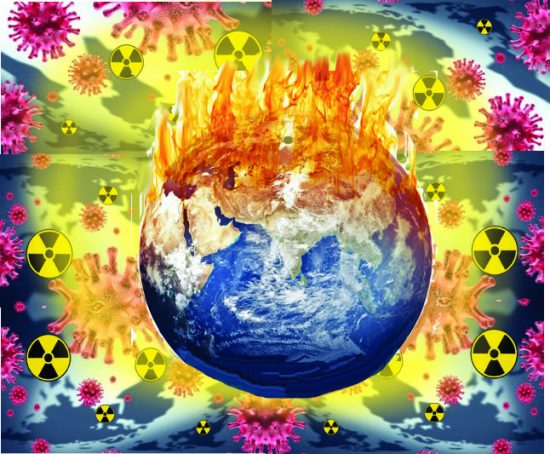
Tensions as Armenia- Azerbaijan conflict pauses. War in Syria grinds on. USA and China already in some sort of cold war. National pride and one-up-manship are perpetually on display among the leaders of countries. Nationalist and populist leaders seem to be in charge, with competitiveness and dog-eat-dog as their prevailing philosophy.
All this – when the global threats of pandemic, climate change, and nuclear danger clearly require co-operation between nations, if we are to have any hope for a decent future – indeed – perhaps any future, for the human species, and for the rest of the other species, too.
It is time for political leaders to pay attention to the efforts of global bodies, the United Nations, the World Health Organisation, and the many international agencies that work for the public good. What a timely winner for the Nobel Peace Prize was the United Nations World Food Programme!
As I write, the world watches in amazement the tortuous path of Joe Biden to the American electionpresidency. . The disastrous results of four years of the Trump presidency for the United States will take some fixing. A rational team in the White House could begin the change that the world needs – co-operation between the powerful nations to address the threats that now preoccupy the world’s people.
Tuvalu – the 47th nation to ratify the Treaty on the Prohibition of Nuclear Weapons


|
|
Tuvalu ratifies the Treaty on the Prohibition of Nuclear Weapons, https://www.rnz.co.nz/international/pacific-news/428354/tuvalu-ratifies-the-treaty-on-the-prohibition-of-nuclear-weapons
7:20 pm on 14 October 2020 Tuvalu has ratified the Treaty on the Prohibition of Nuclear Weapons, bringing it closer to being in force.
Tuvalu was the 47th nation to make the move, meaning only three more ratifications are needed to empower the treaty. The treaty establishes a comprehensive ban on the weapons of mass destruction and aims to help pave the way to their elimination. Earlier this month, Tuvalu and 11 other Pacific small island developing states delivered a joint statement to the UN on the occasion of the International Day for the Total Elimination of Nuclear Weapons. They noted their region has suffered from the effects of decades of nuclear testing by the United States, the United Kingdom and France.
The 12 nations appealed to all nations that have not yet done so to ratify the Treaty on the Prohibition of Nuclear Weapons, as well as the Comprehensive Nuclear-Test-Ban Treaty of 1996. “We Pacific small island developing states say no to nuclear weapons, and we reiterate our commitment to the elimination of nuclear weapons everywhere.” Tuvalu is the ninth Pacific island nation to join the nuclear weapon ban treaty so far, following Palau, New Zealand, the Cook Islands, Samoa, Vanuatu, Kiribati, Fiji and Niue. Nauru has signed but not yet ratified the treaty.
|
|
Donald Trump’s pre-election plan for nuclear deal with Russia has fizzled out badly
 Trump Thought He Had a Nuclear Deal With Putin. Not So Fast, Russia Said.
Trump administration officials want to broaden the New START accord and warn that the price of a new deal will rise after the election. Joe Biden supports a straight five-year extension of the deal. NYT, By David E. Sanger and Andrew E. Kramer 14 Oct 20, President Trump had a pre-election plan to show he had gotten something out of his mysteriously friendly relationship with President Vladimir V. Putin of Russia.
In the weeks before the election, the two men would announce that they had reached an agreement in principle to extend New START, the last remaining major arms control agreement between the two countries. It expires on Feb. 5, two weeks after the next presidential inauguration.
Mr. Trump has long refused to sign off on a clean five-year extension of the agreement, a step both leaders could take without Senate approval. He has described the Obama-era treaty as deeply flawed — the same thing he said about the North American Free Trade Agreement and the Iran nuclear accord — because it did not cover all of Russia’s nuclear arms, or any of China’s….
On Tuesday, Marshall Billingslea, Mr. Trump’s lead negotiator, announced that the two leaders had an “agreement in principle, at the highest levels of our two governments, to extend the treaty.” Mr. Billingslea described an added “gentleman’s agreement” to cap each country’s stockpile of weapons not currently deployed on missiles, submarines or bombers. Details needed to be worked out, he cautioned, including the tricky work of verifying compliance.
It sounded like a promising solution, for a few hours.
Then the Russian deputy foreign minister, Sergei A. Ryabkov, shot back that this was a figment of someone’s election-season imagination. “Washington is describing what is desired, not what is real,” he said in a statement.
With less than three weeks to Election Day, it seems no agreement is in the offing, and Trump administration officials are saying that, after the election, the price will go up. Former Vice President Joseph R. Biden Jr., the Democratic nominee who was involved in the negotiation of the original agreement in 2010, has indicated that, if elected, he will agree to a straightforward, immediate extension of the accord for five years, the maximum allowed under the current terms, and then work to expand its scope. ……..
Russia’s foreign minister, Sergey V. Lavrov, joined the Kremlin’s dismissal of prospects for an agreement before the election, saying the Trump administration’s one-sided announcement of a nuclear limitation deal was an “unclean” diplomatic maneuver…….https://www.nytimes.com/2020/10/14/us/politics/trump-russia-nuclear-deal.html
Confusion as USA- Russia nuclear arms talks fail
Nuclear arms talks spiral into confusion as Russia rejects US ‘delusion’, Top US negotiator claimed there was ‘an agreement in principle’ between Trump and Putin, Guardian, Julian Borger in WashingtonWed 14 Oct 2020 US-Russian nuclear arms control talks have sunk into confusion after the top American negotiator claimed there was “an agreement in principle” between Donald Trump and Vladimir Putin, a claim Moscow quickly rejected as a “delusion”. ………
The US had previously insisted that China be included in any future arms control negotiations rather than extending the bilateral arrangements in New Start, but Billingslea has dropped that demand in recent weeks, accepting that trilateral talks could be arranged later.
Alexandra Bell, a former state department official and now senior policy director at the Center for Arms Control and Non-Proliferation, said the pre-election urgency followed “literally months of the Trump administration saying there’s plenty of time to do this – there’s no rush”.
Senior parliamentarians from across Europe wrote to their US counterparts on Tuesday urging them to support a New Start extension.
Reopening of a Cold-War era submarine base, as USA struggles to beat Russia to control the Arctic.
Olavsvern will also be used to house submarines for NATO amid increased concerns over Russia’s activity in the region.
The base is located 220 miles from the Russia border and thus offers an ideal outpost for Western allies to quickly contain, and defend against any aggression from the state.
Modifications will now be made to the base in order for it to house America’s nuclear attack submarine, the USS Jimmy Carter.
The announcement of the base comes as the UK’s First Sea Lord, Admiral Tony Radakin, warned China and Russia could soon exploit the Arctic Sea.
Due to climate change, he claimed the once-frozen passages are now thawing thus opening up potential naval routes.
With these routes now appearing, Chinese and Russian ships could now have gateways through to the UK.
He added the Royal Navy was essential in stopping these ships from trespassing in the UK’s waters but also policing the vital global trade routes………..
The undersea world matters. “Because this one remaining stealth medium is also the home to our nuclear deterrent. ”…… https://www.express.co.uk/news/world/1346694/world-war-3-russia-cold-war-Norway-submarine-base-arctic-Vladimir-Putin
1 This Month
26 September – International Day for the Total Elimination of Nuclear Weapons





PLEASE OPPOSE HR 8255 AND S.3639 – bills would accelerate satellite deployment, with no environmental review or safeguards – https://ncstd5li.quorum.us/campaign/169331/
To see nuclear-related stories in greater depth and intensity – go to https://nuclearinformation.wordpress.com
-
Archives
- September 2026 (281)
- August 2026 (330)
- July 2026 (355)
- June 2026 (287)
- May 2026 (306)
- April 2026 (356)
- March 2026 (251)
- February 2026 (267)
- January 2026 (308)
- December 2025 (358)
- November 2025 (359)
- October 2025 (375)
-
Categories
- 1
- 1 NUCLEAR ISSUES
- business and costs
- climate change
- culture and arts
- ENERGY
- environment
- health
- history
- indigenous issues
- Legal
- marketing of nuclear
- media
- opposition to nuclear
- PERSONAL STORIES
- politics
- politics international
- Religion and ethics
- safety
- secrets,lies and civil liberties
- spinbuster
- technology
- Uranium
- wastes
- weapons and war
- Women
- 2 WORLD
- ACTION
- AFRICA
- Atrocities
- AUSTRALIA
- Christina's notes
- Christina's themes
- culture and arts
- Events
- Fuk 2022
- Fuk 2023
- Fukushima 2017
- Fukushima 2018
- fukushima 2019
- Fukushima 2020
- Fukushima 2021
- general
- global warming
- Humour (God we need it)
- Nuclear
- RARE EARTHS
- Reference
- resources – print
- Resources -audiovicual
- Weekly Newsletter
- World
- World Nuclear
- YouTube
-
RSS
Entries RSS
Comments RSS

