The Nuclear Non-Proliferation Treaty- its promise and its failure
 Now, nuclear disarmament is at a standstill, existing treaties have either been dismantled or at risk, development in underway of new types of nuclear weapons with new missions and lowered threshold of use, and threats of use of nuclear weapons have been sounded.
|
25 Years After the Indefinite Extension of The Nuclear Non-Proliferation Treaty: A Field of Broken Promises and Shattered Visions InDepth News, By Tariq Rauf 11 May 20, VIENNA (IDN) – “I long ago took to heart the words of Omar Bradley, spoken virtually a half century ago, when he observed, having seen the aftermath of the bombs on Hiroshima and Nagasaki, thus: ‘We live in an age of nuclear giants and ethical infants. We live in a world that has achieved brilliance without wisdom, power without conscience. We’ve unlocked the mysteries of the atom and forgotten the lessons of the Sermon on the Mount. We know more about war than we know about peace, more about killing than we know about living’.”
These remarks were made by General George Lee Butler, the last Commander of the United States Strategic Air Command (SAC) in a speech in Ottawa, Canada, on 11 March 1999. “Why a country that makes atomic bombs would ban fireworks”, asked a child at the United Nations kindergarten in New York. ………..Decision on the Indefinite Extension of the NPT The momentous decision to extend the NPT indefinitely was taken on Thursday, 11 May 1995, in the 17th plenary meeting of the review and extension conference starting at 12:10 PM New York time. The President of the 1995 NPT Review and Extension Conference (NPTREC), Ambassador Jayantha Dhanapala (Sri Lanka), began the meeting by saying that, “I apologize to all delegations for the delay in convening this meeting, but I assure them that it was for very good reasons. Consultations were taking place amongst delegations to ensure that our work should progress smoothly. We also commence a little after high noon to intensify the drama of the occasion”. Dhanapala informed the delegates that three proposals were on the table regarding options for the extension of the Treaty, these were: (1) a proposal by Mexico, calling for indefinite extension along with a number of procedural elements; (2) a proposal submitted by Canada on behalf of 103 States parties and subsequently sponsored by eight additional States parties, calling for the indefinite extension with no added elements; and (3) a proposal submitted by Indonesia and 10 States parties and subsequently sponsored by three additional States parties; calling for an extension for rolling fixed periods of twenty-five years with a review and extension conference at the end of each fixed period to conduct an effective and comprehensive review of the operation of the Treaty, and for the Treaty to be extended for the next fixed period of twenty-five years unless the majority of the parties to the Treaty decided otherwise at the review and extension conference………. The principles and objectives contained recommendations and actions covering all three pillars of the NPT: (1) nuclear disarmament; (2) nuclear-non-proliferation; and (3) peaceful uses of nuclear technologies. Continue reading |
Bosnia aims to stop Croatia’splan for radioactive waste dump close to the border
|
Croatia and Bosnia at loggerheads over nuclear waste plan, Emerging Europe, May 7, 2020, Nikola Đorđević
Tensions are flaring between Bosnia and Herzegovina and Croatia over the latter’s controversial plan to store nuclear waste at Čerkezovac, a former military installation on the border between the two countries.
The location has been selected by the Croatian government as its designated site for the storage of its share of waste produced by the Krško nuclear power plant in Slovenia. Environmentalists have warned that the site could have serious consequences for the health of both the people in the area and the ecosystem. Last summer a number of protests against the plans to dump waste at Čerkezovac were held just over the border, in the town of Novi Grad, in Bosnia and Herzegovina’s Republika Srpska. Since then, the Croatian parliament has reconfirmed that the military installation in the Trgovska Gora mountains remains its preferred choice as the site of the nuclear waste disposal programme. Čerkezovac will be given over to Fond NEK, the entity responsible for decommissioning the Krško plant and the disposal of radioactive waste and spent nuclear fuel. Krško, opened in 1983, was set to be decommissioned in 2023, although Slovenia and Croatia have agreed to extend operation at the plant to 2043. Before the waste site can be built, an environmental study must be carried out: this has yet to happen. “We are talking about storing nuclear waste in a complex that is located 800 metres from the river Una,” says Mario Crnković, a member of the Green Team NGO which was involved in last year’s protests. “In Novi Grad alone, 15,000 people consume water from the river. It is also a national park, home to 325 species of animal, of which 92 are protected.” Green Team is not the only organisation that has raised concerns. Others have claimed that if the waste disposal plan proceeds, some 250,000 people could be in danger. Bosnian officials have also raised concerns publicly. Some have pointed out that Croatia intends to build the site in an area with a predominately ethnic Serb population. “The eventual building of the nuclear waste disposal site on Trgovska Gora is completely unacceptable because it would endanger the health of 250,000 people in 13 municipalities near the river Una, and have a negative effect on the environment,” says Staša Košarac, Bosnia and Herzegovina’s minister of foreign trade and economic relations……. Despite all the opposition, Croatia remains steadfast in its determination to go ahead with the plan. NGOs like Green Team have called on the Bosnian government to raise the issue at international level. “We expect Bosnia and Herzegovina as a state to act responsibly to stop this. We also expect experts from the non-governmental sector to be included in the process,” Mr Crnković concludes. https://emerging-europe.com/news/croatia-and-bosnia-at-loggerheads-over-nuclear-waste-plan/ |
|
Lithuania presses Belarus to delay use of nuclear fuel, for safety reasons
|
Lithuania urges Belarus not to use nuclear fuel delivered to new power plant https://bnn-news.com/lithuania-urges-belarus-not-to-use-nuclear-fuel-delivered-to-new-power-plant-213078 After Belarus announced that nuclear fuel has been delivered to its new Astravyets nuclear power plant, Lithuania has called on Minsk not to load it into power productions facilities before international safety recommendations have been met, according to the Lithuanian Foreign Ministry.
On Wednesday, May 6, the issue was discussed in a telephone conversation between Minister of Foreign Affairs of Lithuania Linas Linkevičius and Minister of Foreign Affairs of Belarus Vladimir Makei.
Therefore, we urge Belarus not to load nuclear fuel into its nuclear power station until full implementation of the recommendations by international experts. We agreed to consult regularly on all these issues,» told L. Linkevičius as quoted by the Lithuanian Foreign Ministry. Lithuania’s Ministry of Foreign Affairs also sent a diplomatic note to Belarus, requesting the neighbouring state to give priority to safety rather than to the construction schedule, and to avoid jeopardizing its own residents, as well as citizens in other countries. A positive step in this direction, as is expected by Lithuania and the European Union, would be to halt the launch of the Belarusian NPP and to immediately organize an official EU expert review of the implementation of the stress test recommendations under the National Action Plan, as well as to promptly welcome a group of international experts that would monitor the process, the Lithuanian Foreign Ministry wrote in the press release. |
|
Trump plans to divert development aid for poor countries, to promoting the nuclear industry
|
In a list of official recommendations to President Trump last month, the Nuclear Fuels Working Group argued the U.S. needs to sell nuclear power technology abroad and battle the influence of countries like China and Russia that have become dominant suppliers. One way to do that, the group said, is to lift restrictions at the U.S. International Development Finance Corporation (DFC) to let the agency fund nuclear projects alongside other development work. But development groups worry that tapping the DFC to greenlight nuclear projects will do more to promote American interests than alleviate poverty.
“I struggle to see it as something they should be doing,” Conor Savoy, executive director of the Modernizing Foreign Assistance Network. There’s also a concern that the projects won’t benefit the poorer countries the DFC is charged with helping. Setting up nuclear power systems requires a higher level of infrastructure, meaning overseas projects might be more likely to find a home in Eastern Europe than Sub-Saharan Africa. “The DFC was supposed to invest in those countries very sparingly,” Savoy said of wealthier nations.
To access DFC funds for an initiative of this kind, the agency would have to lift its prohibition on supporting nuclear projects, a move that only requires an internal policy change, without any congressional action. The agency has signaled a willingness to make that change. “DFC welcomes the recommendation in the administration’s Nuclear Fuel Working Group report to remove DFC’s prohibition on financing nuclear power projects in developing countries. Access to affordable and reliable power is essential for developing countries to advance their economies,” the agency said in a statement Monday…….
The DFC was started in 2019, replacing its predecessor — the Overseas Private Investment Corporation — with double the funding and fewer restrictions on how to spend it. But the $60 billion agency also has an expanded mission: elevating the world’s poorest countries while also advancing U.S. foreign policy. Development experts, however, say there’s been an imbalance between those two goals in the agency’s short history…….
There’s been a skewing toward more national security areas. They’ve tried to counter that by highlighting their more development-focused projects, but in terms of volume of commitments, in terms of sheer volume of money, it does seem to be skewing more toward national security priorities and less toward development,” Savoy said…….. https://thehill.com/policy/energy-environment/496295-trumps-push-to-use-global-aid-for-nuclear-projects-alarms
|
|

U.S. Congress kept in the dark about government nuclear negotiations with Saudi Arabia
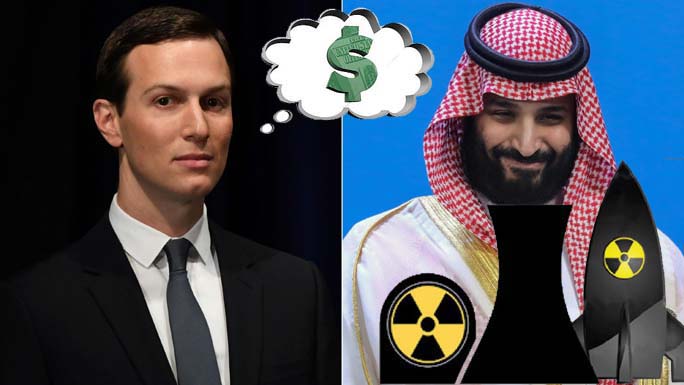 U.S. should keep Congress informed about nuclear talks with Saudis: GAO, https://www.reuters.com/article/us-usa-saudi-nuclearpower/us-should-keep-congress-informed-about-nuclear-talks-with-saudis-gao-idUSKBN22G2X Timothy Gardner
6 May 20, WASHINGTON (Reuters) – The U.S. Departments of State and Energy should commit to regular briefings to relevant committees in Congress on talks about nuclear power cooperation with Saudi Arabia, a congressional watchdog said in a report on Monday.
The Government Accountability Office, or GAO, report said Congress should consider amending the 1954 Atomic Energy Act, or AEA, to require the briefings for the House Committee on Foreign Affairs and the Senate Committee on Foreign Relations about negotiations on nuclear power sharing.
Lawmakers concerned about nonproliferation issues associated with nuclear power development had complained they were being kept in the dark about Trump administration talks with Saudi Arabia, many of which were led by former Energy Secretary Rick Perry. Concern grew after Crown Prince Mohammed bin Salman told CBS in 2018 that the kingdom did not want to acquire a nuclear bomb, but would do so if its rival Iran did so.
Some U.S. lawmakers want the United States to insist that Saudi Arabia agree to a so-called gold standard that restricts enrichment and reprocessing, potential pathways to making fissile material for nuclear weapons. The United States struck such an agreement with the United Arab Emirates in 2009. If Saudi Arabia develops nuclear power without the gold standard, the UAE would likely seek to be released from its agreement.
Senators Robert Menendez, a Democrat, and Marco Rubio, a Republican, had asked the GAO last year to review U.S. agency negotiations with Saudi Arabia on nuclear power, partially because they were concerned the Energy Department, not the State Department took the lead.
The senators said they would explore legislative changes recommended by the GAO. “Congress must reassert its critical role in reviewing nuclear cooperation agreements to ensure these agreements do not pose an unnecessary risk to the United States” they said.
The senators said they would explore legislative changes recommended by the GAO. “Congress must reassert its critical role in reviewing nuclear cooperation agreements to ensure these agreements do not pose an unnecessary risk to the United States” they said.
As with viruses, containment of atomic weapons may be good, but eradication is best.
The Novel Coronavirus and Nuclear Weapons As with viruses, containment of atomic weapons may be good, but eradication is best. Common Dreams by Sergio Duarte , Ira Helfand 4 May 20
The entire international community is justifiably concerned and disturbed with the serious consequences of the novel coronavirus pandemic. Thousands have already died and many more are in danger. Local and national governments find it increasingly difficult to deal adequately with the sanitary and social emergency deriving from the spread of the virus. It will take many months before the situation can come back to normal.
What has this to do with nuclear weapons?
In the current climate of fear, uncertainty and helplessness, it is impossible not to think about what would happen in the case of a different and more ominous disaster: a nuclear conflagration, albeit of limited proportions. The possessors of nuclear weapons are relentlessly increasing the destructive power of their arsenals and seem willing to use them as they see fit to respond to their perceived security concerns. This, in fact, brings insecurity to all. Command and control systems are not immune against cyber viruses and accidents, nor are they protected against whimsical or emotionally unstable rulers. ……..
The entire international community is justifiably concerned and disturbed with the serious consequences of the novel coronavirus pandemic. Thousands have already died and many more are in danger. Local and national governments find it increasingly difficult to deal adequately with the sanitary and social emergency deriving from the spread of the virus. It will take many months before the situation can come back to normal.
What has this to do with nuclear weapons?
In the current climate of fear, uncertainty and helplessness, it is impossible not to think about what would happen in the case of a different and more ominous disaster: a nuclear conflagration, albeit of limited proportions. The possessors of nuclear weapons are relentlessly increasing the destructive power of their arsenals and seem willing to use them as they see fit to respond to their perceived security concerns. This, in fact, brings insecurity to all. Command and control systems are not immune against cyber viruses and accidents, nor are they protected against whimsical or emotionally unstable rulers.
It may well be impossible to eliminate all disease-causing viruses; yet nuclear disarmament is not only possible, but a legally binding obligation embedded in Article VI of the NPT. Fifty years after the Treaty’s inception, it is high time for the possessors of nuclear weapons to effectively comply with this obligation. As with viruses, containment may be good, but eradication is best. https://www.commondreams.org/views/2020/05/04/novel-coronavirus-and-nuclear-weapons, Common Dreams
Trilateral Track 2 Nuclear Dialogues Consensus Statement
Trilateral Track 2 Nuclear Dialogues Consensus Statement https://www.rusi.org/rusi-news/trilateral-track-2-nuclear-dialogues-consensus-statement News, 4 May 2020
United States, Americas, France, Proliferation and Nuclear Policy, UK, Europe
The 2019 Consensus Statement, signed by all track 2 delegates and published on 13 March 2020, can be found here. Topics discussed during the 2019 dialogues include: the future of the rules-based international nuclear order; the role of alliances; new risks and challenges for escalation and strategy; nuclear responsibility and transparency.
Professor Malcolm Chalmers, RUSI’s Deputy Director-General, states:
Tom Plant, Director of RUSI’s Proliferation and Nuclear Policy programme, observed that:
The 2019 Consensus Statement makes several striking recommendations – on the need for extension of New START, on the role of the Iran nuclear deal as the starting point for any new arrangement, and on the importance of reaffirming at the highest levels the principle that “a nuclear war cannot be won and must never be fought” – but perhaps most significant is its call for the UK, US and France to be more open on nuclear weapons issues. In highlighting the potential for information operations to exploit unnecessary secrecy to weaken public and international trust, and to undermine efforts to maintain stability and deterrence, it indicates a valuable and urgent area of focus for our three governments.
Peter Watkins, formerly Director General in the UK Ministry of Defence responsible for strategic defence policy, and currently an Associate Fellow with Chatham House, comments that:
At a time of growing risks to international stability and increasing pressure on the international arms control framework, it is more critical than ever to build political and public understanding of the achievements of arms control – not least the Nuclear Non-Proliferation Treaty itself – and the role of credible, responsible deterrence policies. That is the essential mission of these trilateral talks.
Sir Tony Brenton, formerly the British Ambassador to Russia, and currently a Fellow at Wolfson College Cambridge, highlights that:
In the last few years North Korea has become the world’s ninth nuclear armed state, Russia has announced a radical modernisation of its nuclear arsenal, the deal holding Iran back from going nuclear has collapsed, and the world’s nuclear arms control regime may be on its deathbed. These are deeply worrying developments which underline the importance of the trilateral nuclear dialogue as a way of helping the three Western nuclear powers to stay in close touch on them.
Professor Sir David Omand of the War Studies Department of King’s College London states:
These trilateral discussions provide a unique opportunity to bring together those in the US, UK, and France who had long experience in maintaining responsible nuclear stewardship over many years with current officials who are carrying the responsibility today. It is important that governments, amongst all the other pressing issues facing them, recognise the importance of the nuclear policy and arms control issues that were raised in these discussions.
Tom McKane, formerly Director General for strategy in the UK Ministry of Defence, and currently a Distinguished Fellow at RUSI, outlines that:
At a time when the world felt increasingly unsafe and there are well-founded concerns about the potential for miscalculation and misunderstanding in relation to nuclear deterrence and proliferation, the Trilateral discussions promote real understanding of these important subjects.
Sam Dudin, the UK Nuclear Policy Research Fellow at RUSI, comments that:
These dialogues have called on P3 governments to do more to develop and communicate a narrative supporting their nuclear deterrence policies and nuclear arms control, as part of a genuine, substantive and well-informed debate on nuclear weapons, facilitated by greater transparency with our publics. At a time when the old architecture of nuclear arms control is collapsing, such a debate might outline where there is potential to strike a new arms control deal.
New START is the only U.S.-Russian nuclear treaty still in effect. Time to renew it
|
Minister Lavrov was specific that Washington must agree to extend New START before Russia would agree to include new Russian systems in future negotiations. Secretary Pompeo reiterated the U.S. position that future arms control talks must embrace the White House desire to include China in a trilateral arms control agreement. Frankly, holding New START hostage to Chinese agreement to join a trilateral negotiation makes no sense. Under New START, Russia and the U.S. are permitted to deploy up to 1,550 nuclear warheads. China maintains a minimum deterrence force that the director of the Defense Intelligence Agency recently stated to be a couple of hundred nuclear warheads. Given this large disparity, China has little to gain from negotiating and has shown little interest in doing so. If Russia and the U.S. can bring their numbers down significantly through a new round of negotiations, there could be a basis then to persuade China to join a trilateral negotiation. The Trump administration should immediately accept the Russian offer to extend the New START Treaty and to engage in a new round of strategic arms negotiations. New START is the only U.S.-Russian nuclear treaty still in effect. If the pact is permitted to expire in February 2021, there will be no limits on Russian strategic systems and no inspection regime to verify what types and numbers of systems the Russians are deploying. The Joint Chiefs of Staff and the Intelligence Community are solidly in favor of extending New START because they know what the adverse impact will be on our ability to assess the threat to U.S. interests and our planning to address that threat. A bold approach the U.S. should consider is to enter into a negotiation now with Russia to extend New START at a lower level of 1,000 deployed warheads from the currently authorized 1,550. During the 2010 negotiations on New START, the Joint Chiefs certified that 1,000 would be adequate to support our deterrence strategy. …….. https://thehill.com/opinion/international/494960-time-to-restart-nuclear-arms-negotiations-with-russia |
|

USA’s complicated and contradictory plan to punish Iran
|
US pushing to punish Iran by invoking nuclear deal Trump abandonedDiplomats fear drive is an attempt by Washington hawks to destroy nuclear deal and sabotage United Nations Independent UK, Borzou DaragahiInternational Correspondent @borzou 2 May 20
The United States is pushing ahead with a scheme to extend a United Nations arms embargo on Iran that is due to be lifted in October as part of the nuclear deal that Washington abandoned two years ago. To force the extension, Washington will attempt to lobby the Security Council to continue the arms embargo, which bars weapons sales to or from Iran. But it also is making what legal experts and diplomats describe as a convoluted argument that it is still part of the 2015 Joint Comprehensive Plan of Action it left, and hence able to use one of its provisions to “snapback” the embargo. The administration’s plan is to claim it is still part of the Security Council resolution that enshrined the nuclear deal in international law even though Mr Trump trashed the agreement, meant to curtail Tehran’s atomic technology programme, as the “worst deal” in history. The plan was first reported by The New York Times earlier this week……… diplomats and scholars fear that the Trump administration’s latest gambit is a move by hardline Washington fixtures aimed at delivering a lasting blow to any prospects for a future deal with Iran, as well as part and parcel of far-right efforts to damage international multilateral institutions. “The administration is trying to force everyone’s hand by creating yet another crisis that they hope this time would bring down the JCPOA for good,” said Ali Vaez, of the International Crisis Group, a conflict-resolution advocacy organisation. Iran, which has severely downgraded its adherence to provisions of the nuclear deal in response to crippling US sanctions, has vowed that any reimposition of international sanctions would prompt it to leave the nuclear Non-Proliferation Treaty, and potentially open the door for it to pursue nuclear weapons……. |
|
|
Time to support humanitarian initiatives for North Korea
|
The Looming Crises in North Korea: Coronavirus, Starvation and a Nuclear Test ,https://nationalinterest.org/blog/korea-watch/looming-crises-north-korea-coronavirus-starvation-and-nuclear-test-149301 29 Apr 20, “We will know soon enough what is going on with Kim Jong-un. However, for now, one thing is very clear. North Korea is on the precipice of crisis—from wide-spread illness and starvation or from a nuclear provocation that escalates into a disastrous miscalculation. We can choose to ignore past lessons when perhaps millions died before in North Korea, but I cannot.”
by Philip W. Yun In the midst of a world engulfed in pandemic, economic meltdown and distracting speculation over Kim Jong-un’s health, we are in danger of missing two new crises to come: (1) an overwhelming cycle of disease and famine in North Korea; as well as (2) a seventh North Korean nuclear weapons test. Both possibilities ominously signal what we don’t need more of — major instability in Northeast Asia which risks miscalculation and possibly war. As a former State Department official, I bore witness through cables and media reports to the North’s 1990’s famine, and during official trips to Pyongyang, I saw the heavy toll of mass starvation on the faces of Pyongyang’s residents. Reportedly millions died. As a second-generation Korean-American, I promised myself then that I would not let another similar tragedy unfold without sounding the alarm.
Pyongyang has proudly declared that it has no COVID-19 cases. Few believe this is true. Even with comprehensive social distancing and draconian quarantine measures, we know that viruses respect no borders. So even taking the regime’s assertions at face value, it is only a matter of time before the disease mounts its own kind of invasion.
In the case of COVID-19, North Korea’s citizenry is particularly susceptible to a devastating outbreak. Decades of malnutrition have left the population’s health and immunity compromised. North Korea’s persistently high rates of respiratory diseases like tuberculosis show the country is not capable of dealing with these types of sicknesses at any scale. Where international sanctions are stringent and the economy sputtering, domestic shortages are chronic — the country will have few personal protective equipment (PPE), ventilators and other medical basics. Rather than request international assistance, its mistaken priority to keep the country under control will likely delay an effective response until it is too late.
To make matters worse, North Korea may soon be facing more food shortages. The challenge is daunting even in normal times. But during a pandemic, who will plant, harvest and process badly needed grains if all are sheltering or ill?
When faced with a crushing combination of large-scale malnutrition and COVID-19, the regime will do what it always does when it doesn’t have proper tools — it will triage. North Korea will devote precious resources to its privileged and not to everyday North Koreans, leaving them to simply die either from disease or lack of food. Regardless, the loss in human life could be shocking and threatening to the regime’s very existence. Adding to this morass is the high likelihood that North Korea will test another nuclear device. Here’s why: First, Kim Jong-un was embarrassed by last year’s summit in Hanoi because the North’s leaders had high expectations for concrete gains (like sanctions relief); yet nothing came. Relations with the U.S. are dead. Kim’s highly publicized remarks in December 2019 have arguably rejected diplomacy while simultaneously bracing the country for greater hardship and possible provocations. With a population under pressure, Kim will do what many political leaders do when stressed, internally rally his country by touting an outside threat. Second, the North’s leaders are skilled at making the country’s weakness an asset, usually by resorting to nuclear extortion to draw international benefits. We can expect more of this. More troubling, however, is North Korea’s tendency to double down and show “strength” during unusual internal turmoil – usually in the form of a deliberate warning to adversaries to back off and leave the country alone. If Kim Jong-un is ailing or dead, then this incentive becomes even greater for those in charge and a nuclear test more certain. Third, there is a technical imperative. To produce a truly operational nuclear device, North Korea must test again. Undoubtedly, its military is aggressively lobbying for another test because it sees a nuclear weapon as the best guarantee against invasion and attack. Finally, there is perhaps a no better time to conduct a test than this year. Governments around the globe are mired in and distracted by a pandemic and the prospect of world-wide depression. Ever opportunistic, the North could very well calculate the international political costs of a nuclear test as minimal. So what do we do?Having contained COVID-19, South Korea has the means and know-how to help the North; its President Moon Jae-in, the will. The U.S. needs to set aside differences with the South over security costs and fully support upcoming peace and humanitarian initiatives that are sure to come. The U.S. must then work with the WHO and others, like Japan, Russia, and China, to put together a comprehensive approach that will augment South Korean efforts. While a decision to conduct a nuclear weapons test or some other provocation is solely up to North Korea, there is a small chance, and one worth taking, that American willingness to help the North during a time of dire need may create an opening to somehow persuade the North to forego a test. Lastly and perhaps most importantly, the U.S. must lead. We can’t do everything, nor should we, but our role in the world, I believe, remains essential.
|
|
South Korea’s government dismissed rumours about North Korean leader Kim Jong Un being gravely ill
 North Korean leader Kim Jong-un health rumours dismissed by South Korean intelligence, ABC News, 27 Apr 20, South Korea’s Government has dismissed rumours that North Korean leader Kim Jong-un is in a fragile condition, as speculation about his health intensifies amid the North’s silence on his whereabouts.
Unification Minister Kim Yeon-chul told a closed-door forum in Seoul that South Korea had “enough intelligence to confidently say that there are no unusual developments” in rival North Korea that would back up speculation about Mr Kim’s health, his ministry said.
The minister did not reveal what specific intelligence led to that conclusion, but stressed that it was reached after a thorough analysis.
His comments are a reiteration of earlier South Korean statements that Mr Kim appeared to be handling state affairs normally and that no unusual activities had been detected in North Korea.
Those comments, however, failed to dispel the rumours about Mr Kim, partly because past outside intelligence reports on developments in North Korea have sometimes turned out to be wrong. …..
As the absolute leader of a country with a nuclear weapons program, Mr Kim’s health is a matter of intense interest both regionally and globally.
If something were to happen to him, it could lead to instability in North Korea. Mr Kim hasn’t publicly anointed a successor, and that has prompted questions about who would take control of North Korea if he is gravely ill or dies…..
serious unrest could occur if a power struggle erupts between those supporting the Kim dynasty and those who want non-Kim rule…….. https://www.abc.net.au/news/2020-04-28/kim-jong-un-health-rumours-south-korea-intelligence/12191504
U.S. govt disregards nuclear diseconomics, pushes new nuclear power to support nuclear weapons
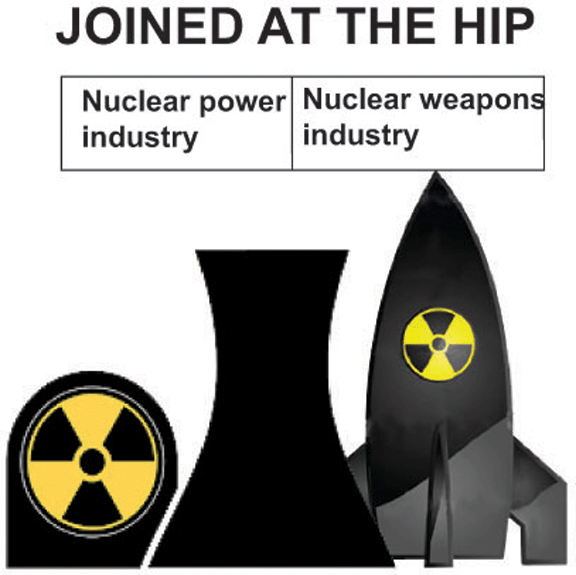 On April 23 the strongly pro-nuclear results of the Nuclear Fuel Working Group (NFWG) were made public by the US Department of Energy (DoE)
Energy Secretary Dan Brouillette announced the NFWG’s results and urged:
- Taking immediate and bold action to strengthen the uranium mining and conversion industries and restore the viability of the entire front-end of the nuclear fuel cycle.
• Utilizing American technological innovation and advanced nuclear RD&D investments to consolidate technical advances and strengthen American leadership in the next generation of nuclear energy technologies.
• Ensuring that there will be a healthy and growing nuclear energy sector to which uranium miners, fuel cycle providers, and reactor vendors can sell their products and services.
• Taking a whole-of-government approach to supporting the U.S. nuclear energy industry in exporting civil nuclear technology in competition with state-owned enterprises.”
Brouillette’s announcement also undermines the long-cultivated narrative that ‘peaceful / civil use’ and military application of nuclear power would be separate – instead, it explicitly references the connection between the civil and military nuclear sectors:
“The United States currently has two well-defined future defense needs for domestic uranium supply: low-enriched uranium needed to produce tritium required for nuclear weapons in the 2040s, and highly-enriched uranium needed to fuel Navy nuclear reactors in the 2050s.
The Strategy also recognizes that U.S. national security is truly integrated with the health of the front-end of the nuclear fuel cycle – the United States needs a strong civil nuclear industry to enable national defense.” (underlining not in the original)
US DoE at the same date published a NFWG Factsheet: Strategy to Restore American Nuclear Energy Leadership
North Korea already has its nuclear arsenal. even if Kim should die.
|
Even if Kim Jong Un dies, he has given North Korea the nuclear arsenal it needed to deter the U.S.
While North Korea is still among the world’s most impoverished nations, living standards are rising for the ruling elite in Pyongyang. Kim has shown he can endure crushing economic sanctions,National Post, Bloomberg News, Jihye Lee and Jon Herskovitz, April 23, 2020 Whatever the state of Kim Jong Un’s health, he has already put North Korea in its strongest position to resist U.S. pressure in decades. Eight years after Kim filled the power vacuum left by the death of his reclusive father, Kim Jong Il, North Korea is more secure and less isolated. The 36-year-old supreme leader has achieved two key marks of legitimacy long sought by his predecessors: a nuclear arsenal that can credibly deter an American attack and a personal relationship with the U.S. president, including three face-to-face meetings with Donald Trump. While North Korea is still among the world’s most impoverished nations, living standards are rising for the ruling elite in Pyongyang. Kim has shown he can endure crushing economic sanctions, illustrated by a United Nations report published Tuesday accusing the regime of widespread evasion. Moreover, the Kim dynasty holds a renewed pledge of strategic support from its ultimate guarantor, China. “The country has pole-vaulted in their nuclear-destruction potential and missile-delivery capabilities compared to capabilities under grandfather or father Kim,” said Soo Kim, a Rand Corp. policy analyst who specializes in Korean peninsula issues. “The specter of a North Korean nuclear attack breeds enough unease in the international community to lean more towards accommodation than confrontation.”…….. North Korea has given up little since Kim’s unprecedented handshake with Trump almost two years ago in Singapore. Besides halting launches of missiles that can reach the U.S. mainland and demolishing some testing facilities, Kim has signed only a vaguely worded pledge to “work toward complete denuclearization of the Korean Peninsula.” …… https://nationalpost.com/news/world/despite-kim-jong-un-health-north-korea-has-little-to-worry-about-u-s-sanctions |
|
|
United Arab Emirates’ new ‘cheap and cheerful’ Barakah nuclear reactor adds to danger and Middle East tensions
|
The wrong reactor at the wrong time”: inside the UAE’s Barakah nuclear , Power Technology, JP Casey, 17 Apr 20,
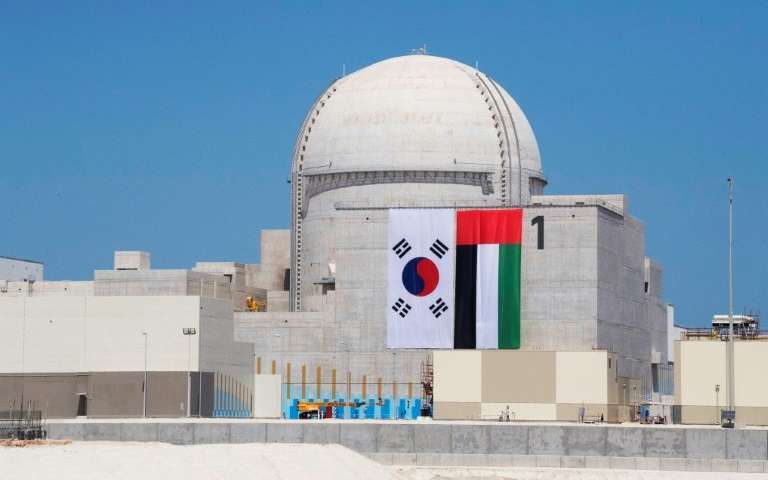
The UAE has announced that the first reactor of its under-construction Barakah nuclear power plant is scheduled to come online within “a few months”. The country’s first nuclear plant could address a key energy need in the region, but questions remain as to its usefulness and safety in a geopolitically tense environment.
……. Located 53km from the city of Ruwais in Abu Dhabi’s Gharbiya region, construction on the $20bn project began in 2012, and is finally nearing completion. With four reactors, developed by the state-owned Emirates Nuclear Energy Corporation and the South Korea-based Korean Electric Power Corporation (KEPCO), the plant is expected to have an operating capacity of 5.6GW, which will account for one quarter of the country’s energy needs.
But behind these grand claims, the project has been dogged by controversy. From macro problems, such as the inherent dangers of building a nuclear reactor in a geopolitically tense region, to specific weaknesses with Barakah, such as the cracking of the cement used to build the facility itself, the project has no shortage of critics. With the UAE eager to continue with the project, its completion appears a matter of when, not if, opening up a series of lessons to learn ahead of new nuclear construction……
The plant is expected to produce 5.6GW of power once fully operational, with four reactors powered with APR-1400 technology, developed in South Korea, driving this production. This figure would make the plant the sixth-largest nuclear facility in the world by net production capacity, and its backers hope the project will help to kick-start an energy revolution in the Middle East. However, questions remain about the ultimate suitability of the plant, considering the risks inherent in nuclear and the potential for alternative sources of clean energy in the region. Dr Paul Dorfman, an honorary research associate at UCL and founder and chair of the Nuclear Consulting Group, an independent group of academics that aim to assess the risks and merits of nuclear projects, is sceptical about the suitability of Barakah for the UAE. So, given the fact – and it is a fact – that nuclear investment generates significant financial losses, one wonders if there are other reasons for Barakah,” he said. “Especially because nuclear energy seems to make limited economic sense for the Gulf States. As desert kingdoms, they have some of the best solar resources in the world, with solar having much, much lower investment and generation costs than nuclear.”
These solar resources are particularly significant considering the relative importance of renewable technology and nuclear power to the UAE’s 2050 climate goals. The nation aims to develop renewables as a primary source of power, and nuclear as a backup, a policy that could positively impact the solar industry, but hamstring the nuclear sector.
“Saudi recently tripled its renewable energy targets, and has successfully tended for large scale projects in wind and solar, with a Saudi-based consortium launching a world record low price of $17 per megawatt hour for a 900 megawatt solar park in Dubai itself,” said Dorfman. “So, worldwide and in the Gulf, the fate of new nuclear is linked to and determined by renewable energy technology rollout.” ……..
Dorfman is again concerned about these safety assurances, not only because of alleged mishaps at Barakah, but the generally lax approach to safety regulation across the nuclear sector.
“And what’s particularly worrying is the lack of a core catcher, which in the event of a failure of the emergency reactor core systems, would retain the nuclear fuel once it breached the reactor pressure vessel. On top of that, concrete cracking in all four reactor containment buildings hasn’t helped, nor has installation of faulty pilot-operated safety relief valves.”
 He also noted that KEPCO’s reputation has been somewhat tarnished by a series of scandals originating in 2013, where top safety officials were sentenced for falsifying safety documents for parts used in its nuclear reactors. 100 people were ultimately charged, as six of the country’s 23 operating nuclear reactors were shut down between late 2012 and late 2013, discrediting the reputation in which the UAE has placed such high stock to justify its safety moves at Barakah. He also noted that KEPCO’s reputation has been somewhat tarnished by a series of scandals originating in 2013, where top safety officials were sentenced for falsifying safety documents for parts used in its nuclear reactors. 100 people were ultimately charged, as six of the country’s 23 operating nuclear reactors were shut down between late 2012 and late 2013, discrediting the reputation in which the UAE has placed such high stock to justify its safety moves at Barakah.Finances may have played a key role in the involvement of KEPCO. The UAE awarded KEPCO a contract worth $20bn for the construction of the plant, a much lower bid than was made by other firms. In 2008, Synapse Energy predicted that new nuclear construction could cost up to $9bn for each 1.1GW plant; while this figure is not a specific measurement for all nuclear facilities, this prediction would place the expected cost of Barakah at around $45bn, more than double what KEPCO invested into the facility. “It’s a bit of a ‘cheap and cheerful’ reactor,” Dorfman added. Political damage The impact of these uncertain safety credentials could significantly discredit many of the world’s nuclear regulatory bodies, which have signed off on the Barakah plant despite these risks. Dorfman said that the plight of the facility highlights the “discretionary rather than mandatory” nature of nuclear regulation, where national governments are given exclusive responsibility to enforce operational and safety standards without the support of a strong international body. “The International Atomic Energy Association can attempt to control what’s happening, but it can’t necessarily say to anybody: ‘you will do this’ or ‘you will do that’, as we’ve found out to a cost in Iran, Pakistan, or Israel,” he said. The lack of a central global executive to take responsibility for safety, and the resulting burden on national governments, means nuclear power and nuclear safety are tied to national policy and local geopolitics in a way that is unlike any other energy source. Dorfman pointed to the example of the Houthi insurgency in Yemen, which saw rebel groups overthrow the Yemeni president Abd-Rabbu Mansour Hadi, who was allied with the Gulf states, in 2015. Two years later, the rebels claimed to have fired rockets at Barakah as a warning to the UAE against future involvement in Yemeni affairs, with the prospect of military strikes launched at a nuclear facility an obvious political, and potentially humanitarian, emergency.
“Following a very recent military strike against Saudi oil refineries, and all that implies, nuclear safety in the region increasingly revolves around the broader issue of security,” Dorfman continued, highlighting the pressure on the UAE government to ensure the security of the Barakah plant. “Tense Gulf strategic geopolitics makes new civil nuclear construction more controversial there than elsewhere,” said Dorfman, summarising many of the threats to local people and regional stability posed by the plant, which remain unresolved. “Once Barakah begins full-scale generation there will be a major maritime risk, whether directly intended or unintentional. “It’s the wrong reactor in the wrong place at the wrong time.” https://www.power-technology.com/features/the-wrong-reactor-at-the-wrong-time-inside-the-uaes-barakah-nuclear-plant/ |
|

Increased tensions between USA and China, as U.S. accuses China of secret nuclear tests
Times 17th April 2020, Relations between China and the United States have plunged to a new low
after the release of a report that suggests Beijing may have conducted
secret nuclear tests, in contravention of arms treaties. Compiled by the US
state department, it says that extensive excavations have been carried out
in the desert of Lop Nur, northwest China, along with the construction of
“explosive containment” chambers. The work coincided with the blocking
of transmissions from sites that monitor levels of radiation and seismic
activity, it added.
Daily Mail 16th April 2020, China accuses the U.S. of ‘confounding black and white’ with a ‘fabricated’
report after State Department warned Beijing might be conducting small
nuclear bomb tests.
https://www.dailymail.co.uk/news/article-8224941/China-accuses-U-S-confounding-black-white-fabricated-nuclear-test-claims.html
1 This Month
26 April – Chernobyl: Inside the Meltdown airs on National Geographic on Sunday 26th April from 4pm
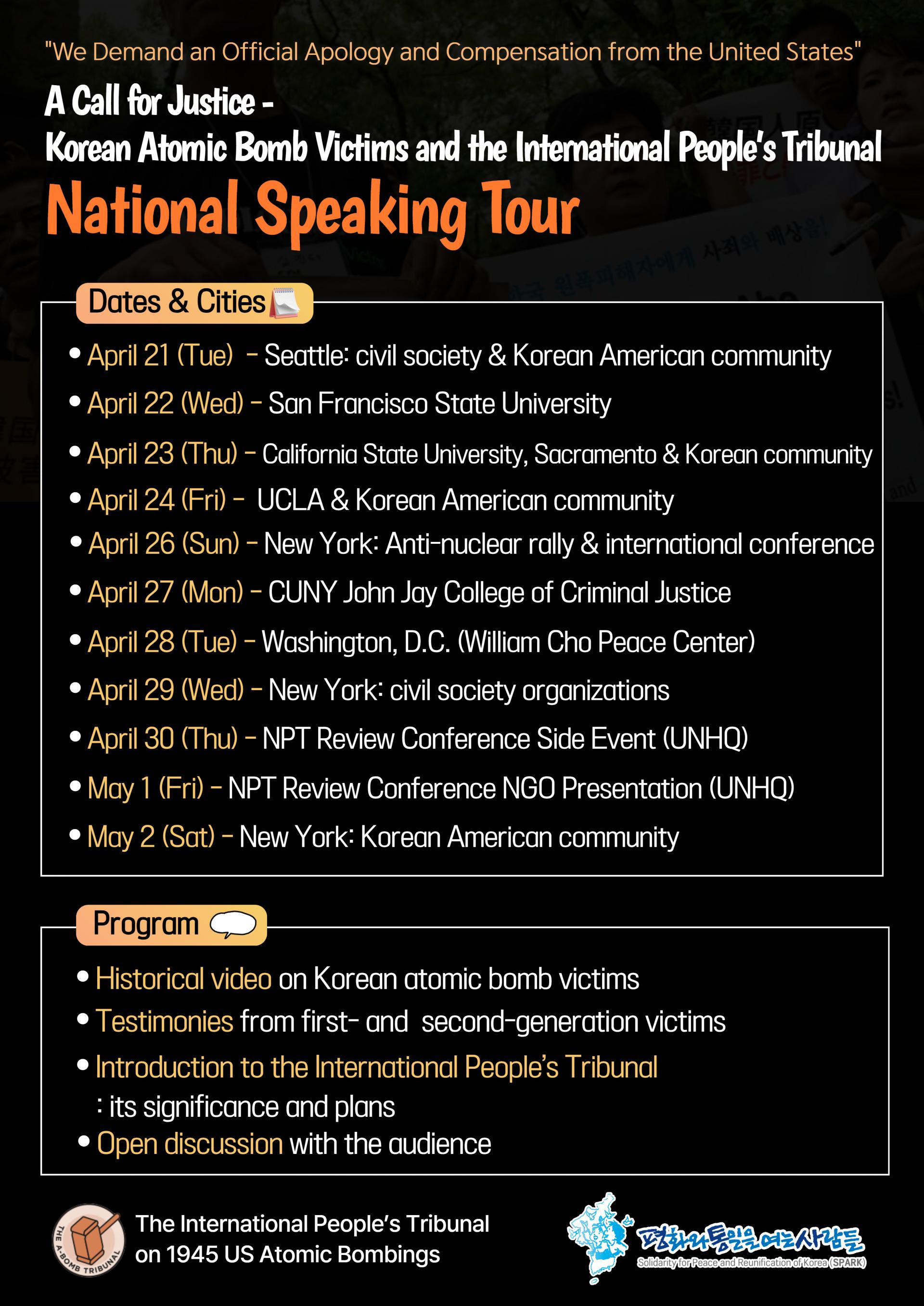
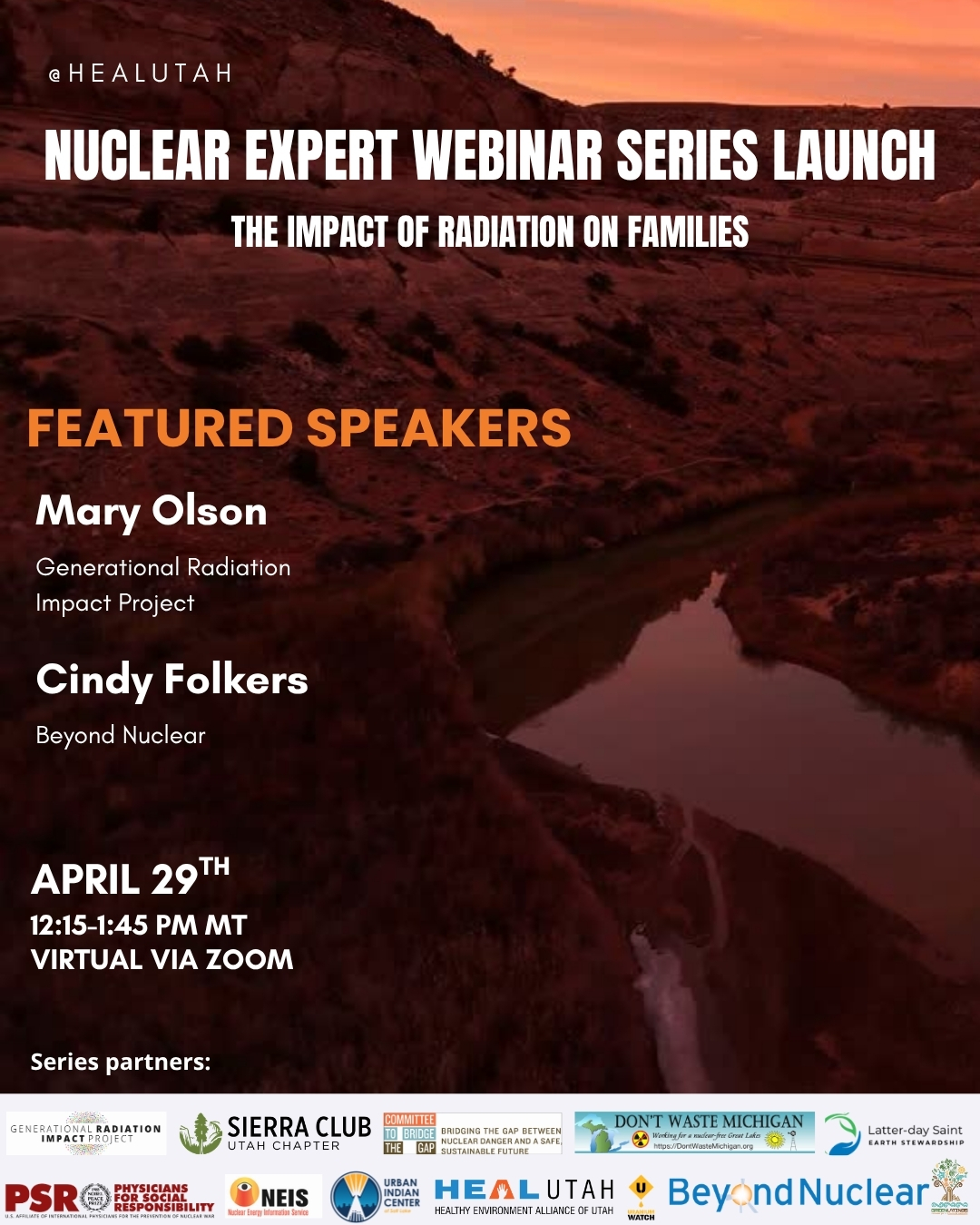
29 April – Nuclear Expert Webinar #1 – Radiation Impacts on Families with Mary Olson and Cindy Folkers
- 12:15 PM MT – 1:45 PM MT
- Location: Virtual – REGISTER TODAY

4 May -West Suburban Peace Coalition to discuss Iran war at May Educational Forum
Monday, May 4, 7:00 – 8:00 PM Central Standard Time
Title: : How Trump’s Narrative Tries to Shape the Reality of the War on Iran.
Contact Walt Zlotow, zlotow@hotmail.com 630 442 3045 for further information
14 May – online event From Bombs to Data Centres: the Face of Nuclear Colonialism

Pine Ridge Uranium is the real threat, not Tehran- Tell Burgum: Stop the Extraction.
Chernobyl: The Lost Tapes – A good documentary on Chernobyl on SBS available On Demand for the next 3 weeks– https://www.sbs.com.au/ondemand/tv-program/chernobyl-the-lost-tapes/2352741955560
To see nuclear-related stories in greater depth and intensity – go to https://nuclearinformation.wordpress.com
-
Archives
- April 2026 (327)
- March 2026 (251)
- February 2026 (268)
- January 2026 (308)
- December 2025 (358)
- November 2025 (359)
- October 2025 (376)
- September 2025 (257)
- August 2025 (319)
- July 2025 (230)
- June 2025 (348)
- May 2025 (261)
-
Categories
- 1
- 1 NUCLEAR ISSUES
- business and costs
- climate change
- culture and arts
- ENERGY
- environment
- health
- history
- indigenous issues
- Legal
- marketing of nuclear
- media
- opposition to nuclear
- PERSONAL STORIES
- politics
- politics international
- Religion and ethics
- safety
- secrets,lies and civil liberties
- spinbuster
- technology
- Uranium
- wastes
- weapons and war
- Women
- 2 WORLD
- ACTION
- AFRICA
- Atrocities
- AUSTRALIA
- Christina's notes
- Christina's themes
- culture and arts
- Events
- Fuk 2022
- Fuk 2023
- Fukushima 2017
- Fukushima 2018
- fukushima 2019
- Fukushima 2020
- Fukushima 2021
- general
- global warming
- Humour (God we need it)
- Nuclear
- RARE EARTHS
- Reference
- resources – print
- Resources -audiovicual
- Weekly Newsletter
- World
- World Nuclear
- YouTube
-
RSS
Entries RSS
Comments RSS
 nuclear-news