Good Biden-Kim Relationship Necessary to Avoid a Nuclear Crisis
Because North Korea has nuclear weapons, the Biden administration cannot unilaterally impose terms on Pyongyang. Refusal to even talk with Pyongyang until it takes steps to denuclearize is a foolish and dangerous approach. Such an approach will likely inflame tensions and return Washington to a tense nuclear standoff with Pyongyang that poses a risk of miscalculation and accidental escalation into a nuclear war. Biden may be under pressure to be “tough” on North Korea to differentiate himself from Trump’s alleged cozy relationship with the North Korean dictator. However, a hostile stance toward Pyongyang will only make North Korea feel more insecure and drive Kim to pursue further nuclear development to ensure his regime’s survival.
Iran awaits incoming Biden U.S. administration – is unlikely to avenge the assassination of nuclear scientist
|
By TOI STAFF 4 Dec 20, Iran is unlikely to retaliate for the assassination of top nuclear scientist Mohsen Fakhrizadeh before US President-elect Joe Biden takes office, in order not to jeopardize a potential change in American policy on sanctions relief, the US envoy to Iran and Venezuela said Thursday.Fakhrizadeh, the scientist previously said by Israel and the US to head Iran’s rogue nuclear weapons program, was killed in a military-style ambush Friday on the outskirts of Tehran. The attack reportedly saw a truck bomb explode and gunmen open fire on Fakhrizadeh……… srael has long been suspected of carrying out a series of targeted killings of Iranian nuclear scientists nearly a decade ago, in a bid to curtail Iran’s rogue nuclear weapons program. It has made no official comment on the matter. Israeli TV coverage noted that Friday’s attack was far more complex than any of the previous incidents. https://www.timesofisrael.com/us-envoy-iran-unlikely-to-avenge-assassination-of-nuclear-scientist/ |
|


Trump’s Support for Israel’s Killing of Iranian Nuclear Scientist Could Lead to War
 Trump’s Support for Israel’s Killing of Iranian Scientist Could Lead to War, Trump’s Support for Israel’s Killing of Iranian Scientist Could Lead to War, Marjorie Cohn, Truthout– December 1, 2020,
On November 27, Israel assassinated Mohsen Fakhrizadeh, Iran’s top nuclear scientist. International law expert Richard Falk called it “an outrageous act of state terrorism.” Although the Israeli government has not claimed credit for the illegal killing, there is little doubt of its culpability. Trump implicitly praised the assassination, retweeting a comment by Israeli journalist and intelligence expert Yossi Melman that the killing was a “major psychological and professional blow” to Iran. This was an “implicit approval if there ever was one,” according to Sina Toossi, a senior research analyst at the National Iranian American Council. The Israel Defense Forces have been ordered to prepare for a possible U.S. military attack on Iran before Trump’s term ends, senior Israeli officials told Axios. They expect “a very sensitive period” leading up to Biden’s inauguration. In mid-November, Trump requested plans to attack Iran’s Natanz nuclear power facility but was reportedly talked out of it. Israeli Prime Minister Benjamin Netanyahu met with Crown Prince Mohammed bin Salman in Saudi Arabia and strategized about Iran. Secretary of State Mike Pompeo visited Israel, the West Bank, the Golan Heights and several countries in the Gulf to discuss Iran. During Pompeo’s visit to the Gulf, the U.S. Central Command announced that B-52 strategic bombers carried out a “short-notice, long-range mission into the Middle East to deter aggression and reassure U.S. partners and allies.” And in an unusual move, the U.S. military sent the aircraft carrier the U.S.S. Nimitz back to the Gulf region following the assassination of Fakhrizadeh. “All options are on the table,” State Department officials who were traveling with Pompeo told reporters. Trump Appears to Have Outsourced His Iran Policy to IsraelIsraeli leaders think Iran poses an existential threat to Israel’s existence, in spite of the fact that Iran has never attacked Israel or any other country in the last 200 years. In fact, Israel is the only Middle East country that has nuclear weapons and it refuses to join the new UN International Treaty on the Non-Proliferation of Nuclear Weapons. At Netanyahu’s urging, Trump pulled the United States out of the Iran nuclear deal, which was preventing Iran from developing nuclear weapons. And in January, the Trump administration illegally assassinated Iran’s top general, Qassim Suleimani. Shortly before that assassination, Pompeo followed the same pattern — traveling and meetings with U.S. allies in the region, according to Iranian American journalist Negar Mortazavi. The Iran nuclear agreement is embodied in the 2015 Joint Comprehensive Plan of Action (JCPOA), negotiated during the Obama administration between Iran, the U.S., France, U.K., Russia, China, Germany and the European Union. Iran, which has consistently maintained that its nuclear program is only intended for peaceful purposes, agreed to restrict its uranium enrichment and other nuclear activities. In return, it received relief from the punishing U.S. sanctions. The UN International Atomic Energy Agency certified several times that Iran was complying with its obligations under the agreement. Nevertheless, Trump withdrew from the JCPOA in 2018 and reimposed the sanctions against Iran. One year after the U.S. withdrawal, Iran began to pull back from its commitments under the JCPOA, which allows a party to abandon its obligations if another party is in noncompliance. Trump intensified the sanctions that have devastated Iran’s economy, impoverished 82 million Iranians and hindered its ability to respond to the pandemic. With his campaign of “maximum pressure” on Iran, Trump has waged economic warfare against the Iranian people…….. It is becoming clear that Trump aims to cater to Israel’s agenda until he leaves office. U.S. and Israel Try to Bait Iran to Retaliate and Lead to Middle East WarHopefully, Iran will resist the apparent U.S.-Israeli attempt to provoke it into retaliating for Fakhrizadeh’s assassination and thereby provide Trump with a pretext to launch a retaliatory strike, which would ignite a war in the Middle East. The U.S. military already has more than 40,000 troops in the region on high alert. Iranian President Hassan Rouhani pledged to respond to the assassination of Fakhrizadeh at the “proper time.” Rouhani said, “The Iranian nation is smarter than falling into the trap of the Zionists. They are thinking to create chaos.” The day after the assassination, Iran’s parliament unanimously voted to end future UN inspections of Iran’s nuclear sites. The inspections had confirmed that Iran was in compliance with the JCPOA. Terminating them could spell an end to the nuclear deal……. It is up to Congress, as well as civil society, to prevent the Biden administration from continuing the U.S. policy of caving to Israel’s demands — a practice that not only deepens the oppression of the Palestinians but could also actively imperil the national security of the United States. Meanwhile, we must pressure Congress to prevent Trump from attacking Iran. The consequences to the Middle East and the entire world would be catastrophic. https://truthout.org/articles/trumps-support-for-israels-killing-of-iranian-scientist-could-lead-to-war/?eType=EmailBlastContent&eId=1a5fde20-0879-45fe-9c19-50ff3b76e37e |
|
Armenian paper urges use of a nuclear ”dirty bomb” on Azerbaijan
 paper urges use of nuclear bomb on Azerbaijan, Writer urges Armenia to use nukes against Azerbaijani population, turn capital into ‘wasteland for next 5,000 years’ AA 2020 Vakkas Doğantekin |01.12.0 ANKARA
An Armenian newspaper in the US published an opinion piece that urges the use of universally banned weapons of mass destruction (WMDs) against Azerbaijan and its civilian population.
The piece by Stepan Altounian called on the Armenian government to use any nuclear weapon available to turn the Azerbaijani capital Baku into a “wasteland for the next 5,000 years.”
“I, as probably all Armenians, was devastated but not necessarily surprised over the news that Armenia lost to the Azeris,” Altounian wrote, referring to Armenia’s Nov. 10 surrender to Azerbaijan in the conflict over the Nagorno-Karabakh region, also known as Upper Karabakh.
Intense fighting that erupted on Sept. 27 ended weeks later when the Armenian occupiers retreated from territories internationally recognized as part of Azerbaijan.
In the controversial piece, endorsed and published by the Armenian media group Asbarez, Altounian asked “Where was the nuclear option?” at a time when governments and the UN are urging nuclear disarmament.
“Why not take the nuclear waste from Metzamor and manufacture dirty bombs?” he wrote. …….. https://www.aa.com.tr/en/azerbaijan-front-line/armenian-paper-urges-use-of-nuclear-bomb-on-azerbaijan/2062187
Assassination of top scientist may push Iran closer to nuclear bomb
|
Assassination of top scientist may push Iran closer to nuclear bomb, The Strategist
1 Dec 2020| Connor Dilleen Media speculation has gone into overdrive since the assassination of Iran’s top nuclear scientist on Friday. Mohsen Fakhrizadeh was an important albeit little-known figure in the Iranian government and was the head of research and innovation in Iran’s defence ministry.
Fakhrizadeh was also an integral figure in Iran’s pre-2004 nuclear weapons work, and his role in Iran’s Amad program in the early 2000s had long made him a person of interest to those seeking to unravel Iran’s historical weapons program. Fakhrizadeh’s role in Iran’s defence establishment also raised questions about the nature of his ongoing research, including whether there were any elements that related to nuclear weapons……… Israel has, unsurprisingly, emerged as the most likely culprit behind Fakhrizadeh’s killing. As noted by Trita Parsi in Responsible Statecraft, Tel Aviv had the expertise, capacity and motive to conduct the attack, and it has carried out similar assassinations before. Israel has been identified as being likely behind the murder of four other Iranian scientists between 2010 and 2012, and the attempted murder of several others. It’s also likely that the US was complicit in the attack, at a minimum providing Tel Aviv with a green light to conduct the attack. ……… The assassination of Fakhrizadeh was clearly symbolic. It was the first known assassination of a figure associated with Iran’s nuclear program in over eight years. It also occurred at a time when political transition in the US has raised hopes of a renewal of the Joint Comprehensive Plan of Action (JCPOA) on Iran’s nuclear program, given President-elect Joe Biden has committed to resurrecting the deal. It is also likely to be more than coincidental that US Secretary of State Mike Pompeo reportedly met with Israeli Prime Minister Benjamin Netanyahu and Saudi Crown Prince Mohammed bin Salman in Saudi Arabia on 22 November, possibly to advance elements of an anti-Iranian coalition in the dying stages of the Trump presidency. In the absence of any publicly available evidence indicating that Iran has undertaken any substantive research related to nuclear weaponisation since 2003, it appears Fakhrizadeh was targeted because of his historical role, not because of any contemporary work that he was undertaking…… it appears likely that the perpetrators of Fakhrizadeh’s assassination intended to do more than just spoil any chance for a renewal of cooperation with Iran on its nuclear program and the reinstatement of US participation in the JCPOA. It’s likely that they are also seeking to provoke a response from Tehran that would legitimise further punitive action against Iran by Israel or the US. The implications of this could prove catastrophic……. Fortunately, despite the killing of Fakhrizadeh being arguably a de facto declaration of war, Tehran appears set to continue the policy of strategic patience that it adhered to after the assassination of Soleimani. It also followed this approach after the apparent attack on the Natanz nuclear facility and possibly other industrial sites in the middle of the year. ……. The assassination of Fakhrizadeh may not only fail to achieve its core objectives, but may also prove disastrously counterproductive by providing the catalyst to convince policymakers in Tehran that they need the strategic deterrent capability that only a nuclear weapon can provide. https://www.aspistrategist.org.au/assassination-of-top-scientist-may-push-iran-closer-to-nuclear-bomb/ |
|
Iran considers barring international nuclear inspectors, following assassination of scientist
Telegraph 29th Nov 2020, Iran was weighing its response Sunday to the killing of its top nuclear
scientist, which it blames on arch-foe Israel, as his body was taken to
Shiite shrines ahead of being buried. Two days after Mohsen Fakhrizadeh
died following a firefight between his guards and unidentified gunmen
outside Tehran, parliament called in a statement for international
inspectors to be barred from nuclear facilities.
UAE, Jordan Condemn Killing of Iranian Nuclear Scientist, Call for Self-restraint
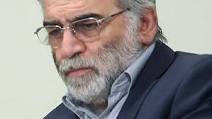 UAE, Jordan Condemn Killing of Iranian Nuclear Scientist, Call for Self-restraint, https://www.haaretz.com/middle-east-news/iran/.premium-uae-condemns-killing-of-iranian-nuclear-scientist-calls-for-self-restraint-1.9335920 The states cautioned against regional escalations after the killing of Iranian nuclear scientist Mohsen Fakhrizadeh
The United Arab Emirates condemned on Sunday the killing of top Iranian nuclear scientist Mohsen Fakhrizadeh and called on all parties to exercise self-restraint to avoid sliding the region into new levels of instability, the state news agency reported on Twitter.
Jordan, a staunch U.S. ally also condemned the assassination of Fakhrizadeh, state media reported, and called for collective efforts to avoid an escalation in tensions in the Middle East region.
It is likely that Trump gove the nod for assassination of Iran nuclear scientist
 Observer 29th Nov 2020, As the president lashes out wilfully during his last days in office, it seems likely that he at least gave the nod to this killing. Iran’s leaders, mindful of previous, unexplained killings of its nuclear experts, have been quick to blame Israel for Fakhrizadeh’s death. But American and regional analysts suggest that if Israel was involved, it would only have acted after getting the nod from Trump.
This explanation makes sense for several reasons. Like last January’s assassination of the Revolutionary Guard general Qassem Suleimani, Friday’s outrage is an extraordinarily provocative act. It risks goading Iran into armed retaliation against its most prominent enemies – Israel, Saudi Arabia and US forces based in the region. The assassination, in this sense, is tantamount to a declaration of war.
What’s behind the assaisnation of Iran’s top nuclear scientist?
The operation behind the assassination of the Iranian nuclear program founder, The Hybrid War Institute,
Eyal Pinko, 29 Nov 20,
On Friday morning, November 27, Muhsin Fakhrizadeh, considered the founder of Iran’s nuclear program, was assassinated…….. It is not the first-time assassination attempts were made to kill Fakhrizadeh, who survived a similar assassination attempt five years ago. Sixty years old Fakhrizadeh, who holds a doctorate in physics by his profession, was a key figure in the Iranian nuclear program and is considered one of its ancestors. Besides, Fakhrizadeh has been involved in other Iranian strategic plans, such as developing Iran’s air defense system and developing the missile upgrade program, known as Iran and Hezbollah’s missile precision project………
Once a clear and high-quality intelligence picture has been produced, which will allow an understanding of the target’s life routine and planned events, a relevant operational plan to thwart him will create, including the timing of the attack, ways, and means of access and withdrawal from the attack. …….. The recent assassination of Fakhrizadeh comes just a few weeks before the regime change in the United States, and the understanding that President-elect Joe Biden is expected to ease the nuclear sanctions imposed by Trump on the Iranian regime as part of his “maximum pressure” progra ……….
Senior Iranians, who were quick to accuse Israel of assassination, promised that Iran would not remain silent, and a painful Iranian response was expected. Fakhrizadeh’s senior status and key role in Iran’s nuclear and ballistic missile development raises the likelihood of an Iranian response. As Supreme Leader Ali Khamenei’s military adviser, Hossein Dehghani, said, “In the last days of a provocative ally, Israel is striving to increase pressure on Iran to go to war. We will pursue the shahid’s killers and make them regret their actions.” Dehghani is one of the prominent candidates for Iran’s presidency in the elections that are expected to take place in the country next year.
Simultaneously, the change of the administration in the United States and the Iranian hope for the expected changes with the entry of Biden into office is a brake and a deterrent to the Iranian response. An Iranian response at this time may be against Israeli elements only and at low intensity. As a recall, Iran has previously stated that it will respond sharply to the United States for the assassination of Qasem Soleimani and has not yet implemented its threat in practice. It will now be a shaky deadline for it to react, at least until the Biden administration stabilizes.
For Israel, if it is the one behind the assassination operation, it is likely that the assassination operation will not significantly delay or halt Iran’s ballistic missile and nuclear developments. But it could create a deterrent to Israel taking all measures to prevent Iran from reaching nuclear capability, even when it is expected that the US political support for these efforts will decrease significantly during Biden’s administration.. https://www.hwi.institute/post/the-operation-behind-the-assassination-of-the-iranian-nuclear-program-founder
Architect of its nuclear programme assassinated – Iran vows retaliation
Mohsen Fakhrizadeh was ambushed with explosives and machine gun fire in the town of Absard, 70km (44 miles) east of Tehran. Efforts to resuscitate him in hospital failed. His bodyguard and family members were also wounded.
There was no immediate claim of responsibility, but the Iranian foreign minister, Mohammad Javad Zarif, said Israel was probably to blame, and an adviser to Iran’s supreme leader, Ayatollah Ali Khamenei, vowed retaliation. “We will strike as thunder at the killers of this oppressed martyr and will make them regret their action,” tweeted Hossein Dehghan.
The killing was seen inside Iran as being as grave as the assassination by US forces of the Islamic Revolutionary Guard Corps commander Qassem Soleimani in January.
Israel will face accusations that it is using the final weeks of the Trump administration to try to provoke Iran in the hope of closing off any chance of reconciliation between Tehran and the incoming US administration led by Joe Biden.
Amos Yadlin, a former head of Israeli Defence Force intelligence, said: “With the window of time left for Trump, such a move could lead Iran to a violent response, which would provide a pretext for a US-led attack on Iranian nuclear facilities.”…….. https://www.theguardian.com/world/2020/nov/27/mohsen-fakhrizadeh-iranian-nuclear-scientist-reportedly-shot-dead-near-tehran
President Joe Biden will have just 16 days from Inauguration Day to rescue the New START Treaty
 Biden May Have 16 Days to Stave Off a Nuclear Arms Race, Preserving the New START treaty with Russia will be one of his earliest missions, Bloomberg, By Peter Coy , 25 Nov 20,
If New START is allowed to expire, a nuclear arms race could break out. Retired Navy Admiral James Stavridis, the former supreme allied commander of NATO, wrote in a Bloomberg Opinion column on Oct. 30, that a stop to New START would allow both sides to deploy more nukes of current designs as well as make more advanced systems, “all of which would be very destabilizing.”
Some pressure, right? For insight into what Biden and his team will do, I interviewed Jon Wolfsthal, who served from 2014 to 2017 as a special assistant to President Barack Obama and as senior director for arms control and nonproliferation at the National Security Council. He was also a senior adviser to Vice President Biden on nuclear security and nonproliferation from 2009 to 2012.
Some pressure, right? For insight into what Biden and his team will do, I interviewed Jon Wolfsthal, who served from 2014 to 2017 as a special assistant to President Barack Obama and as senior director for arms control and nonproliferation at the National Security Council. He was also a senior adviser to Vice President Biden on nuclear security and nonproliferation from 2009 to 2012.
Wolfsthal says he’s optimistic about Biden’s chances of staving off a fresh nuclear arms race……….
Biden and his team will have a long list of nuclear weapons problems to deal with, including the rapid growth of China’s
………… Wolfsthal says New START, which went into effect in 2011, is flawed but shouldn’t be left to expire, because
Nuclear arms control doesn’t get as much attention as other priorities for Biden’s first 100 days, but nothing is more
The effect on Europe of the UN Treaty on the Prohibition of Nuclear Weapons
 Nuclear prohibition: Changing Europe’s calculations https://www.europeanleadershipnetwork.org/commentary/nuclear-prohibition-changing-europes-calculations/ Beatrice Fihn |Executive Director of the International Campaign to Abolish Nuclear Weapons (ICAN),Daniel Högsta |Campaign Coordinator of the International Campaign to Abolish Nuclear Weapons (ICAN), 25 Nov 20,
On 22 January 2021, nuclear weapons will be placed in the same category as chemical and biological weapons – the other weapons of mass destruction – illegal under international law. On that date, the Treaty on the Prohibition of Nuclear Weapons (TPNW) will enter into force and will change the legal and normative landscape around nuclear weapons. This has significant implications for any European governments complicit in the practice of deployment and potential use of nuclear weapons of mass destruction.
A historic milestone for nuclear disarmament
Continue reading
Germany hosts France, Britain for talks on Iran nuclear deal
Germany hosts France, Britain for talks on Iran nuclear deal, DW, 25 Nov 20,
German Foreign Minister Heiko Mass met his counterparts Dominic Raab and Jean-Yves Le Drian in Berlin for talks on the Iran nuclear deal. The trio hopes for a change in US policy once Joe Biden is sworn in.
German Foreign Minister Heiko Maas held talks with his French and British counterparts in Berlin on Monday, with the partners urging Iran to stop breaching a nuclear deal it signed in 2015.
“From our view, Iran is systematically violating the agreement,” a spokeswoman with the German Foreign Ministry said. “Together with our European partners, we urge Iran to stop these violations and return to fulfilling all its nuclear obligations.”
Maas met with Britain’s Dominic Raab and France’s top diplomat Jean-Yves le Drian ahead of an expected change of policy towards Iran when US President-elect Joe Biden is sworn in as president in January.
Maas’s spokeswoman said she “confident” that a “constructive” US approach would help rein in the Iranian government, German news agency DPA reported.
The agreement, which world powers reached with Iran, sought to limit Tehran’s nuclear program to prevent it from developing nuclear weapons in return for the easing of economic sanctions…….
Changing US policy
Biden, who takes office on January 20, has said he would re-join the accord if Tehran first resumed strict compliance.
He wants to work with allies “to strengthen and extend it, while more effectively pushing back against Iran’s other destabilizing activities.”…..https://www.dw.com/en/germany-hosts-france-britain-for-talks-on-iran-nuclear-deal/a-55699826
Living with the Nuclear Prohibition Treaty: nuclear weapons states swould be unwise to attack it
 Living With the Nuclear Prohibition Treaty: First, Do No Harm, Carnegie Endowment for International Peace, GEORGE PERKOVICH 25 Nov 20 Now that fifty countries have ratified the UN Treaty on the Prohibition of Nuclear Weapons (TPNW), it will enter into force in January 2021…….
NATIONS WITHOUT NUCLEAR WEAPONS HAVE REASON TO SUPPORT THE TREATY
Supporters of the prohibition treaty are not crazy. They have good reasons. The 122 countries that adopted the treaty in 2017 were already legally committed not to acquire nuclear weapons, as they had signed the fifty-year-old Nuclear Non-Proliferation Treaty.
None of them face threats of aggression from the United States, Russia, China, or other countries that nuclear weapons would plausibly deter. Yet, all could suffer great harm from someone else’s nuclear war—especially one involving the still excessively destructive U.S. and Russian arsenals…….
TPNW supporters represent more than half of the world’s population and are understandably frustrated that the nuclear weapon states have not fulfilled their legal obligations and political commitments to pursue nuclear disarmament. …
COUNTRIES WITH NUCLEAR WEAPONS WON’T SIGN UP
A cynical answer is that the TPNW will do little good. The nine governments that wield nuclear weapons will not sign it. Nor have any security allies of nuclear-armed states, including all members of NATO, Japan, and South Korea, for example. In other words, the treaty will not change any country’s reliance on or possession of nuclear weapons.
While that is true, both supporters and critics of the treaty have reason to heed Hippocrates’s injunction to “first do no harm.” The importance of this injunction is especially great in NATO Europe and the United States.
In several NATO states, significant numbers of citizens and civil society organizations and their political representatives strongly support the TPNW. This includes the Netherlands and Germany, which are among the five states that host U.S. nuclear bombs as part of NATO’s nuclear-sharing arrangement…………
CRITICIZING THE TPNW IS THE WRONG APPROACH
Here, the United States, the United Kingdom and France—as nuclear weapon states—have vital roles to play. If they do not openly respect the concerns that motivate support for the TPNW, and instead direct critical ire at those who do, they will harden rather than weaken the resolve of TPNW supporters. The United States and France are particularly guilty of this.
A much wiser course, building on opportunities that a new administration in Washington may offer, would be to reinvigorate efforts to stop the incipient qualitative and quantitative arms race between Russia and the United States and NATO. …… https://carnegieendowment.org/2020/11/10/living-with-nuclear-prohibition-treaty-first-do-no-harm-pub-83198
Trump administration pulls out of Open Skies treaty with Russia,
|
Trump administration pulls out of Open Skies treaty with Russia, THe Hill, BY DOMINICK MASTRANGELO – 11/22/20 The Trump administration has officially withdrawn from the Open Skies treaty, six months after starting the process to leave.“On May 22, 2020, the United States exercised its right pursuant to paragraph 2 of Article XV of the Treaty on Open Skies by providing notice to the Treaty Depositaries and to all States Parties of its decision to withdraw from the Treaty, effective six months from the notification date,” State Department deputy spokesman Cale Brown said in a statement.
“Six months having elapsed, the U.S. withdrawal took effect on November 22, 2020, and the United States is no longer a State Party to the Treaty on Open Skies,” Brown added. The post-Cold War agreement was struck to allow nations to conduct flyovers of other allies in an attempt to collect military data and other intelligence on neighboring foreign enemies. In a statement issued on Sunday, Sen. Bob Menendez (D-N.J.) called the administration’s withdrawal “reckless” and encouraged President-elect Joe Biden‘s administration to rejoin the pact once he is inaugurated. ………. https://thehill.com/homenews/administration/527056-us-withdraws-from-open-skies-treaty-with-russia |
|
1 This Month
26 September – International Day for the Total Elimination of Nuclear Weapons





PLEASE OPPOSE HR 8255 AND S.3639 – bills would accelerate satellite deployment, with no environmental review or safeguards – https://ncstd5li.quorum.us/campaign/169331/
To see nuclear-related stories in greater depth and intensity – go to https://nuclearinformation.wordpress.com
-
Archives
- September 2026 (281)
- August 2026 (330)
- July 2026 (355)
- June 2026 (287)
- May 2026 (306)
- April 2026 (356)
- March 2026 (251)
- February 2026 (267)
- January 2026 (308)
- December 2025 (358)
- November 2025 (359)
- October 2025 (375)
-
Categories
- 1
- 1 NUCLEAR ISSUES
- business and costs
- climate change
- culture and arts
- ENERGY
- environment
- health
- history
- indigenous issues
- Legal
- marketing of nuclear
- media
- opposition to nuclear
- PERSONAL STORIES
- politics
- politics international
- Religion and ethics
- safety
- secrets,lies and civil liberties
- spinbuster
- technology
- Uranium
- wastes
- weapons and war
- Women
- 2 WORLD
- ACTION
- AFRICA
- Atrocities
- AUSTRALIA
- Christina's notes
- Christina's themes
- culture and arts
- Events
- Fuk 2022
- Fuk 2023
- Fukushima 2017
- Fukushima 2018
- fukushima 2019
- Fukushima 2020
- Fukushima 2021
- general
- global warming
- Humour (God we need it)
- Nuclear
- RARE EARTHS
- Reference
- resources – print
- Resources -audiovicual
- Weekly Newsletter
- World
- World Nuclear
- YouTube
-
RSS
Entries RSS
Comments RSS

