India and Pakistan exchange list of nuclear installations

 India, Pakistan exchange list of nuclear installations
The exchange was made in accordance with Article-II of the Agreement on Prohibition of Attacks against Nuclear Installations and Facilities between Pakistan and India. Hindustan Times, INDIA Jan 01, 2021, Press Trust of India by Kunal Gaurav Islamabad
Pakistan and India on Friday conducted the annual practice of exchanging the list of their nuclear installations under a bilateral arrangement that prohibits them from attacking each other’s atomic facilities.
The exchange was made in accordance with Article-II of the Agreement on Prohibition of Attacks against Nuclear Installations and Facilities between Pakistan and India, signed on December 31, 1988, the Foreign Office (FO) said in a statement here.
It said that “the list of nuclear installations and facilities in Pakistan was officially handed over to a representative of the Indian High Commission at the Ministry of Foreign Affairs today, at 1100 hrs (PST).” “The Indian Ministry of External Affairs in New Delhi handed over the list of Indian Nuclear installations and facilities to a representative of the Pakistan High Commission at 1130 hrs (IST),” it added.
The agreement contains the provision that both countries inform each other of their nuclear installations and facilities on January 1 every year.
This has been done consecutively since January 1, 1992, according to the FO.
The exchange of information comes despite the ongoing tensions between India and Pakistan…….. https://www.hindustantimes.com/india-news/india-pakistan-exchange-list-of-nuclear-installations/story-UGFFx7sfYdK4QWTLKNYtxM.html
Brexit: UK and Euratom have signed a Nuclear Cooperation Agreement (NCA)
World Nuclear News 29th Dec 2020, The UK and the European Atomic Energy Community (Euratom) have signed a
Nuclear Cooperation Agreement (NCA). This is separate from the wider UK-EU Trade and Cooperation Agreement that was also announced on 24 December and which has since been approved by ambassadors from the 27 EU Member States, paving the way for it to take effect on 1 January. UK lawmakers will tomorrow return to the House of Commons, the lower chamber of parliament,
to vote on the so-called post-Brexit trade deal.
https://www.world-nuclear-news.org/Articles/UK-and-Euratom-sign-Nuclear-Cooperation-Agreement
How the marketing of American weapons determines U.S. foreign policy on China
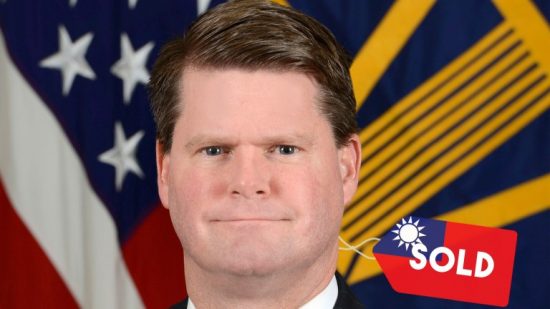
Key Pentagon Official Turned China Policy Over to Arms Industry & Taiwan Supporters October 28, 2020, The triumph of  corporate and foreign interests over one of the most consequential decisions regarding China is likely to bedevil U.S. foreign policy for
  years to come, writes Gareth Porter. https://consortiumnews.com/2020/10/28/key-pentagon-official-turned-china-policy-over-to-arms-industry-taiwan-supporters/ By Gareth Porter
The Grayzone
When the United States finalized a set of seven arms sales packages to Taiwan in August, including 66 upgraded F-16 fighter planes and longer-range air-to-ground missiles that could hit sensitive targets on mainland China, it shifted U.S. policy sharply toward a much more aggressive stance on the geo-strategic island at the heart of military tensions between the United States and China.
Branded “Fortress Taiwan” by the Pentagon, the ambitious arms deal was engineered by Randall Schriver, a veteran pro-Taiwan activist and anti-China hardliner whose think tank had been financed by America’s biggest arms contractors and by the Taiwan government itself.
Since assuming the post of assistant secretary of defense for Asian and Pacific security affairs in early 2018, Schriver has focused primarily on granting his major arms company patrons the vaunted arms deals they had sought for years.
The arms sales Schriver has overseen represent the most dangerous U.S. escalation against China in years. The weapons systems will give Taiwan the capability to strike Chinese military and civilian targets far inland, thus emboldening those determined to push for independence from China.
Although no U.S. administration has committed to defending Taiwan since Washington normalized relations with China, the Pentagon is developing the weapons systems and military strategy it would need for a full-scale war. If a conflict breaks out, Taiwan is likely to be at its center.
Returning Favors
Schriver is a longtime advocate of massive, highly provocative arms sales to Taiwan who has advanced the demand that the territory be treated more like a sovereign, independent state. His lobbying has been propelled by financial support from major arms contractors and Taiwan through two institutional bases: a consulting business and a “think tank” that also led the charge for arms sales to U.S. allies in East Asia.
The first of these outfits was a consulting firm called Armitage International, which Schriver founded in 2005 with Richard Armitage, a senior Pentagon and State Department official in the Reagan and George W. Bush administrations.
Schriver had served as Armitage’s chief of staff in the State Department and then as deputy sssistant secretary of state for East Asian and Pacific affairs. (Armitage, a lifelong Republican, recently released a video endorsement of Joseph Biden for president).
As a partner in Armitage International, Schriver was paid consulting fees by two major arms contractors — Boeing and Raytheon — both of which hoped to obtain arms sales to Taiwan and other East Asian allies to compensate for declining profits from Pentagon contracts.
Schriver started a second national-security venture in 2008 as president and CEO of a new lobbying front called The Project 2049 Institute, where Armitage served as chairman of the board. The name of the new institution referred to the date by which some anti-China hawks believed China intended to achieve global domination.
From its inception, The Project 2049 Institute focused primarily on U.S. military cooperation with Northeast Asian allies — and Taiwan in particular — with an emphasis on selling them more and better U.S. arms.
Schriver, known as the Taiwan government’s main ally in Washington, became the key interlocutor for major U.S. arms makers looking to cash in potential markets in Taiwan. He was able to solicit financial support for the institute from Lockheed Martin, General Atomics, BAE and Raytheon, according to Project 2049’s internet site, which provides no figures on the amounts given by each prior to 2017.
Equally important, however, is The Project 2049 Institute’s heavy dependence on grants from the government of Taiwan. The most recent annual report of the institute shows that more than a third of its funding in 2017 came either directly from the Taiwan government or a quasi-official organization representing its national security institutions.
Project 2049 received a total of $280,000 from the Taiwan Ministry of Defense and Taiwan’s unofficial diplomatic office in Washington (TECRO) as well as $60,000 from the “Prospect Foundation,” whose officers are all former top national-security officials of Taiwan. In 2017, another $252,000 in support for Schriver’s institute came from the State Department, at a time when it was taking an especially aggressive public anti-China line.
By creating a non-profit “think tank,” Schriver and Armitage had found a way to skirt rules aimed at minimizing conflicts of interest in the executive branch.
The Executive Order 13770 issued by President Donald Trump in early 2017 that was supposed to tighten restrictions on conflicts of interest barred Schriver from participation for a period of two years “in any particular matter that is directly and substantially related to my former employer or former clients….”
However, the financial support for Project 2049 from Boeing, Lockheed-Martin, General Atomics, Northrop Grumman and Raytheon, and from Taiwanese official and quasi-official bodies were considered as outside that prohibition, because they were not technically “clients.”
Big Wins for Supporters
Brought into the Pentagon at the beginning 2018 to push China policy toward a more confrontational stance, Schriver spent 2018 and the first half of 2019 moving proposals for several major arms sales to Taiwan — including the new F-16s and the air-to-ground missiles capable of hitting sensitive targets in China — through inter-agency consultations.
He secured White House approval for the arms packages and Congress was informally notified in August 2019, however, Congress was not notified of the decision until August 2020. That was because Trump was engaged in serious trade negotiations with China and wanted to avoid unnecessary provocation to Beijing.
Lockheed Martin was the biggest corporate winner in the huge and expensive suite of arms sales to Taiwan. It reaped the largest single package of the series: a 10-year, $8 billion deal for which it was the “principal contractor” to provide 66 of its own F-16 fighters to Taiwan, along with the accompanying engines, radars and other electronic warfare equipment.
The seven major arms sales packages included big wins for other corporate supporters as well: Boeing’s AGM-84E Standoff Land Attack Missile (SLAM), which could be fired by the F-16s and hit sensitive military and even economic targets in China’s Nanjing region, and sea-surveillance drones from General Atomics.
In February 2020, shortly after Schriver left the Pentagon, the Taiwanese President Tsai Ing-wen received the lobbyist in her office in Taipei and publicly thanked him for having “facilitated the sale of F-16V fighter jets to Taiwan and attached great importance to the role and status of Taiwan in the Indo-Pacific region.” It was an extraordinary expression of a foreign government’s gratitude for a U.S. official’s service to its interests.
Having delivered the goods for the big military contractors and the Taiwan government, Schriver returned to The Project 2049 Institute, replacing Armitage as chairman of the board.
Neocon Vision
The arms sales to Taiwan represented a signal victory for those who still hoping to reverse the official U.S. acceptance the People’s Republic of China as the legitimate government of all of China.
Ever since the 1982 U.S.-China Joint Communique, in which the United States vowed that it had “no intention of interfering in China’s internal affairs or pursuing a policy of “two China’s” or “one China, one Taiwan,” anti-China hardliners who opposed that concession have insisted on making the 1979 Taiwan Relations Act, which called for the United States to sell Taiwan such arms “as may be necessary to enable Taiwan to maintain a sufficient self-defense capability” as keystone of U.S. Taiwan policy.
The neoconservative Project for a New American Century (PNAC) led by William Kristol and Robert Kagan wanted to go even further; it pushed for the United States to restore its early Cold War commitment to defend Taiwan from any Chinese military assault.
Thus a 1999 PNAC statement called on the United States to “declare unambiguously that it will come to Taiwan’s defense in the event of an attack or a blockade against Taiwan, including against the offshore islands of Matsu and Kinmen.”
After leaving the World Bank in 2008 amidst a scandal involving his girlfriend, Paul Wolfowitz – the author of that 1999 statement on East Asia – turned his attention to protecting Taiwan.
Despite the absence of any business interest he was known to have in Taiwan, Wolfowitz was chairman of the board of the U.S.-Taiwan Business Council from 2008 to 2018. The Project 2049 Institute was a key member of the council, along with all the major arms companies hoping to make sales to Taiwan.
During the first days of Wolfowitz’s chairmanship, the U.S.-China Business Council published a lengthy study warning of a deteriorating air power balance between China and Taiwan. The study was obviously written under the auspices of one or more of the major arms companies who were members, but it was attributed only to “the Council’s membership” and to “several outside experts” whom it did not name.
The study criticized both the George W. Bush and Obama administrations for refusing to provide the latest F-16 models to Taiwan, warning that U.S. forces would be forced to defend the island directly if the jets were not immediately supplied. It also called for providing Taiwan with land-attack cruise missiles capable of hitting some of the most sensitive military and civilian targets in the Nanjing province that lay opposite Taiwan.
The delicacy of the political-diplomatic situation regarding Taiwan’s status, and the reality of China’s ability to reunify the country if it chooses to do so has deterred every administration since George H.W. Bush sold 150 F-16 fighter jets to Taiwan. That was, until Shriver’s provocative “Fortress Taiwan” sale went through.
The triumph of corporate and foreign interests in determining one of the most consequential U.S. decisions regarding China is likely to bedevil U.S. policy for years to come. At a moment when the Pentagon is pushing a rearmament program based mainly on preparation for war with China, an influential former official backed by arms industry and Taiwanese money has helped set the stage for a potentially catastrophic confrontation.
Gareth Porter is an independent investigative journalist who has covered national security policy since 2005 and was the recipient of Gellhorn Prize for Journalism in 2012. His most recent book is The CIA Insider’s Guide to the Iran Crisis, co-authored with John Kiriakou, just published in February.
This article is from The Grayzone
China rejects reports of hitch in investment pact talks with EU
Negotiations have stalled at the last stretch because China is raising additional demands on nuclear energy, German magazine WirtschaftsWoche reported on Wednesday.
“As I understand, talks are goings smoothly,” Chinese foreign ministry spokesman Wang Wenbin told a news briefing on Thursday.
“The news about talks being stuck because China has put up more requests about nuclear energy is fake,” Wang said.
He did not deny or confirm that China had made fresh demands on nuclear energy investment.
South Korea: mayors and governors of all 17 major cities and provinces call on Japan not to dump Fukushima radioactive water into the ocean
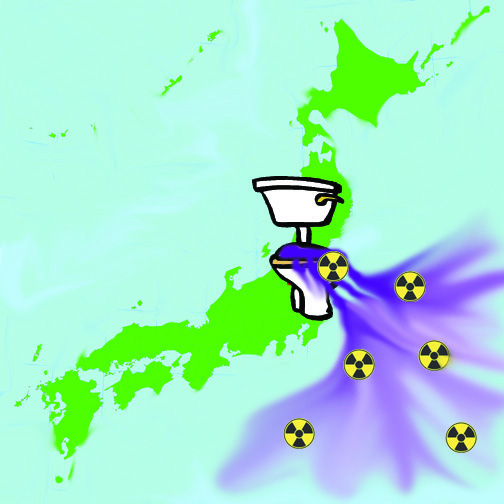
Korea JoongAng Daily 22nd Dec 2020, The mayors and governors of all 17 major cities and provinces in Korea adopted a joint statement warning against Japan releasing contaminated water into the ocean from its crippled Fukushima nuclear power plant. In a joint statement Tuesday, the Governors Association of Korea, which includes cities that are administered as provinces, called on the Japanese government to “immediately halt discussions to release the radioactive water from Fukushima” and to “share information to the public in a transparent manner.”
The governors’ statement comes as Japan is nearing a decision on plans to release over 1.2 million tons of contaminated water
from the Fukushima Daiichi nuclear plant into the Pacific Ocean.
https://koreajoongangdaily.joins.com/2020/12/22/national/socialAffairs/Fukushima-nuclear-plant-radioactive-water/20201222180600475.html
Chinese demands on nuclear power investment complicate EU talks
Chinese demands on nuclear power investment complicate EU talks – WiWo, Reuters Staff BERLIN (Reuters) 23 De 20, – Negotiations between the European Union and China on an investment agreement have stoche reported on Wednesday.
The issue of nuclear power is controversial among EU countries because such invealled at the last stretch because China is raising additional demands on nuclear energy, German magazine WirtschaftsWstments could put sensitive infrastructure under Chinese control.
“China wants to invest in European nuclear power plants and use Chinese technology in this area,” WirtschaftsWoche cited EU sources as saying.
During the negotiations, China had indicated to its European counterparts that it viewed its own technology in this field as more advanced, the report said
|
Several EU member states reject nuclear energy or have decided to withdraw from the technology within the next few years.
The EU and China aim to reach an investment accord by the end of the year that would grant European companies greater access to the Chinese market, according to German and EU officials.
The EU-China Comprehensive Agreement on Investment would put most EU companies on an equal footing in China, potentially a big step in repairing Sino-European ties after the coronavirus outbreak in China and Beijing’s crackdown on dissent in the former British colony of Hong
|
|
|
Iran nuclear deal: ‘Heated rhetoric and the heightened risk of miscalculation’ widen differences
The JCPOA was signed by Iran alongside the European Union and five permanent members of the Security Council: China, France, Russia, the United Kingdom, and the United States. However, Washington withdrew in May 2018.
Ms. DiCarlo noted that recent years have been characterized by “attacks on critical infrastructure, heated rhetoric and heightened risk of miscalculation.
“Such actions deepen the differences related to the Plan and render efforts to address other regional conflicts more difficult”, she said. “We call on all concerned to avoid any actions that may result in further escalation of tensions.”
Withdrawal and reduced commitments
Ms. DiCarlo described the move as contrary to the goals of the JCPOA and Security Council Resolution 2231 on its implementation.
“We regret the steps taken by the United States when it withdrew from the Plan, as well as the steps taken by Iran to reduce some of its nuclear-related commitments under the Plan”, she told ambassadors.
The JCPOA guarantees that the UN-backed international nuclear watchdog, the International Atomic Energy Agency (IAEA), will have regular access to sites in Iran and information about its nuclear programme.
While the country had complied with some provisions, the IAEA reported it had surpassed stipulated limits for enriched uranium, a critical component in nuclear power generation.
Iran nuclear deal: a summary
- What is the Iran nuclear deal? The 2015 “Joint Comprehensive Plan of Action” (JCPOA), sets out rules for monitoring Iran’s nuclear programme, and paves the way for the lifting of UN sanctions.
- Which countries are involved? Iran, the five members of the Security Council (China, France, Russia, UK, US), plus Germany, together with the European Union.
- What is the UN’s involvement? A UN Security Council resolution to ensure the enforcement of the JCPOA, and guarantee that the UN’s atomic energy agency, the IAEA, continues to have regular access to and more information on Iran’s nuclear programme, was adopted in 2015.
- Why is the deal at risk? The current US Administration pulled out of the deal in 2018 and re-imposed sanctions. In July 2019, Iran reportedly breached its uranium stockpile limit, and announced its intention to continue enriching uranium, posing a more serious proliferation risk. https://news.un.org/en/story/2020/12/1080592
World powers renew commitment to preserve Iran nuclear deal
Remaining parties to landmark 2015 deal reaffirm commitment as Iran’s nuclear programme’s chief slams a Parliament bill. Aljazeera, Maziar Motamedi, 21 Dec 2020, Tehran, Iran – The remaining parties to a landmark nuclear deal they signed with Iran in 2015 have renewed their commitment to preserving the accord in an online meeting.
The foreign ministers of Iran, Germany, France, the United Kingdom, China and Russia participated in a two-hour meeting chaired by the European Union’s foreign policy chief, Josep Borrell, on Monday.
In a tweet before the meeting, Borrell said the aim is to “re-emphasise our commitment to preserve” the Joint Comprehensive Plan of Action (JCPOA), as the nuclear deal is formally known.
A joint statement following the meeting said the ministers “discussed that full and effective implementation of the JCPOA by all remains crucial and discussed the need to address ongoing implementation challenges, including on nuclear non-proliferation and sanctions lifting commitments”.
The foreign ministers recognised the deal, enshrined in Resolution 2231 of the United Nations Security Council, as a “key element” in the global non-proliferation regime and a diplomatic achievement contributing to regional and international peace……..
US President-elect Joe Biden has promised to bring his country back into the deal and lift sanctions but has hinted that more negotiations are needed on Iran’s missiles programme and regional influence.
The European signatories of the nuclear deal have also made similar remarks, but Iran has categorically rejected any further negotiations, saying the nuclear deal must be implemented as negotiated and signed in 2015…………….. https://www.aljazeera.com/news/2020/12/21/world-powers-renew-commitment-to-preserve-iran-nuclear-deal
West yet to condemn Iranian nuclear scientist’s assassination
|
West yet to condemn Iranian nuclear scientist’s assassination Friday, 18 December 2020 Robert Inlakesh. Press TV, London
In the wake of the Israeli assassination of Iran’s top scientist, Mohsen Fakhrizadeh, Western governments and media are yet to actively condemn the terrorist attack which took place in Tehran. Many analysts speculate that the respective actions of the media have acted to exacerbate regional tensions, rather than de-escalate the situation following the Israeli aggression against Iran. Following the Israeli regime-sponsored terrorist attack on Iranian soil, what has been dubbed as psychological warfare has also been a tool used to attack Iran. With claims spread throughout the international press, regarding an alleged killing of an Iranian Quds Force commander along the Iraq-Syria border area; An unsubstantiated claim but published nonetheless………. For long Israeli strikes conducted against sovereign nations have gone under reported and have skipped condemnation from Western nations, sparking the criticism that the international community operates on double-standards. https://www.presstv.com/Detail/2020/12/18/641027/Israeli-psychological-as-well-as-physical-warfare-against-Iran |
|
European Leadership Network appeals to nuclear weapons States to reduce nuclear risks
Group statement | 14 December 2020
European Leadership Network ELN Group Statement: Appeal for P5 states to reduce nuclear weapons risks.
Over the past decade, geopolitical relations among the major powers have deteriorated and the threshold of nuclear use has lowered due to the near-total erosion of arms control, the modernisation of nuclear arsenals in all P5 states as well as a move, by some P5 states, to include “limited nuclear use” in their national security strategies. These developments, and the fiftieth anniversary of the Nuclear Non-Proliferation Treaty’s entry-into-force, are stark reminders of the risks stemming from nuclear weapons.
Against this strained security environment, the ELN has issued a group statement, signed by 140 security experts from 30 countries, calling upon the five recognised nuclear-weapon states by the Nuclear Non-Proliferation Treaty (NPT) – China, France, Russia, the United Kingdom, the United States (the P5) – to launch a sustained, open-ended and regular panel on strategic risk reduction.
Full statement reproduced below……….. (Many signatories from many States ) https://www.europeanleadershipnetwork.org/group-statement/eln-group-statement-appeal-for-p5-states-to-reduce-nuclear-weapons-risks/
Iran’s Rouhani: No conditions or negotiations on nuclear deal
Iran’s Rouhani: No conditions or negotiations on nuclear deal
The US tried to include Iran’s missile programme and regional issues in the original nuclear deal but it is non-negotiable, president says. Aljazeera, By Maziar Motamedi, 14 Dec 2020, Tehran, Iran – President Hassan Rouhani said Iran will not accept any preconditions in returning to the nuclear deal it signed with world powers and will not negotiate its missiles programme or regional activities.
The United States and European powers have said in recent weeks they remain committed to revitalising the nuclear deal – formally known as the Joint Comprehensive Plan of Action (JCPOA) – which outgoing US President Donald Trump unilaterally abandoned in 2018……….. https://www.aljazeera.com/news/2020/12/14/irans-rouhani-no-conditions-or-negotiations-on-nuclear-deal
Iran clearly wants to maintain the Joint Comprehensive Plan of Action (JCPOA)
|
Iran will not accept new nuclear deal: MP, Tehran Times December 13, 2020 “Iran’s position on the JCPOA is quite clear. There is a consensus in the establishment in its entirety on the nuclear deal that Iran demands that all JCPOA parties should return to the deal and implement it unconditionally,” the lawmaker said, according to the Parliament’s news agency ICANA.
Rahimi Jahanabadi also referred to the upcoming meeting of the JCPOA Joint Commission, which is scheduled to be held on Wednesday, saying that during the meeting the two issues should be discussed. “It is expected that Mr. Araghchi, as Iran’s representative, underlines two issues in the JCPOA Joint Commission meeting. First of all, he should reiterate that the JCPOA is the best deal. Second, Iran will not accept a new deal and negotiations,” the lawmaker said, adding that Iran should tell the 4+1 that it will return to its past activities if the Westerners fail to implement their commitments. 4+1 refers to France, Britain, Russia and China as four permanent members of the UN Security Council plus Germany. First it was referred to as 5+1, before Donald Trump withdrew the U.S. from the multilateral agreement. On Saturday, Seyed Abbas Araghchi, the deputy foreign minister of Iran for political affairs, announced in a statement that the Joint Commission will hold a meeting at the level of deputy ministers and political directors. The meeting will be held via videoconference. Araghchi said he will represent Iran in the meeting……… https://www.tehrantimes.com/news/455734/Iran-will-not-accept-new-nuclear-deal-MP |
|
|
Iran’s President Rouhani ready to restore the nuclear deal
Rouhani: ‘No negotiations’ needed to restore Iran nuclear deal https://www.aljazeera.com/news/2020/12/9/iran-rouhani-no-negotiations-on-nuclear-deal
President Rouhani says Iran will return to its commitments that were part of the deal if other signatories do the same. By
Maziar Motamedi, 9 Dec 2020, Tehran, Iran – Iran’s nuclear deal can be restored without negotiations despite recent escalations following the assassination of a top nuclear scientist, Iran’s President Hassan Rouhani has told world powers.
Rouhani said United States President Donald Trump “scribbled on a piece of paper” in May 2018, unilaterally withdrawing from the nuclear deal.
“The next person can put up a nice piece of paper and sign it and it just needs a signature, we’ll be back where we were. Ittakes no time and needs no negotiations,” Rouhani said in a televised cabinet speech on Wednesday.
“And it’s not just about the US. The P4+1 can return to all their commitments and we will do the same,” he said in reference to France, Germany, the United Kingdom, China, and Russia, the other signatories of the nuclear deal.
US President-elect Joe Biden and Europe have signalled that while they wish to restore the nuclear deal, they believe it needs to be renegotiated and extended.
Exactly a year after the US pulled out of the landmark deal and imposed harsh sanctions on Iran, Tehran gradually scaled back its commitments under the deal in five steps that it said are reversible.
Following the assassination of nuclear scientist Mohsen Fakhrizadeh outside Tehran last month, the Iranian parliament, dominated by conservatives and hardliners, quickly passed a bill that aims to increase uranium enrichment and expel inspectors of the International Atomic Energy Agency.
The Rouhani administration has explicitly said it opposes the legislation and was not consulted in its drafting.
Rouhani said all the new advanced centrifuges that are being installed at the Natanz underground nuclear facilities can be switched off once all the signatories of the nuclear deal start fully implementing their commitments.
Earlier this week, France, Germany and the UK – together known as the E3 – issued a joint statement saying Iran’s plans for a further reduction of nuclear commitments are “deeply worrying” and go against the spirit of the accord.
Significant problems for UK’s Trident nuclear deterrent ,if U.S. Congress refuses to fund a next-generation warhead.
   Guardian 8th Dec 2020, Britain’s most senior defence official admitted there would be “very significant implications” for the future of the Trident nuclear deterrent if Democrats in the US Congress refused to fund a next-generation warhead. Sir Stephen Lovegrove, permanent secretary at the Ministry of Defence, saidthat the UK was monitoring the US standoff closely but could not say what impact a refusal to start work on the new W93 warhead would have – or how many billions it would cost. Guardian 8th Dec 2020, Britain’s most senior defence official admitted there would be “very significant implications” for the future of the Trident nuclear deterrent if Democrats in the US Congress refused to fund a next-generation warhead. Sir Stephen Lovegrove, permanent secretary at the Ministry of Defence, saidthat the UK was monitoring the US standoff closely but could not say what impact a refusal to start work on the new W93 warhead would have – or how many billions it would cost.British politicians and officials have, until now, had little to say about the long-running US row over the W93, crudely estimated to be twice as explosive as the ageing Trident warhead now usedby the UK. Prior to the US presidential election, Democrats in the House ofRepresentatives had refused to fund a $53m (£40m) development programme for the first year of the W93 despite lobbying from both the White House and the UK.
|
Russian Ambassador to U.S. Sees Hope for Nuclear Arms Treaty Extension
He said several times during the forum that the Kremlin has been pushing the White House on an extension of its terms but has not received a formal answer.
The whole world depends on the United States-Russia relationship.”
On START, he added, “we need time to work out new security agreements” that cover a range of issues from missile defense, intermediate-range missiles, hypersonics and potential space weapons. For this reason, Russia has offered to extend the treaty’s term for up to five years “without pre-conditions.”
The United States wants China to be part of any new START negotiations, but Antonov said Beijing is “not happy with such an invitation.” The ambassador said Moscow wants the United Kingdom and France, both nuclear powers and NATO members, to be involved if the talks are broadened……. https://news.usni.org/2020/12/07/russian-ambassador-to-u-s-sees-hope-for-nuclear-arms-treaty-extension
1 This Month
26 September – International Day for the Total Elimination of Nuclear Weapons





PLEASE OPPOSE HR 8255 AND S.3639 – bills would accelerate satellite deployment, with no environmental review or safeguards – https://ncstd5li.quorum.us/campaign/169331/
To see nuclear-related stories in greater depth and intensity – go to https://nuclearinformation.wordpress.com
-
Archives
- September 2026 (281)
- August 2026 (330)
- July 2026 (355)
- June 2026 (287)
- May 2026 (306)
- April 2026 (356)
- March 2026 (251)
- February 2026 (267)
- January 2026 (308)
- December 2025 (358)
- November 2025 (359)
- October 2025 (375)
-
Categories
- 1
- 1 NUCLEAR ISSUES
- business and costs
- climate change
- culture and arts
- ENERGY
- environment
- health
- history
- indigenous issues
- Legal
- marketing of nuclear
- media
- opposition to nuclear
- PERSONAL STORIES
- politics
- politics international
- Religion and ethics
- safety
- secrets,lies and civil liberties
- spinbuster
- technology
- Uranium
- wastes
- weapons and war
- Women
- 2 WORLD
- ACTION
- AFRICA
- Atrocities
- AUSTRALIA
- Christina's notes
- Christina's themes
- culture and arts
- Events
- Fuk 2022
- Fuk 2023
- Fukushima 2017
- Fukushima 2018
- fukushima 2019
- Fukushima 2020
- Fukushima 2021
- general
- global warming
- Humour (God we need it)
- Nuclear
- RARE EARTHS
- Reference
- resources – print
- Resources -audiovicual
- Weekly Newsletter
- World
- World Nuclear
- YouTube
-
RSS
Entries RSS
Comments RSS

