Trump administration pulls out of Open Skies treaty with Russia,
|
Trump administration pulls out of Open Skies treaty with Russia, THe Hill, BY DOMINICK MASTRANGELO – 11/22/20 The Trump administration has officially withdrawn from the Open Skies treaty, six months after starting the process to leave.“On May 22, 2020, the United States exercised its right pursuant to paragraph 2 of Article XV of the Treaty on Open Skies by providing notice to the Treaty Depositaries and to all States Parties of its decision to withdraw from the Treaty, effective six months from the notification date,” State Department deputy spokesman Cale Brown said in a statement.
“Six months having elapsed, the U.S. withdrawal took effect on November 22, 2020, and the United States is no longer a State Party to the Treaty on Open Skies,” Brown added. The post-Cold War agreement was struck to allow nations to conduct flyovers of other allies in an attempt to collect military data and other intelligence on neighboring foreign enemies. In a statement issued on Sunday, Sen. Bob Menendez (D-N.J.) called the administration’s withdrawal “reckless” and encouraged President-elect Joe Biden‘s administration to rejoin the pact once he is inaugurated. ………. https://thehill.com/homenews/administration/527056-us-withdraws-from-open-skies-treaty-with-russia |
|
Iran slams European criticism on expanding nuclear programme
Iran slams European criticism on expanding nuclear programme https://www.aljazeera.com/news/2020/11/21/iran-slams-european-statement-on-expanding-nuclear-programme
Tehran says European concern is unwarranted since nations involved are not fully committed to the nuclear deal.
Iran’s nuclear water reactor of Arak, south of the capital Tehran [File: Atomic Energy Organization of Iran via AFP]
By Maziar Motamedi 21 Nov 2020
Tehran, Iran – Iran has condemned a statement by three European powers expressing concern over its scaling back of commitments under the landmark 2015 nuclear deal. In a statement on Saturday, the Iranian foreign ministry’s spokesman called a statement by France, Germany, and the United Kingdom – together known as the E3 – “irresponsible”.
Iran slams UN human rights resolution on anniversary of protestsIran urges US’s Biden to lift sanctions, rejoin nuclear dealIran nuclear deal parties meet in Vienna amid US pressureIran nuclear deal 5 years on: Uncertainty after US withdrawal
Saeed Khatibzadeh called on the E3 to fulfil its commitments under the Joint Comprehensive Plan of Action (JCPOA), the 2015 nuclear deal signed between Iran and world powers that put curbs on Iran’s nuclear programme in exchange for the lifting of multilateral sanctions.
“The peaceful nuclear activities of the Islamic Republic of Iran are fully within the framework of international laws and completely legal and legitimate, and in line with countries’ intrinsic legal rights,” Khatibzadeh said in a statement.
However, the three countries said they “continue to be extremely concerned by Iran’s actions, which are hollowing out the core nonproliferation benefits of the deal”.
After remaining committed to the nuclear deal for one year under new US sanctions, Iran started gradually scaling back its commitments in moves it said are quickly reversible.
But the European powers said they are concerned about Iran enriching uranium above the 3.67 percent threshold set in the
“Contrary to the JCPOA, Iran is using advanced centrifuges for the production of low-enriched uranium,” the E3 said, adding
The E3 also expressed concern over Iranian research and development of several types of advanced centrifuges and feeding uranium hexafluoride to its IR2m cascade of centrifuges.
In his statement, Khatibzadeh said Iran is acting based on provisions of the nuclear deal in scaling back its commitments
“This is completely in line with the JCPOA and Iran has always stressed that if other parties fully implement the JCPOA,
Saudi minister says nuclear armament against Iran ‘an option’
|
Saudi minister says nuclear armament against Iran ‘an option’
Saudi Arabia reserves the right to arm itself with nuclear weapons if Iran cannot be stopped from making one, says the minister. Aljazeera, 7 Nov 2020 Saudi Arabia reserves the right to arm itself with nuclear weapons if regional rival Iran cannot be stopped from making one, the kingdom’s minister of state for foreign affairs has said. “It’s definitely an option,” Adel al-Jubeir told the DPA news agency in a recent interview. If Iran becomes a nuclear power, he said, more countries would follow suit……. https://www.aljazeera.com/news/2020/11/17/saudi-minister-wont-rule-out-nuclear-armament-over-iran |
|
European security officials fear that Trump may trigger a war against Iran
 Security officials worry Israel and Saudi Arabia may see the end of Trump as their last chance to go to war with Iran, MSN insider@insider.com (Mitch Prothero) 18 Nov 20,
-
- European security officials are worried that outgoing president Donald Trump will trigger a military conflict with Iran in order to tie President-Elect Joe Biden’s hands, sources tell Insider.
- They also fear that Israel and Saudi Arabia may see the departure of Trump as a ticking clock they need to beat.
-
- “Both countries are run by immature leaders who have been screaming about the need for war with Iran for so long it’s possible they really believe that a Biden administration will be followed by an Iranian nuclear attack,” one source told Insider.
- Trump has elevated hardliners on Iran inside the Pentagon.
-
-
- European intelligence officials are alarmed about the possibility of military action towards Iran in the waning days of the Trump administration.
Concern that Trump — who has pushed for
-
- — or a combination of Israel or Saudi Arabia creating a military confrontation in the waning days of the administration has been a concern for over a week, according to three European intelligence officials who spoke with Insider.
The news that last week the president requested a list of military options from his military and diplomatic advisors has
sent these concerns into overdrive.
One fear is of unilateral action by the US to force a military clash that might make it impossible for the incoming Biden
Israel conducted a series of attacks in Iran over the summer, in the knowledge that Trump was sympathetic to a
“maximum pressure” strategy.
The fears were underlined last week, in the wake of Trump’s election defeat, when the president replaced much of
hardliners on Iran. That inflamed worries among both Democrats and European allies, said all three sources.
Biden — who enters office on Jan 21, 2021 — has not expressed any solid policy positions on Iran except to
Security officials say the US will be a ‘crippled world power’ until Biden takes over and fear Trump will declassify intelligence that will help Putin
Israel keeps blowing up military targets in Iran, hoping to force a confrontation before Trump can be voted out in November.
Russia and the United States Nuclear Industry
Trump’s Impact on Nuclear Proliferation, Treating Foreign Policy as a Business, Just Security, by Tamsin Shaw, November 18, 2020 “…………….Russia and the United States Nuclear Industry
It’s only relatively recently that the public and private U.S. institutions have begun to examine seriously the intricate financial network that lies behind and links Russian nuclear business dealings in the United States. Public perception of these dealings has been dominated by the false Uranium One conspiracy theory. This distraction has diverted attention from the extent to which Russia has established a strong foothold in the US nuclear industry in a way that suggests an aspiration to vertical control.
The grain of truth in the Uranium One story is that in 2010 Canadian company Uranium One, which was responsible for mining 20% of the currently licensed uranium in the United States, made an agreement with JSC Atomredmetzoloto, or ARMZ, the mining arm of Rosatom, giving them a controlling stake (51%). In 2013 Rosatom acquired full ownership. Uranium One continues to mine approximately 10% of that licensed in-situ uranium.
The United States also relies, both for civilian utilities and defense purposes, on nuclear fuel supplied by Russian subsidiary of Rosatom called Techsnabexport (TENEX). No U.S. uranium enrichment facilities are currently in operation. The U.S. company, Centrus has a new centrifuge design but it will likely be over a decade before it goes into action.
Nor does the United States currently have a company that builds commercial nuclear reactors. The only U.S. company now aiming to construct them is Bill Gates’s TerraPower, which is working on what will likely be the next generation of reactors, small modular reactors (SMRs), but again these won’t be commercially viable for a decade. Commercial nuclear reactors were previously designed and built by US company Westinghouse. But on March 24, 2017, Westinghouse declared Chapter 11 bankruptcy. The sale of that company naturally has serious national security implications. But the story of the sale and of the role that the Trump administration played in it raises many questions.
Trump’s friend and adviser, Tom Barrack, seized on the opportunity presented by the Westinghouse bankruptcy to put together a new version of the Marshall Plan for the Middle East, producing his own document setting out the details. In his March 2017 white paper, Barrack refers to the plan interchangeably as the “Trump Marshall Plan” and the “Trump Plan.” The July 2019 House Oversight and Reform Committee report details the ambitious deal Barrack tried to put together to purchase Westinghouse. Barrack had permission from the highest levels at the White House for a US-led consortium involving Colony Capital, IP3, and financial firms Blackstone and Apollo. Barrack assured Blackstone CEO Steve Schwartzman,
Our GCC [Gulf Cooperation Council] allies in Saudi Arabia and the UAE have committed to invest in the Westinghouse acquisition and are willing to concurrently lock in Westinghouse as the primary partner on the 30+ reactors expected to be constructed in their countries in the coming decade.
IP3 officials were very optimistic. President Trump and Jared Kushner had met with MBS on March 14, and IP3 boasted that this meeting prepared the way for a “partnership to acquire Westinghouse between IP3 and Saudi Arabia.” They eagerly arranged meetings with officials in the administration to promote the plan, including then-CIA Director Mike Pompeo, Director of the National Economic Council Gary Cohn, and top National Security Council (NSC) Staff officials. They also briefed Jared Kushner.
But in January, 2018 it was announced that Canadian company, Brookfield Business Partners, a subsidiary of investing giant Brookfield Asset Management, would purchase Westinghouse. And Westinghouse promptly and unilaterally decided to sever ties with IP3. ProPublica discovered that Kushner was the one who prevented the IP3-led deal from happening, reporting that Kushner “wanted to table the nuclear question in favor of simpler alliance-building measures with the Saudis, centered on Trump’s visit in May, according to a person familiar with the discussions.”
The Westinghouse sale went through on August 1, 2018. Three days later it was announced that Brookfield Properties, another subsidiary of Brookfield Asset Management that had just purchased Westinghouse, would buy Jared Kushner out of his catastrophic real estate deal involving 666 Fifth Avenue.
Who Owns Westinghouse?
The Westinghouse purchase was naturally considered an extremely sensitive deal, deserving scrutiny by the Committee on Foreign Investment in the United States (CFIUS), which at the time included Steve Mnuchin, Rex Tillerson, Jeff Sessions, Wilbur Ross and Dan Coats. The committee approved the transaction but with a Nuclear Regulatory Committee (NRC) Requirements Notice forbidding transfer of their licenses and insisting on compliance with all applicable statutory and regulatory requirements. But the NRC filing submitted to CFIUS is fairly thin. It tells us that Westinghouse would be “ultimately controlled” by Brookfield Asset Management, but little about the money behind the deal. According to their 2018 20-F annual report, BBU acquired 44% of the company, while having a 100% voting interest, having put in $405m of equity totaling $920m, with the balance coming from “institutional partners.” The rest of the purchase price was funded with approximately $3b of long-term debt financing. The sources of the equity and financing aren’t disclosed.
Immediately prior to the Westinghouse sale, prominent foreign policy experts Thomas Duesterberg and William Schneider wrote an article expressing serious concerns about the opacity………….https://www.justsecurity.org/73422/trumps-impact-on-nuclear-proliferation/
Tehran’s UN ambassador says rival Saudi Arabia is looking for an excuse to build nuclear weapons and blaming Iran
In tweets in Farsi and English, Iran’s ambassador and permanent representative to the UN, Kazem Gharibabadi, said “scapegoating and fearmongering are two common and classic methods used by demagogues”………
The Iranian official’s comments come shortly after Adel al-Jubeir, the kingdom’s minister of state for foreign affairs, said Saudi Arabia reserves the right to arm itself with nuclear weapons if Iran cannot be stopped from making one.
Tehran has pursued a nuclear programme for decades but insists it only wishes to use nuclear power peacefully.
More than 10 years ago, Iranian Supreme Leader Ali Khamenei issued a fatwa – a legal or general decree in Islam by a religious authority or court and issued by a Mufti – declaring all weapons of mass destruction, including nuclear weapons, a “serious threat against humanity”.
“The Iranian nation is itself a victim of the use of chemical weapons,” Khamenei wrote in reference to the eight-year Iran-Iraq War that ended in 1988.
“It feels the threat of development and proliferation of these weapons more than other nations and is ready to use all its resources to combat it.”
In 2015, Iran signed a landmark nuclear deal with world powers that significantly curbed its nuclear programme in exchange for the lifting of multilateral sanctions.
In May 2018, US President Donald Trump unilaterally withdrew the US from the deal and imposed harsh sanctions on Iran.
After a year of remaining committed to the deal under sanctions, Iran gradually scaled back its commitments under the deal but has said it will come back to full compliance if the US does so first and lifts sanctions…….. https://www.aljazeera.com/news/2020/11/18/iran-saudi-arabia-scapegoating-its-pursuit-of-nuclear-armament
Trump’s Impact on Nuclear Proliferation, Treating Foreign Policy as a Business
Trump’s Impact on Nuclear Proliferation, Treating Foreign Policy as a Business, Just Security, by Tamsin Shaw, November 18, 2020 Donald Trump has never been known for his visionary foreign policy and yet his presidency will leave the world transformed. In an age of disinformation, the precise nature of the changes he has brought about in global affairs can be elusive, particularly when those changes have resulted from his administration’s clandestine negotiations with Russian officials and businessmen. While America has been focused on the ways in which the Kremlin interfered to support Trump in the 2016 election, too little attention has been paid to what Moscow intended to get out of a Trump presidency or indeed what they got.
From the earliest days of the campaign right up until the present day, Trump and his associates have tried to conduct foreign policy through the genre they know best: the business deal. Since they didn’t use the usual government channels for foreign affairs, unless we have official investigations we won’t know exactly what transpired in these dealings. But there is one area — nuclear energy — in which it seems clear that Russia stands to benefit from these transactions at the expense not only of US interests, but also those of Ukraine and of global nonproliferation more generally. This could present serious challenges to any attempts the Biden administration might make to reconstruct a stable nonproliferation regime.
The impetus for Trump 2016 campaign associates and Trump administration officials to make nuclear energy deals has come in large part from the interest of the Gulf states, particularly Saudi Arabia, in nuclear power. And the lure of Saudi billions has created financial incentives that have eclipsed non-proliferation concerns. ……..
An examination of two separate sets of negotiations reveals distinct forms of corruption and geopolitical risk involved in Trump associates’ nuclear energy deals. The first, led by Trump’s first National Security Advisor Michael Flynn, but also implicating other members of Trump’s inner circle, involved openly courting Russia to participate in a nuclear energy deal that would likely further Russian interests at the expense of Ukraine’s. The second, which involved an attempt to purchase nuclear company Westinghouse, was led by Trump’s close associate and former Middle East adviser, Tom Barrack. It didn’t explicitly include Russia, but it was thwarted by Jared Kushner for unknown reasons, and it now appears that Russia may have secretly been a chief beneficiary of the alternative deal that was ultimately made…….
international nuclear security has already been profoundly shaken by a few stamps of Trump’s foot. That includes his withdrawal from three international arrangements — the Joint Comprehensive Plan of Action (JCPOA) for Iran’s nuclear program, the Intermediate-Range Nuclear Forces Treaty (INF) with Russia, and the Open Skies Treaty that permitted verification of nuclear agreements — as well as his potential withdrawal from the U.S. Bilateral Agreement for Peaceful Nuclear Cooperation. These extraordinary steps have collectively transformed the nuclear landscape. In June of this year he even threatened to restart nuclear testing……..
since 2016, Trump and his team have treated the international nuclear order as if it were cheap real estate in a former Soviet republic: rich in opportunities for deals, liberatingly deficient in enforceable laws and norms. Their secret bargaining over nuclear security has compounded the damage done by Trump’s highly visible unraveling of non-proliferation agreements.
Dispensing with International Regulations
The initial efforts by members of the Trump administration to strike a lucrative nuclear deal were reportedly made by General Michael Flynn. These were detailed in a report by the House Committee on Oversight and Reform under the late Elijah Cummings, in July 2019, entitled “Corporate and Foreign Interests Behind White House Push to Transfer U.S. Nuclear Technology to Saudi Arabia.” It exposed a concerted attempt by Trump administration officials to broker nuclear power deals in the Middle East, commenting that the attempt “virtually obliterated the lines normally separating government policymaking from corporate and foreign interests.”
The Cummings report exposed several attempts by Trump associates to get Saudi financial backing for a plan that involved building nuclear power plants in a block of Middle Eastern countries deemed potentially friendly to the interests of the United States and Israel………….. https://www.justsecurity.org/73422/trumps-impact-on-nuclear-proliferation/
Iran admits breach of nuclear deal discovered by UN inspectorate
Iran admits breach of nuclear deal discovered by UN inspectorate
Iran uses advanced uranium-enriching centrifuges in underground plant in breach of 2015 nuclear agreement, Guardian, Patrick Wintour Diplomatic Editor, Thu 19 Nov 2020 Iran has admitted a further breach of the 2015 nuclear deal by firing up advanced uranium-enriching centrifuges installed at its underground plant at Natanz.
The finding was made by the UN nuclear weapons inspectorate, the International Atomic Energy Association, and confirmed by the Iranian ambassador to the IAEA.
Donald Trump last week considered but rejected a military strike on Natanz, south of Tehran and the country’s main uranium-enrichment site. But the latest move by Iran may be regarded by his administration as a provocation that changes his, or Israel’s, calculation of risk. The development comes weeks ahead of him standing down and being replaced by Joe Biden, who is committed to re-entering the nuclear deal struck under Barack Obama………..
n a lengthy interview published on Tuesday the Iranian foreign minister, Javad Zarif, clarified Iran’s approach to talks with a Biden administration. He said: “If the US implements its commitments under the UN security council resolution 2231, we will implement our commitments under the JCPoA. This can be done automatically and needs no negotiations. But if the US wants to rejoin the JCPoA then we will be ready to negotiate how the US can re-enter the deal.”
Zarif’s wording suggests that as soon as the US lifts its sanctions on Iran the country will come back into compliance with the JCPoA and stop breaching the uranium enrichment limits. But Zarif is resisting allowing the US back into the deal until it has assurances that as a JCPoA member the US will not use its right unilaterally to declare Iran in breach of the deal’s terms, and so require the UN as a whole to reimpose UN sanctions on Iran.
The tussle with America is being held against an increasingly grim backdrop of mounting deaths across Iran due to the spread of coronavirus. Health officials announced on Wednesday that a record 13,421 new patients had been identified in the previous 24 hours and a further 480 people had died. The official total death toll stands at 42,941. The spiral in new infections suggests the death toll will continue to mount. https://www.theguardian.com/world/2020/nov/18/iran-admits-breach-of-nuclear-deal-discovered-by-un-inspectorate
For Joe Biden – an early trial problem – the UN Treaty on the Prohibition of Nuclear Weapons
 The New Nuclear Weapons Ban Treaty Will Be an Early Trial for Biden, World Politics Review
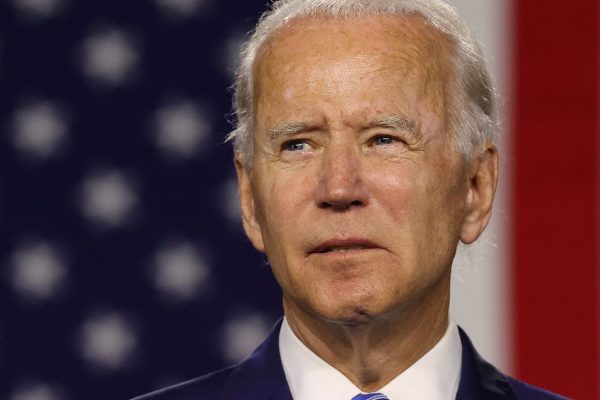 , Miles A. Pomper Wednesday, Nov. 18, 2020, With support from nearly half the world’s nations, a new United Nations treaty banning the possession and use of nuclear weapons will take effect early next year. The U.N. confirmed last month that the Treaty on the Prohibition of Nuclear Weapons, or TPNW, had been ratified by the required 50 countries. Secretary-General Antonio Guterres called it “a tribute to the survivors of nuclear explosions and tests, many of whom advocated for this treaty.”
Many non-nuclear-armed states, as well as pro-disarmament activists and organizations like the Nobel Peace Prize-winning International Campaign to Abolish Nuclear Weapons, have celebrated the agreement, which they see as a milestone in global efforts to prevent nuclear war. However, it has drawn strong opposition from nuclear-armed states, especially the five permanent members of the U.N. Security Council: Russia, China, France, the United Kingdom and the United States. The Trump administration has called on the treaty’s 84 signatories to back out of it. Its entry into force on Jan. 22, 2021, will pose a thorny diplomatic challenge for the incoming Biden administration………..
In the case of the Chemical and Biological Weapons Conventions, the major possessors of these arsenals, such as the United States and Russia, helped draft and build support for the pacts. However, the TPNW was drawn up by non-nuclear-armed states over the objections of nuclear powers. The initiative reflected the frustration of non-nuclear-weapons states with what they contended was the failure of their nuclear-armed counterparts to uphold their end of the “grand bargain” at the heart of the NPT. That bargain calls on the non-nuclear-weapon states to permanently renounce nuclear arms in exchange for access to peaceful nuclear technology and a commitment by nuclear powers to “pursue negotiations in good faith on effective measures” toward nuclear disarmament. ………
|
the treaty could pose a political problem in the future for NATO members and other countries that shelter under the U.S. nuclear umbrella, given the TPNW’s call not to support actions inconsistent with the treaty. That challenge is especially acute for the five NATO members that host an estimated 150 forward-deployed U.S nuclear weapons: Belgium, Germany, the Netherlands, Italy and Turkey. German, Dutch and Belgian disarmament advocates, in particular, enjoy strong mainstream political support among center-left parties in all three countries. And 56 former world leaders, including many from NATO countries, argued recently in an open letter that the new nuclear ban treaty can “help end decades of paralysis in disarmament.” NATO has beaten back such arguments before, most recently in the wake of Obama’s Prague speech. However, handling the TPNW and tensions within the alliance more generally will likely prove a challenge for President-elect Joe Biden, who will take office just two days before the treaty enters into force……. Another important event looms on the horizon: In August 2021, state parties to the NPT are scheduled to meet and review that treaty for the first time since the TPNW was concluded. Such conferences—which usually take place every five years, though the 2020 meeting was delayed until next year due to the COVID-19 pandemic—are always a headache for U.S. negotiators, as they provide an opportunity for the far more numerous non-nuclear-weapon states to bash Washington and other nuclear-armed states for their disarmament shortcomings, and thus of the NPT more generally. These arguments will only become more intense now that the TPNW is a legal alternative. Making progress on U.S. nonproliferation goals in this new environment, with a U.N. treaty that bans nuclear weapons, is sure to prove a tough diplomatic test of the new administration. Miles Pomper is a senior fellow at the James Martin Center for Nonproliferation Studies at the Middlebury Institute of International Studies. https://www.worldpoliticsreview.com/articles/29225/the-new-nuclear-weapons-ban-treaty-will-be-an-early-trial-for-biden |
|
Could a mad, unhinged US president, push the nuclear button?
 Could a mad, unhinged US president, push the nuclear button? From JFK and the Cuban crisis, to Nixon and Watergate, to now: the sum of all fears, is still carried in a suitcase, By DAVE MAKICHUK, NOVEMBER 19, 2020 “I had no idea we had so many weapons … what do we need them for?”
— A stunned President Bush, after his first briefing on US nuclear forces
It is the elephant in the room.
And it is a very big elephant, and, a very big room.
We are living in a very surreal time, that much we know. Officials would even say, challenging — I would even say, it’s a bit worse than that.
We have a US president who still believes he won the election, despite the fact he clearly lost.
Yet, there isn’t one iota of evidence to back up President Trump’s claims.
He is, without question, angry, in denial and — most importantly — vengeful to those who served him, whom he thinks
All in all, it paints a picture of a man, who only cares about himself …. not the will of the people, not the country, and
The exact opposite, in fact, of one President John F. Kennedy, who, after a meeting with the Joint Chiefs during the
Iran moderates hail Biden win, but any nuclear talks expected to be fraught
|
Iran moderates hail Biden win, but any nuclear talks expected to be fraught, France24, Bahar MAKOOI, 16 Nov 20,
Six months before the Iranian presidential election, Joe Biden’s victory in the US could influence the vote in Iran, where hopes to resume negotiations on the nuclear deal have prompted enthusiasm from moderates and even some hardliners. However, analysts expect that any future talks would be vexed.
Iranians eagerly awaited the presidential results on November 3. After four years of the Trump administration’s “maximum pressure” policies, Biden’s victory could pave the way for more emollient approach on both sides. In theory, that would put the lifting of US sanctions on the cards.
Biden has promised a “credible path back to diplomacy” with Tehran once he enters the White House in January. He said he wanted to return to the 2015 deal signed by his then boss, Barack Obama, but as a “starting point for follow-on negotiations” and on the condition that Iran follows its strictures closely. In Iran, many believe that Biden’s win will have consequences for the future of their country, which will elect a new president in May as incumbent Hassan Rouhani reaches his term limit. Analysts conjecture that a less hawkish US president could benefit the moderate camp in Iranian politics, which favours diplomatic engagement with Washington. ……. https://www.france24.com/en/middle-east/20201114-iran-moderates-hail-biden-win-but-any-nuclear-talks-expected-to-be-fraught
|
|
Financial problems, proliferation concerns put the brakes on nuclear development in the Middle East
Middle East nuclear ambitions stymied by financial constraints, enrichment fears, S and P Global , AuthorDania Saadi, EditorKshitiz Goliya-11 Nov 20,
Egypt, Jordan, Saudi Arabia, Turkey want to follow suit
But Saudi Arabia and Jordan want uranium enrichment
Dubai — While the UAE started its first nuclear reactor this year, other countries in the Middle East are stuck in their plans as they grapple with financial constraints, uranium enrichment aspirations, and Western fears amid Iran’s controversial nuclear ambitions.
he UAE, so far, is the only regional country to have agreed to the so-called “gold standard” in its nuclear cooperation agreement with the US, foregoing any plans to enrich uranium, which is the West’s main cause of concern.
The UAE’s peaceful program includes four 1.4 GW nuclear reactors, the first of which started in August, to meet up to 25% of the country’s electricity needs.
“The question of deployment of sensitive nuclear technologies has been a hot button issue in the Middle East for years, beginning in 1970s when Israel clandestinely produced nuclear weapons and the rest of the countries in the region had to respond to that development,” said Mark Hibbs, senior fellow at the Carnegie Endowment for International Peace’s nuclear policy program.
“Nuclear transparency issues in the Middle East are not confined to just to one or two or three countries but are the concern of virtually all states in a region where suspicion is widespread and where international cooperation and confidence building are limited.”
Saudi nuclear plans
In Saudi Arabia, earlier scenarios to develop 17.6 GW of nuclear power by 2032 have been scaled back to building a mix of 1.2-1.6 GW and small modular reactors without any set timeline.
However, the West has concerns about the Saudi program because of its stated intentions to mine and enrich its uranium deposits.
In a March 2018 interview with CBS, Crown Prince Mohammed bin Salman said, “Saudi Arabia does not want to acquire any nuclear bomb, but without a doubt if Iran developed a nuclear bomb, we will follow suit as soon as possible.”
Such statements have unnerved Western countries, including some US lawmakers, who have urged the US Administration to persuade Saudi Arabia to agree to the “gold standard” and foreswear enriching uranium.
Resource-barren Jordan
Turkey, which has a so-called 123 nuclear cooperation agreement with the US just like the UAE, is building its first nuclear plant Akkuyu, which will consist of four 1.2 GW reactors being supplied by Rosatom, with work on the first unit set to start in 2023………
esource-barren Jordan needs financial help to achieve its ambition to produce nuclear energy to help halt its reliance on energy imports. Jordan, which in 2015 signed with Rosatom a $10 billion deal to build a 2 GW nuclear power plant, has since scrapped this plan and is looking at small modular reactors.
Financial constraints
Jordan also wants to mine and enrich its own uranium deposits, which is another sticking point with the US in reaching a 123 agreement.
“Finances is likely to pose the biggest obstacle to fulfilling these [nuclear] dreams because nuclear energy is such a costly venture,” said Mark Fitzpatrick, associate fellow at the International Institute for Strategic Studies.
“If you look at it in terms of energy efficiency, nuclear energy is not the most efficient way of developing electricity. Solar energy probably offers better efficiency in the long-run, while in the short-run because of the depressed price of oil, countries are finding it more economic to just import oil.”
However, the elephant in the room that may thwart the region’s nuclear ambitions is Iran, which started in 1959 with a small US nuclear reactor but ended up entangled in a major standoff with the West in the 2000s……
Besides Iran, another cause for concern is the potential attack on nuclear facilities.
“Modern nuclear power plants are designed to be secure against most kinds of threats but they can’t be perfectly secure against threats such as an airplane directly attacking the plant…or in the case of an attack like the Israeli attack on Iraq’s Osirak reactor [in 1981],” Fitzpatrick said. https://www.spglobal.com/platts/en/market-insights/videos/market-movers-europe/110920-utilities-renewables-libya-oil-lockdown-lng-uniper-germany
China’s ambition to build Bradwell nuclear plant in Essex will likely fail on national security grounds.
 Guardian 11th Nov 2020 , China’s ambition to build a nuclear plant in Essex will likely
 fail on national security grounds. The new national security and investment bill, aiming to give the government sweeping powers to block foreign takeovers and investments, will inevitably be viewed through the lens of China and new nuclear power plants in UK.
“progressive entry” into UK nuclear to China General Nuclear, the state-backed firm that owns a 33% stake in Hinkley Point C in Somerset and has ambitions to build its own plant in Bradwell in Essex. That entry ticket will surely have to be cancelled.
Iran’s president calls on Biden to return to nuclear deal
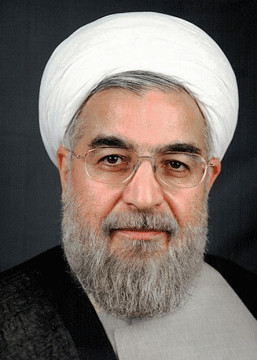 Iran’s president calls on Biden to return to nuclear deal
Hassan Rouhani’s comments mark the highest-level response from Iran to Biden and Vice President-elect Kamala Harris clinching the Nov. 3 election.
“Now, an opportunity has come up for the next U.S. administration to compensate for past mistakes and return to the path of complying with international agreements through respect of international norms,” the state-run IRNA news agency quoted him as saying.
Under President Donald Trump, tensions between the U.S. and Iran have escalated, reaching a fever pitch earlier this year. One of Trump’s signature foreign policy moves was unilaterally withdrawing the U.S. from Iran’s nuclear deal in 2018, which had seen Tehran limit its enrichment of uranium in exchange for the lifting of economic sanctions.
The U.S. has since reimposed punishing sanctions on Iran that have crippled its economy, which was further battered by the coronavirus outbreak. In an effort to pressure Europe to find a way around the sanctions, Iran has slowly abandoned the limits of the nuclear deal…….. https://apnews.com/article/joe-biden-donald-trump-iran-foreign-policy-tehran-da8c870cacf6109ae1cad62108535634
Belarus opens nuclear plant opposed by neighboring Lithuania
The president of Belarus has formally opened the country’s first nuclear power plant over the objections of neighboring Lithuania, abc News ByThe Associated Press, 8 November 2020, KYIV, Ukraine — Belarusian President Alexander Lukashenko on Saturday formally opened the country’s first nuclear power plant, a project sharply criticized by neighboring Lithuania……
In line with a law banning electricity imports from Belarus once the nuclear plant started up, Lithuania’s Litgrid power operator cut the inflow of electricity from Belarus when the plant began producing electricity on Tuesday…….
Belarus suffered severe damage from the 1986 Chernobyl nuclear disaster, which spewed radioactive fallout from a plant in then-Soviet Ukraine across large areas of Europe. That painful legacy has fueled opposition to the nuclear plant project in Belarus.
Andrei Sannikov, a prominent opposition figure who was imprisoned for 16 months after running against Lukashenko in the 2010 presidential election, tweeted Saturday that the plant constitutes a “geopolitical weapon” against the European Union.
Lithuania closed its sole Soviet-built nuclear power plant in 2009. In recent weeks, Lithuanian authorities have handed out free iodine pills to residents living near the Belarus border. Iodine can help reduce radiation buildup in the thyroid in case of a leak at the nuclear plant. https://abcnews.go.com/International/wireStory/belarus-opens-nuclear-plant-opposed-neighboring-lithuania-74073929
1 This Month

of the week- – THE ONENESS of HUMANITY
We the Nuclear Free North
1st July – Webinar Waste of Space: The Environmental Harm of Military and Civil Space Activity st July, 7 pm

Report Launch Online: We are seeing an increasing exploitation of space for military and commercial purposes. This must change.

Protect Sazan Island from the Trump family! https://secure.avaaz.org/campaign/en/protect_sazan_island_from_the_trump_family_loc/?bqFCVab&v=174511&cl=22707147157&_checksum=5e9dde668860e8231c33699735e16a1fbf22ab2cb01da50c999fe8732b9775ef&utm_source=email&utm_medium=blast_email&utm_campaign=174511


Cuba Is Not a Failed State – It Is a Besieged State
PETITION: “Global Appeal to Endorse Palestinian Right of Return of Refugees”
To see nuclear-related stories in greater depth and intensity – go to https://nuclearinformation.wordpress.com
-
Archives
- June 2026 (258)
- May 2026 (306)
- April 2026 (356)
- March 2026 (251)
- February 2026 (268)
- January 2026 (308)
- December 2025 (358)
- November 2025 (359)
- October 2025 (376)
- September 2025 (257)
- August 2025 (319)
- July 2025 (230)
-
Categories
- 1
- 1 NUCLEAR ISSUES
- business and costs
- climate change
- culture and arts
- ENERGY
- environment
- health
- history
- indigenous issues
- Legal
- marketing of nuclear
- media
- opposition to nuclear
- PERSONAL STORIES
- politics
- politics international
- Religion and ethics
- safety
- secrets,lies and civil liberties
- spinbuster
- technology
- Uranium
- wastes
- weapons and war
- Women
- 2 WORLD
- ACTION
- AFRICA
- Atrocities
- AUSTRALIA
- Christina's notes
- Christina's themes
- culture and arts
- Events
- Fuk 2022
- Fuk 2023
- Fukushima 2017
- Fukushima 2018
- fukushima 2019
- Fukushima 2020
- Fukushima 2021
- general
- global warming
- Humour (God we need it)
- Nuclear
- RARE EARTHS
- Reference
- resources – print
- Resources -audiovicual
- Weekly Newsletter
- World
- World Nuclear
- YouTube
-
RSS
Entries RSS
Comments RSS
 nuclear-news