Assange’s partner exposes ongoing denial of his legal and democratic rights,
|
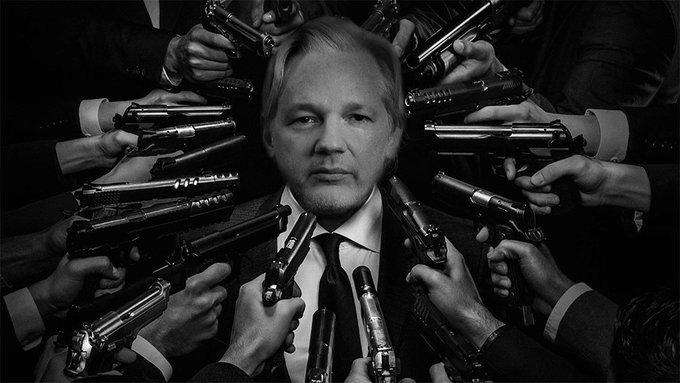
Moris provided a succinct summary of the issues of democratic principle at stake, in the US attempt to prosecute Assange for lawful publishing activities that exposed war crimes, and updated his supporters on the current stage of the legal campaign to secure his freedom. The January 4 verdict, forbidding extradition, had “taken into account” the “extensive medical evidence” presented during last year’s trial, Moris explained. Assange’s dispatch to the US had been blocked on the grounds that it would be “oppressive.” His health issues, including serious depression, and the brutal character of the US prison system, meant there would be a great risk of Assange taking his own life if he were extradited. The US immediately responded, in the final days of the administration of President Donald Trump, by formally signalling an appeal. Trump’s Democratic Party successor, President Joe Biden, in his first weeks in office, rejected calls by civil liberties and press freedom organisations for the US Department of Justice to drop its pursuit of Assange, demonstrating the bipartisan character of the persecution. The High Court will decide after March 29 whether prosecutors, acting on behalf of the US state, will be permitted to proceed with their appeal. Moris stated that the next stage for the defence was to submit a response to the US grounds of appeal. She then reviewed the anti-democratic implications of Judge Vanessa Baraitser’s January 4 ruling. It had denied Assange’s extradition on health grounds, but “did not side with him on the wider public interest arguments.” Baraitser had upheld virtually all of the prosecution’s substantive arguments, effectively green-lighting future attempts by governments to prosecute journalists and publishers for exposing material that they deem to be “classified” and of “national security” significance, regardless of the public interest of what is exposed. Continue reading |
Luxembourg’s continued fight against nuclear power in Europe
How do you remember the nuclear incident at Fukushima?
Some countries still see it as a cheap, emissions-free source of power. What will it take to change their minds?
It’s a constant battle. Some countries, also in Europe, see nuclear energy as a solution to the climate crisis. That is a fallacy. First, it’s not cheap. Hinkley Point in the UK, for example, will only work out economically at a fixed tariff that is higher than the price for renewable energy. The waste problem hasn’t been solved.
The European Commission is technology neutral, leaving it up to member countries to decide whether to use nuclear power. What challenges does this pose?
Luxembourg still uses nuclear energy in its network. By when would you like to see this phased out?
You came out strongly against Belgium exploring nuclear waste storage sites near Luxembourg, with the Belgian environment minister citing a “serious diplomatic incident”. Would you react in the same way again today?
France is in the process of exploring lengthening the lifespan of some of its reactors. What do you hope will happen with the Cattenom site in the next ten years?
Obviously, I want Cattenom to close and for there to be no extension. If I look towards the future, the best solution would be a switch to renewables, to new jobs and in favour of a circular economy. It’s about enabling a transition for the people working in this sector, too. Cattenom is a big power station.
IAEA and Iran strike three-month deal over nuclear inspections
 IAEA and Iran strike three-month deal over nuclear inspections https://www.theguardian.com/world/2021/feb/21/iran-pushes-ahead-plan-cut-un-nuclear-inspections
Agreement paves way for diplomatic talks between Tehran and the US over sanctions, Patrick Wintour Diplomatic editor, Mon 22 Feb 2021
The UN’s nuclear inspectorate has struck a three-month deal with Iran giving it sufficient continued access to verify nuclear activity in the country, opening the space for wider political and diplomatic talks between Tehran and the US.
Iran will go ahead with its threat to withdraw this week from the additional protocol, the agreement that gives inspectors from the International Atomic Energy Agency (IAEA) intrusive powers.
However, following a weekend of talks with officials in Tehran, the IAEA’s director general, Rafael Grossi, announced that he had struck what he described as “a temporary bilateral technical understanding” that will mitigate the impact of Iran’s withdrawal from the protocol, and give the IAEA confidence that it can continue to verify Iran’s nuclear activity.
Grossi added that the move “salvages the situation” and avoids the position of the inspectors “flying blind”. He said the agreement, from which either side can withdraw, gave space for wider diplomatic discussions between the US and Iran to go ahead.
He said the law suspending Iran from the additional protocol had been passed by its parliament and now “exists and is going to be applied. There is less access, let’s face it.”
However, Grossi made clear he felt the new bilateral agreement sufficiently mitigated the impact of the reduced inspections regime, so it was therefore worthwhile for his team’s verification work continuing, at least on a temporary basis. “This is a temporary solution that allows us to continue to give to the world the assurances of what is going on there in the hope that we can return to a fuller picture.”
The IAEA director general added that there would be no reduction in the number of inspectors, and that not all snap inspections would be banned.
Iranian officials have said the agreement will mean that the inspectors will only have 70% of the access they now enjoy, but Grossi declined to put a percentage on the loss of access.
The deal, released late on Sunday night, was met with an immediate backlash in Iran, where furious hardliners convened an emergency session of parliament to demand more details. Some claimed it effectively overrode the law passed by parliament two months ago cutting back on inspections.
Iran’s atomic energy association said it would continue to use cameras to record and maintain information at its nuclear sites for three months, but would retain the information exclusively. If the US sanctions are lifted completely within that period, Iran will provide this information to the IAEA, otherwise it will be deleted forever.
Grossi will have to report the details of his understanding to the other signatories of the nuclear deal, including France, Germany and the UK. All three had warned Iran of the serious consequences of withdrawing from the protocol, and they will need to be satisfied by the IAEA director on the value of the technical understanding.
All sides are involved in brinkmanship designed to bring about direct talks between the US and Iran leading to the US, on the one hand, lifting economic sanctions and returning to the deal, and Iran coming back into compliance with the agreement. Iran has not left the deal, but over the past year lessened its commitments on critical issues such as levels of uranium enrichment and the use of advanced centrifuges.
Iran’s foreign minister, Javad Zarif, said in an interview with the state-owned Press TV that Iran was waiting for action from the US, not promises, and said the cutback in inspections had been mandated by Iran’s parliament and could not be overridden until sanctions were lifted. “We need concrete actions, not words,” he said.
The US has offered to attend an informal diplomatic meeting hosted by the EU, also attended by Russia and China, the other signatories to the deal. The US state department has hinted that at this meeting the US would map out an offer on how sanctions and other economic restrictions could be lifted or suspended if Iran returned to compliance with the nuclear deal, including over uranium enrichment stocks and use of advanced centrifuges.
Zarif said Iran would need to know how, if the US returned to the deal, it would not simply walk out again. He said the issue of compensation for the $1tn (£710bn) damage inflicted on the Iranian economy would also have to be discussed.
Hardliners are demanding that any sanctions suspension would need to be verified, something that would prolong a complex process.
The Iranian parliament’s speaker, Mohammad Baqer Qalibaf, a likely candidate for president, suspended its normal business on Monday to examine the new agreement and MPs 221 to 6 to refer it to the judiciary. He said any side agreement with the IAEA had to be approved by parliament.
The foreign ministry spokesman, Saeed Khatibzadeh, insisted parliament had been sidestepped in the weekend agreement. The power struggle is not just critical to the prospect of talks with the US, but also how the Iranians may view the presidential elections.
The chairman of parliament’s national security committee, Mojtaba Zolnour, said “the government has no right to decide and act arbitrarily. This arrangement is an insult to parliament.”
Iran talks ‘avert’ impact of nuclear inspection deadline
|
Iran talks ‘avert’ impact of nuclear inspection deadline, BBC News 22 Feb 20, Iran and the global nuclear watchdog, the IAEA, have agreed to temporary measures to offset Iran’s decision to restrict access to inspectors.
These would enable the agency to retain the “necessary degree of monitoring and verification work”, IAEA chief Rafael Grossi said, without going into detail. The move comes ahead of a deadline set by Iran to stop intrusive checks of sites unless US sanctions are lifted……… Iran nuclear crisis: The basicsIran has nuclear power: But some countries have long suspected that it also has secret ambitions to build a nuclear bomb – Iran denies this. So a deal was struck: In 2015 a major agreement between Iran and six other countries meant Iran accepted limits on its nuclear activities in return for an end to harsh penalties, or sanctions, that hurt its economy. What is the problem now? Iran restarted banned nuclear activities after former US President Donald Trump pulled out of the deal and restored sanctions. Even though President Joe Biden wants to rejoin, both sides say the other must be the first to change course. Has the crisis now eased?The “temporary technical” arrangement reached between Iran and the International Atomic Energy Agency (IAEA) “salvages the situation”, Mr Grossi told reporters on Sunday after a visit to Iran. “We were able to retain the necessary degree of monitoring and verification work,” he said, without elaborating, but added: “There is less access [to Iranian sites], let’s face it.” Under the plan, for the next three months Iran would hold recordings from monitoring equipment installed at sites by the IAEA but would not release the information unless sanctions were lifted within that timeframe, the Atomic Energy Organisation of Iran (AEOI) said. If sanctions remained, the data would be erased, it added. Cameras and other apparatus have been put in place by the IAEA to help verify that Iran does not carry out nuclear activities prohibited under the deal. However, Iran and the US are at loggerheads over the removal of sanctions. Washington insists Tehran must return to full compliance with the 2015 deal first, while Tehran says that will only happen once sanctions are lifted. ‘This deal buys some precious time’Analysis by Paul Adams, BBC Diplomatic correspondent The IAEA’s boss, Rafael Grossi, called this “a good result”. It certainly seems likely to defuse a mounting sense of crisis surrounding Iran’s nuclear activities and efforts to breathe new life into the 2015 nuclear deal, known as the Joint Comprehensive Plan of Action, or JCPOA. Crucially, it significantly reduces the impact of a new Iranian law, due to come into effect on Tuesday, which would have seriously hampered the IAEA’s ability to do its work. Iran will still suspend implementation of the so-called Additional Protocol, which gives the IAEA substantially enhanced tools with which to carry out inspections. But Mr Grossi clearly believes the “temporary bilateral technical understanding” reached after talks in Tehran this weekend will allow his inspectors to continue doing their job to a satisfactory degree…………. https://www.bbc.com/news/world-middle-east-56030497 |
|
Some Iranians and Israelis in full agreement on wanting to stop Iran nuclear deal
or sworn enemies, Iran and Israel have much in common. Both are regional powers, projecting their interests beyond their borders. Both are beholden, in different ways, to shifting US policy. Both have secretive nuclear programmes. And both are heading towards national elections – in Israel next month, in Iran in June – that could decide whether cold-hearted enmity turns into hot-blooded war.
The stand-off over Iran’s alleged attempts, which are always denied, to acquire atomic bomb-making capacity has gone on for so long that its dangers are often underestimated. Yet the coming days are crucial. Iran has set 21 February as a deadline for an easing of unilateral US sanctions. If it is ignored, Tehran is threatening to ban snap UN inspections of its nuclear facilities and further ramp up proscribed atomic activities……….
The escalating crisis has brought a flurry of diplomatic activity in recent days, involving Germany and Qatar who are acting as go-betweens. Crucially, the US accepted an EU invitation to join talks with Iran on returning to mutual compliance with the deal. In its response on Friday, Iran’s foreign ministry stuck to its previous position that all sanctions must be lifted before talks can begin
This will not be the last word. But it is a reminder of the sobering – and alarming – reality that powerful individuals and factions on both sides are doing all they can to ensure the 2015 deal definitively collapses. In Iran, hardline candidates and members of the Majlis (parliament), focused on June’s presidential poll, oppose any kind of rapprochement with America.
They include leading presidential hopeful Hossein Dehghan. He reportedly has the backing of Iran’s ultra-conservative supreme leader, Ayatollah Ali Khamenei, who has sworn never to talk to America. Dehghan accuses Biden of bad faith. “We still see the same policies … as we did from the Trump team: not lifting the oppressive sanctions against the Iranian people,” he told the Guardian
Such scepticism reflects genuine distrust, and fear of another Trump-style stab in the back. But it is also the result of calculation, suggested analyst Saeid Jafari . “Biden’s victory [over Trump] came as a big disappointment to hardliners seeking to undermine Rouhani’s last-ditch effort to save the nuclear accord,” he wrote. They may try to scupper any talks……..
Strong opposition to the deal, however Biden plays it, is evident in Israel, where the hard-right prime minister and close Trump ally, Benjamin Netanyahu, is fighting for his political life. Netanyahu encouraged Trump to ditch the pact, even as Israel has expanded its own nuclear facilities. He vehemently warns against resurrecting it as he woos Jewish supremacist parties in Israel’s fourth election in two years……..
Against all this must be set common sense. Trump’s maximum pressure policy failed miserably. It did not mitigate regional tensions or reduce proxy attacks. Rather, illegal US and Israeli assassinations of high-profile figures increased them. Sanctions have hurt Iranians, but did not topple the regime or change its behaviour. Iran is closer now to a nuclear weapon than in 2016.
Biden’s instinct to try to break this impasse and find a diplomatic way through – supported by the UK, Germany and France – is the right one. But words are not enough. As a sign of good faith, he should swiftly relax some sanctions and unfreeze Iran’s Covid-related $5bn IMF loan request.
Time is short. Proving peace works may be the only way to halt the fatal advance of warmongers in Israel and Iran. https://www.theguardian.com/commentisfree/2021/feb/21/hawks-in-iran-and-israel-agree-bidens-bid-to-salvage-nuclear-deal-must-not-succeed
Nuclear weapons — they’re illegal
|
Nuclear weapons — they’re illegal https://www.santafenewmexican.com/opinion/my_view/nuclear-weapons-theyre-illegal/article_5238752a-5ad4-11eb-932c-2ff8ea90b754.html,By Jay Coghlan, 21 Feb21,
Jan. 22 will go down in history as the day when the tide turned against nuclear weapons. That was the day when theTreaty on the Prohibition of Nuclear Weapons went into effect, signed by 122 countries. It specifically prohibits nations from developing, testing, using or threatening to use nuclear weapons and assisting others in doing so. It reinforces existing international law obligating all states not to test, use or threaten to use nuclear weapons. What immediate impact will it have here, given that the Los Alamos National Laboratory is the birthplace of nuclear weapons and now sole producer of plutonium pit triggers for the expanding U.S. stockpile? The brutally honest answer is no impact, not immediately.
But think about it. Nuclear weapons are now internationally illegal, just as horrendous chemical and biological weapons of mass destruction have long been. But nuclear weapons are the worst WMDs, potentially killing millions more while causing radioactive fallout and famine-inducing nuclear winter. Ask your New Mexican congressional members to explain why nuclear weapons shouldn’t be internationally banned just like chemical and biological WMDs, all of which cause agonizing, indiscriminate suffering and death. Predictably, our politicians and self-interested nuclear weapons labs will point to the sacred cow of “deterrence.” But we need to honestly examine exactly who needs to be deterred when the U.S. is the only country to have used nuclear weapons and our presidents have repeatedly threatened to use them again (for example, Nixon in Vietnam). Furthermore, we just had an arguably deranged president with the sole authority to start nuclear war. The fact is that the U.S. and the Soviet Union/Russia have always had a hybrid of deterrence and nuclear war fighting capability that could overkill the planet many times over. That is why both sides have thousands of nuclear weapons, many on hair trigger alert, instead of the few hundred needed for just deterrence. That is why the U.S. has a $1.5 trillion, so-called “modernization” program to completely rebuild all nuclear warheads and acquire new missiles, submarines and bombers to deliver them. You may be skeptical of a ban treaty, but ask yourself: What have nukes done to protect you from global pandemics and climate change? What are the odds of nuclear war caused by false warnings (as has happened many times) or cyber hacking? How reliable will exorbitantly expensive new nuclear weapons be when they can’t be tested because of the global testing moratorium? Or worse yet may prompt the U.S. back into testing, thereby accelerating the new arms race? It may seem like an impossible dream to abolish nuclear weapons. But that’s what was once said about the abolishment of slavery. We can learn from the Martin Luther Kings, the Harriet Tubmans, the John Lewises that it can be done. Whereas the nuclear weapons ban treaty will have little if any immediate effect on New Mexico’s two nuclear weapons labs, it will be a game changer. Remember that when your congressional members pitch expanding nuclear weapons production as jobs programs; you can respond that they are illegal. Tell them they should show visionary leadership and moral courage by helping to create cleanup and green energy jobs instead. Nuclear weapons are now internationally illegal. The U.S. was among the last major countries to abolish slavery but did so in the end. To modify MLK’s famous quote: “The arc of the moral universe is long, but it bends towards [the] justice” of abolishing nuclear weapons. This ban treaty is the beginning of that end and should be celebrated as such. Jay Coghlan with Nuclear Watch New Mexico has been working on nuclear weapons issues for more than 30 years. For more see nukewatch.org.
|
|
U.N. nuclear watchdog found uranium particles at two Iranian sites
Reuters 19th Feb 2021, The U.N. nuclear watchdog found uranium particles at two Iranian sites it inspected after months of stonewalling, diplomats say, and it is preparing to rebuke Tehran for failing to explain, possibly complicating U.S. efforts to revive nuclear diplomacy.
https://www.reuters.com/article/us-iran-nuclear-iaea-idUSKBN2AJ269
The world came much closer to nuclear war than we realized in 1983.
Apocalypse Averted, The world came much closer to nuclear war than we realized in 1983. https://slate.com/news-and-politics/2021/02/able-archer-nuclear-war-reagan.html-19 Feb 21, BY FRED KAPLAN
The revelations aren’t mere details of history; they also hold relevant lessons for how leaders should think and act in ongoing crises in hot spots around the world today.
The documents, released this week by the State Department historian’s office, focus on a massive military training exercise known as Able Archer, in which NATO simulated the transition from conventional to nuclear conflict in the event of a war in Europe.
It turned out, top Soviet leaders thought that the war game was real—that the U.S. and NATO really were about to launch a nuclear first strike against the USSR—and top Soviet military commanders took steps to retaliate.
In one of those steps, the new documents reveal, the commander of the Soviet 4th Army Air Forces in Eastern Europe ordered all of his units to make “preparations for the immediate use of nuclear weapons.” As part of that order, crewmen loaded actual nuclear bombs onto several combat planes.
Much about the Able Archer war game was first made public just six years ago, when, after more than a decade of legal battles, the National Security Archive, a private research organization, obtained a lengthy, extremely classified U.S. intelligence report detailing exactly what NATO forces did, and how Soviet commanders responded, during the exercise.
But the fact that the Soviets armed their aircraft with nuclear bombs—a discovery based on U.S. and British intelligence intercepts of Soviet communications at the time—has not been declassified until now. The new fact elevates to a higher level the danger that the world briefly faced, even though—unlike with other nuclear near misses, such as the Cuban missile crisis—almost nobody knew it at the time.
The Able Archer crisis might not have been a near miss—it might easily have escalated to a shooting war—had it not been for a single American officer, Lt. Gen. Leonard Perroots, the intelligence chief for U.S. Air Forces in Europe, who saw the Soviet moves, interpreted them correctly, and stopped what might otherwise have been a deadly escalation.
Most U.S. officers viewed Able Archer as a typical war game, nothing that would throw Soviet officers into a panic. But Perroots saw that, in fact, it was something different. It was a lot bigger than most of these games, involving a fleet of cargo transport planes flying 19,000 soldiers in 170 sorties from the United States to bases in Europe. And it was more realistic as well. The cargo planes maintained radio silence. B-52 bomber crews taxied their planes to their runways and loaded them with dummy bombs that looked remarkably real. The Strategic Air Command raised its nuclear alert levels to the highest level. The Soviets were monitoring all of this, of course, as they generally did and as the U.S. commanders knew they would. But they reacted in ways that they never had before—in ways similar to how they might have acted if the U.S. were gearing up for a real attack—including, as we now know, loading nuclear bombs on aircraft in Eastern Europe.
Ordinarily, when the Soviets took such actions, U.S. intelligence agencies would notify senior military officers, either on the scene or back in Washington, who would respond with similar actions, if just to let the Soviets know that we were watching what they were doing and were ready to repel an attack.
When Perroots informed his boss, the commander in chief of U.S. Air Forces in Europe, Gen. Billy Minter, of the Soviets’ “unusual activity” at the start of Able Archer, Minter was about to respond in the usual way, but Perroots advised him to hold off. He recognized that the Soviets were probably reacting to what we were doing—and any further escalation on our part would worsen the situation, might even trigger war. Let’s wait and see what happens next, he suggested.
Ordinarily, when the Soviets took such actions, U.S. intelligence agencies would notify senior military officers, either on the scene or back in Washington, who would respond with similar actions, if just to let the Soviets know that we were watching what they were doing and were ready to repel an attack.
When Perroots informed his boss, the commander in chief of U.S. Air Forces in Europe, Gen. Billy Minter, of the Soviets’ “unusual activity” at the start of Able Archer, Minter was about to respond in the usual way, but Perroots advised him to hold off. He recognized that the Soviets were probably reacting to what we were doing—and any further escalation on our part would worsen the situation, might even trigger war. Let’s wait and see what happens next, he suggested.
And indeed, after Able Archer ended a few days later and the thousands of American troops flew home and SAC lowered its nuclear alert, the Soviets unloaded their bombs and canceled their nuclear alert as well.
One of the newly declassified documents is a memo that Perroots wrote in 1989, as he was retiring from his final career post as director of the Defense Intelligence Agency, detailing what he’d seen and done during Able Archer six years earlier. The National Security Archive has long been trying to obtain the Perroots memo; DIA officials have told the archive’s lawyers that the memo was lost. On their own initiative, State Department historians found it in a file at the CIA.
The Able Archer near miss did come to have consequences—in a good way. While the war game was unfolding, Oleg Gordievsky, a London-based KGB officer who had turned double agent, was providing his British handlers in MI6 with documents revealing that Soviet officials were viewing the exercise as a prelude to an attack by the United States and NATO. The British, as was customary, shared the intelligence with their American cousins. At first, and for more than a year after, the CIA’s top officials were skeptical, dismissing the Soviets’ “war scare” as “propaganda,” designed to inflame anti-American sentiment in Western Europe.
But President Ronald Reagan took the war scare seriously. Just days after the wrap-up of Able Archer, his national security adviser, Robert “Bud” McFarlane, showed him Gordievsky’s reports, which Reagan read with—as McFarlane recalled years later—“genuine anxiety.”
Reagan had been pushing hard against the Kremlin, hoping the pressure might bring down the Soviet system. In 1981, his first year in office, an armada of 83 U.S., British, Canadian, and Norwegian ships sailed near Soviet waters, undetected. In April 1983, seven months before Able Archer, 40 U.S. warships, including three aircraft carriers, approached Kamchatka Peninsula, off the USSR’s eastern coast, maintaining radio silence and jamming Soviet radar. As part of the operation, Navy combat planes simulated a bombing run over a military site 20 miles inside Soviet territory. An internal NSA history noted, “These actions were calculated to induce paranoia, and they did.”
Still, as Reagan read the Gordievsky report, “it did bother him,” McFarlane later recalled, that the Soviets would seriously entertain “the very idea” that he would launch a nuclear first strike. On Nov. 18, 1983, one week after Able Archer was over, he wrote in his diary, “I feel the Soviets are so defense minded, so paranoid about being attacked that without being in any way soft on them we ought to tell them no one here has any intention of doing anything like that.”
The same day, Reagan met with his secretary of state, George Shultz (who died this month at the age of 100), to discuss setting up a back channel of communication with Moscow. The next morning, 12 senior officials met for breakfast in Shultz’s dining room at the State Department to discuss reopening long-moribund talks with Moscow—a topic so sensitive at the time that Shultz told them not to tell anybody that the meeting had even taken place. Two months later, on Jan. 16, 1984, Reagan gave a televised speech. The key line—a dramatic departure from previous pronouncements on the Soviet Union as an “evil empire”—was this: “If the Soviet government wants peace, then there will be peace. … Let us begin now.”
He had to wait a little while. Two Soviet leaders, Yuri Andropov and Konstantin Chernenko, died while Reagan’s diplomats tried to arrange meetings. But then came Mikhail Gorbachev, a genuine reformer, looking for peace with the West so he could finance his politico-economic perestroika, and, soon enough, the Iron Curtain shattered and the Cold War ended.
This might not have happened if Reagan hadn’t realized, in the wake of Able Archer, that his belligerent rhetoric and aggressive actions had gone too far—that he had to dial things back and see if the two countries might get along, before their myriad causes for mutual distrust unleashed catastrophe.
In some ways, the world today is less fraught with ultimate danger than it was 38 years ago. There is no cause for fear of a massive nuclear attack by or against the United States, Russia, or, really, any other country. But at the same time, the world is more densely laced with hot spots that could erupt into war, and war zones that could spread like lethal firestorms, and there are fewer power blocs—no real “superpowers,” in the sense that the term once meant—that might contain the conflagration. Intelligence is scanty or ambiguous about many of these potential crisis areas. Assumptions about an adversary’s ambitions or odd actions can more easily harden into dogma.
ICAN chief urges Japanese govt to attend UN Nuclear Ban Treaty meeting

 Antinuke group urges Japan to attend 1st U.N. nuclear ban meeting https://english.kyodonews.net/news/2021/02/739da4953af0-antinuke-group-urges-japan-to-attend-1st-un-nuclear-ban-meeting.html Antinuke group urges Japan to attend 1st U.N. nuclear ban meeting https://english.kyodonews.net/news/2021/02/739da4953af0-antinuke-group-urges-japan-to-attend-1st-un-nuclear-ban-meeting.html
The chief of an antinuclear group has urged Japan to attend the first meeting of parties to a U.N. treaty banning nuclear weapons, saying the only country to have suffered the atomic bombings has a “moral responsibility” to do so.
In a recent online interview with Kyodo News, Beatrice Fihn, executive director of the International Campaign to Abolish Nuclear Weapons, said as an observer, Japan should “discuss issues relevant to survivors of nuclear weapons use” at the meeting as it has “the knowledge and expertise.” The first meeting on the pact outlawing the development, testing, possession and use of nuclear weapons is expected to be held in Austria within a year of the treaty going into force on Jan. 22. Japan has decided not to sign the Treaty on the Prohibition of Nuclear Weapons in consideration of its security ties with the United States, which provides a nuclear umbrella to Tokyo against security threats from North Korea and others. Other nuclear-armed states are also not signatories of the pact. The head of ICAN, which won the 2017 Nobel Peace Prize for its efforts that led to the adoption of the nuclear ban treaty, said her group expects the first meeting of the treaty’s parties to discuss issues such as support for atomic bomb victims and environmental remediation following the use of nuclear weapons. Japan “should engage in these conversations about the rights and the needs of survivors,” Fihn said. “If they don’t do that, you know, it will be to abandon the hibakusha,” or survivors of the 1945 U.S. atomic bombings of Hiroshima and Nagasaki. The Swedish executive director said there has been “a growing voice” from the hibakusha and the Japanese public calling for Tokyo to join the treaty. It’s really an issue of democracy here and the government at some point has to listen,” she said. “I would encourage Japanese people to speak out louder and stronger.” Although Fihn does not believe the administration of U.S. President Joe Biden will join the nuclear ban treaty and begin disarming in the near future, she welcomed the new government that is “serious about multilateralism and diplomacy.” Fihn expressed hope that Washington will “let other countries decide for themselves” on whether or not to join the nuclear ban treaty. Noting “a lot of support” for the pact from citizens of North Atlantic Treaty Organization member countries, she said, “I hope that the U.S. will keep an open mind” when it comes to NATO states joining this treaty. |
|
Iran vows to limit nuclear inspections if partners fail to act
Iran vows to limit nuclear inspections if partners fail to act
Iran said it will scale back its comprehensive international nuclear inspections next week if world powers fail to move. https://www.aljazeera.com/news/2021/2/15/fm-iran-will-limit-nuclear-inspections-if-others-fail-to-act, By Maziar Motamedi15 Feb 2021
Foreign ministry spokesman Saeed Khatibzadeh said President Hassan Rouhani’s government is obliged by law to stop voluntarily implementing the Additional Protocol – which gives the UN’s nuclear watchdog more inspection authority – if US sanctions on Iran’s oil and banking sectors are not lifted by February 21.
The nuclear deal was signed between Iran and world powers, but former US President Donald Trump unilaterally withdrew his country from it in 2018 and reimposed harsh sanctions on Iran. One year later, Iran gradually scaled back its commitments under the deal.
Iran has boosted uranium enrichment to 20 percent and is planning further breaches of its commitments in compliance with December legislation ratified by the conservative parliament.
The bill was passed quickly after top nuclear scientist Mohsen Fakhrizadeh was assassinated near Tehran in late November in a sophisticated attack that Iran blames on Israel.
As Khatibzadeh also reiterated on Monday, nuclear inspectors will still have access to Iranian sites as part of the country’s commitments under the Non-Proliferation Treaty.
“All these measures are easily reversible with the condition that other parties return to their commitments,” he said.
Iranian officials have said they will consider sanctions effectively lifted if Iran is able to freely sell its oil and receive its earnings through international banking channels.
But the foreign ministry spokesman said the Joe Biden administration is effectively continuing his predecessor’s hawkish policy on Iran by refusing to lift sanctions until Iran returns to commitments first.
“Unfortunately, the US is still moving based on the wrong approach of the previous administration and what is happening today is no different than before January 20,” Khatibzadeh said, citing the date Trump left office.
“Maximum pressure and crimes against the Iranian people and the disregard for international human rights still persist today.”
Biden administration presses for Julian Assange to be extradited to USA
Biden administration files appeal pressing for Assange extradition, Yahoo News, Sat, 13 February 2021 The administration of US President Joe Biden has appealed a British judge’s ruling against the extradition of WikiLeaks founder Julian Assange, a Justice Department official said Friday.
A brief filed late Thursday declared Washington’s desire to have Assange stand trial on espionage and hacking-related charges over WikiLeaks’ publication of hundreds of thousands of US military and diplomatic documents beginning in 2009.
The Justice Department had until Friday to register its stance on Judge Vanessa Baraitser’s January 4 ruling that Assange suffered mental health problems that would raise the risk of suicide if he were sent to the United States for trial.
“Yes, we filed an appeal and we are continuing to pursue extradition,” Justice Department spokesman Marc Raimondi told AFP.
After Baraitser’s decision, which did not question the legal grounds for the US extradition request, Donald Trump’s administration moved to appeal.
But Biden’s stance was not clear, and he was pressured by rights groups to drop the case, which raises sensitive transparency and media freedom issues.
After WikiLeaks began publishing US secrets in 2009, then-president Barack Obama, whose vice president was Biden, declined to pursue the case.
Assange said WikiLeaks was no different than other media constitutionally protected to publish such materials.
Prosecuting him, too, could mean also prosecuting powerful US news organizations for publishing similar material — legal fights the government would likely lose.
But under Trump, whose 2016 election was helped by WikiLeaks publishing Russian-stolen materials damaging to his rival Hillary Clinton — the Justice Department built a national security case against Assange.
In 2019 the native Australian was charged under the US Espionage Act and computer crimes laws with multiple counts of conspiring with and directing others, from 2009 to 2019, to illegally obtain and release US secrets……….
Assange has remained under detention by British authorities pending the appeal.
Earlier this week 24 organizations, including Human Rights Watch, Amnesty International USA and Reporters Without Borders, urged Biden to drop the case.
“Journalists at major news publications regularly speak with sources, ask for clarification or more documentation, and receive and publish documents the government considers secret,” they said in an open letter.
“In our view, such a precedent in this case could effectively criminalize these common journalistic practices.”
Assange’s fiancée Stella Moris said in a statement that Baraitser’s January decision that Assange was a high risk for suicide and that US prison facilities were not safe remained a strong reason to deny extradition.
Baraitser “was given clear advice by medical experts that ordering him to stand trial in the US would put his life at risk,” she said.
“Any assurances given by the Department of Justice about trial procedures or the prison regime that Julian might face in the US are not only irrelevant but meaningless because the US has a long history of breaking commitments to extraditing countries,” she said https://au.news.yahoo.com/biden-administration-files-appeal-assange-171637702.html
Radioactive poisoning of the environment: France’s nuclear legacy of wastes in Algeria
Impact of France’s nuclear tests persists: Algeria https://www.aa.com.tr/en/africa/impact-of-frances-nuclear-tests-persists-algeria/2143751
Algerian Foreign Minister said nuclear tests were three to four times the size of US bombing of Hiroshima in Japan, Abdul Razzaq Bin Abdullah |13.02.2021 ALGIERS
France’s nuclear experiments in the Algerian desert in the 1960s were three to four times equal to the Hiroshima bombing in Japan, Algerian Foreign Minister Sabri Boukadoum said on Saturday.
In a Twitter post on the occasion of the 61st anniversary of the first French nuclear explosion in the Algerian desert, on Feb. 13, 1960, Boukadoum described the impacts of the tests as “catastrophic”.
“On this day in 1960, imperialist France carried out the first nuclear explosion in the Reggane region in the Algerian desert, in a process code-named ‘Gerboise Bleue’ (Blue Desert Rat),” Boukadoum said.
He added that the French nuclear explosion yielded a force of 70 kilotons (kt) and its catastrophic radiological repercussions still persist.
The first atomic bomb dropped 75 years ago by the United States leveled Hiroshima on Aug. 6, 1945, and killed an estimated 140,000 people with many more dying in the following years from the effects of radiation. Three days later, Washington dropped another atomic bomb on Nagasaki, killing around 70,000 people and forced Japan to surrender six days later.
According to French officials, the colonial authorities carried out 17 nuclear experiments in the Algerian desert in the period between 1960 and 1966. Algerian historians, however, put the number at 57.
On Feb. 13 1960, France conducted its first nuclear test, code-named “Gerboise Bleue” (Blue Desert Rat) in the Sahara Desert, southwest of Algeria.
The French nuclear experiments have caused the death of around 42,000 Algerians and injured thousands due to nuclear radioactivity, in addition to the extensive damage to the environment.
France has rejected Algerian demands to reveal the location of the nuclear waste as well as compensating the victims and those suffering from permanent disabilities due to the harmful effects of nuclear radioactivity.
During the course of the struggle for independence, nearly five million Algerians were killed, while hundreds of thousands more injured. *Ibrahim Mukhtar in Ankara contributed to this report
Australian government’s brazen duplicity concerning Julian Assange
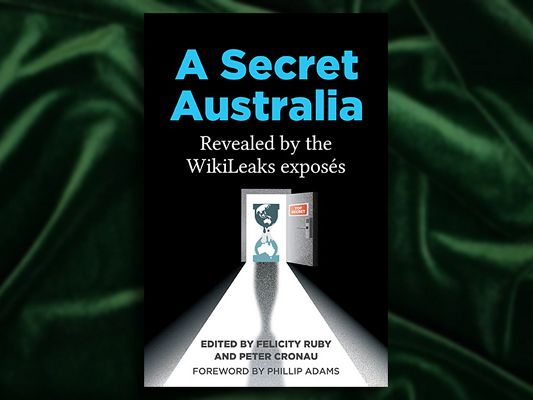
What Assange and WikiLeaks said about Australia, https://www.smh.com.au/culture/books/what-assange-and-wikileaks-said-about-australia-20210129-p56xyo.html, By Jessie Tu, February 4, 2021 He has been called “truth-telling hero”, “evil and perverted traitor”, “heroic, trickster, mythical – reviled”. Robert Manne called him the “most consequential Australian of the present time”. The new US President has called him a “high-tech terrorist”.
The protean narratives of Julian Assange, who will be 50 in July, have been brewing since 2010, when his website published “The Afghan War Diaries”, “Iraq War Logs” and “Collateral Murder”, a video showing the US military killing two Reuters employees in Iraq.
December marked 10 years since Assange has been “arbitrarily detained” in Britain, according to Felicity Ruby and Peter Cronau in their introduction to A Secret Australia – a collection of 18 essays that survey the impact WikiLeaks has had on Australia’s media landscape and the consequences of our government’s attraction towards America’s intelligence and military empire.
The potpourri of authors and thinkers includes Julian Burnside, Antony Loewenstein, Scott Ludlam and Helen Razer, who critique “the powers opposed to openness and transparency” and examine the evidence, “not the likelihoods, the probabilities, the suspicions, and assumptions” around the “subversive, technology-based publishing house”.
WikiLeaks invented a “pioneering model of journalism” – one that embodied the “contemporary spirit of resistance to imperial power”, says Richard Tanter, from the school of political and social sciences at the University of Melbourne. It brought renewed debates on free speech, digital encryption and questions around the management and protection of whistleblowers who risk their lives to expose covert, deceitful actions by governments.
The documents exposed the “brazen duplicity” of the Australian government towards its citizens and presented “off-stage alliance management conversations”, Tanter writes. They invited the layperson into the green room of the performance that is politics and international diplomacy.
WikiLeaks unmasked reports that showed governments recommending media strategies to deceive the public, demonstrating their unethically utilitarian approach to international diplomacy and governance and “enlightened the public on the dark corners of wars”, writes journalist and author Antony Loewenstein.
Assange is still in a cell at London’s Belmarsh Prison, facing an appeal by the United States in its bid to extradite him to face charges for the 2010 publications. He is continuing to be “denied adequate medical care” and “denied emergency bail in light of the COVID-19″, says Lissa Johnson, a clinical psychologist and writer for New Matilda – one of the few Australian publications that have paid genuine attention to the WikiLeaks saga.
In Australia, there’s been a “striking absence of a solid debate on WikiLeaks in the mainstream public discourse”, according to Benedetta Brevini, a journalist and media activist who insists that our concerning “lack of a thorough and sustained debate” is incomprehensible. Loewenstein calls Australia’s lack of journalistic solidarity with Assange “deeply shameful”. He says we have an “anodyne media environment” – perhaps not unsurprising, considering our highly concentrated media market, one of the most severe in the world.
The most useful essay is Rundle’s take on the historical basis for WikiLeaks. He surveys the swirling currents of Australian history that led to its founding, identifying WikiLeaks as a continuation of political activist Albert Langer’s resistance to capital.
“We need a whole new organisation of how recent Australian history is told,” Rundle concludes, seconding Lissa Johnson’s opinion that we demand citizens who “cut across the acquiescence and consent, remove the deadbolt on the torture chamber door, turn down the music and expose what is going on inside”. This collection of polemics, though at times repetitive, takes us closer to a future where these demands no longer seem beyond reality.
Eds., Felicity Ruby & Peter Cronau, Monash University Publishing, $29.95
Iran warned by France, Germany, UK, over uranium metal production
France, Germany, UK warn Iran over uranium metal production, Iran is undermining the chance for renewed diplomacy to fully realise the 2015 nuclear deal objectives, the trio says. https://www.aljazeera.com/news/2021/2/12/france-germany-uk-slam-iran-for-uranium-metal-production
The United Nations’ nuclear watchdog said earlier this week that Iran had followed through on its plan to make uranium metal, after Tehran had alarmed Western nations with its intent to produce the material with which the core of nuclear weapons can be made.
There have been hopes that the 2015 nuclear deal between Iran and world powers could be revived through new talks under the administration of United States President Joe Biden, after his predecessor Donald Trump walked out of the deal in 2018.
The European trio, who are signatories to the deal formally known as the Joint Comprehensive Plan of Action (JCPOA), said in a joint statement on Friday that Iran’s move to produce uranium metal was a violation of the accord that endangers the chance to fully realise the deal, which aims to reduce international sanctions on Iran in exchange for limits to its nuclear programme
“We strongly urge Iran to halt these activities without delay and not to take any new non-compliant steps on its nuclear programme. In escalating its non-compliance, Iran is undermining the opportunity for renewed diplomacy to fully realise the objectives of the JCPOA,” said the European trio in a statement.
The IAEA report
The International Atomic Energy Agency (IAEA), the UN nuclear watchdog, said on Wednesday Iran has started producing uranium metal, in a fresh breach of the limits laid out in the 2015 deal……..it will require the most delicate diplomacy to move forward, with the White House insisting Iran must move to full compliance before the US can return to the deal, but Tehran wanting no preconditions.
Iranian President Hassan Rouhani on Thursday said he was disappointed with the Biden administration over the lack of progress to date.
“We have still not seen any goodwill from the new government,” Rouhani told state television.

The real value of the nuclear ban treaty
 The real value of the nuclear ban treaty https://thebulletin.org/2021/02/the-real-value-of-the-nuclear-ban-treaty/?utm_source=Newsletter&utm_medium=Email&utm_campaign=MondayNewsletter02082021&utm_content=NuclearRisk_ValueTPNW_02042021
By Carl Robichaud, Karim Kamel | February 4, 2021
Last month, 75 years after nuclear weapons were first used, a treaty came into force that bans them. The Treaty on the Prohibition of Nuclear Weapons (TPNW), also known as the ban treaty, is the culmination of a decade of work by civil society leaders and diplomats who, frustrated by stagnation in traditional venues, focused the lens of international humanitarian law on nuclear weapons. This approach, dismissed at first, resonated with many states that understood nuclear weapons to be inherently indiscriminatory and inhumane.
The new treaty outlaws the use or threat of use of nuclear weapons, prohibits their development and possession, bans their transfer or receipt, and prohibits stationing, deploying, or assisting with nuclear arms.
But does any of this matter? The treaty lacks verification and enforcement mechanisms. No state with nuclear weapons will join anytime soon. The nine nuclear-armed states and their allies boycotted the negotiations and pressured other states to abandon the treaty. Each has nuclear modernization programs that will stretch for decades.
Skeptics of the treaty claim it is worse than irrelevant; it will accentuate tensions, undermine collective action on urgent proliferation challenges, diminish alliance cohesion or strategic stability, and potentially establish an alternative to the Treaty on the Nonproliferation of Nuclear Weapons (NPT). We should not, they argue, take any steps that might undermine this bedrock agreement that for 50 years has helped limit the spread of nuclear arms.
These objections are overstated. Collective action against proliferation has been, and will remain, a challenge with or without the ban treaty. Moreover, the treaty was carefully drafted not to conflict with existing nonproliferation obligations, including the NPT.
These objections are overstated. Collective action against proliferation has been, and will remain, a challenge with or without the ban treaty. Moreover, the treaty was carefully drafted not to conflict with existing nonproliferation obligations, including the NPT.
But the broader point holds: The treaty does little to reduce short-term nuclear risks. That is not its point. What the treaty does is establish, in clear and certain terms, that nuclear weapons are unacceptable. Over 122 countries supported the adoption of the treaty, 51 states have ratified it, and these numbers will continue to grow. Even within states that oppose the treaty, many citizens agree with its premise. Various polls suggest more than half of Americans believe the United States should work to eliminate all nuclear weapons, and support for this view is even higher in Japan and among NATO countries. In the words of former US Defense Secretary William Perry, the ban treaty “rightly establishes abolition as the standard that all nations should be actively working to achieve, rather than an indeterminate future goal.”
The status quo, with its 16,000 nuclear weapons, is far from stable. Everyone alive today lives in the shadow of a potential nuclear war. Climate modeling suggests that even a limited nuclear war, such as one between India and Pakistan, could result in a billion deaths as the ash from burning cities “could blot out the sun, starving much of the human race.”
At least from a humanitarian point of view, the question has been settled: Nuclear weapons are unacceptable. That alone will not make them disappear. But, in the meantime, the ban treaty need not distract from bilateral arms-control and threat-reduction efforts. The recent agreement to extend New START should be commended, and we must establish new mechanisms to build confidence and reduce tensions. The existence of a treaty banning nuclear weapons does not contradict these efforts; on the contrary, it should help build support for more sensible nuclear postures and for prohibitions on nuclear explosive testing and the production of weapons-usable materials.
The nuclear age is in its eighth decade, a mere dot on the timeline of human history. In this brief span there have been dozens of known close calls and near misses. So long as these weapons exist, ready to use at a moment’s notice, we court disaster. The nuclear powers find themselves, as Khrushchev wrote to Kennedy during the Cuban missile crisis, in a tightening knot. Untying this knot will require a multi-generation project that brings together verification science with extraordinary foresight, diplomatic skill, and political leadership. But first it requires a change in our collective beliefs about nuclear weapons. This is the contribution of the ban treaty, and it should not be underestimated.
1 This Month



26 September – International Day for the Total Elimination of Nuclear Weapons


PLEASE OPPOSE HR 8255 AND S.3639 – bills would accelerate satellite deployment, with no environmental review or safeguards – https://ncstd5li.quorum.us/campaign/169331/
To see nuclear-related stories in greater depth and intensity – go to https://nuclearinformation.wordpress.com
-
Archives
- September 2026 (281)
- August 2026 (330)
- July 2026 (355)
- June 2026 (287)
- May 2026 (306)
- April 2026 (356)
- March 2026 (251)
- February 2026 (267)
- January 2026 (308)
- December 2025 (358)
- November 2025 (359)
- October 2025 (375)
-
Categories
- 1
- 1 NUCLEAR ISSUES
- business and costs
- climate change
- culture and arts
- ENERGY
- environment
- health
- history
- indigenous issues
- Legal
- marketing of nuclear
- media
- opposition to nuclear
- PERSONAL STORIES
- politics
- politics international
- Religion and ethics
- safety
- secrets,lies and civil liberties
- spinbuster
- technology
- Uranium
- wastes
- weapons and war
- Women
- 2 WORLD
- ACTION
- AFRICA
- Atrocities
- AUSTRALIA
- Christina's notes
- Christina's themes
- culture and arts
- Events
- Fuk 2022
- Fuk 2023
- Fukushima 2017
- Fukushima 2018
- fukushima 2019
- Fukushima 2020
- Fukushima 2021
- general
- global warming
- Humour (God we need it)
- Nuclear
- RARE EARTHS
- Reference
- resources – print
- Resources -audiovicual
- Weekly Newsletter
- World
- World Nuclear
- YouTube
-
RSS
Entries RSS
Comments RSS

