The nuclear lobby holds too much sway over governments, particularly in Japan
Nuclear power: at what cost?
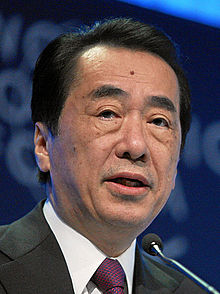 Julie Ward – Despite mounting evidence from environmental experts as well as economists, the nuclear lobby still holds sway at government level in many countries.
Outcry in Tahiti over nuclear fallout study
Outcry in Tahiti over nuclear fallout study https://www.rnz.co.nz/international/pacific-news/438520/outcry-in-tahiti-over-nuclear-fallout-study 16 March 2021 Walter Zweifel, RNZ Pacific Reporter
For test veteran groups, the latest findings by Disclose confirmed that France had been economical with the truth.
At the heart of their campaign is the push for compensation, which has been a decade-long battle over measured and measurable fallout.
The Disclose assessment, if accepted, would make thousands more sick people eligible for compensation, and incur on France an obligation to pay out hundreds of millions of dollars.
The pro-independence leader Oscar Temaru said he denounced the tests all along and claims that the Disclose study proves that contamination extended to all inhabited islands as well as to other Pacific countries.
According to him, the test legacy should be raised by the Pacific Islands Forum.
Temaru furthermore pointed to the UN resolution of 2013 which put French Polynesia on the decolonisation list.
He argued that France had to report to the UN about the health and environmental impact of its 193 nuclear weapons tests.
Temaru accused France of duplicity in the way it dealt with French Polynesia and also took a swipe at the territory’s rival political side, which defended the tests.
A former president Gaston Flosse admitted he travelled the Pacific to reassure the region of the tests’ safety, but said he would now oppose the tests with physical force if he had known what price the territory had to pay.
In a statement, Flosse said on one hand that if the Disclose study was correct then France lied to French Polynesians for years.
On the other hand, he said France must re-examine all compensation claims that have been rejected, and should also scrap the compensation law because its very basis no longer existed.
The French Atomic Energy Commission, the French defence minister and the French High Commissioner in French Polynesia have largely dismissed the Disclose study.
In essence, they saw no new elements or said the existing studies had taken all relevant information into account.
The French Polynesian president Edouard Fritch expressed surprise at the virulent reaction in Tahiti.
However, nearly three years ago he told the assembly that he himself had been telling lies about the tests for decades.
For now, the French compensation commission will continue to pay compensation within the established framework, benefiting at best dozens of people.
Compensation is paid out of a sense of national solidarity not because the French state recognises any liability.
Nuclear power has become irrelevant — like it or not
 https://english.kyodonews.net/news/2021/03/1a9b07886b98-opinion-nuclear-power-has-become-irrelevant—-like-it-or-not.html, By Mycle Schneider, KYODO NEWS , 16 Mar 21,
Ten years went by since the Fukushima Daiichi accident began. What happened in the United States, historically leading the world’s nuclear power programs and still operating the largest reactor fleet in the world? What are global developments in energy policy increasingly dominated by renewable energy?
“The debate is over. Nuclear power has been eclipsed by the sun and the wind,” Dave Freeman wrote in the foreword to the World Nuclear Industry Status Report 2017.
he renowned industry thinker, called an “energy prophet” by The New York Times, passed away last year at age 94. He had seen nuclear power coming and going. President Carter appointed him as chairman of the only fully public electricity utility in the United States, the Tennessee Valley Authority in 1977.
Construction had started on two nuclear reactors in the state in 1972. It took until 1996 to complete the first one and until 2016 for the second one. Those were the last units to start up in the United States.
Construction began on four units in 2013, but in 2017, the bankruptcy of builder Westinghouse led to the abandonment of the $10 billion V.C. Summer two-unit project in South Carolina.
Construction cost estimates for the only other active construction site in the United States, the two-unit Vogtle project in Georgia, have multiplied by a factor nearing five from $6.1 billion in 2009 to $28 billion by 2018. The startup continues to be delayed.
Meanwhile, lacking newbuild, the U.S. nuclear fleet is aging and the 94 still operating reactors now exceed an average age of 40 years. Although the U.S. nuclear industry claims to have achieved decreasing operation and maintenance costs — the only nuclear country to do so — the utilities are still struggling to compete with fierce competitors from the renewable energy sector.
Solar photovoltaic plants saw their electricity-generating costs decrease by 90 percent over the past decade, and wind power is down 70 percent, while nuclear kilowatt-hour costs increased by one third.
The global nuclear industry has lost the newbuild market. Five reactors started up in 2020, while six were closed down. While there was a net nuclear capacity increase of 0.4 gigawatt, renewables added an estimated 248 gigawatt. China, the only country with a significant newbuild program, added 2 gigawatt of nuclear and 150 gigawatt of solar and wind combined.
As Freeman stated, “These renewable, free-fuel sources are no longer a dream or a projection — they are a reality that are replacing nuclear as the preferred choice for new power plants worldwide.”
No wonder despair is reigning in nuclear companies’ headquarters. Ten years after the disaster struck Japan, nuclear power has become irrelevant in the world, an industrial reality that also Japanese policymakers need to face.
(Mycle Schneider is an independent international consultant on energy and nuclear power. He is the coordinator and publisher of the annual World Nuclear Industry Status Report.)
United Nations nuclear watchdog says it’s possible to return to the Iran nuclear deal
 UN atomic watchdog: Return to Iran nuclear deal possible https://abcnews.go.com/International/wireStory/atomic-watchdog-return-iran-nuclear-deal-76486424The head of the United Nations’ nuclear watchdog says a U.S. return to the 2015 nuclear deal with Iran remains possible, but suggested to European Parliamentarians both sides need to be prepared to negotiate, By DAVID RISING Associated Press, 17 March 2021,
BERLIN — A U.S. return to the 2015 nuclear deal with Iran remains possible, but both sides need to be prepared to negotiate, the head of the U.N. nuclear watchdog suggested to European lawmakers on Tuesday.
Washington pulled out of the deal unilaterally in 2018 under then President Donald Trump, but President Joe Biden has indicated that the U.S. would be willing to rejoin.
But there are complications. Iran has been steadily violating the restrictions of the deal, like the amount of enriched uranium it can stockpile and the purity to which it can enrich it. Tehran’s moves have been calculated to put pressure on the other nations in the deal — Russia, China, France, Germany and Britain — to do more to offset crippling sanctions reimposed under Trump.
Iran has said that before it resumes compliance with the deal, the U.S. needs to return to its own obligations under the deal by dropping the sanctions.
Asked about Iran’s insistence that the U.S. take the first step, International Atomic Energy Agency Director General Rafael Grossi said in a video appearance before three European Parliament committees that “it takes two to tango.”
He noted that over the past two years Iran has accumulated a lot of nuclear material and new capacities, and used the time for “honing their skills in these areas.”
“Even if you had a magic wand or the hand of God and said we go back tomorrow, there will be a lot of housekeeping,” he said.
Grossi said he had been talking to both sides in his agency’s “impartial neutral role” and did think that a U.S. return to the deal, known as the Joint Comprehensive Plan of Action, or JCPOA, was possible.
“They want to come back,” he said. “But of course … there are a number of issues that still need to be clarified. So it’s not impossible. It is difficult, but not impossible.”
The ultimate goal of the deal is to prevent Iran from developing a nuclear bomb, something it insists it doesn’t want to do. Iran now has enough enriched uranium to make a bomb, but nowhere near the amount it had before the nuclear deal was signed.
As part of its ongoing violations of the JCPOA, Iran last month began restricting IAEA inspections of its nuclear facilities.
Under a last-minute deal worked out in a trip to Tehran by Grossi, however, some access was preserved.
Under that temporary agreement, Iran will no longer share surveillance footage of its nuclear facilities with the IAEA, but it has promised to preserve the tapes for three months. It will then hand them over to the IAEA if it is granted sanctions relief. Otherwise, Iran has vowed to erase the tapes, narrowing the window for a diplomatic breakthrough.
Admittedly it is limited, but it allows to maintain a record of the basic activities that are taking place,” Grossi said. “Granted it is not the same as the whole access that we used to have.”
Grossi said it was important for the JCPOA powers to use this three-month “diplomatic window of opportunity” that Iran has granted.
“In this time period, the parties involved will hopefully be able to achieve, or at least start to move back to the JCPOA,” he said.
New Zealand groups oppose launch of U.S. military nuclear satellite

a security expert has suggested it puts New Zealand into “the kill chain” and makes New Zealand a military target.
|
NZ rocket launches may breach nuclear-free laws, say peace groups, The Spinoff
Ollie Neas | 8 Mar 21, Rocket Lab launches of satellites honing US military targeting capabilities have been criticised by the Peace Foundation, which is calling on the PM to step in.Peace groups are calling on the prime minister, Jacinda Ardern, to stop the launch of a controversial US military satellite that is scheduled for lift-off from Mahia this month, saying it may contravene nuclear-free legislation.Rocket Lab’s next mission is due to carry a satellite for the US Army’s Space and Missile Defence Command, called the Gunsmoke-J. The satellite is designed to improve US military targeting capabilities by improving how data is provided to “warfighters”.The satellite has previously been condemned by the Green Party, while a security expert has suggested it puts New Zealand into “the kill chain” and makes New Zealand a military target. Non-profit group The Peace Foundation has now added to those concerns: the launch may breach New Zealand’s nuclear-free laws. In an open letter to the prime minister, the Peace Foundation’s International Affairs and Disarmament Committee says Rocket Lab’s launches for US military agencies risk drawing New Zealand “into supporting the weaponisation of space and the related nuclear arms race”. Satellites contributing to nuclear weapons programmes cannot be approved under New Zealand law. But the Peace Foundation says New Zealand may lack the technical expertise and information necessary to properly assess whether a satellite is making such a contribution. As a result, the Peace Foundation says approvals of US military satellites should be suspended, and approval of the Gunsmoke-J satellite revoked, until greater oversight of space launches is implemented. The letter has been endorsed by 17 civic, peace and religious groups, as well as members of the public………… The US Army says the technology being demonstrated could, among other purposes, assist in “long-range precision fires” – a type of missile used to provide “precision surface-to-surface deep-strike capability”. The minister responsible for approving the satellite, Stuart Nash, told parliament last month that he was “unaware” of its “specific military capabilities”. Otago University conflict resolution and disarmament expert Kevin Clements said it is “astonishing” that Nash was unaware of the Gunsmoke-J’s specific military capabilities. “It is even worse that he is willing to rely on the US Army alone to provide the information required by him and New Zealand’s space agency in relation to the approval process,” Clements said in a statement. “Rocket Lab’s launch programme is increasingly opaque. The precise content of each payload seems intentionally ambiguous and approvals do not seem to take New Zealand’s anti-nuclear legislation into account.” Strong parallel’ with nuclear ships issue The Peace Foundation says there is a “strong parallel” between the launch of US military satellites from New Zealand and the “neither confirm nor deny” issue of the 1980s. The US policy of neither confirming nor denying whether its ships were nuclear armed led to a ban on US warships visiting New Zealand ports – the seminal moment in the anti-nuclear campaign. As with that issue, the Peace Foundation says New Zealand cannot be confident that US military satellites launched from New Zealand are not contributing to nuclear weapons systems. The Peace Foundation says assessing whether the Gunsmoke-J complies with the nuclear free law would require detailed technical knowledge of how the technology might be used in the future. “Increasingly, space-based US military assets are ‘dual-capable’ (can support nuclear and non-nuclear weapons), and dual-capable satellites used for non-nuclear targeting today can easily be used for nuclear targeting tomorrow………. Call to reform space law In light of its concerns, the Peace Foundation says greater oversight is needed over New Zealand’s space regime. It proposes assigning oversight of space launches to the prime minister, strengthening space regulations, and mandating oversight of space-launch activity to the Public Advisory Committee on Disarmament and Arms Control (PACDAC) – a body set up by the Nuclear Free Zone Act to advise the government on disarmament matters. Minutes of PACDAC meetings obtained by The Spinoff under the Official Information Act show the committee has had ongoing concerns about the consistency of space activity with New Zealand’s nuclear free law. Space Agency officials have met with the committee to assure members of the legality of launches. The Peace Foundation also calls for changes to the Technology Safeguards Agreement that New Zealand signed with the US to allow for the transfer of sensitive rocket technology. The treaty requires the US to provide “sufficient information” about its spacecraft to allow New Zealand to assess them, but also allows the US government to veto any space launch from New Zealand. “There are some very big moral questions at stake here,” says Clements. “Is this current Labour government willing for New Zealand soil to be used by Rocket Lab in order to assist US government targeting in conventional and nuclear warfare?” The Peace Foundation’s letter comes a week after Rocket Lab announced that it would list publicly on the Nasdaq stock exchange, with a valuation of $5.7 billion. Although its main launch site and production facility is in New Zealand, Rocket Lab is US owned. Its investors include major US venture capital firms as well as aerospace and defence company Lockheed Martin, which produces nuclear weapons. Rocket Lab also unveiled plans to launch a larger rocket called the Neutron, which will allow it to launch astronauts. Since 2018, Rocket Lab has launched military or intelligence payloads on seven different missions for agencies ranging from US Special Operations Command to the National Reconnaissance Office, a major US spy agency. Rocket Lab says around 30% of its business is for defence agencies. https://thespinoff.co.nz/politics/09-03-2021/nz-rocket-launches-may-breach-nuclear-free-laws-say-peace-groups/ |
|
Difficult time for Biden to sort out Iranian nuclear deal
Biden as a candidate promised to take the U.S. back to the deal and was confident of achieving it; however, his time in office has proved that this won’t be an easy task
Since the inauguration of U.S. President Joe Biden, one of the most frequently asked questions are about his position on the Iranian nuclear deal. The candidate Biden had called the U.S. withdrawal from the Joint Comprehensive Plan of Action (JCPOA) a significant mistake and promised to take the U.S. back to the deal.
However, his few weeks in office demonstrated that this process will not be as easy as many may have thought.
The negotiation process, the content of the potential deal and its possible impacts on the countries’ domestic policies started to be discussed even before the beginning of negotiations.
Now, after the appointment of a special envoy to Iran, everybody is expecting to hear about the process and its details. However, there will be five different challenges that the Biden administration and its negotiators need to pay attention to while reaching a new deal with regards to the Iranian nuclear program.
Deadlock at home
First of all, it will be critical for the Biden administration to gain majority support in the U.S. Congress for a new nuclear deal with Iran……….
Regional outcry
Secondly, some U.S. partners in the region have reacted negatively to the JCPOA. They felt like they were left in the dark about critical foreign policy issues in regard to their region……….
Alliance skepticism
Thirdly, the U.S. administration also needs to pay attention to the concerns of its allies and partners in the P5+1 – the U.S., the U.K., France, China, Russia and Germany……….
Iran’s internal concerns
Fourthly, there will also be domestic dynamics at play with Iran. In June of this year, presidential elections will be held in Iran. Quite possibly, the Iranian nuclear deal and the relations with the U.S. will be part of this election campaign………. https://www.dailysabah.com/opinion/columns/biden-on-horns-of-a-dilemma-for-iranian-nuclear-deal
President Rouhani says that Iran is prepared to fulfil nuclear deal commitments
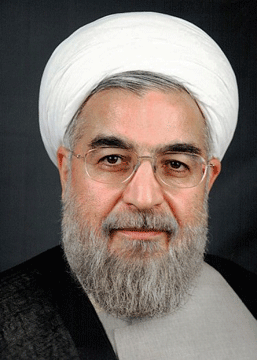 Iran prepared to fulfill nuclear deal commitments, president tells Coveney
Hassan Rouhani says United States must lift ‘illegal sanctions’ during Tehran meeting with Minister. Irish Times,7 Mar 21,
In a meeting with Minister for Foreign Affairs Simon Coveney, Mr Rouhani said: “Iran is ready to immediately take compensatory measures based on the nuclear deal and fulfil its commitments just after the US illegal sanctions are lifted and it abandons its policy of threats and pressure.”
The Iranian leader criticised the European signatories of the historic nuclear deal for what he said was their inaction on their commitments to the agreement. He said Iran was the only country that kept its side of the bargain………. https://www.irishtimes.com/news/politics/iran-prepared-to-fulfill-nuclear-deal-commitments-president-tells-coveney-1.4503539
UN’s nuclear watchdog agency will not be ‘bargaining chip’ in Iran nuclear deal,
UN’s nuclear watchdog agency will not be ‘bargaining chip’ in Iran nuclear deal, https://news.un.org/en/story/2021/03/1086092 The head of the UN’s nuclear watchdog agency told journalists on Monday that inspections in Iran should not be used as a “bargaining chip” to revive a troubled nuclear deal.
After speaking to the International Atomic Energy Agency’s (IAEA) Board of Governors, Director General Rafael Grossi told a press conference that while the agency had opened a window of opportunity for diplomacy in Iran, it should not be put in the middle of negotiations between Iran, the United States and other nations over the deal.
On 15 February, Iran announced that it would stop implementing “voluntary transparency measures” in the Joint Comprehensive Plan of Action (JCPOA), known commonly as the Iran nuclear deal, along with other arrangements in Iran’s Safeguards Agreement.
The IAEA chief said to the 35-nation board that a “temporary bilateral technical understanding” had been agreed upon during his visit to the country last month that would enable the UN agency to “resume its full verification and monitoring of Iran’s nuclear-related commitments under the JCPOA if and when Iran resumes its implementation of those commitments”.
Serious concern
The IAEA chief also raised the alarm that nuclear activities in the Democratic People’s Republic of Korea (DPRK), commonly known as North Korea, remains “a cause for serious concern”.
“The continuation of the DPRK’s nuclear programme is a clear violation of relevant UN Security Council resolutions and is deeply regrettable”, Mr. Grossi said, adding that the Vienna-based agency was intensifying its readiness “to play its essential role in verifying North Korea’s nuclear programme”.
Reviewing nuclear safety
The IAEA chief also drew attention to the agency’s Nuclear Safety Review 2021, which provides an overview of the agency’s activities and global trends in nuclear, radiation, transport and nuclear waste safety protcols, as well as in emergency preparedness and response.
“This year, it also identifies the priorities in these areas, and provides an analytical overview of overall trends”, he said.
Moreover, the UN official flagged IAEA’s work in strengthening global preparedness for future pandemics through its Zoonotic Disease Integrated Action (ZODIAC) initiative on diseases, that jump from animals to humans – the common path for viruses such as COVID-19.
He said the initiative will help to reduce the chance that the next outbreak will wreak “the deadly destruction we are suffering today”.
And Mr. Grossi informed the members that last week, IAEA signed revised arrangements with the Food and Agriculture Organization (FAO) to “help Member States respond to emerging challenges from climate change to outbreaks of zoonotic diseases”.
Climate on the table
As the Agency prepares for the 2021 UN Climate Change Conference, known as COP26, scheduled for November in Glasgow, Scotland, Mr. Grossi said that he would personally deliver the message that “nuclear energy has a seat at the tables when the world’s future energy and climate policies are being discussed”.
“Almost five years after the signing of the Paris Agreement, governments are becoming increasingly aware that they must shift from fossil fuels to nuclear and other low-carbon technologies, if they are to reach their net zero objectives”, Mr. Grossi said.
The Director-General concluded by assuring that the agency was continuing its work on advancing gender equality, and invited Member States to join a panel discussion with some of the IAEA’s early women pioneers on 8 March, International Women’s Day.
Iran nuclear deal: a summary
-
- What is the Iran nuclear deal? The 2015 “Joint Comprehensive Plan of Action” (JCPOA), sets out rules for monitoring Iran’s nuclear programme, and paves the way for the lifting of UN sanctions.
- Which countries are involved? Iran, the five members of the Security Council (China, France, Russia, UK, US), plus Germany, together with the European Union.
- What is the UN’s involvement? A UN Security Council resolution to ensure the enforcement of the JCPOA, and guarantee that the UN’s atomic energy agency, the IAEA, continues to have regular access to and more information on Iran’s nuclear programme, was adopted in 2015.
- Why is the deal at risk? The current US Administration pulled out of the deal in 2018 and re-imposed sanctions. In July 2019, Iran reportedly breached its uranium stockpile limit, and announced its intention to continue enriching uranium, posing a more serious proliferation risk.
The American media sanitises the Biden administration’s killings in Syria
 Purging Inconvenient Facts in Coverage of Biden’s ‘First’ Air Attacks https://fair.org/home/purging-inconvenient-facts-in-coverage-of-bidens-first-air-attacks/ Purging Inconvenient Facts in Coverage of Biden’s ‘First’ Air Attacks https://fair.org/home/purging-inconvenient-facts-in-coverage-of-bidens-first-air-attacks/
GREGORY SHUPAK 5 Mar 21, When the Biden administration bombed Syria on February 25, the attack killed “at least 22,” most of them members of Iraqi militias, according to the Syrian Observatory for Human Rights, a London-based monitoring organization opposed to the Syrian government. The US said the bombing was retaliation for three rocket
 attacks on US bases in Iraq that it claims were carried out by groups allied with Iran (NBC, 2/25/21). In one of the attacks, rockets fired at Erbil airport killed a military contractor and an Iraqi civilian. attacks on US bases in Iraq that it claims were carried out by groups allied with Iran (NBC, 2/25/21). In one of the attacks, rockets fired at Erbil airport killed a military contractor and an Iraqi civilian.
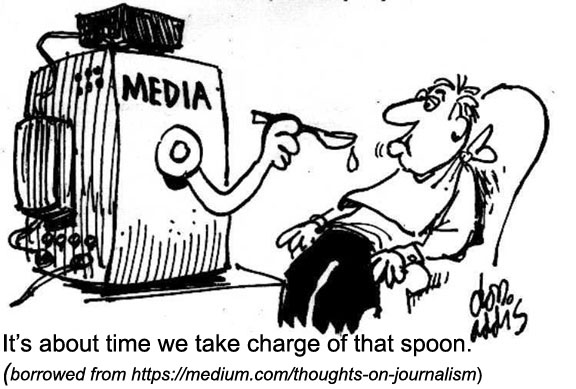
The US does not say that its airstrike on Syria was aimed at the group that carried out the Erbil attack, which, as the New York Times (2/26/21) reported, was claimed by a previously unknown armed group calling itself the Guardians of the Blood. United States officials said it appeared to be affiliated with one or more of Iraq’s better-known militias, and Thursday’s strikes in Syria targeted facilities belonging to them. Furthermore, the site that the US bombed in Syria “was not specifically tied to the rocket attacks” (CNN, 2/25/21). A New York Times (2/25/21) report from Helene Cooper and Eric Schmitt ran with the headline, “US Airstrikes in Syria Target Iran-Backed Militias That Rocketed American Troops in Iraq.” However, the 11th paragraph of the article said that “little is known about” Guardians of the Blood, “including whether it is backed by Iran or related to the organizations that used the facilities the American airstrikes targeted on Thursday.” Manufactured amnesia CNN’s Barbara Starr, The less clear the US population is about the frequency and scale of murderous violence its government carries out, the easier it is for the US ruling class to go about its wars. Fortunately for the US state, corporate media help manufacture collective amnesia by expunging US aggression from the record. Liebermann and Nicole Gaouette (2/25/21) said the February 25 airstrikes “mark the US military’s first known action under President Joe Biden,” while their colleague Fareed Zakaria (GPS, 2/28/21) had a segment about them called “Biden’s First Military Action.” Christian Science Monitor (3/2/21) ran an editorial called “Biden’s First Use of Force Overseas.” Yet not even a month before Biden bombed Syria, the US carried out an airstrike in Iraq that it said killed ISIS commander Jabbar Salman Ali Farhan al-Issawi and nine other ISIS fighters (New York Times, 1/29/21). Furthermore, Airwars, a nonprofit monitoring group affiliated with the University of London, suspects the US of carrying out or helping to carry out four bombings in Somalia in the period between Biden’s inauguration and the attack on Syria, killing 2–4 people in one case and 6–12 on two other occasions. The US military stopped disclosing its airstrikes in Afghanistan last year, but it is unlikely that military operations in the US’s longest overseas war came to a halt when Biden took office. Purging inconvenient facts is another way of producing mass forgetfulness and confusion. Flying colors To praise Biden’s killings, corporate media pretended the US was fighting back against a bully. Max Boot of the Washington Post (2/26/21), writing that Biden “is passing his early tests with flying colors” and “is off to an excellent start,” claimed that “if Biden did nothing in response to the latest Iranian provocations, he would have risked sending a message of weakness that would have further emboldened Tehran.” In Boot’s opinion, “Biden ordered the right response: an airstrike on a Syrian base used by Iranian-backed militias.” He praised Biden for negotiating with Iran while simultaneously “engaging in a policy of active containment and deterrence to curb Iran’s destabilizing activities in the region,” which he characterized as “regional aggression.” (The Times‘ February 26 piece used similar language, writing that the prospect of a new nuclear deal with Iran is overshadowed by “the issue of Iran’s destabilizing activities across the Middle East.”)
Forget for a moment that no evidence has been provided that Iran was actually behind the relevant rocket attacks: Boot apparently doesn’t think he even has to say what “Iran’s destabilizing activities in the region” are, nor where its “regional aggression” takes place, let alone offer any proof for these claims. The US murdered an Iranian general who was revered in his country (FAIR.org, 1/21/20), invaded Iraq and causing the death of upward of 1 million people (Jacobin, 6/19/14), resupplied Israel with weaponry (Al Jazeera, 7/31/14) as it slaughtered more than 2,000 Palestinians in Gaza, played a central role in a war that has made Yemen home to the world’s worst humanitarian crisis (Middle East Eye, 11/17/17): For Boot, evidently, nothing on this nonexhaustive list of recent US crimes in the Middle East constitutes “regional aggression” or “destabilizing activities in the region” that need “active containment and deterrence.” Boot was hardly the only journalist who rationalized the American bombing by portraying the US as acting defensively. The Post‘s Jennifer Rubin (2/28/21) said Biden had “responded forcefully” to “Iranian proxy attacks,” and thereby sent an “important…signal to Iran that the new administration will not look the other way on Tehran’s regional conduct simply to encourage discussion about” Iran’s nuclear power program. Cooper and Schmitt (New York Times, 2/25/21) noted that the US dropped “seven 500-pound bombs” on Syria, and described this as Biden taking “a more measured response to the rocket fusillade in Erbil than Mr. Trump’s pitched campaign against Iran and past actions of its proxies in Iraq.” Set aside the absurdity of calling dropping nearly two tons of bombs “measured”; set aside the lack of evidence of Iranian responsibility for the deaths at Erbil; set aside that the US doesn’t claim that it bombed the parties that fired the rockets that killed the contractor and the Iraqi civilian in Erbil, and assume for the sake of argument that Iran is behind those acts. The pretense that the US defended itself by carrying out last week’s airstrikes also necessitates glossing over the fact that the country Washington actually bombed, Syria, is accused of neither sponsoring nor carrying out the rocket attacks on American bases in Iraq that should not be there in the first place. The articles I’ve examined all acknowledge that the US airstrikes hit Syria, but it’s remarkable how little attention they pay to the country, especially considering that the bombing was aimed at groups allied with the Syrian government in that country’s war, so the attack amounts to an intervention on behalf of anti-government forces there. Had the coverage paid more notice to how Biden’s bombing was carried out against a country that the US has helped to decimate (FAIR.org, 3/7/18; Electronic Intifada, 3/16/17), despite Syria not attacking or threatening to attack the US, the narrative that Biden was merely conducting a “response” to bad actors would have been that much more obviously threadbare. Securing consent for running a lethal, worldwide empire requires unremitting propaganda: Redacting the historical record and playing the victim are two useful strategies. |
|
Iran’s foreign minister says Tehran will offer a constructive plan for nuclear talks
Iran’s Zarif to offer ‘constructive’ plan for nuclear talks https://www.aljazeera.com/news/2021/3/5/irans-zarif-to-offer-constructive-plan-amid-hopes-of-informal
Announcement comes after European diplomatic sources said Tehran recently gave encouraging signs about opening informal talks over the nuclear deal. Iran will soon present a “constructive” plan of action, Foreign Minister Mohammad Javad Zarif said on Friday, after European sources said Tehran gave positive signs about opening informal talks about its nuclear programme.
“As Iran’s FM [foreign minister] & chief nuclear negotiator, I will shortly present our constructive concrete plan of action – through proper diplomatic channels,” Zarif said on Twitter.
A French diplomatic source and another European official said on Thursday that Iran had given encouraging signs in recent days about opening informal talks after European powers scrapped plans to criticise Tehran at the UN nuclear watchdog.
Iran has so far refused to take part in a meeting brokered by the European Union between world powers and the United States on reviving its 2015 nuclear deal.
Iran’s nuclear policy is decided by the country’s top authority, Supreme Leader Ayatollah Ali Khamenei, and not the president or the government.
Tehran and Washington have emerged from former US President Donald Trump’s attempts to wreck Iran’s nuclear deal but are locked in a standoff over who should move first to save it. Trump pulled out of the landmark accord in 2018.
Britain, France, and Germany decided to pause the submission of a resolution critical of Iran at the International Atomic Energy Agency (IAEA) on Thursday to not harm the prospects for diplomacy, after what they said were concessions gained from Iran to deal with outstanding nuclear issues.
Biden’s illegal bombing of Iranian-backed militias in Syria jeopardises nuclear negotiations
|
Biden “Illegally” Bombs Iranian-Backed Militias in Syria, Jeopardizing Nuclear Talks with Tehran, DEMOCRACY NOW, MARCH 01, 2021 The Biden administration is facing intense criticism from U.S. progressives after carrying out airstrikes on eastern Syria said to be targeting Iranian-backed militia groups. The London-based Syrian Observatory for Human Rights reports at least 22 people died. The Pentagon called the assault a response to recent rocket attacks on U.S. forces in northern Iraq. Those attacks came more than a year after Iraq’s parliament voted to expel U.S. troops — an order ignored by both the Trump and Biden administrations.
“Very quickly the Biden administration is falling into the same old patterns of before, of responding to this and that without having a clear strategy that actually would extract us from these various conflicts and actually pave the way for much more productive diplomacy,” says Trita Parsi, executive vice president of the Quincy Institute. We also speak with California Congressmember Ro Khanna, who says President Biden’s recent airstrikes in Syria lacked legal authority. “This is not an ambiguous case. The administration’s actions are clearly illegal under the United States’ law and under international law,” says Khanna.
|
|
Influence of Biden administration brings peaceful push between India, China, Pakistan
India’s sudden peace push with nuclear rivals China, Pak shows Biden impact, Business Standard, 27 Feb 21, The detente in South Asia shows all three countries responding to initiatives from the Biden administration After a year of some of the worst fighting on India’s frontiers with Pakistan and China, all three countries are suddenly talking peace as they wait to see how President Joe Biden will shift policy in the region.
India and China’s top diplomats on Thursday discussed plans to disengage troops from their Himalayan border, which last year saw the deadliest clashes since the 1970s. The phone call between Subrahmanyam Jaishankar and his Chinese counterpart Wang Yi, which stretched for more than an hour, came shortly after India and Pakistan released a rare joint statement by senior army officials announcing a halt in operations along their border.
The moves reduce tensions in one of Asia’s top flashpoints, where three nuclear-armed countries regularly challenge each other’s territorial claims. While India and Pakistan have fought three wars since Britain left the subcontinent and barely have any trade, tensions between New Delhi and Beijing escalated last year to the point where Prime Minister Narendra Modi banned hundreds of Chinese apps and slowed investment approvals.
The Biden administration welcomed the announcement on reimplementing the 2003 ceasefire agreement, which it had advocated. “When it comes to the US role, we continue to support direct dialogue between India and Pakistan on Kashmir and other issues of concern,” US State Department spokesman Ned Price told reporters.
Previous moves toward peace between India and Pakistan, including a statement in May 2018 after an escalation of cross-border shelling, have dissipated quickly. Whether they can actually build on this and move toward a more permanent peace remains an open question, but at least for the moment the shifting geopolitical winds are providing a seemingly rare opportunity to talk instead of fight.
“It eases the pressure,” Najmuddin Shaikh, Pakistan’s former foreign secretary and ambassador to nations including the U.S., said by phone when asked about the ceasefire. “Essentially what needs to come ahead is what has been proposed — that there be a resumption of dialogue.” https://www.business-standard.com/article/current-affairs/india-s-sudden-peace-push-with-nuclear-rivals-china-pak-shows-biden-impact-121022600628_1.html
The JCPOA nuclear deal from the point of view of Iran
|
Fool me once: How Tehran views the Iran nuclear deal https://ecfr.eu/article/fool-me-once-how-tehran-views-the-iran-nuclear-deal/Europe and the US should focus their efforts on swiftly returning to the original nuclear agreement with Iran rather than holding out for the unlikely prospect of better terms
Ali Reza Eshraghi 25 February 2021 In Tehran, the initial hopes for what the Biden administration could offer Iran – particularly in terms of a revived economy – are fading. Iranian leaders recognise that, although the new president in the White House says he wants to rejoin the 2015 nuclear deal, there has been little tangible shift away from the Trump-era maximum pressure campaign against Iran. While there is still a possibility that the agreement will be revived, it increasingly appears to Tehran that the process will be a marathon and not a sprint.
It is often difficult to find a consensus between Iranian leaders on the benefits of diplomacy with the West, but there is one point on which they agree: Tehran must end its “strategic patience” in the implementation of the nuclear deal. The rhetoric for public consumption varies between different camps in Iran, who differ on the extent and method of the response. However, political elites now generally agree that Iran should not allow itself to be ‘duped’ by the United States again – and that Tehran should not reverse any steps to accelerate its nuclear programme until Washington is certain to ease sanctions in return. THE MOOD IN TEHRANSince the November 2020 US presidential election, Tehran has left the door open for the US to return to its commitments under the Joint Comprehensive Plan of Action (JCPOA). And it has offered several pathways for achieving this. Iran’s foreign minister, Javad Zarif, suggested that the European Union, as the coordinator of the Joint Commission established under the agreement, could choreograph a return to compliance – indicating a shift away from Tehran’s original position that Washington should lift all sanctions first before Iran reversed any elements of its nuclear programme. For now, the response on the US side seems less flexible – with Biden administration officials continuing to insist that Iran must return to full compliance with the deal before it receives any economic relief. Last week, the Iranian authorities announced that, as of 23 February, they would implement a law requiring the government to further reduce compliance with the JCPOA. This would involve, most importantly, the suspension of voluntary implementation of some international inspections. It was only after this announcement that the US made a series of symbolic gestures to soften its attitude towards Tehran. For instance, President Joe Biden stated that the US is “prepared to reengage in negotiations” with parties to the JCPOA. The hardline-leaning Kayhan Daily and a government-affiliated newspaper credited Iran’s ultimatum with prompting these last-minute US moves. Rather than worrying about their domestic rivals, power players in Iran are currently more concerned about how splits within Biden’s team are slowing down decision-making on the JCPOA in the US. Even the Rouhani administration has become more cautious than it once was about Biden’s willingness to return to the original nuclear agreement, fearing that his recent offer of talks is designed to force Iran to accept a broader set of terms. It is true that Iran’s latest decision to reduce inspections by the International Atomic Energy Agency (IAEA) was engineered by a parliament controlled by the so-called “Principlists” – a group comprising roughly equal numbers of hardliners and radical hardliners. But, even if the parliament did not have such a composition, the Rouhani administration would have felt that it had no choice but to send a strong signal against the United States’ indecision over how and when to return to the JCPOA. So far, Iran has been waiting for moves from the Biden administration that indicate it is serious about rejoining the JCPOA. The measures the US has taken in recent days – such as easing travel restrictions on Iranians diplomats in New York and rescinding the Trump administration’s failed attempt to snap back UN sanctions – are largely viewed in Tehran as symbolic rather than substantive. In recent days, Iran has reportedly made progress in its talks with Asian countries over gaining access to its frozen offshore accounts. If these discussions do indeed move forward, it could suggest that the Biden administration is showing some flexibility, by providing Iran with access to these funds for humanitarian trade. Iran may regard such moves by Biden as a reasonable way to start a technical dialogue on how to implement the nuclear deal – one facilitated by the EU. DIPLOMACY AND DOMESTIC POLITICSEven as Iran sets deadlines for its JCPOA compliance, the clock is ticking in its domestic politics – with a presidential election scheduled for June. The Principlists hope for an easy win in the contest, counting on the kind of relatively low voter turnout seen in the 2020 parliamentary election. Disillusioned with the futility of choosing the best bad option, the average Iranians needs a strong incentive to turn up at the polling station. But the hardliners’ optimism may be premature. In 2013 they were as confident that they would win as they are now. Yet, less than two months before that election, the tide turned. Iranians often do not decide who to vote for until the last few weeks before an election. In an undisclosed national poll conducted by ISPA in December 2020, more than 38 per cent of respondents said that they might consider voting “if economic conditions improve”. As such, there is some concern among hardliners that a swift US return to the JCPOA, and sanctions relief, would improve the chances of Rouhani-affiliated candidates. This is why some commentators speculate that Principlists feel it is necessary to obstruct Rouhani’s efforts to persuade the US to ease sanctions before the election. In theory, this is a sound Machiavellian move. However, it does not necessarily correspond with Iran’s current political dynamics. Most Iranian elites of all political leanings want to reduce the pressure on the economy, and recognise that US sanctions have a role to play in this. In their opinion, it is better for it to happen today than tomorrow, as highlighted in a recent string of interviews published on the supreme leader’s website. Media outlets affiliated with the Islamic Revolutionary Guard Corps (IRGC) are not cheering for Zarif and his team, but they are not lambasting him either. The editor-in-chief of Javan, the flagship IRGC daily, has even called Rouhani’s recent technical arrangement with IAEA a “smart” move. And the Kayhan Daily has also cautiously supported the arrangement. At present, only a radical minority in the Iranian political system are against the revival of the JCPOA. Saeed Jalili, the former chief Iranian nuclear negotiator (and a possible contender in the upcoming election), represents this minority. Yet, more broadly, Rouhani’s rivals prefer not to bet too heavily against the JCPOA. For one thing, they do not want the blame for Iran’s economic troubles to shift onto them. For another, they believe that public disapproval of Rouhani and his allies is so intense that even the revival of the JCPOA will not reverse it – and, as such, there may be little point in campaigning against the agreement. Finally, they have other tools at their disposal to weaken the pro-Rouhani coalition – which is extremely fragile – before the election. One such tool is parliamentary manipulation of the government’s proposed budget bill for next year – which, if implemented, would increase the dollar exchange rate and, accordingly, the price of staple goods in the months leading up to the election. This could make voters resent the Rouhani camp even more. Iran’s electoral cycle could have an influence on the political space in Tehran for engaging with the US and Europe, but it is unlikely to be the most significant factor in whether diplomacy on the JCPOA succeeds. There is now a general consensus in Iran that the country should stabilise the nuclear deal with the Biden administration, thereby rebooting the economy through benefits granted under the deal. A more pressing issue for Iran’s leaders is whether the US will rejoin the agreement without seeking to change its terms. It is highly unlikely that the US and Europe will be able to strike a broader agreement with Iran unless they first rejoin the original JCPOA – under either the current or next government in Tehran. The longer the US takes to rejoin the JCPOA, the greater the support in Tehran for accelerating the Iranian nuclear programme. In the coming weeks, European and US efforts should focus on a swift return to the JCPOA rather than holding out for the unlikely prospect of a new nuclear formula with Iran. Ali Reza Eshraghi is the projects director of the Institute for War and Peace Reporting’s MENA division and a visiting scholar at the UNC Center for Middle East and Islamic Studies. |
|
Assange’s partner exposes ongoing denial of his legal and democratic rights,
|
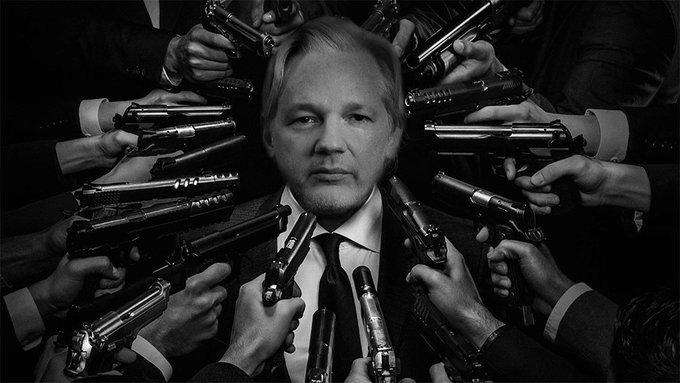
Moris provided a succinct summary of the issues of democratic principle at stake, in the US attempt to prosecute Assange for lawful publishing activities that exposed war crimes, and updated his supporters on the current stage of the legal campaign to secure his freedom. The January 4 verdict, forbidding extradition, had “taken into account” the “extensive medical evidence” presented during last year’s trial, Moris explained. Assange’s dispatch to the US had been blocked on the grounds that it would be “oppressive.” His health issues, including serious depression, and the brutal character of the US prison system, meant there would be a great risk of Assange taking his own life if he were extradited. The US immediately responded, in the final days of the administration of President Donald Trump, by formally signalling an appeal. Trump’s Democratic Party successor, President Joe Biden, in his first weeks in office, rejected calls by civil liberties and press freedom organisations for the US Department of Justice to drop its pursuit of Assange, demonstrating the bipartisan character of the persecution. The High Court will decide after March 29 whether prosecutors, acting on behalf of the US state, will be permitted to proceed with their appeal. Moris stated that the next stage for the defence was to submit a response to the US grounds of appeal. She then reviewed the anti-democratic implications of Judge Vanessa Baraitser’s January 4 ruling. It had denied Assange’s extradition on health grounds, but “did not side with him on the wider public interest arguments.” Baraitser had upheld virtually all of the prosecution’s substantive arguments, effectively green-lighting future attempts by governments to prosecute journalists and publishers for exposing material that they deem to be “classified” and of “national security” significance, regardless of the public interest of what is exposed. Continue reading |
Luxembourg’s continued fight against nuclear power in Europe
How do you remember the nuclear incident at Fukushima?
Some countries still see it as a cheap, emissions-free source of power. What will it take to change their minds?
It’s a constant battle. Some countries, also in Europe, see nuclear energy as a solution to the climate crisis. That is a fallacy. First, it’s not cheap. Hinkley Point in the UK, for example, will only work out economically at a fixed tariff that is higher than the price for renewable energy. The waste problem hasn’t been solved.
The European Commission is technology neutral, leaving it up to member countries to decide whether to use nuclear power. What challenges does this pose?
Luxembourg still uses nuclear energy in its network. By when would you like to see this phased out?
You came out strongly against Belgium exploring nuclear waste storage sites near Luxembourg, with the Belgian environment minister citing a “serious diplomatic incident”. Would you react in the same way again today?
France is in the process of exploring lengthening the lifespan of some of its reactors. What do you hope will happen with the Cattenom site in the next ten years?
Obviously, I want Cattenom to close and for there to be no extension. If I look towards the future, the best solution would be a switch to renewables, to new jobs and in favour of a circular economy. It’s about enabling a transition for the people working in this sector, too. Cattenom is a big power station.
1 This Month

of the week – THE ONENESS of HUMANITY
26 June – Radiation Trainwreck at the NRC / Join the Protect Better Campaign – https://us02web.zoom.us/meeting/register/4ZlZ5_qLSHGiLSCg8FF6Bg#/registration
1st July – Webinar Waste of Space: The Environmental Harm of Military and Civil Space Activity st July, 7 pm

Report Launch Online: We are seeing an increasing exploitation of space for military and commercial purposes. This must change.

Protect Sazan Island from the Trump family! https://secure.avaaz.org/campaign/en/protect_sazan_island_from_the_trump_family_loc/?bqFCVab&v=174511&cl=22707147157&_checksum=5e9dde668860e8231c33699735e16a1fbf22ab2cb01da50c999fe8732b9775ef&utm_source=email&utm_medium=blast_email&utm_campaign=174511


Cuba Is Not a Failed State – It Is a Besieged State
PETITION: “Global Appeal to Endorse Palestinian Right of Return of Refugees”
To see nuclear-related stories in greater depth and intensity – go to https://nuclearinformation.wordpress.com
-
Archives
- June 2026 (251)
- May 2026 (306)
- April 2026 (356)
- March 2026 (251)
- February 2026 (268)
- January 2026 (308)
- December 2025 (358)
- November 2025 (359)
- October 2025 (376)
- September 2025 (257)
- August 2025 (319)
- July 2025 (230)
-
Categories
- 1
- 1 NUCLEAR ISSUES
- business and costs
- climate change
- culture and arts
- ENERGY
- environment
- health
- history
- indigenous issues
- Legal
- marketing of nuclear
- media
- opposition to nuclear
- PERSONAL STORIES
- politics
- politics international
- Religion and ethics
- safety
- secrets,lies and civil liberties
- spinbuster
- technology
- Uranium
- wastes
- weapons and war
- Women
- 2 WORLD
- ACTION
- AFRICA
- Atrocities
- AUSTRALIA
- Christina's notes
- Christina's themes
- culture and arts
- Events
- Fuk 2022
- Fuk 2023
- Fukushima 2017
- Fukushima 2018
- fukushima 2019
- Fukushima 2020
- Fukushima 2021
- general
- global warming
- Humour (God we need it)
- Nuclear
- RARE EARTHS
- Reference
- resources – print
- Resources -audiovicual
- Weekly Newsletter
- World
- World Nuclear
- YouTube
-
RSS
Entries RSS
Comments RSS
 nuclear-news