Several European States urge that nuclear energy be excluded from the EU’s green finance taxonomy.
EU anti-nuclear states urge excluding nuclear from green taxonomy, Nuclear Engineering, 5 July 2021 A group of five EU member states led by Germany have sent a letter to the European Commission (EC) asking for nuclear energy to be kept out of the EU’s green finance taxonomy.

“Many savers and investors would lose faith in financial products marketed as ‘sustainable’ if they had to fear that by buying these products they would be financing activities in the area of nuclear power.”
the JRC report also “disregards the life-cycle approach” to environmental risk assessment when it comes to geological storage of nuclear waste. ”
The letter, which was signed by the environment or energy ministers from Austria, Denmark, Germany, Luxembourg, and Spain, notes “shortcomings” in a report by the European Commission’s Joint Research Centre (JRC).
Although the letter is undated, Euractiv said it understands it was sent to the EC on 30 June. Signatories include: Svenja Schulze (Germany), Leonore Gewessler (Austria), Dan Jørgensen and Simon Kollerup (Denmark), Carole Dieschbourg (Luxembourg), Teresa Ribera Rodríguez and Nadia Calviño Santamaría (Spain).
“Nuclear power is incompatible with the Taxonomy Regulation’s ‘do no significant harm’ principle,” the ministers wrote, urging the Commission to keep nuclear out of the EU’s green finance rules. “We are concerned that including nuclear power in the Taxonomy would permanently damage its integrity, credibility and therefore its usefulness,” they warned.
The letter says the EC’s assessment of the safety of nuclear power installations is flawed. “We were disconcerted to learn that in the opinion of the Joint Research Centre (JRC), there were no indications that the high-risk technology that is nuclear power is more damaging to human health and to the environment than other forms of energy generation, such as wind and solar energy.” The ministers add: “Nuclear power, however, is a high-risk technology – wind energy is not. This essential difference must be taken into account.” They say the JRC report deliberately ignored the possibility of a serious incident.
The Ministers argue: “Many savers and investors would lose faith in financial products marketed as ‘sustainable’ if they had to fear that by buying these products they would be financing activities in the area of nuclear power.” They allege that the JRC report also “disregards the life-cycle approach” to environmental risk assessment when it comes to geological storage of nuclear waste.,,,,,,,,,,,
The letter says the EC’s assessment of the safety of nuclear power installations is flawed. “We were disconcerted to learn that in the opinion of the Joint Research Centre (JRC), there were no indications that the high-risk technology that is nuclear power is more damaging to human health and to the environment than other forms of energy generation, such as wind and solar energy.” The ministers add: “Nuclear power, however, is a high-risk technology – wind energy is not. This essential difference must be taken into account.” They say the JRC report deliberately ignored the possibility of a serious incident.
The Ministers argue: “Many savers and investors would lose faith in financial products marketed as ‘sustainable’ if they had to fear that by buying these products they would be financing activities in the area of nuclear power.” They allege that the JRC report also “disregards the life-cycle approach” to environmental risk assessment when it comes to geological storage of nuclear waste.https://www.neimagazine.com/news/newseu-anti-nuclear-states-urge-excluding-nuclear-from-green-taxonomy-8869307
Need for a USA”no first use” of nuclear weapons policy – the concern of regional U.S. allies
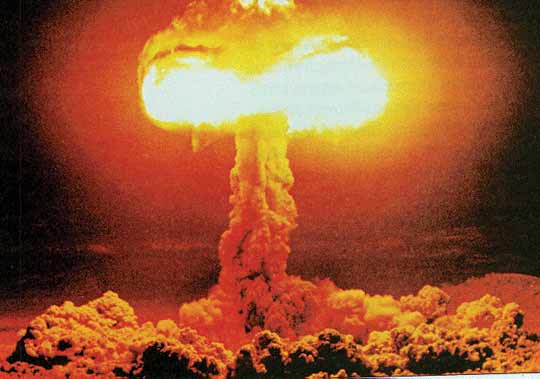
In our lead article this week, Van Jackson makes a compelling case for the United States to establish a no-first use policy on nuclear weapons. This would entail a pledge from Washington that its nuclear arsenal would not be used as a means of warfare except in the event that it was first subject to a nuclear attack by an adversary. While there is already some momentum behind such a policy amongst Democrats, Biden has taken no concrete steps towards implementing it and it has yet to be legislated by Congress.
No-first use nuclear policy. https://www.eastasiaforum.org/2021/07/05/no-first-use-nuclear-policy/ Author: Editorial Board, ANU, 5 July 21,
Since the election of Joe Biden in 2020, much of the world has breathed a collective sigh of relief as we have witnessed what appears to be a return to ‘pre-Trump normalcy’ in the United States. One of the greatest foreign policy challenges that faces the Biden administration, however, is recovering US credibility in Asia, which was severely undermined by his predecessor Donald Trump.
From the standpoint of US allies in the region, a concerning aspect of Trump’s rise to the presidency was his loose talk about nuclear weapons and apparent openness to utilising them against adversaries. While most allies have long emphasised the immense benefits of the US security guarantee and its attendant nuclear umbrella, Trump’s rise to power rendered alliance relationships potential liabilities.
These concerns among allies in the region were significantly elevated in 2017, when Trump began to entertain the prospect of launching a pre-emptive — albeit non-nuclear — strike against North Korea. He supposedly even went so far as to order an evacuation of US servicemen and their families from Seoul — an injunction that was ultimately not carried out by US officials in South Korea. His apparent willingness to engage in conflict with a nuclear-armed North Korea was reinforced rhetorically as he threatened ‘fire and fury’ against Kim Jong-un’s regime.
These developments had US allies (and non-allies alike) in the region beleaguered by the prospect of nuclear war in the region. Their concerns were reinforced by Trump’s predilection to appoint family members — with little to no foreign policy expertise — as official advisors. The notion that a US-initiated conflict with North Korea, entailing probable commitment by American allies, might be informed in part by the likes of Ivanka Trump and Jared Kushner was a severe indictment of alliance management.
The election of Joe Biden allayed some of the concerns of US allies. But the fact that Trump received over 70 million votes in the election and may run again for president in 2024 means that his tenure cannot be easily viewed as an unfortunate aberration.
What can Biden do during his presidency to restore confidence among American allies in the region, and restore US credibility in the aftermath of the Trump administration?
In our lead article this week, Van Jackson makes a compelling case for the United States to establish a no-first use policy on nuclear weapons. This would entail a pledge from Washington that its nuclear arsenal would not be used as a means of warfare except in the event that it was first subject to a nuclear attack by an adversary. While there is already some momentum behind such a policy amongst Democrats, Biden has taken no concrete steps towards implementing it and it has yet to be legislated by Congress.
Jackson outlines three common arguments that are cited against a non-first use nuclear policy: China, Russia and North Korea would never believe in the veracity of no-first use declarations; it would encourage uncertainty among adversaries as to whether the United States could use nuclear weapons against them; and there would also be concerns among American allies about the implications of a no-first use policy for US extended nuclear deterrence and Washington’s ability to deter threats on their behalf.
Yet Jackson argues that, ‘ … the world is no longer unipolar. The old bargain — Washington does arms-racing so allies don’t — makes no sense in a world where US politics is depressingly awry. Allied nuclear proliferation poses its own risks, but it may be a better alternative to US nuclear preponderance and presidential first-use launch authority’.
As the region becomes increasingly volatile, a policy of US restraint on the use of nuclear weapons has acquired new urgency. The advent of the Biden administration has done little to alleviate US–China tensions; Biden’s China policy so far appears to be a continuation of that of the Trump administration. Meanwhile, prospects of a cross-Strait crisis continue to rise and progress on the denuclearisation of North Korea remains elusive. These political tensions have been aggravated by economic destabilisation in the region that has been fuelled by the COVID-19 crisis.
These developments have spawned new concerns about conflict and the role of US alliances in the region. Some analysts believe that such conflict would have potential to evolve into nuclear war. Given that the US-led alliance network is premised on the maintenance of regional peace and security, it behoves Washington to clarify that it will not employ first use of nuclear weapons.
This is important for the Biden government. It is also important for the future US administrations that could see the likes of Trump with a finger back on the nuclear button.
The EAF Editorial Board is located in the Crawford School of Public Policy, College of Asia and the Pacific, The Australian National University.
Germany joins 15 other nations to call for an end to nuclear testing ‘once and for all’
Germany, Spain and Sweden: ‘End nuclear weapons testing’ https://www.dw.com/en/germany-spain-and-sweden-end-nuclear-weapons-testing/a-58158956
Germany is joining 15 other countries for a nuclear disarmament conference aiming to build momentum after a US-Russia summit renewed hopes for more arms control between the two nuclear powers.
German Foreign Minister Heiko Maas said ahead of a nuclear arms control conference on Monday that the threat of a nuclear arms race grows “where tension and mistrust predominate.”
“More than ever, we need steps that encourage trust through verifiable agreements created between nuclear-weapons states,” Maas said before departing to Madrid for a meeting of the Stockholm Initiative, which brings together 16 countries advocating global nuclear arms reduction.
The conference follows last month’s summit in Geneva between US President Joe Biden and Russian President Vladimir Putin pledged to start talks on arms control.
A statement after the summit said the US and Russia “seek to lay the groundwork for future arms control and risk reduction measures.”
“We need to build on this with clear steps by nuclear weapons states to fulfill their responsibility and obligations on disarmament,” Maas said, adding that the Geneva summit shows how progress is possible.
An end to nuclear testing ‘once and for all’
A joint editorial written by Maas, Spanish Foreign Minister Arancha Gonzalez Laya, and Swedish Foreign Minister Ann Linde listed several steps nuclear-weapons countries could take toward disarmament.
“This could include downgrading the role of nuclear weapons in strategies and doctrines, reducing the risk of conflict and an accidental nuclear weapon deployment, further reducing nuclear stockpiles and laying the foundations for a new generation of arms control agreements,” the foreign ministers wrote Monday in the Rheinische Post newspaper.
“We must end nuclear weapons testing once and for all by finally bringing the Comprehensive Nuclear-Test-Ban Treaty into force, restarting negotiations on a treaty banning the production of fissile material for military use, and building robust and credible capabilities to verify nuclear disarmament steps,” the editorial added.
What is the status of global nuclear arms control?
In February, the US and Russia agreed to extend the New START disarmament treaty. It limits the nuclear arsenals of both countries to 800 launchers and 1,550 ready-to-use nuclear warheads each.
The New START treaty is the only major arms control treaty in place between the US and Russia after the US withdrew from the Open Skies Treaty in May citing Russian non-compliance.
At the beginning of 2021, the US, Russia, the UK, France, China, India, Pakistan, Israel and North Korea possessed a total of 13,080 nuclear warheads, a decrease of 320 from the previous year, according to the Stockholm Peace Research Institute SIPRI annual report published in June.
Seychelles Votes to Ratify the Treaty to Prohibit Nuclear Weapons,
Seychelles Votes to Ratify a Treaty to Prohibit Nuclear Weapons, allAfrica, 5 July 21,
Seychelles is set to ratify the Treaty on the Prohibition of Nuclear Weapons after the National Assembly overwhelmingly approved a motion in support of the treaty, which has gained significant support among non-nuclear nations.
The Leader of Government Business, Bernard Georges, presented the motion last Wednesday and said the aim is to see nuclear weapons completely eliminated in the near future.
Seychelles has always been vulnerable to nuclear weapons,” Georges said. “Ever since the island of Diego Garcia became a military base, Seychelles has been at the centre of nuclear weapons and with numerous other military bases being set up in the region, we are surrounded by a nuclear presence.”…………………..
The treaty entered into force on January 22, 2021, after Honduras became the 50th country to ratify it.
Signatories to the treaty are barred from transferring or receiving nuclear weapons and other nuclear explosive devices, control over such weapons, or any assistance with activities prohibited under the Treaty.
Member states are also prohibited from using or threatening to use nuclear weapons and other nuclear explosive devices. They also cannot allow the stationing, installation, or deployment of nuclear weapons and other nuclear explosive devices in their territory.
In addition to the Treaty’s prohibitions, States Parties are obligated to provide victim aid and help with environmental remediation efforts.
Read the original article on Seychelles News Agency. https://allafrica.com/stories/202107050623.html
U.N. chief urges U.S. to remove Iran sanctions as agreed in 2015
U.N. chief urges U.S. to remove Iran sanctions as agreed in 2015
Michelle Nichols NEW YORK, June 30 (Reuters) – U.N. Secretary-General Antonio Guterres has appealed to U.S. President Joe Biden’s administration to lift or waive all sanctions on Iran as agreed under a 2015 deal aimed at stopping Tehran from developing a nuclear weapon.
In a report to the U.N. Security Council, Guterres also urged the United States to “extend the waivers with regard to the trade in oil with the Islamic Republic of Iran, and fully renew waivers for nuclear non-proliferation projects.”
The 15-member council discussed on Wednesday the secretary-general’s biannual report on the implementation of a 2015 resolution that enshrines the nuclear deal between Iran, the United States, France, Britain, Germany, Russia and China…….
Guterres’ appeal to Washington and Tehran comes amid talks to revive the deal – known as the Joint Comprehensive Plan of Action – under which Iran accepted curbs on its nuclear program in return for a lifting of many foreign sanctions against it……….https://www.reuters.com/world/middle-east/un-chief-urges-us-remove-iran-sanctions-agreed-2015-2021-06-30/
US must guarantee it will not leave nuclear deal again, says Iran
US must guarantee it will not leave nuclear deal again, says Iran
Tehran’s insistence signals that issue is still a serious obstacle after three months of talks in Vienna, Guardian, Patrick Wintour Diplomatic editor, Thu 1 Jul 2021 The date for a seventh round has not been set.
A US guarantee that it will never unilaterally leave the Iran nuclear deal again is vital to a successful conclusion of talks in Vienna on the terms of Washington’s return to the agreement, the Iranian ambassador to the UN, Majid Takht-Ravanchi, has said.
His comments are the clearest official signal yet that disagreements between the US and Iran on how such a guarantee might be constructed remain a serious obstacle. Donald Trump took the US out of the nuclear deal in 2018, only three years afterhis predecessor, Barack Obama, had signed it…….. https://www.theguardian.com/world/2021/jun/30/us-must-guarantee-it-will-not-leave-nuclear-deal-again-says-iran
….
Iraq’s stability depends on Iran and the US re-entering the nuclear deal
Iraq’s stability depends on Iran and the US re-entering the nuclear deal https://www.trtworld.com/opinion/iraq-s-stability-depends-on-iran-and-the-us-re-entering-the-nuclear-deal-47901
Reviving the nuclear deal would give Iran less of an incentive to target US positions in Iraq and support Baghdad’s sovereignty.
Iran’s Chief Justice Ebrahim Raisi has emerged as president after an election with one of the lowest turnouts in the Islamic Republic’s history.
This outcome favours Ayatollah Ali Khamenei, Iran’s Supreme Leader, as it consolidates power in the hands of the so-called “hardliners” in a triumvirate with the presidency and the Revolutionary Guard.
The last time such an alignment occurred was during the Bush administration and the election of Mahmoud Ahmadinejad in 2005. Both alignments also corresponded with more antagonistic American foreign policies.
By withdrawing from the nuclear deal and undermining Rouhani’s foreign policy, Trump confirmed the hardliner mantra that the US is fickle and cannot be trusted to honour any agreement. He also contributed to Raisi’s election, as well as what is set to be a more assertive Iranian foreign policy towards Iraq.
But this wasn’t the case before. Former president Hassan Rouhani’s foreign policy sought to respect Iraq’s sovereignty, which was at odds with the hardliners who wanted to use Iraq as a means of challenging the US during the more bellicose Trump administration.
The consolidation of hardliners in Tehran’s leadership today means that its internal foreign policy conflict no longer exists.
Iraq’s future is now tied to Iran and the US finding an agreement to re-enter the Iran nuclear deal.
After the September 11 attacks, Iran and the US shared enmity towards the Taliban in Afghanistan. The George W Bush administration missed a window to forge relations with what was then a conciliatory Iranian president Mohammed Khatami. Like Rouhani, Khatami sought to engage with the US.
However, the Bush administration declared that the Islamic Republic of Iran formed part of an “axis of evil,” which included Iraq and North Korea. In March 2003, American forces were on Iran’s border, having just successfully invaded Iraq, a member of the “Axis.”
It was then that Iran offered the US a comprehensive negotiation proposal, where the Islamic Republic was willing to open its nuclear program for inspections, work to stabilise Iraq and cooperate against Al Qaeda, offering Washington what Trump later asked of Iran during his administration.
The significance of this offer was not that it occurred during the presidency of a moderate, Khatami, but that it had the blessing of Khamenei, the key decision maker in Iran.
Yet former Vice President Dick Cheney responded, “We don’t talk to evil,” and the Bush administration never engaged with the Iranian offer.
The Axis of Evil speech led to the victory of Iranian hardliners in the nation’s parliament and after the Iraq War, hardline president Mahmoud Ahmadinejad won the presidency in 2005, an outcome that Khamenei would have favoured then in response to American belligerency.
When Washington refused Iran’s overture, the Islamic Republic then was in a position to undermine US presence in Iraq after 2005. One tool at Iran’s disposal was its support of a variety of Iraqi insurgents to target American forces.
Jump to 2021, and Iran is in a much better position to project its influence in Iraq due to its sprawling network of allied militias. This is a message that the Biden administration has surely received.
Ultimately Iran, with its new constellation of power in Tehran, has found a way to shore up its position at home and in the region ahead of any potential renegotiations of the nuclear deal.
The future of US-Iran relations
Negotiations over re-entering the Iran deal continue in Vienna. Had these negotiations succeeded under Rouhani’s administration, it would have given the moderate faction in Iran a victory prior to the elections.
While a hardliner consolidation of power would not bode well for Iraq’s sovereignty, a resumption of the Iran nuclear deal would. It gives Iran less of an incentive to foment rocket strikes at US targets in Iraq, which only intensified in the aftermath of Trump’s withdrawal from this agreement.
Ironically, with a hardliner ascendancy today, a new deal is more likely, as there is one Iranian faction at the negotiating table rather than competing ones. This ultimately means Baghdad’s future domestic security is contingent on events in far-off Vienna and the nuclear negotiation.
Notwithstanding the hardliners in power, their legitimacy still rests on getting the Trump-era sanctions rescinded. Meanwhile, the Biden administration most likely wants to settle this issue in the Middle East to focus its efforts on China.
As Ali Vaez and Dina Esfandiary write in the New York Times, “The alternative to negotiations — an exponentially growing Iranian nuclear program — threatens to set the United States and the Islamic Republic on a collision course where there will be no winners.”
In this case there will also be another loser, Iraq, caught again between the two adversaries’ conflict.
Russia, China Pledge to Not Use Nuclear Weapons First, Avoid Firing Missiles at Each Other
Russia, China Pledge to Not Use Nuclear Weapons First, Avoid Firing Missiles at Each Other , NewsWeek, BY JENNI FINK ON 6/28/21 Russia and China reaffirmed their friendship treaty amid increasing concerns about their growing relationship and the two countries continued a vow not to fire strategic missiles at each other.
Russia President Vladimir Putin and Chinese President Xi Jinping extended the 20-year Treaty of Good-Neighborliness and Friendly Cooperation, a document Putin credited with taking their relationship to “unprecedented height.” An extension that’s set to last for five years, it outlines that both countries will support each others’ right to defend their “national unity” and territories.
Article 2 has both countries promising to using “peaceful means” to resolve their differences, not the use of force, threat of force or economic pressures.
The contracting parties reaffirm their commitment that they will not be the first to use nuclear weapons against each other nor target strategic nuclear missiles against each other,” the treaty states.
Russia and China have grown closer as their relationships with the United States has deteriorated. Although Putin’s summit with President Joe Biden was seen as a positive step, America and Russia failed to see eye-to-eye on a number of topics, but they agreed to work together on the issue of nuclear weapons.
In a joint statement, the two countries agreed to “embark” on dialogue that would “lay the groundwork” for future arms control and risk reduction measures, acknowledging that “nuclear war cannot be won and must never be fought.”
One of two biggest nuclear powers, Putin’s endorsement of Russia’s nuclear deterrent policy raised concerns. The policy allows him to use nuclear weapons in response to a strike with conventional weapons, or if Russia gets “reliable information” about the launch of an attack against its territory or allies.
The strategy is “purely defensive,” according to General of the Army Valery Gerasimov, chief of the General Staff of the Armed Forces, but he defended Russia’s ability to use nuclear weapons at the Moscow International Security Conference last week……. https://www.newsweek.com/russia-china-pledge-not-use-nuclear-weapons-first-avoid-firing-missiles-each-other-1604865
The Pentagon drums up its full-spectrum dominance with the story of the ”China threat”
Countering the “China Threat”–At What Price? The Pentagon is upgrading its full-spectrum dominance, with China as the primary target. Organising Notes, the Global Network Against Weapons & Nuclear Power in Space.By Koohan Paik-Mander 27 June 21

In early June 2021, in a classified directive to Pentagon officials, U.S. Secretary of Defense Lloyd Austin slammed the former Trump administration for talking big but never taking action to counter “the China threat.”
Austin made it clear that things would be different under President Biden. His “tough guy” rhetoric strikes just the right tone for a massive, costly, military-infrastructure overhaul that would render the conventional warfare of the twentieth century unrecognizable: more nukes, fewer troops, and an omnipotent 5G network.
The goal of this overhaul is to give the United States and its allies the ability to summon, at once, unmanned military forces to rain terror down on any spot in the world—a swarm of drones, hypersonic missiles, submarine torpedoes, and bombers—all with the ease of calling an Uber.
This game-changing metamorphosis of how wars are fought is already underway. It’s called the JADC2 (Joint All-Domain Command & Control), a globally networked, cloud-based command center, overseen by the recently anointed U.S. Space Force.
It was for this that the Space Force was created—not as a jokey Trump trifle.
However, targeting China with this new paradigm for mass destruction will not bring about global security. Even if it were to somehow not culminate in a nuclear conflict, the ecological and climate costs of commanding war from outer space would be devastating. And yet, ever-more-mammoth military preparations are being staged in ever-more-numerous locations on Earth.
President Biden is in lockstep with Austin’s anti-China mission. Much of Biden’s $715 billion Pentagon budget request for 2022 is for investment in hypersonic weapons, artificial intelligence, micro-electronics, 5G technology, space-based systems, shipbuilding and nuclear “modernization” (read: expansion). The request seeks $28 billion to “modernize” the nuclear triad (the ability to launch nukes from land, sea, and air). The budget also includes the largest research-and-development request—$112 billion—in the history of the Pentagon.
Imagine that kind of support for healthcare.
Each line item is a deadly weapon, which, discretely, already carries terrifying implications. But, taken together, as part of the JADC2—an integrated, multi-dimensional system with machines responsible for pulling the trigger—the whole is far more chilling than the sum of the parts.
Among the types of missiles on Biden’s wish-list are some whose range exceeds the limits in the Intermediate-Range Nuclear Forces (INF) Treaty of 1987. But the INF Treaty is no longer in effect, after President Trump withdrew the United States from the agreement in August 2019, just four months before the creation of the Space Force. That means that Biden and Austin are now free to spend taxpayer money on these perilous weapons
Policy analyst Michael Klare has observed that this year’s budget subordinates all perceived threats to a single bogeyman-du-jour: China. War with China, specifically, means more nukes, long-range missiles, and unmanned weapons. These weapons are not just to be used by the United States, but are also for export to allies as well—much to the financial gain of weapons industrialists like Lockheed Martin and Raytheon.
For example, a declassified U.S. Department of Defense report from 2018 provides a directive to sell more arms to India, to “enhance India’s status as a Major Defense Partner,” and to “support India’s membership in the Nuclear Supplier’s Group.” The essence of the Pentagon’s massive global vision is to construct, from the ground up, a hard and soft infrastructure upon which the newly created Space Force can operate.
Just as the continent-spanning interstate highway system was laid during the 1950s to ensure a profitable future for the automobile industry, this new infrastructure—comprised of 5G, artificial intelligence, rocket launchpads, missile tracking stations, satellites, nukes, and internet-connected fleets of unmanned ships, jets, subs, hypersonic, and other craft—will ensure a reliably profitable assembly-line output of arms for the weapons industry.
In tandem with the military infrastructure will come a continued expansion of associated security infrastructure, such as increased surveillance and data collection of every individual on the planet. As a former board member at Raytheon, Lloyd Austin is perfectly positioned to pull this off. In fact, during his first three months as defense secretary, he awarded over $2.36 billion in contracts to the missile manufacturer he once faithfully served………..
China Threat = Yellow Peril
The Pentagon has a billion dollars a year to spend on public relations, and vilifying China has become Lloyd Austin’s top priority. He paints a picture of urgency so dire that it seems the only way to meet the challenge is to fund his comprehensive Weapons New Deal.
Once the new military infrastructure is fully in place, the Space Force will be equipped to dominate the planet. Until now, the INF Treaty’s cap on missile range prevented the implementation of this vision, given the hemispheric distance between China and the United States. Now that the treaty is no longer in effect, however, the Indo-Pacific theater is the ideal geography to debut this new way of warfare that relies on satellites to deliver strikes clear to the opposite side of the planet.
Thousands of satellites are already in place; thousands more will follow, thanks to private efforts by the likes of Elon Musk and Jeff Bezos. The United States is currently working through the UN to standardize 5G internationally. Algorithms are now being written to remove human decision-making from warfare. Pacific reefs have already been dredged, forests razed, and protestors arrested on islands encircling China to make way for destroyer berths and rocket launchpads—nodes of the global war infrastructure.,,,,,,,,,,,,,,,,,,
peace activist Sung-Hee Choi. [ in South Korea] points out that the THAAD system is made by Lockheed Martin and the associated radar is manufactured by Raytheon, where Austin previously served on the board. Choi adds that she is nervous about the intensifying military tension in her country and in northeast Asia: “I think recent anti-Asian hate is like a preparation for war against North Korea and China, just like when the Bush administration exploited anti-Muslim sentiments just before the invasions of Afghanistan and Iraq.”…….
Pacific Pivot and the First Island Chain
Military planners have been nurturing this Rubicon moment with China for at least a decade, beginning when Obama announced his “Pacific Pivot” toward Asia. Since then, communities in the Asia-Pacific region have been confronted with elaborate, ecocidal preparations for full-scale war with China. Natural resources have been destroyed to construct a globe-sweeping, networked infrastructure of missile deployment and satellite tracking.
That was the first phase of laying the groundwork for 21st century warfare. Biden’s current request for funding will expand this strategic rebalance of military forces into its second phase……………………http://space4peace.blogspot.com/2021/06/countering-china-threatat-what-price.html
Iran refuses to give nuclear site images to IAEA
Iran refuses to give nuclear site images to IAEA
Parisa Hafezi, DUBAI, June 27 (Reuters) – The speaker of Iran’s parliament said on Sunday Tehran will never hand over images from inside of some Iranian nuclear sites to the U.N. nuclear watchdog as a monitoring agreement with the agency had expired, Iranian state media reported.
“The agreement has expired … any of the information recorded will never be given to the International Atomic Energy Agency and the data and images will remain in the possession of Iran,” said Mohammad Baqer Qalibaf.
The announcement could further complicate talks between Iran and six major powers on reviving a 2015 nuclear deal……………… https://www.reuters.com/world/middle-east/iran-says-nuclear-site-images-wont-be-given-iaea-deal-has-expired-2021-06-27/
Iran says Nuclear Deal Salvageable But Will Not Negotiate Forever
 |
Iran Says Nuclear Deal Salvageable But Will Not Negotiate Forever NDTV, 27 June 21,
Iran and the US have been holding indirect talks on reviving the 2015 agreement between Tehran and six powers that imposed restrictions on Tehran’s nuclear activities in exchange for lifting international sanctions.
Dubai:
Iran said on Saturday it believes a reinstatement of its 2015 nuclear deal with major world powers is possible but warned that Tehran “will not negotiate forever”.
“Out of a steadfast commitment to salvage a deal that the US tried to torpedo, Iran has been the most active party in Vienna, proposing most drafts,” Iranian Foreign Ministry spokesman Saeed Khatibzadeh said on Twitter, referring to talks aimed at reviving the nuclear deal.
Iran and the United States have been holding indirect talks on reviving the 2015 agreement between Tehran and six powers that imposed restrictions on Tehran’s nuclear activities in exchange for lifting international sanctions. …………. https://www.ndtv.com/world-news/iran-says-nuclear-deal-salvageable-but-will-not-negotiate-forever-2473303
South Africa the only country to have dismantled its nuclear weapons capability,
SA the only country to have dismantled its nuclear weapons capability, Robin Möser 25 Jun 2021 ext month, on 10 July, marks the 30th anniversary of South Africa’s accession to the Treaty on the Non-Proliferation of Nuclear Weapons (NPT), but it seems this step will not receive the world’s attention it should get. South Africa is still the only example of a state that has given up its indigenously developed nuclear weapons arsenal and subsequently adhered to nonproliferation norms.
Today, developments concerning continuous missile and nuclear tests in North Korea, the United States’ unilateral withdrawal from the nuclear deal with Iran in 2018, and the last-minute extension of the New Start Treaty between the US and Russia in February this year demonstrate the urgency of discussing nuclear disarmament on a global scale.
Revisiting the unique South African case of nuclear disarmament and NPT accession provides a crucial starting point, as it demonstrates that disarmament is possible. Moreover, the South African example shows that to forgo nuclear weapons needs both domestic political preconditions and an international context perceived to be conducive. It cannot succeed solely based on the moral conviction of political leaders that disarmament is good. The actions taken by the FW De Klerk government between 1989 and 1991 illustrate that his decisions gravitated to assessing domestic political risks and potential benefits that the decision to disarm and sign the NPT would bring for his government………………………. https://mg.co.za/opinion/2021-06-25-sa-the-only-country-to-have-dismantled-its-nuclear-weapons-capability
No need for nuclear arsenal once Kashmir issue is resolved: Pakistan PM
, Business Standard, 20 June 21
Pakistan’s nuclear arsenal is “simply a deterrent” to protect the country and there will no longer be any need for it once the Kashmir issue is resolved, Prime Minister Imran Khan has said
Pakistan’s nuclear arsenal is “simply a deterrent” to protect the country and there will no longer be any need for it once the Kashmir issue is resolved, Prime Minister Imran Khan has said as he asserted that if the Americans have the resolve and the will, the issue can be sorted out.
Pakistan has 165 nuclear warheads as of January this year and it appears to be expanding its nuclear arsenals, a study by Stockholm International Peace Research Institute (SIPRI) said last week. Pakistan had 160 nuclear warheads as of January last year, it said.”I don’t know where they’ve come up with this. Pakistan’s nuclear arsenal is simply a deterrent, to protect ourselves,” Prime Minister Khan said during an interview with the news programme Axios on HBO, which was reported by Dawn online.
Khan said that he was “not sure” whether it was growing. “As far as I know, it’s not an offensive thing. Any country which has a neighbour seven times its size would be worried.
He was responding to a question by the interviewer who asked, “Intelligence analysts say Pakistan has the fastest growing nuclear arsenal anywhere in the world. Why?”
Khan went on to say that he was “completely against nuclear arms”.
“I always have been. We’ve had three wars against India and ever since we have had a nuclear deterrent, there has been no war between the two countries. We’ve had border skirmishes but we’ve never faced war.
“The moment there is a settlement on Kashmir, the two neighbours would live as civilised people. We will not need to have nuclear deterrents,” the cricketer-turned-politician said.
To another question, Khan said that the US had a big responsibility when it came to Kashmir.
“If the Americans have the resolve and the will, [the Kashmir issue] can be sorted out,” he said.,,,,,,,, https://www.business-standard.com/article/current-affairs/no-need-for-nuclear-arsenal-once-kashmir-issue-is-resolved-pakistan-pm-121062101422_1.html
INTERVIEW/ Daniel Ellsberg: Smart statesmen can make bad decisions leading to nuclear war

Asahi Shimbun, , By KOJI SONODA/ Correspondent, June 19, 2021 WASHINGTON—U.S. President Dwight D. Eisenhower seriously considered launching a nuclear attack against China during the Second Taiwan Strait Crisis in 1958, according to a former Department of Defense official.
Daniel Ellsberg, 90, a nuclear policy expert who has disclosed a confidential document about the incident, said Eisenhower was prepared for possible nuclear retaliation from the Soviet Union.
In an interview with The Asahi Shimbun on May 25, Ellsberg also expressed strong concerns about the current tensions between Washington and Beijing over the Taiwan Strait.
“We’re talking now about possibly intervening in the civil war between China and Taiwan with U.S. force,” Ellsberg said. “I felt that this study was particularly relevant now to public debate and consideration.”
Ellsberg is famed for his acquisition and exposure of the classified Pentagon Papers in 1971, which he created with other staff members at the U.S. Department of Defense for the Vietnam War.
At that time, Ellsberg made a copy of another top-secret document written and examined by Morton Halperin, a former deputy assistant secretary of defense, in connection with the Second Taiwan Strait Crisis.
The secret document shows that Eisenhower and high-ranking military officers at a meeting were considering the use of tactical nuclear weaponry for a pre-emptive strike against mainland China.
Ellsberg, who was deeply engaged in compiling the U.S. nuclear war plan, said, “When we look at decision-making that led to catastrophe … there is a very strong tendency for people to think: ‘Well, that was long ago. Those people were dumb.’
“That’s absurd,” he continued. “The statesmen (then) were at least as smart people as the ones right now or in between. They made horribly unwise judgments.”
Ellsberg was quite concerned about the possibility of the current U.S.-China friction leading to an all-out war.
“Both sides would suffer very great costs,” he said. “If they are not stupid and foolish and reckless and crazy, they will not start a war … . But you know, that doesn’t mean it won’t happen.”
Excerpts from the interview follow:……………………………………………………….
The Cuban Missile Crisis, in which I participated as a consultant right below the level of the White House, the executive committee of the National Security Council, I was reporting to them, and studied that for a great deal. I conclude that, contrary to their public statements, neither Kennedy nor Khrushchev had any intention of going to armed conflict. They were, in effect, bluffing.
They were threatening the others and intimidating the others, and were deploying in readiness for nuclear war, but they had no intention actually of carrying out a nuclear war. And nevertheless, as my book “Doomsday Machine” and other places show, they came within a hair’s breadth of an all-out nuclear war because of actions of subordinates who did not realize that their leaders were bluffing, and who were readying for nuclear war in a way that almost exploded into all-out nuclear war……………….
When we look at decision-making that led to catastrophe, like World War I, by almost all parties, or the decision-making in Japan in 1940-41, which looks inconceivably bad when you look at it, or the decision-making in Vietnam, or invasion of Iraq, or in 1958, there is a very strong tendency for people to think: “Well, that was long ago. Those people were dumb. They were naive. They were immature. We’re not like that now. Weren’t they strange and awful?” And so there’s no lesson to be learned for us. That’s absurd.
The statesmen in 1914 were at least as smart people as the ones right now or in between. They made horribly unwise judgments. And that is equally available to our decision-makers right now. http://www.asahi.com/ajw/articles/14373137
Biden and Putin agree: ‘Nuclear war cannot be won and must never be fought’
Biden and Putin agree: ‘Nuclear war cannot be won and must never be fought’ DW, 17 June 21
US President Joe Biden and Russian President Vladimir Putin have concluded a high-stakes summit aimed at cooperation but dominated by deep disagreements.
US President Joe Biden and his Russian counterpart Vladimir Putin have ended their highly anticipated summit in Geneva.
The leaders’ first in-person meeting since Biden became president took place at a lakeside villa amid soaring tensions between their two countries.
As talks ended after less than the five hours either side thought they would need, Biden gave a thumbs up. Members of the US team said the meeting had been “quite successful.”
After the meeting, the two sides released a joint statement on one of the main topics of discussion, nuclear proliferation. The statement read, “Nuclear war cannot be won and must never be fought.”
DW Moscow correspondent Emily Sherwin said, “Biden managed to walk a fine line with Putin,” recognizing Russia’s desire to be seen as a major geopolitical power.
The joint US-Russian statement said progress on shared goals could be achieved, “even in periods of tension,” going on to state, “The United States and Russia will embark together on an integrated bilateral Strategic Stability Dialogue in the near future that will be deliberate and robust.”
The statement added that the countries “seek to lay the groundwork for future arms control and risk reduction measures.” …………………… https://www.dw.com/en/biden-and-putin-agree-nuclear-war-cannot-be-won-and-must-never-be-fought/a-57921072
1 This Month



26 September – International Day for the Total Elimination of Nuclear Weapons


PLEASE OPPOSE HR 8255 AND S.3639 – bills would accelerate satellite deployment, with no environmental review or safeguards – https://ncstd5li.quorum.us/campaign/169331/
To see nuclear-related stories in greater depth and intensity – go to https://nuclearinformation.wordpress.com
-
Archives
- September 2026 (269)
- August 2026 (330)
- July 2026 (355)
- June 2026 (287)
- May 2026 (306)
- April 2026 (356)
- March 2026 (251)
- February 2026 (267)
- January 2026 (308)
- December 2025 (358)
- November 2025 (359)
- October 2025 (375)
-
Categories
- 1
- 1 NUCLEAR ISSUES
- business and costs
- climate change
- culture and arts
- ENERGY
- environment
- health
- history
- indigenous issues
- Legal
- marketing of nuclear
- media
- opposition to nuclear
- PERSONAL STORIES
- politics
- politics international
- Religion and ethics
- safety
- secrets,lies and civil liberties
- spinbuster
- technology
- Uranium
- wastes
- weapons and war
- Women
- 2 WORLD
- ACTION
- AFRICA
- Atrocities
- AUSTRALIA
- Christina's notes
- Christina's themes
- culture and arts
- Events
- Fuk 2022
- Fuk 2023
- Fukushima 2017
- Fukushima 2018
- fukushima 2019
- Fukushima 2020
- Fukushima 2021
- general
- global warming
- Humour (God we need it)
- Nuclear
- RARE EARTHS
- Reference
- resources – print
- Resources -audiovicual
- Weekly Newsletter
- World
- World Nuclear
- YouTube
-
RSS
Entries RSS
Comments RSS

