Growing resistance to EU proposal to label gas and nuclear as ”sustainable” energy
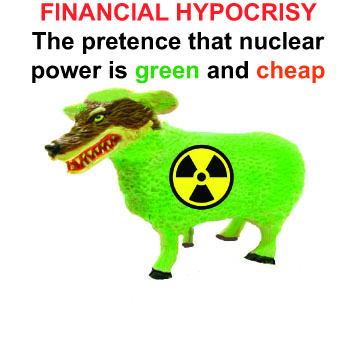
| Resistance has been growing to an EU proposal to label gas and nuclear energy as sustainable investments, officials said this week. The European Commission last month proposed including both in the EU’s sustainable finance taxonomy, a system for labelling climate-friendly investments. The proposal split opinion among the European Parliament and EU countries, which disagree on the fuels’ green credentials and could also still reject it. Two groups of lawmakers – the Greens and the Socialists and Democrats – confirmed that they would file a motion to reject the rules. German Green lawmaker Michael Bloss had confirmed the Greens’ objection earlier in the week. “Nuclear power and fossil gas are not ‘sustainable’, far too dangerous and not a bridge technology,” he said in a tweet. The move is the opening salvo in a months-long process of negotiations, which would culminate in Parliament voting by July on the potential motions to reject the gas and nuclear proposal. Emerging Risks 1st April 2022 https://emergingrisks.co.uk/resistance-grows-to-eu-nuclear-and-gas-taxonomy/ |
Biden’s Reckless Words Underscore the Dangers of the U.S.’s Use of Ukraine As a Proxy War
The U.S. is, by definition, waging a proxy war against Russia, using Ukrainians as their instrument, with the goal of not ending the war but prolonging it.
UK officials similarly told him that “the U.K.’s No. 1 option is for the conflict to be extended and thereby bleed Putin.”
As grave of a threat as deliberate war is, unintended escalation from miscommunication and misperception can be as bad. Biden is the perfect vessel for such risks. Glenn Greenwald, 28 Mar 22,
The central question for Americans from the start of the war in Ukraine was what role, if any, should the U.S. government play in that war? A necessarily related question: if the U.S. is going to involve itself in this war, what objectives should drive that involvement?
Prior to the U.S.’s jumping directly into this war, those questions were never meaningfully considered. Instead, the emotions deliberately stoked by the relentless media attention to the horrors of this war — horrors which, contrary to the West’s media propaganda, are common to all wars, including its own — left little to no space for public discussion of those questions. The only acceptable modes of expression in U.S. discourse were to pronounce that the Russian invasion was unjustified, and, using parlance which the 2011 version of Chris Hayes correctly dismissed as adolescent, that Putin is a “bad guy.” Those denunciation rituals, no matter how cathartic and applause-inducing, supplied no useful information about what actions the U.S. should or should not take when it came to this increasingly dangerous conflict.
That was the purpose of so severely restricting discourse to those simple moral claims: to allow policymakers in Washington free rein to do whatever they wanted in the name of stopping Putin without being questioned. Indeed, as so often happens when war breaks out, anyone questioning U.S. political leaders instantly had their patriotism and loyalty impugned (unless one was complaining that the U.S. should become more involved in the conflict than it already was, a form of pro-war “dissent” that is always permissible in American discourse).
With these discourse rules firmly implanted, those who attempted to invoke former President Obama’s own arguments about a conflict between Russia and Ukraine — namely, that “Ukraine is a core Russian interest but not an American one” and therefore the U.S. should not risk confrontation with Moscow over it — were widely maligned as Kremlin assets if not agents. Others who urged the U.S. to try to avert war through diplomacy — by, for instance, formally vowing that NATO membership would not be offered to Ukraine and that Kyiv would remain neutral in the new Cold War pursued by the West with Moscow — faced the same set of accusations about their loyalty and patriotism.
Most taboo of all was any discussion of the heavy involvement of the U.S. in Ukraine beginning in 2014 up to the invasion: from micro-managing Ukrainian politics, to arming its military, to placing military advisers and intelligence officers on the ground to train its soldiers how to fight (something Biden announced he was considering last November) — all of which amounted to a form of de facto NATO expansion without the formal membership.
And that leaves to the side the still-unanswered yet supremely repressed question of what Undersecretary of State Victoria Nuland referred to as the Ukrainians’ “biological research facilities” so dangerous and beyond current Russian bio-research capabilities that she gravely feared they would “fall into Russian hands.”
As a result of the media’s embracing of moral righteousness in lieu of debating these crucial geopolitical questions, the U.S. government has consistently and aggressively escalated its participation in this war with barely any questioning let alone opposition. U.S. officials are boastfully leading the effort to collapse the Russian economy. Along with its NATO allies, the U.S. has flooded Ukraine with billions of dollars of sophisticated weaponry, with at least some of those arms ending up in the hands of actual neo-Nazi battalions integrated into the Ukrainian government and military.
It is providing surveillance technology in the form of drones and its own intelligence to enable Ukrainian targeting of Russian forces. President Biden threatened Russia with a response “in kind” if Russia were to use chemical weapons. Meanwhile, reports The New York Times, “C.I.A. officers are helping to ensure that crates of weapons are delivered into the hands of vetted Ukrainian military units.”
The U.S. is, by definition, waging a proxy war against Russia, using Ukrainians as their instrument, with the goal of not ending the war but prolonging it. So obvious is this fact about U.S. objectives that even The New York Times last Sunday explicitly reported that the the Biden administration “seeks to help Ukraine lock Russia in a quagmire” (albeit with care not to escalate into a nuclear exchange). Indeed, even “some American officials assert that as a matter of international law, the provision of weaponry and intelligence to the Ukrainian Army has made the United States a cobelligerent,” though this is “an argument that some legal experts dispute.” Surveying all this evidence as well as discussions with his own U.S. and British sources, Niall Ferguson, writing in Bloomberg, proclaimed: “I conclude that the U.S. intends to keep this war going.” UK officials similarly told him that “the U.K.’s No. 1 option is for the conflict to be extended and thereby bleed Putin.”
In sum, the Biden administration is doing exactly that which former President Obama warned in 2016 should never be done: risking war between the world’s two largest nuclear powers over Ukraine. Yet if any pathology defines the last five years of U.S. mainstream discourse, it is that any claim that undercuts the interests of U.S. liberal elites — no matter how true — is dismissed as “Russian disinformation.”
As we witnessed most vividly in the run-up to the 2020 election — when that label was unquestioningly yet falsely applied by the union of the CIA, corporate media and Big Tech to the laptop archive revealing Joe Biden’s political and financial activities in Ukraine and China — any facts which establishment power centers want to demonize or suppress are reflexively labelled “Russian disinformation.” Hence, the DNC propaganda arm Media Matters now lists as “pro-Russian propaganda” the indisputable fact that the U.S. is not defending Ukraine but rather exploiting and sacrificing it to fight a proxy war with Moscow. The more true a claim is, the more likely it is to receive this designation in U.S. establishment discourse.
That there are few if any risks graver or more reckless than a direct U.S./Russia military confrontation should be too obvious to require explanation……………………………..
Speaking to U.S. troops in Poland on Friday, a visibly exhausted and rambling President Biden — after extensive travel, time-zone hopping, protracted meetings and speeches — appeared to tell U.S. troops that they were on their way to see first-hand the resistance of Ukrainians, meaning they were headed into Ukraine:
It seems clear that this was not some planned decision to have the U.S. president casually announce his intention to send U.S. troops to fight Russians in Ukraine. This was, instead, an old man, more tired, unpredictable and incoherent than usual due to intense overseas travel, accidentally mumbling out various phrases that could be and almost certainly were highly alarming to Moscow and other countries.
………………………. “Major nuclear actors are on the cusp of a new arms race, one that will be very expensive and will increase the likelihood of accidents and misperceptions.”
That Biden’s “gaffe” about U.S. troops headed into Ukraine could generate exactly this sort of “misperception” seems self-evident. So do the grave dangers from Biden’s sudden yet emphatic declaration on Saturday that Putin “cannot remain in power” — the classic language of declared U.S. policy of regime change:
That clear declaration of regime change as the U.S. goal for Putin was quickly walked back by Biden’s aides, who absurdly claimed he only meant that Putin cannot remain in power in Ukraine and other parts of Eastern Europe, not that he can no longer govern Russia. But this episode marked at least the third time in the past couple weeks that White House officials had to walk back Biden’s comments, following his clear decree that U.S. troops would soon be back in Ukraine and his prior warning that the U.S. would use chemical weapons against Russia if they used them first.
That Biden seems to be stumbling and bumbling rather than following scripted recklessness seems likely in some of these cases but not all. The White House’s vehement denial, in the wake of Biden’s speech, that regime change in Russia is its goal was contradicted by Ferguson’s reporting in Bloomberg last week:
Reading this carefully, I conclude that the U.S. intends to keep this war going….I have evidence from other sources to corroborate this. “The only end game now,” a senior administration official was heard to say at a private event earlier this month, “is the end of Putin regime”…..I gather that senior British figures are talking in similar terms. There is a belief that “the U.K.’s No. 1 option is for the conflict to be extended and thereby bleed Putin.” Again and again, I hear such language. It helps explain, among other things, the lack of any diplomatic effort by the U.S. to secure a cease-fire. It also explains the readiness of President Joe Biden to call Putin a war criminal………………………….
How does growing U.S. involvement in this war benefit the people of the United States, particularly as they were already — before this war — weighed down by the dual burdens of pandemic-based economic depravations and rapidly escalating inflation?
These are precisely the questions that a healthy nation discusses and examines before jumping head-first into a major war. But these were precisely the questions declared to be unpatriotic, proof of one’s status as a traitor or pro-Russia propagandist, as the hallmark of being pro-Putin. These are the standard tactics used to squash dissent or questioning when war breaks out. That neocons, who perfected these smear tactics, are back in the saddle as discourse and policy leaders — due to their six-year project of ingratiating themselves back into American liberalism with performative anti-Trump agitprop — makes it inevitable that such sleazy attacks will prevail………… https://greenwald.substack.com/p/bidens-reckless-words-underscore?s=r&fbclid=IwAR3OXdwN5Y7GJq3e250Wc5OdDbPqwlIP0cUtvaLYtp096YeJOJa8w4whkXY
Urgent need to bring about new arms control agreements
The last remaining U.S.-Russian arms reduction agreement, the New Strategic Arms Reduction Treaty, expires in 2026. Without commonsense arms control guardrails, the dangers of unconstrained global nuclear arms racing will only grow.
New Approaches Needed to Prevent Nuclear Catastrophe, Arms Control Association, April 2022
By Daryl G. Kimball ”……………………. Instead of reverting to destabilizing Cold War-era behaviors, leaders and concerned citizens in the United States, Europe, and elsewhere need to embrace new thinking and strategies about nuclear weapons and disarmament that move the world from the shadow of nuclear catastrophe.
Putin and other Russian officials have made implied nuclear threats and put their strategic nuclear forces on a heightened state of readiness to ward off a direct U.S. or NATO military intervention in Ukraine. It is not a new or uniquely Russian idea. U.S. officials also claim that U.S. strategic nuclear forces create “maneuver space” to “project conventional military power.”…………..
Biden wisely has not matched Putin’s nuclear taunts, but the risk of escalation is real. A close encounter between NATO and Russian warplanes, which could result if NATO imposed a no-fly zone in Ukraine, could lead to a wider conflict. Because Russian and U.S. military strategies reserve the option to use nuclear weapons first against non-nuclear threats, fighting could quickly go nuclear.
Russian nuclear doctrine states that nuclear weapons can be used in response to an attack with weapons of mass destruction or if a conventional war threatens the “very existence of the state.” Right now, these conditions do not exist. But if the Kremlin believes a serious attack is underway, it might use short-range, tactical nuclear weapons to tip the military balance in its favor.
Unfortunately, U.S. President Joe Biden’s new Nuclear Posture Review states that the “fundamental role” of the U.S. arsenal will be to deter nuclear attacks while still leaving open the option for nuclear first use in “extreme circumstances” to counter conventional, biological, chemical, and possibly cyberattacks.
There is no plausible military scenario, and no legally justifiable basis for threatening or using nuclear weapons first, if at all. Once nuclear weapons are used between nuclear-armed states, there is no guarantee it will not lead to an all-out nuclear exchange.
New thinking is needed. The adoption of policies prohibiting the first use of nuclear weapons would increase stability. But even that would not eliminate the dangers of nuclear deterrence strategies and arsenals, which depend on maintaining the credible threat of prompt retaliation in response to a nuclear attack.
U.S. and European citizens need to mobilize and press their leaders to pursue even bolder initiatives to steer the nuclear possessor states away from nuclear confrontation and arms racing.
For example, UN General Assembly members, particularly those who negotiated the 2017 Treaty on the Prohibition of Nuclear Weapons, should consider a “uniting for peace” resolution in response to the immediate threat of nuclear use. Such resolutions have been used in rare cases when the UN Security Council, lacking unanimity among its five permanent, nuclear-armed members, fails to act to maintain international peace and security.
Such a resolution could build on the March 2 vote in the General Assembly condemning Russia’s invasion and Putin’s decision to increase the readiness of his nuclear forces and would recall the assembly’s declaration of November 1961 that said that “any state using nuclear…weapons is to be considered as violating the Charter of the UN, as acting contrary to the laws of humanity and as committing a crime against mankind and civilization.”
An updated resolution could declare that the use or threat of use of nuclear weapons is contrary to international law and mandate negotiations on legally binding security guarantees against unprovoked attacks from states possessing nuclear weapons.
The resolution could mandate that any state that initiates a nuclear attack shall be stripped of its voting privileges at the United Nations and recommend collective measures to restore the peace under Chapter VII of the UN Charter. Such an initiative would reinforce the nuclear weapons taboo at a critical juncture.
Responsible states must also come together on a meaningful disarmament plan at the nuclear Nonproliferation Treaty (NPT) review conference in August. Although Putin’s war has derailed U.S.-Russian talks for now on further cuts in their bloated strategic arsenals and new agreements to limit short- and intermediate-range nuclear weapons systems, they are still bound by their disarmament obligations under Article VI of the NPT.
The last remaining U.S.-Russian arms reduction agreement, the New Strategic Arms Reduction Treaty, expires in 2026. Without commonsense arms control guardrails, the dangers of unconstrained global nuclear arms racing will only grow.
Putin’s war on Ukraine is a sobering reminder that outdated nuclear deterrence policies create unacceptable risks. The only way to eliminate the danger is to reinforce the norm against nuclear use and pursue more sustainable path toward their elimination. https://www.armscontrol.org/act/2022-04/focus/new-approaches-needed-prevent-nuclear-catastrophe#.YkUg4ImybtQ.twitter
Scrutiny on Switzerland’s nuclear power industry- it gets uranium from Russia
Use of Russian uranium for Swiss nuclear power under scrutiny, Russia’s state-owned nuclear firm Rosatom helps fuel two nuclear power plants in Switzerland. That commercial link is now under scrutiny as the Western world puts financial pressure on Russia to stop its aggression against Ukraine. Swiss Info March 31, 2022
Swiss electricity company Axpo purchases fuel from Rosatom to operate the Beznau and Leibstadt nuclear power plants in canton Aargau.
In a statement published on Thursday, the environmental NGO Greenpeace urged the authorities of seven Swiss cantons – which own Axpo – to stop buying uranium from Rosatom.
This commercial relationship, the NGO argued, helps to finance Russia’s war effort in Ukraine. Competitor company Alpiq, which runs the Gösgen nuclear site, stopped sourcing from Russia in 2016.
………………………………….. Of Switzerland’s four nuclear reactors, only Gösgen, operated by the company Alpiq, does not buy Russian uranium. Alpiq said this decision was taken in 2016 due to considerations about environmental compatibility and supply chain transparency………..
By paying for Russian uranium – Switzerland could also indirectly help finance Russia’s military apparatus. SRF points that Rosatom is the manufacturer of Russia’s warheads and now controls the operation of various Ukrainian nuclear power plants, such as at Zaporizhia, seized after fighting on March 4. https://www.swissinfo.ch/eng/use-of-russian-uranium-for-swiss-nuclear-power-under-scrutiny/47479722
Australia’s Parliament has little control over military matters, and Prime Ministers kow tow to USA and the White Anglosphere to go to war

Australia is an “active, eager participant in the US-led order” and restricting the Australian parliament’s control over the military has been “… a decision taken by the Australian government — at a bipartisan level — and implemented by senior policy planners.
Meanwhile the Australian parliament has “deliberately restricted its own powers on intelligence matters”
,Australia has ”reaffirmed its whiteness in its commitment to expansion of the “Five Eyes” intelligence sharing arrangements between the US, Britain, Canada, Australia and New Zealand and, of course, to the controversial 2021 AUKUS nuclear submarine deal, which was nurtured in great secrecy”
White and might is right: the secrets which push us into other people’s wars, https://www.michaelwest.com.au/the-dirty-secret-that-pushes-australia-into-other-peoples-wars/ By Zacharias Szumer|April 2, 2022 Is playing deputy to America’s sheriff the reason Australian war powers remain unreformed? It’s clear that our politicians remain muddled on this critical issue, writes Zacharias Szumer.
For decades, minor parties in Australia have introduced bills seeking to give parliament greater control over military deployments. In the debates and inquiries that have followed, a wide range of objections have been raised.
We are told that, as military deployments are often made on the basis of confidential information, this information cannot be publicly disclosed to the parliament. Another common objection is that parliamentary decision-making would reduce the flexibility and speed needed to carry out military operations safely and effectively.
Most of the opposition to war powers reform, received as part of Michael West Media’s ongoing survey of politicians, follows similar lines. You can see myriad responses here.
However, some experts think there might be another reason — one that Australian pollies may be uncomfortable acknowledging.
Kowtowing to empires
Clinton Fernandes, professor of international and political studies at the University of NSW and former Australian army intelligence officer, contends that the bipartisan reluctance to infringe upon this executive prerogative should be understood within Australia’s ”sub-imperial” geopolitical strategy.
In basic terms, Australia has sought to integrate itself into the global strategy of great powers — firstly the British and, from 1942 onwards, the United States. In a 2020 article, Fernandes argues that this sub-imperial strategy has meant the “effective exclusion of the legislative and judicial branches of government from Australia’s national-security policy”.
Fernandes does not believe that Australian politicians and policy officials have been forced against their will into this position. Rather, he argues that Australia is an “active, eager participant in the US-led order” and restricting the Australian parliament’s control over the military has been “… a decision taken by the Australian government — at a bipartisan level — and implemented by senior policy planners.
“Australian strategic planners understand that this means a reduction in sovereignty, but they accept it because it achieves a higher objective — upholding US imperial power.”
In addition to limiting parliament’s control over military deployments, Fernandes argues that Australia’s position as a “sub-imperial power” also limits parliamentary oversight of intelligence gathering. In the US, “intelligence committees and judiciary committees in the Senate and House of Representatives are regularly briefed about all authorised intelligence-collection programs, and relevant members of Congress receive detailed briefings prior to each re-authorisation,” Fernandes says.
Five Eyes and whiteness
Meanwhile the Australian parliament has “deliberately restricted its own powers on intelligence matters” through measures such as the Intelligence Services Act 2001 which ‘prevents the Parliamentary Joint Committee on Intelligence and Security from ‘reviewing the intelligence gathering and assessment priorities’ or ‘reviewing particular operations that have been, are being or are proposed to be undertaken’ by ASIS, ASIO and the other intelligence agencies, and likewise ‘the sources of information, other operational assistance or operational methods’ available to the agencies”.
Dr Greg Lockhart, an historian and Vietnam War veteran, supports Fernandes’ argument, but stresses the importance of seeing Australia’s sub-imperial strategy through the lens of a wider “cultural self-deception” around racial anxieties. “Fear of the ‘yellow peril’ meant that our Anzac expeditionary strategic reflex was from its inception race-based,” he says. ‘It was also primarily defensive; it depended on “great and powerful” white friends for protection in our region; it has always depended on being in the Anglosphere”.
Dr Lockhart argues that, although the overtly racist rhetoric of the White Australia policy is largely a thing of the past, “our strategic culture is still inseparable from the Anglosphere, from wherein we have never needed to reassess its whiteness”.
Recently, he says, Australia has ”reaffirmed its whiteness in its commitment to expansion of the “Five Eyes” intelligence sharing arrangements between the US, Britain, Canada, Australia and New Zealand and, of course, to the controversial 2021 AUKUS nuclear submarine deal, which was nurtured in great secrecy”.
“And with secrecy comes deception. Sounding like a US proxy in the Pacific while asserting Australian ‘sovereignty’, Scott Morrison’s government “announces it is in ‘lockstep’ with “our allies”, while trumpeting the threat of China’s communism, territorial expansion, abuse of human rights, or its implied role as the origin of Covid 19 — anything but the anxiety about Chinese numbers, ethnic difference, and independent power that has shadowed Australian history since the 1800s – and that now determines the security culture’s mindless dependence on the US.’’
Seen in this wider cultural context, Lockhart believes that “the Constitution was never going to impose legislative or judicial restraints on the autocratic war powers of the sub-imperial state. Since the First World War in 1914, almost every Anzac expedition has been a British or American imperial one. The exceptions are the Pacific campaign in 1942-1945 and Timor in 1999-2000. And in all those imperial campaigns the decision for war has been made undemocratically by the prime minister acting in secret conclave with only a handful of advisers”.
Parliamentary war powers
Fernandes and Lockhart aren’t alone in suggesting that there’s a relationship between strategic objectives and parliamentary control, or lack thereof, over the military. In their encyclopaedic 2010 study of war powers around the world, scholars Wolfgang Wagner, Dirk Peters and Cosima Glahn noted that several Central and Eastern European states — Bulgaria, the Czech Republic, Hungary and Slovakia — abolished parliamentary approval for war in the process of joining the US-led North Atlantic Treaty Organisation (NATO).
The authors argue that ‘’NATO accession apparently amplified the trade-off between creating legitimacy through procedures of ex ante parliamentary control and gaining efficiency through lean, executive-centred decision-making. From NATO’s perspective, having the governments of some member state tied by domestic parliamentary veto power must seem highly unattractive.’’
However, many of the more powerful NATO countries have far more wide-ranging parliamentary war powers than Australia or the aforementioned junior NATO partners. Although contested, the US War Powers Resolution significantly limits the President’s freedom to order military action without congressional authorisation.
For almost two decades in Germany, all major military deployments have been put to parliament for a vote. In the UK too, a parliamentary convention of seeking approval for military deployments in the House of Commons has also evolved over the past two decades.
Today’s thought: Australia, Liberal and Labor, mindlessly toes the USA propaganda line.

UKraine President Volodymyr Zelensky addressed the Australian Parliament – to enthusiastic applause, a standing ovation. Fair enough. He’s a brave guy, with a good cause.
Did any of those donkeys in the Parliament understand that Zelensky has been trying to negotiate a peace deal with Russia? A deal that would involve Ukraine NOT joining NATO, and would involve fair treatment and some autonomy for the ethnic Russian areas in the Donbas, and recognition of Crimea as part of Russia. (nb. Crimea was not ”annexed” by Russia. They overwhelmingly voted to join Russia).
Do Australia’s sycophantic politicians understand that Joe Biden refuses to join in those negotiations? Do they understand that this war could have been prevented by the USA? That this is another, more sophisticated version of the proxy wars that USA has been orchestrating for decades?
Anthony Albanese, spineless opponent of the Liberal’s blustering bully Scott Morrison, joined in the fervour, comparing Putin to Hitler. All agreed that Australia must send more weapons so Ukraine – must join USA in continuing its lucrative preferably endless fight against Russia – a fight to the last Ukrainian!
Depicting Putin as ‘Madman’ Eliminates Need for Diplomacy

The Western media caricature of Putin as a psychopathic leader acting on irrational and idiosyncratic beliefs is a convenient propaganda narrative that excuses US officials from taking diplomacy seriously—at the expense of Ukrainian lives and nuclear brinkmanship
FAIR, JOSHUA CHO, 30 Mar 22, Even before Russia invaded Ukraine, Western media have depicted Russian President Vladimir Putin as an irrational—perhaps mentally ill—leader who cannot be reasoned or bargained with. Such portrayals have only intensified as the Ukraine crisis came to dominate the news agenda.
The implications underlying these media debates and speculations about Putin’s psyche are immense. If one believes that Putin is a “madman,” the implication is that meaningful diplomatic negotiations with Russia are impossible, pushing military options to the forefront as the means of resolving the Ukraine situation.
If Putin is not a rational actor, the implication is that no kind of diplomacy could have prevented the Russian invasion, and therefore no other country besides Russia shares blame for ongoing violence. (See FAIR.org, 3/4/22.) Yet another implication is that if Putin’s defects made Russia’s invasion unavoidable, then regime change may be necessary to resolve the conflict.
‘Increasingly insane’
Western media have for years been debating whether Putin is insane (Extra!, 5/14; FAIR.org, 2/12/15) or merely pretending to be—speculation that has only intensified in recent weeks:
- Guardian (2/24/22): “Decision to Invade Ukraine Raises Questions Over Putin’s ‘Sense of Reality’”
- Daily Beast (3/1/22): “The Russian People May Be Starting to Think Putin Is Insane”
- Vanity Fair (3/1/22): “Report: An ‘Increasingly Frustrated’ Putin, a Madman With Nuclear Weapons, Is Lashing Out at His Inner Circle”
- New York (3/4/22): “Putin’s War Looks Increasingly Insane”
The Guardian report (2/24/22) cited concerns raised in European official circles about Putin’s mental state:
They worry about a 69-year-old man whose tendency towards insularity has been amplified by his precautions against Covid, leaving him surrounded by an ever-shrinking coterie of fearful obedient courtiers. He appears increasingly uncoupled from the contemporary world, preferring to burrow deep into history and a personal quest for greatness.
Even when other media analysts argued that Putin’s alleged mental illness was merely a ruse to wrest concessions from the west, this was not presented as a rationale for negotiating with him, but rather as a reason to reject de-escalation and diplomacy. Forbes (3/1/22)……….
‘Detached from reality’
In the Daily Beast (3/1/22), Amy Knight, a historian of Russia and the USSR, displayed a remarkable ability to read Putin’s mind, discerning the real motivations of someone she describes as possibly “detached from reality…………………..
Reason is not going to work’
Other Western media headlines offered quite specific, though varying, evaluations of Putin’s mental state from a distance. ……..
Atlantic (4/15/14): “Vladimir Putin, Narcissist?”Independent (2/1/15): “President Putin Is a Dangerous Psychopath—Reason Is Not Going to Work With Him”USA Today (2/4/15): “Pentagon 2008 Study Claims Putin Has Asperger’s Syndrome”Sun (2/28/22): “Vladimir Putin Is Egocentric, Narcissistic & Exhibits Key Traits of a Psychopath”Fox News (3/2/22): “Russian President Vladimir Putin Has Features of a Psychopath: Expert”
These diagnoses from afar have been going on for a long time…………………………………………………..
As of this writing, Secretary of State Antony Blinken hasn’t attempted any conversations with his counterpart, Russian Foreign Minister Sergei Lavrov, while Russian military commanders are declining calls from the Pentagon, likely due to the US sharing military intelligence with the Ukrainian government. This silence on both the diplomatic and military fronts risks further escalation instead of a quick negotiated end to the war.
The Western media caricature of Putin as a psychopathic leader acting on irrational and idiosyncratic beliefs is a convenient propaganda narrative that excuses US officials from taking diplomacy seriously—at the expense of Ukrainian lives and nuclear brinkmanship (Antiwar.com, 3/10/22). Recent negotiations between Russia and Ukraine in Istanbul were hailed by both parties as constructive, with Russia vowing to reduce military activity around Kyiv and northern Ukraine as a result (NPR, 3/29/22). It’s important not to let US officials subvert peace negotiations between the two parties on the evidence-free grounds that negotiations with Russia are pointless. https://fair.org/home/depicting-putin-as-madman-eliminates-need-for-diplomacy/—
THE MADNESS OF THE RESURGENT US COLD WAR ON RUSSIA

- By Nicolas J. S. Davies, Popular Resistance, March 29, 2022
The war in Ukraine has placed U.S. and NATO policy toward Russia under a spotlight, highlighting how the United States and its allies have expanded NATO right up to Russia’s borders, backed a coup and now a proxy war in Ukraine, imposed waves of economic sanctions, and launched a debilitating trillion-dollar arms race. The explicit goal is to pressure, weaken and ultimately eliminate Russia, or a Russia-China partnership, as a strategic competitor to U.S. imperial power.
The United States and NATO have used similar forms of force and coercion against many countries. In every case they have been catastrophic for the people directly impacted, whether they achieved their political aims or not.
Wars and violent regime changes in Kosovo, Iraq, Haiti and Libya have left them mired in endless corruption, poverty and chaos. Failed proxy wars in Somalia, Syria and Yemen have spawned endless war and humanitarian disasters. U.S. sanctions against Cuba, Iran, North Korea and Venezuela have impoverished their people but failed to change their governments.
Meanwhile, U.S.-backed coups in Chile, Bolivia and Honduras have sooner or later been reversed by grassroots movements to restore democratic, socialist government. The Taliban are governing Afghanistan again after a 20-year war to expel a U.S. and NATO army of occupation, for which the sore losers are now starving millions of Afghans.
But the risks and consequences of the U.S. Cold War on Russia are of a different order. The purpose of any war is to defeat your enemy. But how can you defeat an enemy that is explicitly committed to respond to the prospect of existential defeat by destroying the whole world?
This is in fact part of the military doctrine of the United States and Russia, who together possess over 90% of the world’s nuclear weapons. If either of them faces existential defeat, they are prepared to destroy human civilization in a nuclear holocaust that will kill Americans, Russians and neutrals alike.
In June 2020, Russian President Vladimir Putin signed a decree stating, “The Russian Federation reserves the right to use nuclear weapons in response to the use of nuclear weapons or other weapons of mass destruction against it and/or its allies… and also in the case of aggression against the Russian Federation with the use of conventional weapons, when the very existence of the state is put under threat.”
U.S. nuclear weapons policy is no more reassuring. A decades-long campaign for a U.S. “no first use” nuclear weapons policy still falls on deaf ears in Washington.
The 2018 U.S. Nuclear Posture Review (NPR) promised that the United States would not use nuclear weapons against a non-nuclear state. But in a war with another nuclear-armed country, it said, “The United States would only consider the use of nuclear weapons in extreme circumstances to defend the vital interests of the United States or its allies and partners.”
The 2018 NPR broadened the definition of “extreme circumstances” to cover “significant non-nuclear attacks,” which it said would “include, but are not limited to, attacks on the U.S., allies or partner civilian population or infrastructure, and attacks on U.S. or allied nuclear forces, their command and control, or warning and attack assessment.” The critical phrase, “but are not limited to,” removes any restriction at all on a U.S. nuclear first strike……………………………………….
The danger that hawks in the State Department and Congress may convince President Biden to escalate the U.S. role in the war prompted the Pentagon to leak details of the Defense Intelligence Agency’s (DIA) assessments of Russia’s conduct of the war to Newsweek’s William Arkin.
Senior DIA officers told Arkin that Russia has dropped fewer bombs and missiles on Ukraine in a month than U.S. forces dropped on Iraq in the first day of bombing in 2003, and that they see no evidence of Russia directly targeting civilians. Like U.S. “precision” weapons, Russian weapons are probably only about 80% accurate, so hundreds of stray bombs and missiles are killing and wounding civilians and hitting civilian infrastructure, as they do just as horrifically in every U.S. war.
The DIA analysts believe Russia is holding back from a more devastating war because what it really wants is not to destroy Ukrainian cities but to negotiate a diplomatic agreement to ensure a neutral, non-aligned Ukraine.
But the Pentagon appears to be so worried by the impact of highly effective Western and Ukrainian war propaganda that it has released secret intelligence to Newsweek to try to restore a measure of reality to the media’s portrayal of the war, before political pressure for NATO escalation leads to a nuclear war.
Since the United States and the U.S.S.R. blundered into their nuclear suicide pact in the 1950s, it has come to be known as Mutual Assured Destruction, or MAD.
As the Cold War evolved, they cooperated to reduce the risk of mutual assured destruction through arms control treaties, a hotline between Moscow and Washington, and regular contacts between U.S. and Soviet officials.
But the United States has now withdrawn from many of those arms control treaties and safeguard mechanisms. The risk of nuclear war is as great today as it has ever been, as the Bulletin of the Atomic Scientists warns year after year in its annual Doomsday Clock statement. The Bulletin has also published detailed analyses of how specific technological advances in U.S. nuclear weapons design and strategy are increasing the risk of nuclear war…………………………………
It is the epitome of official insanity that U.S., NATO and Russian leaders have resurrected this Cold War, which the whole world celebrated the end of, allowing plans for mass suicide and human extinction to once again masquerade as responsible defense policy.
While Russia bears full responsibility for invading Ukraine and for all the death and destruction of this war, this crisis did not come out of nowhere. The United States and its allies must reexamine their own roles in resurrecting the Cold War that spawned this crisis, if we are ever to return to a safer world for people everywhere.
Tragically, instead of expiring on its sell-by date in the 1990s along with the Warsaw Pact, NATO has transformed itself into an aggressive global military alliance, a fig-leaf for U.S. imperialism, and a forum for dangerous, self-fulfilling threat analysis, to justify its continued existence, endless expansion and crimes of aggression on three continents, in Kosovo, Afghanistan and Libya.
If this insanity indeed drives us to mass extinction, it will be no consolation to the scattered and dying survivors that their leaders succeeded in destroying their enemies’ country too. They will simply curse leaders on all sides for their blindness and stupidity. The propaganda by which each side demonized the other will be only a cruel irony once its end result is seen to be the destruction of everything leaders on all sides claimed to be defending………………………………
A top priority must be to dismantle the nuclear Doomsday machine we have inadvertently collaborated to build and maintain for 70 years, along with the obsolete and dangerous NATO military alliance. We cannot let the “unwarranted influence” and “misplaced power” of the Military-Industrial Complex keep leading us into ever more dangerous military crises until one of them spins out of control and destroys us all.
Nicolas J. S. Davies is an independent journalist, a researcher for CODEPINK and the author of Blood On Our Hands: the Invasion and Destruction of Iraq. https://popularresistance.org/the-madness-of-the-resurgent-us-cold-war-on-russia/
European Union lawmakers move to reject inclusion of nuclear energy as ‘green’

EU lawmakers move to reject green gas and nuclear investment rules, Reuters, By Kate Abnett and Simon Jessop
- Summary
- Greens, Socialists and Democrats oppose proposed rules
- Parliament vote on taxonomy proposal due by July
- EU advisers launch report on other environmental criteria
BRUSSELS, March 30 (Reuters) – At least two groups of European Union lawmakers have confirmed they will reject an EU proposal to label gas and nuclear energy as sustainable investments, officials said on Wednesday.
Reporting by Kate Abnett, Simon Jessop, editing by Ed Osmond………… (registered readers only) https://www.reuters.com/business/sustainable-business/eu-lawmakers-move-reject-green-gas-nuclear-investment-rules-2022-03-30/
Those yearning for regime change in Russia rarely consider what might come next
George Kennan and the Russian future The late US diplomat saw that those yearning for regime change in Russia rarely considered what might come next, Asia Times, By JAMES CARDEN, MARCH 29, 2022

US President Joe Biden’s ill-advised and reportedly ad-libbed call for regime change in Russia last week implicitly raised the question what kind of government Washington has in mind should President Vladimir Putin be deposed or voluntary step down ahead of Russia’s 2024 presidential election.
Biden’s line of what might charitably be called “thinking” has long tempted American policymakers. Writing in 1951, the diplomat George F Kennan observed:
“The very virulence with which Americans reject the outlook and practice of those who now hold power in the Kremlin implies in the strongest possible way the belief in, and desire for, an alternative – for some other Russian outlook and some other set of practices in Russia to take the place of those we know today.
“Yet it may be permitted to ask whether there is any clear image in our minds of what that outlook and those practices might be and of the ways by which Americans might promote progress toward them.”
These are the opening lines to Kennan’s Foreign Affairs essay “America and the Russian Future,” an indispensable corrective to the kinds of magical thinking that mark Washington’s current approach toward Russia and the world.
The planning for regime change in Russia has been under way for at least a decade. In an e-mail congratulating a State Department aide on her promotion to the White House national security staff, then-secretary of state Hillary Clinton wrote, “… we need you at the White House to help plan and execute our Russian strategy post-Putin.”
Biden’s speech last weekend at the Warsaw Castle gave a clue as to what he and the US foreign-policy establishment have in mind “post-Putin.” In Biden’s telling, “Over the last 30 years, the forces of autocracy have revived all across the globe.” And Russia, which “has strangled democracy” at home, now seeks to do so elsewhere.
Biden’s speech attempted to recast the war in Ukraine as part of a larger battle “between democracy and autocracy, between liberty and repression, between a rules-based order and one governed by brute force.”………………………………………………….
Washington’s attempt to remake Russia socially, economically and politically in the 1990s quite inadvertently resulted in the Russia we are confronted with today.
So why does Washington insist on believing that its attempts to reshape Russia from the outside will somehow, someday work out?
Kennan himself was under no such illusions:
“Of one thing we may be sure: No great and enduring change in the spirit and practice of government in Russia will ever come about primarily through foreign inspiration or advice. To be genuine, to be enduring and to be worth the hopeful welcome of other peoples such a change would have to flow from the initiative and efforts of the Russians themselves.”
The sooner President Biden and his advisers come around to the late George Kennan’s way of thinking regarding the desirability of regime change, the better. https://asiatimes.com/2022/03/george-kennan-and-the-russian-future/
Ukraine Negotiations: No Fly Zone, Nukes, Neutrality, and Disarmament
Humanity will be sleepwalking to its doom unless the great powers negotiate nuclear disarmament, and to collaborate to stanch the climate chaos that haunts humanity’s future.
While Russian forces grind away at Ukrainian resistance, there is glee in Washington that Moscow may have trapped itself in an Afghanistan-like quagmire.

Zelensky has repeatedly appealed for NATO to impose a no-fly zone, an appeal that has found resonance in Congress.
Fortunately, thus far NATO leaders have bowed to the reality that enforcing a no-fly zone against Russia would inevitably trigger World War III, in the form of genocidal or omnicidal nuclear exchanges.
Enforcing a no-fly zone, would require attacking Russian anti-aircraft installations and shooting down Russian planes, to which Russia would respond in kind. Yet, in the track II discussion, a senior American warned that the longer the war continues, and as the Russian military is degraded, the temptation to impose a no-fly zone will grow.
Ukraine Negotiations: No Fly Zone, Nukes, Neutrality, and Disarmament https://www.commondreams.org/views/2022/03/28/ukraine-negotiations-no-fly-zone-nukes-neutrality-and-disarmament
Ukrainian and Russian lives will continue to be shattered until either a ceasefire or completion of successful negotiations are announced.
JOSEPH GERSON, March 28, 2022 Regardless of whether we agree with him or not, President Biden’s statements that Vladimir Putin cannot remain in power and that Putin is a war criminal have compounded already complex negotiations to end Moscow’s devastating and nationally self-defeating war of aggression.
With Russia’s military advances in Ukraine stymied, and with the mounting death tolls, we are receiving contradictory reports about the state of Russian-Ukrainian diplomacy. Ukraine’s lead negotiator Mykailo Podolyak reports that the negotiations with Moscow are “absolutely real”, but that the Kremlin hasn’t pulled back from its most ambitious war aims. Negotiations, he has said, could continue for months. Ukraine’s Defense Intelligence, Brig. General Kyrylo Budanov is less optimistic, reporting that the negotiations are “vague and unpredictable”.
Continue readingThe entire world views it as I do; all except Kamikaze Joe and his puppeteers.. — The Goomba Gazette

The following are excerpts from CNN; one of the staunchest supporters of Kamikaze Joe. When the far left media starts getting on his ass, I would conclude the problem is absolutely severe. CNN Has Biden shaken international confidence in his so-far strong leadership in bringing the NATO alliance together in a united front against Moscow?
The entire world views it as I do; all except Kamikaze Joe and his puppeteers.. — The Goomba Gazette
- And will Putin be able to exploit disquiet over Biden’s comments in European capitals?
- Did the President’s comment dangerously escalate already high tensions in the worst confrontation between the West and Russia in decades?
- Will the notion that Biden hopes to topple Putin — even if the US says it’s not true — harden the embattled Russian leader’s resolve against negotiations or cause him to further escalate an already merciless war against civilians?
- Has Biden’s now stinging rhetoric about Putin effectively ruled out any future direct diplomacy or meetings between the world’s top nuclear powers — and could it endanger global peace if they can’t communicate in a future crisis that threatens humanity?
- Or will Biden’s human reaction to spending time with Ukrainian refugees soon be overtaken by the daily unfolding horror of the war or come to be seen as a strong moral stand that changed the way the world views the Russian leader? After all, ex-President Ronald Reagan’s call for then-Soviet leader Mikhail Gorbachev to “tear down this wall” in Berlin was initially opposed by some of his own aides as too provocative.
- And finally, since Moscow already sees extraordinarily tough Western sanctions as economic warfare and given Putin’s deeply conspiratorial view of the West and its role in vanquishing the Soviet Union, can a few loose presidential words that rile up everyone in Washington really make things any worse?Because the United States has put itself into very precarious position electing this senile fool to the leader of the country, because of his disastrous decision making and uncontrollable disparaging remarks, it is imminent but there has to be a change………………
In the last few months Kamikaze has made some very disparaging remarks about Putin. Although they may be true, this is not path to a diplomatic solution.
What is the current nuclear arms pact between Russia and the US?
What is the current nuclear arms pact between Russia and the US? News Nation now, Sydney Kalich MAR 28, 2022
— In the aftermath of the Cold War, the U.S. and Russia had agreed to multiple non-nuclear proliferation agreements.
Out of eight nuclear arms control agreements between Russia and the U.S., only one is still in effect. That is the new Strategic Arms Reduction Treaty or “New START.”
The treaty limits nuclear warheads to 1,550 and limits the number of launchers and delivery systems. President Joe Biden and Russian President Vladimir Putin extended this deal in February of last year. It will be in effect until 2026.
But New START doesn’t cover the thousands of battlefield nuclear weapons. Those are less deadly nuclear weapons that could still kill thousands of people.
Notably, Ukraine actually had its own nuclear missiles until 1994 when the country agreed to give all its weapons to Russia in exchange for security assurances, which leaders say were violated by the 2014 invasion of Crimea.
This comes as top NATO leaders say any chemical attack by Russia on Ukraine would change the course of the war, but they are not saying whether NATO would take military action.
Russia and Ukraine are set to meet for peace talks Tuesday. Ukraine could declare neutrality and offer security guarantees to Russia to secure peace “without delay,” President Volodymyr Zelenskyy said ……. https://www.newsnationnow.com/morninginamerica/current-nuclear-arms-pact/
Caitlin Johnstone – yes, it’s a proxy war

NATO is a “sphere of influence”. It’s an extension of US imperial power. One of many.
You don’t get to unilaterally create a global dynamic and then cry when other countries respond accordingly. It’s like the US making international law meaningless by continually flouting it with zero consequences and then claiming another country violated international law.
Yes It’s A Proxy War: Notes From The Edge Of The Narrative Matrix https://caitlinjohnstone.substack.com/p/yes-its-a-proxy-war-notes-from-the?s=w Caitlin Johnstone, Mar 27
To be clear, evidence is mounting that this is a proxy war deliberately instigated and perpetuated by the US empire with the goal of ousting Putin. Which means that, despite all the narrative window dressing and spin, this war is just more US regime change interventionism.
Saddam Hussein was not a nice person, and he did bad things. This doesn’t change the fact that Bush’s regime change war was a tremendous evil which unleashed unforgivable horrors, and that it was done because Saddam became inconvenient for the US empire. The same is happening here.
As a result of deliberately provoking this war, the US empire has:
- Manufactured international consent for unprecedented economic warfare geared toward ousting Putin
- Drawn Moscow into another Afghanistan-like military quagmire
- Guaranteed immense profits for the war industry
- Cut in on Russia’s fossil fuel business
- Made Europe further subservient to US interests
People say “This is not a proxy war! How dare you call this a proxy war?”
Pouring billions of dollars worth of weaponry into a foreign nation to be used by CIA-trained fighters with the direct ongoing assistance of US military intelligence is in fact the exact thing that a proxy war is. That is what those words mean.
Continue readingU.S. Peace Council Statement on Russia’s Military Intervention in Ukraine

U.S. Peace Council Statement on Russia’s Military Intervention in Ukraine
The US with its NATO allies have not only provoked this tragedy but have sought to prolong it in their refusal to engage in negotiations for a ceasefire, Portside, March 26, 2022, U.S.PEACE COUNCIL
What we all hoped would not happen has happened. The Russian Federation sent troops into Ukraine on February 24 in response to decades of relentless US-led NATO provocation. The present situation puts many serious, fundamental questions before the global peace movement.
A fierce propaganda campaign, long simmering with Russiagate and the onset of a new Cold War, demonizing the Russian president and state has intensified. Wholesale condemnation of Russia has assumed global proportions, instigated by the US and allies, and supported by their sycophantic media. Alternative views and voices of opposition to the official anti-Russian narrative have been suppressed or shut down.
Not surprisingly, many people subjected to this toxic bombardment of massive imperialist propaganda have placed all the blame on Russian aggression. Various reasons are given to justify their, in our view dangerous, position. Let us look at some of these justifications and assess the degree of their moral, legal, and political validity.
Applying the UN Charter
The first and most morally justifiable reason given is the argument that Russia’s invasion of Ukraine is in violation of the Charter of the United Nations. Based on this fundamental principle, shouldn’t the U.S. Peace Council, a staunch supporter and advocate of the Charter, also condemn Russia as a violator?
Let us look at the UN Charter to see whether we can firmly decide that Russia is in violation:
Article 2
3. All Members shall settle their international disputes by peaceful means in such a manner that international peace and security, and justice, are not endangered.
4. All Members shall refrain in their international relations from the threat or use of force against the territorial integrity or political independence of any state, or in any other manner inconsistent with the Purposes of the United Nations.
Article 51
Nothing in the present Charter shall impair the inherent right of individual or collective self-defense if an armed attack occurs against a Member of the United Nations….
Looking at Article 2, especially paragraph 4, it can be argued that Russia is in violation. But based on Article 51, the Russian Federation has invoked its right to self-defense and has duly informed the Security Council. Russia presents important arguments in favor of its use of force under Article 51.
The Ukraine government has acted as the US and NATO’s proxy in hostilely encircling the Russian Federation. Ukraine military and paramilitaries have attacked Donetsk and Lugansk since 2014, resulting in the deaths of some 14,000 of their own people, many of whom were Russian speakers and some Russian citizens. Most recently, Russia discovered an imminent Ukrainian government plan for a large-scale invasion of the Donetsk and Lugansk that border Russia. Russia now recognizes these two republics as independent states, after they asked Russia to aid in their defense.
Russia clearly asked for security guarantees from the US and NATO, which refused to adequately respond to Russia’s concerns. Ukraine was planning to host US/NATO nuclear weapons on its territory that could reach Moscow in a matter of five minutes. This took place in the alarming context of the US decision in 2019 to withdraw from the Intermediate-Range Nuclear Forces (INF) Treaty with Russia.
If this is not an act of war against Russia, what is it? Aren’t those who are complicit in an act of murder equally guilty of murder? This is not to say that Russia was right in its decision. Rather we are insisting that the UN Charter should be applied to Ukraine on the basis of facts, as a specific case with a given historical background.
Second, the United Nations itself has been unsuccessful in upholding its own Charter in the face of blatant violations by the NATO states. Here, our intention is not to justify the Russian action, but to provide a realistic context for the need to uphold the UN Charter.
Since the end of the Soviet Union, when the US became the sole superpower, Washington has blatantly ignored the UN Charter in its drive to impose global “full spectrum” dominance. We should understand NATO as more than just an “alliance” of nominally sovereign states, but as an imperial military integrated under US command.
Let us look at two of the relevant articles of the UN Charter that have been trampled upon by the imperialist powers since the end of the century:
Article 6.
A Member of the United Nations which has persistently violated the Principles contained in the present Charter may be expelled from the Organization by the General Assembly upon the recommendation of the Security Council.
Article 25.
The Members of the United Nations agree to accept and carry out the decisions of the Security Council in accordance with the present Charter.
US, NATO, and their allies have increasingly violated these and other articles of the UN Charter over the past two decades. Here are just a few examples:
— In 1999 for 78 days, NATO attacked, dropped 28,000 bombs, and shattered Yugoslavia into pieces without the consent of the United Nations.
— In 2001, as a response to the 9/11 attack, US declared an indefinite “war on terror,” affecting at least 60 countries, including seven targeted for illegal regime change.
— In 2003, US and the members of its “coalition of the willing” illegally attacked and invaded Iraq in defiance of the UN Security Council.
— In 2011 US, UK, and France unilaterally and without the consent of the UN Security Council attacked Libya and killed its leader, Moammar Qaddafi.
— Starting in 2011, US, NATO, and regional allies started a proxy war in Syria by arming and funding terrorist groups, a war which is still taking innocent lives.
— In 2014, the US staged a coup with the help of neo-Nazi forces in Ukraine and established a pro-NATO government, which led to the massacre of Russian-speakers in eastern Ukraine.
— Throughout this period, the US and its European allies have imposed illegal unilateral economic sanctions on more than 40 countries of the world, causing the death of hundreds of thousands of innocent people.
— And, of course, one should mention the illegal occupation and annexation of Syrian and Palestinian territories by Israel with full support of the United States.
The crisis facing us in Ukraine today is a result of the UN’s inability to uphold its charter against such illegal actions by the sole superpower and its NATO allies, which has enabled US/NATO to push Russia and other targeted nations of the world into such an impossible situation.
Yes, we should defend the UN Charter, but not selectively as imperialism hypocritically wants us to. We should not allow ourselves to be duped by imperialism’s “blame the victim” narrative when the victim is forced to defend itself.
Inter-Imperialist War………..
False Equivalency of US/NATO and Russian Roles
As a peace organization, we cannot principally agree with the escalation of the Ukraine conflict to the level of military confrontation. However, we oppose the one-sided position of condemning Russia alone………………..
NATO’s success in its effort to expand to the Ukraine-Russia border would create a hellish world and lead to the possibility of a nuclear war. Let us not forget that the story would not end there, and Belarus could be the next target. So, it is imperative for the peace movement to do everything we can to guarantee Ukraine’s neutrality and US/NATO’s recognition of it.
U.S. Peace Council Assessment
The US with its NATO allies have not only provoked this tragedy but have sought to prolong it in their refusal to engage in negotiations for a ceasefire. While no one wins in a war, the US has had the most to gain: further unifying NATO under US domination, reducing Russian economic competition in the European energy market, justifying increasing the US war budget, and facilitating sales of war materiel to NATO vassals. A Europe further divided between the EU/UK and Russia benefits none but the imperial US.
On the basis of this assessment of the present situation in Ukraine, the U.S. Peace Council raises the following immediate demands, in order of priority and urgency:
1. Immediate ceasefire and dispatch of humanitarian aid to Ukraine, including the self-proclaimed independent republics.
2. Recognition of the neutrality of Ukraine.
3. Withdrawal of foreign militaries, weapons, and equipment – including mercenaries – from Ukraine.
4. Resumption of negotiations for a permanent settlement of internal conflicts in Ukraine with the participation of all parties concerned.
U.S. Peace Council
March 24, 2022 https://portside.org/2022-03-26/us-peace-council-statement-russias-military-intervention-ukraine
1 This Month



26 September – International Day for the Total Elimination of Nuclear Weapons


PLEASE OPPOSE HR 8255 AND S.3639 – bills would accelerate satellite deployment, with no environmental review or safeguards – https://ncstd5li.quorum.us/campaign/169331/
To see nuclear-related stories in greater depth and intensity – go to https://nuclearinformation.wordpress.com
-
Archives
- September 2026 (257)
- August 2026 (330)
- July 2026 (355)
- June 2026 (287)
- May 2026 (306)
- April 2026 (356)
- March 2026 (251)
- February 2026 (267)
- January 2026 (308)
- December 2025 (358)
- November 2025 (359)
- October 2025 (375)
-
Categories
- 1
- 1 NUCLEAR ISSUES
- business and costs
- climate change
- culture and arts
- ENERGY
- environment
- health
- history
- indigenous issues
- Legal
- marketing of nuclear
- media
- opposition to nuclear
- PERSONAL STORIES
- politics
- politics international
- Religion and ethics
- safety
- secrets,lies and civil liberties
- spinbuster
- technology
- Uranium
- wastes
- weapons and war
- Women
- 2 WORLD
- ACTION
- AFRICA
- Atrocities
- AUSTRALIA
- Christina's notes
- Christina's themes
- culture and arts
- Events
- Fuk 2022
- Fuk 2023
- Fukushima 2017
- Fukushima 2018
- fukushima 2019
- Fukushima 2020
- Fukushima 2021
- general
- global warming
- Humour (God we need it)
- Nuclear
- RARE EARTHS
- Reference
- resources – print
- Resources -audiovicual
- Weekly Newsletter
- World
- World Nuclear
- YouTube
-
RSS
Entries RSS
Comments RSS

